Brooklyn Tweed’s Woolen Spun “Shelter” and “Quarry”

Brooklyn Tweed’s Quarry and Shelter yarn reviews and what to know when knitting with woolen spun yarn.

This was my first purchase of Brooklyn Tweed’s “Shelter” yarn. It’s a worsted weight with 140 yard per skein. It feels a lot like the Quarry yarn, which I have knit with before, but that one is a bulky weight.

Reviews I’ve read at Ravelry, of Shelter yarn, are also similar to Quarry, in that knitters have sometimes had trouble with the yarn pulling apart as they knit. I know what they are saying is true, because I had this problem when I first began knitting with Quarry. I almost decided to NEVER buy it again – I was so mad. I thought it was the dumbest yarn ever. Glad I got over that.

Now, I want to try knitting with the worsted weight version. Shelter yarn comes in some really beautiful earthy colors. I don’t have any specific patterns picked out yet, but these skeins will probably become hats.

Brooklyn Tweed shelter yarn skeins
Shelter yarn skeins come in a variety of pretty colors.

In Defense of Shelter and Quarry Yarn

A few years ago I bought a couple skeins of Brooklyn Tweed’s Quarry yarn. It felt very weird, and when I began knitting a hat, I couldn’t even get it joined in the round. The yarn kept breaking apart. Later I learned that because this yarn is woolen-spun it will tend to come apart easier than regular yarn. The Brooklyn Tweed site has a whole page pointing out the difference between woolen-spun and worsted-spun yarn.

The unique quality of Quarry yarn means it may pull apart easily.
The yarn will sometimes simply pull apart

If you don’t feel like reading that whole page, then here is what you need to know: If you get a skein of woolen-spun yarn that seems to be breaking easily, twist the yarn a bit before putting pressure on it, such as when joining in the round. I think maybe certain skeins may just be weaker than others, or maybe the company changed something. The dark yarn above pulled apart very easily, but when I knit with Quarry again, I didn’t have the problem of breaking.

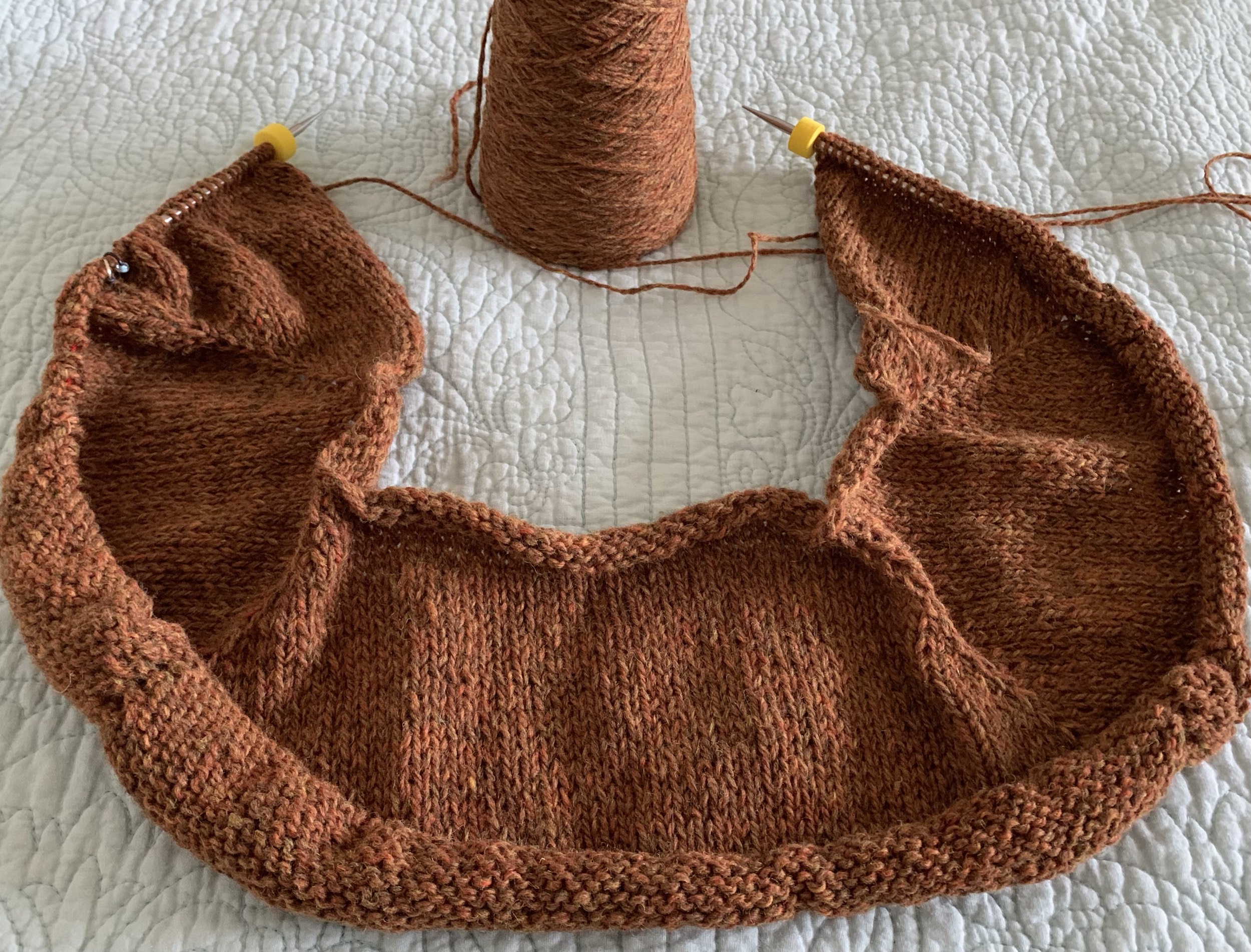
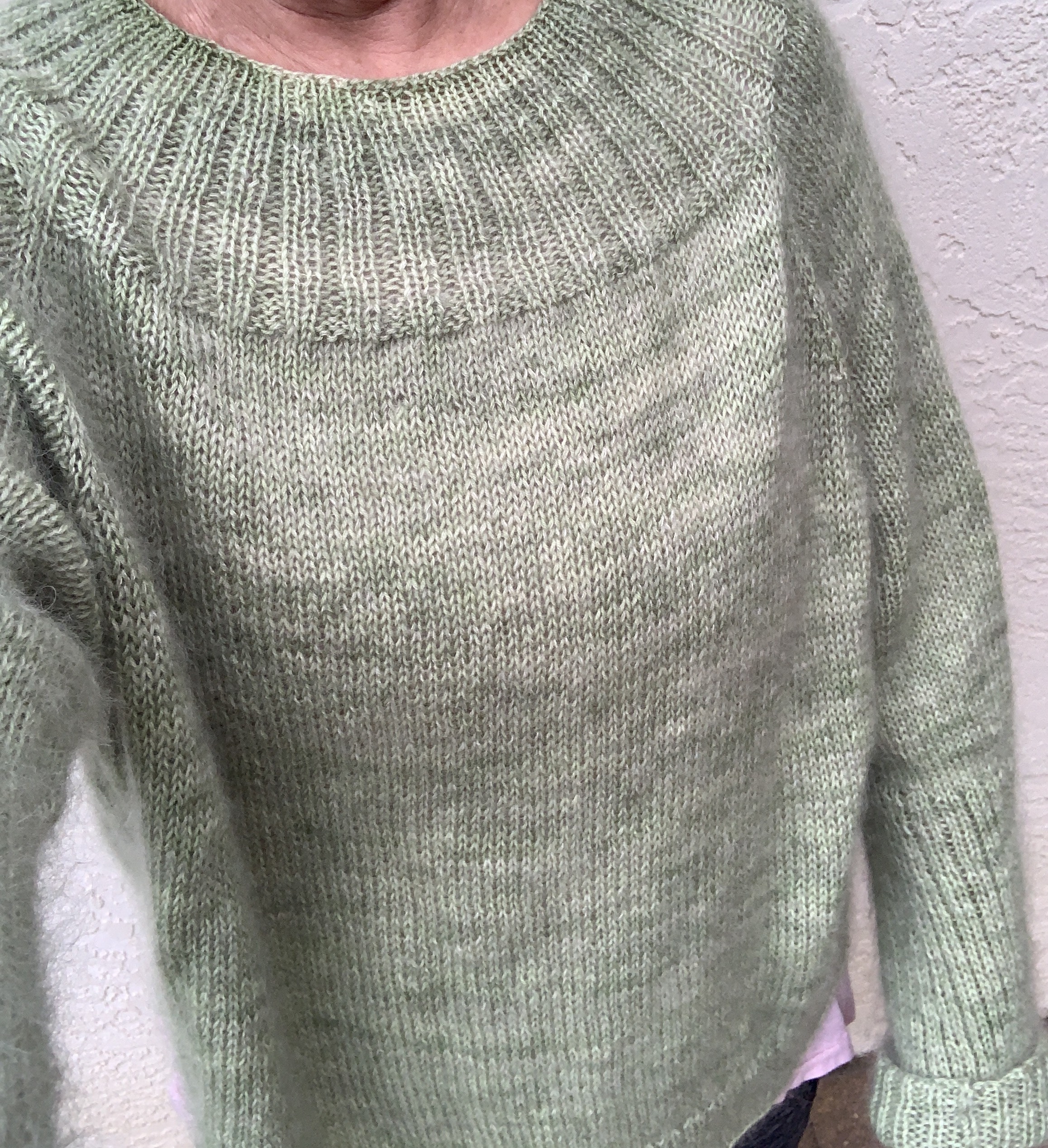
Here is the Oxbow sweater I began knitting in Quarry yarn (color Geode). I had no trouble at all with the yarn splitting apart as I knit. I did however have lots of trouble with the pattern, so this garment has been frogged.

Knitting the Oxbow cardigan sweater
Oxbow sweater was eventually frogged!

This type of yarn does feel funny. It has a dry, lightweight feel, but not scratchy. The yarn knits up into a very lightweight garment that ends up being surprisingly warm. This makes the yarn perfect for sweaters, which could otherwise end up bulky and heavy. Any project knit with this yarn dries super fast as well.

This yarn will bloom, which means when it’s washed the fibers fill in the spaces between the stitches. That helps the knitting look more uniform and perfect.

Another plus for me is that it is completely made in the USA. In fact Brooklyn Tweed yarn is spun in Harrisville, New Hampshire – a location I am very familiar with. I often drove past signs for Harrisville on my way to Keene, and ended up visiting the Harrisville Designs Mill Store during a NH visit.

In closing, I am certainly no expert on yarn, but I’m coming to love the wools for their beautiful properties.


Keep Reading the Blog
Knitting I’ve Done in 2022

Knitting projects finished in 2022 and my thoughts on each one.

This year, 2022, has not been an especially good one. Knitting has been a great way to escape and be at peace for a while. Looking at my list here, I’ve done a lot of that! I have not checked off “learning brioche”, but I bought a book. I have not steeked anything, but maybe next year.

In the order in which they were finished knitting, here are all the patterns (two were mostly my own) I used this year. My thoughts and info on each come after the title. Each link goes either to my blog post where I review the pattern, or is a direct link to the pattern download / purchase. I will have a link to the actual pattern (if one exists) on the post pages.

  • Solstice Glow Hat, by Bunnymuff (January) – Love the colorwork hat even though this type of hat doesn’t look good on me. End product is so cute.
  • Two by Two ribbed hat (January) – Quick and FREE. Didn’t like the yarn I used, but the pattern is easy to follow.
  • Wrist Warmers (February) A fun & FREE project to play with colorwork.
  • Meadow Moon, by Jennifer Steingass (February) Excellent designer, fun pattern, great sweater.
  • Slouchy Watchcap in Blue (March), by Churchmouse Yarns – Great hat! Long project that was quite boring to knit, but end product is worth it.
  • Lopi Wool Pullover (May) I created this pullover to use up my wool yarn and use some unique colorwork designs.
  • Hidden Gems shawl (June) A fun & FREE shawl to knit.
  • Bonnie Isle Hat (June) The recent, yearly Shetland hat. Mine is horrible and I don’t look good in this type of hat. Last one for me.
  • Warm Up Sweater, by Espace Tricot (June) Free pattern and worth it – great directions. I used up some Lettlopi yarn.
  • Honey Cowl 3 (July) Knit this simply to use up some yarn. Very easy pattern.
  • Kate’s Poncho (August) Fabulous pattern, loved the yarn. Made as a gift.
  • Cumulus Sweater, (September) Nice pattern, I changed the yarn weight to use up yarn. End product is okay and is probably better using suggested yarn.
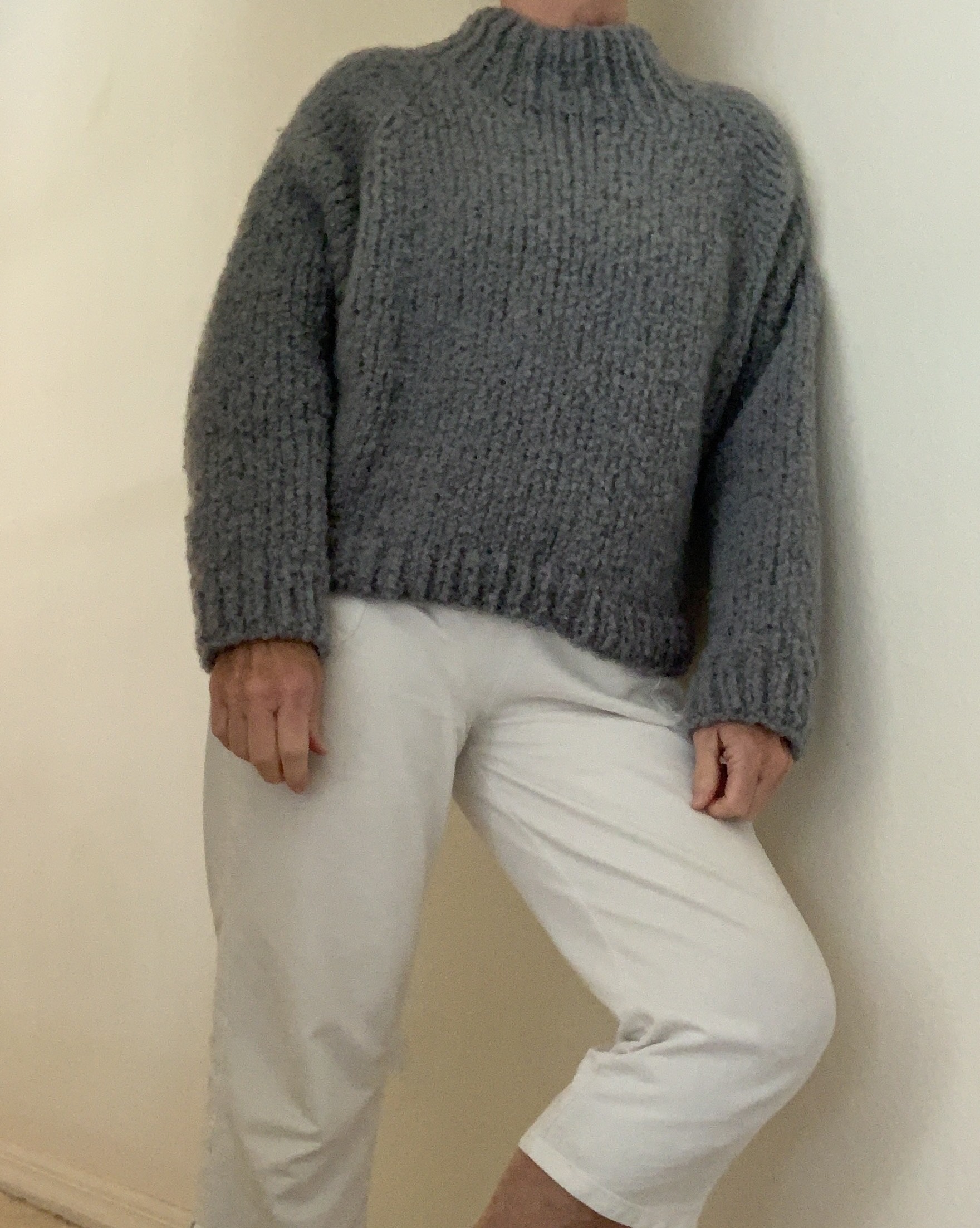
  • Bulky Turtleneck (September) – my own creation to use up Alafosslopi.
  • Venlig pullover (October) Beautiful end product pullover, and awesome yarn, but pattern is a bear…!
  • Slouchy Watchcap 2 in Orange (October) Wonderful and versatile hat. Same as blue one above. Wearable for sure.
  • Playdate in Blue (December) Knit for a friend’s grandchild. Second time knitting this fun little baby cardigan – pattern by Tin Can Knits – you can’t go wrong.

So how did I remember all this? Of course I didn’t. I went to my Ravelry page that shows my projects in order! I found this info in my “projects” section under “challenge”.

I’m finally getting around to posting this on December 25th. It is very cold here in Florida, and I know it doesn’t compare to many places that are suffering with snow and REAL cold, but for us it’s extreme. The banana trees and other tropical plants can’t easily survive teens and twenties. By next week we will be back to normal with temps in the 60s and 70s. Happy knitting all my fiber loving readers.

Merry Christmas!


More from the blog…

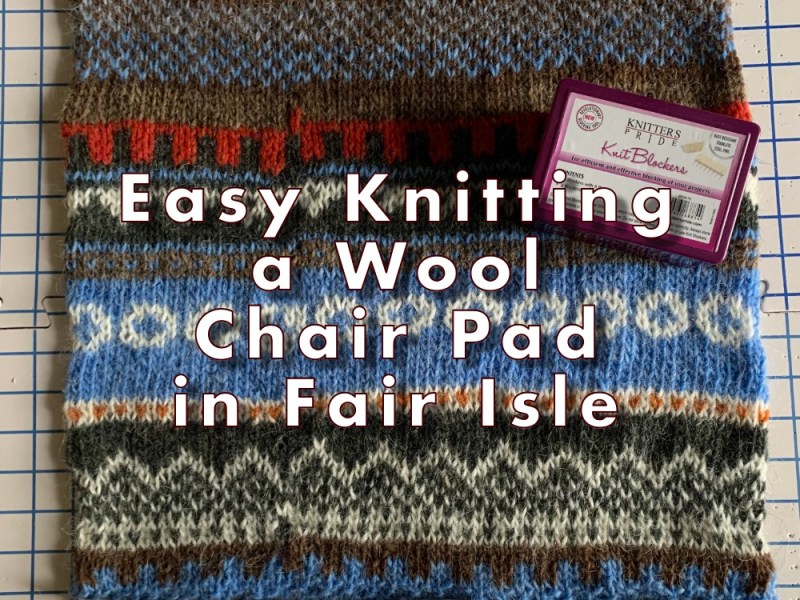
DIY Felted Wool Seating Pad Knitting Pattern

Knitting a simple wool chair pad to use up some heavy weight and worsted wool. This DIY pattern uses Fair Isle, colorwork that is simple and can easily be changed.

Five Cozy Scarf Knitting Projects For Fall

Five cozy scarf patterns to begin knitting this Fall. Keep for yourself or give to friends and family. The selection has small and long scarves, with many free patterns included.

Lots of Changes This Year

Writing a blog, sharing photos, and doing research and making links takes time. Lately I don’t think the time spent doing all that is worth enough to continue. I have stopped…

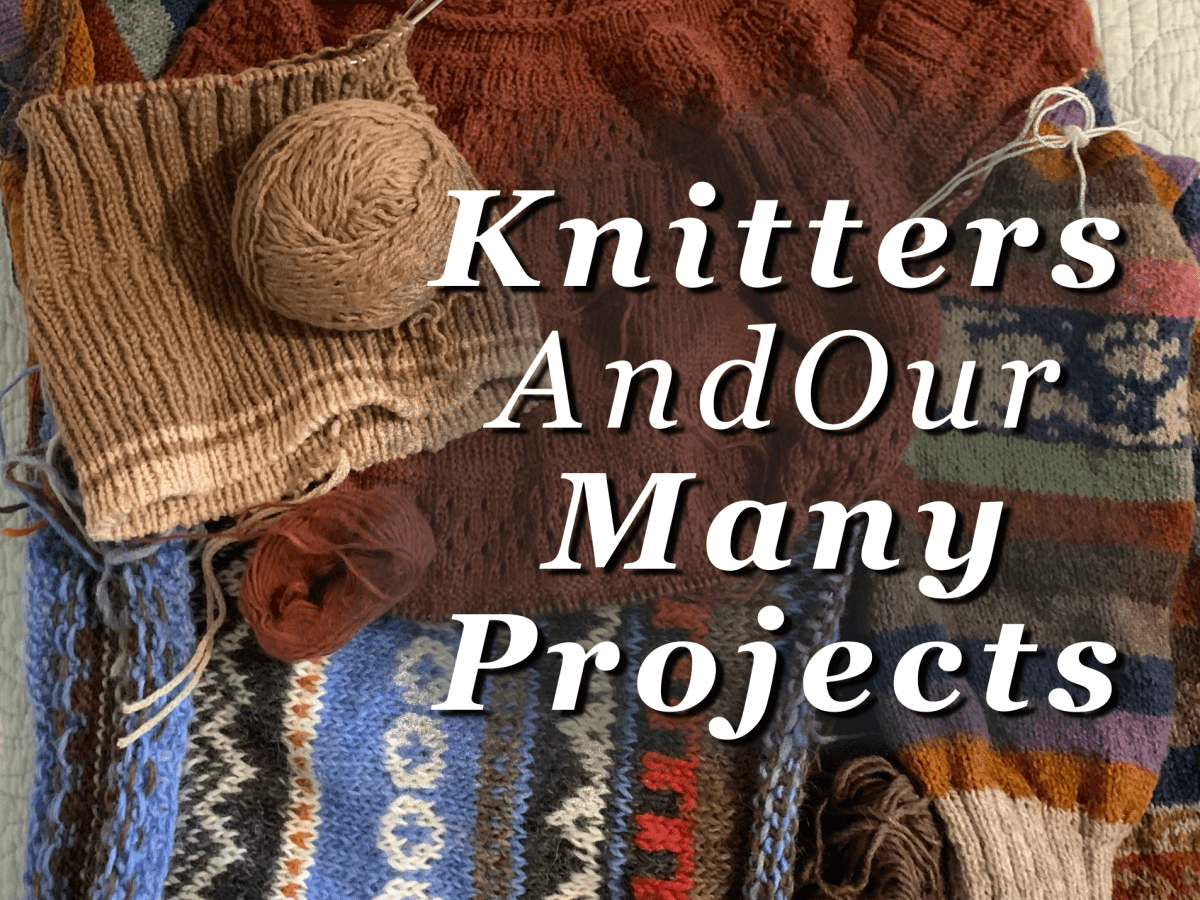
Knitters and Our Many Projects

How many projects do you have on your needles? It is not uncommon to find that fellow knitters have many things going at once.

Knitting in the Florida Heat

Florida knitters have unique challenges because of the hot climate.

Knitting with wool is a year round thing for me. My house is air-conditioned so summer is actually a good time to knit. And summer here lasts nearly year round!

The “good” parts of summer are cool enough to open windows occasionally, but the dead of summer is too hot and humid to ever do that. Even when the AC is running day and night the humidity is high inside the house.

Florida knitters probably knit more projects that are made with “summer” type yarn, such as linen, cotton, and sock yarn. Little shawls and lightweight sweaters might get some use here. Household cotton dishcloths and towels are a good choice too. Unfortunately for me, I like knitting sweaters. With wool.

Knitting In The Heat

I can’t wait for “sweater season” to begin knitting sweaters because that season never arrives here.

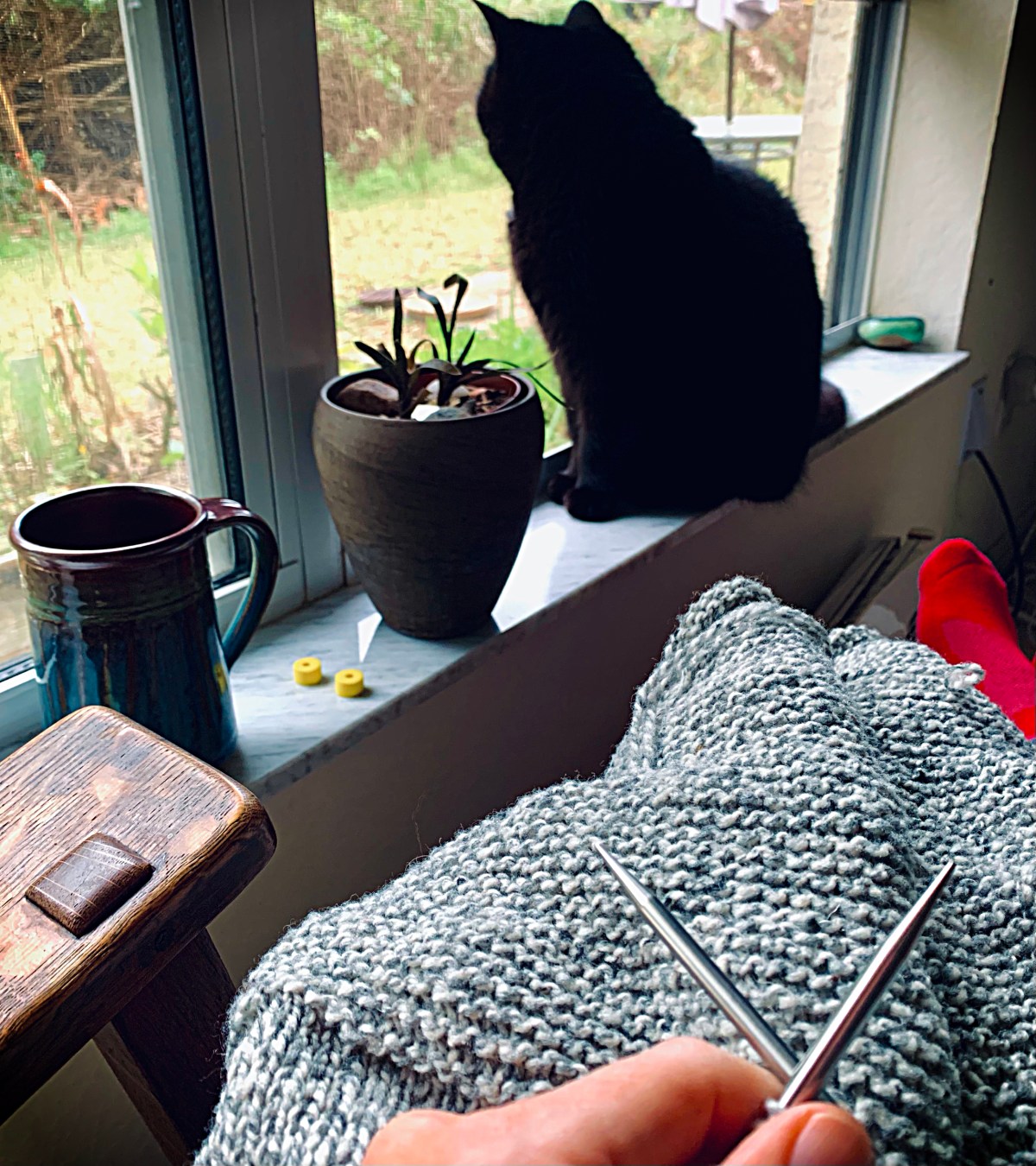
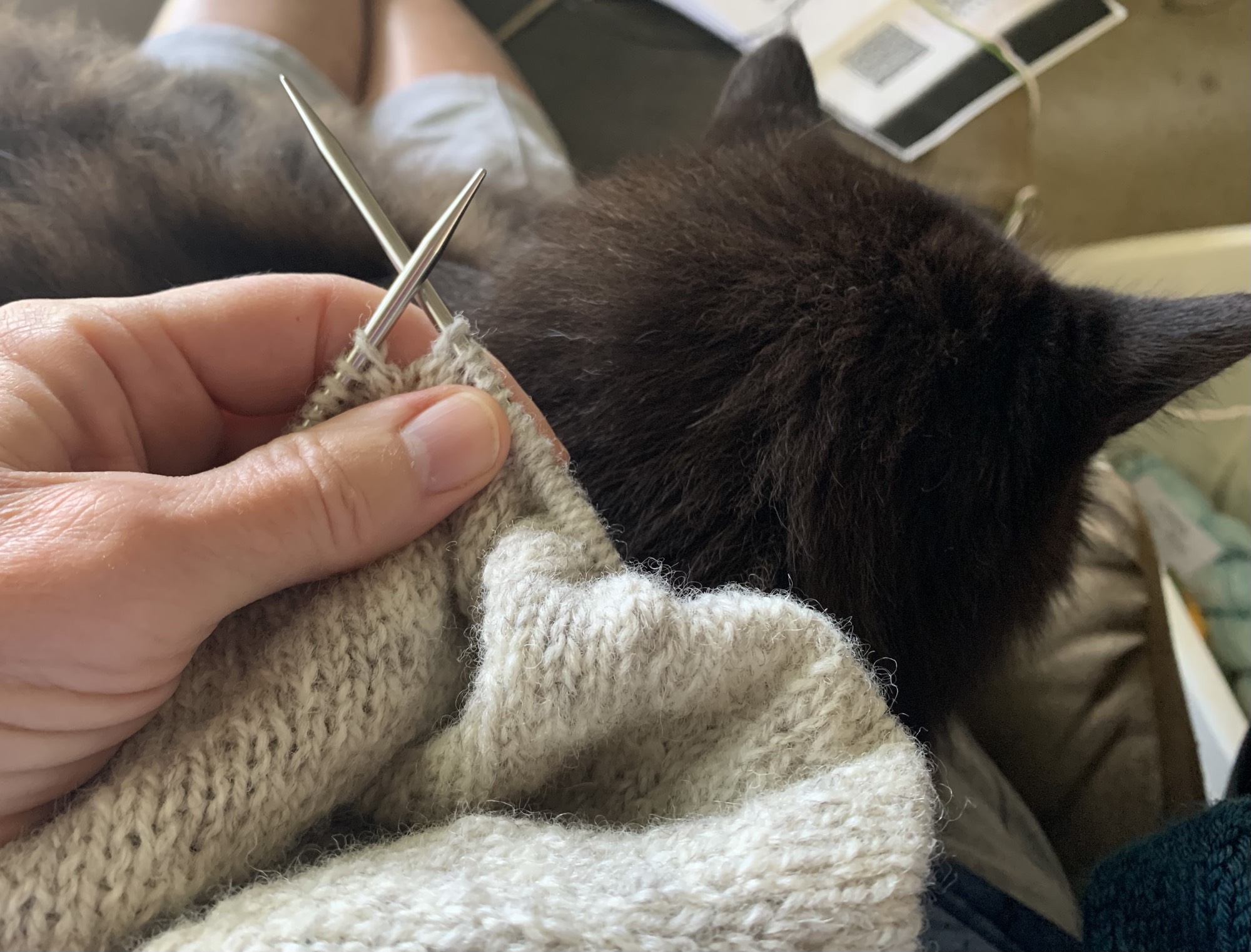
Sweater knitting can be tough when the body of the project wants to cover my lap while I knit the sleeves. Usually I knit in the living room chair where I can toss the body onto the arm. Then Fontana my cat decides to sleep on my lap! Double heat… LOL.

Knitting something like a sweater is actually easier to do in summer when the AC is constantly running. Once the windows open it can be too hot to knit with wool in my lap (plus a cat). So, I guess my sweater knitting season is summer!

knitting cat in lap

Drying Hand-knits in Humidity

My knitted projects can take a long time to dry.

Everything I knit gets blocked out in a spare bedroom. I’m lucky to have a bed no one uses now. The ceiling fan goes on to circulate air in the room and help the process. The dehumidifier I bought seems to help quite a bit too. I close the room off and that works well.

When the Cumulus sweater needed drying, I blocked it out on boards on the bed. The ceiling fan stays on day and night while the dehumidifier helps dry out the room.

Drying my wool sweater in Florida on a spare bed

Wool dries pretty fast. When I knit with Alafosslopi, which is a bulky wool, then drying can take longer. I think I was drying the Carbeth cardigan when I realized I needed help with the humidity. Carbeth was knit in Alafosslopi and had a bulky rollover neck. It took a couple of days to totally dry.

Even when the major heat is gone, the air here remains humid. I have to dry my hand knits this way even in winter – with the window closed.

Knitting Project Selfies

As you can probably tell, I take my own photos. The iPhone gets propped somewhere and I set the timer. It usually takes many tries before I get something I can crop to look okay.

But all that wool can be tough to handle wearing when the temps are near 100 degrees and the humidity is high! The photo sessions are done quickly. I guess I could wait until January and take all my sweater, hat and mittens photos on the few cold days.

I don’t get much sympathy for living in a place where there is no snow and very little ice – sometimes the birdbath freezes. When it comes to knitting, Floridians face different challenges.

When Hurricane Ian hit at the end of September 2022, we lost power in the house for four days. I spent much of those days knitting. In fact, I decided to try some mosaic knitting because my new book had just arrived. It was a great thing to have such a hobby on long days without electricity. I sat in front of the window with a breeze blowing and enough sunlight to see well. Because the storm came late in the season, the air was not so hot. Once Ian blew away, the weather became downright NICE!

Florida’s Lack of Yarn Shops

People in Florida see no real need to knit I suppose. All that heat keeps us in capris and sleeveless cotton tops. For that reason, there is quite a lack of yarn shops. And if I find one, there is a lack of the nice types of wool I like to knit with. It makes sense, but it forces me to buy all my yarn online.

The Four Purls yarn shop near Orlando used to come out to the coast and sell yarn out of their traveling truck. But they have not been here in a while. Probably because of gas prices. They don’t seem to sell the yarn I love to work with because no one wants anything made of wool here.

knitting divider

Keep Reading The Blog

Leave No Tails! Three Ways to Join Yarn Ends

Here are some ways to join two yarn ends together while knitting to eliminate yarn tails.

Knitting is fun! Weaving in endless tails of yarn is not. On this page, I’ve written about three ways to join ends of yarn together that will eliminate tails. There will always be the cast-on and bind-off tails, but we’re talking about joining in a new ball, or color.
Unless you are knitting a small item, you will probably have to join a new ball of yarn to the project. Sweaters and large items require many skeins, and if colorwork is involved, even more.

Fair Isle projects, like the mitts below (shown inside out), require lots of color changes and therefore lots of ends! It took me a very long time to do all that weaving.

weaving in ends on Stellar Parallax mitts
Colorwork mitts and all the ends left to weave in!

I’ve always simply slipped the end of the new yarn over the needle, leaving a tail. That leaves two tails (the old and new) that must be woven in when the project is finished. These tails can add up, and the weaving in can be a project all on it’s own!

The ideas for joining yarn on this page make knitting a bit easier by NOT leaving any tails. Not every technique will work for every project. Know your yarn, and choose the join accordingly.

How to Do a Magic Knot – Works for (almost) any yarn, but might not be good for every type of project.

This is a simple way to join two yarn ends. But, I would not be inclined to use it except in certain circumstances. Personally, I don’t like knots. I’d be a little skeptical of the knot staying knotted, or popping through to the front side and looking bad.

Any yarn that comes apart easily would not work as the ends have to be tightly pulled.

Knitter’s Pride has a good page, with images and suggestions on when it’s best to use the Magic Knot.

Very Pink Knits has a good, slow-motion video on this technique.

I just knit the VENLIG sweater pattern with some Woolfolk nubby yarn. The skeins had a few knots here and there and I simply knit them in. With the fluffy texture of the wool, it would be hard to see this tiny knot even if it was on the front of the sweater.


How to Do a Russian Join – Uses a needle

The Russian join in knitting uses a tapestry needle to weave the yarn ends together. This method of joining two ends of yarn seems a little time-consuming, but looks better than a knot, IMO.

This join seems perfect for any type of yarn where a magic knot wouldn’t look okay, or the spit splice (read on) wouldn’t work.


How to Spit Splice Wool – No tools needed

The first two methods for joining yarn would work for nearly any type of yarn, but the spit splice is meant for wool. The water (or spit) and the friction of rubbing the yarn, are what turns two yarn strands into one. This splice will not work on Superwash, or any manmade washable fibers.

I’ve written before about how to do the spit splice because I used it on the Warm Up Sweater and Kate’s Poncho very successfully.

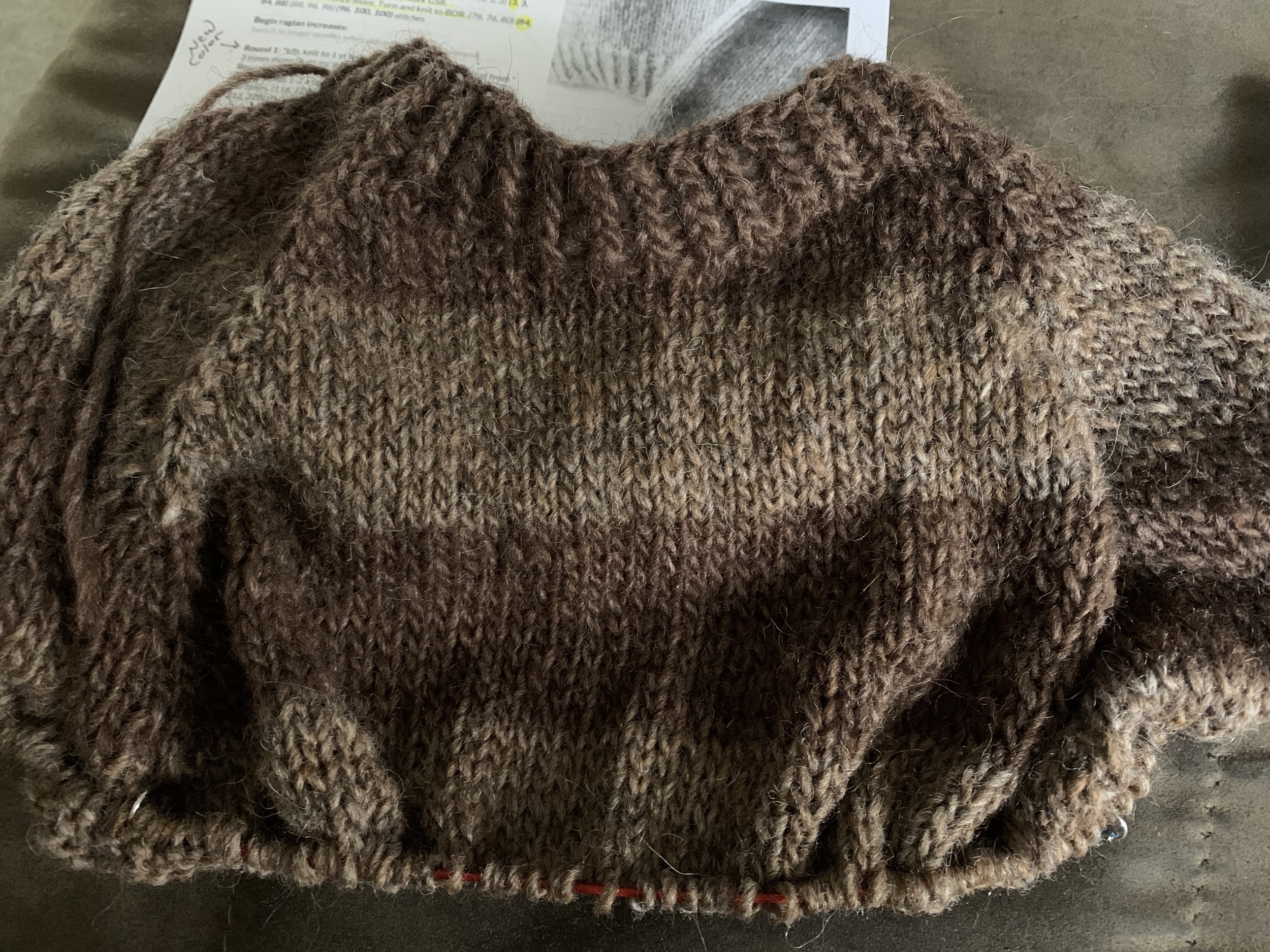
On the Warm Up pullover I created wide stripes, using two different brown yarns. This meant I had to change colors a lot. Because I used this yarn splicing method, I ended up with only a few tails – the cast-on, bind-off, and under the arms where I picked up the sleeve stitches.

I find this to be an easy and nice splice to do. Unless two different colors are being joined, it’s tough to find the join section once it’s done. If knitting with wool is your preference, you must try this method.

A Spit Splicing How-To Video

Tin Can Knits has a short and to the point (my favorite kind) video below. What I do differently is unravel the yarn a bit to attach the strands. I suppose on smaller yarn like the type she is using, it wouldn’t be necessary.

A knot in a wool skein can be unknotted, or cut out, and re-joined using this method.

Do you have a favorite way of combining yarn ends? Please leave a comment.


More Knitting Adventures

Camel Yarn Weekend Hat Project

A simple ribbed hat pattern with enough brim folds to keep ears warm. The Weekend Hat is a pattern by designer PetiteKnit.

Something went wrong. Please refresh the page and/or try again.