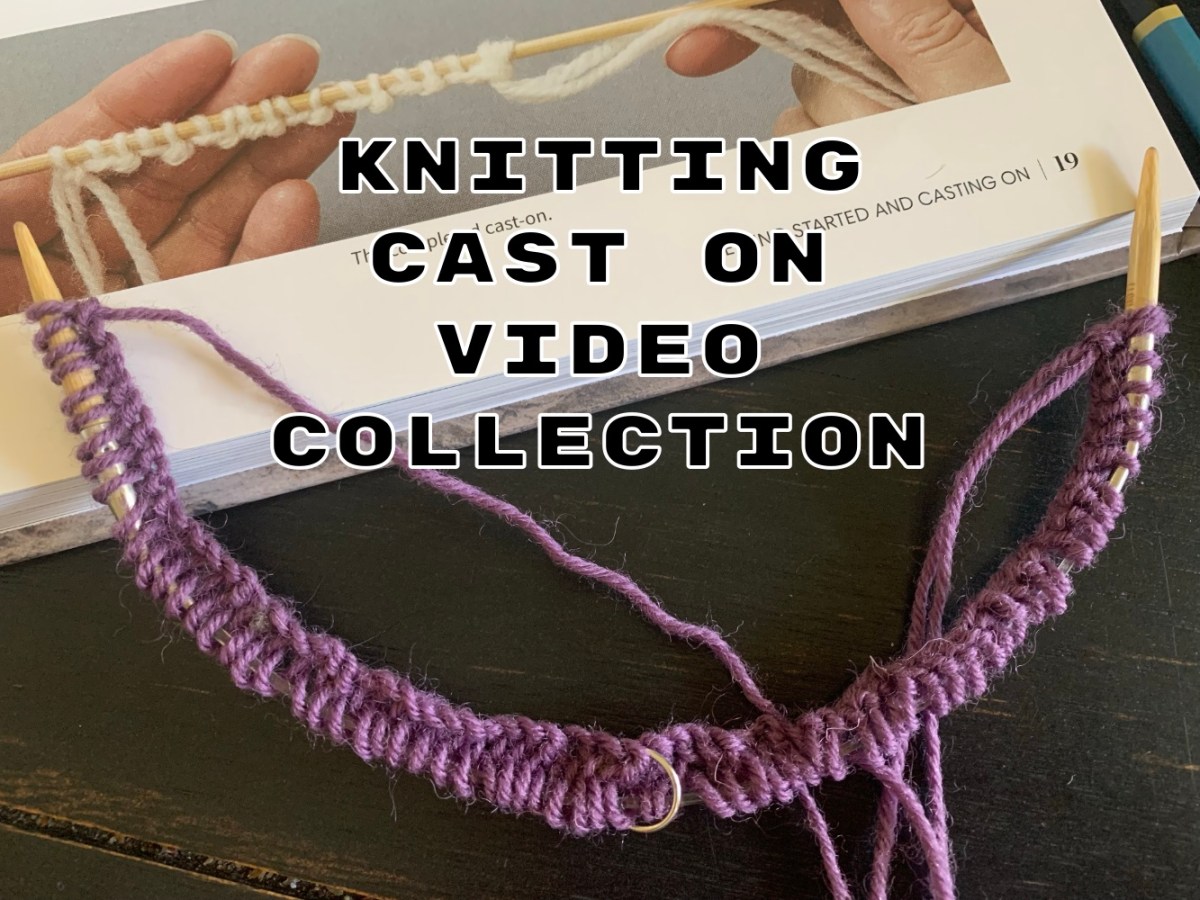
From simple to more difficult, this collection of good cast-on videos may help the beginner knitter.
When I began knitting I never knew there were so many ways to get yarn onto the needles to begin a project! I’ve been knitting for a few years now, and I continue to need a refresher for certain cast-ons.
Different Cast-Ons For Different Projects
Knitting is much more than clacking needles. Yarn needs to be put onto the needles to get started. Each knitting project may need a specific type of cast-on.
Doing a cast-on that stretches a little works for nearly every garment from socks to hats. There are specific types of cast-on stitches for ribbing and for brioche to make the edge look rounded. It sets up the knitting of the garment, and seems like a small thing, but it can make a big difference in the end.
I used to believe that a cast on was something to get out of the way so I could just knit. This is not true! The cast on is very important to get right. Don’t rush through, and practice at being as perfect as possible with those first stitches. They ARE important!
1. Basic Beginner Cable Cast-on
The cable cast-on is probably the most simple to do, and is recommended for beginner knitters. It is the one I always used in the beginning of my knitting journey. For flat knitting (back and forth) a straight set of needles can be used. If the project is circular, then cast onto a circular needle.
For practice only, use whatever needles you happen to have on hand. Wooden needles make yarn easier to manage as metal needles are more slippery.

This simple cast-on is great for beginners, but when you are more comfortable, use a better cast-on, like the long tail.
2. The Long Tail Cast-on
The long-tail cast-on is the first different cast-on that I tried. For that reason it is second in my list of casting on options for knitting.
- Long Tail CO absolute beginner – Purl Soho
- Long tail without a slip knot – Suzanne Bryan
I do not use a slip knot when beginning the cast on process. I simply hold the yarn across my finger and thumb and put the needle down through and twist. It leaves a neater little first stitch. I tried to make a little video, but I am technology challenged.

3. German Twisted / Old Norwegian Cast-on
This is my favorite cast-on and the one I use regularly. It works for hats, socks, sweaters and mittens, and really everything! This one makes the edging stretchy but not stretched out. Occasionally I do try a new suggested cast-on for a project, but the German twisted, also called Old Norwegian, is rhythmic and easy to do once it’s learned.

Neither of these videos mentions that when you cast on each stitch leave a bit of a space between the stitch as in my photo above, but you should. You don’t want the stitches that close together or the edge of the item may appear tight.
- Old Norwegian cast-on video by Yarn.com
- Slow motion German Twisted cast-on by Very Pink Knits
One thing about this cast-on is that usually you will need to figure out the length of the tail before beginning. In general, make the tail at least 4 times the circumference of the end project. For instance, your hat will be the size of your head, so make that tail end 4 times that length. Some people say 3 times, but I cast on loosely and have found that I need four to be safe.
If you run out of yarn with only a few stitches left – and I have done that after casting on hundreds of stitches (sweaters) – you can turn the needle and do a few regular cable cast on stitches to finish up.
One more tip – Two different balls of yarn can be used where one replaces the need for a “tail”. This way you will have unlimited yarn and won’t run out during the cast-on process.
See the example of this at this YouTube video. The woman pulls the ends from the inside and outside of one ball, but you can use two balls of the same color, or two separate colors. This way there is no need to guess the length needed for the cast-on. Simple undo the knot when you are ready to knit – it is not counted as a stitch.
4. The Garter Tab Cast-on For Knitting Shawls
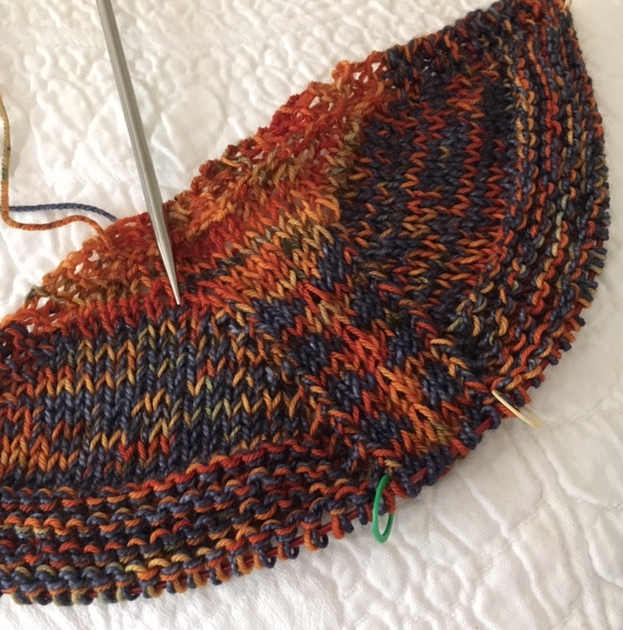
Many crescent and triangular shawls begin with the garter tab cast-on. Shawls are usually knit with long, circular needles. This cast-on begins the knitting from the top center where new rows will increasingly grow out at the edges. It had me baffled until I saw a good video tutorial.
Here are some of my favorite YouTube videos showing this cast-on.
- Stephen West – Garter tab cast-on
- Andrea Mowry – Garter tab cast-on


5. Provisional Cast-on
The provisional cast-on is made as a temporary edge holder for a project. Once the knitting is finished the last row worked will be attached to the provisional cast-on row. Think about making an infinity scarf that is one complete circle. The two ends need to be grafted together.
I’ve done provisional cast-ons a few times, like when I knit the Keramos Cowl. This project was a colorwork cowl with a liner inside. Once everything was knit, the inside liner had to be attached to the bottom of the outer layer.

- Provisional cast on with crochet hook – Purl Soho


The holder yarn, in the provisional cast-on will be removed after the stitches the yarn is holding are back on the needles.
Unique and Less Used Cast-ons
As a knitter you are likely to come across many other ways to begin a knitting project. If you knit brioche, there is a special way to cast on for that. If you knit hats, there are tubular cast ons that make the ribbing look nicer. For me, some of these cast-on ideas are quite involved and difficult.
6. Chinese Waitress Cast-on
I am not sure why we need to use this cast-on, but I’ve seen it mentioned so thought I’d include it here.
- Very Pink Knits – Chinese Waitress Cast-on
- Chinese Waitress Cast-on with crochet hook – this is the tutorial I used to make the cast on below. It was my first attempt. She also shows how Continental knitters can do this cast-on.

7. Two Color Tubular Cast-on
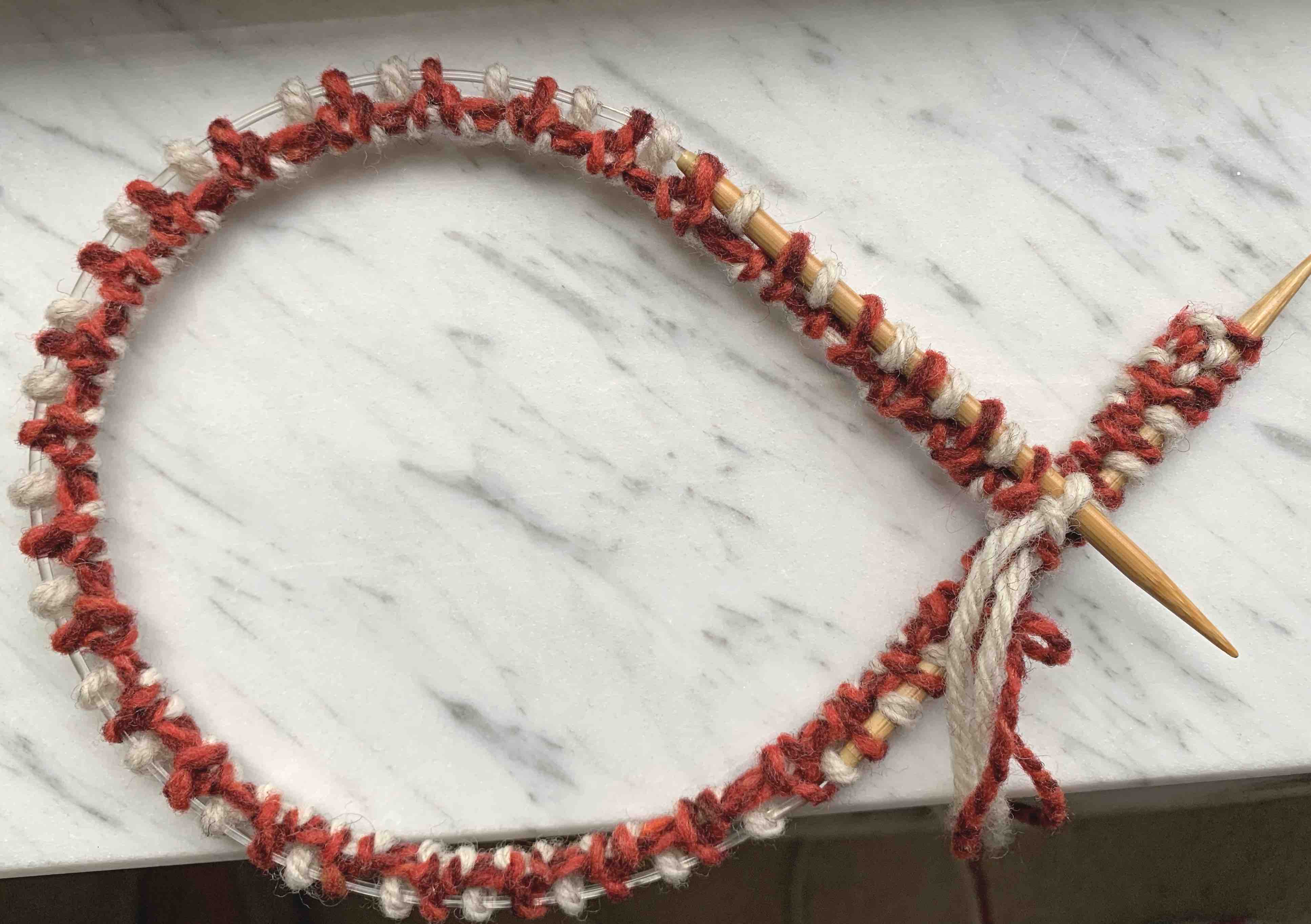
The tubular cast on is often used for hats to make the edge nice looking. If the hat will be knit in two colors, Andrea Mowry has a very good video about how to do the two-color tubular cast on. It is also called the Italian tubular cast-on.
I tried it when I made an attempt to knit a brioche hat in two colors. I did the pretty cast-on and then couldn’t figure out how to make the join in the round after the set up rows so I couldn’t continue. Brioche is still on my to-figure-out list! The cast on is pretty though so I took some photos.

Brooklyn Tweed also has a two color cast on for brioche (worked flat )which you’ll find here.
The Video Makers
I have curated the videos on this page because I’ve used them myself. Often I find that knitting videos are too wordy, too long, blurry, or just down right horrible. I’ve collected a little list of my favorite knitting video makers.
- Very Pink Knits – also offers slow motion videos
- Purl Soho – short and to the point, but they don’t cover everything
- Designers – Jared Flood, Stephen West, Andrea Mowry and others have some good videos.
There are probably many more ways to cast on and begin knitting, but this is what I have for now. Search on YouTube and I’m sure you will find anything you need, but you may have to wade through the muck to find the good stuff.
More Knitting Stories

Something went wrong. Please refresh the page and/or try again.
Share this:


8 thoughts on “My Collection of Good Knitting Cast-on Videos”