End of year knitting projects with self-imposed deadlines.
I’m trying not to get stressed out, but here it is October and I have some projects to get finished for December!
A New Baby
One in particular is a little sweater for a new baby boy. He will be born in December and his family lives in Florida. There will not be too many cool sweater days, so he must get the item ASAP after arriving on the earth.
I’ve chosen Tin Can Knits “Playdate” cardigan pattern. I have knit Playdate before and found it really interesting and fun. I still have the little sweater because it was made for no one. I have no grandchildren, but it is such a cute item. I highly recommend the pattern.
Fox buttons on the Playdate cardigan #1
The new Playdate version will be made in the small 3-6 month size in hopes that the baby can wear it throughout Spring. Even if the weather gets hot, stores tend to have icy cold AC blowing and his mom can take it for such outings.
Waiting on the Yarn
I’m currently waiting on the yarn to knit Playdate in a pretty blue color. The yarn order is coming from Miss Babs and will contain more yarn to knit a poncho for my daughter. That yarn is burgundy red.
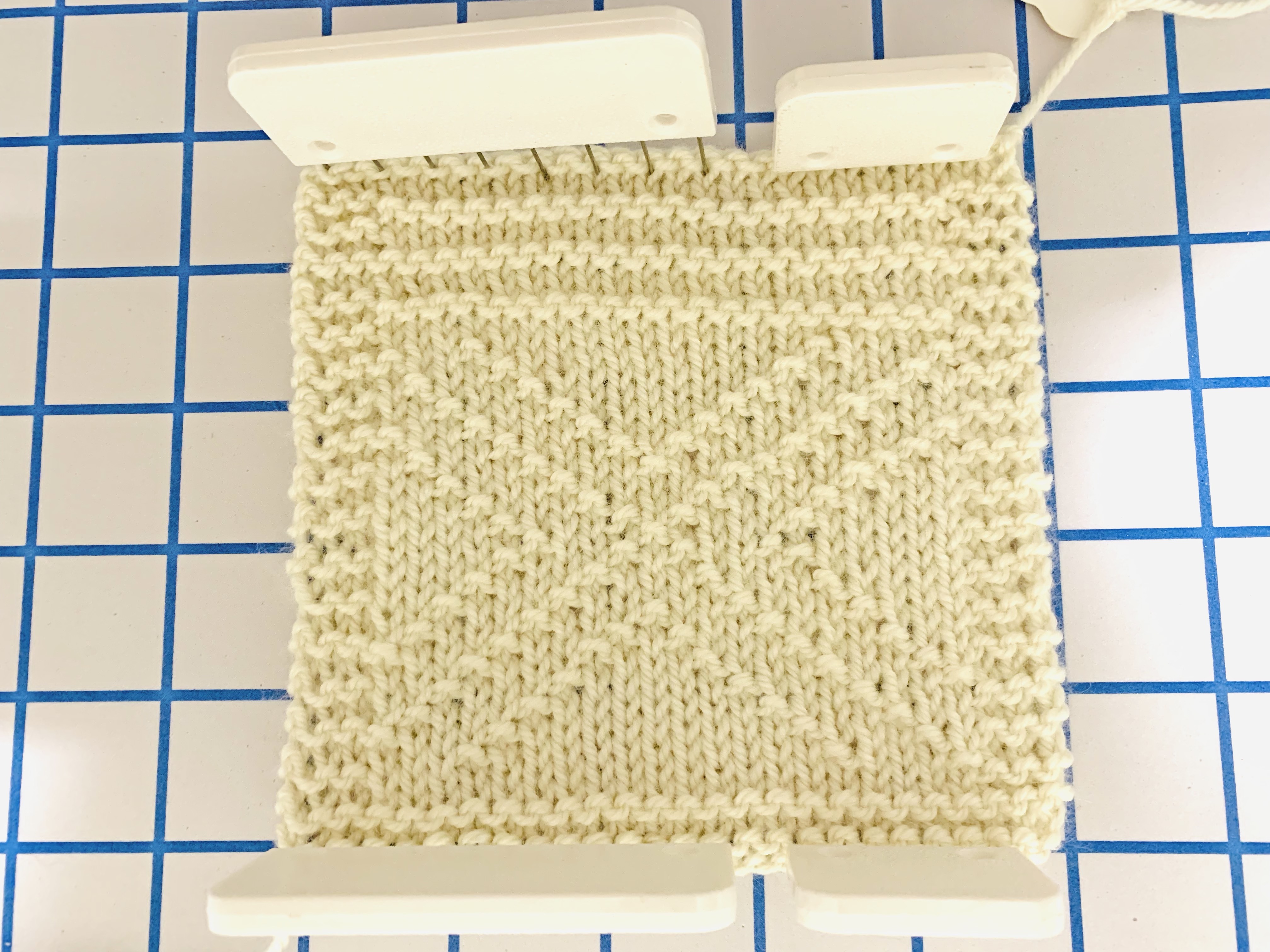
The swatch has been knit using some Kunlin stash, which is a DK weight. I wanted to see the textured pattern and check my gauge, which is good.
Brodgar poncho gauge swatch
Another Poncho Knit in a Rarely Used Colorway
Do you get in a rut where you want to knit the same types of projects continuously? I just made the Kate’s Poncho for my daughter, who loves it, and now I’ve found another poncho to knit.
I rarely knit anything using red yarn, but I believe this poncho – Brodgar – will look very nice in this beautiful Miss Babs Yowza yarn in “Cordovan”. It is Superwash merino wool, which will make it easy to wash in the washing machine, using a bag, when my daughter needs to clean it. The skeins contain 560 yards, which is quite huge! I opted to pay for winding because the poncho needs 2 skeins. The yarn is dark burgundy and will look very nice with jeans and dark colored pants.
A finished poncho would be a nice Christmas gift, but realistically, I won’t get it done in time. Hopefully I’ll get it into the mail before the cold weather goes away completely in the New Hampshire Spring.
I look forward to beginning both of these projects, with the baby sweater coming first in the queue. Waiting for the new yarn delivery has given me time to prepare for the new projects by finishing up some knits that are currently on the needles. I’m nearly done with the orange watchcap and have completed the Venlig sweater.
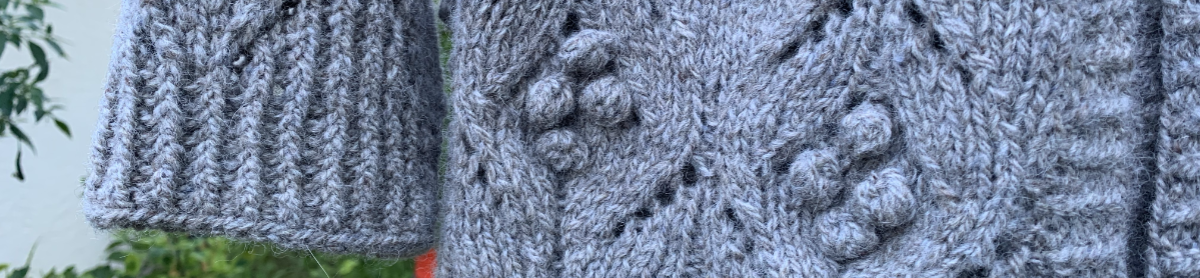
Orange WatchcapVenligRecent knitting projects
Do you suddenly realize that Christmas is coming fast? Do you hurriedly fishing the hat and mitten gifts? What knitting projects are you hoping to finish before the new year?
Learn to do mosaic knitting, which is an easy form of colorwork that even beginners can accomplish.
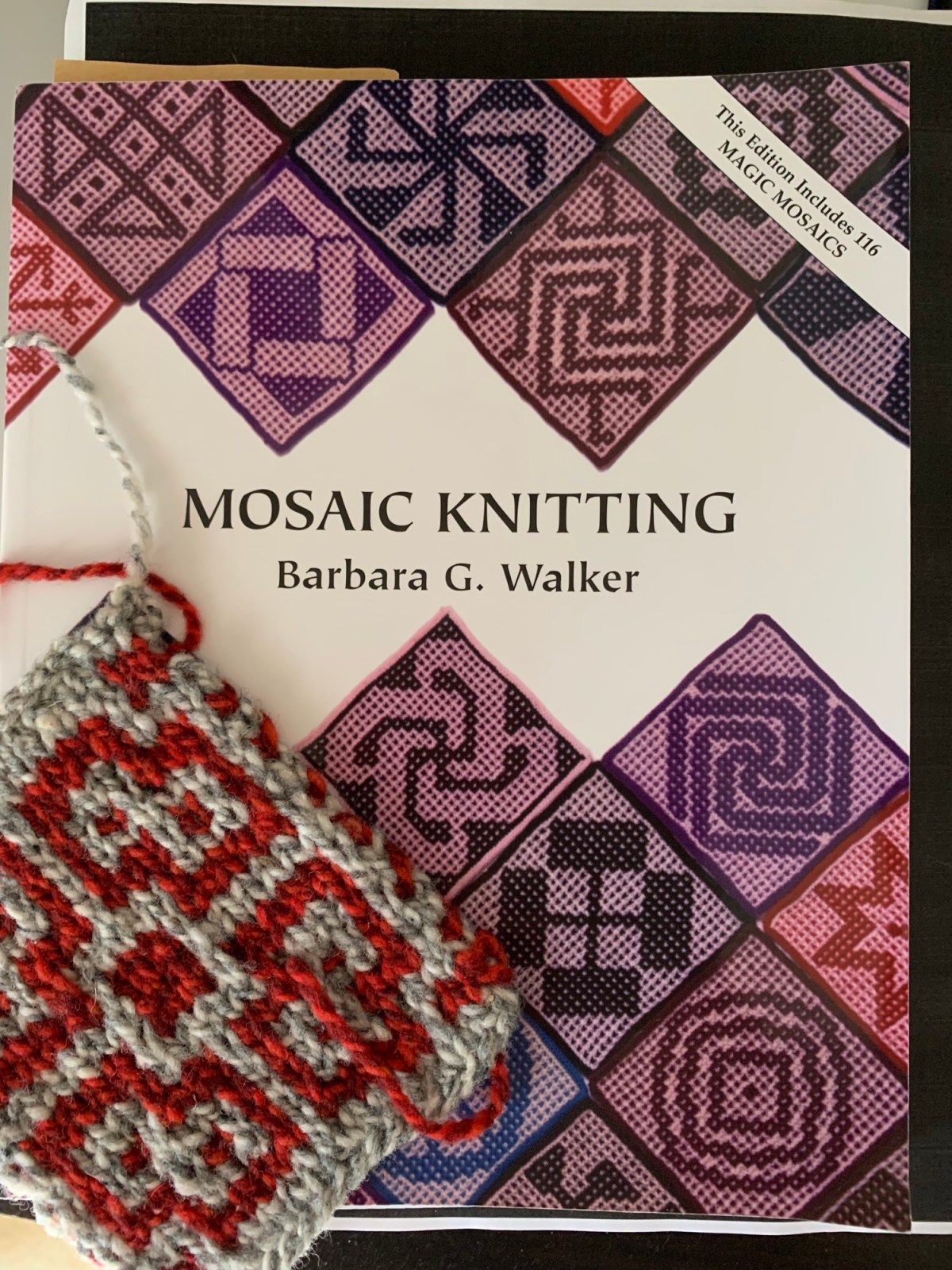
It’s been a few weeks now since we had Hurricane Ian to deal with. Knitting was what helped me keep my sanity while the power was out for four days (read more about that at the end of this page). I decided to learn mosaic knitting and knit three pattern swatches from my new (used) book “Mosaic Knitting” (link is down the page).
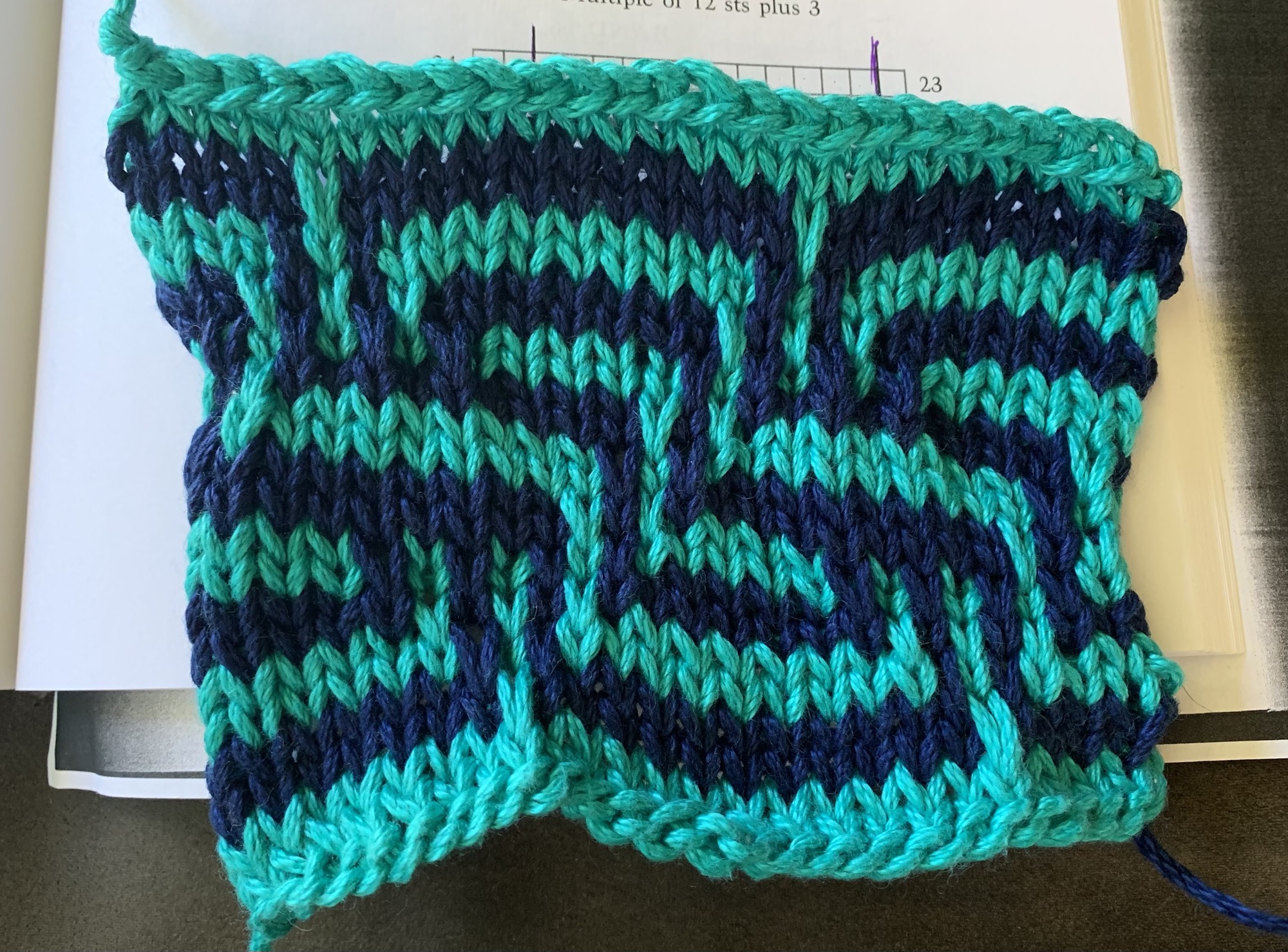
Shelter wool yarnCottonCotton, knitting on wrong side
I’ve done mosaic knitting before, but I had totally forgotten how. It is a fun, and very easy, way to create colorwork patterns. I used some pretty wool (the red and gray swatch) and cotton for the others.
Often knitters will choose mosaic as the simple way to make colorwork patterns. This is not why I am learning it.
I love to knit stranded colorwork, or Fair Isle, and I enjoy using two colors to knit. I have made many patterns doing just that (mitts, mittens, hats, socks, pullovers). But, if I want colorwork on a cardigan, or anything that is knit flat, and not in the round, Fair Isle must be steeked and I don’t do steeking – yet. I’m thinking that mosaic is the way to go. I plan to knit a cardigan and incorporate mosaic colors.
How to Knit Mosaic Designs – Stockinette
Even beginner knitters can do mosaic. Only one color yarn is used at a time. All you need to know is how to knit, purl, and slip stitches. It’s super easy.
Find two colors of yarn to work with. One color will be represented by the dark blocks in the pattern and the other will be the light. The way these designs (the red and the blue) were knit began with doing a purl row after casting on. This puts you on the RS (right side) of the fabric.
Begin to knit, following the chart, right to left, across. You go right to left because that is how you knit. All knitting is done that way, unless you are left-handed I suppose.
The color used to knit each row will alternate. When you get to the end of the row, the same color will be used to go back to the beginning. Then, change colors for the next row.
For each row – use the color needed. If you are on a MC (main color) row – knit the black MC blocks, and slip the white CC blocks. Slipping is done purl wise. The yarn thread is always on the backside of the work. While you are knitting, on the front, the yarn is naturally behind the work and will remain there.
Mosaic knitting is one-sided with a definite wrong side.
Once the end of the row is reached, the back of that row is worked. Each knit stitch – color you are using – will be purled, and each CC stitch will be slipped (no following the chart, just do that!) – the yarn stays in front because you are working the WS (wrong side). Back to the beginning of the row.
Begin again with the other yarn color and keep alternating. Knit the white (CC) stitches and slip the MC stitches. This time you will purl the CC and slip the MC stitches on the back, or wrong side.
Mosaic Knitting Videos
Watching good YouTube videos can be very helpful. Here are a couple I found.
This video will help with the ability to read a mosaic knitting chart. She is knitting round and round, and not flat, like my swatches, so there is no mention of what to do on the wrong side of the work.
Suzanne Bryan has a good video showing how to knit garter stitch mosaic. This means you will knit all the stitches – no purling. But the yarn must be moved to the WS when doing the backside stitches.
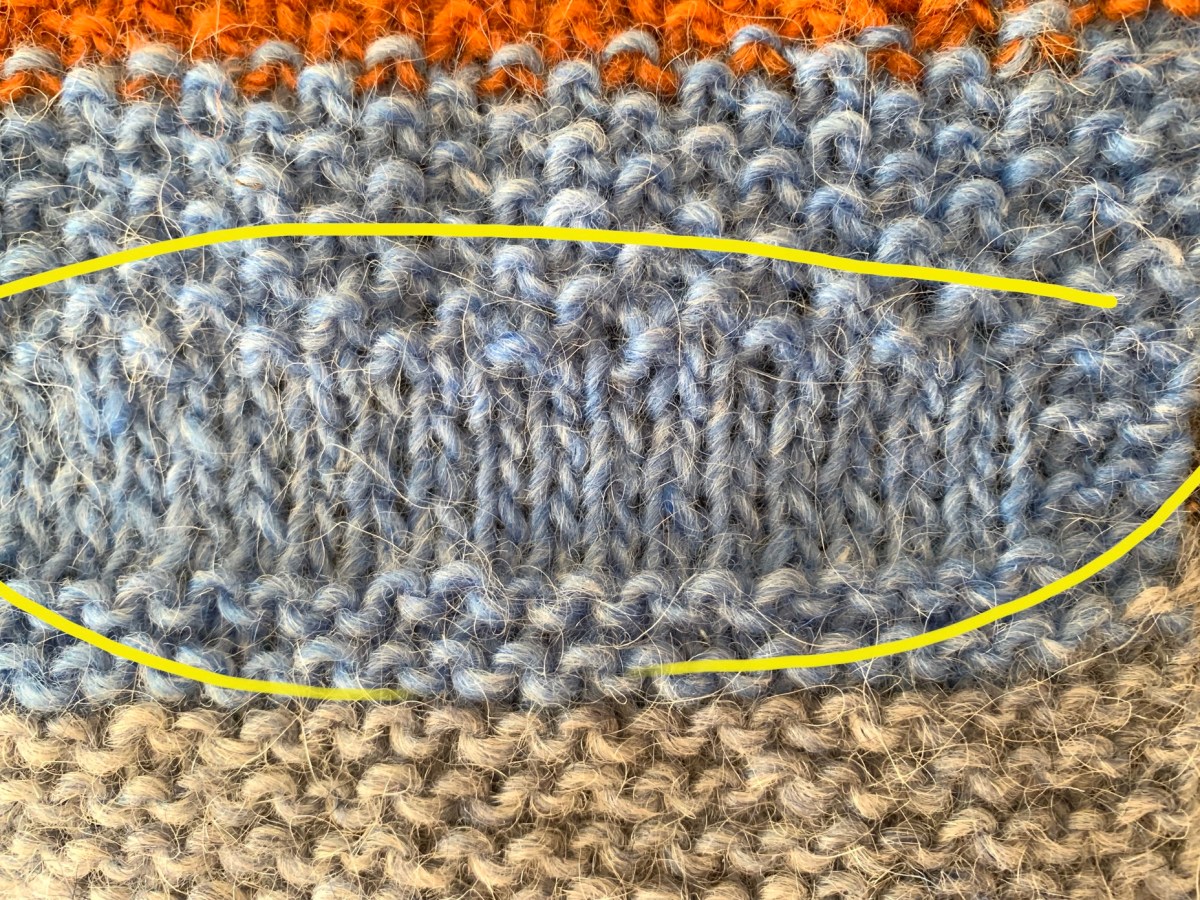
My swatch below was knit in garter stitch. It’s bumpier and I really didn’t like the end result as much. Also, every time you slip stitches on the wrong side the yarn has to be moved to the front, and then back again to knit.
Knitting stitches on the wrong side (as opposed to purling) creates a bumpy pattern.
Stockinette mosaic is flatter, and my other two swatches were done that way. Purling is done on the wrong side rows. The yarn doesn’t have to be moved back and forth, and I like the look better.
A Book For Mosaic Knitting
The Mosaic Knitting book (Amazon link), by Barbara Walker, is stuffed full of various mosaic patterns. Many pages are dedicated to explaining – very clearly – how to knit this way. I purchased a used copy and spent $21.00.
If you want to try this type of knitting for free, see this page, where I did my first mosaic knitting swatch found on a blog post. When you see how easy it is, and are hooked, then buy the book.
All images and charts are in black and white except for the cover images. I think the book could have been improved slightly by including color when showing finished work. Black and white is perfectly fine for the charts. Charts are what you will use to knit – not written directions – except for the beginning chapter where she will guide you through understanding chart knitting.
I don’t need to say more, because if you buy the book, it will all be explained in detail. You will also have access to many, many charts to use for swatching (my cotton swatches become dishcloths) and garments.
Hurricane Ian in a Nutshell
This is the reason I decided to do mosaic knitting. It was a good time to learn something new as I had many boring, grid-down, hours and days to get through.
On September 28th Hurricane Ian arrived on the east coast of Florida. It had left devastation along the western, gulf coast and now wreaked havoc on central and east Florida.
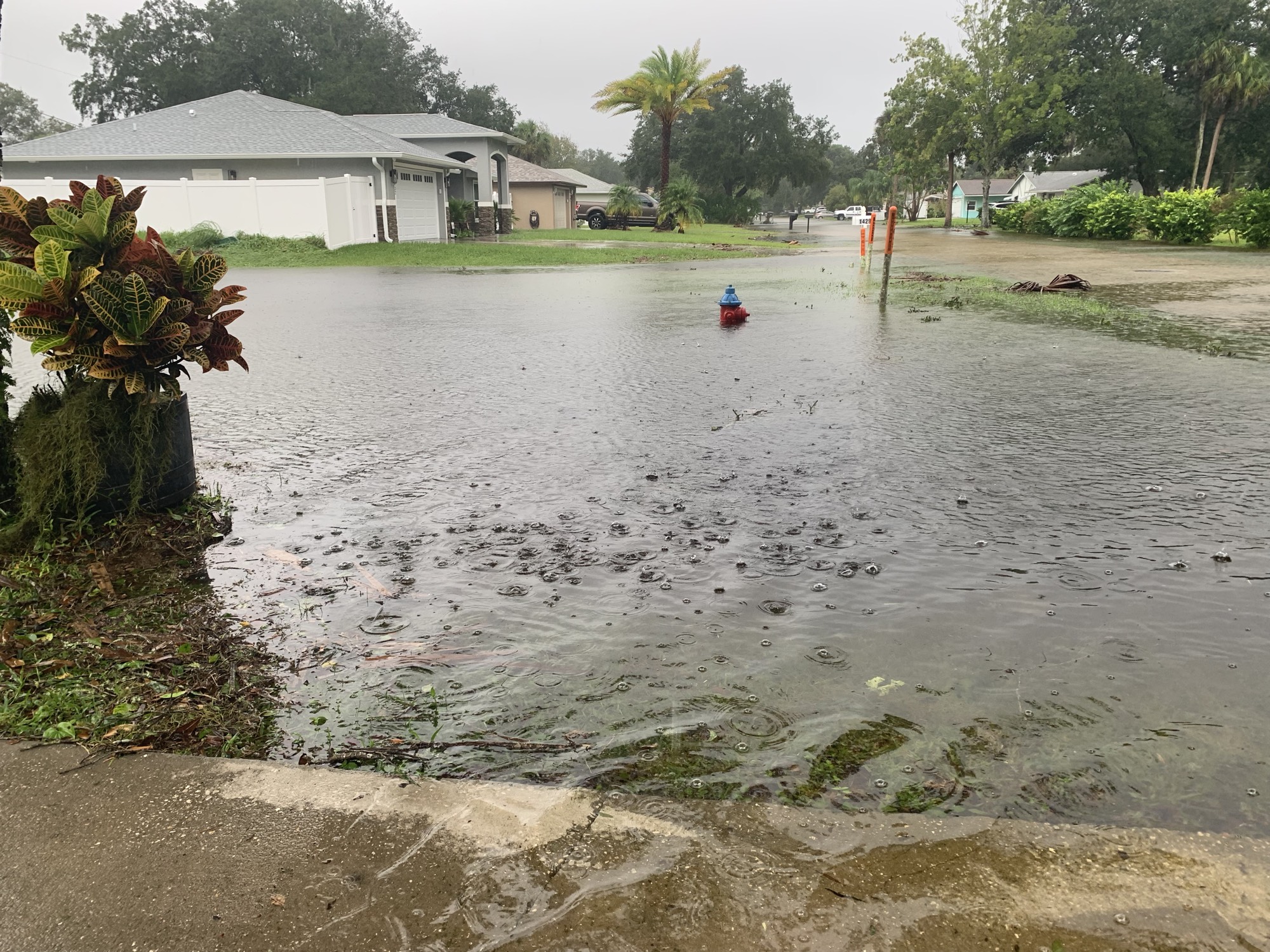
We got wind, but nothing like when it first made landfall on the opposite side of the state. Our gusts were around 70-90mph (we heard). The rain was tremendous, and although Florida is a huge sponge, it is also flat. This area got nearly two feet of rain within 24 hours!! That is a lot of water.
Our yard is small and cleanup was quick. Mostly we had fronds from the palm tree out front and some branches from the oaks, but nothing big. We will need a new roof, because we lost a bunch of shingles, but we were lucky because the house did not flood.
FloodingYard cleanupDebris pickup
We have a generator and ran it for the four days while we were without power. It kept our fridge going so we didn’t loose food. We cooked on a single electric burner. Once the internet went out there was no connection to news or anything and it got super boring! I’m glad to have a knitting hobby for times like these.
I know many people are still dealing with the devastation from wind and flooding. Flooding was the biggest issue in my area on the central east coast of Florida, and the debris piled along the roads gives an idea of the ongoing troubles.
Knitting at the window with Fontana in my lapCooking breakfast
Please keep reading the blog
See what I am knitting, and read my pattern reviews.
My five favorite online yarn shops to find and buy wool.
I love to use wool when knitting and I must buy my yarn online. I’m sharing my five favorite shops for ordering the wool I like.
Here in Florida I love knitting with wool yarn. It is never cold like up north, so I knit using wool year round. I hate when summer for everyone else comes and all the yarn sellers start pushing their linen and cotton. Summer for me is a great time to knit as the air conditioner is running full time to keep me cool.
No single place offers all the types of wool I like to buy, so it’s good to know who has what, and at what price. I’ve discovered a few favorite places to keep in mind. Most places will let you sign up for e-mail notifications, and it’s worth doing so to keep an eye out for sales.
What I Look For When Shopping For My Favorite Yarns
I look for what most knitters look for: Good prices, big selections, good images, free shipping – or how much I need to spend to get it, yarn winding cost, and ease of use. Fast shipping is a plus, as is the little “thank you” on the receipt. Goodies are a bonus!
When it comes to buying wool, these five places stand out.
Only recently have I found a nice bargain on wool yarn at Dublin Bay. They are located in Montana and had a nice selection of Soft Donegal tweed yarn. For my first order, I purchased three skeins to knit the Kate’s Poncho. The yarn was priced way below other shops, and I received the yarn in two days!
They have lots of other wool available and I’ve noticed their Spindrift (J&S) is also priced low compared to some other online places. Shipping is free to the US for orders over $35 (at current writing, which is quite low). I will be shopping here again.
Most of the time, I order my yarn from Wool and Company. They offer …..free shipping for any amount of purchase, and they will ….. wind yarn for free!
I’ve never found any other online yarn seller who offers those two things!
They carry Rauma, Brooklyn Tweed, Woolfolk, and Lopi, just to name some of their wool selection.
When knitting a large garment, such as a sweater, the cost of yarn can be high. It pays to shop around – or wait for sale notifications – when planning a big knitting project.
Fairlight Fibers is the place I’ve been buying Jamieson & Smith Shetland wool which they usually carry in many colors. They offer free shipping after spending so much, but that amount has gone up to $80 and used to be less. They will send out e-mails with sale and discount information so it’s worth signing up if you like the types of yarn they sell.
This store has a huge selection of yarn. The website is easy to navigate and the notice of free shipping for orders over $100 is right there to see. Sign up for e-mails and get sale notices. They also send along a little collection of thank-you goodies! This is what I received when I recently purchased some Flette Bulky yarn by Woolfolk, on sale – a very good sale! – at their shop.
My recent order shipped very fast and was safely tucked inside a sturdy box. I’ve only ordered a couple of times, but they are one seller that will remain on my favorites list.
Wow, nice collection of goodies from Eat, Sleep, Knit!
When I began knitting, the Woolly Thistle was the first online place I found with lots of pretty wool for sale. The shop location is New Hampshire, my previous home state, which is what drew me in.
I moved away from NH because I couldn’t afford to live there. This yarn shop is pricey, which tends to go along with the whole New England vibe. But, they do have a wide variety of wool and some items that can be hard to find elsewhere here in the US.
At present time, get free shipping in the US for orders over $149. This is high compared to most other online sites.
Photo courtesy of Pixabay
Please Share Your Favorites
I’m sure there are many other online places to find nice wool, good sales, free shipping, and offer yarn winding. If you have any favorite places to buy your wool, please leave a comment and share the info to help the rest of us out. Thanks!
Knitting is much more involved than picking up two needles and some yarn. Seriously, there is a lot to know. For this reason, I have enjoyed my knitting journey because there is always something else to learn. If you enjoy continuous learning, knitting may be just your thing!
The good news is that when beginning to learn to knit everything can remain simple. The focus is to get used to holding needles and working the stitches. Get the yarn onto the needles and practice. A beginner question may be, “What needles do I need to get started?” So, I’m here to give you some advice on buying a first pair of knitting needles. And if the knitting bug strikes, they surely won’t be your last pair.
None of my advice here is set in stone! I’ll try to mention some basic things to consider about buying knitting needles.
Knitting Needle Types
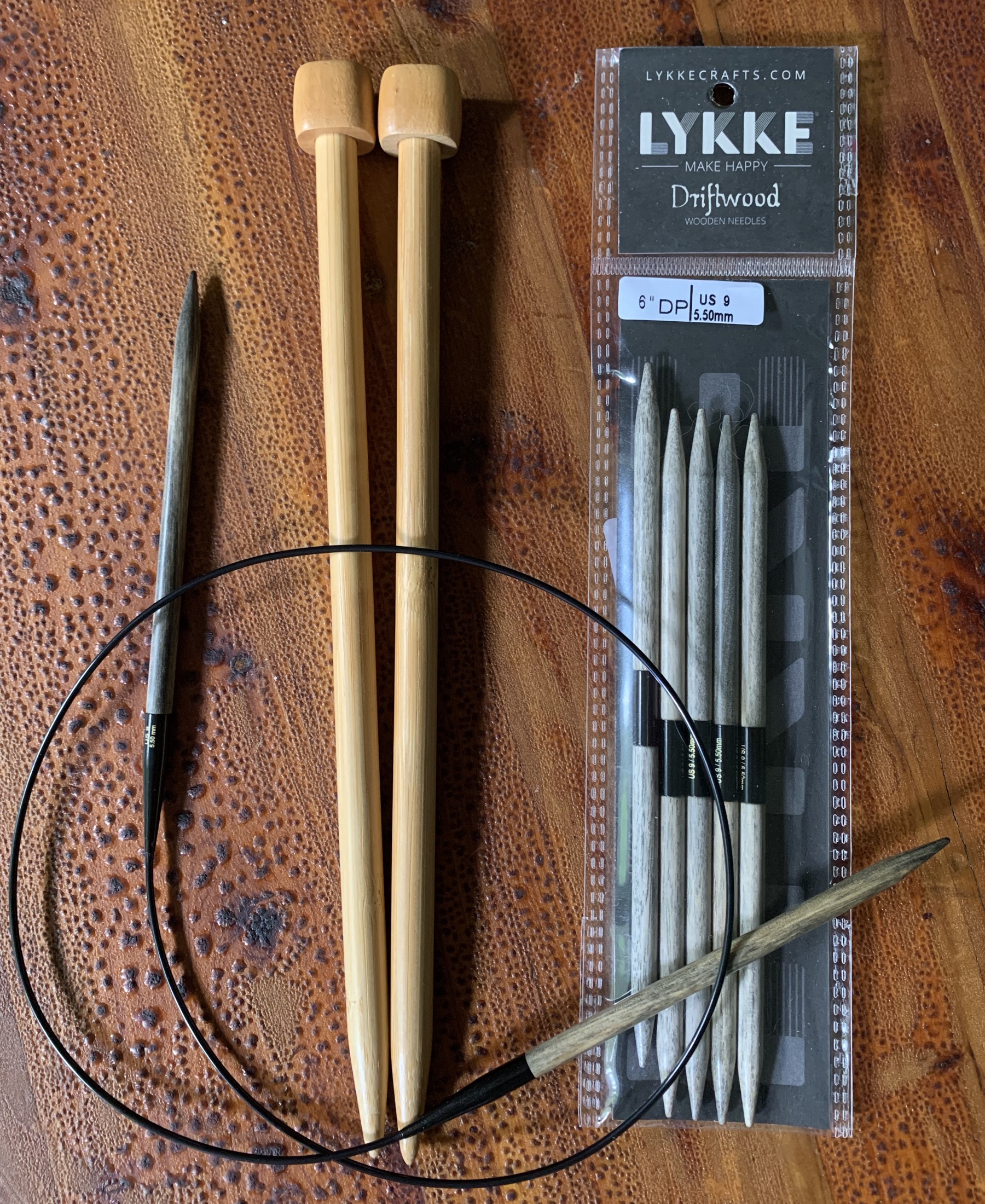
Knitting needles come as straight – which are just that, or circular meaning you can knit around and around if you choose. Then there are the double-pointed needles which are used for small circumferences like socks and mittens and hat crowns. There are cable needles for cabling too.
Straight, circular and DPNs
My Beginning Knitter Days
I had a set of my grandmother’s knitting needles, which were all straight needles, and that is what I picked up to use when I began my knitting journey. I didn’t want to spend a lot of money trying something I might not end up liking.
My Grandmother’s straight metal needles
The old metal needles were difficult to use because the yarn slipped easily. My next step was to buy wooden straight needles for better control of the yarn.
Later, I learned about circular needles, and I have since purchased a lot of those. Circular needles are metal or wood needles joined by a cord. When knitting, pretend they are not joined and use them just like straight needles.
FOR BEGINNERS: Because they can be used for flat or circular knitting, I would suggest buying a circular needle to begin with. Namely a 32-inch wood circular needle – in a natural color, probably size 7 or 8. Colored wooden needles can sometimes bleed onto fingers and yarn so stick with natural wood.
Circular Needles Work 2 Ways
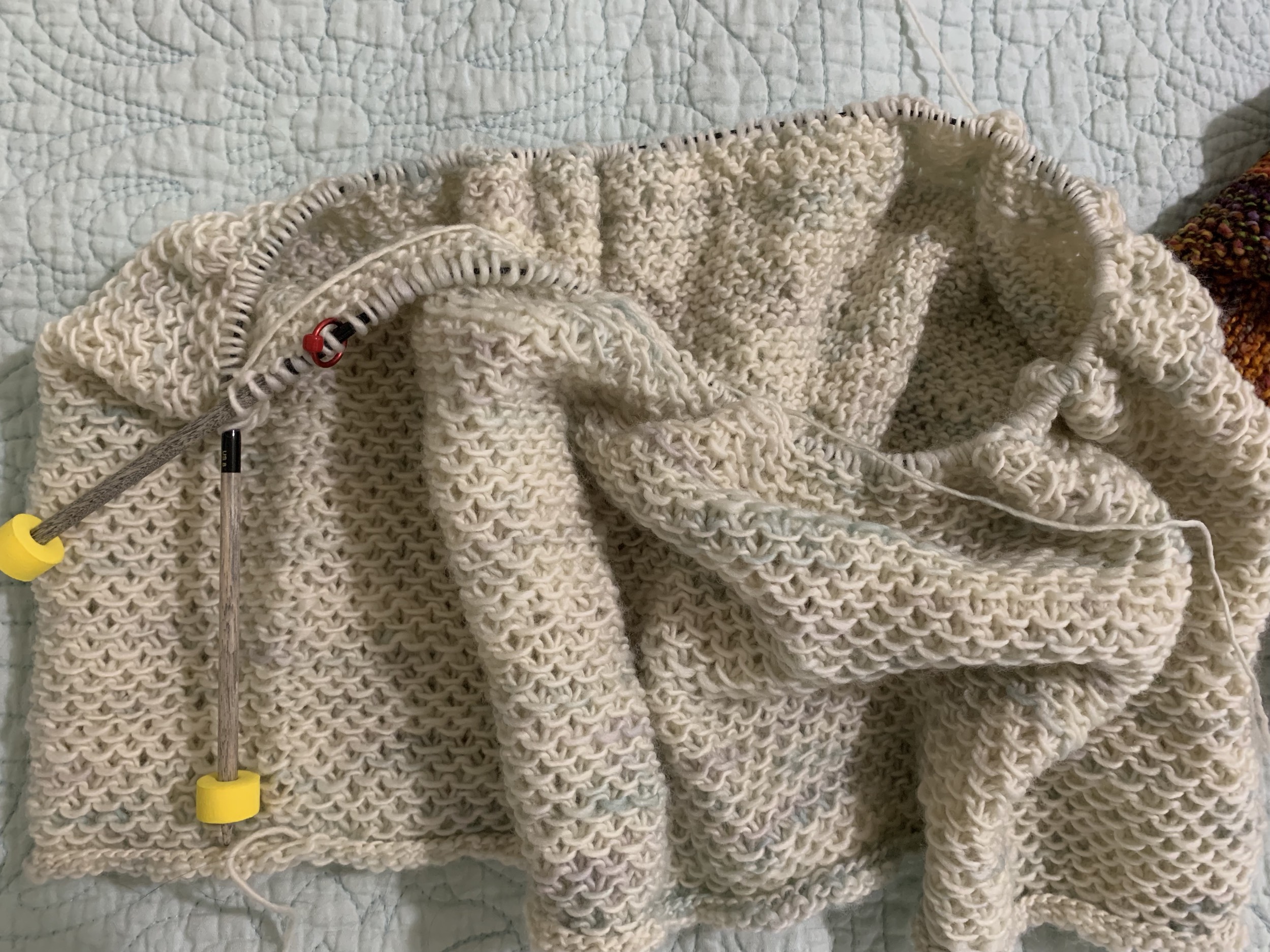
In the photos below I am using 32-in circular needles to knit a cowl and a shawl. The Honey Cowl (white) is knit in the round – the stitches have been joined and knitting is done round and round, called “in the round”. The Hidden Gems (orange) is knit back and forth called “flat knitting”. See the red cord with no stitches? Even though I am using a “circular” needle, I am knitting back and forth – just pretend there is no cord attaching the needles. I also could have used straight needles to knit the shawl.
Honey CowlHidden Gems Shawl
Practice knitting can be done on either type of needle, as long as the circular needle is long enough to be comfortable in your hands. A 32-inch long circular works perfectly, which is shown in both of my photos.
Circular Needle Advantages
More stitches will fit on a large, circular needle
Needles are attached so you won’t lose one!
Larger projects can be knit, such as blankets, wraps, and big shawls.
Circular projects like hats and sweaters need this type of needle, not necessarily this length.
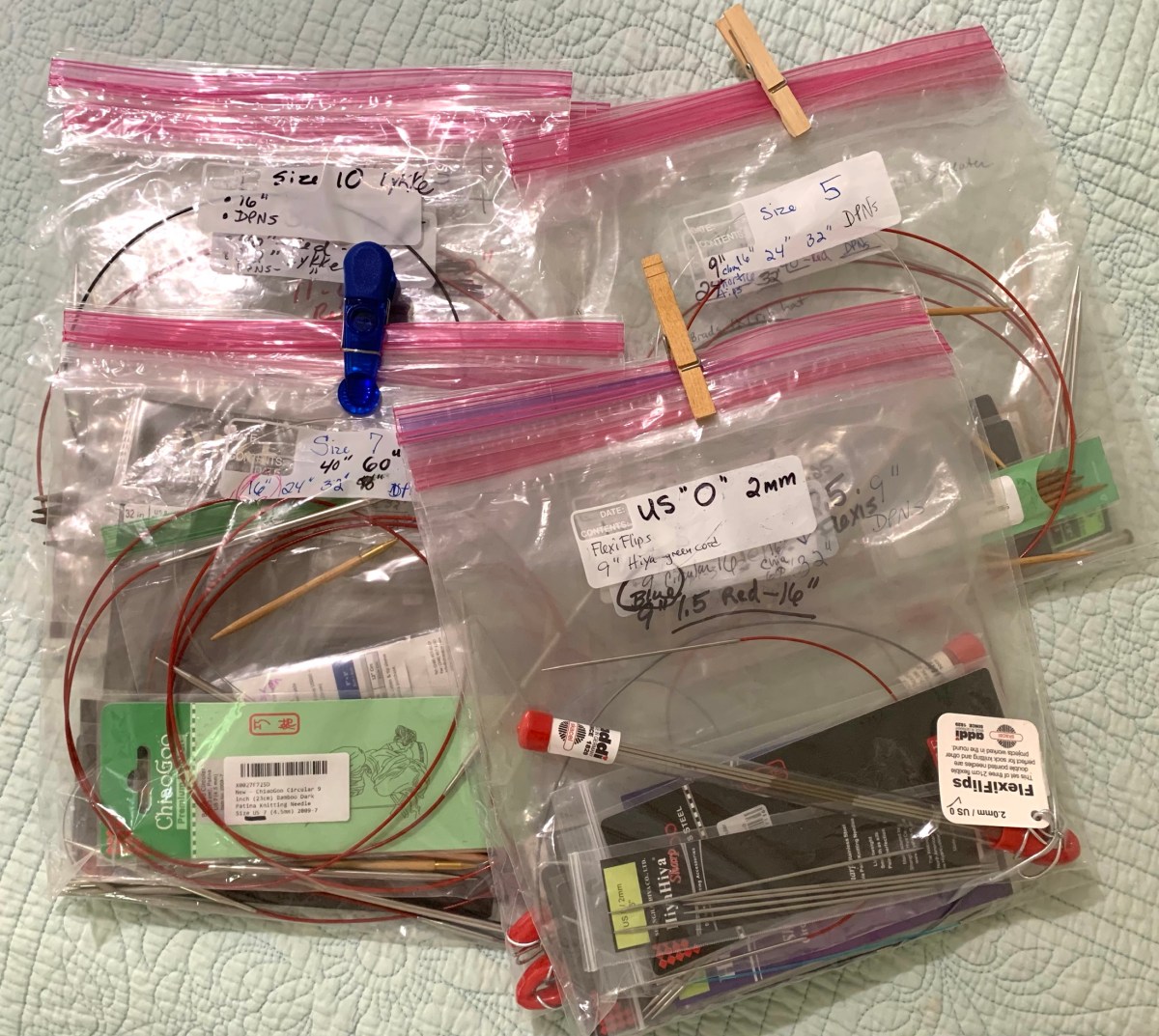
My favorite needles are Lykke Driftwood (wood – seen in the Honey Cowl photo). I also have a lot of Chaio Goo (metal ends with red cord, in the Hidden Gems photo) – these are both affiliate links to Amazon. Wood is easiest, especially for beginners.
A Word About Interchangeable Knitting Needle Sets
If you KNOW you will be knitting a lot in the future, spending money on a knitting needle set could be a wise decision, although I don’t recommend it for beginners. I want to mention these as options for down the road.
Needle sets come in pieces, with various size “ends” or the needle part, and various cord lengths. The needles can be attached to any cord (interchangable) and it gives you pretty much every size and length of needle needed for knitting nearly everything, but not quite.
An interchangeable needle set does not include double-pointed needles, and sets only include certain sizes. Read carefully about what is included if you plan to purchase an expensive set like this. And they are expensive, but worth the money if they will truly get use.
The downside of buying a set is the question of how well the needles attach to the cords and stay attached. Once the needle is put together, how easily does the yarn slide over the join. Read comments beneath an Interchangable Needle set before you buy to find potential problems.
Buy Needles That Are Printed With Sizes That Are Easy to Read!
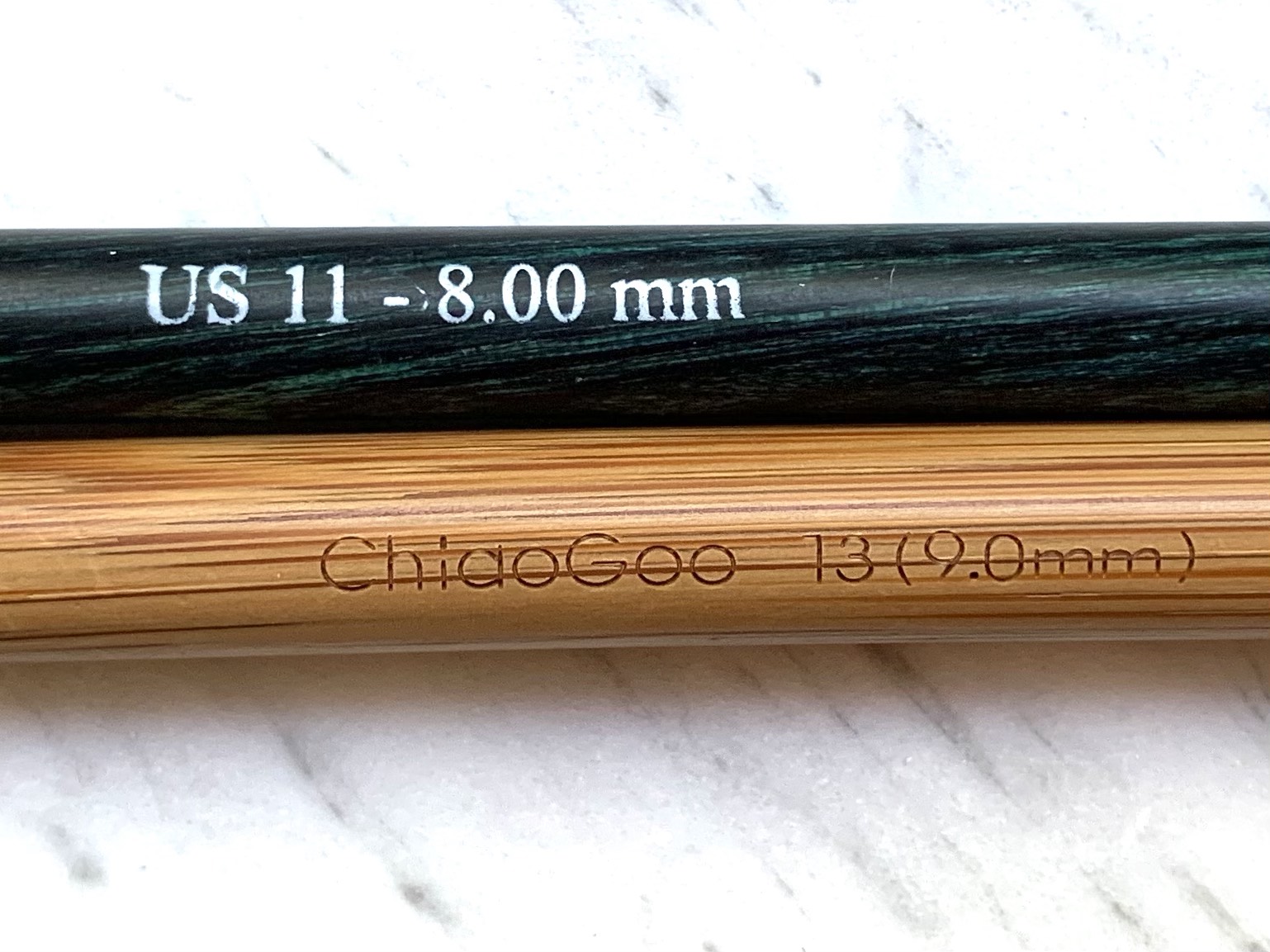
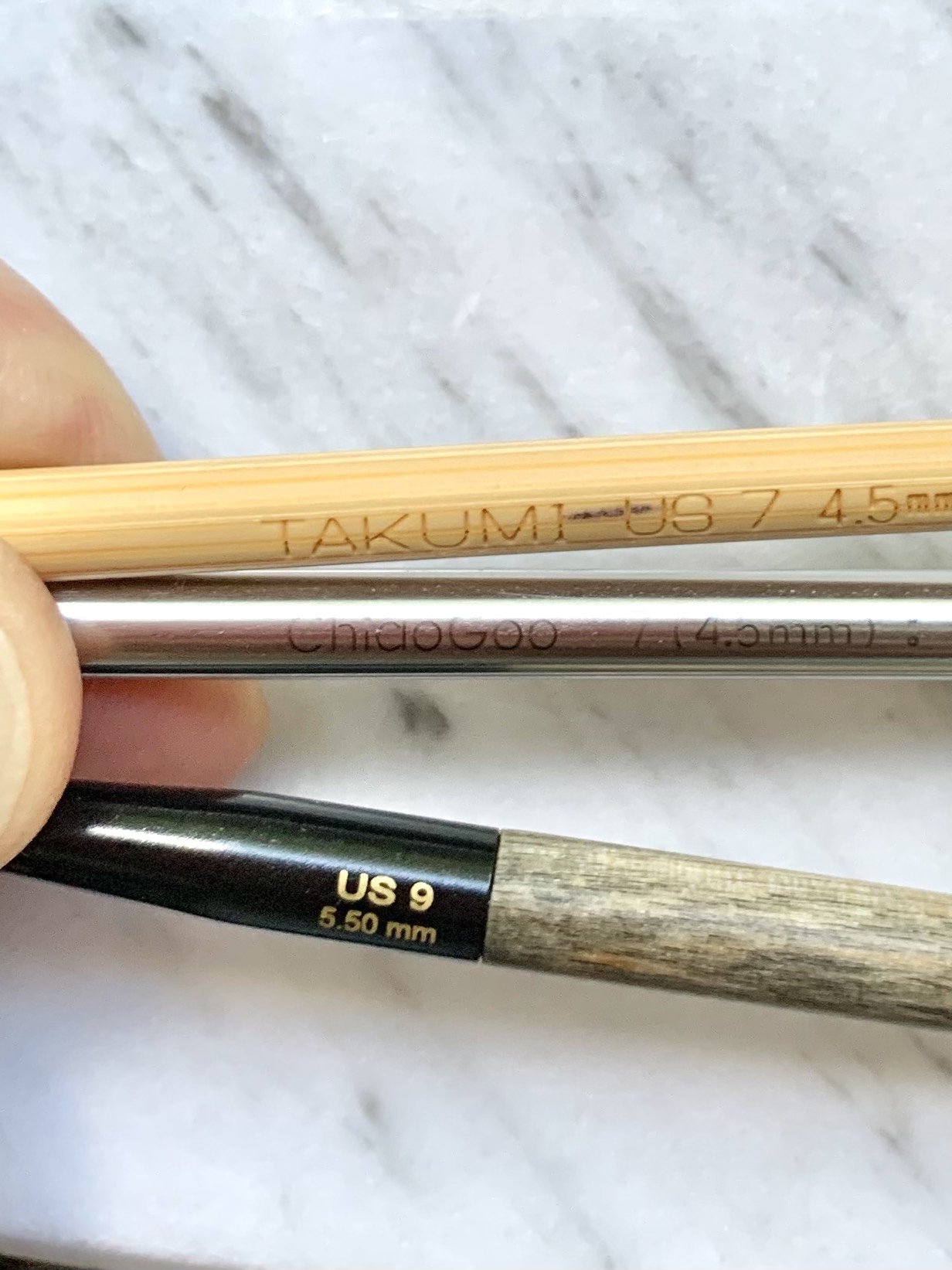
Each knitting needle you buy will be sized. If you are knitting a pattern that calls for a size 8 needle, you will look ON THE NEEDLE to see the size. Some brands make it easier to read the sizes than others. If you have bad eyesight this is especially important.
Another reason I love the Lykke brand is their easy-to-read sizing. I love ChiaoGoo metal needles and have many, but finding the size on those metal needles is often difficult for me!
Having a knitting needle gauge sizer is also helpful, but they are not always super accurate in my opinion. You stick the needle through the hole to see the needle size. Every knitter probably has at least one and you may want one down the road.
Matching Needle Size to Yarn
So now you have purchased your knitting needles and the next important part of knitting is of course the yarn. If you bought size 7 or 8 size needles, buy a worsted weight yarn. Worsted can also be called aran. (Read more about yarn weights.)
Tip: Buy a lighter color when choosing yarn as the stitches are easier to see.
Yarn and needles need to match up, or be close. What I mean by that is a skein of yarn will usually have a suggested needle size on the band. Check the label on the yarn you buy.
The label below shows that the “Shelter” yarn is worsted weight and needle size suggestion is 7-9 US, or 4.5 to 5.5 mm. This label says that when knitting with this size and this yarn you will knit approximately 4 1/4 to 5 stitches per inch.
Why is this important? Well, if I wanted to knit a scarf using my size 8 needle, and I want my scarf to measure around 12 inches wide, I would need 60 – 5 per inch x 12 inches – stitches on the needles. This math gives you the number to cast-on. If you are using a pattern, match the needle size and yarn type to the pattern requirements and cast on as the pattern says.
This is a rough guess, and that is okay for an item such as a scarf. But when knitting a garment, such as a sweater, you will need to be much more careful and find your gauge – but that is for later. For now, we just want to get the yarn onto the needles and begin knitting!