If you are planning to begin your knitting hobby, but have no idea what you need to start, I have some ideas for you. On this page I list some essential tools any beginner knitter will need. Knitting needles and yarn are pretty obvious, but knitters will also need other tools they may not realize.
I am an Amazon affiliate, meaning I can earn money from sending buyers to Amazon through my links. This in no way affects the cost of the product. If an item is a “paid link”, it will say so. Other links are to places I shop online, where I am not an affiliate.
Knitting Needles
My personal favorite needles are by Chiaogoo (Amazon paid link) – sounds like “chow goo”. The circular needles are stainless steel, and are connected with a red cord. Sometimes cords can be stiff and annoying, but ChaioGoo’s cords are nice with, sturdy needles. My only complaint is that the needle size, printed on the metal, can be hard to read.
BEGINNERS: Knitting needles connected by a cord are called “circular”. They work just like normal straight needles, but are connected. I suggest buying this type. You will use them a lot more than straight, unless all your knitting will be small projects that are knit flat (back and forth). Circular needles allow for both flat and round knitting (as in sweaters).
If you are a beginner, wooden (or bamboo) needles may work best as the yarn won’t slip as easily.
The Chiaogoo 32″ lace circular is a good general length. It will work for sweaters or doing magic loop, which is small circumference knitting. If you like knitting small circumference projects or parts of projects, using 9″ needles, this company has those too.
Don’t go crazy buying needles until you know you will be continuing this journey. One needle (circular size 7 or 8), some yarn (worsted weight), and scissors are enough for a simple beginner practice project!
Chaiogoo Brand Knitting Needles
More by ChiaoGoo include bamboo needles and needle sets. See this list and buy the correct size needle for the yarn you plan to use (look at the yarn label).
- Interchangeable Needle Sets (Amazon, paid link) – pricey (do not invest in these if you don’t yet know if you will like knitting enough to continue!)
- Double-pointed needles – paid link -(One option to use for hat tops, sleeves, and small circumference knitting.)
- Straight needles (paid link), or Single points (flat knitting only – nothing circular). These are not needed if you have circular needles.
- Crochet hooks (paid link)
- View the Smartisans website to see more Chaiogoo needles and accessories.
Lykke Brand Knitting Needles
Other needles I like to use are from the Lykke brand. When researching for this brand I found loads of needles I never knew existed! Lykke needles are wood, copper, and bamboo, and the only ones I have are Bamboo. But Lykke crafts has many needle styles and colors as you can see on their site here and buy at my links in the list below.
Buy Lykke Interchangeable needle sets at Amazon. (All links below are paid links.)
- Lykke Cypra, copper needles, interchangeable set.
- Lykke Blush, pink needle set.
- Lykke Indigo, blue wood needle set.
- Lykke Grove, green wood set.
- Lykke Colors, Various colors needle set.
BEGINNERS: Buy single needles and not sets to begin. Or better yet, borrow some needles from a knitter friend.
An interchangeable set includes needle points in many different sizes. It also comes with various cord lengths and tools to attach the cords and needles. Sets can come with other items, and also come in a case for organizing. A set like this can really save you money in the long run, if you knit a variety of items.
There are many other knitting needle brands. I have used Knitter’s Pride and had a needle break on me. For that reason, I personally no longer use that brand. Clover brand is another I have used, and Knit Picks is popular. The only thing I would suggest is to buy a well known brand. Any needles or sets on Amazon that have odd names, beware.
How to Choose Yarn
Beginners should start with inexpensive yarn, but not too cheap. I do like natural fibers as opposed to manmade acrylic. Be careful with cotton also as it has little give and is harder to knit with. But cotton is perfect for dishcloths and towels.
Once you have done some knitting, you will most likely find your own favorite yarn brands.
Choose a yarn, and then the needle size that works for that yarn (or vise versa). Skeins and balls will have suggested needle sizes listed. Worsted weight yarn is thick, but not too thick. I suggest it for beginners. Needle size will be 6-8 usually and your needle doesn’t have to be exact. This is a suggested size, and later “gauge” will be the deciding factor for needle size.
Yarn Ideas For Beginners
I buy a lot of my yarn from Wool and Company which is a US company. They offer free shipping (US shipping) no matter how much, or little, you buy. They will wind your skeins for free also. (Only hanks – or twisted skeins – need winding.) Wool and Company also offer discounts for big amounts of certain yarns. The site is easy to use, with a very wide selection of yarn.
- Cascade 220 Superwash, worsted weight, machine washable – knit on size 6-7US size needle. Comes in lots of colors, in a ball that does not need winding.
- Berroco Merino 401 – wool, hand-wash – knit using size 7-8 needles. Lots of colors, does not need winding.
- Rauma – Worsted wool, hand-wash. Knit using size 8 needles. Skein does not need winding. Many colors including heathers.
- Knitting for Olive – Heavy Merino wool (worsted ball). I love this company as their yarn is ethically sourced and created.
- Harrisville Designs, Highland wool – A workhorse yarn, meaning it will hold up for years and the fabric will get better and better. It will need winding. Wool sourced in the US, and spun in beautiful New Hampshire. (Read about my visit to the shop in Harrisville.)
Yarn is easy to find by supporting a local yarn store in your area. I’m in Florida where apparently knitting is not a big hobby. For this reason, I always buy my yarn online.
After knitting for a few years, I prefer natural fiber yarns and nothing synthetic. I also do not like “Superwash” yarn due to the fact that it stretches and grows when washed.
Yarn Winding Tools
Yarn for knitting and crocheting comes in various ways. Some yarn does not need to be wound before using. Hanks of yarn must be wound (see example photos below).

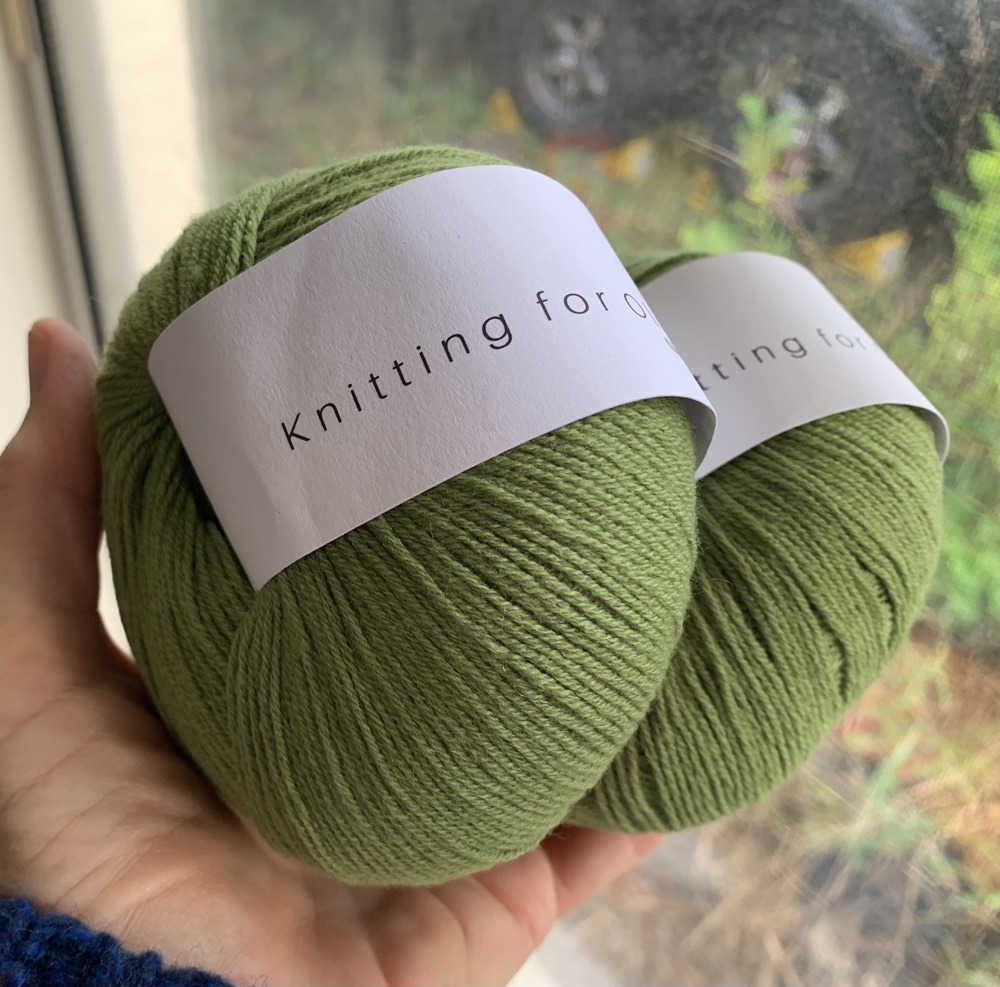

I admit that I do not have tools to help me. I open up the hanks, drape the loop over my knees, and wind the yarn into a ball. It is time-consuming. I don’t really have the space for the tools needed to wind, so I do it this way.
If you want to wind yarn into pretty little cakes, you will need tools. The umbrella swift (paid link) is used to hold the loop from the hank. From that, the yarn is attached and wound on the ball winder (paid link).
Watch this YouTube video to see how these items work together. Also, be aware that you should wind your yarn as you plan to use it. Wound up yarn can be stretched and could change the elasticity and structure of the yarn. I always wind my balls (over my knees) very loosely.
Other Knitting Tools and Accessories
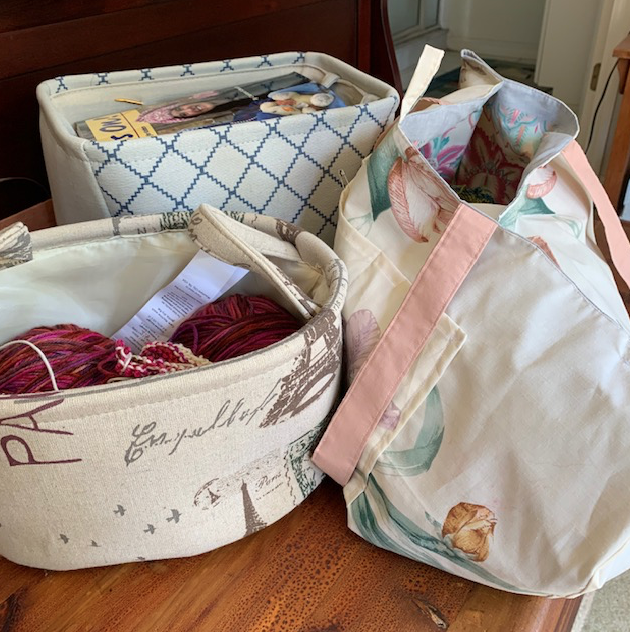
Project bags are nice to have. I do have a few, but often my knitting projects are also housed in paper bags! Etsy is a good place to search for project bags, and you will be supporting a small business. At least one of my bags came from April Nine Designs at Etsy.


Necessities For Knitting and Finishing a Project
All of the links below are paid links to Amazon.
- Scissors – Must have tiny, sharp scissors.
- Tape measure – measure lengths, of yoke, sleeves, hat height, etc.
- Stitch markers – use while knitting to separate sections. Look for smooth markers, in the size you need (small or large around to fit your needle size) and have other unique markers to use at the BOR (beginning of the round).
- Stitch stoppers / needle point protectors – keep knitting on the needles.
- Stitch holders – Metal or plastic clips of many sizes can be used to hold stitches until they will be knit. Waste yarn can also be used in place of these.
- Needle gauge – Use to find the size of needles
- Embroidery needles – used to weave in yarn ends, and more.
- Cable Needles – If you ever knit cables. I don’t knit a lot of cables, but these little wooden needles are really nice for holding stitches well.
- Eucalan – wash for hand knits of wool. Just soak, and no rinsing! Leaves wool items feeling nice. No for use on synthetic fibers.
- Blocking boards / mats – use to dry projects after washing.
Even if you do not crochet, it is a good idea to have a small crochet hook (paid link) when knitting. When you drop a stitch, you will need it to easily fix that mistake.
Online Help
One last very helpful item would be to have some saved YouTube videos. Certain knitters have been generous enough to share their “how to” videos. There are bad ones, and good ones. I think I have gone through most of them to find the best! I have a list of knitting videos (not made by me) and some of my saved videos may be helpful to you. A few are for specific patterns.
Whenever I can, I will include a link to the video, on a blog post, that would be most helpful. As you read through this blog, you will find videos that I suggest. Maybe begin with my Casting On page, where I share many options to do that simple, yet important, beginning step.
Purl Soho is a website that sells yarn, but also has patterns and lots of good tutorials. I used them a lot when I began knitting a few years ago. Go here to find a big list of their Free Knitting Tutorials. Also, they have a page full of fun, Decorative Stitches! If you don’t have a project in mind, just whip up a little square of fun stitches for practice.
I find knitting to be relaxing and enjoyable. I hope you will think so too!
Image by Çiğdem Onur from Pixabay
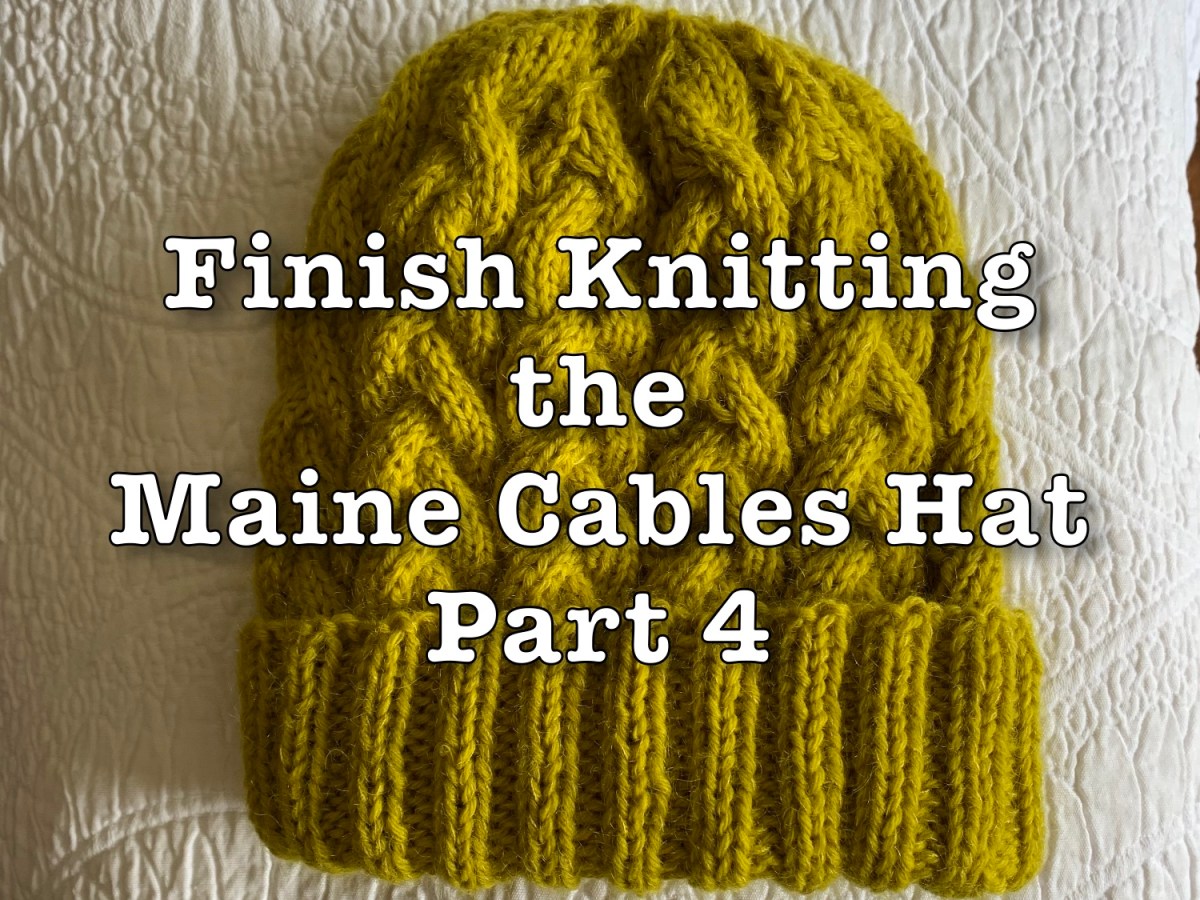
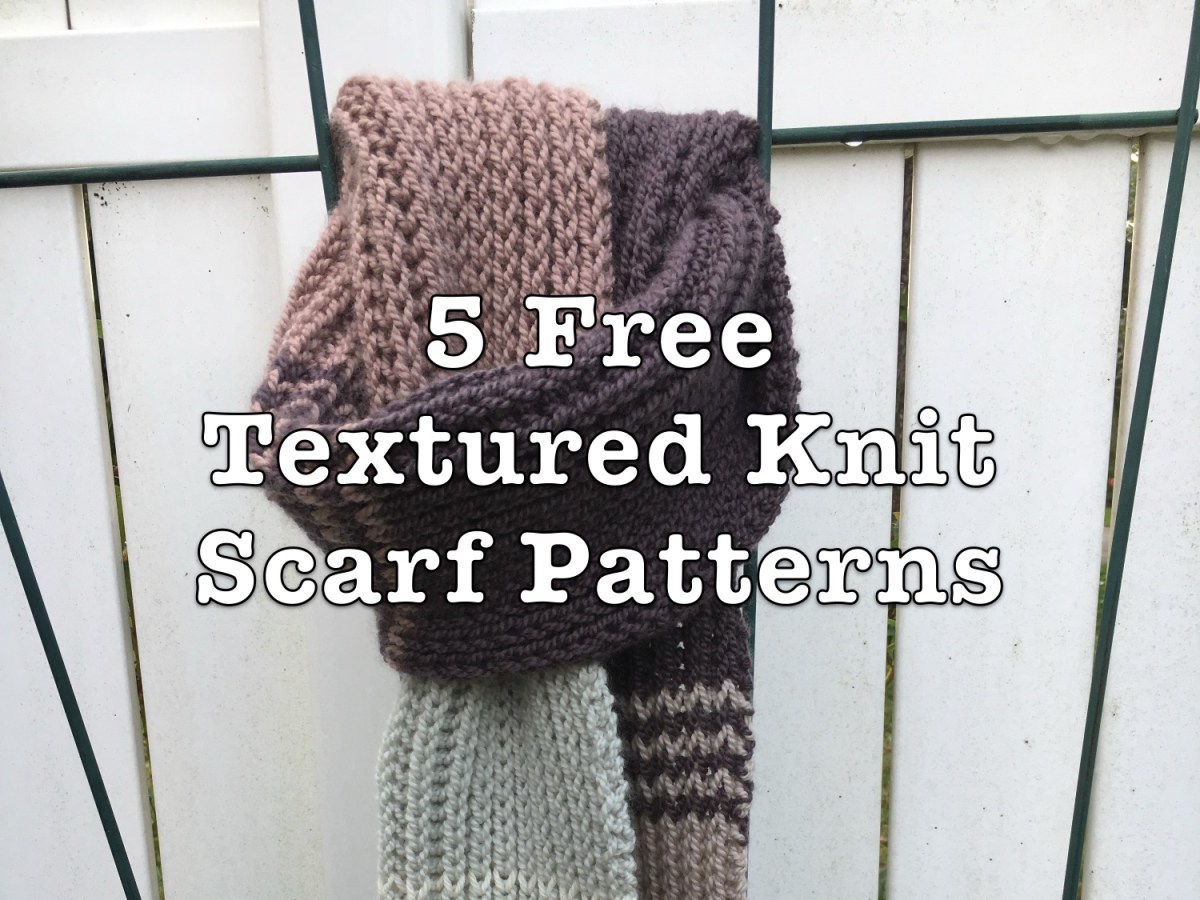
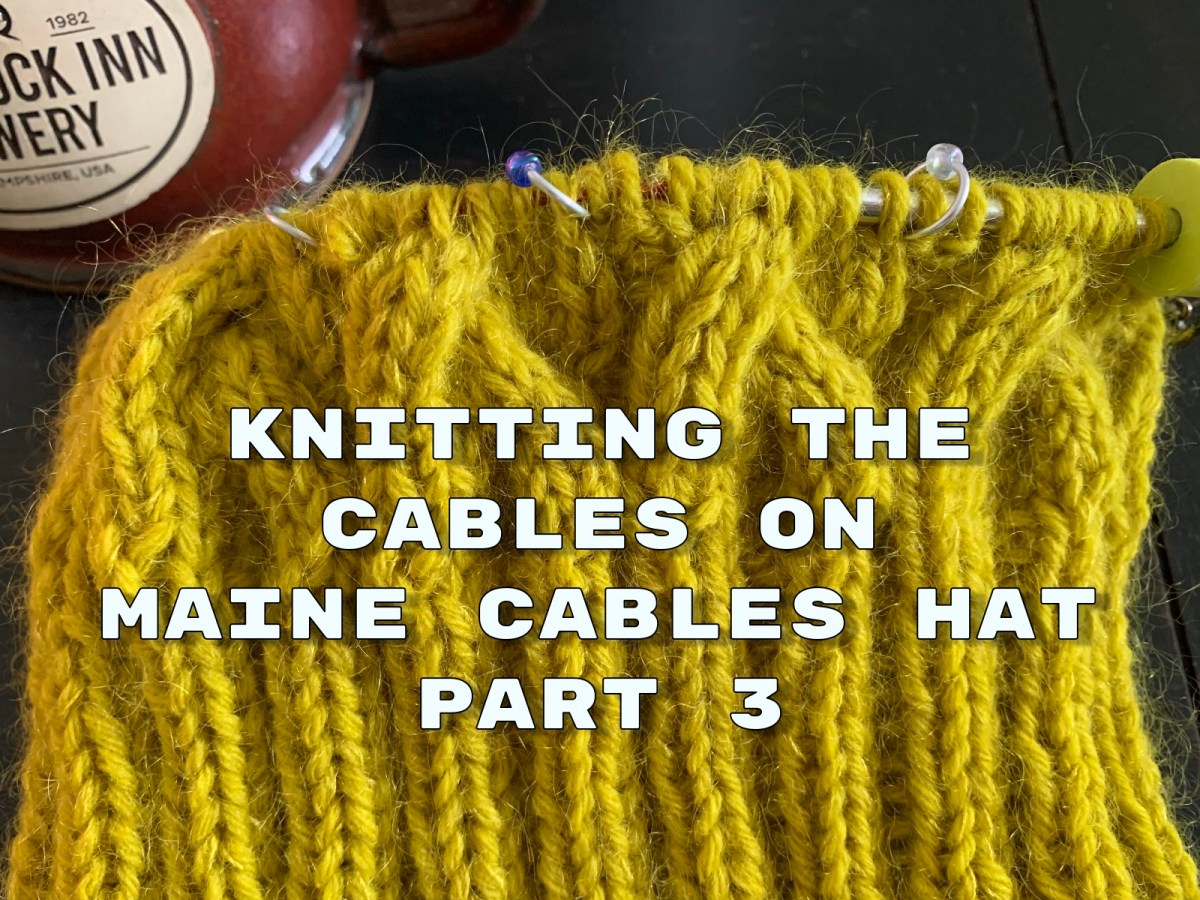
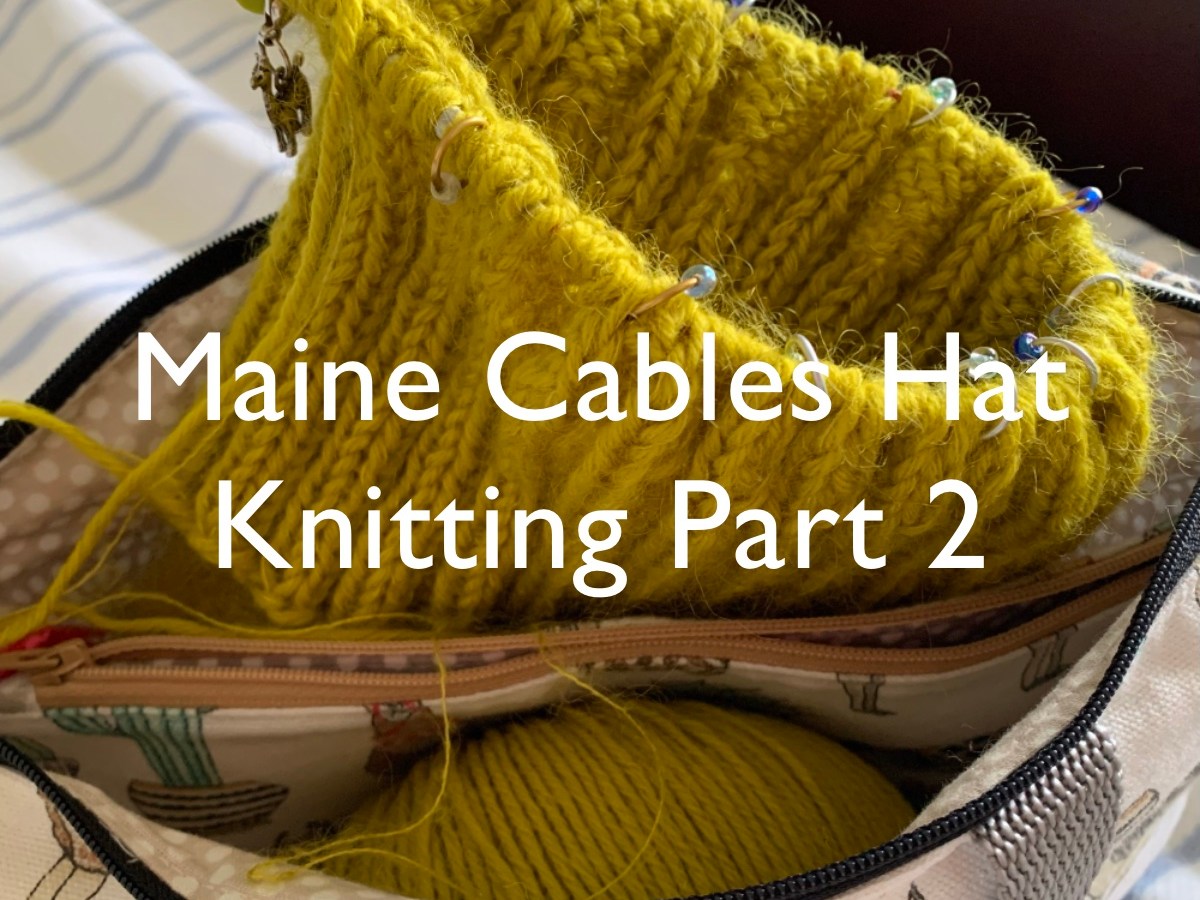
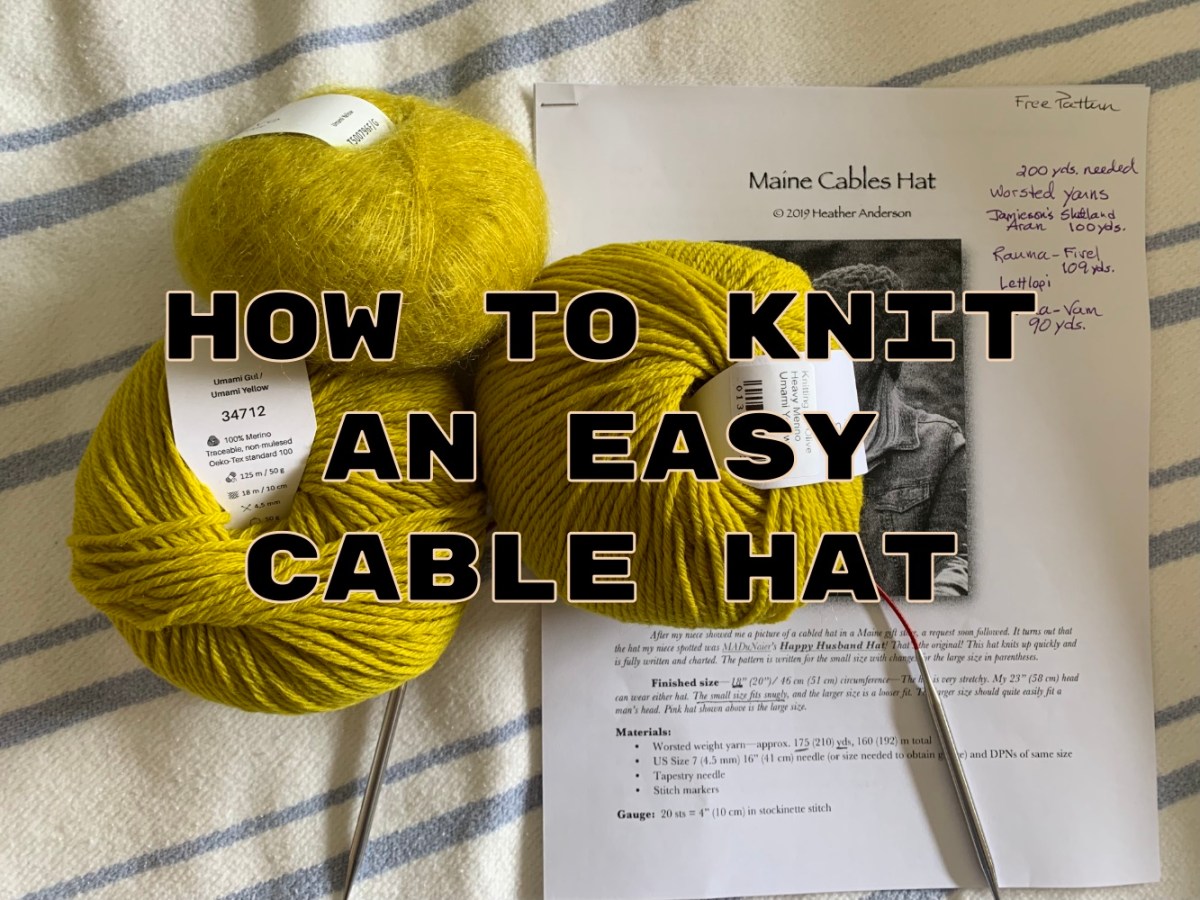
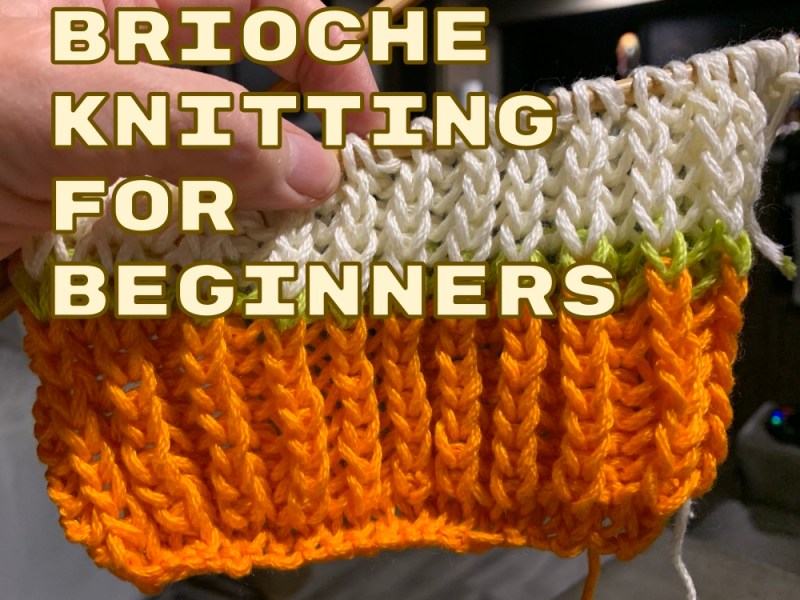
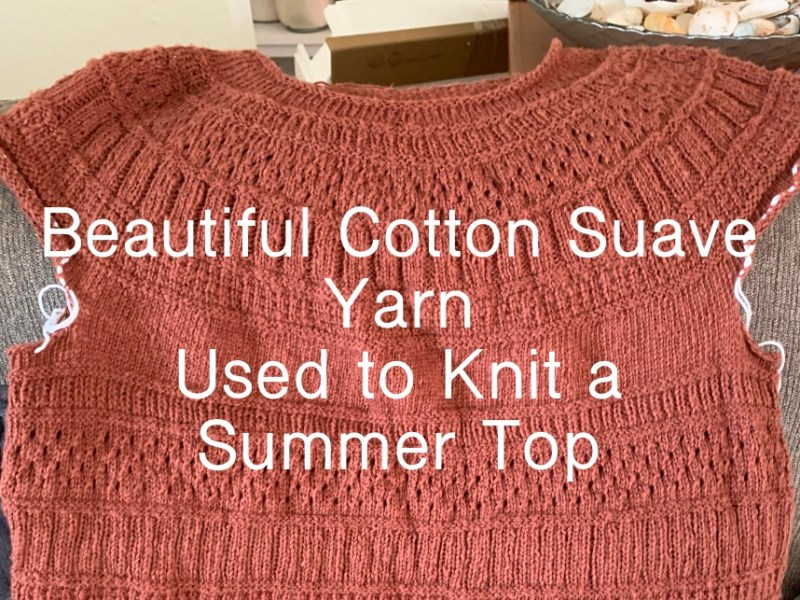
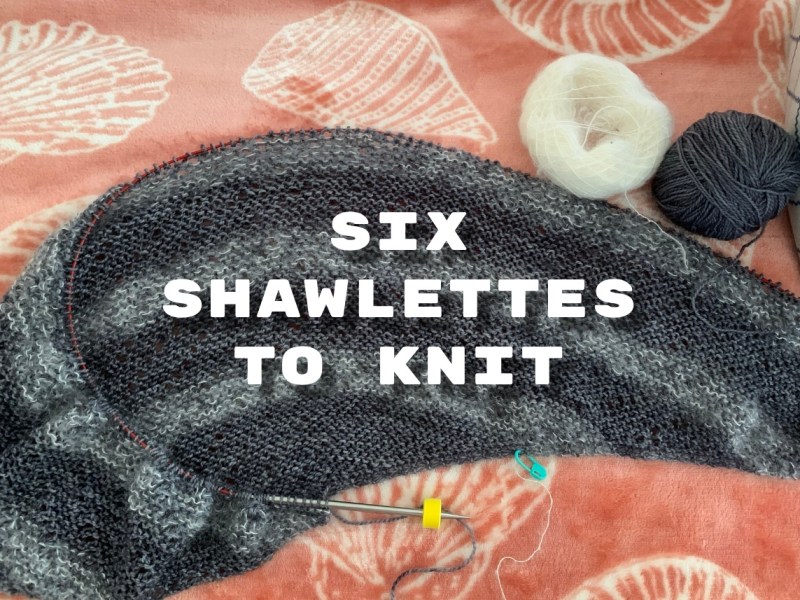
Here are some things I’ve been knitting.
Something went wrong. Please refresh the page and/or try again.


