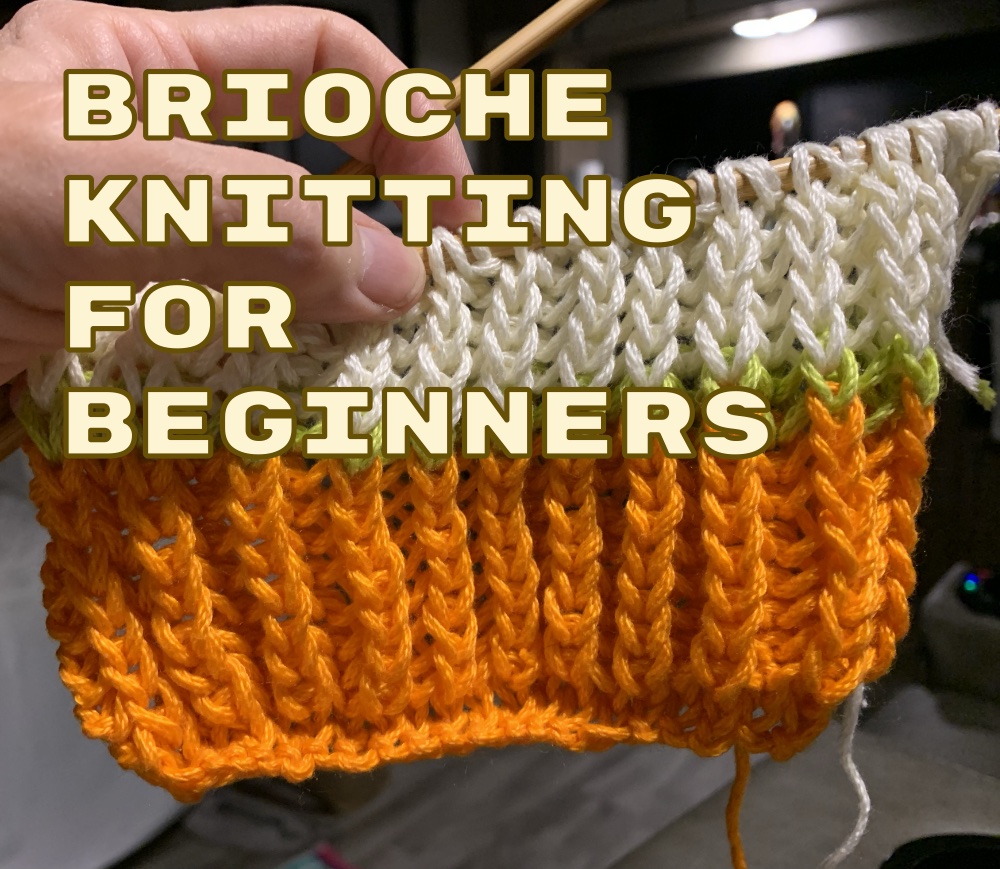
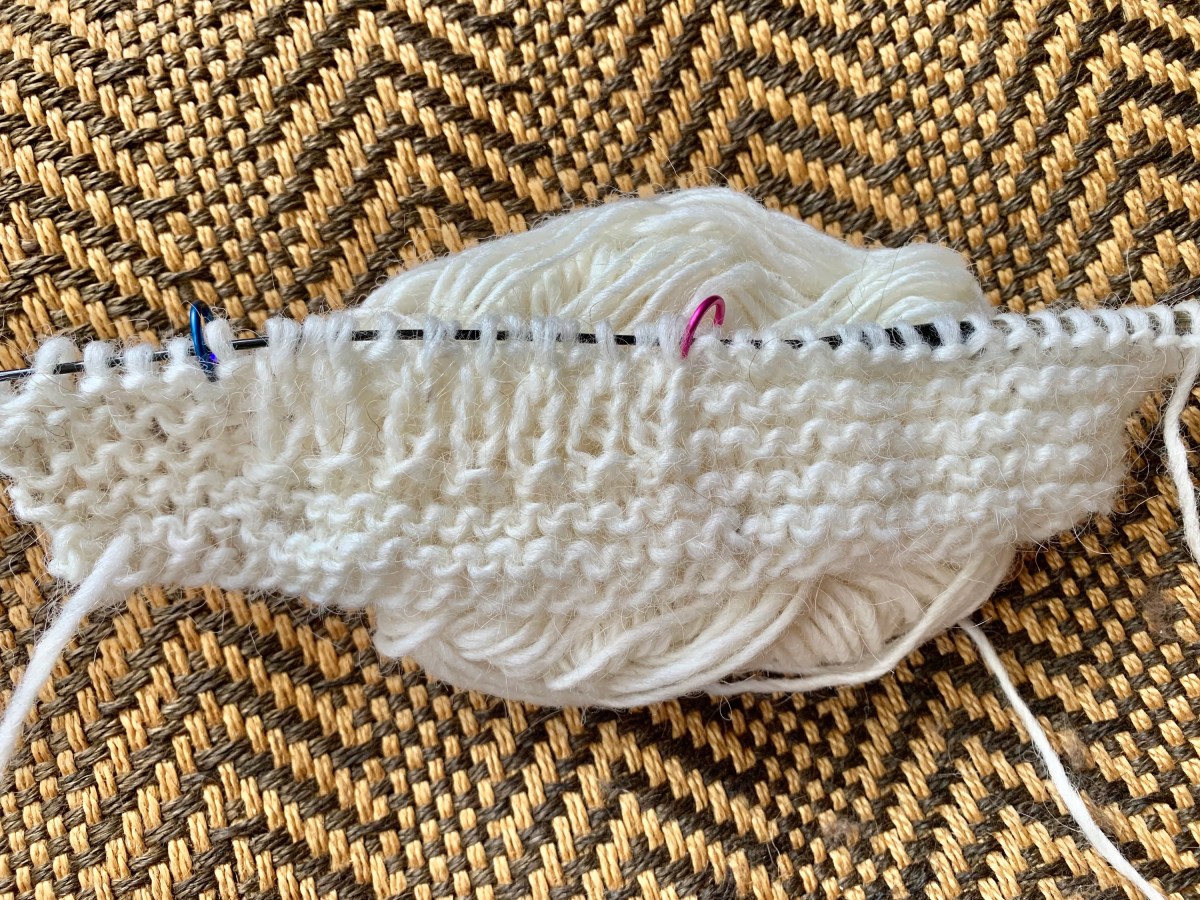
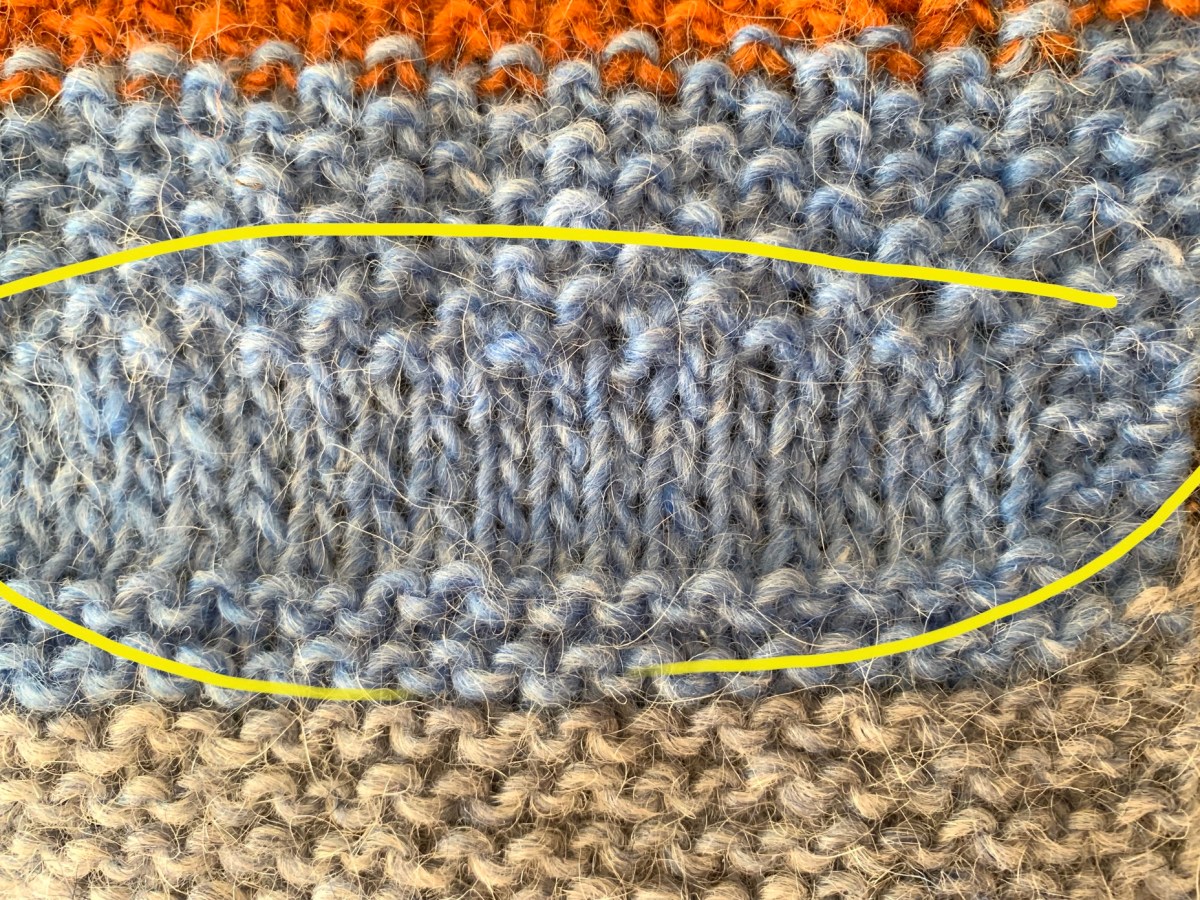
When beginning to knit brioche, choose a simple pattern and get some practice. This post has video tutorials and easy pattern links for knitters who want to learn something new.
Let me admit right up front that I am not a brioche knitter. I have tried it numerous times and failed. I consider myself a brioche beginner. The basic stitch is not hard, but I think the trick is to knit a very easy project to become accustomed to the stitches. After that, if it seems like something to pursue further, go on to try two-color brioche, and pattern knitting.
A reader recently left a nice comment on my old post where I had given up on brioche after failing at it miserably. I was doing a more difficult two-color hat pattern. The comment reminded me to finish this post.
Back to Brioche, Simple Beginner Tutorial
I hadn’t planned to knit brioche. But, I was camping in Florida, and thunderstorms were all around us. I needed something to do while confined inside the camper. I had brought my cotton yarn to create new dishcloths because I had no other knitting project to bring. I’ve wanted to go back to Purl Soho and find some fun, new stitches to use for a dishcloth. It’s where I found them years ago and have been using the dishcloths ever since.
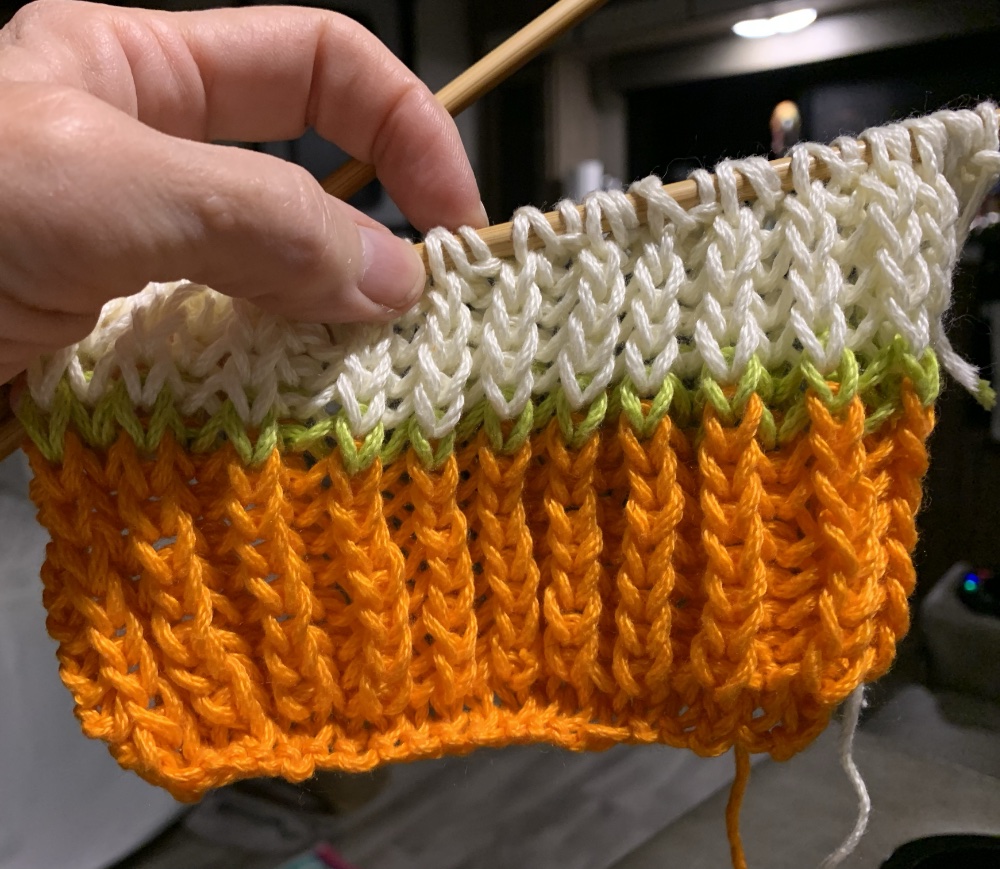
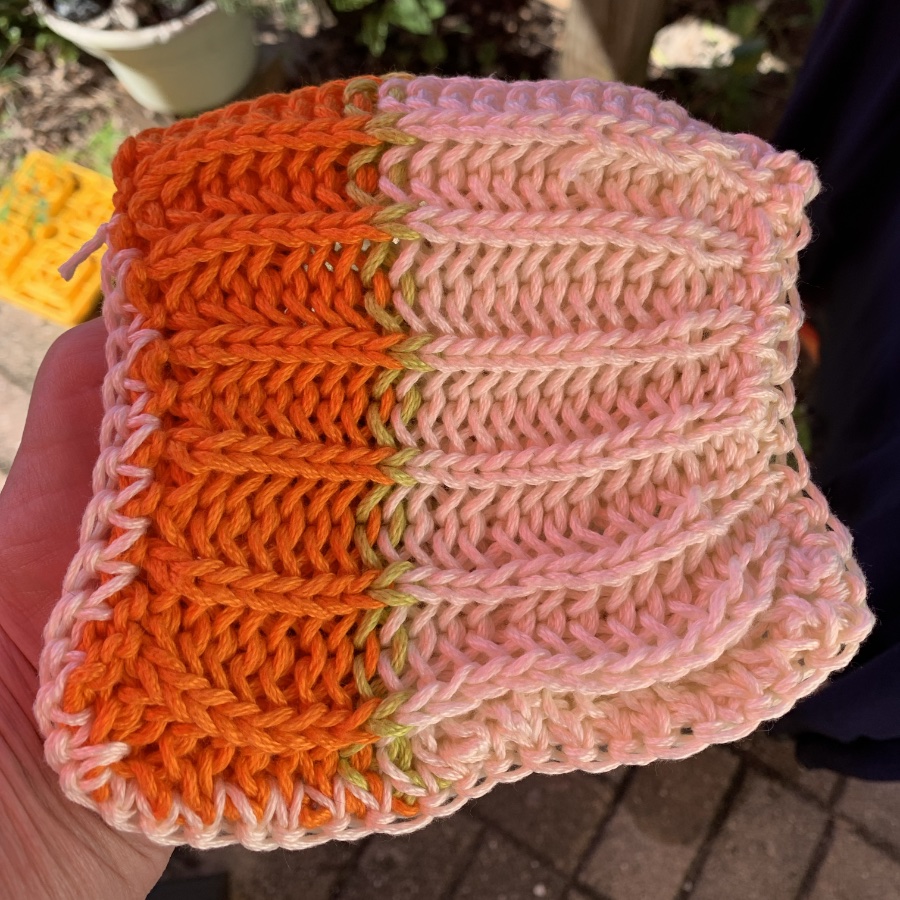
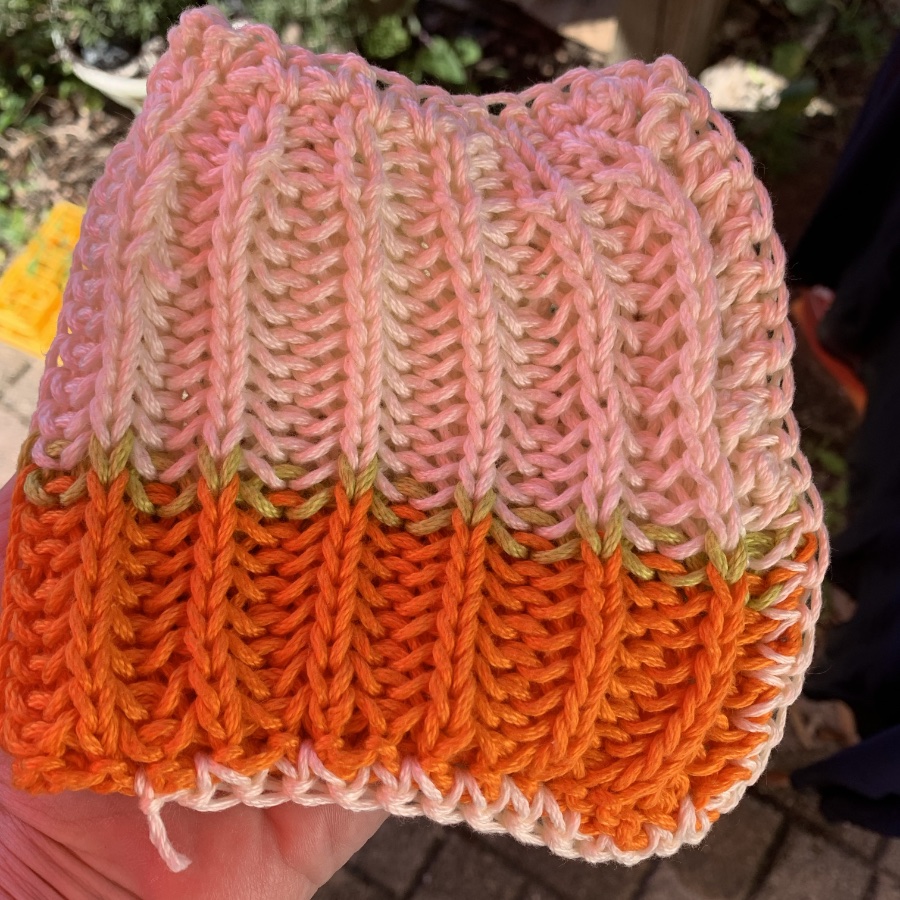
Brioche cotton dishcloth using one yarn color at a time.
Purl Soho has always had some interesting tutorials on various stitches which I like to try out on simple, small projects. They also sell pretty yarn and have many helpful tutorials. I noticed that they include sewing, weaving and embroidery tutorials – in case you are interested. And I am! I will be checking out the embroidery.
What is Brioche Knitting?
Brioche is using simple knitting stitches, yarn overs, and sometimes purls to create a ribbed, squishy, fabric. It is thick with detailed ribs on both sides which makes it reversible. It can be knit in a solid color, or using two colors. It’s very pretty for certain projects, but it is also tricky when it becomes advanced. This is my own opinion.
Basic Brioche Video: Knit Flat (Back and Forth)
A few Purl Soho tutorials cover brioche knitting. I have a bit of a negative response to “brioche” because it has been tough for me to complete a project. However, I reconsidered and watched their brioche knitting video tutorial. It is easy to follow and it perfect for a beginner brioche knitter. *Except that it was not clear to me that there is a knit stitch at the beginning and endof the row. In the video, she never finished a row!
In the video we are given the steps – cast on an even number of stitches, and do a set up row. After that the brioche stitch continues on row after row. So how do we end the project?
Purl Soho does have many helpful videos for knitters. They have many brioche videos; for making increases / decreases, fixing mistakes, and doing two-color brioche (flat). I see nothing for binding off in brioche.
Since brioche is made up of a doubled up stitch (BRK – brioche knit), it is counted as one stitch but looks like two. This is due to the yarn overs. When it comes time to the bind-off for brioche, check out this video by 10 Rows a Day.
I ended up doing a simple, regular bind off for my dishcloth because I don’t care how it looks. For a nicer project, I would follow the real brioche bind off tutorial.
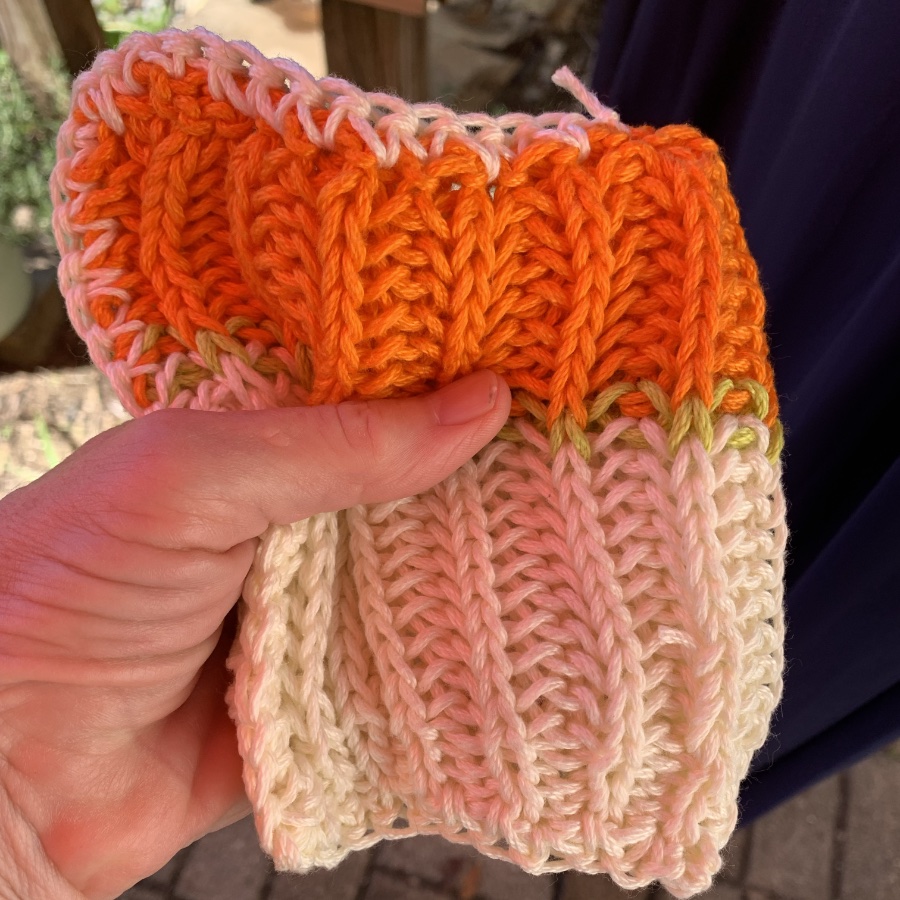
After washing, my brioche cotton dishcloth became very wide so I folded it in half and crocheted the edges together. When you do a real brioche project, choose the correct yarn (wool!) and needle size and your brioche will look much nicer than this!
To Begin, Don’t Knit a Complicated Brioche Project
Here is my suggestion. Don’t pay for a brioche knitting project before trying out the stitch on free patterns. Do a simple, flat (back and forth) brioche stitch item. Maybe progress to a two-color flat project. Do some increases and decreases and then maybe knit in the round. I’m saying get the hang of the way brioche looks and works.
Basic Brioche Abbreviations – Only Two for Flat Brioche
To begin a simple brioche flat pattern, you only need to know a few abbreviations. For circular brioche, you need to know more. I’m not going there.
bk2tog – brioche knit two stitches together. You will see two wonky stitches side by side, and knit them together.
YOS – bring the yarn over – from back to front between the needles – and slip the next stitch which is a purl stitch, purl wise. Then, the yarn goes over the needle to the back (this is the yarn over – not between the needles, but over the top of the right needle). Now you are ready to bk2tog.
After all that practice (many dishcloths later) if you still want to try a pattern, buy one from a reputable designer who will supply good directions.
Purl Soho has a simple and FREEBrioche Scarf pattern knit in one color, at their website. After you watch their brioche video (linked above on this page), grab some of their nice yarn and knit a long scarf.
Look for a flat knitting project without a lot of anything (increases and decreases) but simple back and forth. One scarf I have had in my favorites for years is Westknits- Bundled in Brioche – it is a FREE scarf pattern that could be knit all in one color, or using many colors (two at a time). I want to knit it one day! This one would be great practice and a great way to use up leftover yarn.
Westknits has many brioche patterns. Many of them look very complicated, and also a bit bizarre. Stephen West also includes a lot of video tutorials for his patterns, which is so helpful. These are ideas for those who feel confident with brioche.
Free Hat Pattern in Brioche – for the brave beginner.
Purl Soho also has a FREE hat pattern for Two-color brioche hat which is knit in DK weight yarn. This circular project requires more knowledge. You will also have to decrease in brioche at the top of the hat. It is such a pretty hat, but I’m honestly afraid to try it. *Note also that Purl Soho’s 2-color brioche video tutorial is done flat, not in the round.
If I ever find a good tutorial that walks me through cast on, joining, knitting, decreasing, and everything that has to do with brioche in the round, I will let you know! If you have one, please share.
Beginners can get started with these simple, free, and fun projects to knit. Advice is given for choosing yarn and needles, with links to simple patterns.
For beginner knitters, I’ve written this page to help you begin a first project – a scarf. If you are very new to knitting, I’ve listed a free washcloth / dishcloth pattern for practice. Once you are used to knitting and purling, move onto the bigger scarf project.
If you already feel comfortable with knits and purls, skip the washcloth and go directly to the Wheat Scarf notes (scroll down the page), where you will find the pattern link. A scarf is an excellent beginner knitter project.
Small Project Practice – Begin with a Dishcloth
There is no reason not to make something useful when you first pick up a pair of knitting needles. A little dishcloth is the perfect item. All you need is cotton yarn and knitting needles.
This pattern link goes to Ravelry and is offered for free by Tia Stockton. Follow her link to a blog page where she shares the easy pattern.
Here are some dishcloths I have knit while trying out various stitches. They are excellent for experimentation because they can look bad, be full of mistakes, and still work well!
Hand-knit cloths hold up well.
You will have to cast-on (see my cast-on videos page)and cast-off or bind off– video below. There is no getting around those two things. They are needed for almost everything you will ever knit. (Exceptions: hats and mittens don’t have a normal bind-off.) As a knitter, you will do these two things so often that they will become easy. And they are important parts of the project, so take your time.
Stitches to practice: Knitting and Purling, Casting On and Binding Off when finished.
Dishcloth Knitting: Choosing Needles and Yarn
Buy needles: Size 7 or 8 US (4.5mm or 5mm) circular knitting needle – length 32 inches. The scarf pattern below takes an 8. My preferred brand is Lykke (paid link) or ChiaoGoo (affiliate link to Amazon). OR buy straight needles (paid link). Either will work for these projects, but the circular will probably get more use down the road if you plan to continue knitting.
Better yet, borrow some needles! Use a needle size that is close to the recommended needle size. Find that on your skein of yarn.
Wood or bamboo needles are better for a beginner because metal needles will be slippery. The size 7 or 8 circular needle will also work when I want to knit a shawl (another good beginner project) or sweater because it is nice and long. Circulars work for any type of flat knitting project also – the projects on this page are knit flat.
Buy yarn: Only one skein is needed for this small project, and I can probably get a few dishcloths made with one skein. Look for a cotton yarn that can be washed in the machine. Generally cotton yarn is cheap. A dishcloth / washcloth gets lots of use and needs to be water absorbent. For this reason do not use wool or acrylic. Walmart carries cotton yarn, and if you have a LYS (local yarn store) they will carry cotton yarn. Amazon carries lots of Lily Sugar ‘n Cream (paid link) cotton in many colors.
Get practicing and have fun! If you make a little mistake keep going. Un-knitting is more difficult, so don’t worry about it. If you make a big mistake you can take it off the needles, wind it up and begin again. It’s all practice anyway.
At the end of every project – after the bind off – all the loose yarn ends need to be woven in. For this, you will need to have a tapestry needle, or a small crochet hook.
Knit the Wheat Scarf, A Beginner Pattern
When you are feeling confident, after knitting a few dishcloths, tackle the Wheat Scarf. It is an easy pattern, with knits and purls. This gives the knitter something to wear in the end!
Lykke wooden needles and two stitch markers – beginning the scarf
The Wheat Scarf pattern is from Tin Can Knits. It is a PDF download with excellent directions. They offer a huge collection of FREE patterns for beginners (and not-so-much beginners). I wish I had found TCK when I first began my knitting journey.
Need to know: Cast-on, knit, purl, working between markers, adding a new skein when one runs out, and binding off.
NEEDLES: If I made the washcloth already, I have the needles. Whether I bought a size 7 or 8 doesn’t really matter because this project is a scarf. If you need needles, this pattern calls for a size 8 US (straight or long circular). You need some stitch markers (only 2) for this pattern as well. Something like rings from ChiaoGoo (affiliate link to Amazon) work fine. In a pinch, use anything that will fit around your needle and stay put. Earrings, colorful loop of yarn, safety pins, and twist ties come to mind.
BUY YARN: 400 yards is needed for the Wheat Scarf. The pricing in my list below reflects the number of skeins needed. Yarn is sold in various lengths so purchase the number of skeins needed according to yardage in each.
Hint: Light color yarn is easiest for seeing stitches.
For a scarf you want yarn that is comfortable around the neck. It should also be warm, unless your scarf is for looks only! Personally I avoid man-made acrylic yarn and would go with pure wool, a wool combo, or merino wool for scarves. But the choice is yours as long as it is worsted weight. Because a scarf will not be washed often, a non-superwash is also a good choice. You will wash it once after knitting and rarely after that. Be aware that Superwash wool tends to stretch and “grow” when it is washed.
Do I Need to Wind the Yarn? Winding vs. No Winding
Some skeins of yarn will need to be wound before using the yarn to knit. Some can be used right away. If the skein you buy looks twisted, like the images below, it will need winding. These are “hanks”. Yarn stores will usually do it for you, if you ask, but they sometimes charge a small fee. You can also wind the yarn yourself.
Harrisville Highland yarn skeinsSpincycle YarnsThe yarns I chose are speckled, variegated and solid denim blue
Scarf Yarns to Consider
Here are some yarn suggestions. Of course you can go to a local yarn store, if you have one, and pick something out. The shop owner, or workers, should be happy to help you.
I am in the US and like to order from Wool and Company because they have a large selection of yarn, and they will wind skeins and ship for FREE!
(Links and prices – at the time of this writing – go to Wool and Company)
Cascade 220 Superwash – Solid colors, good value. No winding. Can wash in the machine. Not a favorite of mine because it is scratchy. Total Cost: 2 skeins = $26
Berroco Ultra Wool – Superwash, good value. I’ve never knit with it, so can’t say how soft it is. Total Cost: 2 skeins = $24 approx.
Manos del Uruguay Alegria Grande – This yarn has a bit of nylon with the wool. Must wind this yarn. Buying this yarn supports Uruguayan women and the yarn is beautiful in color and texture. It is not cheap but the color selection is so fun! I love Manos yarn. You will need 2 skeins for this project. Total Cost: 2 skeins = $52 approx.
Madeleine Tosh Vintage – Comes in many colors. It is expensive. Must wind this yarn. I would choose the Manos over this but many people love MT yarn. Total Cost: 2 skeins = $58
Lettlopi worsted wool – comes from the sheep living in Iceland! There is no winding required for this yarn. This will make very warm scarf but it will be hand-wash only. This yarn is strong and after washing the fabric changes for the better. See my Migrating Birds sweater. The yarn is inexpensive. Total Cost: 4 skeins = $21 approx. (My white yarn photos on this page are Lettlopi yarn.)
You may think that a first knitting project should be created with the cheapest possible yarn, but have faith in yourself! Knitting with a nice, pretty yarn is fun! Cheapers yarns are from man-made fibers, or a combination of natural fibers and “fake”.
You should plan to keep that first project forever, as a reminder of your knitting journey. No matter what, choose a pretty color that you will actually wear … and get started!
Wheat Scarf Knitting Help
Basics of the knitting project.
For the Wheat scarf you will cast-on and then knit back and forth (creates Garter Stitch) until you have three inches of knitting. (Please note that in my scarf sample I did not knit for three inches because I only wanted to show the patterning.)
Next is the set up row. The set up row changes things up a bit and sets you up for the remainder of the pattern knitting. Continue on until just before the desired length. The last bit will mimic the patterning at the beginning of the scarf to make the ends match. Bind off.
Cast on for the Wheat ScarfThe pattern emerges
Pattern Reading Help
Some things to note when knitting a pattern: When you see something inside parentheses, such as (k1,P1) and the pattern says to repeat, only repeat what is in the parentheses. Sometimes a * is used. Often a row will begin and end a certain way with the pattern repeating in the middle.
I like to read through a pattern first to visualize the project. Use a highlighter for important information. Then, go back and begin the knit. Don’t worry about gauge at this point. Gauge makes sure your scarf comes out to the measurements suggested, but since this is a scarf, it’s not necessary.
Read the pattern line by line – do as it says – and move on to the next line, or section, of directions. Keep track with sticky notes if needed.
MARKERS
Knitting patterns are written using abbreviations and a key to the abbreviations is listed. For instance PM means “place marker” and SM means “slip marker”. Markers are used to remind the knitter that something happens / begins / ends at this spot.
In the Wheat pattern, the markers remain on the needles to tell us when to knit the ribbing (the alternating knits and purls) – they divide one part from another. Put a marker onto the needle to PM (place marker) and slip it while knitting when it says SM. Remove all markers while knitting the last row that needs to use them!
The pattern emerges
IDENTIFY KNITS AND PURLS
The knit and purl section of the scarf will make a “ribbing”. In case you lose track of where you are, it helps to be able to identify knit stitches and purl stitches. Purls have bumps and knits look like “V’s”. Each stitch appears different. The knits stand out, while the purls recede. Pull down on the section to view the stitches best. The purl bumps should be very visible.
The stitches alternate for the middle section of the scarf, but they are the same on every row. Knits and purls should line up. This creates a rib.
Identifying knits and purls
HOW TO ADD A NEW SKEIN
Well, I can’t find a decent video about how to do this simple thing. All I do is when I get near the end of the old skein – leave enough length so the end can be woven in (6 inches at least) – insert the needle as if to knit – wrap the strand from the new skein around the needle, pull it through and knit it – leaving a tail. This attaches the new skein. The two pieces of yarn hanging (from the old & new skeins) will be woven in when the project is finished. You may search on YouTube for “how to add a new yarn” “how to add a new skein” etc.
Once you bind-off, all that is left is the weaving in of ends. For that you need a tapestry needle (paid link) which has a large eye for yarn.
Knit in the Right Direction!
We all need to set down our knitting at some point. If you ended up finishing a row, starting again will be easy – start at the end where the yarn is. But in the middle of a row, things can be tricky.
TIP: When you pick up your project to knit, and are in the middle of knitting a row, be sure the yarn is coming off the right hand needle. Turn the project around to the correct position. This is a beginner mistake and I have done it! If you are not careful you will be knitting in the wrong direction.
Yarn on right – yesYarn on left – no – flip work around to put the yarn on the right.
For more patterns by Tin Can Knits, visit their pattern page. Many patterns are free and they are good for anyone from beginner to advanced. Choose wisely if you are just starting out, and go back and choose something more challenging later.
All knitters (and wannabe knitters) are invited to keep reading!
This page contains a list of free knitting (and some crocheting) patterns for scarves and cowls that will knit up quickly in worsted or bulky yarn. *Please note these items were free when this page was created, and that could change.
Christmas Gift Knitting
If you are like me and the majority of the population, waiting until the last minute is typical. We have busy lives and at holiday time it’s worse. The months leading up to holiday season is the ideal time to begin knitting those Christmas gifts. We know it, and yet many of us procrastinate.
It’s okay to begin knitting late in the season, if you can find some fast knits, done with heavy weight yarn – worsted or bulky. Personally I am keeping a list of the best machine-washable yarn I can find. I have grown boys who will absolutely not hand wash anything.
Scarves, cowls and hats are about the quickest projects, in my opinion, and I’ve listed mostly scarves, a few cowls, and one necktie, on this page. A page about free hat patterns is coming!
Knitting Scarves for Guys (Unisex)
Guys can be the most difficult to buy for and that is why hand-knits could be the perfect gift. When I search around Ravelry for patterns, I see that a lot of people knit (and crochet) for husbands, boyfriends, sons and grandsons. My own grown sons, even the one here in Florida, seem to appreciate the hats I’ve knit them.
The links below go to their corresponding Ravelry page where the pattern can be downloaded. Most scarf patterns are unisex and color will differentiate male or female. Please note: Most of these items I have not knit myself. I can’t vouch for the pattern and these are ideas only, not suggestions.
The nice thing about knitting a scarf is that gauge doesn’t really matter. A scarf pattern is pretty easy to convert from fingering weight to worsted or bulky. Cast on fewer stitches if your yarn is heavier. Scarves can be knit to any length desired.
FREE … Namu Cowl – link goes to website Knitboop Designs. I have knit this cowl (see it here) and it’s lovely. It has cables, so maybe not that easy for some knitters.
Although I mostly knit, I do occasionally crochet so thought I’d include a few patterns here for the crocheters. These links are for scarves and hats, which are the easiest and fastest projects in my opinion.
When beginning to knit brioche, choose a simple pattern and get some practice. This post has video tutorials and easy pattern links for knitters who want to learn something new.
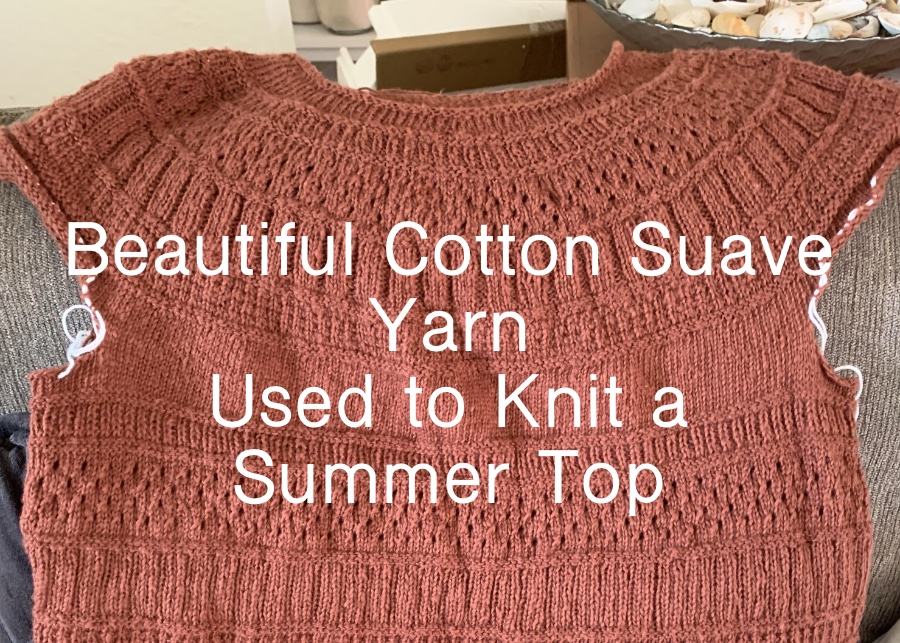
Knitting a summer top pattern using some unique cotton yarn called Pascuali Suave. It is surprisingly lovely for cotton, which you would never guess it is.
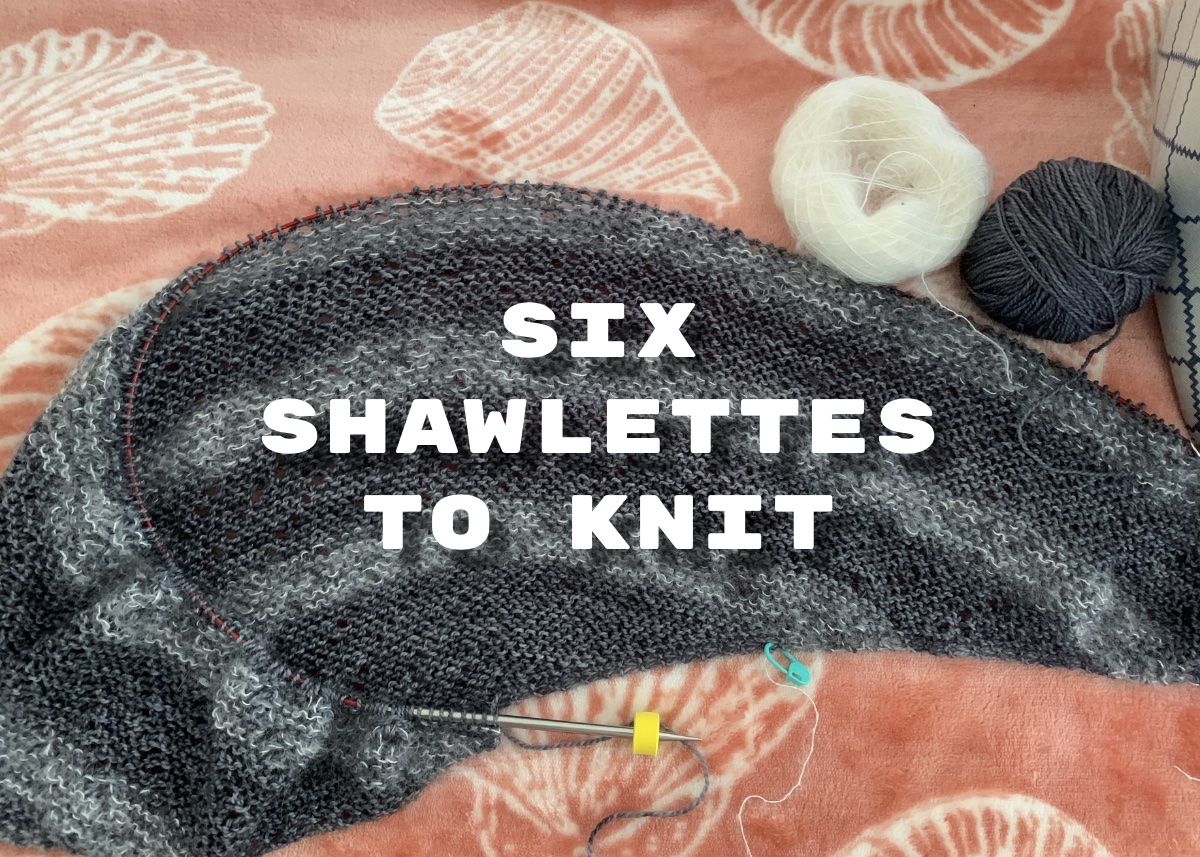
If you are looking for something small and useful to knit, check out these six shawlette knitting patterns. They make nice little accessories for warmth and are sweet gifts for friends.
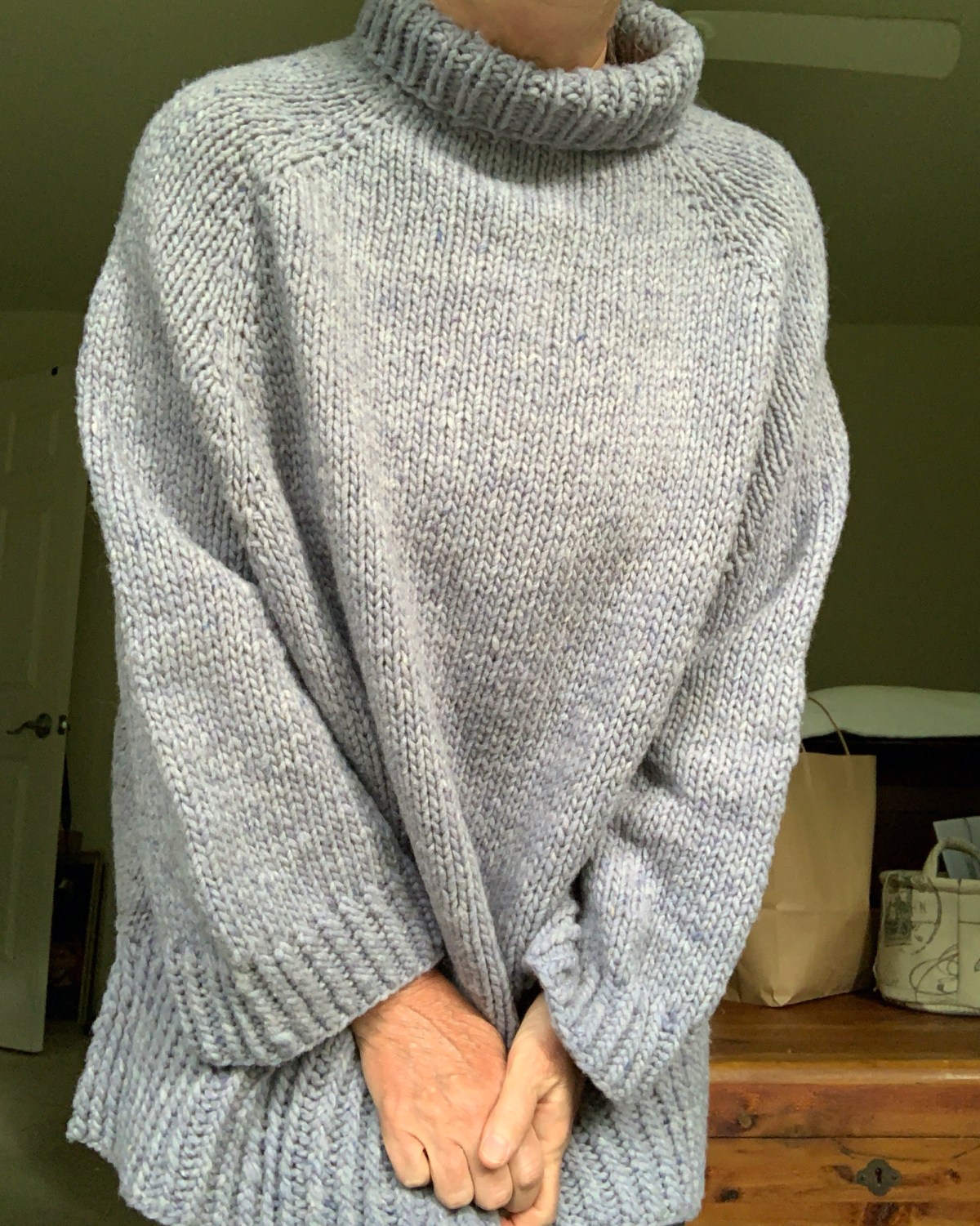
As I was searching for help knitting the Turtle Dove pullover, I discovered that the designer, Espace Tricot. They used to offer all their pattern for free. They now charge for many of them. Some are still free.
I am attempting to update this page, but be aware that things change, and I can’t always keep up with what yarn shops and designers over time.
I am knitting the Turtle Dove sweater – even though I swore I would not knit another sweater this year – I lie to myself a lot. After having trouble figuring out the pattern in the beginning, I am now zipping along with the knitting. I have a page with helpful info about that pattern here.
Shawl and Scarf Patterns
I also have decided that shawls are a waste of time right now because I live in a hot, humid climate where I would never wear one. But shawls and scarves are perfect for knitting practice.
Espace Tricot has many very pretty shawls that seem to cover the spectrum from simple to more advanced.
The Eveil shawl looks quite simple with knits and purls. It’s a triangle shape so it’s easy to wear like a pointy scarf. Nearly any type or color of yarn would work.
If you feel like upping your game a bit, Fleur is a pretty triangle shawl that contains bobbles – I’ve never tried that – and is worked holding two yarns together.
What I really like is that the designers offer more difficult patterns (IMO) as well. That way you get to learn new things and expand upon your knitting abilities. The Fast Track scarf is one that looks very simple, yet because you carry a contrast stripe up the side of the scarf, which for me would be a new technique.
Some of my favorite patterns from Espace Tricot, added to my list of “things to knit” would be:
Flying Solo cowl – knit holding two fingering yarns together to create a gradient. This cowl splits at the bottom to fit on the shoulders! Would make a nice gift.
Ombre Tank – Here’s one I might be able to actually wear.
Petits Pins – baby blanket with lace. I have no babies to knit for, but I do like this blanket. There is a matching Baby Bonnet as well.