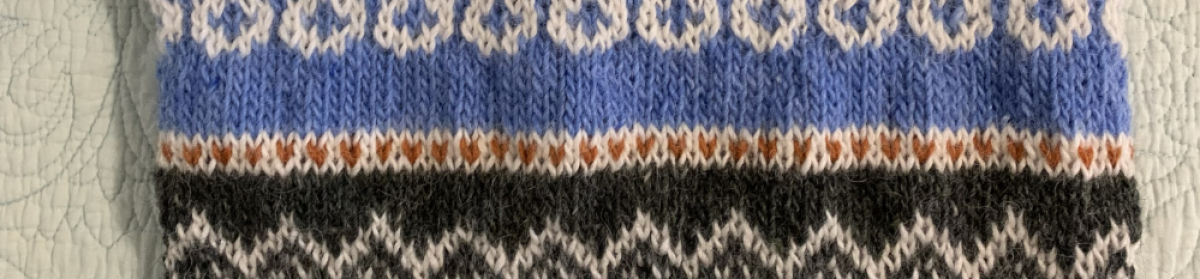
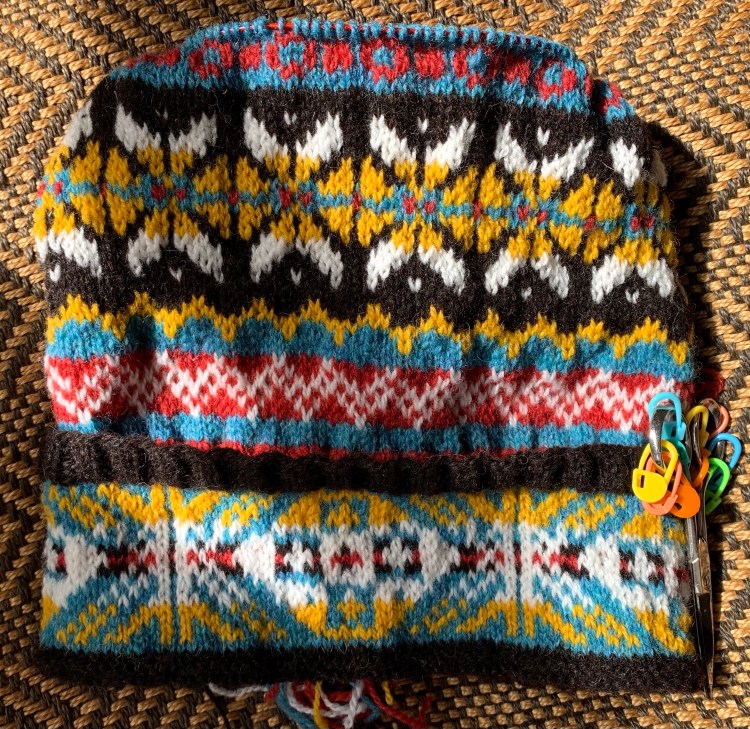
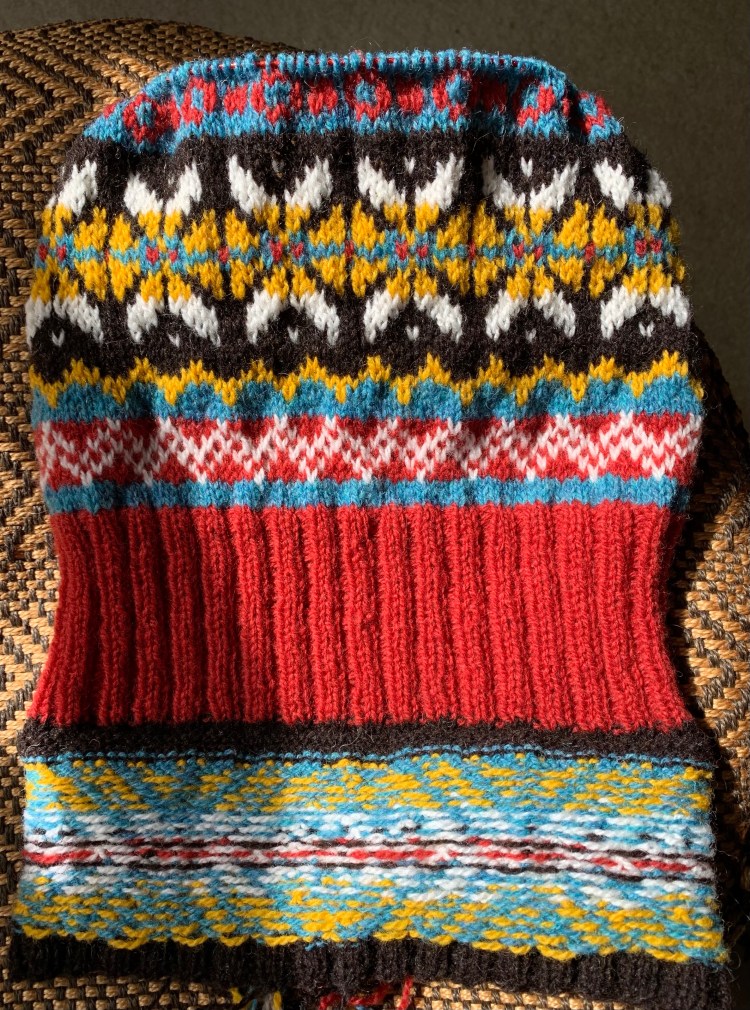
I came across this Facebook group while browsing Ravelry. It was created to support the George Waterston Memorial Centre and Museum in Fair Isle. When accepted to the group, a Kep pattern (traditional “hat” of the region) is offered for sale, and the profit goes toward supporting this museum.
Links to FB Page and Museum
Here are two links to the museum page and the Facebook page. Knitters of this style Kep share their photos and knowledge and support other like minded knitters who have joined the group.
The Facebook Group Must apply to join, which means answering a few short questions.
Keep reading about my experience knitting this pattern.
Love Fair Isle Knitting?
Yes, I do! I joined the group and ordered the pattern, which is sold in GBP (Great Britain Pounds) and was around $14 for me here in the US. After about a week or so I received the pattern PDF in my e-mail and began knitting right away.
(If you think that is expensive, it’s more of a donation with a pattern to go along with it. Also, the basic pattern will give you the opportunity to make many variations of this hat. OR… don’t buy it.)
Doing crown decreases
Trying it on
Review of the Kep Pattern and Instructions – you must buy the pattern from the group.
The pattern is not listed here, but you can buy it when joining the Facebook group – link above. I am not a fan of using Facebook, but do so for my business and groups like this.
It did take a little while (about a week) to receive the pattern, so just be patient. The group is run by volunteers and I’m sure they have other things going on in their lives! It arrives as a PDF which is downloaded and then printed out. I don’t have a color printer, which is unfortunate because sample keps are shown on the front page in full color.
A bit of history about the tradition of knitting a fisherman’s kep is included, as well as suggested yarn colors to use for a traditional look. As I rummaged through my wool, I found similar colors in my Jamieson & Smith and Rauma yarn. I figured for my first kep I would try to follow tradition, and the pattern, as closely as possible. Rauma is not from the region, but is a similar wool.
Fair Isle stitch pattern pages are attached in a variety of sizes which can be used to create colorwork designs of my own choosing. I followed the suggested cast-on number and used a size 1.5 US needle. I’m hoping it won’t end up too small, but decided on this size after looking at my Katie’s Kep notes.
The pattern instructions are basic, with cast-on number, placing the plain knit and purl rows, turning instructions (the brim will fold up and be doubled), and when to change needle size. There are detailed instructions for decreasing at the crown (which I would change next time). But all of the patterning is left up to the knitter, which makes for some interesting keps! Having a Fair Isle pattern book is useful at this point although some pattern suggestions are included.
The Hat is On Hold
I had planned to write about how I made the tassel for this hat. The tassel is added after the hat is washed and blocked so I have a ways to go at this point. One kep knitter created an ocean / fishing themed kep and put little fish hanging off the top in place of traditional tassels! I thought that was so clever.
I had planned to write about how I made the tassel for this hat, but I’ve decided to put this hat on hold after finishing the knit. There are lots of ends to weave in, and I’m not liking the fit. I should have gone up a needle size and made the hat shorter. I don’t like the big bunch of fabric on top of my head, and I don’t like the puckering of the crown.
I did have fun playing with the colorwork, and I’m happy with the colors, just not the hat’s fit in general.
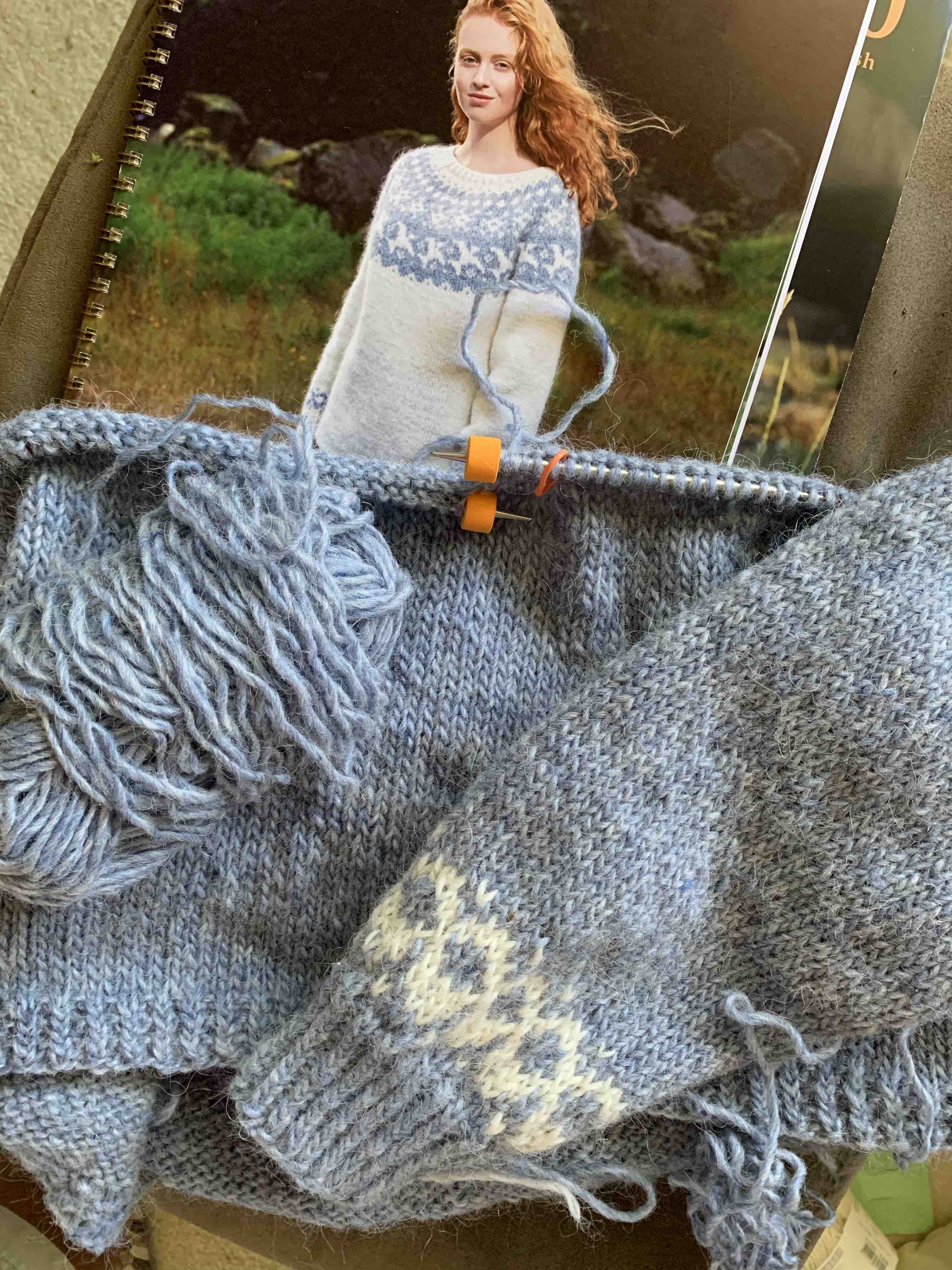
This new sweater pattern is from the Lopi 40 book which I bought along with some Lettlopi yarn recently. I want a light blue sweater with white accents and Farfuglar is the pattern I chose. It means “migrating birds”. The sweater shown in the book uses my same choice of colors (air blue and white) as I chose, but in the opposite way. The yoke can also have more colors in another version.
Lopi 40 is full of Icelandic designs knit with Lopi wool and apparently it is one of the newer books.
This Farfuglar pattern, and other patterns in the book, can also be purchased separately. (This link goes to Ravelry.)
Book CoverPattern page
The Farfuglar Learning Curve
I purchased bunches of the Lettlopi yarn variety which is aran weight. The first pattern I chose was one by Jennifer Steingass. After beginning the sleeve twice, and not being happy, I gave up and moved on. That is when I chose this pattern from the Lopi book: Farfuglar, or “Migrating Birds”.
I knit a flat gauge swatch which matches the required gauge for the sweater. I know that garments knit in the round should have swatches knit in the round, but oh well, I didn’t do that.
The pullover is knit bottom up. I have begun knitting one of the sleeves and really like the way this yarn looks and feels. The pattern uses the same two colors I chose, white and “Air blue”, but the sample sweater is mainly white with blue accents whereas mine will be the opposite. The colorwork chart is in five colors because there are two ways to knit this sweater. As I knit the chart I will convert it to two colors in my head.
The patterns in Lopi 40 are Icelandic and measurements are given as centimeters. Needle sizes are also mentioned in mm except at the beginning of the pattern where they give the US size also.
Increases and Decreases
After the sleeve ribbing is finished, we are told to increase around evenly to end up with correct stitches for the colorwork. I had to go from 42 stitches to 50. I don’t know why, but this was hard to figure out. I will have to do something similar at the neckband except it will be decreases! Oh Boy….
Had to decrease at the neckline from 100 to 84 stitches evenly around. This strained my brain, but I did it.
Learning New Things
Two new (to me) types of decreases are also mentioned: KRPR (right leaning) and SKP (left leaning) – both links go to pages at the New Stitch a Day site where videos show the process.
I’m not a super experienced sweater knitter, but I have finished a few. Most have been top-down knits, but this is a bottom up. The underarm stitches need to be grafted together when finishing, which I’ve never done, that I recall. The pattern doesn’t say how to accomplish this, but I found this page at Laura Chau that explains Grafting Underarm Stitches. It uses the Kitchener Stitch, which I have done.
Joining Sleeves to Body – Notes for the Inexperienced (Me)
I’ve only knit one other sweater bottom up which means the sleeves and body must be joined. It’s not difficult, but for me, drawing out a diagram while reading the directions was helpful. I got a better picture for how this would happen. I also placed a pink marker on the front section so I would know front from back.
I’ll keep this for future reference and noted needle sizes and other hints to the paper.
Notes I made: After finishing the second sleeve, leave stitches on the needle (I used a 9-inch circular). When beginning to join, I used the longer (body needle) to knit off the sleeve needle. When I got around to the second sleeve, I put those stitches from the holder yarn onto a smaller (size 4) needle and then knit off of it. Once that happens, the whole sweater is now combined into one piece.
Needle lengths: Begin knitting the whole yoke with a 40 inch (The pattern says 32, but I found the longer needle to be easier). Changed to 32 inch farther up, and ended up with 16 inch for the neck.
Four places are on holder yarn and stitch holders for the underarms. Those will be grafted together using the Kitchener Stitch when I’m done knitting.
Joining sleeves to body and beginning yoke
Now I have begun the colorwork yoke. Some of the yarn carries are quite long, so knowing how to catch floats is definitely necessary for this design. I was very excited to see the birds emerge!
The birds!Knitting the colorwork yokeReady to bind off
Yarn Used For Size L
Blue Yarn total used: 8 skeins – nearly every bit of 8, so 9 is better just in case
White Yarn total used: less than 2 skeins
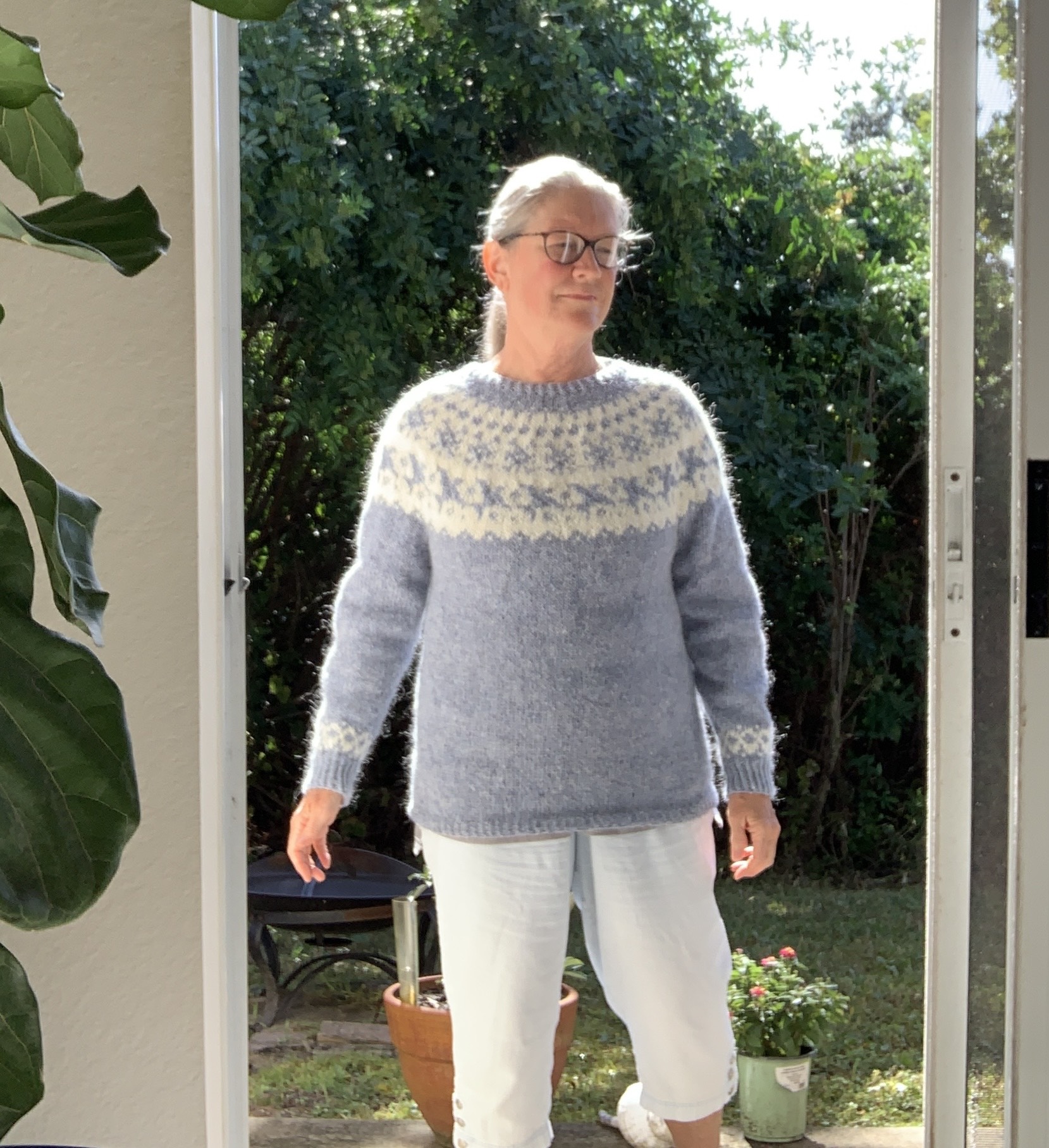
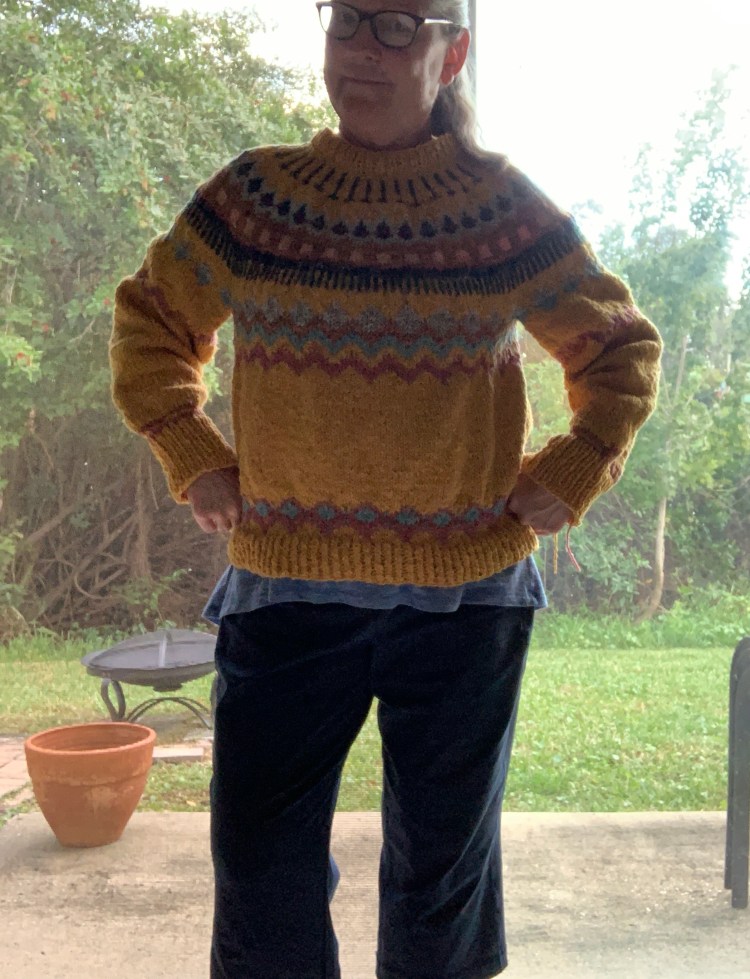
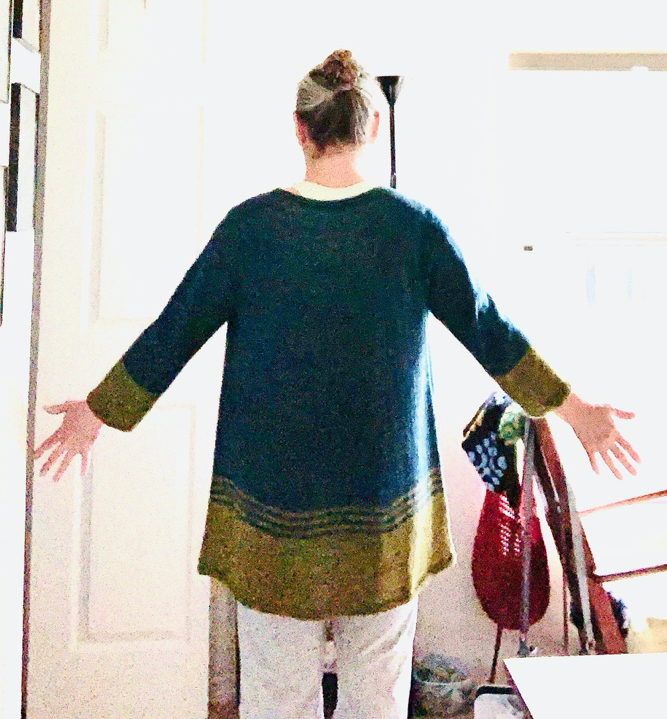
October 29th and the Sweater is Finished! See My Photo Shoot Below
At this point I was still trying to decide if that high front neckline would be okay. Without any type of short rows, the front and back of this one are exactly the same. This makes the front neckband ride on my neck. I would probably have a shirt on underneath, so I decided I could live with the neck as it is. Also, I didn’t want to risk ruining things since I am not experienced at changing knitwear designs!
The hat photos were taken in “winter” when the temps dropped to the low 40’s here in Florida. I went out to feed the birds bundled up in my woolies! (Triple-patterned watchcap, mittens, Woolfolk cowl) All other photos were taken before I washed the sweater.
I will be writing a separate blog post about how I finished off this sweater.
Learning About Lopi Wool
The sheep who provide this wool live in the harsh Iceland landscape. If their wool can keep them safe and warm during winters spent outdoors, certainly the wool in your Icelandic sweater will do the same. The yarn comes in lots of pretty colors (if you can find them in stock!) as well as natural colors such as white, gray, tan, brown and black. It comes as heathered, solids, and tweeds in various weights, including unspun yarn. The yarn is a combination of insulating and water repellant, not to mention very warm indeed! If you are not a knitter, the sweaters can be purchased already knit up.
After knitting with the Lettlopi, I found there were quite a few knots to deal with. More than most yarn I knit with, but maybe that is just the nature of the yarn.
I don’t yet have a sweater or other garment to try on so I can’t comment on the scratchiness of this yarn. Some people think it is exceptionally scratchy, but many people say the wool softens over time and gets better and better.
As is unfortunately true these days, finding yarn can be challenging, and especially in the popular color ways.
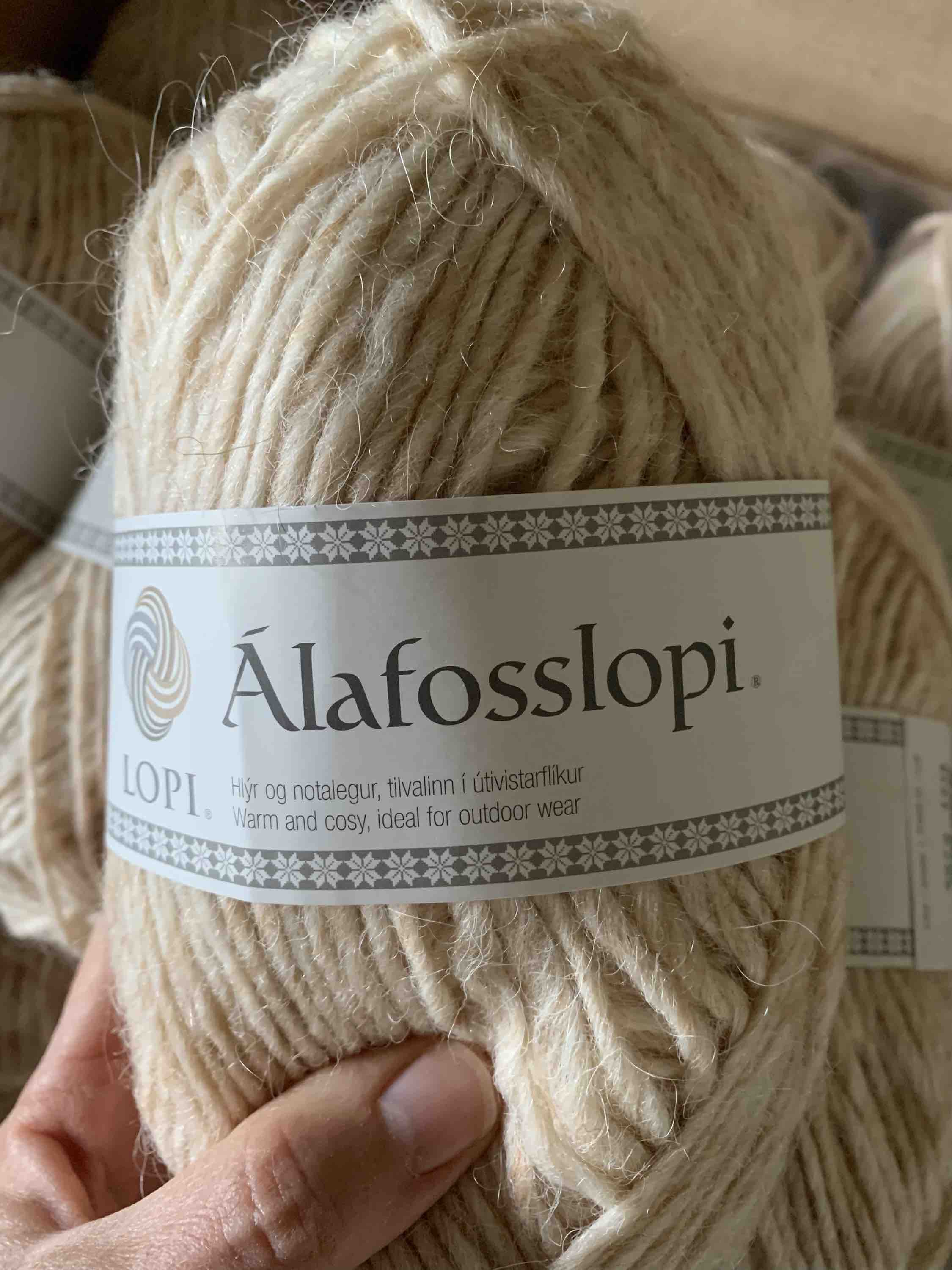
The Lettlopi (aran) and Alafosslopi (bulky) yarn in my stash has come directly to me from Iceland and is from the Istex company. It was ordered from The Icelandic Store where they still have quite a few colors in stock. The low price of the skeins, compared to prices in the US for the same yarn, made it worth paying the high shipping rates.
My order of Alafosslopi arrived in four days..!!… and came with a little candy surprise. I have already knit up a swatch and plan to knit the Carbeth Cardigan by Kate Davies, but that plan could change.
A little candy surprise in with my Alafosslopi yarn delivery!
For instance, many places in the US have Alafosslopi for around $10 a skein, or close to that price. When ordering from Iceland, each skein is $5.99, which is a big difference, and especially if you need many skeins to knit a sweater. The Lettlopi costs about $5.75 in the US compared to $2.99 each in Iceland.
Webs yarn offers big discounts if large amounts are bought, and the cost can be less in the end, but many of the colors are out of stock at the time of this writing.
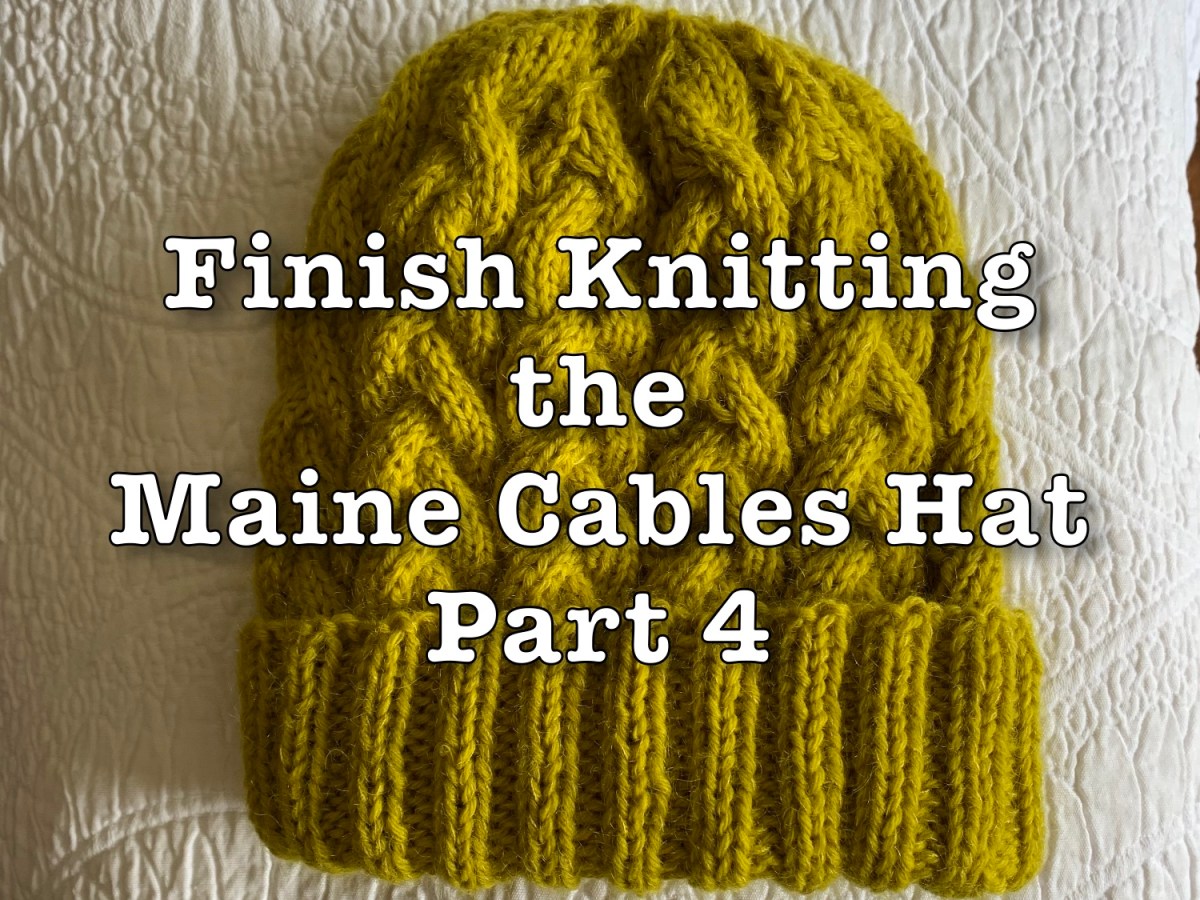
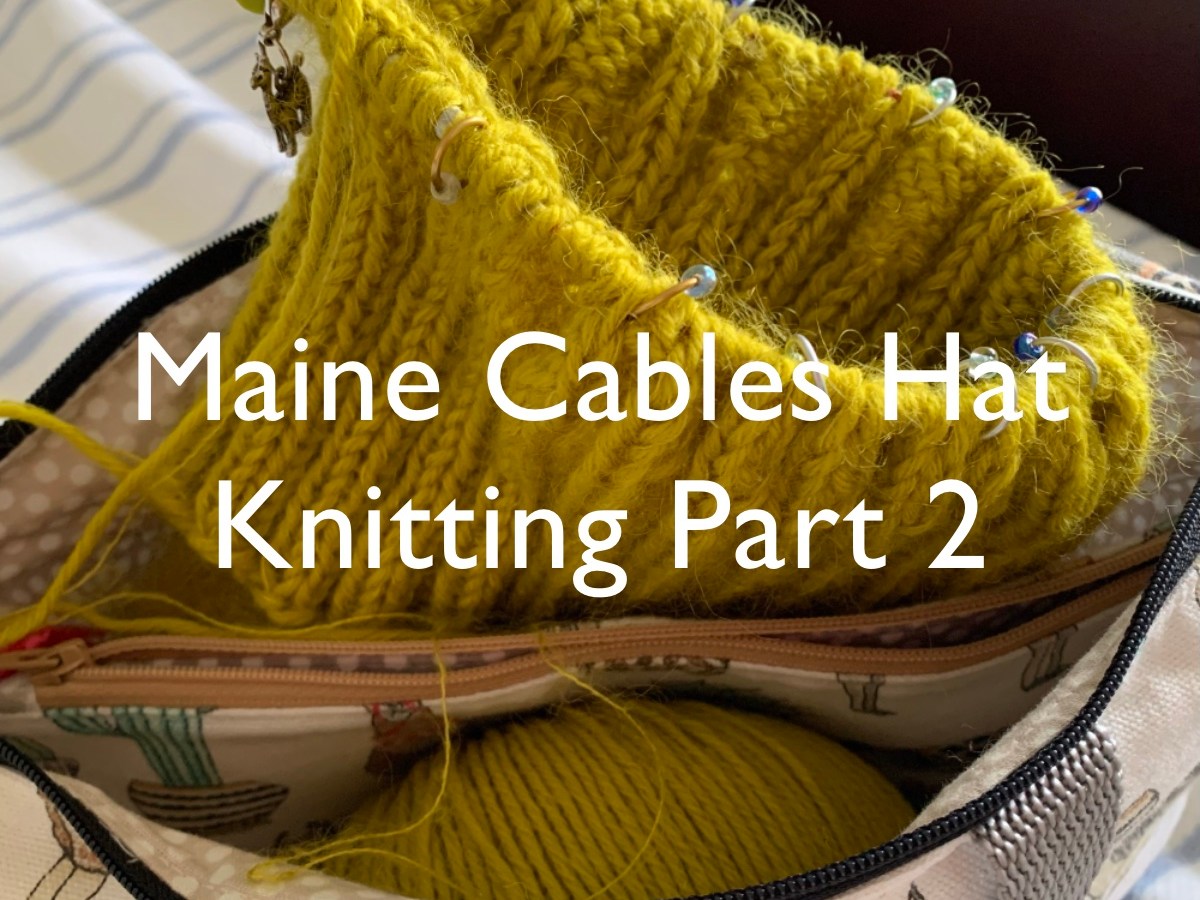
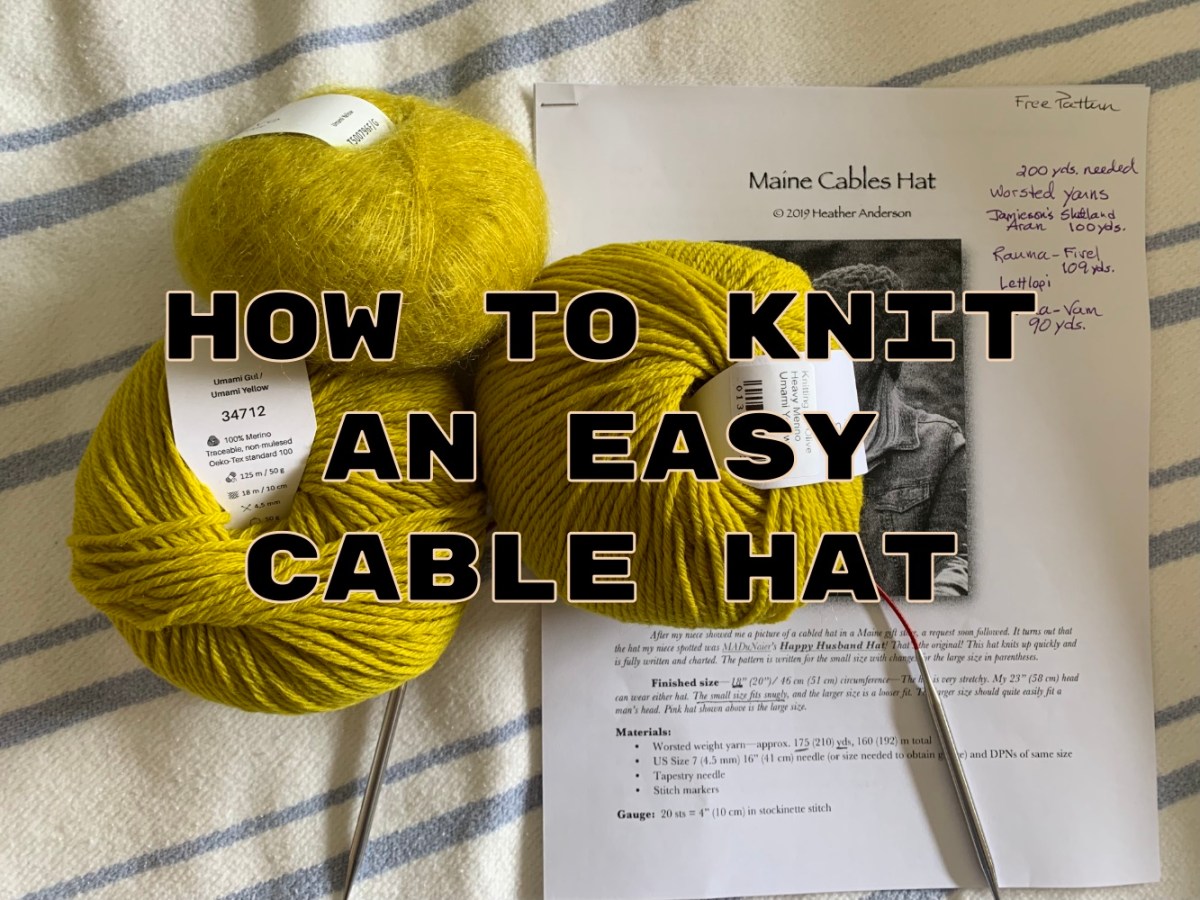
For my trip to New England this fall I want a new, warm hat. The free pattern Maine Cables Hat is what I chose and will document my knitting along the away…
At the beginning of 2021 I decided I would make this a sweater knitting year. Right now I have three sweaters on the needles, after having a few “fail” moments to narrow down the patterns.
All three sweaters are pullovers and two have colorwork yokes.
Sweater #1: The Hand-spun Yarn Sweater
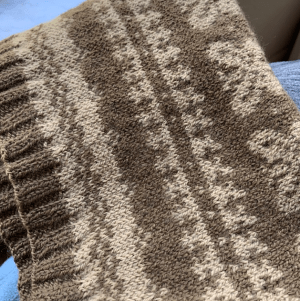
Because I really wanted to knit a colorwork yoke with wool, I chose the Meadow Moon pullover pattern by Jennifer Steingass. It is knit top-down with stranded colorwork at the yoke and cuffs.
I’m using dark blue Rauma Finull yarn as the main color along with a hand-spun yarn, purchased from Wound Up Fiber Arts, for the colorwork. The hand-spun yarn is variegated in brown, tan, blue and maroon colors.
I have finished the yoke and separated for the sleeves with lots of stockinette to come. *Update: As of November, I have finished the other two sweaters (see photos below) but this one I am still slogging along with the round and round knitting. It’s great for long car rides or tv watching, but will take me a while to finish.
Sweater #2: The Double Yarn Sweater
I’ve had a huge skein of light green yarn sitting around driving me nuts because I didn’t know what to do with it. The Miss Babs yarn was an impulse buy, or maybe it was on sale, who can remember? But it’s a pretty light green and I wanted to combine it with mohair.
After knitting a swatch combining it with dark green mohair, I moved on to try a very light green mohair and loved it. So, although I wanted to knit something to use up the Miss Babs yarn, I now have a bunch of dark green mohair sitting around that needs to be combined with something…! Can’t seem to overcome the yarn stash blues.
I chose the free pattern called Calliope by Espace Tricot. The pattern is simple, with raglan shaping and it’s a top-down sweater.
*UPDATE: Finished after three months and the sweater is quite large. I think it’s the washable yarn. The fabric is very soft and comfy, but the body is very wide and I have to roll up the sleeves!
Sweater #3: Heading Into New Territory
Last but certainly not least, I am knitting an Icelandic sweater using Lettlopi wool. I saw someone on Instagram knitting with this yarn and thought it looked interesting. I found it for sale in Iceland and bought the skeins needed to knit Farfuglar from the Lopi 40 book. The name means “Migrating Birds”. My colors are opposite from the pattern shown, but using the same colors – air blue and white.
I’ve never used Lettlopi yarn, but I have fallen in love. This pattern book is awesome, but not really for the inexperienced sweater knitter. Instructions are basic. I think I will manage, but I’ve already learned a new rib stitch and decrease called KRPR, which is a right-slanting decrease. I had to look that one up.
This is a bottom up sweater, which is not my favorite, but I look forward to getting to the pretty yoke pattern.
UPDATE: Finished Farfuglar (link to my Ravelry page with notes) the end of October – a one month knit. This was my favorite project of the three sweaters so I worked on it the most! All I would change is the body ribbing at the bottom which tends to curl up. Maybe make it longer, or knit a bit differently. It fits me perfectly!
Last Words
These three sweater patterns are easy enough that I can switch off between them as I feel like. The Meadow Moon yoke is done for now so I’ll be knitting straight stockinette for a while until I get to the sleeve cuffs where new colorwork is needed.
Calliope knitting is also simple with a long rib being knit at the bottom of the sleeve. I will have one more sleeve to go.
Farfuglar (which means Migrating Birds) has a lot of stockinette to accomplish before I begin the other sleeve and then get to the fun yoke pattern.
I’ve never knit more than one sweater at a time, and I’m not a super experienced sweater knitter, but this is fun. I will not get bored and I like having the choice when it comes time to knit.
Now, which one will I finish first? Answer – Farfuglar! Can’t wait to knit more projects with Lettlopi wool.
My next big knitting project for 2021 will be a colorwork, or Fair Isle, pullover sweater. I’ve been searching the internet and Ravelry for some ideas and now it’s time to narrow down the selections. It’s taken me months to write this post, and it’s already September, so I’ve already begun two sweaters (see below), and plan to make a third.
Hooked on Colorwork, Fair Isle Knitting
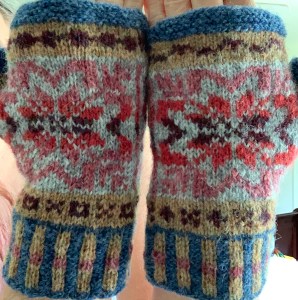
After knitting for a few years, I have decided that I really like colorwork knitting. Now that I have a couple of hats (Katie’s Kep), mittens, and fingerless mitts (Stellar Parallax) under my belt, I feel that a sweater is what I need to knit next. Once a year I need to make myself a sweater. This will really be sweater number two, after the Cobblestone, but the Cobblestone was not colorwork.
A colorwork, or Fair Isle, sweater must be a pullover because a cardigan requires steeking. Once the sweater is knit, it is cut up the front to create the cardigan. Yikes, I am not ready for that yet.
Jennifer Steingass is a knitwear designer who offers lots of colorwork pullover patterns to knit. Also, she is currently (at the time I wrote this) selling her patterns at three for the price of two, or buy 2 get 1 free.
Because I have some Istex Lettlopi yarn on the way to my house from Iceland (that is so cool – LOL), I chose the following patterns to purchase. I’ve decided to knit with aran, or worsted, weight yarn for my next sweater. The links below go to Ravelry.
But beware… or be aware… not all of her color-work patterns are Fair Isle (using only 2 colors at one time), as some of them require three colors to be carried along one row of knitting. Of course, I can stay with two colors if I want and ignore adding a third. I find that trying to work with more than two colors can be annoying. I ran into that while knitting a few of the rows for the “Marshland” sweater.
Knitting Sweaters: On the Needles
Right now I am knitting two sweaters while I wait for my Lettlopi yarn to arrive. Below is my green Calliope and colorwork Meadow Moon.
Calliope – Free pattern
Meadow Moon
Marie Wallin’s Fair Isle Patterns
One of the first sweater patterns I saw at Ravelry was Marie Wallin’s Lovage. It is part of her Windswept Collection but the pattern can be purchased separately at Ravelry for approximately $8.87 US (at current writing). I’ve looked through the comments from knitters of this sweater and some people have had trouble. There is a lot of stranded knitting at the entire top and part of the sleeves. Then there is some braided work down the rest of the sleeve. It’s very pretty, but might be too difficult for me.
She also has a Meadow Collection and I love the Nigella Fair Isle pullover pattern, but wow, what a big project. It’s worth checking out her Free Patterns section too.
Sweaters Knit by Me
At the beginning of the year (2021)I knit the Cobblestone Cardigan and took it up to New Hampshire with me. I wore that sweater nearly every day! It’s big and soft and cozy. I won’t get the chance to wear it, or any sweater, until I can travel north.
Each time I knit a sweater, I learn a bit more. From the type of yarn, style, pattern writing, fit and mistakes to how much I like, or dislike, the end product. I’ve only knit five sweaters, one is a child’s size, two are pullovers and three are cardigans. I like cardigans best for wearing, although living in Florida means I seldom get to wear any type of sweater.
Each time I knit a sweater, or other item, I find more yarn I love. I keep it in mind for any upcoming projects. Each image below has a link at the bottom.
I’ve learned that I like knitting with wool and don’t like washable yarn. I’ve discovered what “pooling” is – see the Umpqua sweater, which I really dislike for many reasons, but it was my very first sweater! I knew literally nothing about sweater knitting. I will probably frog it at some point to re-use the yarn.
Sock yarn should be used for socks, IMO because when I want a sweater, I want it to be warm and cozy. Wool and natural fibers, tend to be cheaper also. I like that I know where the sheep / animals lived who provided it!
I Want to Travel to Cooler Locations!
I’d love to leave the state of Florida more often. I dislike living here, and there is so much of the US I have not seen.
After being unable to travel due to the Covid restrictions, which seem to drag on and on, I have decided I will not count on airplane travel any longer. Wearing a mask through the airport, on the plane and through a second airport, was very uncomfortable. I understand the concern, but the restrictions kept me from seeing two of my kids for over two years. This is unacceptable.
We will be buying an RV of some kind to make travel easier. I have cats and they will need to come along. But the most exciting thing is that we will be able to visit cooler locations. Then, I can wear my sweaters, hats, cowls, and mitts! I long for this.