Knitting the Shell Cottage Socks Pattern

Knitting the Shell Cottage Socks.

Although I haven’t knit many socks, the Shell Cottage Socks looked pretty cute. I bought the pattern from Curious Handmade and this page is about my sock knitting adventure.

Having less income over the past year and a half, thanks to the pandemic, meant a chance to use up stash yarn. That lack of extra money to spend on yarn forced me to clear out and use up. Most items I’ve been knitting this past year were made from the yarn already in my house.

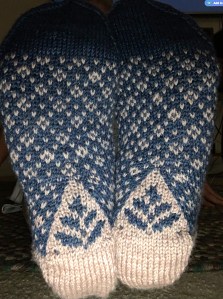
Sock yarn with nylon should really be used to knit socks. I have quite a few skeins to use and this pretty variegated blue was the one I chose for the cute little ankle socks.

The yarn came from Four Purls, which is a yarn shop near Orlando. It’s Emma’s Sock Yarn in colorway “Juneau”. I bought it back when the shop would travel around central Florida in their yarn truck. They used to come to my town and it was my temporary local yarn store. That hasn’t happened in a while, which has been good for my wallet.

Shell Cottage Socks Pattern to Buy

I bought my Shell Cottage Socks pattern on Ravelry. Helen Stewart is the designer with the shop name Curious Handmade. Her patterns are mostly socks and shawls. One of the very first knitting projects I undertook was her Spindrift shawl.

For the socks I chose to knit a size Large, using size 1US needles. After reading through comments by previous knitters I learned that many people found the socks to be too tight, or too small, so I figured a large size would be safe. I’m a tight knitter, so it made sense to choose the large size.

I began using my 9-inch circular needle for the cast-on and followed the directions with cast-on number 72 and worked the ribbing. I continued to use the small circular needle until I reached the heel.

This pattern is like none I’ve ever seen in my short knitting life. Every single row / round to be worked is written out, except for the ribbing. That makes it easy to follow along and check off each row when finished. A stitch count is also included for every single row!

Good Pattern for Beginners? Probably Not

I like the way every row is written out to be checked off as I knit along. Any beginner knitter would appreciate that. But a couple of things slowed me down while knitting this pair of socks.

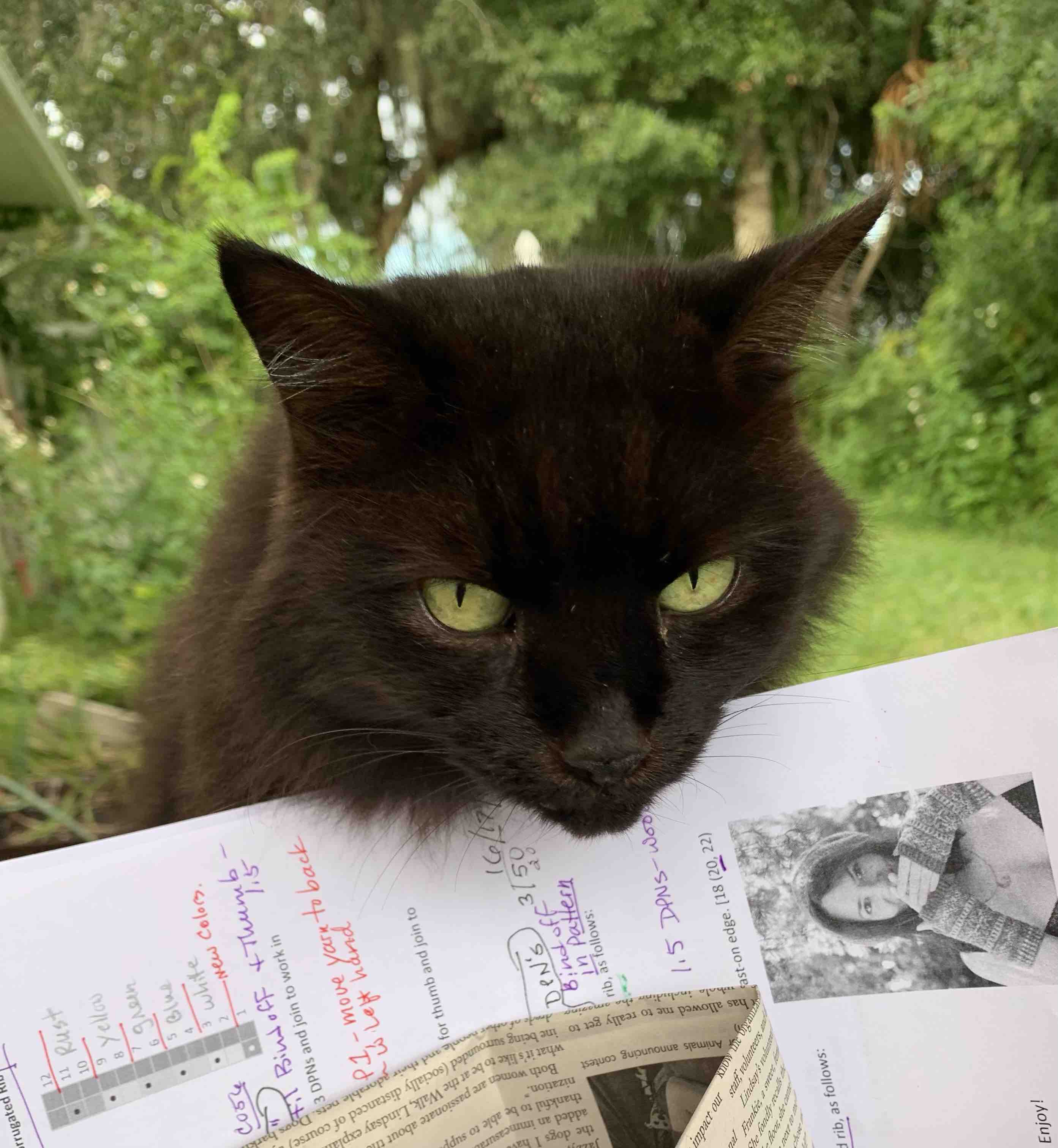
First, when it comes to working the heel and the gusset, the stitch placement refers to only two needles – Magic Loop knitting. If you know how to use Magic Loop, you’re all set. But, anyone using four DPN’s would have to adjust. Although it’s not a tough thing to do, a beginner might be confused.

My other problem was that I personally found it difficult to do that slipover stitch that creates the cute cable look. That cute design is the reason I chose this pattern! I had a really hard time grabbing that stitch and pulling it over the others. I ended up using a crochet hook, which was annoying. Maybe different needles would have helped, I don’t know. And to be fair, I did not read any other reviews of this pattern where the knitter complained about doing that faux cable stitch.

The toe is finished with the Kitchener Stitch, which is probably a difficult accomplishment for a beginner knitter.

In fact, if you are reading this and have not knit much at all, try something easier than socks! Socks are my least favorite item to knit. I think many people knit socks because they are useful garments. We all want to be able to use the items we knit.

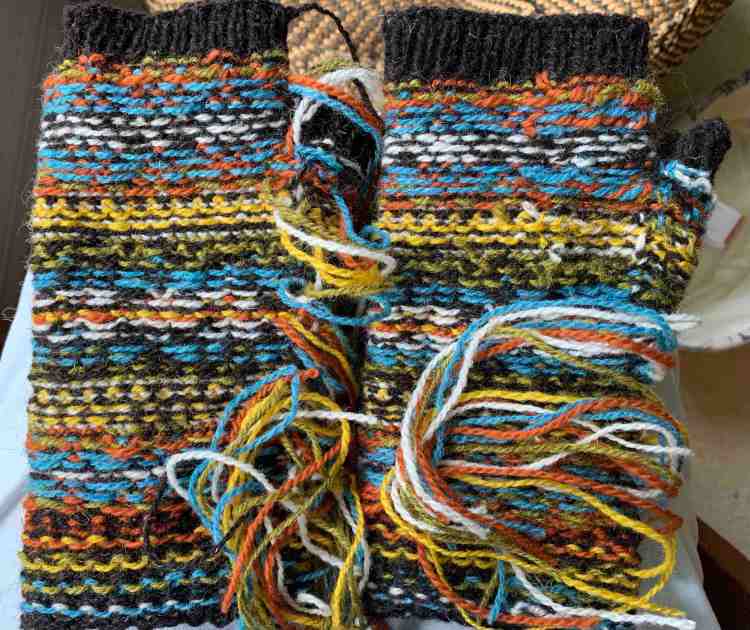
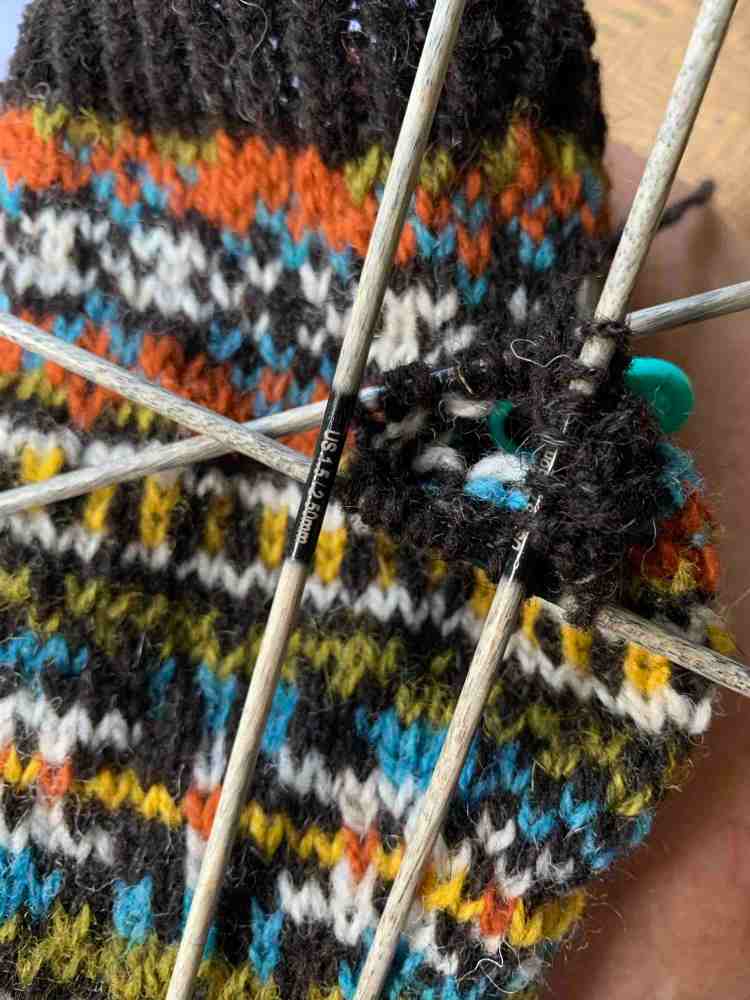
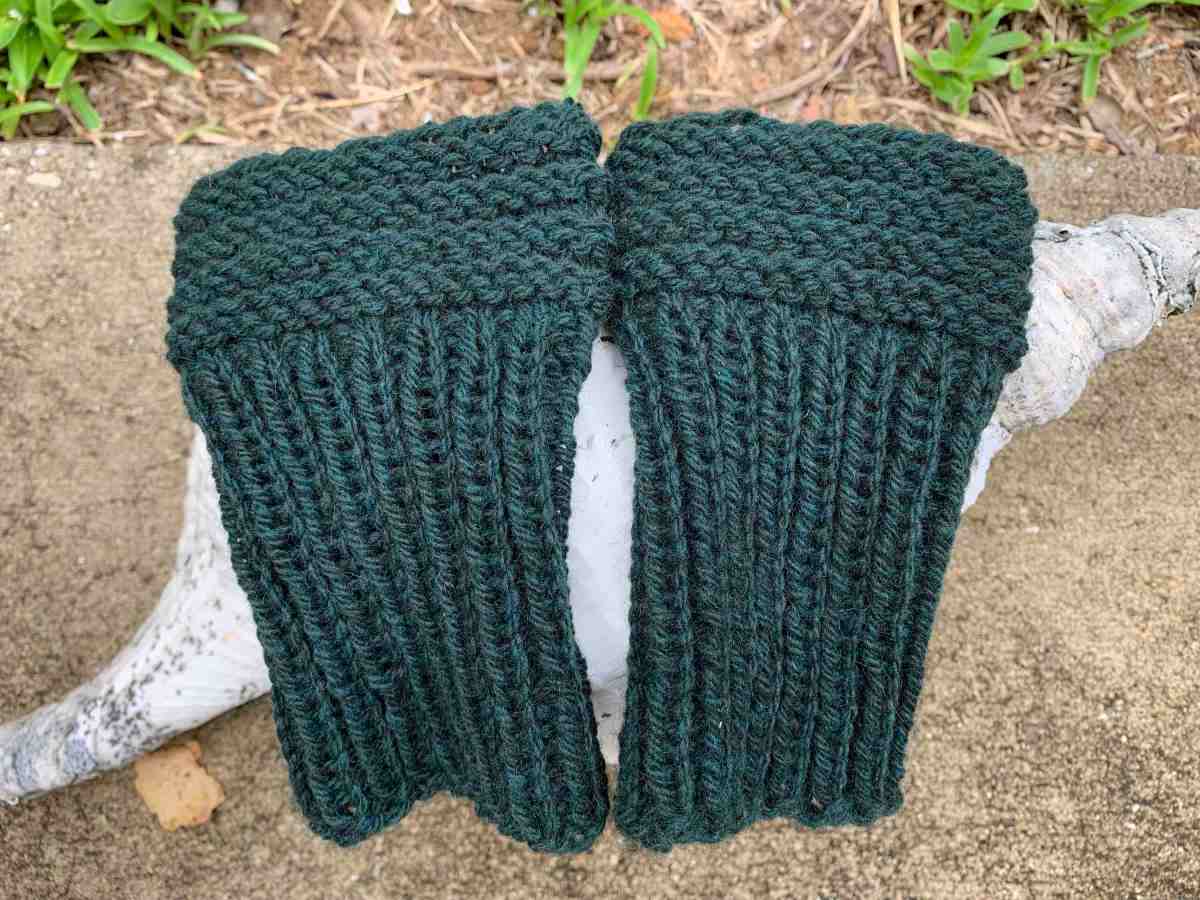
For my first sock, I quit doing that extra stitch (named “KNOT” in the pattern) after the cuff (photo left above) because the aggravation for me was just not worth it.

On my second sock, I changed the way I did the “KNOT” stitch so the slipover was done on my right-hand needle instead of the left. This was much easier for me. It’s not exactly the same, but close enough, and was easy to do so I continued with it all the way to the toe.

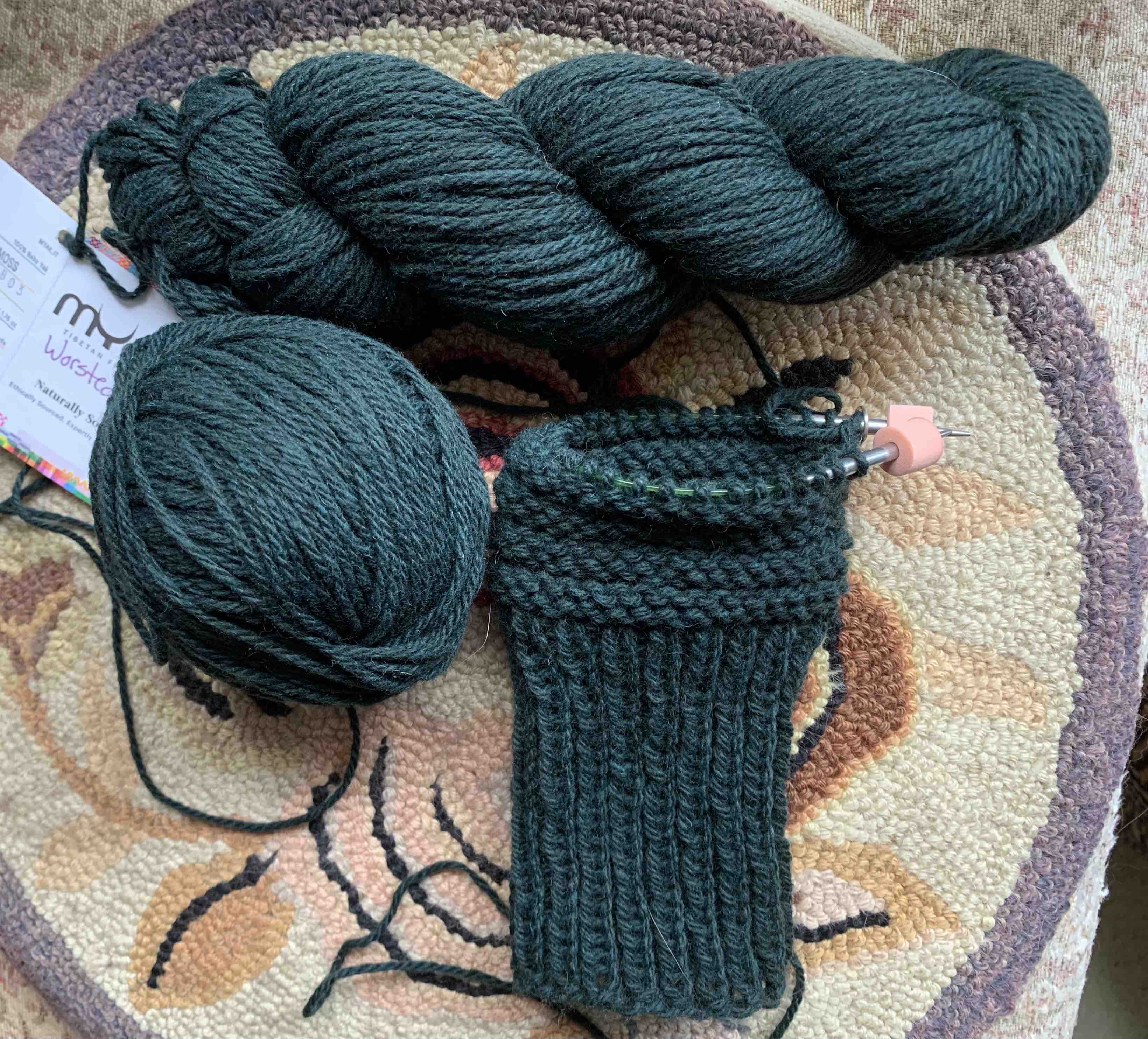
So, my socks don’t match. They were good practice. I may knit this pattern again one day using a solid color, which I think would work much better for showing off that cable-look design. That ball of yarn is all I had left from the skein.

In conclusion, I did like this pattern once I made my changes. I made lots of notes on the pattern pages and that will make it easier to follow next time.

If you are a crazy sock knitter, and / or love knitting shawls, and haven’t heard of this designer, check out the Curious Handmade website.


Keep Reading: Recent Blog Posts

Free and Fast Knits for Christmas Gifts: Scarves in Worsted

This page contains a list of free knitting (and some crocheting) patterns for scarves and cowls that will knit up quickly in worsted or bulky yarn. *Please note these items were free when this page was created, and that could change.

Christmas Gift Knitting

If you are like me and the majority of the population, waiting until the last minute is typical. We have busy lives and at holiday time it’s worse. The months leading up to holiday season is the ideal time to begin knitting those Christmas gifts. We know it, and yet many of us procrastinate.

It’s okay to begin knitting late in the season, if you can find some fast knits, done with heavy weight yarn – worsted or bulky. Personally I am keeping a list of the best machine-washable yarn I can find. I have grown boys who will absolutely not hand wash anything.

Scarves, cowls and hats are about the quickest projects, in my opinion, and I’ve listed mostly scarves, a few cowls, and one necktie, on this page. A page about free hat patterns is coming!

Knitting Scarves for Guys (Unisex)

Guys can be the most difficult to buy for and that is why hand-knits could be the perfect gift. When I search around Ravelry for patterns, I see that a lot of people knit (and crochet) for husbands, boyfriends, sons and grandsons. My own grown sons, even the one here in Florida, seem to appreciate the hats I’ve knit them.

The links below go to their corresponding Ravelry page where the pattern can be downloaded. Most scarf patterns are unisex and color will differentiate male or female. Please note: Most of these items I have not knit myself. I can’t vouch for the pattern and these are ideas only, not suggestions.

The nice thing about knitting a scarf is that gauge doesn’t really matter. A scarf pattern is pretty easy to convert from fingering weight to worsted or bulky. Cast on fewer stitches if your yarn is heavier. Scarves can be knit to any length desired.

Scarves and Cowls For Women

knitting divider

Free Crochet Patterns

Although I mostly knit, I do occasionally crochet so thought I’d include a few patterns here for the crocheters. These links are for scarves and hats, which are the easiest and fastest projects in my opinion.

This is just a few patterns out there for free. If you have any favorites, please share in the comments.

LATEST POSTS

Five Cozy Scarf Knitting Projects For Fall

Five cozy scarf patterns to begin knitting this Fall. Keep for yourself or give to friends and family. The selection has small and long scarves, with many free patterns included.

Lots of Changes This Year

Writing a blog, sharing photos, and doing research and making links takes time. Lately I don’t think the time spent doing all that is worth enough to continue. I have stopped writing my gardening blog, and downgraded my seashells/ boating / camping blog. I’ve been spread too thin for too long. The past 18 years…

Something went wrong. Please refresh the page and/or try again.

Loads of Wonderful Patterns by Espace Tricot

As I was searching for help knitting the Turtle Dove pullover, I discovered that the designer, Espace Tricot. They used to offer all their pattern for free. They now charge for many of them. Some are still free.

I am attempting to update this page, but be aware that things change, and I can’t always keep up with what yarn shops and designers over time.

I am knitting the Turtle Dove sweater – even though I swore I would not knit another sweater this year – I lie to myself a lot. After having trouble figuring out the pattern in the beginning, I am now zipping along with the knitting. I have a page with helpful info about that pattern here.

Shawl and Scarf Patterns

I also have decided that shawls are a waste of time right now because I live in a hot, humid climate where I would never wear one. But shawls and scarves are perfect for knitting practice.

Espace Tricot has many very pretty shawls that seem to cover the spectrum from simple to more advanced.

The Eveil shawl looks quite simple with knits and purls. It’s a triangle shape so it’s easy to wear like a pointy scarf. Nearly any type or color of yarn would work.

If you feel like upping your game a bit, Fleur is a pretty triangle shawl that contains bobbles – I’ve never tried that – and is worked holding two yarns together.

What I really like is that the designers offer more difficult patterns (IMO) as well. That way you get to learn new things and expand upon your knitting abilities. The Fast Track scarf is one that looks very simple, yet because you carry a contrast stripe up the side of the scarf, which for me would be a new technique.

Some of my favorite patterns from Espace Tricot, added to my list of “things to knit” would be:

  • Flying Solo cowl – knit holding two fingering yarns together to create a gradient. This cowl splits at the bottom to fit on the shoulders! Would make a nice gift.
  • Ombre Tank – Here’s one I might be able to actually wear.
  • Petits Pins – baby blanket with lace. I have no babies to knit for, but I do like this blanket. There is a matching Baby Bonnet as well.
  • Gateway to Rustic – lined cowl with colorwork.

Have you knit any Espace Tricot patterns?

Knitting “Habitat” Hat With Cables in Hunter Orange

Last year I searched for a hunter orange yarn so I could knit hats for my kids who live in New Hampshire. Whenever hunting season is open – and it is regularly open year round for various animals in NH – walkers, hikers, bikers and anyone who ventures into the wilderness needs to wear hunter orange, aka safety orange, or an equally bright color.

Last year I was unsuccessful in finding the perfect, brightly colored yarn. This year I believe I have found it!

I came across the colorway “Kid You Not” by Hedgehog Fibres, in aran worsted weight and took a chance and bought two skeins from Eat, Sleep, Knit. Later, I found it at Wool and Company and was a bit less expensive. Hedgehog Fibres yarn is hand-dyed and comes from Ireland. It is beautiful, but pricey. What I also love is that it is superwash. Some people I knit for will not hand wash.

Knitting the Cabled Hat “Habitat”

Because the yarn is a semi-solid color I wanted to knit some cables. I searched through many cable hat patterns and ended up with the “Habitat” by Jared Flood. I’ve knit his “Skiff” cabled hat a few times, so I suspected this pattern would be similar, and it is.

I love the way the cables criss-cross up the hat, but that means lots of various cables to do all throughout the project. I do okay until I have to switch and use the DPNs, but the end product is always worth the work.

Shorten the Cable Descriptions

This pattern is charted only, which can be a bit intimidating, but not too tough to figure out. Every cable used is listed on the right-hand side of the chart, with a description of how to make that cable. The chart and cable description prints out on the same page.

The printing is tiny – too tiny for those of us with older eyes to see well – so I use a pen and make each cable easier to read at a glance. This can be seen beneath the pencils in my photo below.

For instance: C3Lp = Slip 2 stitches to CN (cable needle) and hold in front. Purl 1, and knit 2 from the CN. That description is written out, but I make my note to simply say: 2F, P1, K2. When I get to this cable stitch in the pattern, a quick glance tells me what to do.

colored pencils
Creating my easy-to-read chart using color coding

Coloring the Cable Chart

The next order of business before knitting this cable design, is to get out the colored pencils. I’m sure some tech-savvy people can do this using some sort of spreadsheet, but I color the chart by hand. (I do use Knit Companion and I think this can be done with “Magic Markers” in the program, but I haven’t tried it. I do like having a paper printout too, just in case technology is down.)

Next, I go through each cable listed and find it on the chart. Each of the seven various cables used in this knit will get it’s own color coding. Doing this is time consuming, but totally worth the effort. The C3Lp cable which I mentioned, is colored pink for my chart, so every time I come to a pink colored cable in the pattern, I know at a glance to do 2F, P1, K2 ……. 2F (hold 2 front on CN), P1 (purl 1 from the normal needle), K2 (knit 2 from the cable needle).

When I am knitting each row from the chart, I use a sticky note to mark my place. I find this way of knitting the cables to be quite easy to follow.

Needle Sizes I Used

This hat is being knit for my daughter who has a small head. The hat is offered in two sizes, but that only means the length will change, not the diameter. Because of this, I dropped down a needle size and used a size 6US to cast on and knit the short brim. In general, I am a tight knitter, so I hope that will help with size reduction. I switched to size 8US for the cables.

The difference between the Small / Medium and Large sizes is a cable section which is done right after the brim. Choose the shorter, Chart A for S/M or the longer Chart B for size L. Whichever chart is chosen, it will be knit only once. This is a set up section before moving on to the longer, main hat chart.

Habitat Hat Knitting Photos

After a few inches of knitting, the cables begin to show. There are a lot of cables to do in this pattern. The yarn is beginning to remind me of Cheetos!

Switched to DPN’s on row 25 which is not a cable row, to make things easier.

Cabling on the DPN’s and keeping track of the cable sections got a bit difficult, but I hate DPN’s in general.

The Gift

Hiking mountains wearing Habitat hat
Gifted this hat to my daughter who wore it on a New Hampshire hike in Fall!

My Last Remarks About Knitting “Habitat”

Loved the pattern and the yarn. Although this hat comes in “two sizes” there is not much difference between them. I may go up a needle size if I want to make a larger hat, but cables are stretchy.

I know from my experience knitting Jared Flood’s “Skiff” hat that I can do cables. This hat was similar, but was a quicker knit because there is no long brim.

Brooklyn Tweed patterns are full of information but sometimes it’s spread out on various pages. It is imperative that time is taken to read through the entire pattern carefully before beginning any project. I take a highlighter and mark all the important information as I read.

I used the sm/med size which makes the hat shorter only, and not by much. I knit it for my daughter, but for myself, I would knit the large size to make it a bit taller – only 4 more rows, so not a huge difference. I may do a rolled brim next time.

getting the shot newly knit cabled beanie
Getting the shot!

It’s fun to experiment with photography and as soon as I finish weaving in the ends (and sometimes before that!) I grab the iPhone and begin to get the shots that will be added to this blog and my Ravelry project page.