Alternating Yarn Skeins When Knitting in the Round

Learning to alternate skeins while knitting with variegated yarn in the round.

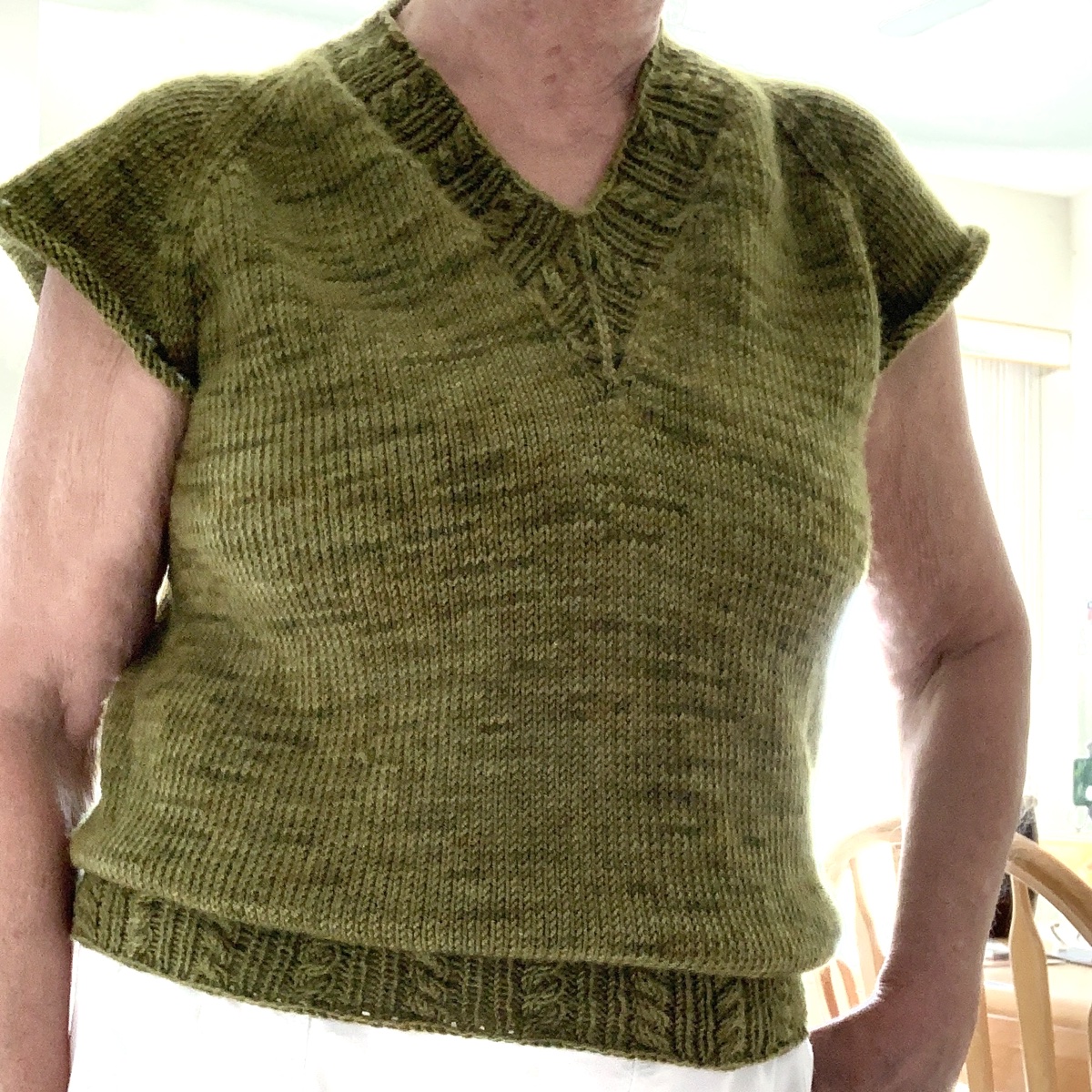
For the Arco Iris pullover I am knitting with yarn that needs to be alternated. This means knitting with a strand from one skein for one or two rows, then switching to a strand from another skein. (The pattern link is at the bottom of this post.)

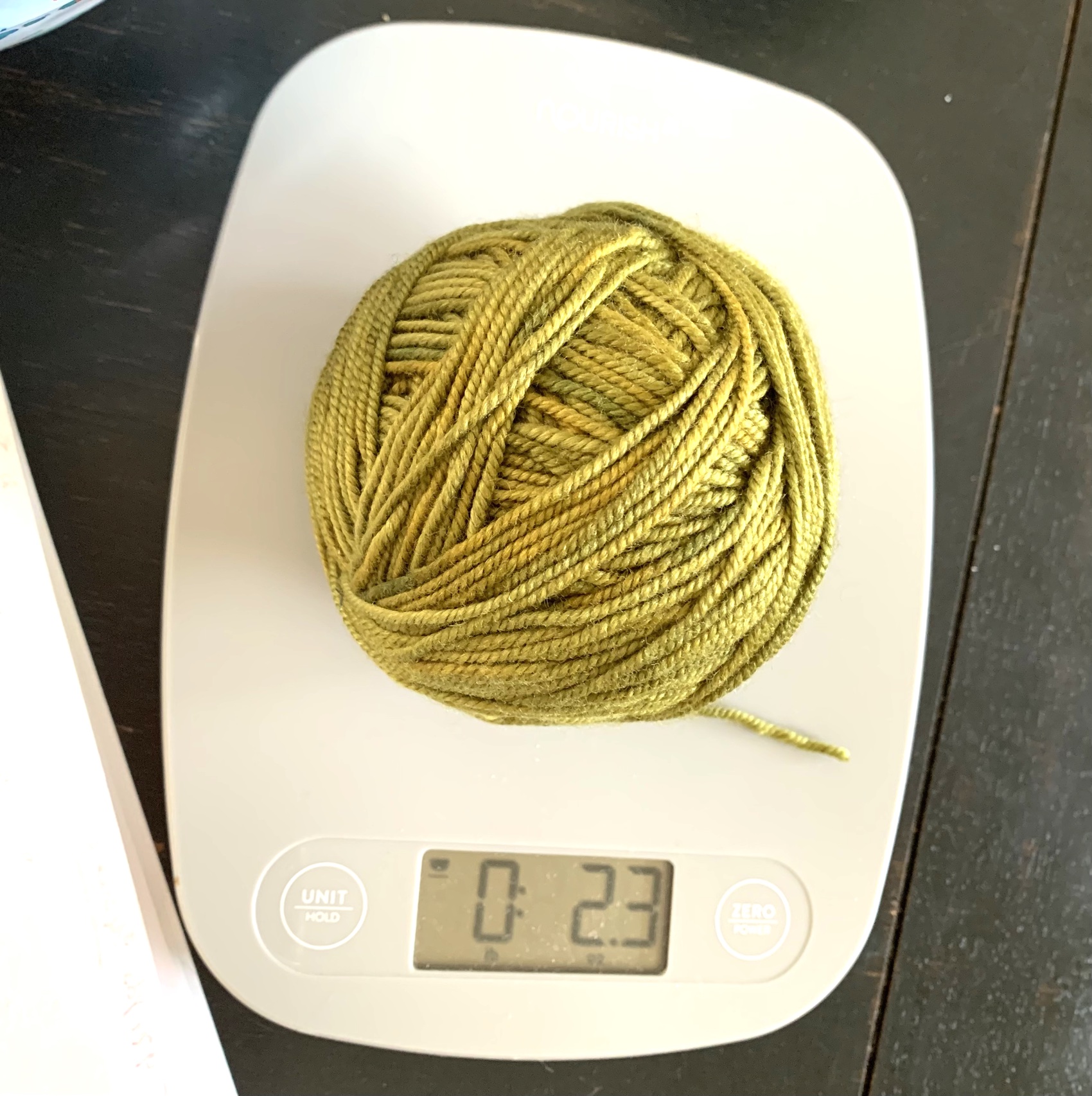
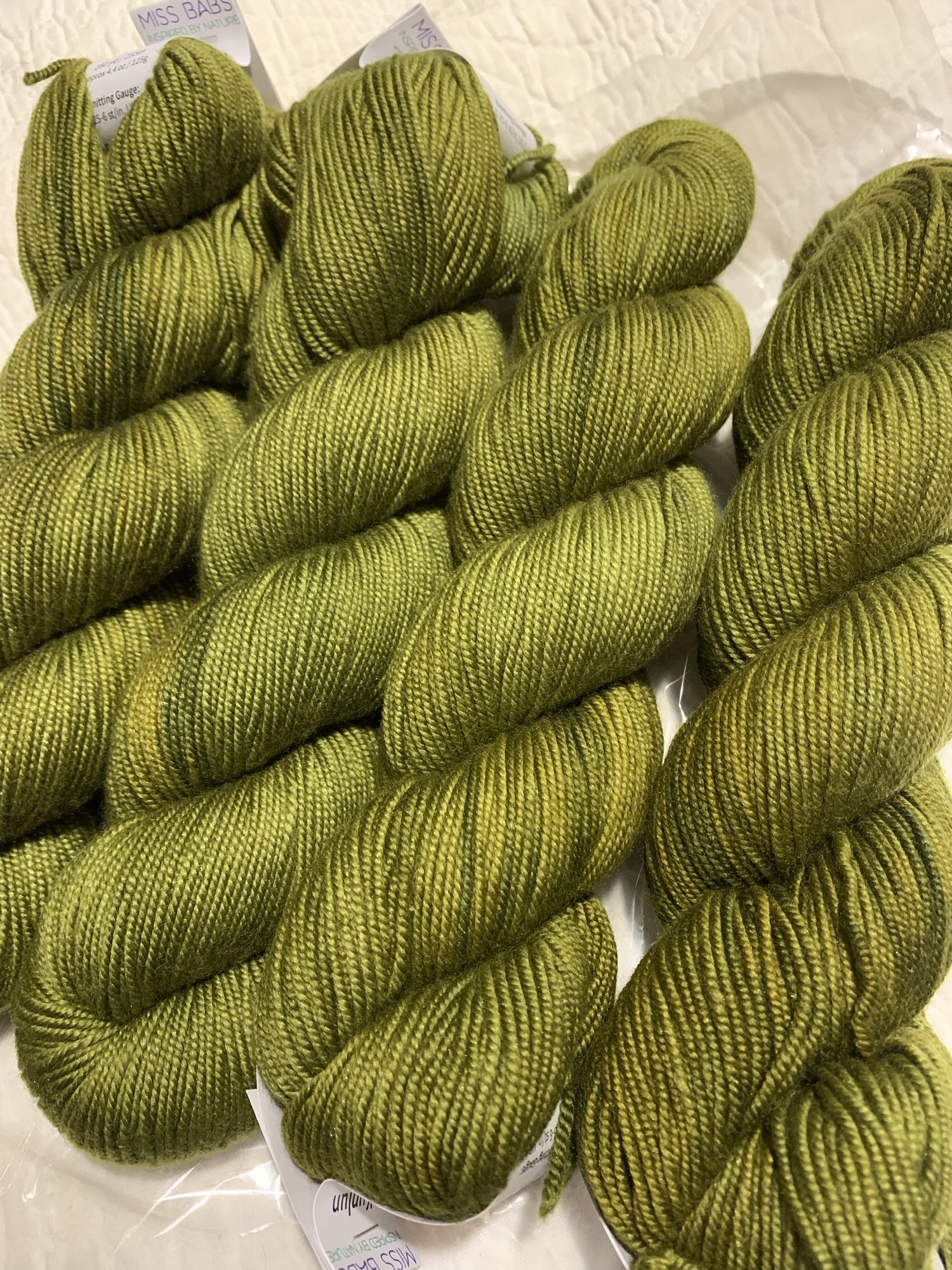
You really should do this whenever you have yarn that is not evenly colored, such as hand-dyed yarns. The yarn in the photo below is from Miss Babs and it is very pretty, but not uniformly colored. This type of dying process creates pretty skeins. It is very popular with knitters because you get a solid color garment that has interesting shades.

However, if the skeins are not alternated, there could be an obvious color difference between them, and / or a pooling of colors.

Color Pooling of Yarn

Yarn color pooling happens when the project being knit has just the right number of stitches to line the same yarn colors up over and over. My green yarn has subtle shading, but this could still happen. In fact Miss Babs made a note on my yarn receipt to alternate skeins. Thanks Babs!

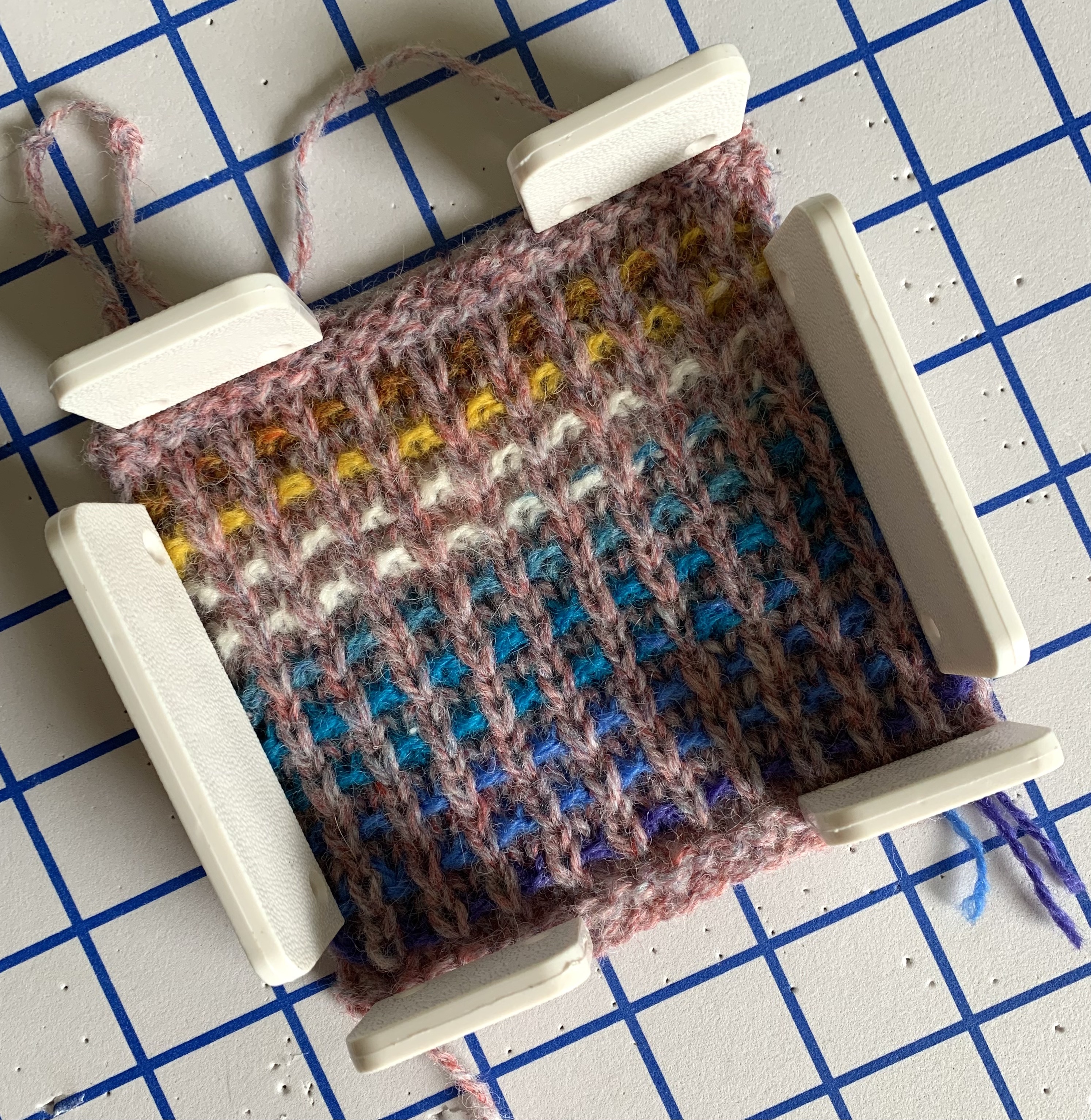
Below is an example of color pooling when knitting. A pretty blue and white variegated yarn was used when I knit this pair of socks. Yes, they should have looked the same, but I had trouble with that faux cable design too and omitted it for one sock. If I had knit this pair correctly I should have divided my skein and alternated strands as I knit. These are socks. I didn’t really care. Now they are a good example of how pooling can effect a project.

Shell cottage socks showing color pooling
Color pooling

Alternating Skeins While Knitting – Sounds Easy, Right?

A new lesson learned. Alternating skeins is not that easy. Well, it’s easy, but not easy to make it look right when you totally do it wrong!

I began alternating skeins from the beginning of this sweater project, BUT the knitting was done flat for the top part of this sweater. I simply carried the yarn up the side and switched strands as I went. Simple.

Then I knit the “V” neckline and I did not alternate skeins. There is some ribbing and cables there, so I didn’t need to.

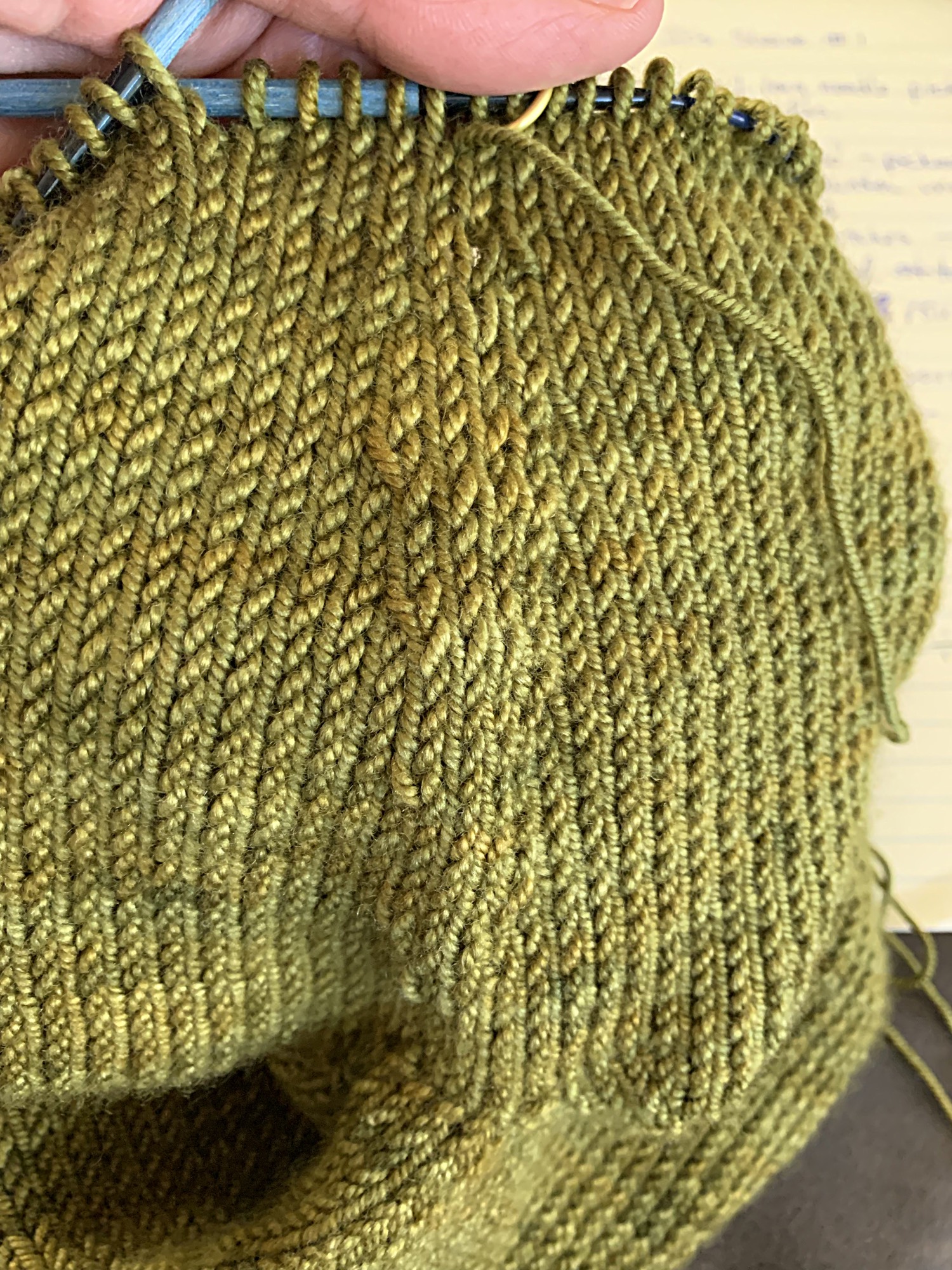
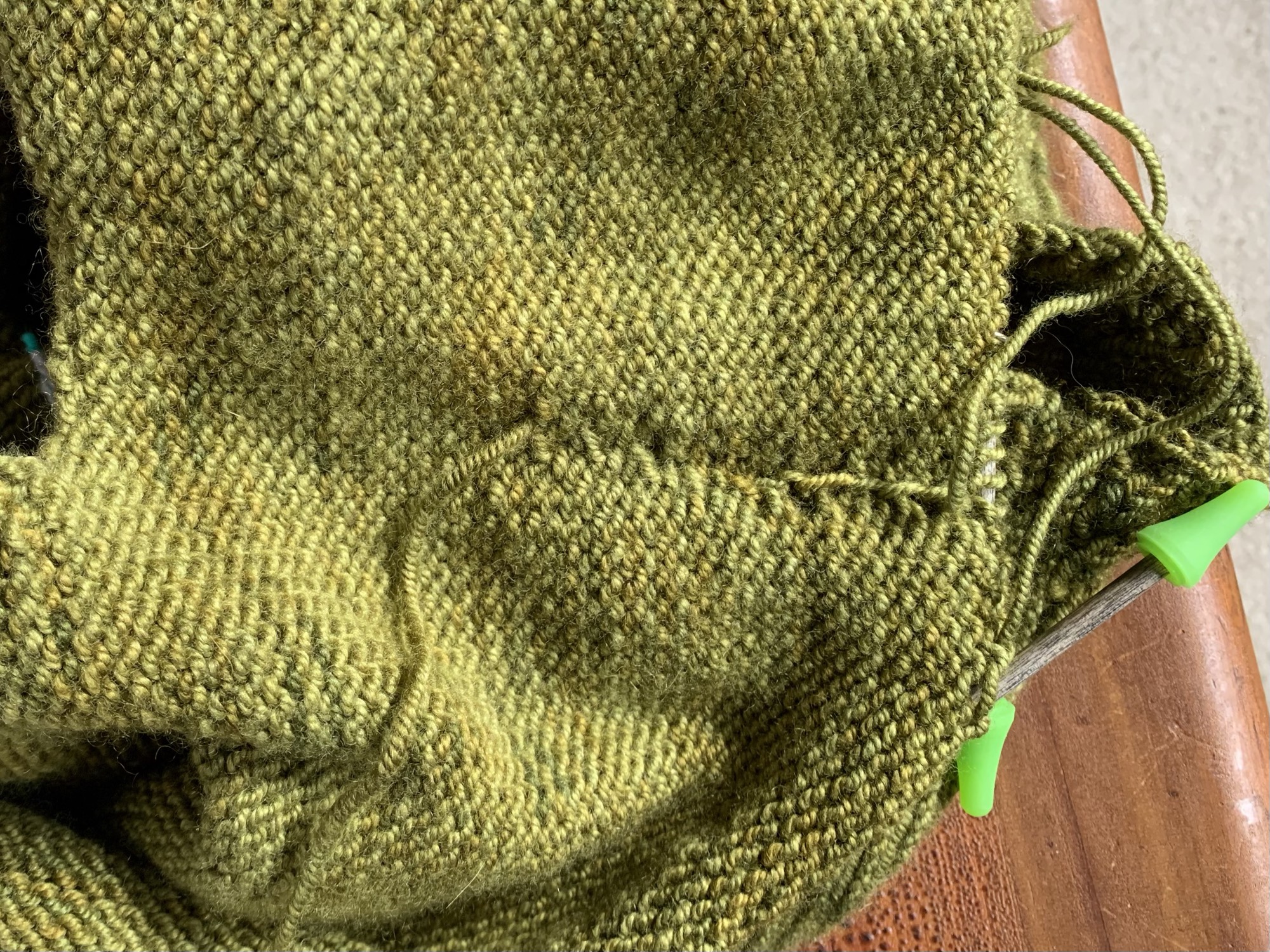
After that, I had to begin knitting in the round. So I added a new skein, knit two rows (NO – don’t do this), swapped out the yarn and knit two more… and so on. This is how it looked.

Hideous!

After I did some knitting and alternating skeins, I saw that my carrying of yarn looked pretty awful. The carry line was uneven and also was puckering! I knew I would have to re-knit this area.

Now I needed to learn the correct way to do this. YouTube had some videos, and the one I found to be most helpful was where the yarn strands are brought forward when changing. (Video link below in “How To” section.)

Ripping Back and Starting Over

This yarn gives very clear stitch definition so finding the stitches in a row above the mistake was fairly easy. Here’s a pretty good video about picking up stitches to frog back a large chunk of knitting by Knitty Natty – which is what I did.

My knitting was done in the round and as I got close to the end, my needle pick up got tough. I got the last group of stitches with some yarn. By the way, you can use a much smaller size needle to pick up those stitches, as long as you being knitting again with the correct size.

I messed up a bit when adding my new skein (don’t ask me why), and therefore I have a little wonky place, but once I began the “yarn forward” technique, the rows looked much, much better.

How to Do the Yarn Forward Alternating Skeins Method

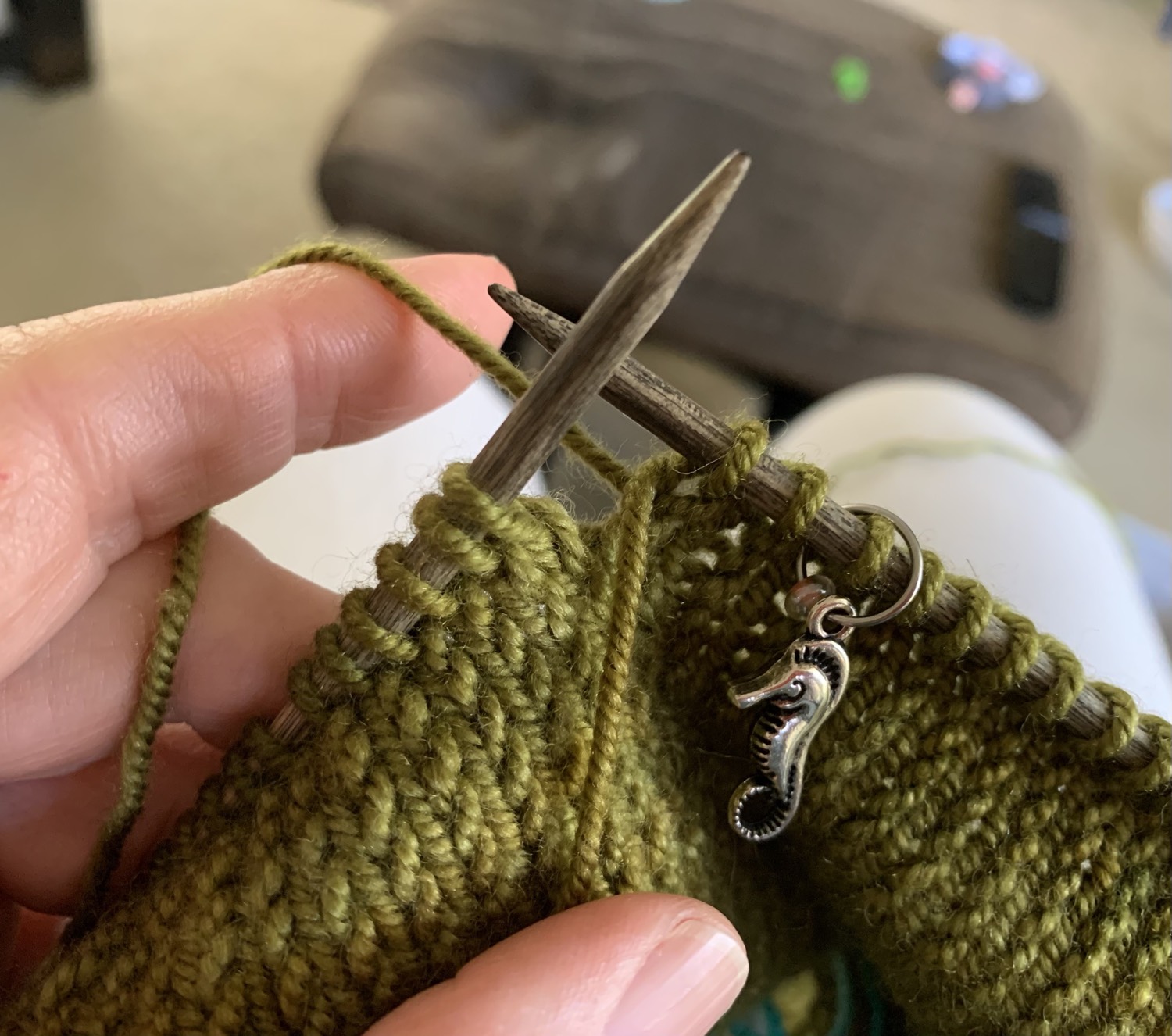
I have chosen to do the yarn forward swapping yarn on each round. Here’s how to do this method:

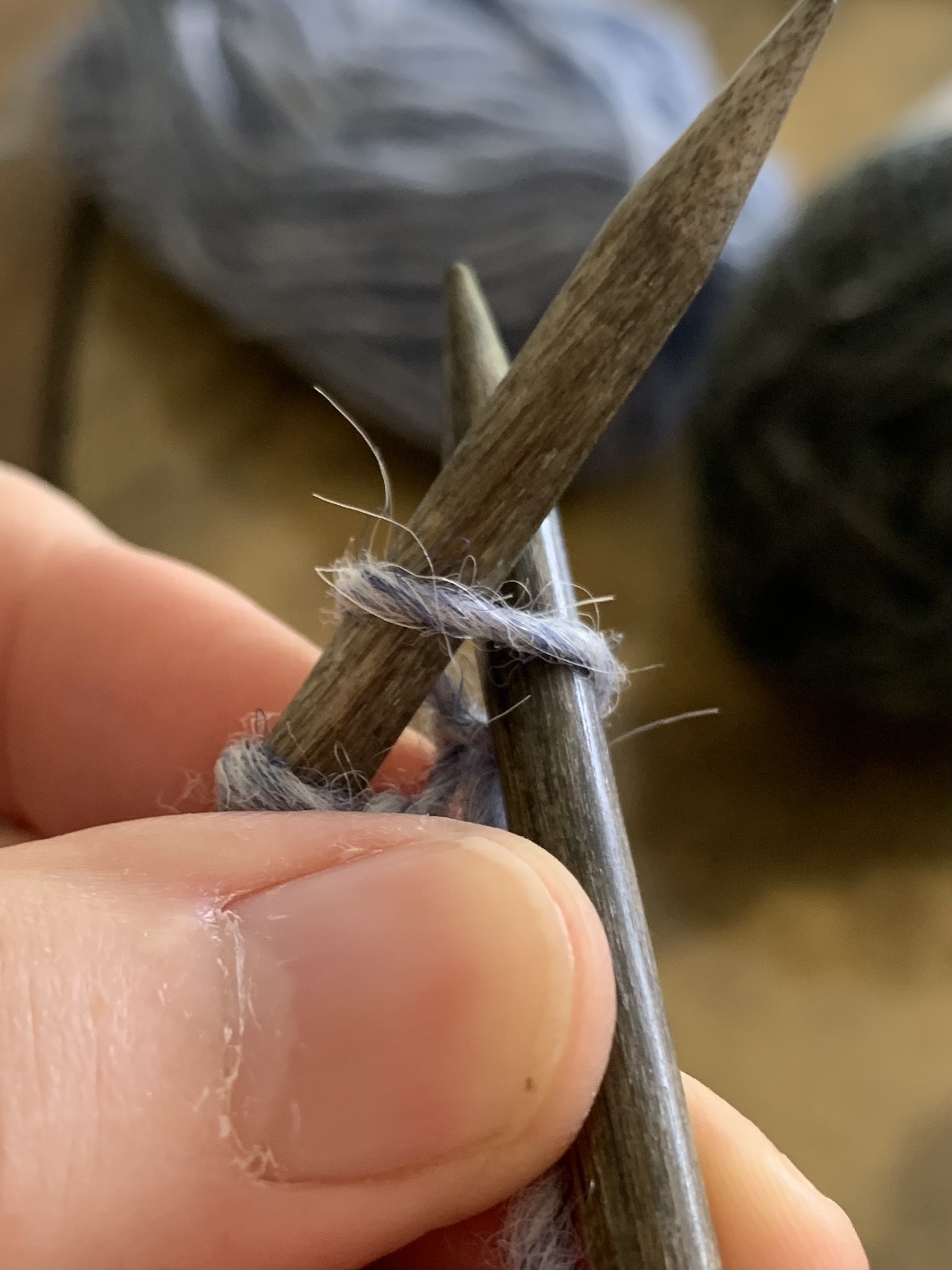
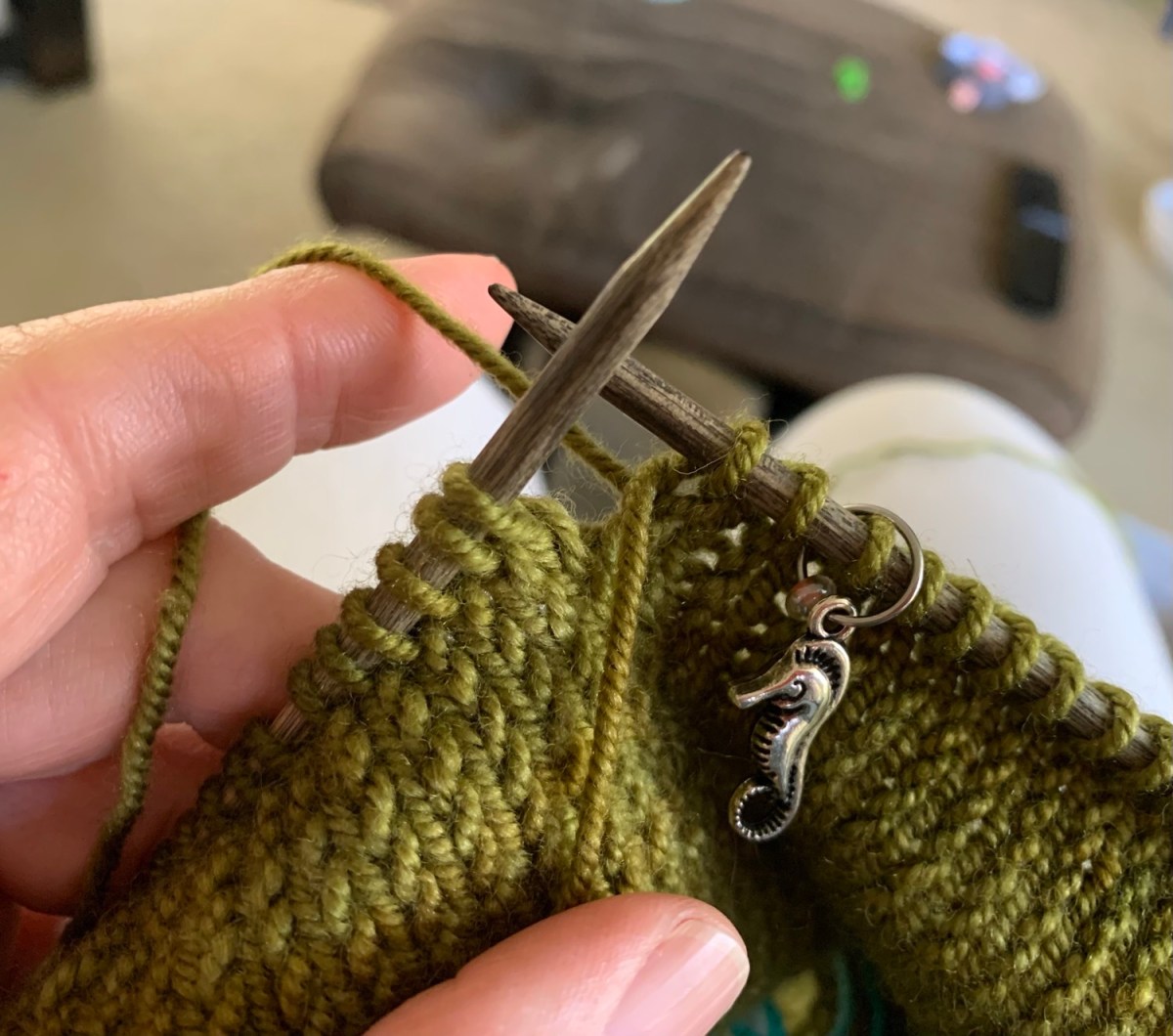
Pull the yarn you have been using to the front of the knitting and let it hang there.

Add the new yarn (for the first new skein round) by wrapping it around the needle as you would to begin knitting with any new skein.

Knit around using the new strand.

Once you arrive back to the place where the yarn is in front, swap it out. Yarn in front goes to the back and will now be used to knit the next round. Previous yarn used goes to the front and hangs.

Here is the best video I found that shows how to to do this.


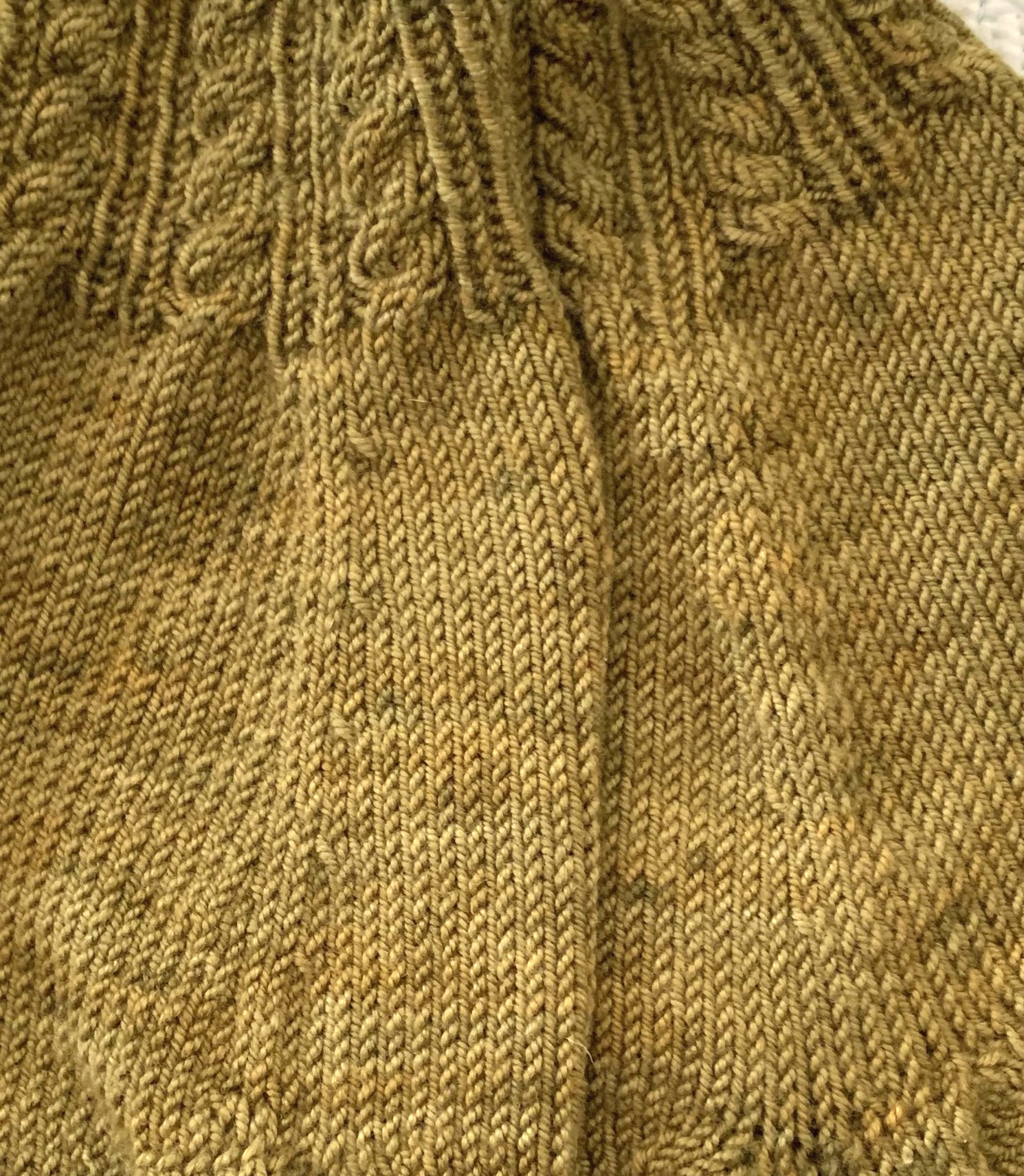
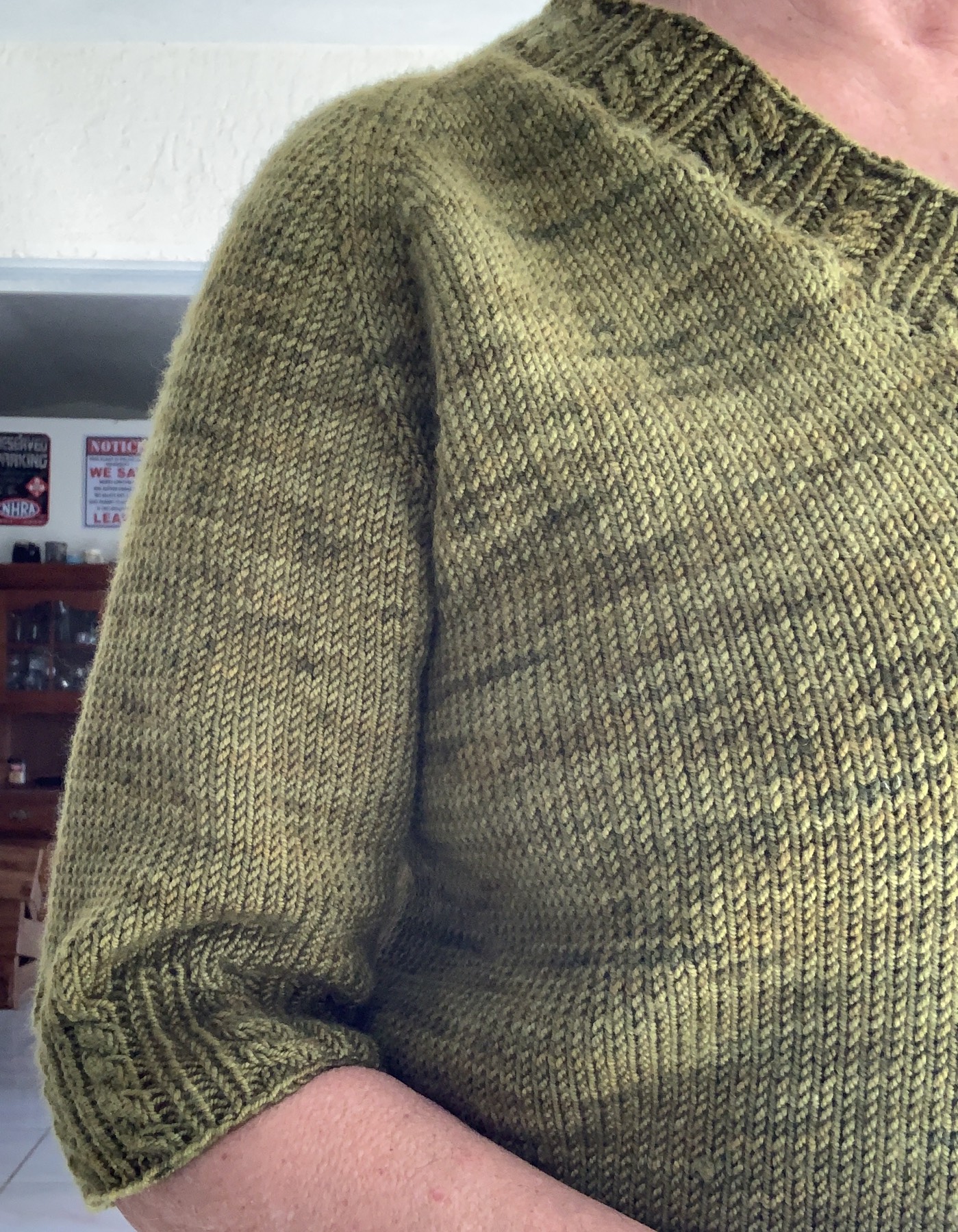
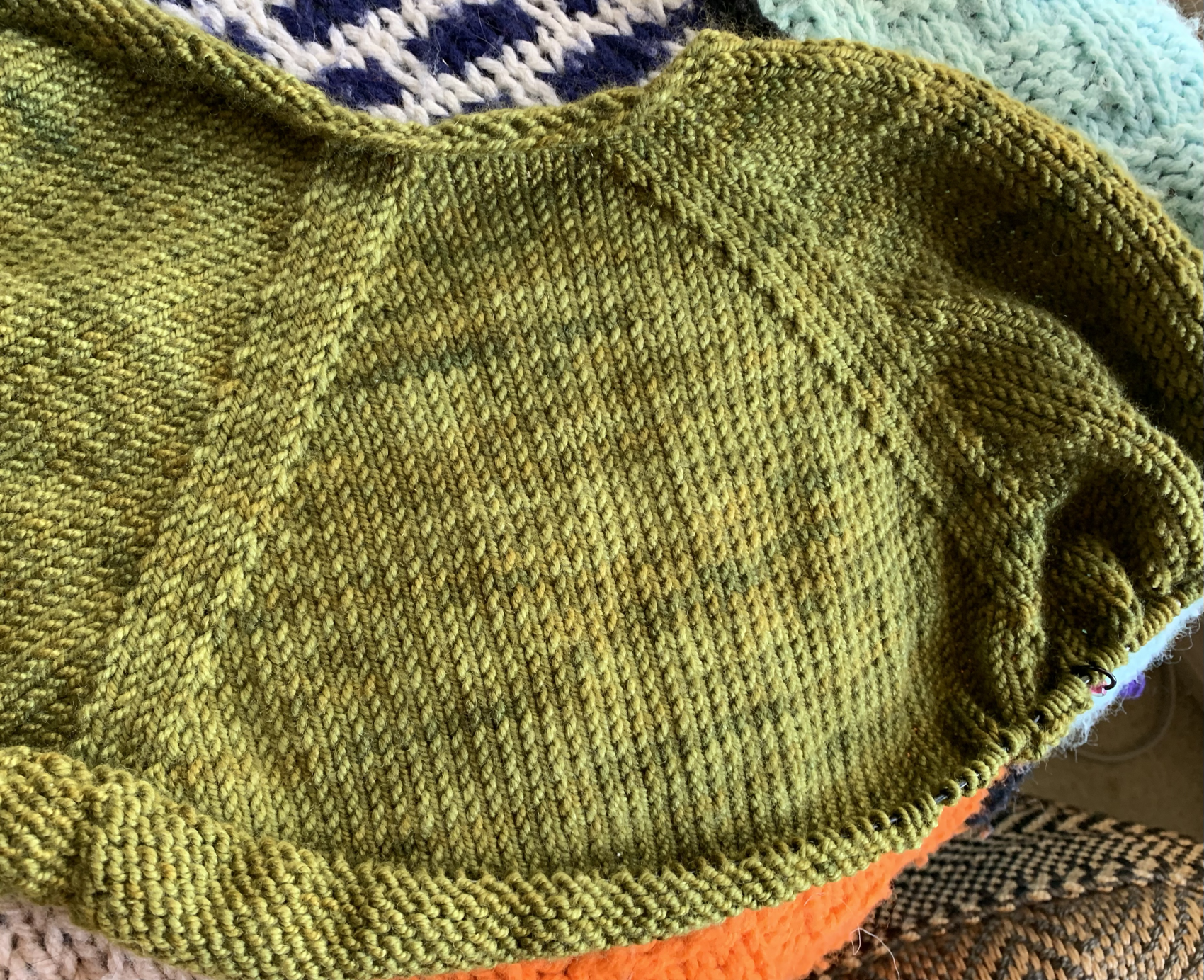
For me, this line of alternating yarns will run down the side of my project – beneath the arm of the sweater. It will not be noticeable and hopefully even less so once the sweater is washed and blocked. I forgot to do this (alternate skeins) for the first couple of inches. The arrows show where I added the new skein.

The other method of swapping out strands every row creates a line up the inside of the project, which is fine too. The Miss Babs video about Alternating Skeins for flat and round knitting, shows that method. (Watch the woman knit while she looks into the camera! Impressive.)

You must swap the yarn EVERY ROW for both methods (in the round).

I mistakenly began by knitting two rows before I swapped, and that should only be done for knitting flat (back and forth) where you must knit a second row to get back to the place where the yarn is waiting.

New Technique For Me

Although I have knit many sweaters, this is the first time I have used this technique. My attempt is not perfect because I watched too many videos and did not follow the good video directions, but I am not ripping back again.

Usually I knit with wool and I don’t have to swap out and alternate yarns. I prefer simple wool for knitting, but I wanted a pretty, variegated yarn for this sweater pattern.

The Pattern

This sweater pattern is called Arco Iris and is by designer Joji Locatelli. You can buy the pattern on her Ravelry page here. You can read my notes about knitting this sweater here.


Read more about my knitting adventures

Lots of Changes This Year

Writing a blog, sharing photos, and doing research and making links takes time. Lately I don’t think the time spent doing all that is worth enough…

Knitters and Our Many Projects

How many projects do you have on your needles? It is not uncommon to find that fellow knitters have many things going at once.

Knitting The Neck Ribbing of the “Arco Iris” Sweater

Knitting the ribbing around the v-neck for the Arco Iris sweater pattern.

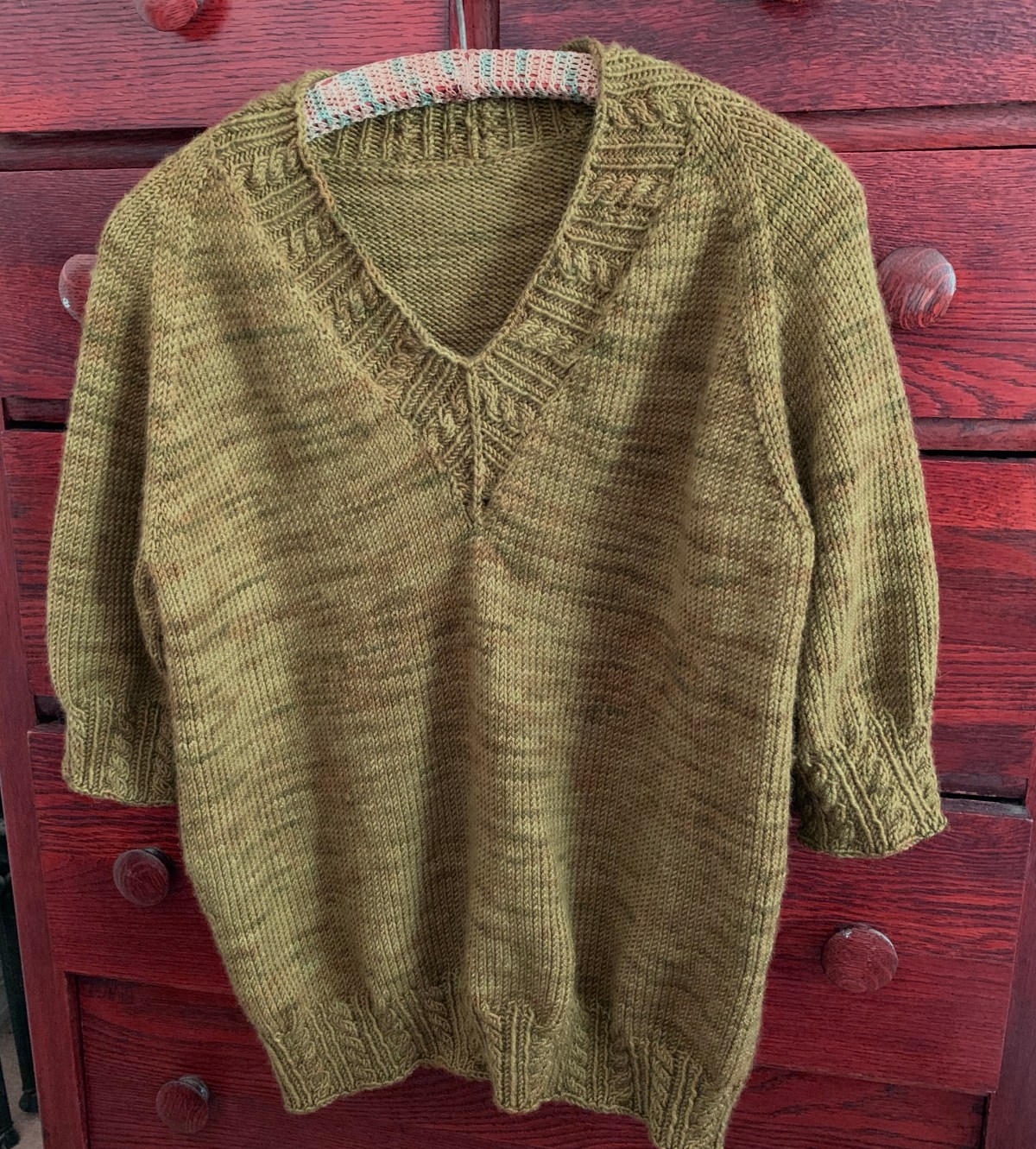
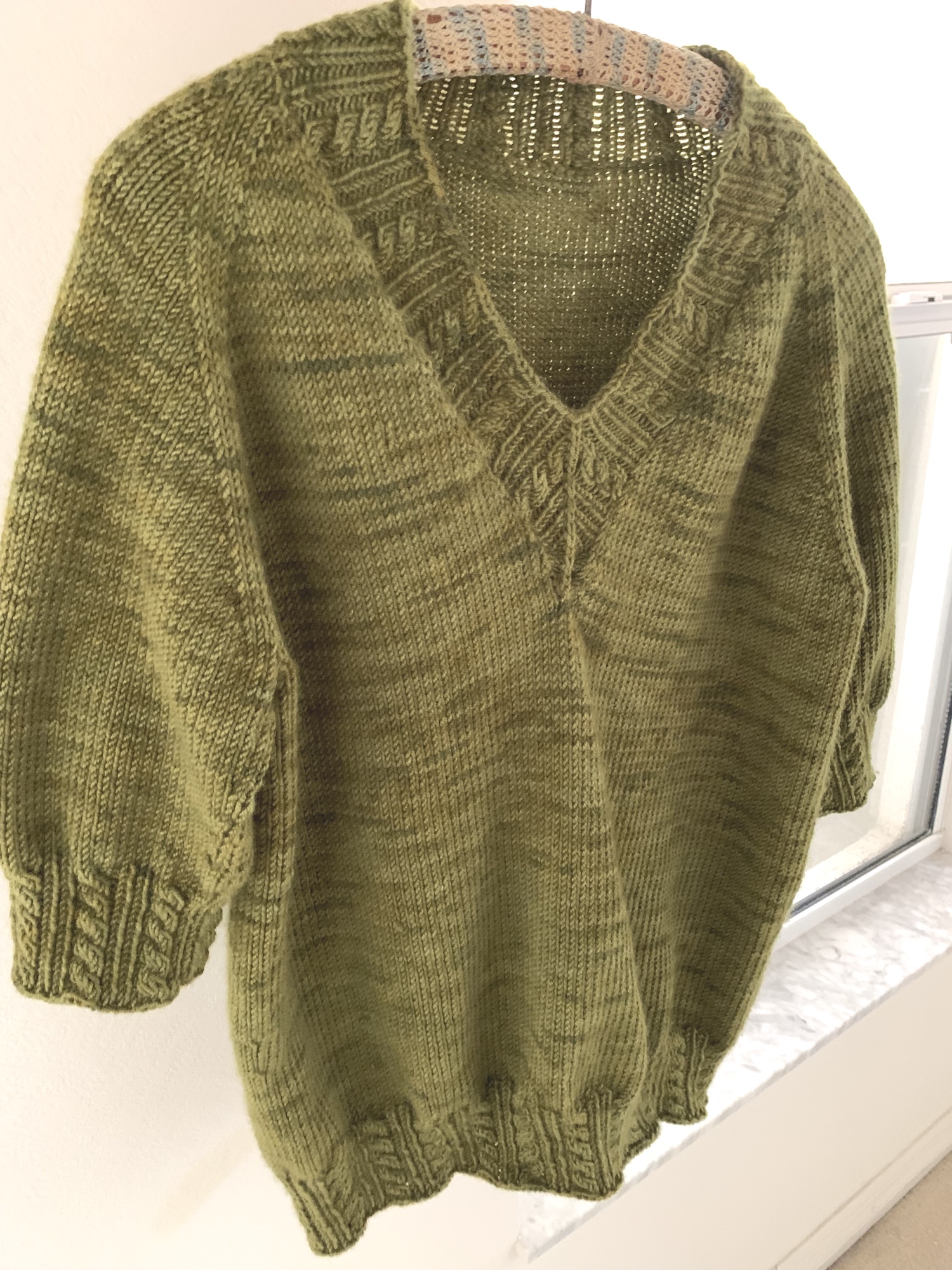
This v-neck sweater, the “Arco Iris”, has a pretty ribbed and cable border around the neck to match the sleeve cuffs and body ribbing.

Once I got the sleeves put on hold, and began knitting the body, I decided to take on that v-neck ribbing. I had a quiet day to myself, and decided not to knit round and round, but take on the challenge of the neckline.

Picking up Neckline Stitches

This pattern tells you exactly how many stitches to pick up for each section of the neckline. I had no trouble picking up stitches for the back of the neck. Each loop was easy to see. But going down, and then up, the V got tricky.

I have decided that I absolutely hate doing this. I came close to throwing the knitting across the room.

For this sweater the stitch count must be exact. The cables and ribbing are done in multiples of 9 / 18. I ripped out my pick ups more than I will admit, and finally gave up and did the best I could.

I ended up 5 stitches short and added those stitches back in (using backwards loop cast ons) when I did the first row around. So my advice to you is to maybe keep this in mind so you don’t go insane.

cats and knitting

Skittle the Cat had to jump up into my lap at exactly the WRONG TIME. I had dropped a stitch and was trying to fix my problem while the cat insisted that I pet her. All I could do was laugh at the unlikelihood of that. Finally she settled in on my lap and was happy for me to continue knitting.

The first couple of rows of directions on the neck are the set up pattern for the cables and rib. Once that is done, the pattern gets very easy.

Once I finished the neckline, I put my body stitches onto waste yarn so I could try the sweater on and see how it looks. I actually like it a lot. My cables are off, but once I did one wrong, I had to continue to do it the same (left leaning / right leaning) way. Most people will never notice my mistake.

When you are told to do a “cable crossing every 4th round”, do the cable as you did in the beginning. The “lefts” will always be left. Each cable will be done the same way – with yarn held either to the back or front. If you are not familiar with cables, this could be confusing.

As I knit, the circle for the neck opening kept getting smaller, and I was getting worried, but it ended up perfect. That front part of the V is a decrease, so the circumference gets smaller on every round. I ended up using a 16” circular needle but began with a 24 inch.

Don’t make the bind-off too loose. You won’t want the neckline gaping open. Also, don’t make it too tight!

This pattern is not one of the easiest to follow. I’ve knit quite a few sweaters over the past couple of years. Some were lacking in directions, one in particular I simply hated, and many have been fun and easy to knit. Occasionally there will be a small mistake in a pattern, which is understandable. Common sense may be all that is needed to keep knitting.

I respect the time and effort that knitwear designers have put into creating their patterns. I suppose a designer may assume the knitter will figure it out. But I like to be told specifically what to do when knitting. Usually all it takes it one more sentence to explain.

What About the Test Knitters?

What is a test knitter? Someone who knits the project just as it is written. They look for problems and make sure the pattern is ready for everyone to knit. Usually designers will search for knitters who will make the pattern in a variety of sizes to be sure the pattern works for everyone. The testers are in touch with the designer and communicate any and all problems with the pattern to make it read to sell.

One test knitter included no notes at all. I guess they don’t have to. (I recently finished a Jenn Steingass sweater and she had a ton of test knitters, who did include helpful notes, and that pattern was very easy to follow.)

Test knitter Toriyu had helpful information which I am actually following, but she is the only one with useful notes.

The other test knitters had skimpy notes such as “made the sleeves longer”. Not a single one of them found problems with the purl increases… apparently. Or if they did, they may have told the designer, who knows? All I can say is that I found a few parts of the directions difficult to understand. And I probably would have gone ahead and done the purl increases incorrectly without realizing.

I’m going to leave notes on my Ravelry page incase anyone has my same problems.

There have been 76 projects knit (according to Ravelry numbers as of the date of this writing), or begun, by knitters such as myself, on this sweater. The pattern came out in December 2022, which means it is a new pattern (this is January) and lots of knitters plan to knit it. In the end this should be a beautiful new addition to the wardrobe.

Onward I knit. I’m thinking the most complicated part is behind me.

v-neck sweater Arco Iris
Finished the v-neck before the body and sleeves.

Getting My Kunlun at End of Year Yarn Sale

Specialty yarn is on sale at the end of the year in Miss Babs shop and I took advantage of that sale.

End of year yarn sales can become overwhelming without a buying plan. Lack of money is usually my plan! Haha… but seriously, the one sale I’ve come to look forward to the most is at Miss Babs.

Without knowing much about the knitting world, I jumped in and joined a KAL (knit along) and Miss Babs yarn was suggested. We knit a shawl using lace stitches and amazingly enough I was able to do it. See my Vine Pops shawl here. It is when I discovered how lovely Miss Babs’ yarn is.

Customer Care

Not only was the yarn super soft and easy to work with, but some of the knitters were running out of yarn for the project. Miss Babs jumped in and offered some help in some form, which I can’t recall now. It was certainly not something they needed to do, and it was above and beyond. All the knitters were all impressed, and thankful for the offer. (I know this from reading the KAL forum). This was when I realized that this company was run by involved people.

Sometime after that I knit the Fine Sand sweater and once again used Miss Babs yarn (Tarte). Someone from the company actually left a comment on my sweater on Ravelry. I have never had another yarn company do that.

I’ve written about this before, but yarn orders come wrapped in tissue with little stitch marker gift. Also included is a small braid of yarn to use to create a little swatch. Who doesn’t like to feel like an appreciated customer?

The Yarn

At some point I ordered some un-dyed Kunlun yarn. It was probably part of a sale, because I had no plans for it. Eventually, I used it when I made two hats for my daughter and my son’s girlfriend. The white in these hats is the Kunlun yarn (it is combined with some variegated handspun I had purchased). They are the softest hats I’ve ever made. My daughter wears hers all the time.

This is how I fell in love with Kunlun yarn. The yarn contains 70% merino wool, 15% cashmere and 15% cultivated silk. No wonder it is so soft and lovely… and expensive. Each skein is $42 at the time of this writing, so I wait for a sale.

This year I had a project planned. I needed four skeins of Kunlun for this project. I looked online at the colors and had chosen a few favorites, then waited. I wasn’t sure when the sale would begin, but I get the Miss Babs newsletter in my e-mail and figured it would be coming soon.

One night, as I was scrolling through Instagram, I saw a mention of someone ordering their Miss Babs sale yarn… ! Yikes, I was late to the sale. That is all it took for my favorite yarn colors to be sold out! I was one day (possibly only hours) late…!!

I did not give up. I got up, in the middle of the night (this is when I can’t sleep and scroll instagram) and went online to find some Kunlun. I ended up with some Moss green yarn and it is very pretty. I’ll be using it soon to knit Joji Locatelli’s “Arco Iris” sweater.

Kunlun yarn in Moss green

So, did any of my fellow knitters grab some Miss Babs sale yarn? I’m sure I won’t be waiting another whole year before I buy from Miss Babs. I see they have new worsted weight wool (non-superwash) yarn now called Intrepid. I also love Tarte, which I used for a sweater and is able to be machine washed. This yarn is great for knitting gifts for people who will never hand wash anything! I’ve also used the Yummy 2-ply when I knit the Bay’s Edge shawl. There is a lot to like in this shop.


Recent posts from the blog

The Genius of Ravelry

Ravelry is an online fiber crafting (knitting) site that is very helpful in many ways.

Don’t know about Ravelry? I doubt there are many knitters, who are online often, could NOT have heard of the Ravelry site. It is a place for knitters, crocheters, and designers to gather and share, learn and grow together.

I use Ravelry to find patterns, share my knitted projects, find yarn, and check on colors before buying yarn. Occasionally I use the forum to find answers to questions about a pattern, or join a knit-along (KAL).

Lets look further at how Ravelry can benefit a knitter. I’ll speak about the craft of knitting here because that is how I use the site. Crocheters are included, and their experience should be about the same.

The Basics of Ravelry

Ravelry is free. Set up an account and create a profile. A blog feed can be linked, as well as up-to three other places you are found online. Of course you can fill in as much or little as you like. Social media sites can be included, and the Ravelry account can be linked to your Instagram.

I use all of these options because of my online business. Becoming a member is important because it allows you to view necessary things on the site. It’s free, and you can do more as a member.

Ravelry’s Learning Curve

There is a bit of a learning curve (for some of us) in the beginning. The profile page is pretty empty until you begin sharing projects, finding favorites, stashing yarn, and building a library. But the object is not to fill these places. They will fill nicely on their own as you discover favorite patterns and knit some yourself.

If I come across a member who has knit a lot of projects I love, I may add them to my Friends.

Finding Favorite Projects

When I get the urge to knit something, Ravelry is the first place I search. Anything that looks good – like I may want to knit it in the future – will be saved to my “Favorites” section. I have made various categories, such as “sweaters”, “ponchos”, etc. where I keep the patterns I find while conducting a search.

Finding Good Yarn and Perfect Colors

I can’t count the number of times I have been considering a project but can’t decide on a yarn type, or need to see a particular color. Ravelry has a search at the top of the page for “yarns” (among other things). When I am shopping for yarn but can’t picture the color all knit up, I use the yarn search to see what other knitters have made with the color.

When using a variegated or speckled yarn, it’s difficult to imagine the way the yarn will knit up. Usually there are a number of knitters who have already used the yarn color so you can search and find images to view.

Often other users have left comments about the yarn in the “comment” section. This is where to learn just how well knitters liked using the yarn.

When choosing a pattern to knit, click on the yarn used (by the designer) to read more about it. Each yarn page also includes a link to “buy this yarn online”. Find locations by country, with some shops including their current pricing.

Add yarn favorites to your own “favorites” area for further consideration.

Share What I Am Knitting

When I begin a knitting project I take photos with my iPhone. I do this to share on my knitting blog (the one you are reading), and to share at Ravelry on my “projects” page. Occasionally I share at Instagram as well. By the way, Instagram is a great place to find new pattern releases and designer discounts.

By adding this info about my knitting, it reminds me of how long it took to knit it, the yarn type and needle size I used, and comments about my experience knitting it. This helps me for future projects in case I want to knit it again. It also helps other knitters who are thinking about knitting the same project. I love it when others share their notes, and photos, on their knitwear pages.

Join a Group

I’m not a super social person. I’ve joined a lot of Ravelry groups just to do so, but a better idea is to join meaningful groups. Your local yarn stores may have a group, and many pattern designers and yarn makers have groups.

When a pattern is used the project can be shared on the designers group page (just join their group) where other knitters can find ideas and info.

For instance, when I finished my stranded colorwork mittens, Fiddlehead, knit with Brooklyn Tweed Arbor yarn, I shared them on the “Stranded” group and with “Brooklyn Tweed Fan Club”.

Fiddlehead mittens hand-knit in Arbor yarn by Brooklyn Tweed

What are your favorite things about Ravelry?

Ravelry is used for a lot more than just what I’ve mentioned on this page. You can list your own yarn stash to keep track of what you have, and what has been used up. Some Ravelers will trade or sell yarn they have. Also keep track of your needle collection if you choose.

Ready to join? Begin at the Getting Started page. I’ll see you at Ravelry – you can find me here.


Keep Reading…