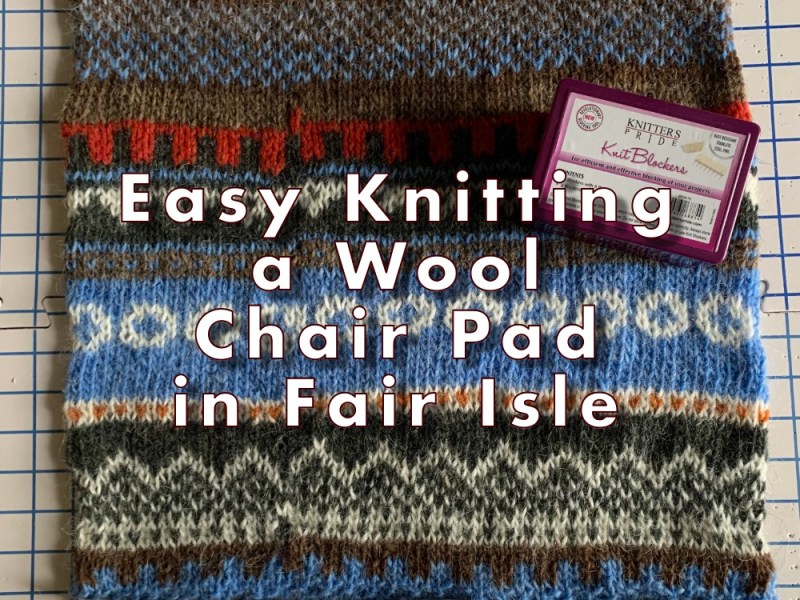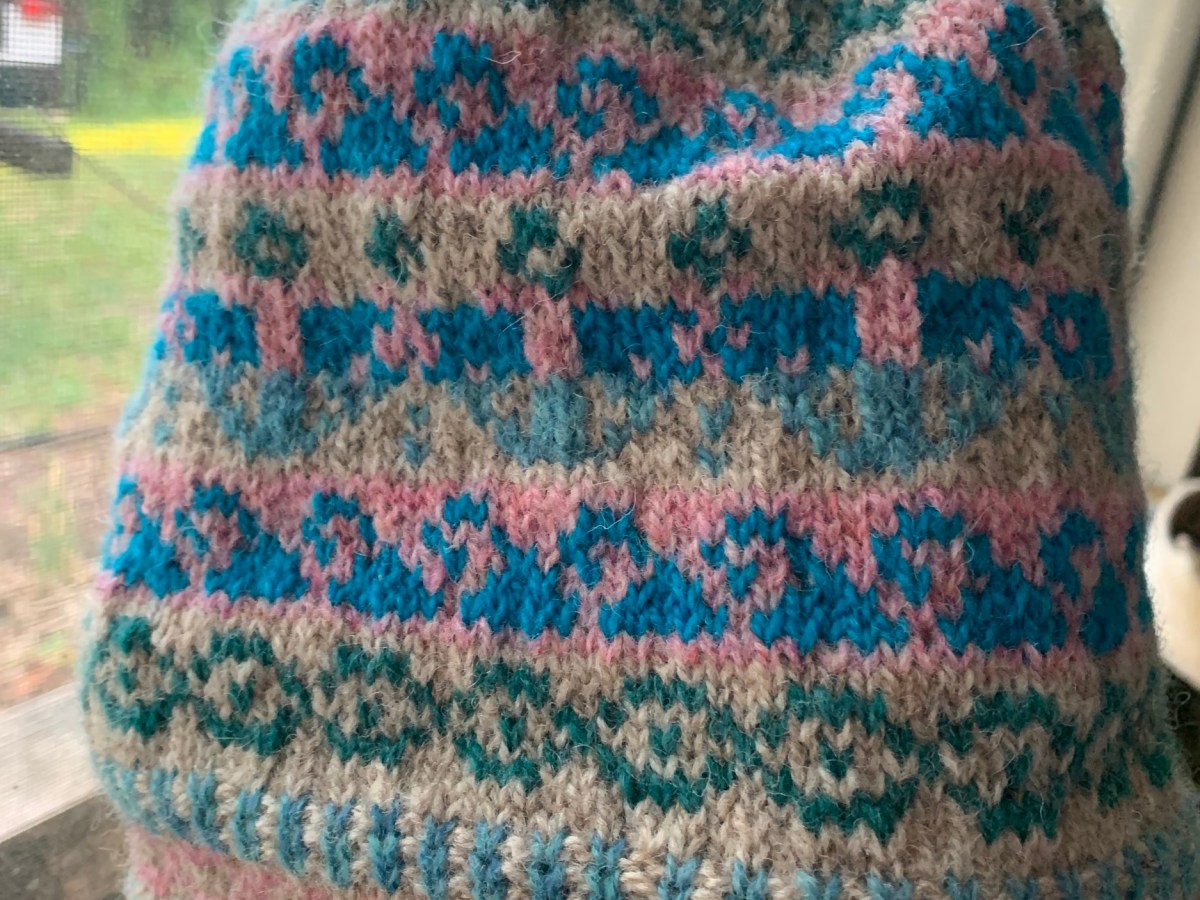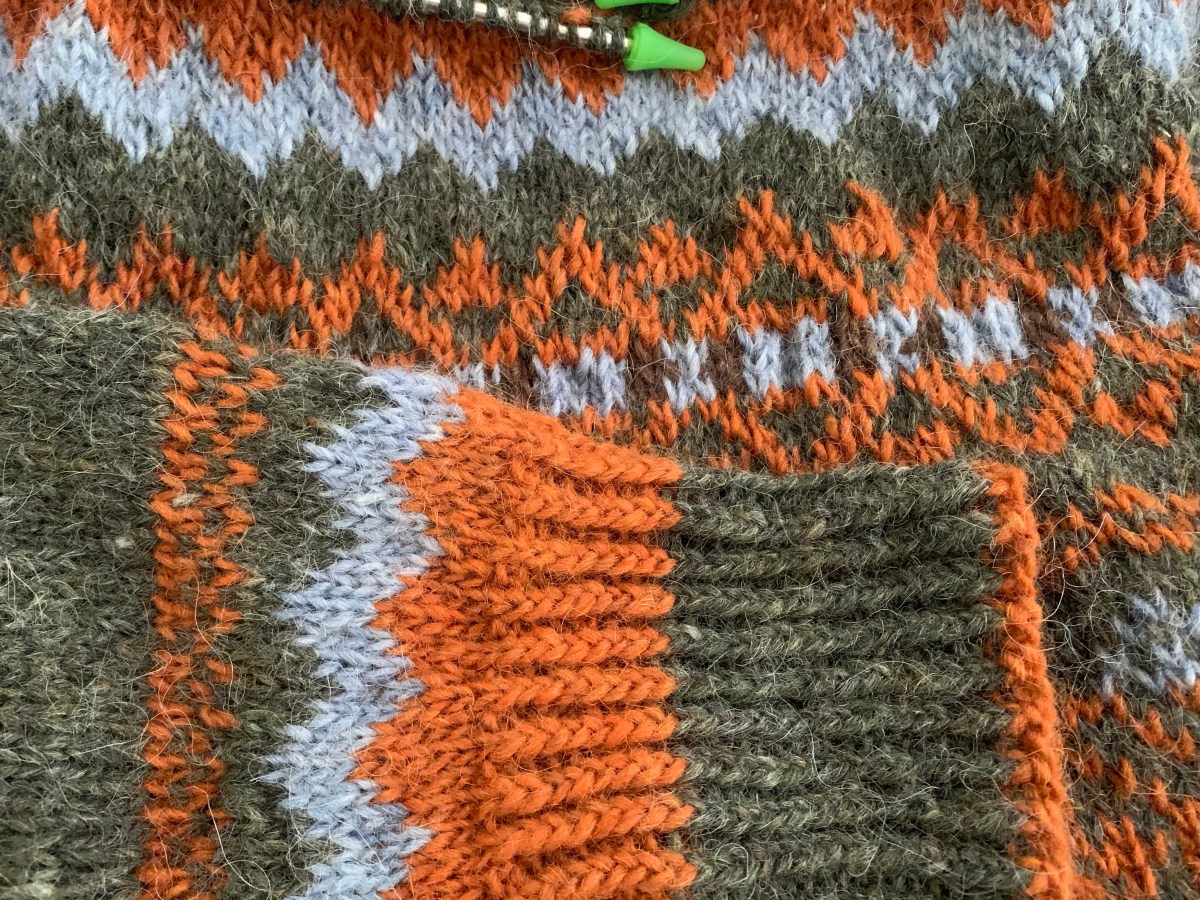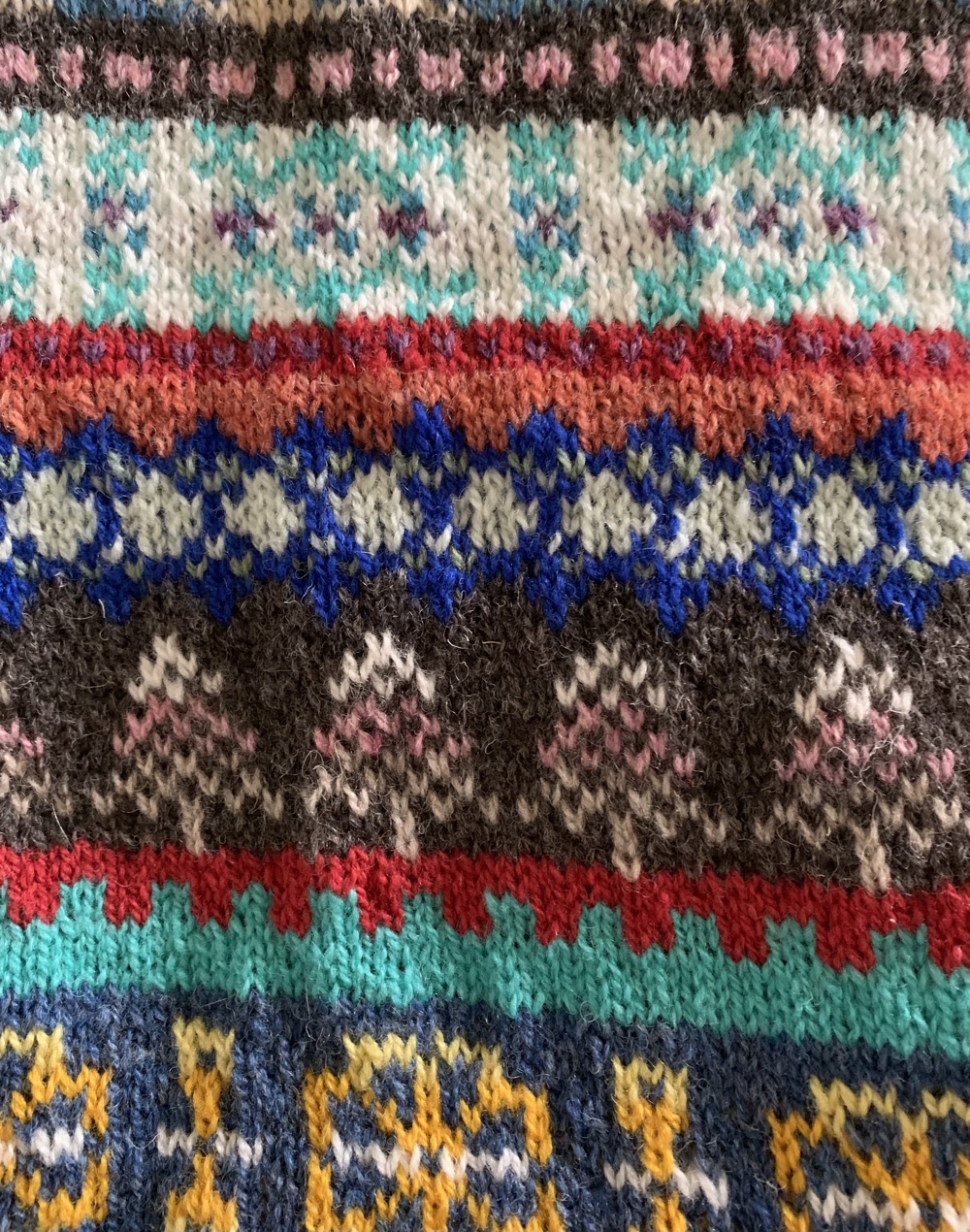
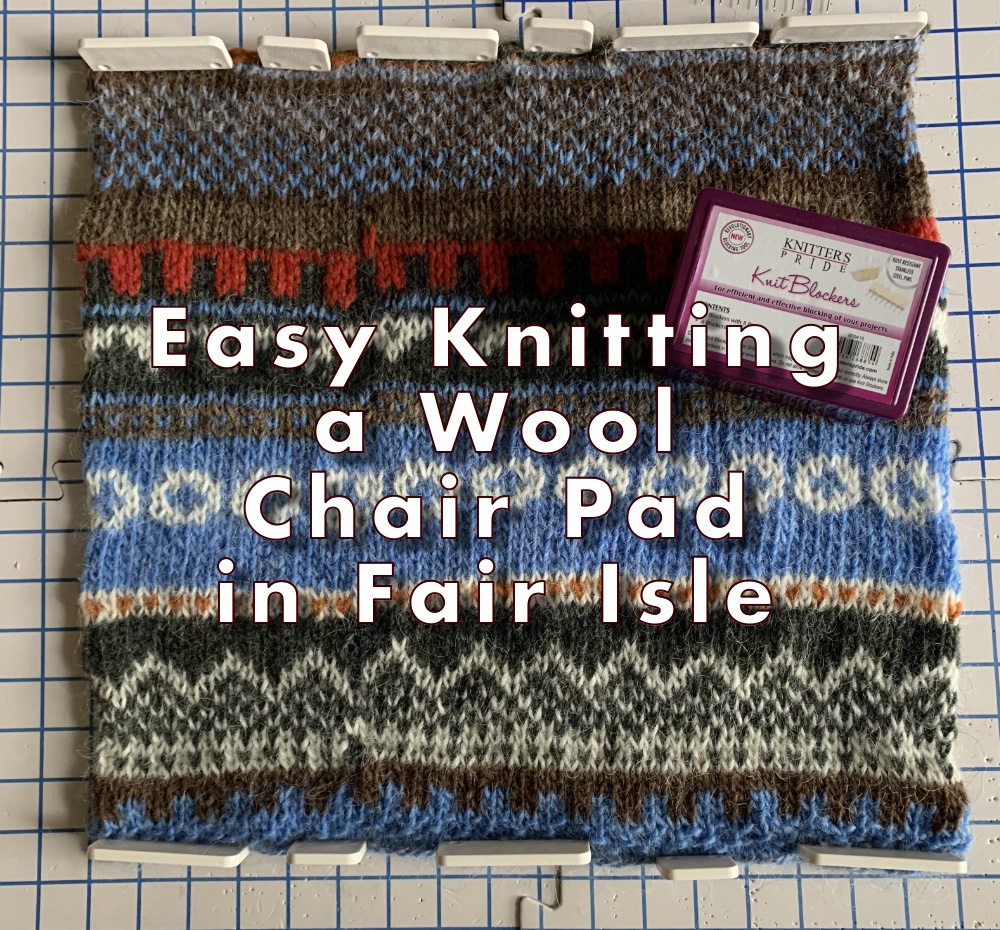
This is a free pattern for a felted wool seating pad. It’s an old pattern, and doesn’t have a lot of information. The colorwork is by chart only, but it’s a simple chart. Also, your own colorwork designs can be substituted. It’s what I decided to do. Or, don’t do Fair Isle, and make it all one color, or stripes. Anything works really. The colorwork makes it a bit thicker.
Scroll to get the pattern link, listed further down the page.
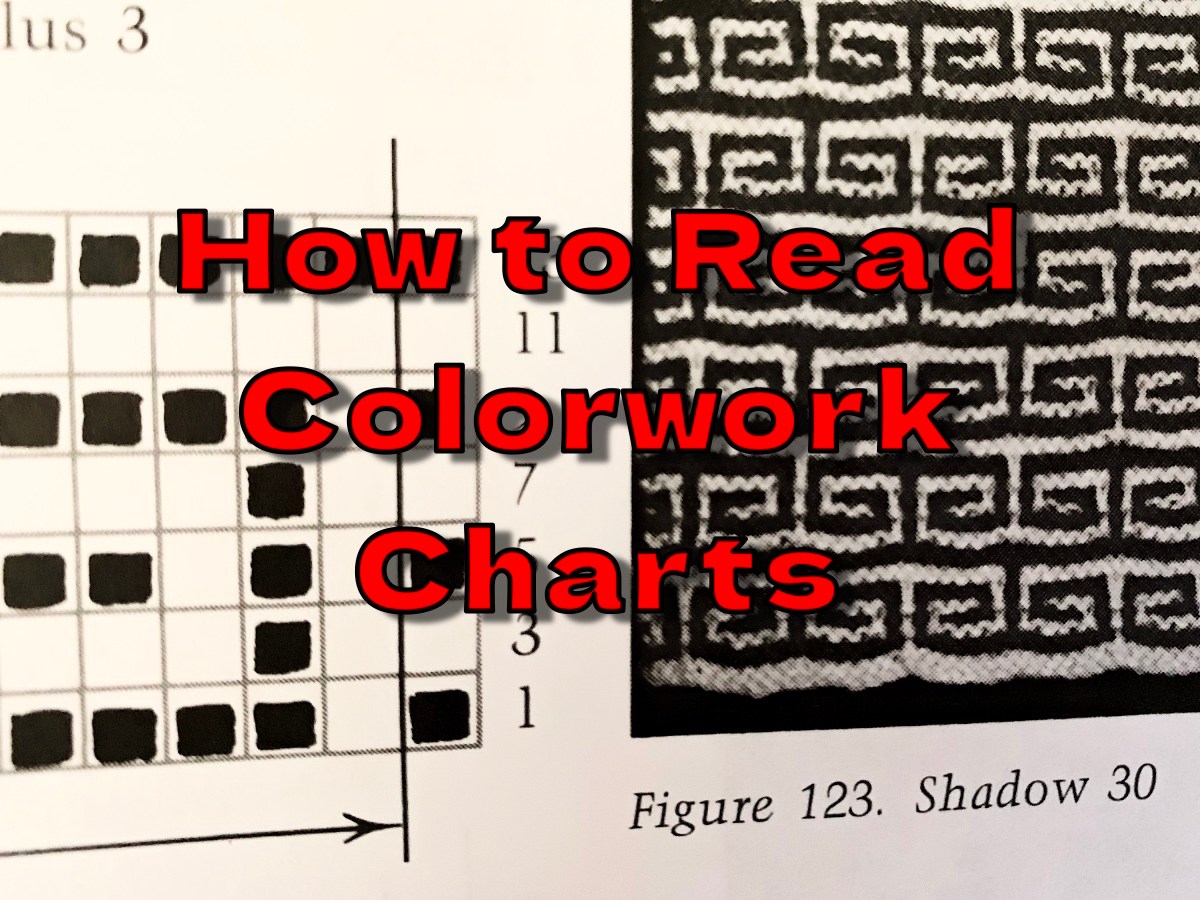
Need some helpful advice for reading a colorwork chart? I have written a page that will help.
Yarn Ideas
Worsted or heavy worsted type wool yarn. I used Lettlopi leftovers for this one. It doesn’t matter really as long as it is all wool, or other animal fiber that will felt.
The Finishing Process
Once the sewing of the pad was completed, I needed to figure out how to sew up the ends. The pattern group that was formed seven years ago seems to be unavailable, and when I searched YouTube I didn’t find an answer.
Because the edges were really curling, I decided to rinse the project and block it before attempting to close up the edges.
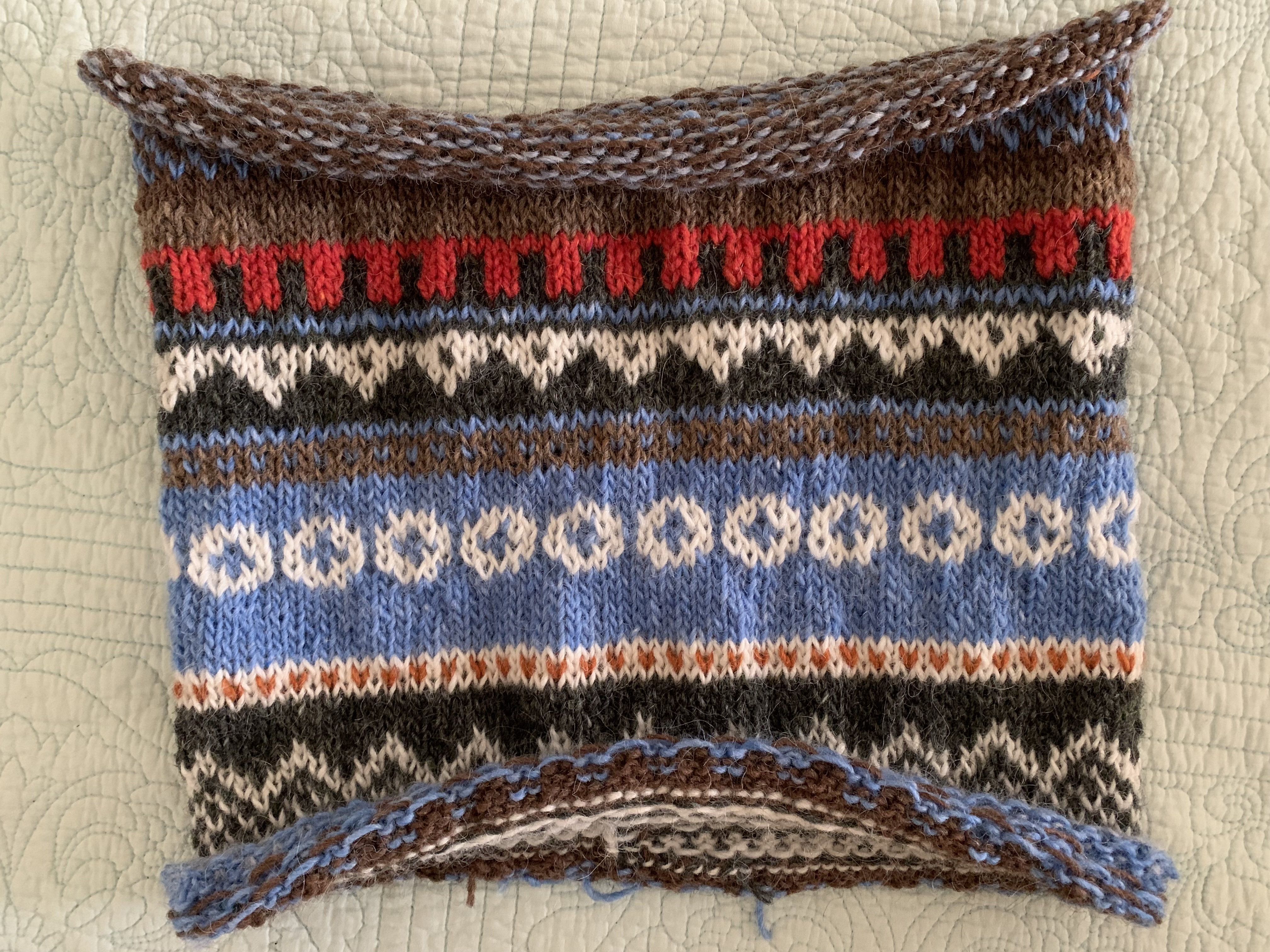
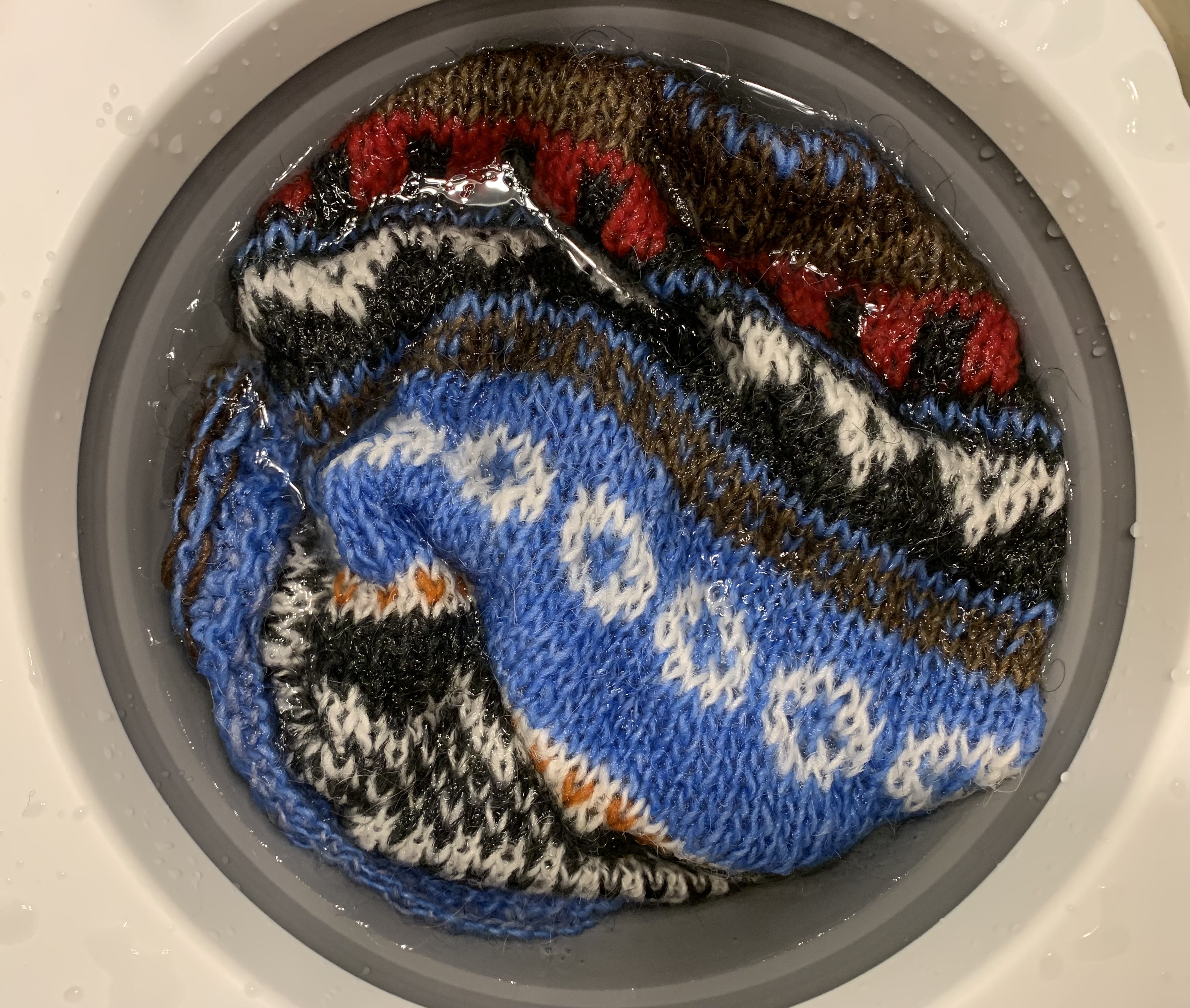
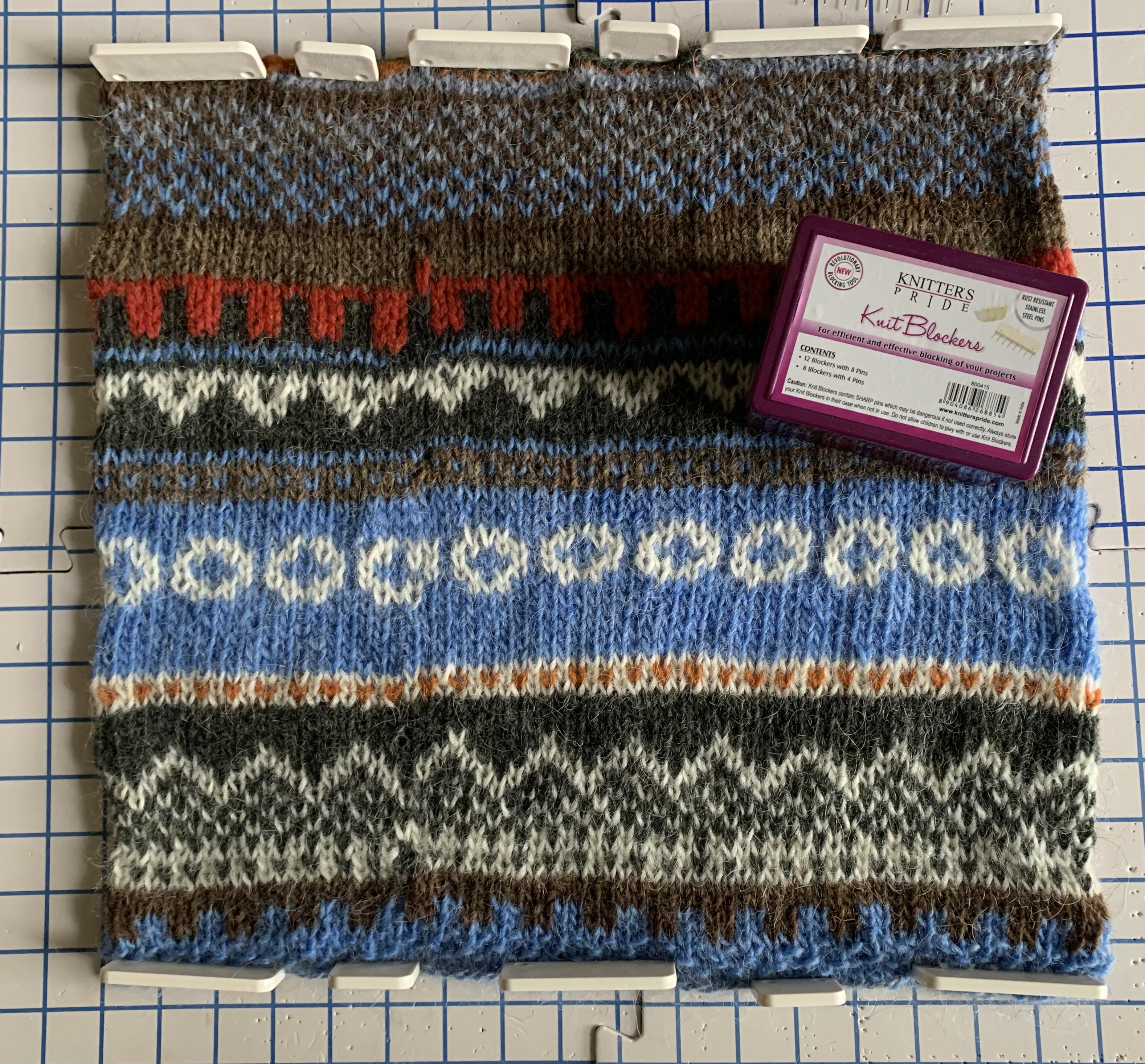
For the felting part, I washed the pad in warm water in the sink and alternated with cold. I continuously scrunched the fabric, swishing it, rinsing and re-doing. This pad did not felt a lot and maybe it needs to go into the washer. I might re-do it.
Questions and Answers
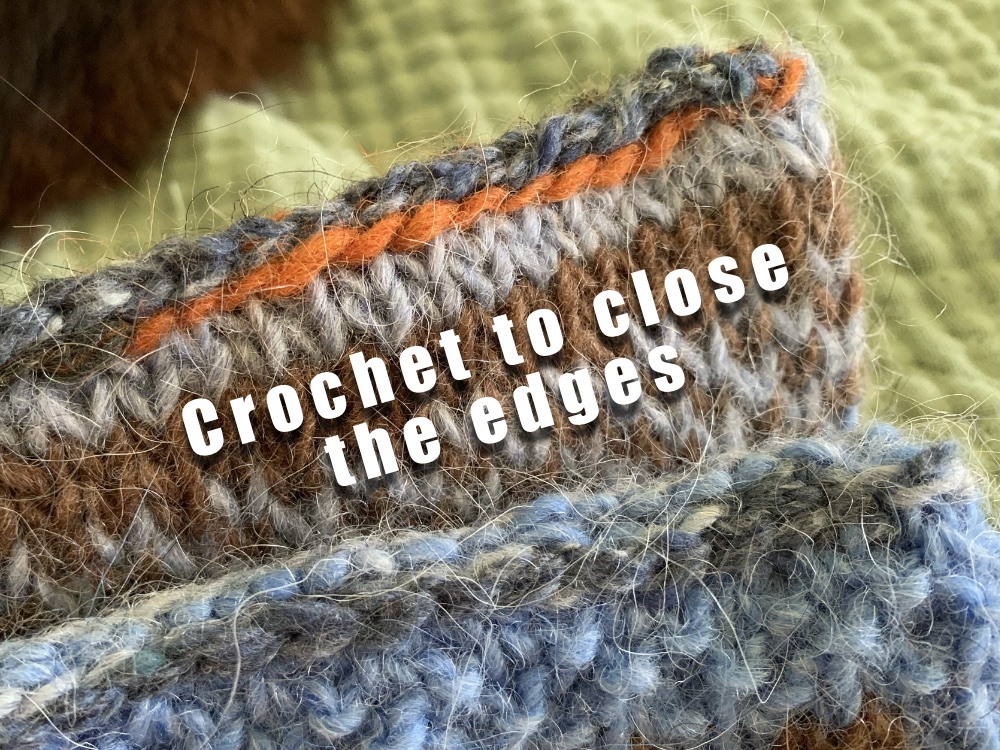
So how did I get those ends sewn up? I used a crochet hook. After the bind-off I left a long tail and simply pulled the yarn through each side of the flattened project until I reached the end. The stitch was like a single crochet and it was pretty easy with those larger stitches made by the heavy weight yarn. No need to be precise or too worried, it’s pretty easy. *I do suggest marking the halfway point (as you knit around) so the sides line up.
For the other end, I added a long piece of yarn and did the same thing.
Does this cushion need to be tacked down before felting? No. I was worried it would twist or felt to itself, but that didn’t happen. It might be a problem for another type of yarn, I don’t know.
Get the SkiBum Felted Seating Pad Pattern Here
Uses For the Chair Pad
This seating pad is named the SkiBum and is meant to keep your butt warm in winter. I don’t know much about that except I guess if you ski or hike and need a place to sit you would whip it out of your backpack and sit on top of the snow.
So what will I use it for here in Florida?
Right around the same time I found this pattern, I had been camping. It was December and although real winter never really reaches into Florida, we do get cold nights and mornings. It rarely remains cold all day, but it can.
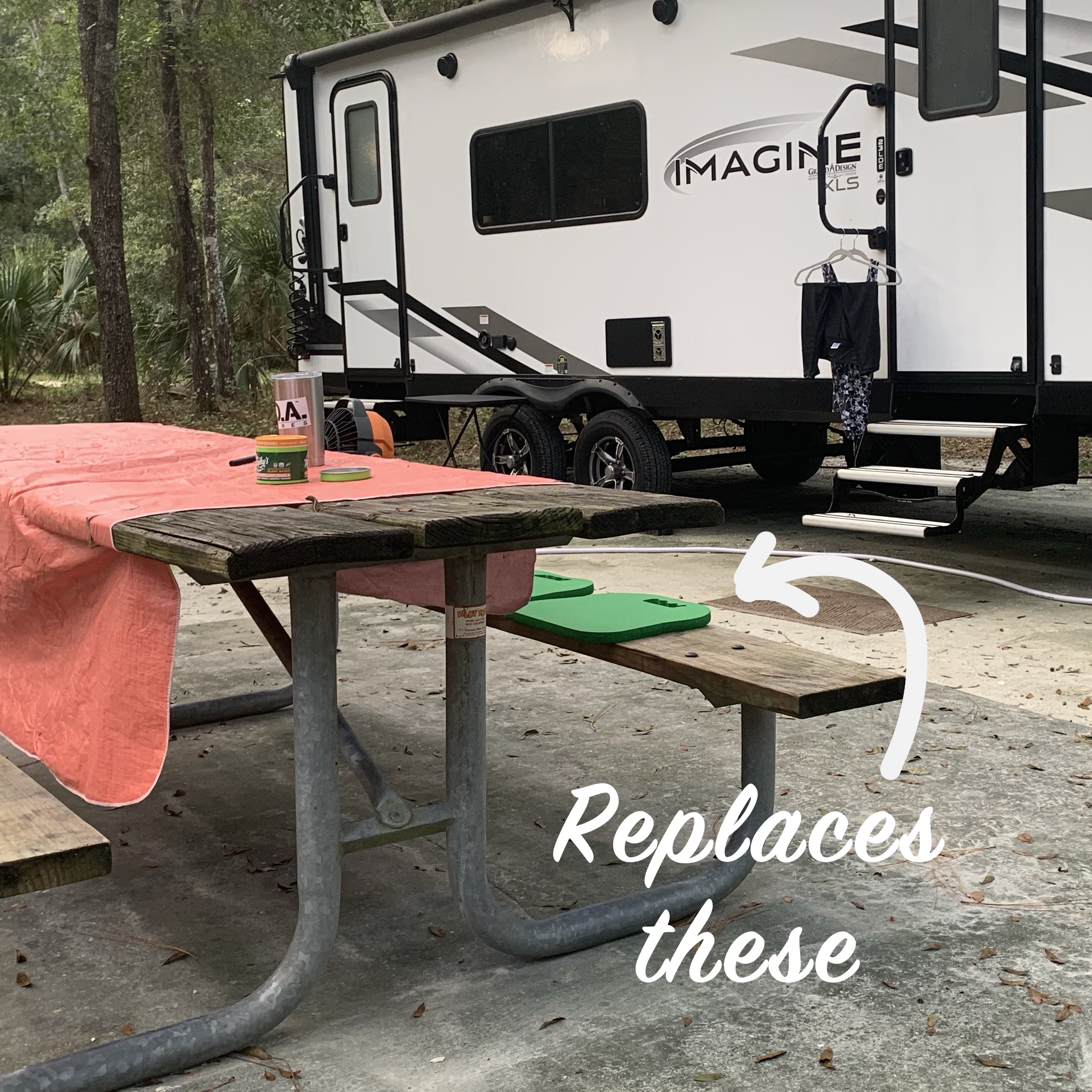
While camping, we sit around the fire at night. My folding chair is made of simple canvas, without padding, and my butt was cold. I grabbed the cheap foam pad (see photo below), which I use on the picnic table bench, and set it under my rear. When I found the SkiBUM pattern, it seemed like a great solution to this problem! I’d rather sit on wool.
Also, we always need something to use year round when sitting at the picnic tables.
Wool is usually thought of as being used to keep us warm. Wool is also great for staying dry. Think, wool hiking socks. A wool seating pad should be fine for year round outdoor seating at a campsite.
Finished Chair Pad
I followed the pattern directions for the cast on number and did some of the colorwork from the chart. Mostly I went off on my own and did simple Fair Isle knitting. It didn’t even matter if the count for the pattern was correct because it would be off at the side (the beginning / end point) – no one will really notice it.
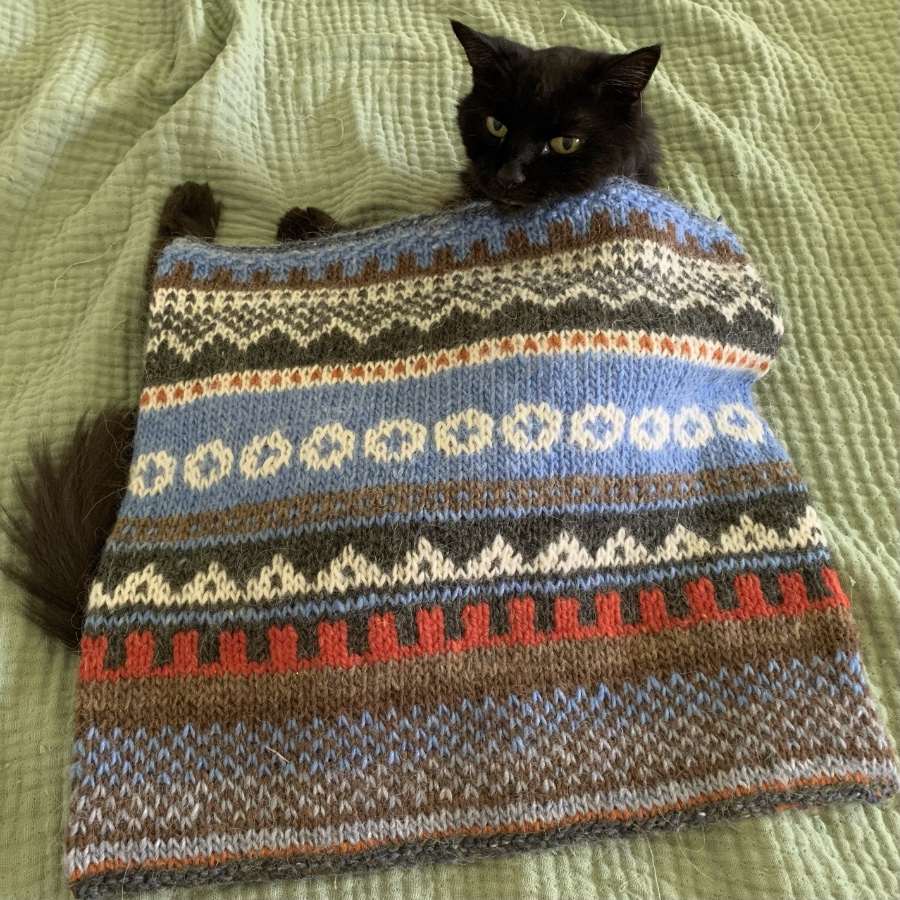
I am now in the process of making more of these pads. It’s a nice way to make something useful and use up my yarn stash.