Fair Isle Warm Ears Wool Hat Knitting

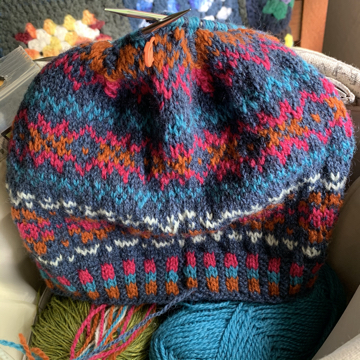
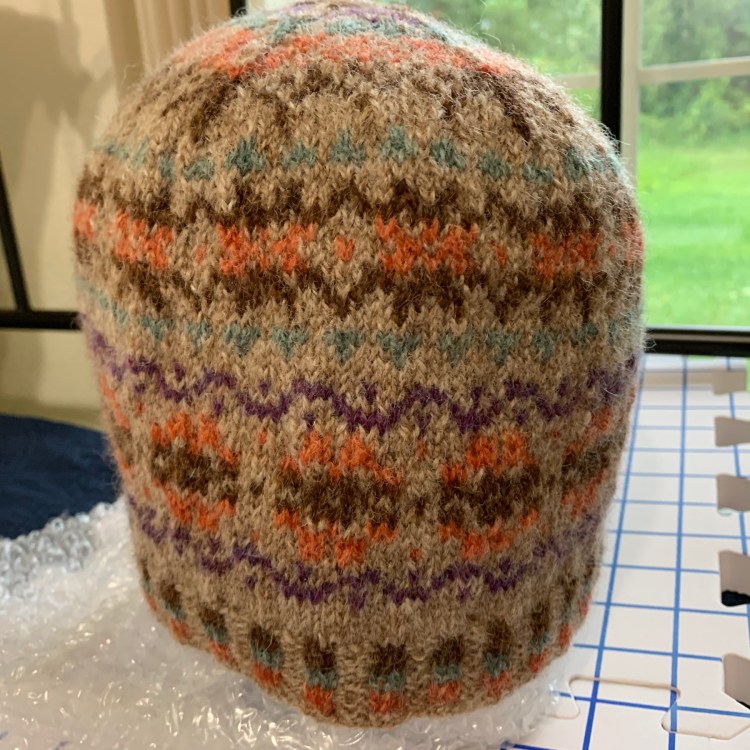
This is my third time knitting the Triple Patterned Watchcap hat pattern from the “Hat’s On” book (link to book below). This Fair Isle hat has a brim which is knit in such a way that it will be doubled and therefore keeps the ears nice and warm.

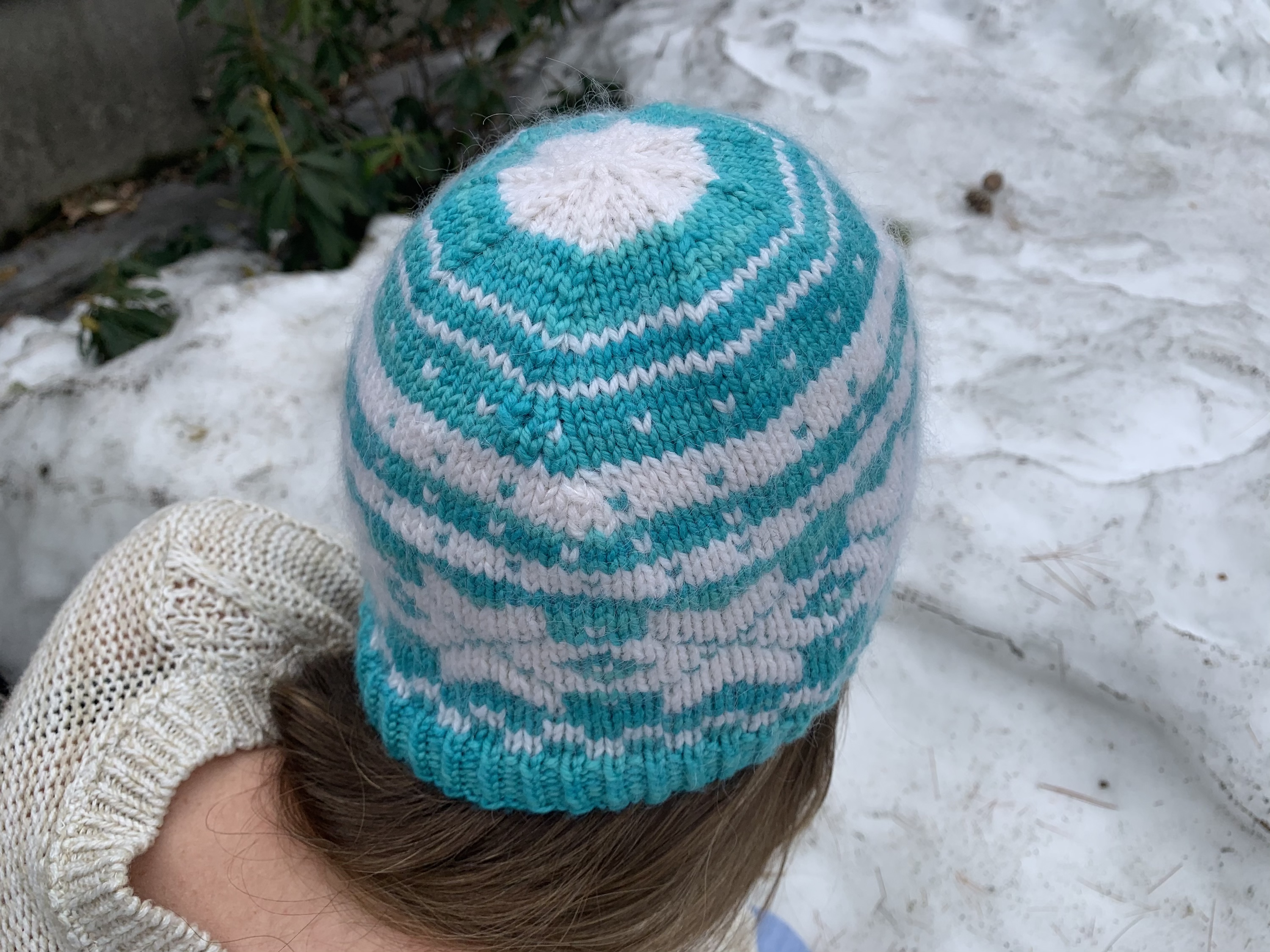
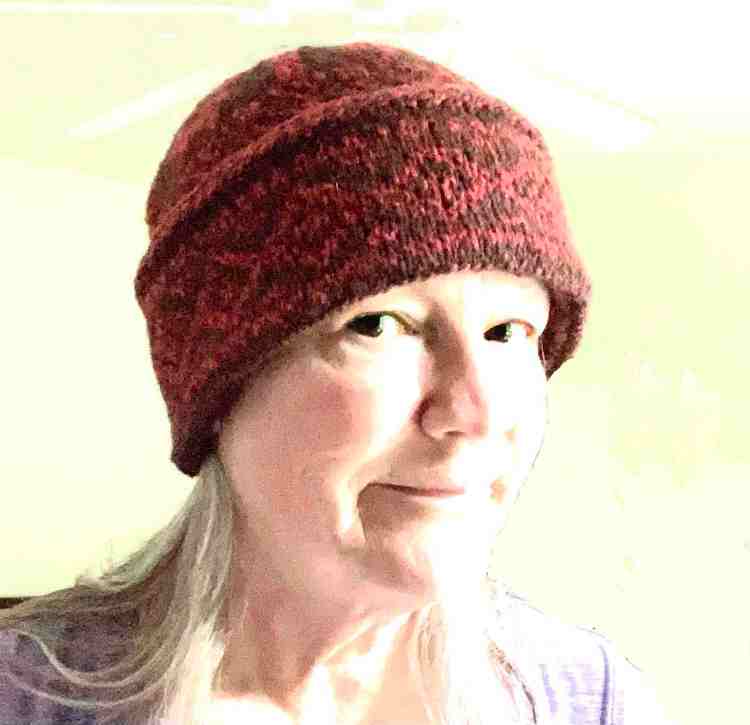
me wearing the watchcap hat
My new hat

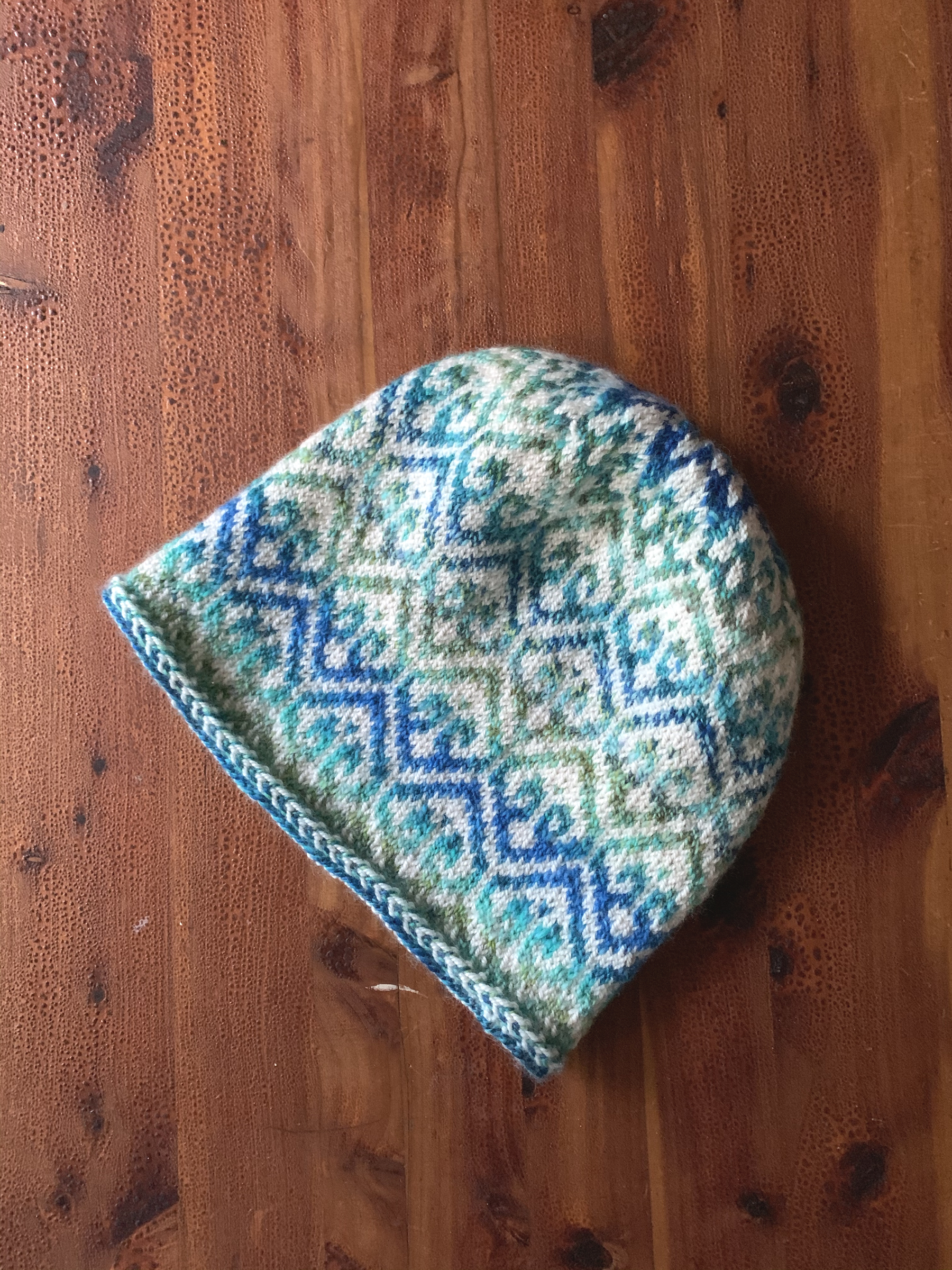
The pattern begins with a Latvian Braid which is called a Twined Herringbone Edge in the pattern. For some reason I always have to review notes on how to create the braid and usually I begin doing it incorrectly! But once I realize my mistake, I can do the braid without a problem.

The braid will be at the top part of the cuff once it’s flipped up. This pattern is in chart form only, and you have to own the book to get the pattern. Hat’s On! is available at Amazon here. (This is an affiliate link and I could earn money if you follow the link and buy the book.) It contains patterns from simple / beginner to difficult / experienced and I’ve had my book for years trying to work up to knitting that pretty hat on the front!

Knitting the Cuff or Hat Band – Colorwork Pattern #1

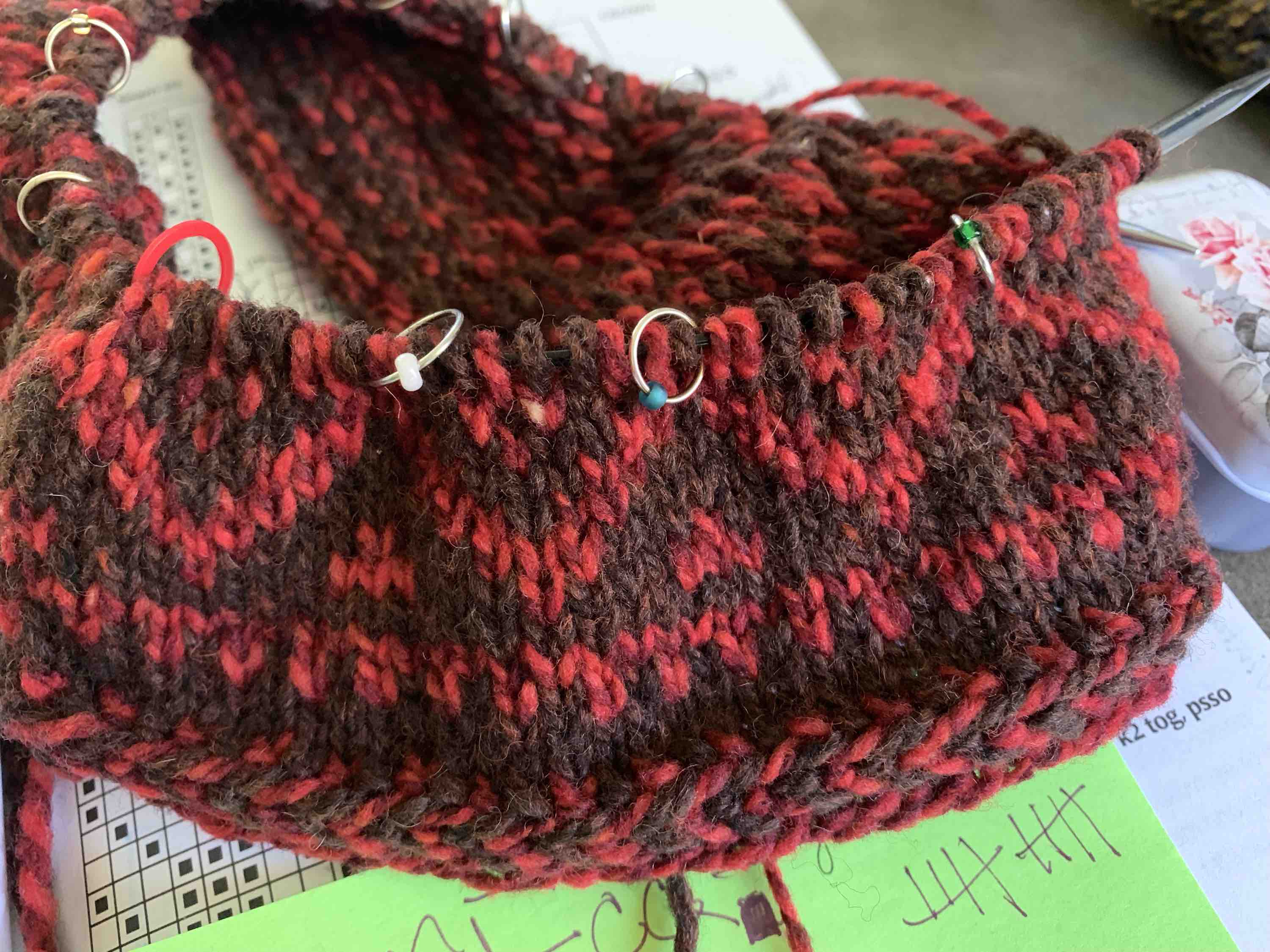
I like to place markers to help me keep the pattern straight. On the cuff that means every ten stitches.
hat, knitting, triple-patterned watchcap, hats on book,
Using markers for pattern

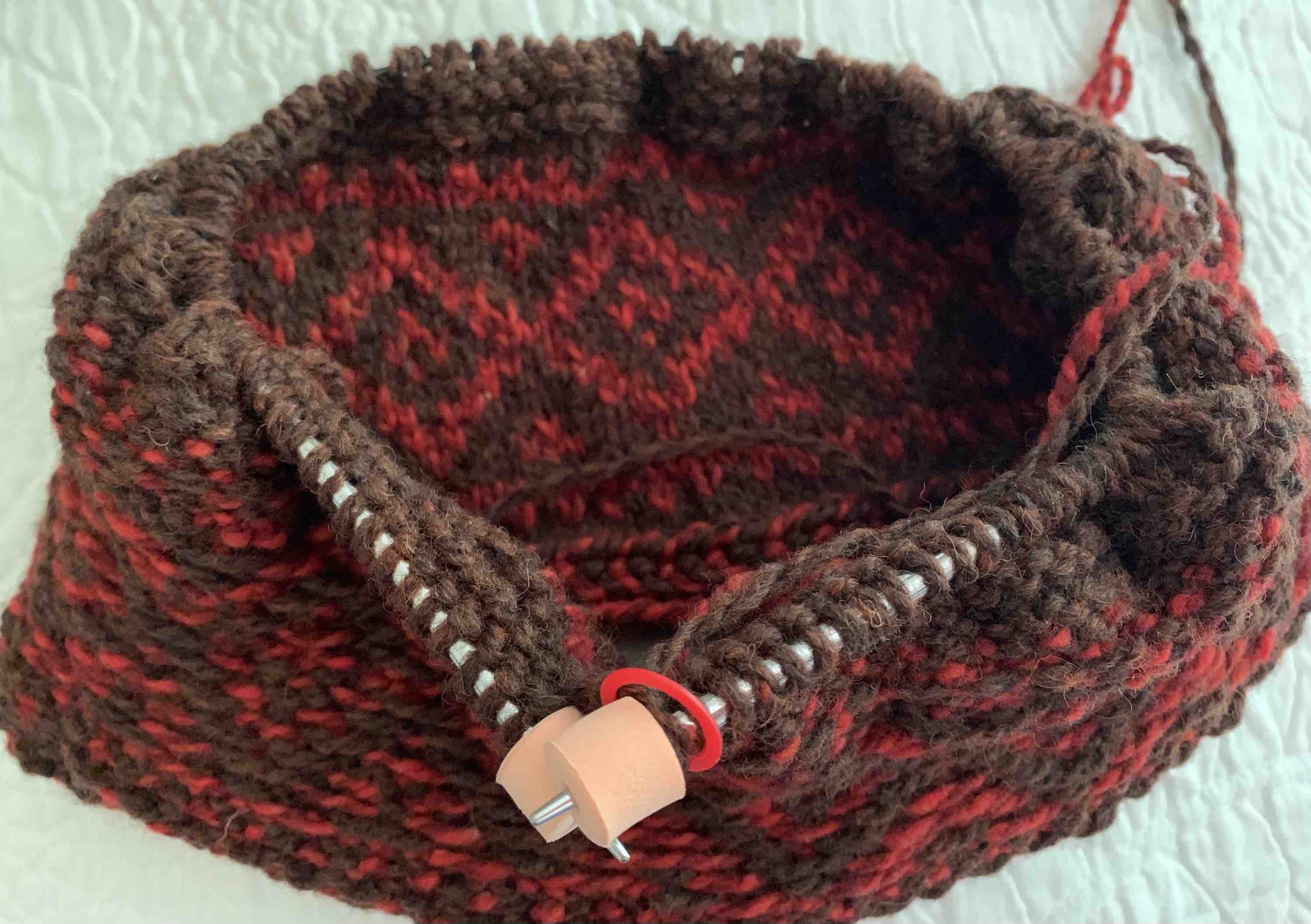
Once the first pattern of the triple-patterned hat is complete the remainder of the knitting is done with the cuff turned inside out. My needles are very crowded while knitting the XL size.

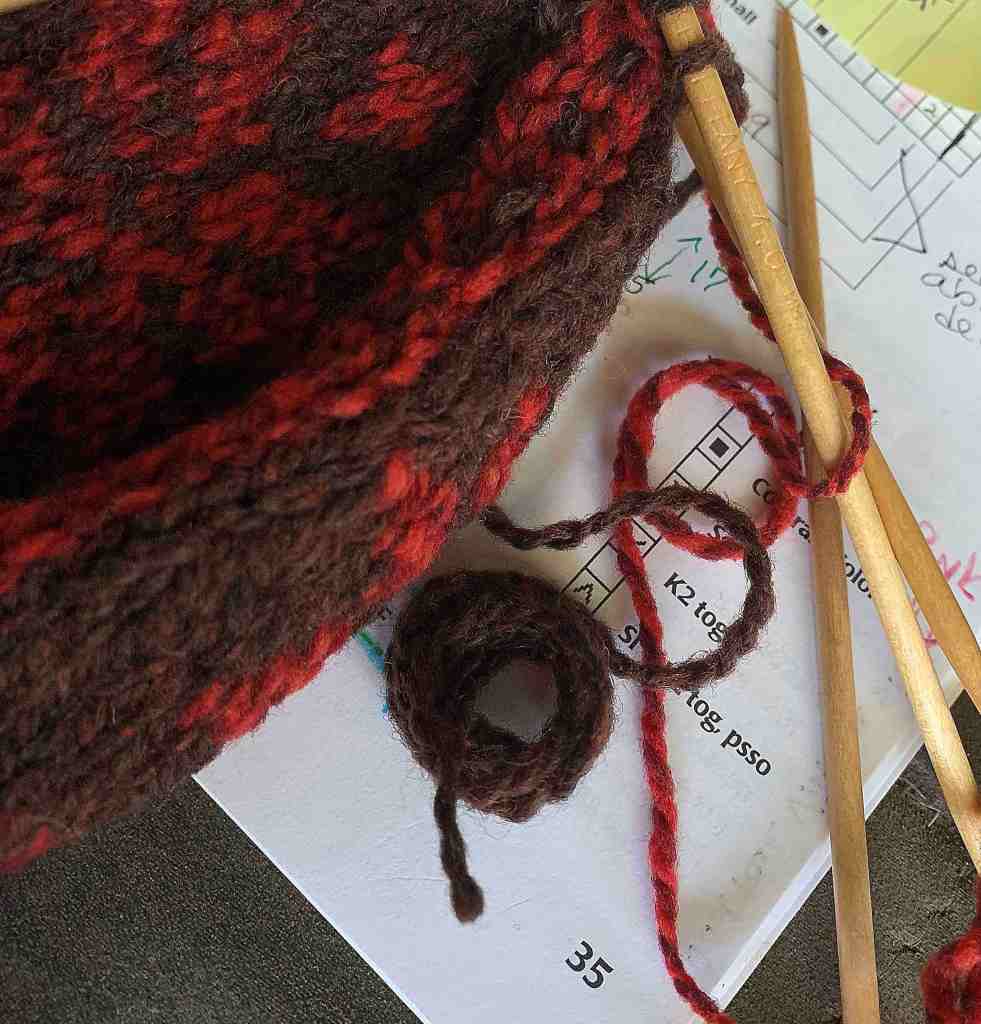
In the photo below, I have flipped the finished brim inside out and begun knitting in the opposite direction for the top of the hat. The remainder of the hat will be knit this way, so the cuff looks inside out. It will turn up when the hat is completed.
hat knitting, triple-patterned watchcap, colorwork, fair isle,
Brim is finished, turned to begin hat top

Knitting Pattern #2 of the Triple Pattern Design

I am following this pattern exactly and the second colorwork pattern is a bunch of circles. It’s for fun only because when the hat is complete the cuff will be turned up to cover this section of knitting. But, Fair Isle is much more fun to knit than simple stockinette. This section could actually contain anything, or nothing at all. When I knit this hat in green and gold, I put a heart pattern in this second section.

I will say that this knit made my hands ache. I did knit at long periods of time, but the wool is quite stiff to work with. The last two hats I made like this were knit with Brooklyn Tweed’s Arbor yarn, which I would have used again, but had no more good colors left. This hat will have a different look because of the yarn, but that’s okay because I also love this type of wool.

Colorwork pattern #2 will be covered by the cuff when the hat is finished.

Pattern #3 Completes the Crown of the Hat

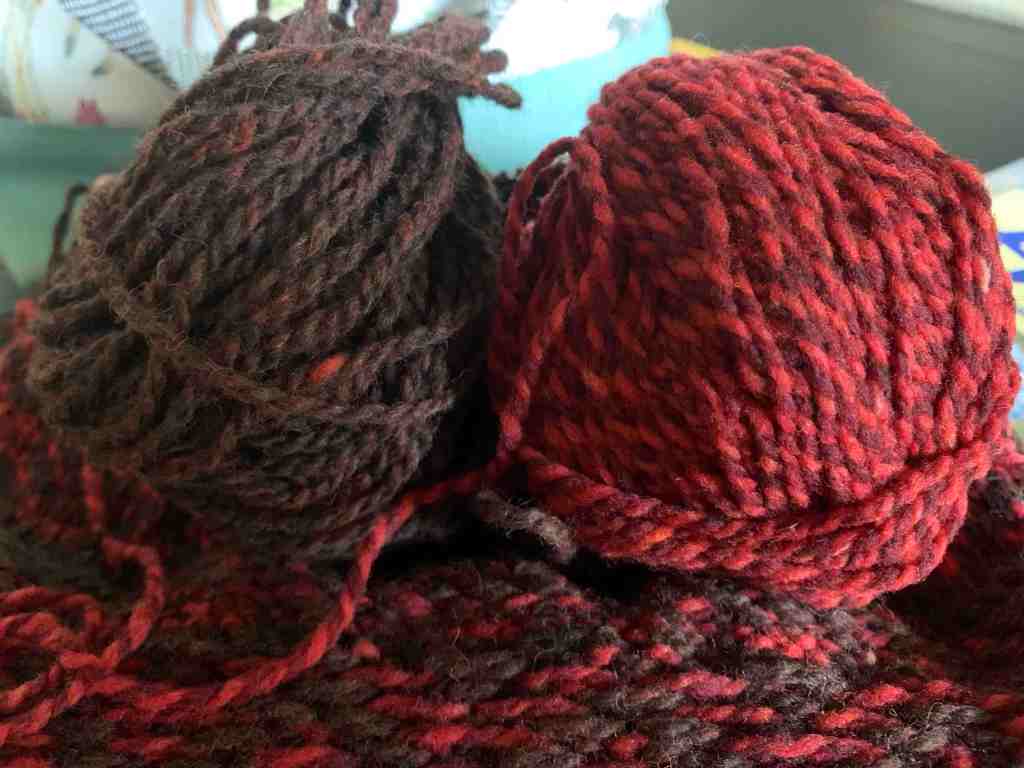
As I began pattern number three, I was running low on the brown yarn. I was sure the red would be sufficient, but the brown ball was pretty small. I had used the Teak yarn to knit a pair of boot cuffs for my daughter, so I didn’t begin this knit with a full skein. I do have another brown yarn – BT’s Meteorite – which I am keeping close by, just in case.

It turned out that I had just barely enough brown yarn to finish up the crown – see my image below, far right…! One little strand was leftover. It’s what knitter’s call playing “yarn chicken”.
The Wool Yarn

In keeping with my plan to use up the yarn I already have, I found two worsted weight, pure wool yarns that I like together. The yarn I am using for this hat project is Brooklyn Tweed’s “Shelter” in colorway Amaranth (shades of red) and Harrisville Highland Wool in colorway Teak (brown). Wool is wonderful for colorwork and will help to make this hat extra warm on cold days.

The Size and Needles Used

I am using a size 6 needle (16 inch circular and DPN’s) and knitting the size XL hat. Both hats I knit previously came out with head circumference measurements exactly matching the pattern. Because this hat is done in stranded knitting around the brim, it won’t have a lot of stretch. The XL should measure 22 inches when finished and that should fit my head nicely. Yes, it does!

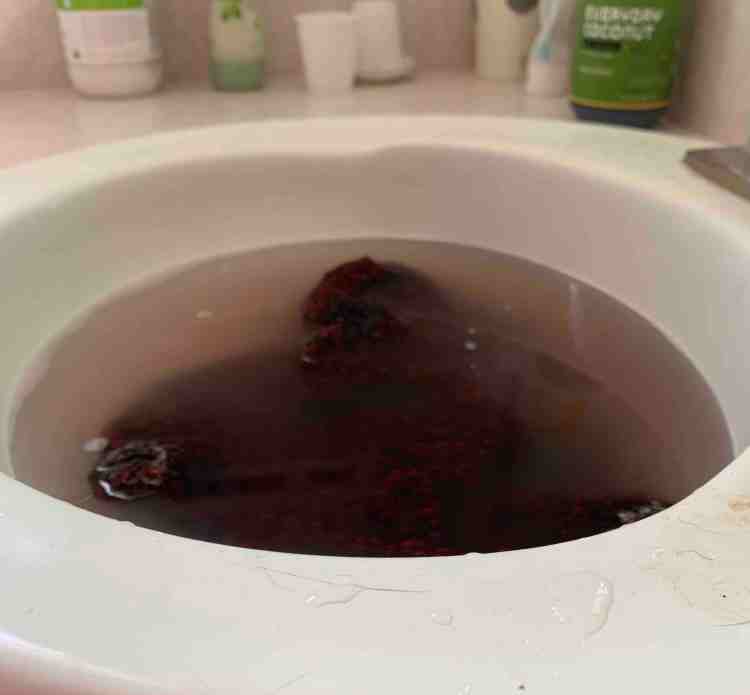
The finished hat, after washing and drying, measures approximately 22 inches around. There isn’t much stretch to this pattern and it fits snug, but not tight to my head. I rinsed it twice in wool wash as there was a lot of color coming out. Yarn tends to be pretty dirty by the time a project is knit, so washing is essential.
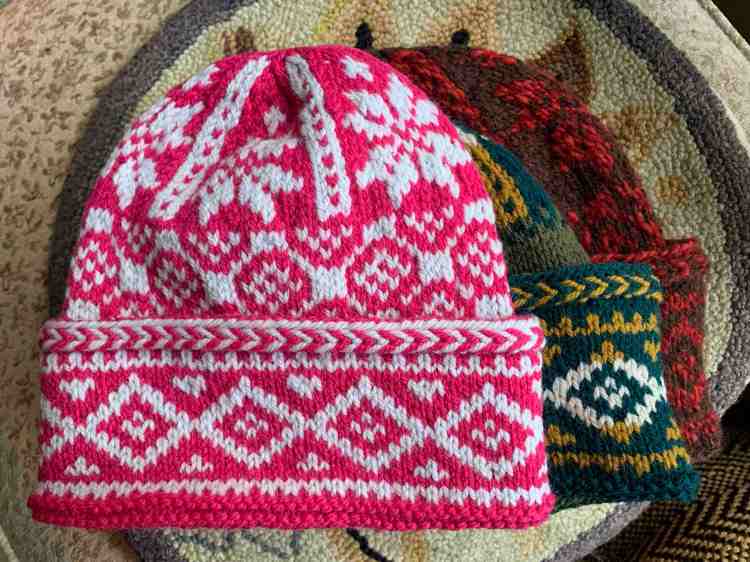
I Now Have Three Triple-Patterned Watchcaps in Three Sizes

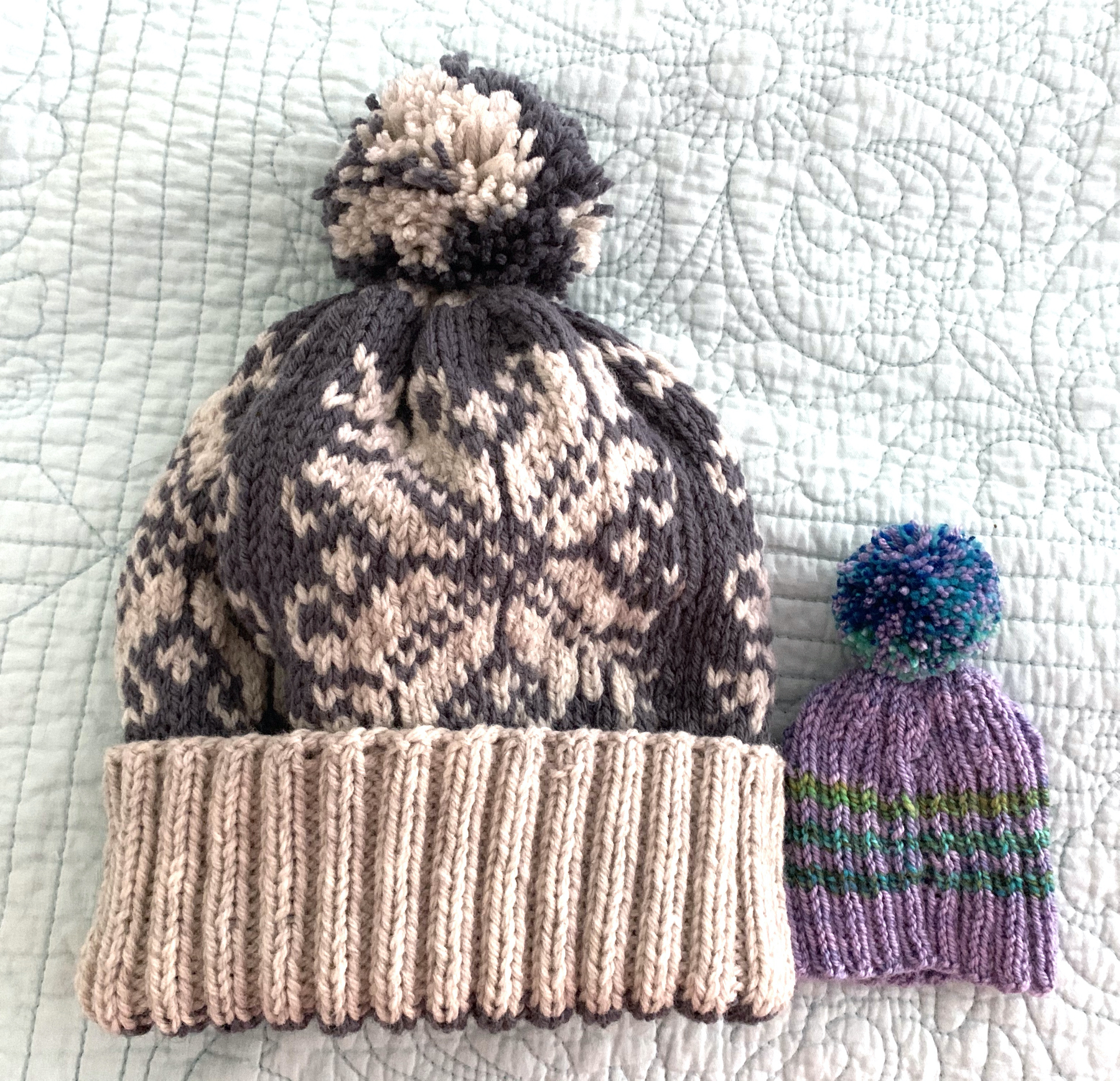
Two hats, the size Large and Small, were knit using Brooklyn Tweed’s “Arbor” which is a very nice yarn. I enjoyed knitting with it more than the wool, but I love the outcome of this wool hat.

knitting divider

Latest Blog Posts

Something went wrong. Please refresh the page and/or try again.

Fair Isle With Multiple Colors, How to Choose Yarn

Tips for deciding on yarn colors when knitting a project that calls for multiple strands of color.

One of my favorite types of knitting is stranded knitting using two or more colors. Fair Isle is the best, where only two colors are used at a time on any one row. When more than two are used in a row, it is not technically Fair Isle. It’s more difficult to manage three strands of yarn also. I avoid that, but using two colors, one in each hand, is quite fun.

I’ve seen a lot of knitters complain that they are not good at choosing colors for this type of knitting. When five or more colors are needed in a project, like the hat below, combining the perfect colors can be daunting. It is tough to envision them blending throughout the work. But, there are ways to choose colors that will work.

Katie's Kep hand knit hat in stranded colorwork using Rauma Finull yarn
Katie’s Kep knit in darker colors

First I Choose a Background, or Main Color Yarn

I enjoy picking out the colors for a colorwork project myself. By day, I do design work for my job and create graphic designs which have to do a lot with color matching. Maybe this is why I enjoy choosing my own yarn colors for projects.

My tip is to find the base, or background color first. I could change it later, but finding the base color gives me something to work from. Usually it will be something neutral which goes with a lot of colors, such as white, tan, gray, or black. Basically any color that you will NOT be using in the design and makes a good contrast for the remaining yarn.

Decide on a Bright or Muted Combination

Before knitting, get a good idea of how the end product should appear. Do you want it to match a coat or sweater you own? Will it be brightly colored, or have muted colors to match everything? Is the design something that should pop, or blend? And most important is to choose colors you will love to wear.

For the first Katie’s Kep hat I knit I decided on dark blue as the background color. From there I decided that I wanted brighter colors which would stand out a bit. Even though I messed up on the pattern (a little) overall I am happy with the colors.

When I knit my second Katie’s Kep, I chose tan as my base color and I wanted a more muted overall design with earthy tones. The colors I chose were not bright, but were meant to blend nicely. See both hats in the slide show below.

  • Stranded fairisle colorwork hat
  • Katie's Kep Fair Isle hat
  • Katie's keep crown star
  • Katies keep number two

Choose Which Design Elements Should Stand Out

In the Keps I knit, the important design elements were the floral sections. After deciding on tan for the base, next I thought about flower color. The orange was perfect. Once the larger parts of the pattern were chosen, I needed colors for the smaller rows which separate the floral images.

For the tan Kep, I chose colors that are not “true” and have somewhat of a “gray” tone to them. For instance, in place of a real blue I would choose a gray-blue and in place of orange I would choose a rust orange. When adding row that will contrast a bit more, I chose something totally different like dark purple. Fortunately a lot of nice wool yarn, like Rauma, J&S, and Shetland is dyed in these neutral colors to make it easier to combine them.

Then there is always the copy option. The designers themselves are usually quite good at choosing colors. Here is where it is okay to copy someone online…!! Knitwear designers will usually list their yarn and colors used which takes all the guesswork out. For instance, when I knit Katie’s Kep, there were four different yarn color combinations included in the FREE pattern. I did not use them, because I like to come up with my own. But for anyone needing that help, it was right there to use.

Knitting Books That Help With Colorwork

If you like the idea of DIY, begin learning by simply studying Fair Isle colorwork knits you find online. Or buy books that have Fair Isle patterns and color selection ideas. I have Alice Starmore’s Book of Fair Isle Knitting (affiliate link to Amazon) and wow, is it ever full of inspiration! Mostly it’s over my head at this point, but I love to skim through and see the beautiful colorwork designs. It’s a fabulous book for any knitter’s library.

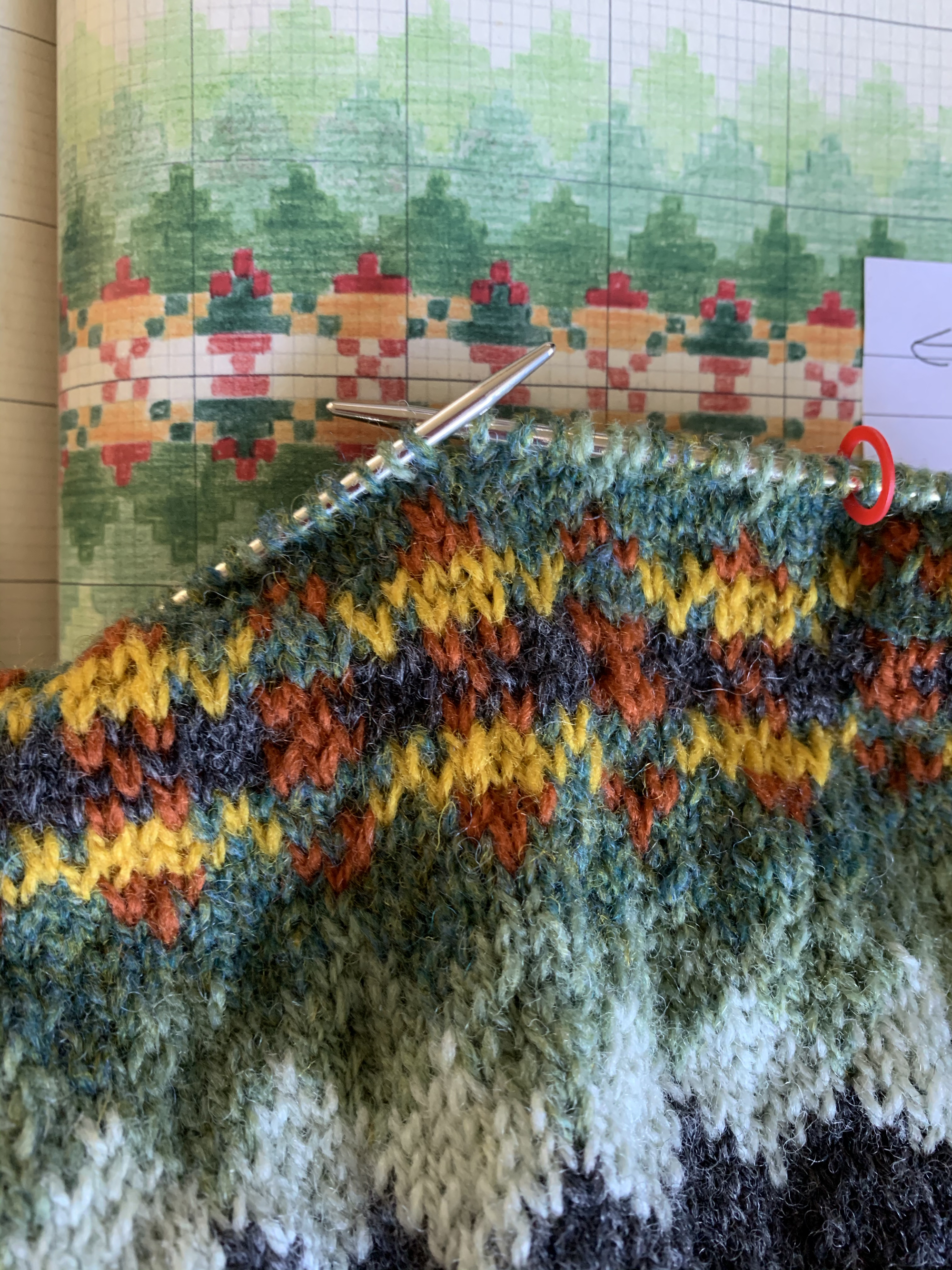
I also have A Shetlander’s Fair Isle Graph Book and began knitting a hat using the “green diamond” design shown on this page. It turned out that my yarn stash included colors that closely matched the colors in the book!

colorwork green diamond hat
Same colors!

And Then There’s Black and White

Just as easy, is the option to buy a kit to knit a stranded colorwork project. The yarn colors are pre-selected for you and you pay for everything at once and are ready to knit. A lot of times yarn stores will create kits for popular patterns.

Last but not least. Have you ever heard to turn your yarn image into black and white to check the contrasts? If you are wondering how that works, check out this blog post that explains it.

The Katie’s Kep is meant to use five colors, but that is up to the knitter really. Colorwork patterns are perfect for using up scrap bits of wool.

Get the Katie’s Kep free hat pattern here. Join the multitude of knitters who have already knit this wonderful pattern.

Yarn Color Combination Inspiration

Find some great ideas to inspire your newfound confidence in combining yarn colors at the places listed below.

Knitwear Designers Who Create Stranded / Fair Isle Patterns

Are you a Fair Isle designer? Let me know and I’ll add your link here.

A Few of My Previous Colorwork Projects

Clicking the title beneath the photo will take you to the project blog post page. I don’t have a link for the light blue hat, but it’s the Fana Cap pattern which is in the “Hat’s On!” book.

Learning How To Do Mosaic Knitting

Do you ever wonder how color-work knitting can be done flat? I’ve wondered if that is possible because I’ve only ever done color-work in the round.

Well, mosaic knitting is not really the same thing, but it can have the same effect with a pattern knit into a flat item, like a scarf, shawl, or cardigan.

I’ve been keeping my eyes peeled for my next sweater project. My top choices are either a stranded colorwork pullover, or a cardigan. Unless I do steeking, which I’ve never done, a cardigan can’t have patterning on the body because it’s flat knitting. Color-work is done during circular knitting. Unless… you do mosaic knitting.

The Boho Style Mosaic Cardigan pattern caught my eye. I love Bohemian styles. And this loose, flowing, cardigan has beautiful color-work on the body and sleeves. It is done with mosaic knitting as the name suggests.

Printable Mosaic Knitting Chart For a Swatch

If I am going to commit to knitting a big sweater using mosaic knitting, I’d like to know how it’s done. Before I began wading through bad YouTube videos, I thought I’d look for an article online explaining mosaic knitting. The Interweave site has a good article with a little chart to print out.

Basically if you can knit, purl and slip stitches, you can do mosaic knitting. It is a fast and easy way to create an interesting pattern.

I chose Chart 2 from the Interweave article. This chart does not show the purl side rows, but you don’t need them.

If chart knitting is not your thing, believe me, you will catch on quickly anyway. This little chart is great for a beginner. Once you follow the first couple of rows it will make sense, and you won’t believe how easy it is.

Go to the Interweave page and print out Chart #2.

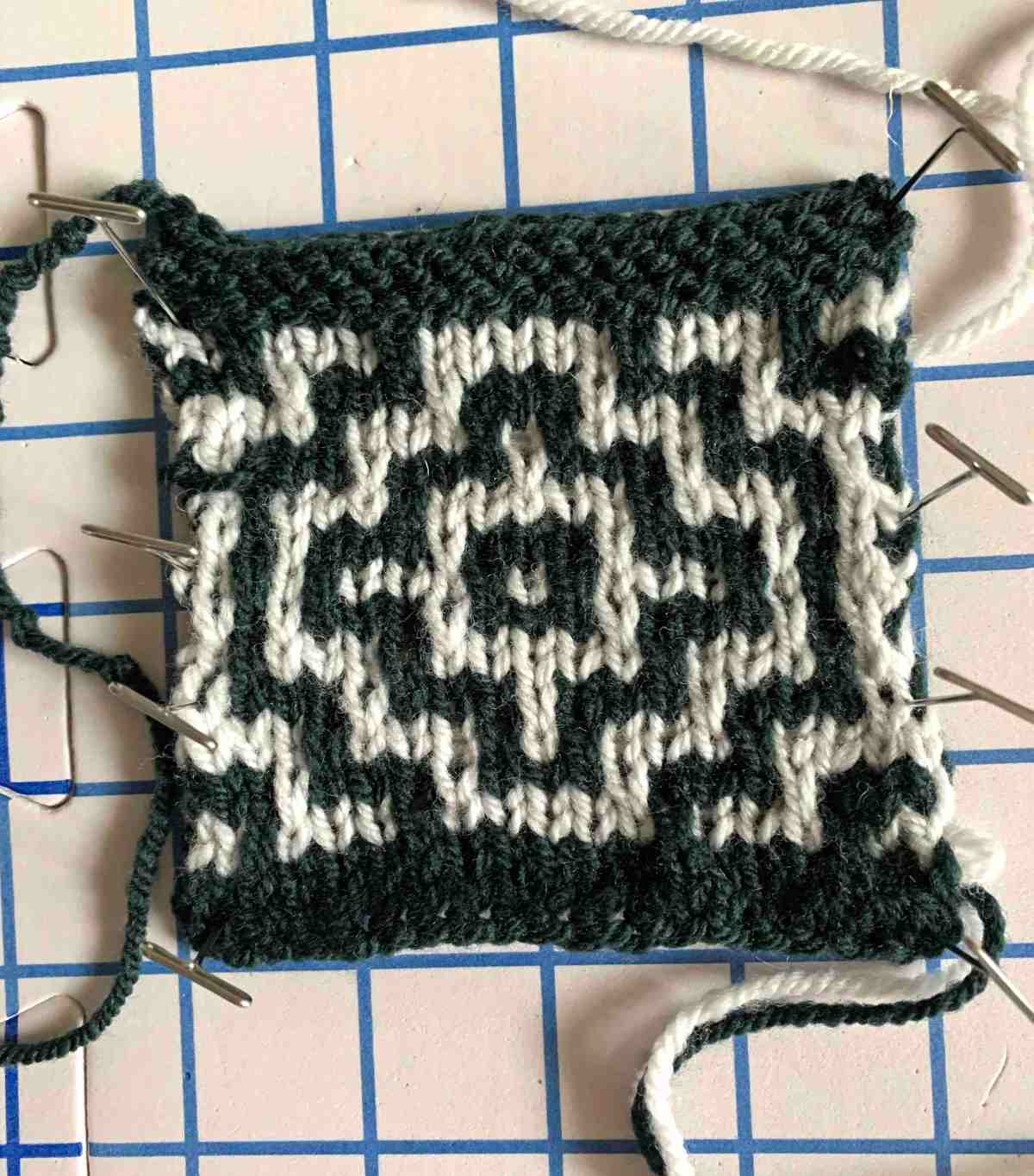
mosaic knitting swatch
Quick swatch to practice mosaic knitting

How to Follow This Mosaic Knitting Chart

Read the chart beginning at the bottom, reading right to left. This may seem weird, but that is how our knitting goes – we knit our stitches right to left.

I simply knit back and forth for the first few rows before beginning the chart.

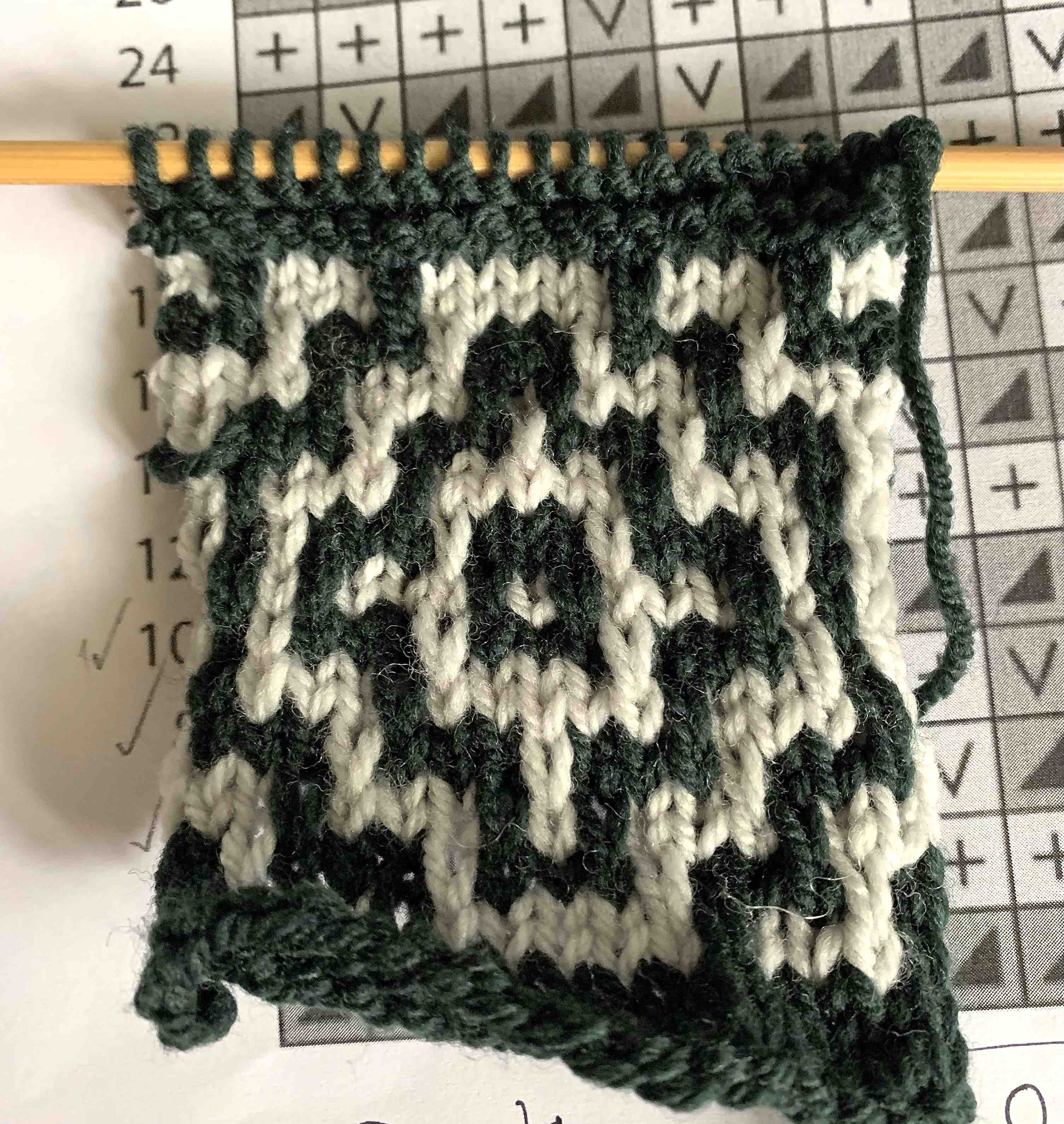
Row 1 is all dark triangles and it’s all knit stitches in the darker color (green for me). At the end of the row, turn to the wrong side and purl all stitches to get back to row 3.

Now add the white yarn beginning at row #3. Knit 2 white, slip the next green stitch. (To Slip: put the needle in purl wise in the next stitch and slip it onto the right-hand needle… simple!) Continue across the row and turn to work the wrong side.

For the back of the work – the purl side – all stitches are purled with the color yarn you are holding. The other color stitches you come to will be slipped. There is no need to follow a chart because you can see the stitches you just knit as you come to them. If you just finished knitting with green, you will now purl those stitches with green. White stitches are slipped.

Also, wherever the yarn is – front or back – it will stay there while you knit or purl. On the Right Side / front of work, you will be knitting so the yarn will stay in back while you slip stitches. On the Wrong Side / back of work, you will be purling so the yarn will remain in front while you slip.

slipped stitches knitting mosaic swatch
Slipped stitches on back of swatch

All Purl Sides, back of work: Whatever color yarn you are holding – purl the same color stitches and slip the others!

For the next row, grab the correct color yarn – in this chart the dark triangle means the dark yarn – and begin knitting – and slipping the V blocks in the row. The yarns will travel up the side of the swatch as you change colors. This is not the best edging, and I would do something different if I were truly knitting a garment, but it’s fine for the swatch.

mosaic knitting

This is a very easy way to add an interesting pattern to a garment and I think the style itself looks a bit Boho! I don’t know yet if I will knit the Boho Style Cardigan, but at least I know what mosaic knitting consists of.

Mosaic vs. Fair Isle

For the mosaic type of knitting you are only knitting with one yarn at a time compared to Fair Isle where two yarn colors are held to knit a pattern across a row. That makes mosaic knitting quite easy to do. It can be worked on circular projects as well.

Fair Isle has a smoother finish as you can see in the images below, which are projects of mine. It’s a lot of fun to do, but must be used for circular knitting projects only. Cardigans can be knit in Fair Isle, but steeking is needed… yikes. I haven’t worked up to that yet.

This makes mosaic the perfect choice for adding designs to anything worked flat – including a cardigan.

Pictured projects L-R: Turkish Patterned Cap, Fair Isle Mitts (free pattern), and Wild Angelica Socks.

YouTube Videos on Mosaic Knitting

If reading how to do this type of knitting is confusing, a decent YouTube video can help. Unfortunately I can’t find any really good videos on this, but this one shows mosaic knitting in a shawl. It’s not exactly the same as I’ve described here because she is not purling the back of her work and the slipped stitches need the yarn in front for the slipping. But it shows a pretty way to add color to a shawl.

This video shows how to follow a chart, but as usual, there is a lot of talking. I didn’t watch the whole thing.

Free Mosaic Knitting Patterns

Knitting For Baby, The Free “Perfect Newborn Socks” Pattern

After knitting the Beloved baby bonnet pattern for a friend’s new granddaughter, I found this free baby sock pattern. The Perfect Newborn Socks pattern is offered for free by Tabitha Gandee and I got the pattern on the Ravelry site. I already had the CoBaSi machine washable yarn in color Bubblegum pink. (Pattern link below.)

Read more: Knitting For Baby, The Free “Perfect Newborn Socks” Pattern

Get the Free Pattern Here

Perfect Newborn Socks pattern page at Ravelry.

Some knitters complained that the pattern did not make sense in areas and I would agree. For that reason, I would not recommend this pattern to a beginner knitter, unless you are knowledgable in the way socks are knit. It could be very frustrating if you try to follow the pattern exactly.

I have made notes below for anyone who needs a little advice along the way. I’m grateful to the people who offer us free patterns, but often those patterns can have mistakes or less clear directions than a designer who requires payment.

baby socks pink bubblegum yarn

Places in the Pattern Where I Made Changes

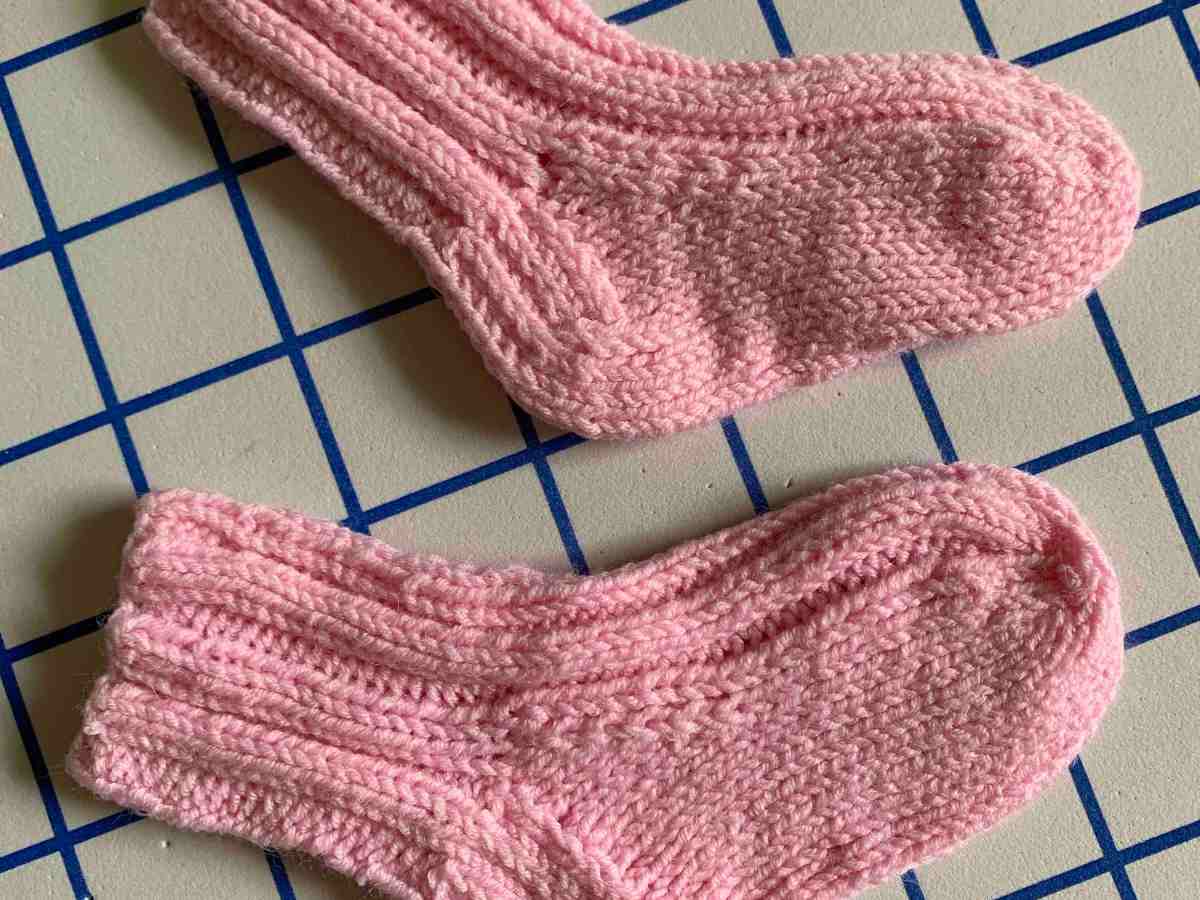
First of all, I went up to a size 2 needle and knit with DPN’s, not magic loop. I am a relatively tight knitter and I didn’t want the socks to be too small. After washing and drying, the foot measures about 3 1/2 inches and the ribbed cuff is about 2 inches before folding.

These are top-down socks and I cast-on with the German Twisted cast-on. Then I did the more simple 2×2 rib without cabling.

I followed the pattern fine until the end of the Heel Turn section. For the last Row 3 knit, I did not do the SSK and simply knit across the 8 stitches, because the count was correct after Row 2. But, if you stop knitting after Row 2 you will be in the wrong place to continue.

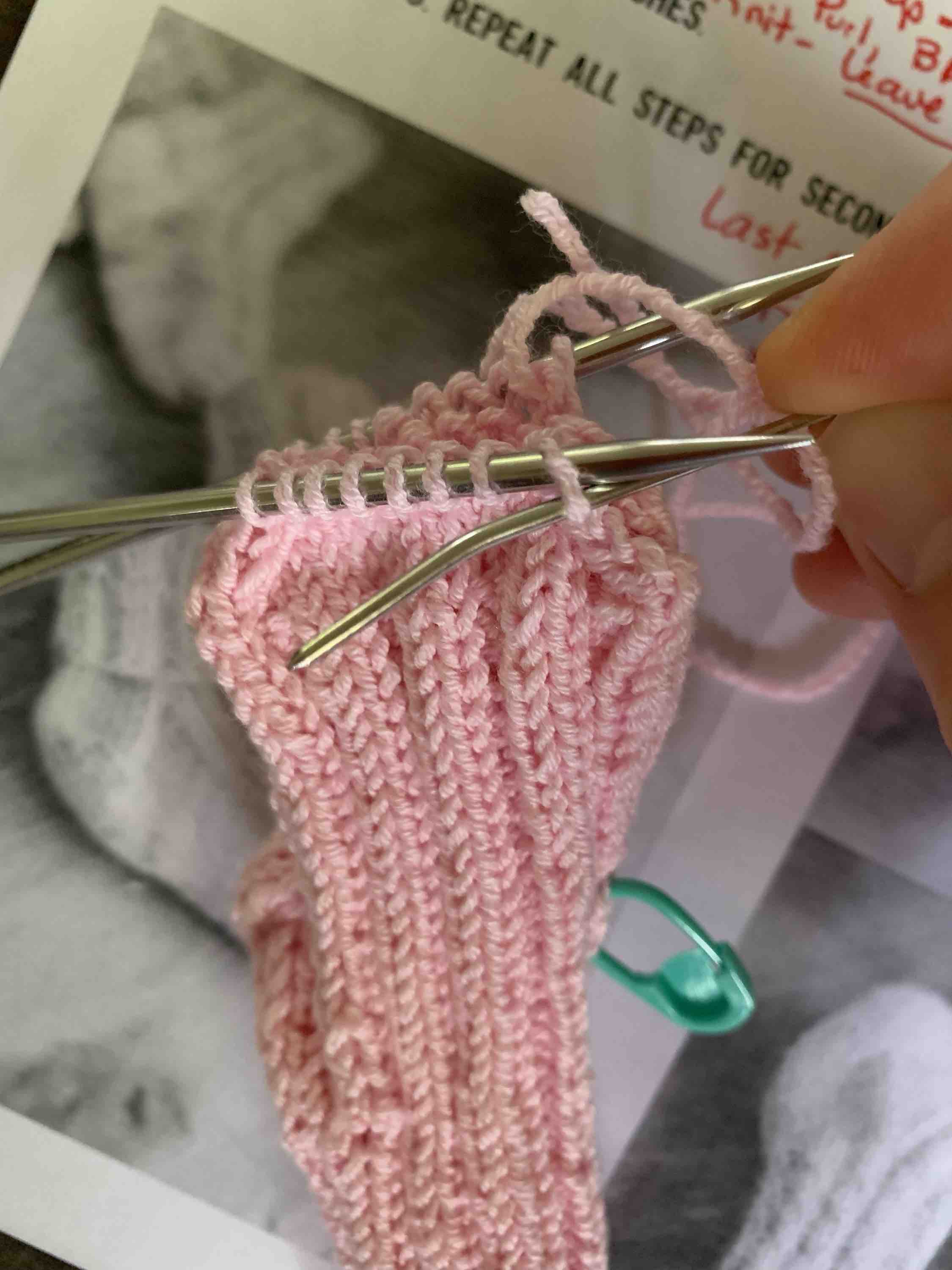
After knitting that last Row 3, I knit four more stitches onto that needle. Then, with a new needle I knit the next four stitches and began picking up the stitches for the Gusset.

With the next needle, knit across the top of the foot with 2×2 rib or the cable rib, whichever you are doing. After that, use a new needle pick up the nine stitches along the side and knit the four stitches left onto that third needle.

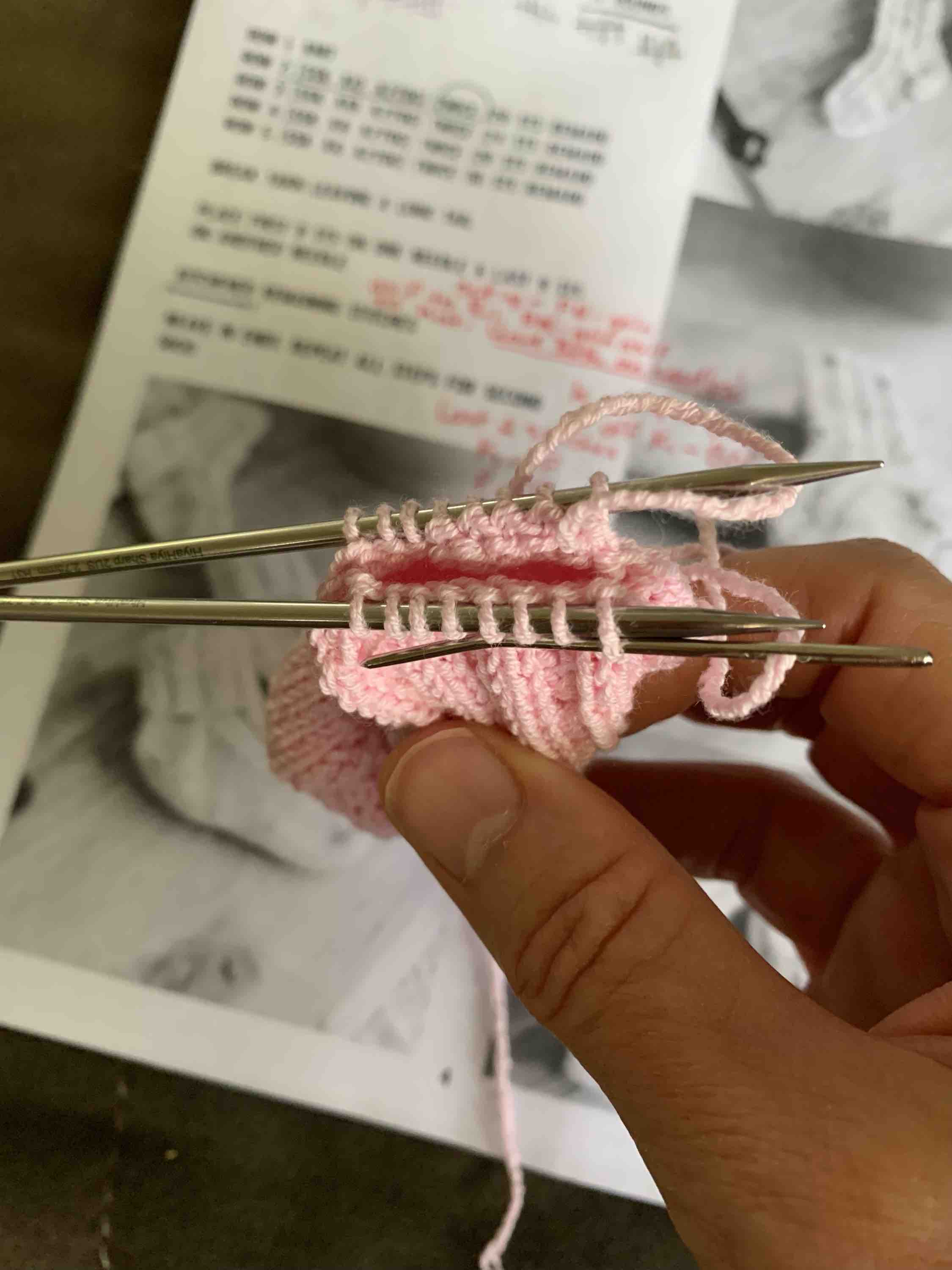
Now you will have three needles. Two needles are holding stitches for the Gusset and 1/2 of heel, and the other is holding the front / top of foot stitches. In the pattern, the writer has four needles being used, but all 16 top of foot stitches can easily be worked on one needle. The fewer DPN’s the better IMO.

Three needles to knit foot of sock
Getting my stitches onto three needles to begin the decreases

Doing the Kitchener Stitch at the Toe

After decreasing quickly at the toe area, the Kitchener Stitch will round out the toe. This stitch is done with a darning needle and is not terribly difficult, but it’s something I have to look up every time I do it. I also used it when I knit the Glissade colorwork mittens.

On YouTube I like the slow motion Kitchener Stitch video by Very Pink Knits which is easy to follow. She shows us what to do with the last two stitches on the needle as well. The yarn will be coming off the back needle to start, and you need a darning / embroidery needle to do it.

These ended up being cute little socks that will complete the Hat and Sock set for my friend’s granddaughter. I would make them again, and I also like the CoBaSi yarn for baby things. It washes and dries nicely – and can go in the washing machine and dryer! There is no wool in it which works well if a baby could be allergic. I washed them by hand, but it’s good to know that a new Mom won’t have to.

Perfect Newborn socks pattern knitting
knitting divider

Keep Reading