When The Three Stooges would say it, petunia became a word to spit out. My sister and I love TTS so we say it like them.
I opted for a dark pink petunia in a hanging basket this year.
I had visited one of the local plant stands hoping to find a fuchsia (I can never spell it correctly) to hang under one of the trees in the yard, but they didn’t have any, so I chose this pi-toon-ya.
It is sometimes hard to decide which basket to choose if there are too many available, which happens in early Spring.
Consider the color of the house and surrounding shrubs etc., and choose one that will stand out – or just pick out the one you like best regardless. After all, you are the one who will view it most often. And of course there is no law against buying more than one!
They need lots of water too. Stuffed into plastic pots, the soil will dry out fast and even faster in the sun and wind. Mine gets about a gallon of water a day!
A few years ago I took part in “Project Feeder Watch” and spent a little time counting and recording the bird sightings in my backyard. Once a week I went online and posted the results of my counts where I was able to see who had seen what in my neck of the woods. Even though my sightings might have seemed boring and ordinary, FeederWatch personnel assured us that all counts were important. It was a fun, learning experience and I was able to help with the scientific study at the same time.
In order to count the birds of a species I had to know what it was I was counting and it gave me an opportunity to learn about the birds living around New Hampshire and the ones that would only show up in winter (when we counted). I grew up in Massachusetts where my parents and grandparents always fed the birds and I recognized some of the same ones I’d grown up seeing in my backyard.
I even got interested in what to feed them to keep them coming back or to attract some interesting birds. I learned to make my own suet, and find the best feeders to use. I also found out the hard way that I had to stop feeding them in Spring when the bears would come and tear up my feeders!
Then I moved, and moved and moved…so I gave up my birdwatching, but when and if I get the chance again I would love to contribute once more.
It’s probably why I still get updates from the Cornell Lab of Orinthology, the people who runs the bird counts, and today received an update on what is being done down on the gulf coast.
It’s reassuring to know that some places are being diligently protected, such as Breton Island (slide show), home to thousands of birds who make their home near the water in Louisiana. But as the writer pointed out, the birds don’t recognize the danger. When there are clean islands nearby, they choose to stay and forage in the oil soaked waters. He also says that to try and save the ones that are in danger would be more disastrous than to leave them alone.
Watching all birds is serious business for these scientist who use the data to record falling numbers or population explosions. What happens with birds does affect the world around us.
A reader left a comment here on my site that she is afraid that many unscrupulous places will try to take our money to help and do nothing, but I believe, because of their long history of helping birds, that this is one place that will put it to good use.
By the way, if you live near the Gulf they need watchers to report on what is going on with the birds there.
Check out their site at Cornell Labs where you can read more about the Gulf oil and it’s effects and donate to their efforts if you are so inclined. And if you want to be part of the seasonal counting in your area, click the link at the beginning of this post.
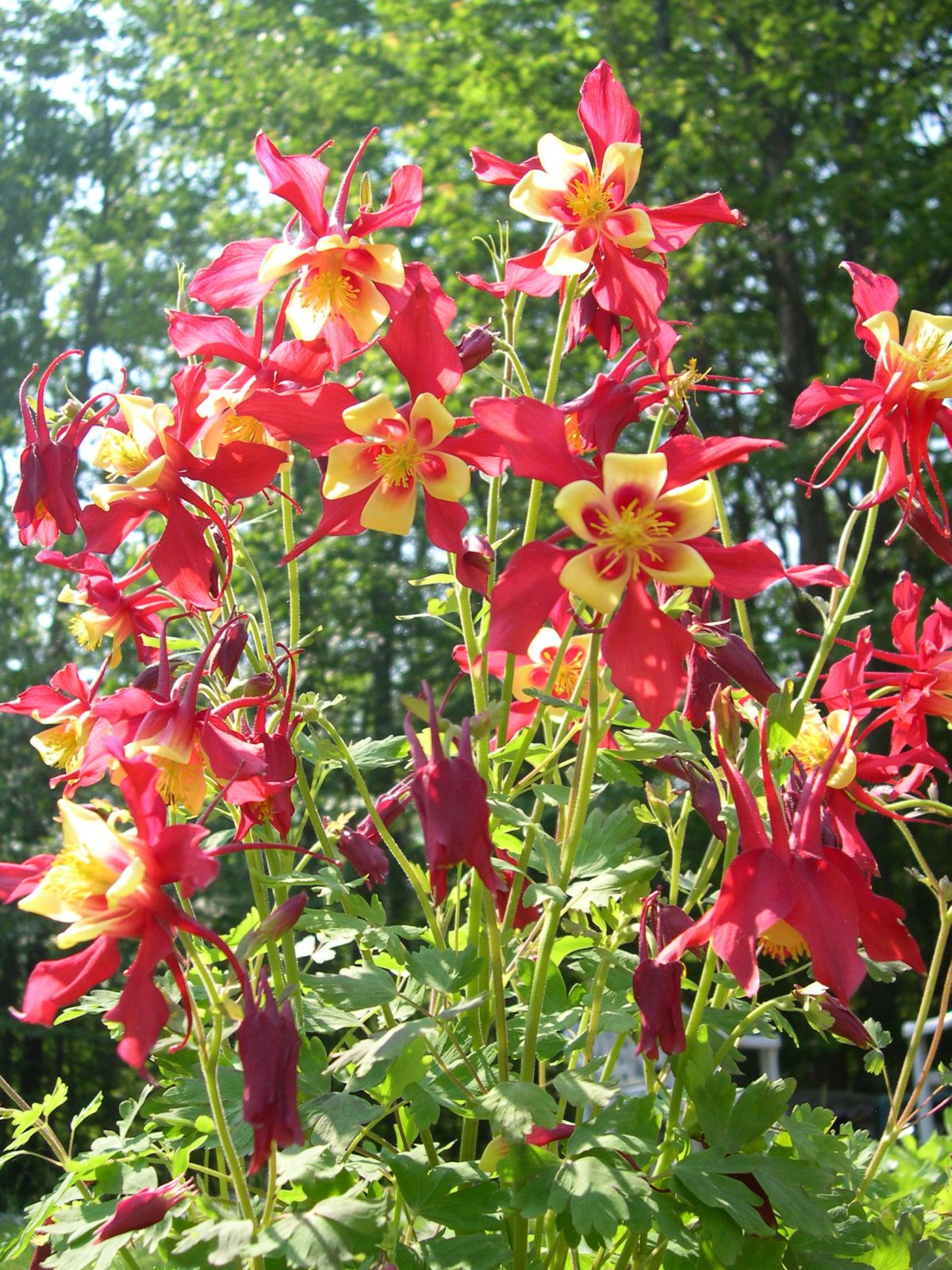
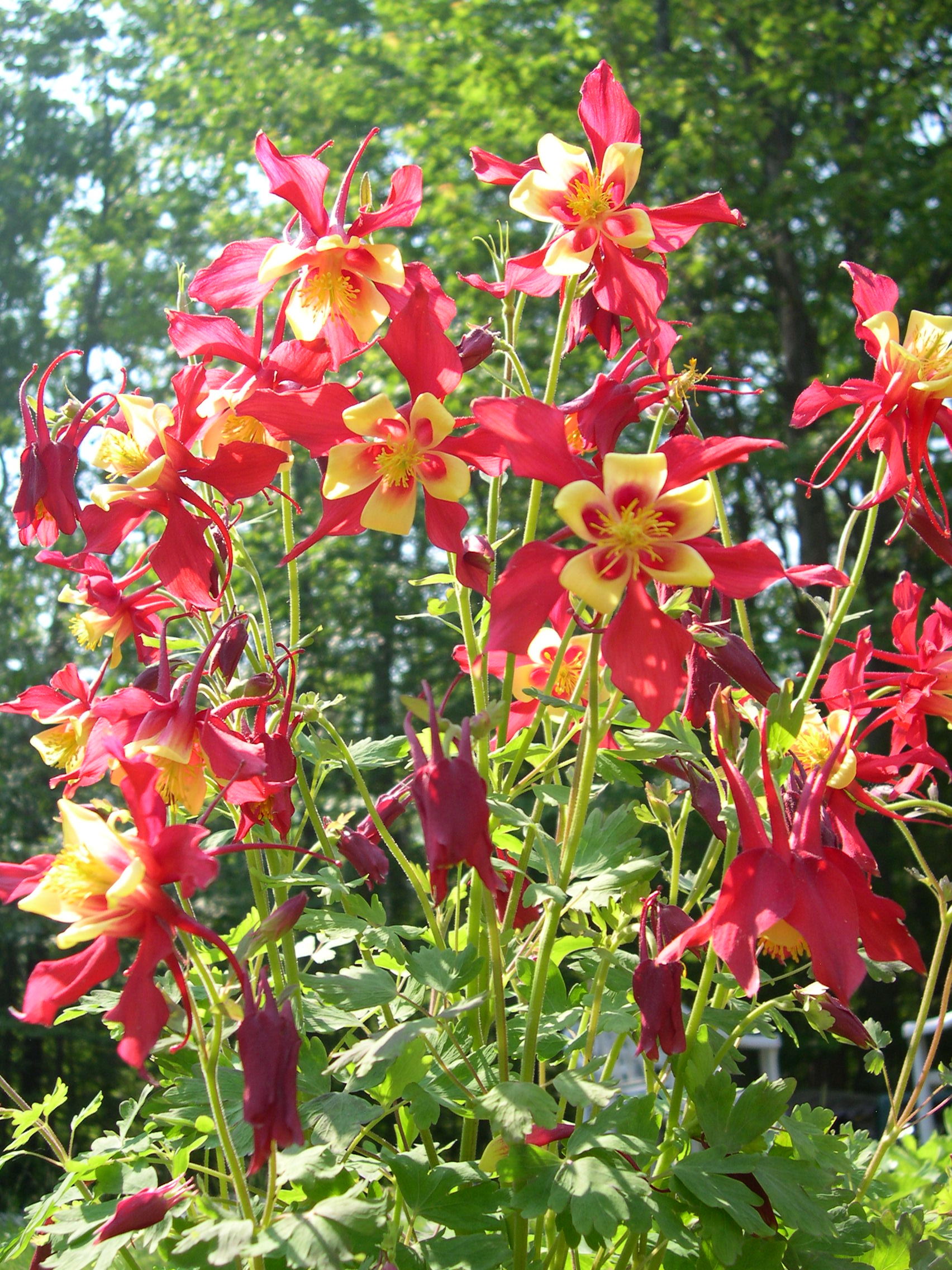
I planted this Columbine in my flower garden last year and this Spring it has really grown. It’s loaded with flowers that are just beginning to go by.
Columbine is one of the flowering plants I’ve come to enjoy most in my New England landscape. The colors are gorgeous and they provide seeds when the flowers die which I can plant for the following year.
I also have purple and pink plants, but none of them bloomed as profusely as this one.
Pretty Columbine in my Garden
Although Florida, where I now live, has it’s own beautiful nature, flowers like the columbine will not grow there. I also miss my peonies and hydrangeas.
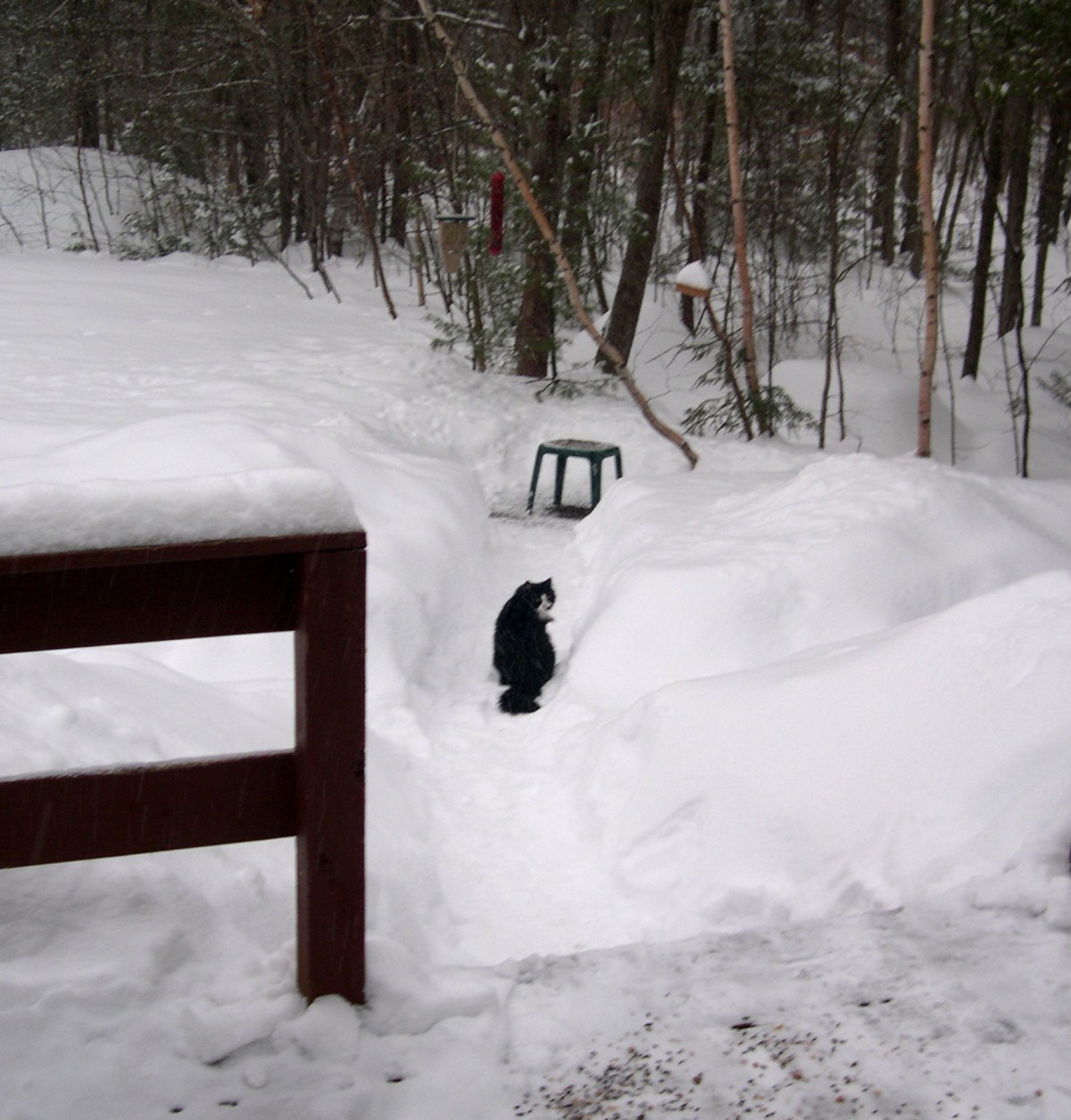
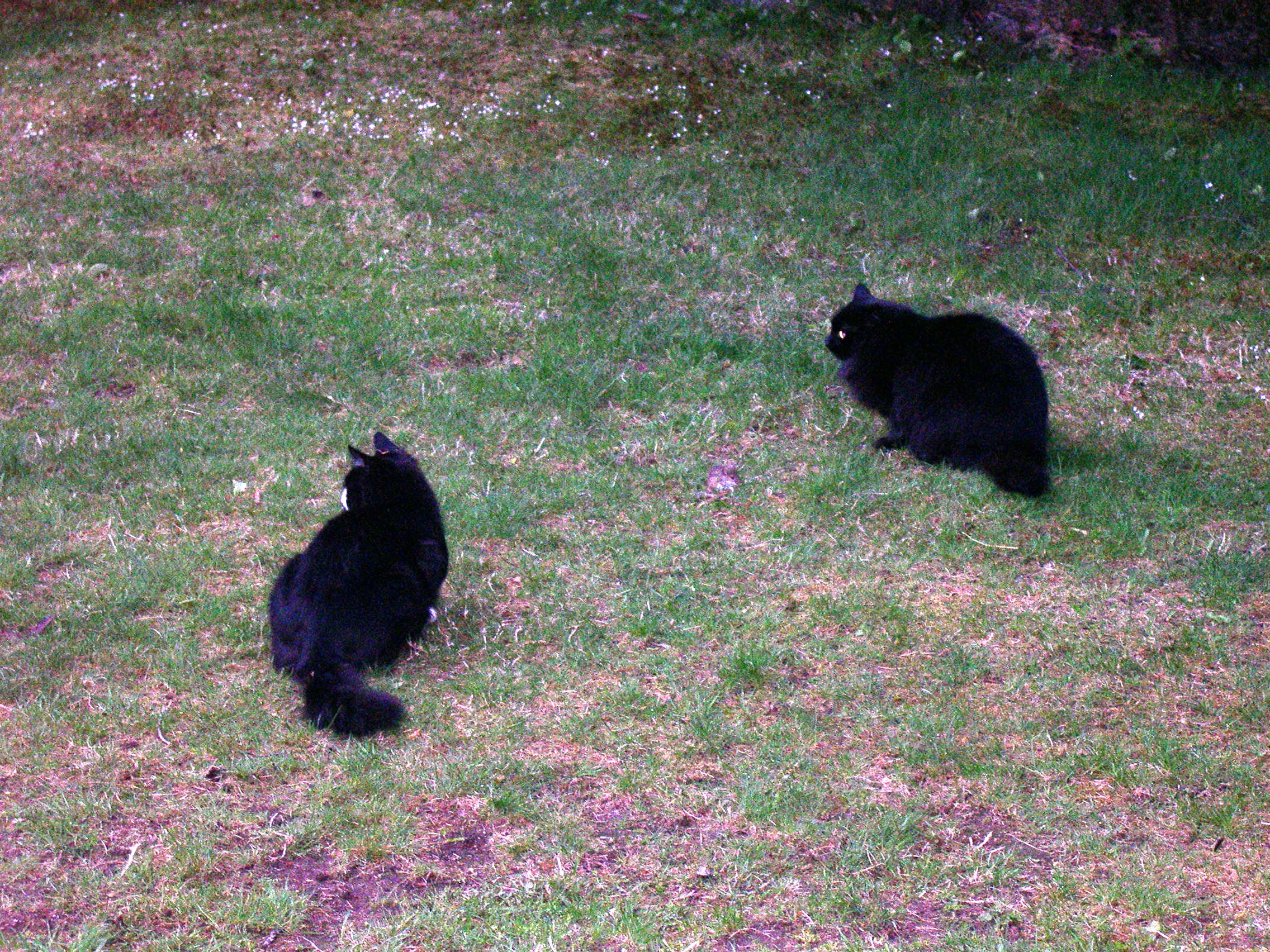
Some place right in front of the cats in the picture to the right, is a hole in the ground where a chipmunk lives. My cats enjoy sitting close by waiting for it to appear.
Occasionally, Richie – crazy little kitty that he is – will stick both paws down into the hole and try to pry the little critter out. Richie is a male and is quite the hunter. He leaves dead things outside my back porch each morning.
He does catch many chipmunks and I’ve noticed that the chipmunks are really pretty clever. If you have outdoor cats that hunt link mine, you might already know about this, but I was so surprised when I first saw it.
All of a sudden the “injured” rodent bee-lined it for the woods. He wasn’t hurt at all…just pretending until he could make his getaway. And he did get away. We were all fooled, including Richie!
The cat will play with it’s prey. It’s very cruel, but they love the chase so don’t want to give it up right away. We watched one day as Richie was playing with a chipmunk. As it (the chipmunk) hopped around with it’s back all hunched up, and Richie batted it around, we noticed that the chipmunk was moving towards the woods as he hopped in circles. Suddenly the chipmunk came to life and bolted for the woods. He was lost in the leaves and rocks and had made his escape successfully. Richie was the loser.
I’ve seen this happen over and over since that day. Some of them don’t get away because Richie is an amazing hunter.