How to Knit Corrugated Ribbing For Colorwork Hats

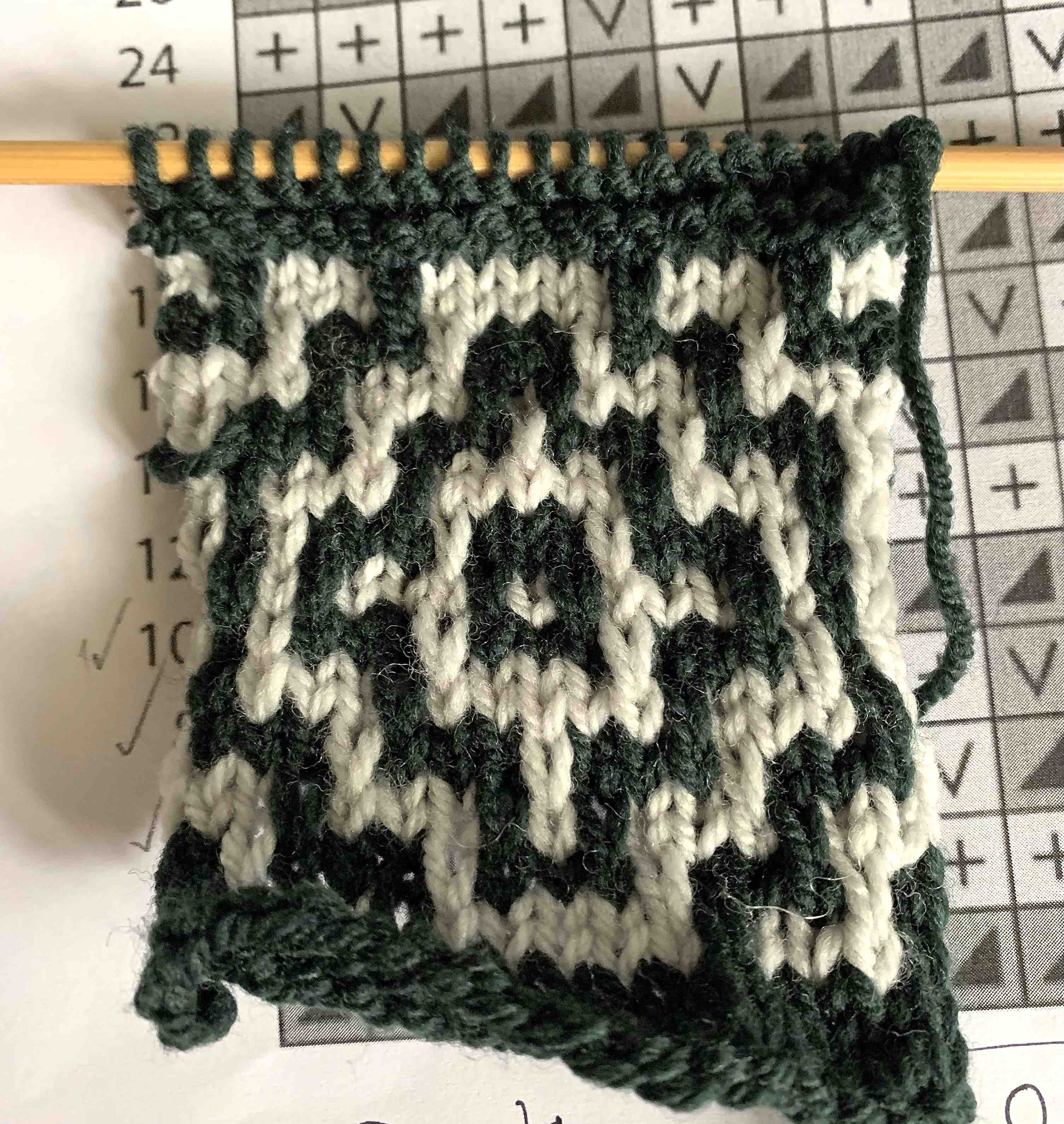
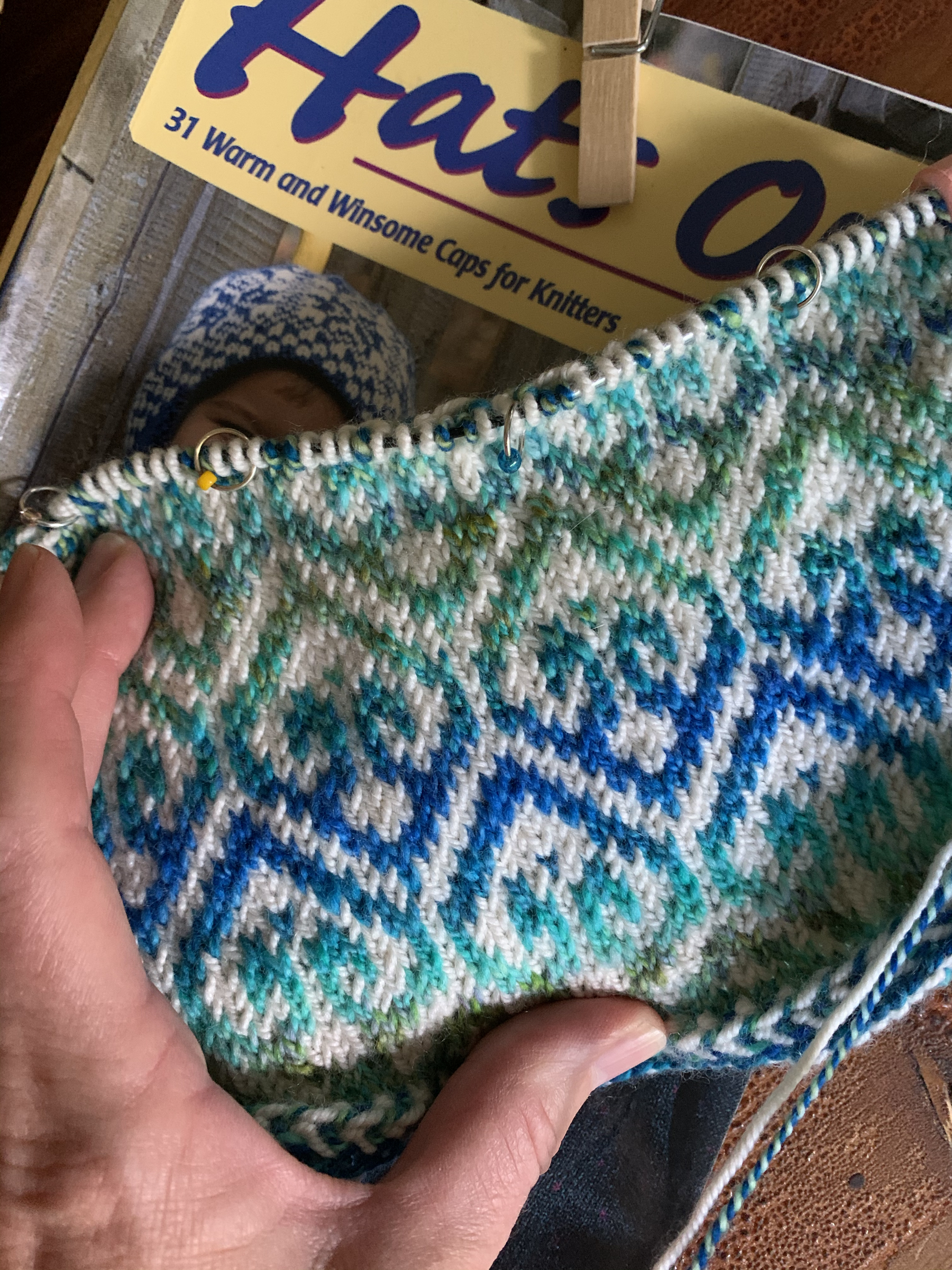
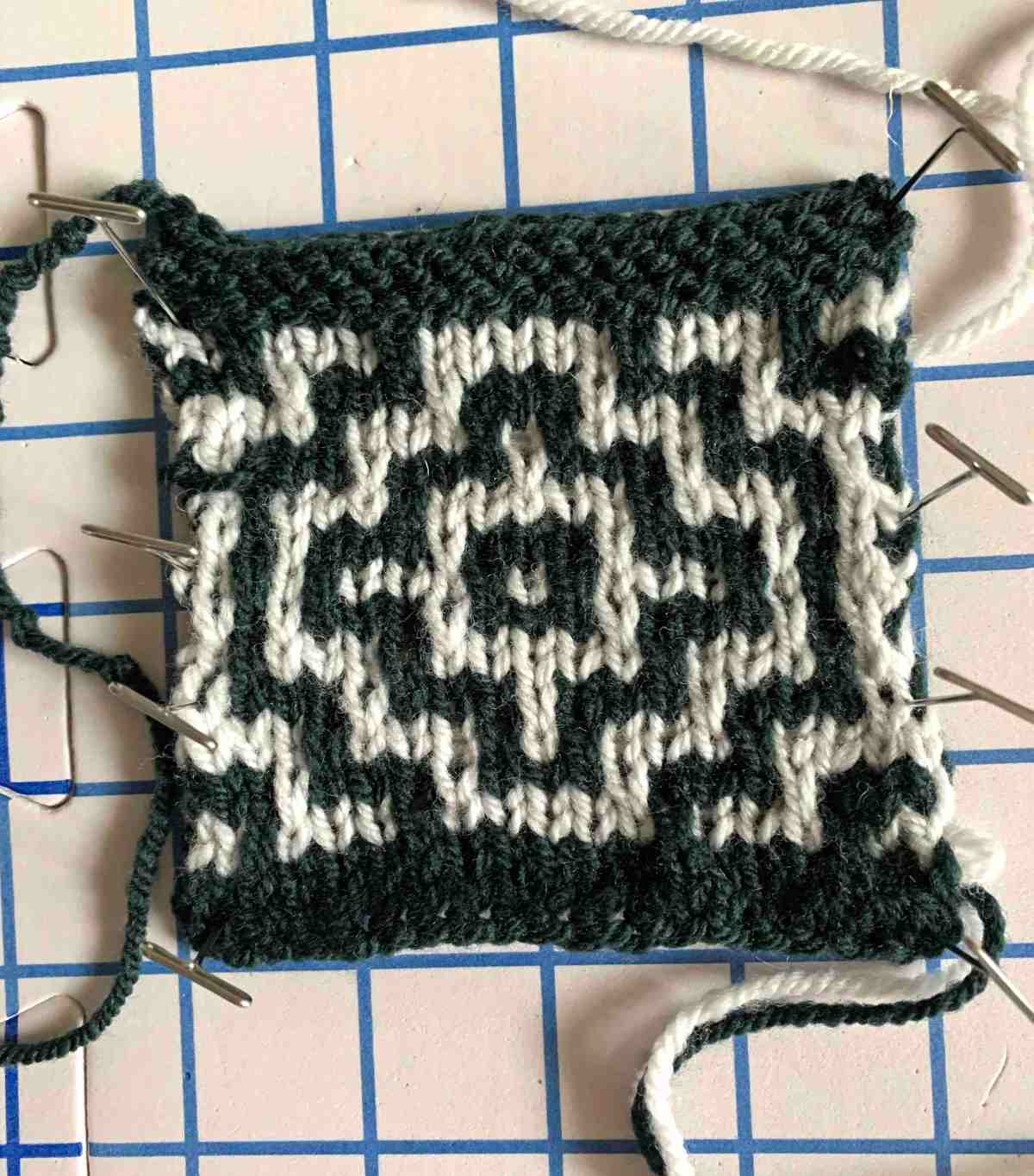
The last few hats I have knit have had brims with corrugated ribbing. You can see it on this page in the Katie’s Kep and Tettegouche (links to pattern below too). This type of rib is worked as a purl 2, knit 2 around, switching colors between the knits and purls. It is often used in Fair Isle, stranded knitting designs and the yarn is held in two hands.

Begin by Making a Nice Cast-on

When I began knitting, I hurried through my cast-ons so I could get started with the project. I only knew one simple cast-on, and it was not a good one for hats. Now I use the Old Norwegian, or German Twisted, cast-on, which is the same thing as far as I can tell. It makes a loose, stretchy first row so the hat won’t be tight around the forehead. It’s also a fast cast-on once you get the hang of it.

A good wool such as Rauma or Shetland (Jamieson & Smith), in fingering weight is suggested for this type of hat knitting.

Once the stitches are cast onto a 16 inch circular needle, in the size your pattern calls for, join them with the stitches straight and even, making sure there is no twist. I use the drop and switch method of joining, where each stitch at the end of the needles are swapped. Then, place a marker to remember this is the beginning of the round – BOR.

Since I first wrote this page I have found a helpful page at TECHknitting: Corrugated ribbing tricks and tips. They explain corrugated ribbing and it’s uses and potential curling problem. Also they have an interesting section about how to handle purling the colors.

Begin the Rib – this is how I chose to do it.

Once the cast on is complete DO NOT KNIT AROUND – go right into the knits and purls. Doing a solid knit row before the ribbing will cause the edge to curl up.

For the first round, begin with the main color (it was tan for my hat) held in the right hand (for knitting English style) and purl two stitches. Move the yarn to the back of the work. Now add the new color (orange in the hat pictured) and knit two stitches while the yarn is held in your left hand, Continental style. Bring the MC, (tan yarn) to the front and purl two – and so on. I will be using those two colors for the entire round.

Corrugated ribbing knit on the brim of a hat
The brim of this hat is knit in 2×2 corrugated rib

Don’t forget to move the yarn to the back of the work once the two purl stitches are made! ….I made this mistake and had to begin over.

For my Katie’s Kep #2 (above), my first CC (contrast color) is orange and I did three rows before I added the second contrast color, which is light blue. Every row is knit the same way with the MC (tan) held in my right hand and the CC in the left. I do it like this because I can’t purl using my left hand.

Holding the yarn correctly is important in colorwork knitting. Using two hands becomes quite easy with practice. Using two hands means the yarn will stay on top (right hand yarn, or Main Color) and on bottom (left, Contrast Color). Doing this makes the CC stand out. Sometimes a pattern will ask you to knit the main color and then purl the contrast color – which keeps the main color prominent.

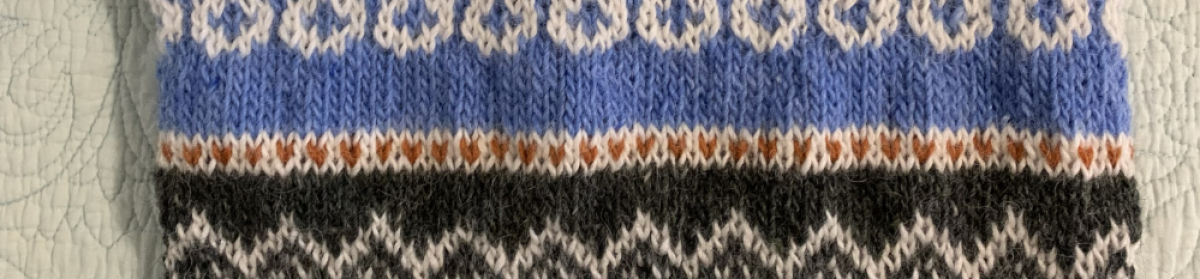
See it below in the first Katie’s Kep I knit which has a dark blue background (MC).

Katie's Kep Fair Isle hat
Katie’s Kep Fair Isle hat begins with a corrugated rib around the brim.

Learn to Knit Using Two Hands

If you don’t know how to do this type of knitting using two hands, look for a good video that shows you how. And then practice! Colorwork is easiest when knit in the round. In fact, personally, I don’t know how to do it any other way.

Then, you will just need to know how to carry those floats when colors become more spaced apart in a row – but you won’t have to do (much of) that on these hats!

Colorwork is in chart form, FYI.

Love Katie’s Kep? Download the pattern for free here.

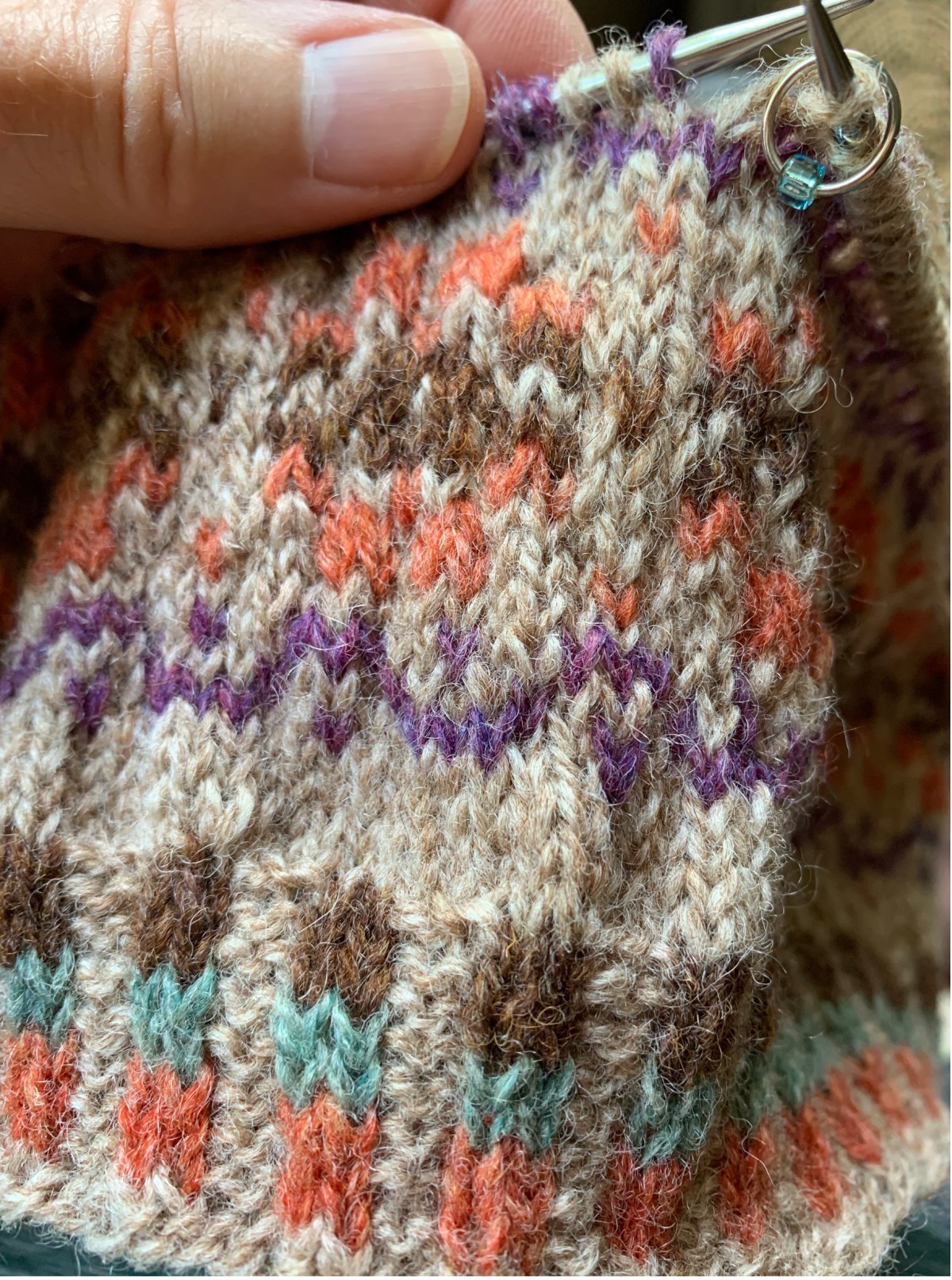
The hat below is called Tettegouche, and the pattern for this one can be purchased at Ravelry. Believe me, the other hats look a lot better than mine. I used colors on hand and they are not the greatest combination. You can see the use of the corrugated rib again.

Tettegouche hat pattern
Finished Tettegouche

My last word on the corrugated rib is that it is less stretchy than a 1×1 or 2×2 regular hat rib. It’s meant to be sturdy and pretty at the same time. Often a smaller needle is used for this type of brim and then you switch over to a larger size for the top of the hat. A wool yarn in fingering weight is suggested.

The Kitchener Stitch For Socks, Mittens and More

There is a lot more to knitting than picking up a pair of needles and choosing a pretty yarn. If you have done any amount of knitting yourself you will understand. I have learned a lot as I’ve knit various projects over the past year and a half.

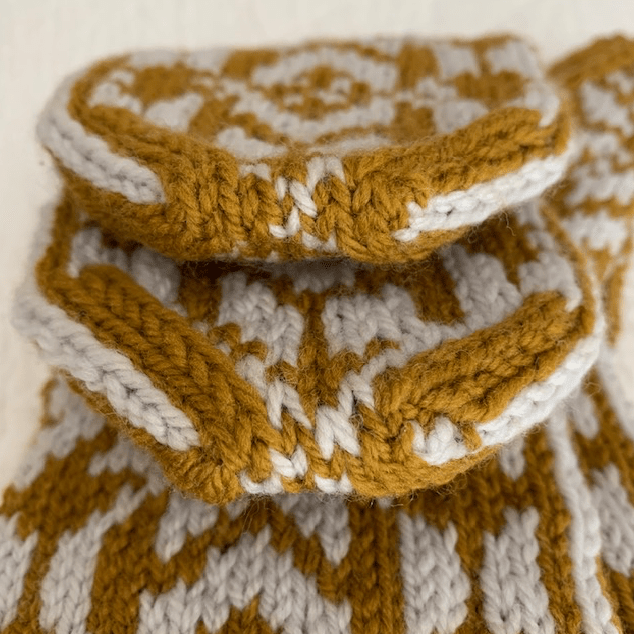
One aspect of knitting you will undoubtedly come across if you knit mittens, socks or even sweaters, is the Kitchener stitch. It is usually done with a tapestry needle to either close up a mitten top (see below), sock toe, or stitch something together seamlessly. (See my Playdate Cardigan page also where I used this stitch on shoulder seams.)

Kitchener stitch at top of mittens
Glissade mittens

Basics of the Kitchener: End your knitting with even number of stitches on each of 2 needles. Do a set up stitch, and then begin the Kitchener. It weaves both sides of the project together without making a seam. If you look at my mitten tops, it appears that my stitches flow over the very top of the mitten like magic!

I have not done the Kitchener stitch often, but there is a good YouTube video by Very Pink Knits which has helped me to understand it better. She has a little mantra she says while stitching. She shows it on a sock toe, in slow motion, which is very helpful!

My Glissade mitten tops look pretty good, if I do say so myself. When I first tried this stitch, I practiced on something that didn’t matter.

At first, this stitch drove me nuts. I really hated it, but after practicing, it’s really not that bad. I just have to go slow and pay attention. A lot of videos don’t tell you what to do with the last two stitches, but this video does.

Now, whenever I have a pattern that calls for this stitch, I write that little saying on the pattern itself so I don’t have to go look up the video when it’s time to do the Kitchener.

Knitting For a Baby Somewhere, How to Begin?

After spending a good part of my morning filing more Amazon infringement notices concerning people selling my stolen images on the site… grrrrr… I bought a baby sweater pattern from Tin Can Knits. Then I felt better.

All baby photos on this page are courtesy of photographers on Pixabay.

The pattern is called Playdate, and the cardigan can be knit in many, many sizes from 0-3 months all the way up to 4XL! Since I am such a beginner, usually I find something new to learn in any pattern I buy. This cute little v-neck cardigan (I plan to knit one of the smaller sizes) has two pockets and I’ve never done pockets. When I read through the pattern it makes no sense to me how they will go on. I may decide to go pocketless, or follow the directions until I get that “Aha!” moment.

Read more about my experience knitting the Playdate Cardigan here.

Naked newborn in knitted hat

Choosing A Lighter Weight Yarn For Baby Knitting

Let’s talk about yarn. Nice yarn, which is able to go into the washer just in case Mom doesn’t want to hand-wash, is what I want to use. Many sweaters call for a heavier weight yarn, but this one uses “fingering”. Because I wanted to use some stash yarn, I settled on Emma’s Super Silky in “Malibu”. It was really the only “baby color” I had, but I wouldn’t purposely use “silky” yarn next time. (Tin Can Knits uses Sweet Fiber Yarns Cashmerino 20, which looks beautiful, but I can’t find it anywhere for sale.)

Baby in matching knitted hat and sweater
Baby in matching knitted hat and sweater.

I just finished knitting a sweater for myself using Miss Bab’s “Tarte” yarn. It has become one of my favorite yarns. It knits up nicely and washes great. I did have some color come out in the wash, but I would definitely use it again. It might be perfect for babies.

For a heavier fingering try Miss Babs “Keira” yarn which is closer to a DK weight according to reviewers. It’s Superwash merino wool and comes in 560 yard skeins. This would allow for knitting a Playdate sweater in the (up to) 1-2 year size range.

Popular Debbie Bliss Cashmerino is also a DK weight yarn that is machine washable. I’ve never used it and it has more acrylic in it (55% wool, 33% acrylic, 12% cashmere – 136 yards). Also Rowan Baby Cashsoft Merino is similar, except it is a fingering weight (57, 33, 10 – 142 yards) and comes in good baby colors.

Use two colors and add some stripes to the Playdate. This post has more info about Playdate Cardigan at TCK and shows the pattern done in stripes of two colors. It would be the perfect choice for using up two smaller skeins.

Lorna’s Laces Sportmate (link to Webs) is a bit heavier weight too, but still a washable yarn. This yarn contains viscose (along with 70% superwash merino) that helps to moderate body temperature. The downside: Finding good colors for youngsters might be tough. It feels like “sweater yarn” and I’m using it to knit a beanie for my son and it’s very nice. I can’t wait to wash it and see how it turns out. My son will not be careful about caring for his hat! Boys and babies… same thing. 😉

My local yarn store Four Purls also carries Sportmate in lots of colors, and it can be ordered online.

Best Colors for Baby Knitting

If I were buying yarn specifically for knitting this sweater, which calls for fingering weight, there are a few good options. Most “sock” yarn is made to be washable. Also sock yarn comes in pretty colors, but finding the right color for a baby or young child can be tough. Lots of color and stripes on socks is great, not so much on a baby.

Baby in blue knitted cardigan sweater

As I search through patterns at Ravelry and on Pinterest, seeing the colors people have chosen gives me ideas. So I know what I dislike and what may work on a young child. The thing is, it’s my own preference and you may disagree.

Babies come in lots of colors!

Darker skinned babies can handle more color, in my opinion. Pale babies with no hair will blend right in with that white hat and sweater! For that reason many knitters choose softer colors.

I dislike lots of variegated colors on babies. Solids, or slightly variegated, look best on most newborns, and nothing too bright. Manos del Uruguay has some pretty colors in their Alegria Sock yarn line, which I found at the Simply Socks site. I have used Manos yarn before and it is wonderful. I like it better than Madeline Tosh because it is seems to be softer.

Malabrigio Sock also has some nice solids in 440 yard skeins which are 100% Superwash merino. And Simply Sock has their own brand of yarn in solid colors but smaller skeins (175 yards) which would work well as contrasting trim on a sweater.

Some Guidelines For Baby Knitting From TCK

Naked newborn in knitted hat with ears

Who am I to tell you how to knit for babies when I’ve never done so? This paragraph is for my reference too. My four children are grown however none of them have children of their own. I’m in my sixties and there is not a baby in sight! In fact, none of my kids are even married at the present time. So grandchildren may never be in my future. Nevertheless, I won’t let that stop me. I want to knit some baby garments and I figure this sweater will be good practice.

Baby Knits 101 is a blog post by Tin Can Knits with advice for knitting for babies. Since they do a lot of knitting for their kids, I will take their advice to heart. I love that they promote knitting with wool. Superwash merino is nothing like the old scratchy wool of yesteryear. I dislike acrylic for many reasons, and it’s easy to find washable fingering weight yarn – like what is needed for the Playdate sweater.

Ask a Baby Knitter

Here is where being part of a group of knitters would come in handy. Maybe you know people who have done a lot of baby knitting and could seek their advice on yarn. The problem may be that most baby knits are given away as gifts. As mothers of young children there is no time to sit and knit something! So hand-knits usually come from relatives. It might be wise to ask how they like the item – Is is easy to care for? Is it comfortable on the little one? What would you like done differently if I knit it again?

Let’s face it… the Playdate is a pattern that could be knit over and over as a child grows. Eventually you would get it right!

Baby in knitted, button up cardigan sitting in fall leaves.