The Warm Up sweater pattern is a simple raglan design. Although the sample is knit in one solid color, I like making wide stripes. I also like a rustic wool for more of a sweatshirt feel.
The Warm Up pullover is a pattern I have knit before. It is a basic raglan style sweater. The pattern does not include color changes, but I like it with wide stripes. I also like it in a nice, rustic wool. This time I chose Peace Fleece. (Pattern buying option is linked down the page.)
Pattern Mods
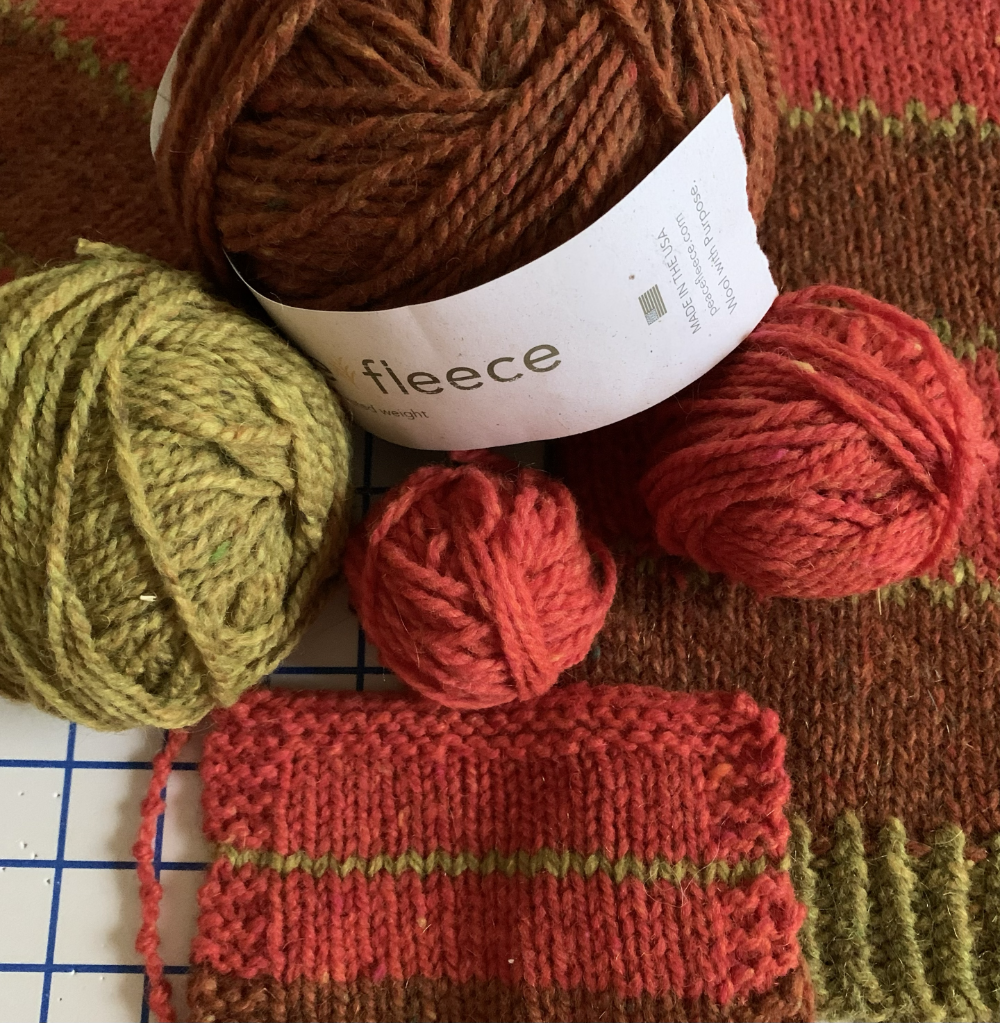
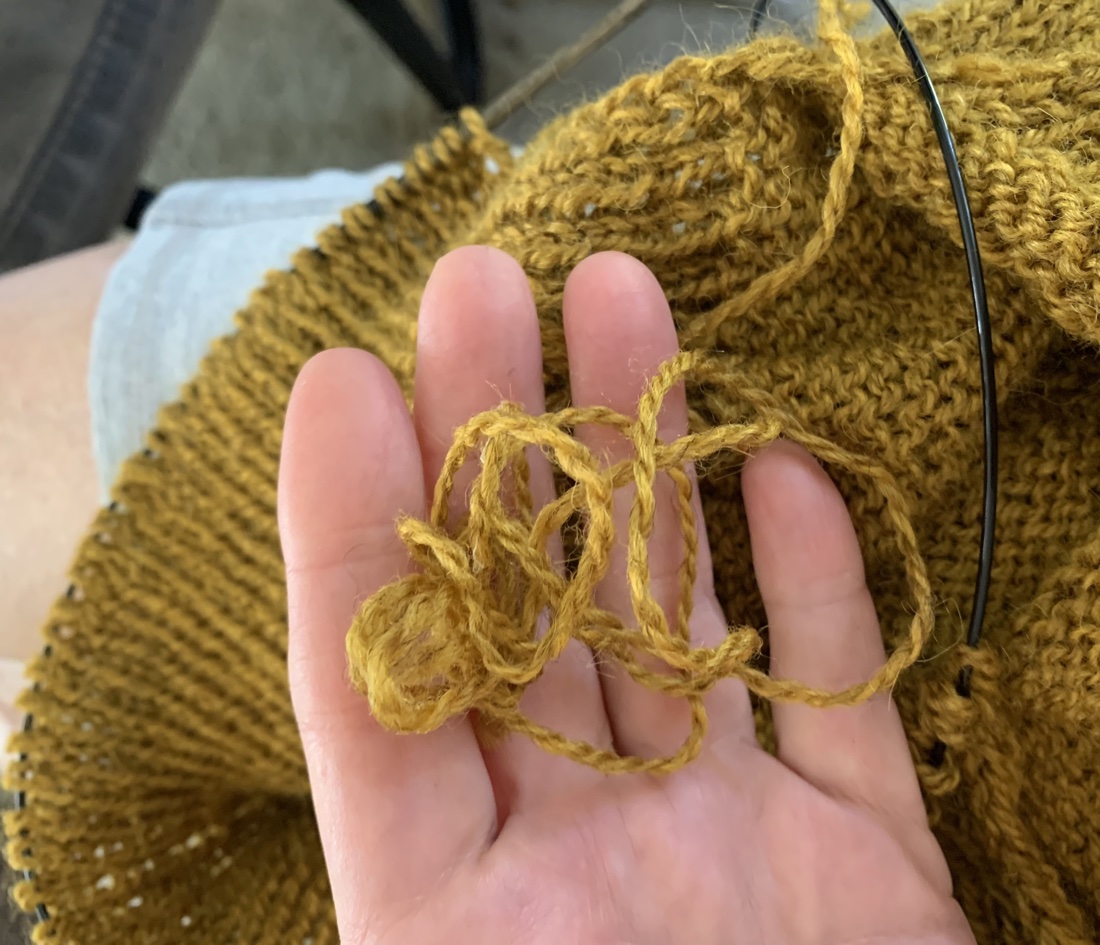
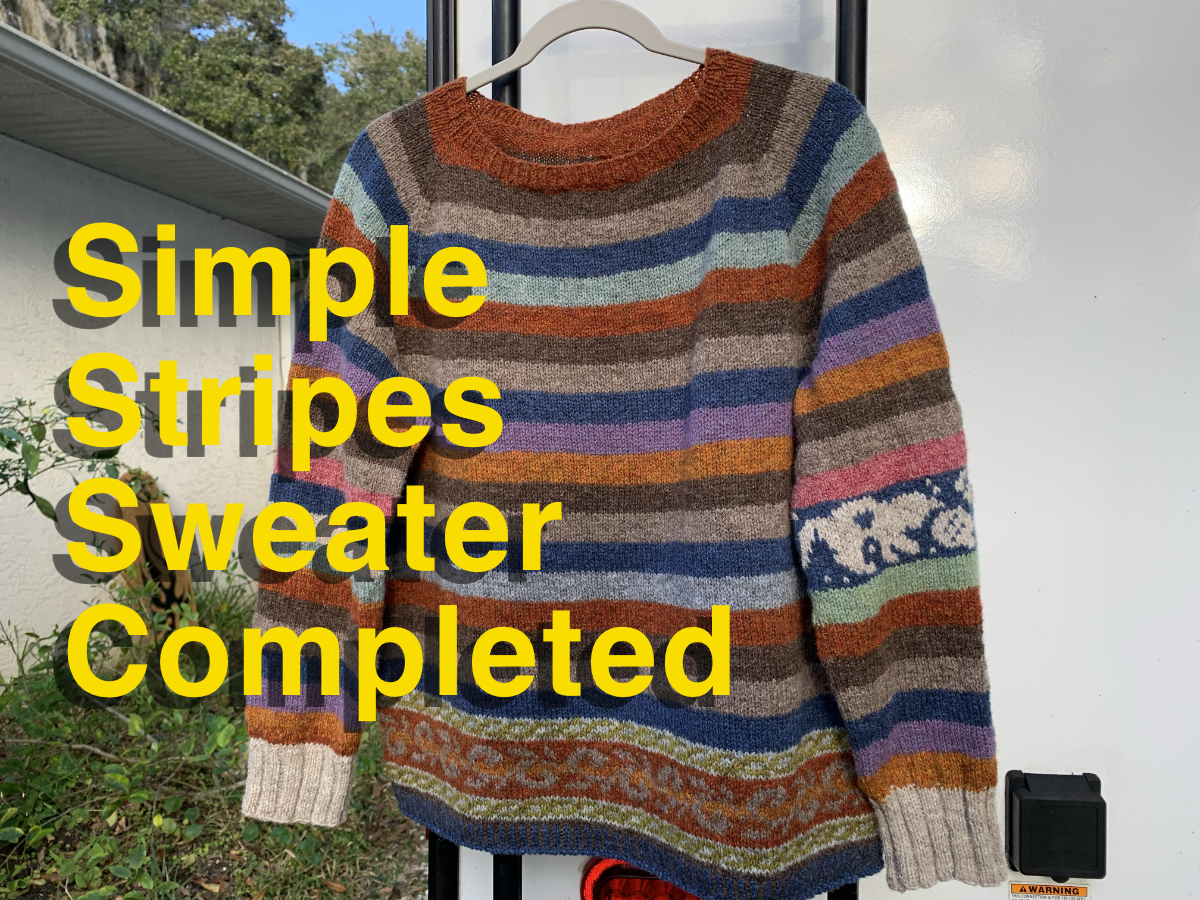
A basic sweater offers a blank palette for trying new things. I liked the wide stripes on Warm Up #1 and kept them on Warm Up #2. This time I added a little border pattern between them using a contrast color. Because this yarn splices very nicely, I changed the main colors (red and brown) by spit splicing.
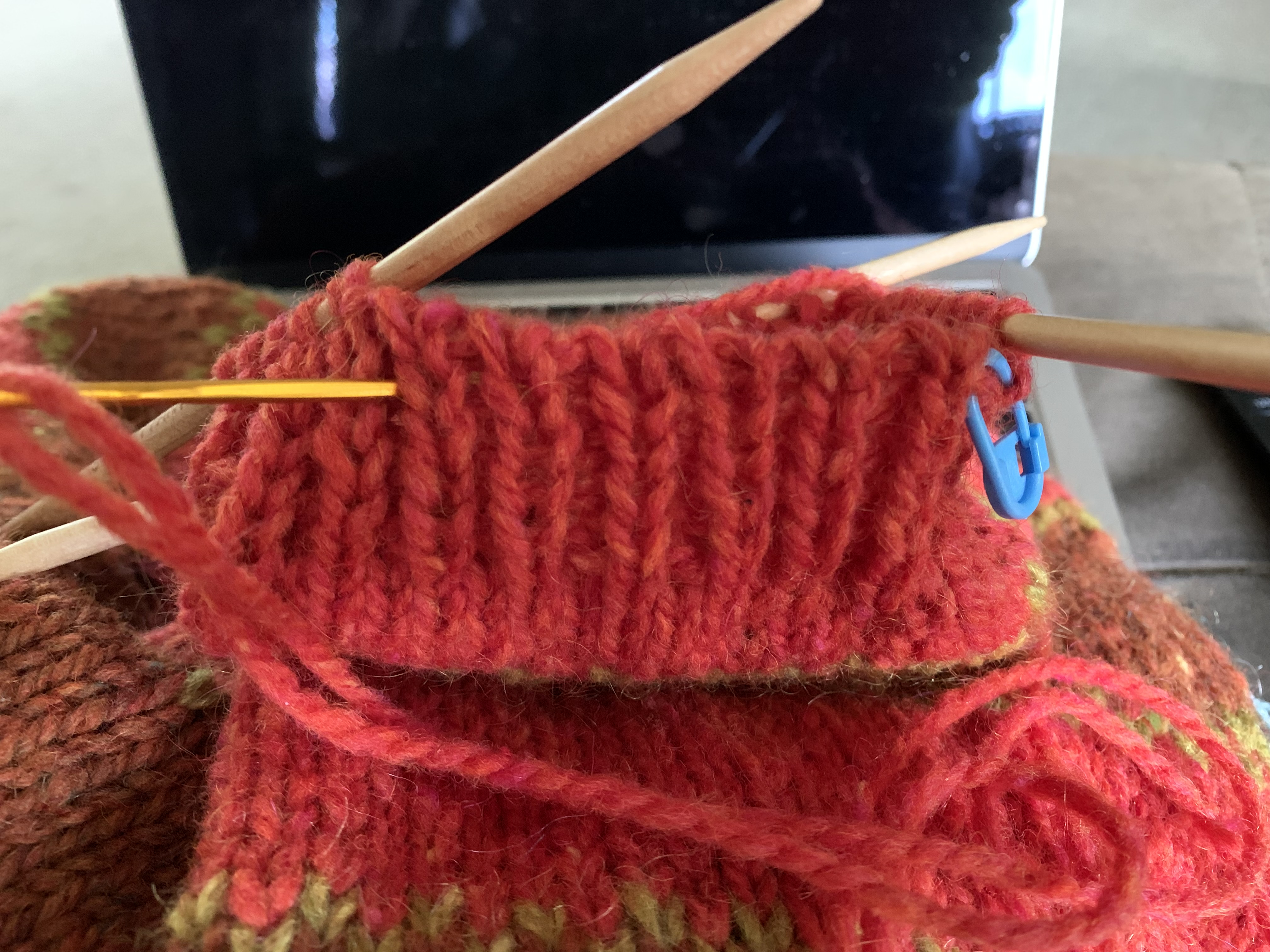
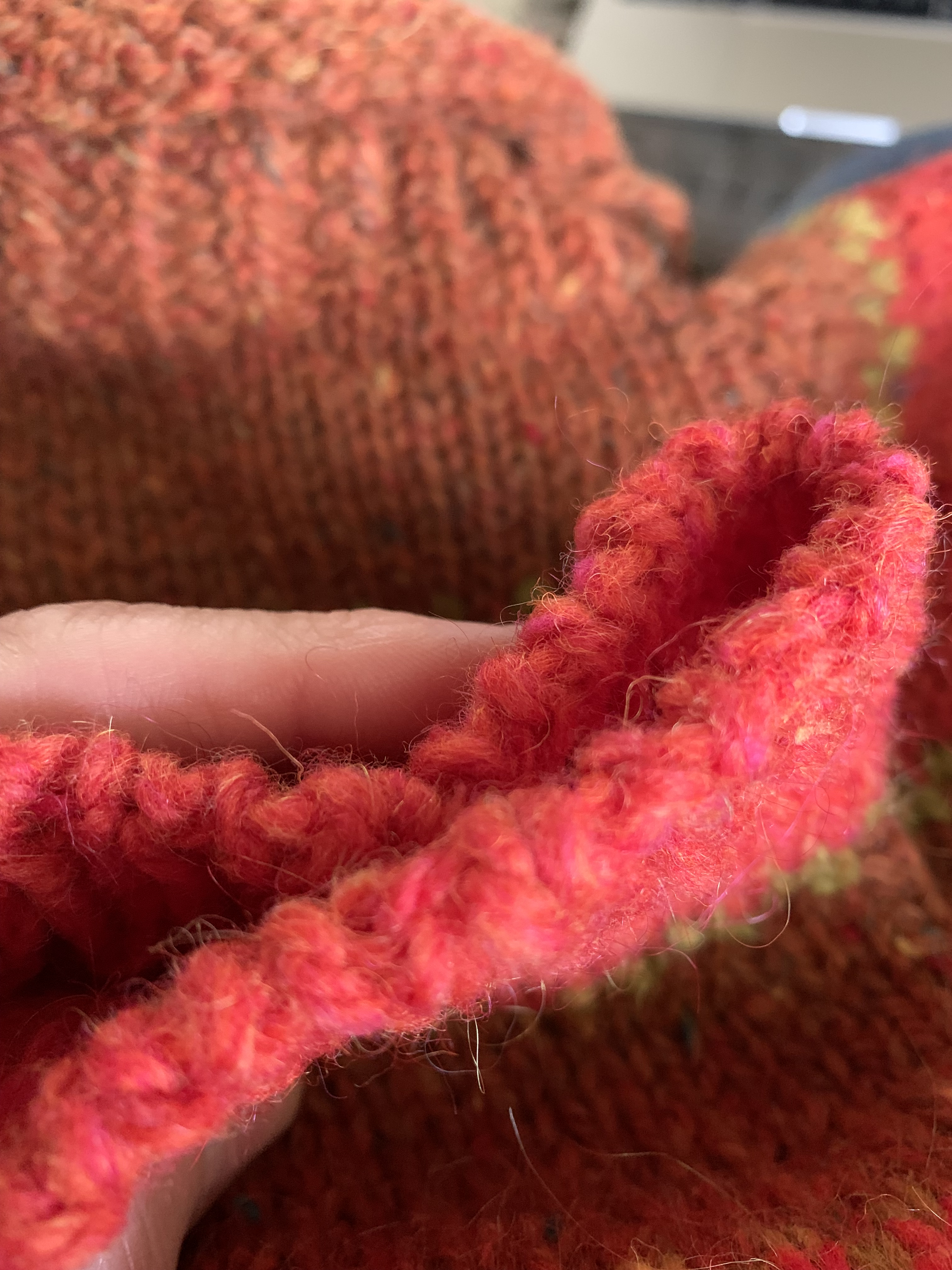
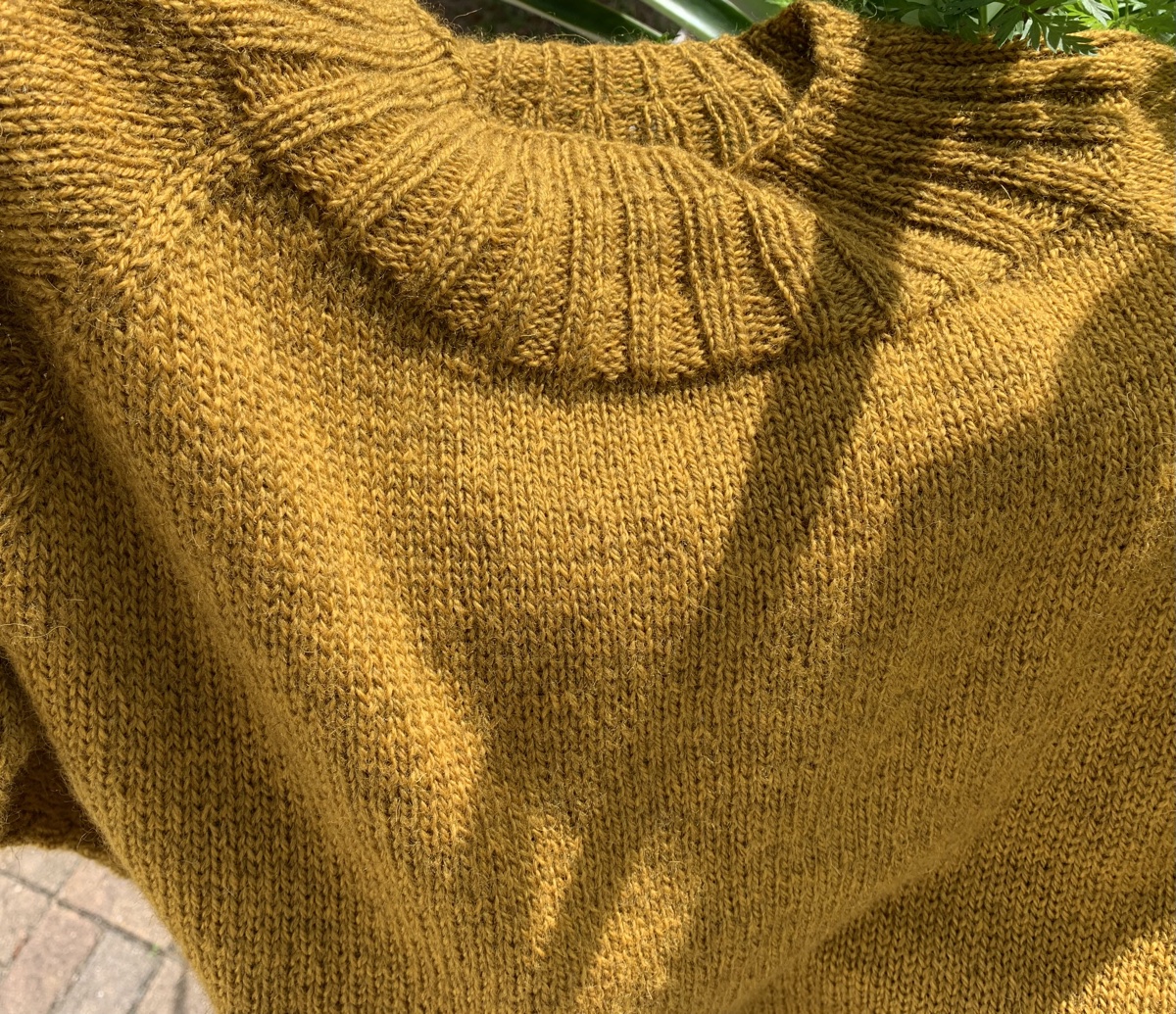
The neck was the only part of the original sweater that I didn’t like. My neckline choice for this new sweater has a little roll and then a rib. I hope I will like it better.
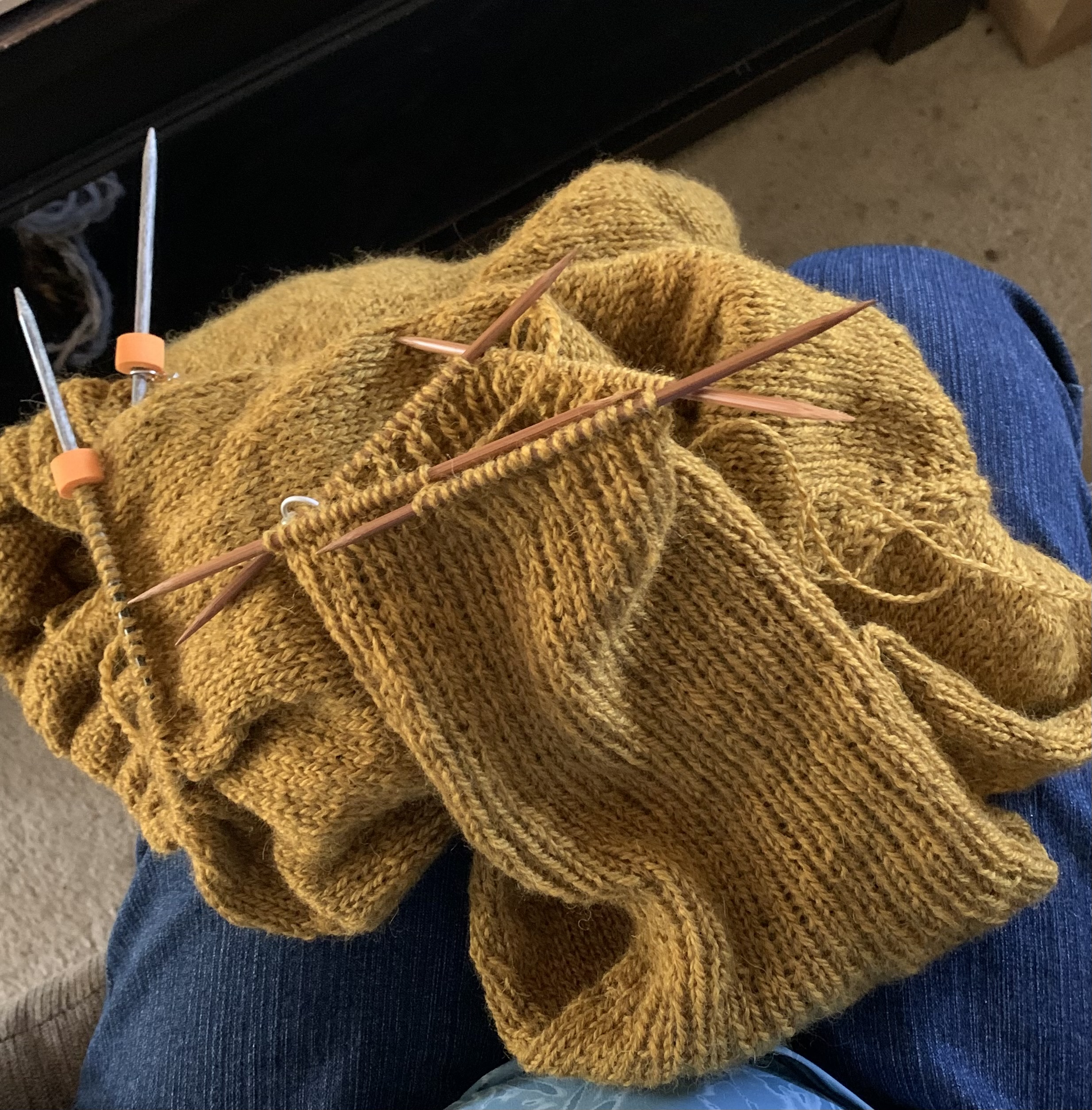
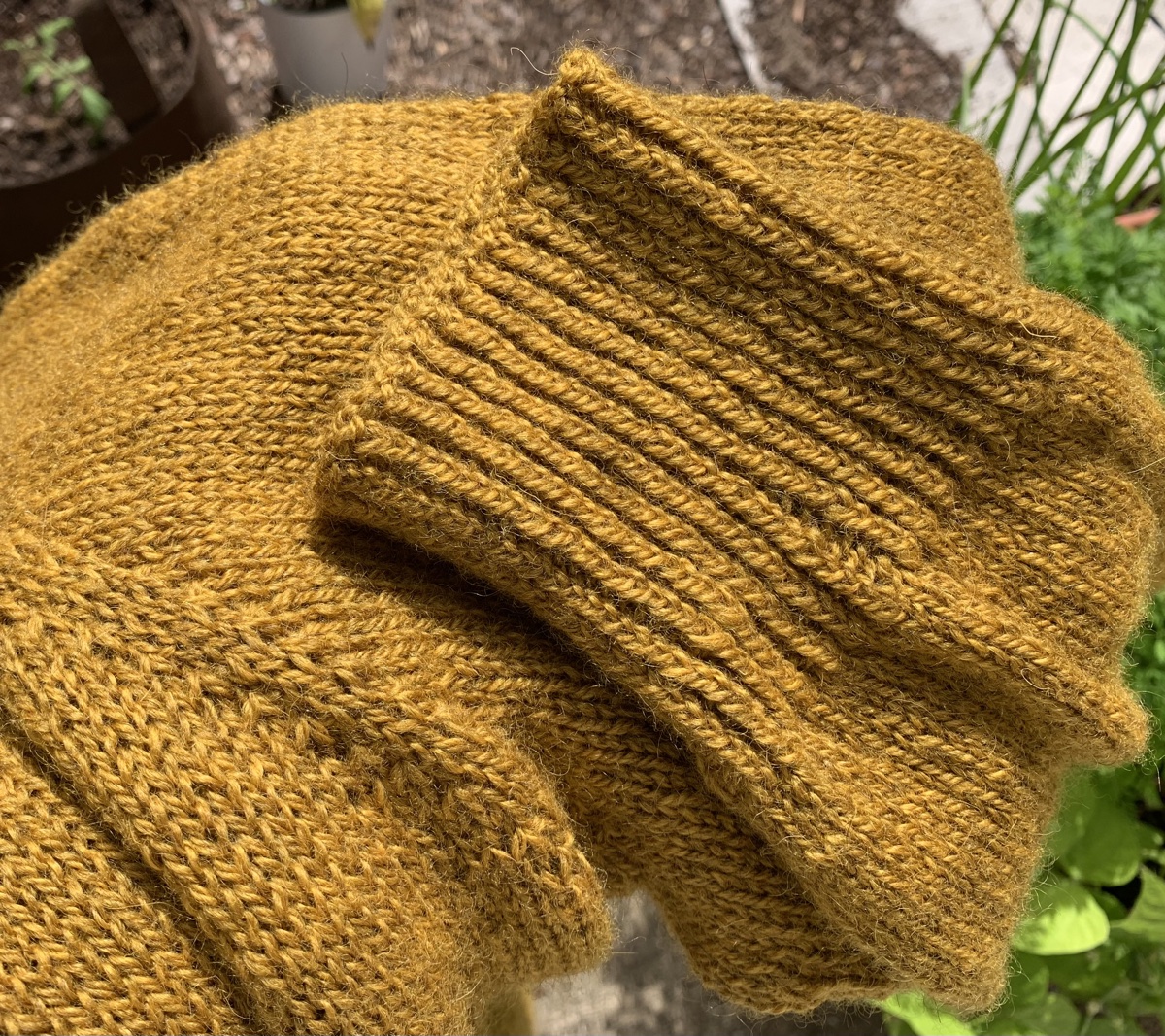
The pattern suggests a twisted rib for the neck, cuffs and bottom. By the time I did the sleeves, some time had passed and I did a regular rib. Mostly because I simply forgot. I forgot to go down a needle size for the ribbing, so it was done with a size 8.
Sleeves are done! On to the body.
The sleeves were knit before the body. I was not sure on the yarn color amounts. While knitting the sleeves, I had a feeling that the whole sweater would be way too big. I was wrong! Once the sleeves were finished, I tried it on. The fit was good. The bulky nature of the yarn makes the pullover seem big.
Tubular Knit Bind Off For Sleeves
If you feel inclined to knit a tubular bind off, please watch this video. The Chilly Dog channel has made an excellent video. It explains, and shows, how to bind off with a needle for 1×1 ribbing in the round. The example is a pair of socks, but it works for any in-the-round 1×1 bind off. I have linked it here for myself as a reminder for when I knit my second sleeve.
This bind off is done with a sewing needle and because the cuff is small around, it is very manageable.
This pullover pattern is from Espace Tricot. It was a free pattern back when I got it. Now it must be paid for, but it’s only around $5.50 US currency at the present time. It is a well explained pattern and a good one for beginner sweater knitters.
Warm Up #1, Brown LettlopiWarm Up #2 Peace Fleece (in progress)
I will update with a finished photo when I’m done. The hot weather is coming. Now that February is here, we are having some very warm days. I won’t be wearing sweaters for much longer. I need to get this heavy, wool project off my lap!
finished knitting and gave it a soak in Eucalyn. Now it’s drying on the mats. I have nearly a whole skein of the brown left. There is quite a bit of yellow, and not enough red to complete the last ribbing.
Want to know more about knitting a first sweater? I have some advice for beginner sweater knitters, as well as pattern suggestions.
After fiddling around with dishcloths, hats and scarves for a while, and getting basic stitches learned, I needed a bigger knitting project. I yearned to make a sweater just like all those pretty knitted sweaters I was seeing everywhere online.
I tried to find out as much information as I could before choosing the pattern. I read blogs, Ravelry pattern reviews, and visited the forums, but I still felt indecisive. What type should I choose? A top down, or bottom up? Cardigan or pullover? Plain or colorwork? I had done a bit of colorwork and liked it. A cardigan seemed like too much to handle with button bands, buttonholes and buttons! So, I chose a bottom-up pullover with some colorwork at the top by a designer I’d seen mentioned quite a bit, and bought the Umpqua sweater pattern by Caitlin Hunter.
Stumped while knitting the sleeves of my second Calliope sweater.
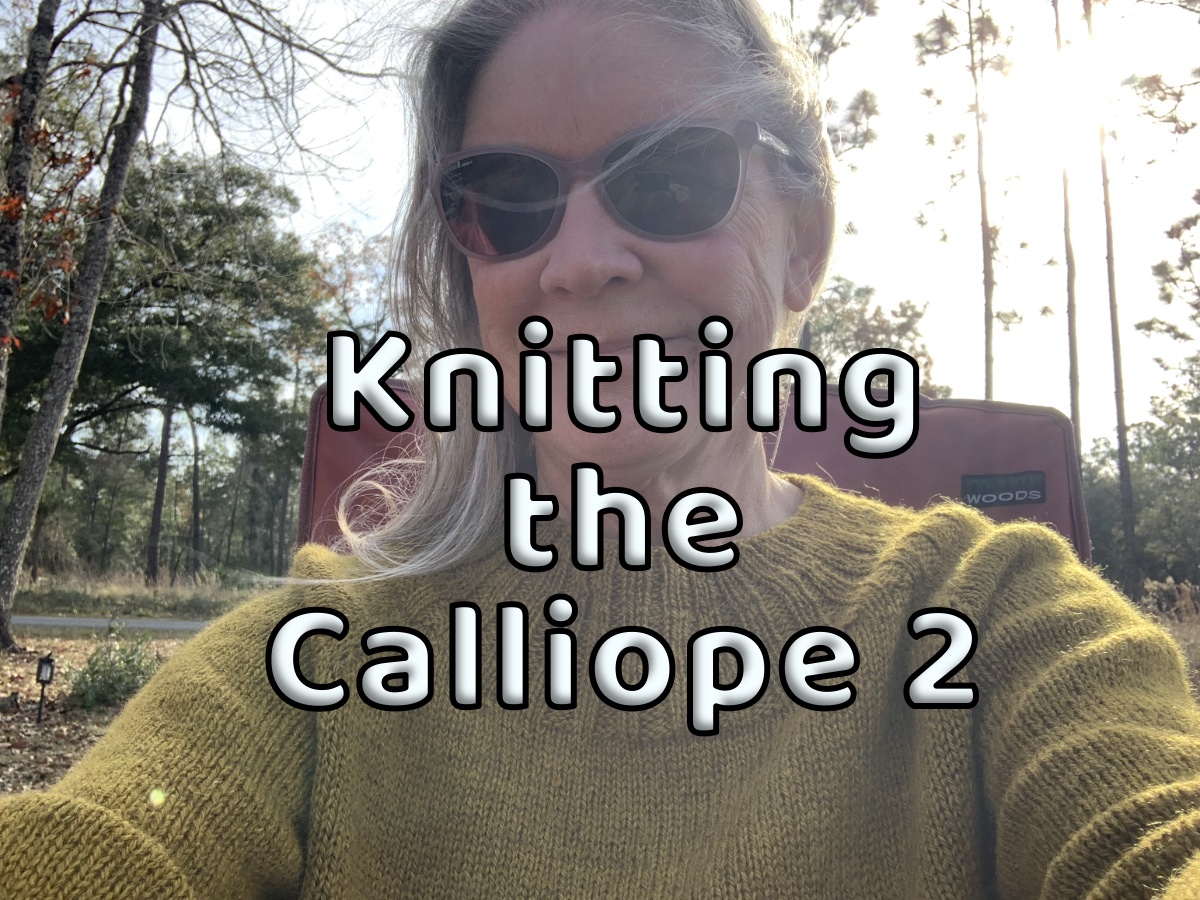
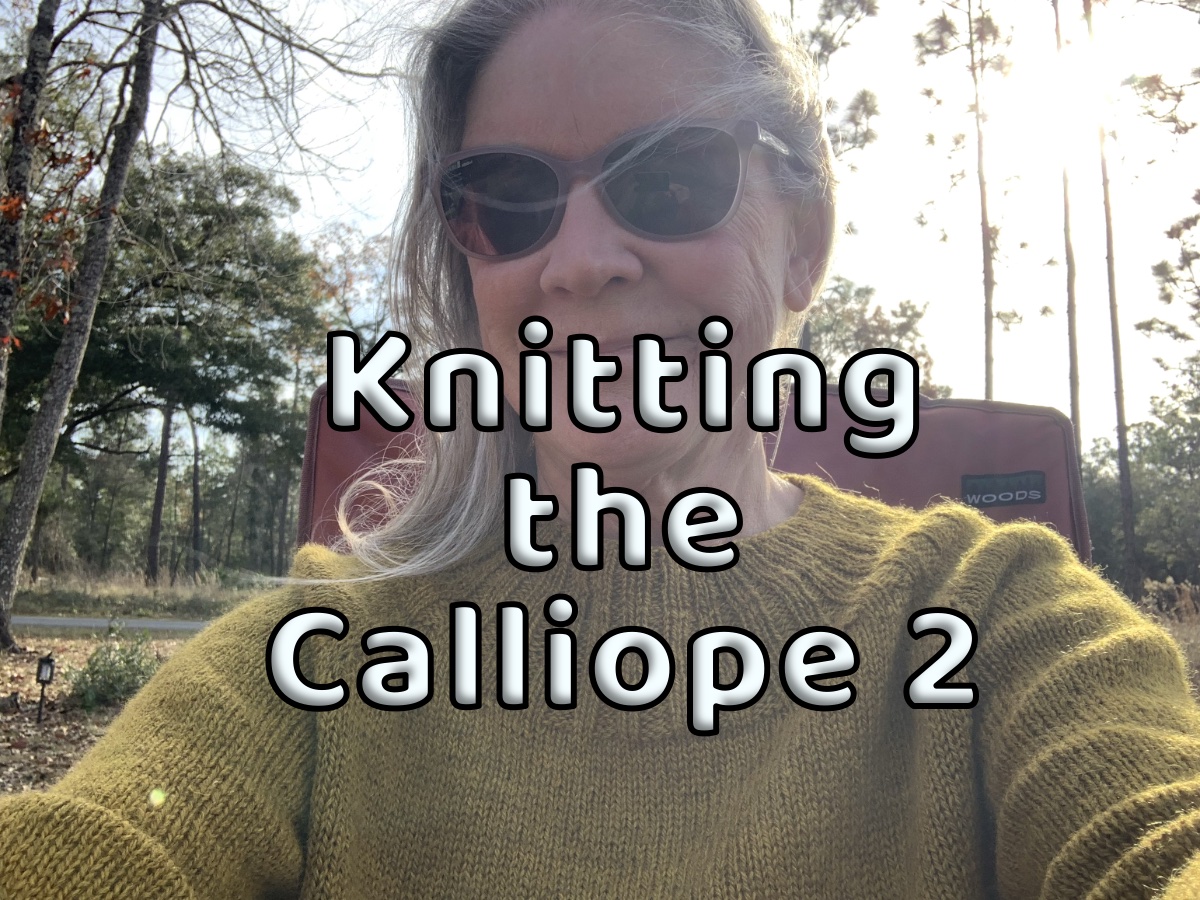
After I had knit my first Calliope sweater, I wanted to knit another one. The style is basic raglan, but it has some rib at the yoke. The sleeves also have an extra long rib. I ended up changing that on my project. (The pattern was free at one time, but no longer is.)
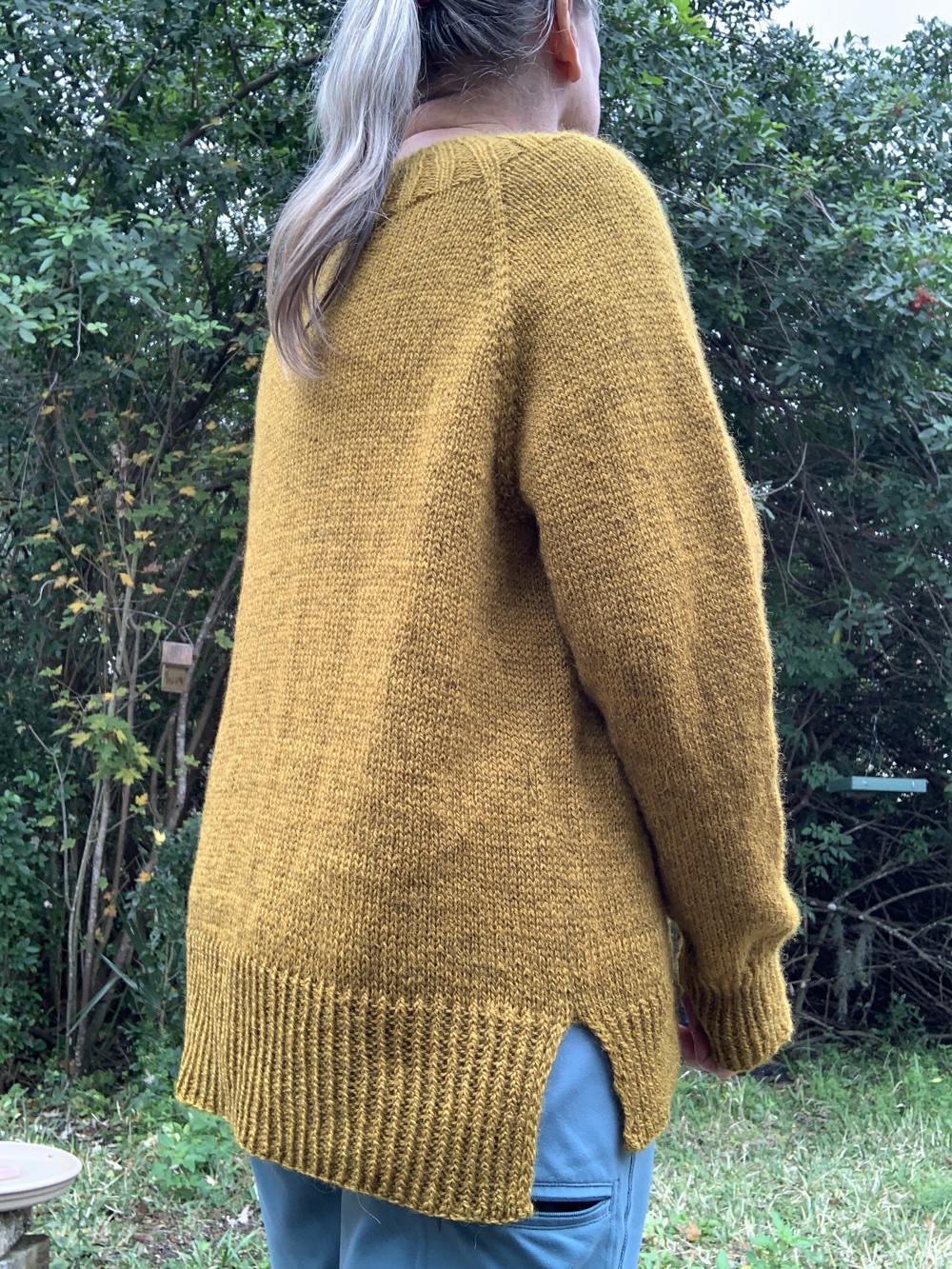
I have not altered the color on any of these photos, but lighting makes things look different. The yarn is a beautiful, rustic gold color.
The yarn is something new for me, and came from the Sonder Yarn Company. It is a pretty, golden color called “Toast & Honey”. I’m really enjoying knitting with it. Some skeins had more than one knot though. Thumbs down on all the knots, which I cut out and “spit spliced“.
Pretty Toast and Honey yarn color.Beginning of CalliopeYoke after washing
The sweater had some weird looking stitches as I knit, but after washing all things magically smoothed out and it looks wonderful!
An Easy Sweater Knitting Project
This sweater pattern is quite easy to knit and might be perfect as a first sweater project for beginners. It helps to know the basic construction of a raglan. Increases widen the front, back and sleeves as the yoke expands. The pattern says exactly where and when to make the increases. Stitch markers help to keep track of it all. I used removable stitch markers to mark the two sleeve sections, for my own preference.
The sweater designer used two yarns held together: a fingering weight with lace to make a DK. I did that for my first Calliope and used Superwash yarn. The sweater stretched and ended up very big and droopy – that’s why I now avoid this type of yarn for sweaters. This time I am knitting a smaller size overall, and using a single strand of DK wool.
My one concern is the sleeves of this sweater. I’m using a completely different yarn this time, but as I knit the long ribbing, it seems big around.
I considered doing the sleeves differently. I do like the unique long rib, but I’m not sure this yarn is right for it. Yarn can change a great deal once it’s washed and blocked which usually makes a sweater look much better. *Yes, this happened! I think the original ribbing in the pattern would have worked out fine.
Long ribbing on sleeveMagic loop sleeve knittingLong ribbing removed and shortened cuff
Sleeve changes: I ripped back to the beginning of all that ribbing on the sleeve. I did a few more decrease rounds to end up with 60 stitches on the needle. Knit to about 16 inches and made a 2 inch rib cuff. I’m not happy with the bind-off and may go back and do an Invisible rib BO. *Update: I am now knitting the second sleeve with a 1×1 twisted rib cuff that is about 4 inches long. Will go back to the first sleeve and re-knit to match! I’m happy with my ending choice on the cuff. See below.
Ribbing on cuff after washing
I used magic loop on the cuff but it was leaving ladders, so I changed to DPNs. The ladders are now gone and the cuff looks perfect – through the magic of washing! (Soaked entire project in Eucalan -Amazon paid link- for 20 minutes and put on boards to dry.)
A perfect fit
Making it a Split Hem
I decided to split the hem and do a twisted rib. I’ve never done this on my own, without following a pattern, but it’s simple enough. Divide front and back stitches in half. Make a nice edge at each side of the rows. I did have to learn how to knit the wrong side of a twisted rib because it’s different than going round and round.
RS – knit through the back loopWS: Purl through the back loop
Doing a Flat (Back and Forth) Twisted Rib
For the hem ribbing I did this once the stitches were divided between front and back of sweater: Right side: begin row with K1tbl, sl1wyib – then *knit through the back loop and purl one across to last two stitches and end row with sl1wyib, k1tbl. Wrong side: begin row with Sl1wyif, P1 – then *knit one and purl through the back loop, to last two stitches and end with P1, Sl1wyif.
Lost at Yarn Chicken (Knew I Would)
When it came time to bind off the back hem, I had only a small bit of yarn remaining. I did not make it, so had to wind up my last skein. I encountered two knots in that one skein and it was my one complaint with this yarn. Too many knots to cut out. I have nearly one entire skein of yarn leftover.
Yikes, just this much yarn left.Not quite enough yarn!Hem knit longer in back
Washed and Photographed
As is so often true, this yarn became soft and lovely after a wash. My sweater is plenty loose, long and comfy – just like I’d hoped it would be. I would have no trouble wearing this without a shirt underneath. But layering would also work. I am very happy with the finished project. On to the next…
End measurements: Total length from top of back to bottom is 26 inches. Sleeves are 18.5 inches, Body knit for 12 inches and then did a 3 inch twisted rib in the front, and a 4 inch rib in the back. I knit the size 3 Calliope using a size 6 US needle as my main needle. I used 4 skeins of Sunday Morning DK = 1072 yards (plus about a foot!) See notes on my Ravelry page.
Split hem
Have you knit the Calliope sweater?
Please leave a comment, as I’d love to hear if, and how, you changed the sleeves.
Beginner knitters lesson #2 for knitting the Landscape Lessons scarf deals with purling, stockinette and seed stitch.
This is my second post about knitting a beginner scarf. Read Lesson #1 here. There is no written pattern for it, we are simply practicing knitting and purling in combinations that create interesting designs.
Anyone knitting the scarf is free to knit whichever stitches, for however many rows, as you’d like.
Along the way I will do some basic stitches that would be good for all knitters to know. If you feel willing to try them out, go for it.
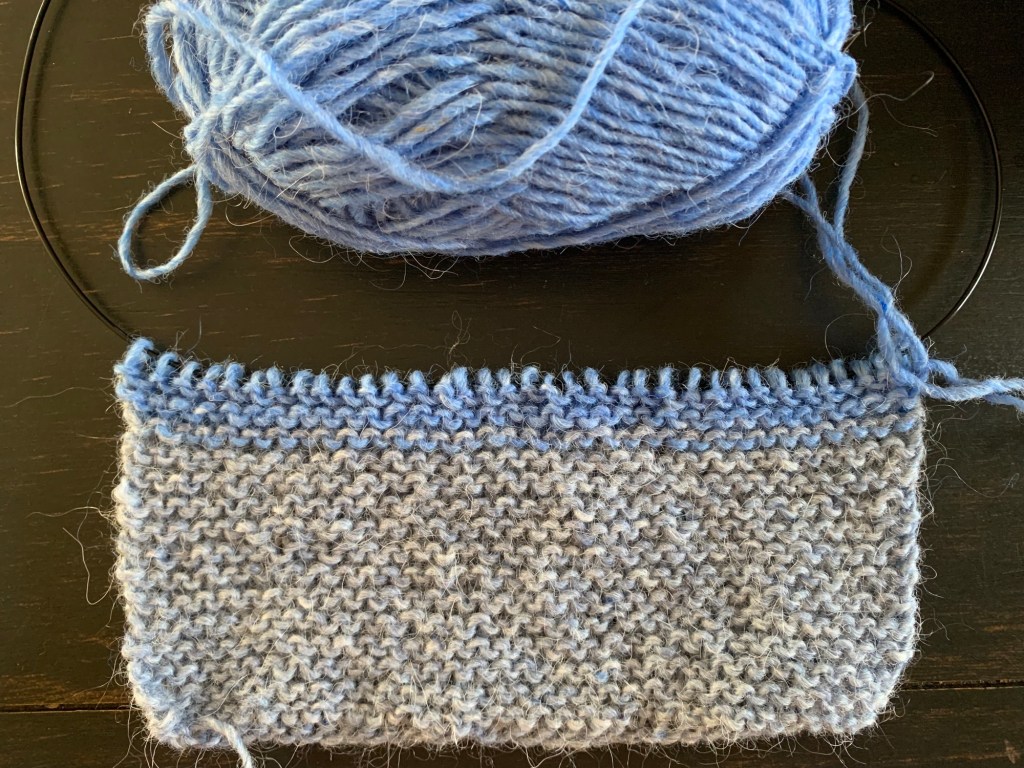
We began by casting on 35 stitches with worsted weight yarn. My scarf measures 9 inches across. See Lesson #1.
Please ignore the fact that my yarn colors are changing. You should knit in one color – one skein. I am trying to use up some leftover yarn. I will help you learn to add a new skein, or color, in the next lesson. For now, as a beginner, just worry about learning the stitches.
You can knit your entire scarf in garter stitch if you want to!
For those who want to learn more, we will now do purl stitches. I’ll include good videos I’ve found to help with each step.
ALSO… don’t worry about making mistakes. The only way to fix a knitting mistake is to “un-knit” or Tink. This is quite difficult when you are first starting out. When I began knitting I simply left my mistakes to become part of the project! In fact, I sometimes still do that! Unless your mistake is horrendous, and you can’t stand it, leave it until you learn to un-knit. You can remove the yarn from the needles and unravel the whole thing is you want to begin again. That is up to you.
How to Purl
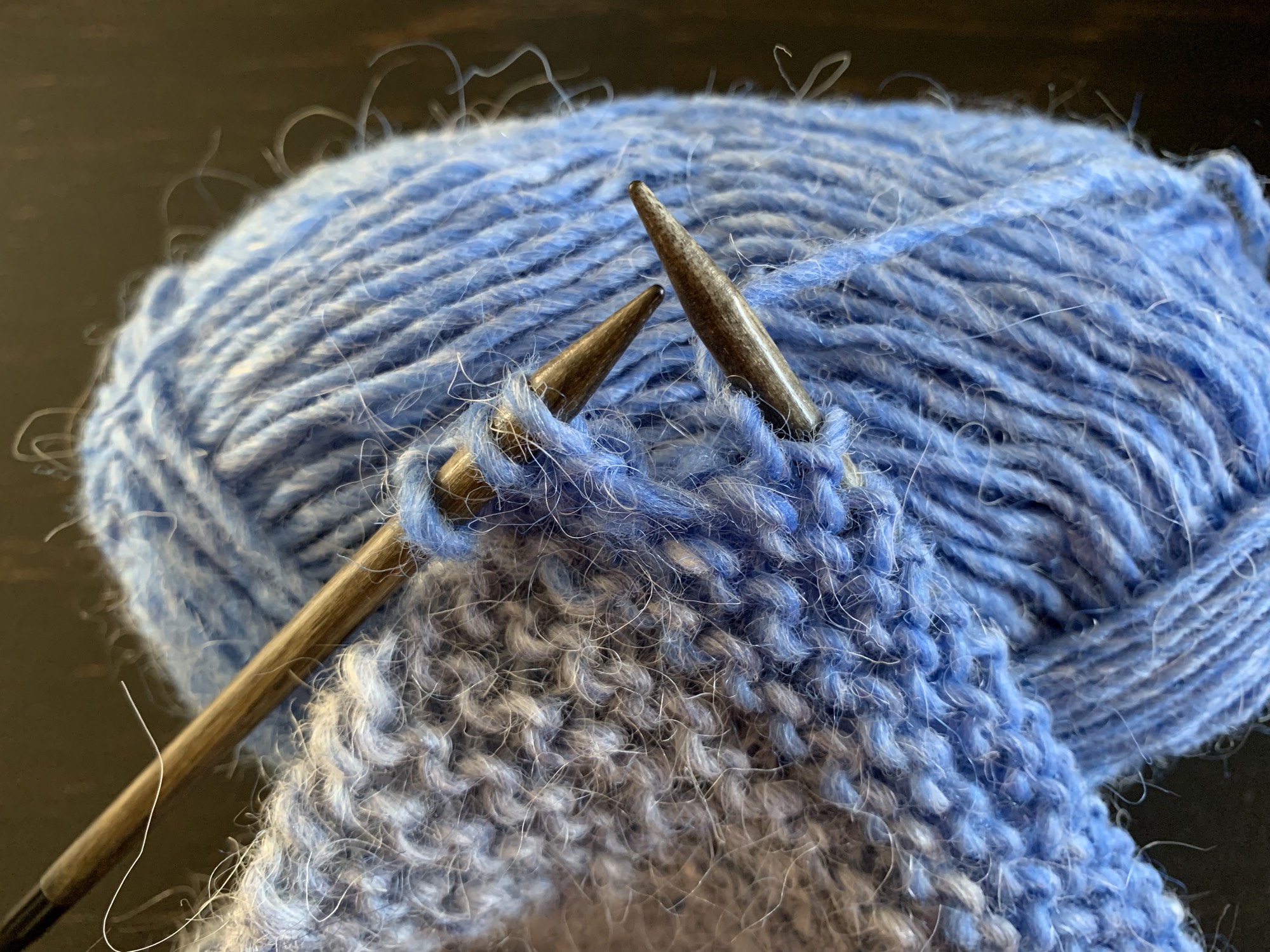
Besides knitting, you will want to know the purl stitch. It is very similar to the knit stitch except the yarn and needle come to the front. Your yarn has been coming around the needle from the back when you did your knitting rows. Now the yarn will be in front and your needle will go into the stitch as you see in my photo below. Forget about that strand, it just needs to be in front of your work before you insert the needle.
Here is an excellent purl stitch video.
My photos below show the needle placement to purl, and how the purl stitch will look on your needles. These are known as purl bumps. It’s good to know what stitches look like. Once you can do knits and purls, you are well on your way in the knitting world. These stitches can combine in many ways to create all kinds of designs.
Insert the needle to purlPurl bumps – these are purl stitches
A Little About Knitting Stockinette
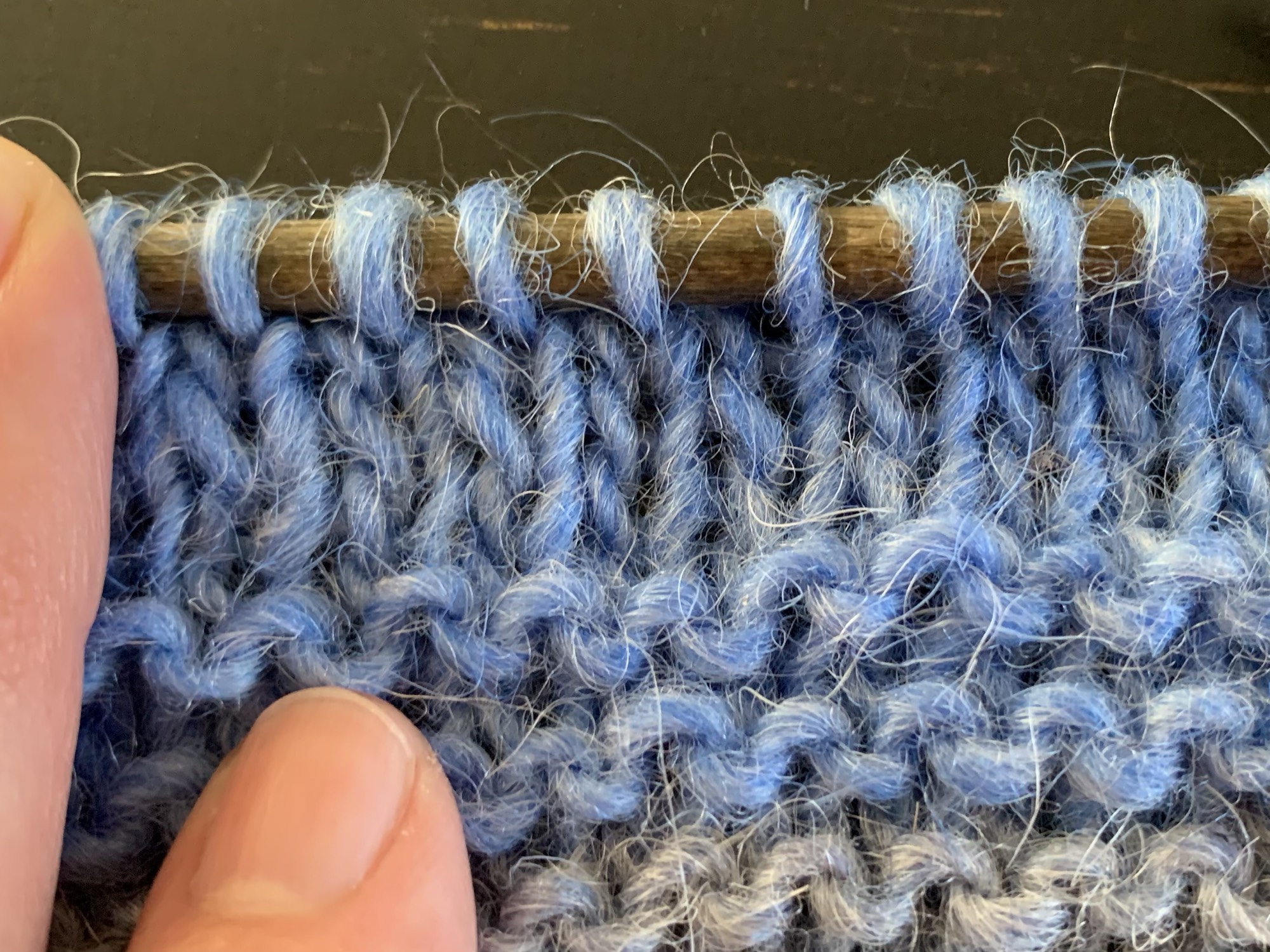
Stockinette creates a smooth looking fabric. You can see how your garter stitch section – the beginning of your scarf – is bumpy on both sides. Knitting one row and purling the next will create a more smooth fabric.
You should be able to see the difference. Stockinette is more flat and smooth. In fact, that is how I remember which is which. Think of stockings being smooth on the leg.
My photos below show the garter section, then my change to stockinette and last, the section in my knitting that is the stockinette. Above that, I did the seed stitch. More on that down the page.
Because stockinette tends to make a flat knitting project curl, I only did a few rows on my scarf. And I added garter stitch borders to our rows. For this reason, I suggest you only do a few rows of stockinette. This is our practice with making the purl stitch.
Our scarf will not have a “front” and “back” so don’t worry when – which end – you begin your stockinette knitting. After you finish knitting a row, turn the work and you are ready to begin the purl row.
The video link below is what we will be doing for the next few rows on our scarf, except that I have given our scarf a border of knitting only.
Knitting the Landscape Lessons Scarf Stockinette Section
Row 1 of stockinette: We will knit three stitches, then begin to purl. Purl across to the last 3 stitches and knit the last three.
Remember to switch your yarn to the front for purling, and back again when you knit. Try to remember to knit those edge stitches at the beginning and end of the rows.
End with three knit stitches
Turn the work. Row 2: You will knit this row, just like you have been doing for the first part of your scarf. The edge stitches will always be knit, so you don’t have to do anything differently on this row… simple knitting across.
Row 3: same as Row 1 – Knit the first three stitches and then purl across to the last three. Knit those last 3.
I only made about five rows, and ended after knitting a purl row.
Now you will begin the next section with the knit side showing, like in my photo on the left below.
#1: Stockinette section Seed Stitch section: Knits and purls
The Seed Stitch Section
If this all seems to be too much for you, please just knit along however makes you happy. Once you know how to do both the knit and purl stitch, these are just more options for practice. After the stockinette section, you can go back to knitting garter – knit every row. As you progress with your scarf, you may want to give this section a try.
The seed stitch is made by alternating knits and purls. That’s all. If you are interested in trying this, here is how I did my seed stitch section on the scarf.
Seed Stitch Section
Row 1: Knit the first three stitches (this is our border on both sides of the scarf). *Purl 1, knit 1, across the row alternating knits and purls, ending with a purl stitch (if your stitch count is 35 like mine). Knit the last three stitches.
Turn the work and do the same thing as row one. Because we are purling that last stitch on the previous row, it now looks like a knit when we turn the work over. Therefore we begin with the opposite – a purl.
For the seed stitch to work, we knit the stitches that had been purled on the previous row. We also purl the knit stitches. This alternates stitches to create a cool, bumpy look.
Seed Stitch, alternating knits and purls and doing the opposite on the following row.
You really must become familiar with how knits and purls look. If you lose your place, or set your knitting down, knowing which stitch to do next is important. (Also remember your yarn comes off the right hand needle if you start in the middle of a row.)
In my photo below, can you see the purl “bumps” and knit stitches on my needle? I am knitting with a very woolly yarn and if your yarn is smoother, the stitches may stand out even more. If it’s hard to tell, pull down on the fabric to make those bumps and V’s clearer.
If you lose your place on the seed stitch section, look at what is on your needle. It will tell you which stitch to make next. If you mess up, fix it on the next row.
If you hate it, go back to knitting every row until you feel better. Knitting should be calming and not stressful. If you do a lot of knitting your hand may hurt, so don’t overdo it. Remember that every stitch you make gets you closer to becoming a great knitter!
Knits and purls
I hope my tutorial makes sense to a beginner knitter. Once we are familiar with all of this, it’s tough to remember exactly how it was when beginning to knit.
I am by no means an expert. There are many things I still have not accomplished in knitting. It takes practice, and this scarf is a very good way to get the practice you need with basic stitches.
One of my very first scarves was knit all in seed stitch. It was my favorite scarf when I lived in the north.
Landscape Lessons Scarf: Lessons by Number
Lesson #1 – Yarn, needles, casting on, and knitting back and forth.




























 New England's Narrow Road