Finished Knitting the Fine Sand Sweater

Here it is, part 2 of my journey through the knitting of the Fine Sand sweater. (To read Part 1, go here.) It came off the needles October 7th (2019) and has been washed and blocked.
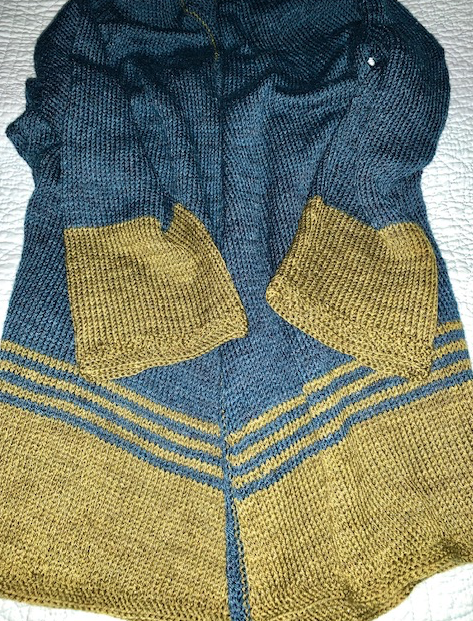
hand knit long-sleeve sweater in Miss Babs Tarte yarn

Overall I did like knitting this pattern. It’s only my second sweater, but with the exception of the short rows – wrap and turns, no part of the pattern really annoyed me. If you are familiar with knitting wrap-and-turn short rows, you would get by just fine. I have vowed to substitute German Short Rows in their place from now on.

Bottom Edge Finishing

Here is a photo of the bottom edge of the sweater showing the rows of garter stitch and my i-cord bind-off. The pattern does not suggest this type of bind-off but I’ve used it before on my Scrappy Bias shawl and Bays Edge. It creates a smooth, rounded rib and looks very nice. (See the end of this post for links and notes to binding off with the i-cord.)
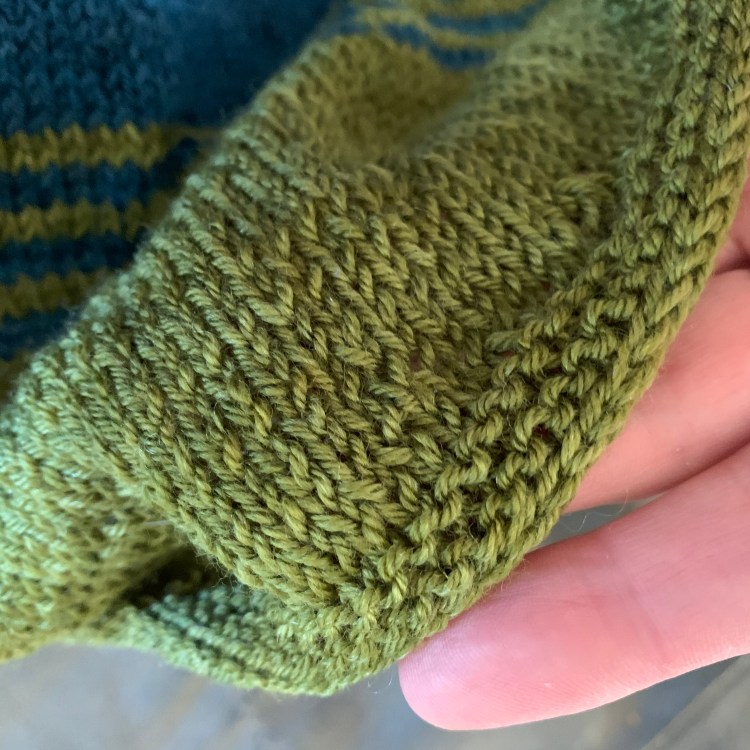
I-cord bind-off
Bottom edge with i-cord bind-off

This type of bind off takes a while, but it’s not difficult. The sweater bottom is curling like mad, but I assume washing and blocking will take care of that. Yes, it did! While knitting I couldn’t even try this on to see about length because it curled so badly.
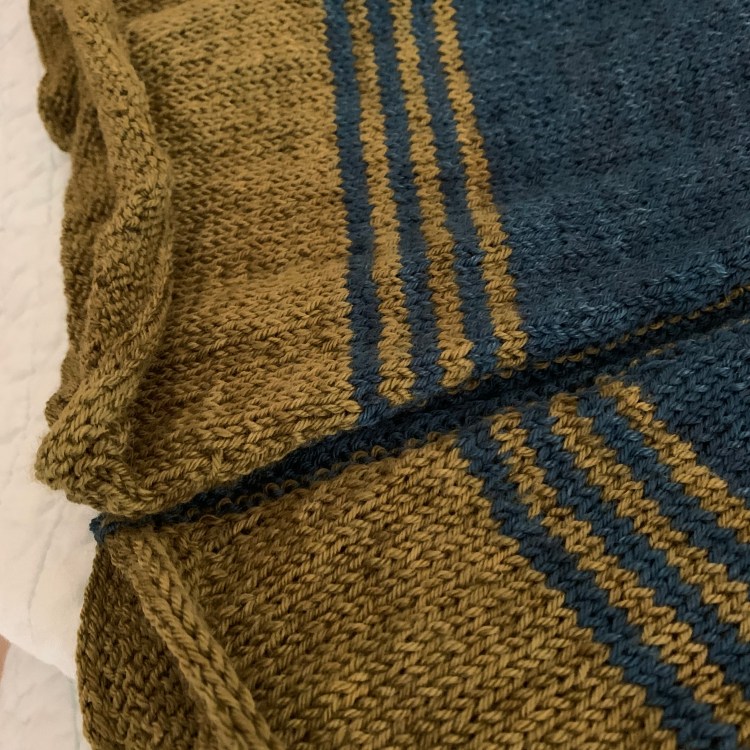
hemline curling up
Curling hemline

Once I finished binding off the green bottom section of the sweater, I had to begin picking up stitches along the front edge. I am not used to doing this. I’ve only ever picked up stitches when making socks (and I have not knit many socks because I dislike making them), or beginning a shawl, so I was feeling a little overwhelmed at this part of the pattern. There were a lot of stitches to pick up – all around both edges and neckline and I wasn’t sure if I was getting too many, or too few, but it turned out okay.
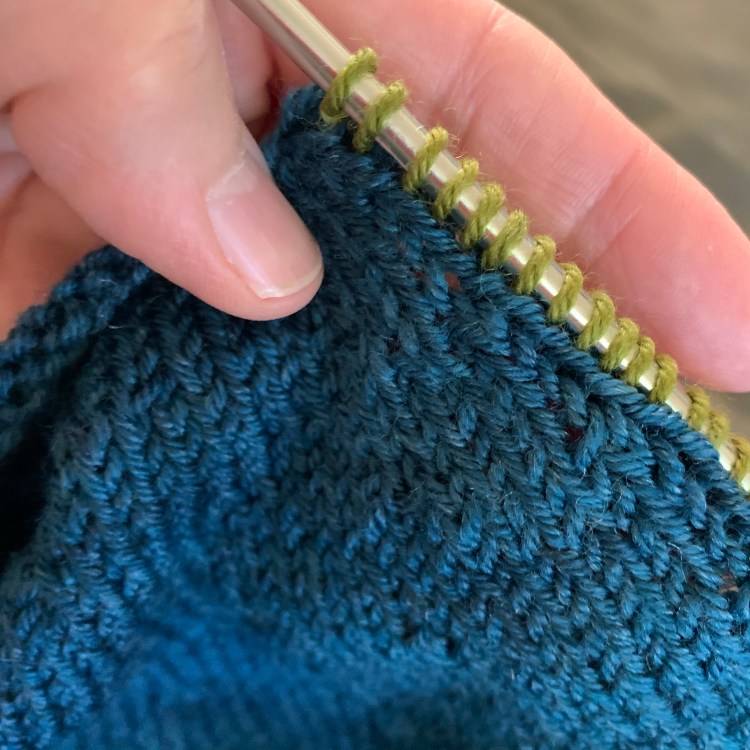
Picking up stitches along front edge of sweater
Picking up stitches along the front edge of sweater

Because I ended the bottom with green, I just kept right on using the green up the front edge. After I got part way along I realized that I was supposed to be using blue! It’s what I had planned to do, but I didn’t want to go back and begin again, so I kept on with the green, then switched to blue for the next few rounds of knitting and the bind off. I used the I-cord bind off here as well. In hindsight, I wish I had ripped out the green and done the edge in blue. The edges of this sweater tend to curl inward along the front so it really doesn’t show.
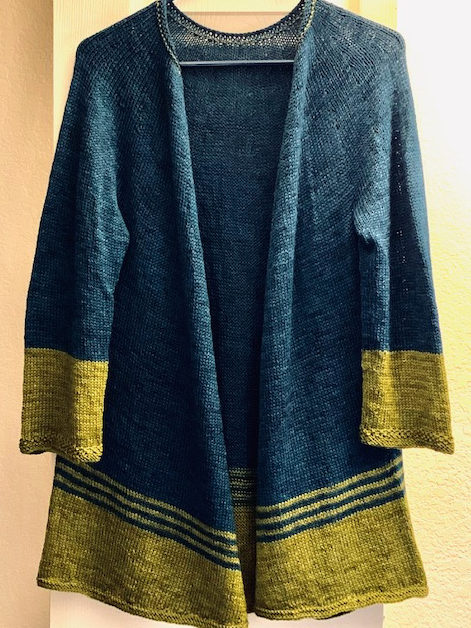
long-sleeve hand-knit sweater
Washed and blocked and ready to wear!

Finishing Up The Sleeves

Maybe it’s because I am a “new” knitter, but I really dislike making two of the same thing. Two socks, two mittens, two sleeves! But the sleeves knit up quickly and I didn’t have to use DPNs because I used a 16″ circular for the sleeves.

I messed up and followed the size M2 for the sleeves, when I should have been following the size L. But that worked out better because my sleeves are long enough. Before the garter rows I did four rows of seed stitch, which added a wider band of interest before the bind off. I did a regular bind-off here, not the i-cord.
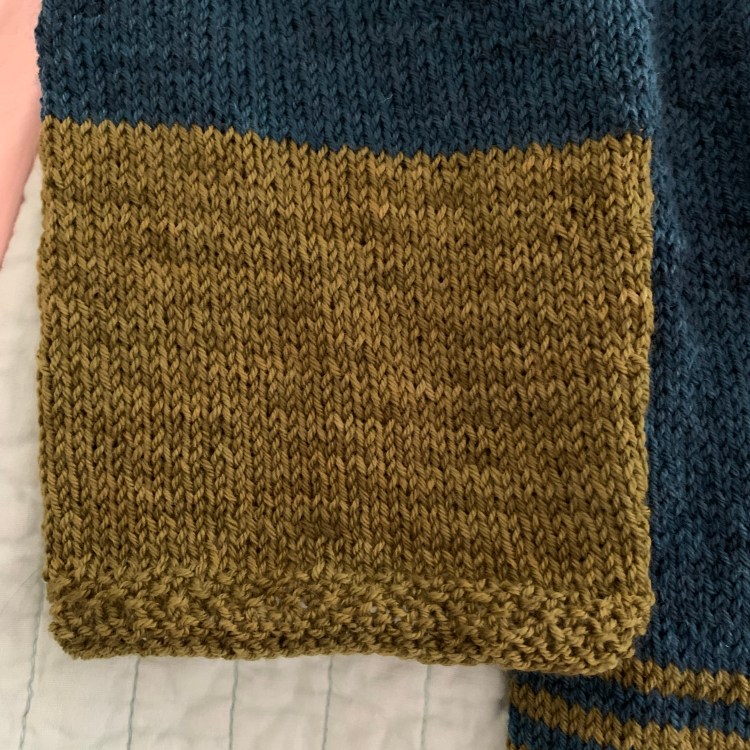
End of sleeve
First sleeve done

Finished length is perfect – I knit just as the directions said, but added a second color. I knit the size L and three skeins of Tarte yarn would be plenty. I had very little blue color left, but lots of green.
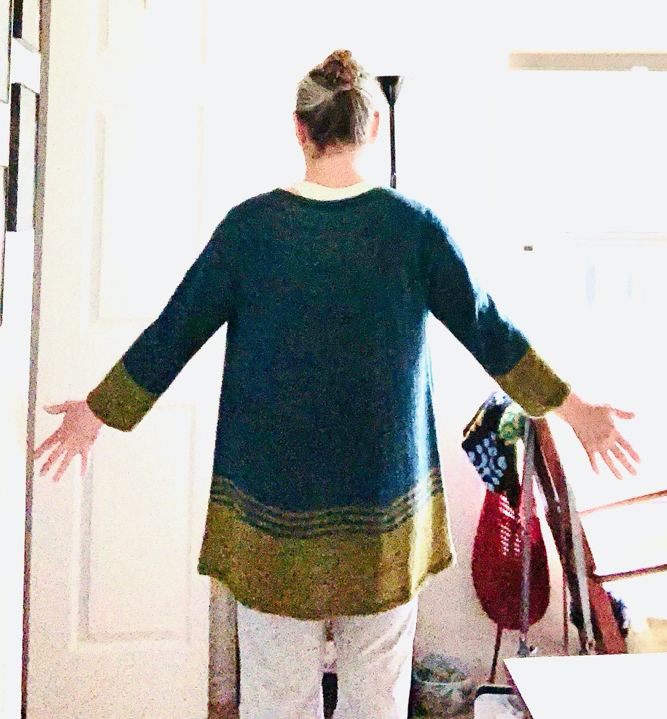
Fine Sand sweater
Finished knitting my sweater!

Final Thoughts – This is a sweater I will wear!

It fits perfectly, and the light weight, flowing drape is comfortable and good-looking.

For much of the knitting of the Fine Sand you are doing straight knits and purls. I could easily watch TV and do those rows. If you hate to purl, don’t choose to knit this one!

Once I got the hang of the LLIs and RLIs they were no problem. I like to learn new things when knitting new patterns, and these increases were explained well in the directions.

I will not do short rows again because the pick ups on the purl side were impossible for me to figure out! I don’t have the experience.

I’m not crazy about the front edge of this sweater. It will be something to throw on to keep arms warm, but won’t do much for the front of me.

Love The Yarn!

The yarn I used is Tarte, fingering yarn which is a 4-ply, superwash merino with added nylon and tencel. The skeins are large at 500 yards and it was purchased online at Miss Babs. I love the yarn and the finished feel after washing. That blue color is called “Franklin” and it’s beautiful. The darker color is also more forgiving of mistakes, but harder on the eyes to knit – especially at night. The green color is “Moss”.

I hand-washed the sweater and LOTS of color came out. I rinsed many times before it stopped bleeding color. The colors didn’t bleed together, just into the water. The sweater dried very quickly on the blocking mat – within a day – and it really is lovely and light weight as I’d hoped.
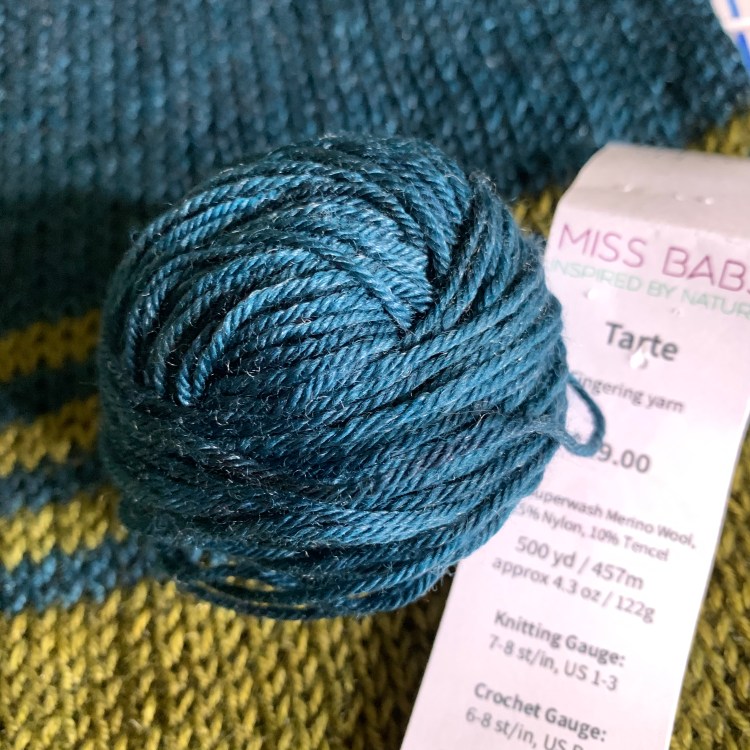
ball of blue yarn
All that is left of my blue yarn!

Tutorials and Notes For I-Cord Bind-off

Very Pink Knits has a video tutorial on how to do, the I-Cord Bind Off, but she does not say what to do at the end of the bind-off.

I have a pattern that says to slide the last three stitches to the opposite end of the circular needle and then pull the yarn through all three.

Or: when you get to the last 3 stitches on the needle, slip them to the left needle as you’ve been doing and then bind them off like regular – one at a time.

Or maybe bind-off one stitch and then the last 2 together. I’ve read that binding off the last 2 stitches together makes a neater ending.

This video does show the end, but the i-cord BO she does is different.

Below, I wore my sweater to the beach one morning in January.

Wearing my hand knit sweater on an early morning visit to the beach

Tried My Hand at Knitting Baby Booties

Knitting baby booties from a free pattern.

There are no babies in my family to knit for, but I love the look of cute little booties. When I came across a free booties pattern, I had to give it a try. This pattern is called Baby Hausschuhe and there is a link to the English version (and others) with good directions and photos included.

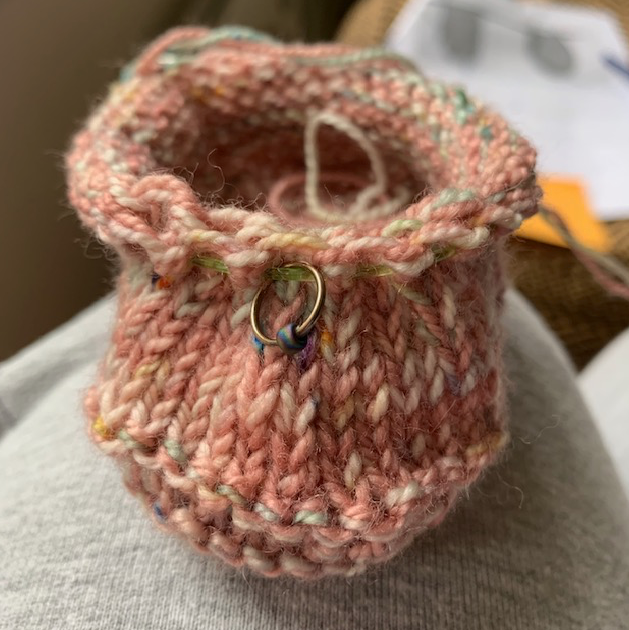
Sole of baby bootie
Picking up stitches around sole

One thing I couldn’t figure out was which types of needles to use. The beginning is simple with knitting back and forth row by row for the sole. Then you pick up stitches around the sole and it looks like the writer used a circular needle. I ended up using 2 DPNs and one small circular needle. Then I eventually got all my stitches onto the 9-inch circular and knit around.

Beginning the baby bootie
Ready to knit around

The bottom of the bootie above with needles ready to knit around.

baby bootie

Starting to take shape and looking pretty cute. If I’d had enough pink yarn I would have used it for the whole thing but I was using up leftover bits from other projects.

Baby bootie knit on small circular needles
Front of bootie

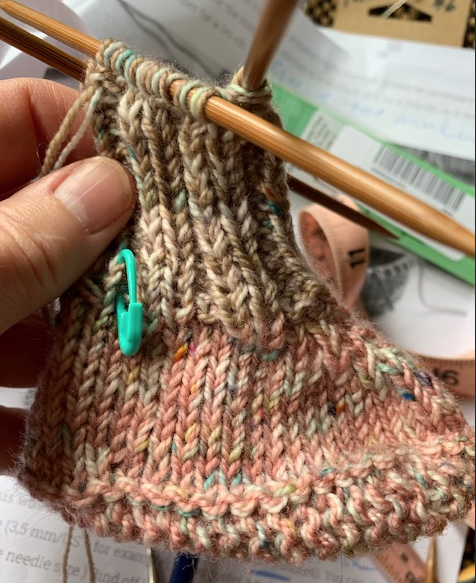
By the time I got to the ribbed cuff the stitches were pretty stretched over the circular needle so I switched to size 5 DPNs to finish. This was one size smaller than what I used to knit the foot. I switched one of my yarns to a tan color here.

baby bootie ribbing
I switched to DPNs for the cuff

I was using up some sock yarn (Miss Babs brand) and held two strands together, changing out one of the colors as I went. It’s not the prettiest outcome but I had no Aran weight yarn to use as the pattern calls for.

Knitting baby bootie with double pointed needles
Switched to DPNs to finish the ribbing

You will need two stitch markers. One is used for the front of the bootie to mark the decreases and one marks the beginning of the rounds at the back heel area.

Finished baby bootie
Finished!

By the time I finished one bootie I didn’t think I would attempt a second one. I probably will at some point just to have two. Finishing up a second (sock, mitten, slipper, etc.) is not something I enjoy. One bootie is worthless so it needs a partner. I may try a better yarn next time and see if it appeals to me.

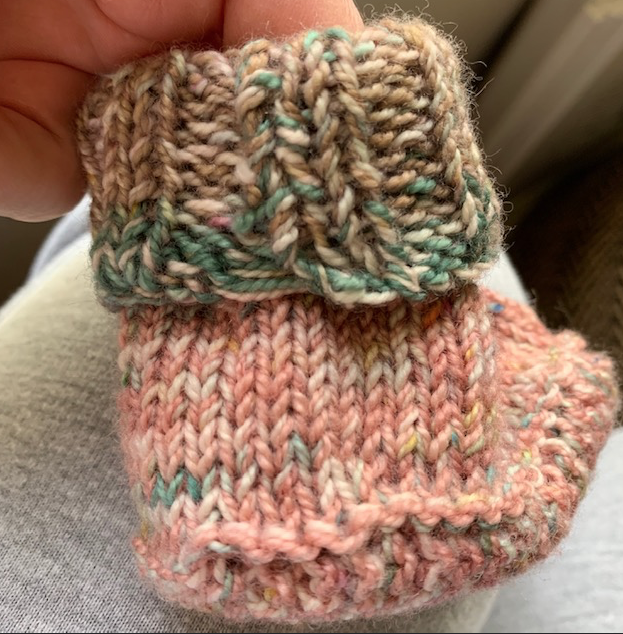
A note about weaving in the ends: Remember that the ribbing will create a cuff and be flipped down. I neglected to remember this and you can see my weaving job on the outside of the cuff! For booties in one color this wouldn’t’ show as badly, but I made a note for myself on the pattern page.

weaving in at the top fold over
Should have caught this!

Here you can see my other single bootie (in bright pink) which was crocheted. It’s partner is partially finished and I made that one about a year ago. See how bad I am? Now I have two booties that don’t match.

two different baby booties
Now I have tried crocheted and knitted booties

The Final Word on This Bootie Pattern

The pattern was very easy to follow. Now that I have knit one, I will more easily be able to choose the needles needed as I go and the next one will be a breeze. I spent the day knitting to finish it and my hand did end up sore, so next time I’ll pace myself.

By the way, these bootie photos would look better stuffed with something. I noticed on the Ravelry pattern page that either babies had them on their feet (the cutest images) or the empty booties were filled out with stuffing!

A Nomads Life, Places I Have Lived

Reminiscing about all my moves while in New Hampshire

One of the reasons I have kept this blog even though I no longer live in New England is that I have shared some of my favorite photos here.  Now I use this blog to share my knitting adventures and dream that one day I will be able to write again from a New Hampshire location.

All photography on this page is my own and is copyright protected.

When I moved from Florida to New Hampshire I had a nice house where I expected to stay for a very long time – maybe forever. I have to laugh at that. Silly me.

It didn’t turn out that way. I moved, and moved, and moved some more. I rented at four different places and lived in one house of my own before high expenses and lack of income forced me to head back to Florida.

frozen lake ice skating
Life by the lake, my son skating in the cold

My first, third and fourth homes in New Hampshire were near Gregg Lake in Antrim. I loved this area. The lake is small enough that it never gets crowded and it’s very quiet when the summer people have gone. New Hampshire doesn’t change very quickly, and I love that. After living in Florida where there are really no small towns, being part of one was a welcome change.

winter sunrise
Light at the end of the tunnel?

My first rental house was in Hopkinton and I snapped this photo of the sun rising just at the top of the hill. I lived here for a year but rent was too expensive so I moved (almost) into a condo.

The condo flooded before I could get in, so I temporarily lived in a little “camp” near Gregg Lake. It was August and we were right on the water which was nice for the kids, but it was only temporary. The condo was taking a long time to renovate and I was desperate to find a permanent rental that was decent. I lucked out when I found the duplex (photo below), where I stayed for three years.

Deep snow

This area is so beautiful. The only thing that would have made it better was if I had really belonged by having my own place. But walking was beautiful and I enjoyed the views of woods, hills and the lake. My landlady had a black lab and I would take her for walks with me.

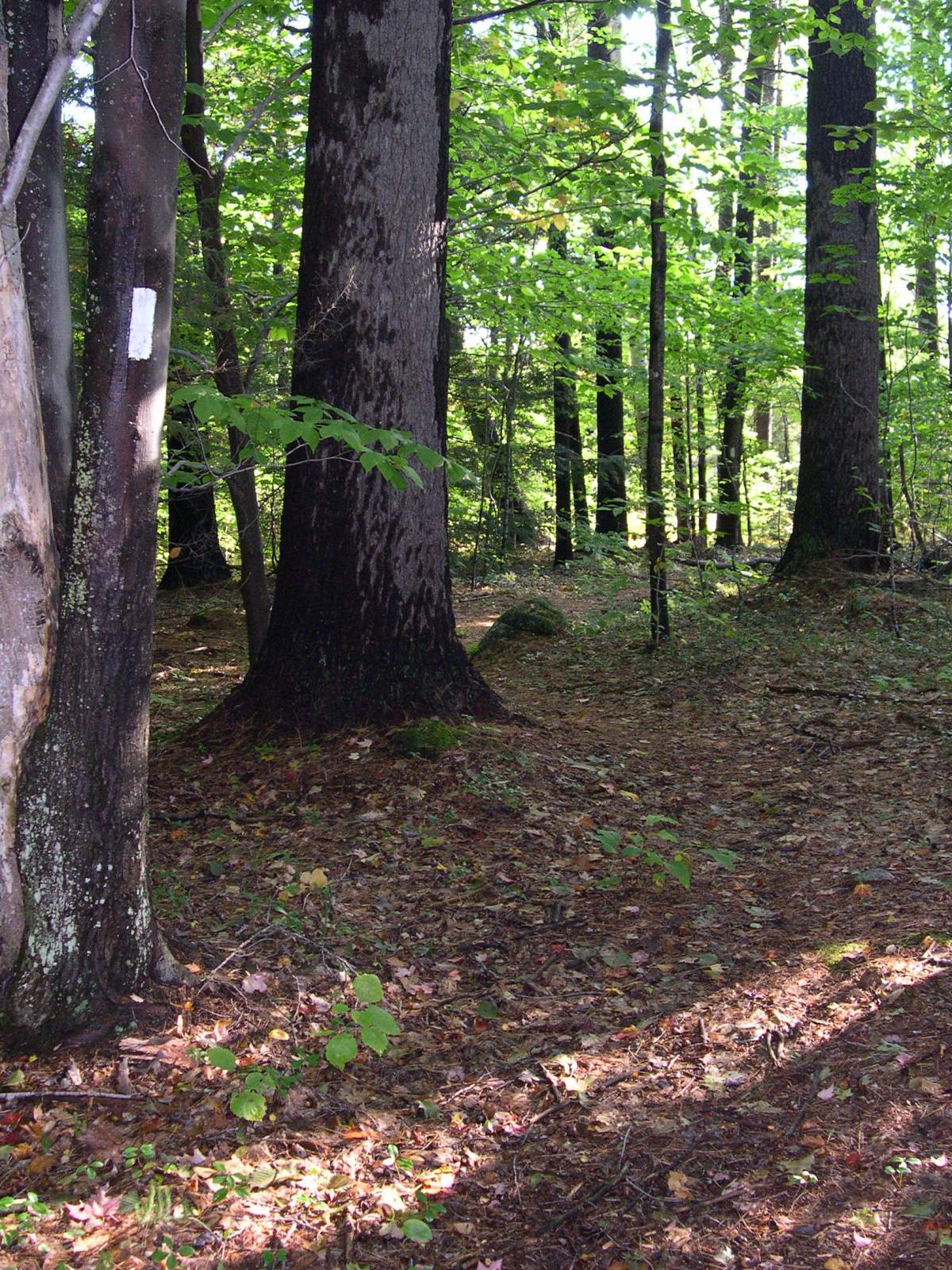
dirt road forest photo

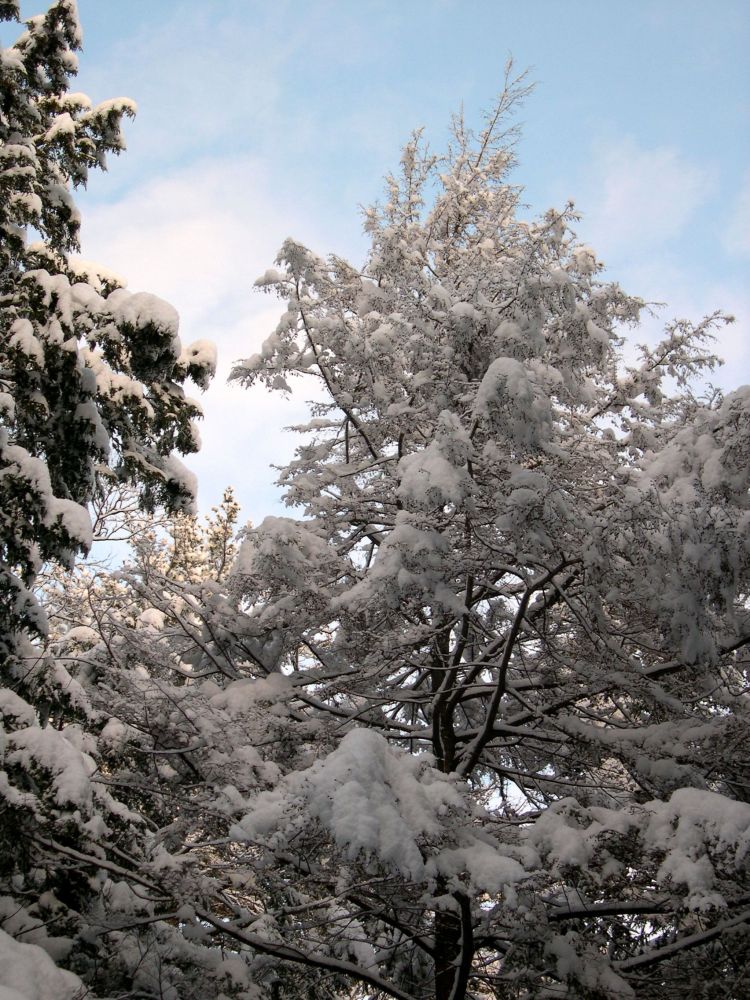
I’ve always loved taking photos and I used my digital camera for all of these. I never had a nice cell phone until just before I left the state. With the change of seasons, there is always something amazing to photograph in this area. Fall and winter were favorite times to get photos. I loved to go out after a snowstorm and get photos before the wind ruined things.

Trees covered with snow after a storm
Winter Trees

Because I was feeling more like a normal person – having a home helps – my kids talked me into getting two cats. Richie and Fontana loved to sit in the front window and watch the birds.

Richie was killed by a fisher cat after I moved into my own home, but Fontana is still with me. She is about 14 years old now.

my cats Richie and Fontana
Richie and Fontana

Yay, My Own Place

The house I bought (below) needed a lot of renovating. You can read about that here. I was having siding, windows and new shutters put on when we got a freak October snowstorm which brought the work to a halt for days.

October snowfall snowstorm
October Snowfall 2011

Now I am back in Florida where I deal with heat, humidity, crowds, tourists, and hurricanes. I no longer walk in the woods and take photos of the change of seasons. I blog about seashell identification and our boating trips where we attempt to catch fish large enough to eat. I write about Florida landscaping and gardening and life in general on my Hydrangeas Blue blog.

I miss New Hampshire, but I am a nomad, and my goal is to move again… back to the Northeast.

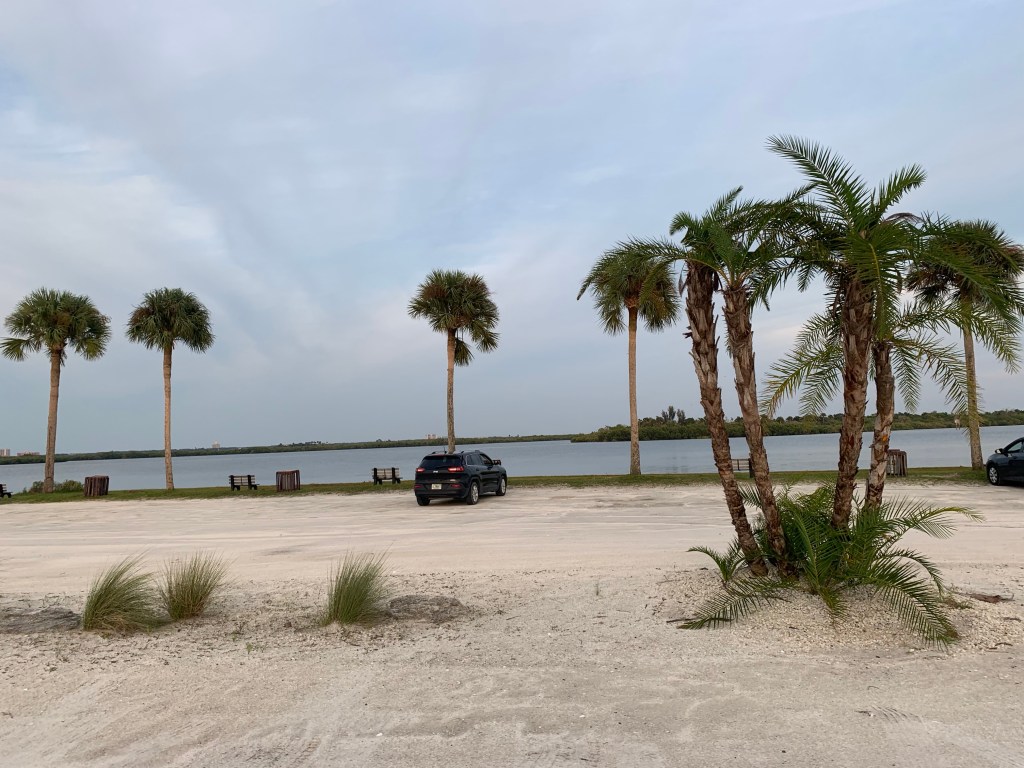
Waterfront park in Edgewater Florida

Woolfolk Tynd Yarn Stranded Motifs Cowl

Knitting a small cowl using Woolfolk Tynd yarn in colorwork motifs

This small wool cowl was a spur of the moment knitting project decision. I do not have a pattern to share as I made it up as I went along.

The idea bloomed when I came across the Glacier Park Cowl pattern by Caitlin Hunter at Ravelry and saw that she had used Woolfolk yarn in two colors to create it. I knew I had stashed away two skeins of that same yarn. My cowl is not in her pattern, but I did use up (nearly) my Woolfolk Tynd yarn!

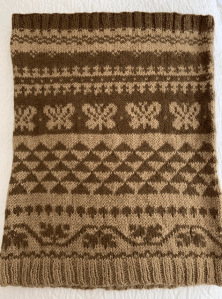
stranded colorwork cowl
I used Woolfolk Tynd yarn in brown and tan to make this knit cowl

My two skeins of the super-soft Tynd are dark and light brown colors, and I’m not sure of the numbers (Tynd colors are numbered, not named). Probably this was on sale somewhere at some point and I bought it not knowing what I’d use it for. The yarn is so very soft that a cowl is the perfect project.

A recent purchase of the book 150 Scandinavian Motifs gave me the incentive to do some math and find designs that would fit my cast on numbers. Then I screwed up and forgot my cast on, or counted the first row incorrectly, and messed up some of the rows.

I began with the lighter color as my main color and switched just before the butterfly row and made the dark color my main color. I did this to use up the yarn more equally. I can’t locate my leftover yarn, but I did use most of each skein to finish this cowl.

stranded colorwork cowl
Motif spacing error

I do love the Glacier Park cowl pattern (click the link above to see that beauty), but not for these duller colors. So I made up my own design which was really good practice doing stranded colorwork. And I did make a lot of mistakes! No biggie… a cowl hides mistakes well.

In the image above you can see where my butterfly row did not line up exactly with the stitches I (thought) I had counted, so I had to add a little wavy section to carry the yarn.

Below I am showing my goof up on the row above the butterflies where somehow my counts were off. Most of these motifs came from the book, but I did make some up myself.

two color stranded knit cowl in Tynd yarn

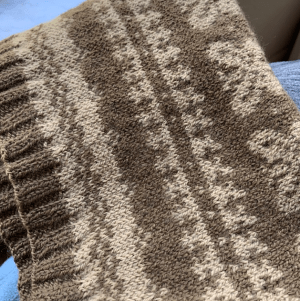
Just thought I’d share the stranding that went on inside the cowl. I didn’t have many ends to weave in because all the yarn was carried up inside the cowl.

Fun Selfies Wearing the Cowl!

I have no one to ask to take photos of me, so I did the best I could getting pictures of the cowl around my neck. My messy gray-hair braid kept getting in the way!

wearing the cowl
knitted cowl

Knitting this cowl was a little sidestep from knitting my Fine Sand sweater and finishing up my Quince Wrap. It was a quick knit and a brain challenge (although not too tough) to figure out which designs would fit around the cowl. Sometimes I need something different on the needles.