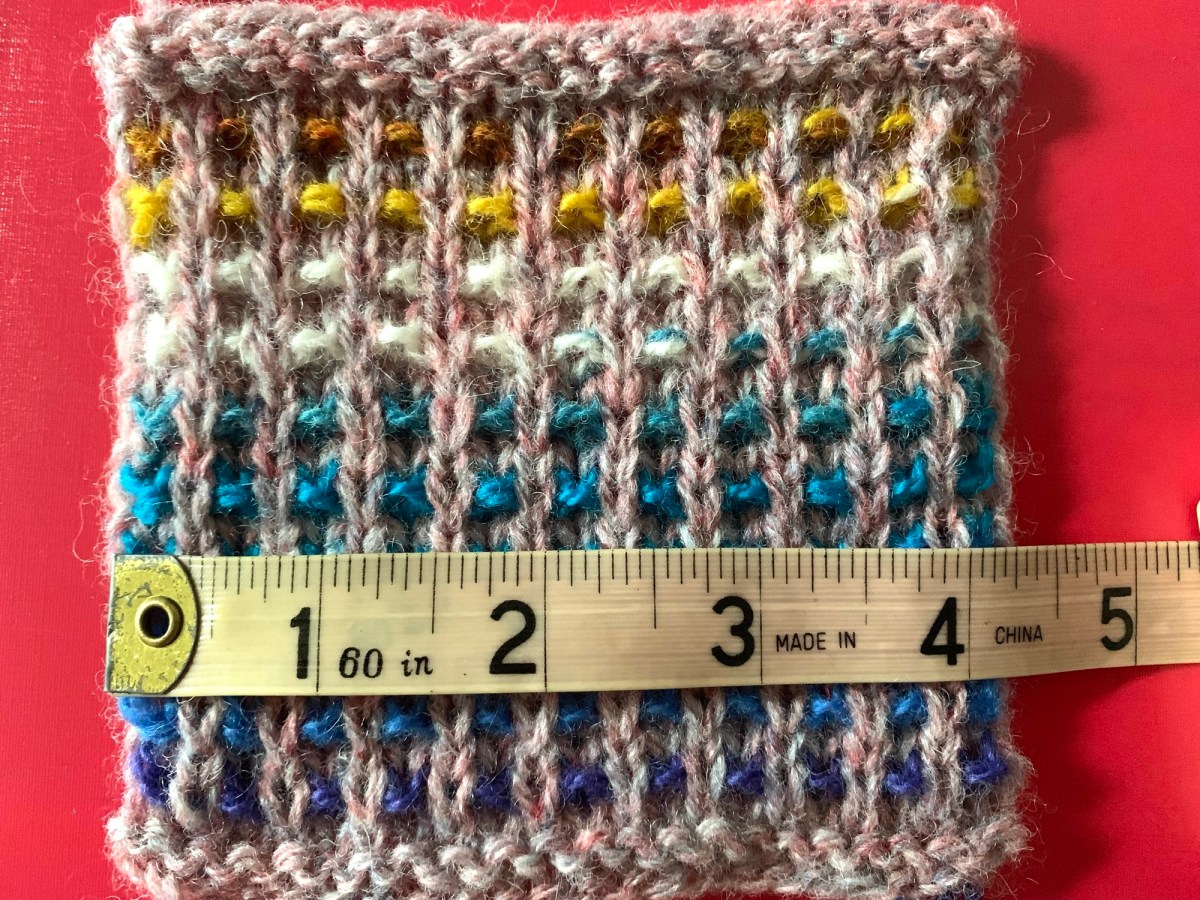
Knitting a Swatch For Trove

Knitting a gauge swatch for the Trove slip stitch sweater pattern.

I’m always on the lookout for interesting sweater pattern to knit. I’m not an expert so I’m always looking at difficulty too.

The Trove pullover pattern is made up of slip stitch rows with alternating colors. The pattern interests me because I can use up some of my J&S wool.

I bought the pattern and knitted up a swatch. The pattern says to use Sport weight yarn, but I want to use fingering and DK. I went up a needle size to do the swatch, hoping this will work out.
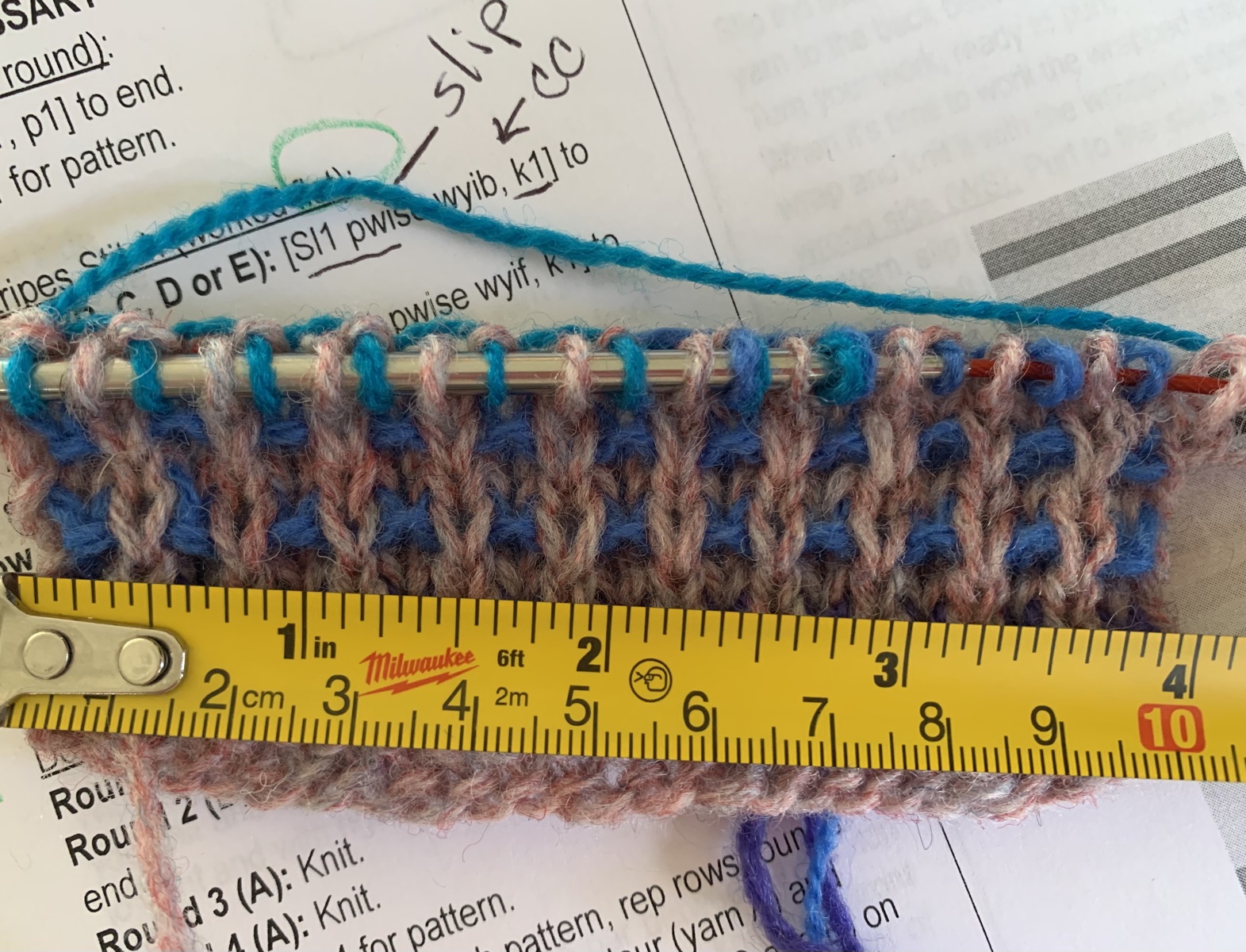
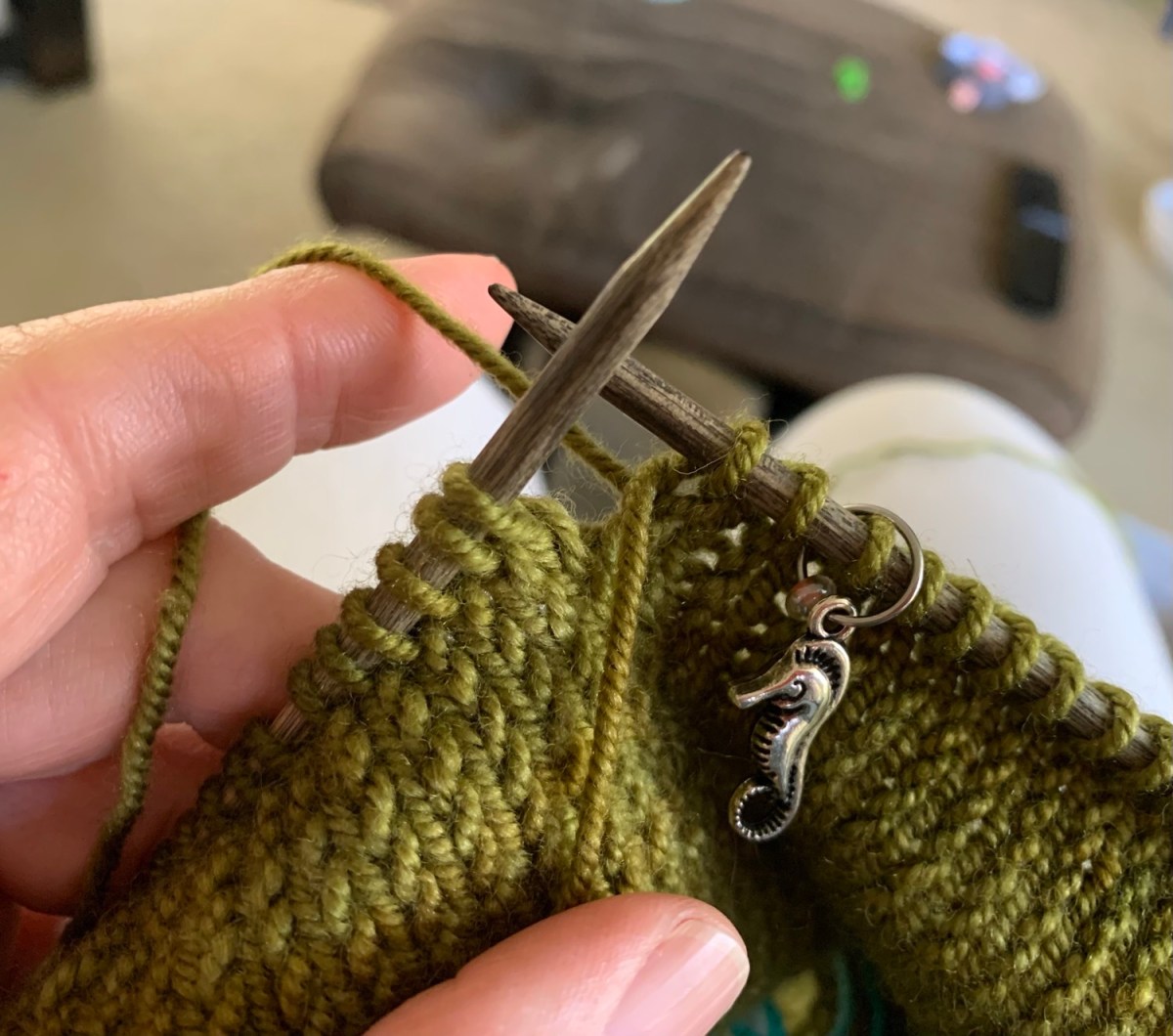
measuring a swatch

After knitting a few rows, I wanted to see if the knitting was close to 4 inches across, and it is. The real measurement will be done after washing and blocking, but if this was really off, I would not continue with this needle size.

The colors I grabbed may not be the ones I use to knit the sweater. This is a trial piece, and a good time to try out colors.

How I Knit My Swatch

It took me a bit to figure out how to knit the swatch, so I will share how I did it here.

I cast on 23 stitches. The gauge swatch should be 22 stitches across, but the swatch needed to be an odd number to work out knitting flat (or so it seemed to me).
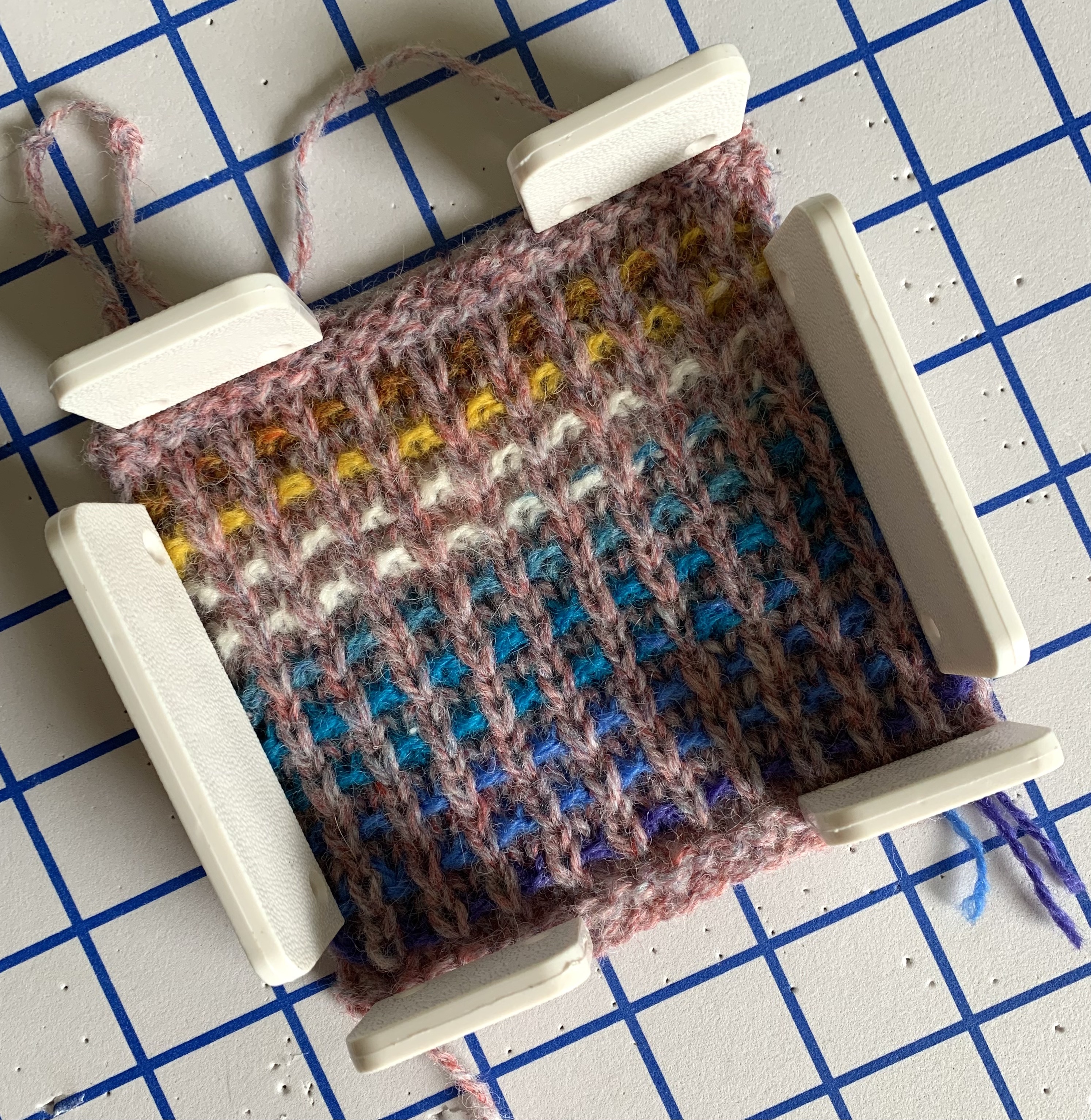
Knitting swatch for Trove
Swatch for Trove, after washing

Each section is four rows of knitting, and rows can be easily counted when you remember that. 40 rows long should be 4 inches, so do 10 repeats of the 4 row count to equal 40 rows. In my swatch you may be able to see the 10 colored rows (those colors are actually 2 rows of knitting).

After casting on, I knit back and forth, then did a purl row so the “Dotted Stripes Stitch” begins on the right side (RS) – as it will when knitting the sweater. Usually I have 3 extra stitches on each side of my swatch, but I did not do that this time.

Measuring My Gauge

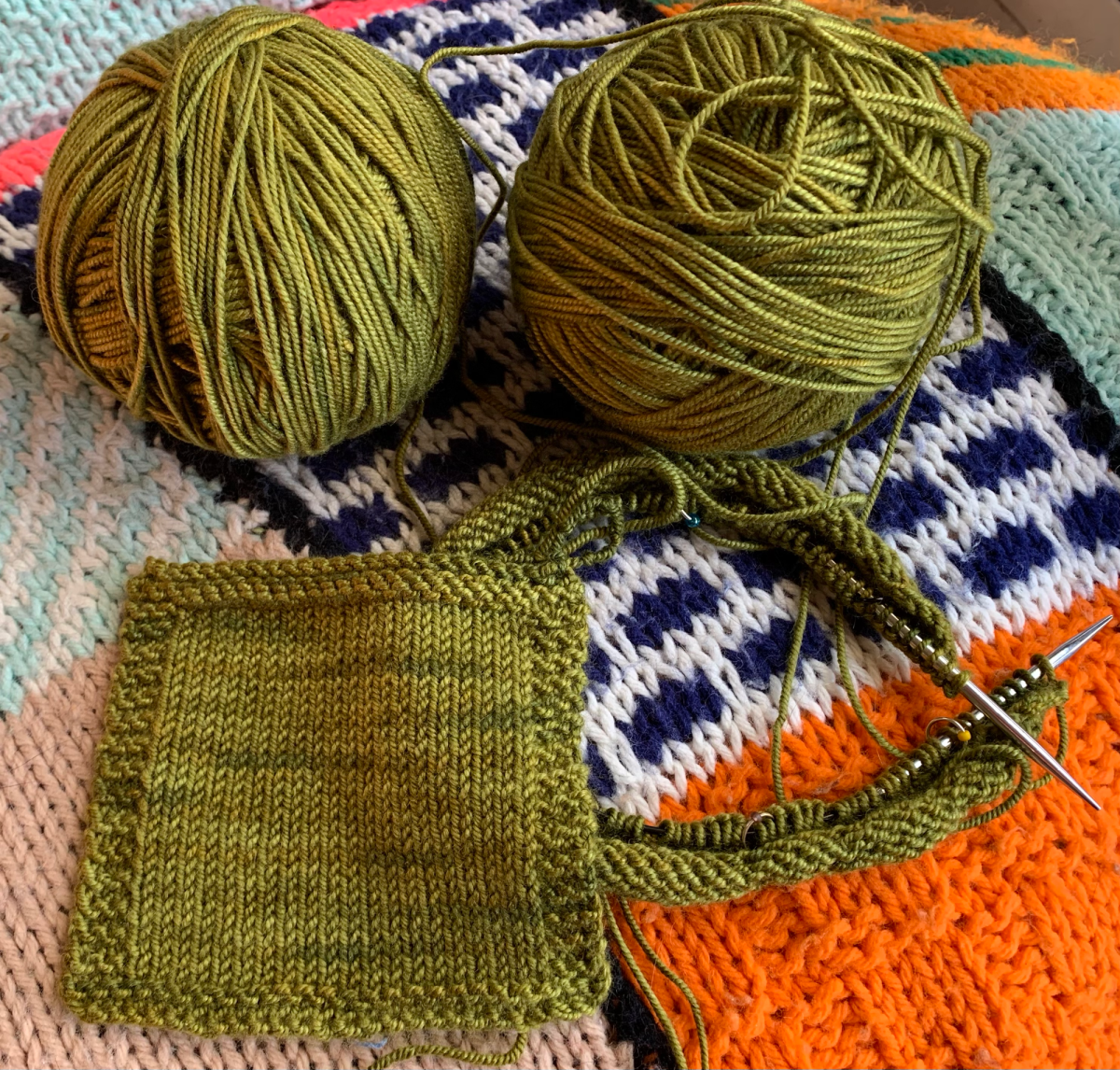
This is my Trove sweater swatch after washing and blocking to dry. Gauge in the pattern is 22 stitches by 40 rows in four inches of knitting. My stitches are pretty much exact. I have one extra (23 total) stitches in my swatch.

The row gauge is short, so I will have to watch the length of things when I knit. It is better to have stitches correct, as the length can be dealt with more easily.

The Advantage of Knitting With Wool

When, and if, I do get around to knitting the sweater, I will alternate skeins of wool – Jamieson & Smith, and Rauma – by spit splicing (no ends to weave in!) to alternate the colors. I will be using more than the 5 colors suggested.

The main color will be Jamieson’s lavender – pink color. I bought a bunch of skeins to knit something else, then decided I didn’t really like the yarn for that project. I think it will work well for Trove.

Notes and Suggestions From Knitters

I’m always grateful for knitters who bother to leave truthful comments about their experience with knitting a pattern. Some things I noticed while reading comments about Trove were that the sleeves are too wide. Also the neck tends to be too loose and wide. These are a couple of things I can be aware of when knitting my own sweater.

Can a Beginner Knit this Pattern?

If this is your first sweater, or you have not been knitting long, this one might be a challenge. I mainly say this because if you need to make changes to the pattern, a beginner might not know what to do. I have not knit it yet, but maybe a solid color pattern would work better for a beginner knitter. I’ve had a lot of luck knitting the free sweater patterns by Espace Tricot.

Link to Trove pattern page at Ravelry. Have you knit Trove? In the midst of knitting it? I’d love to hear what you think.


Lots of Changes This Year

Writing a blog, sharing photos, and doing research and making links takes time. Lately I don’t think the time spent doing all that is worth enough to continue. I have stopped writing my…

Keep reading
Alternating Yarn Skeins When Knitting in the Round

Learning to alternate skeins while knitting with variegated yarn in the round.

For the Arco Iris pullover I am knitting with yarn that needs to be alternated. This means knitting with a strand from one skein for one or two rows, then switching to a strand from another skein. (The pattern link is at the bottom of this post.)

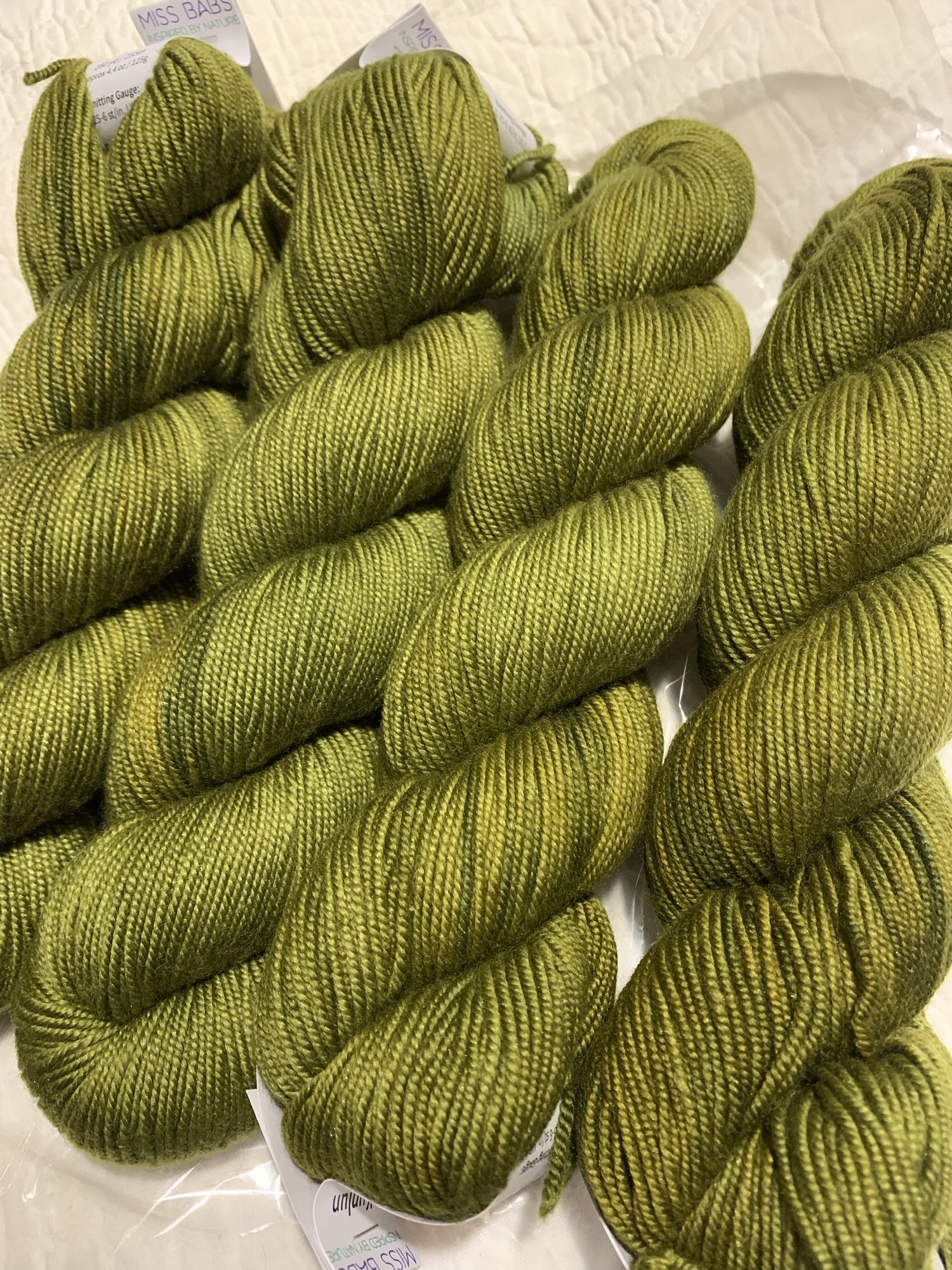
You really should do this whenever you have yarn that is not evenly colored, such as hand-dyed yarns. The yarn in the photo below is from Miss Babs and it is very pretty, but not uniformly colored. This type of dying process creates pretty skeins. It is very popular with knitters because you get a solid color garment that has interesting shades.

However, if the skeins are not alternated, there could be an obvious color difference between them, and / or a pooling of colors.

Color Pooling of Yarn

Yarn color pooling happens when the project being knit has just the right number of stitches to line the same yarn colors up over and over. My green yarn has subtle shading, but this could still happen. In fact Miss Babs made a note on my yarn receipt to alternate skeins. Thanks Babs!

Below is an example of color pooling when knitting. A pretty blue and white variegated yarn was used when I knit this pair of socks. Yes, they should have looked the same, but I had trouble with that faux cable design too and omitted it for one sock. If I had knit this pair correctly I should have divided my skein and alternated strands as I knit. These are socks. I didn’t really care. Now they are a good example of how pooling can effect a project.

Shell cottage socks showing color pooling
Color pooling

Alternating Skeins While Knitting – Sounds Easy, Right?

A new lesson learned. Alternating skeins is not that easy. Well, it’s easy, but not easy to make it look right when you totally do it wrong!

I began alternating skeins from the beginning of this sweater project, BUT the knitting was done flat for the top part of this sweater. I simply carried the yarn up the side and switched strands as I went. Simple.

Then I knit the “V” neckline and I did not alternate skeins. There is some ribbing and cables there, so I didn’t need to.

After that, I had to begin knitting in the round. So I added a new skein, knit two rows (NO – don’t do this), swapped out the yarn and knit two more… and so on. This is how it looked.

Hideous!

After I did some knitting and alternating skeins, I saw that my carrying of yarn looked pretty awful. The carry line was uneven and also was puckering! I knew I would have to re-knit this area.

Now I needed to learn the correct way to do this. YouTube had some videos, and the one I found to be most helpful was where the yarn strands are brought forward when changing. (Video link below in “How To” section.)

Ripping Back and Starting Over

This yarn gives very clear stitch definition so finding the stitches in a row above the mistake was fairly easy. Here’s a pretty good video about picking up stitches to frog back a large chunk of knitting by Knitty Natty – which is what I did.

My knitting was done in the round and as I got close to the end, my needle pick up got tough. I got the last group of stitches with some yarn. By the way, you can use a much smaller size needle to pick up those stitches, as long as you being knitting again with the correct size.

I messed up a bit when adding my new skein (don’t ask me why), and therefore I have a little wonky place, but once I began the “yarn forward” technique, the rows looked much, much better.

How to Do the Yarn Forward Alternating Skeins Method

I have chosen to do the yarn forward swapping yarn on each round. Here’s how to do this method:

Pull the yarn you have been using to the front of the knitting and let it hang there.

Add the new yarn (for the first new skein round) by wrapping it around the needle as you would to begin knitting with any new skein.

Knit around using the new strand.

Once you arrive back to the place where the yarn is in front, swap it out. Yarn in front goes to the back and will now be used to knit the next round. Previous yarn used goes to the front and hangs.

Here is the best video I found that shows how to to do this.


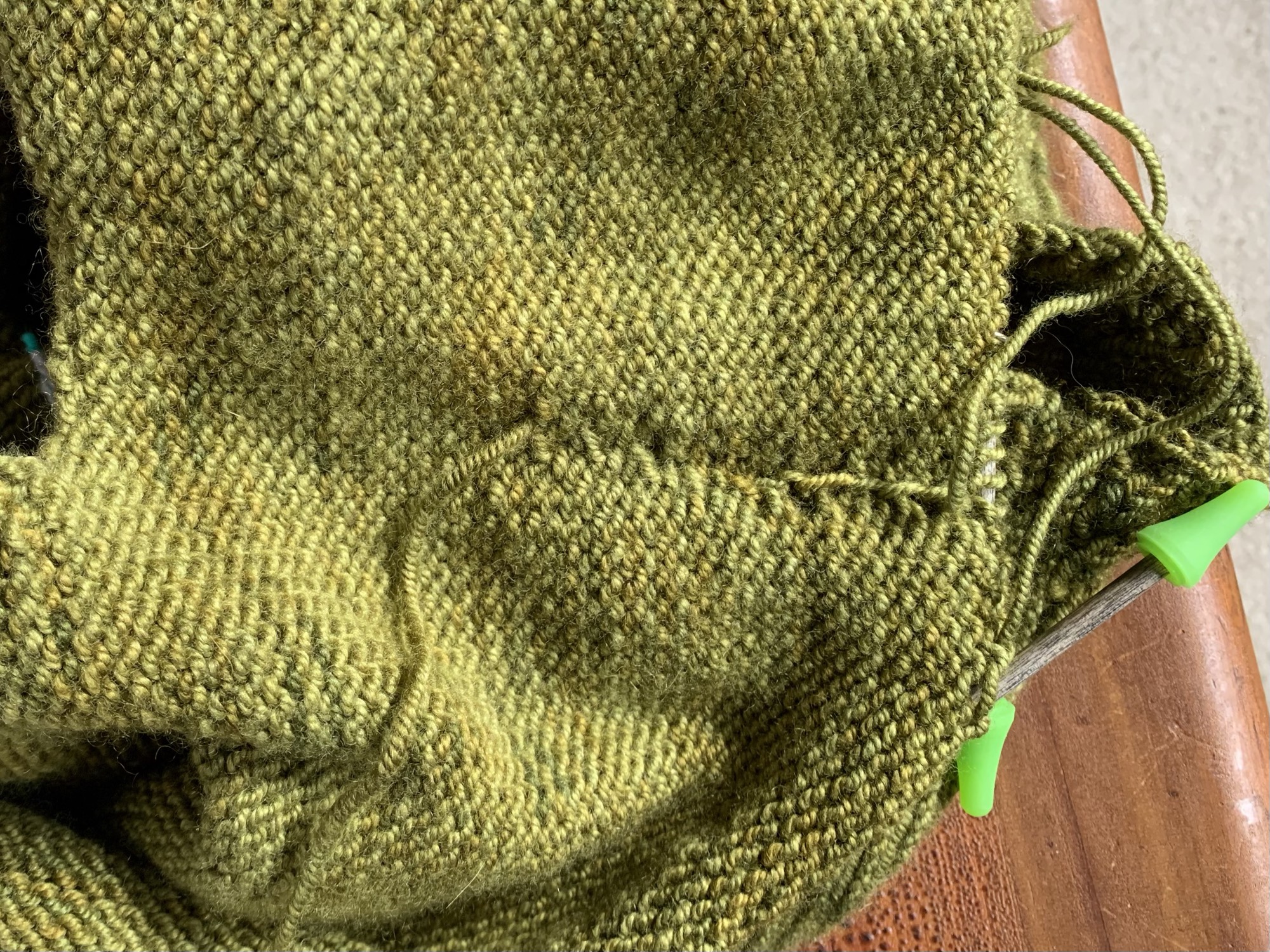
For me, this line of alternating yarns will run down the side of my project – beneath the arm of the sweater. It will not be noticeable and hopefully even less so once the sweater is washed and blocked. I forgot to do this (alternate skeins) for the first couple of inches. The arrows show where I added the new skein.

The other method of swapping out strands every row creates a line up the inside of the project, which is fine too. The Miss Babs video about Alternating Skeins for flat and round knitting, shows that method. (Watch the woman knit while she looks into the camera! Impressive.)

You must swap the yarn EVERY ROW for both methods (in the round).

I mistakenly began by knitting two rows before I swapped, and that should only be done for knitting flat (back and forth) where you must knit a second row to get back to the place where the yarn is waiting.

New Technique For Me

Although I have knit many sweaters, this is the first time I have used this technique. My attempt is not perfect because I watched too many videos and did not follow the good video directions, but I am not ripping back again.

Usually I knit with wool and I don’t have to swap out and alternate yarns. I prefer simple wool for knitting, but I wanted a pretty, variegated yarn for this sweater pattern.

The Pattern

This sweater pattern is called Arco Iris and is by designer Joji Locatelli. You can buy the pattern on her Ravelry page here. You can read my notes about knitting this sweater here.


Read more about my knitting adventures

Camel Yarn Weekend Hat Project

A simple ribbed hat pattern with enough brim folds to keep ears warm. The Weekend Hat is a pattern by designer PetiteKnit.

Knitting The Neck Ribbing of the “Arco Iris” Sweater

Knitting the ribbing around the v-neck for the Arco Iris sweater pattern.

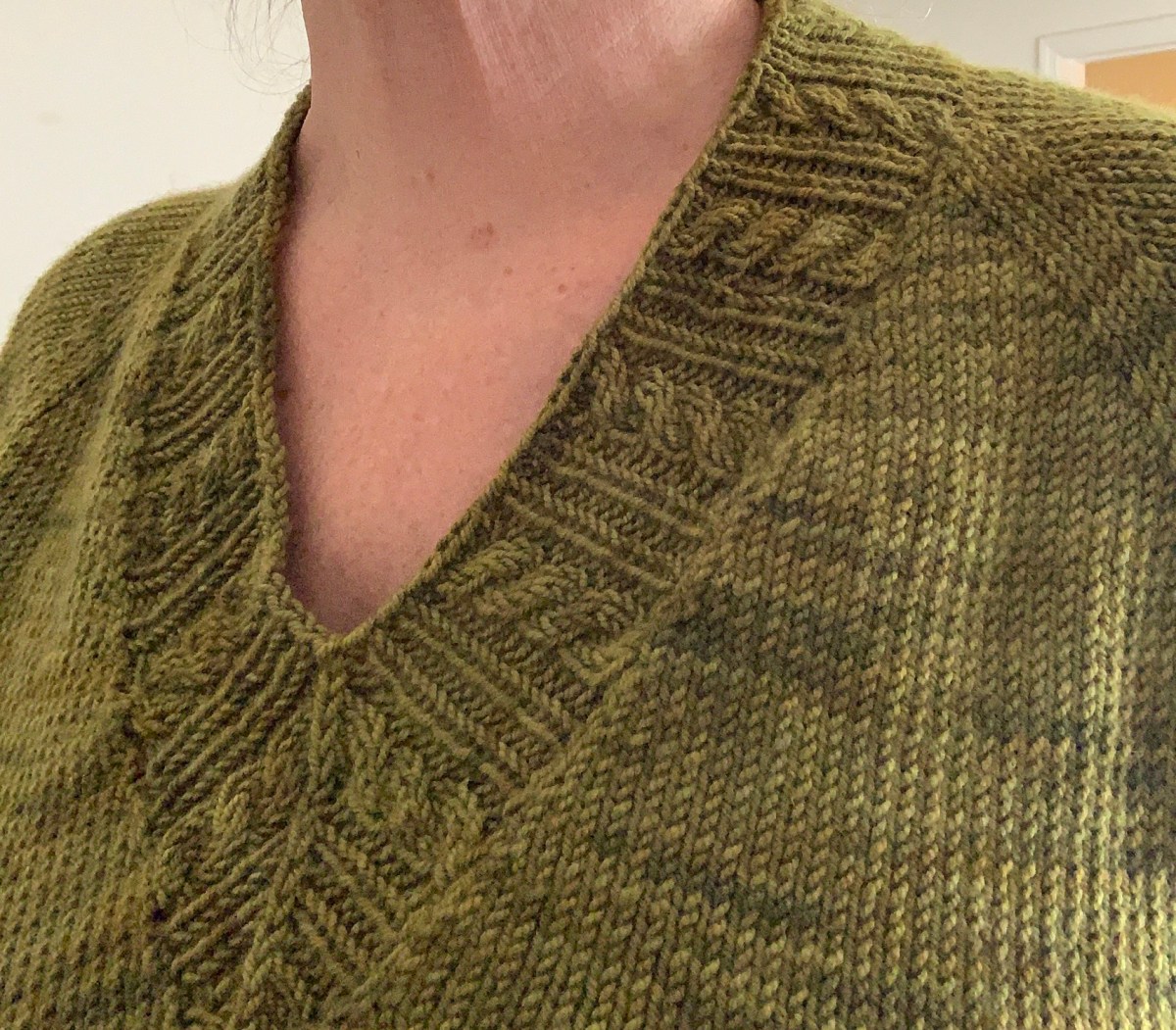
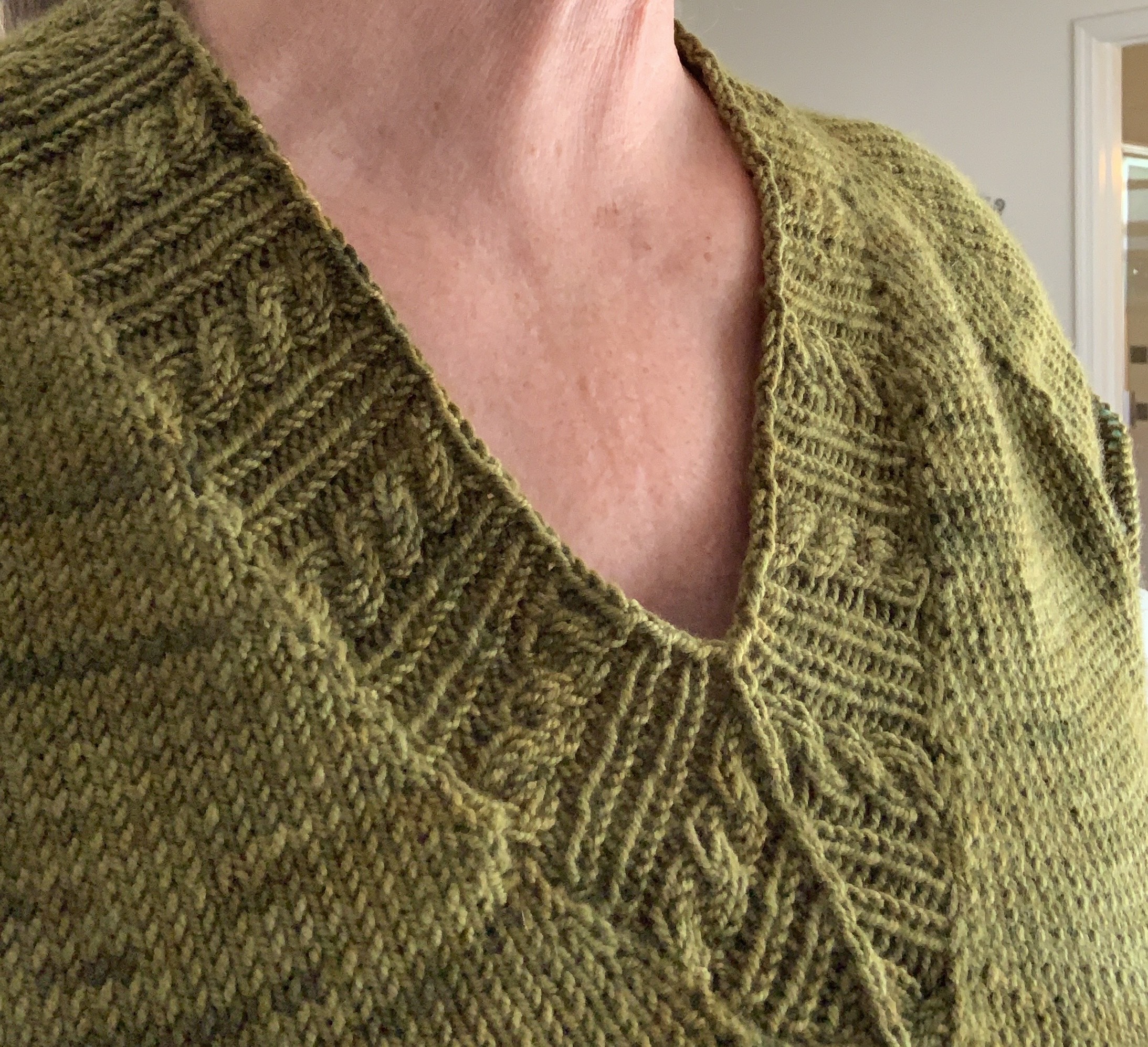
This v-neck sweater, the “Arco Iris”, has a pretty ribbed and cable border around the neck to match the sleeve cuffs and body ribbing.

Once I got the sleeves put on hold, and began knitting the body, I decided to take on that v-neck ribbing. I had a quiet day to myself, and decided not to knit round and round, but take on the challenge of the neckline.

Picking up Neckline Stitches

This pattern tells you exactly how many stitches to pick up for each section of the neckline. I had no trouble picking up stitches for the back of the neck. Each loop was easy to see. But going down, and then up, the V got tricky.

I have decided that I absolutely hate doing this. I came close to throwing the knitting across the room.

For this sweater the stitch count must be exact. The cables and ribbing are done in multiples of 9 / 18. I ripped out my pick ups more than I will admit, and finally gave up and did the best I could.

I ended up 5 stitches short and added those stitches back in (using backwards loop cast ons) when I did the first row around. So my advice to you is to maybe keep this in mind so you don’t go insane.

cats and knitting

Skittle the Cat had to jump up into my lap at exactly the WRONG TIME. I had dropped a stitch and was trying to fix my problem while the cat insisted that I pet her. All I could do was laugh at the unlikelihood of that. Finally she settled in on my lap and was happy for me to continue knitting.

The first couple of rows of directions on the neck are the set up pattern for the cables and rib. Once that is done, the pattern gets very easy.

Once I finished the neckline, I put my body stitches onto waste yarn so I could try the sweater on and see how it looks. I actually like it a lot. My cables are off, but once I did one wrong, I had to continue to do it the same (left leaning / right leaning) way. Most people will never notice my mistake.

When you are told to do a “cable crossing every 4th round”, do the cable as you did in the beginning. The “lefts” will always be left. Each cable will be done the same way – with yarn held either to the back or front. If you are not familiar with cables, this could be confusing.

As I knit, the circle for the neck opening kept getting smaller, and I was getting worried, but it ended up perfect. That front part of the V is a decrease, so the circumference gets smaller on every round. I ended up using a 16” circular needle but began with a 24 inch.

Don’t make the bind-off too loose. You won’t want the neckline gaping open. Also, don’t make it too tight!

This pattern is not one of the easiest to follow. I’ve knit quite a few sweaters over the past couple of years. Some were lacking in directions, one in particular I simply hated, and many have been fun and easy to knit. Occasionally there will be a small mistake in a pattern, which is understandable. Common sense may be all that is needed to keep knitting.

I respect the time and effort that knitwear designers have put into creating their patterns. I suppose a designer may assume the knitter will figure it out. But I like to be told specifically what to do when knitting. Usually all it takes it one more sentence to explain.

What About the Test Knitters?

What is a test knitter? Someone who knits the project just as it is written. They look for problems and make sure the pattern is ready for everyone to knit. Usually designers will search for knitters who will make the pattern in a variety of sizes to be sure the pattern works for everyone. The testers are in touch with the designer and communicate any and all problems with the pattern to make it read to sell.

One test knitter included no notes at all. I guess they don’t have to. (I recently finished a Jenn Steingass sweater and she had a ton of test knitters, who did include helpful notes, and that pattern was very easy to follow.)

Test knitter Toriyu had helpful information which I am actually following, but she is the only one with useful notes.

The other test knitters had skimpy notes such as “made the sleeves longer”. Not a single one of them found problems with the purl increases… apparently. Or if they did, they may have told the designer, who knows? All I can say is that I found a few parts of the directions difficult to understand. And I probably would have gone ahead and done the purl increases incorrectly without realizing.

I’m going to leave notes on my Ravelry page incase anyone has my same problems.

There have been 76 projects knit (according to Ravelry numbers as of the date of this writing), or begun, by knitters such as myself, on this sweater. The pattern came out in December 2022, which means it is a new pattern (this is January) and lots of knitters plan to knit it. In the end this should be a beautiful new addition to the wardrobe.

Onward I knit. I’m thinking the most complicated part is behind me.

v-neck sweater Arco Iris
Finished the v-neck before the body and sleeves.

Casting On and Beginning The “Arco Iris” Sweater Pattern

Knitting the Arco Iris sweater pattern by Joji Locatelli using Miss Babs Kunlun yarn in color Moss green.

I couldn’t pass up the Miss Babs yarn sale and grabbed some of my favorite “Kunlun” yarn. My intention was to knit the new Joji Locatelli pattern called “Arco Iris”.

The sweater is a v-neck with 3/4 sleeves and pretty, textured ribbing (pattern link below). It calls for a DK yarn so this merino, cashmere and silk blend should work nicely.

I purchased four skeins of color “Moss”. This was not my first color choice but the Miss Babs sale is popular, so I took what I could find that offered enough skeins (4) for my project. Green is good. It is one of my favorite colors to wear.

My swatch has been knit, washed, blocked and dried. My row count is off slightly as I have about 31 rows in 4 inches and it should be 29. But stitch count is exact, so I’m sticking with the size 6 needle. I will just watch the length. Some articles about swatching say that row problems can sometimes be fixed by changing needle types. I’m waiting for some new wooden Lykke needles to arrive.

Casting on January 12th with two skeins wound and ready to alternate. This is my first Joji pattern.

knitting raglan sweater

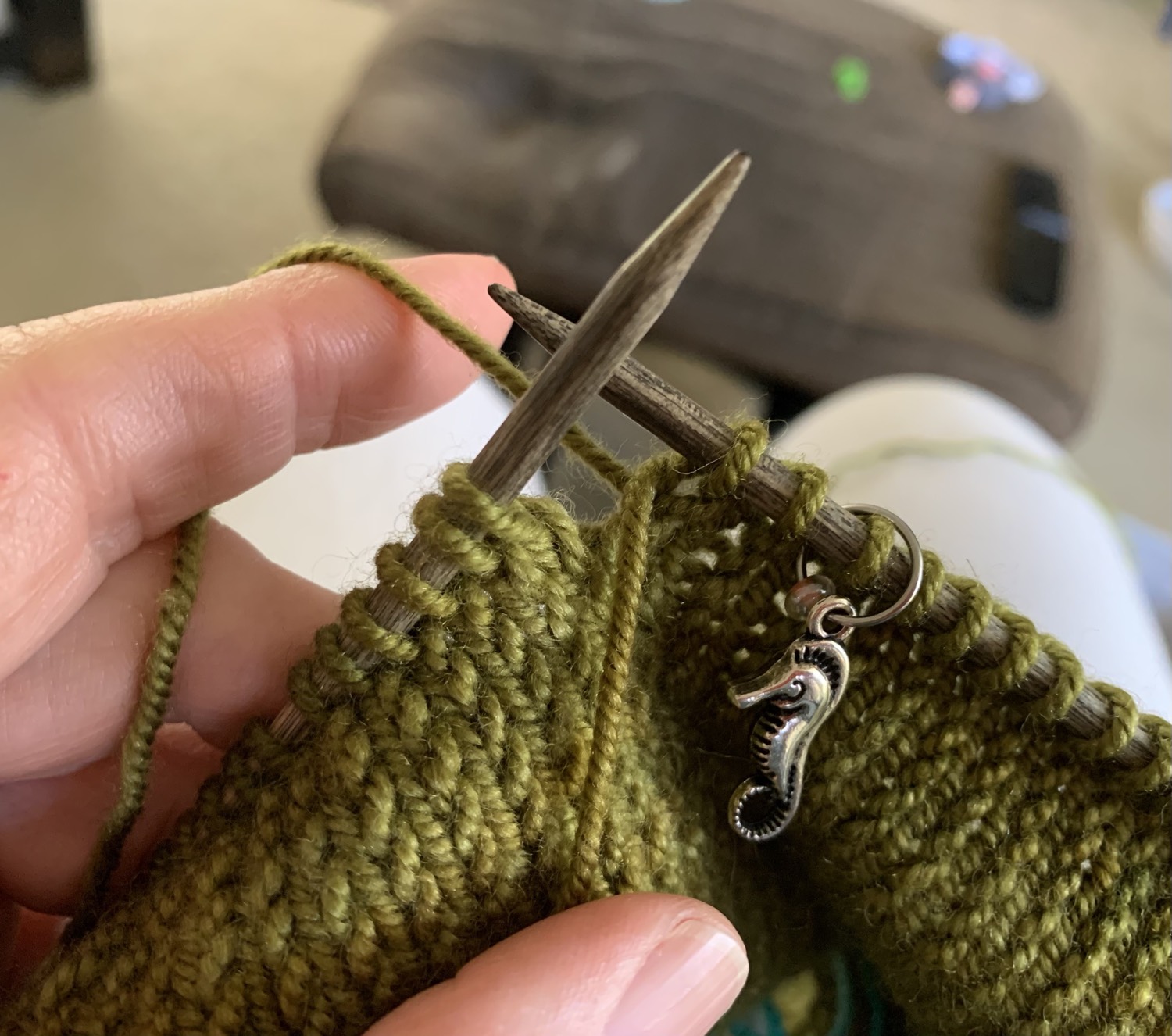
Once the 24 inch Lykke needles arrived I switched from the 16 inch metal, which was getting very crowded. The following day the 32 inch arrived and I’m now using that. View Lykke needles on Amazon – this is an affiliate link to the needles I purchased.

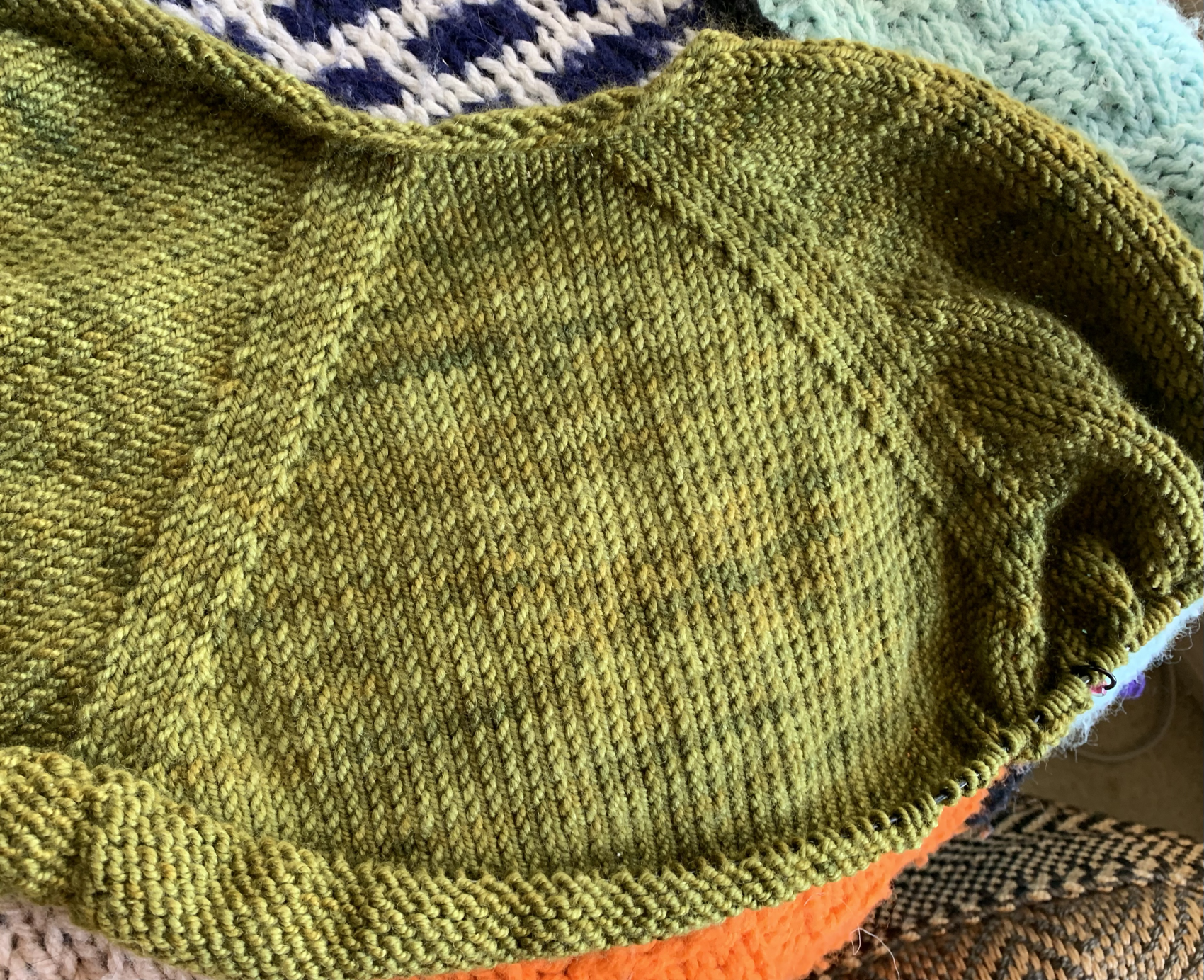
I need to say how beautiful this yarn is to work with. Look at those wonderful stitches, all lined up and perfect looking. I don’t know if I’ve ever knit with yarn that is so defined. I’m knitting two rows at a time from alternating skeins to keep the shading good.

So far the pattern is very easy to follow, with lots of stitch counts noted to keep me on track. The increases are easy to remember. There is a lot of purling – every other row – which I personally don’t mind.

Pattern Problem at End of Increases

Now that I have reached Section 3 the body and sleeves are divided and that all went well – until I decided to Tink back to add stitches – see Mods section below. This was not a pattern problem, just my choice.

The first confusion arose in Section 3 in the Note. We are told to continue neck increases “every 4th following row”. Apparently that “following” means the rows to come – from here on out. I would word that differently to be clearer. That means we knit the divider row as Row 1, Purl row is 2 and so on. That has us increasing on a purl row which is not what we have been doing.

The designer lists how to make those purl row increases, but it seems the directions for them are wrong. A fellow knitter left a comment on the pattern page that the the m1pl and m1pr definitions in the “abbreviations” section were incorrect. I checked that out by watching this Purl Soho video about how to do both increases. I have to agree that the designers directions for these increases are incorrect.

It also took me a bit to figure this all out. A couple of simple sentences could have made all this much clearer for me. Then again, maybe I am the only one who didn’t get it. It’s possible.

Mods

One test knitter (Toriyu) mentioned casting on extra stitches for the body when dividing the sleeves – even though her size did not include this. My size 4 directions also say to cast on Zero. So I tinked back to the separation row and cast on six stitches under each arm for a total of 12 extra stitches. I did this because I don’t want the body to be tight. The test knitter then decreased those extra stitches as she knit down the body.

To Be Continued

My next Arco Iris post is about knitting the v-neck ribbing with the cables. I decided to knit the neckline before I finished up the body. You can read that here.

Happy knitting!

Fontana’s face

More From the Blog