Modeling Photos of the Doublemassa Hat

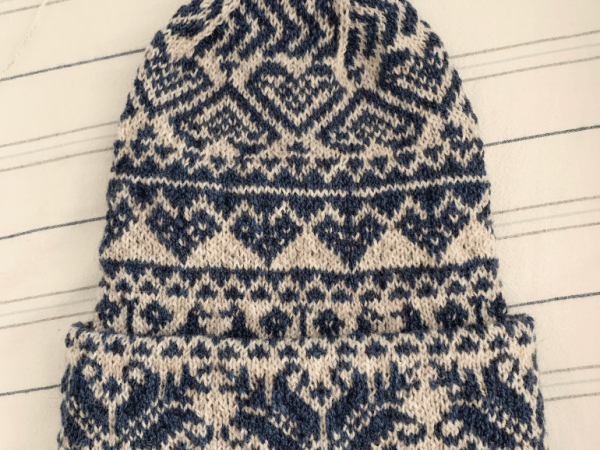
The Doublemassa massive hat knitting project is done. I have to model it for the full effect, so here goes.

Don’t get excited, no gorgeous models here. But the Doublemassa deserves to be photographed while worn. I’m the only one around to do it, so here goes.

I’m a little late posting this because life got busy! But I do need to share the final photos of this knitting project.

Tips For Finishing the Hat

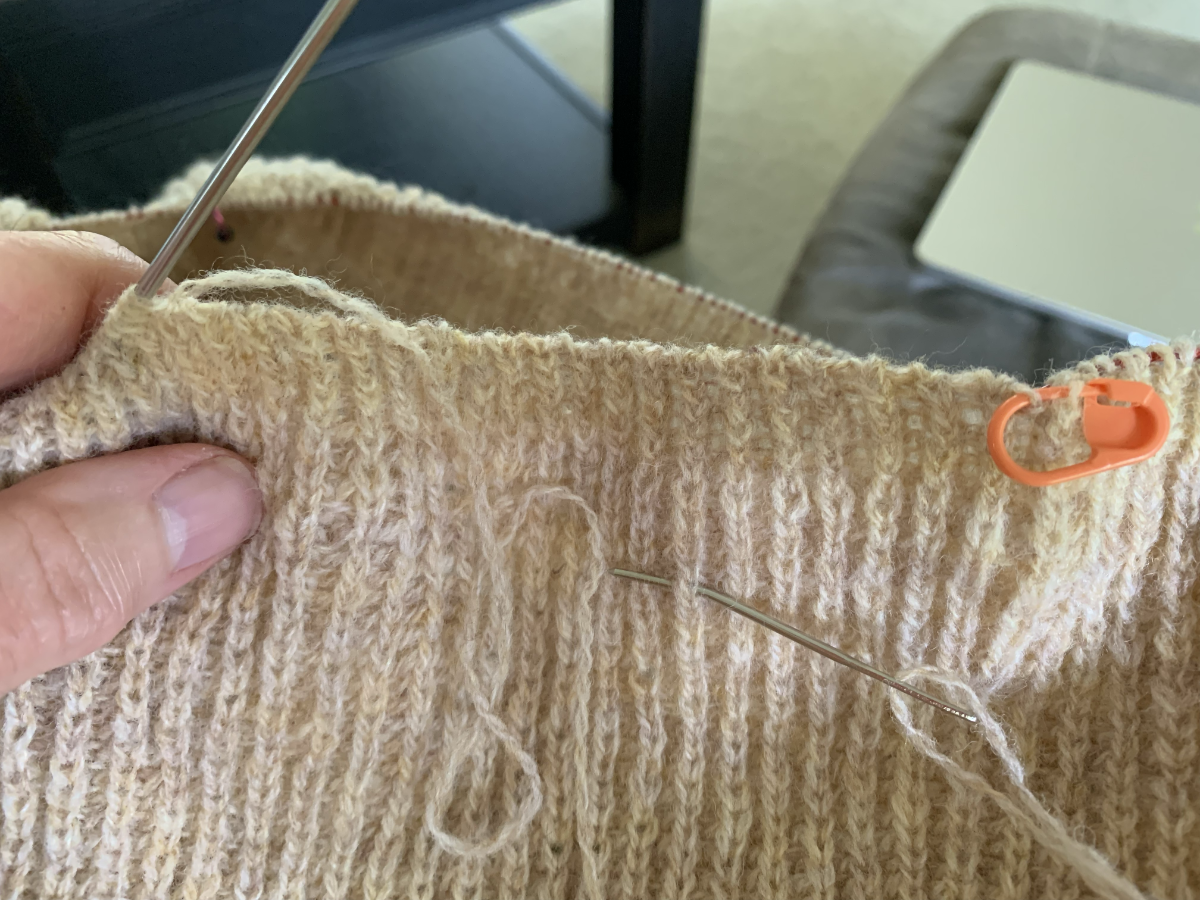
First a note on finishing up this knitting project. One key thing I want to mention is to be sure and weave in your ends BEFORE you make decreases at the crown. I spit spliced my wool, and only had two ends to weave, but I had to pull that section up through the crown opening.

I ended up pulling the whole hat out just to check for ends. Maybe next time weave as I go, or at least keep track of how many ends there are. Wool makes yarn splicing easy, and this means fewer ends hanging.

As I began the crown decreases, the hat was finally long enough to fold the brim and try on. This hat is seriously cool! It fits like a charm too. I’m knitting it for my daughter and she has a small head. I hope she likes the fit. The Rauma wool is quite soft, so no itchy problem there. I highly recommend Rauma.

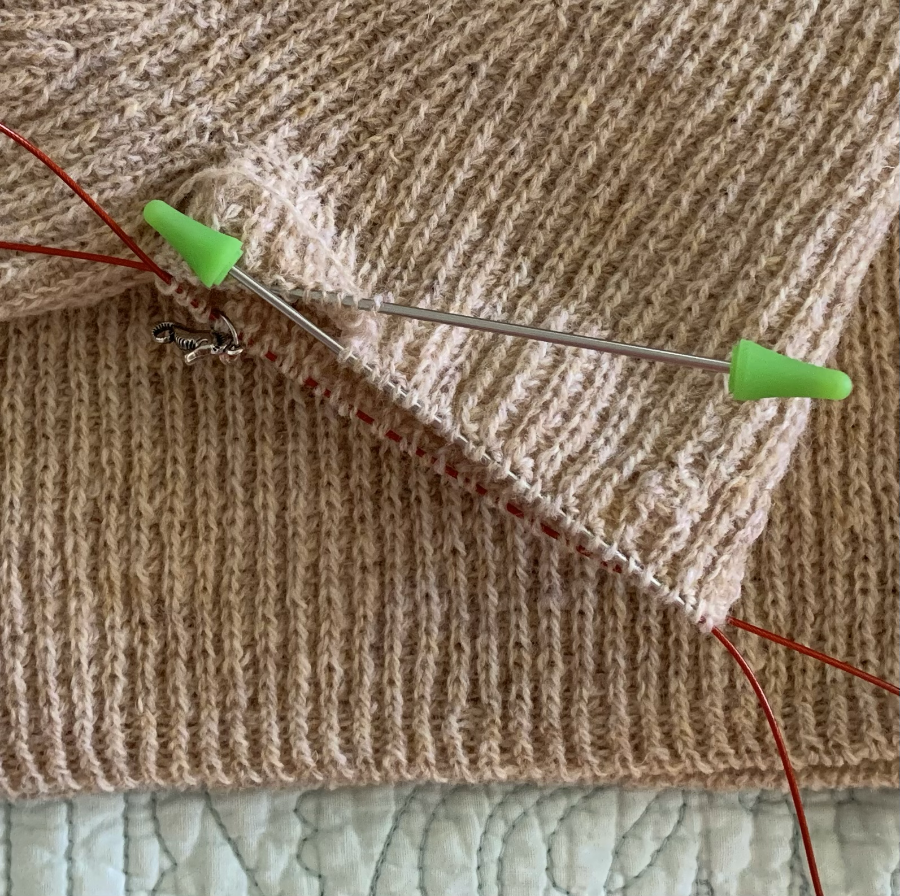
Photo below: At this point all I have left to knit is the crown decreases. I’ve swapped out the 16″ circular for DPNs. Once that is finished I need to make a fun tassel for the top.

Doublemassa hat brim folded up

Making the Tassel

Tassel directions are included in the Hat’s On book. However, the directions are not great. I found a good video to follow, but the tassel must be attached to a hat without an inside access. I wrote a blog post about making and attaching the tassel.

Washed and Blocked

Fontana immediately claimed the hat as her newest cat bed!

Modeling the Hat

I hate to show too much of myself, but in this case the Doublemassa deserves to be shown on a head. My head was it, so here goes.

All my knitting photos are selfies. I prop the camera somewhere and use the 3, or 10 second delay. Usually I go outside, unless it’s too hot. Then I do a lot of cropping and fixing, … oh and deleting too!

These photos would look a lot better with a snowy background and me wearing a puffy winter coat. Instead it was a hot, cloudy morning.

The Doublemassa really is an impressive pattern. I used colors I already had, but this would be pretty in many combinations. The pattern is available in the Hat’s On book (paid link) by Charlene Schurch.

If, as a knitter, you get a request for a hat that is warm over the ears – this is it! I don’t know how you get much warmer than a 4-layer fold.

Knitting Stories continued…

Something went wrong. Please refresh the page and/or try again.

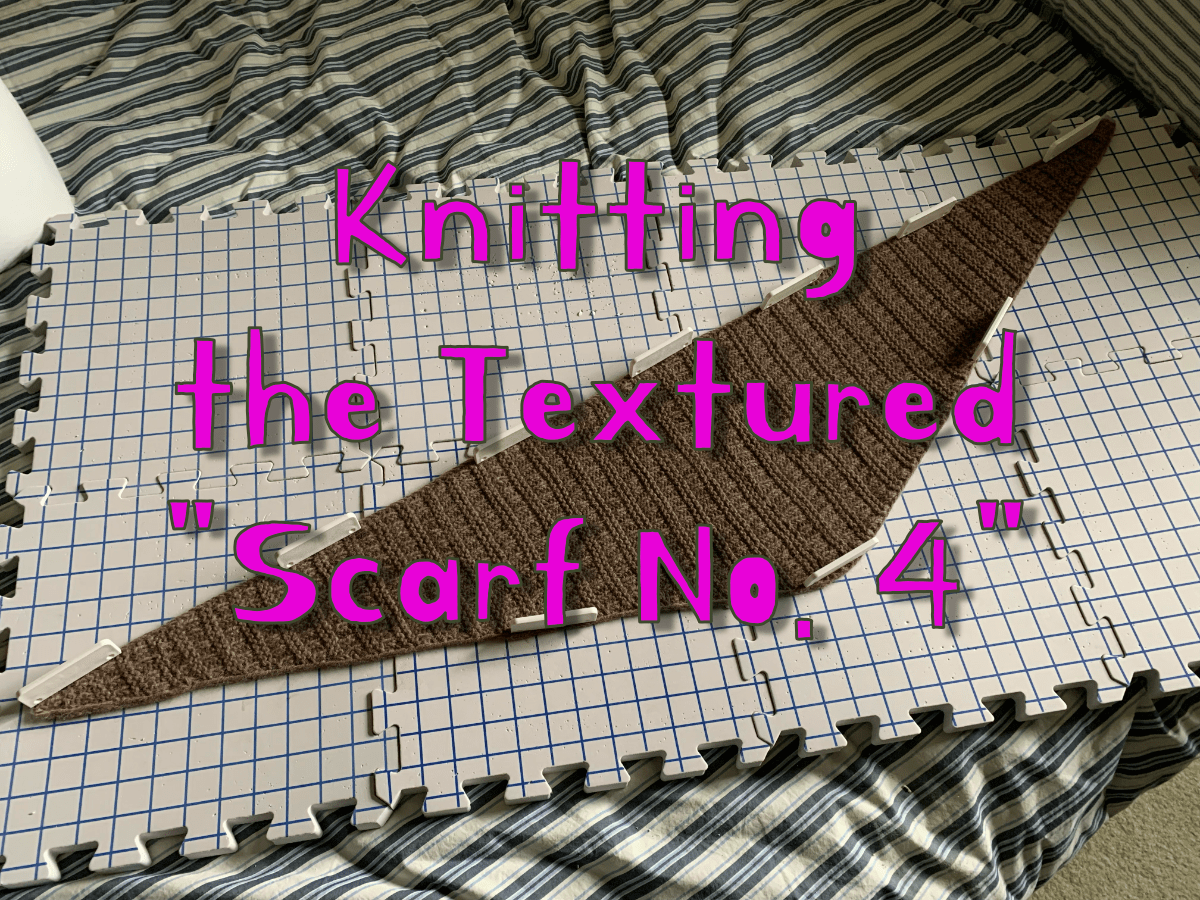
Knitting Scarf No. 4 Using a New Cashmere Yarn

Another little scarf knitting project called Scarf No. 4, has a fun texture and rounded edging.

When the tiny scarf bug bit me, I ordered some nice yarn and got knitting. I’ve completed two Sophie Scarves so far and now I’m starting to knit “Scarf. No. 4”. It’s scarf knitting project three for me, but it’s named No. 4. I should have planned that better.

This pattern is by My Favorite Things Knitwear (go here to see her pattern page at Ravelry). The scarf will measure approximately 49 inches and has a texture made by knitting and purling. It also includes an edging called “Distitch”. Watch this video to see how it is made. It’s very simple.

A Simple Way to Make a Neat Edge

In the pattern, the edge is referred to as “est” . It occurs at the beginning and end of the row directions. At first I was confused.

Here is what it means: When “est” is at the beginning of the row, it means “slip a stitch purl wise with yarn in front” and when it’s at the end of the row, it means do the distitch – or knit the two stitches together (see the video link above for how to do this). In other words, each “est” means to do that specific part of the edge, which all works together to form the nice edging.

Pascuali is A New Yarn For Me, and I Think I Love It!

I am knitting this scarf with Pascuali Cashmere Charis. It is an organic Merino and Cashmere blend (70/30). The color is 06, which is a light brown. The strand is very round, and gives nice definition. ALSO… I was able to spit-splice the strand to the new one (yay) and continue on. (I could not do that with the Lang yarn when I knit the Sophie Scarf. I also had knots and splits in the Lang.)

cashmere yarn Lang, Pascuali
My cashmere yarn purchase with Lang and Pascuali balls.

I did need to skip some of the middle rows of knitting in order to head to the decreases. With any luck, I will just make it to the bind off.

The reason I am running out of yarn sooner than I’d hoped, is that I went up to a size 6 needle. The weight of this yarn just seemed to need bigger than a 4, which is recommended in the pattern. Now, I wish I’d chosen a size 5, as it may have been perfect.

Ran out of yarn

Swatching – Yes, Do It For This One

I usually don’t swatch for a scarf. But when the yarn amount is so close, it’s probably the smart thing to knit up a swatch. I’d have had to unravel it to use the yarn, but now I wish I did.

The swatch would have shown me how close I was to the yarn amount used. I may have realized that I needed to use a different needle size. Also the swatch, in this pattern, would have helped me to learn the pattern repeat. This would have definitely helped when beginning the scarf.

Scarf No. 4 is a really nice, soft little neck warmer. I definitely want to make another one using the size 5 needle. Also, I’ve found a new favorite yarn – Pascuali brand.


Something went wrong. Please refresh the page and/or try again.
A Collection of Summer Knitting Patterns

Sharing some favorited patterns from a summer knitting collection.
Spring is here and much of the country is ready for it – more than ready. And summer is close behind. Knitters may be thinking about starting new knitting projects with summer in mind. This page lists some of my favorite, saved patterns, and a few yarn ideas for summer knitting.
I live in central Florida and I love to knit. This was a challenge for me in the beginning of my knitting journey. I tried all kinds of yarn. Sock yarn comes in such pretty colors. Superwash yarn sounded perfect, but in the end, it droops horribly. I just didn’t like the looks of my knitting projects. They didn’t have that cozy feel. I like wool.

So what can I knit that I might possibly wear during the six months plus of heat? More importantly, do I want to bother with that type of knitting? Each year it seems that I continue to debate this issue with myself!

Summer Tops to Knit, Patterns From My Favorites

These patterns are saved in my Ravelry “favorites”.

  • Camisole No. 11, by My Favorite Things Knitwear. This is a cute, sleeveless, eyelet pattern top. It is also a new pattern (as of this writing). Yarn is DK weight.
  • Lima Top, by Pernille Larson. Sleeveless tank with colorwork. This one is knit bottom up. I’m not really sure how the colorwork is done at the top? (Fingering weight yarn)
  • Diamond Breeze cardigan, by Pascuali Designs. A lightweight, no-buttons cardigan.
  • Uptown Tee, by Tori Yu. A simple short sleeve tee with interesting little sleeve caps. (Fingering weight)
  • Ombre Tank Redux, by Espace Tricot. Wide stripes, ombre coloring, long sleeveless tank pattern.
  • Caesura Tuck, by Asa Tricosa. All one color tank, with a tuck in the back, and tiny, inset pocket.

No Plans to a Knit Summer Project

After perusing these patterns, here are my thoughts. Yes, a few of these tops could work for me. They take less yarn (cheaper maybe) and less time to knit (depending on the yarn) than something with long sleeves. But no, I don’t want to do it. It simply seems, for me, like a waste of time.

There are so many sweater patterns in my queue, just waiting for the chance to be knit. I have two collections of wool recently purchased for chosen patterns. There are four or five works in progress (WIPS) in my knitting bags. I’ll never get to them all as it is. Why would I want to throw in a summer top?

But maybe my readers need a starting point, and maybe they are looking for a cute summer top to knit. I sit in air-conditioning coolness all summer long. Many people do not, and they need a cooler project in their laps.

Summer Knitting Yarn Ideas

The second problem with summer knitting is selecting a yarn. Which yarn should be used to knit a summer top? Summer tops tend to need washing a lot more than a winter sweater. Hand knits should be hand-washed, but is there a nice yarn that would hold up to machine washing?

Well, I don’t know the answer to that question, but I will list some yarn brands that the summer knitters have been using. And yes, if you live anywhere but Florida and the Deep South, maybe you would use some kind of wool.

  • Silk, or silk mix: Knitting For Olive Pure Silk, Kinu by Ito – is a 465 yard cone.
  • Linen, or mix: Sandnes Garn Tynn Line (at Wool & Company, this yarn is listed as machine wash, lay flat to dry). Isager Trio 2 – a mix of Linen, Cotton, and Lyocell.
  • Cotton, or mix: Search – lots out there. Be careful of shrinkage and color fading. Knitting for Olive Cotton Merino – a mix of cotton and Merino wool. Hempathy – mix of cotton, cellulose, and manufactured fibers.

While I do live in a sub-tropical climate, I prefer knitting with wool. I love wearing hats and sweaters. They are worn only on the coldest of mornings and in my own yard, or for early morning walks. Floridians don’t want to be reminded of anything to do with actual winters. They came here to escape the cold. Dressing in wool here will get stares and glares.

girls by the sea AI illustration
Image by Seidenperle from Pixabay

If you have knit, or will knit any of these projects (or other summer projects) I’d love to hear how it goes. For now, I’m going to keep knitting my sweaters.

All Knitters Welcome

Doublemassa is The Hat of My Dreams

Beginning the lined, Doublemassa hat pattern. It is a stocking cap done using two different yarn colors.

The hat pattern book “Hats On!” has provided loads of fun hats to knit. I have already knit quite a few, and a few more than once. My favorite of all the hats has always been the pink one featured on the front of this book. It is named the Doublemassa.

Hats on book with Rauma yarn

Way back when I purchased Hats On! I was a beginner knitter. Many of the patterns in the book seemed too difficult and involved reading a chart. I hadn’t mastered that yet, so I stuck to knitting the simpler beanies. It has taken many years to work my way up to attempting the Doublemassa.

Doublemassa Difficulty Rating

There is a lot to this hat pattern. I don’t recommend it for beginners.

This colorwork hat is knit using a chart. A long chart. The anatomy of the Doublemassa is this. It is a short-ish stocking cap. It has a fold up wide brim that is 4 layers thick. Two yarn colors are used for the colorwork and there is a lining. The pattern begins with the lining being knit from the top-down. Once the lining is complete, the colorwork begins. A tassel is added at the end.

This hat book is full of various types of hats, but honestly, the directions are not in depth. For example, in the case of the Doublemassa pattern, we begin by knitting the lining as a top-down hat. We cast on only 12 stitches and knit in the round while expanding (4 each round) with yarn-overs.

I used the Disappearing Loop cast on, by rewatching this video by Always Knitting. This is the same cast on I used for the Musselburgh Hat. It allows for knitting in the round from a very small circumference outward. It also involves Magic Loop. This type of cast on is fiddly no matter how you do it! I used a tiny crochet hook to help.

The pattern simply says to expand by 4 stitches using yarn overs. Since it’s a lining, and won’t be seen, I was not very careful about spacing my beginning increases evenly. Those yarn-overs need to be knit through the back loop, or else a hole is created. This is something the writer assumes we know.

As I read on, the colorwork part has various rows where decreases are made. All the row says is “decrease – with the number”. So let’s say there are 130 stitches and I need to evenly decrease by 6 stitches. I’m going to use the Knitulator to space my decreases. (Or, divide by 6 to estimate.) Most decreases are 2 or 4 which are easy to figure.

Yarn

I’m using three skeins of Rauma Finull, which is a fingering weight, rustic wool. I dug into my stash and had enough of the natural beige heather to be the main color and lining. I’m using a dark blue as the contrast color.

Needle size is 4, but I’m not sure if I will go up a size when it comes to the colorwork. (I did not change the needle size.) My daughter’s head is small, so I may stick with the size 4. She has been asking for another hat with a brim for ear warmth. Doublemassa should work nicely.

The folding of the hat is hard to figure out, by looking at the photos. I guess it will be obvious when it’s done. I have quite a few patterns in the works now, so it may be a while before this one is finished.


Knitting journey continued…