Buying Yarn by Fiber Type

Once we want to take up the knitting craft, there are basics to know about buying yarn by fiber type.  It matters because if you want to knit a warm hat or pair of mittens, you will want to use a soft, yet cosy, yarn for the project.  Also fibers have varying thickness, or weights.

Worsted wool is great for knitting hats, scarves and mittens. Worsted wool is what I began knitting with.  Wool is of course good for keeping warm, but often it is scratchy.  Merino wool is very popular, and so is alpaca.  Or choose combinations of wool with other fibers like cashmere or silk for extra softness.

Most of the really nice wool is hand-wash only. But there is washable wool also, like Mrs. Crosby’s Steamer Trunk washable wool yarn, and the Hat Box yarn line (shown below) which is “machine wash cold”.  Delicate knits should be washed carefully, even if the yarn says machine wash.  Hand washing is my preference, but keep this in mind when knitting for someone who may not like that idea!  Baby items should be easy to care for.

Mrs. Crosby hat box African gray yarn
Mrs. Crosby’s Hat Box yarn in color “African Grey” is part wool, silk and cashmere

There are too many yarn types to really mention, but basically there is synthetic (man-made) cheap types that can be purchased at Walmart, and the real deal which came from an animal. This is called natural fiber yarn and includes alpaca, sheep, cashmere (goats) and rabbits (angora yarn). There are also blended yarns which combine various types together. See this page at Knitting 101 for a more inclusive list of yarn fibers and their pros and cons.  Also, where you can, read reviews left by knitters who have worked with the yarn.  The Webs yarn site often has reviews listed at the bottom of the page.

Beginners may want to buy cheap synthetics to start with, but honestly I would use something better like cotton. Some great beginner projects are facecloths and dishcloths. They are small and will accommodate mistakes well. They are also perfect for trying out various stitches. My dishcloths don’t follow any pattern. They are made up of whatever stitches I feel like trying. Buy washable yarn such as Purl Soho’s Cotton Pure, which will provide enough yarn for a few projects, or Lily’s Sugar and Cream which is available in many colors, and can be purchased at Amazon.

knit dishcloths
Practice new stitches and patterns on little dishcloths

In closing, I would like to say that in my knitting experience I have found that if I plan to put a lot of work (and time) into a special project, I want to use a nice, natural fiber, hand-dyed yarn.  I like to think I am supporting a farm somewhere in the process.

wool fiber from sheep
Photo courtesy of Pixabay

Autumn Colors / Honey Cowl Pattern

How I Knit This Cowl

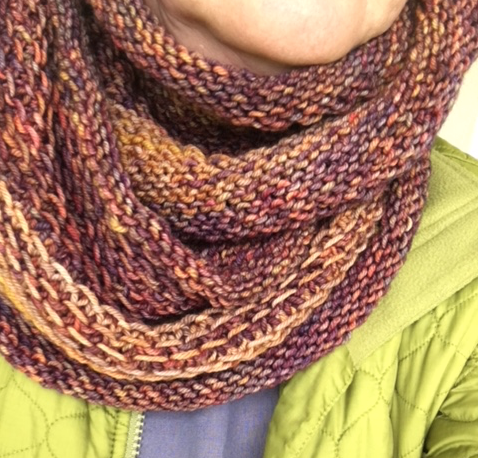
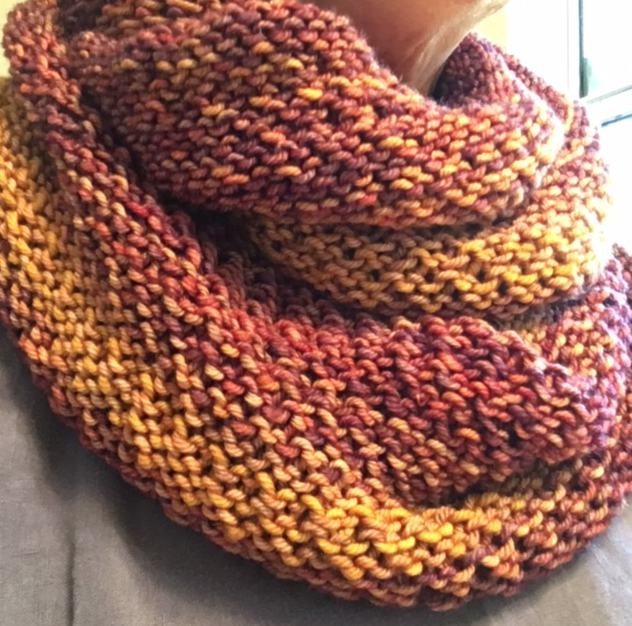
This cowl was knit based on the Honey Cowl free pattern download found at the Ravelry website.

I used Madeline Tosh yarn in autumn rust and gold colors. Tosh Vintage “Firewood” and “Liquid Gold” were used as well as Tosh DK in “Brick Dust”. This pattern would be perfect for a de-stash project, using up bits of yarn in gradients or matching colors.

I chose the size 10 circular needle for a looser stitch, and I usually have to go up in needle size anyway. (The pattern calls for size 8.)

I varied the colors beginning and ending with ‘Firewood’. Stripes were done with ‘Brick Dust’, putting only a couple rows of Gold in the center of the two wide stripes.

Knitting the first and last rows creates a rolled edge. The stitch is very simple and done by slipping a stitch for one row and knitting the alternate rows. The stitch ends up looking like a chain, and is appealing even on the wrong side.

This is a great pattern for a beginner knitter!

.

This last photo shows the wrong side of the cowl, which has a nice bumpy texture.

My Notes on the Finished Project

The yarn is very nice, but I do love Malabrigo yarn and I think it is softer than the Mad Tosh. I have used both (in fingering weight) to knit a shawl recently, and the Malabrigo is definitely better.

Another type of yarn, like part cashmere would be nice too.

I would make the cowl longer so it’s not as tight around the neck. This free pattern (link at beginning of page) comes in two sizes and I chose the longer one. Next time I would add some stitches to the cast on.

How Much Yarn is Needed For a Hat Project?

I tend to find yarn I like and buy it before I have a project in mind. Then when it comes time to knit a hat I wonder if I have enough. Usually the answer is yes, and especially so if I use two skeins of different colors.

In my experience in knitting hats, I’ve never used an entire skein of yarn, or run out of yarn. BUT… I often use more than one color, and it depends on the type of hat you make. Will it have a roll up cuff? Will you need to add a pom pom using yarn? Does it have earflaps? If it’s not a straight forward cap and you plan to use all of one type / color way, two skeins may be needed.

Simple Hat Calculator Page

The Earth Guild site has a page with information about choosing cast on amounts, length of hat, and how to decrease at the top. Click to view their Simple Hat Calculator.

Figuring the Cast On Stitch Amount

One thing to remember about a hat is that once it’s knit the circumference should be smaller than the head. This is called negative ease. You will find this with any item that needs to hug the body – socks are another example. So when you measure a head circumference you will want the hat measurement to be smaller. At Interweave they have a page about knitting hats and negative ease.

Once you have a number of knitted hats under your belt the finished hats can be a reference for starting a new project. Keep notes as you go and file them away for the future. Make note of the type, weight and leftovers of yarn used. If you have a scale, you can weigh yarn for exact amounts.

I’ve knit many hats from the “Hats On” book and have made notes about looseness, length and yarns right in the book.

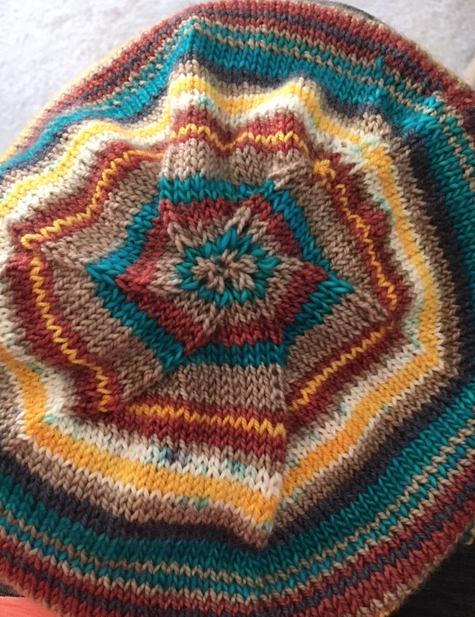
For example, the hat below is called the Fana Cap and I cast on 108 stitches, size 6 circular needles, using Manos del Uruguay’s “Pescador” blue yarn (worsted). I made the hat for my daughter and she has a small head. The cast on amount was good, but the hat should have been a bit taller. I only used one skein of each color with some left over.

Fana Cap hat pattern
Fana Cap

This tends to be the “live and learn” way of knitting, but practice makes perfect. Hats are fun to make because they come in many styles. Also, stranded knitting using two-colors (or more) looks wonderful on a hat. Circular knitting is easy and when it comes to decreasing at the top and using double-pointed needles (DPNs) it’s only for a short few rows.

Trying My Hand at Knitting a Shawl

“Sock yarn” is really pretty, but I’ve never knit a pair of socks. Many knitters use it to create beautiful shawls, so I am trying my hand at shawl knitting.

Since I live in Florida, when will I ever wear a shawl? Possibly walking the beach in winter … or else I’ll take it with me to New Hampshire on a visit. It’s quite possible that I will knit a wardrobe that can only be used one week a year!

Oh well, I love knitting.

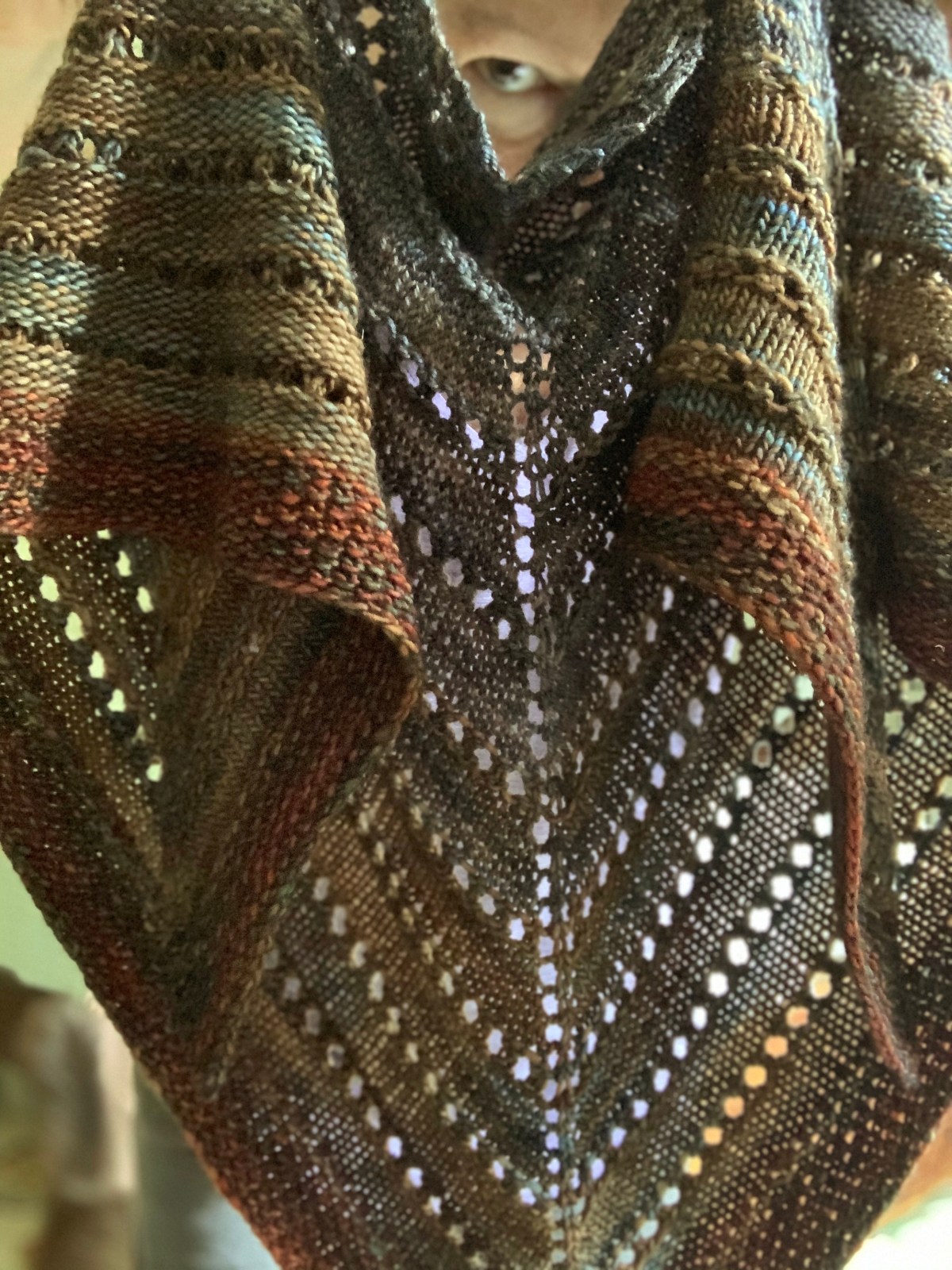
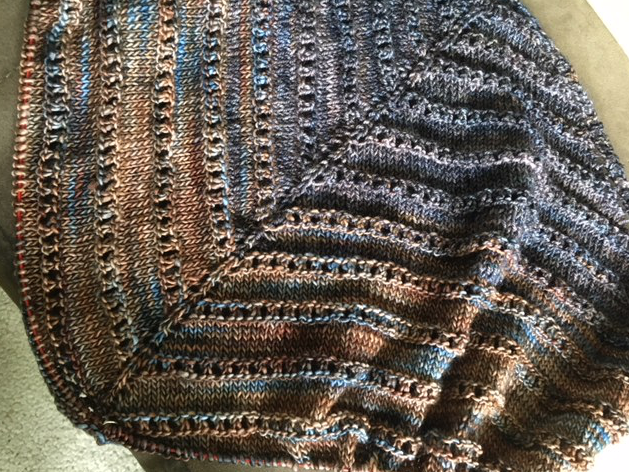
This shawl is called the No Fuss Shade-Loving Shawl and the Free Pattern (not mine) is available for download at Ravelry.

The stitches are easy enough, with a written pattern that is easy to follow.  The stitches you need to know are knit, purl, yarn-over and knit-2-together.  Not too tough.  As a beginner knitter (or someone with poor eyesight), you may want to choose a light color yarn which makes the stitches easier to see.

knitting a shawl
Began with “Arch”, which was too gray for me, so I switched to “Ceilo y tierra”

I began it using sock yarn by Madeline Tosh in color “Arch” which is dark gray-black with some blue.   You can see it in the photo above at the top of the shawl.  It was too dark for my liking. I had a similar weight yarn, by Malabrigo, in color “cielo y tierra” which is more brown, but still had the blue.  The last color I used for the edging, which is done in seed stitch, was Malabrigo mechita in “Marte”, which I loved.

I knit a few rows alternating the yarns to make the change over, and then I knitted to about the edging rows and changed yarn once again.   I like the feel of the Malabrigo yarn, so I am now using the color “Marte” which has some bright rust-orange.

I have joined Ravelry, which I have enjoyed until recently (I have since been disappointed by their policy which calls all supporters of the POTUS as bigots and racists).

I’m not an experienced knitter, so buying a pattern is a bit scary. Also, I can’t easily understand a chart. I like directions written out. Once I feel more comfortable using all those increase and decrease stitches, I will look for something more advanced. I have no problem paying for a pattern. People work hard to create them. I just don’t want to waste money on something that ends up frustrating me.  I need more practice.

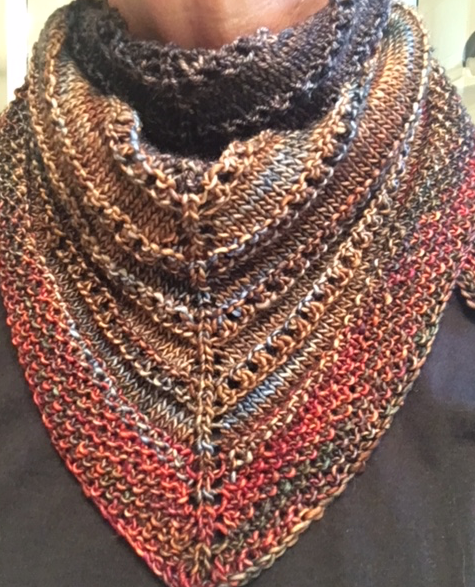
I’ll post a photo once it’s finished……… And now it’s done! …….. I consider myself a beginner knitter, maybe even an intermediate. I can’t read a graph pattern, only written ones. This shawl was easy and fun to knit, and the only problems I had was with my own mistakes.

I would recommend this pattern to anyone wanting to try a shawl, and it’s perfect for beginners who need practice. It even begins easily and not with that strange way some shawls begin. I loved the Malabrigo Marte yarn which I used for the last rows / border.

Will continue with the pattern longer next time before doing the border. The shawl is a bit small for me.

shawl knitting pattern
Finished “Shade-loving shawl”

Keep Reading About My Recent Knitting Projects

Something went wrong. Please refresh the page and/or try again.