Lately there are numerous mushrooms in the yard and in the woods. Today is sunny and cool and too gorgeous to be inside working…so I took a break and took the camera out to get some mushroom pictures.
I have tried to identify these by using my Field Guide to New England, but I am not an expert by any means so if I have named something incorrectly I’d appreciate the heads up.
My Field Guide
According to the field guide, there are at least 10 deadly poisonous species of mushroom in New England. I sure didn’t know that. In fact I never knew the name of any mushrooms until today. Like my seashell collection, I like them… but never really cared what they were called.
Fly Amanita *Deadly Poisonous
This yellow/orange mushroom is the Fly Amanita and I think the little one (below) is a “baby” since it was growing in the same area as the others, but I am not sure.
Tiny Mushroom - "Fly Amanita"?
The red one below is also poisonous, but doesn’t say “deadly poisonous” like the one pictured above.
Emetic Russula *Poisonous
You can read more about the Emetic Russula mushroom on the site link, but I find it interesting that the site doesn’t mention that this one is poisonous.
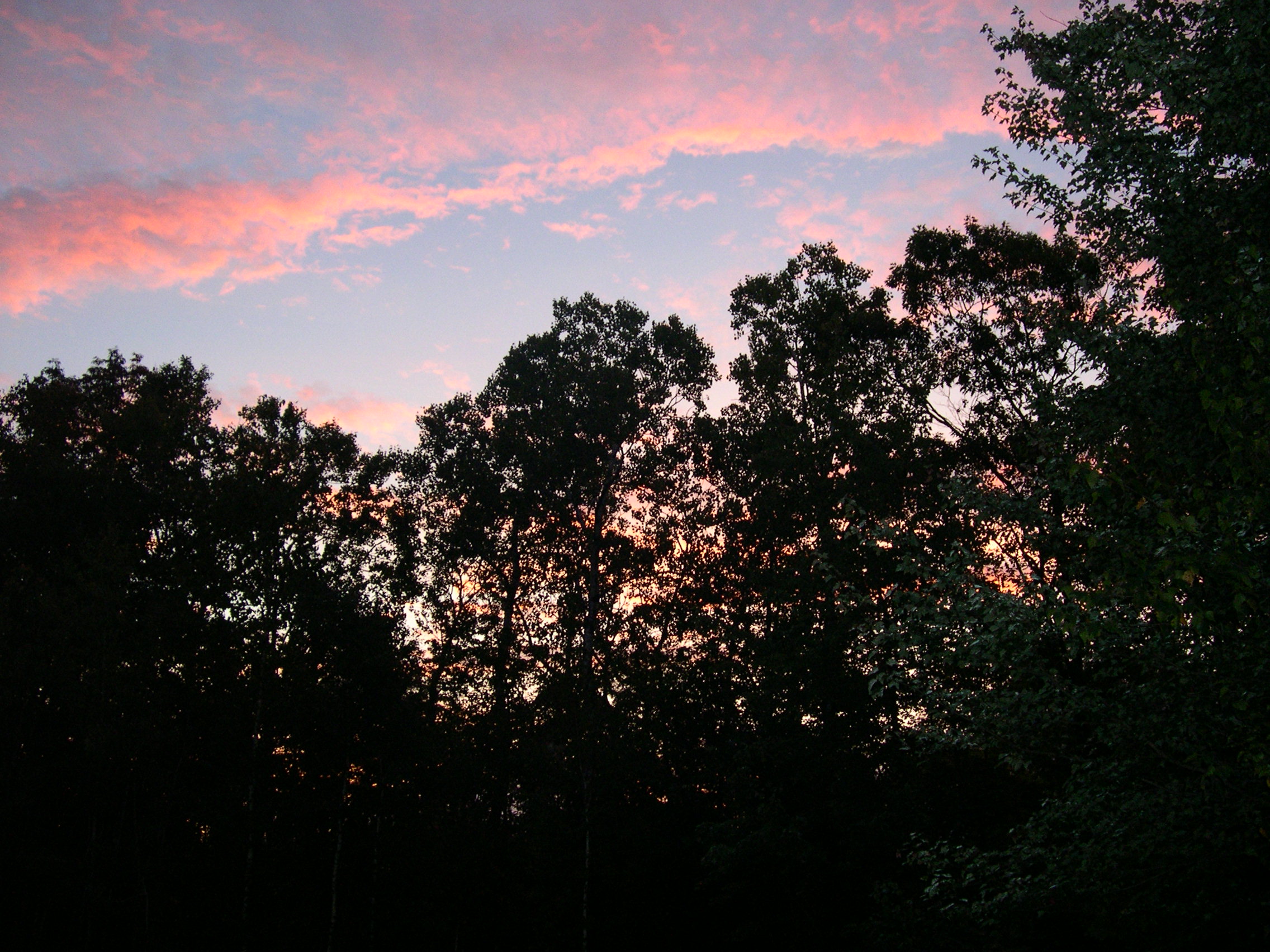
On my way back into the house from starting the car this morning, I noticed the sky. As I went in through the slider, my son said “Wow, come look at the sky”.
I told him I’d try to get a photo, but we had to hurry because a pretty sunrise can be gone in an instant. He got his camera and the two of us stood on the deck and got some photos.
Then it was off to the bus stop, which is down by the lake – where I thought the sky would be spectacular. Instead a large dark cloud was moving in over the water and blocking out most of the sky.
Summer in New England means fresh country eggs and it seems that many folks raise their own chickens. (Click here to see pics of their baby chicks!) My neighbors have some (that I ‘babysit’ when they go away) and the little store downtown has it’s own “Farm Fresh Eggs” section. The farm on the outskirts of town also sells them.
But this year they have been scarce. I haven’t bought one single dozen from my neighbors (the kids do the selling for fun money)…and even the little store has frequently had empty shelves. Usually people are giving their eggs away because of the abundance, but not this summer.
I blame it on all the rain and cold weather in June and July, but don’t really know the reason. I’ve heard that chickens need lots of sunshine to produce eggs, and I guess numerous rainy days could be the culprit.
Now Fall is approaching and the hopes of having fresh eggs is diminishing.
What’s the difference you ask? Well, just don’t start eating fresh eggs because you will be hooked and store bought will never appeal to you again.
By the way, raising chickens isn’t easy – it draws all kinds of unwanted critters such as foxes and bears, to the yard. It seems they love the taste of chicken. My neighbor has an electric fence up around his entire pen. He had to do this after a bear tore the coop apart and ate a bunch of the chickens.
Black Bear, photo credit: werner22brigitte @ Pixabay
I live in a small New Hampshire town and my house is surrounded my lots of woods. The area trails and back roads make great places to walk and observe wildlife, but to tell you the truth I am a bit afraid of encountering a black bear.
I know that they will most likely be more afraid of me, but my concern is that I will startle one or see a cub whose mother will think I mean it harm.
The first time I had seen a black bear in the wild was in my yard 4 years ago. I had left the bird feeders out too far into Spring, and we looked out to see a mother and two small (adorable) cubs skirting the woods of the yard. We thought it was pretty cool to see bears, but my son started crying (he’s very afraid of bears) and at the time I didn’t realize it was my bird seed they were after.
Not long after that I was sitting in a chair by the window at about 10pm and had the back light on when I caught a glimpse of movement and saw a large black bear amble past me and up onto the porch. When I got to the back door I realized that there were 2 of them and I made noise to chase them off. One took off into the woods and the other climbed a nearby pine tree.
Not long after, maybe the next morning, I woke up to bent shepherds hooks and broken feeders. I had grown up in Massachusetts and never saw a bear near my house and I was new to living this far out in the wilderness in the north.
It was time to read up on the bears and wildlife in my area. Although it was cool to say I’d seen a bear in my yard, I realized that it was not unusual for my neighbors to have seen bears. Stories of snatched feeders and destroyed chicken coops made me realize that they were numerous …and hungry!
So I learned. I have discovered that feeding the birds in winter- throughout the snowy season – is fine. The bears are hibernating mostly and won’t be a bother. I’ve read that feeding birds in summer is okay too if the feeders are taken in at night, but I found that they will come in mid-day as well to steal thistle seed from the goldfinches…so no daytime feeders either. I’ve even had one swipe my hummingbird feeder!
Birds are totally capable of finding food for themselves in non-winter months, and bears are wild animals that are best left in the wild. Having food around – such as birdseed -invites them to the yard and they cannot get used to having us humans feed them (that is how they see it), or they will come to depend on it.
A local man wrote a column in our town paper about this subject. He said that adult bears who come to depend on eating from humans won’t teach it’s cubs to hunt for their usual wild food and the bears will die. He said that a “fed bear is a dead bear”. So keep that in mind. I sure will.