If you are looking for something to knit up very quickly – like in a few hours time – consider this Winter Morning headband / ear-warmer pattern (link goes to Ravelry where you can download the pattern). Best of all, it’s a free pattern! With the holidays coming, lots of knitters look for quick gifts, and this one would be perfect for any teen, young adult or old lady! (I happen to be an old lady and I’m keeping that gray one for myself and giving the others to my daughter.)
This is how quickly the band can be knit… I finished up the gray one below, and added buttons, then I knit the pink one – all in one day! Here they are drying flat after being hand-washed.
Drying
Using Wool Addicts “Fire” bulky yarn in gray I knit an “easy” version of the Winter Morning and then finished it off with buttonholes and buttons. **Note here: making buttonholes was not necessary – they don’t have to be unbuttoned to put this on. I should have simply sewn the buttons on through both ends. Now I have to go back and close up the buttonholes because they look stupid – like holes! – when the band is stretched. Live and learn. Otherwise it came out cute and washed up nicely. (Buttons were purchased at Richland Street Yarns on Etsy.)
Button ending
To avoid doing the provisional cast-on, and Kitchener stitch at the end, cast-on and bind-off the regular way and then sew on buttons, or stitch the ends together.
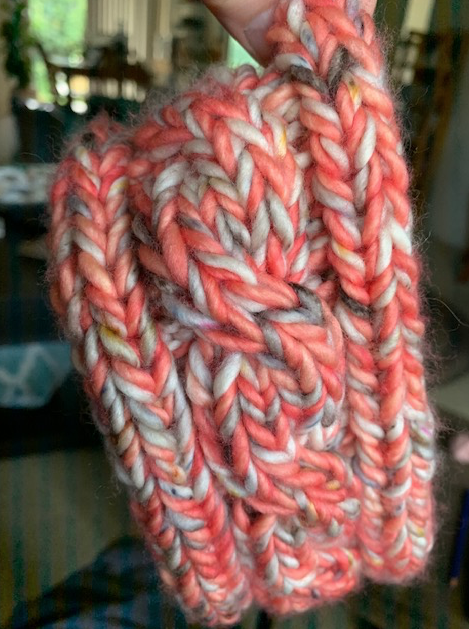
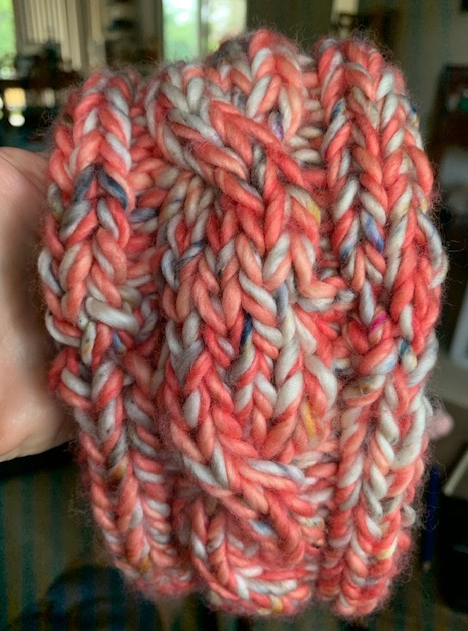
Previously I had made this ear-warmer in the pink “cosmopolitan” color only (Mad Tosh yarn) and it wasn’t really bulky enough. See it on my previous post. So this time I held two strands of Madelinetosh A.S.A.P. together and it came out nice and chunky. Colors (below) used are “Cosmopolitan” and “Yoko” and I think they are both discontinued.
Soft and bulky
The ASAP yarn washed nicely. Because of the bulkiness this headband took over two days to dry completely. I washed it by hand, but the yarn is Superwash merino, so if it’s put into a mesh bag and washed with clothing, it should hold up.
Fast knit
Well, they say that practice makes perfect, and after doing the Kitchener stitch a few times on recent projects (Playdate baby sweater), it no longer frightens me. My recent attempt was on this headband, and as you can see in the photo below, it looks okay. Where is the seam you ask? I love it… haha…
Did the Kitchener here, can you tell?
Quick Christmas Knits – Ideas for using bulky yarn
All this yarn is very nice and because of the bulkiness it knits up quickly. Best of all it is machine washable so gifting to non-hand-washers is okay. I’m thinking a cowl or hat wouldn’t take all that long to knit. Here are some I found posted at Ravelry.
After spending a good part of my morning filing more Amazon infringement notices concerning people selling my stolen images on the site… grrrrr… I bought a baby sweater pattern from Tin Can Knits. Then I felt better.
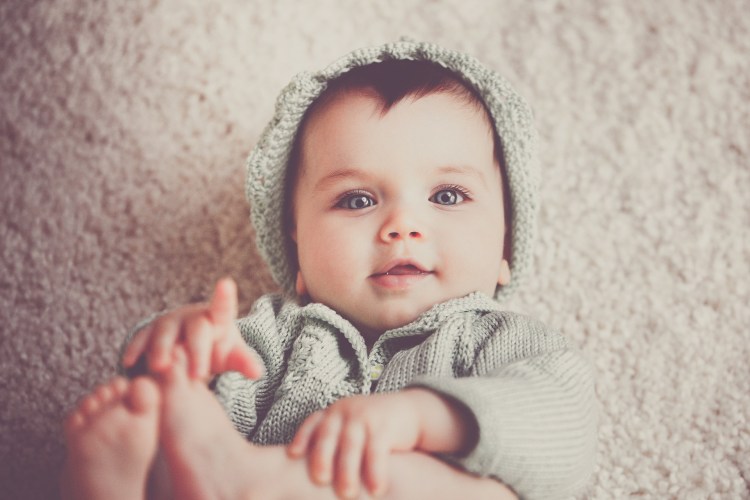
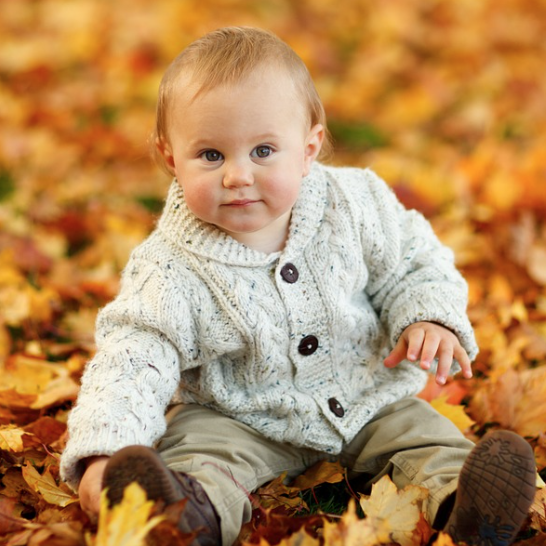
All baby photos on this page are courtesy of photographers on Pixabay.
The pattern is called Playdate, and the cardigan can be knit in many, many sizes from 0-3 months all the way up to 4XL! Since I am such a beginner, usually I find something new to learn in any pattern I buy. This cute little v-neck cardigan (I plan to knit one of the smaller sizes) has two pockets and I’ve never done pockets. When I read through the pattern it makes no sense to me how they will go on. I may decide to go pocketless, or follow the directions until I get that “Aha!” moment.
Let’s talk about yarn. Nice yarn, which is able to go into the washer just in case Mom doesn’t want to hand-wash, is what I want to use. Many sweaters call for a heavier weight yarn, but this one uses “fingering”. Because I wanted to use some stash yarn, I settled on Emma’s Super Silky in “Malibu”. It was really the only “baby color” I had, but I wouldn’t purposely use “silky” yarn next time. (Tin Can Knits uses Sweet Fiber Yarns Cashmerino 20, which looks beautiful, but I can’t find it anywhere for sale.)
Baby in matching knitted hat and sweater.
I just finished knitting a sweater for myself using Miss Bab’s “Tarte” yarn. It has become one of my favorite yarns. It knits up nicely and washes great. I did have some color come out in the wash, but I would definitely use it again. It might be perfect for babies.
For a heavier fingering try Miss Babs “Keira” yarn which is closer to a DK weight according to reviewers. It’s Superwash merino wool and comes in 560 yard skeins. This would allow for knitting a Playdate sweater in the (up to) 1-2 year size range.
Popular Debbie Bliss Cashmerino is also a DK weight yarn that is machine washable. I’ve never used it and it has more acrylic in it (55% wool, 33% acrylic, 12% cashmere – 136 yards). Also Rowan Baby Cashsoft Merino is similar, except it is a fingering weight (57, 33, 10 – 142 yards) and comes in good baby colors.
Use two colors and add some stripes to the Playdate. This post has more info about Playdate Cardigan at TCK and shows the pattern done in stripes of two colors. It would be the perfect choice for using up two smaller skeins.
Lorna’s Laces Sportmate (link to Webs) is a bit heavier weight too, but still a washable yarn. This yarn contains viscose (along with 70% superwash merino) that helps to moderate body temperature. The downside: Finding good colors for youngsters might be tough. It feels like “sweater yarn” and I’m using it to knit a beanie for my son and it’s very nice. I can’t wait to wash it and see how it turns out. My son will not be careful about caring for his hat! Boys and babies… same thing. 😉
My local yarn store Four Purls also carries Sportmate in lots of colors, and it can be ordered online.
Best Colors for Baby Knitting
If I were buying yarn specifically for knitting this sweater, which calls for fingering weight, there are a few good options. Most “sock” yarn is made to be washable. Also sock yarn comes in pretty colors, but finding the right color for a baby or young child can be tough. Lots of color and stripes on socks is great, not so much on a baby.
As I search through patterns at Ravelry and on Pinterest, seeing the colors people have chosen gives me ideas. So I know what I dislike and what may work on a young child. The thing is, it’s my own preference and you may disagree.
Babies come in lots of colors!
Darker skinned babies can handle more color, in my opinion. Pale babies with no hair will blend right in with that white hat and sweater! For that reason many knitters choose softer colors.
I dislike lots of variegated colors on babies. Solids, or slightly variegated, look best on most newborns, and nothing too bright. Manos del Uruguay has some pretty colors in their Alegria Sock yarn line, which I found at the Simply Socks site. I have used Manos yarn before and it is wonderful. I like it better than Madeline Tosh because it is seems to be softer.
Malabrigio Sock also has some nice solids in 440 yard skeins which are 100% Superwash merino. And Simply Sock has their own brand of yarn in solid colors but smaller skeins (175 yards) which would work well as contrasting trim on a sweater.
Some Guidelines For Baby Knitting From TCK
Who am I to tell you how to knit for babies when I’ve never done so? This paragraph is for my reference too. My four children are grown however none of them have children of their own. I’m in my sixties and there is not a baby in sight! In fact, none of my kids are even married at the present time. So grandchildren may never be in my future. Nevertheless, I won’t let that stop me. I want to knit some baby garments and I figure this sweater will be good practice.
Baby Knits 101 is a blog post by Tin Can Knits with advice for knitting for babies. Since they do a lot of knitting for their kids, I will take their advice to heart. I love that they promote knitting with wool. Superwash merino is nothing like the old scratchy wool of yesteryear. I dislike acrylic for many reasons, and it’s easy to find washable fingering weight yarn – like what is needed for the Playdate sweater.
Ask a Baby Knitter
Here is where being part of a group of knitters would come in handy. Maybe you know people who have done a lot of baby knitting and could seek their advice on yarn. The problem may be that most baby knits are given away as gifts. As mothers of young children there is no time to sit and knit something! So hand-knits usually come from relatives. It might be wise to ask how they like the item – Is is easy to care for? Is it comfortable on the little one? What would you like done differently if I knit it again?
Let’s face it… the Playdate is a pattern that could be knit over and over as a child grows. Eventually you would get it right!
I’ve begun knitting mittens before and always ended up ripping out the stitches. I don’t like to give up, and when I came across a free mitten pattern by Tin Can Knits, titled “The World’s Simplest Mittens” I tried once more. (The link goes to the download page at Ravelry.)
If I can’t knit the simplest mittens ever, then I should maybe give up for good.
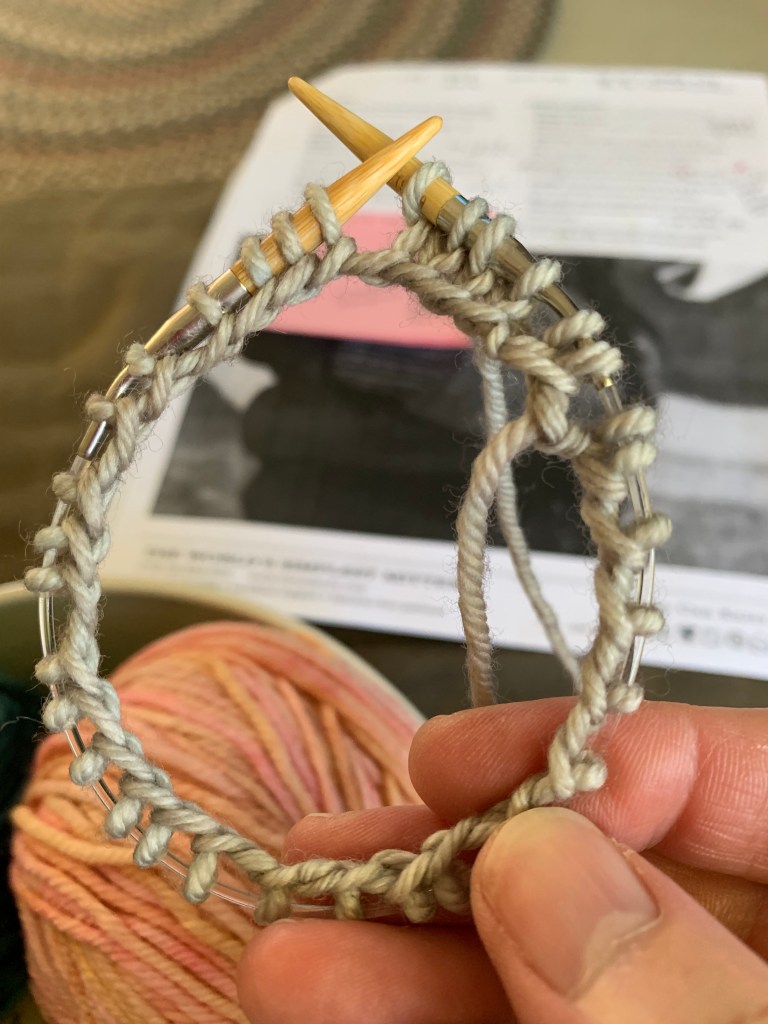
I dislike DPNs so I used my nine-inch circular needles to knit most of the mitten.. DPNs were used for the decreases at the top of the fingers and the thumb (and also on the second mitten for the colorwork). Both mittens are made the same, no right or left. Very easy.
Casting on and using 9 inch circular needles
Needles I Used
I began with a size 6, 9 inch circular needle (Clover brand) and used that for the entire cuff. Then I switched to a size 7 circular until the pattern where I used size 8 DPNs because I don’t have a 9-inch circular in that size.
The small circular needles work out well sometimes, but my hands can get tired. Recently I tried to knit baby booties and ended up switching back to DPNs.
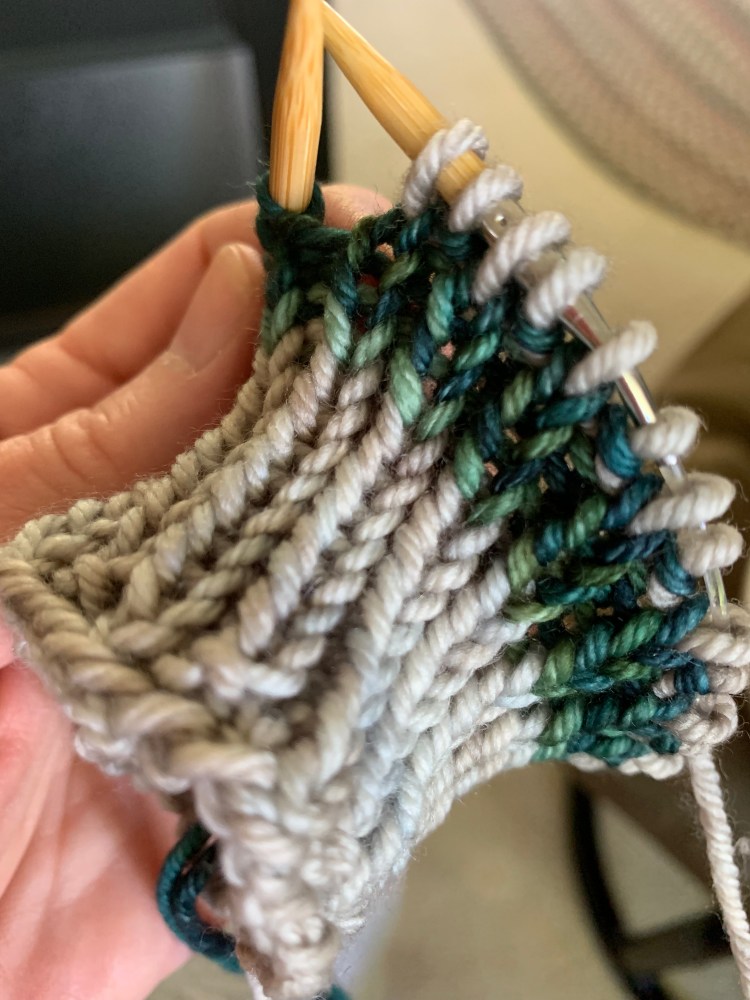
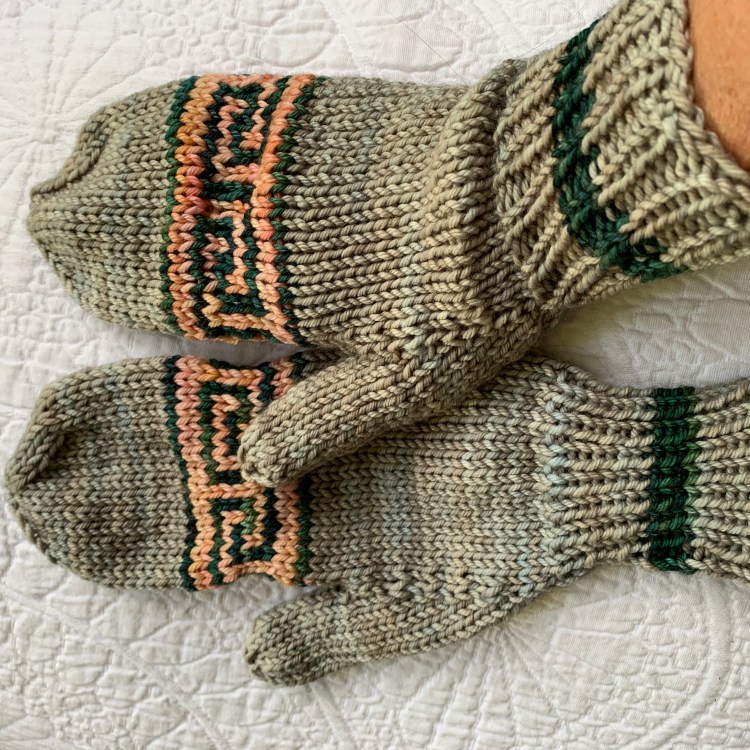
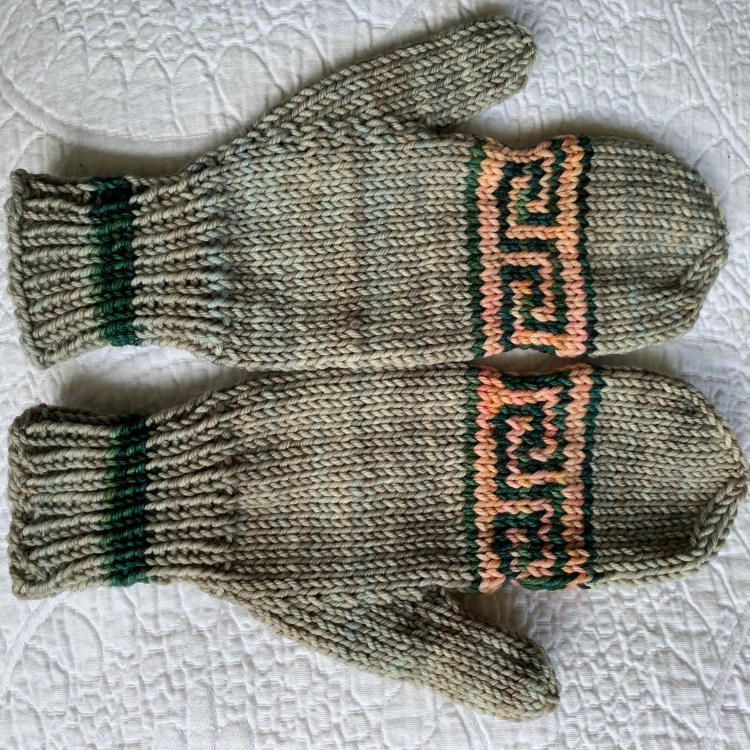
The yarn I used is Malabrigo Rios and was leftover from knitting my Umpqua sweater. I began with the gray / tan and added dark green in the cuff and pink with the green in the Greek Key design.
Adding a band of green to the cuff
The design came from my 150 Scandinavian Motifs book and fit exactly into my stitch count. I began the design right after putting the thumb stitches on hold.
The thumb is put on hold while I finish the finger section
For the second mitten I used a larger needle (size 8 US) while knitting the design and it seemed to work out a bit better and not as tight. It is not noticeable and now I know to do this when doing stranded colorwork.
Finished my first pair of mittens!
The mittens were washed in the washing machine inside a mesh laundry bag and then air-dried on the windowsill. First I did throw them into the dryer (while still in the bag) for a few minutes.
Now… if only it would snow in Florida because I am ready!
Mittens
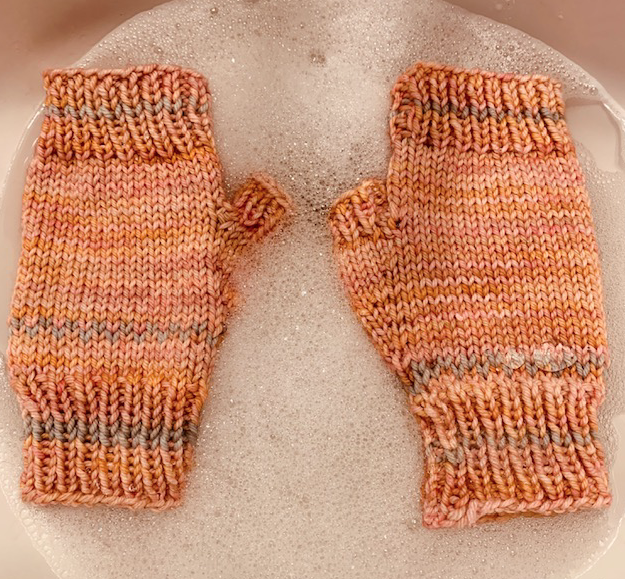
Next I made making fingerless mitts using this same pattern and the same yarn with the gray color as stripes.
Mittens pattern becomes fingerless mitts
Small projects are good for using up yarn, but I dislike knitting small things in the round. I made one pair of flip-flop socks for my daughter and will never make more..haha. I’ve given up on socks in general, but mittens are more fun and this pattern is super easy.
If you are like me, sweater knitting is frightening. I’ve knit two now and I’m still intimidated by knitting a large project. For so long I checked out the forums and blogs and knitwear designer sites and would be amazed that people could create such things from strands of yarn. They all seemed so intricate and large! I doubted that I could get through the pattern directions and balked at the word “charts”.
The First Dumb Thing I Did
Not the first dumb thing I ever did, but this shows what a complete beginner I was. I bought a book of cute baby sweaters thinking that smaller would be easier. Not! As I looked through the pages of instructions – for knitting one sweater – I realized my mistake. I’d never be able to knit any of the sweaters in the book. Not until I advanced my knitting skills.
FYI – smaller projects are not necessarily easier. You probably know this, but just sayin’ for those just starting out.
Finding a Beginner Sweater Pattern
I needed to find a beginner sweater pattern, but I was having no luck. The patterns I found either were not my style or did not look easy to me. Of course I had never knit one, so what did I know? The second thing stopping me was the yarn. Lots of yarn is needed to knit an adult sweater and that equates to cost. I was very unfamiliar with types of yarn and getting gauge. I wondered what I would do with 5 or 6 skeins of yarn if I couldn’t manage knitting a large project?
Sweater yarn, Arranmore tweed in yellow
Basic needs for knitting any sweater
Long, circular needles in correct size for gauge.
Double-pointed needles / DPN’s, for sleeves – or a 16 in. circular will sometimes work.
Stitch markers
Yarn – washable / non-washable? Or use the exact yarn called for in the pattern. And waste yarn to hold sleeve stitches.
Ruler, darning needle, and scissors
Know how to cast-on, bind-off, put stitches on hold (sleeves), increases, decreases, possible shaping (German short rows).
As I did with my first (and only, so far) mystery knit-along (MKAL), I had to jump in. I found a pullover pattern I liked (the Umpqua sweater), bought it, got some yarn, and began. I think I chose a pullover because I wouldn’t have to mess with buttons! I don’t know if I would call this a beginner sweater, but I managed to finish it and although it’s pretty large (that gauge thing) I can wear it. My second was a cardigan – the Fine Sand pattern. I posted my knitting notes on these links, which might be helpful.
Tin Can Knits has a lovely and very helpful website and they offer a free beginner cardigan knitting pattern! How nice is that? I wish I had seen it during my search, but I’ll share it with you now.
The three best aspects of knitting this sweater are: It’s a free pattern (and it’s cute), you can knit a very small size (save money by using one skein only), and there is a page of tutorials which give good explanations, photos, and links to more help if needed.
The Harvest Cardigan has no buttons to deal with either (TCK has a great page on button bands too for when I get brave). The link to the tutorial page is at the bottom of the sweater pattern page – bold link above. So I looked at the tutorial page and wow, it does not seem like a beginner sweater to me! First you must do a provisional cast-on, which in itself is not difficult, but you have to pick up those live stitches later, which is where I have my problem. There is a lot to learn for those who truly are beginning, and that can be a good thing. Sometimes we just have to jump in…! Or start with some of their simpler free patterns and work up to the sweater.
Free Bundle of Patterns by Tin Can Knits
The Tin Can Knits site offers a bundle of free patterns called The Simple Collection, and they reference it on the Harvest Cardigan page (or click the link I made). They call the collection a “step-by-step learn to knit program” and offer 12 free patterns which include a scarf, cowl, hats, mittens, socks, sweaters and a shawl. I highly recommend this site. They show off their knitwear on the cutest kids too! Recently I knit a pair of their mittens, which was also a free pattern.
More of My Favorite Cardigan Sweater Patterns
I have not knit any of these sweaters yet, but they are saved as some of my favorites to try. Currently I am focused on Christmas knitting and smaller projects and for the time being I am giving up shawl and big project knitting.
But here are some you might like, and they don’t look too difficult. The patterns listed below are not free.
If you are a member of the Ravelry site it will be easy to see all the sweaters other knitters have made following these patterns. Also read their notes and view the yarns they used. This is helpful especially if you have trouble visualizing, or selecting, a color for the project.












 New England's Narrow Road