Knitting a Colorwork Sweater in Plotulopi

Knitting a pullover sweater with a made up colorwork design using Plotulopi and Lettlopi wool.

For a while now I’ve been a bit lost as to what to knit next. I began the thrummed mittens and lost interest (because I never wear mittens in Florida) and finished up my Meadow Moon sweater, and now… what?

Colorwork / Fair Isle is my love, and I have all these plates of Plotulopi so lets use them! I’m still trying to use up stash yarn, and combine the yarn with a good pattern.

Plotulopi Frost Grass green plates of yarn
Frost Grass plotulopi plates

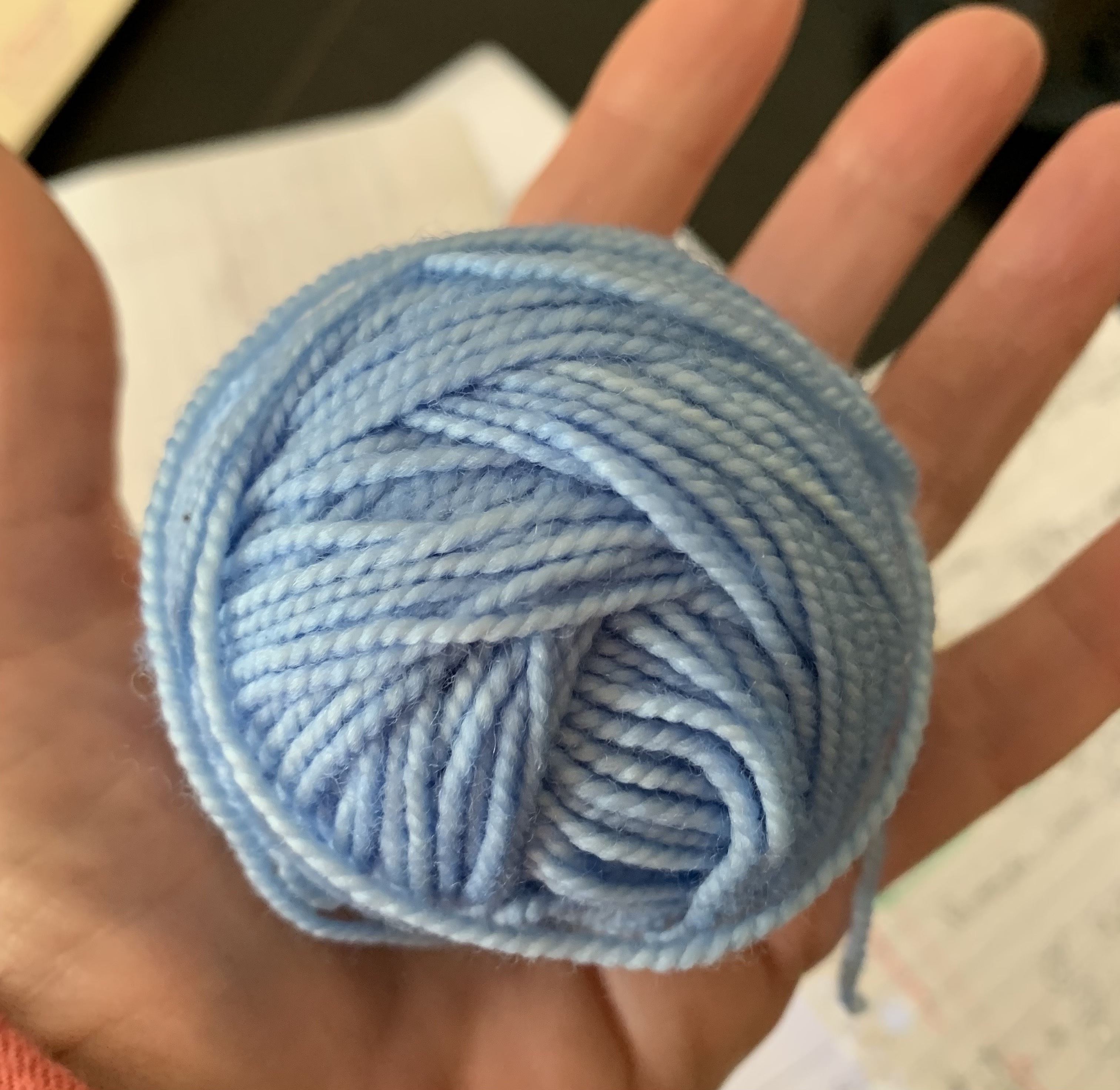
I dug out the Lopi 40 book because I have some Lopi yarn to use up. After knitting the Farfuglar pullover, and Clacks mittens, I have light blue and a tiny bit of white. I had ordered some rust orange (Apricot) Lettlopi as well as a brown color.

After skimming through the Lopi 40 book, which has many lovely projects, I decided on a vest. It is shown on children, but has sizes for adults. I figure I can do colorwork around the bottom, to the underarms, as the pattern does, and then finish with solid plotulopi. (It is a bottom up vest.) But I want to choose my own charts and colors.
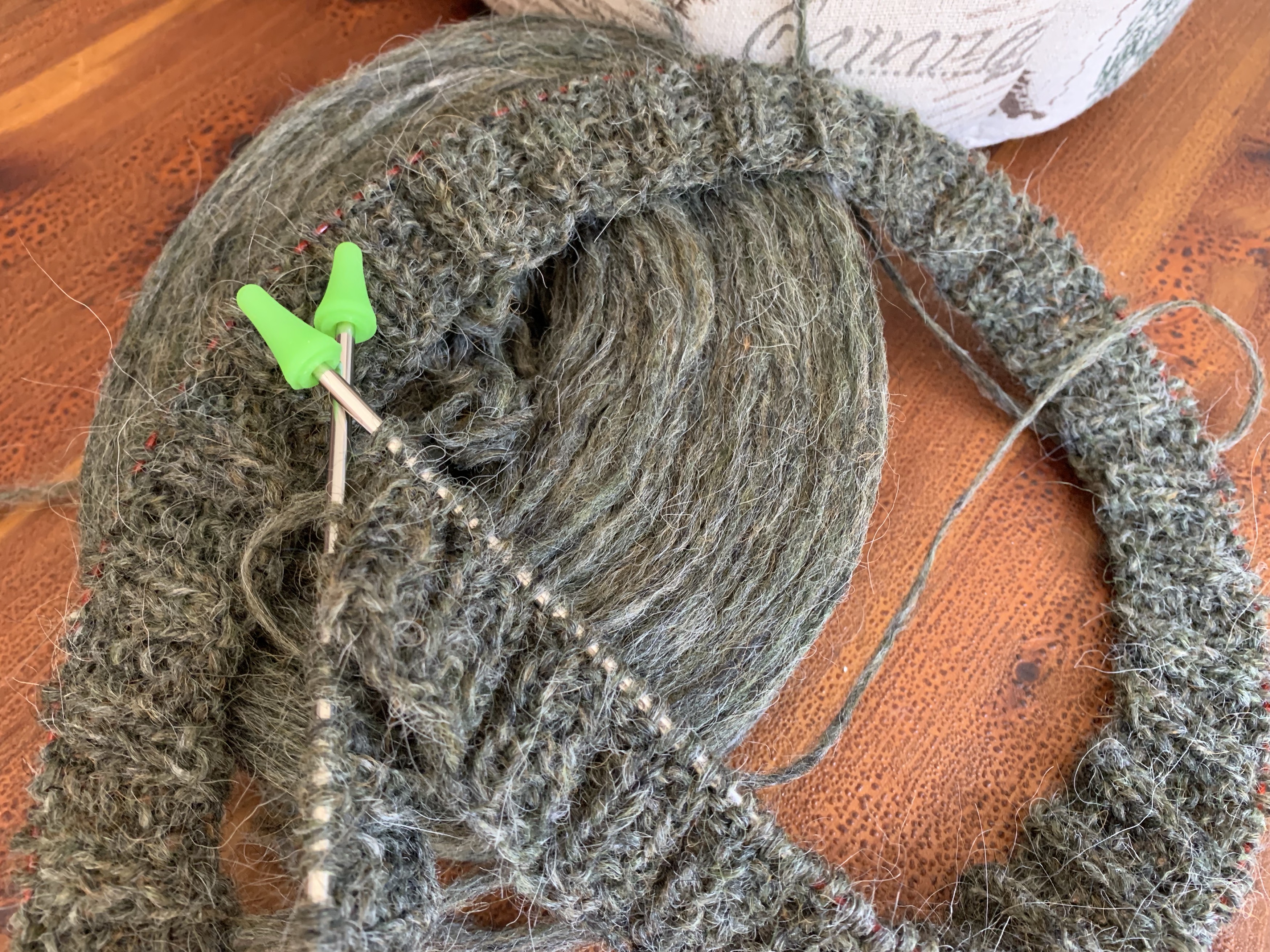
Yarn Being Used

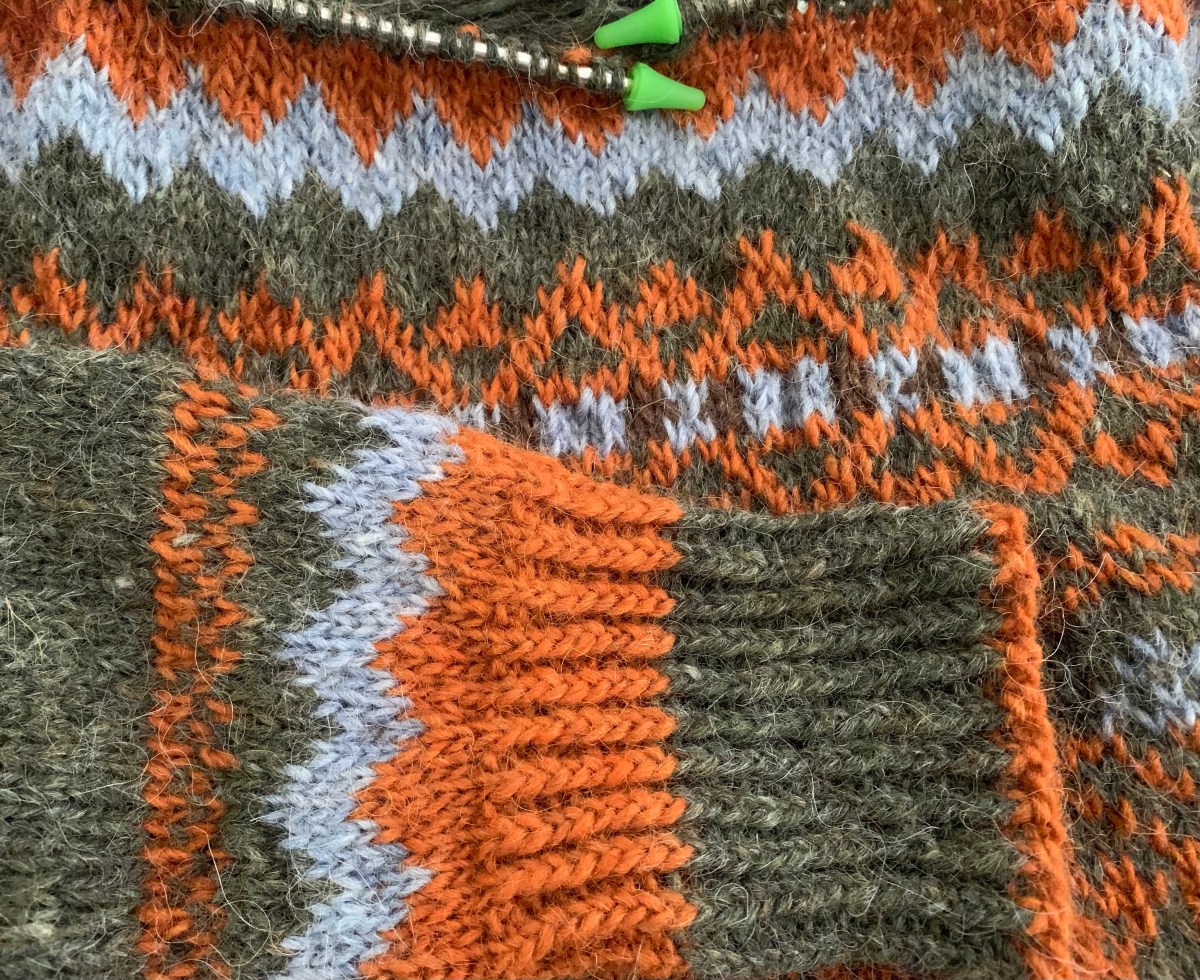
Because I have a lot of Plotulopi in “Frost Grass” green, that is my main color. The main contrast color is Apricot Lettlopi with a bit of Acorn brown and Air Blue Lettlopi in the center of the flower motif.

The “frost grass” color is really lovely, and I think a perfect name for this green yarn.

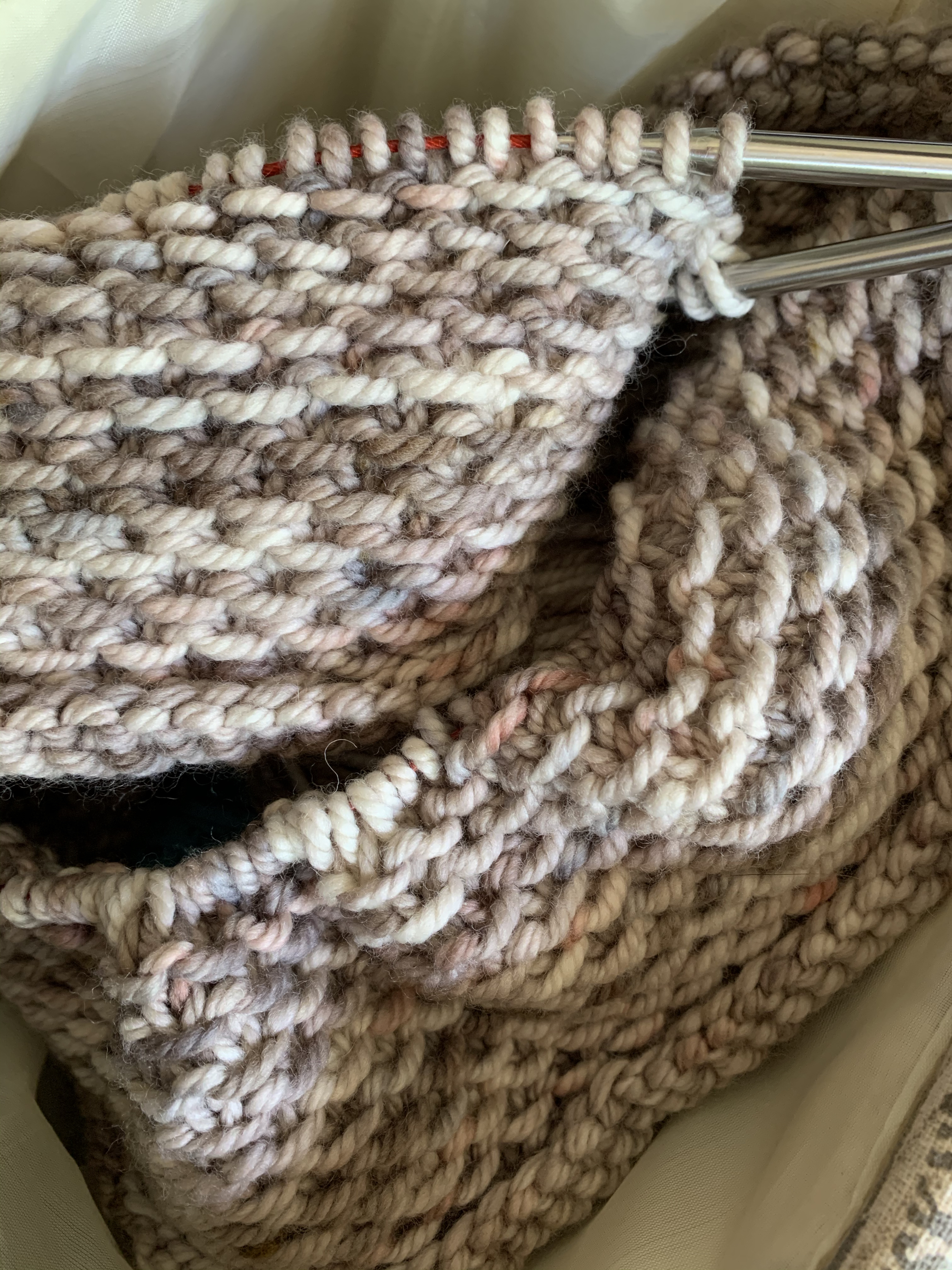
The Plotulopi is unspun and breaks easily. I must unwind it before pulling to knit. It does spit splice together well, which I’ve done when it unexpectedly breaks. I was worried about doing the colorwork and having to carry this yarn, but so far, it’s been okay. I am very careful not to tug on it.

The Lettlopi does not have this problem. I’m unsure how easy colorwork knitting would be with only Plotulopi yarn. Seems like it would be difficult. Unknitting, or tinking, can be tricky.
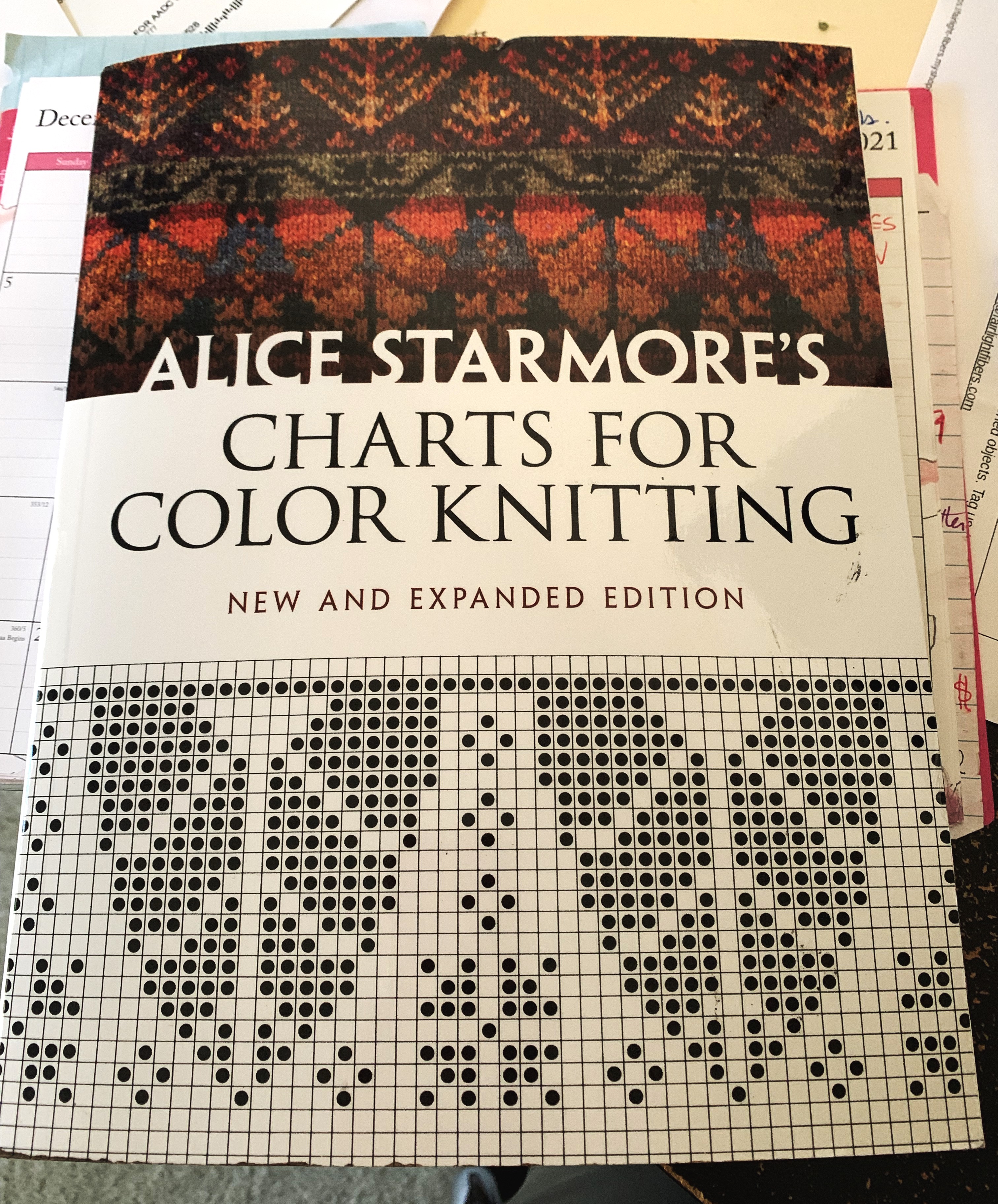
Alice Starmore’s charts for knitting book

Finally, I settled on a pattern, which was taken from Alice Starmore’s “Charts for Color Knitting” book (This is an affiliate link to Amazon). I will knit the floral pattern for the length of the body and the top will be solid green.

The Knitting

I cast on for the body ribbing (knitting bottom up) with green, using a size 4US needle – 195 stitches. My ribbing choice is not typical 2×2 and needed to be divisible by 5. The ribbing is from my Gansey knitting book and is more of a 2×3 rib. It goes like this:

Row 1: K2, *[P2,K3] repeat * until last 3 stitches, P2, K1

Row 2: P1, K1 *[P2, K1, P1, K1] repeat * to last 3, P2, K1

This wasn’t a good idea for this yarn. A normal 1×1 or 2×2 would have been fine.

Staka vest in Plotulopi

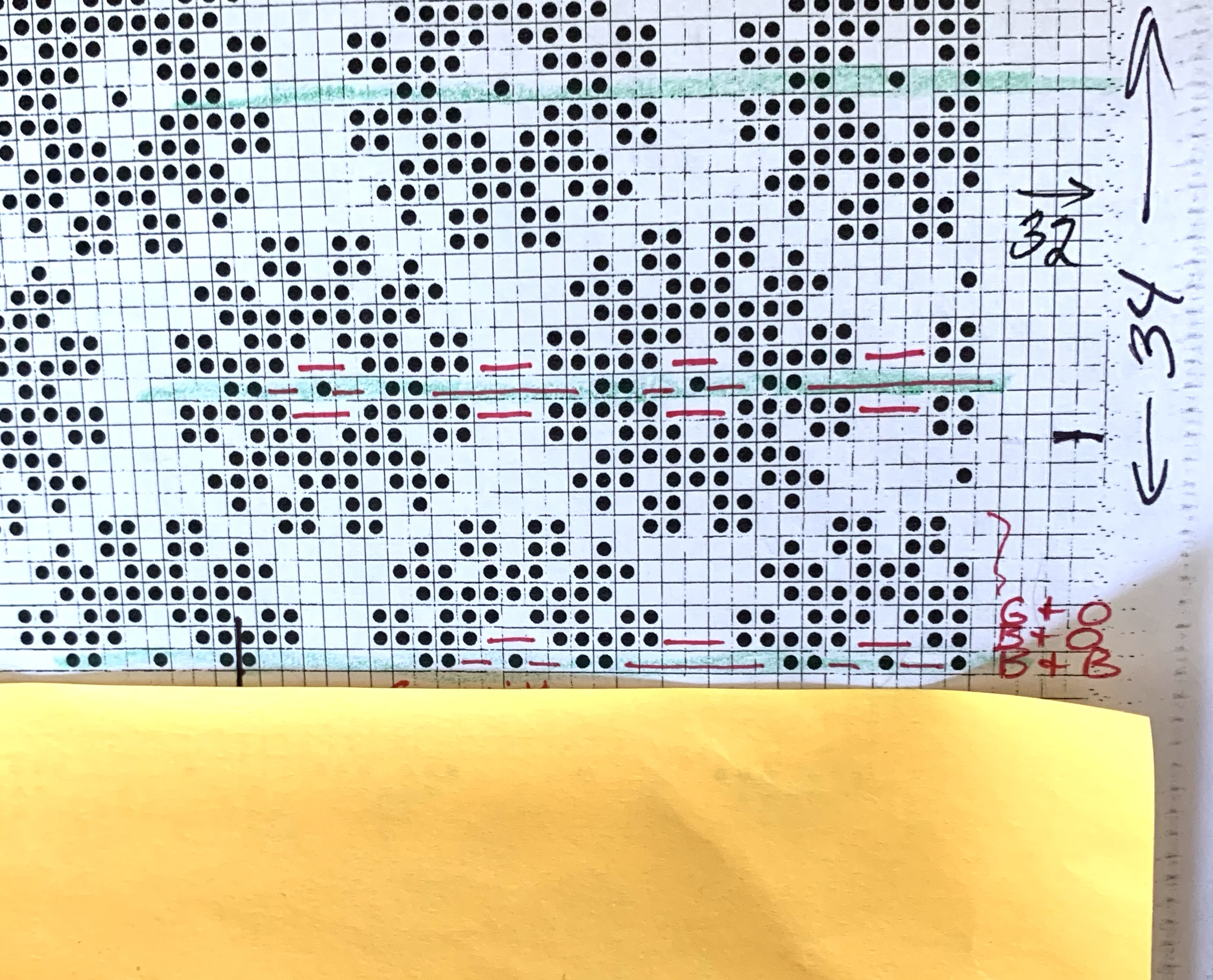
Then, after switching to the main needle size 7US, I reduced the stitches from 195 to 192 and began the divider row of little squares in orange (Apricot). The floral pattern is in 32 stitch repeats, which also fits into 192 stitches – I should have gone up a needle size here because this area of the sweater pulls in a bit.

The flower center three rows are brown with orange, brown with blue, and brown with orange. Then I go back to using green as the MC.
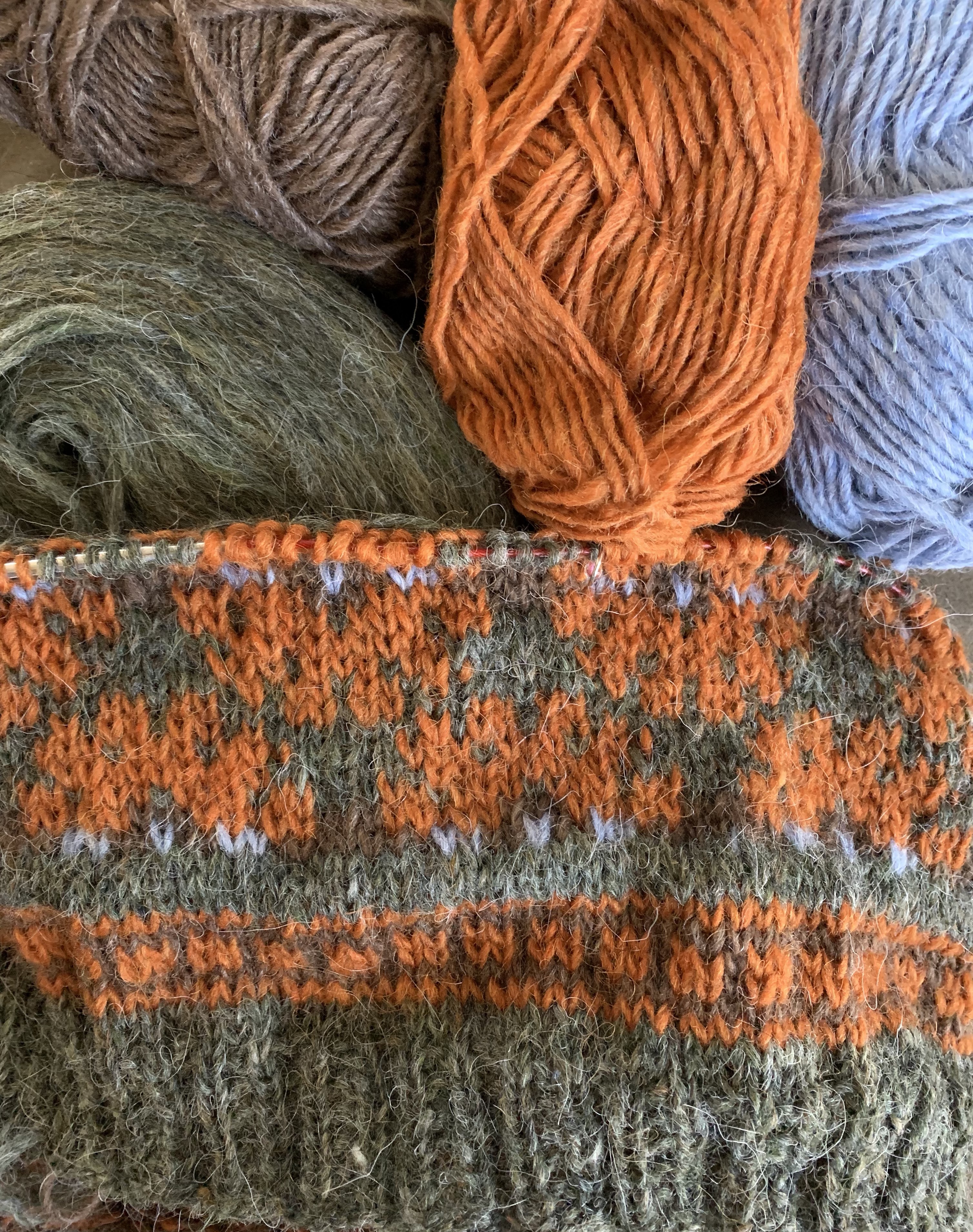
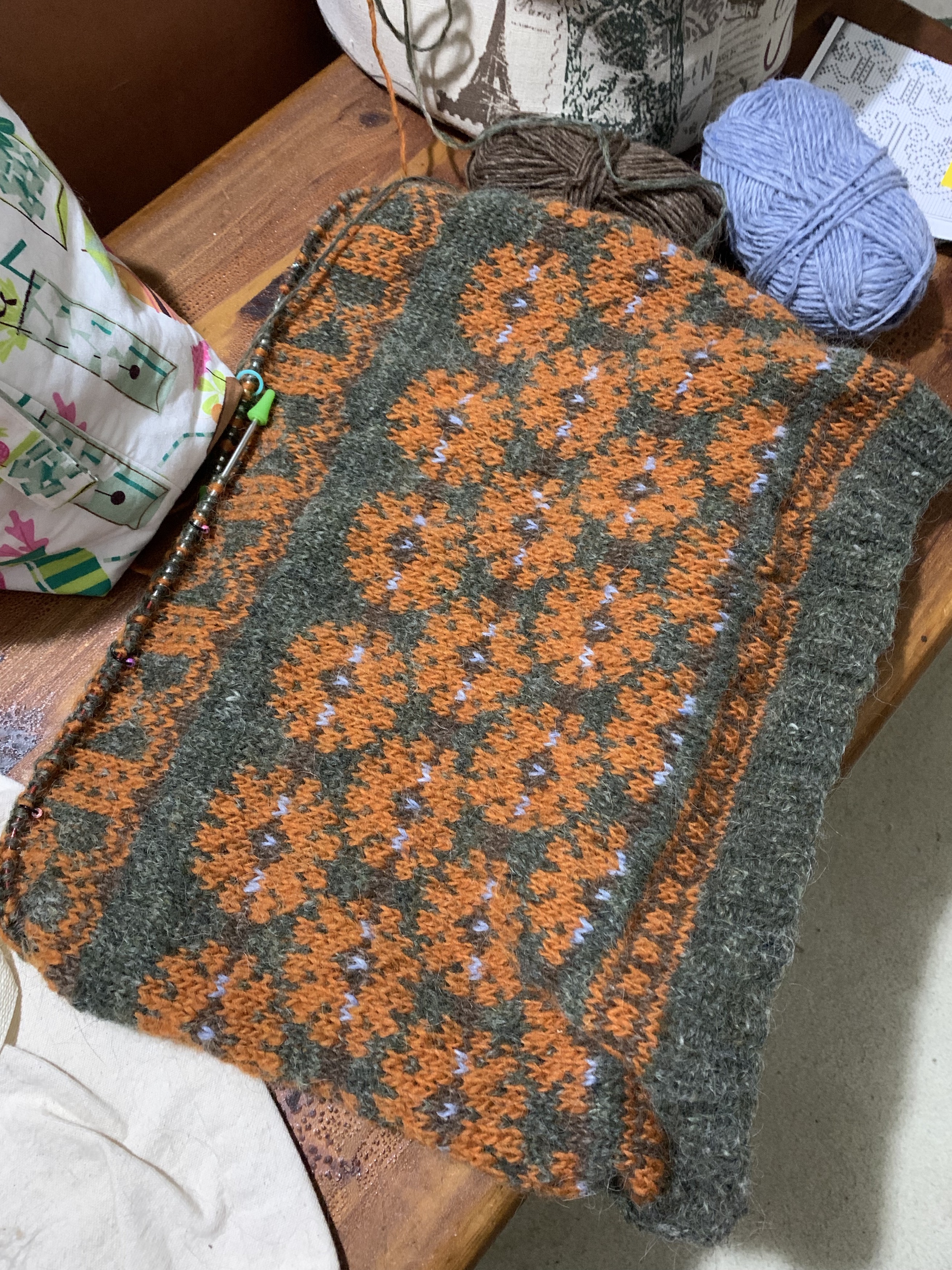
After finishing all the colorwork, I am still at 192 stitches, for size large, and will continue following the pattern from the book.

The Vest Becomes a Sweater

Unfortunately I have swapped out my vest for a bottom up sweater. I cannot understand the vest knitting directions. But I do know how to knit a bottom up sweater. Farfuglar was knit with similar yarn and in a similar size, so I intend to follow those directions and include some colorwork along the way. This sweater will end up being a total experiment! The Farfuglar sweater does not include short rows for the back, and I will definitely be including short rows.

I know that colorwork can make for a tighter fabric so I’ll have to be careful there. I really would have loved to have a vest, but I need a pattern with better directions for my first try.

Now I have continued on with a new chart motif to make the body longer.

Vest becoming a sweater

Attaching the Body and Sleeves

I wanted to use more orange, but was running out with only one skein left. The sleeves became solid green after the cuff area colorwork.

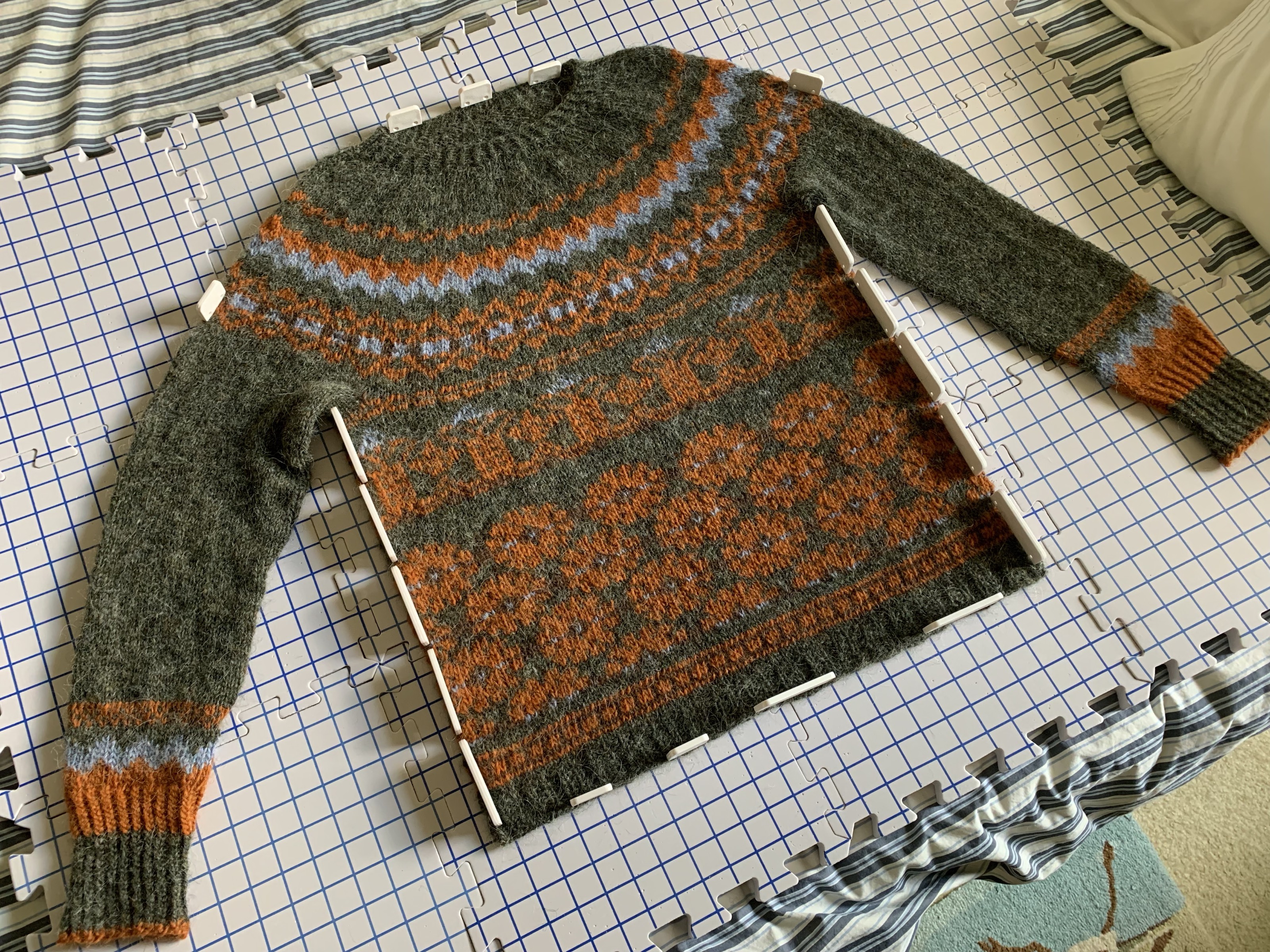
The neck is a simple k1tbl, p – around for about an inch. Then, I was finally able to try it on. The sweater is tight around the body due to all that colorwork. I have the underarm grafting to do and some ends to weave in. Once it’s washed and blocked, I will see how it fits.

Wearing the Sweater

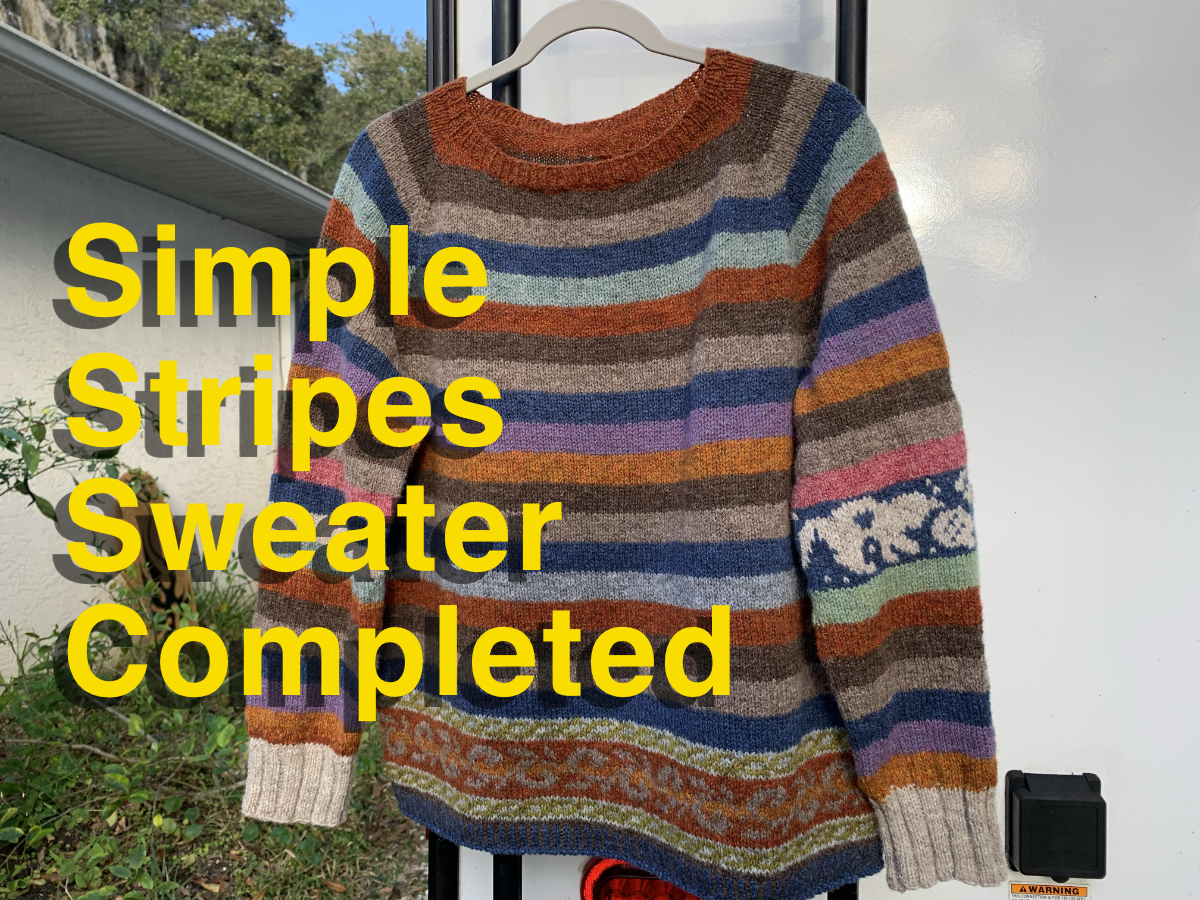
Finally in January 2023 I got some photos of myself wearing the Lopi Sweater. It is very comfortable. The flower colorwork area is a smidge tighter than I would like. If only my belly would shrink a little. Anyone else wish this?

If you are wondering about the comfort of this wool against the skin, I find it to be fine. Yes, I suppose it is a bit scratchy but I don’t mind it at all. Wool is a bit too hot – okay, a lot too hot – for Florida, but occasionally we have some cooler days.


Please keep reading the blog…

Something went wrong. Please refresh the page and/or try again.

Heading Into Summer – Four Projects On the Needles

Here’s what I am currently knitting. A couple of easy, free patterns, as well as a hat and sweater.

Because I live in a climate that is seldom considered to be “cool”, I knit with wool year round. I’m not sure what other knitters do, but this is the time of year when all the big yarn sellers come out with cotton, linen and silk yarns and showcase knitting projects for lightweight tops. I really don’t pay much attention to that because most “summer” projects are still too hot to wear here in central Florida.

Currently I am finishing up four knitting projects I have been working on regularly. I like to have a variety of knitting going at once.

The Hidden Gems Shawl

For a while now I have avoided knitting “shawls” because I never wear them. I would love to, but in this hot and humid climate the last thing I want is something around my neck. But, when I saw “Hidden Gems” knit up in hands-spun yarn, I thought it was a beauty and it might be nice to have one.

Hidden Gems free shawl pattern
Hand-spun shawl / scarf

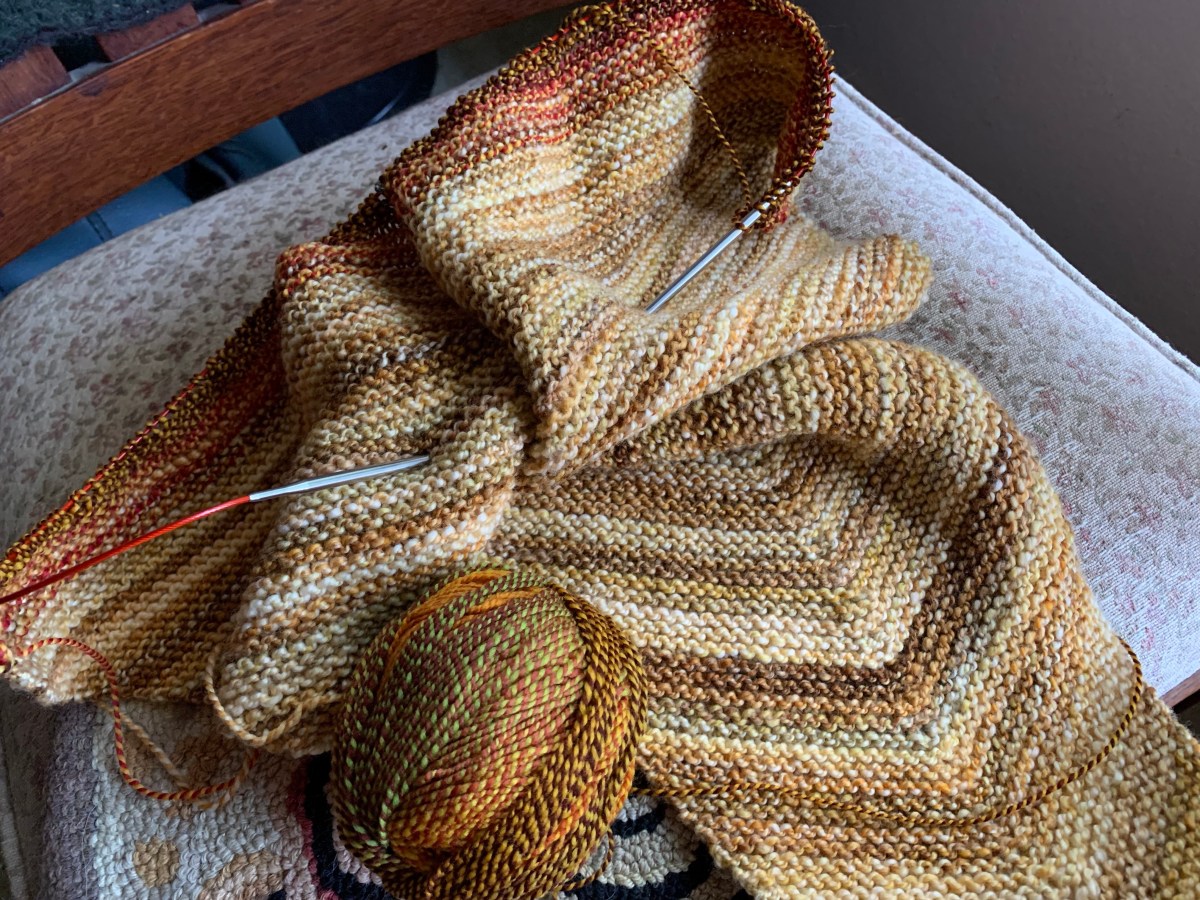
The shawl is more of a scarf in the shape of an elongated set of triangles – larger in the middle coming to points on each end. It is a free pattern, and could be knit using any type of yarn. This pattern would be great for a beginner knitter. It is mostly garter stitch with a few other stitches that would be good practice. You should know how to knit front and back, slip, slip knit, and knit 2 together.


The Orange Slouchy Hat

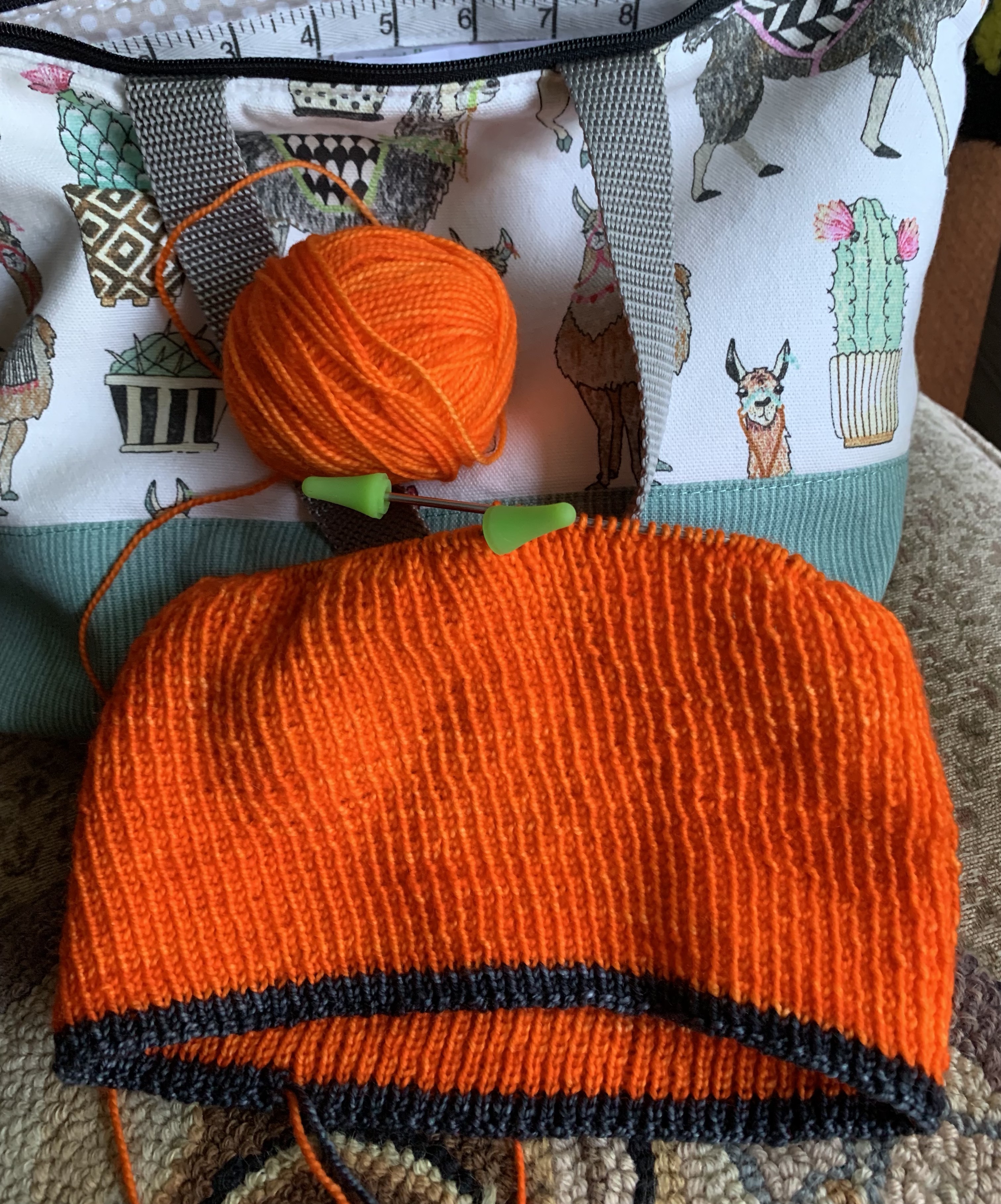
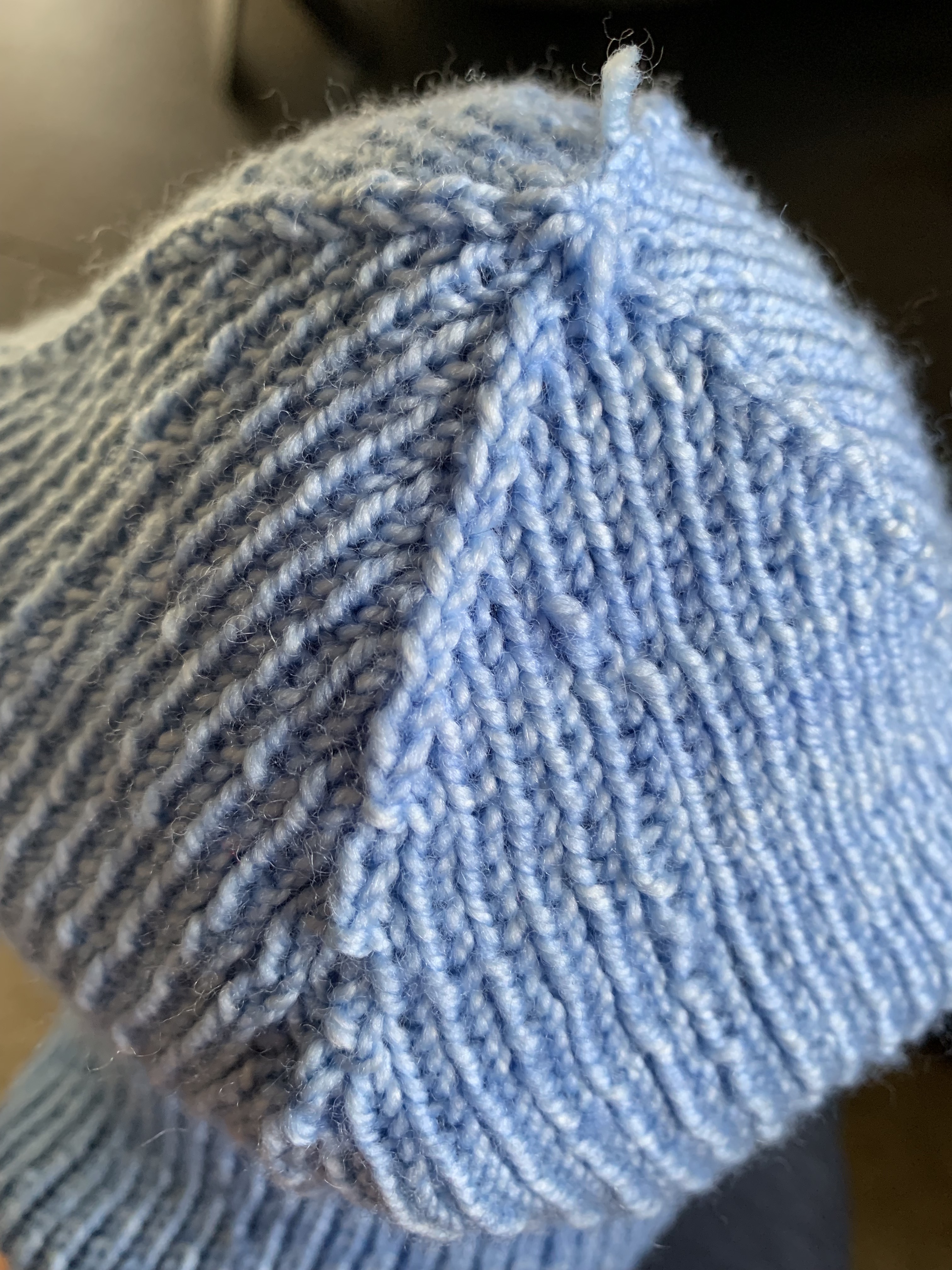
I have knit this slouchy hat in light blue already. It is a tedious knit that seems to take forever and that makes it great as a take-along project AND becomes a very lovely everyday hat. I have mostly been knitting on this hat while traveling. I no longer have a car of my own, so I ride as a passenger everywhere. It is perfect for knitting this simple 1×1 ribbing.

orange hat knitting

The Honey Cowl

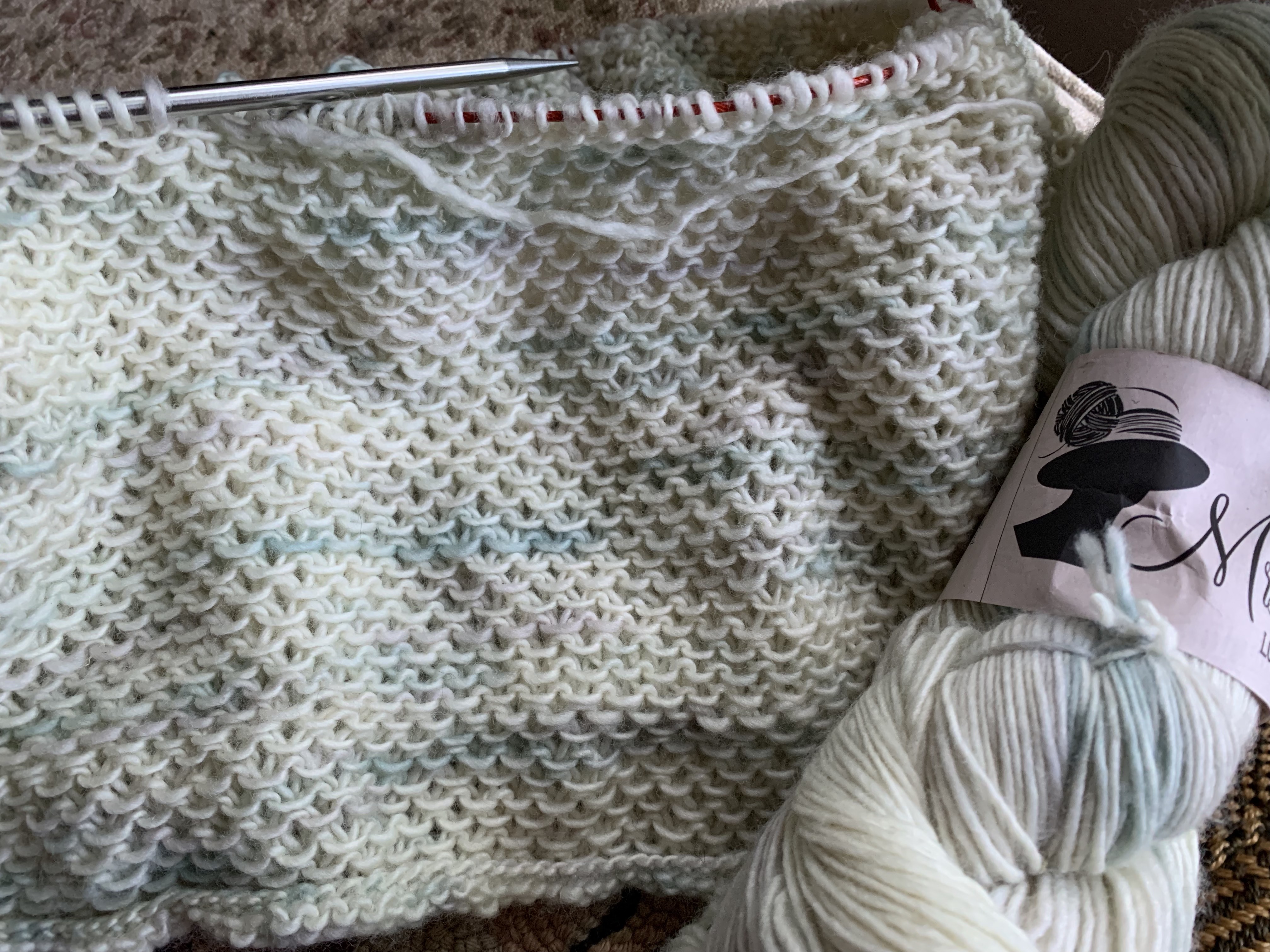
The Honey Cowl is another simple (and FREE) pattern that is perfect for take-along car rides, or TV knitting. This is my third Honey Cowl and it is another good pattern for a beginner knitter to try. Because stitches are slipped, this is a faster knit.

Honey cowl knitting Mrs. Crosby yarn

The Lopi Sweater

This sweater started as a vest. The vest directions were hard to understand, mainly because I have never knit a vest. After I knit the body part of the “vest” I had to switch to making it a sweater. The whole thing was pretty much made up as I went along.

As I write this the pullover is nearly finished. I mainly have weaving in of ends, washing and blocking left. There is no pattern for this, but I followed stitch counts (mostly) from Farfuglar.

Yoke section of Lopi wool sweater
Yoke patterning of the Lopi Sweater

The sweater is nearly finished, and once that is done with I will look for another sweater to knit. I already have yarn set aside for two patterns, so I will probably begin one of those. The simplicity of the hat, cowl and shawl patterns make them perfect for occasional knitting and there is no hurry in completing any of them.

Knitting Setbacks and Frustrations

As is true with anything in life, our hobbies can sometimes be frustrating. Just when I think I am doing pretty well on my knitting journey, I get some setbacks that tell me otherwise.

This is all part of the learning process so I try to take it with a grain of salt and trudge onward.

The Problem is Mine

I always like to have some sort of Fair Isle project on my needles and had decided on knitting a vest from my Lopi 40 book. After having success with the Farfuglar sweater, I figured a vest would be quicker, if not easier.

Wrong. I can’t understand the directions for dividing the top. So I have moved on and will make the vest into a sweater. Fingers crossed it will be wearable. I am not a good enough knitter to accomplish this pattern – I’m sure there is nothing wrong with the design.

The Problem is Theirs

Then, I began a baby blanket pattern – which I paid money for – because it looked cute and fairly simple. Wrong again! The directions are horrible with a pattern mistake on the first row. I ripped it out. It makes me angry that pattern writers don’t pay attention to knitters who have had difficulties (and they did) and fix the problem! Things like this make me doubt the designer. If they don’t care enough, why would I want to chance buying anything else from them?

No baby blanket in the future for this yarn

This is not the first time I’ve bought a pattern that was ridiculous. I had most of the Oxbow sweater knit and found it too frustrating to complete. I now avoid that designer, and she is very popular. Carbeth ended up a disaster for me and I found the pattern lacking in explanation. This designer is another one I now avoid.

Live and learn. I’m slowing building a list of my favorite pattern designers. It’s trial and error and the only way to figure it out is to try.

Why Not a Pattern Rating System?

Truthfully, it may just be that these designers write for experienced knitters who can interpret what to do. I wish patterns had a numbering from easy to difficult rating of some kind. As it is now, we have to go by what other knitters say. And they are not impartial because they may be experienced too!

Sometimes a knitwear designer will offer their own warning for knitters saying that experience is needed. One such designer is Jared Flood of Brooklyn Tweed. His patterns have a star rating / skill level attached. I’ve knit the Skiff hat a few times and it has a rating of 3 of 5. If anything is true, he goes overboard with directions and instructions! That is not a bad thing, it just takes time to go through the entire pattern before beginning and making notes. I love his patterns and have knit quite a few. I know by now that I never have to worry about a lack of instructions. Each pattern will be worth the money.

Keep Going

We learn best by trying, whether we succeed or fail, or fall somewhere in between. Keep knitting and keep trying new things. I have lots of yarn to use up!

One important thing I have learned is that I can’t trust the reviews of previous knitters! Either they know too much or can’t be honest, but relatively few reviewers ever note problems that are blatant in horrible patterns.

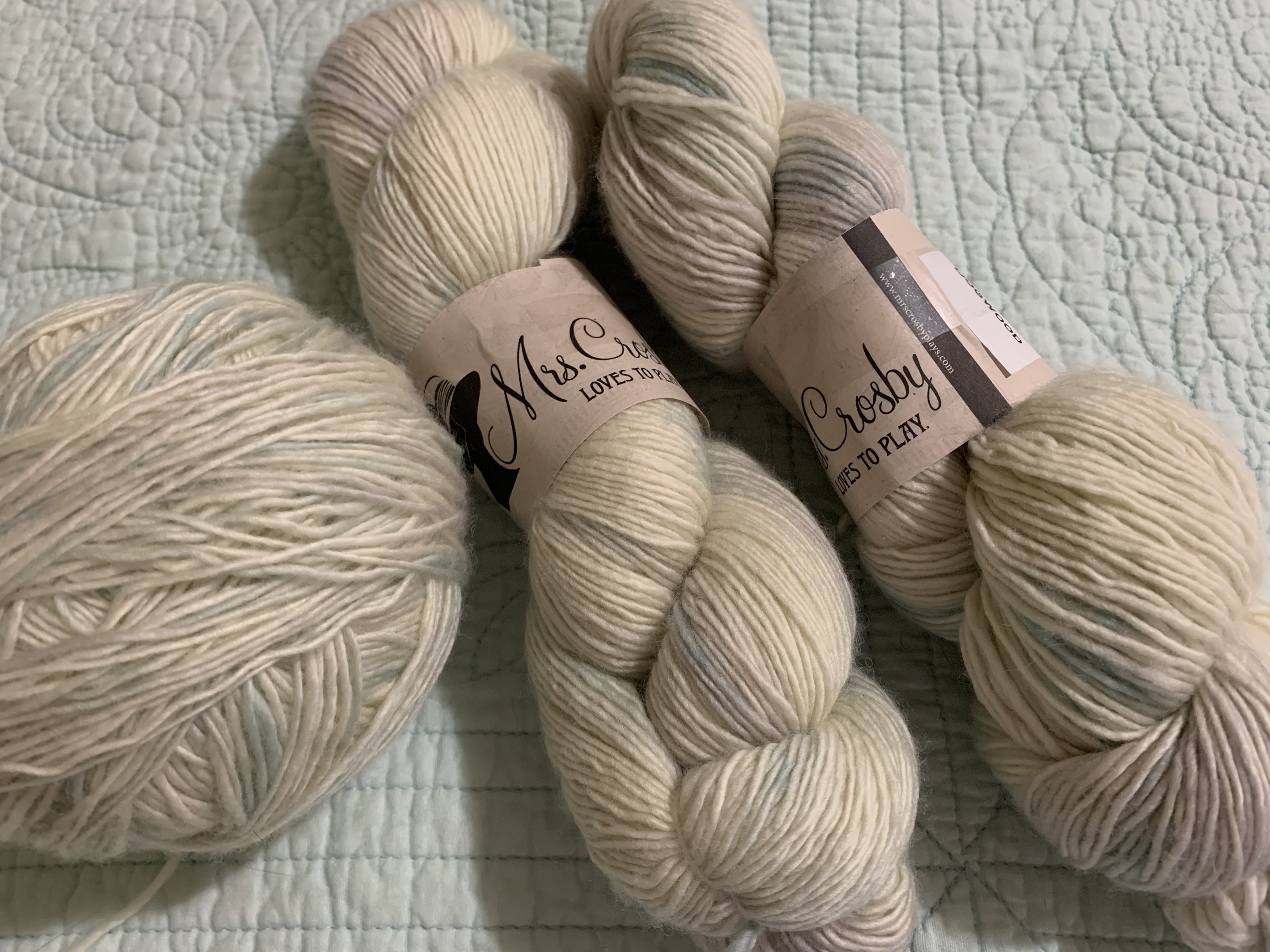
I’m thinking that maybe I need to go back and revisit some easy, favorite patterns and stick with them. All I wanted for my Mrs. Crosby yarn was a simple knitting project. The baby blanket will never be, but perhaps it will become a Honey Cowl, as that was a fun project (and it’s a free pattern folks). It might look good in a fingering weight yarn.

Relax, it’s only knitting

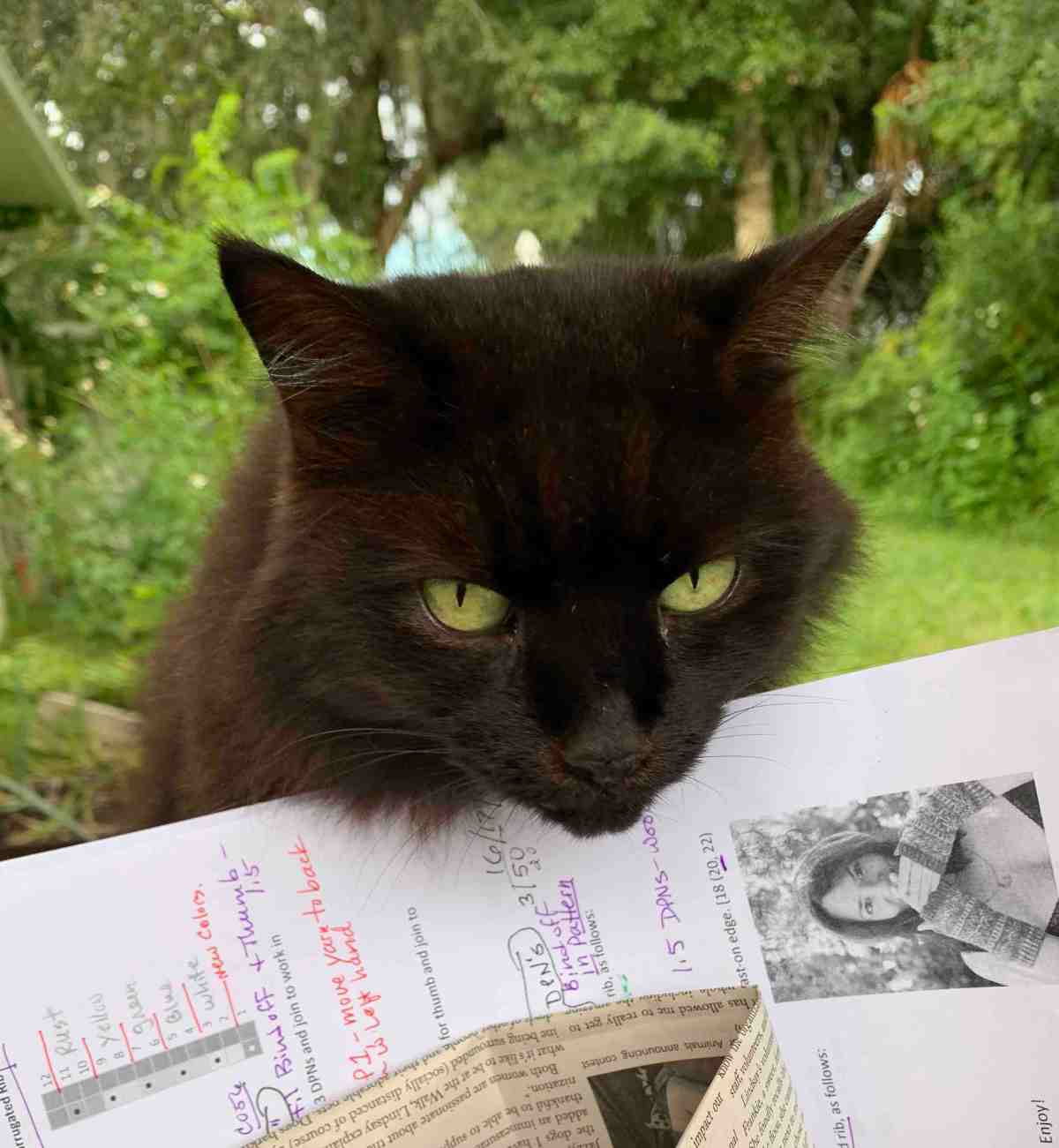
Black and white cat
It’s not worth getting stressed about!

Fellow Knitters, Please Keep Reading

Slouchy Hat Knitting Patterns

Like most knitters, I always have more than one project going at a time. For me, the more challenging projects, which take concentration, must be worked early in the day. By evening, the light is not great, and I am tired, but I still need something to keep my hands busy while watching television.

My daughter has mentioned that she likes those simple slouchy hats. For the most part, they are pretty boring to knit, and I guess that is why I have not made one for her. Knit one, purl one, endlessly round and round… snore. But that is the type of knitting I do at night anyway, so why not make something special while I’m at it?

I chose the pattern by Churchmouse, which I had knit once before only in a heavier yarn with different needles. This time I wanted to follow the pattern exactly.

Ribbed Watchcap and Beanie by Churchmouse Yarn and Teas

Knit in Camp Colors yarn which is Superwash. Wool and Company had closeout pricing, so I bought a 6 skeins in three colors. This is really nice yarn which is very soft. The hat did not stretch out like superwash tends to do. I would use it again, and plan to! I think I will pick a new slouchy hat pattern for my next hat.

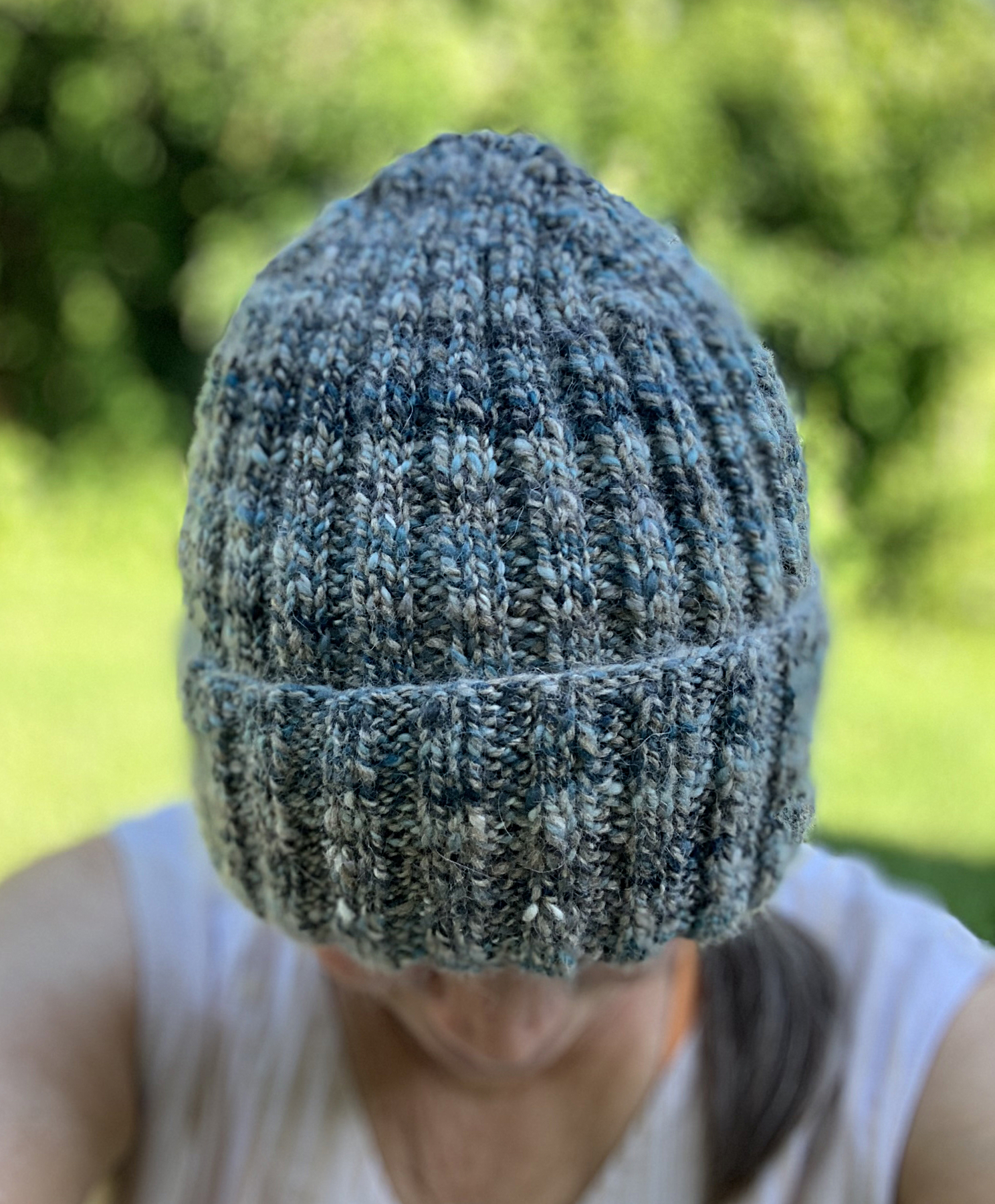
For the blue watchcap – or slouchy hat as I call it – I used the needles suggested, with cast-on number and length as pattern called for. I did not do the pattern’s cast-on, but used the Old Norwegian cast-on.

Knitting a 1×1 ribbed hat is easy, BUT… any little mistake shows. Also, the top of this hat has some unqiue decreasing, and those decreases are knit on the wrong side. Actually, what you are doing is knitting the entire hat inside-out. Once complete, turn it to see the right side.

I used nearly all of two skeins of yarn for this hat. It is knit in a size 1US needle and that is a lot of stitches, let me tell you!

Because this hat is so long, it can be worn with a folded brim as well. Knit it shorter and make the beanie.

Free Slouchy Hat Patterns at Purl Soho

Who doesn’t love free things? Purl Soho is an excellent place to find free patterns, and very pretty yarn. They offer a few hat patterns – for free – that fit the slouchy category.

Slouchy Hat Patterns to Purchase $

These hats have patterning such as cables, brioche, and textured stitches. All links go to Ravelry product pages.

Choosing Yarn for a Slouchy Hat

Often I will see a pattern knit up in a really awful choice of yarn. I’ve been guilty of that myself. It’s always worth knitting with the appropriate type of yarn to match the project.

In my opinion, a slouchy hat looks best when knit in a fingering or DK yarn. The smaller stitches will help make the hat fall nicely at the back without being bulky.

But nothing can help a hat look better when it has been knit in a cheap, ugly yarn! It’s a hat, so why not choose yarn that will be soft and warm and look nice – it will be front and center on your head after all! Sock yarn, which is superwash, works well for projects like this and especially if the hat is a gift to someone who will not hand wash. For extra warmth, a nice wool such as Jamieson & Smith or Rauma would work nicely (must hand wash wool). Cotton is not a good choice as it is not stretchy and tends to be stiff. Also it usually shrinks and looks worse after washing.

Hats I Have Knit

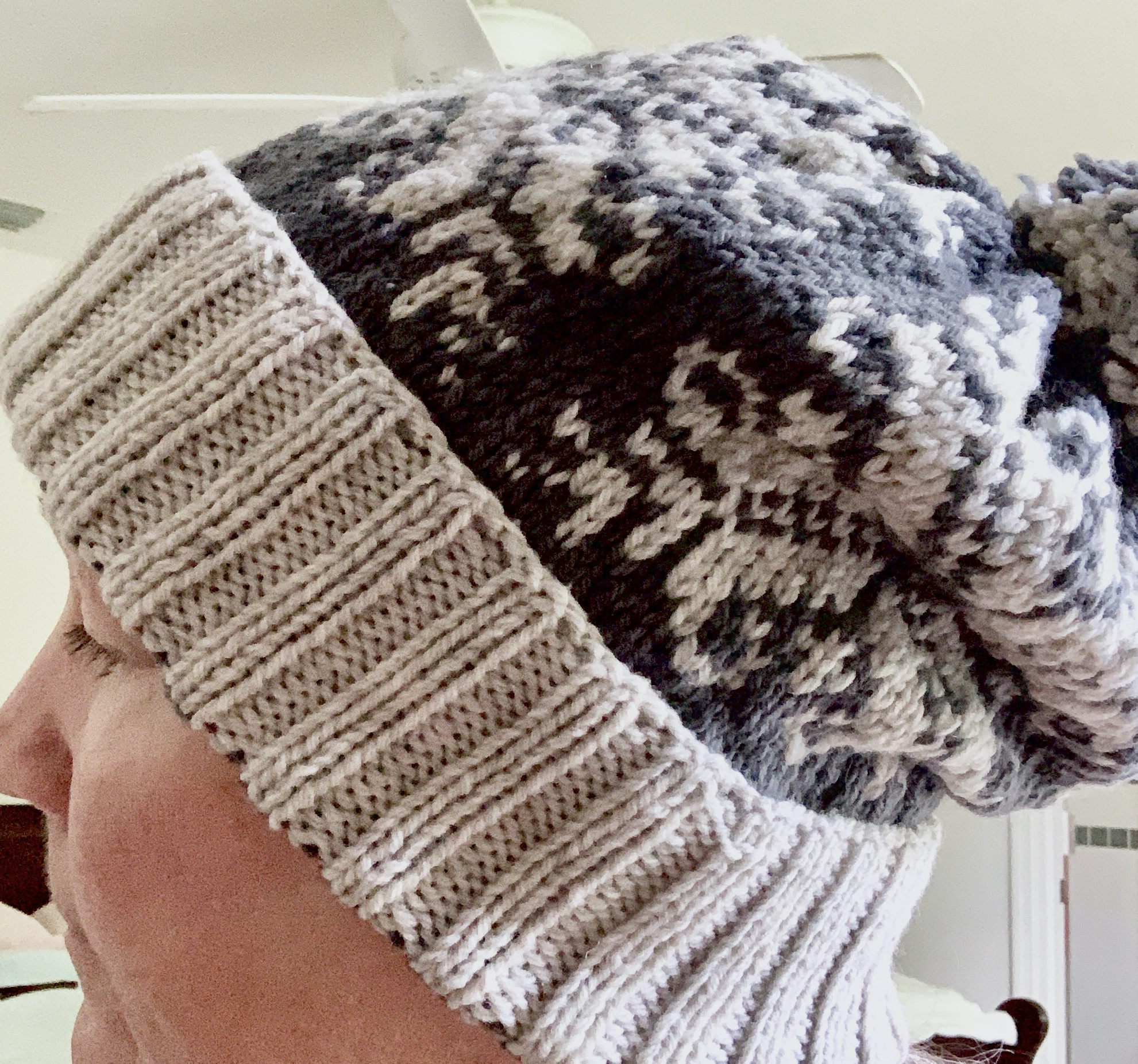
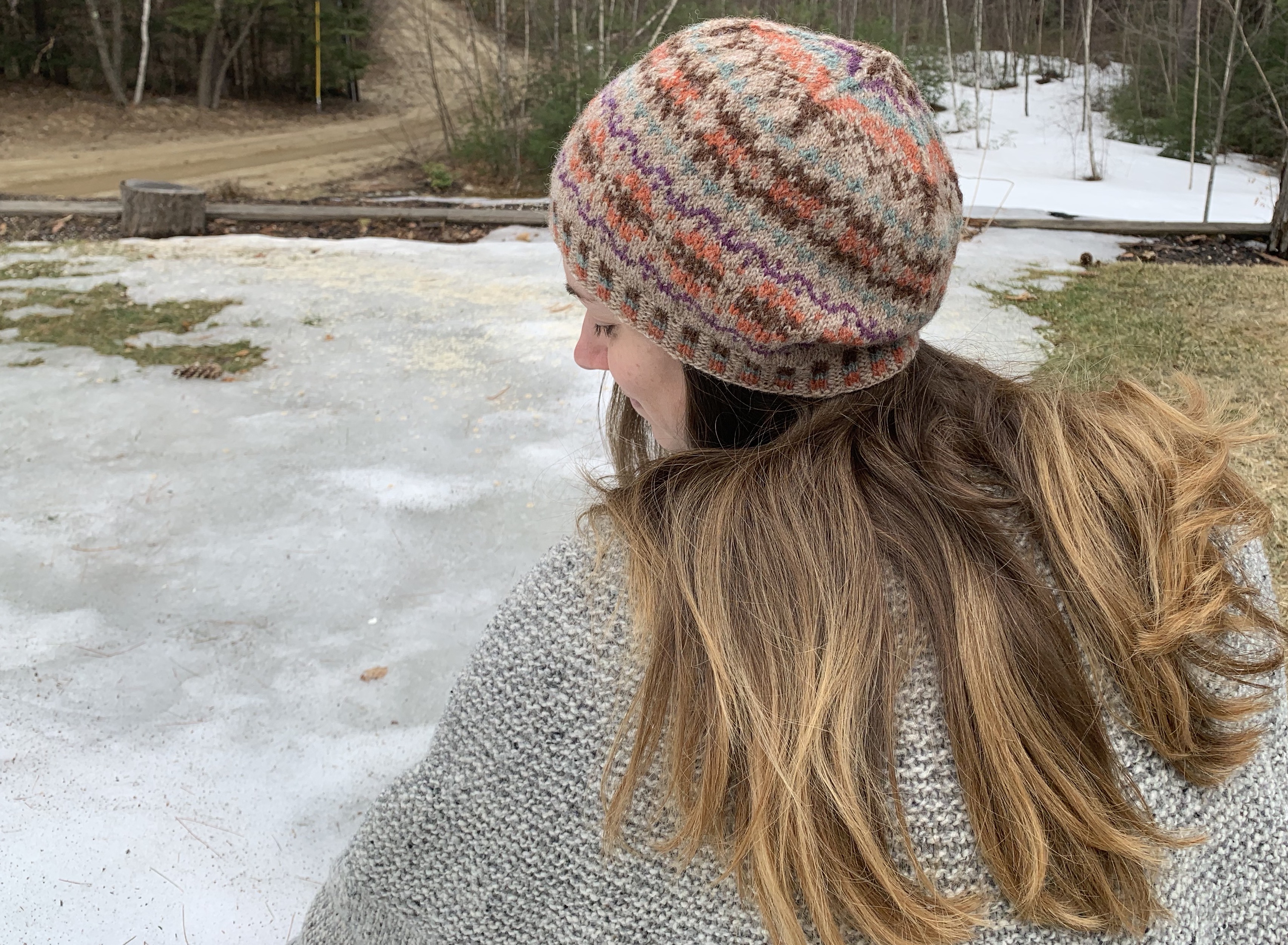
I love knitting hats. They can be simple and quick to finish or involved and challenging. The Winter Solstice aka “chicken hat” qualifies as slouchy as does the Skiff. Some of the photos below have a link (the text) to my post page where you will find a link to the pattern.

Please Keep Reading the Blog

I write about my knitting projects and do pattern reviews. Also I love to share links to free patterns.

Something went wrong. Please refresh the page and/or try again.