Creative Colorwork Scarf Knitting: Designing Repeating Patterns

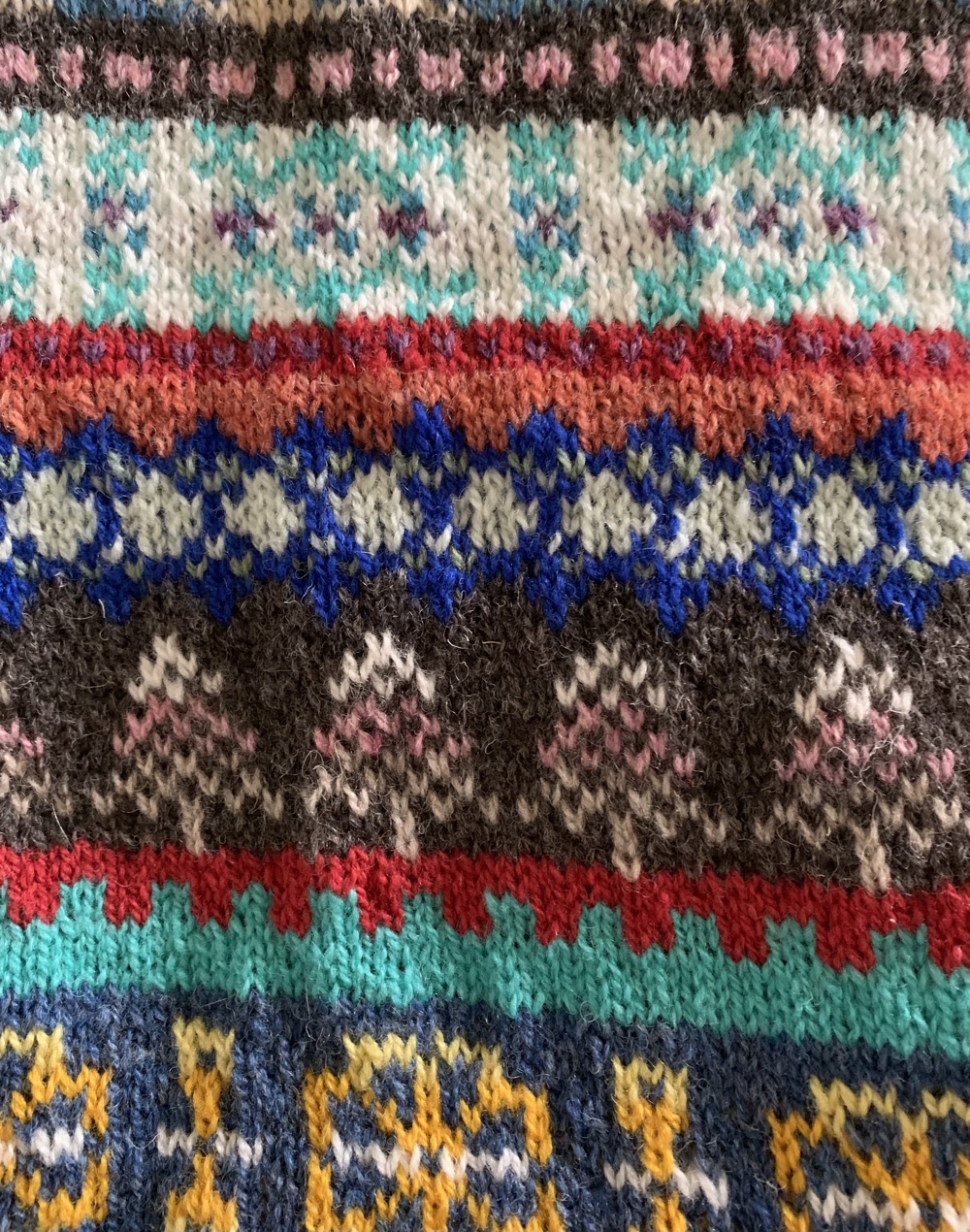
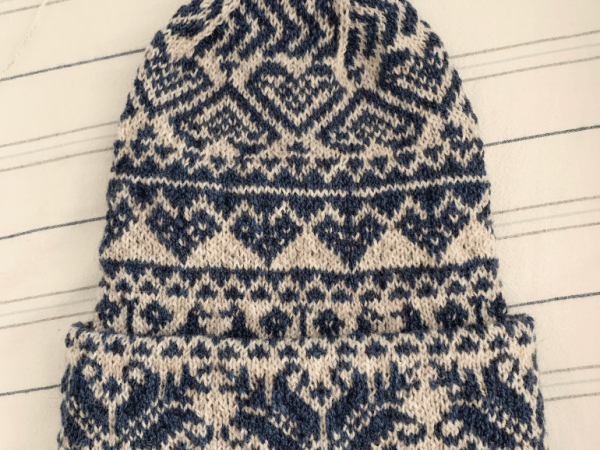
Whenever I get bored with a knitting project, and crave some two-stranded knitting, I pick up my DIY scarf. The colorwork patterns I’m using are random, and come from some books I have.

I began this tubular scarf with a provisional cast on. When it is long enough, I will connect the ends, using the Kitchener stitch, and create one long tube to wrap around my neck, twice.

Tube colorwork scarf

I began this scarf project out of boredom. It is my love for knitting colorwork that I needed a project like this. My stitch count is 100 and the repeating patterns must fit into that count. Patterns must evenly divide into 100.

Or, I can create an extra stitch. For instance, on the “people” pattern I had to add one more space (extra gray stitch) between them to make the stitch count work. I believe it was 19, and I made the repeat 20.

colorwork scarf

I’ve had fun choosing patterns and making some up myself (very simple ones). I think this type of knitting, with blocks of different patterns and colors, has a name.

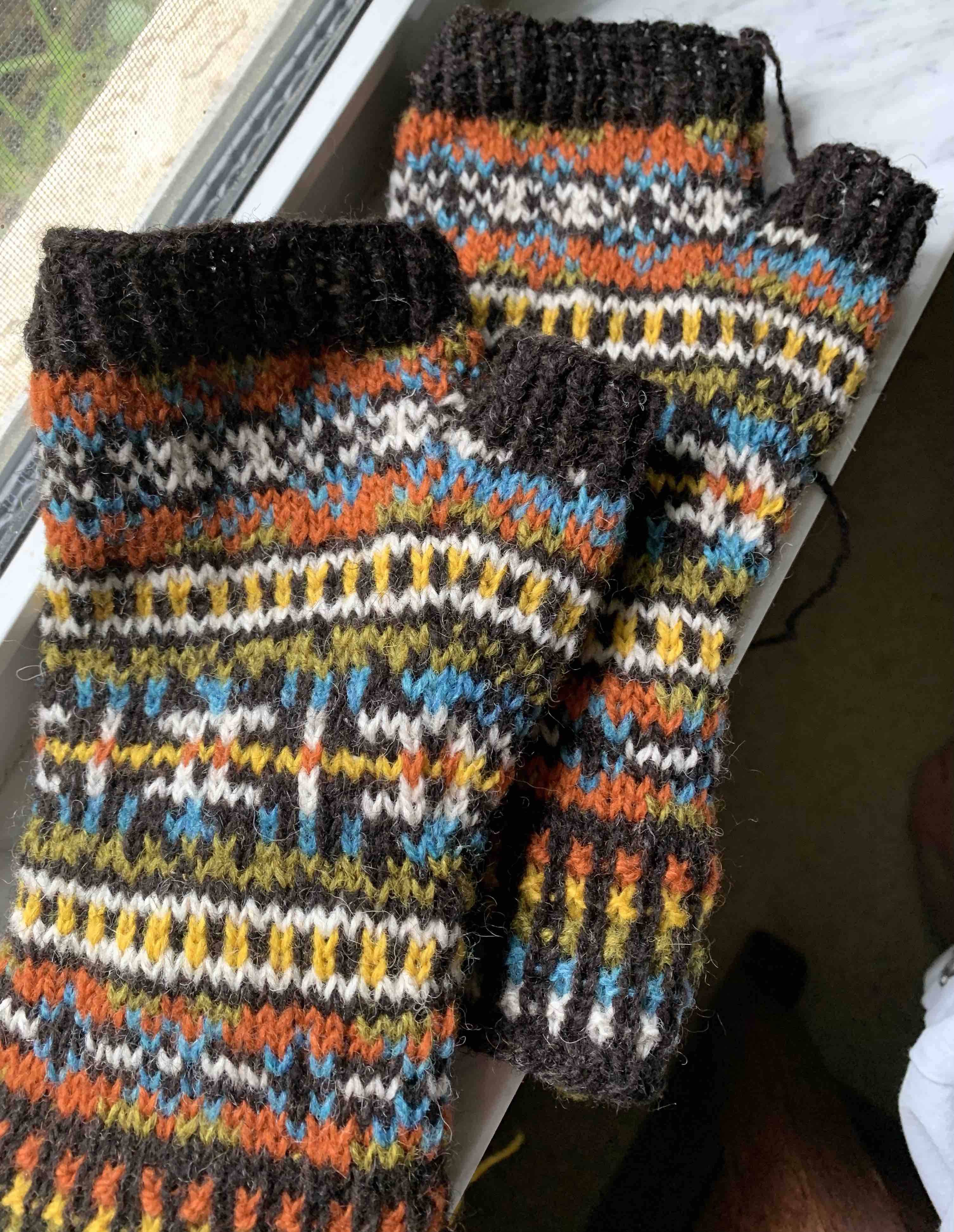
All of this scarf is Fair Isle, meaning I use only two colors per row. Some rows are one color only, but I never use more than two at a time. I hold the dominant yarn in my left hand and knit it continental style, while knitting with the other color English style.

I found this fun blog post at Talvi Knits that talks about knitting in two passes when using more than two colors in a row. It sounds like mosaic knitting, but using more yarn colors. It sounds pretty confusing!

colorwork Fair Isle scarf

All I needed to do was to find repeating patterns with numbers that divided evenly into 100. There weren’t that many. You’d be surprised at how many repeats are4, 6, 8 and 12!

colorwork scarf

Occasionally, I don’t like the design once it’s knit. I’m not very good with selecting colors to combine. Because I am using only stash yarn, I have a limited amount of color variety to use.

It doesn’t matter on this project. I may never have a chance to wear this scarf anyway. I live in Florida where no one ever wears a scarf.

cat and yarn image

Knitters, read on….

Something went wrong. Please refresh the page and/or try again.

Rebel Cardigan Completed and Here is The Review

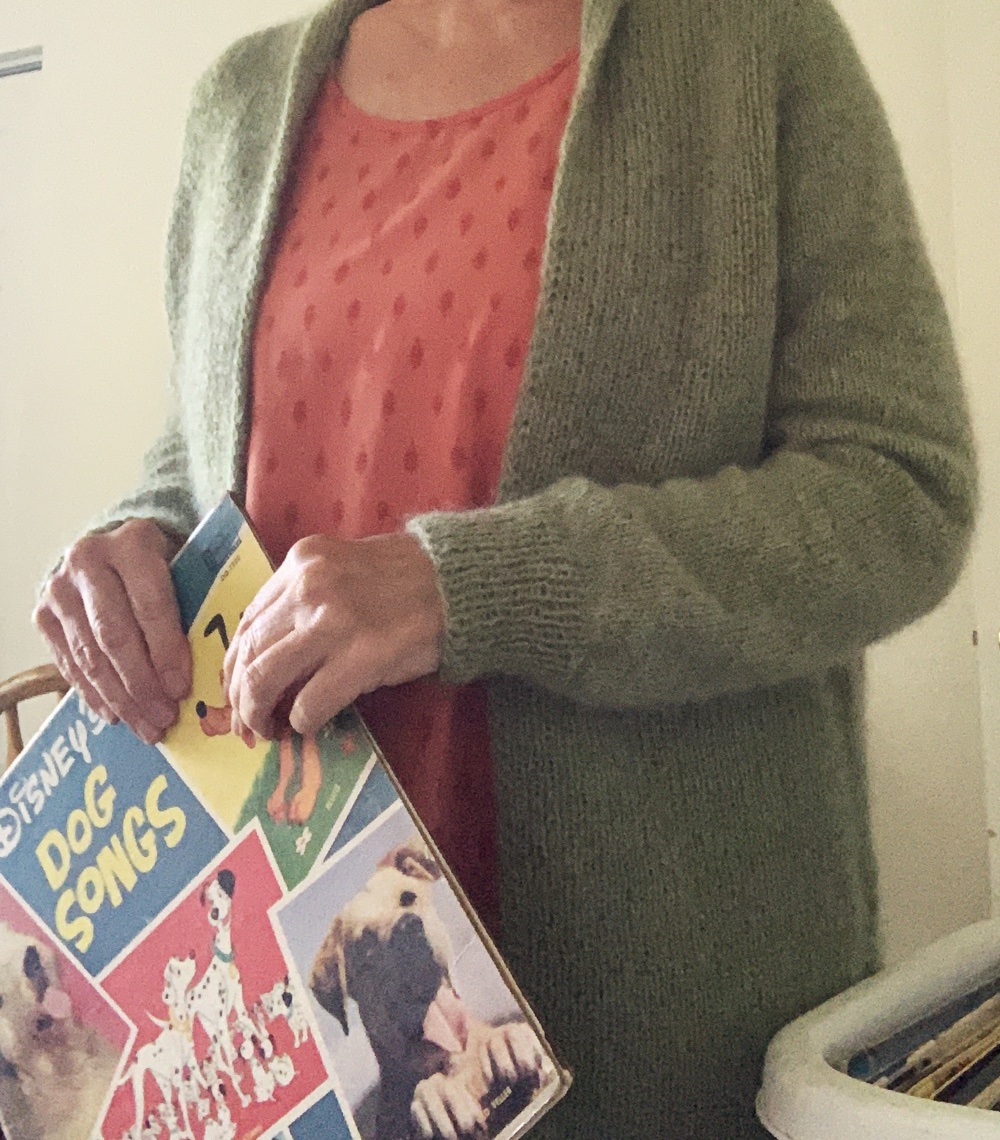
The Rebel Cardigan pattern is a newer design by knitwear designer Ankestrick. While knitting the Rebel Cardigan, I closely followed the pattern. The only modifications made were on the sleeves, which I left a bit looser as I knit to the cuff. I also did not do a tubular bind off.
On this page:
  • Knitting Sleeves, my mod for the cuff decrease.
  • Knitting the body
  • Hip width increases
  • Binding off, hmmm?
  • Finished Photos
My Decrease Row For Sleeve Cuff Ribbing

I stopped doing decreases when the stitch count was 58. For my size (4), decreases were to continue to 48 stitches. I like some width to the sleeve in case I wear something long-sleeve underneath.

The ribbing for the cuff is done on 48 stitches for my sweater size. I needed to decrease, in one row, to get from 58 stitches to 48 before doing the 1×1 ribbing. Here’s how I knit that decrease row to end up with 48 stitches:

On the next round I began the ribbing. I had been using DPNs for the sleeve but changed to a 9 inch circular for the rib. I really don’t know which way I like less – haha.

Once both sleeves were finished, I put the body stitches back onto my longer needle. I then kept knitting until I ran out of yarn.

Knitting the Body

The body of the rebel cardigan is back and forth knitting, while creating a very nice edging down the front. Panels of 1×1 rib on each side, while stockinette makes up the back. I usually knit my sleeves first and then finish up the body with the remaining yarn.

Making Increases for Hips

I decided to do some hip area increasing, which is mentioned in the pattern. At about 10 inches (body length measured under arm) I began to follow the increase suggestion. This means doing increases at front and back after 14 rows, then increases for the back only at the next 14 row mark. At least, that is how I figured it.

Not Doing a Tubular Bind Off, But What Are the Choices?

This sweater pattern calls for a Tubular BO (bind off) which is done with a sewing needle and not knitting needles. I don’t mind doing this bind off on a small sleeve circumference, but don’t really like it for an entire body bind off. It entails pulling yarn – long enough to do the whole hem – with a needle. I’m not super familiar with it, and didn’t want to mess up my bind off.

Also, the 1×1 rib is on two edges (front sections) with regular stockinette between, so how would I manage that? I guess there are tubular bind-offs for stockinette, but I’m not sure.

Bind Off Options to Consider

So I searched and found a “sewn bind off” shown here by Brooklyn Tweed. I suppose this is how you do it. Tubular to the stockinette, then sewn, and back to tubular for the other side.

It would have been nice to have been given other bind-off options and suggestions in the pattern. And would it be possible to do the sewn / tubular bind off in sections? I don’t think so.

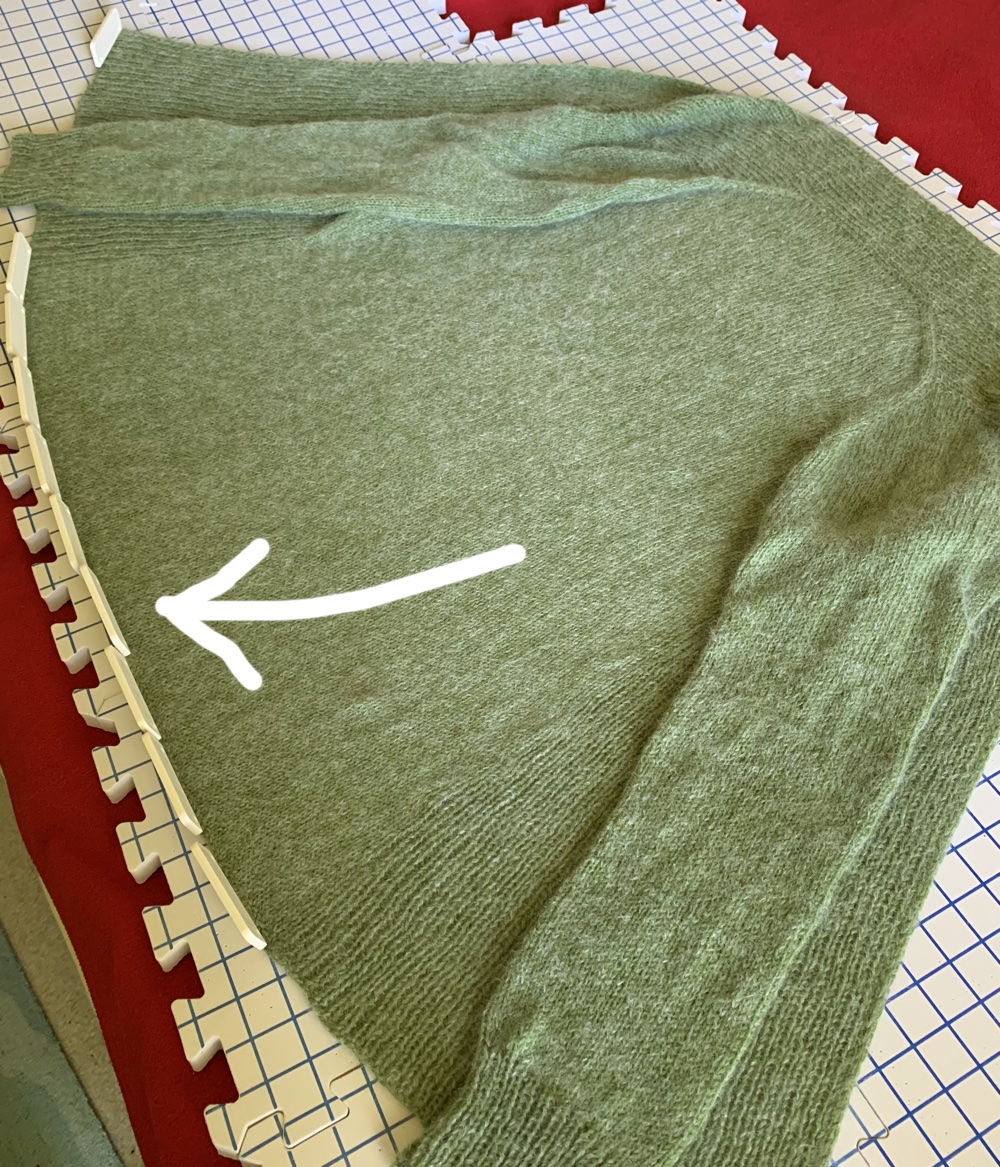
As it ended up I did a normal bind off in pattern (k1,p1) until I got to the stockinette section (the back). Then, I did an Icelandic bind off for the stockinette. This has caused the back section to curl.

Rebel Cardigan bind off with curling edge at stockinette section.

I’m using my blocking pins to hold down the stockinette hem. Now that it is mostly dry, the hem is flat (yay)! You can see, in my photo above, the shaping where the increases were made further down the body.

Like most people, I am naturally a bit bigger in the hips than the waist, so I recommend doing these increases for the longer version.

Knitting For Olive Yarn

I chose to knit the Rebel using two yarns held together. I had just finished up knitting the Field Sweater pullover and used the same types of yarn (Knitting for Olive). I am very happy with the outcome, and do love this yarn. The Mohair is not as fly-away as some others I’ve used.

The Knitting For Olive company is RAF certified, and that means they create their yarn in an “ethical and responsible” way.

Finished Knitting Sweater Photos

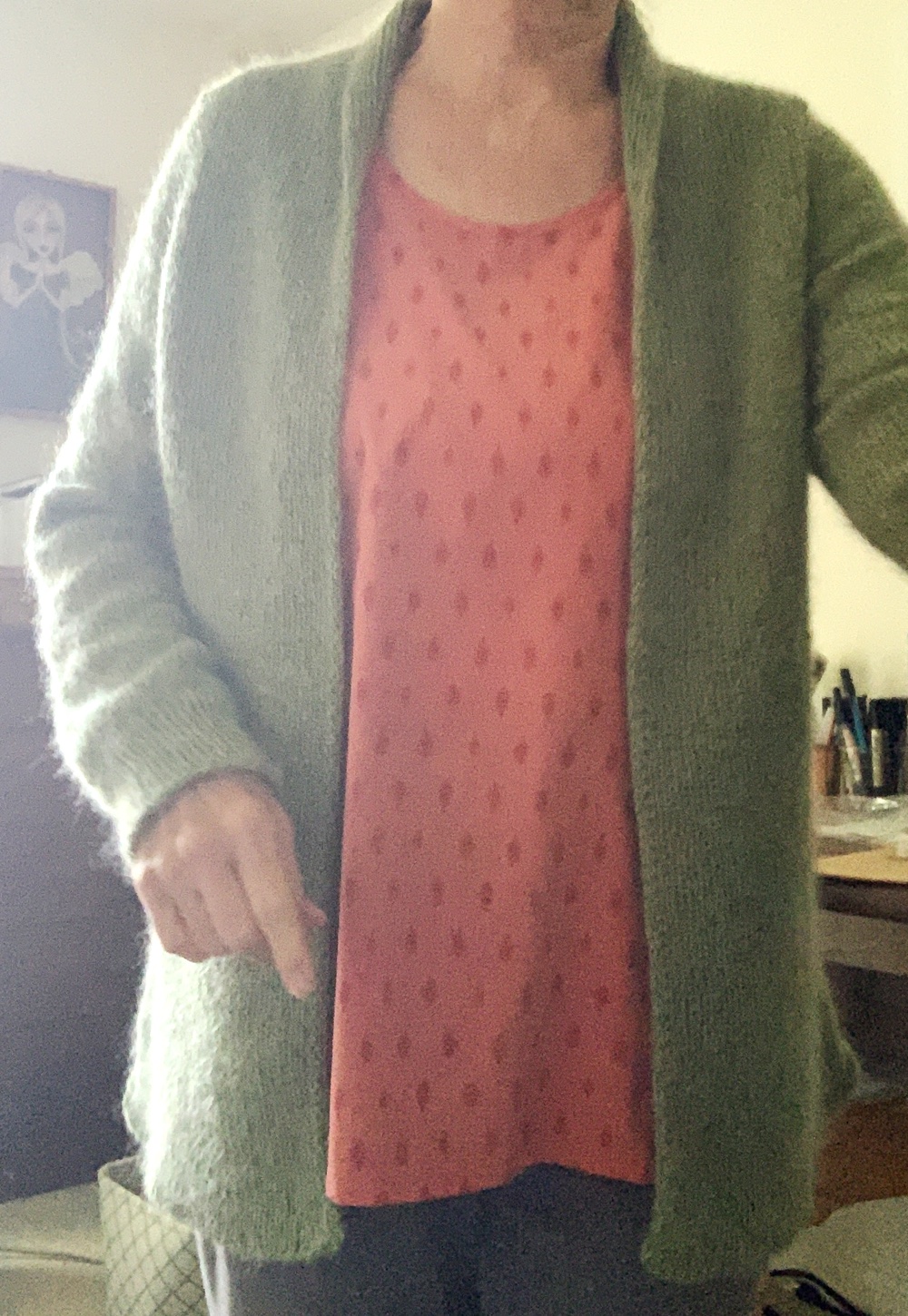
The washing and blocking to dry has not been done yet. See that little bump on my shoulder? That happened when picking up stitches, so be careful and take your time to make the seam look smooth.

Please keep reading!

Taking a Break From New Knitting Projects

Gardening has kept me very busy lately, even though summer is a slower season for growing where I live. For that reason, I am taking a break from knitting. There are a couple of knitting projects I need to finish up, but I do not knit as much now.

The Rebel Cardigan is something I am still working on occasionally. I’m knitting the long version to use up most of my yarn, and I have a ways to go. This project is taking a while, but I am enjoying it.

Knitting on the Rebel Cardigan pattern

I’ve begun another Warm Up sweater but will not be knitting on that all the time either. I’m using three colors of Peace Fleece, and I changed the neckline.

Warm up sweater

Summer is not the best time to take on a knitting project. Here in Florida it is nearly always hot. I never take time off from knitting just because of the heat.

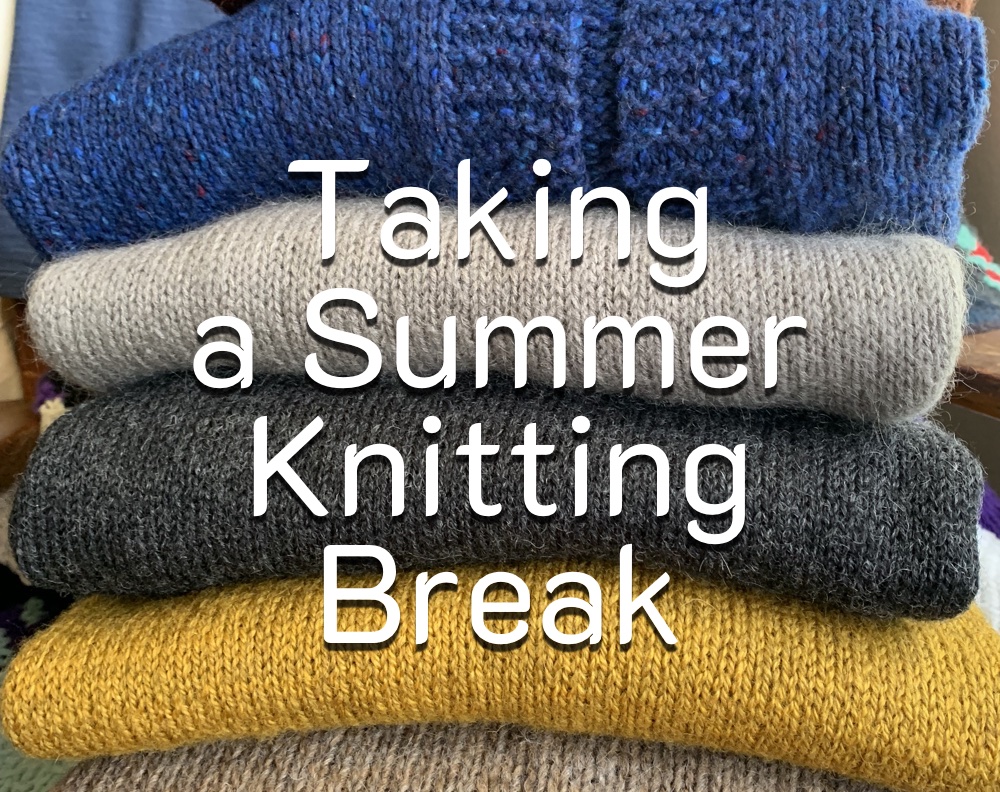
Maybe it’s the recent knitting projects that didn’t really please me, or maybe it’s the season. At the present time, I feel less inspired to pick up the needles. I do know that I have a pile of sweaters that need to be hand-washed, and that does make me wonder how many more I really need!

sweaters hand knit

I hope you are having a great summer – if it is summer where you live. If you are a sub-tropical climate gardener, check out my gardening blog.

ball of yarn divider

More from the blog….

Re-Knitting the Autumn Alpine Neck

After the Autumn Alpine sweater was done – washed and blocked – I was not happy with the neck. It alternates with some colorwork and ribbing and for me, it ended up floppy and IMO ugly.

I began picking up stitches to rip back, but couldn’t find a good row. I began this 5 or 6 times. Unfortunately, as the sweater is knit top down, there are few places to pick up stitches from a simple knit around row. My choice of yarn was also not helpful.

Just below the colorwork knits and purls is some 1×1 ribbing. I found this video by Very Pink Knits showing how to pick up stitches to hold them while ripping back.

I did not follow this video, but I’m keeping it here because it’s useful.

I didn’t want to do this type of pick up. A simple knitting row would be best. But, beyond the neck stitches the knitting rows include increases and then short rows. In my opinion there was no good place to pick up knit stitches easily. My dark color yarn didn’t help either. My stitches were difficult to see, even on the knit rows.

I am not exaggerating when I say I tried to find a good row – picked up stitches part way around – and gave up —-So many times!

Knitting needle picking up held stitches

This was a big fat pain in my butt. I probably should have left the thing alone, and simply been unhappy, but I wanted to try. It became an obsession.

After many tries, I found my way around with yarn and completed a row of stitches. I inserted a smaller needle, and then needed to rip the collar back.

HA! That did not work at all. I couldn’t get the yarn to unravel, so I ended up having to cut the collar off —- and I tacked it down when the neck was done. This was becoming a complete disaster..!!!!!

In the photo below I had begun knitting around and around to make the rolled collar. See the old collar turned under?

I’m not going to go on and on about this because it’s too depressing. The end result is not great either and this sweater has so many bad knitting memories, I don’t know if I will ever wear it, but I do like that colorwork.

Autumn Alpine sweater pattern changed the neckline.

This one might make a nice topper over a long sleeve to wear one of the very few cold mornings we have here in Florida.

The nicest thing about this sweater is that it is now IN MY PAST, and it’s time to move on…. YAY.

Knitters welcome to continue reading