Knitting Cobblestone Cardigan #2 in Blue

Making changes for my second knit of the Cobblestone Cardigan by Brooklyn Tweed.

My daughter gave me yarn (a gift certificate) a while ago and I purchased six skeins of Soft Donegal yarn in dark blue (worsted weight). I’ve been keeping an eye out for the perfect cardigan to knit using this pretty yarn.

While I added to my list of possible cardigans, and found lots of new patterns I might knit one day, nothing seemed right for this yarn. I nearly chose the Truss pattern (link goes to Ravelry), but ended up wanting a lighter color for that pattern. I did buy the pattern and plan to make it one day.

A Re-knit With Changes

My first Cobblestone is a sweater I wear a lot. In fact I was wearing it the morning I began writing this post. Mainly, I love it because it’s a cardigan, which I prefer. Unfortunately, I’m not a great cardigan knitter because I hate picking up stitches and cardigans generally need a button band. It is picked up after the sweater is knit.

This pattern, by Jared Flood (link to pattern below), knits the button band right along with the sweater knit. There is no need to pick up stitches. I totally screwed up my Carbeth cardigan because of the button band, and that has scared me away from knitting them. Just like knitting the Oxbow pattern has scared me away from textured sweaters. One day I will be brave enough to not let those things stop me, but this time I want an easy cardigan.
knitting Cobblestone in blue
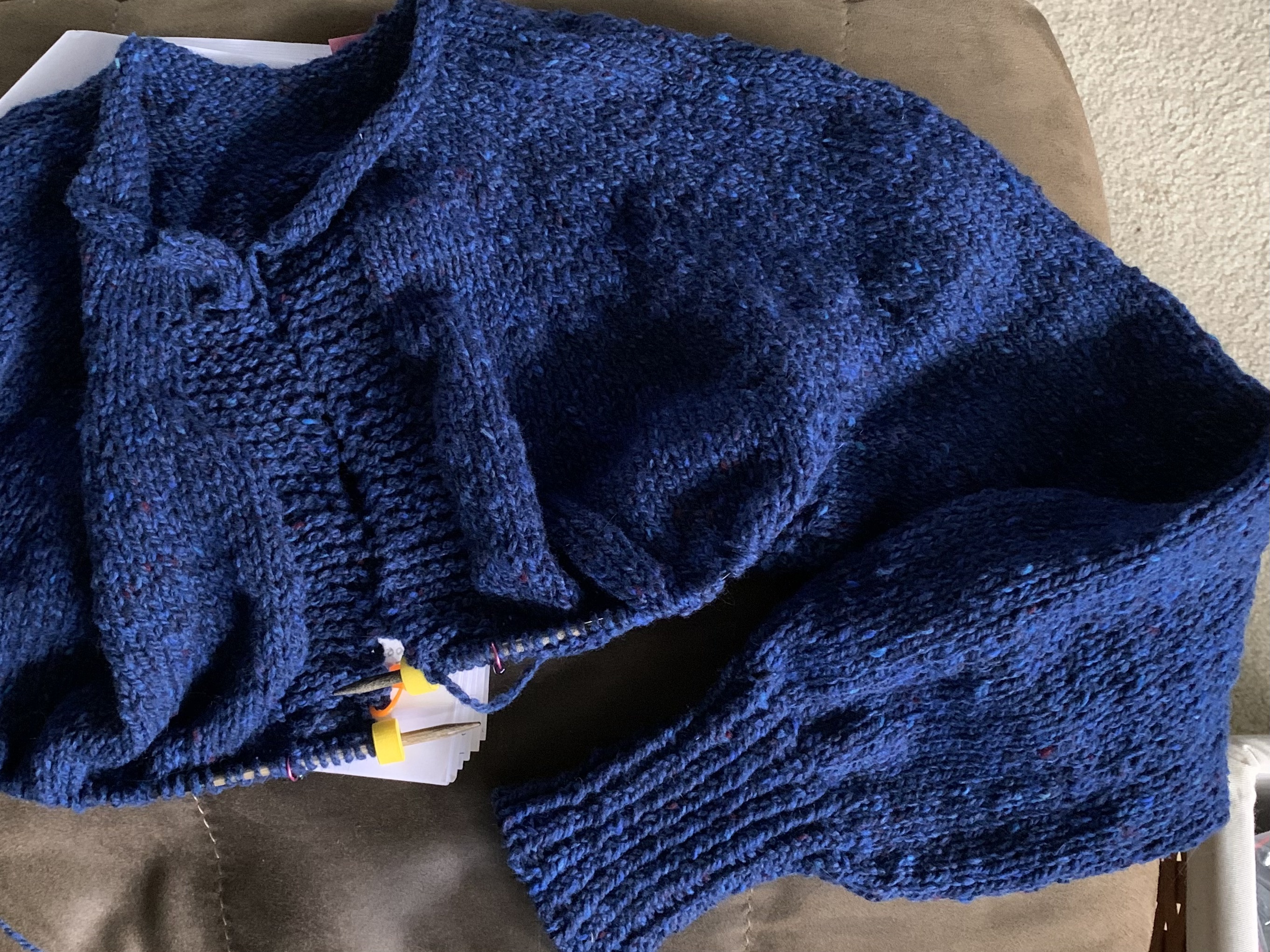
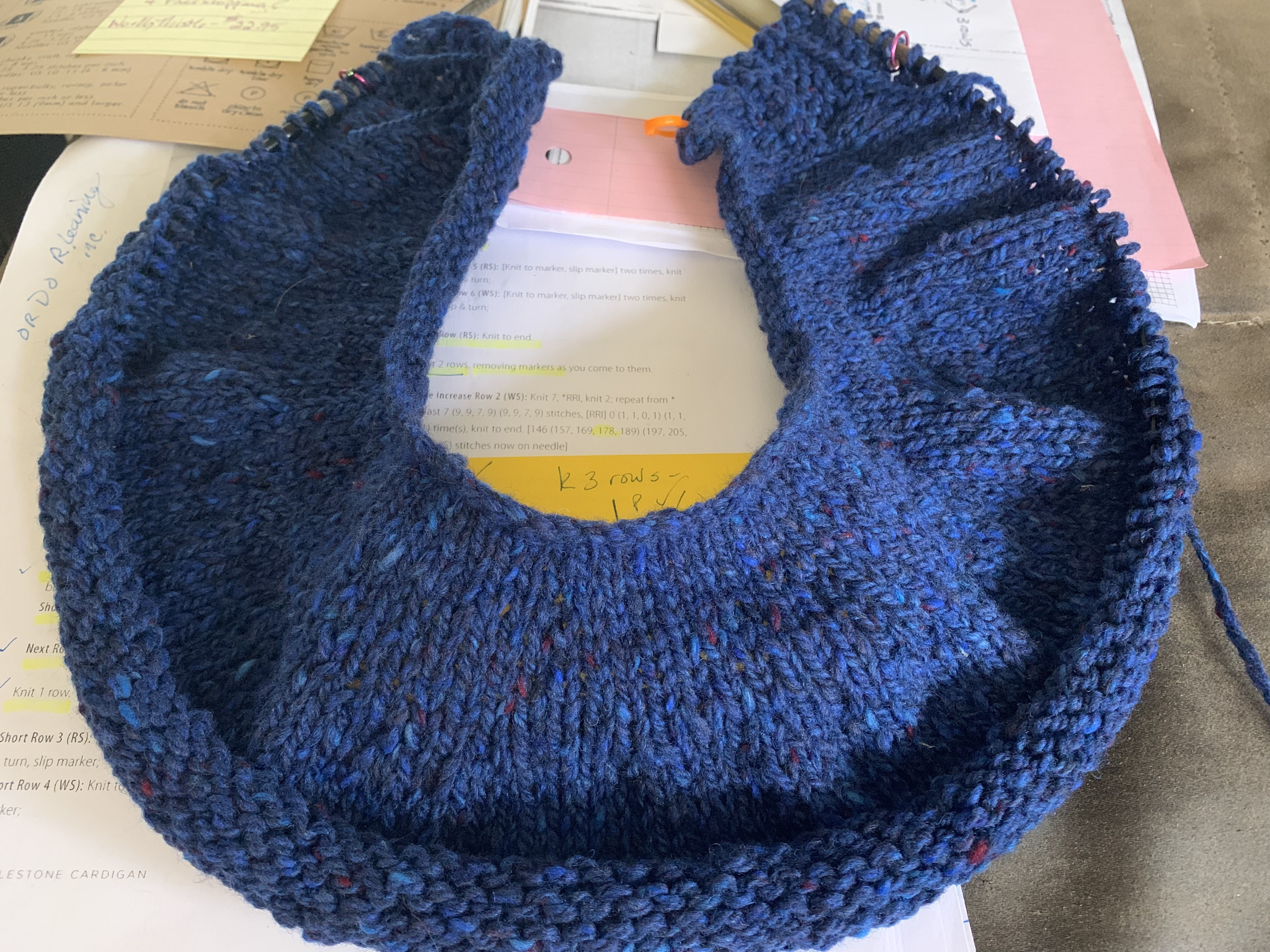
Cobblestone in blue without the garter top section.

Big change number one is that I will not be doing the garter stitch section at the top of Cobblestone. I really don’t like it, so my sweater will be more plain.

I had some trouble and had to add a lifeline and rip back a few rows. The buttonhole in the pattern is a very simple one, and I am doing something a little more substantial, like the one shown in Suzanne Bryan’s video here. Then, I messed it up and couldn’t fix it, so I had to take out entire rows!

The sleeves are being knit before the body is finished. I am afraid of being short on yarn and would rather have long enough sleeves! In fact, it’s a good idea to do this when knitting a sweater IMO. (I ended up having plenty of yarn.)

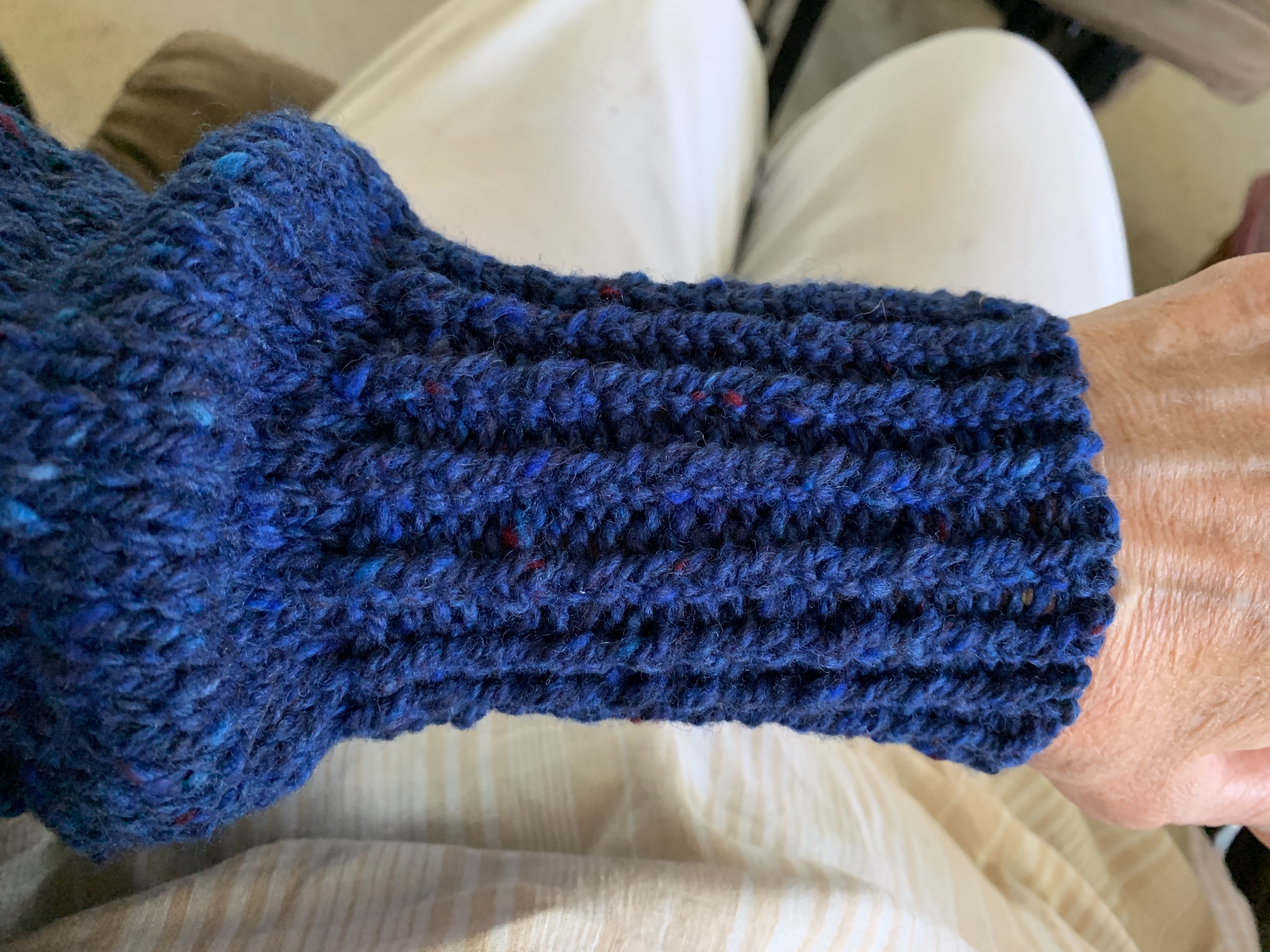
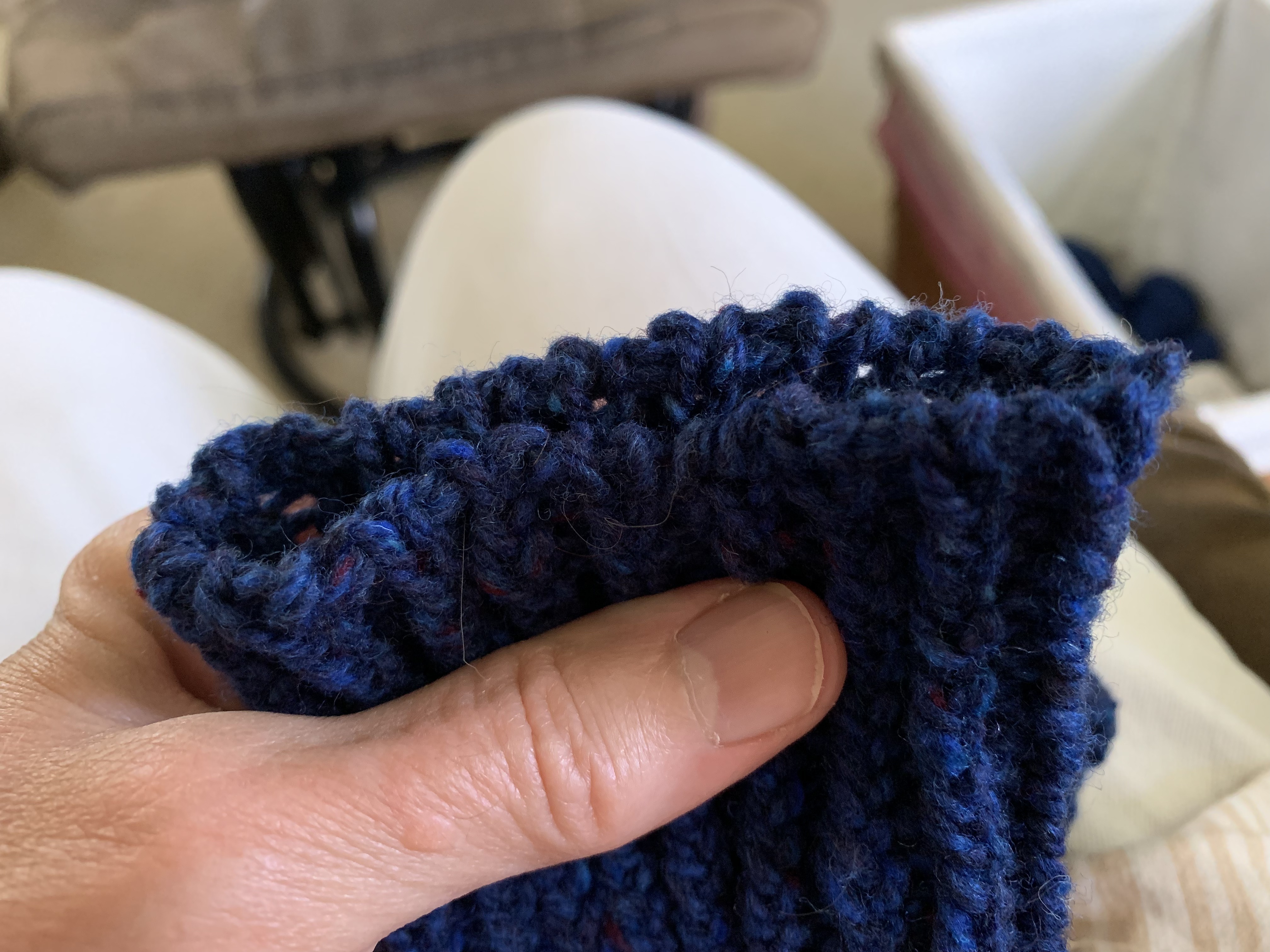
The cuffs were done a bit differently because I wanted something tighter.

Sleeve Bind Off – New!

I followed a video by the Chili Dog when binding off. The Invisible Rib Bind Off. It is done with a tapestry needle. It didn’t seem to make that much difference with this type of yarn, but it’s a nice bind off.

The original cuff from the pattern is just a garter stitch rib. I decreased to do a regular ribbed cuff. It ended up being a little tighter than I would like, but it’s okay. I decreased to 36 stitches and 40 may have been better.
Soft Donegal Yarn

Soft Donegal is a yarn I have used before. My first experience was when I knit Kate’s Poncho for my daughter. For some reason the pattern is no longer available. This tweed yarn has a similar feel as Brooklyn Tweed’s Shelter, but I’m hoping it will hold up better. The Shelter is looking very worn. It is dry and light and mine came directly from the shop in Ireland. It is available at shops in the US also to save on shipping.

Cobblestone two sleeves done
Both sleeves finished and on to the body

At the yoke, just before the sleeves, there is a weird bump that I don’t like. I think the pattern is accommodating for this being made for a man, who would have bulkier upper arms and chest area – the pattern is unisex. I wish I had not done the last increase maybe? I’m not sure if that would have helped, but I think so. This would make stitch counts off, so that would have to be figured.

In this picture I show both of my Cobblestones. They both have the bump that seems to make the upper arm bulge a bit.

Weird bump at the arm top

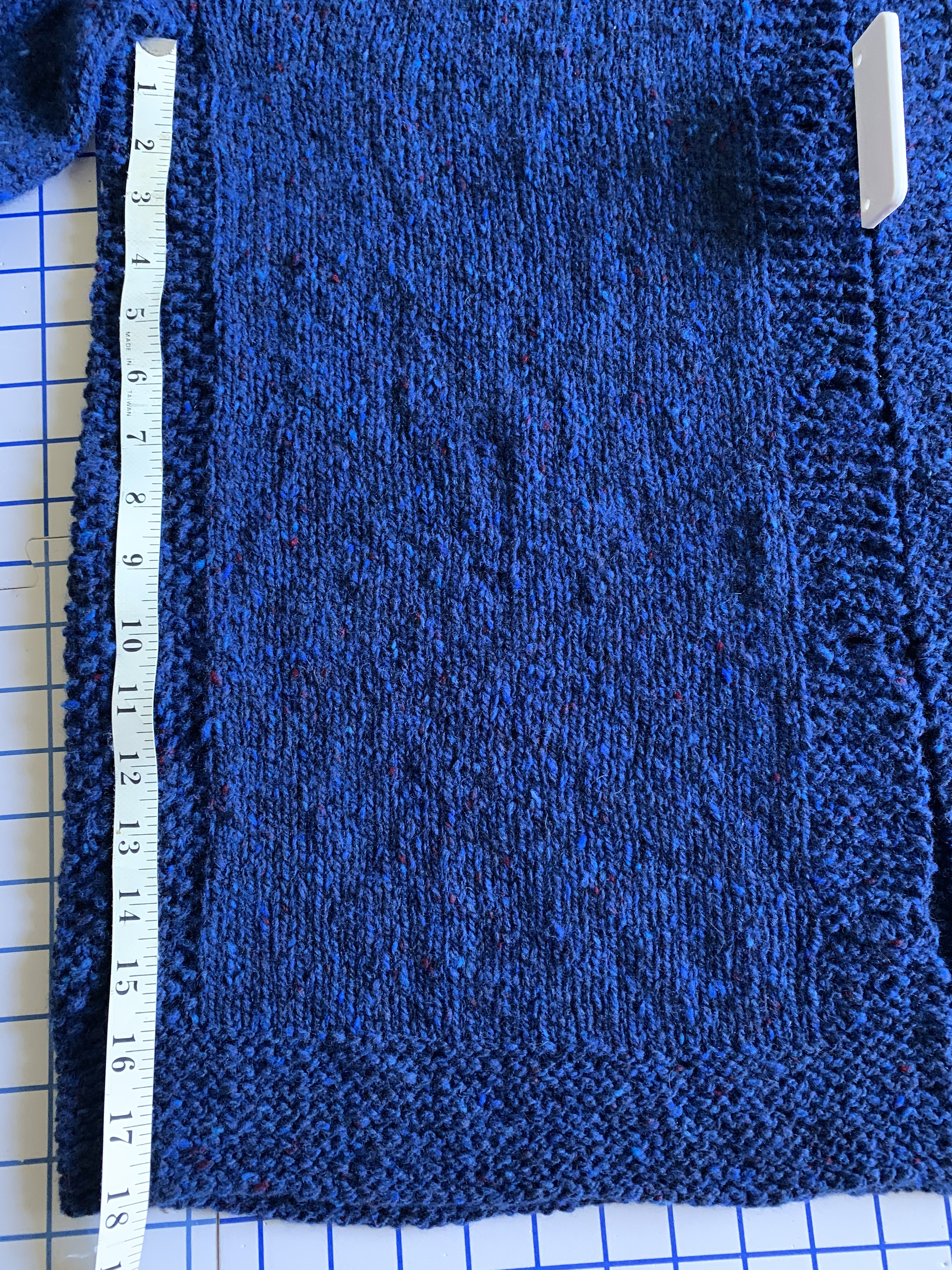
Along the sides of the sweater the pattern calls for garter sections. I decided to do seed stitch instead. The bottom is still done in garter rib, but I tried a new bind-off this time.

Seed stitch on sides

Finishing Up With The Icelandic Bind Off

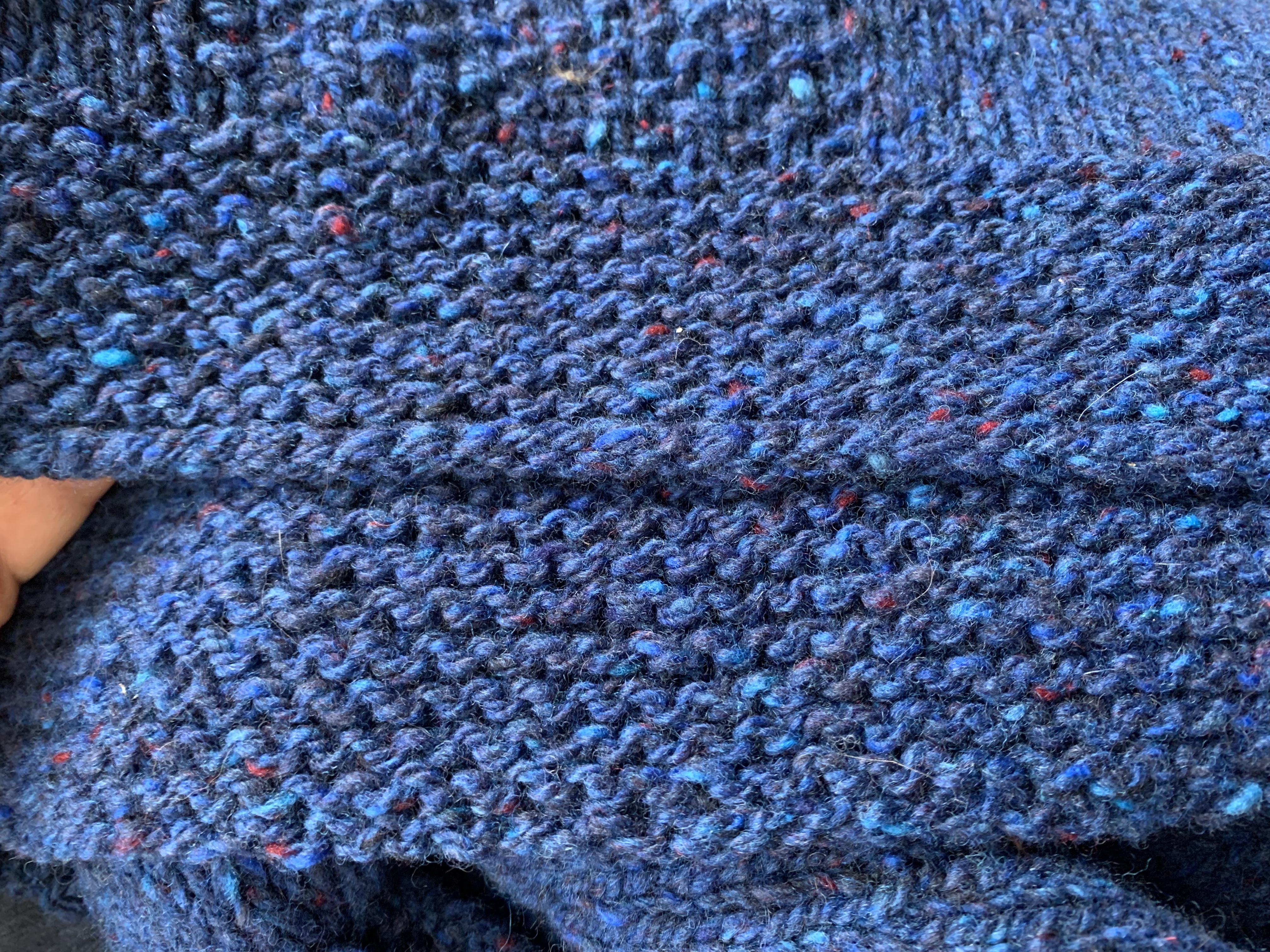
Because I had plenty of yarn, I kept knitting until the body was around 18 inches. The pattern said 10.5 for my size 2, so I made it quite a bit longer. I did the garter rib and then did the Icelandic bind-off following the Brooklyn Tweed video. It’s a fairly simple bind-off and ended up looking great on this sweater because it’s meant for finishing off garter stitch.
Cobblestone cardigan in blue

The Icelandic bind-off is done with the knitting needles, and not a tapestry needle. It is fairly easy to do, but this yarn made it a bit tougher. I do like the outcome and would definitely use this bind off again.
The Icelandic bind off matches garter stitch

A New Sweater

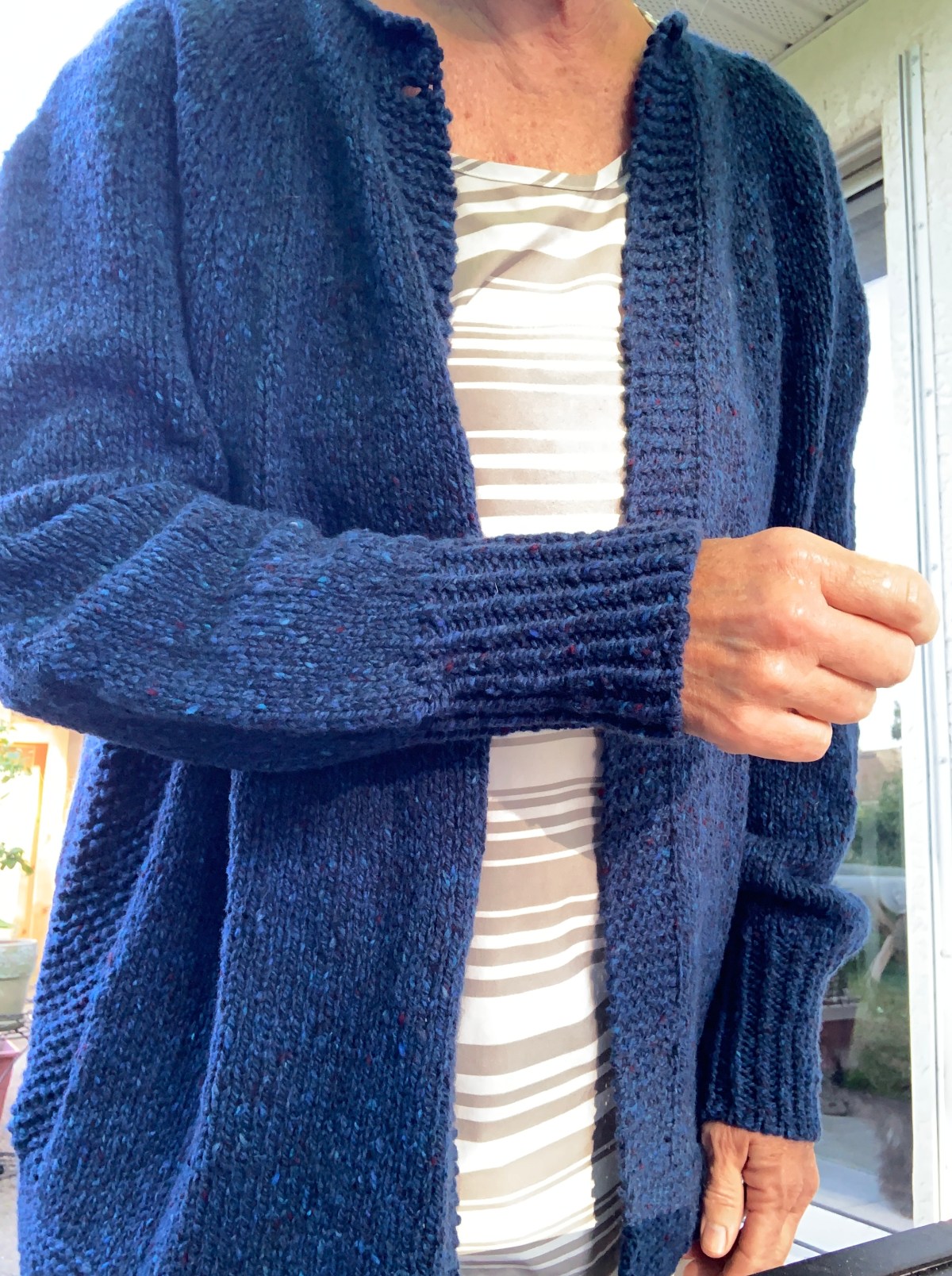
In the end, I’m quite happy with my new blue sweater. I got some quick photos of me wearing it, but it was a very hot and muggy May morning. I knit this one in size 2 and it is still plenty big. Keep this in mind if you knit this pattern – it runs quite large.

Finished cobblestone cardigan
Just need to sew on the buttons

When knitting my second Cobblestone, I learned a new buttonhole technique, and two new bind-offs. Fun! On to finding a new pattern to begin. If you have knit this pattern, I would love to hear what you thought.


Please keep reading

Something went wrong. Please refresh the page and/or try again.

The Easy V Colorwork Sweater Knitting Project Review

Finished knitting the Easy V sweater and these are my thoughts on the knitting project.

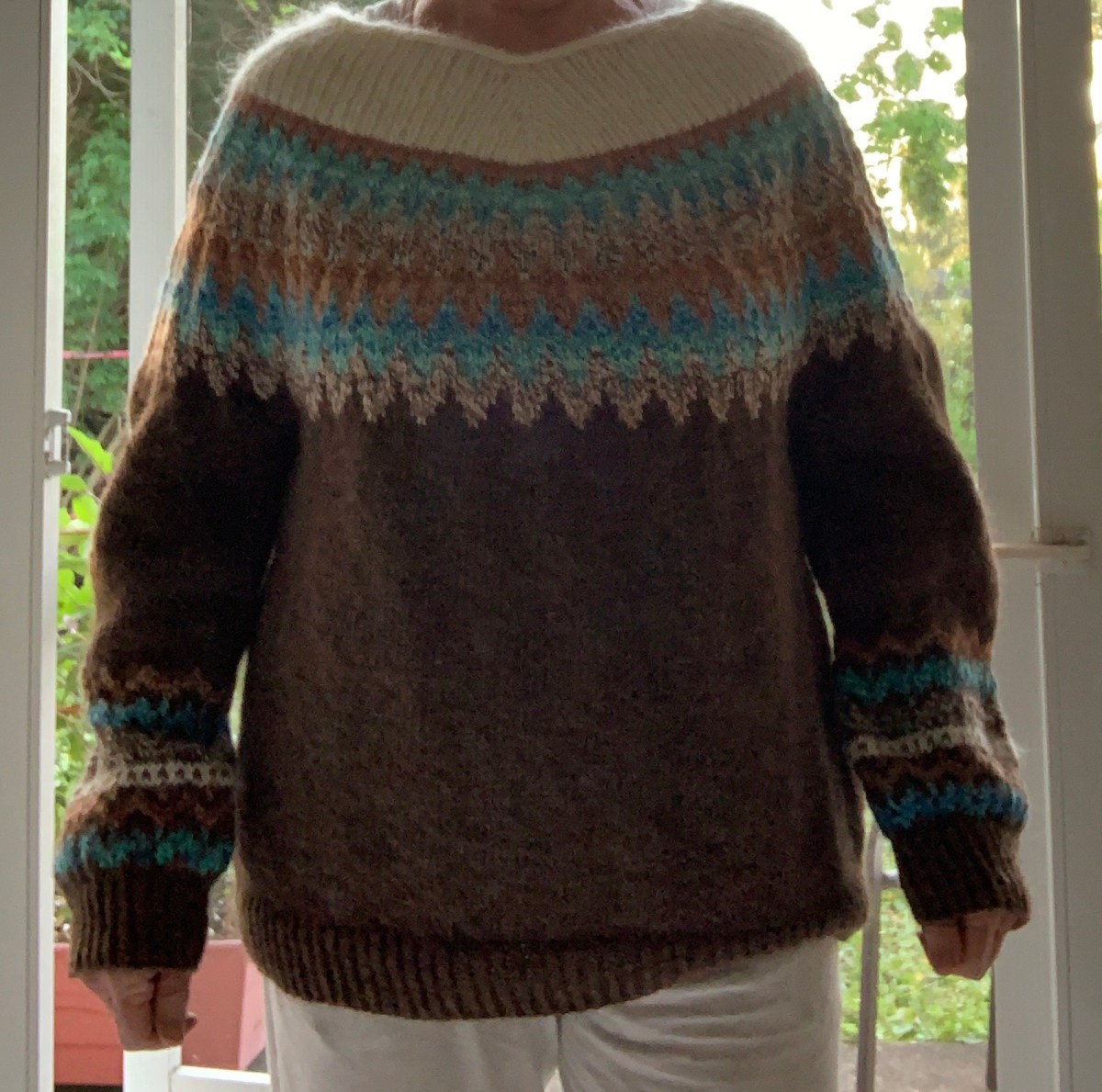
Now that I have finished the body on the Easy V sweater, I tried it on. Length is good, but other than that, I am not super happy with this knitting project. The pattern is fine, but I don’t like the style on me. I’m not happy with my yarn choices either.

See a link to the pattern buying page below in the pink block.

Easy V body of sweater is finished so I tried it on for length, which is perfect.

I had trouble getting the neck size cast on right. I’d begun with a green yarn and larger needle. Restarted the sweater using white Lettlopi yarn in a smaller size. This size seemed better.

When it came to using the hand-spun variegated yarn, the colors didn’t really mesh that well, but I was fairly happy with the color work yoke. But, the yarn is quite bulky and makes the fabric thick – even though I went up a needle size to knit that area.

Sometimes after washing and blocking a sweater can look immensely better. I’ve knit so much that I do plan to finish.

Easy V sweater knitting

Maybe the neck will look better after washing and blocking. It is one of the elements of this top that is unique.

Easy V

Pattern directions are very good, and it’s not that I don’t recommend this sweater pattern, but be sure you like the style before choosing it. The colorwork is very easy to do. It is supposed to be similar on the sleeves, but I changed the pattern for the sleeves to one of my own. The colors needed to be divided up a bit for my liking, and I was running low on the variegated yarn.

Easy V sweater body with twisted ribbing at the bottom.

The Sleeves

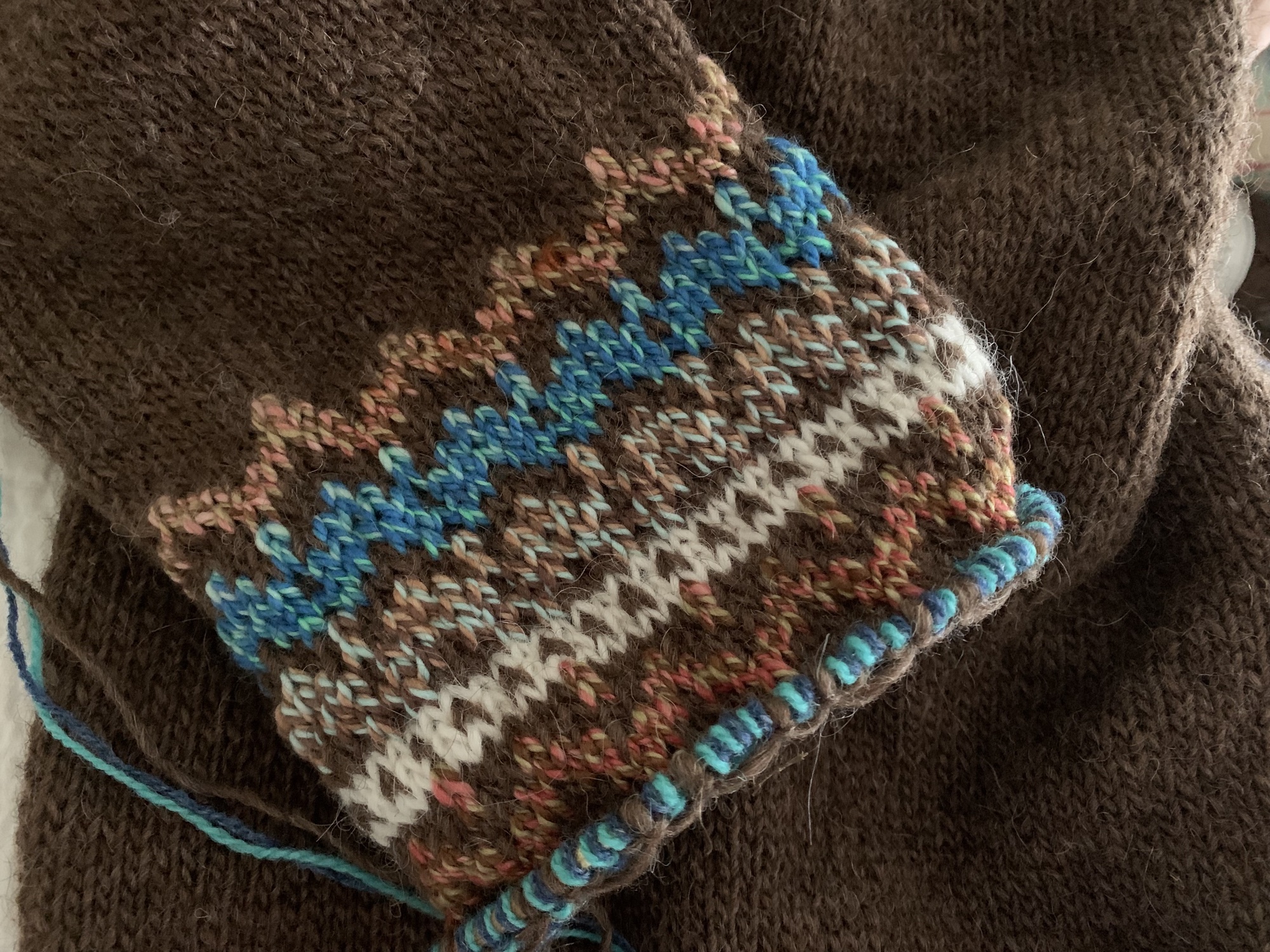
I substituted my own colorwork pattern on the sleeves. This is not part of the pattern. I debated omitting colorwork on the sleeves, but in the end I changed it up instead. It was an opportunity to use up the yarn and incorporate the white which is on the neck.

I ran out of the blue yarn and substituted two strands of Jamieson and Smith fingering held together.

The ribbing is twisted rib, like the body ribbing. This is also my own doing and not part of the pattern. I like the looks of a twisted rib. To do it, simply knit through the back loop, and purl – around.

At this point, finishing this sweater is a bit of a chore. I’m ready to move on. My yarn selections were bad (except for the brown Lettlopi), with that colored yarn being very bulky. I wish I had not followed the yoke colorwork and left some brown showing.

The more I knit, the more I realize which types of yarn to avoid, and which I like best. This sweater is really not my style, but I’m sure it will be cozy warm for when I need warmth — two days out of the year!

Check out the Easy V pattern page at Ravelry, and be sure to browse color combinations from other knitters.

Have you knit this sweater? What do you think? I’ll be trying mine on soon – in the air conditioned house.

Easy V finished and has been washed and is drying on the boards.

Sweater is dry and here are my photos after trying it on. I’m not too happy with the fit as the neckline is loose and makes the whole sweater sag. I used a size 3 needle to do the neckline, but it really should be tighter. I’m not happy with the outcome.


More knitting stories from the blog…

Camel Yarn Weekend Hat Project

A simple ribbed hat pattern with enough brim folds to keep ears warm. The Weekend Hat is a pattern by designer PetiteKnit.

First Attempt at Knitting Clotilde

I didn’t get far when I began the Clotilde Cardigan pattern, but it’s a good looking cardigan, and I’ll try knitting the pattern again.

Christmas Gift Knitting; Hats For the Guys

Get an early start on hat knitting for Christmas. This page lists a few hat patterns, for free and to purchase, that work well for guys. Also, I’ve listed some machine washable yarn to get…

Cumulus Blouse, My First V-Neck Sweater Knit

The reason I chose the Cumulus Blouse was the v-neck construction. I thought I would use a heavy yarn instead of the designer’s choice, but the pattern really wasn’t written for wool. I ended up with something a little different.

I’ve been dealing with being sick from Covid for about a month now (July 2022). Simple knitting is about all I’ve done while sitting in front of the television. Most days I couldn’t get off the couch and took a few naps off and on. I’ve been pretty miserable. I finished the Honey Cowl #3 and did a lot of round and round knitting on my orange watchcap. I even sat outside one morning and did a little knitting on the striped sweater which I eventually finished.

stranded knitting with red yarn
Knitting Cumulus

Now I am ready to begin a new sweater and I want a v-neck. My choice, in the end, was the Cumulus Blouse by PetiteKnit. I’ve been eyeing her sweaters on Instagram for a while now. They are very cute but she likes to knit holding two yarns together, and the Cumulus is no exception. It calls for two strands of Mohair type yarn held together and knit with a size 7 needle. I don’t plan to do that, so I have named my version the Cumulus Sweater.

Any time you must use two strands of yarn together in a sweater the cost of knitting that sweater doubles. Also, I am not a huge fan of Mohair fuzzies. I plan to use some Harrisville Highland wool I’ve had for a bit. Her little sweater is not something that would look good on my body either!

Cast-On Day

Today (July 6th) I did my cast-on and set up the raglan increases. The cast-on row ends up being the back of the neck area and then the increases are made to expand the shoulders and make the v-neck front. I’m not crazy about “make ones” and there are a lot of them in this pattern. Also, every other row is a purl row – so there’s that. That will change once the body is joined in the round.

Cumulus sweater in wool

I am also knitting from a cone for the first time. Cones generally save money because you get a lot of yarn for much less than a normal few skeins of yarn. I honestly can’t remember where I bought these cones, but I have two in this color as well as an extra normal skein. (I ended up using nearly all of both cones. Without using that red contrast color, I would have needed more than the cones to finish this sweater.)
I made a mistake right off the bat when the pattern said to set up the markers. I knit across the row to add ring markers when really I should have simply added attachable markers along the needles. So I had to purl back across and THEN begin the four row increases. Because of this, I have two extra rows of knitting.

Cumulus sweater beginning the knit

I’ve looked through the entire Cumulus Blouse pattern and the designer calls for an i-cord bind-off with decreases. And then the neckline is done in an i-cord, but without the decreases. This was confusing. She directs knitters to her website with a Petite Knit videos page and after searching, found the i-cord bind off under the section “Tips and Tricks”. Once I watched the video (which is not in English) I realized that the decrease part of the bind-off is the k3 together part, so that will be left out when doing the bind-off around the neck. Great, I’m all set! (Actually, I did this differently with fewer stitches because my yarn was heavy.)

I do not plan on doing an i-cord bind-off for my body and sleeve cuffs as my yarn is not mohair. A normal ribbing will work fine – going down a needle size to a 6.

I am ready to continue on with my new sweater knitting project.

Now that I have done most of the V part, I am re-checking my gauge. My gauge is good. Onward!

Cumulus v-neck sweater knitting
Knitting the body after separating the sleeves

I finished off the neckline before I finished knitting the sweater. Because my yarn is stiffer, I only did a cast-on of 2 for the i-cord bind off, and knit from there with a k1, k2togtbl. Now I could try the sweater on to see the v-neck, and it is low. For this type of sweater, it doesn’t matter as I would have a shirt on underneath.

I’m not real happy about my neckline. It is puckering a bit and there is a tiny hole that I had to close up in the end. That is all on me and my lack of skills.

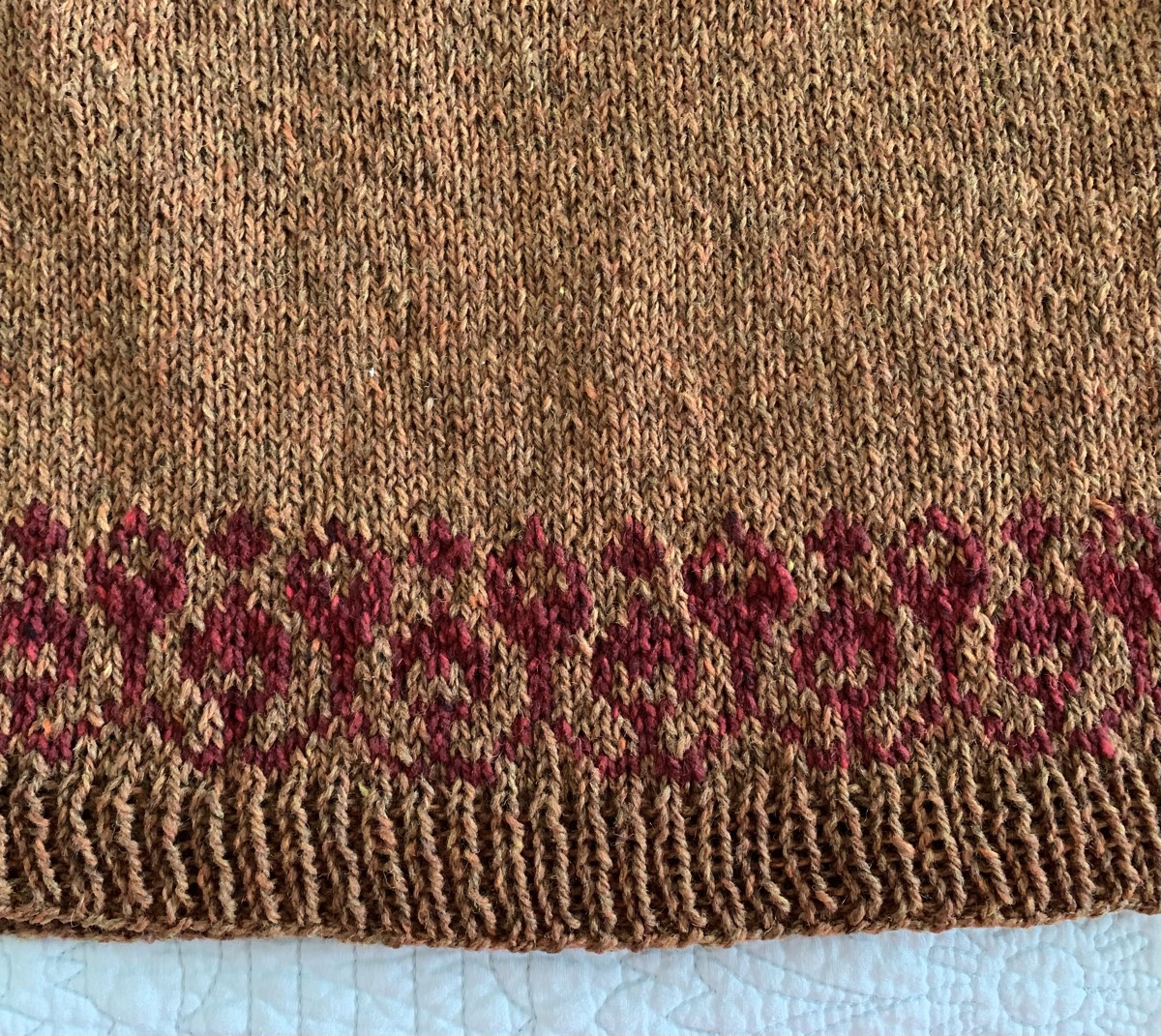
Colorwork in red yarn (Brooklyn Tweed Shelter – color “Long Johns”) was added along the bottom of the body. I went up to a size 8 needle for that. Then, I did the ribbing in size 7, but I wish I had used a 6. I may go back and redo that ribbing. (I did.)

One sleeve is done. I only did a total of 7 decreases down the sleeve. Used a size 8 to work the trees, then decreased for five rows doing k1, k2tog (BOR) and SSK, k1 at end of round, while knitting one brown and one red around.

Both the flowers and trees patterns came from Fair Isle books I have.

With 60 stitches I began the ribbing using size 6 DPNs and made the cuff long enough to roll up.

Re-doing the body ribbing

I have finished knitting the Cumulus sweater but have decided to rip out the body ribbing. It will be done over using a size 6 needle (originally it was knit in a size 7). I ended up adding a bit more red before the ribbing.

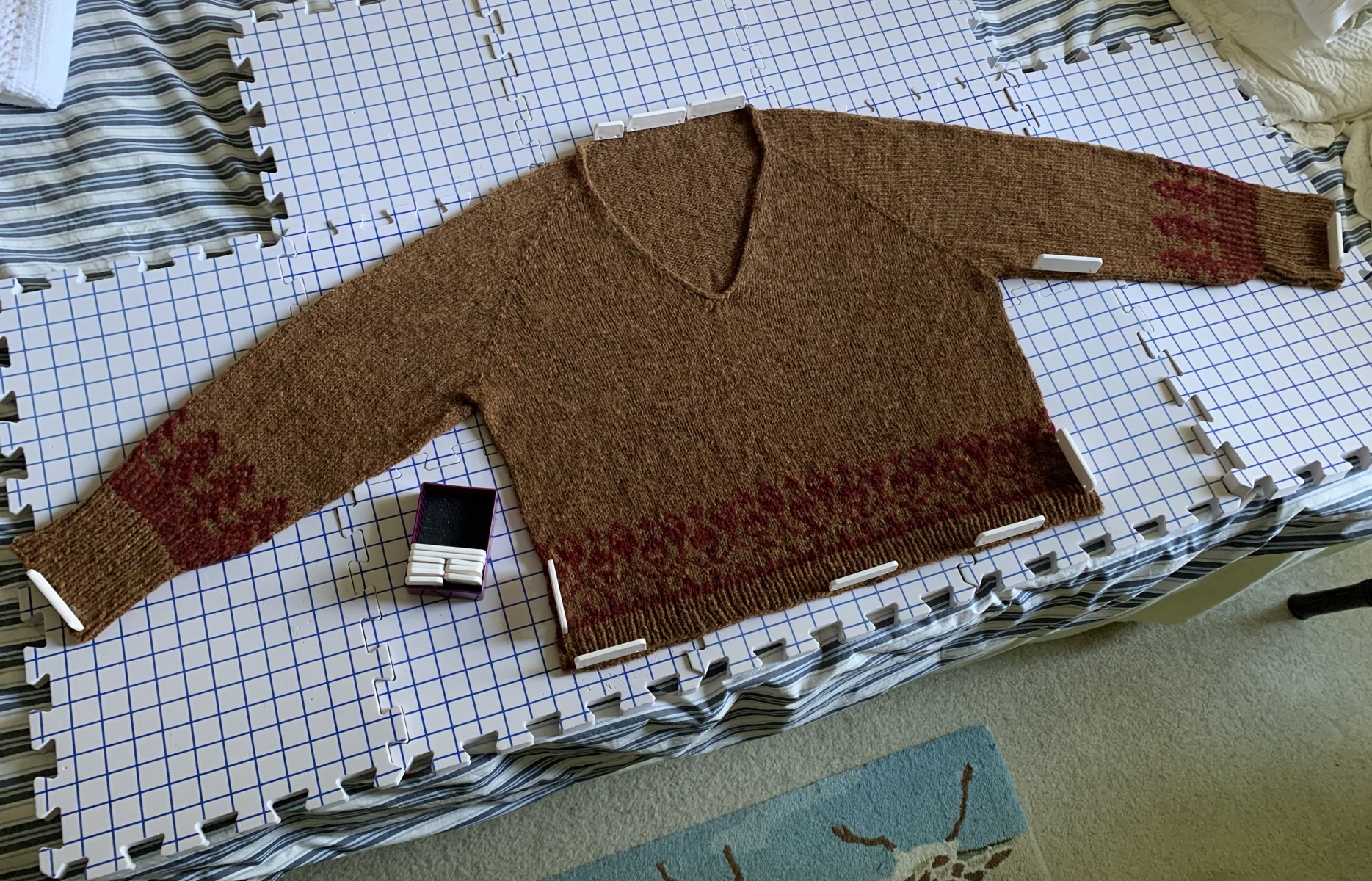
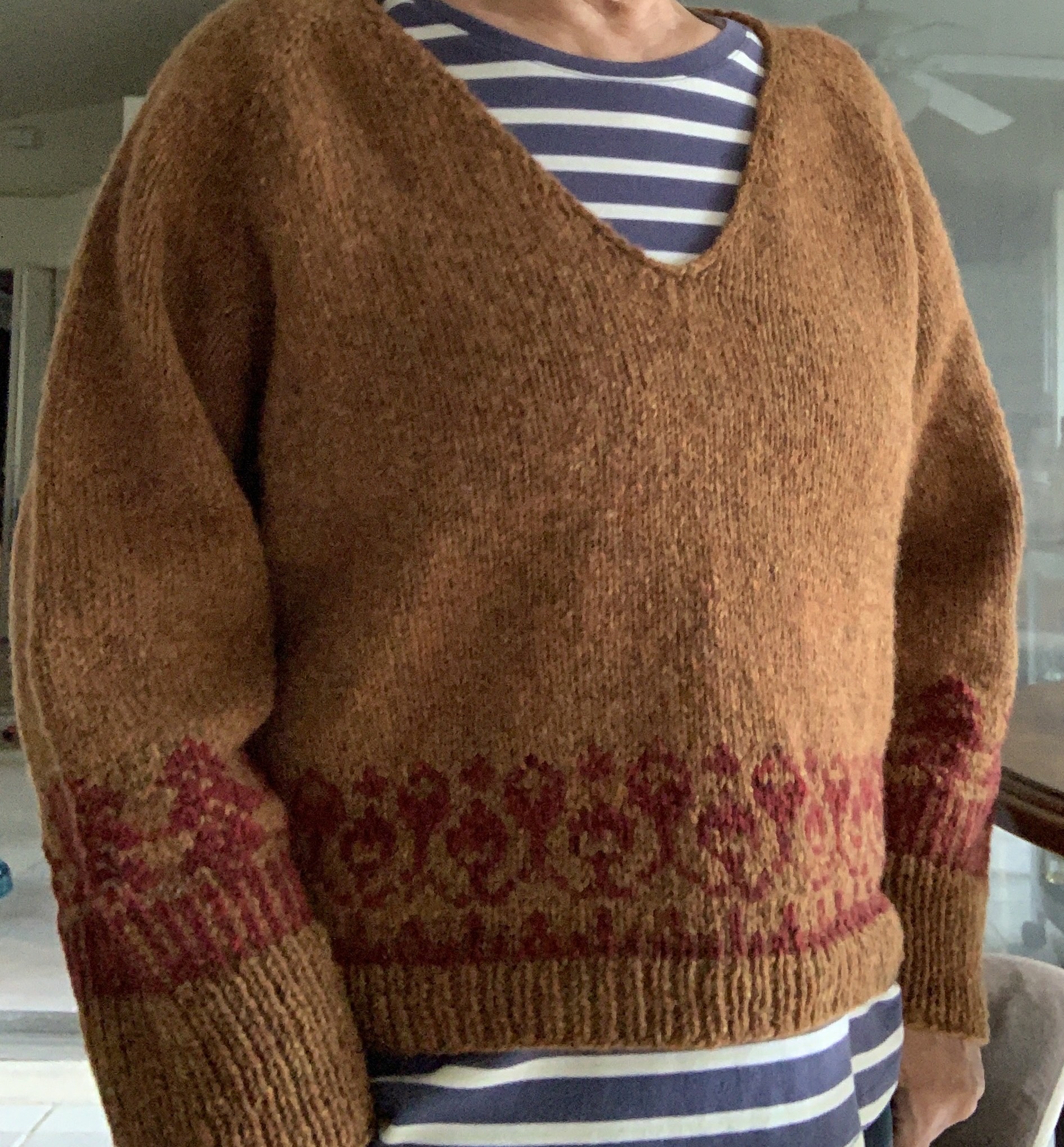
So the Cumulus sweater was officially done on September 8th. It took me almost exactly 2 months to knit – between knitting on other projects along the way. It has been washed and is drying in the spare bedroom. Then I will get a photo of me wearing it.

The pattern was very easy to follow and straight forward to knit, but I did not do the bind-offs the same as the pattern directions. I also did not hold two light weight yarns together.

My sweater is quite roomy and comfy. If I ever did knit this pattern using the type of yarn suggested, I would knit the Medium size – one size smaller. My gauge was correct, and I checked it twice.

You can buy the Cumulus Blouse pattern from PetiteKnit on her Ravelry page. It is very pretty when knit in light weight yarn, and if you have the body for it – go for it!

V-neck sweater with colorwork in worsted wool
Done knitting, before the wash

January Photos


More Pattern Reviews and Stories From the Blog

Knitting With Beloved Worsted Weight

When I began knitting many years ago, I used worsted weight yarn only. I practiced making winter hats and the little old lady who gave me lessons had a shop that sold lots of wool. I was in New Hampshire at the time, and it only made sense to knit for winter with heavy wool. “Peace Fleece” was one that I remember she sold.

Back then, I knew very little about yarn weights, knitting gauge, and the difference between superwash and non-superwash. Now that I have been knitting with all types of yarn for a few years, I’m beginning to find some favorites, and they are not machine washable. I have come to love wool.

Often people will think “scratchy” when wool is mentioned, but times have changed! Wool that is minimally processed can be quite soft, and many yarn sellers will tell you all about their yarn and how it’s processed. Many wool yarns get softer after hand-washing and even wearing can soften them up.

Sweaters Should Be Wooly and Warm

When I plan a knitting project I am thinking about warmth. Sweaters, hats and mittens should all be knit in a warm fabric, which looks good and will last. I like the idea of wearing something that came right off a sheep. Natural fibers will be warm and that just makes sense. Wool is excellent for colorwork knitting as well.

Brooklyn Tweed Shelter in Narwhal for a sweater
10 Skeins of Shelter in Narwhal gray to knit a sweater

I don’t want pretty mittens that won’t keep my hands warm, or a sweater that won’t do the job. I fell in love with Rauma Finnulgarn (fingering) and Jamieson & Smith (fingering) when knitting colorwork projects like Katie’s Kep. Then, I wanted to find some good wool like this in worsted weight.

When I began knitting the Cobblestone Cardigan in beautiful #1: Brooklyn Tweed Shelter I realized how nice a wool sweater can be. It’s been a pleasure knitting with this yarn. The end product is light to wear, yet warm – this comes from being woolen spun, where air is trapped in the fibers.
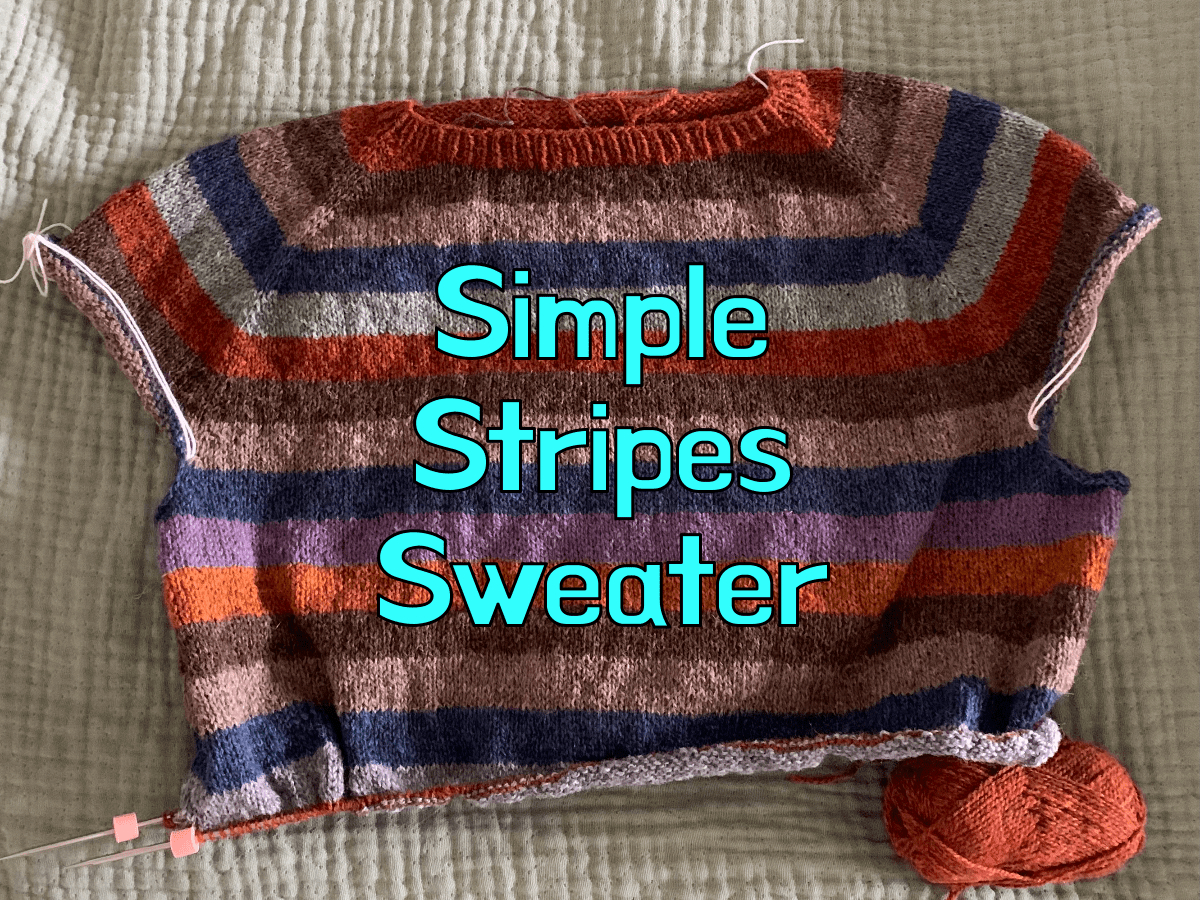
Projects go along quickly when the yarn is thicker (worsted weight) and I’ve used Shelter for fingerless mitts as well.

Hand washing a sweater made of wool is not a chore. This type of sweater will lay flat to dry and it will dry quickly! If you use a leave-in wool wash, such as Eucalan, there is no rinsing needed.

#2: Woolstok wool yarn by Blue Sky Fibers gets excellent reviews at Ravelry. The link goes to Wool and Company, where I buy a lot of my yarn. The skeins seem to come in either 50g / 123 yds, or 150g / 370 yds, but not both. I am dying to try this yarn for a project! It is 100% Highland wool.

Lots of people give good reviews of #3: Cascade 220 wool. I have knit with it and was not super impressed with softness, but it comes in loads of colors. Many people love this yarn (see Ravelry reviews here), and it is not super expensive. I think it would be nice for a sweater worn over clothing – like a cardigan. The plied yarn is made of Peruvian Highland Wool.

More Worsted Wool Ideas, Not Superwash

  • Malabrigo Worsted, single ply – Personally, I don’t like single ply yarn. This must be hand-washed
  • The Croft Aran Colors – no link here because many colors are out of stock.
  • Scholar Worsted (The Plucky Knitter) – Quite expensive yarn of Merino wool and Cashmere.

Reasons to Avoid Superwash Yarns For Sweaters

Umpqua sweater yoke pattern colors
Umpqua pullover knit in washable yarn

Some knitters don’t like using superwash yarn. Anything labeled “superwash” may be easier to care for, because it can go into the washing machine, but the yarn tends to stretch after washing. Some garments, like sweaters and hats, can end up much bigger than anticipated because of this. This happened to me after knitting my first pullover sweater (Umpqua) in Malabrigo Rios yarn. It ended up quite large.

Sometimes pilling can be a problem with superwash yarns. If you are a member at Ravelry, look up a yarn and then read the comments. This is where I got my information – from actual knitters who have worked with the yarn.

Washable yarn (meaning in the machine), IMO, would work better for kid’s clothing, things that can stretch a bit (scarves and shawls) or anything that will not be hand-washed by the recipient. The Malabrigo colors are really gorgeous, but I would not choose to knit another sweater using it.

Superwash Worsted for Those Who DO Want It

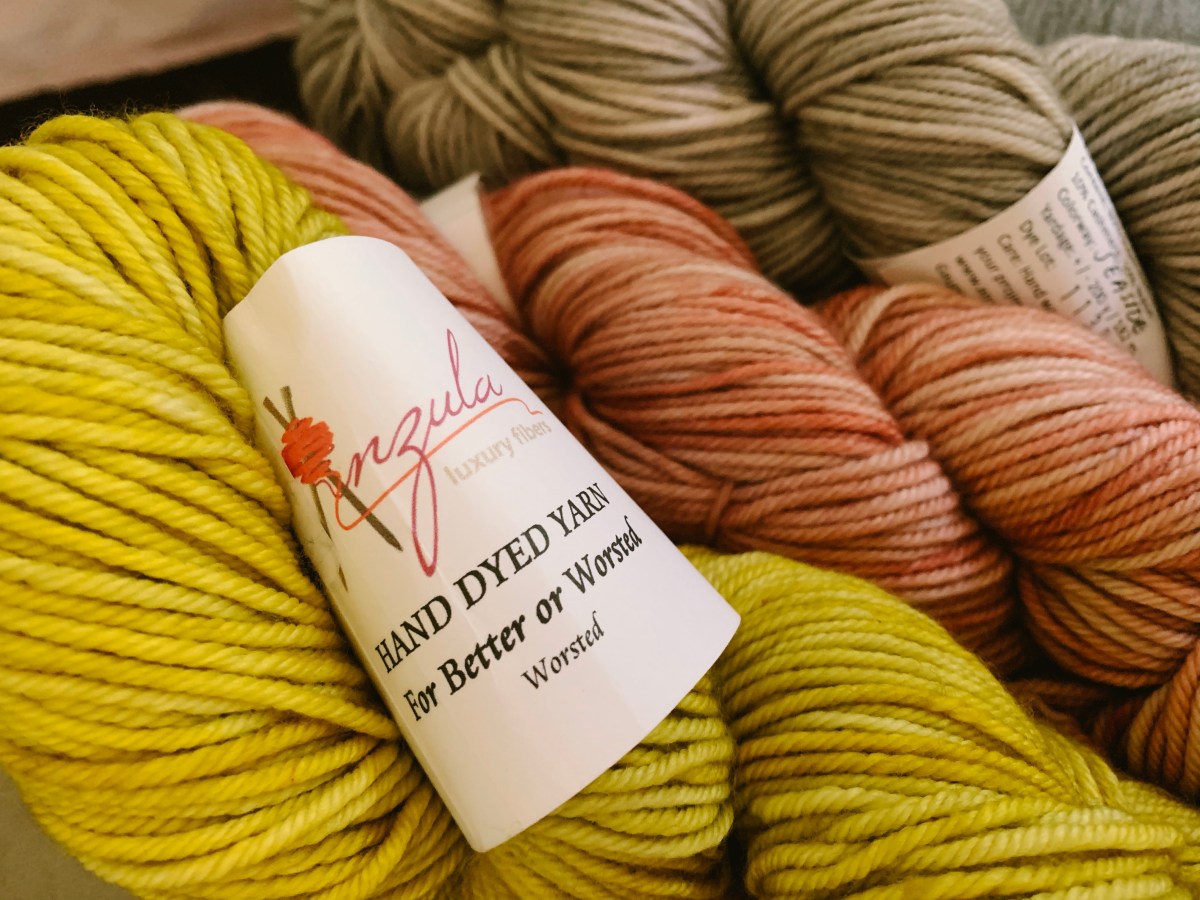
  • $$$ Anzula, For Better or Worsted (about)- I love this yarn, but would use it for other than sweaters. It is not cheap but the feel…. amazing…. and the colors…. so wonderful. Personally, I look for sales, but it can be purchased at many online sites such as Purl Soho. I made the Namu Cowl in “root beer” and it’s very soft and beautiful. ($35)
  • $ Rowan Pure Wool Worsted – affordable and washable (I have never used it). ($13.95)
  • $$ Emma’s Yarn Washable Worsted Wool – from right here in Florida, at the Four Purls yarn shop. ($28)

What are your favorite worsted weight yarns made of wool?