New Knitting Project: Color-work Pullover Pattern

My next big knitting project for 2021 will be a colorwork, or Fair Isle, pullover sweater. I’ve been searching the internet and Ravelry for some ideas and now it’s time to narrow down the selections. It’s taken me months to write this post, and it’s already September, so I’ve already begun two sweaters (see below), and plan to make a third.

Hooked on Colorwork, Fair Isle Knitting

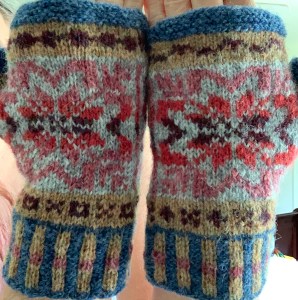
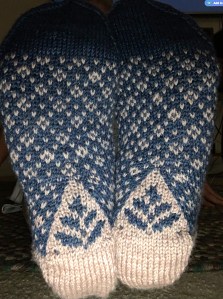
After knitting for a few years, I have decided that I really like colorwork knitting. Now that I have a couple of hats (Katie’s Kep), mittens, and fingerless mitts (Stellar Parallax) under my belt, I feel that a sweater is what I need to knit next. Once a year I need to make myself a sweater. This will really be sweater number two, after the Cobblestone, but the Cobblestone was not colorwork.

A Word About Steeking

A colorwork, or Fair Isle, sweater must be a pullover because a cardigan requires steeking. Once the sweater is knit, it is cut up the front to create the cardigan. Yikes, I am not ready for that yet.

Three Patterns For the Price of Two – Jennifer Steingass

Jennifer Steingass is a knitwear designer who offers lots of colorwork pullover patterns to knit. Also, she is currently (at the time I wrote this) selling her patterns at three for the price of two, or buy 2 get 1 free.

Because I have some Istex Lettlopi yarn on the way to my house from Iceland (that is so cool – LOL), I chose the following patterns to purchase. I’ve decided to knit with aran, or worsted, weight yarn for my next sweater. The links below go to Ravelry.

But beware… or be aware… not all of her color-work patterns are Fair Isle (using only 2 colors at one time), as some of them require three colors to be carried along one row of knitting. Of course, I can stay with two colors if I want and ignore adding a third. I find that trying to work with more than two colors can be annoying. I ran into that while knitting a few of the rows for the “Marshland” sweater.

Knitting Sweaters: On the Needles

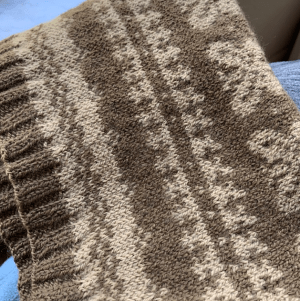
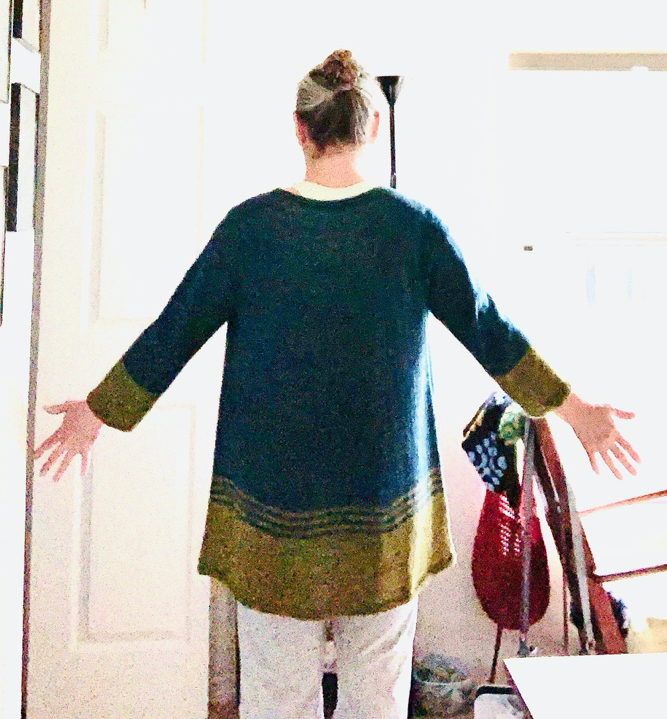
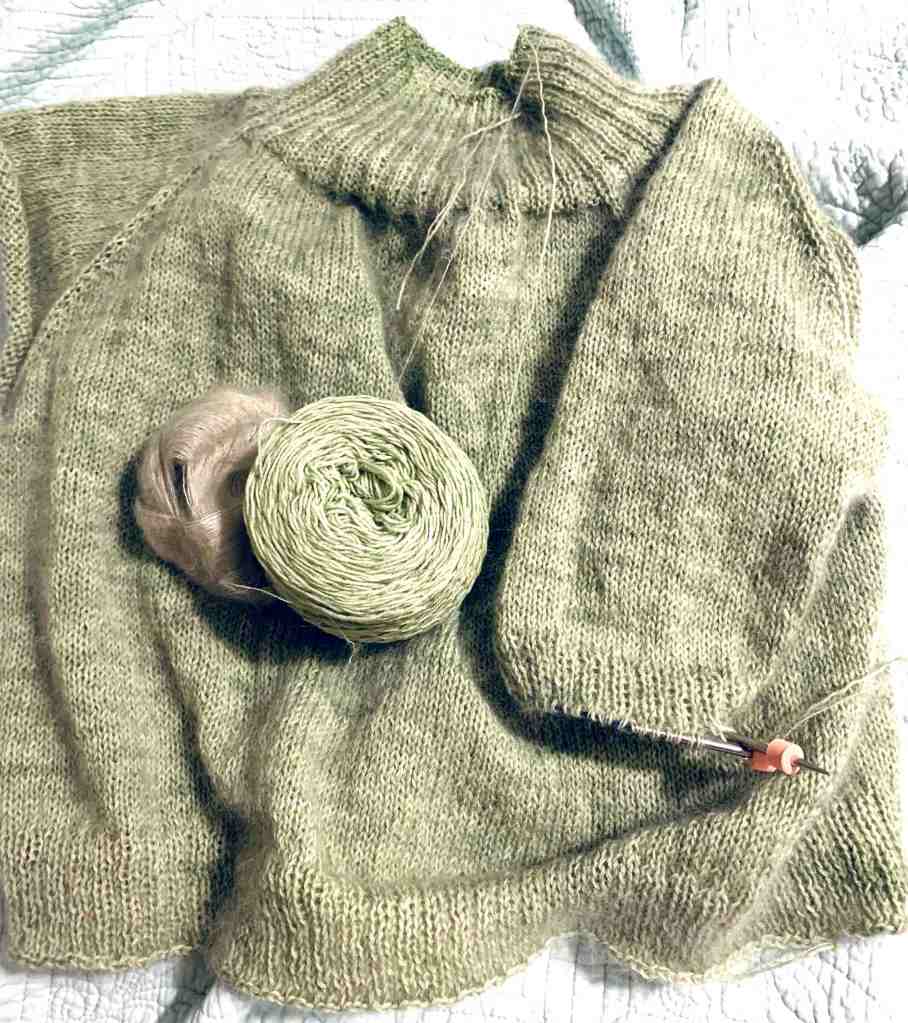
Right now I am knitting two sweaters while I wait for my Lettlopi yarn to arrive. Below is my green Calliope and colorwork Meadow Moon.

Marie Wallin’s Fair Isle Patterns

One of the first sweater patterns I saw at Ravelry was Marie Wallin’s Lovage. It is part of her Windswept Collection but the pattern can be purchased separately at Ravelry for approximately $8.87 US (at current writing). I’ve looked through the comments from knitters of this sweater and some people have had trouble. There is a lot of stranded knitting at the entire top and part of the sleeves. Then there is some braided work down the rest of the sleeve. It’s very pretty, but might be too difficult for me.

She also has a Meadow Collection and I love the Nigella Fair Isle pullover pattern, but wow, what a big project. It’s worth checking out her Free Patterns section too.

Sweaters Knit by Me

At the beginning of the year (2021)I knit the Cobblestone Cardigan and took it up to New Hampshire with me. I wore that sweater nearly every day! It’s big and soft and cozy. I won’t get the chance to wear it, or any sweater, until I can travel north.

Each time I knit a sweater, I learn a bit more. From the type of yarn, style, pattern writing, fit and mistakes to how much I like, or dislike, the end product. I’ve only knit five sweaters, one is a child’s size, two are pullovers and three are cardigans. I like cardigans best for wearing, although living in Florida means I seldom get to wear any type of sweater.

Each time I knit a sweater, or other item, I find more yarn I love. I keep it in mind for any upcoming projects. Each image below has a link at the bottom.
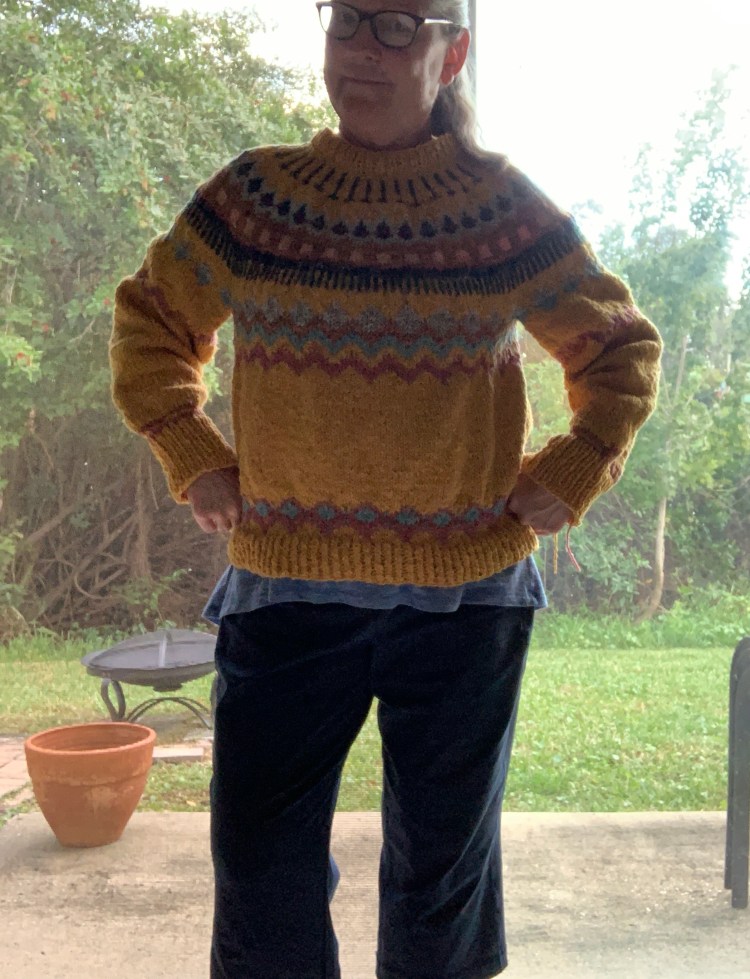
I’ve learned that I like knitting with wool and don’t like washable yarn. I’ve discovered what “pooling” is – see the Umpqua sweater, which I really dislike for many reasons, but it was my very first sweater! I knew literally nothing about sweater knitting. I will probably frog it at some point to re-use the yarn.

Sock yarn should be used for socks, IMO because when I want a sweater, I want it to be warm and cozy. Wool and natural fibers, tend to be cheaper also. I like that I know where the sheep / animals lived who provided it!

I Want to Travel to Cooler Locations!

I’d love to leave the state of Florida more often. I dislike living here, and there is so much of the US I have not seen.

After being unable to travel due to the Covid restrictions, which seem to drag on and on, I have decided I will not count on airplane travel any longer. Wearing a mask through the airport, on the plane and through a second airport, was very uncomfortable. I understand the concern, but the restrictions kept me from seeing two of my kids for over two years. This is unacceptable.

We will be buying an RV of some kind to make travel easier. I have cats and they will need to come along. But the most exciting thing is that we will be able to visit cooler locations. Then, I can wear my sweaters, hats, cowls, and mitts! I long for this.

Knitting the Free Fair Isle Mitts Pattern

This page contains notes on knitting figerless mitts using stranded colorwork. I will be using Jamieson & Smith wool in five colors (added one, so six).

This is a free pattern download at Ravelry for the Fair Isle Mitts. The pattern has charts and written instructions with two hand / palm motifs to choose from. I put one on the top and the other on the palm.

Continue reading “Knitting the Free Fair Isle Mitts Pattern”

How to Knit Corrugated Ribbing For Colorwork Hats

The last few hats I have knit have had brims with corrugated ribbing. You can see it on this page in the Katie’s Kep and Tettegouche (links to pattern below too). This type of rib is worked as a purl 2, knit 2 around, switching colors between the knits and purls. It is often used in Fair Isle, stranded knitting designs and the yarn is held in two hands.

Begin by Making a Nice Cast-on

When I began knitting, I hurried through my cast-ons so I could get started with the project. I only knew one simple cast-on, and it was not a good one for hats. Now I use the Old Norwegian, or German Twisted, cast-on, which is the same thing as far as I can tell. It makes a loose, stretchy first row so the hat won’t be tight around the forehead. It’s also a fast cast-on once you get the hang of it.

A good wool such as Rauma or Shetland (Jamieson & Smith), in fingering weight is suggested for this type of hat knitting.

Once the stitches are cast onto a 16 inch circular needle, in the size your pattern calls for, join them with the stitches straight and even, making sure there is no twist. I use the drop and switch method of joining, where each stitch at the end of the needles are swapped. Then, place a marker to remember this is the beginning of the round – BOR.

Since I first wrote this page I have found a helpful page at TECHknitting: Corrugated ribbing tricks and tips. They explain corrugated ribbing and it’s uses and potential curling problem. Also they have an interesting section about how to handle purling the colors.

Begin the Rib – this is how I chose to do it.

Once the cast on is complete DO NOT KNIT AROUND – go right into the knits and purls. Doing a solid knit row before the ribbing will cause the edge to curl up.

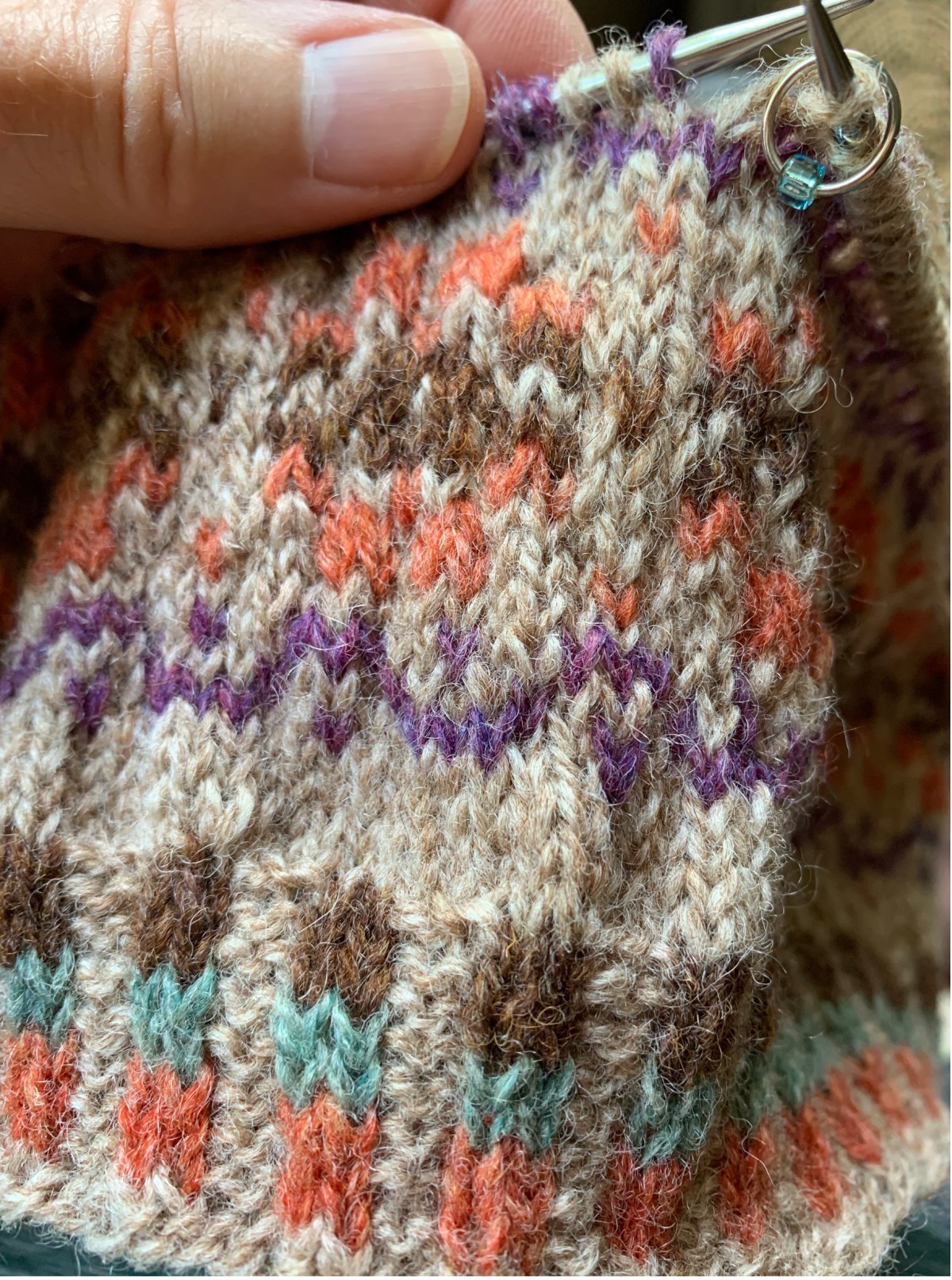
For the first round, begin with the main color (it was tan for my hat) held in the right hand (for knitting English style) and purl two stitches. Move the yarn to the back of the work. Now add the new color (orange in the hat pictured) and knit two stitches while the yarn is held in your left hand, Continental style. Bring the MC, (tan yarn) to the front and purl two – and so on. I will be using those two colors for the entire round.

Corrugated ribbing knit on the brim of a hat
The brim of this hat is knit in 2×2 corrugated rib

Don’t forget to move the yarn to the back of the work once the two purl stitches are made! ….I made this mistake and had to begin over.

For my Katie’s Kep #2 (above), my first CC (contrast color) is orange and I did three rows before I added the second contrast color, which is light blue. Every row is knit the same way with the MC (tan) held in my right hand and the CC in the left. I do it like this because I can’t purl using my left hand.

Holding the yarn correctly is important in colorwork knitting. Using two hands becomes quite easy with practice. Using two hands means the yarn will stay on top (right hand yarn, or Main Color) and on bottom (left, Contrast Color). Doing this makes the CC stand out. Sometimes a pattern will ask you to knit the main color and then purl the contrast color – which keeps the main color prominent.

See it below in the first Katie’s Kep I knit which has a dark blue background (MC).

Katie's Kep Fair Isle hat
Katie’s Kep Fair Isle hat begins with a corrugated rib around the brim.

Learn to Knit Using Two Hands

If you don’t know how to do this type of knitting using two hands, look for a good video that shows you how. And then practice! Colorwork is easiest when knit in the round. In fact, personally, I don’t know how to do it any other way.

Then, you will just need to know how to carry those floats when colors become more spaced apart in a row – but you won’t have to do (much of) that on these hats!

Colorwork is in chart form, FYI.

Love Katie’s Kep? Download the pattern for free here.

The hat below is called Tettegouche, and the pattern for this one can be purchased at Ravelry. Believe me, the other hats look a lot better than mine. I used colors on hand and they are not the greatest combination. You can see the use of the corrugated rib again.

Tettegouche hat pattern
Finished Tettegouche

My last word on the corrugated rib is that it is less stretchy than a 1×1 or 2×2 regular hat rib. It’s meant to be sturdy and pretty at the same time. Often a smaller needle is used for this type of brim and then you switch over to a larger size for the top of the hat. A wool yarn in fingering weight is suggested.

Learning to Do Colorwork Knitting the Correct Way

For the mitten knit-along I am doing, colorwork knitting is a requirement. The pattern must include more than one color for this KAL, and the mittens I am knitting have three. Once you know the basics of doing colorwork, also called stranded knitting, the project will end up looking good instead of a mess (like mine used to be).

Colorwork Basics

I have a little experience in knitting colorwork. Basically you are knitting with two or more colors and using them to create an image or pattern. Yarn is held in both hands, with left hand using the prominent yarn, and right hand holding the “background” yarn color.

However, if there is a long bunch of stitches in one color only, it means the other yarn must be carried along until ready to use. Because you can’t just let it droop and create a long “float”, or unattached length of yarn, you have to know how to “carry a float” for both the left and right hand yarns. This is knitting talk for catching the unused yarn with the used yarn to bring it along correctly. And it is done differently for each hand (color).

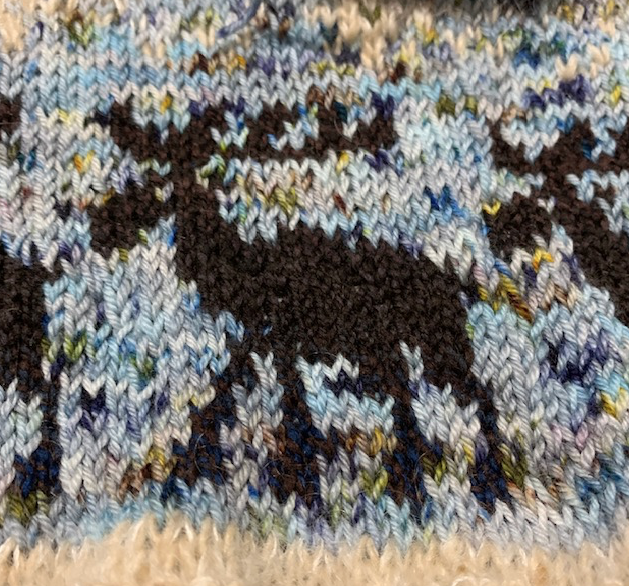
Moose colorwork knitting
Moose motif

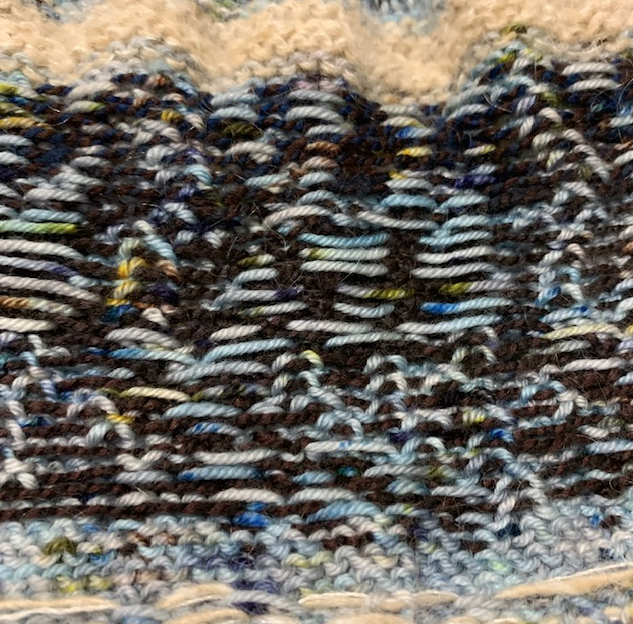
For instance, when I knit this moose motif I had to carry yarn colors over numerous stitches. When knitting the rows of brown for his body, I had to carry the blue yarn and catch it up while I knit the brown so as not to leave a long strand drooping along the back of the hat.

Carrying floats when knitting
Catching the floats for the moose motif

Catching floats is not difficult and once you know how to do it, it becomes simple. I suggest you knit something where you can practice this over and over until it becomes second nature. I’m getting more practice now while I knit the Milet mittens.

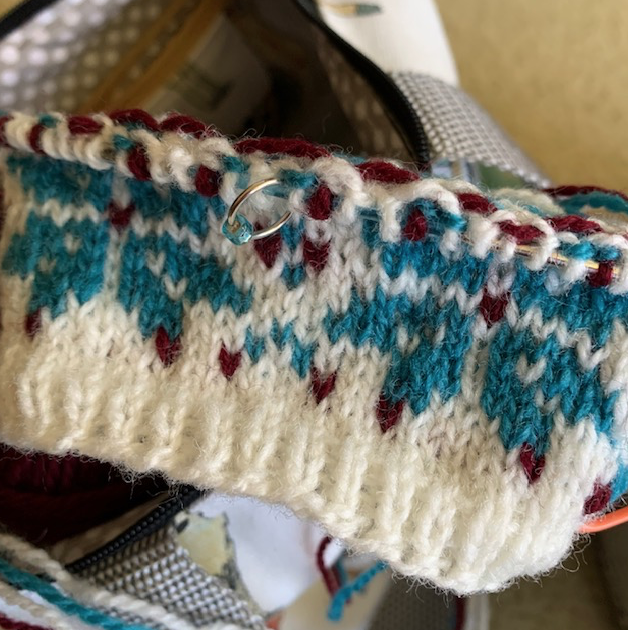
Beginning to knit the Milet pattern
Casting on

YouTube Tutorial for Catching Floats