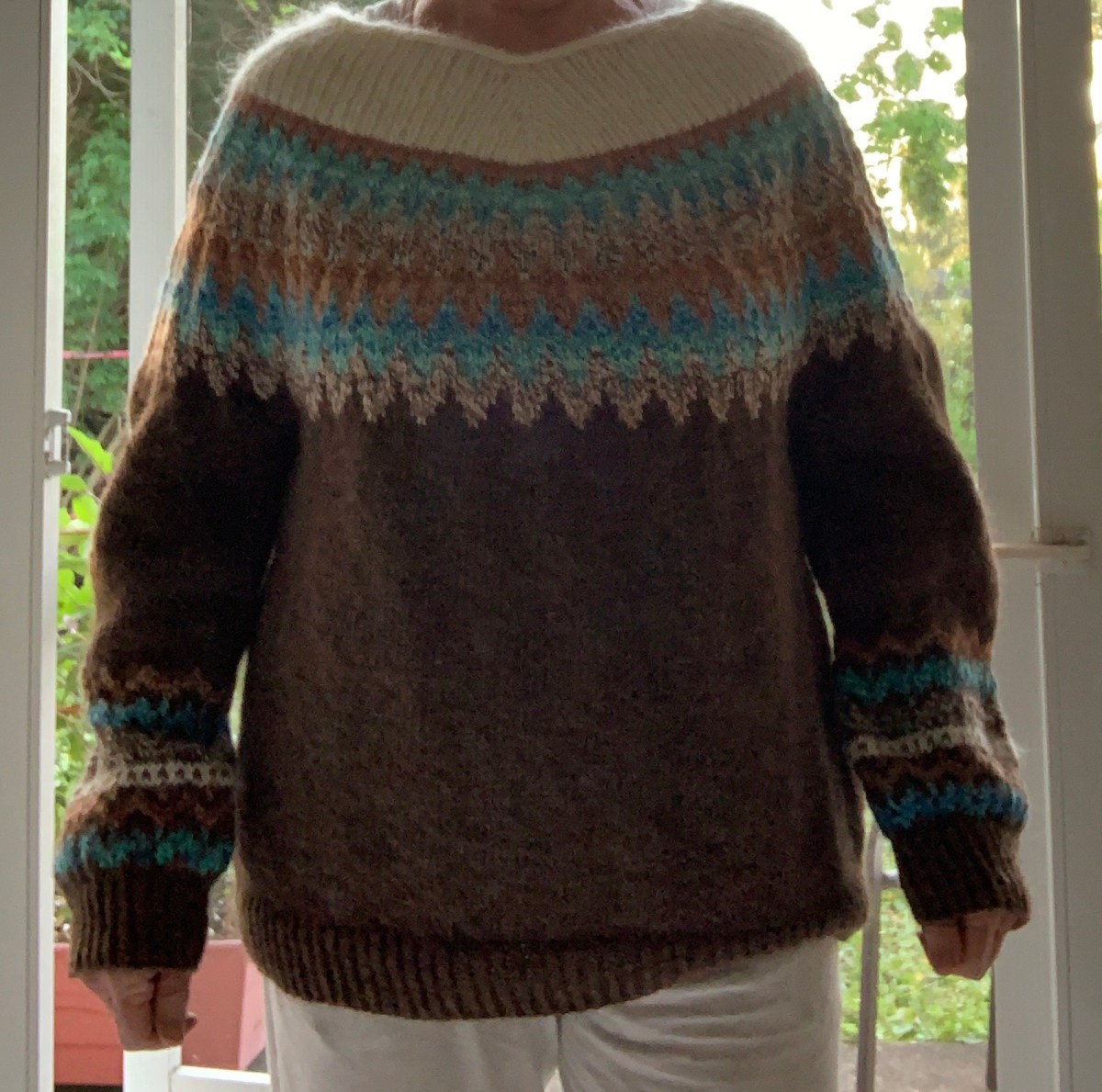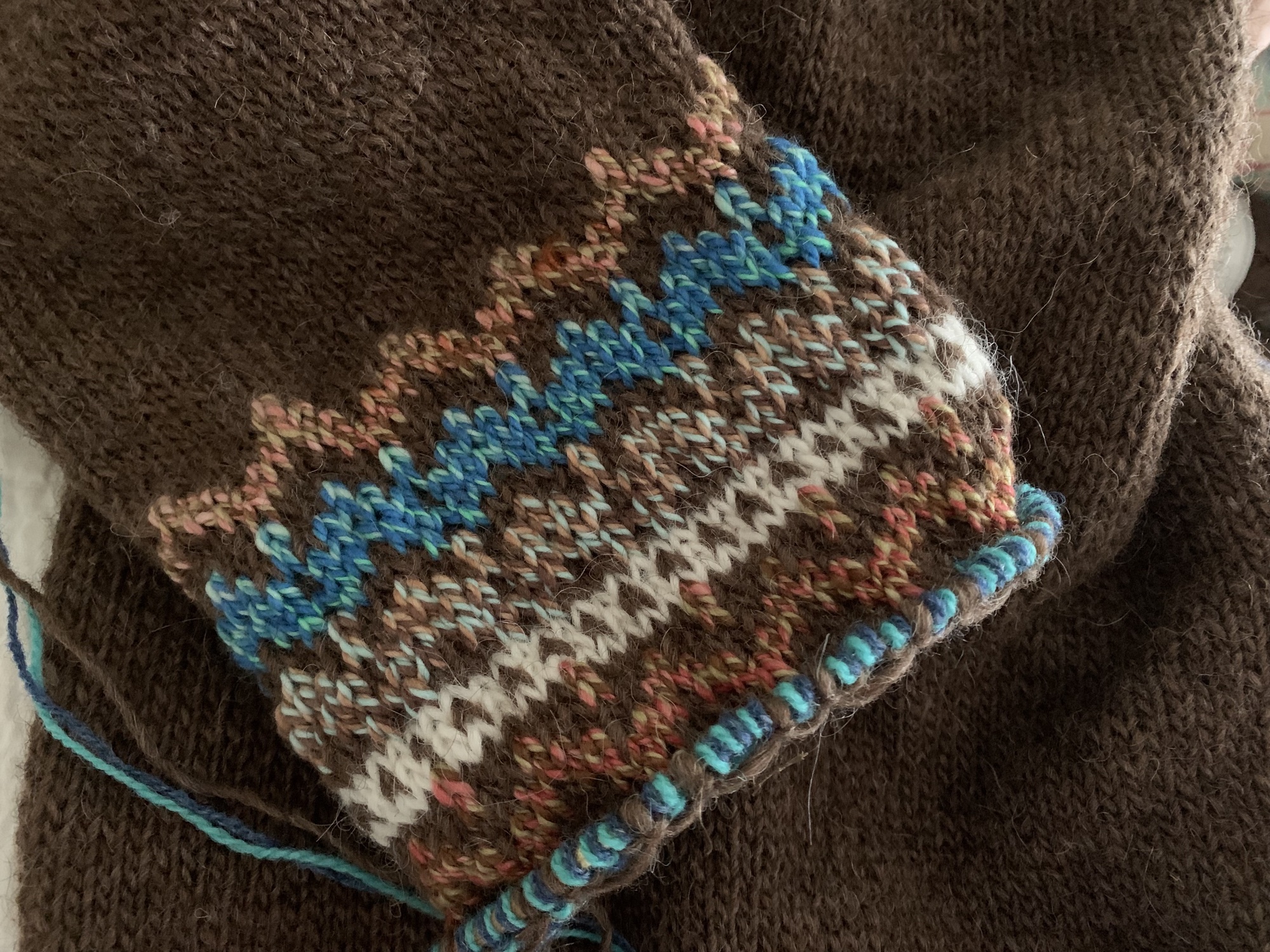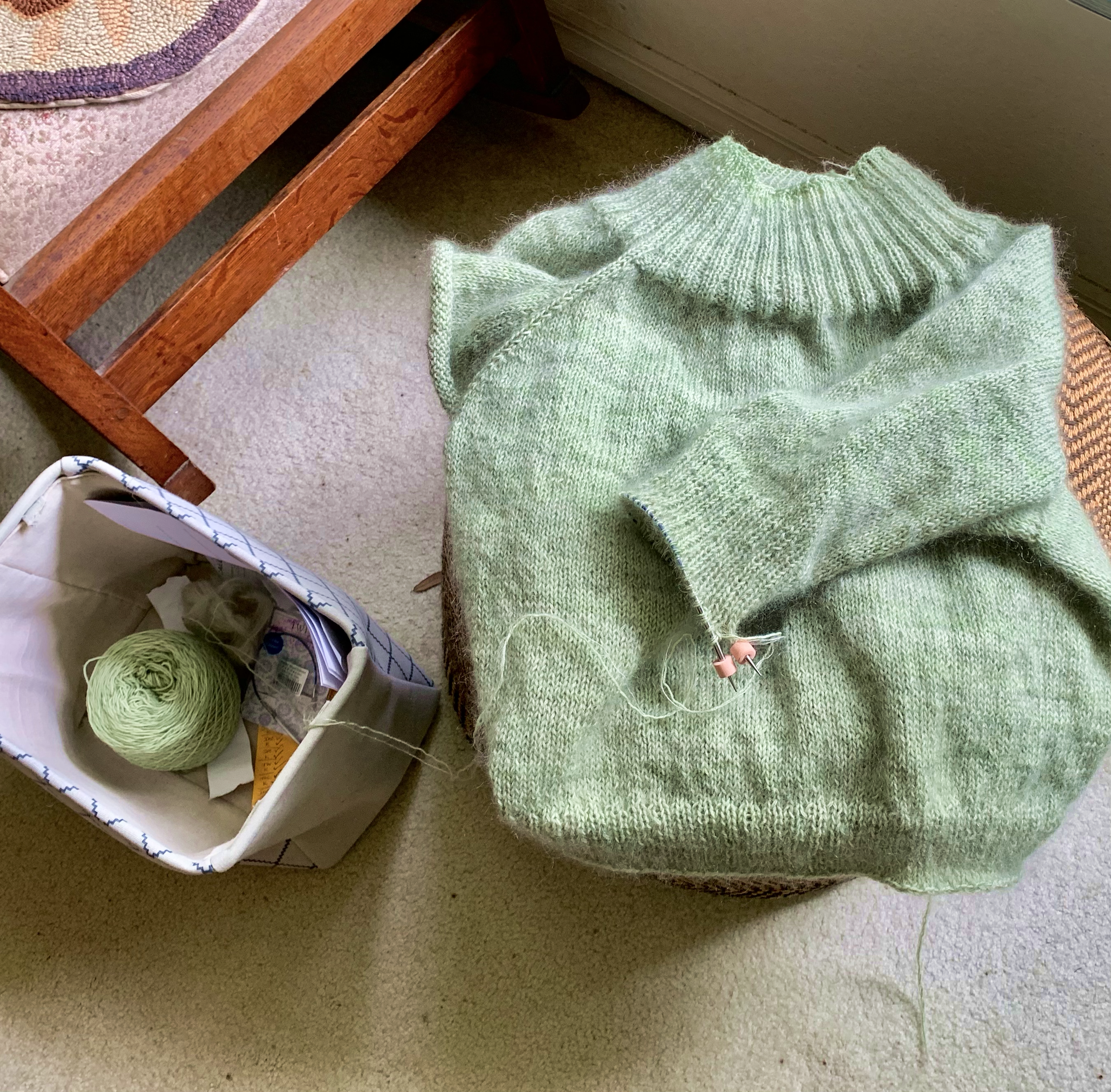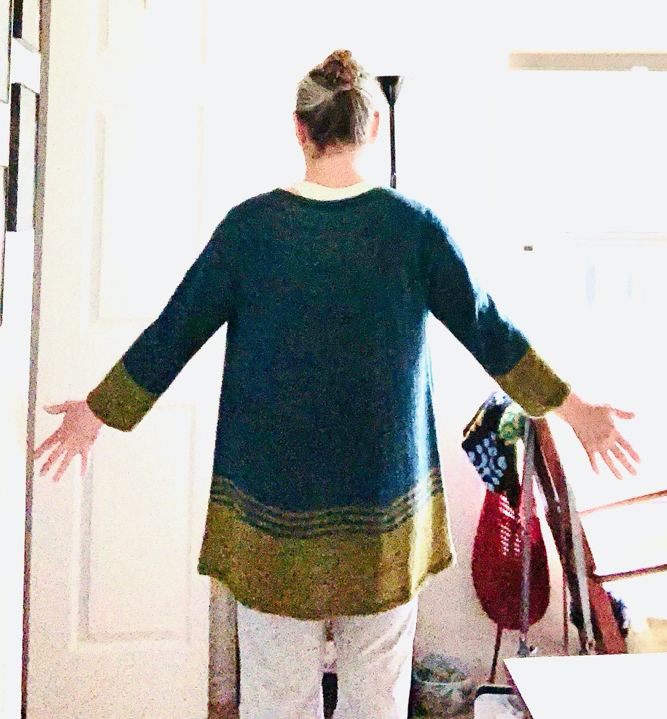
Rebel Cardigan Completed and Here is The Review

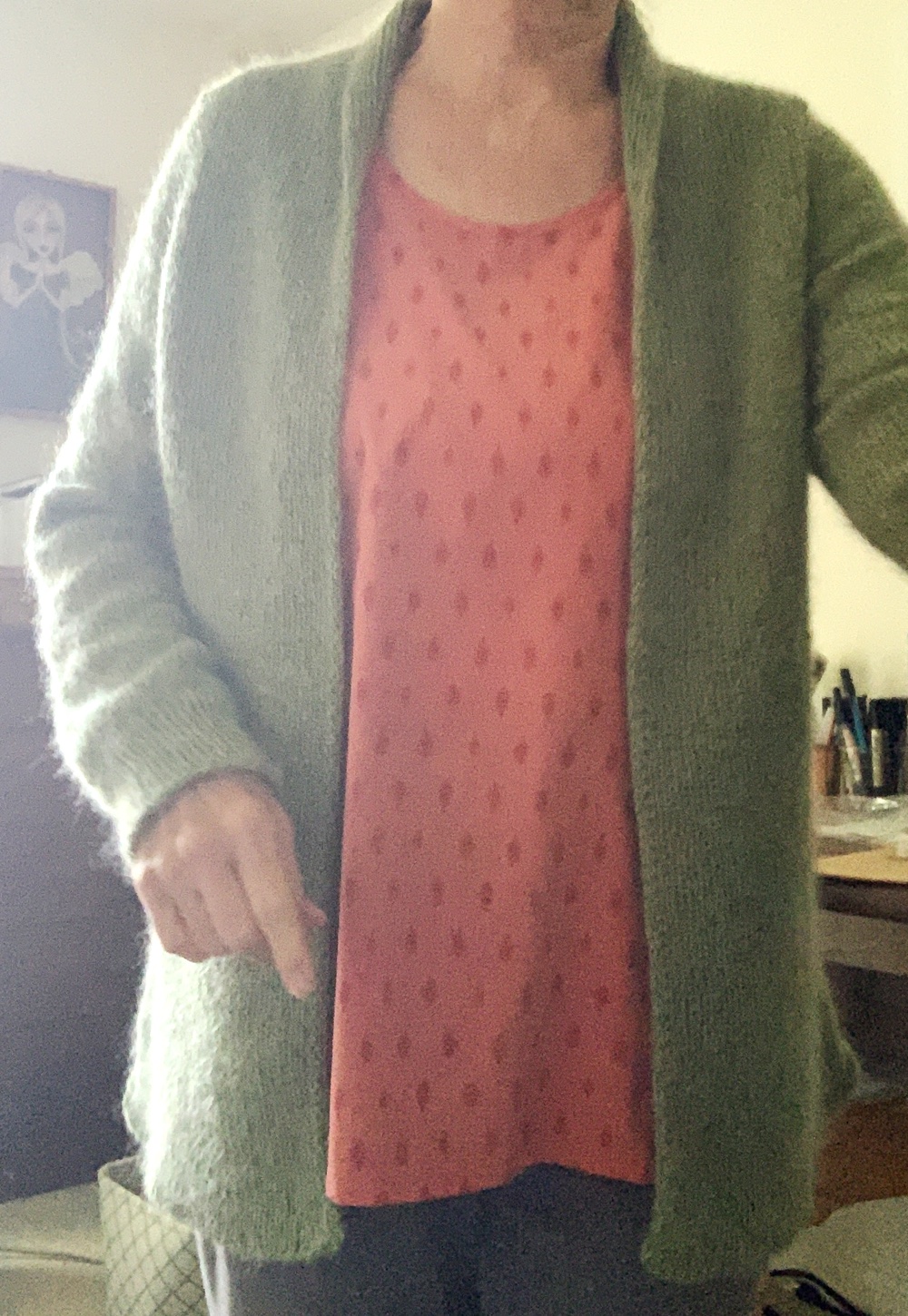
The Rebel Cardigan pattern is a newer design by knitwear designer Ankestrick. While knitting the Rebel Cardigan, I closely followed the pattern. The only modifications made were on the sleeves, which I left a bit looser as I knit to the cuff. I also did not do a tubular bind off.

On this page:
  • Knitting Sleeves, my mod for the cuff decrease.
  • Knitting the body
  • Hip width increases
  • Binding off, hmmm?
  • Finished Photos
My Decrease Row For Sleeve Cuff Ribbing

I stopped doing decreases when the stitch count was 58. For my size (4), decreases were to continue to 48 stitches. I like some width to the sleeve in case I wear something long-sleeve underneath.

The ribbing for the cuff is done on 48 stitches for my sweater size. I needed to decrease, in one row, to get from 58 stitches to 48 before doing the 1×1 ribbing. Here’s how I knit that decrease row to end up with 48 stitches:

On the next round I began the ribbing. I had been using DPNs for the sleeve but changed to a 9 inch circular for the rib. I really don’t know which way I like less – haha.

Once both sleeves were finished, I put the body stitches back onto my longer needle. I then kept knitting until I ran out of yarn.

Knitting the Body

The body of the rebel cardigan is back and forth knitting, while creating a very nice edging down the front. Panels of 1×1 rib on each side, while stockinette makes up the back. I usually knit my sleeves first and then finish up the body with the remaining yarn.

Making Increases for Hips

I decided to do some hip area increasing, which is mentioned in the pattern. At about 10 inches (body length measured under arm) I began to follow the increase suggestion. This means doing increases at front and back after 14 rows, then increases for the back only at the next 14 row mark. At least, that is how I figured it.

Not Doing a Tubular Bind Off, But What Are the Choices?

This sweater pattern calls for a Tubular BO (bind off) which is done with a sewing needle and not knitting needles. I don’t mind doing this bind off on a small sleeve circumference, but don’t really like it for an entire body bind off. It entails pulling yarn – long enough to do the whole hem – with a needle. I’m not super familiar with it, and didn’t want to mess up my bind off.

Also, the 1×1 rib is on two edges (front sections) with regular stockinette between, so how would I manage that? I guess there are tubular bind-offs for stockinette, but I’m not sure.

Bind Off Options to Consider

So I searched and found a “sewn bind off” shown here by Brooklyn Tweed. I suppose this is how you do it. Tubular to the stockinette, then sewn, and back to tubular for the other side.

It would have been nice to have been given other bind-off options and suggestions in the pattern. And would it be possible to do the sewn / tubular bind off in sections? I don’t think so.

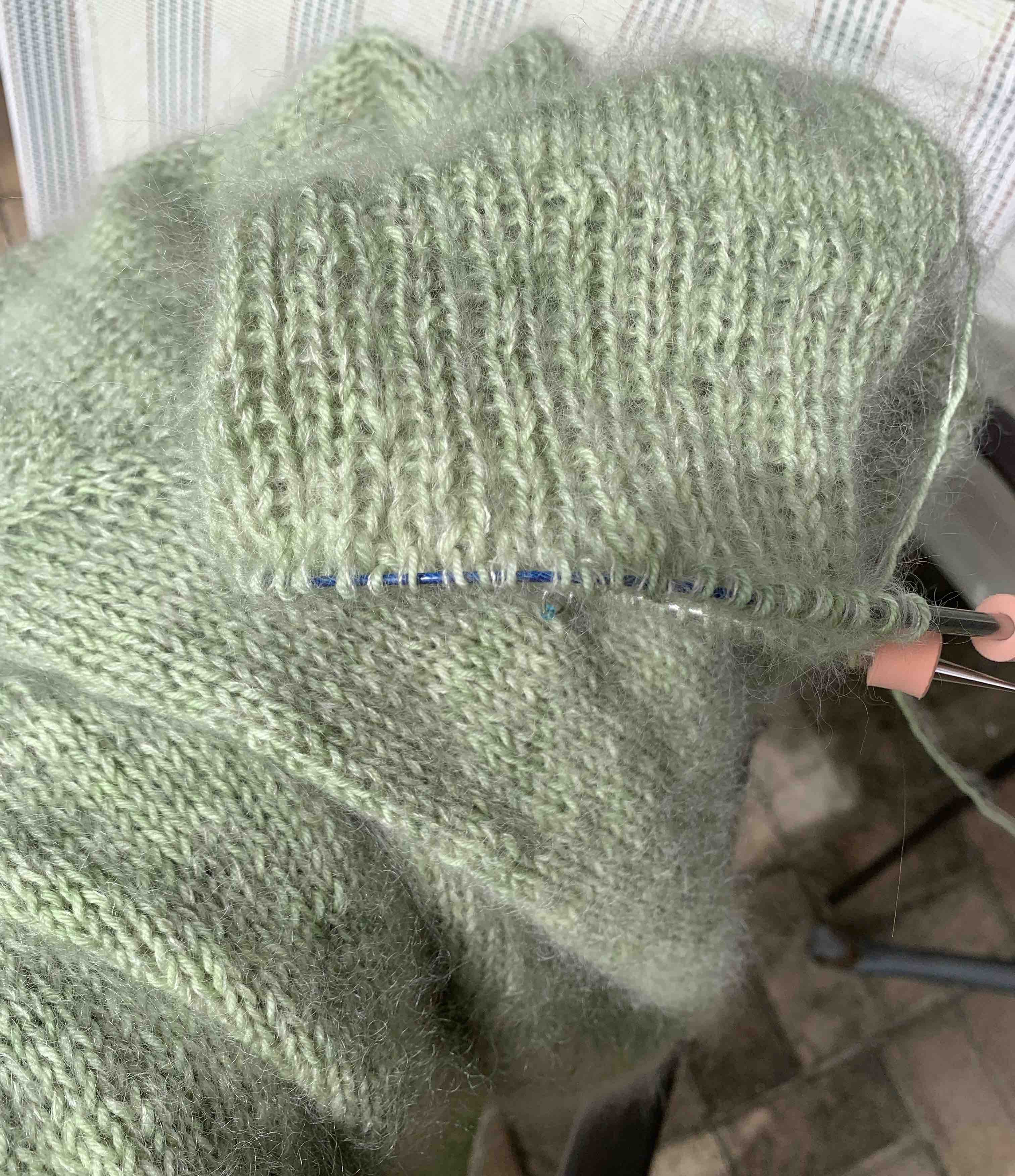
As it ended up I did a normal bind off in pattern (k1,p1) until I got to the stockinette section (the back). Then, I did an Icelandic bind off for the stockinette. This has caused the back section to curl.

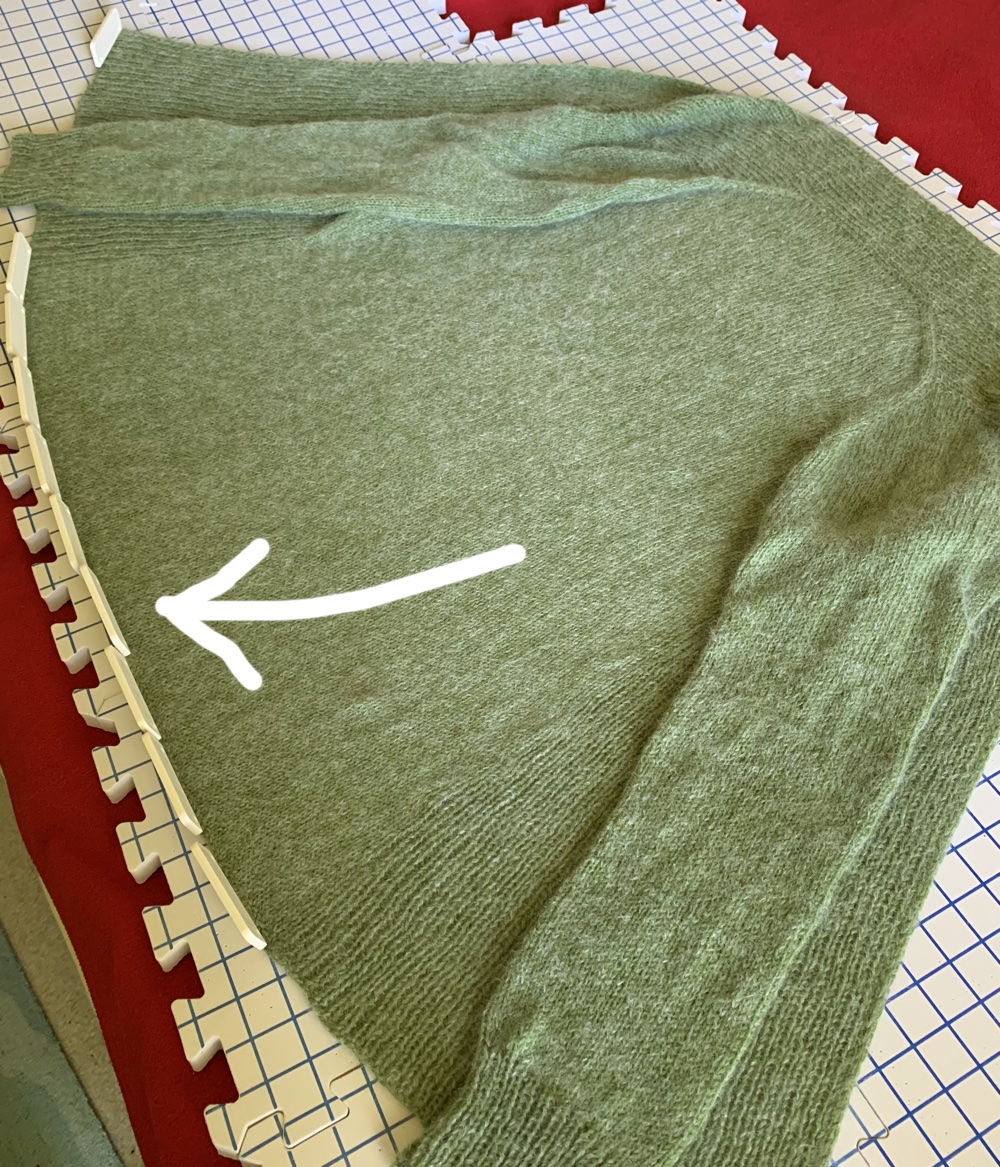
Rebel Cardigan bind off with curling edge at stockinette section.

I’m using my blocking pins to hold down the stockinette hem. Now that it is mostly dry, the hem is flat (yay)! You can see, in my photo above, the shaping where the increases were made further down the body.

Like most people, I am naturally a bit bigger in the hips than the waist, so I recommend doing these increases for the longer version.

Knitting For Olive Yarn

I chose to knit the Rebel using two yarns held together. I had just finished up knitting the Field Sweater pullover and used the same types of yarn (Knitting for Olive). I am very happy with the outcome, and do love this yarn. The Mohair is not as fly-away as some others I’ve used.

The Knitting For Olive company is RAF certified, and that means they create their yarn in an “ethical and responsible” way.

Finished Knitting Sweater Photos

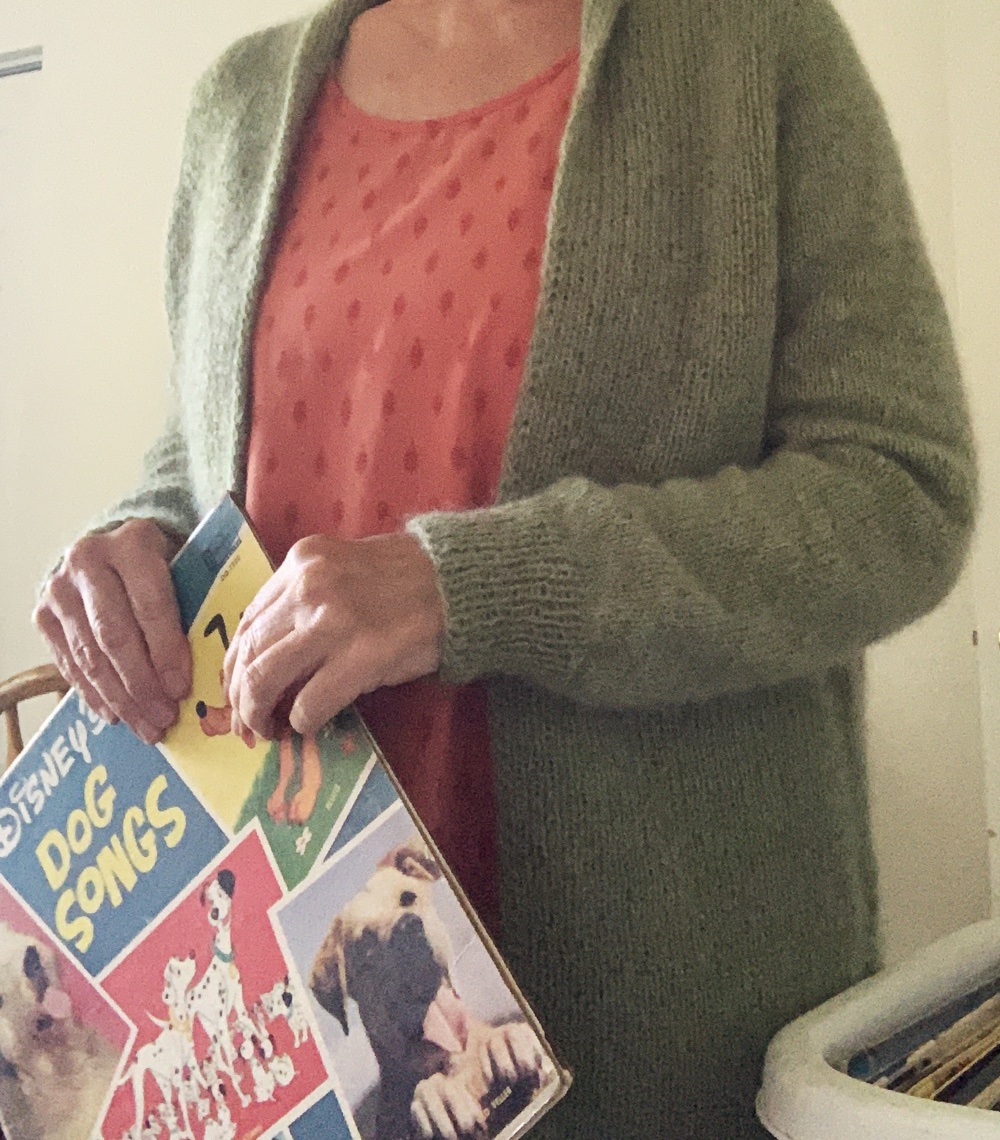
The washing and blocking to dry has not been done yet. See that little bump on my shoulder? That happened when picking up stitches, so be careful and take your time to make the seam look smooth.

Please keep reading!

Something went wrong. Please refresh the page and/or try again.

The Easy V Colorwork Sweater Knitting Project Review

Finished knitting the Easy V sweater and these are my thoughts on the knitting project.

Now that I have finished the body on the Easy V sweater, I tried it on. Length is good, but other than that, I am not super happy with this knitting project. The pattern is fine, but I don’t like the style on me. I’m not happy with my yarn choices either.

See a link to the pattern buying page below in the pink block.

Easy V body of sweater is finished so I tried it on for length, which is perfect.

I had trouble getting the neck size cast on right. I’d begun with a green yarn and larger needle. Restarted the sweater using white Lettlopi yarn in a smaller size. This size seemed better.

When it came to using the hand-spun variegated yarn, the colors didn’t really mesh that well, but I was fairly happy with the color work yoke. But, the yarn is quite bulky and makes the fabric thick – even though I went up a needle size to knit that area.

Sometimes after washing and blocking a sweater can look immensely better. I’ve knit so much that I do plan to finish.

Easy V sweater knitting

Maybe the neck will look better after washing and blocking. It is one of the elements of this top that is unique.

Easy V

Pattern directions are very good, and it’s not that I don’t recommend this sweater pattern, but be sure you like the style before choosing it. The colorwork is very easy to do. It is supposed to be similar on the sleeves, but I changed the pattern for the sleeves to one of my own. The colors needed to be divided up a bit for my liking, and I was running low on the variegated yarn.

Easy V sweater body with twisted ribbing at the bottom.

The Sleeves

I substituted my own colorwork pattern on the sleeves. This is not part of the pattern. I debated omitting colorwork on the sleeves, but in the end I changed it up instead. It was an opportunity to use up the yarn and incorporate the white which is on the neck.

I ran out of the blue yarn and substituted two strands of Jamieson and Smith fingering held together.

The ribbing is twisted rib, like the body ribbing. This is also my own doing and not part of the pattern. I like the looks of a twisted rib. To do it, simply knit through the back loop, and purl – around.

At this point, finishing this sweater is a bit of a chore. I’m ready to move on. My yarn selections were bad (except for the brown Lettlopi), with that colored yarn being very bulky. I wish I had not followed the yoke colorwork and left some brown showing.

The more I knit, the more I realize which types of yarn to avoid, and which I like best. This sweater is really not my style, but I’m sure it will be cozy warm for when I need warmth — two days out of the year!

Check out the Easy V pattern page at Ravelry, and be sure to browse color combinations from other knitters.

Have you knit this sweater? What do you think? I’ll be trying mine on soon – in the air conditioned house.

Easy V finished and has been washed and is drying on the boards.

Sweater is dry and here are my photos after trying it on. I’m not too happy with the fit as the neckline is loose and makes the whole sweater sag. I used a size 3 needle to do the neckline, but it really should be tighter. I’m not happy with the outcome.


More knitting stories from the blog…

First Attempt at Knitting Clotilde

I didn’t get far when I began the Clotilde Cardigan pattern, but it’s a good looking cardigan, and I’ll try knitting the pattern again.

Christmas Gift Knitting; Hats For the Guys

Get an early start on hat knitting for Christmas. This page lists a few hat patterns, for free and to purchase, that work well for guys. Also, I’ve listed some machine washable yarn to get…

A Simple Sweater With Stripes

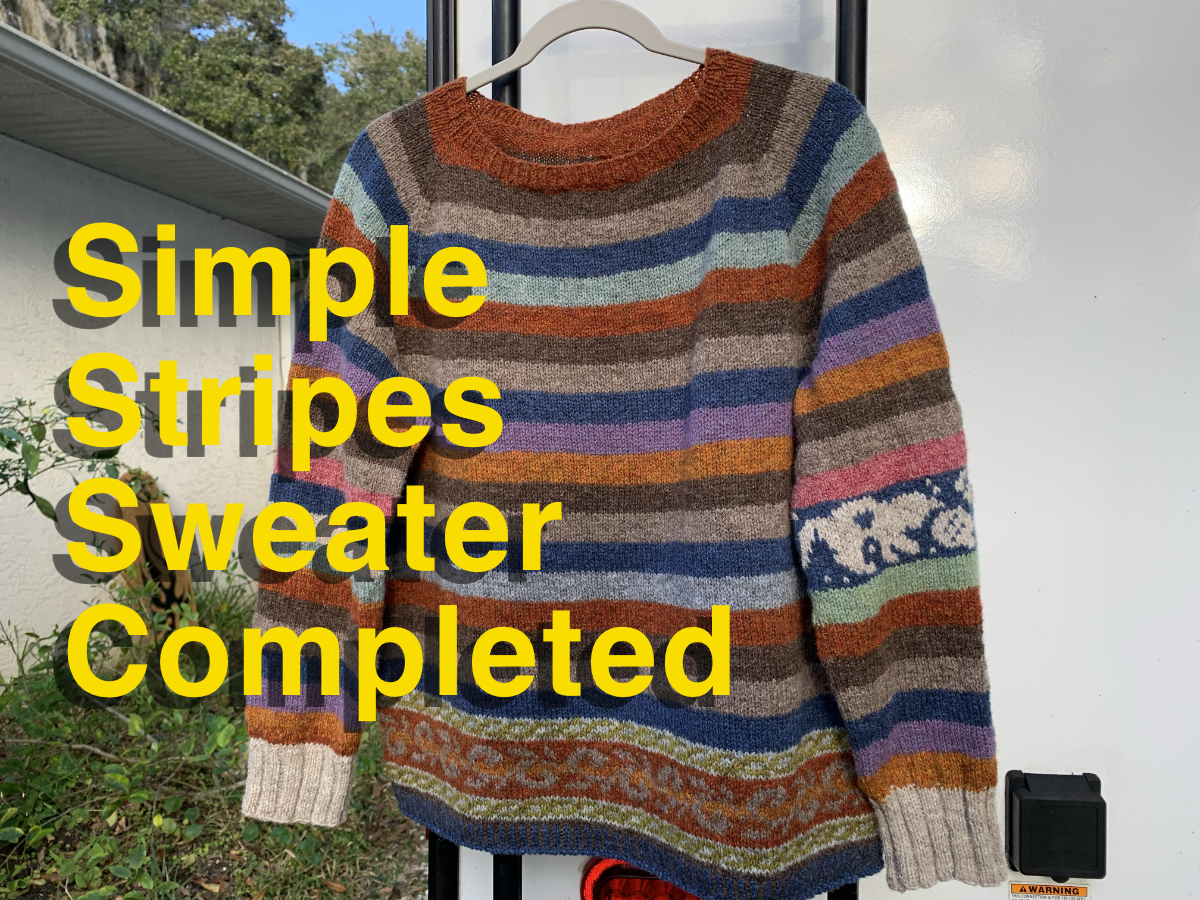
My newest knitting project is a simple sweater with stripes. A link to the pattern page on Ravelry is further down the page. This one is advertised as a good project to use up stash…

Holiday Knitting a Woolly Carbeth Cardigan in Alafosslopi

My son worked Thanksgiving Day and since it’s only me and him, I spent the day getting a new knitting project on the needles (I finished it on New Years Eve). The Carbeth Cardigan (Ravelry pattern page) is a design by KDD and Co., Kate Davies Designs. The pattern suggests holding two yarns together, but I chose woolly Alafosslopi yarn for this garment.

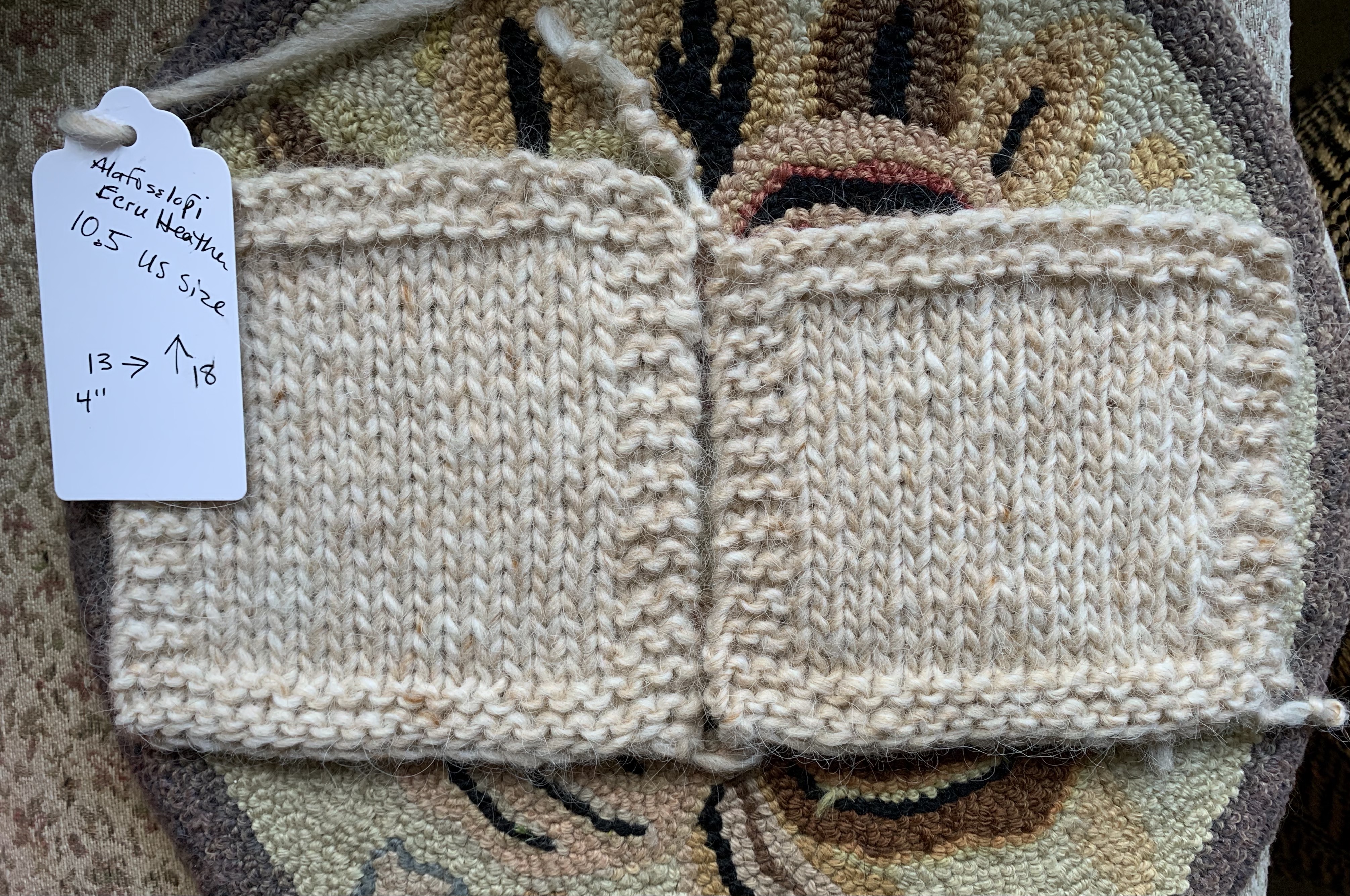
I did a swatch in size 10.5 with Alafosslopi yarn which was too large, so knit up another in size 10. That one turned out to match gauge exactly. I’m knitting this sweater in Icelandic wool which is bulky weight. Color is Ecru Heather. I will also need below gauge needles for the ribbing, neck and front bands.

Sweater Construction

I began with a sleeve and since I did not have a “below gauge needle” I knit the rib with size 10. The cuff is long. The body is knit, bottom up, and then everything is attached. This makes sleeve length a bit tough to figure. I knit 19.5 inches and the pattern called for 18. I’m glad I went longer. This pattern seems to have been written for a mini-sized person. I am 5’5” so pretty average.

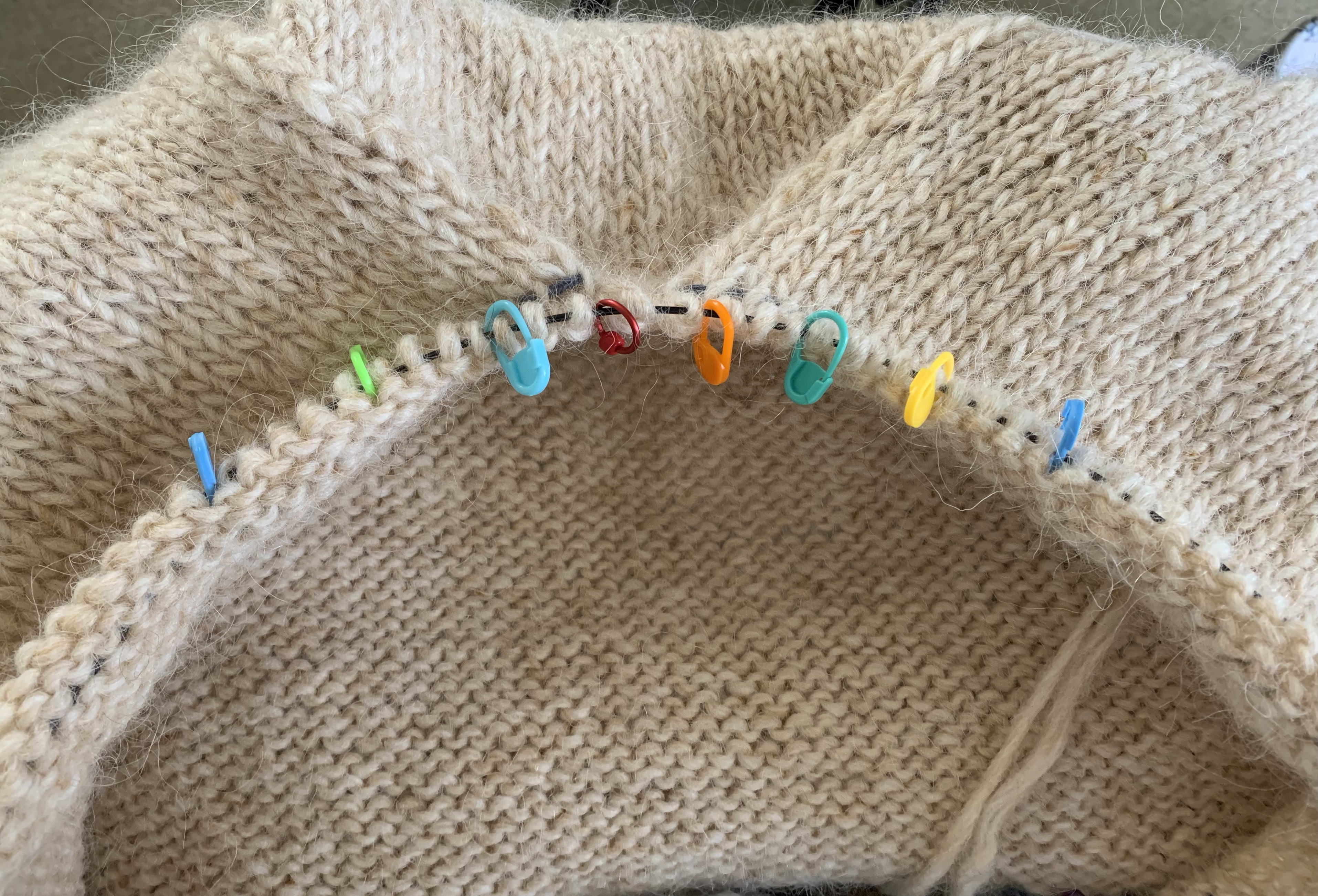
Here (below) I have reached the point where my decreases are almost done. The back of the neck seems low, so I will try to figure out my own short rows to bring it up. Other knitters have done this and I can see why.

Adding Short Rows to the Back of the Sweater

I watched this video to figure out my short row placement, but added a life line (good video at Very Pink Knits about adding a life line) before I got to this point. I’ve never tried to figure out my own short row placement and wanted to be able to rip them out if need be.

The blue yarn is my lifeline. Above that, in the center of the back, see the raised part which happened when I added short rows. I’m very glad I did this as the sweater seems to fit better.

Short Row Placement

I marked off the stitches for my short rows one row too early. Next time: Do short rows after the last row where the two center back stitches are purled together (or knit together for some sizes) and markers are removed. This is the row just before the neck decreases begin. **Another knitter made a note that she did the short rows after the decreases. This may work better as my short rows left a bit of a pucker in one spot. I didn’t notice this until AFTER the collar was worked, and I was not ripping that far back!

The Front Bands and Neck Ribbing

There is a lot of putting stitches on hold in this sweater. Once the joining of the sleeves and body and yoke knitting is done, stitches are held until time to knit the collar. The collar and front ribbing is knit on the smaller gauge needles. I have one size 9, 32-inch needle which I needed for all of this. The front ribbing has to be completed before the collar is knit.

The front bands were difficult for me as far as trying to pick up the right amount of stitches to make the top three work. Also, because I knit the body two inches longer, I needed to pick up extra stitches and not what the pattern said..! I ended up doing about 80 stitches on each band – which were way too many – but I won’t realize this until it’s way too late.

The button loops are added with an i-cord edging so no buttonholes were made.

Carbeth cardigan knitting
Front ribbing on hold with neck ribbing begun

Neck Ribbing

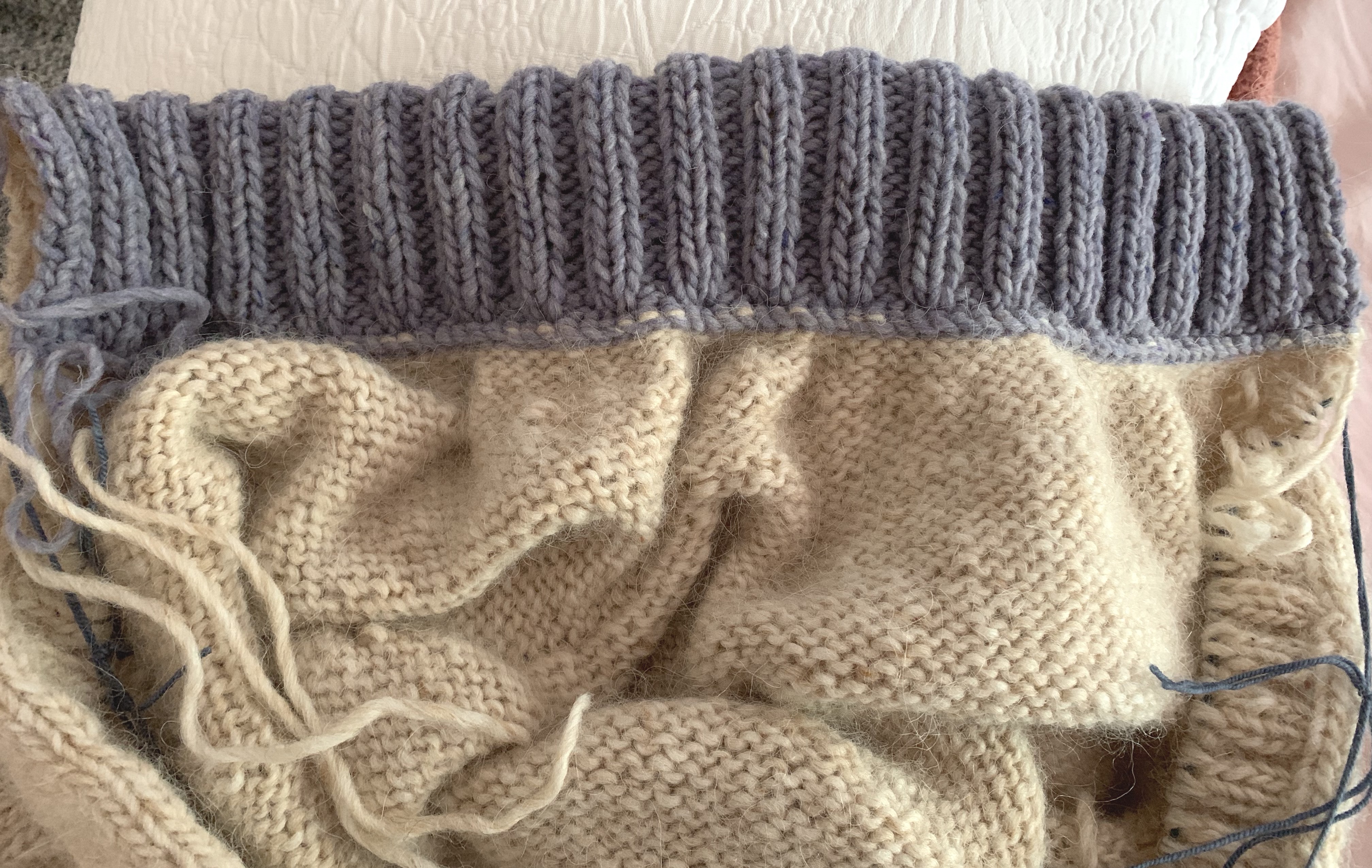
The neck stitches are knit in ribbing and will be folded over to the inside and attached. I followed the advice of other knitters and put a softer yarn inside the collar. I used gray Quarry yarn because I had it, and it matches the thickness of the Alafosslopi.

Knitting the neck was easy but then it had to be folded and attached inside. I used a size 5, long circular needle with pointed tip to pick up those stitches. You really need much smaller needle to make this easier. This video helped me see what exactly I should be doing as far as picking up stitches. I picked up two stitches for each knit and each purl section and then two stitches on each end. This matches the number of rib stitches to do the bind off – that number has to match the number knit for the ribbing! Purl Soho has a good 3-needle bind-off video if needed.

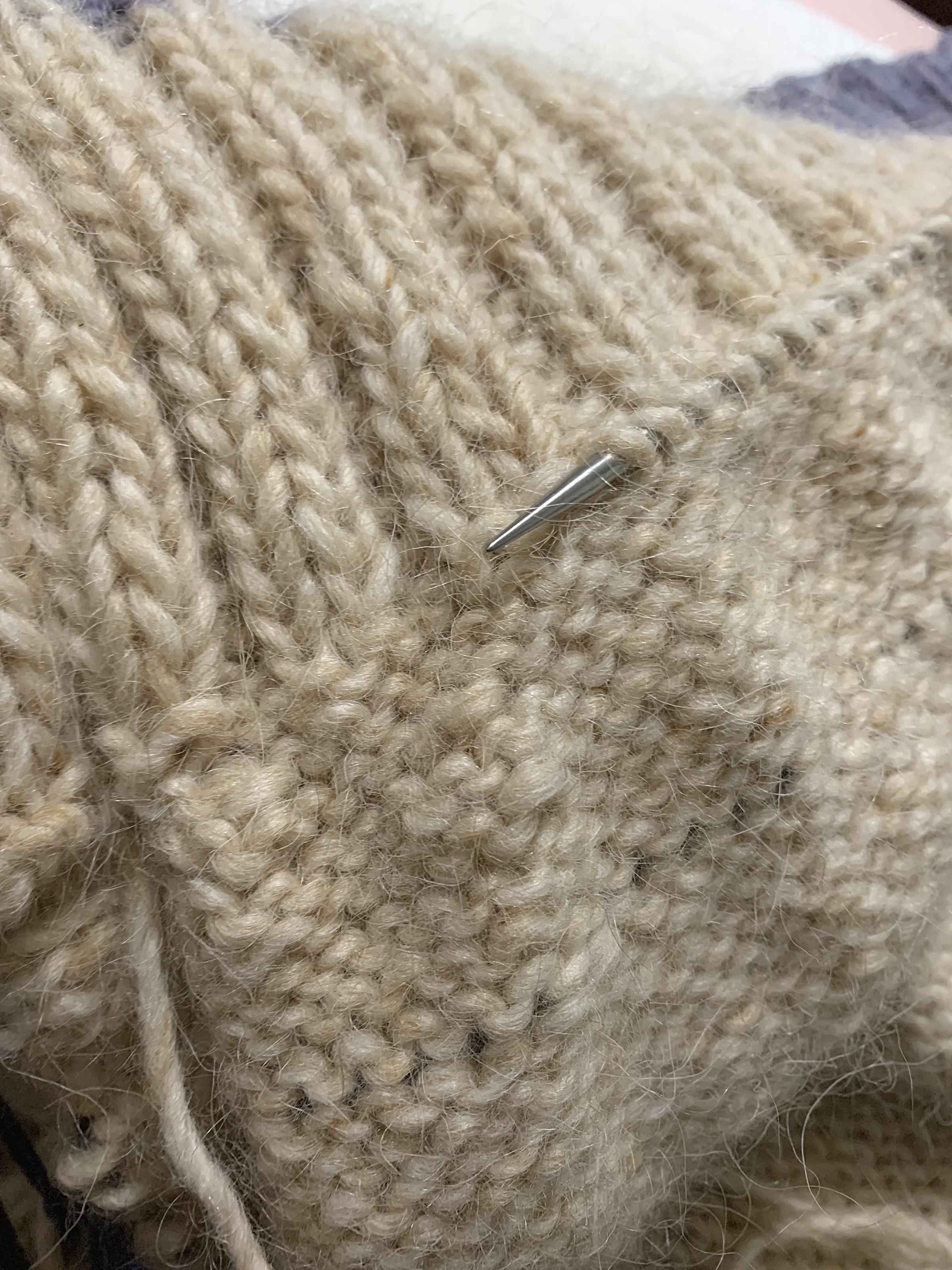
I used a much smaller size needle – size 5 US when picking up those stitches. Then I used a size 9 US DPN to knit the bind-off. I began binding off with a 5 DPN but the stitches seemed very tight. (A helpful note from the designer about all this would have been very nice!)

Explaining Pattern Section 8

I got to section 8 in the Carbeth pattern and was stumped. After some searching, I found a good explanation in the Ravelry forum, because it seems other knitters were also stumped.

The point in section 8 is to close up that hole in the collar, which was made by folding it over, by picking up stitches along the edge. Then, the collar and front band becomes one long set of stitches.

My band is being held by scrap yarn so I needed to pick up all those band stitches also. Now the needle is full, from top of collar to bottom of sweater. Go back to the top (on one side, the bottom on the other) and begin the i-cord bind off.

Although this video, by Andrea Mowry, is not exactly how the i-cord is done in the Carbeth pattern, it gave me an idea of what I needed to do, only with a different amount of stitches. Begin the Carbeth bind-off by adding two stitches to the LEFT HAND NEEDLE, and continue as the pattern says.

Firsts For Me While Knitting This Sweater

I did my very first spit splice using this yarn! It was pretty cool and I will definitely be using it more often when knitting with wool.

The lld decrease on the wrong side. Clear directions are given in the pattern abbreviations page.

Added my own short rows – successfully – for the most part. I’m very glad I did this because the sweater would not have been “high” enough around my shoulders and neck otherwise. I’m very surprised the pattern didn’t include short rows as many knitters added them in on their own.

It was not my first 3-needle bind-off, but the first time I’d done it to tack down a double collar.

I-cord rib and buttonholes. This was pretty easy to do, but the fact that I had picked up too many stitches (way back) for the bands, made the ribbing wavy. At this point I was frustrated.

I am trying to fix this with button placement and blocking. A simple note from the designer about how to pick up those front stitches – such as “pick up 2 stitches for every 3” – or something, would have helped. She does say how many to pick up – if you follow the pattern exactly and want a cropped sweater.

Final Review of Knitting the Carbeth Cardigan

Some previous knitters of this pattern mentioned that the sweater runs small. I would agree. I made my sleeves and body longer.

In my opinion, it is necessary to add those short rows at the back too. My gauge swatch was exact, so I chose the correct size to knit, it just would have been very small had I followed the pattern.

There is a lot of picking up of stitches and putting stitches back onto needles. Also, parts of the pattern directions were difficult to understand, and I needed to search the Ravelry forum and use YouTube videos (none were referenced in the pattern) to figure things out. I have notes written all over this pattern just in case I ever want to knit it again …. which I highly doubt.

I love that this pattern uses a bulky yarn because the project is completed quickly. Overall the construction is unique, but it’s not flattering to my shape and the button bands are wonky due to reasons mentioned above.

Because many parts of the pattern needed some figuring out, I certainly would not suggest it for a beginner sweater knitter.

Other Sweater Patterns I Have Knit and Reviewed

L-R: Top row – Playdate and Marshland (by Tin Can Knits) Calliope by Espace Tricot (a free pattern)

Row 2 – Polliwog Popover, Cobblestone (Brooklyn Tweed), Fine Sand

Row 3 – Farfuglar (Lettlopi yarn) and my first sweater Umpqua – lots of mistakes here.

Knitting The Calliope Sweater Pattern

Knitting has begun on my Calliope pullover sweater pattern (link to the pattern below).

Somehow I managed to pull a muscle in my neck which is causing me some extreme discomfort. The pain is keeping me from doing much of anything except sit in front of the television and knit. For that reason, my sweater is coming right along! We must take the good with the bad 😉

The Yarn Story

I’ve had the Miss Babs “Katahdin” green yarn for a long time now. The “Spring Clover” yarn is a Wild Iris – meaning they only made the color once – and the skein has 1750 yards of yarn..!! It’s made up of Bluefaced Leicester Wool and is Superwash. Originally, I thought I would use it to knit a large, rectangular stole for my daughter, then I decided not to.

So, this huge skein of yarn sat around until recently when my new idea was to pair it with mohair and knit a sweater.

Miss Babs Katahdin yarn and Filcolana mohair
Yarn is ready to knit

I ordered some dark green mohair to use, but after knitting up a swatch, decided I didn’t like the colors together. After trying the Katahdin with some leftover white mohair, and liking that combination better. I ended up buying the Filcolana Tilia mohair (link goes to Fairlight Fibers) in very light green called “Green Tea”.

Swatching for the Sweater

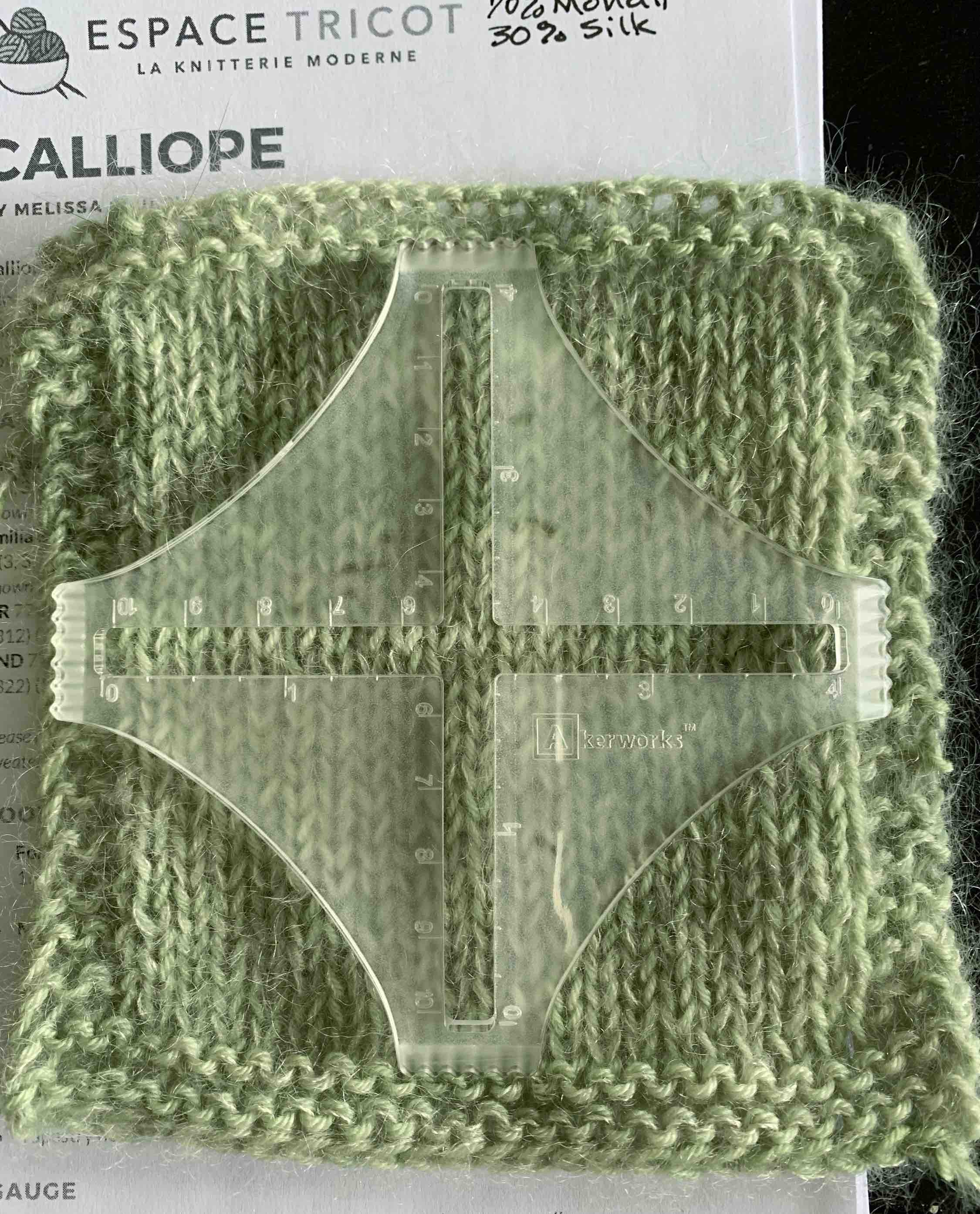
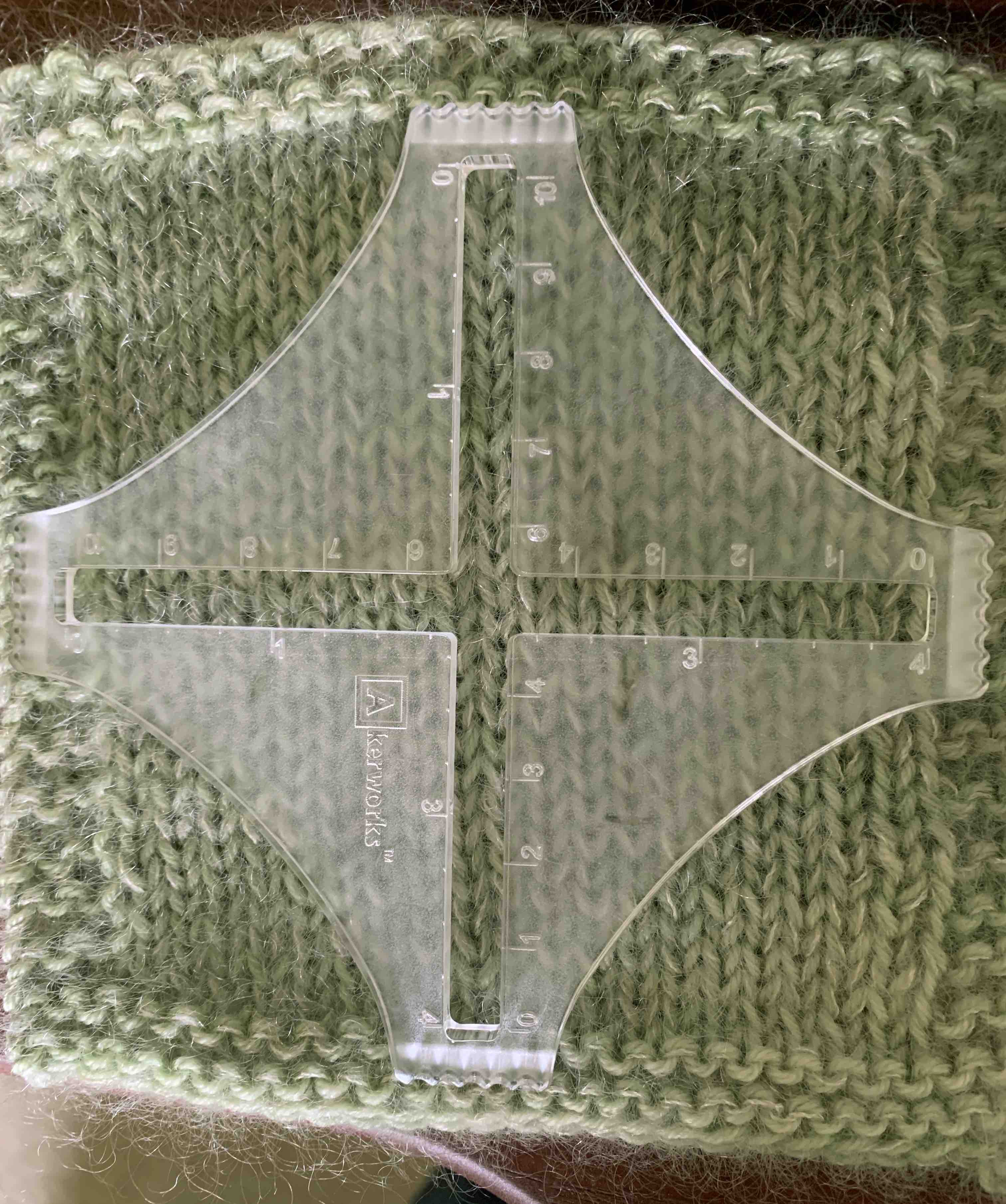
Using the size 7 US needles, I knit up a swatch to check for guage. Before the washing and drying of the swatch, the row counts were pretty exact. But after blocking, the knitting expanded to be slightly taller, so I will watch the length of my sweater. It’s not terribly off, so I stayed with the same size 7 needles. (I should have gone down a needle size because this sweater really grew!)

The Sweater Pattern is “Calliope” from Espace Tricot

Raglan sweaters are generally quite easy to knit and I’d already knit the Turtle Dove pattern offered by the same designers. That one was my first raglan knit, but it came out huge – more like a big poncho / blanket.

This pullover has texture at the yoke which is created by simple knits and purls. The pattern begins with a cast-on for the neck and is knit top-down. I decided not to include the mohair until I knit a few rounds. Something about fuzz at my neck turns me off.

Photographing knitwear projects, and getting the color right to share, can be difficult. For some reason this mint green color is exceptionally difficult to capture. GRRRRRR….. I promise, my sweater color is not that ugly!

Calliope has short row shaping using German Short Rows. They are explained in the pattern, and are very easy to do, and a link is provided to a video by Very Pink Knits for further explanation. Short rows give the sweater a better and more comfortable shape by raising up the back section (shown in my photo below). You can see that the front of the sweater (photo on the right above) has fewer knit rows after the short rows are completed.

Once that is accomplished, the raglan increases begin. This creates the sleeves and widens the front and back. My sleeve increases are easy to see in the photo above. I have just put the two sleeves onto waste yarn and will now continue to knit the body – round and round in stockinette.

Not Liking This Mohair

Body of sweater is done. It seems a bit big around. On to the sleeves, but the fuzziness of the mohair is quite annoying. Every time I knit, I end up with fuzz in my nose, mouth and eyes – like I am a magnet for it. I don’t know if it’s this type of Mohair, or all mohair which would do this. (I have since discovered Knitting for Olive Mohair, which is much better.)

Photographing this green has been a real pain in the neck! Finally I took the sweater, with one sleeve half knitted and the other on hold, and put it outside in the sun. The photos came out a bit better, but they are not true to the pretty green of this yarn.

The sleeves have a very long section of ribbing that runs down the arm from about the elbow area. I began that with DPN’s and switched to 9-in. circulars because I really don’t like using DPNs for long lengths of time.

Because I was working on this pattern alongside the Meadow Moon color-work pullover pattern, and also my Lettlopi “Migrating Birds” pullover, among other projects, the sweater was finally done three months after I began knitting.

Calliope Sweater End Results

The Calliope Sweater is quite an easy knit. The directions are well written, and mostly you are knitting, or knitting and purling. I chose the yarn from my stash because this past year has been a year of “no buying” (for the most part).

What I like, is the easy going style and the fact that most of this sweater can be knit at night while watching TV.

The sweater is big. Superwash yarn tends to do that, and that is why I usually avoid using it for sweaters. This is a good lesson in watching the gauge and changing needles accordingly – especially if using a Superwash yarn. I may toss it into the dryer one day to maybe shrink it a bit.

Espace Tricot used to offer all free patterns. They no longer do, but the patterns are nice even if you have to spend a few bucks. Recently, they came out with a classic raglan sweater called Gingerbread Sweater and it’s another that is most likely perfect for a beginner knitter.

Please keep reading….

Understanding Knitting Pattern Theft and Its Impacts

Pay for your knitting patterns. Never accept a copy, or you are actually breaking the law. Designers work hard to create those awesome patterns for us. It’s only a few dollars, but designers need to earn from their creations to keep their small business afloat.

Alternatives to the Hidden Gems Shawl Pattern

Hidden Gems was a popular free shawl knitting pattern. Since it is no longer available, I have found some similar patterns for knitters. Check out the list and let me know if you choose one.