Knitting The “Skiff” Cable Beanie Pattern

I’m back to knitting hats, and this pretty cable hat caught my eye. It’s called the Skiff Hat by Jared Flood. The hat can be knit as a Beanie or Watchcap and I chose the beanie as a trial. I’m not an experienced cable knitter and had to see if I could figure this out. I could… it’s easy, but it’s all in chart form, and I had to do some pre-knitting preparation.

Skiff Hat

Many previous Skiff Hat knitters remarked that their hats came out very big. The pattern calls for Brooklyn Tweed Shelter yarn, which is a worsted weight. I’ve never knit with Shelter, but I have knit with Quarry, which I think is similar only chunkier.
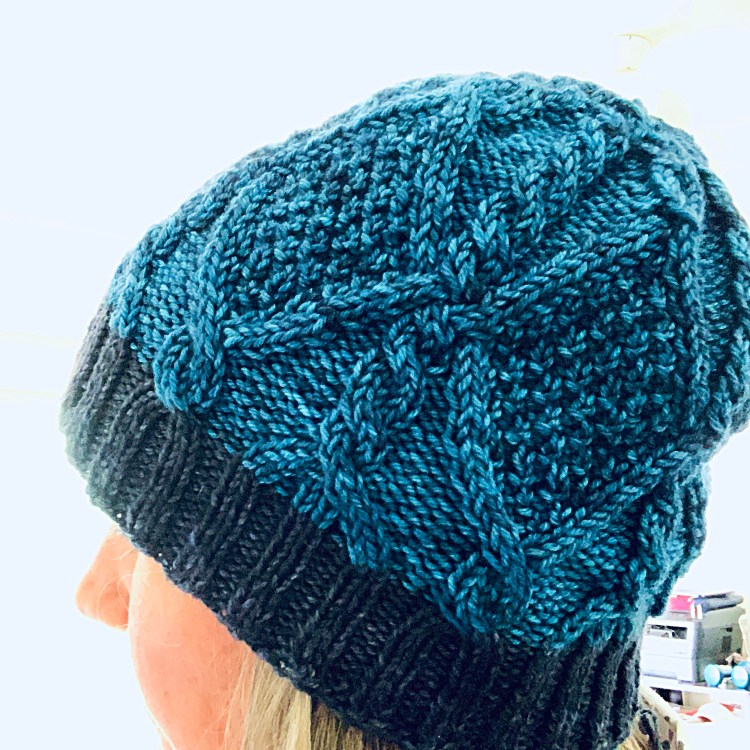
Skiff Hat knitting pattern

One suggestion was to use DK yarn instead of worsted and go down a needle size, or more (yes, more). I used the size called for on the ribbing and went down one needle size for the top. I could have gone even smaller.

For this trial knit, I choose to use up some yarn in my stash. The lighter blue is Madeline Tosh “Baltic” and the darker color is “Dubrovnik”, I think, and both are DK weight.

The semi-solid blue is very pretty, but the color stained my fingers and my bamboo needles! I wasn’t too happy about that. The yarn would also occasionally split when I was trying to do some of the stitches.
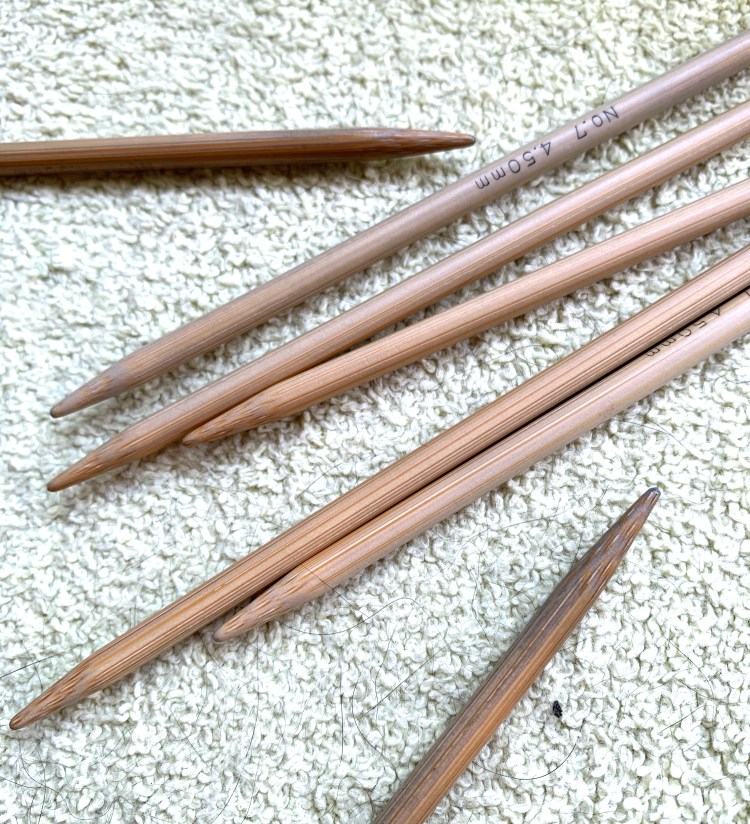
Bamboo needles turning blue from yarn dye
Blue dye colored my bamboo needles

End Thoughts on Knitting “Skiff”

The beanie did come out large. It’s loose around the cuff and tall on my head, and I consider my head to be average size. I am still waiting for it to dry, but I don’t anticipate it to become smaller.

The hat is knit from a chart with perfect explanations for each of the cables. One of the cable stitches uses two cable needles, but it’s pretty easy to do and I enjoyed seeing the twisting of the stitches bring this beauty to life.

Skiff hat pattern with cables
Washed and drying flat

Directions for a tubular cast-on are included with the pattern and I found it difficult, so I used the Old Norwegian / German Twisted cast-on.

Helpful Things

Before I began knitting, I went through the pattern Legend, showing all the stitches, and cables, and I used color pencils to differentiate each type of cable on the chart.

I also wrote out the cables next to each color on the Legend page, such as 2F, K2, K2 for the pink color – So when I saw the pink cable in my row, I would know to slip 2 onto the cable needle and hold to the front, knit two regular, then knit two from the cable needle. This was a big help for me, because the printing is tiny on the pattern, and my eyesight is poor.

DPNs Work as Cable Needles

I used DPN’s in place of cable needles throughout, which worked fine. At the crown I used 3 DPNs to hold the stitches, one to knit, and another to do the cables. Five DPN’s is all you need. I also did one extra round after the pattern ends, with a K2tog all the way around. Otherwise you are left with an enormous number of stitches to pull up with yarn to close the opening.

The Watchcap version is the one I want to make, with a wide roll brim and pompom. I’d like to make it for my daughter, who has a small head, so I’ll have to figure out how to knit it differently. I definitely need to use smaller needles and possibly fewer stitches around the brim, with an increase before the cable pattern begins.

Skiff hat crown
Top of hat

More Fun Hats I Have Knit

Tettegouche is My Second Colorwork Hat

If you have the Milarrochy Heids hat-knitting pattern book, you have the pattern for the Tettegouche hat. ( It is also sold separately – see the link at the bottom of this post.)

It’s a beautiful book, with lots of pretty hat patterns and they all use Kate Davies Milarrochy Tweed yarn. I bought the yarn in a variety of colors and began this hat a while ago. I didn’t like the way it was coming out. I blamed myself for not being familiar with colorwork, good cast-on’s, or having the right hat gauge. Honestly I didn’t like the yarn. I put it aside.

Tettegouche hat pattern
Finished Tettegouche

When I joined The Woolly Thistle knit-along, I became familiar with Rauma wool and fell in love! Everyone was using it to knit colorwork projects. After knitting some mittens by this hat’s designer, Virginia Sattler-Reimer, I went back to try to knit the Tettegouche, only this time I used Rauma yarn. By the way, she has mittens to match the Tettegouche hat pattern!

Tettegouche hat pattern
Good size, with a bit of extra room at the top.

I made some changes to the pattern, and one was to do a 2×2 ribbing for the brim. The colors I used were what I had available and they are not the greatest. But I had fun with this. It has been a good practice hat after knitting Katie’s Kep. Because I had already knit that colorwork hat, I knew to try a smaller needle for Tettegouche.

Buy The Tettegouche Hat Pattern

The pattern is also sold separately and you can buy the Tettegouche hat pattern here. Please click the link to see it, because it is so much prettier than mine! You won’t believe it is the same hat…!

What Was My First Colorwork Hat?

My first all-colorwork, Fair Isle knitting project was Katie’s Kep, which is a fun hat pattern which is Free to download.

Katie's Kep hand knit hat
Nearly done, just working the crown

Free Knitting Patterns, Are They Worth It?

As a beginner knitter, I have searched for “free knitting patterns” to get a feel for stitches, directions and charts. Why would I want to spend money on a pattern that I can’t comprehend and knit once it is downloaded? For beginners, free is probably best to start with.

So is knitting something that is free worth it? Well, yes and no. Be careful where you find those free patterns.

A warning here is to try to find well known knitwear designers who sell patterns but also offer free ones. They care about their patterns because it’s a business for them. Offering free things could very well lead to purchases done the road.

Or, choose a free pattern that has already been knit a lot and has great reviews.

I do understand that starting out we beginner knitters have NO idea who the knitwear designers are. And where do we find reviews and comments on patterns?

This is where Ravelry – an online knitting (and crocheting site) can be a huge help. If you can ignore their politics, it’s an enjoyable place where I’ve learned so much.

My First Hand-knit Shawl Was a Free Pattern

My very first shawl was a free pattern from a designer who offered it with the stipulation that I sign up for her e-mails. The shawl was good practice for me, with wonderful directions, it and brought her a follower. Below is the Spindrift Shawl (a free pattern and my first shawl knit) by Helen Stewart. I still get her e-mails.

Spindrift shawl
My first shawl knitting project

That is not to say that many free patterns work out just fine. Usually they are fairly simple and closely match other free patterns of the same type. Sometimes knitters just like to share something helpful with other knitters.

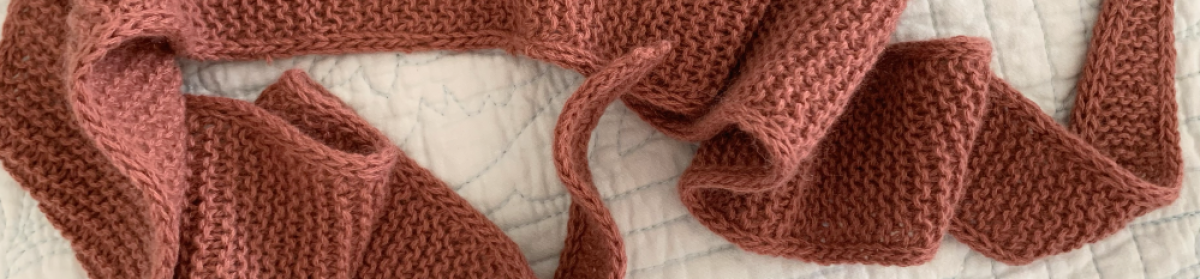
The Scrappy Bias Shawl (below) is one that gets a lot of knitter’s attention. It is easy knitting and fun. The Honey Cowl is pictured at the beginning of this page, and it is a free, one or two wrap, cowl.

colorful scrappy bias shawl
Scrappy Bias shawl – completed!

For beginner knitters, using a free pattern can be very helpful. Usually they are simple patterns that give us good practice and cost nothing but the yarn. A great place to begin is with Tin Can Knits. I sure wish I had found them sooner in my knitting adventures. They have an excellent bunch of tutorials and a page full of free patterns such as hats, sweaters, mittens and more, for all ages and sizes. Below is my Playdate Cardigan.

Playdate cardigan in size 6-12 months
My experience knitting the Playdate cardigan

Purl Soho

One very good place to start, if you want clear knitting directions, often with video tutorials, is Purl Soho. They sell beautiful yarn, and offer many types of patterns for free! It is one of the first places I found for free things when I began searching. From simple hats and housewares, to sweaters and ponchos, this is an awesome site for free designs and helpful insights.

Beware that some of their pattern stitches are quite advanced, and those wraps and blankets can take a long time to knit.

One place to also find more advanced free patterns (as well as the more simple) is the Espace Tricot collection. They offer a slew of free patterns of all types. The sweater below is one I recently knit.

In closing, I suggest being careful where the free patterns come from. If you begin to knit something that looks good and get toward the end and hit trouble, you’ve wasted lots of time. But, many free patterns are definitely worth knitting.