Over the Top Tee, Knitting For Hot Weather

For summer, which is year round in Florida, I am knitting a pattern by Heidi Kirrmaier called “Over the Top Tee“. She knit it using silk yarn, and I am knitting it using linen yarn, which I have not used before.

Once I bought the pattern, I began searching for a good, summer weight yarn. My first choice was linen, but I looked at other options. I wrote a blog post about my search for summer yarns, and have collected a list of my favorites to try.

The yarn I chose for this project is Berroco Stonewash Linen Indio, which is a discontinued yarn. I first bought 7 skeins on sale at Wool and Company, but ended up buying the last 3 skeins just in case I need them for length. I was afraid I would not find matching yarn if I needed it. At $7 a skein, it was not as expensive as some yarn.

Gauge swatch after washing
Linen yarn gauge after washing

The Over the Top Tee is a pullover style which is knit from the top down. Because my yarn choice is not what the designer used, I knit a swatch using size 3 needles to see how close I was to gauge. It was a bit small, and after I washed and blocked it, it was even smaller.

Because the stitch count was just a bit short, I began the knitting project going up to a size 4 needle. I’m knitting size L2. For this pattern you need 2 extra needles that will hold provisional cast-on stitches. I used the crochet provisional cast on. The back of the top is begun on these needles and then connected with backward loop cast-on stitches and knit to the end. I could not picture how this pattern would come together.
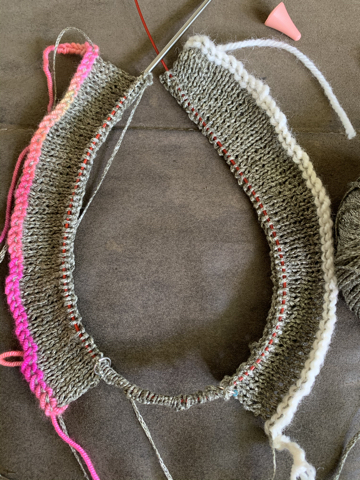
Over the Top Tee provisional cast-on and beginning the project
Over the Top Tee provisional cast-ons (2) and beginning the project

Heidi’s pattern looks overwhelming (to me!) at first glance – it’s 9 pages long, but sizes are grouped into sections, so only one part of some pages applies to my size. I always read through and highlight all the parts pertaining to the size I am knitting – L2 in this case. I am familiar with this type of pattern writing from knitting her Fine Sand sweater.

After a few days of knitting, here is where I am on this project. The back sections have been knit and I am finishing up the second shoulder. I learned that my provisional yarn was too fuzzy, and I need to find something else to use next time. I had no problem picking up the stitches, but occasionally I would catch some of the waste yarn. A smoother waste yarn is what I need – notes made!

Over the Top Tee knitting
Provisional cast on’s removed

At first I was happy enough with this yarn, but further into the project I changed my mind.

Even though I am still a bit confused when looking at the project – I believe it will all come together as it should. The directions are easy to follow, so I am just doing as I’m told and expecting a top shape here soon… LOL.

Connecting to Work in The Round

Once the shoulders and front and back yoke areas are knit, the project is knit on the wrong side. Now the edges are connected, front and back so I am knitting, and purling a little, around and around. It’s stress-free knitting I can even do at night!

There are some short rows to do, and I am skipping those!!! When I knit the Fine Sand sweater, I had a lot of trouble with my short rows – mainly because I had never done them. I think this top will be fine for me without the shaping.

My Over the Top Tee knitting continues with back and front now connected under the arms with lots of circular knitting from here to the hem.

I now have lots of circular knitting (and a little purling) to do down to the hem, where a ribbing will be added. Then the neck and sleeves will need to be finished. I’ll be able to get this done quickly I think as I have other projects lined up behind this one. I’m trying to be a more monogamous knitter so I don’t have projects calling to me as I pass by the baskets.

Project on Hold

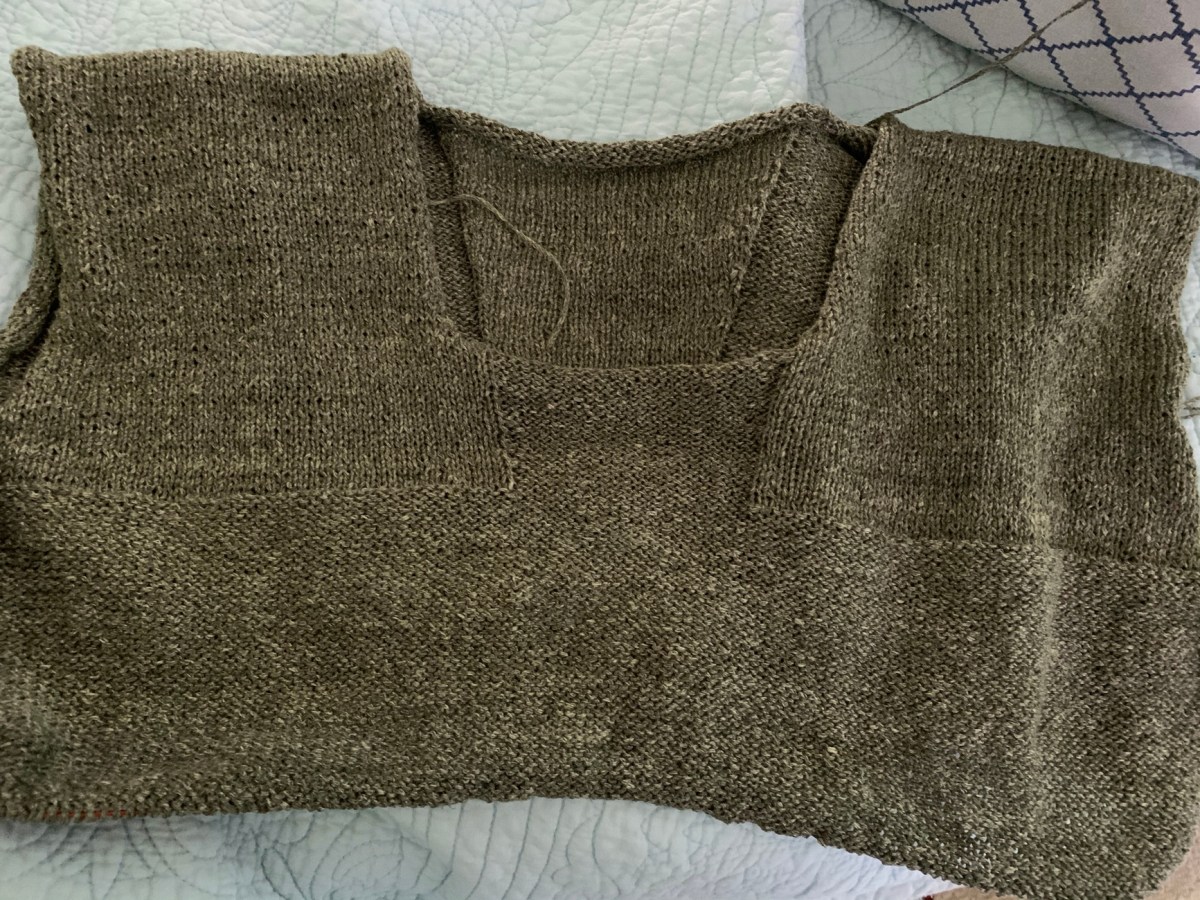
As I have been knitting down the body of this top, and there is a lot of that to do, I’m realizing that I don’t like the yarn. It looks and feels more like a burlap sack than a comfortable top. For now, this is on hold until I decide what to do. This yarn would be more suitable for a bag. I may use it to crochet one.

The pattern is a good one, and I would love to try again with a better yarn. But I am not going to continue with this.
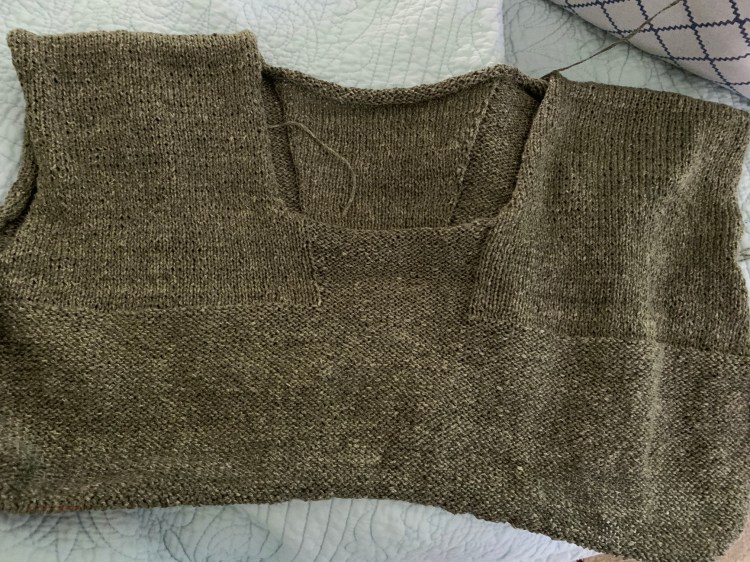
Knitting a top
Putting this on hold

Also On My Needles

  • A linen cap (not using the linen yarn above) for myself to wear while we are flying around in our boat. Hair can become very knotted without a covering, and a regular hat flies off. I’m using the Ribbed Watchcap & Beanie pattern by Churchmouse Yarns & Teas.
  • Snowfall Socks, using Tukuwool yarn, which is very scratchy. I’m not sure I will finish these because of the yarn … and because I really don’t enjoy knitting socks!
  • Honey Cowl (#2) using Miss Babs K2 bulky yarn. This is a very easy, free pattern.
  • Need to get the fringe onto my Moon Sisters shawl.
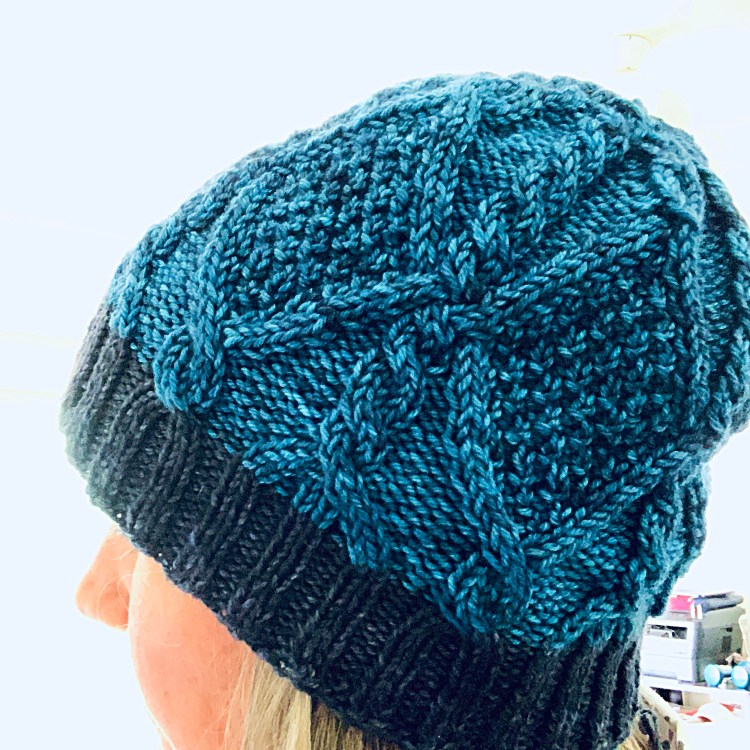
  • Just finished, but plan to knit again, the Skiff Hat in pretty cables.

Knitting The “Skiff” Cable Beanie Pattern

I’m back to knitting hats, and this pretty cable hat caught my eye. It’s called the Skiff Hat by Jared Flood. The hat can be knit as a Beanie or Watchcap and I chose the beanie as a trial. I’m not an experienced cable knitter and had to see if I could figure this out. I could… it’s easy, but it’s all in chart form, and I had to do some pre-knitting preparation.

Skiff Hat

Many previous Skiff Hat knitters remarked that their hats came out very big. The pattern calls for Brooklyn Tweed Shelter yarn, which is a worsted weight. I’ve never knit with Shelter, but I have knit with Quarry, which I think is similar only chunkier.

Skiff Hat knitting pattern

One suggestion was to use DK yarn instead of worsted and go down a needle size, or more (yes, more). I used the size called for on the ribbing and went down one needle size for the top. I could have gone even smaller.

For this trial knit, I choose to use up some yarn in my stash. The lighter blue is Madeline Tosh “Baltic” and the darker color is “Dubrovnik”, I think, and both are DK weight.

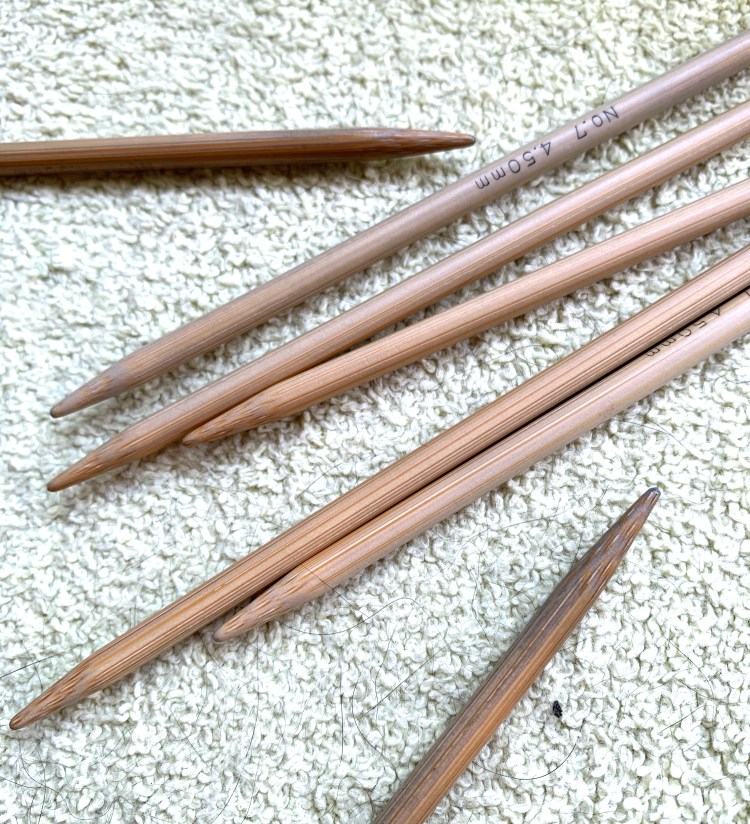
The semi-solid blue is very pretty, but the color stained my fingers and my bamboo needles! I wasn’t too happy about that. The yarn would also occasionally split when I was trying to do some of the stitches.

Bamboo needles turning blue from yarn dye
Blue dye colored my bamboo needles

End Thoughts on Knitting “Skiff”

The beanie did come out large. It’s loose around the cuff and tall on my head, and I consider my head to be average size. I am still waiting for it to dry, but I don’t anticipate it to become smaller.

The hat is knit from a chart with perfect explanations for each of the cables. One of the cable stitches uses two cable needles, but it’s pretty easy to do and I enjoyed seeing the twisting of the stitches bring this beauty to life.

Skiff hat pattern with cables
Washed and drying flat

Directions for a tubular cast-on are included with the pattern and I found it difficult, so I used the Old Norwegian / German Twisted cast-on.

Helpful Things

Before I began knitting, I went through the pattern Legend, showing all the stitches, and cables, and I used color pencils to differentiate each type of cable on the chart.

I also wrote out the cables next to each color on the Legend page, such as 2F, K2, K2 for the pink color – So when I saw the pink cable in my row, I would know to slip 2 onto the cable needle and hold to the front, knit two regular, then knit two from the cable needle. This was a big help for me, because the printing is tiny on the pattern, and my eyesight is poor.

DPNs Work as Cable Needles

I used DPN’s in place of cable needles throughout, which worked fine. At the crown I used 3 DPNs to hold the stitches, one to knit, and another to do the cables. Five DPN’s is all you need. I also did one extra round after the pattern ends, with a K2tog all the way around. Otherwise you are left with an enormous number of stitches to pull up with yarn to close the opening.

The Watchcap version is the one I want to make, with a wide roll brim and pompom. I’d like to make it for my daughter, who has a small head, so I’ll have to figure out how to knit it differently. I definitely need to use smaller needles and possibly fewer stitches around the brim, with an increase before the cable pattern begins.

Skiff hat crown
Top of hat

More Fun Hats I Have Knit

Golden Afternoon Mittens With a Cable

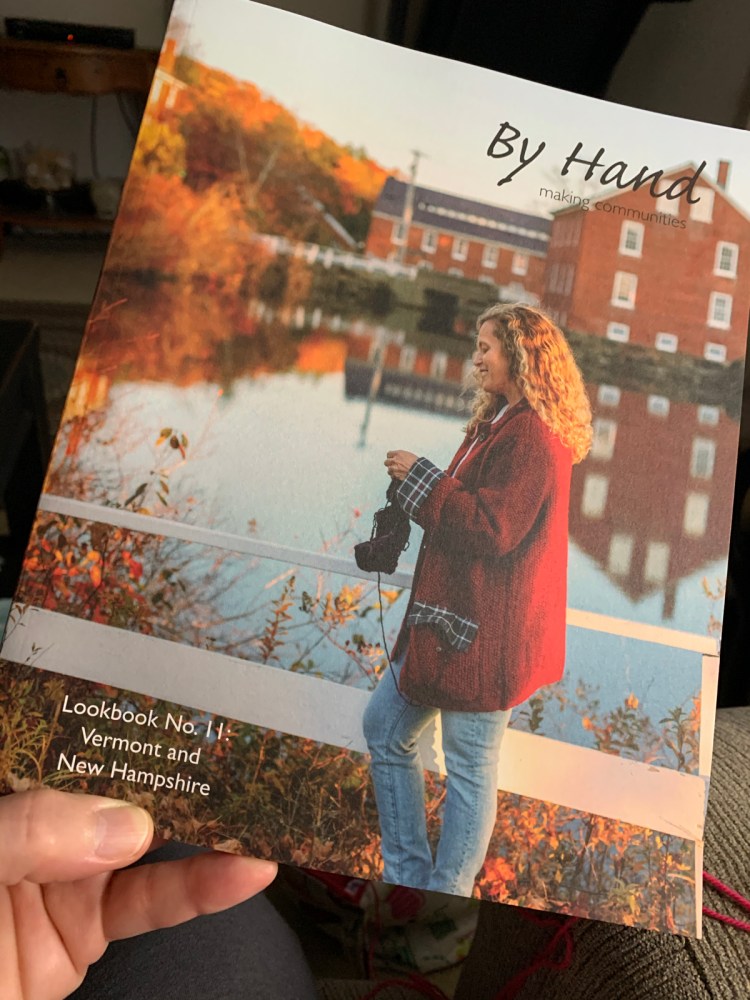
The Golden Afternoon Mittens pattern can be found in the “By Hand” Lookbook No. 11 which features, among others, Harrisville Designs of New Hampshire. I mainly bought this book because of the New England focus. I used to live very close to Harrisville, but never visited. I was not a big time knitter back then, but you can be sure I will make the effort when I visit next time.

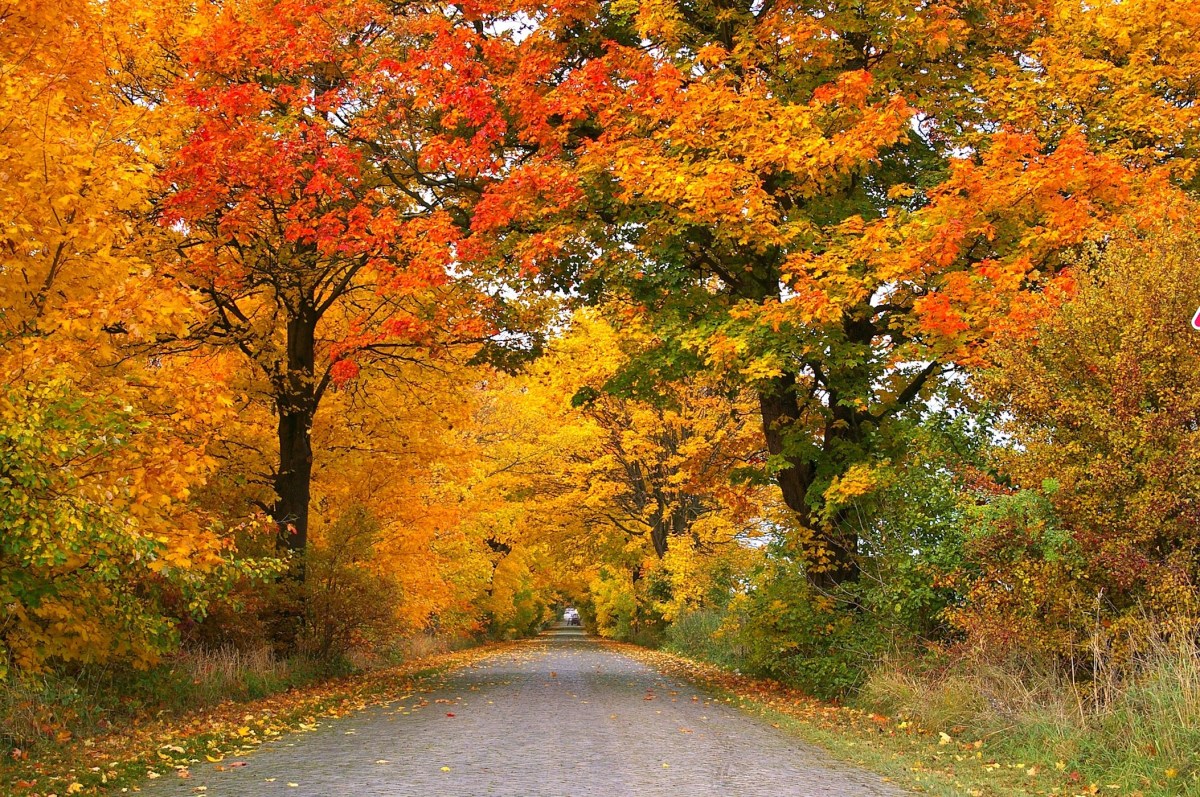
I miss my Autumn “golden afternoons” from my time living in New Hampshire. As I browsed through the book, I became very homesick. I decided to try the mitten pattern.

By Hand book for knitters and crafters
Harrisville, NH featured in “By Hand” Lookbook No. 11

As I looked through the book (I bought mine from The Woolly Thistle), I was reminded of the beautiful state where I long to live once again. It’s no wonder this location was chosen for a craft book – some of the craftiest people on the planet live in New Hampshire! The book contains stories from farms (including a pie recipe), a basket maker, and a few knitting patterns. I was interested in knitting the mittens.

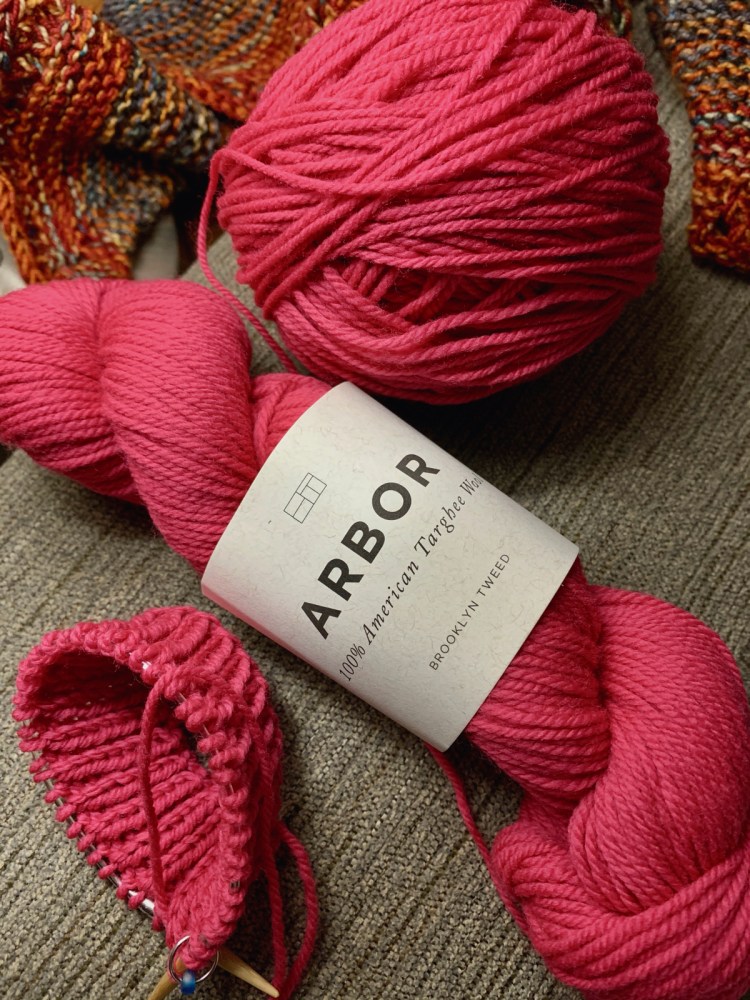
The designer of Golden Afternoon Mittens used Harrisville Highland yarn which I did not have, but would love to try when finances allow. This year I am trying to use stash yarn and not buy more new yarn, so I’m using my Azalea pink, Brooklyn Tweed Arbor yarn for this project. I found it on sale at Purl Soho.

Brooklyn Tweed Arbor in bright Azalea pink

Casting On For My Mittens

The Arbor yarn is a DK weight and the pattern calls for worsted (although I’ve also seen Highland listed as DK). I have two other mittens recently knit with this same Arbor yarn, so I do know my gauge somewhat. Those mittens (see Fiddlehead and Glissade) were stranded colorwork, and this pattern has a cable up the center, but is all one color, which makes it quicker to knit.

I used a size 5 needle in the small, 9-inch circular size, and casting on 44, which is the largest size in the mitten pattern. This turned out to be too large – see notes below.

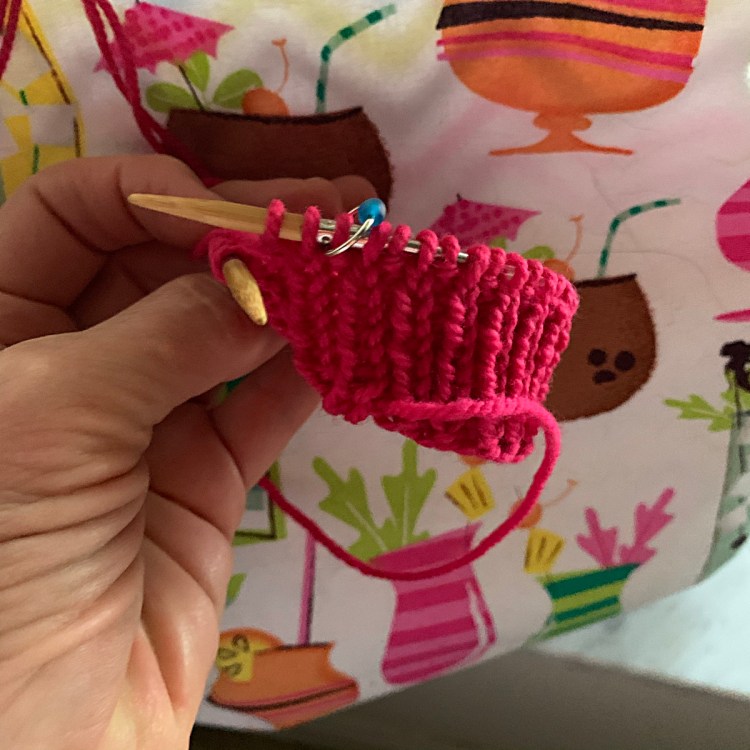
Mitten cuff in Brooklyn Tweed Arbor Azalea
Beginning “Golden Afternoon Mittens”

My Gauge

The mitten was finished within a couple of days, but I did run into trouble. This mitten will be a good future reference for knitting gauge.

Size 6 needle / DK Arbor yarn / After washing and blocking my gauge was 21.5 stitches and 31 rows. Gauge in pattern is 20 x 30.

Notes to Self on Knitting The Second Mitten

Azalea pink, cable mitten Golden Afternoon pattern
Yukky thumb, but finished one mitten

One mitten is finished. It was easy and quick, but finding the right size was a problem. The cuff could be tighter, and the wrist / beginning of hand is loose. I switched down to the Medium size by knitting a couple of stitches together around the thumb gusset.

After blocking, my gauge increased (note above), so I need to stay with a size 5 to knit the hand using Medium size stitch counts.

Next time: Size 5 Needle, cast-on 40 (size Medium) and continue on with size 5 needle.

The Thumb… Ugh! I’m no pro at knitting thumbs, but I managed to pick up all the stitches and fill in the holes fine. I followed the directions for a size M which put 12 stitches on the DPNs for the thumb – this turned out to be too small! I tinked (un-knitted) back down the thumb and tried to fix it by adding more stitches. You can see that now the thumb looks horrible…!!

I guess experienced knitters would somehow tear it out and re-knit, but I don’t think I will be able to make it look any better at this point.

Use the Large size thumb stitch number – only very skinny-thumbed people could use 12 stitches on a thumb!

Golden afternoon mittens
Right mitten done

Final Thoughts on Golden Afternoon Mittens

I’ll make the second one and probably give them to my daughter as long as that thumb turns out alright.

  • Easy pattern, once you know what C4B and C4F mean. But thumb stitch number seems off.
  • I love Arbor yarn and the mitten is soft, but this is definitely a Fall / Autumn season mitten. A more wooly yarn may actually look better and be more forgiving of mistakes!
  • The cable is not all that pretty (IMO)

I’m much happier with my colorwork mittens, even though the knitting is slower. The fabric is heavier and the end product was (near) perfection!

Yarn to Use for Warm Weather Knitting Projects

I want to knit a top I can wear in Florida’s jungle climate. It doesn’t have to be “summer” here where I live to need cool clothing. I wear capris and sleeveless tops nearly year round. I’m afraid that what normal summer people think is “cool” is not cool enough for me.

Please note that some links go to Ravelry, a popular knitting site, where non-members won’t see everything members will. If you knit, why not join, as it’s FREE!

Although most yarn I’ve used in the past is wool, or part wool, wool doesn’t work for a Florida lifestyle. I am branching out and looking into the plant-based yarns – haha….!

Because currently it is Spring, knitters are thinking about summer knitting, so this is the time of year for me to find the best summer knitting projects which I can wear year round. Designers are offering summer knits and shops are advertising summer yarns.

Popular Plant Fiber Yarns and Their Properties

After two years of continuous knitting, I have acquired a list of my favorite yarns. None of them are meant to use for summer tops because they consist mostly of wool! Warm weather tops need airy, light yarn such as linen, cotton, or other plant material.

Since I know next to nothing about knitting with summer type yarns, I searched for articles with good information. Those are hard to find too!

I was excited and thankful to find this Summer Yarns article at Interweave, which covers the Pros and Cons of knitting with cotton, linen and hemp.

Linen was my first choice, and when I found some (Berroco Indio / Stonewash Linen) on sale for $7.00 a skein at Wool and Company, I bought it. Reviews on Ravelry for this yarn were generally good.

I’m still researching, and planning to try, various plant-based yarns in hopes of coming up with some favorites to use for life in Florida and hot places.

A List of Yarns For Summer Knitting

  • Purl Soho‘s “Sweetgrass” is a mix of 65% cotton and 35% alpaca and comes in large, undyed, skeins (I love the gray) of 437 yards – fingering weight. Will the alpaca make this too warm? Also, I’m not crazy about knitting something to wear in cotton yarn.
  • Purl Soho‘s “Lantern” is a worsted / aran weight yarn of 61% cotton and 39% linen – 164 yards. Cotton and linen would be cool together, so might be worth a try. Comes in many pretty colors, **BUT some knitters mentioned it was rough – good for dishcloths but not clothing…FYI
  • Purl Soho also has “Linen Quill” yarn, but it is 50% wool, 35% alpaca, and 15% flax / linen.
  • *Quince & Co. offers us “Sparrow” – fingering, and “Kestrel” – worsted, which are both 100% organic Belgium linen. Both come in lots of nice colors, including a marl, and they get good reviews.
  • Shibui Twig is a combo of 46% linen, 42% silk, and 12% wool. Skeins are 190 yards, in Sport weight. I don’t like that there is wool in this one, but it is a small amount.
  • Hempathy is a cotton, hemp and rayon yarn. This one gets some good reviews at Ravelry.
  • Bamboo – Found the Dye Diana Dye (see page of bases) website which offers hand-dyed silk, linen, and bamboo yarns – very pretty and unqiue.
  • Burnish, by Purl Soho is Rayon from Bamboo.

A New Knitting Project / Pattern For Linen Knitting

After some searching, I decided on a pattern called “Over the Top Tee” designed by Heidi Kirrmaier. I had successfully knit her Fine Sand sweater last year using Miss Babs “Tarte” yarn (which I loved by the way).

I bought 8 skeins of the Berroco Linen for my “Over the Top Tee” project. Then, I went back and bought the remaining three skeins just in case I need to add length to my top. Because the yarn is discontinued, I was afraid I would need more and it would be gone!

Berroco linen yarn
This linen yarn is Discontinued

For this tee, the designer used silk yarn (Ito Kino) holding two strands together. I’ve always thought of silk as too hot to wear in hot weather, but many “summer” yarns include some silk, so I am still questioning that. The Ito Kino silk was a bit expensive too, so I found some cheaper linen yarn.

More Summer Top Patterns I Like

Florida does not have a normal summer. It is very hot with the heat index usually near or over 100 degrees because of the extreme humidity. When I went back to live in New Hampshire, people would complain about a humid day and I would laugh at them!

Here is a partial list of some favorite hand-knit top patterns by various designers. After I knit Heidi’s pattern I may try another, or knit hers again with different yarn. It is not as easy to find something to knit when it won’t cover my body as nicely as a big old sweater! Here are a few of my favorites.

  • Cullum, by Isabell Kraemer is a cap sleeve pullover with some lace at the top. The sample was knit with Sparrow, 100% linen – see link below.
  • Lakeland, by Heidi Kirrmaier is a short sleeve, two color blocks top, with opportunities to modify sleeve length and colors.
  • A Hint of Summer, by Isabell Kraemer offers lots of options. Make it with short or long sleeves, in stripes or solid. Looks very interesting.
  • View my ever-growing Collection of Summer Tops to knit on Pinterest.

I understand why knitters generally do not choose plant-based yarns for knitting. When we think “knitting” we picture hats, mittens and sweaters to keep warm. Where I live, no one wears scarves, shawls or any type of winter items – except very rarely. If I could knit some wearable clothing for myself, it would be wonderful.

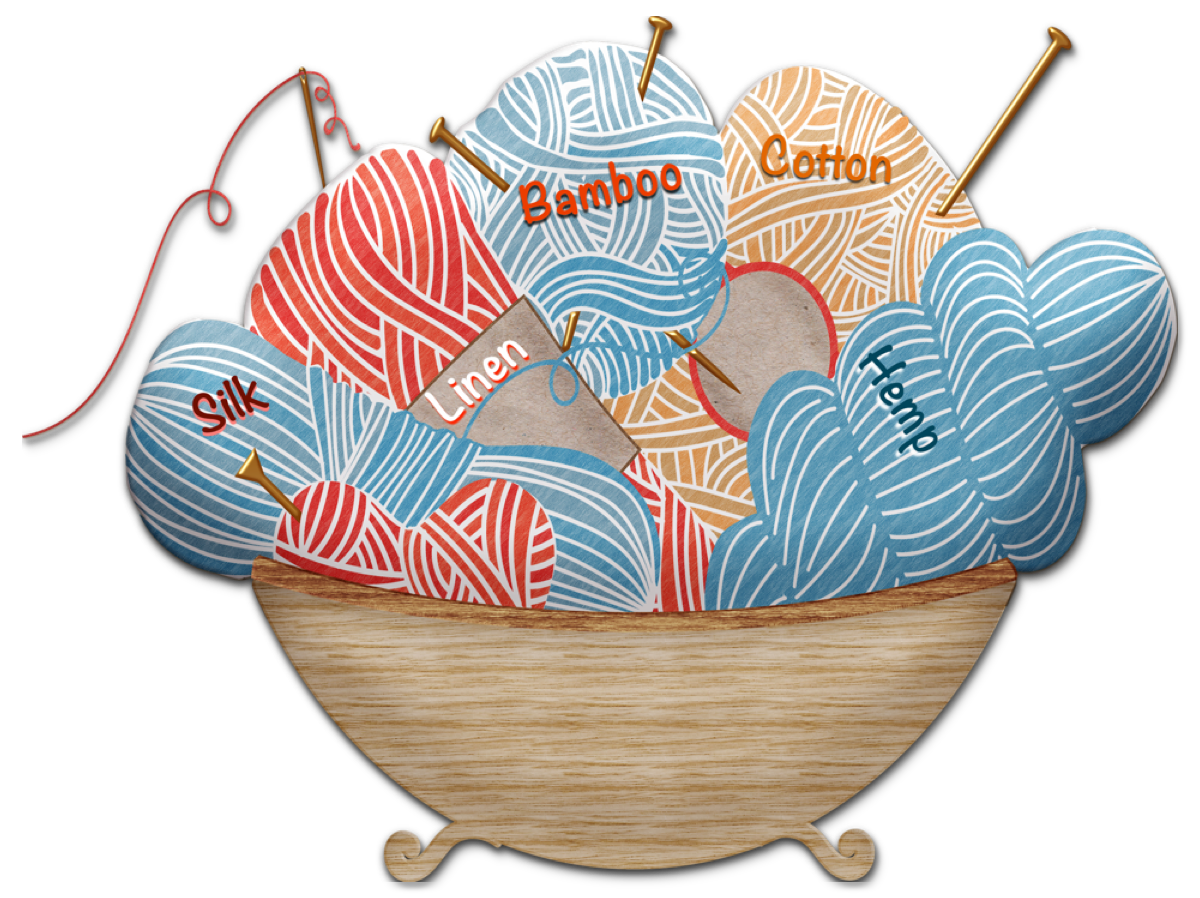
(Yarn bowl graphic credit to AnnaliseArt @ Pixabay.com)