Teaching a Friend How to Knit a Scarf, Landscape Lesson #1

Want to learn to knit? Come learn how to knit a scarf with us from beginning to end. A good friend wants to learn to knit but she lives far away, so I’m writing her lessons on my blog! Are you a beginner knitter? Come join us for the fun.

A scarf is a great beginner pattern when learning how to knit. It’s what I knit the most, before graduating to knitting hats. A long, straight (knitting back and forth) project that should give the beginner lots of practice with knits and purls. And you just may have a beautiful and unique item to wear around your neck next winter.

I’ve decided to knit my own scarf as I show a beginner how to start. I live in Florida and my friend lives in New York. So she will be learning online. I have learned many things about knitting from YouTube, so I’ll include some favorite YouTube knitting tutorials.

Yarn and Needles

My friend had some very good and basic questions such as, what needles should I use and what kind of yarn? Obviously you need both of those things!

First buy some yarn, and look at the yarn band info. It should say what size needle is needed to knit with this yarn. The weight, or thickness, of the yarn will determine the size (thickness) of the needles. In the example skeins below, knitting needle size suggestion is US 1-3 (needle size can also be in mm). This is a thin yarn called fingering, so it needs a small needle. 

Hot Shot Toes mini skeins of yarn
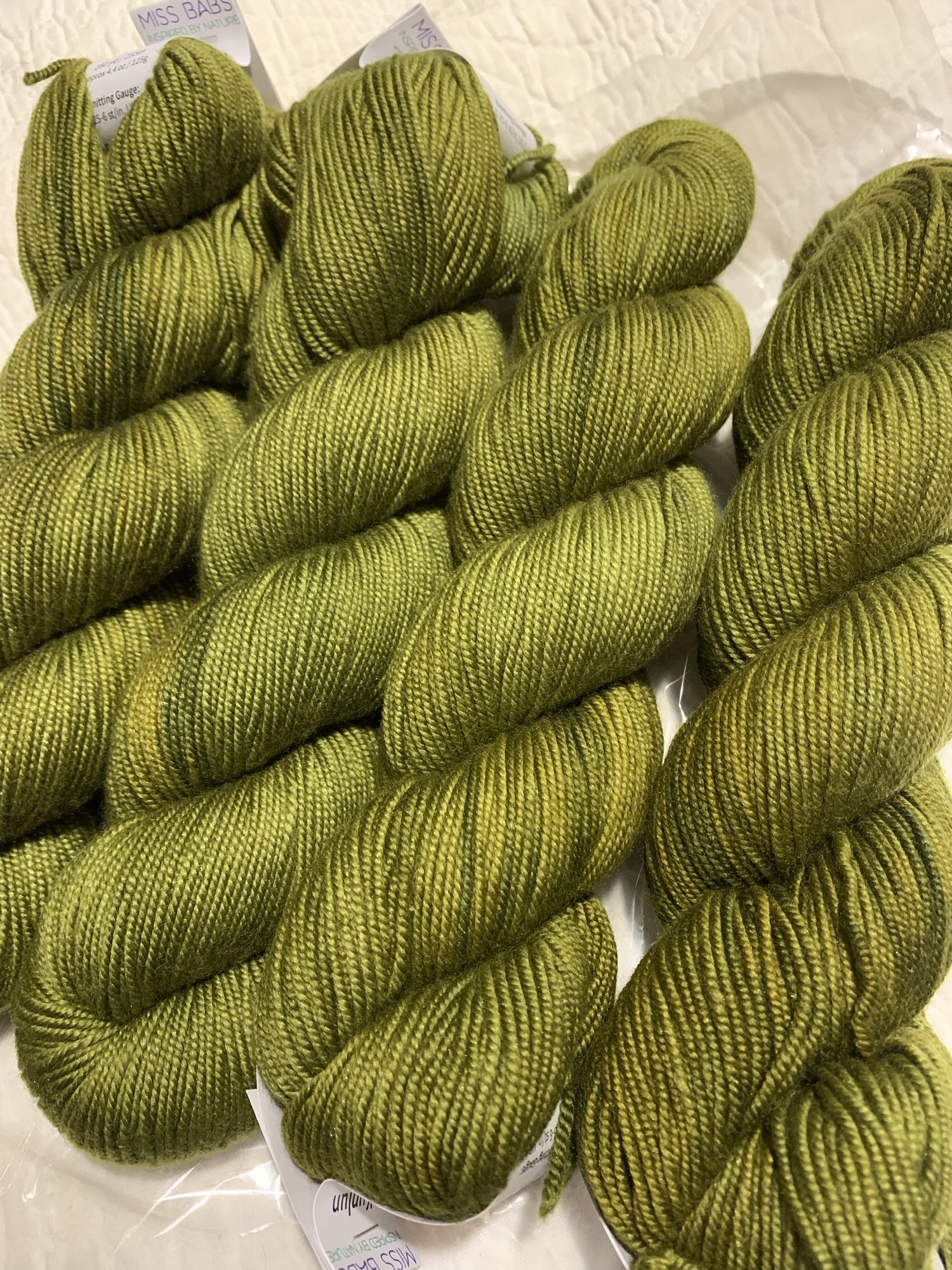
Miss Babs mini skeins of sock yarn

What is a circular needle?

Knitting can be done with either straight needles or circular. Circular needles allow the knitter to join their knitting and knit in the round. This is something you can’t do with straight needles. Think of a hat, cowl, or sweater that is circular. But this type of needle can also be used for plain old knitting – flat, like a scarf. Pretend the needles are not joined by a cable. Or, use a pair of normal, straight needles if it makes you feel better.

Read more about buying needles on my previous post.

What I Am Using To Knit My Landscape Lessons Scarf

I am naming this scarf so it will be easier to find and it will be “Landscape Lessons” because I plan to show you some very basic knit and purl combinations along the way. It’s all about practice and deciding which combinations you favor.

If you live near a yarn store, or craft store, go there and pick out some yarn you like. Otherwise, I can suggest Wool and Company, an online site that ships yarn for free – no minimum purchase required.

I am using Lykke brand wooden circular needles with Lettlopi wool yarn.

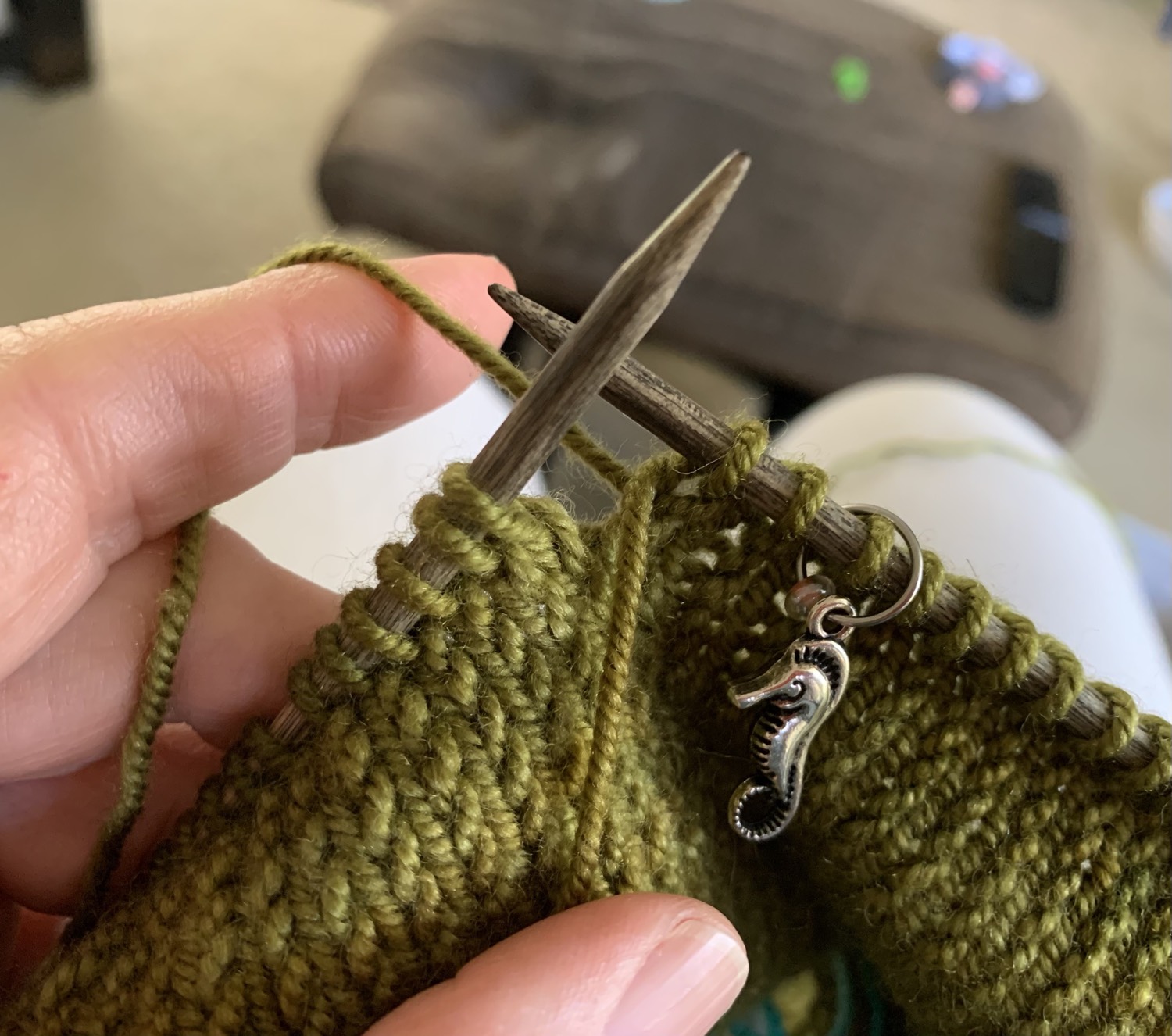
knitting with wool on circular needle
Size 8 circular needles and wool yarn

Some yarn skeins will need to be wound before using. If your skein is twisted – like the Miss Baby yarn in my photo above, it will have to be wound. Skeins, like the Lettlopi above, do not need winding.

Cast On

Once you have your yarn and needles, you will cast on. I have written a whole page about various cast on methods, but beginners can use the very simplest.

The video below is excellent, except that I would not suggest bulky yarn. Big needles and bulky yarn can make your hands tired after a while. You can do this same thing with worsted weight yarn and see the stitches fine.

In the video below, she shows how to make the slip knot, begin casting on, knitting back and forth, and binding off! Who needs me? Haha… She also knits right handed, and “throws” the yarn. This is exactly how I knit. (Some people knit continental, which is different, and I’m not getting into right now.)

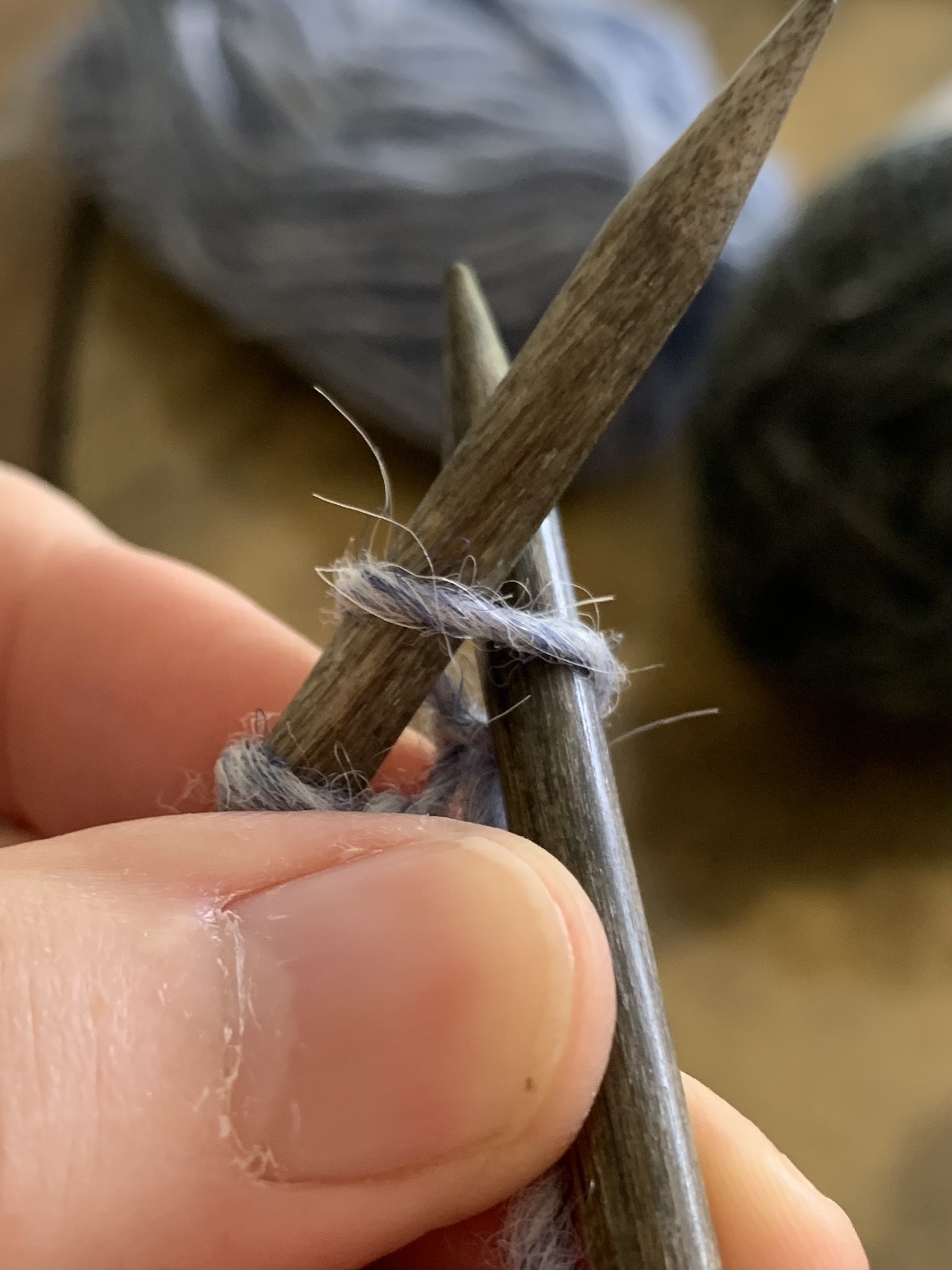
Well, I do have one suggestion. When she casts on, she is putting her right-hand needle between the two strands and is using only one. This is also how you do the knit stitch – The right needle goes between the two on the needle (photo 2 below).

However, you can also put your needle under BOTH strands for the cast on (photo 1 below). Do the cast on the same way, just stick the needle right under the entire stitch. Either way will still make a nice cast on. Going under both strands makes a sturdier cast on, or something. I forget. Don’t do that while knitting… do it only for the cast on row.

This is a great video, but don’t do the cast off… if you want to knit a scarf, we must continue knitting. I have some changes in store, just in case you want to branch out and try something new along the way.

For my Landscape Lessons Scarf you will cast on, and knit back and forth for as many rows as you like. This will be one end of your scarf. By knitting back and forth, it will help you get a feel for the basic knit stitch.

A light color yarn makes stitches easier to see the stitches!

Do as the woman does in the video above and cast on your stitches. This will be the width of your scarf. If you are using worsted weight yarn with size 7 or 8 needles, cast on 35 stitches. This should make your scarf around 7 inches in width (after I began knitting, my scarf is more like 8.5 inches). Everyone knits differently, so width may be different. You won’t be able to see the actual width until you have knit quite a few rows. Don’t measure the cast on row!

Some people knit English style, and others prefer Continental. Here is a video explaining the difference.

Do as she does in the video and knit back and forth – she is knitting English style.

If you are using circular needles, do the exact same thing as she does using straight needles. Turn the work, and begin knitting again. Forget the cord is there attaching your needles.

The reason I suggest buying circular needles is that they can be used for more things later on if you find you really love knitting. I rarely ever use straight needles for anything these days.

Read This – a Helpful Hint

Let’s say you have to set your knitting down and you just plop it on the table, or into the basket. When you come back to continue knitting you must know where to begin.

I’ve made this mistake back when I began knitting. It’s easy to pick up the work and begin knitting in the wrong direction, unless you know this:

Don’t just pick up the project and flip the yarn to the back and begin knitting. Photo on the left shows the yarn in the wrong place. Turn the work around so that the yarn is coming off the right hand needle. Then begin.

This page should provide the start to an easy, beginner knitting project. Let me know how you do, or if there are question. When these skills are mastered, please proceed to Lesson #2.

Go On to Lesson #2


More Knitting Stories From the Blog

Lots of Changes This Year

Writing a blog, sharing photos, and doing research and making links takes time. Lately I don’t think the time spent doing all that is worth enough to continue. I have stopped writing my gardening blog, and downgraded my seashells/ boating / camping blog. I’ve been spread too thin for too long. The past 18 years…
Knitters and Our Many Projects

How many projects do you have on your needles? It is not uncommon to find that fellow knitters have many things going at once.
Year-Round Camping in Florida; Enjoying Nature While I Knit

The peaceful days of camping in the wilderness go perfectly with knitting. What could be better than having coffee outside, with knitting on my lap? We camped twice in the last month and here is a look at the knitting projects I took along.

Finishing Up the Arco Iris Sweater Pattern

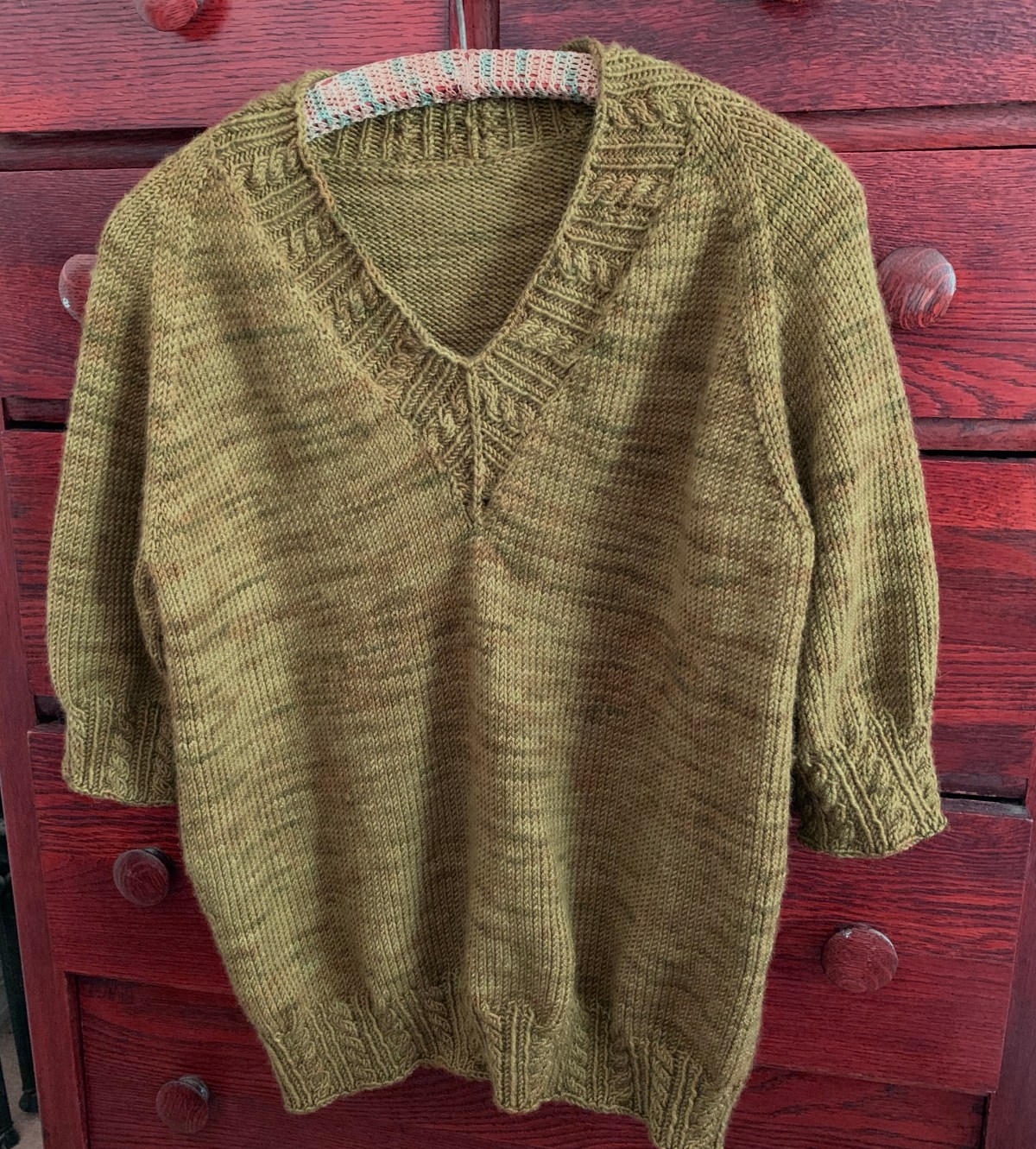
All notes on knitting the Arco Iris sweater have been completed. The sweater is very nice, love the yarn, and end product, but had a few struggles along the way with this pattern.

Over the past couple of days I’ve been knitting like mad to finish up the body of the Arco Iris sweater pattern by Joji Locatelli.

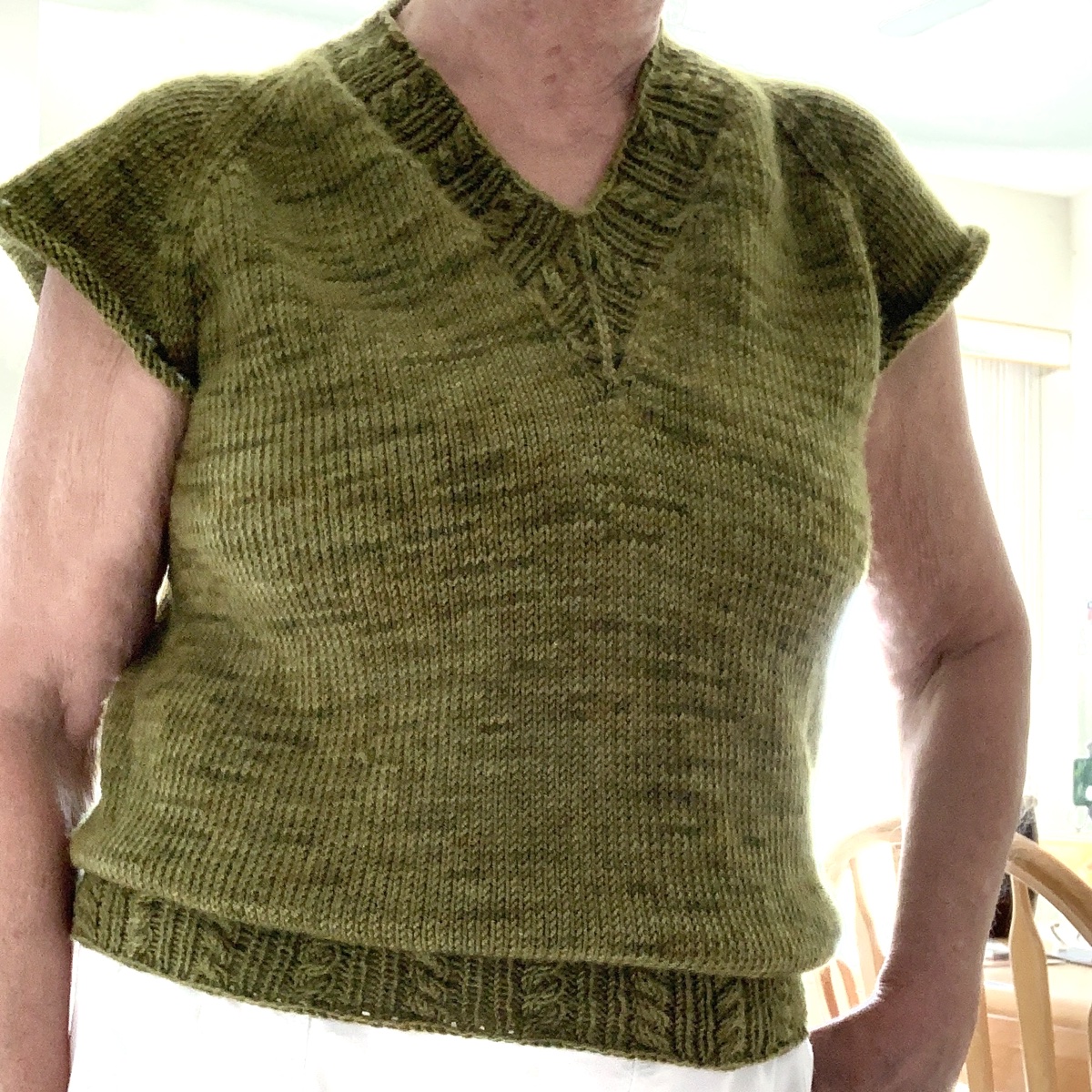
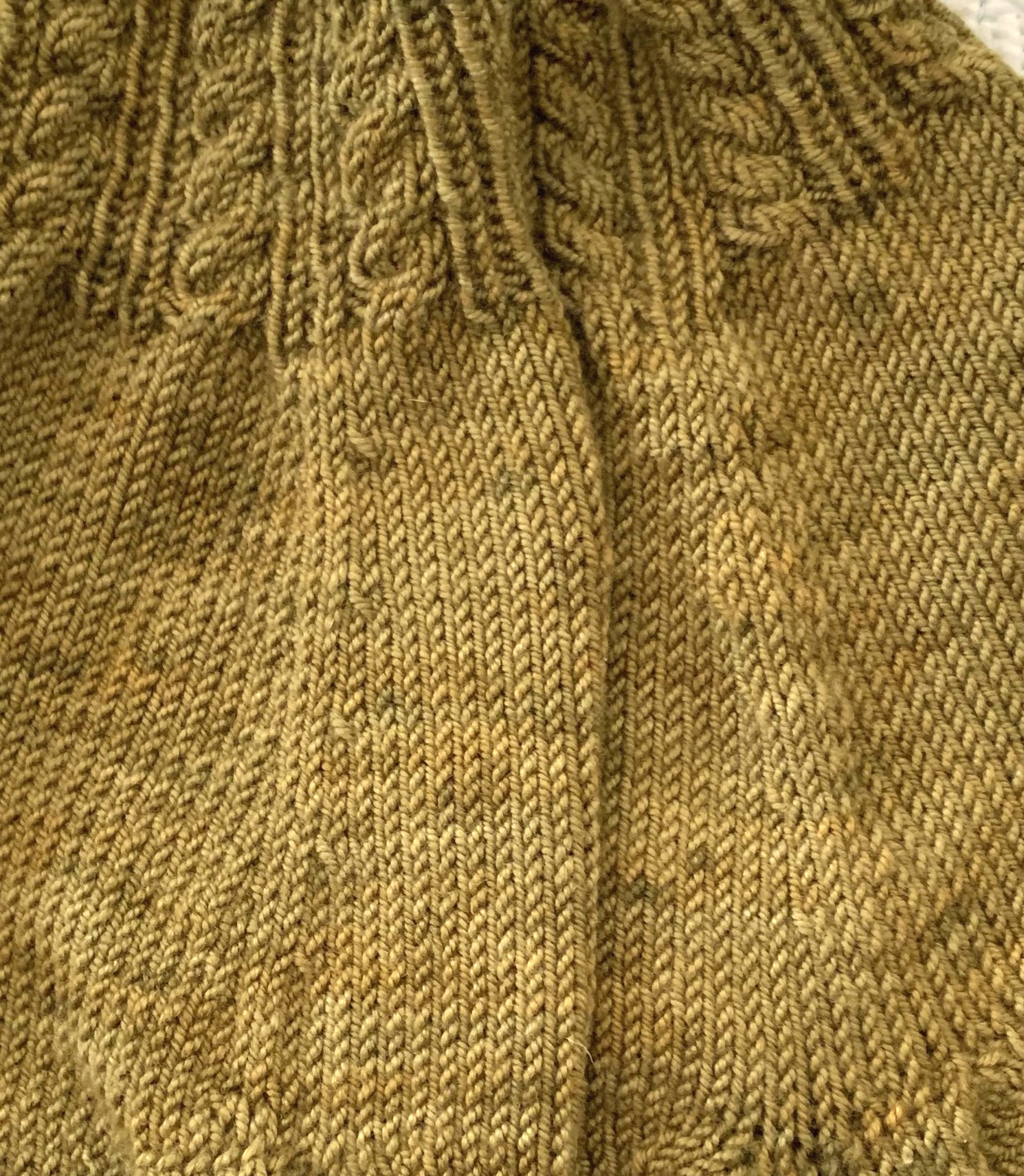
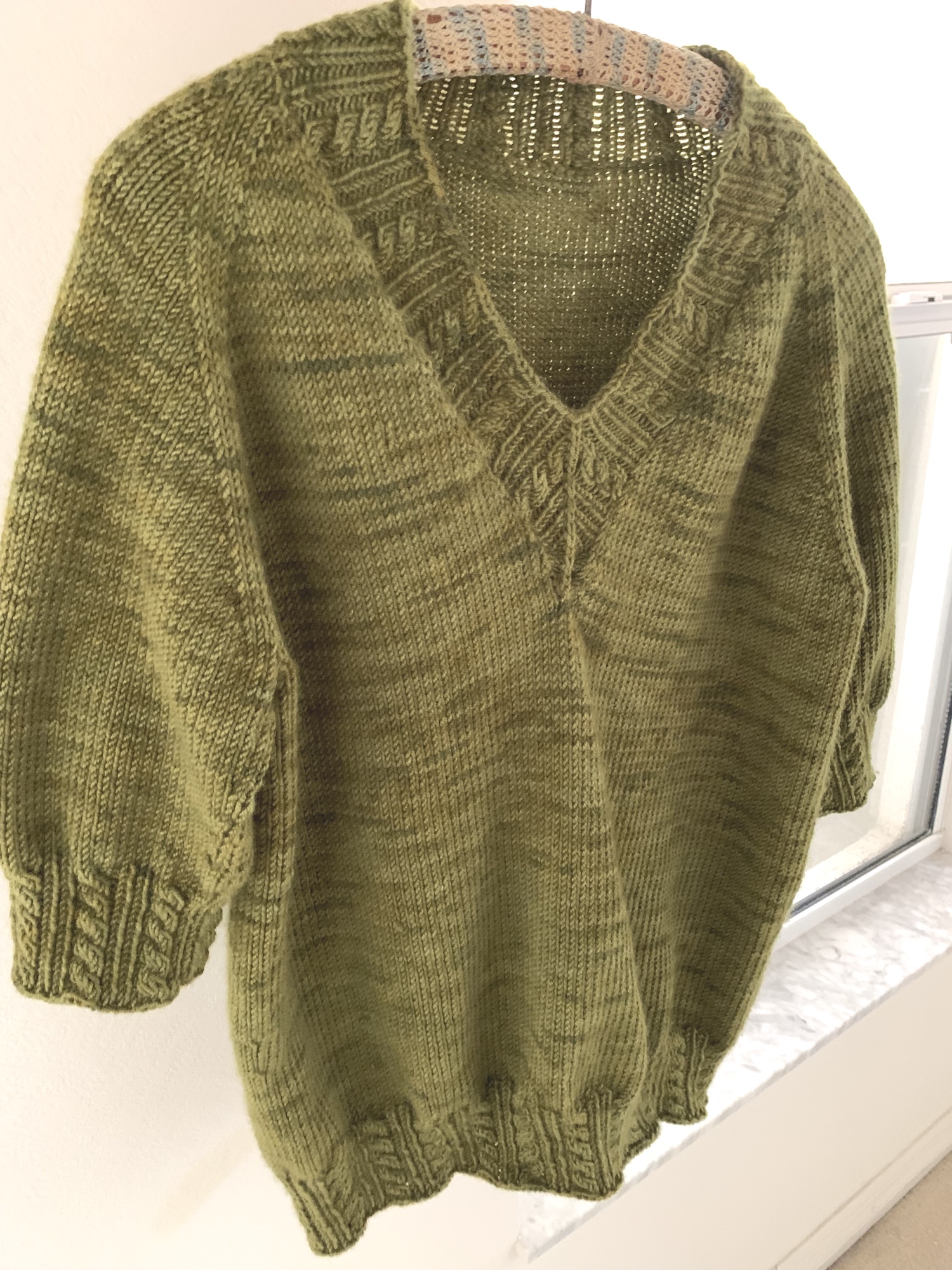
Instead of dreading that k1, p1round and round hem, this hem has an interesting cable and rib alternating pattern. It’s a nice way to finish up after long rows of plain old knitting. And it looks pretty cute too!
I was already familiar with this ribbing because I jumped ahead and knit the v-neck before finishing the body.

I knit sweater size 4 (with mods), using main needle size 6, hem needle size 4.

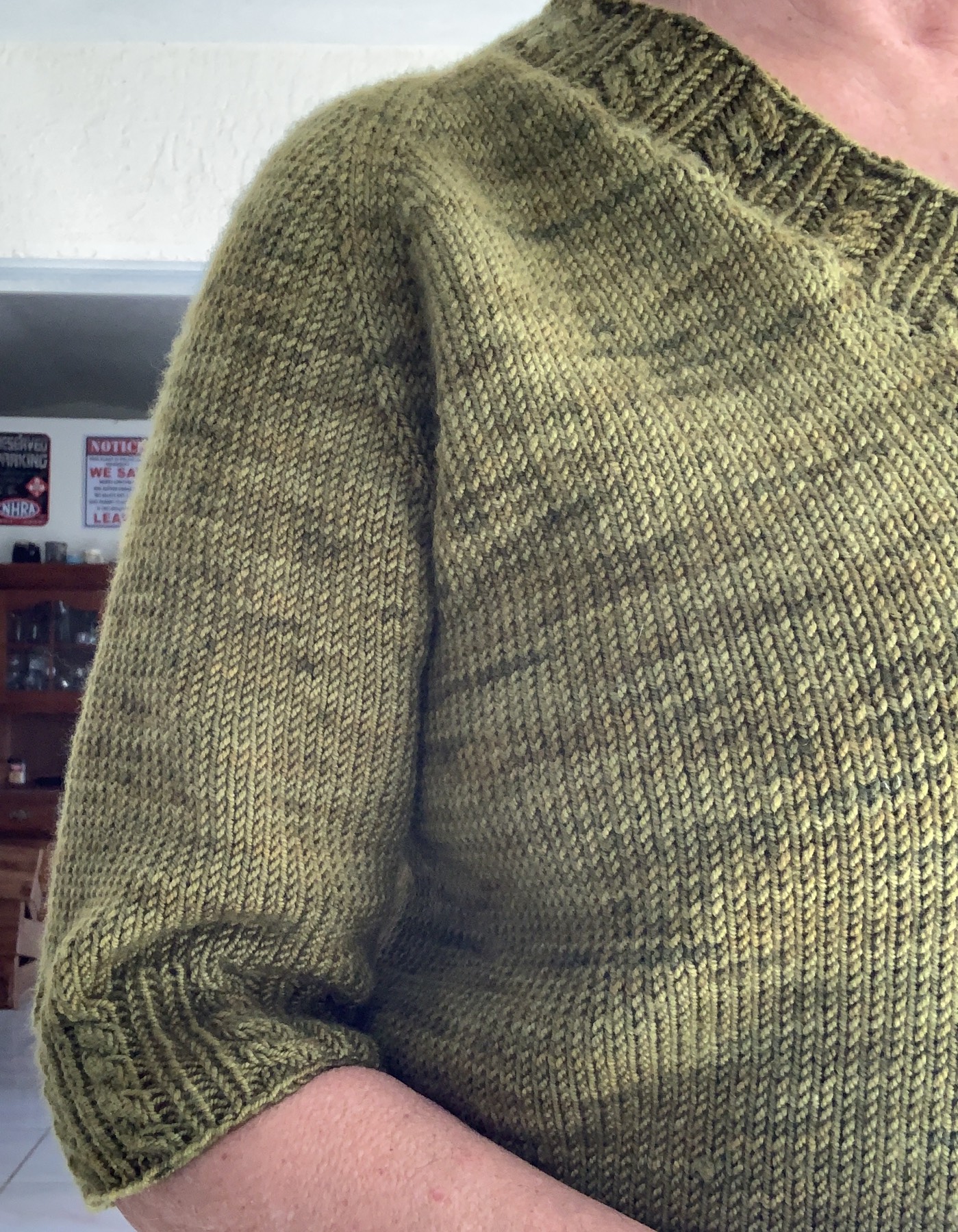
My selfies are not great, but I’d say that photo #3 is the way to wear this top. It’s sort of a blouson effect.

Notes about the body and ribbing

I followed the advice of one test knitter who added 12 extra stitches under the arms. This widened the bust and body area (I did not reduce those stitches until near the bottom) which seemed to be a good idea once I tried it on.

I would not have reduced at all except that I needed an exact number of stitches (a 18 stitch repeat) for that hem. *Hint: Place markers between the 18 stitch repeat just in case you lose your place.

Knitting The Sleeves

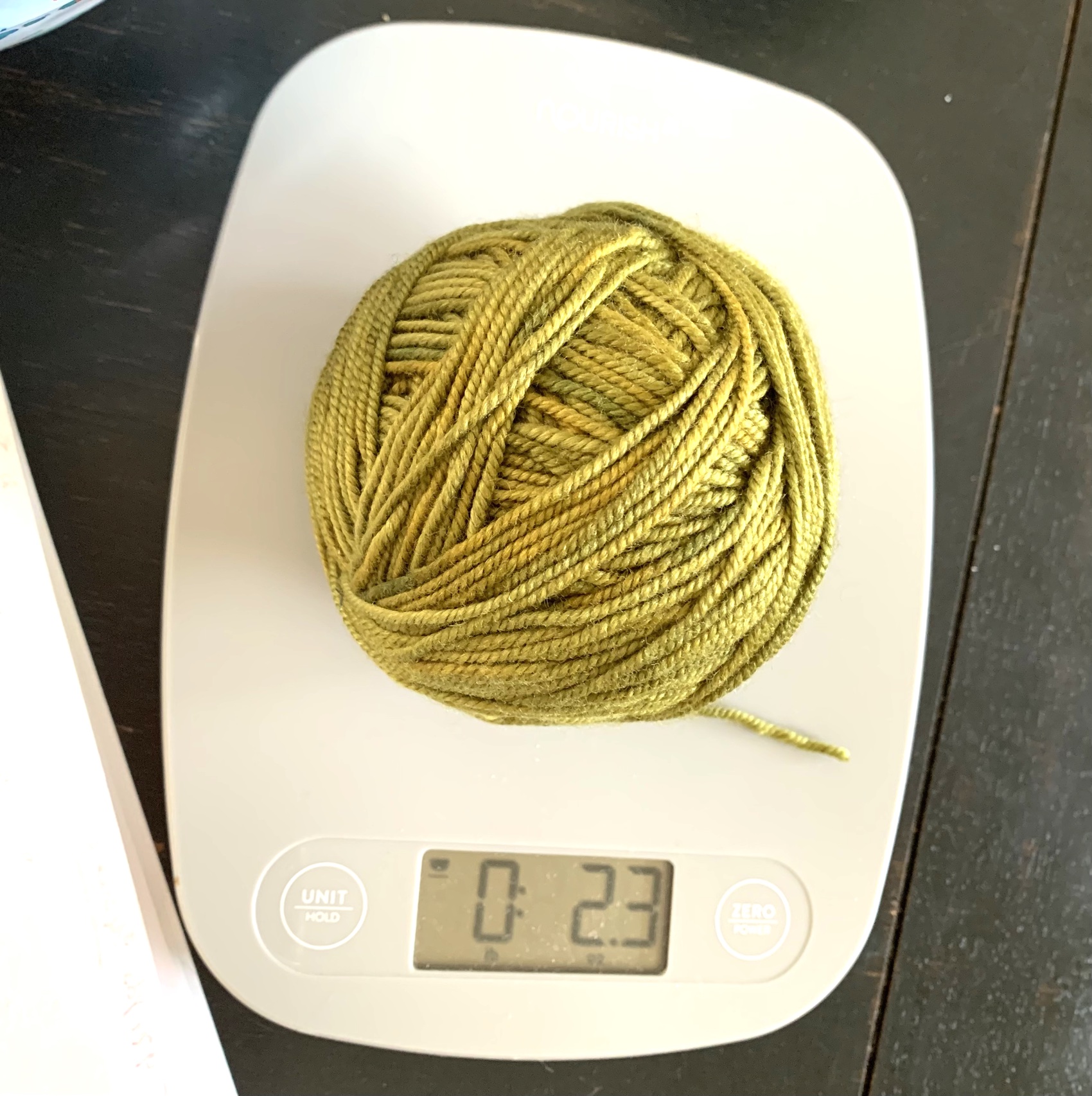
I have two balls of yarn left to knit the 3/4 sleeves of this sweater. This is when a scale can come in handy. I don’t know yet if I will alternate skeins, but knowing the amount of yarn (by weighing) will be helpful if it seems I might run short.

Notes on Knitting the Sleeves

While knitting the first sleeve of the Arco Iris sweater, I made some mods and will share them here.

I felt that I had to be mindful of yarn use so I only knit to six inches before beginning the ribbing. I would have liked to go about another inch and have the cuff fall just below my elbow, but didn’t dare. It turns out I probably could have done that and had enough yarn.

I also began with more stitches at the arm pick up. I picked up 8 extra stitches and that gave me 74 total stitches when I began knitting down the sleeve (as opposed to 66 per directions). I reduced stitches on every 5th row, until I got to 63 total. I did alternate balls of yarn.

sleeve underarm

Also, I did not reduce as many stitches as called for while knitting down the sleeve. AND the decrease directions seemed wrong to me. The pattern says to do the SSK first and the K2TOG at the end of the round.

If you follow the designer’s suggestion, this is what it will look like (photo below). I think every sweater I’ve knit has the decreases listed the opposite way. By following the directions, my knitting left a weird bump because on each side the decreases faced outward. On the last decrease I did it the right way with the k2tog first, and the SSK last – and it looks much better!

*Note: Check those decrease directions, you may want to change them.

The ribbing is done much like the body hem and neck, except the repeat is only 9 stitches and not 18. The reason is that the cables will all face the same way on each sleeve cuff. So you must begin the cuff with a stitch count that is a multiple of nine. For the sweater size 4, which I was knitting, the cuff should have 54 stitches. I had 63. I’m glad I did not reduce to 54 because my cuff is perfect.

*FYI: My actual elbow measurement- where the cuff ended up – measures 10 inches around. This cuff feels perfect at 63 stitches, and I’m glad it is not any tighter.

Buy the Arco Iris Pattern Here

Pictures of the top once I finished knitting. Washing and blocking to come. The style is not really made for my body type, but I do like the finished sweater. The fabric is quite heavy, so it won’t get worn at all until maybe next December.


More stories from the blog…

Knitting a Swatch For Trove

Knitting a gauge swatch for the Trove slip stitch sweater pattern.

I’m always on the lookout for interesting sweater pattern to knit. I’m not an expert so I’m always looking at difficulty too.

The Trove pullover pattern is made up of slip stitch rows with alternating colors. The pattern interests me because I can use up some of my J&S wool.

I bought the pattern and knitted up a swatch. The pattern says to use Sport weight yarn, but I want to use fingering and DK. I went up a needle size to do the swatch, hoping this will work out.

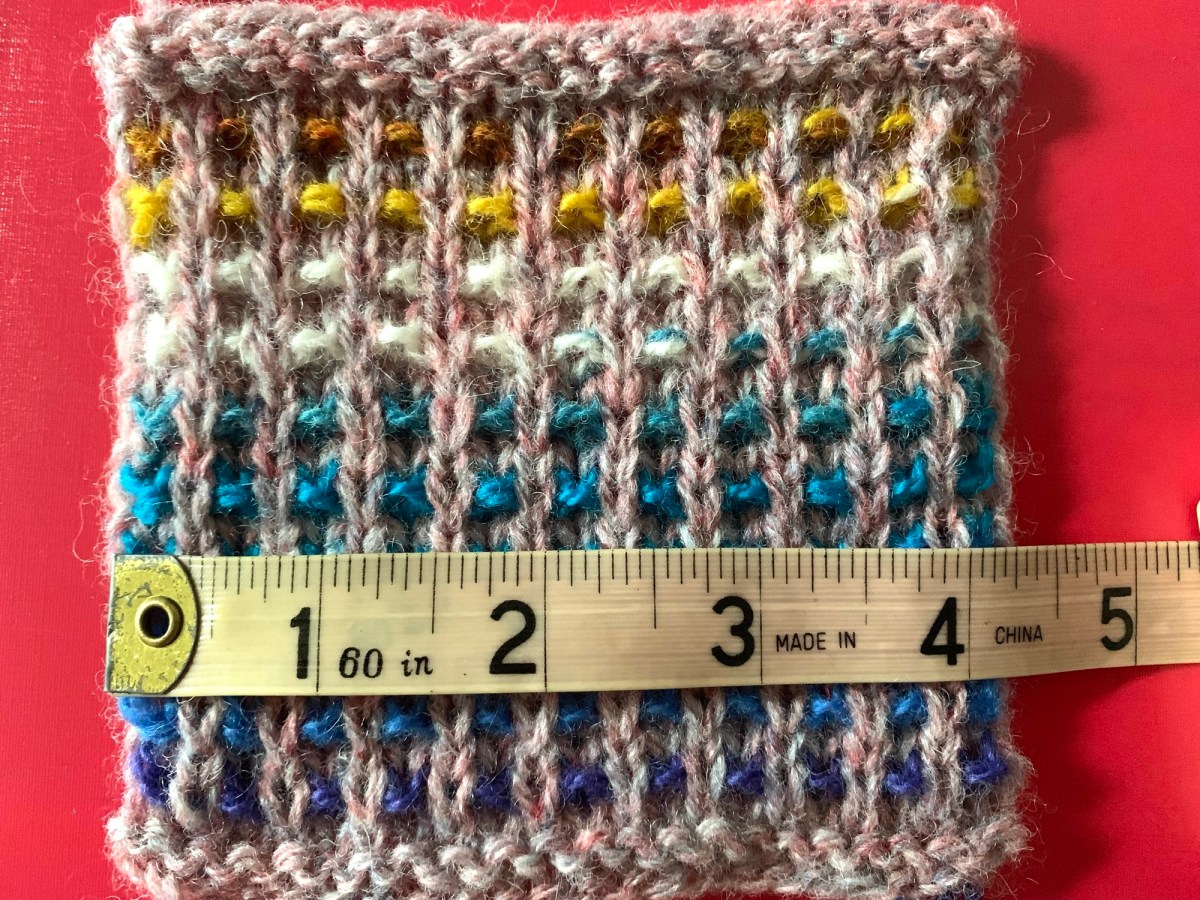
measuring a swatch

After knitting a few rows, I wanted to see if the knitting was close to 4 inches across, and it is. The real measurement will be done after washing and blocking, but if this was really off, I would not continue with this needle size.

The colors I grabbed may not be the ones I use to knit the sweater. This is a trial piece, and a good time to try out colors.

How I Knit My Swatch

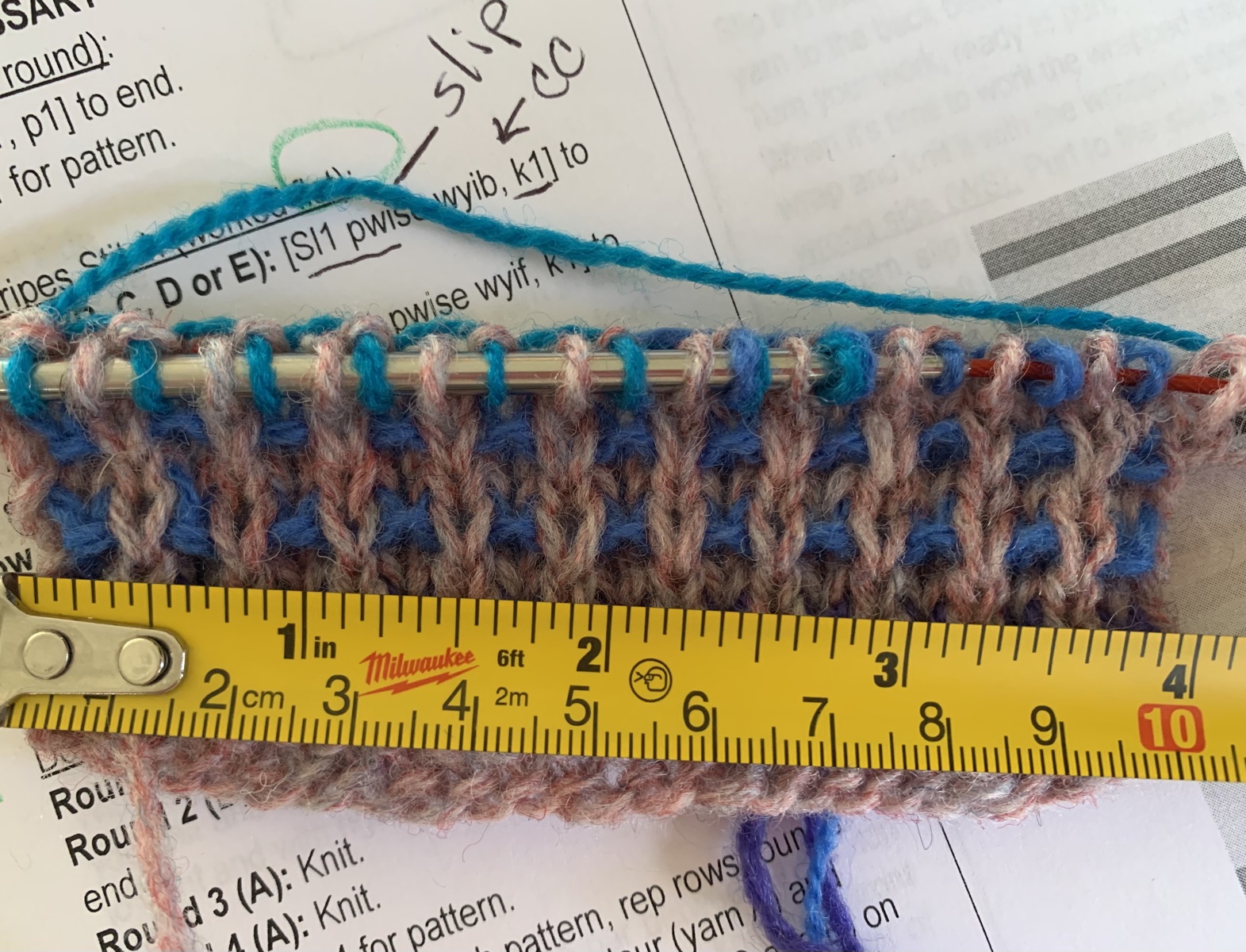
It took me a bit to figure out how to knit the swatch, so I will share how I did it here.

I cast on 23 stitches. The gauge swatch should be 22 stitches across, but the swatch needed to be an odd number to work out knitting flat (or so it seemed to me).

Knitting swatch for Trove
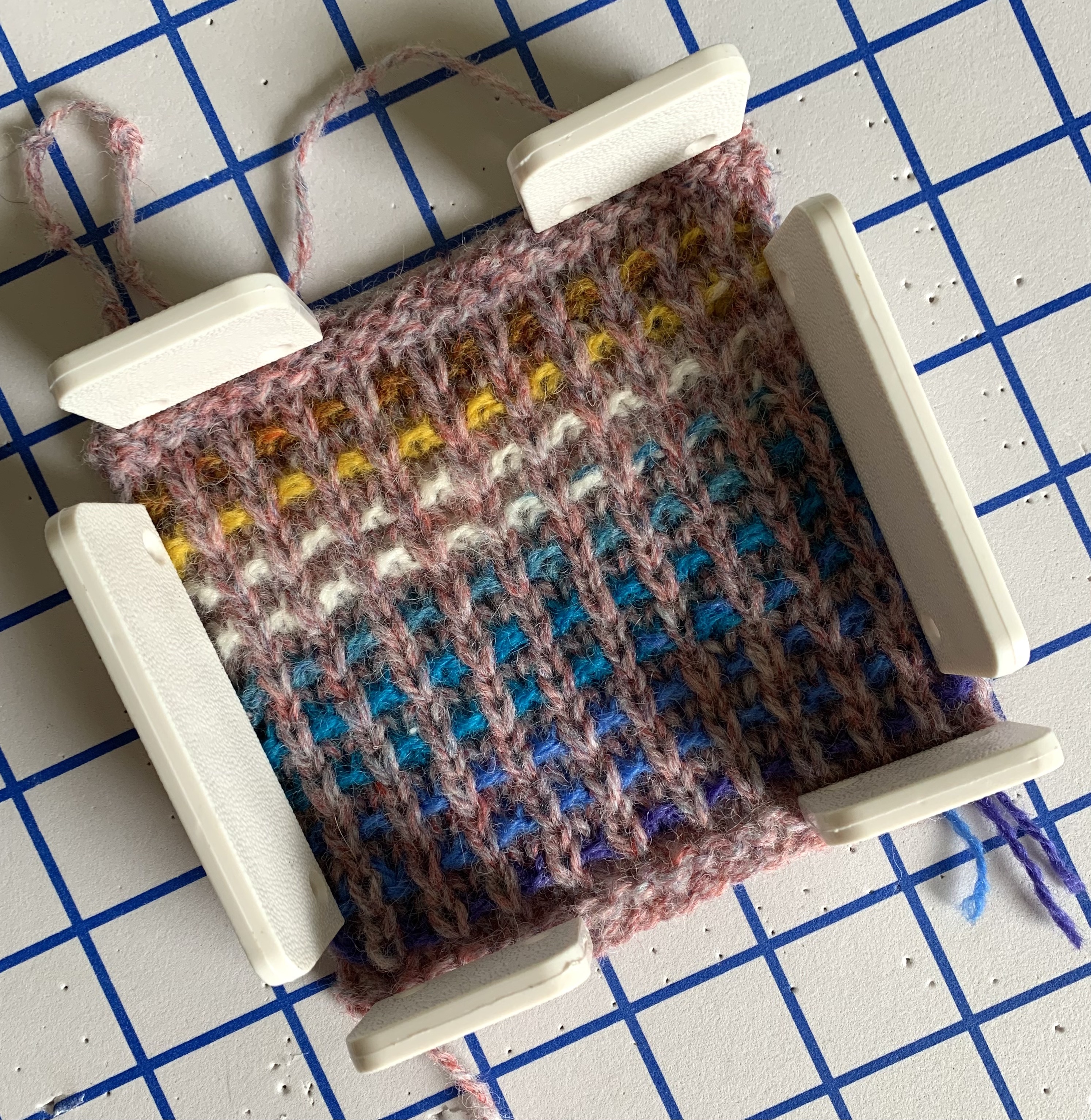
Swatch for Trove, after washing

Each section is four rows of knitting, and rows can be easily counted when you remember that. 40 rows long should be 4 inches, so do 10 repeats of the 4 row count to equal 40 rows. In my swatch you may be able to see the 10 colored rows (those colors are actually 2 rows of knitting).

After casting on, I knit back and forth, then did a purl row so the “Dotted Stripes Stitch” begins on the right side (RS) – as it will when knitting the sweater. Usually I have 3 extra stitches on each side of my swatch, but I did not do that this time.

Measuring My Gauge

This is my Trove sweater swatch after washing and blocking to dry. Gauge in the pattern is 22 stitches by 40 rows in four inches of knitting. My stitches are pretty much exact. I have one extra (23 total) stitches in my swatch.

The row gauge is short, so I will have to watch the length of things when I knit. It is better to have stitches correct, as the length can be dealt with more easily.

The Advantage of Knitting With Wool

When, and if, I do get around to knitting the sweater, I will alternate skeins of wool – Jamieson & Smith, and Rauma – by spit splicing (no ends to weave in!) to alternate the colors. I will be using more than the 5 colors suggested.

The main color will be Jamieson’s lavender – pink color. I bought a bunch of skeins to knit something else, then decided I didn’t really like the yarn for that project. I think it will work well for Trove.

Notes and Suggestions From Knitters

I’m always grateful for knitters who bother to leave truthful comments about their experience with knitting a pattern. Some things I noticed while reading comments about Trove were that the sleeves are too wide. Also the neck tends to be too loose and wide. These are a couple of things I can be aware of when knitting my own sweater.

Can a Beginner Knit this Pattern?

If this is your first sweater, or you have not been knitting long, this one might be a challenge. I mainly say this because if you need to make changes to the pattern, a beginner might not know what to do. I have not knit it yet, but maybe a solid color pattern would work better for a beginner knitter. I’ve had a lot of luck knitting the free sweater patterns by Espace Tricot.

Link to Trove pattern page at Ravelry. Have you knit Trove? In the midst of knitting it? I’d love to hear what you think.


A Simple Sweater With Stripes

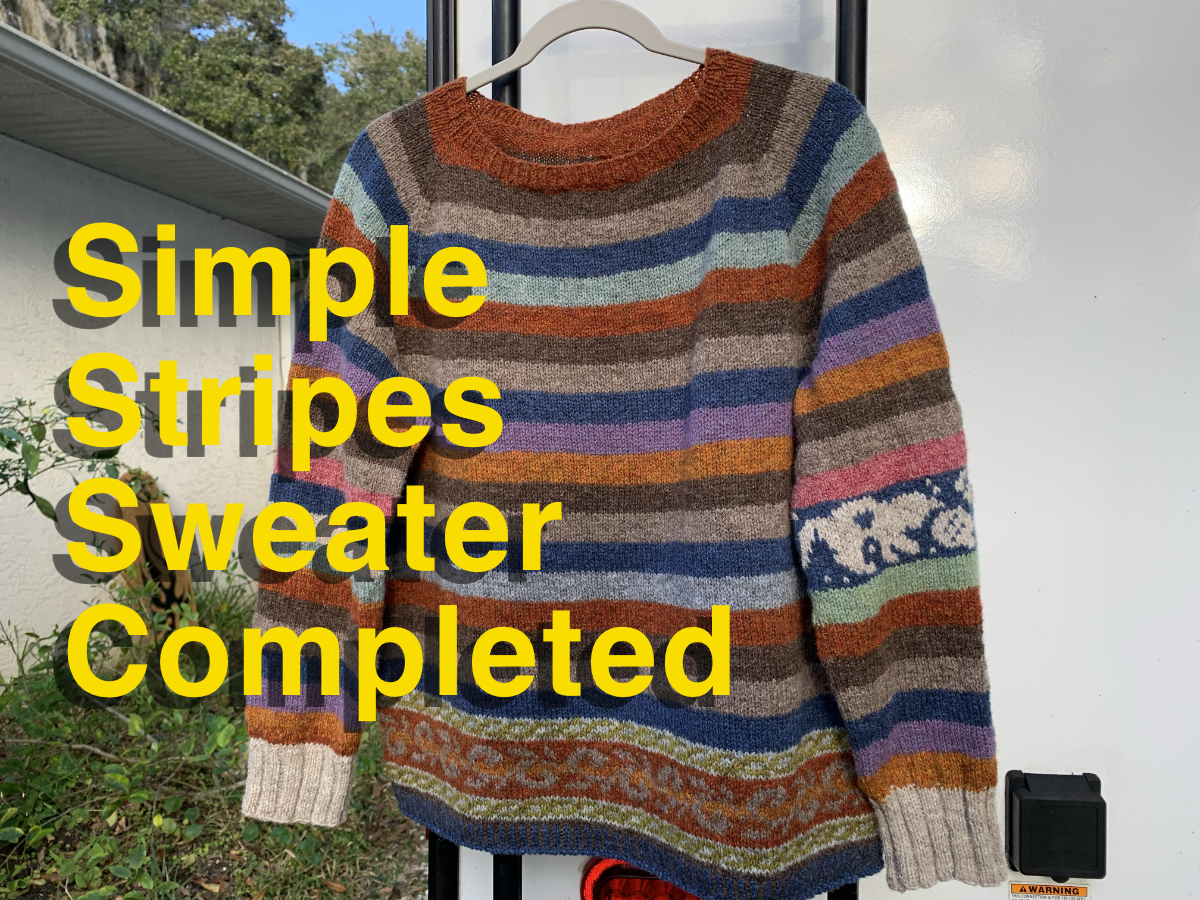
My newest knitting project is a simple sweater with stripes. A link to the pattern page on Ravelry is further down the page. This one is advertised as a good project to use…

Keep reading

Alternating Yarn Skeins When Knitting in the Round

Learning to alternate skeins while knitting with variegated yarn in the round.

For the Arco Iris pullover I am knitting with yarn that needs to be alternated. This means knitting with a strand from one skein for one or two rows, then switching to a strand from another skein. (The pattern link is at the bottom of this post.)

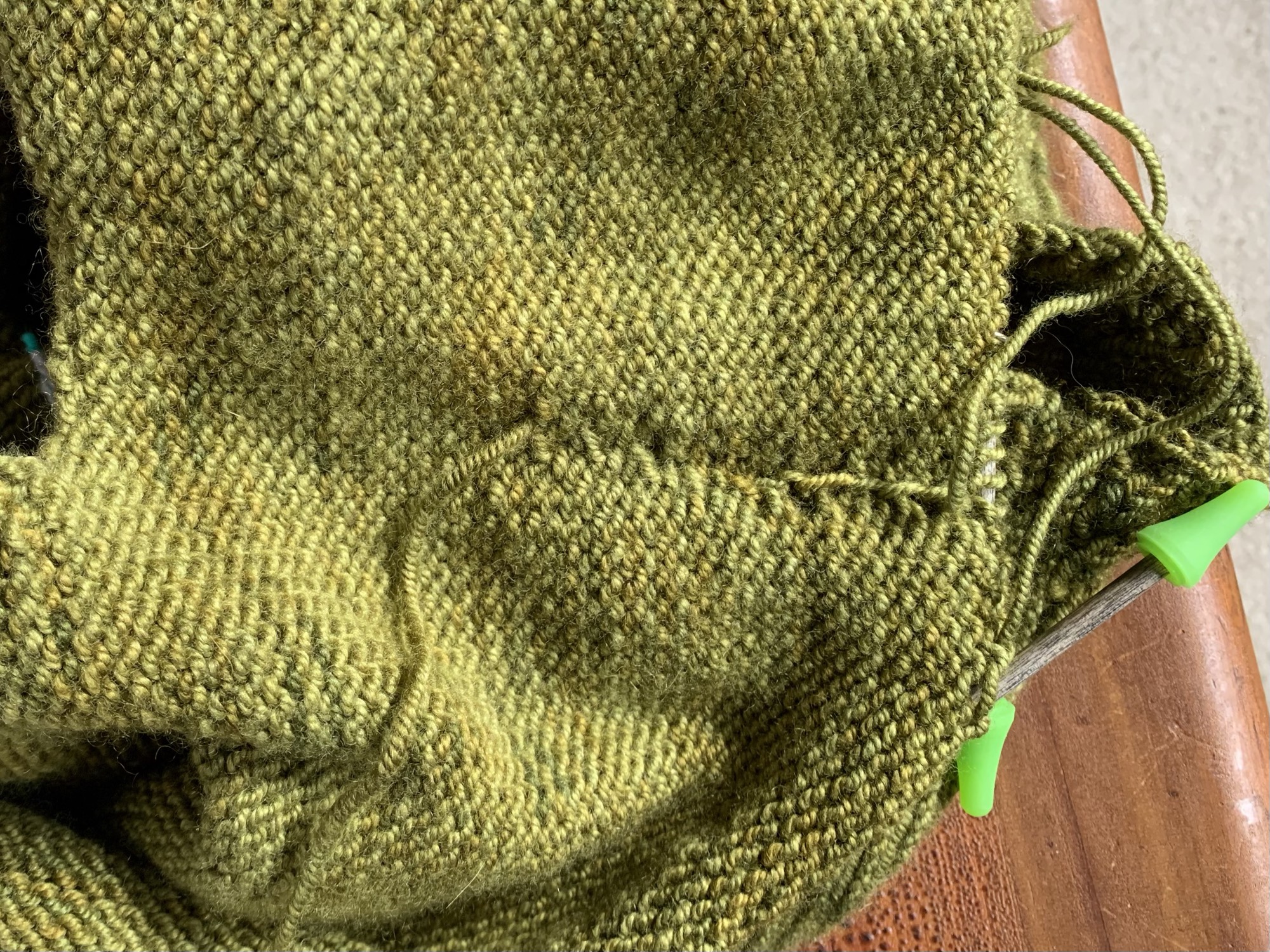
You really should do this whenever you have yarn that is not evenly colored, such as hand-dyed yarns. The yarn in the photo below is from Miss Babs and it is very pretty, but not uniformly colored. This type of dying process creates pretty skeins. It is very popular with knitters because you get a solid color garment that has interesting shades.

However, if the skeins are not alternated, there could be an obvious color difference between them, and / or a pooling of colors.

Color Pooling of Yarn

Yarn color pooling happens when the project being knit has just the right number of stitches to line the same yarn colors up over and over. My green yarn has subtle shading, but this could still happen. In fact Miss Babs made a note on my yarn receipt to alternate skeins. Thanks Babs!

Below is an example of color pooling when knitting. A pretty blue and white variegated yarn was used when I knit this pair of socks. Yes, they should have looked the same, but I had trouble with that faux cable design too and omitted it for one sock. If I had knit this pair correctly I should have divided my skein and alternated strands as I knit. These are socks. I didn’t really care. Now they are a good example of how pooling can effect a project.

Shell cottage socks showing color pooling
Color pooling

Alternating Skeins While Knitting – Sounds Easy, Right?

A new lesson learned. Alternating skeins is not that easy. Well, it’s easy, but not easy to make it look right when you totally do it wrong!

I began alternating skeins from the beginning of this sweater project, BUT the knitting was done flat for the top part of this sweater. I simply carried the yarn up the side and switched strands as I went. Simple.

Then I knit the “V” neckline and I did not alternate skeins. There is some ribbing and cables there, so I didn’t need to.

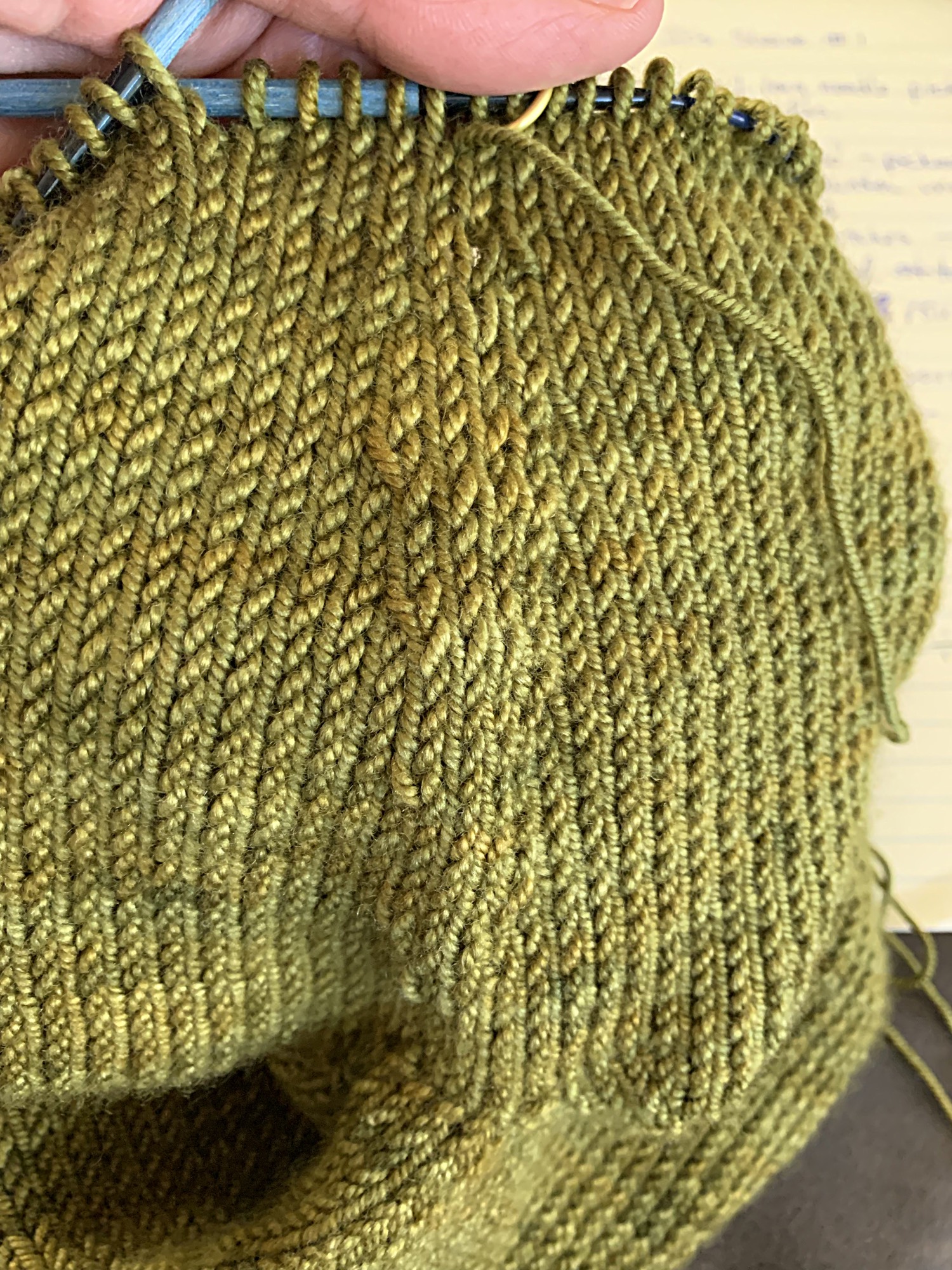
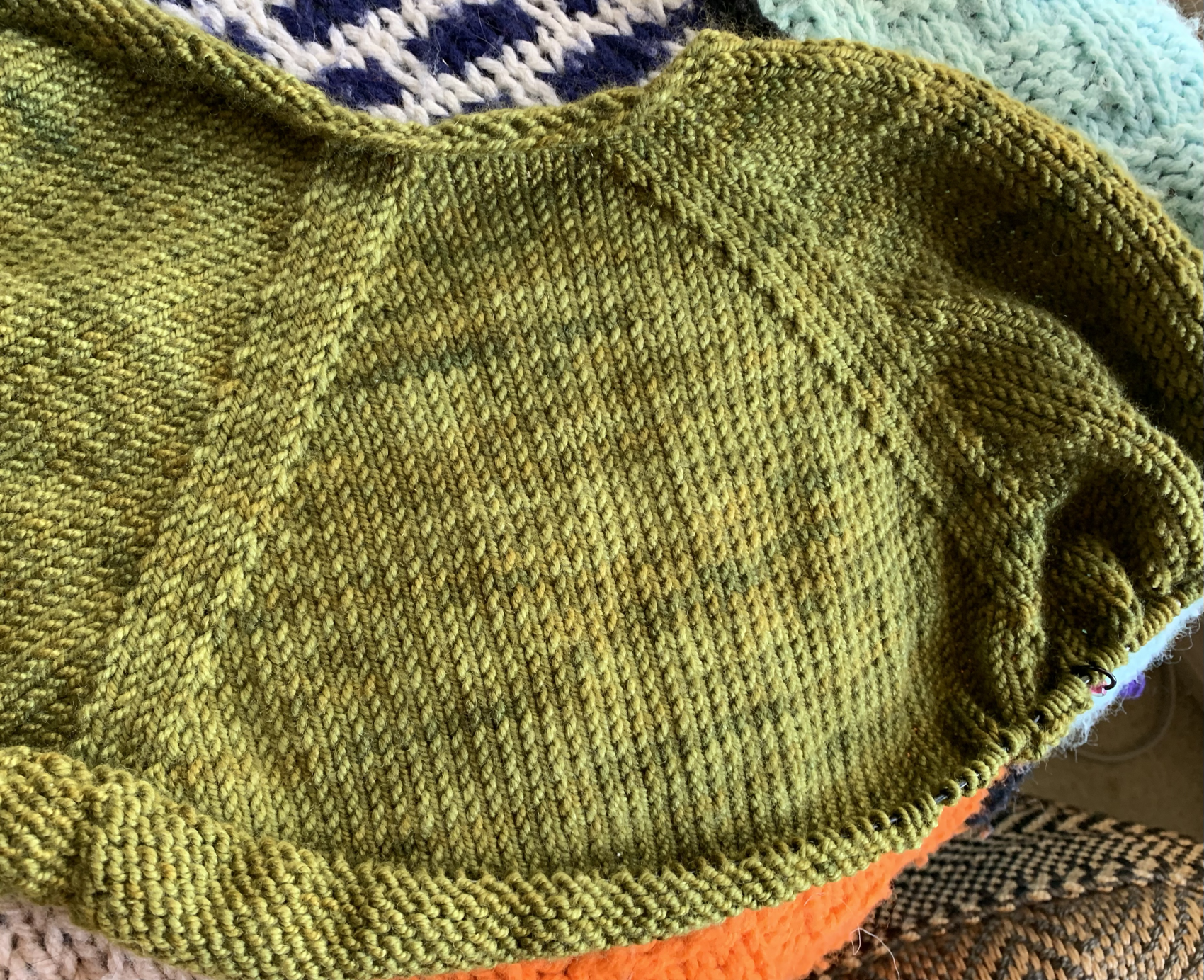
After that, I had to begin knitting in the round. So I added a new skein, knit two rows (NO – don’t do this), swapped out the yarn and knit two more… and so on. This is how it looked.

Hideous!

After I did some knitting and alternating skeins, I saw that my carrying of yarn looked pretty awful. The carry line was uneven and also was puckering! I knew I would have to re-knit this area.

Now I needed to learn the correct way to do this. YouTube had some videos, and the one I found to be most helpful was where the yarn strands are brought forward when changing. (Video link below in “How To” section.)

Ripping Back and Starting Over

This yarn gives very clear stitch definition so finding the stitches in a row above the mistake was fairly easy. Here’s a pretty good video about picking up stitches to frog back a large chunk of knitting by Knitty Natty – which is what I did.

My knitting was done in the round and as I got close to the end, my needle pick up got tough. I got the last group of stitches with some yarn. By the way, you can use a much smaller size needle to pick up those stitches, as long as you being knitting again with the correct size.

I messed up a bit when adding my new skein (don’t ask me why), and therefore I have a little wonky place, but once I began the “yarn forward” technique, the rows looked much, much better.

How to Do the Yarn Forward Alternating Skeins Method

I have chosen to do the yarn forward swapping yarn on each round. Here’s how to do this method:

Pull the yarn you have been using to the front of the knitting and let it hang there.

Add the new yarn (for the first new skein round) by wrapping it around the needle as you would to begin knitting with any new skein.

Knit around using the new strand.

Once you arrive back to the place where the yarn is in front, swap it out. Yarn in front goes to the back and will now be used to knit the next round. Previous yarn used goes to the front and hangs.

Here is the best video I found that shows how to to do this.


For me, this line of alternating yarns will run down the side of my project – beneath the arm of the sweater. It will not be noticeable and hopefully even less so once the sweater is washed and blocked. I forgot to do this (alternate skeins) for the first couple of inches. The arrows show where I added the new skein.

The other method of swapping out strands every row creates a line up the inside of the project, which is fine too. The Miss Babs video about Alternating Skeins for flat and round knitting, shows that method. (Watch the woman knit while she looks into the camera! Impressive.)

You must swap the yarn EVERY ROW for both methods (in the round).

I mistakenly began by knitting two rows before I swapped, and that should only be done for knitting flat (back and forth) where you must knit a second row to get back to the place where the yarn is waiting.

New Technique For Me

Although I have knit many sweaters, this is the first time I have used this technique. My attempt is not perfect because I watched too many videos and did not follow the good video directions, but I am not ripping back again.

Usually I knit with wool and I don’t have to swap out and alternate yarns. I prefer simple wool for knitting, but I wanted a pretty, variegated yarn for this sweater pattern.

The Pattern

This sweater pattern is called Arco Iris and is by designer Joji Locatelli. You can buy the pattern on her Ravelry page here. You can read my notes about knitting this sweater here.


Read more about my knitting adventures