Landscape Lessons Scarf How to #2

Beginner knitters lesson #2 for knitting the Landscape Lessons scarf deals with purling, stockinette and seed stitch.

This is my second post about knitting a beginner scarf. Read Lesson #1 here. There is no written pattern for it, we are simply practicing knitting and purling in combinations that create interesting designs.

Anyone knitting the scarf is free to knit whichever stitches, for however many rows, as you’d like.

Along the way I will do some basic stitches that would be good for all knitters to know. If you feel willing to try them out, go for it.

We began by casting on 35 stitches with worsted weight yarn. My scarf measures 9 inches across. See Lesson #1.

Please ignore the fact that my yarn colors are changing. You should knit in one color – one skein. I am trying to use up some leftover yarn. I will help you learn to add a new skein, or color, in the next lesson. For now, as a beginner, just worry about learning the stitches.

What We’ve Done So Far

I knit back and forth for four inches. This is called Garter Stitch. Watch the video on the Lesson #1 page for help casting on and knitting back and forth. You should do as many rows as needed to get comfortable with holding the needles and creating the stitches.

You can knit your entire scarf in garter stitch if you want to!

For those who want to learn more, we will now do purl stitches. I’ll include good videos I’ve found to help with each step.

ALSO… don’t worry about making mistakes. The only way to fix a knitting mistake is to “un-knit” or Tink. This is quite difficult when you are first starting out. When I began knitting I simply left my mistakes to become part of the project! In fact, I sometimes still do that! Unless your mistake is horrendous, and you can’t stand it, leave it until you learn to un-knit. You can remove the yarn from the needles and unravel the whole thing is you want to begin again. That is up to you.

How to Purl

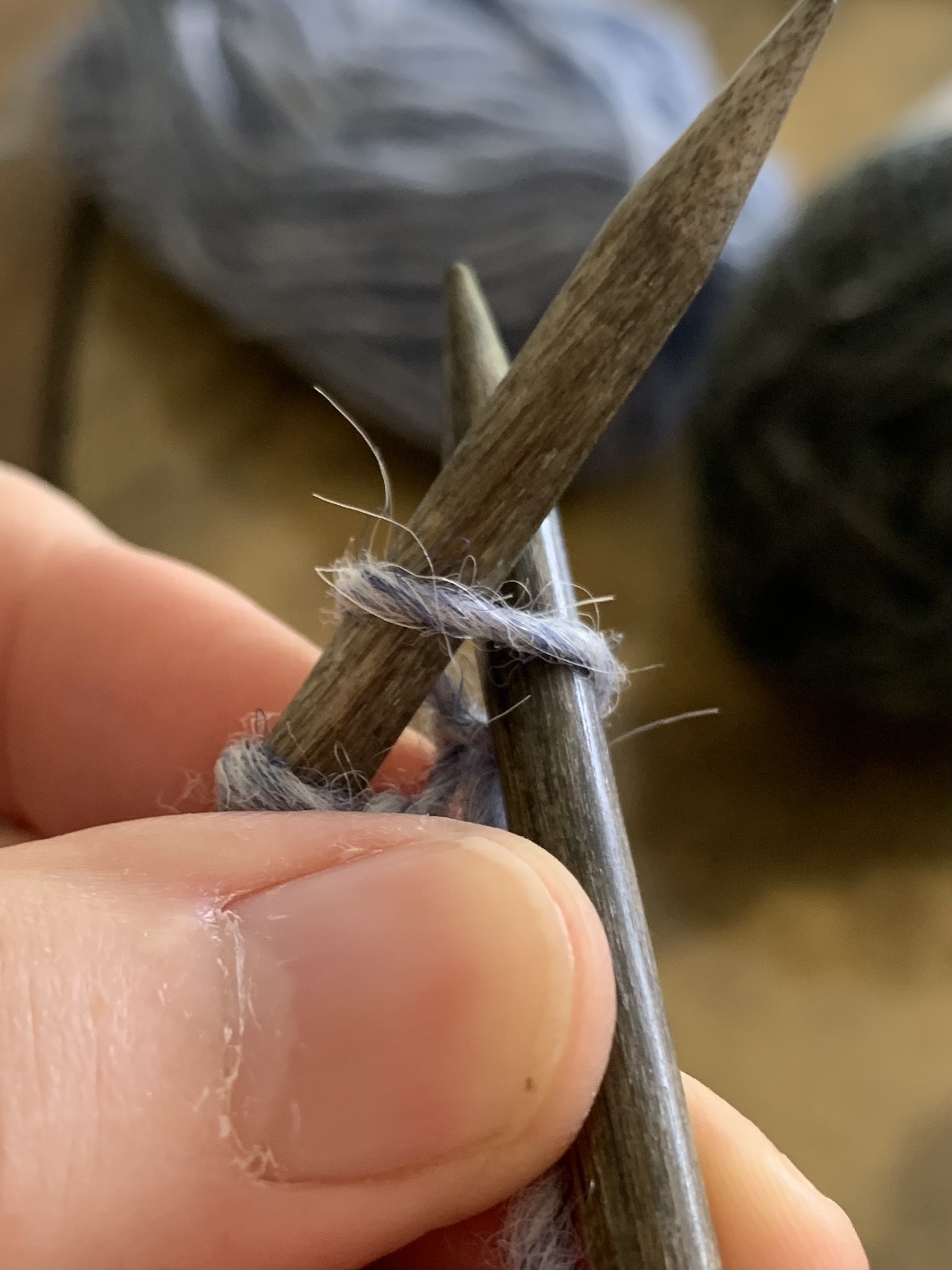
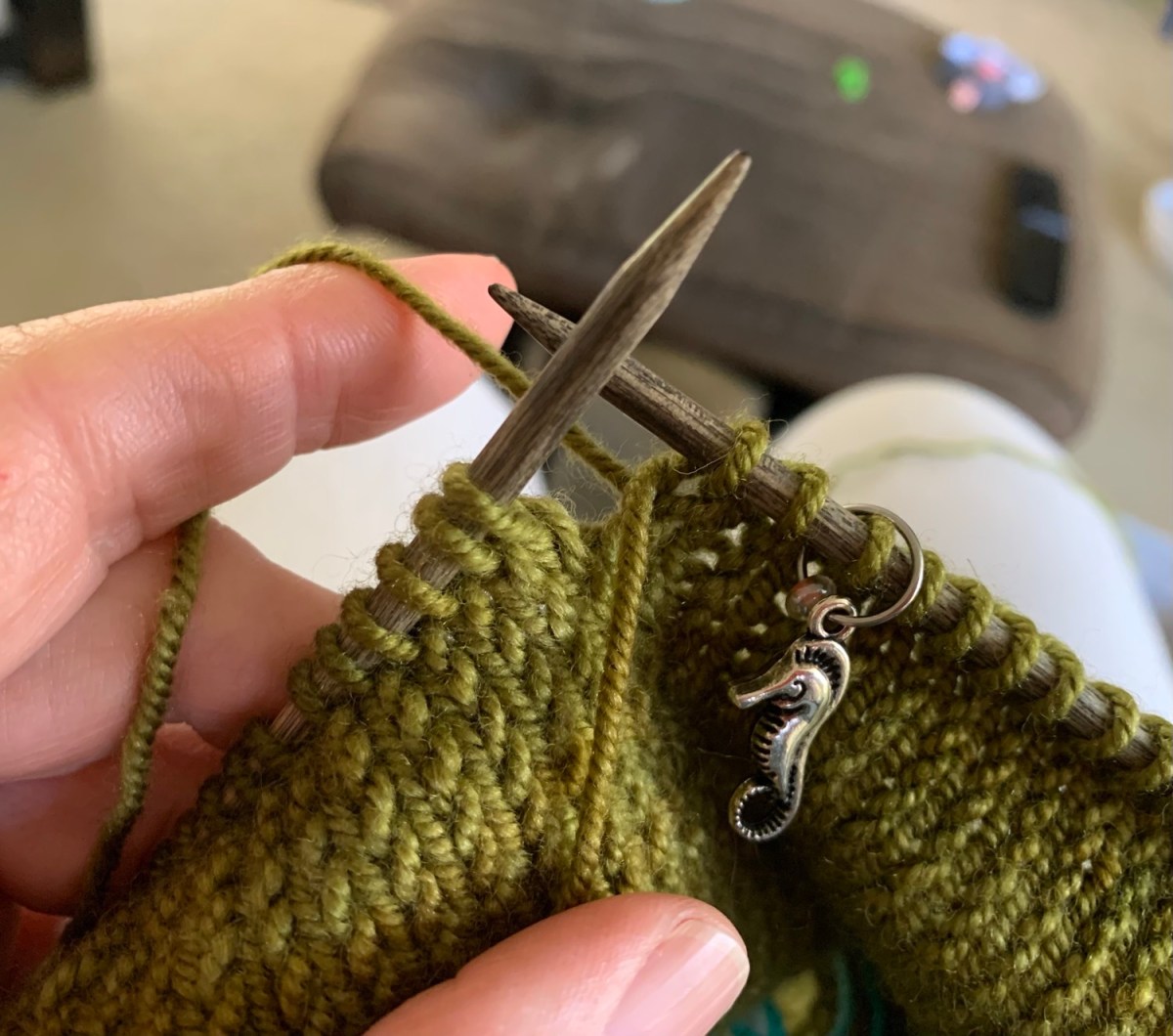
Besides knitting, you will want to know the purl stitch. It is very similar to the knit stitch except the yarn and needle come to the front. Your yarn has been coming around the needle from the back when you did your knitting rows. Now the yarn will be in front and your needle will go into the stitch as you see in my photo below. Forget about that strand, it just needs to be in front of your work before you insert the needle.

Here is an excellent purl stitch video.

My photos below show the needle placement to purl, and how the purl stitch will look on your needles. These are known as purl bumps. It’s good to know what stitches look like. Once you can do knits and purls, you are well on your way in the knitting world. These stitches can combine in many ways to create all kinds of designs.

A Little About Knitting Stockinette

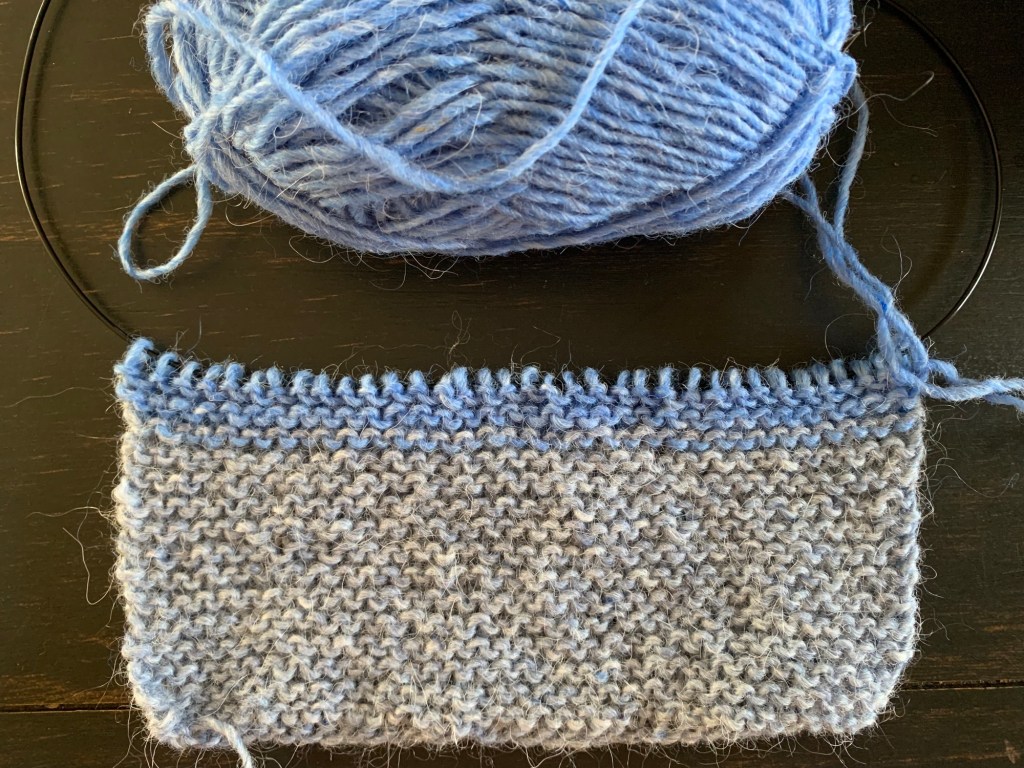
Stockinette creates a smooth looking fabric. You can see how your garter stitch section – the beginning of your scarf – is bumpy on both sides. Knitting one row and purling the next will create a more smooth fabric.

You should be able to see the difference. Stockinette is more flat and smooth. In fact, that is how I remember which is which. Think of stockings being smooth on the leg.

My photos below show the garter section, then my change to stockinette and last, the section in my knitting that is the stockinette. Above that, I did the seed stitch. More on that down the page.
Making Stockinette Rows on Our Scarf

Because stockinette tends to make a flat knitting project curl, I only did a few rows on my scarf. And I added garter stitch borders to our rows. For this reason, I suggest you only do a few rows of stockinette. This is our practice with making the purl stitch.

Our scarf will not have a “front” and “back” so don’t worry when – which end – you begin your stockinette knitting. After you finish knitting a row, turn the work and you are ready to begin the purl row.

The video link below is what we will be doing for the next few rows on our scarf, except that I have given our scarf a border of knitting only.

The Spruce Crafts page has a good video about doing stockinette.

Knitting the Landscape Lessons Scarf Stockinette Section

Row 1 of stockinette: We will knit three stitches, then begin to purl. Purl across to the last 3 stitches and knit the last three.

Remember to switch your yarn to the front for purling, and back again when you knit. Try to remember to knit those edge stitches at the beginning and end of the rows.
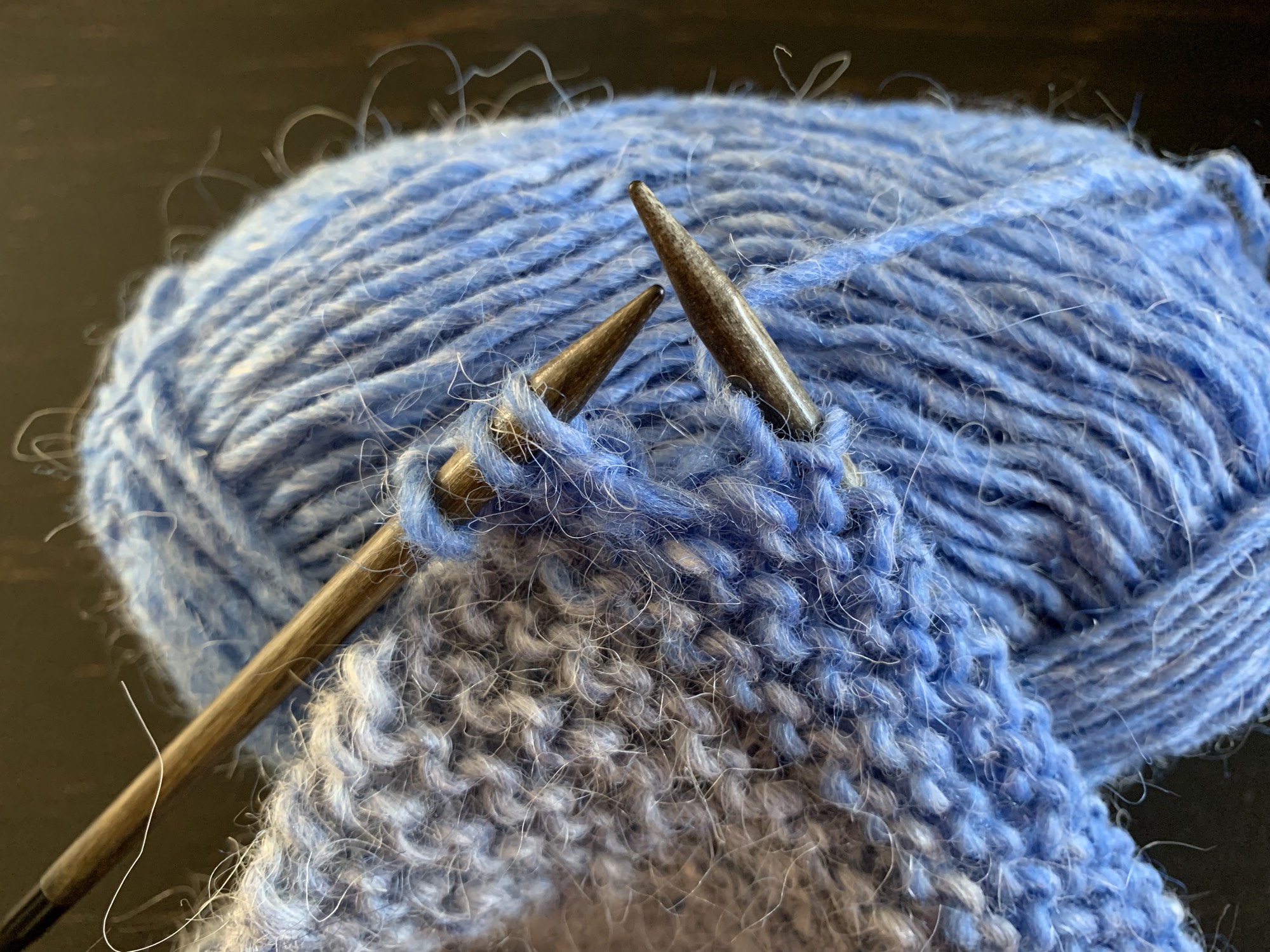
purl to knit
End with three knit stitches

Turn the work. Row 2: You will knit this row, just like you have been doing for the first part of your scarf. The edge stitches will always be knit, so you don’t have to do anything differently on this row… simple knitting across.

Row 3: same as Row 1 – Knit the first three stitches and then purl across to the last three. Knit those last 3.

I only made about five rows, and ended after knitting a purl row.

Now you will begin the next section with the knit side showing, like in my photo on the left below.
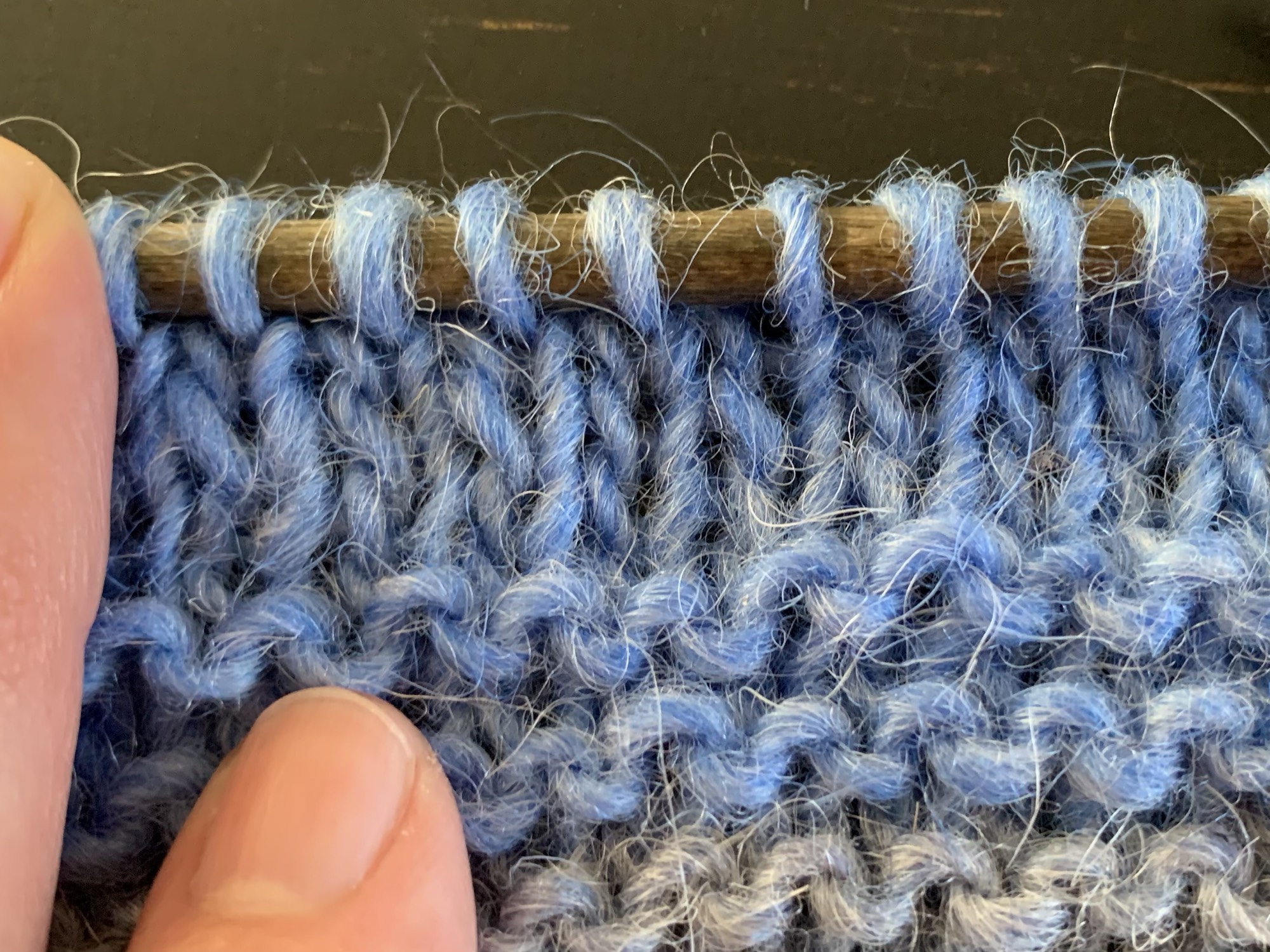
The Seed Stitch Section

If this all seems to be too much for you, please just knit along however makes you happy. Once you know how to do both the knit and purl stitch, these are just more options for practice. After the stockinette section, you can go back to knitting garter – knit every row. As you progress with your scarf, you may want to give this section a try.

The seed stitch is made by alternating knits and purls. That’s all. If you are interested in trying this, here is how I did my seed stitch section on the scarf.

Seed Stitch Section

Row 1: Knit the first three stitches (this is our border on both sides of the scarf). *Purl 1, knit 1, across the row alternating knits and purls, ending with a purl stitch (if your stitch count is 35 like mine). Knit the last three stitches.

Turn the work and do the same thing as row one. Because we are purling that last stitch on the previous row, it now looks like a knit when we turn the work over. Therefore we begin with the opposite – a purl.

For the seed stitch to work, we knit the stitches that had been purled on the previous row. We also purl the knit stitches. This alternates stitches to create a cool, bumpy look.

knitting seed stitch
Seed Stitch, alternating knits and purls and doing the opposite on the following row.

You really must become familiar with how knits and purls look. If you lose your place, or set your knitting down, knowing which stitch to do next is important. (Also remember your yarn comes off the right hand needle if you start in the middle of a row.)

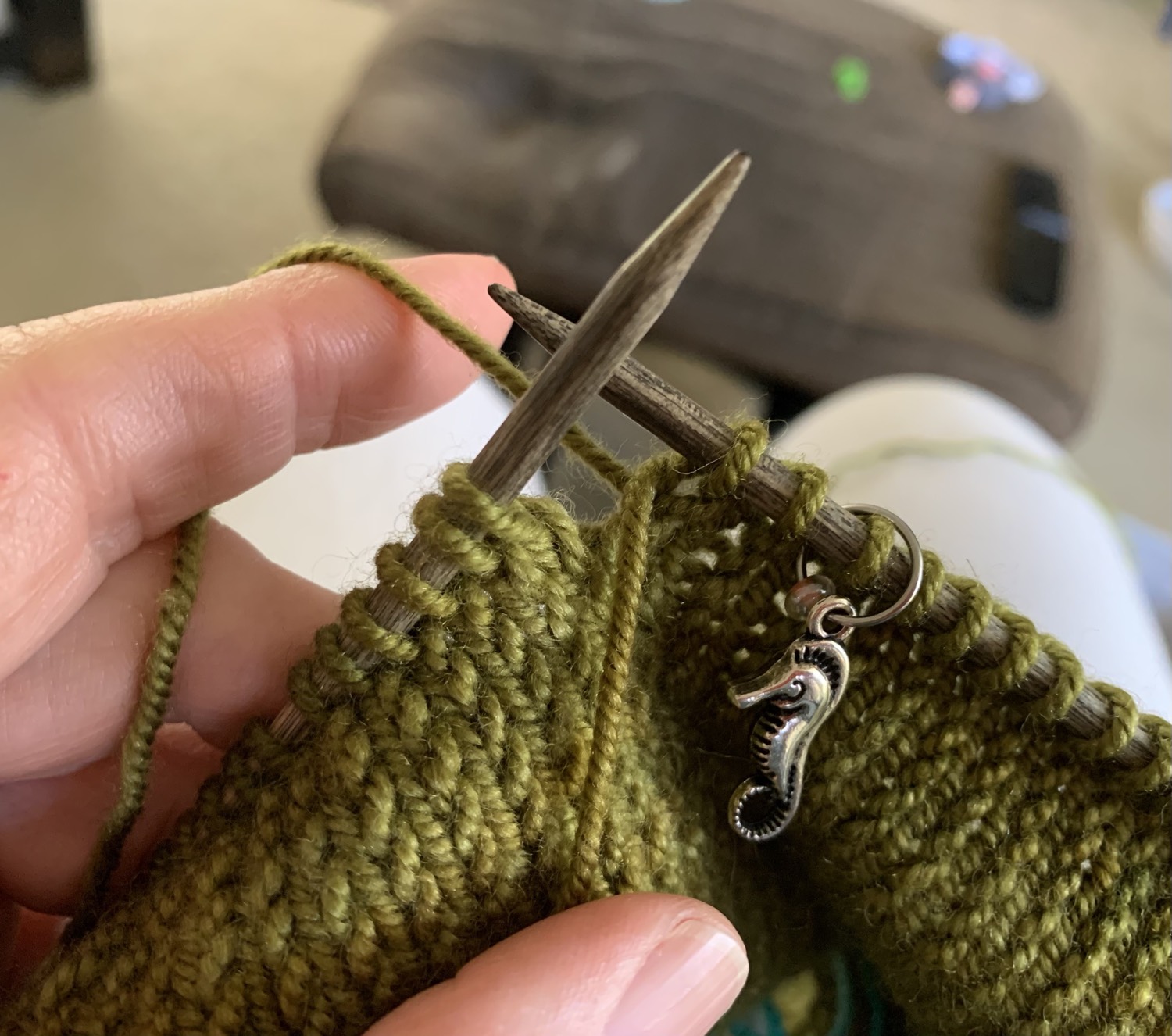
In my photo below, can you see the purl “bumps” and knit stitches on my needle? I am knitting with a very woolly yarn and if your yarn is smoother, the stitches may stand out even more. If it’s hard to tell, pull down on the fabric to make those bumps and V’s clearer.

If you lose your place on the seed stitch section, look at what is on your needle. It will tell you which stitch to make next. If you mess up, fix it on the next row.

If you hate it, go back to knitting every row until you feel better. Knitting should be calming and not stressful. If you do a lot of knitting your hand may hurt, so don’t overdo it. Remember that every stitch you make gets you closer to becoming a great knitter!

knits and purls
Knits and purls

I hope my tutorial makes sense to a beginner knitter. Once we are familiar with all of this, it’s tough to remember exactly how it was when beginning to knit.

I am by no means an expert. There are many things I still have not accomplished in knitting. It takes practice, and this scarf is a very good way to get the practice you need with basic stitches.

One of my very first scarves was knit all in seed stitch. It was my favorite scarf when I lived in the north.

Landscape Lessons Scarf: Lessons by Number


More knitting stories from the blog…

Teaching a Friend How to Knit a Scarf, Landscape Lesson #1

Want to learn to knit? Come learn how to knit a scarf with us from beginning to end. A good friend wants to learn to knit but she lives far away, so I’m writing her lessons on my blog! Are you a beginner knitter? Come join us for the fun.

A scarf is a great beginner pattern when learning how to knit. It’s what I knit the most, before graduating to knitting hats. A long, straight (knitting back and forth) project that should give the beginner lots of practice with knits and purls. And you just may have a beautiful and unique item to wear around your neck next winter.

I’ve decided to knit my own scarf as I show a beginner how to start. I live in Florida and my friend lives in New York. So she will be learning online. I have learned many things about knitting from YouTube, so I’ll include some favorite YouTube knitting tutorials.

Yarn and Needles

My friend had some very good and basic questions such as, what needles should I use and what kind of yarn? Obviously you need both of those things!

First buy some yarn, and look at the yarn band info. It should say what size needle is needed to knit with this yarn. The weight, or thickness, of the yarn will determine the size (thickness) of the needles. In the example skeins below, knitting needle size suggestion is US 1-3 (needle size can also be in mm). This is a thin yarn called fingering, so it needs a small needle. 

Hot Shot Toes mini skeins of yarn
Miss Babs mini skeins of sock yarn

What is a circular needle?

Knitting can be done with either straight needles or circular. Circular needles allow the knitter to join their knitting and knit in the round. This is something you can’t do with straight needles. Think of a hat, cowl, or sweater that is circular. But this type of needle can also be used for plain old knitting – flat, like a scarf. Pretend the needles are not joined by a cable. Or, use a pair of normal, straight needles if it makes you feel better.
Read more about buying needles on my previous post.

What I Am Using To Knit My Landscape Lessons Scarf

I am naming this scarf so it will be easier to find and it will be “Landscape Lessons” because I plan to show you some very basic knit and purl combinations along the way. It’s all about practice and deciding which combinations you favor.

If you live near a yarn store, or craft store, go there and pick out some yarn you like. Otherwise, I can suggest Wool and Company, an online site that ships yarn for free – no minimum purchase required.

I am using Lykke brand wooden circular needles with Lettlopi wool yarn.

knitting with wool on circular needle
Size 8 circular needles and wool yarn

Some yarn skeins will need to be wound before using. If your skein is twisted – like the Miss Baby yarn in my photo above, it will have to be wound. Skeins, like the Lettlopi above, do not need winding.

Cast On

Once you have your yarn and needles, you will cast on. I have written a whole page about various cast on methods, but beginners can use the very simplest.

The video below is excellent, except that I would not suggest bulky yarn. Big needles and bulky yarn can make your hands tired after a while. You can do this same thing with worsted weight yarn and see the stitches fine.

In the video below, she shows how to make the slip knot, begin casting on, knitting back and forth, and binding off! Who needs me? Haha… She also knits right handed, and “throws” the yarn. This is exactly how I knit. (Some people knit continental, which is different, and I’m not getting into right now.)

Well, I do have one suggestion. When she casts on, she is putting her right-hand needle between the two strands and is using only one. This is also how you do the knit stitch – The right needle goes between the two on the needle (photo 2 below).

However, you can also put your needle under BOTH strands for the cast on (photo 1 below). Do the cast on the same way, just stick the needle right under the entire stitch. Either way will still make a nice cast on. Going under both strands makes a sturdier cast on, or something. I forget. Don’t do that while knitting… do it only for the cast on row.

This is a great video, but don’t do the cast off… if you want to knit a scarf, we must continue knitting. I have some changes in store, just in case you want to branch out and try something new along the way.

For my Landscape Lessons Scarf you will cast on, and knit back and forth for as many rows as you like. This will be one end of your scarf. By knitting back and forth, it will help you get a feel for the basic knit stitch.

A light color yarn makes stitches easier to see the stitches!

Do as the woman does in the video above and cast on your stitches. This will be the width of your scarf. If you are using worsted weight yarn with size 7 or 8 needles, cast on 35 stitches. This should make your scarf around 7 inches in width (after I began knitting, my scarf is more like 8.5 inches). Everyone knits differently, so width may be different. You won’t be able to see the actual width until you have knit quite a few rows. Don’t measure the cast on row!

Some people knit English style, and others prefer Continental. Here is a video explaining the difference.

Do as she does in the video and knit back and forth – she is knitting English style.

If you are using circular needles, do the exact same thing as she does using straight needles. Turn the work, and begin knitting again. Forget the cord is there attaching your needles.

The reason I suggest buying circular needles is that they can be used for more things later on if you find you really love knitting. I rarely ever use straight needles for anything these days.

Read This – a Helpful Hint

Let’s say you have to set your knitting down and you just plop it on the table, or into the basket. When you come back to continue knitting you must know where to begin.

I’ve made this mistake back when I began knitting. It’s easy to pick up the work and begin knitting in the wrong direction, unless you know this:

Don’t just pick up the project and flip the yarn to the back and begin knitting. Photo on the left shows the yarn in the wrong place. Turn the work around so that the yarn is coming off the right hand needle. Then begin.

This page should provide the start to an easy, beginner knitting project. Let me know how you do, or if there are question. When these skills are mastered, please proceed to Lesson #2.

Go On to Lesson #2


More Knitting Stories From the Blog

First Attempt at Knitting Clotilde

I didn’t get far when I began the Clotilde Cardigan pattern, but it’s a good looking cardigan, and I’ll try knitting the pattern again.

Christmas Gift Knitting; Hats For the Guys

Get an early start on hat knitting for Christmas. This page lists a few hat patterns, for free and to purchase, that work well for guys. Also, I’ve listed some machine washable yarn to get you started.

A Simple Sweater With Stripes

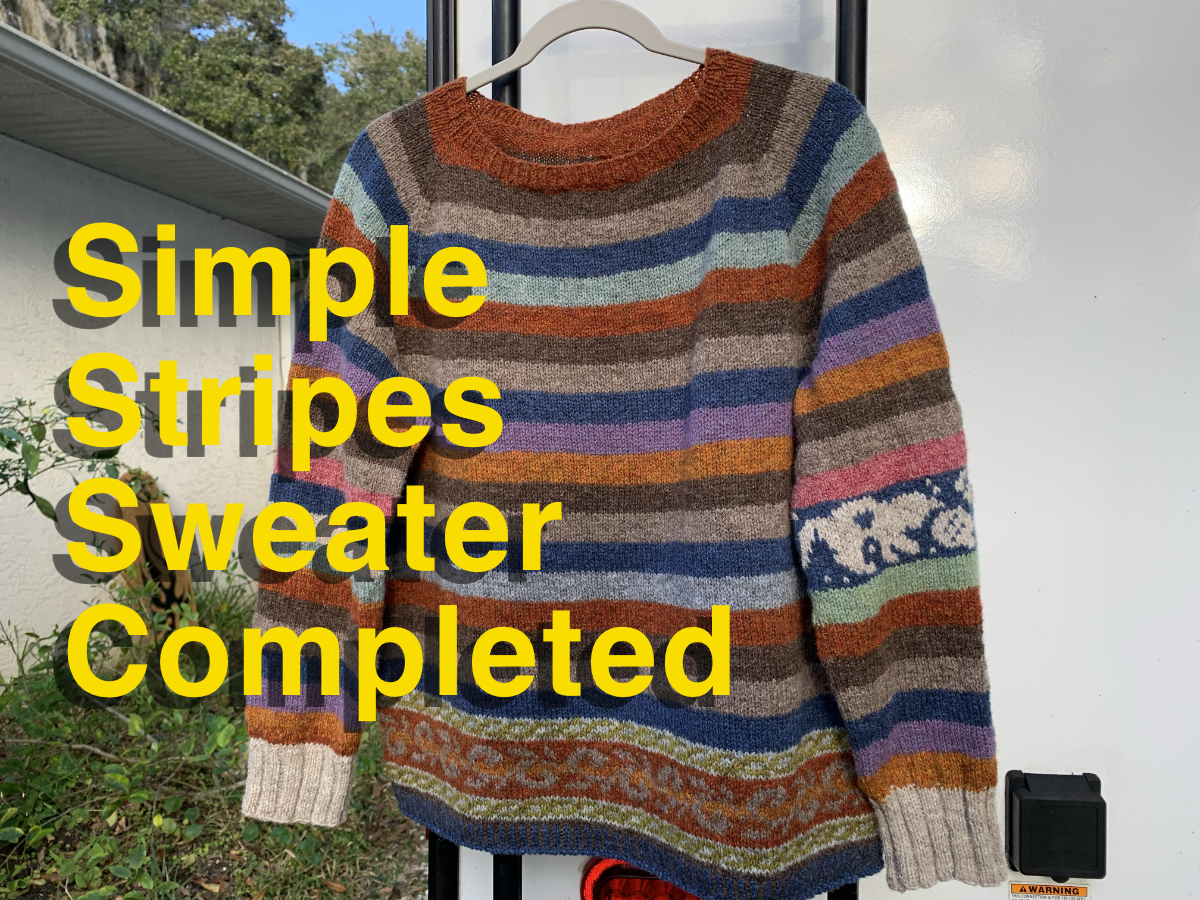
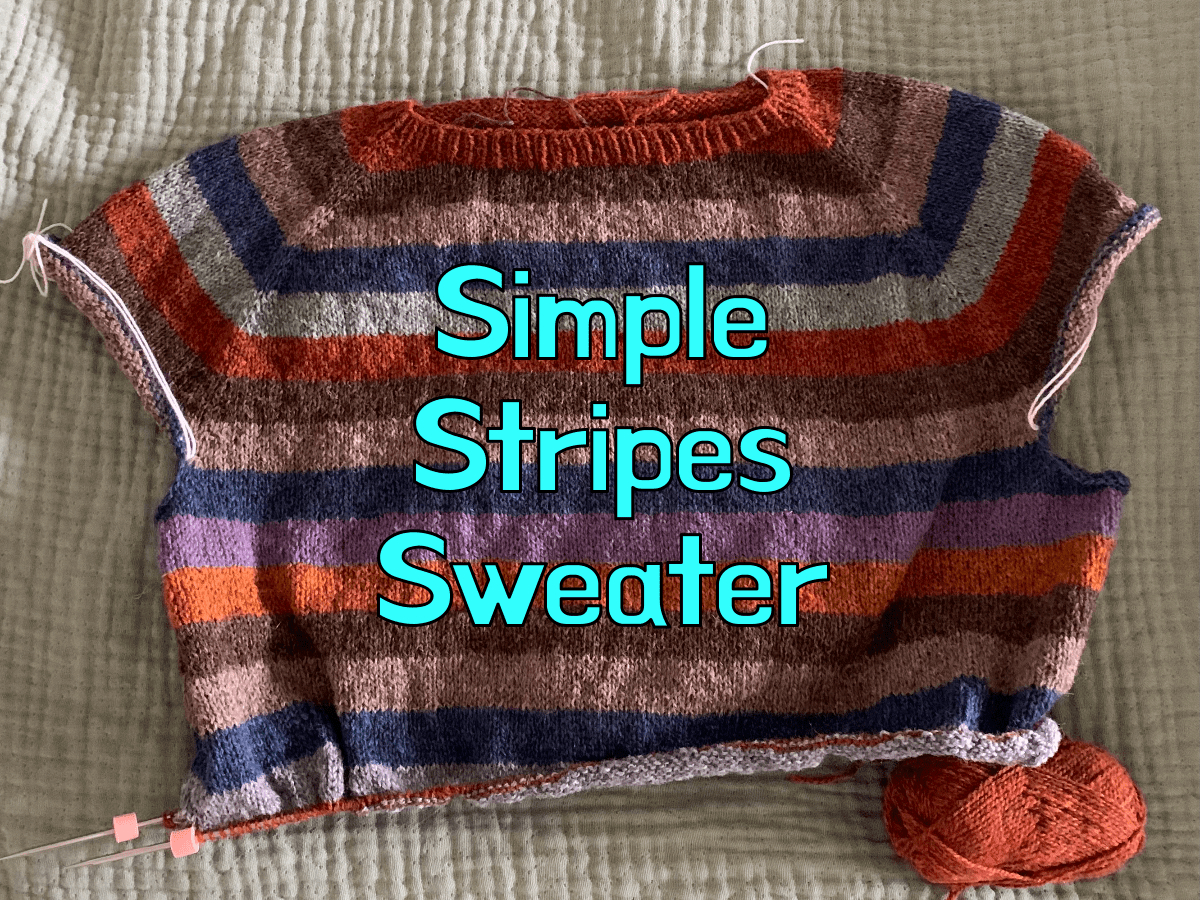
My newest knitting project is a simple sweater with stripes. A link to the pattern page on Ravelry is further down the page. This one is advertised as a good project to use up stash yarn. I can see how that would be true. I was finishing up knitting the Warm Up sweater (#3), and…

Alternating Yarn Skeins When Knitting in the Round

Learning to alternate skeins while knitting with variegated yarn in the round.

For the Arco Iris pullover I am knitting with yarn that needs to be alternated. This means knitting with a strand from one skein for one or two rows, then switching to a strand from another skein. (The pattern link is at the bottom of this post.)

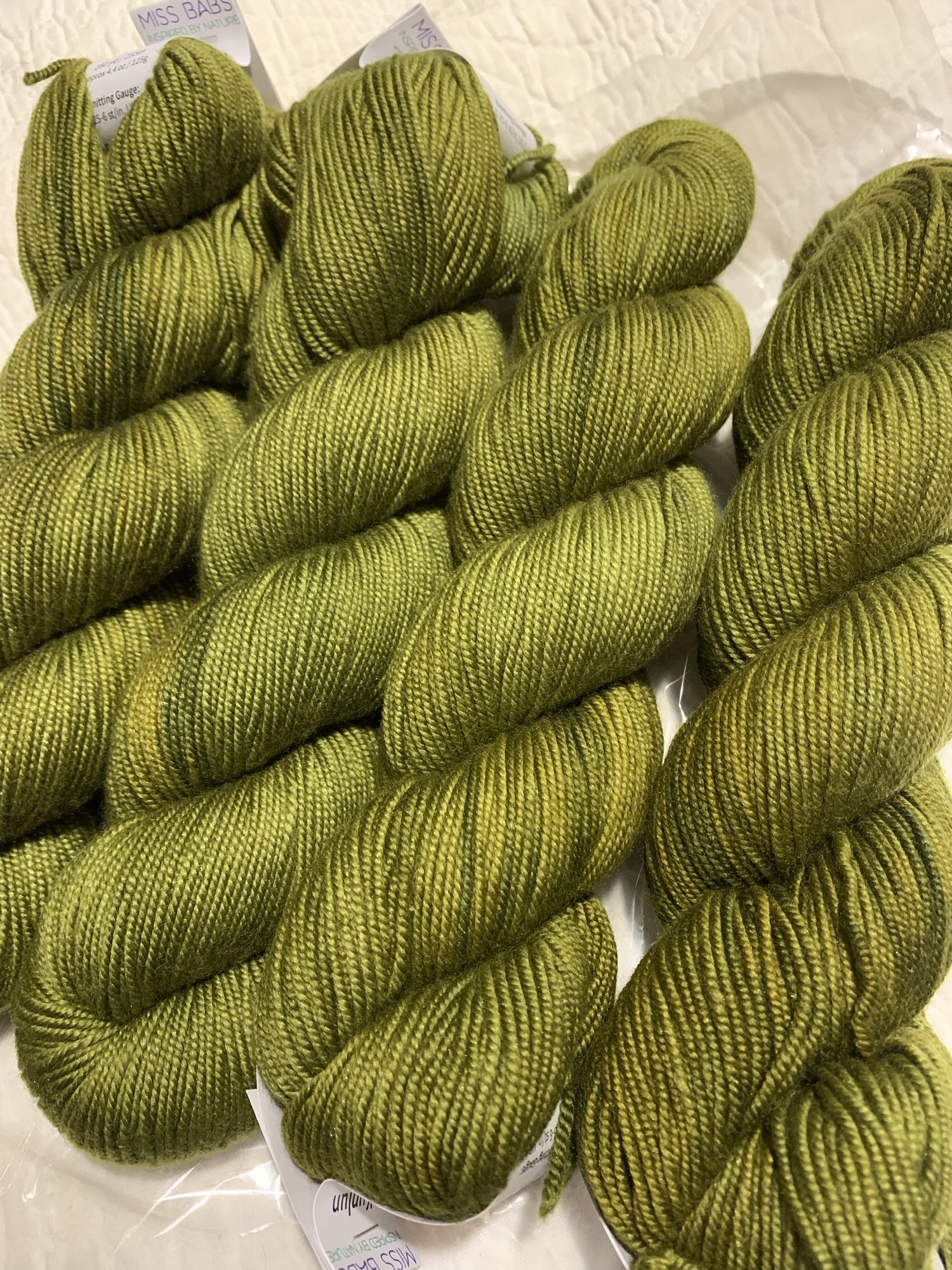
You really should do this whenever you have yarn that is not evenly colored, such as hand-dyed yarns. The yarn in the photo below is from Miss Babs and it is very pretty, but not uniformly colored. This type of dying process creates pretty skeins. It is very popular with knitters because you get a solid color garment that has interesting shades.

However, if the skeins are not alternated, there could be an obvious color difference between them, and / or a pooling of colors.

Color Pooling of Yarn

Yarn color pooling happens when the project being knit has just the right number of stitches to line the same yarn colors up over and over. My green yarn has subtle shading, but this could still happen. In fact Miss Babs made a note on my yarn receipt to alternate skeins. Thanks Babs!

Below is an example of color pooling when knitting. A pretty blue and white variegated yarn was used when I knit this pair of socks. Yes, they should have looked the same, but I had trouble with that faux cable design too and omitted it for one sock. If I had knit this pair correctly I should have divided my skein and alternated strands as I knit. These are socks. I didn’t really care. Now they are a good example of how pooling can effect a project.

Shell cottage socks showing color pooling
Color pooling

Alternating Skeins While Knitting – Sounds Easy, Right?

A new lesson learned. Alternating skeins is not that easy. Well, it’s easy, but not easy to make it look right when you totally do it wrong!

I began alternating skeins from the beginning of this sweater project, BUT the knitting was done flat for the top part of this sweater. I simply carried the yarn up the side and switched strands as I went. Simple.

Then I knit the “V” neckline and I did not alternate skeins. There is some ribbing and cables there, so I didn’t need to.

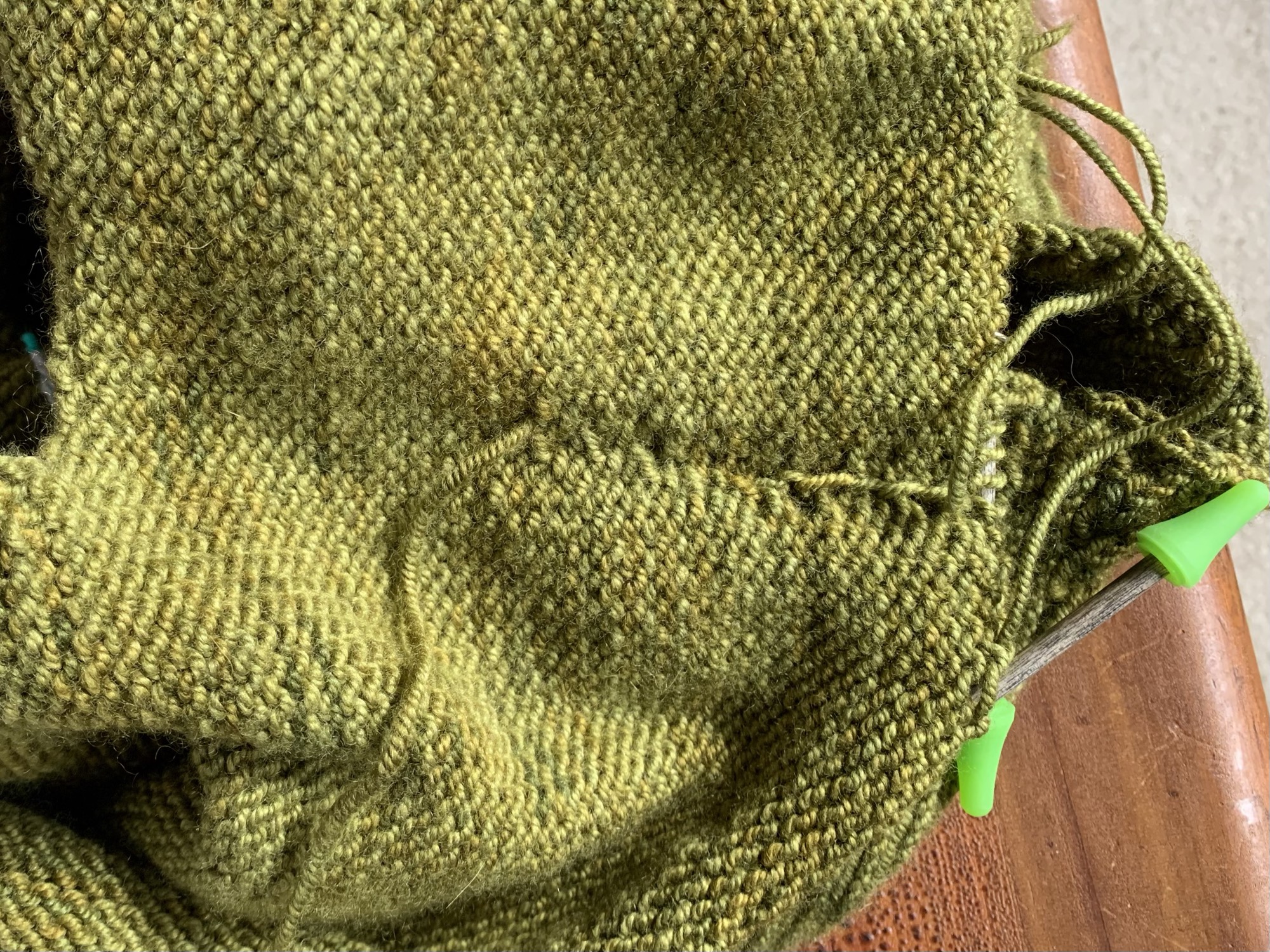
After that, I had to begin knitting in the round. So I added a new skein, knit two rows (NO – don’t do this), swapped out the yarn and knit two more… and so on. This is how it looked.

Hideous!

After I did some knitting and alternating skeins, I saw that my carrying of yarn looked pretty awful. The carry line was uneven and also was puckering! I knew I would have to re-knit this area.

Now I needed to learn the correct way to do this. YouTube had some videos, and the one I found to be most helpful was where the yarn strands are brought forward when changing. (Video link below in “How To” section.)

Ripping Back and Starting Over

This yarn gives very clear stitch definition so finding the stitches in a row above the mistake was fairly easy. Here’s a pretty good video about picking up stitches to frog back a large chunk of knitting by Knitty Natty – which is what I did.

My knitting was done in the round and as I got close to the end, my needle pick up got tough. I got the last group of stitches with some yarn. By the way, you can use a much smaller size needle to pick up those stitches, as long as you being knitting again with the correct size.

I messed up a bit when adding my new skein (don’t ask me why), and therefore I have a little wonky place, but once I began the “yarn forward” technique, the rows looked much, much better.

How to Do the Yarn Forward Alternating Skeins Method

I have chosen to do the yarn forward swapping yarn on each round. Here’s how to do this method:

Pull the yarn you have been using to the front of the knitting and let it hang there.

Add the new yarn (for the first new skein round) by wrapping it around the needle as you would to begin knitting with any new skein.

Knit around using the new strand.

Once you arrive back to the place where the yarn is in front, swap it out. Yarn in front goes to the back and will now be used to knit the next round. Previous yarn used goes to the front and hangs.

Here is the best video I found that shows how to to do this.


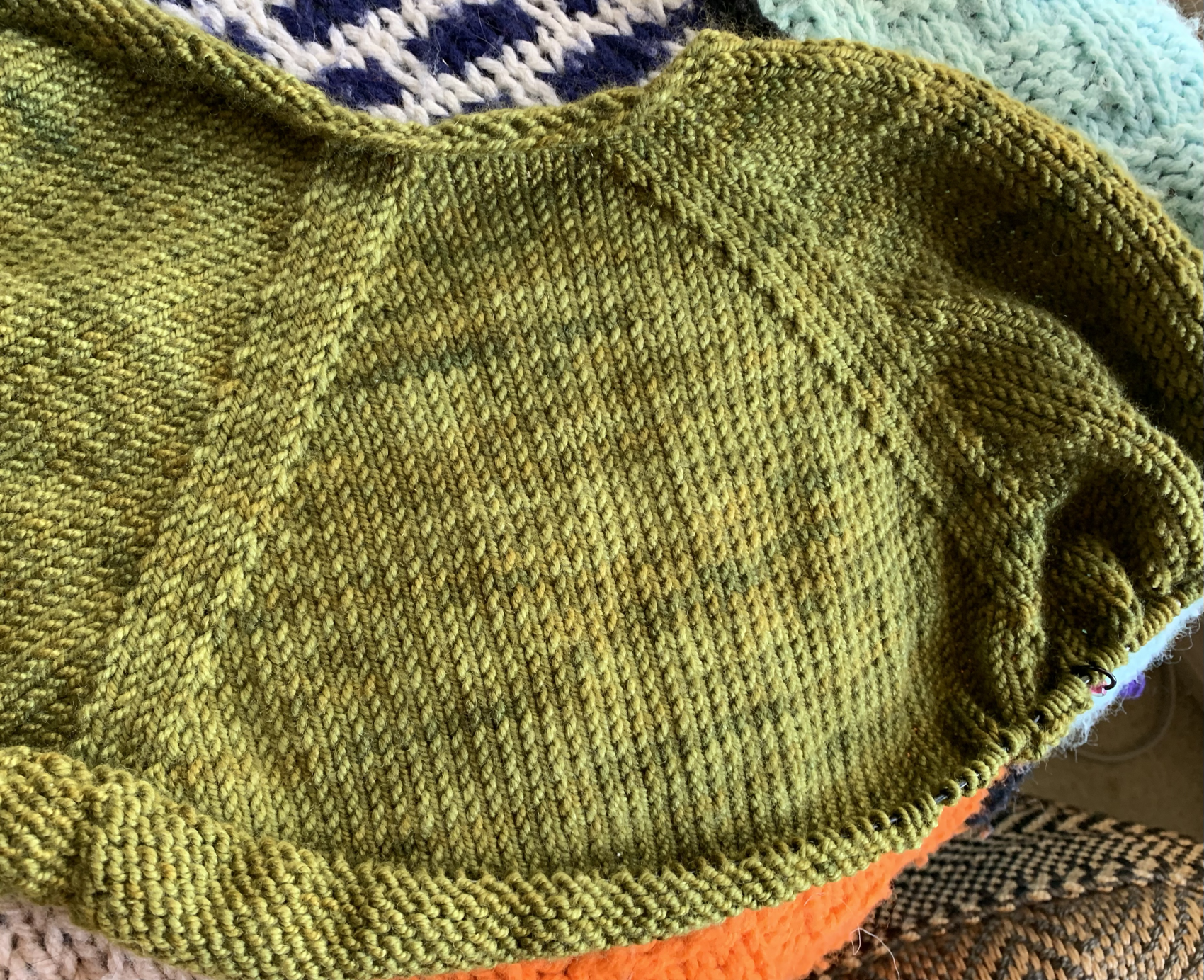
For me, this line of alternating yarns will run down the side of my project – beneath the arm of the sweater. It will not be noticeable and hopefully even less so once the sweater is washed and blocked. I forgot to do this (alternate skeins) for the first couple of inches. The arrows show where I added the new skein.

The other method of swapping out strands every row creates a line up the inside of the project, which is fine too. The Miss Babs video about Alternating Skeins for flat and round knitting, shows that method. (Watch the woman knit while she looks into the camera! Impressive.)

You must swap the yarn EVERY ROW for both methods (in the round).

I mistakenly began by knitting two rows before I swapped, and that should only be done for knitting flat (back and forth) where you must knit a second row to get back to the place where the yarn is waiting.

New Technique For Me

Although I have knit many sweaters, this is the first time I have used this technique. My attempt is not perfect because I watched too many videos and did not follow the good video directions, but I am not ripping back again.

Usually I knit with wool and I don’t have to swap out and alternate yarns. I prefer simple wool for knitting, but I wanted a pretty, variegated yarn for this sweater pattern.

The Pattern

This sweater pattern is called Arco Iris and is by designer Joji Locatelli. You can buy the pattern on her Ravelry page here. You can read my notes about knitting this sweater here.


Read more about my knitting adventures

Leave No Tails! Three Ways to Join Yarn Ends

Here are some ways to join two yarn ends together while knitting to eliminate yarn tails.

Knitting is fun! Weaving in endless tails of yarn is not. On this page, I’ve written about three ways to join ends of yarn together that will eliminate tails. There will always be the cast-on and bind-off tails, but we’re talking about joining in a new ball, or color.

Unless you are knitting a small item, you will probably have to join a new ball of yarn to the project. Sweaters and large items require many skeins, and if colorwork is involved, even more.

Fair Isle projects, like the mitts below (shown inside out), require lots of color changes and therefore lots of ends! It took me a very long time to do all that weaving.

weaving in ends on Stellar Parallax mitts
Colorwork mitts and all the ends left to weave in!

I’ve always simply slipped the end of the new yarn over the needle, leaving a tail. That leaves two tails (the old and new) that must be woven in when the project is finished. These tails can add up, and the weaving in can be a project all on it’s own!

The ideas for joining yarn on this page make knitting a bit easier by NOT leaving any tails. Not every technique will work for every project. Know your yarn, and choose the join accordingly.

How to Do a Magic Knot – Works for (almost) any yarn, but might not be good for every type of project.

This is a simple way to join two yarn ends. But, I would not be inclined to use it except in certain circumstances. Personally, I don’t like knots. I’d be a little skeptical of the knot staying knotted, or popping through to the front side and looking bad.

Any yarn that comes apart easily would not work as the ends have to be tightly pulled.

Knitter’s Pride has a good page, with images and suggestions on when it’s best to use the Magic Knot.

Very Pink Knits has a good, slow-motion video on this technique.

I just knit the VENLIG sweater pattern with some Woolfolk nubby yarn. The skeins had a few knots here and there and I simply knit them in. With the fluffy texture of the wool, it would be hard to see this tiny knot even if it was on the front of the sweater.


How to Do a Russian Join – Uses a needle

The Russian join in knitting uses a tapestry needle to weave the yarn ends together. This method of joining two ends of yarn seems a little time-consuming, but looks better than a knot, IMO.

This join seems perfect for any type of yarn where a magic knot wouldn’t look okay, or the spit splice (read on) wouldn’t work.


How to Spit Splice Wool – No tools needed

The first two methods for joining yarn would work for nearly any type of yarn, but the spit splice is meant for wool. The water (or spit) and the friction of rubbing the yarn, are what turns two yarn strands into one. This splice will not work on Superwash, or any manmade washable fibers.

I’ve written before about how to do the spit splice because I used it on the Warm Up Sweater and Kate’s Poncho very successfully.

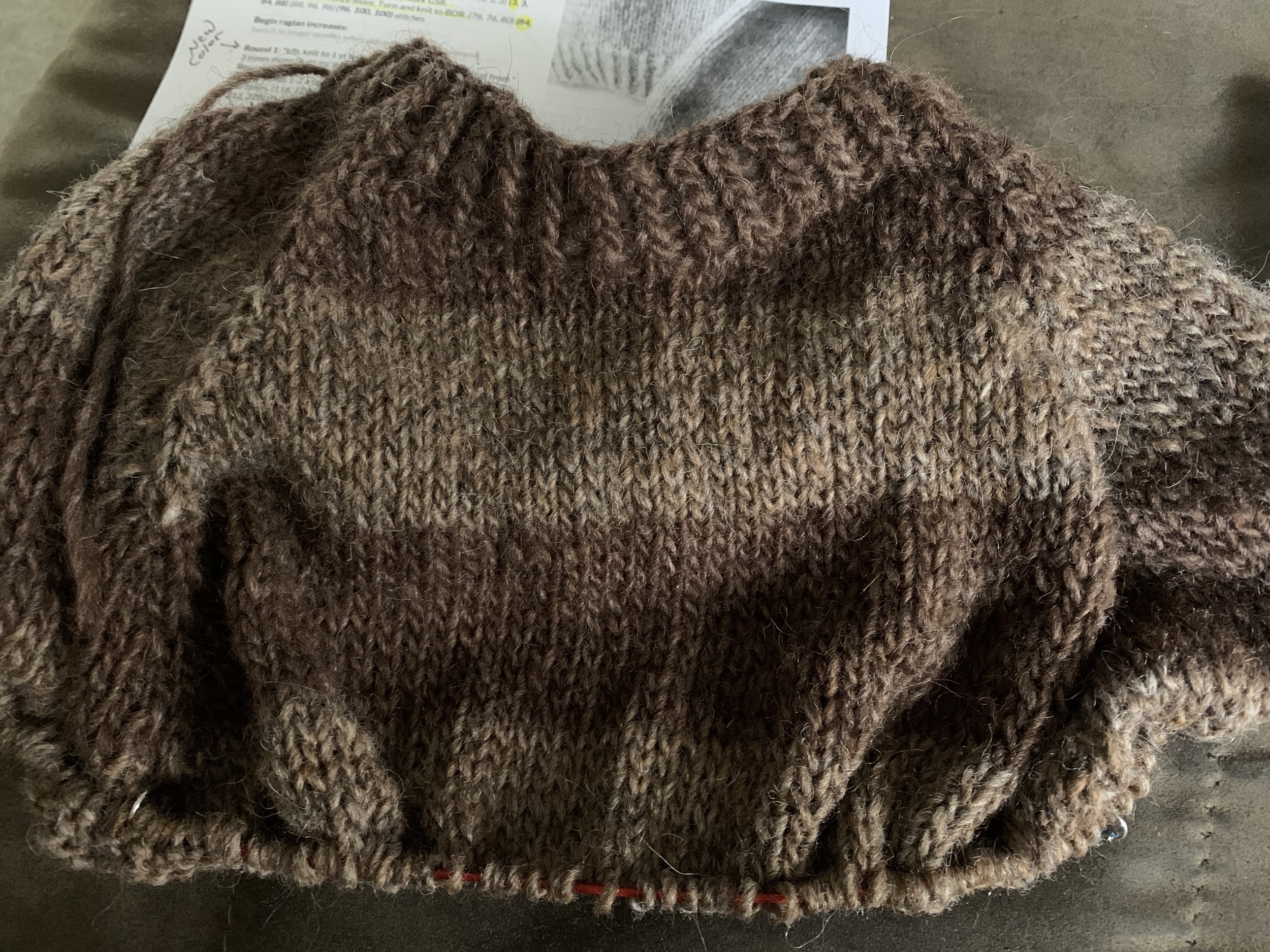
On the Warm Up pullover I created wide stripes, using two different brown yarns. This meant I had to change colors a lot. Because I used this yarn splicing method, I ended up with only a few tails – the cast-on, bind-off, and under the arms where I picked up the sleeve stitches.

I find this to be an easy and nice splice to do. Unless two different colors are being joined, it’s tough to find the join section once it’s done. If knitting with wool is your preference, you must try this method.

A Spit Splicing How-To Video

Tin Can Knits has a short and to the point (my favorite kind) video below. What I do differently is unravel the yarn a bit to attach the strands. I suppose on smaller yarn like the type she is using, it wouldn’t be necessary.

A knot in a wool skein can be unknotted, or cut out, and re-joined using this method.

Do you have a favorite way of combining yarn ends? Please leave a comment.


More Knitting Adventures

Something went wrong. Please refresh the page and/or try again.