Birthday 61 Sweater Pattern Could Be a Challenging Knit

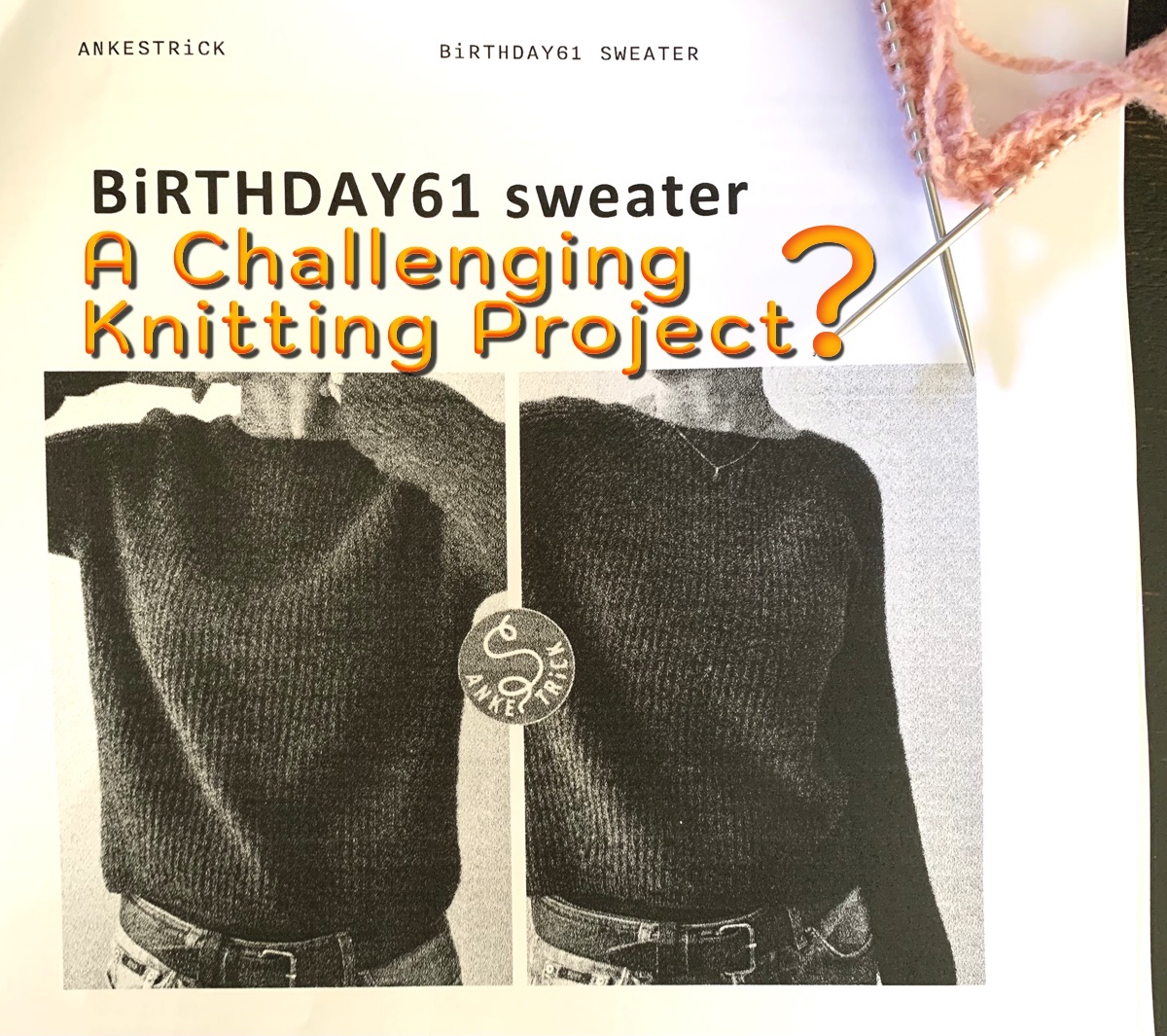
This simple (looking) pullover by ANKESTRiCK caught my eye. I love it for its one-color simplicity and squishy ribbed texture.

Looking further at the pattern, I realized that it may be too difficult for me to accomplish. I have my doubts, but will probably try it anyway. (See my trial below.)

First of all, the whole sweater is knit in a small size needle. Suggested needle size 0 to 1.5US, depending on gauge. That is tiny! This means lots and lots of stitches, that could take me months to finish. On top of that, it is knit in a “half fisherman’s rib” . The tags for this sweater include “brioche tuck”. Scary. I’ve tried knitting brioche a number of times and failed miserably.

Pattern Help

Fortunately Ankestrick has a full page of links for help. Some links will apply to the Birthday 61 sweater pattern and go to YouTube. I love it when designers give me lots of help to achieve success. She also has a Ravelry forum page for help with this specific project.

She has her own suggested invisible cast on, seamless join, and decreases worked in the half fisherman’s rib stitch. The pattern explains how to incorporate the rib stitch while making German short rows. The pattern lists many special techniques I’m unfamiliar with. But, I should be able to find help to create them while knitting the project. Will I understand and accomplish them? Who knows. I have successfully knit her Rebel cardigan pattern, and am already a fan of this designer.

The Yarn

A sweater knitting project can be quite expensive. Lots of yarn is needed to knit a size 3 or 4 sweater (which is my usual pattern size). This pattern calls for 1800 yards. This is a lot of yarn, and must be because of the stitch used.

*Note to self: knit this using a light color to easily see the stitches!

The second issue for me is the needle size. After looking through my smallest needles, I have the required lengths in size 1US only. Otherwise, I would need to spend money on new needles.

The Swatch, Or Jump Right In?

This leads to the question of how to knit a swatch for the Birthday 61 sweater. I may jump in and try the pattern with some stash yarn just to see how far I get.

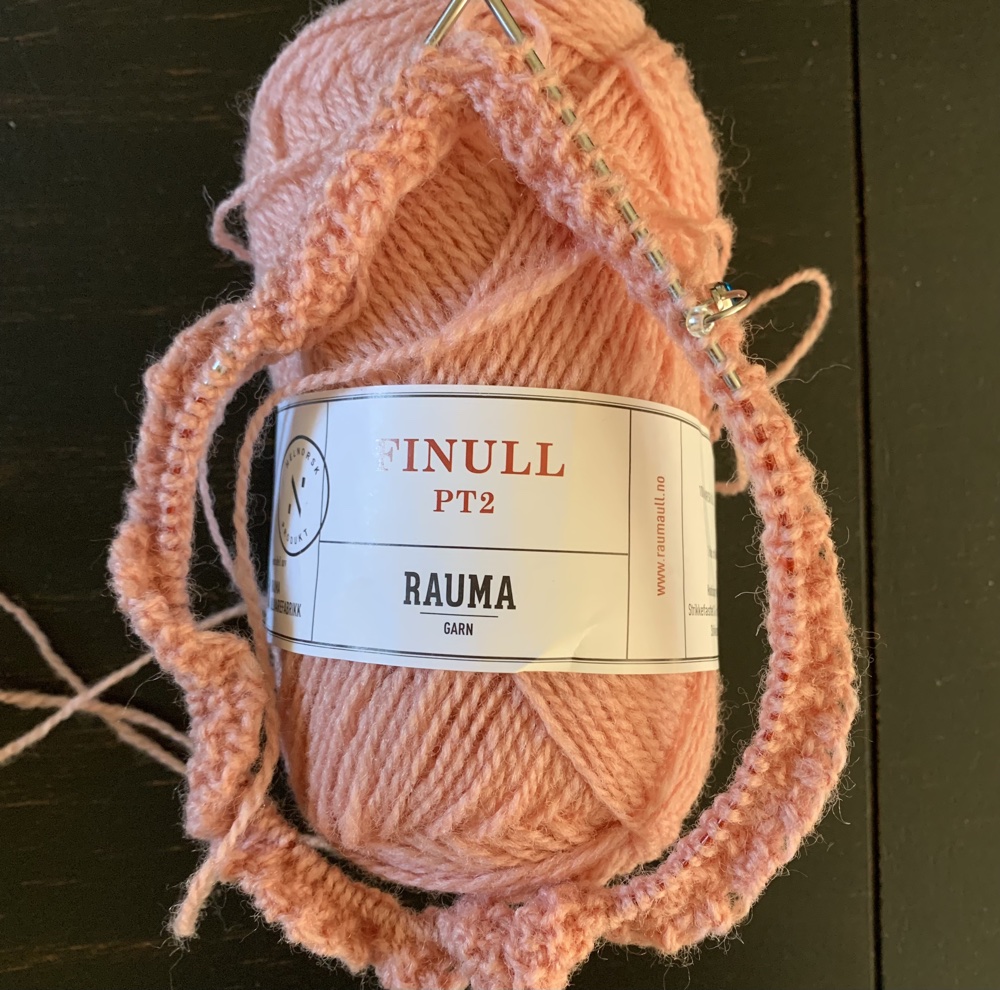
Okay, this is what I decided to do. I began the pattern using the smallest sweater size (my actual size will be 4). I dug out some Rauma yarn. I need to know if this pattern is something I can manage, so I’ll try out the special cast on and then down the yoke with increases and short rows.

A New Type of Cast On (for me)

Anke lists her cast-on as “Anke’s Invisible Cast On“. It seems very similar to the Italian Tubular cast on, except with better changes (IMO). She does her videos in Continental style, which can be confusing to those of us who knit English style. She also does not speak, but adds text to her vids.

For the cast-on, (use any length needle to begin, but switch to a 16″ for the join.) I watched the video, but then realized I could simply follow the directions in the pattern – this is easier!

This is not a super easy cast on for me, but with practice it will get better. I used my long 32″ size 1 needle. The first (set up) row is turned, and we work back across the stitches that were just cast on – without having to join in the round – yet. Get out the size 16″ for row 2 as that will be joined to knit in the round.

Yoke Markers and Short Rows

I did not knit all the first rows after cast on because this is a trial knit and not something I will wear.

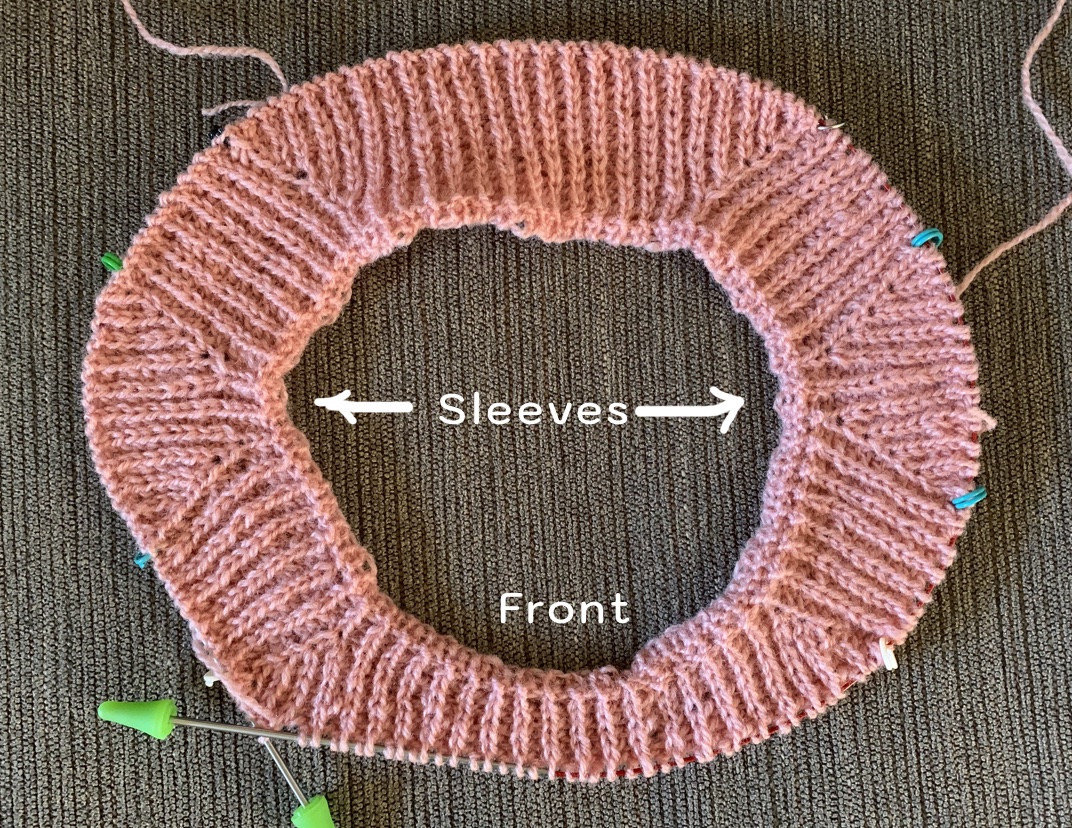
Upcoming are the yoke placement markers for raglan sections and sleeve / body increases. Those are combined with working short rows – and I was thinking that this could get sketchy. BUT… every short row is explicitly described – all 14 of them!

* When looking at the image showing marker placement, remember you are knitting counter clockwise from the BOR marker. Also, we are knitting down from the top of the sweater. Flip the page upside down if that helps to visualize.

Also, I suggest using various colored markers for the different sections. It helped me keep track of where I was (green means sleeves, white means front, etc.)

To get through the increases I need to know how to kbYOk. This is a knit below, yarn over, knit stitch. It is a two-stitch increase. See her video here. It is not difficult, but remember to do it because going back to fix a forgotten kbYOk is a bit tricky. And for some reason I kept forgetting to do them.

Below is my trial sample showing how the sweater top will look after all the short rows are complete. See how the very front is the shortest. Between each section of increases (sleeves and body) is a raglan section – four of them. Those do not change width.
birthday 61 sweater
Knitting short rows and increases

This sample is full of goofs (and the beginning neck rows have been omitted). I don’t like my cast on edge. I’ll have to practice that, or maybe not use it.

At this point I will be knitting increase rows alternating with purl rows. This continues to widen the sleeves and body. I probably won’t go much further as this is only practice. From this point on, I think I am able to continue and will plan to buy yarn and knit the Birthday 61 pattern.

To keep track of knits and purls, here is what they look like. The purl stitch is “sunken” and the knits stand out.

half Fishermans rib knits and purls
Knits and purls.

So I have continued knitting on this trial piece and has you can see, I have made some obvious mistakes. I’m not happy with the cast on. I’ve messed up my knits and purls. Also, ripping back to fix something can be very tricky.

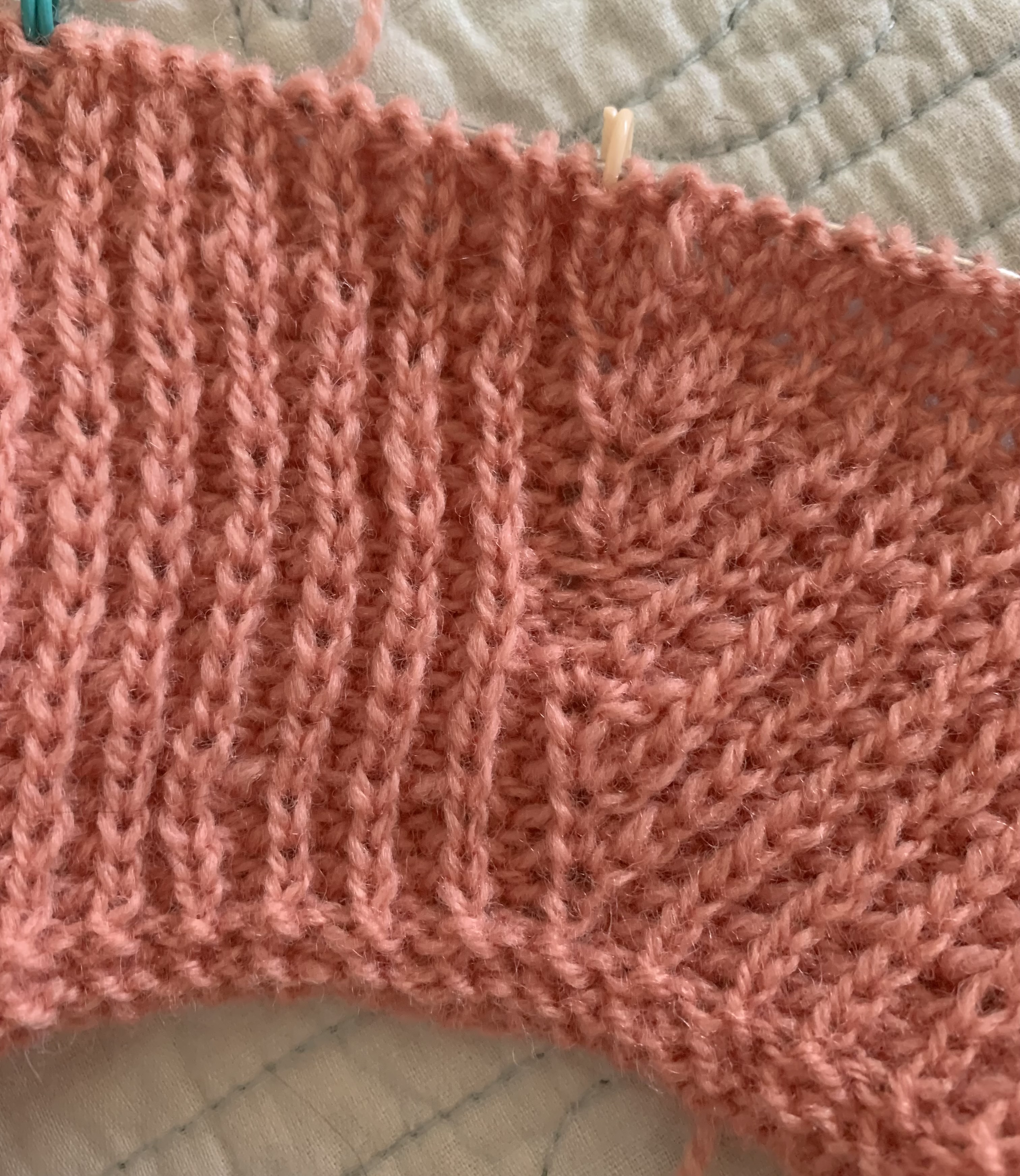
Birthday61 trial
A big goof!

More Advice From a Knitter’s Review

After viewing the test knits and other Ravelry knitters, it was brought to my attention that there is an alternate way of knitting the ribbing. On page three of the pattern, at the bottom, you’ll find the information. It replaces the purl row with a k1,p1 row. Apparently they look the same. I’m doing purls only for those rows.

Oh Gosh, More Yarn to Buy

I do not have enough of any fingering yarn to knit this project, so now I will be buying more yarn. The amount required is quite high – 1800 yards for my size 4. Once I begin this pattern for real, I’ll write another page all about it.

yarn ball divider
Knitters & non-knitters welcome – Keep Reading

Something went wrong. Please refresh the page and/or try again.

Casting On and Beginning The “Arco Iris” Sweater Pattern

Knitting the Arco Iris sweater pattern by Joji Locatelli using Miss Babs Kunlun yarn in color Moss green.

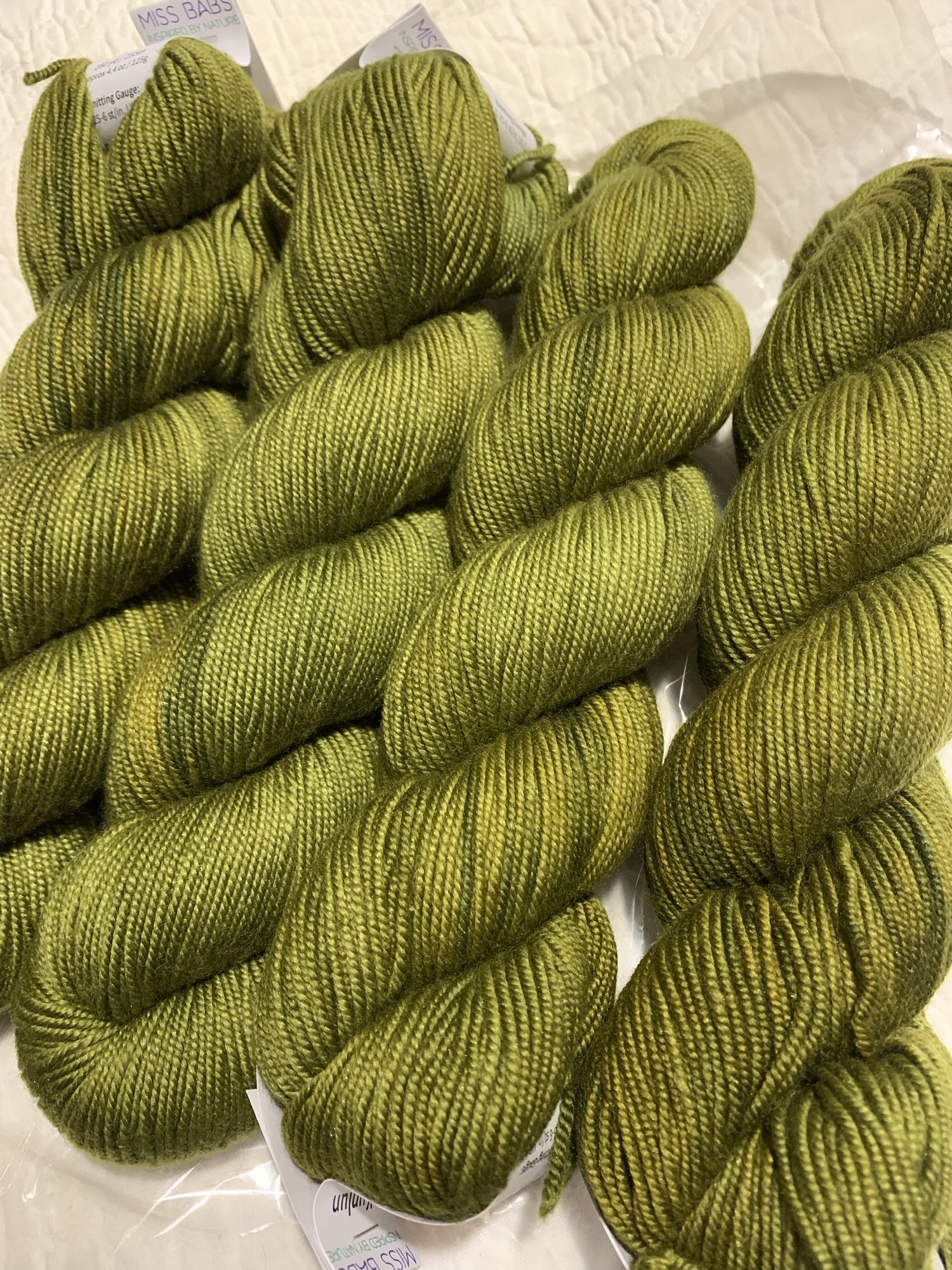
I couldn’t pass up the Miss Babs yarn sale and grabbed some of my favorite “Kunlun” yarn. My intention was to knit the new Joji Locatelli pattern called “Arco Iris”.

The sweater is a v-neck with 3/4 sleeves and pretty, textured ribbing (pattern link below). It calls for a DK yarn so this merino, cashmere and silk blend should work nicely.

I purchased four skeins of color “Moss”. This was not my first color choice but the Miss Babs sale is popular, so I took what I could find that offered enough skeins (4) for my project. Green is good. It is one of my favorite colors to wear.

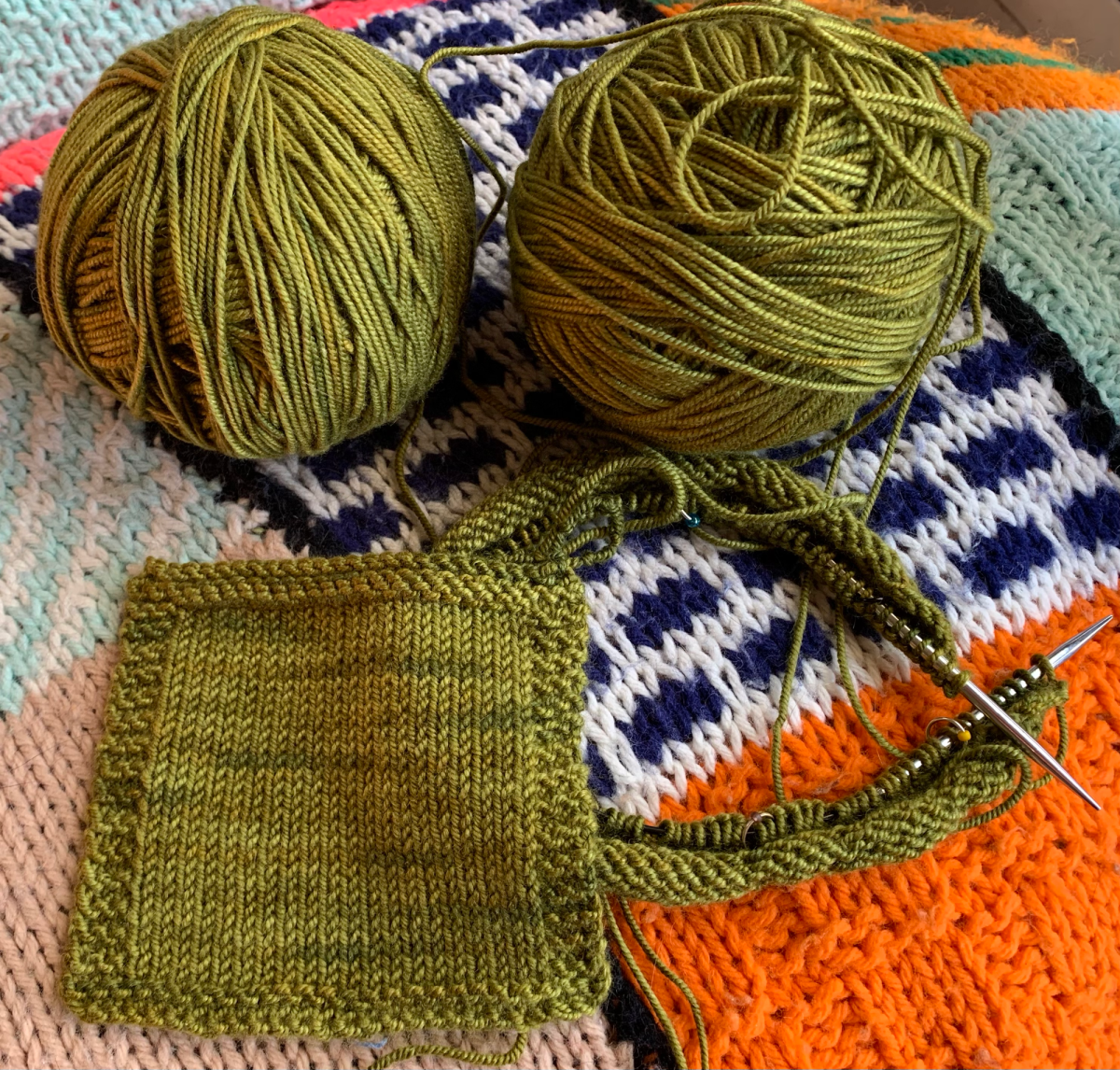
My swatch has been knit, washed, blocked and dried. My row count is off slightly as I have about 31 rows in 4 inches and it should be 29. But stitch count is exact, so I’m sticking with the size 6 needle. I will just watch the length. Some articles about swatching say that row problems can sometimes be fixed by changing needle types. I’m waiting for some new wooden Lykke needles to arrive.

Casting on January 12th with two skeins wound and ready to alternate. This is my first Joji pattern.

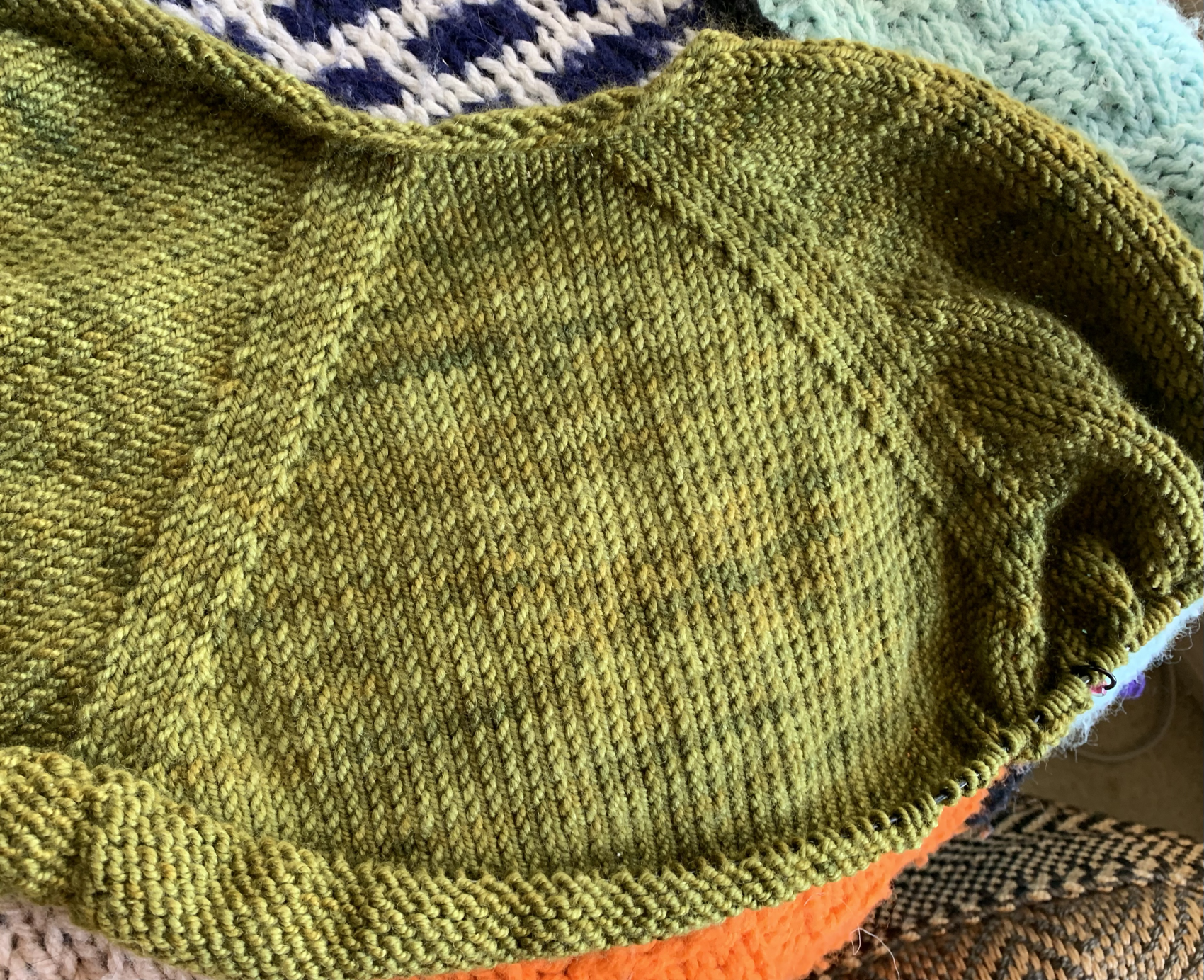
knitting raglan sweater

Once the 24 inch Lykke needles arrived I switched from the 16 inch metal, which was getting very crowded. The following day the 32 inch arrived and I’m now using that. View Lykke needles on Amazon – this is an affiliate link to the needles I purchased.

I need to say how beautiful this yarn is to work with. Look at those wonderful stitches, all lined up and perfect looking. I don’t know if I’ve ever knit with yarn that is so defined. I’m knitting two rows at a time from alternating skeins to keep the shading good.

So far the pattern is very easy to follow, with lots of stitch counts noted to keep me on track. The increases are easy to remember. There is a lot of purling – every other row – which I personally don’t mind.

Pattern Problem at End of Increases

Now that I have reached Section 3 the body and sleeves are divided and that all went well – until I decided to Tink back to add stitches – see Mods section below. This was not a pattern problem, just my choice.

The first confusion arose in Section 3 in the Note. We are told to continue neck increases “every 4th following row”. Apparently that “following” means the rows to come – from here on out. I would word that differently to be clearer. That means we knit the divider row as Row 1, Purl row is 2 and so on. That has us increasing on a purl row which is not what we have been doing.

The designer lists how to make those purl row increases, but it seems the directions for them are wrong. A fellow knitter left a comment on the pattern page that the the m1pl and m1pr definitions in the “abbreviations” section were incorrect. I checked that out by watching this Purl Soho video about how to do both increases. I have to agree that the designers directions for these increases are incorrect.

It also took me a bit to figure this all out. A couple of simple sentences could have made all this much clearer for me. Then again, maybe I am the only one who didn’t get it. It’s possible.

Mods

One test knitter (Toriyu) mentioned casting on extra stitches for the body when dividing the sleeves – even though her size did not include this. My size 4 directions also say to cast on Zero. So I tinked back to the separation row and cast on six stitches under each arm for a total of 12 extra stitches. I did this because I don’t want the body to be tight. The test knitter then decreased those extra stitches as she knit down the body.

To Be Continued

My next Arco Iris post is about knitting the v-neck ribbing with the cables. I decided to knit the neckline before I finished up the body. You can read that here.

Happy knitting!

Fontana’s face

More From the Blog

How to Knit Corrugated Ribbing For Colorwork Hats

The last few hats I have knit have had brims with corrugated ribbing. You can see it on this page in the Katie’s Kep and Tettegouche (links to pattern below too). This type of rib is worked as a purl 2, knit 2 around, switching colors between the knits and purls. It is often used in Fair Isle, stranded knitting designs and the yarn is held in two hands.

Begin by Making a Nice Cast-on

When I began knitting, I hurried through my cast-ons so I could get started with the project. I only knew one simple cast-on, and it was not a good one for hats. Now I use the Old Norwegian, or German Twisted, cast-on, which is the same thing as far as I can tell. It makes a loose, stretchy first row so the hat won’t be tight around the forehead. It’s also a fast cast-on once you get the hang of it.

A good wool such as Rauma or Shetland (Jamieson & Smith), in fingering weight is suggested for this type of hat knitting.

Once the stitches are cast onto a 16 inch circular needle, in the size your pattern calls for, join them with the stitches straight and even, making sure there is no twist. I use the drop and switch method of joining, where each stitch at the end of the needles are swapped. Then, place a marker to remember this is the beginning of the round – BOR.

Since I first wrote this page I have found a helpful page at TECHknitting: Corrugated ribbing tricks and tips. They explain corrugated ribbing and it’s uses and potential curling problem. Also they have an interesting section about how to handle purling the colors.

Begin the Rib – this is how I chose to do it.

Once the cast on is complete DO NOT KNIT AROUND – go right into the knits and purls. Doing a solid knit row before the ribbing will cause the edge to curl up.

For the first round, begin with the main color (it was tan for my hat) held in the right hand (for knitting English style) and purl two stitches. Move the yarn to the back of the work. Now add the new color (orange in the hat pictured) and knit two stitches while the yarn is held in your left hand, Continental style. Bring the MC, (tan yarn) to the front and purl two – and so on. I will be using those two colors for the entire round.

Corrugated ribbing knit on the brim of a hat
The brim of this hat is knit in 2×2 corrugated rib

Don’t forget to move the yarn to the back of the work once the two purl stitches are made! ….I made this mistake and had to begin over.

For my Katie’s Kep #2 (above), my first CC (contrast color) is orange and I did three rows before I added the second contrast color, which is light blue. Every row is knit the same way with the MC (tan) held in my right hand and the CC in the left. I do it like this because I can’t purl using my left hand.

Holding the yarn correctly is important in colorwork knitting. Using two hands becomes quite easy with practice. Using two hands means the yarn will stay on top (right hand yarn, or Main Color) and on bottom (left, Contrast Color). Doing this makes the CC stand out. Sometimes a pattern will ask you to knit the main color and then purl the contrast color – which keeps the main color prominent.

See it below in the first Katie’s Kep I knit which has a dark blue background (MC).

Katie's Kep Fair Isle hat
Katie’s Kep Fair Isle hat begins with a corrugated rib around the brim.

Learn to Knit Using Two Hands

If you don’t know how to do this type of knitting using two hands, look for a good video that shows you how. And then practice! Colorwork is easiest when knit in the round. In fact, personally, I don’t know how to do it any other way.

Then, you will just need to know how to carry those floats when colors become more spaced apart in a row – but you won’t have to do (much of) that on these hats!

Colorwork is in chart form, FYI.

Love Katie’s Kep? Download the pattern for free here.

The hat below is called Tettegouche, and the pattern for this one can be purchased at Ravelry. Believe me, the other hats look a lot better than mine. I used colors on hand and they are not the greatest combination. You can see the use of the corrugated rib again.

Tettegouche hat pattern
Finished Tettegouche

My last word on the corrugated rib is that it is less stretchy than a 1×1 or 2×2 regular hat rib. It’s meant to be sturdy and pretty at the same time. Often a smaller needle is used for this type of brim and then you switch over to a larger size for the top of the hat. A wool yarn in fingering weight is suggested.

Casting On “Dewdrops” Triangle Shawl

In my previous post I mentioned that I was searching for the next project to cast-on. I’ve decided on the Dewdrops shawl, which is triangle shaped, but is knit from the bottom up. Here’s a photo of what I’ve knit so far. It’s a simple pattern that looks nice on both sides. I’m about a third of the way through the rows, but they will get longer and become more time consuming. Once this section is done, a lace border is added. That will be interesting.

I am using Emma’s Yarn, merino and silk, which is hand-dyed here in Florida for the Four Purls yarn store. It was so nice to walk among yarn skeins and see them in person, which I did when the Four Purls Yarn Truck (what an ingenious idea!) came to my area. Usually I must buy my yarn online and hope for the best because I have no yarn shops nearby.

Janina Kallio is the designer of Dewdrops and the pattern is easy to understand, with written directions.

This beautiful merino and silk yarn is called “Main Squeeze” which resembles the color of orange and pink grapefruit juices. We are in Florida, after all! It is soft and silky.

Dewdrop shawl knitting and this one starts at the bottom
Beginning the Dewdrops shawl pattern

The Cold and Wind Are Keeping Me Indoors

Windy days are upon us here in east, central Florida and that makes boating and fishing difficult. My son is a Florida native and can’t stand temperatures below 60. The heat goes on and he refuses to consider going boating. Floridians are wimps.

I know that no one will pity me having to deal with winter temperatures in the 50’s and 60’s… hahaha… !! Wait until summer. That is when I want your pity.

Being indoors more than usual has given me plenty of opportunity to knit. Recently I finished up two projects; the “Let’s Stripe” hat and “Scrappy Bias Shawl“. It seems I always have many projects going at once. I suppose most knitters do.

Update on “Dewdrops” Progress

Been knitting like crazy between a few projects I have going, but I’m almost done with the triangle section of the Dewdrops shawl. It is a very simple pattern, which would be great for a beginner. It’s almost too boring for me at this point. But it is a relaxing break from knitting my first sweater, which has turned out to be a challenge. See the Umpqua Sweater knitting post here.

This is the first time I’ve knit with Emma’s Yarn and it is very lovely. The color is gorgeous as well. My plan for the border is to use a denim blue color, or something dark. I’ll change my mind many times before I get there I’ll bet! I may wait to buy more of Emma’s Yarn when the Yarn Truck visits again in April.

Pink and peach Emma's Yarn used to knit the Dewdrops shawl, which is in progress.

Denim blue Emma’s Yarn is now purchased and wound into a ball ready to use. Dewdrops is off hibernation and ready to finish. I’ve been waiting for Four Purls to visit again so I could grab more of this Super Silky yarn. The yarn truck arrived April 16th and even though I had to pay taxes and not get a refund I managed to spend a bunch during my visit to New Smyrna Beach.

Denim blue ball of Emma's yarn
Denim blue color ball of yarn to finish my Dewdrops shawl.

Now I am knitting the lace border of the Dewdrops shawl with the denim yarn. Once I got the first row done I could see how the stitches lined up. Also I did count them and I appreciate designers including row counts in their patterns. The only place I am having trouble is at the “point” but so far it looks fine. I’ve had to fix a few missed stitches, but that is me. I’m still learning. This is one completed set of stitches and I have one more set to go. The border will be double this width.

Lace border

Check Out My New Shawl!

I finished knitting this shawl in May. See my photos of this finished project on this post.