Knitting a Man’s Sweater in Bulky Yarn

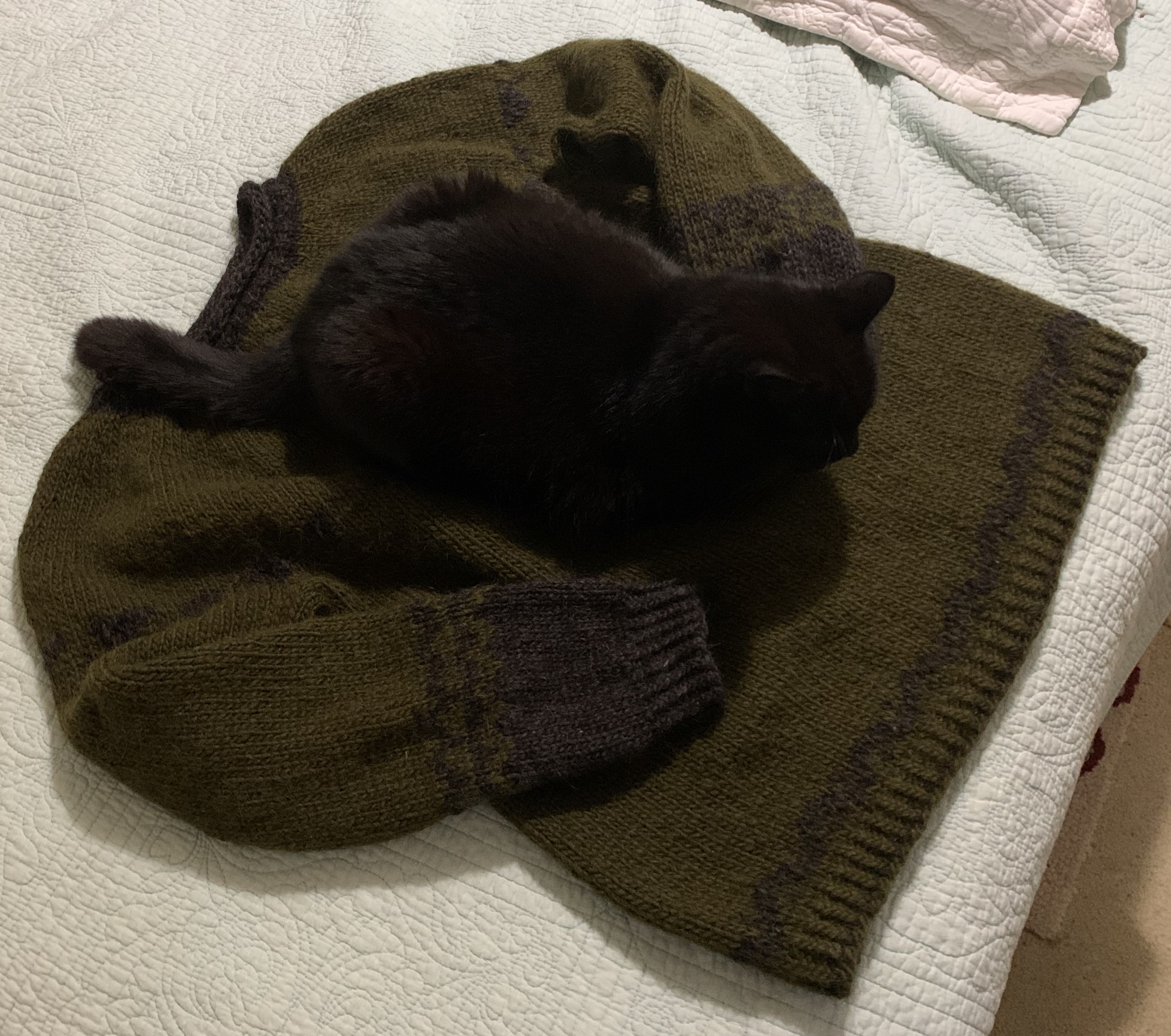
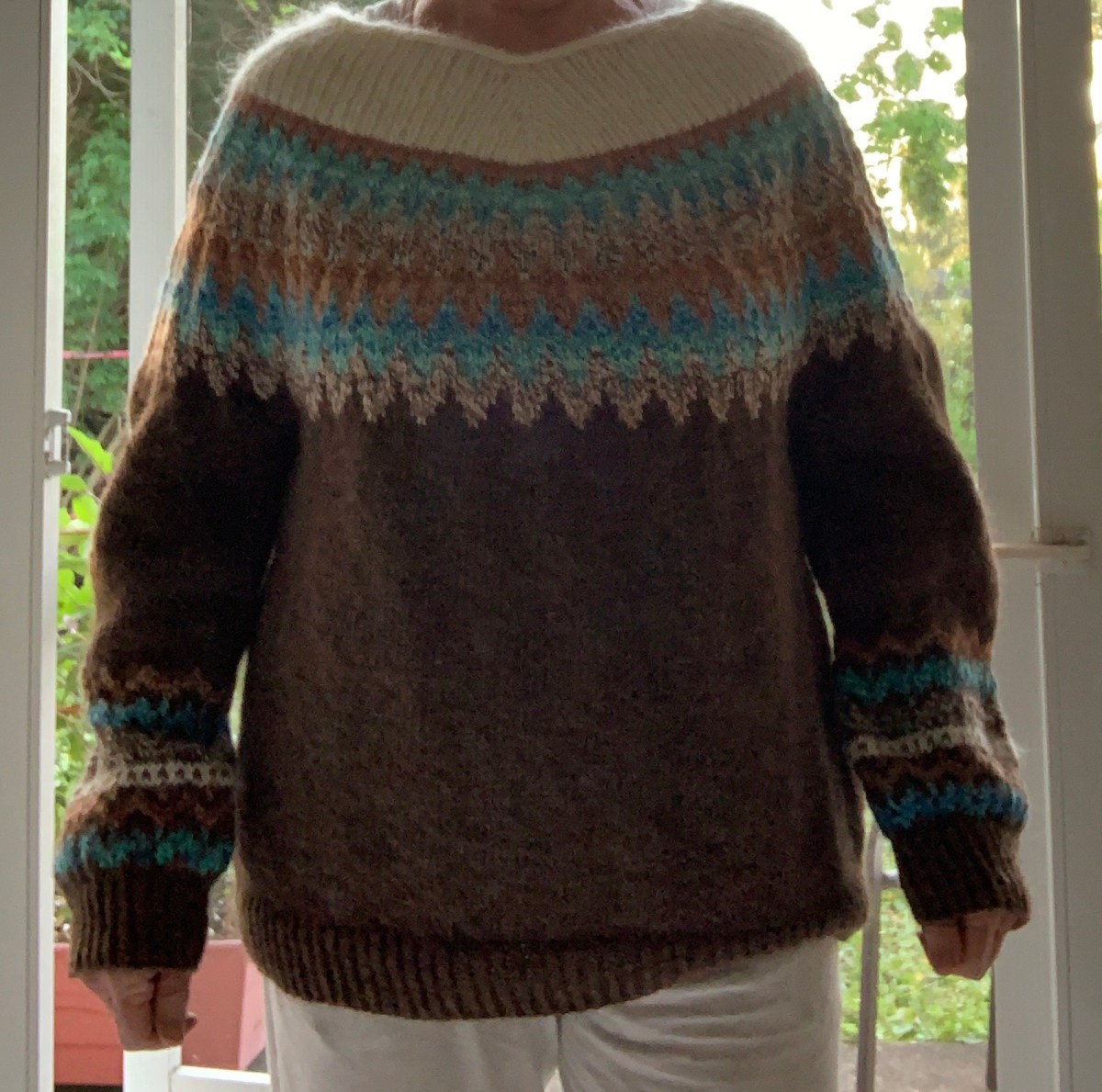
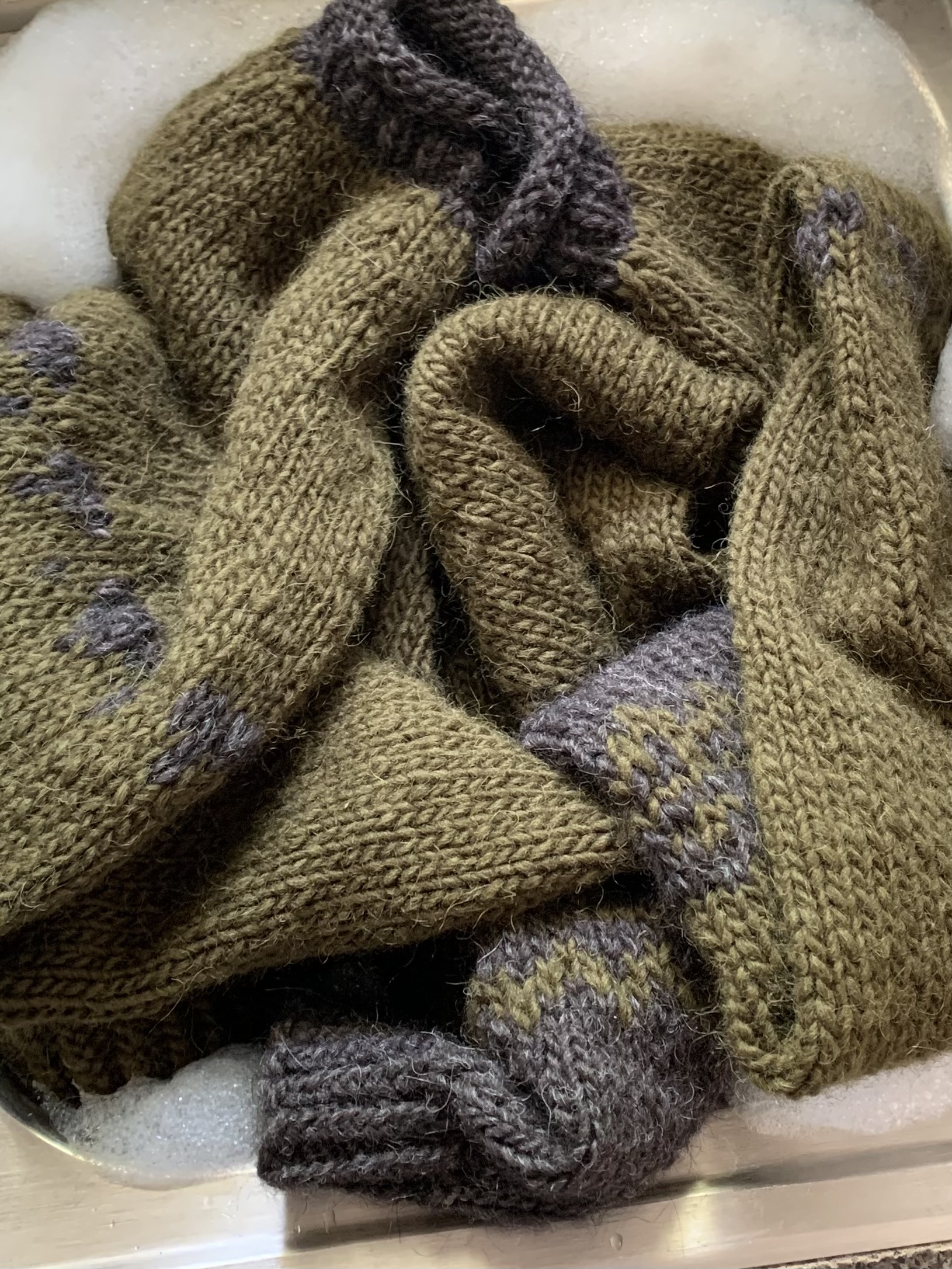
This bulky wool yarn sweater was knit loosely from the Joker pattern in the Lopi 41 book. It is made in a size XL for a man.

The warmest sweaters are knit with wool but caring for wool is not so simple. My son lives in a cold climate and I’ve wanted to make him something warm. I know he will never hand wash anything in a sink. So, finally I told him that he will never have to wash the sweater. If it gets a spill, rinse the spot and let it dry.

If he always wears the sweater over other clothing, it should be fine.

I’ve been looking for some simple sweater patterns that men would wear.

I’ve settled on the Joker pattern in the Lopi 40 pattern book – Ravelry page here. The pattern uses bulky Alafosslopi yarn which creates a nice thick sweater that will knit up quickly. I don’t plant to do all that colorwork on the yoke because my kids like subtle, dark colors. I’ve used Alafosslopi to knit the Carbeth Cardigan, which had no colorwork. And honestly I found that knitting stranded with two hands was a bit tough to do with this yarn.

Gauge Swatch and Casting On

My gauge is goo with needle recommended. I knit with a couple of black stripes with the main color green to see how well that worked. When there is a long cast-on like the beginning of the body, I do a two-stranded cast on using yarn from two skeins. That way I won’t have to worry about running our of yarn for the Old Norwegian cast on.

Yarn Amounts Used

In the end, this is approximately how much yarn was used. Eight skeins total needed to knit size XL if done in one color.

  • Alafosslopi Green – 6 + a little
  • Alafosslopi Black – 1 + a little

The Joker pullover is knit from the bottom up. Then the sleeves and body are attached and a colorwork yoke is knit. I was not looking for a colorwork pattern, and ended up not doing much of it.

The Joker pattern is pretty straightforward for anyone who is used to knitting a sweater, but does not go into detail. Directions are in cm which I had to convert. Under the sleeves, the armpits have Kitchener stitch to close up the hole.

One note that I hope will be helpful to others, and to myself for next time, is to do a very stretchy bind-off around the neck. I had to rip back and re-do the neck. Binding off loosely is not enough. The neckline curls under so the bind-off is hidden.

How I did the stretchy bind-off: Like this video by Andrea Mowry, EXCEPT I only did 2 stretchy style, then did 2 regular style. I’ve found that doing the stretchy bind-off all the way around will often make that last row way too loose. So I alternated and it turned out great.

Stretchy bind off alternating: Knit one, bring yarn over needle to add another stitch. Knit one – 3 stitches on the right needle. Pass the first two over the last stitch to leave one on the right needle. Do this twice, then do a regular knit one, pass the first stitch over (twice).
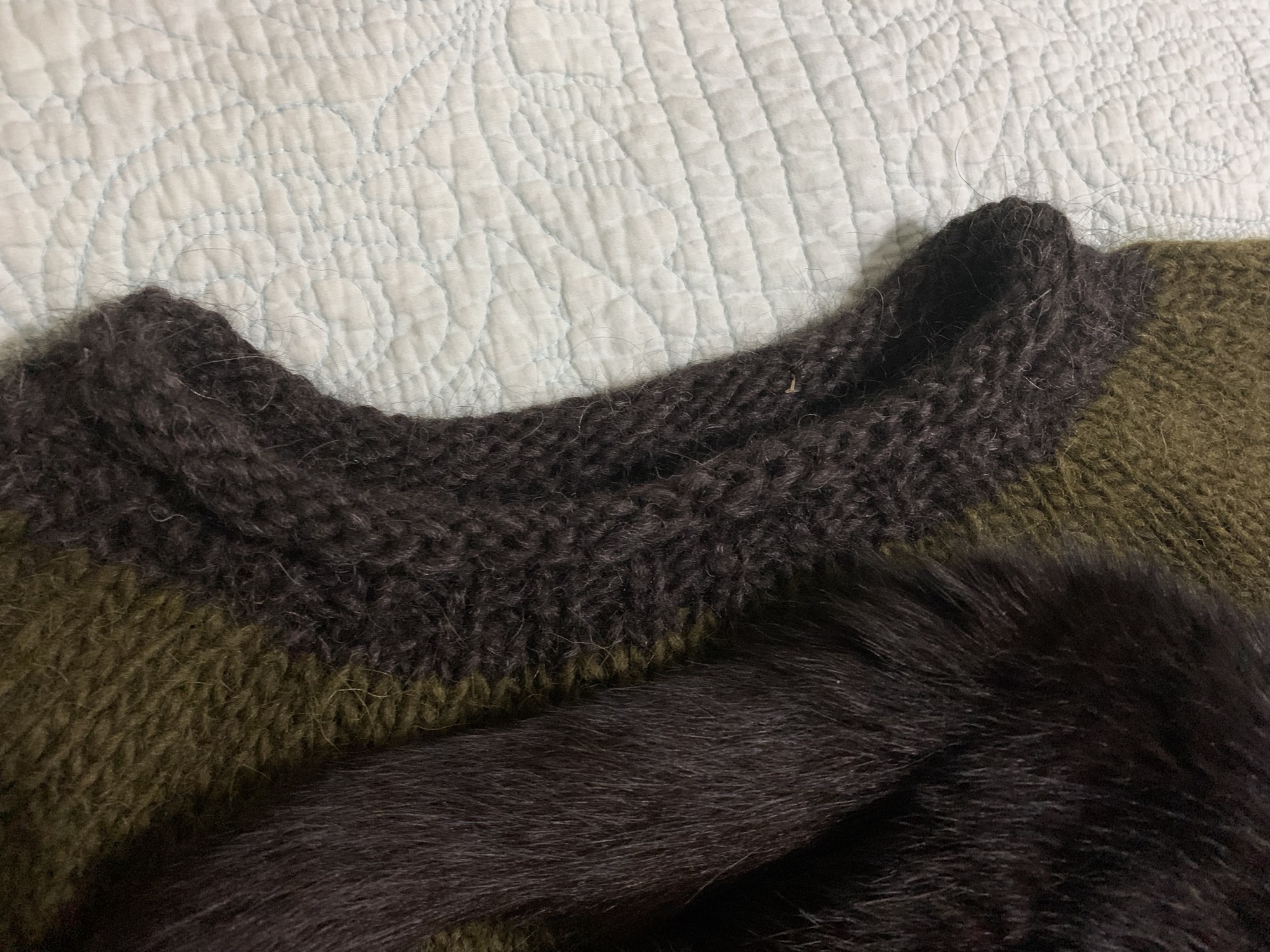
Joker sweater rolled collar

We went camping for a couple of days at Long Point Campground, and the sweater was still damp when we returned home! It had been drying for 4 days! So I put the dehumidifier on which helped.
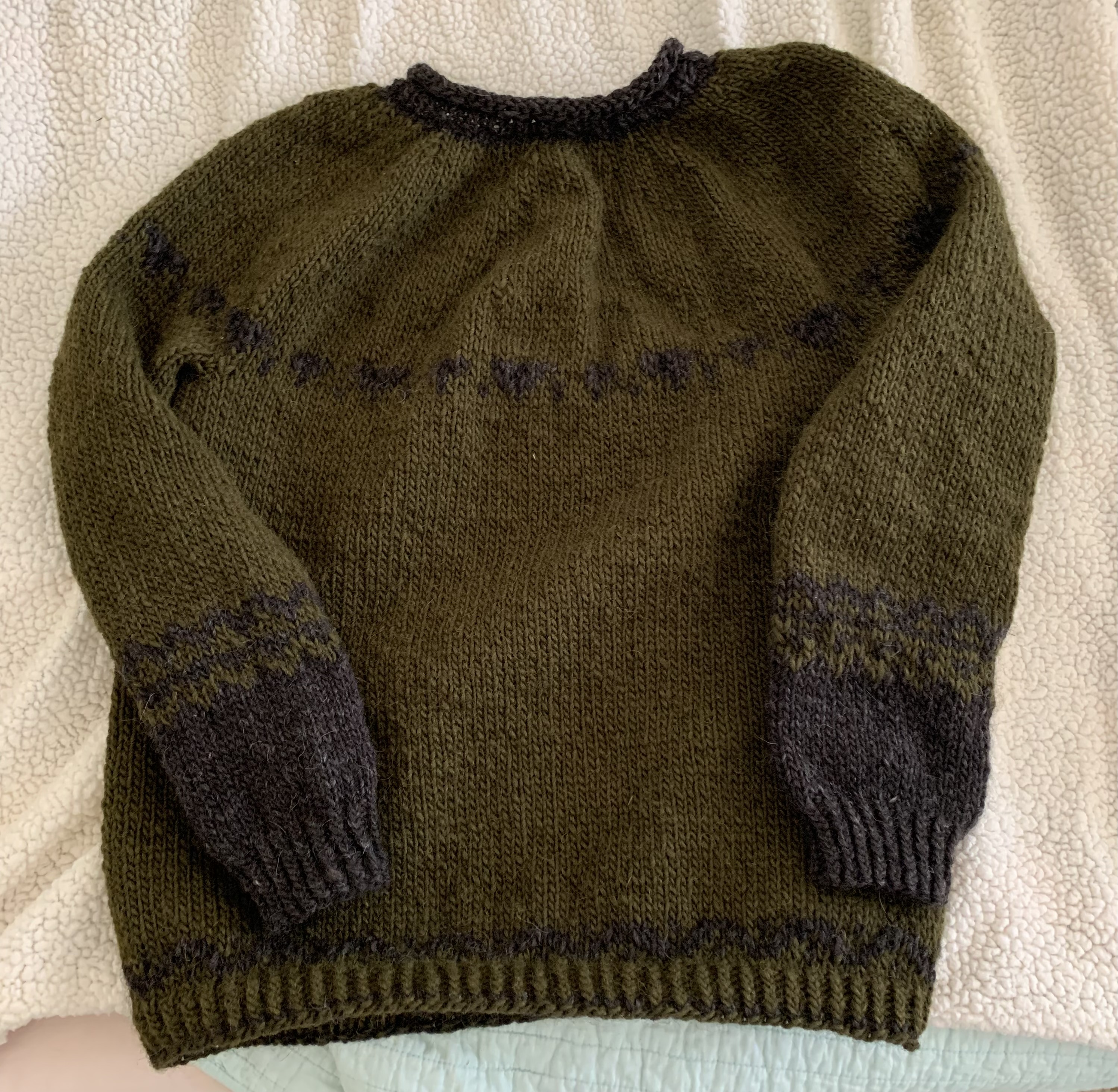
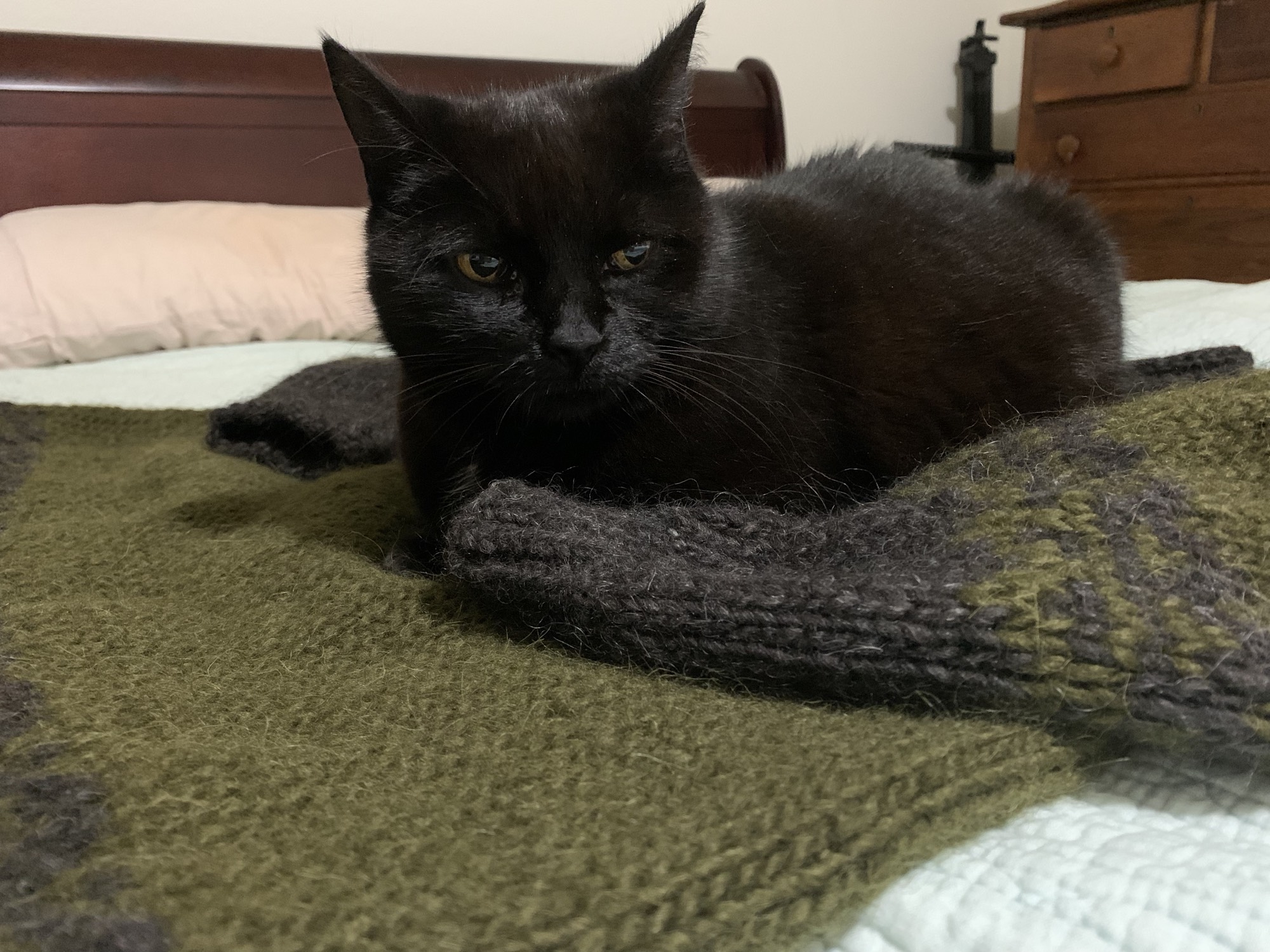
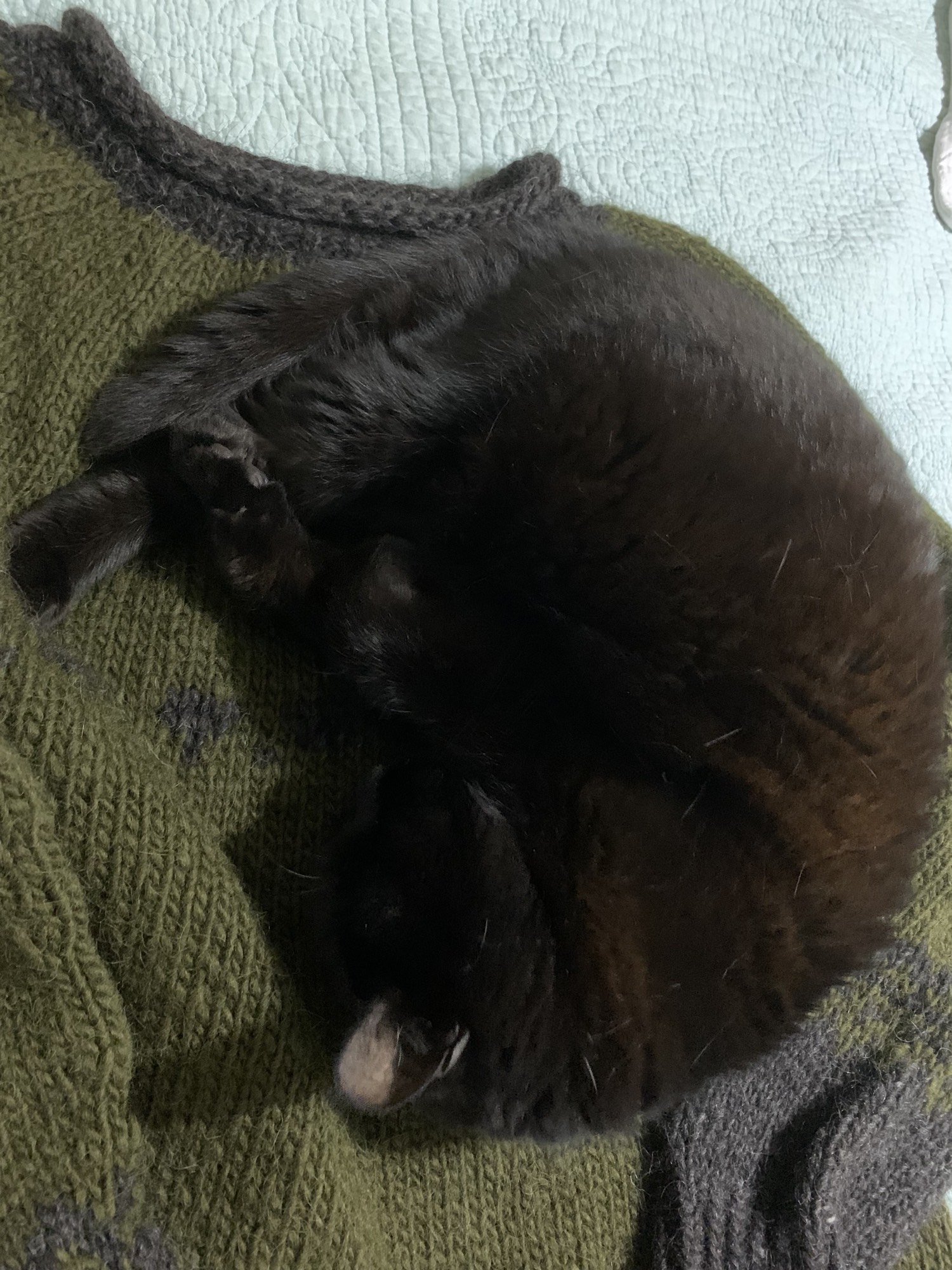
Sweater is finished – March 27, 2023, just in time for my son’s visit. He can take it back home with him! But first, Skittle needed to make sure it was good and comfy.

Please keep reading more knitting stories

Lots of Changes This Year

Writing a blog, sharing photos, and doing research and making links takes time. Lately I don’t think the time spent doing all that is worth enough to continue. I have stopped writing my gardening blog, and downgraded…
Knitters and Our Many Projects

How many projects do you have on your needles? It is not uncommon to find that fellow knitters have many things going at once.
What’s In My Knitting Queue?

Sharing some of my knitting projects in the works.

After knitting a couple of sweaters that ended up not so great, I’m wondering where my attention should be when it comes to knitting.

I wrote a couple of pages on knitting a beginner scarf. I did this mainly because I have a friend who lives in the north who wants me to teach her to knit.

garter stitch section of scarf
Garter stitch section

For myself, I have some very pretty, Soft Donegal, blue yarn my daughter bought me for my birthday and I need to use it. I’m keeping an eye out for a cardigan pattern. I love to knit pullovers, but I prefer wearing a cardigan. I don’t have a favorite pattern chosen yet.

I do have a short list of favorite cardigans to consider, which include the Traveler’s Cardigan by Ozetta, or Pocket Edition by Hinterm Stein (although it calls for DK yarn). I’m still searching.

Soft Donegal yarn in blue
Soft Donegal yarn

Bulky Wool Men’s Sweater

My youngest son lives in the north and his apartment is in a basement where it is perpetually cold. I’ve wanted to knit him a warm sweater, but I know he will not care for a wool sweater correctly. Now I am considering knitting him a hefty pullover anyway. He does not have to wash it. In fact, I will tell him not to wash it! How dirty will a sweater worn at home get anyway?

I’m knitting a bulky wool sweater made with Alafosslopi yarn and loosely following the Joker pattern.

Alafosslopi yarn skeins and cast on for the Joker sweater knit in bulky yarn.
Alafosslopi in olive green and black heather.

Trove Sweater

The Trove Sweater pattern has a unique design and I’m thinking of doing it to use up my pink stash of Jamieson and Smith as the main color. All I’ve done so far is the gauge swatch. This will be a very involved project, so I will have to be in the mood to knit it.

gauge swatch for Trove
Trove sweater gauge swatch

Colorwork Hat

Hat knitting has fallen to the wayside as I’ve had these larger sweaters to complete. But hats are perfect projects for having fun with colorwork, which I’ve missed.

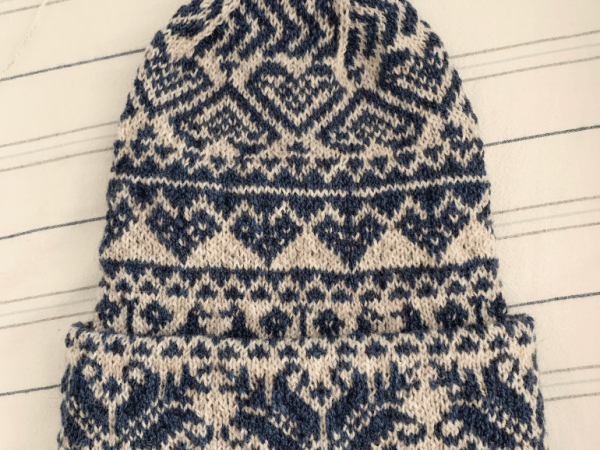
One of my favorite hat patterns is the Triple-patterned Watchcap. It has a hefty brim decorated with a Latvian braid. I’m considering knitting it again (number 4) but using different colorwork graphs. The style is perfect for keeping ears warm.

Triple Patterned Watchcap hats in three colors
Knit in sizes, XL (red), L (green) and S (pink)

Found a New Designer & a New Yarn

Instagram is a great place to find knitwear designers, patterns and yarn. It is where I recently discovered Unwind Knitwear designs by Rachel Illsley (link goes to her Ravelry pattern page). She designs a lot of colorwork sweaters and one in particular has caught my eye. More on that soon, but my hope is to use some Appledore yarn for this project.


Knitting Projects in Progress

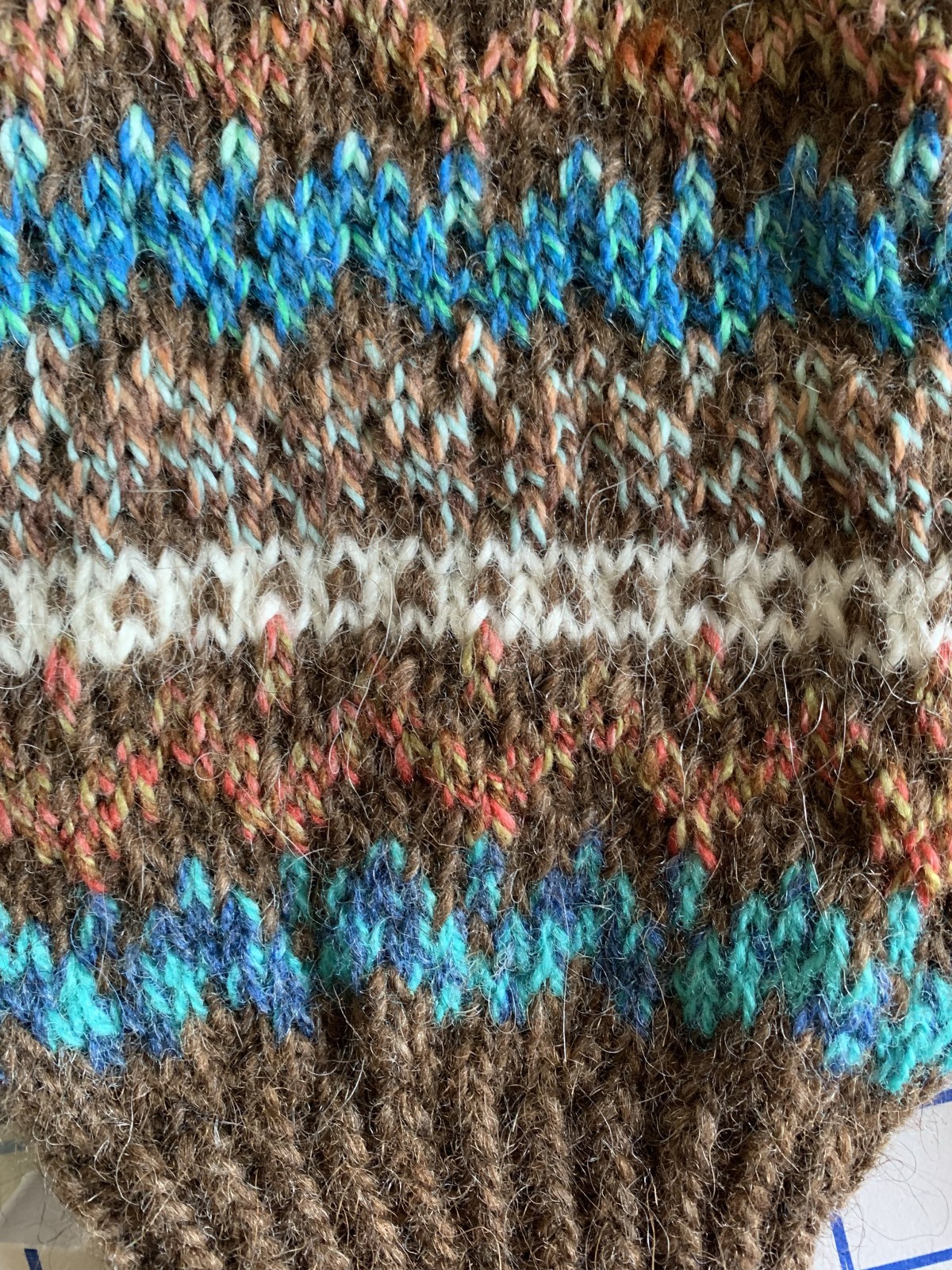
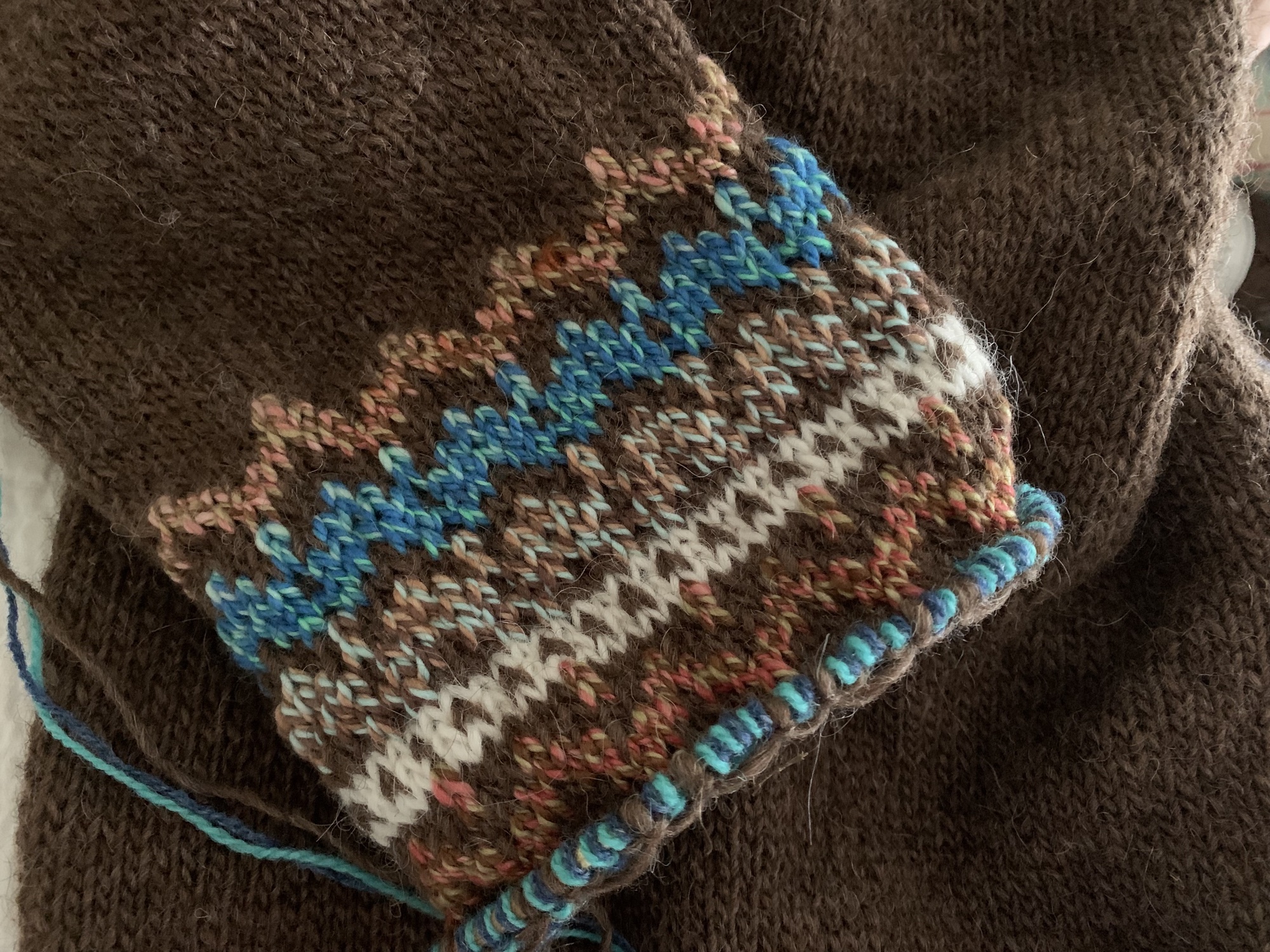
Like many knitters, I do have some unfinished projects lying around. The Easy V pullover is nearly finished (actually, now it is done), with only the remainder of the second sleeve to go. I changed the sleeve colorwork, so what is shown below is NOT part of the pattern.

Easy V pullover sleeve colorwork knitting.

The Brodgar poncho is still in the works, as is the little Sophie Scarf. These are great TV knits for the evening because they are simple knits and purls.


More knitting stories from the blog

Camel Yarn Weekend Hat Project

A simple ribbed hat pattern with enough brim folds to keep ears warm. The Weekend Hat is a pattern by designer PetiteKnit.

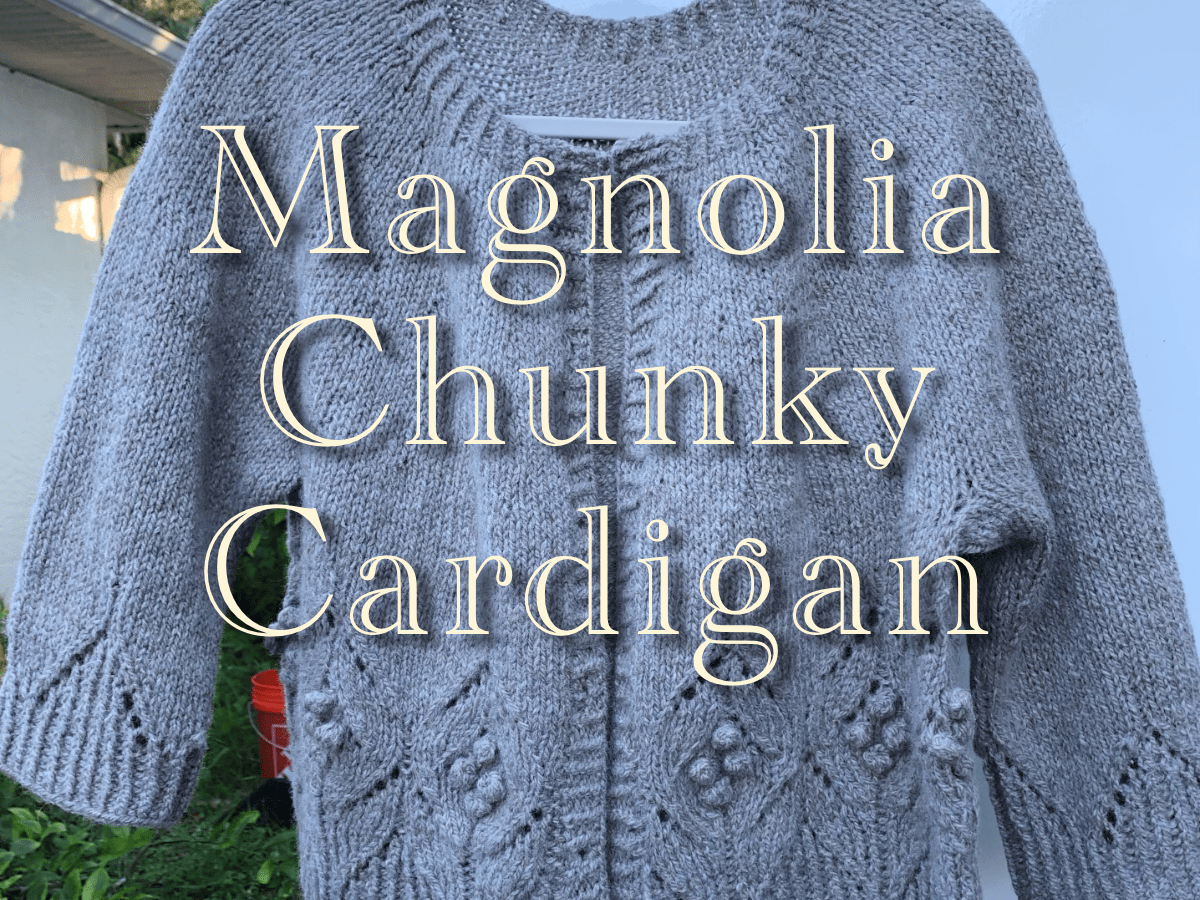
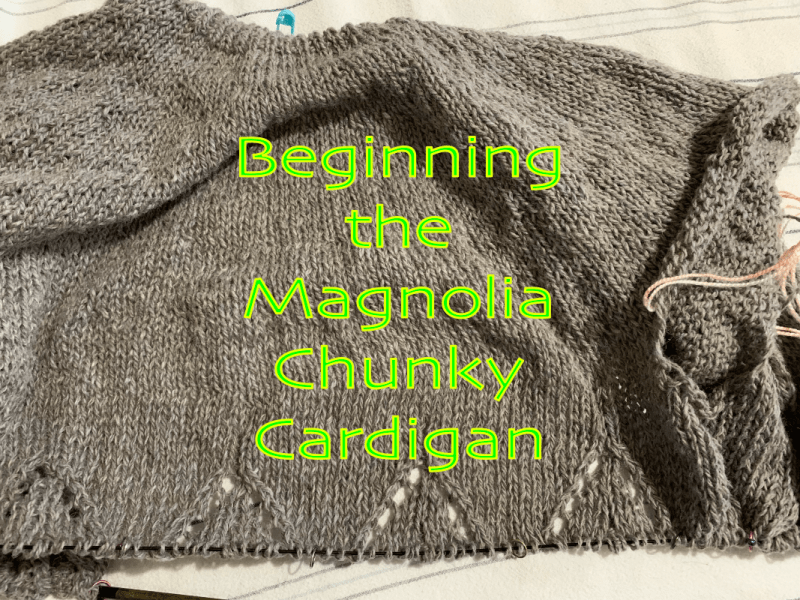
Pattern Review: Beginning the Magnolia Chunky Cardigan

I’m knitting a beautiful cardigan pattern by Camilla Vad. The Magnolia Chunky Cardigan is knit top-down with lace and bobbles on the body and sleeves. On this page I cover some issues I had in the…

First Attempt at Knitting Clotilde

I didn’t get far when I began the Clotilde Cardigan pattern, but it’s a good looking cardigan, and I’ll try knitting the pattern again.

Christmas Gift Knitting; Hats For the Guys

Get an early start on hat knitting for Christmas. This page lists a few hat patterns, for free and to purchase, that work well for guys. Also, I’ve listed some machine washable yarn to get you…

The Easy V Colorwork Sweater Knitting Project Review

Finished knitting the Easy V sweater and these are my thoughts on the knitting project.

Now that I have finished the body on the Easy V sweater, I tried it on. Length is good, but other than that, I am not super happy with this knitting project. The pattern is fine, but I don’t like the style on me. I’m not happy with my yarn choices either.

See a link to the pattern buying page below in the pink block.

Easy V body of sweater is finished so I tried it on for length, which is perfect.

I had trouble getting the neck size cast on right. I’d begun with a green yarn and larger needle. Restarted the sweater using white Lettlopi yarn in a smaller size. This size seemed better.

When it came to using the hand-spun variegated yarn, the colors didn’t really mesh that well, but I was fairly happy with the color work yoke. But, the yarn is quite bulky and makes the fabric thick – even though I went up a needle size to knit that area.

Sometimes after washing and blocking a sweater can look immensely better. I’ve knit so much that I do plan to finish.

Easy V sweater knitting

Maybe the neck will look better after washing and blocking. It is one of the elements of this top that is unique.

Easy V

Pattern directions are very good, and it’s not that I don’t recommend this sweater pattern, but be sure you like the style before choosing it. The colorwork is very easy to do. It is supposed to be similar on the sleeves, but I changed the pattern for the sleeves to one of my own. The colors needed to be divided up a bit for my liking, and I was running low on the variegated yarn.

Easy V sweater body with twisted ribbing at the bottom.

The Sleeves

I substituted my own colorwork pattern on the sleeves. This is not part of the pattern. I debated omitting colorwork on the sleeves, but in the end I changed it up instead. It was an opportunity to use up the yarn and incorporate the white which is on the neck.

I ran out of the blue yarn and substituted two strands of Jamieson and Smith fingering held together.

The ribbing is twisted rib, like the body ribbing. This is also my own doing and not part of the pattern. I like the looks of a twisted rib. To do it, simply knit through the back loop, and purl – around.

At this point, finishing this sweater is a bit of a chore. I’m ready to move on. My yarn selections were bad (except for the brown Lettlopi), with that colored yarn being very bulky. I wish I had not followed the yoke colorwork and left some brown showing.

The more I knit, the more I realize which types of yarn to avoid, and which I like best. This sweater is really not my style, but I’m sure it will be cozy warm for when I need warmth — two days out of the year!

Check out the Easy V pattern page at Ravelry, and be sure to browse color combinations from other knitters.

Have you knit this sweater? What do you think? I’ll be trying mine on soon – in the air conditioned house.

Easy V finished and has been washed and is drying on the boards.

Sweater is dry and here are my photos after trying it on. I’m not too happy with the fit as the neckline is loose and makes the whole sweater sag. I used a size 3 needle to do the neckline, but it really should be tighter. I’m not happy with the outcome.


More knitting stories from the blog…

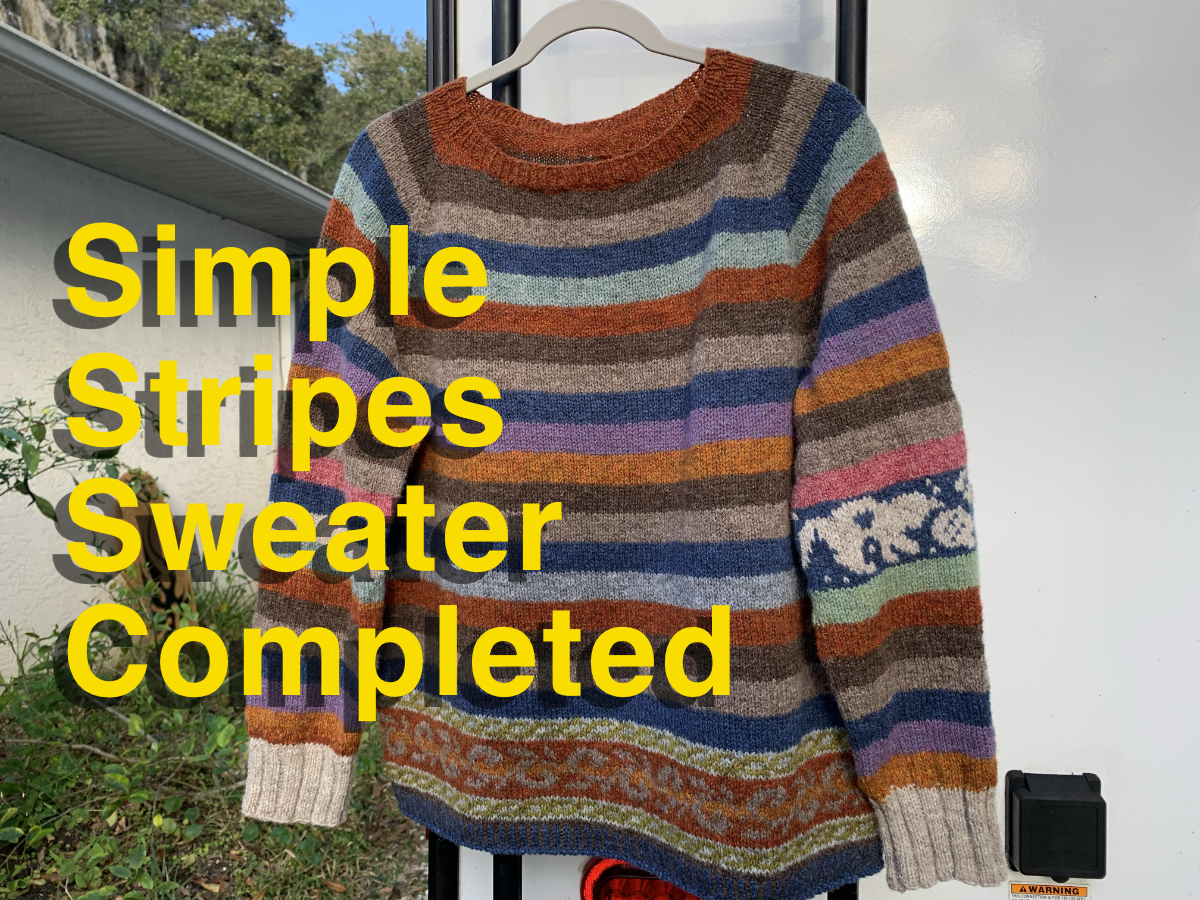
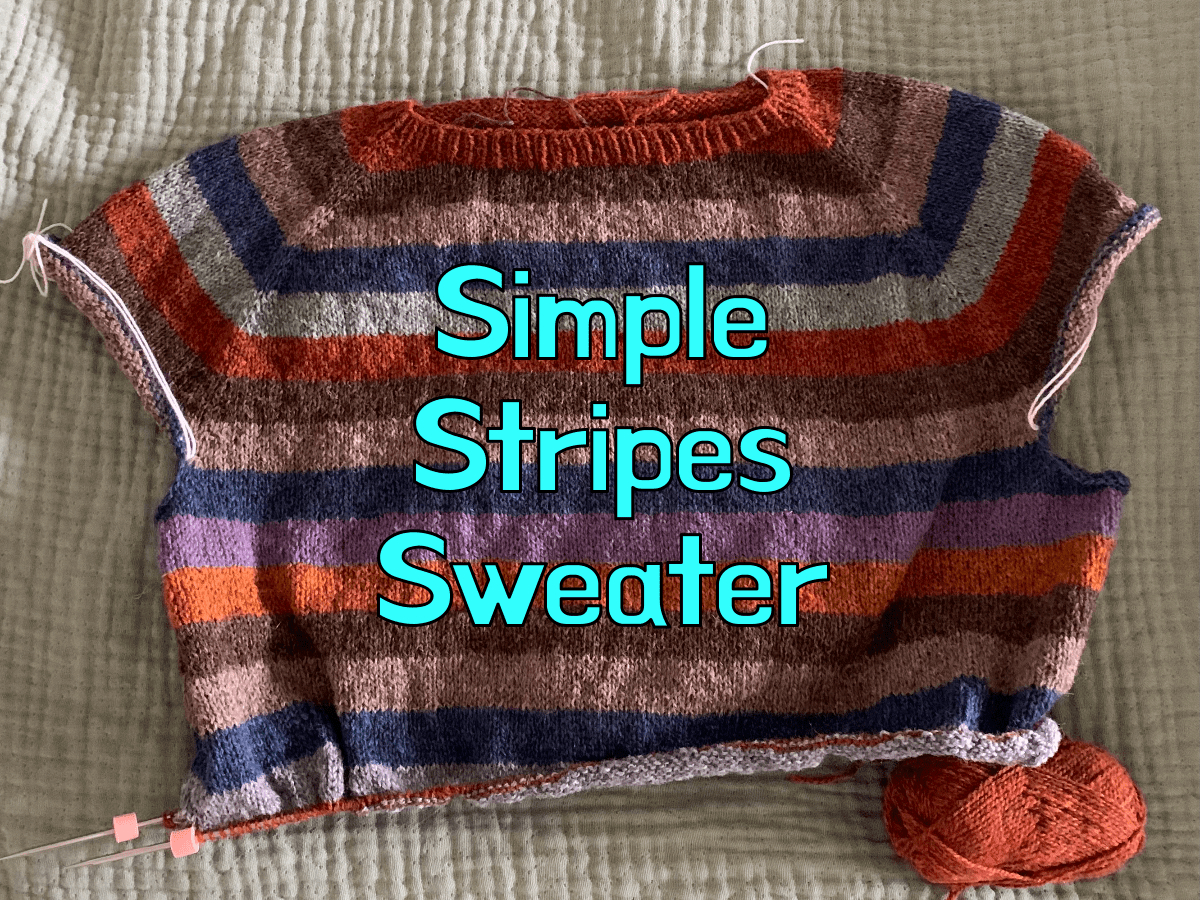
A Simple Sweater With Stripes

My newest knitting project is a simple sweater with stripes. A link to the pattern page on Ravelry is further down the page. This one is advertised as a good project to use up stash…

Understanding Knitting Pattern Theft and Its Impacts

Pay for your knitting patterns. Never accept a copy, or you are actually breaking the law. Designers work hard to create those awesome patterns for us. It’s only a few dollars, but designers need to…

Alternatives to the Hidden Gems Shawl Pattern

Hidden Gems was a popular free shawl knitting pattern. Since it is no longer available, I have found some similar patterns for knitters. Check out the list and let me know if you choose one.

Landscape Lessons Scarf How to #2

Beginner knitters lesson #2 for knitting the Landscape Lessons scarf deals with purling, stockinette and seed stitch.

This is my second post about knitting a beginner scarf. Read Lesson #1 here. There is no written pattern for it, we are simply practicing knitting and purling in combinations that create interesting designs.

Anyone knitting the scarf is free to knit whichever stitches, for however many rows, as you’d like.

Along the way I will do some basic stitches that would be good for all knitters to know. If you feel willing to try them out, go for it.

We began by casting on 35 stitches with worsted weight yarn. My scarf measures 9 inches across. See Lesson #1.

Please ignore the fact that my yarn colors are changing. You should knit in one color – one skein. I am trying to use up some leftover yarn. I will help you learn to add a new skein, or color, in the next lesson. For now, as a beginner, just worry about learning the stitches.

What We’ve Done So Far

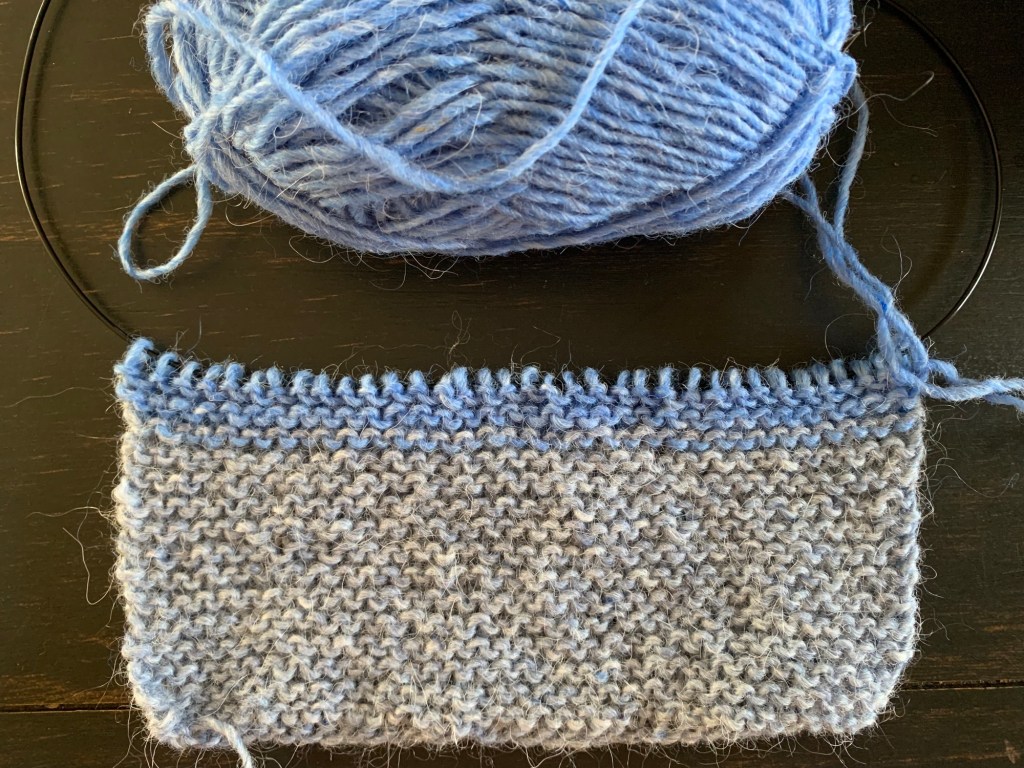
I knit back and forth for four inches. This is called Garter Stitch. Watch the video on the Lesson #1 page for help casting on and knitting back and forth. You should do as many rows as needed to get comfortable with holding the needles and creating the stitches.

You can knit your entire scarf in garter stitch if you want to!

For those who want to learn more, we will now do purl stitches. I’ll include good videos I’ve found to help with each step.

ALSO… don’t worry about making mistakes. The only way to fix a knitting mistake is to “un-knit” or Tink. This is quite difficult when you are first starting out. When I began knitting I simply left my mistakes to become part of the project! In fact, I sometimes still do that! Unless your mistake is horrendous, and you can’t stand it, leave it until you learn to un-knit. You can remove the yarn from the needles and unravel the whole thing is you want to begin again. That is up to you.

How to Purl

Besides knitting, you will want to know the purl stitch. It is very similar to the knit stitch except the yarn and needle come to the front. Your yarn has been coming around the needle from the back when you did your knitting rows. Now the yarn will be in front and your needle will go into the stitch as you see in my photo below. Forget about that strand, it just needs to be in front of your work before you insert the needle.

Here is an excellent purl stitch video.

My photos below show the needle placement to purl, and how the purl stitch will look on your needles. These are known as purl bumps. It’s good to know what stitches look like. Once you can do knits and purls, you are well on your way in the knitting world. These stitches can combine in many ways to create all kinds of designs.

A Little About Knitting Stockinette

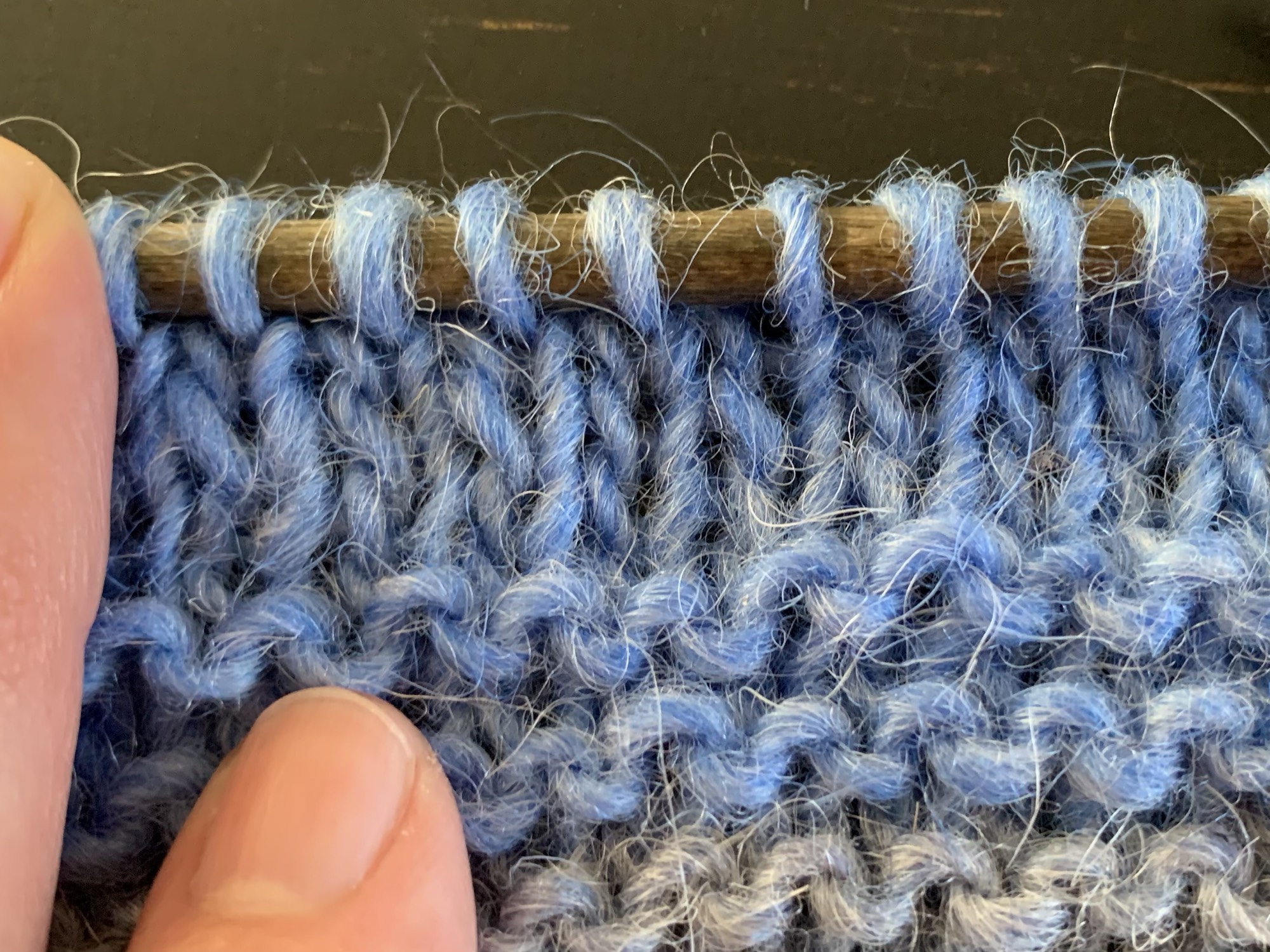
Stockinette creates a smooth looking fabric. You can see how your garter stitch section – the beginning of your scarf – is bumpy on both sides. Knitting one row and purling the next will create a more smooth fabric.

You should be able to see the difference. Stockinette is more flat and smooth. In fact, that is how I remember which is which. Think of stockings being smooth on the leg.

My photos below show the garter section, then my change to stockinette and last, the section in my knitting that is the stockinette. Above that, I did the seed stitch. More on that down the page.

Making Stockinette Rows on Our Scarf

Because stockinette tends to make a flat knitting project curl, I only did a few rows on my scarf. And I added garter stitch borders to our rows. For this reason, I suggest you only do a few rows of stockinette. This is our practice with making the purl stitch.

Our scarf will not have a “front” and “back” so don’t worry when – which end – you begin your stockinette knitting. After you finish knitting a row, turn the work and you are ready to begin the purl row.

The video link below is what we will be doing for the next few rows on our scarf, except that I have given our scarf a border of knitting only.

The Spruce Crafts page has a good video about doing stockinette.

Knitting the Landscape Lessons Scarf Stockinette Section

Row 1 of stockinette: We will knit three stitches, then begin to purl. Purl across to the last 3 stitches and knit the last three.

Remember to switch your yarn to the front for purling, and back again when you knit. Try to remember to knit those edge stitches at the beginning and end of the rows.

purl to knit
End with three knit stitches

Turn the work. Row 2: You will knit this row, just like you have been doing for the first part of your scarf. The edge stitches will always be knit, so you don’t have to do anything differently on this row… simple knitting across.

Row 3: same as Row 1 – Knit the first three stitches and then purl across to the last three. Knit those last 3.

I only made about five rows, and ended after knitting a purl row.

Now you will begin the next section with the knit side showing, like in my photo on the left below.

The Seed Stitch Section

If this all seems to be too much for you, please just knit along however makes you happy. Once you know how to do both the knit and purl stitch, these are just more options for practice. After the stockinette section, you can go back to knitting garter – knit every row. As you progress with your scarf, you may want to give this section a try.

The seed stitch is made by alternating knits and purls. That’s all. If you are interested in trying this, here is how I did my seed stitch section on the scarf.

Seed Stitch Section

Row 1: Knit the first three stitches (this is our border on both sides of the scarf). *Purl 1, knit 1, across the row alternating knits and purls, ending with a purl stitch (if your stitch count is 35 like mine). Knit the last three stitches.

Turn the work and do the same thing as row one. Because we are purling that last stitch on the previous row, it now looks like a knit when we turn the work over. Therefore we begin with the opposite – a purl.

For the seed stitch to work, we knit the stitches that had been purled on the previous row. We also purl the knit stitches. This alternates stitches to create a cool, bumpy look.

knitting seed stitch
Seed Stitch, alternating knits and purls and doing the opposite on the following row.

You really must become familiar with how knits and purls look. If you lose your place, or set your knitting down, knowing which stitch to do next is important. (Also remember your yarn comes off the right hand needle if you start in the middle of a row.)

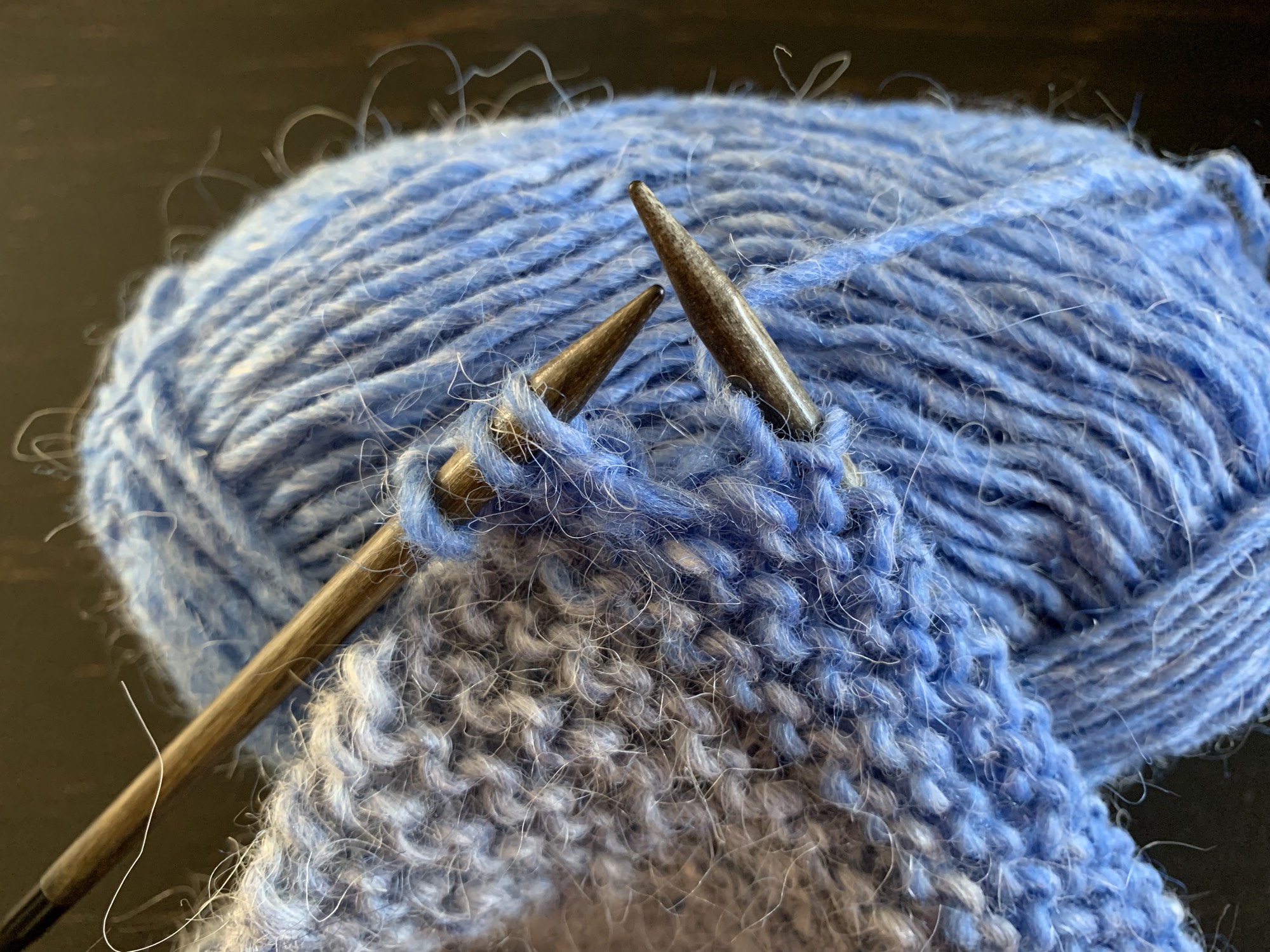
In my photo below, can you see the purl “bumps” and knit stitches on my needle? I am knitting with a very woolly yarn and if your yarn is smoother, the stitches may stand out even more. If it’s hard to tell, pull down on the fabric to make those bumps and V’s clearer.

If you lose your place on the seed stitch section, look at what is on your needle. It will tell you which stitch to make next. If you mess up, fix it on the next row.

If you hate it, go back to knitting every row until you feel better. Knitting should be calming and not stressful. If you do a lot of knitting your hand may hurt, so don’t overdo it. Remember that every stitch you make gets you closer to becoming a great knitter!

knits and purls
Knits and purls

I hope my tutorial makes sense to a beginner knitter. Once we are familiar with all of this, it’s tough to remember exactly how it was when beginning to knit.

I am by no means an expert. There are many things I still have not accomplished in knitting. It takes practice, and this scarf is a very good way to get the practice you need with basic stitches.

One of my very first scarves was knit all in seed stitch. It was my favorite scarf when I lived in the north.

Landscape Lessons Scarf: Lessons by Number


More knitting stories from the blog…