Knitting a Man’s Sweater in Bulky Yarn

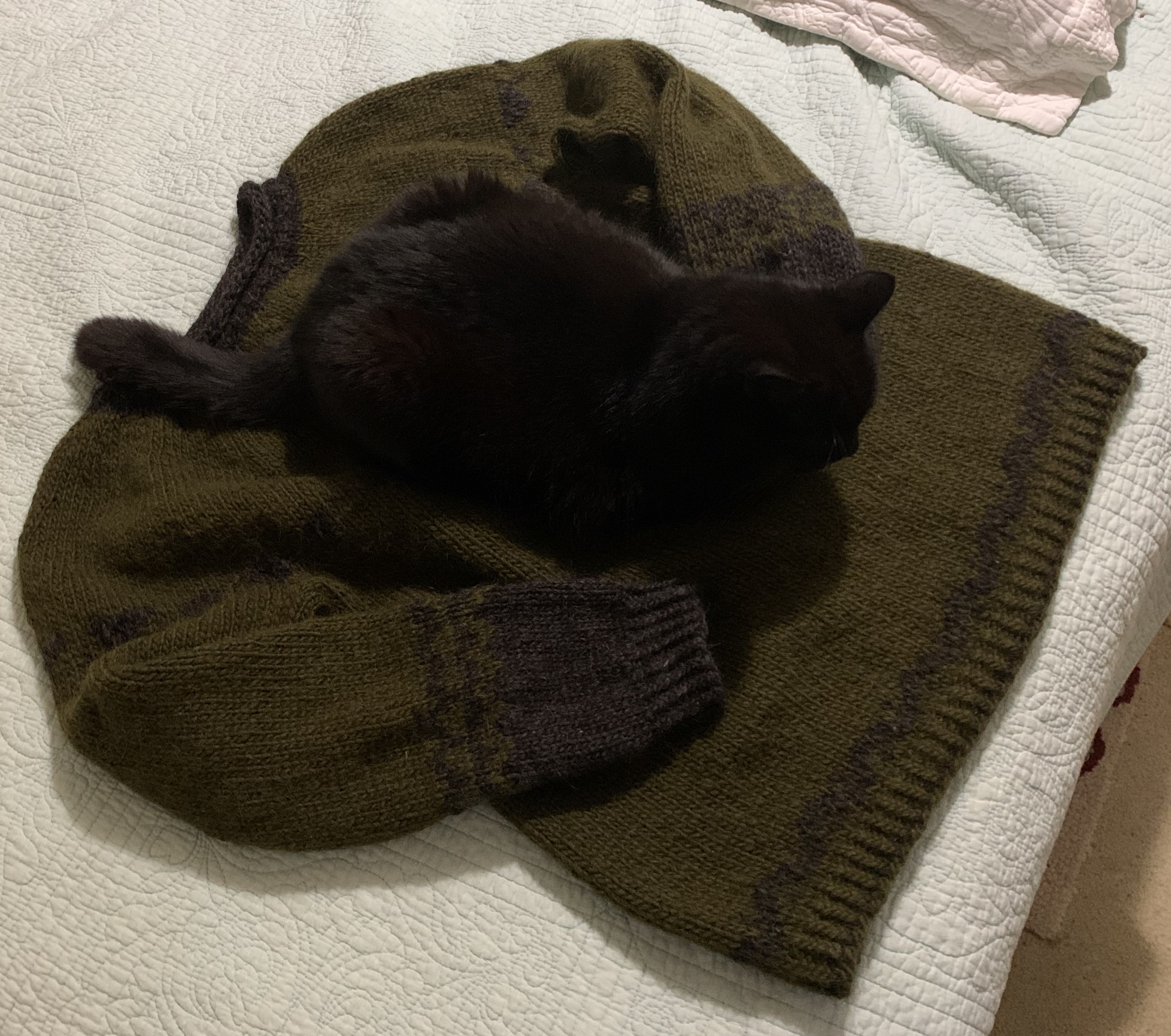
This bulky wool yarn sweater was knit loosely from the Joker pattern in the Lopi 41 book. It is made in a size XL for a man.

The warmest sweaters are knit with wool but caring for wool is not so simple. My son lives in a cold climate and I’ve wanted to make him something warm. I know he will never hand wash anything in a sink. So, finally I told him that he will never have to wash the sweater. If it gets a spill, rinse the spot and let it dry.

If he always wears the sweater over other clothing, it should be fine.

I’ve been looking for some simple sweater patterns that men would wear.

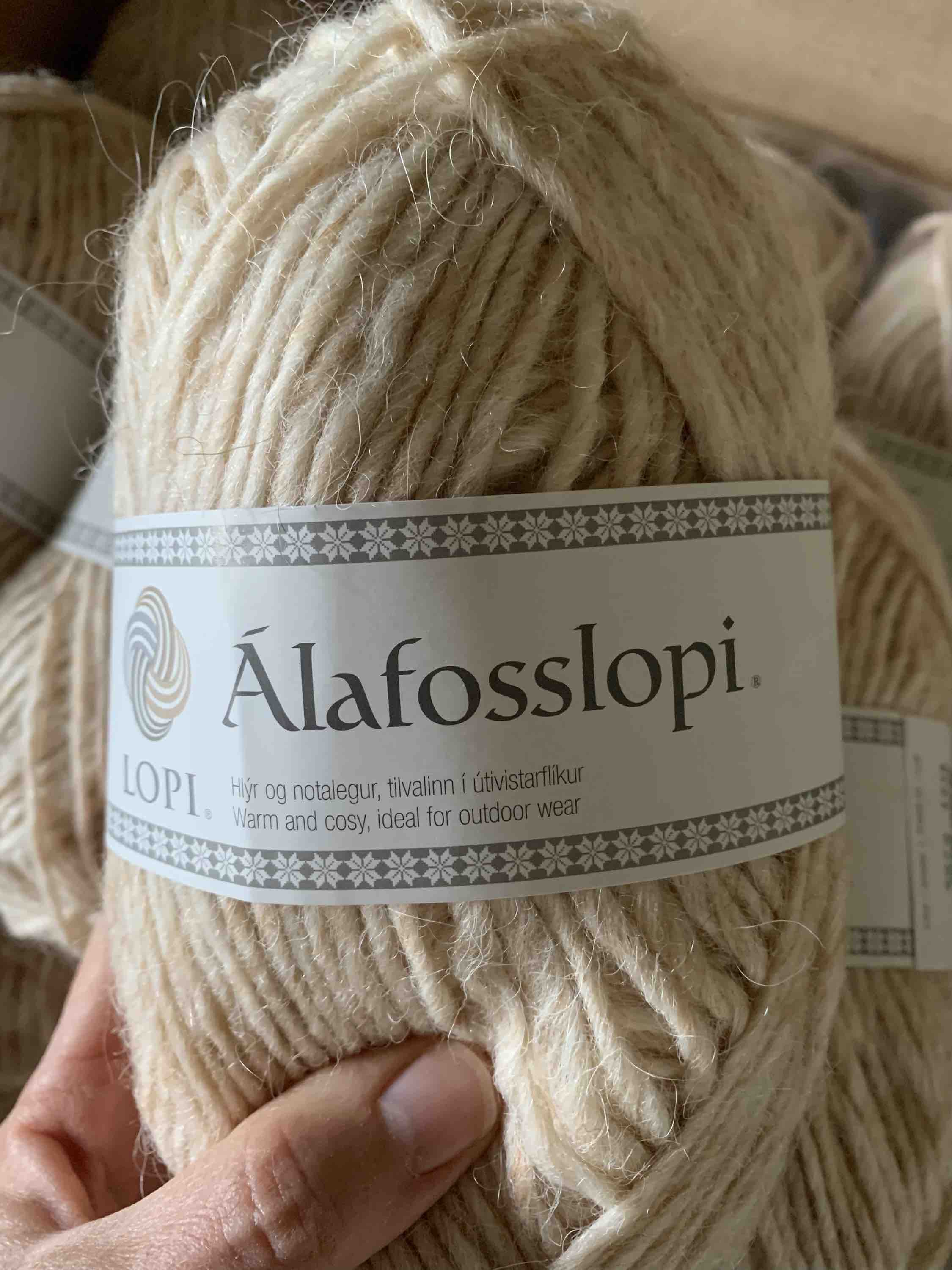
I’ve settled on the Joker pattern in the Lopi 40 pattern book – Ravelry page here. The pattern uses bulky Alafosslopi yarn which creates a nice thick sweater that will knit up quickly. I don’t plant to do all that colorwork on the yoke because my kids like subtle, dark colors. I’ve used Alafosslopi to knit the Carbeth Cardigan, which had no colorwork. And honestly I found that knitting stranded with two hands was a bit tough to do with this yarn.

Gauge Swatch and Casting On

My gauge is goo with needle recommended. I knit with a couple of black stripes with the main color green to see how well that worked. When there is a long cast-on like the beginning of the body, I do a two-stranded cast on using yarn from two skeins. That way I won’t have to worry about running our of yarn for the Old Norwegian cast on.

Yarn Amounts Used

In the end, this is approximately how much yarn was used. Eight skeins total needed to knit size XL if done in one color.

  • Alafosslopi Green – 6 + a little
  • Alafosslopi Black – 1 + a little

The Joker pullover is knit from the bottom up. Then the sleeves and body are attached and a colorwork yoke is knit. I was not looking for a colorwork pattern, and ended up not doing much of it.

The Joker pattern is pretty straightforward for anyone who is used to knitting a sweater, but does not go into detail. Directions are in cm which I had to convert. Under the sleeves, the armpits have Kitchener stitch to close up the hole.

One note that I hope will be helpful to others, and to myself for next time, is to do a very stretchy bind-off around the neck. I had to rip back and re-do the neck. Binding off loosely is not enough. The neckline curls under so the bind-off is hidden.

How I did the stretchy bind-off: Like this video by Andrea Mowry, EXCEPT I only did 2 stretchy style, then did 2 regular style. I’ve found that doing the stretchy bind-off all the way around will often make that last row way too loose. So I alternated and it turned out great.

Stretchy bind off alternating: Knit one, bring yarn over needle to add another stitch. Knit one – 3 stitches on the right needle. Pass the first two over the last stitch to leave one on the right needle. Do this twice, then do a regular knit one, pass the first stitch over (twice).
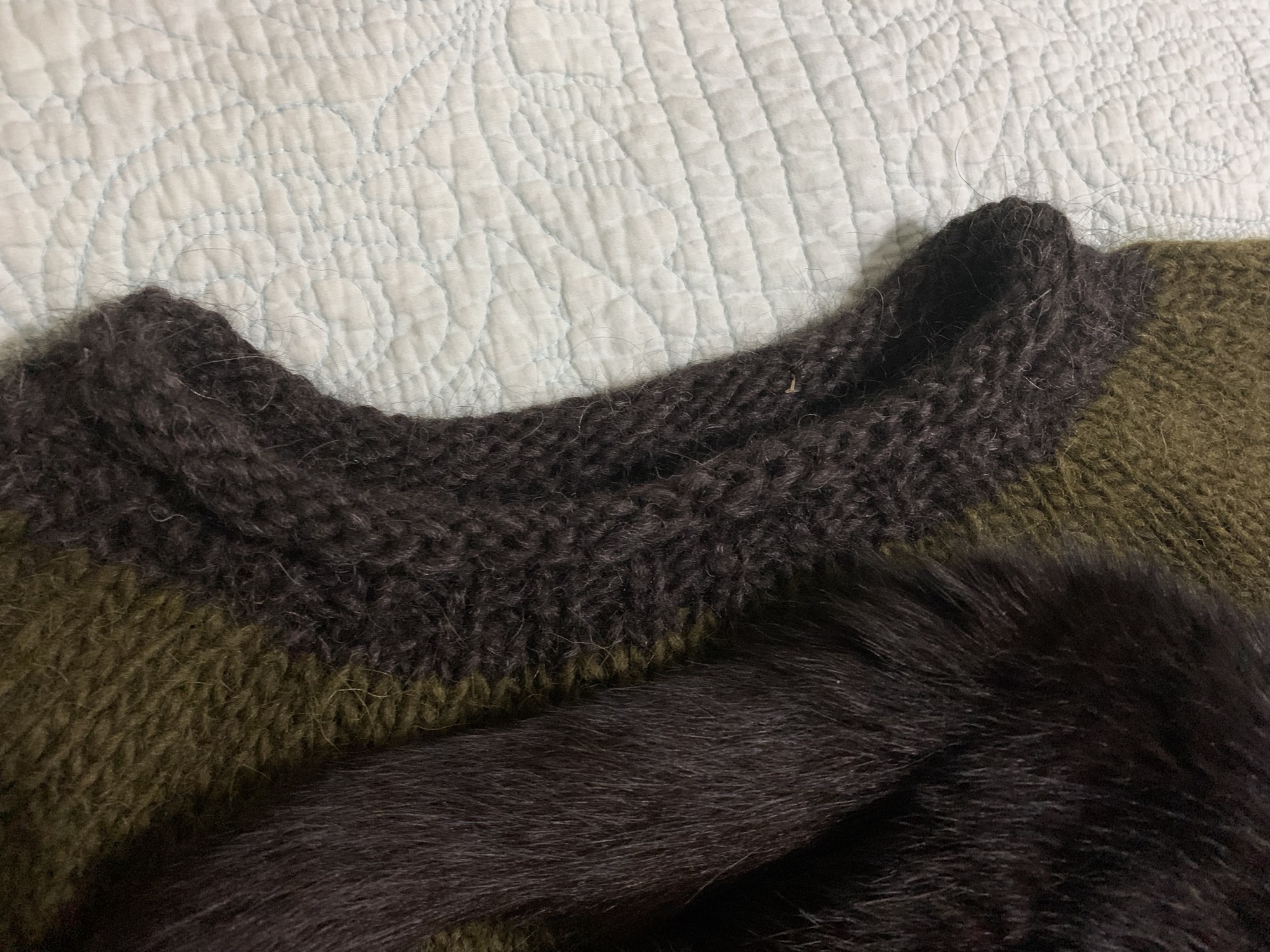
Joker sweater rolled collar

We went camping for a couple of days at Long Point Campground, and the sweater was still damp when we returned home! It had been drying for 4 days! So I put the dehumidifier on which helped.
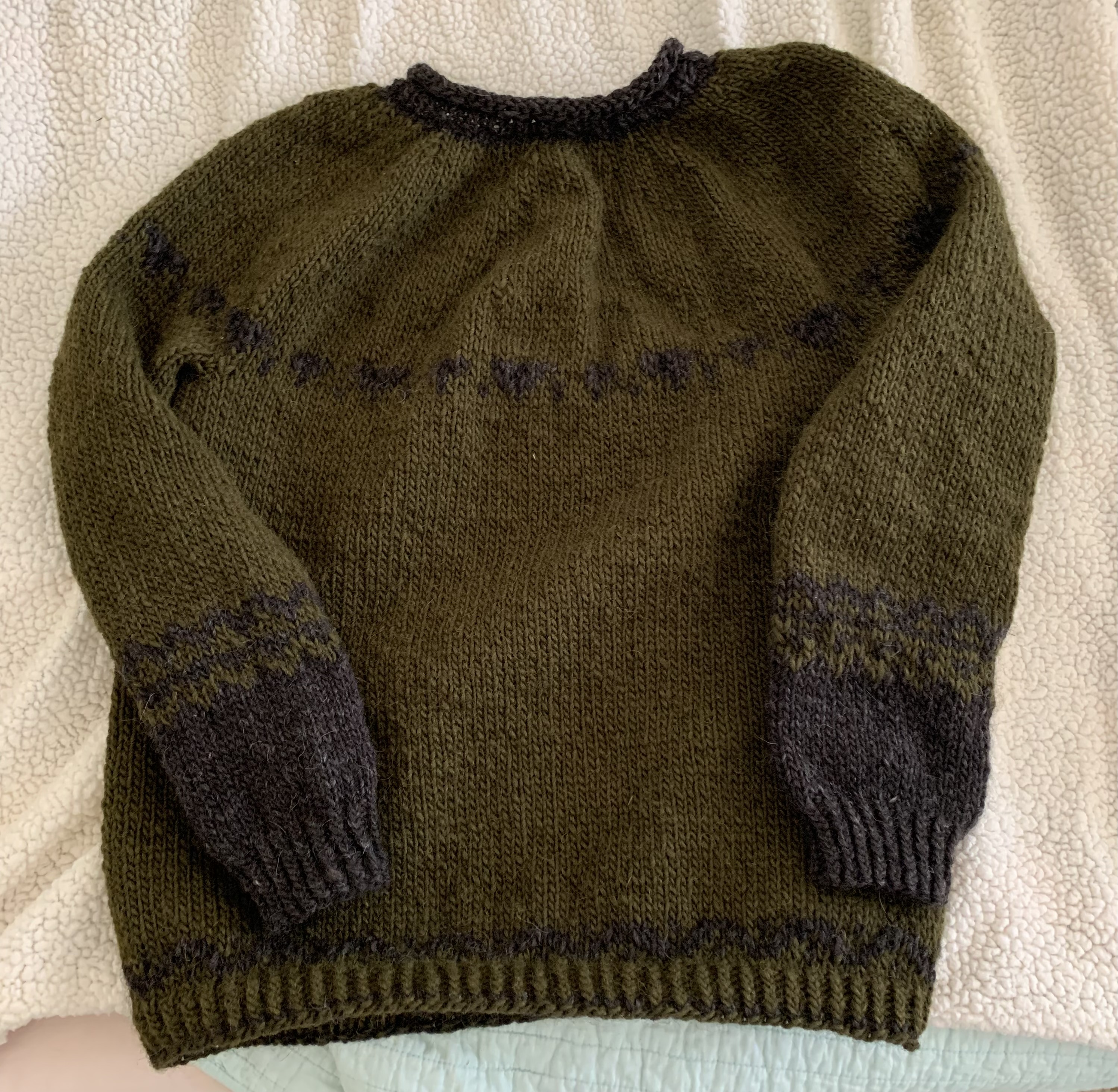
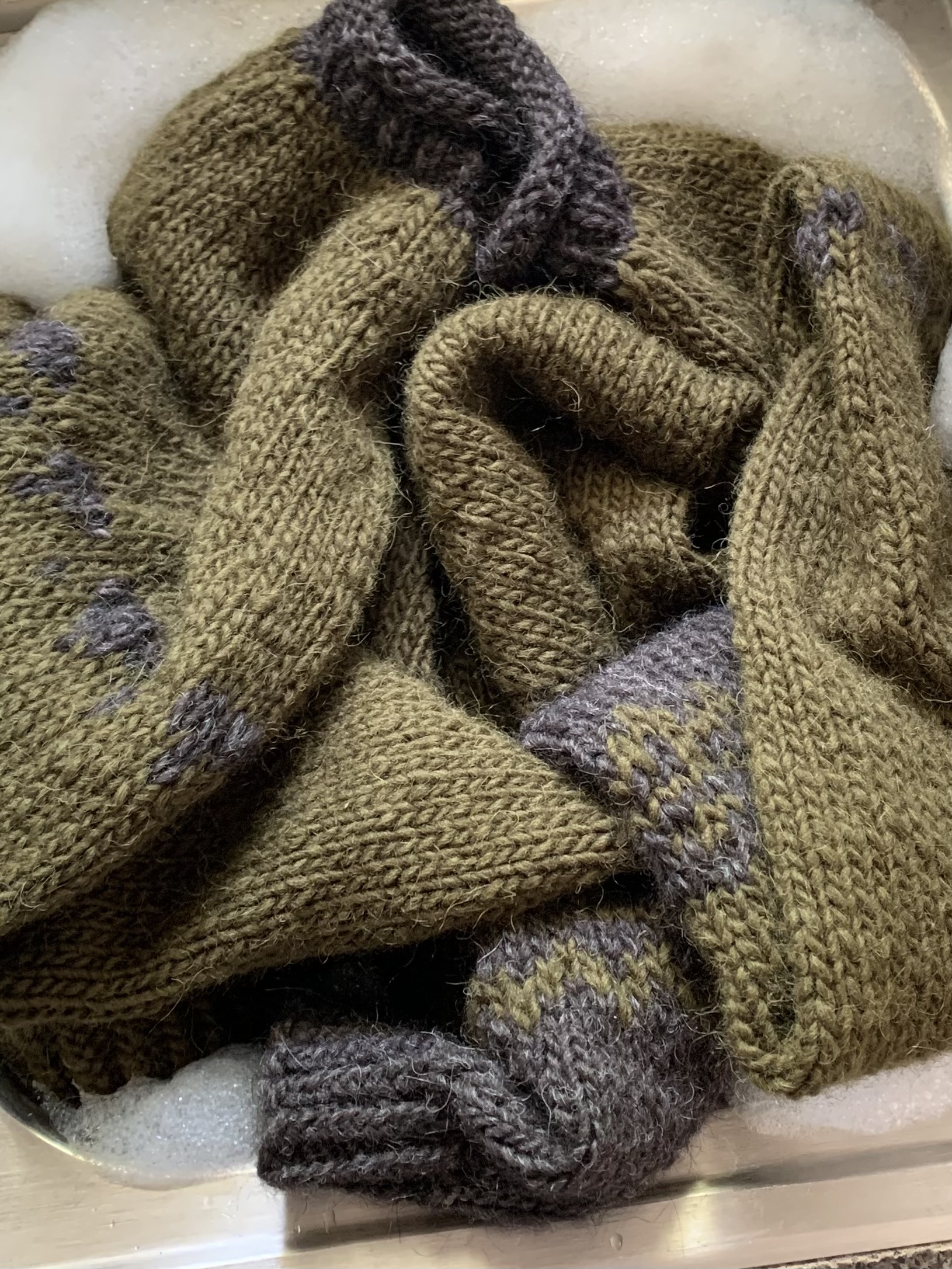
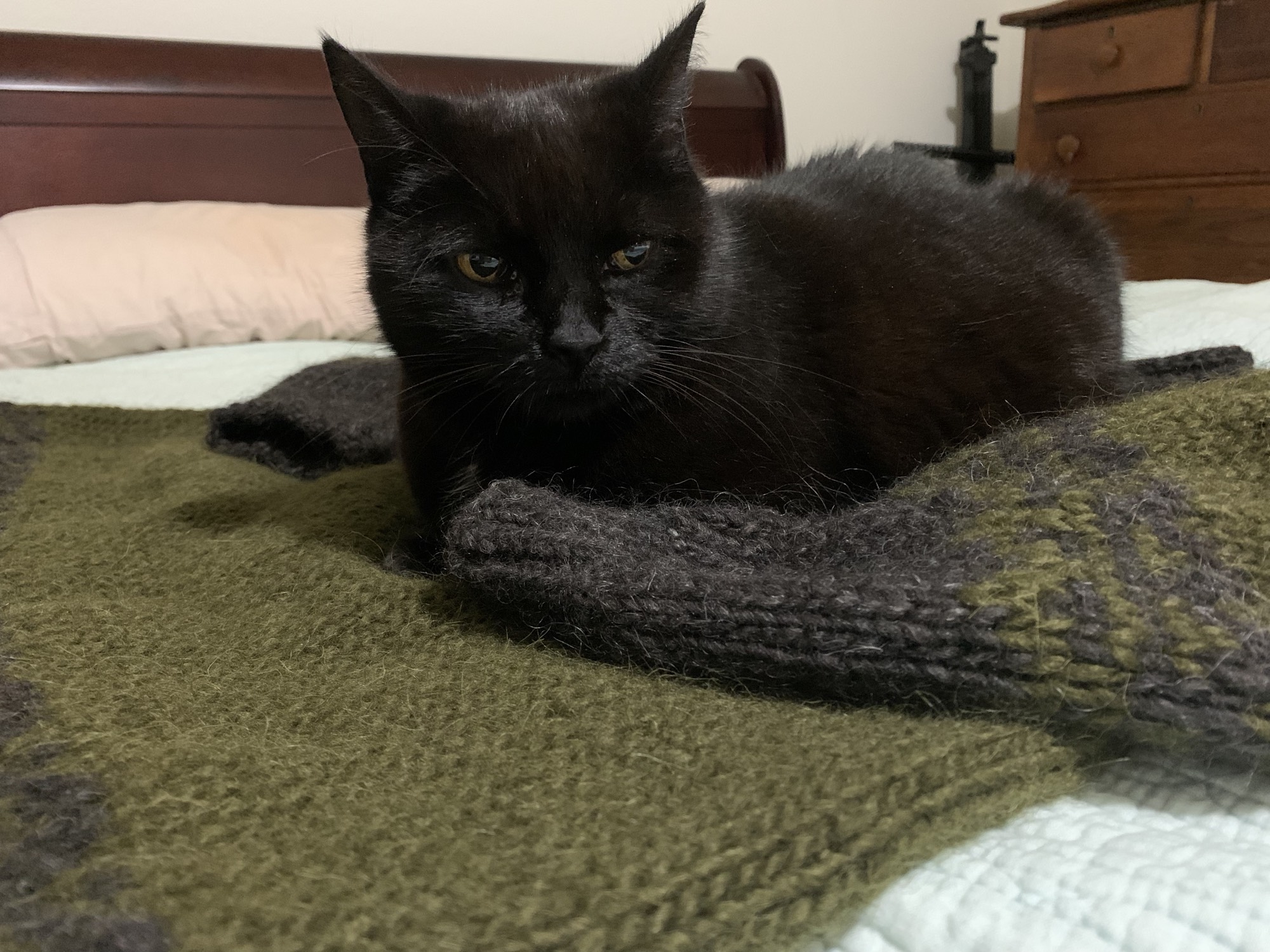
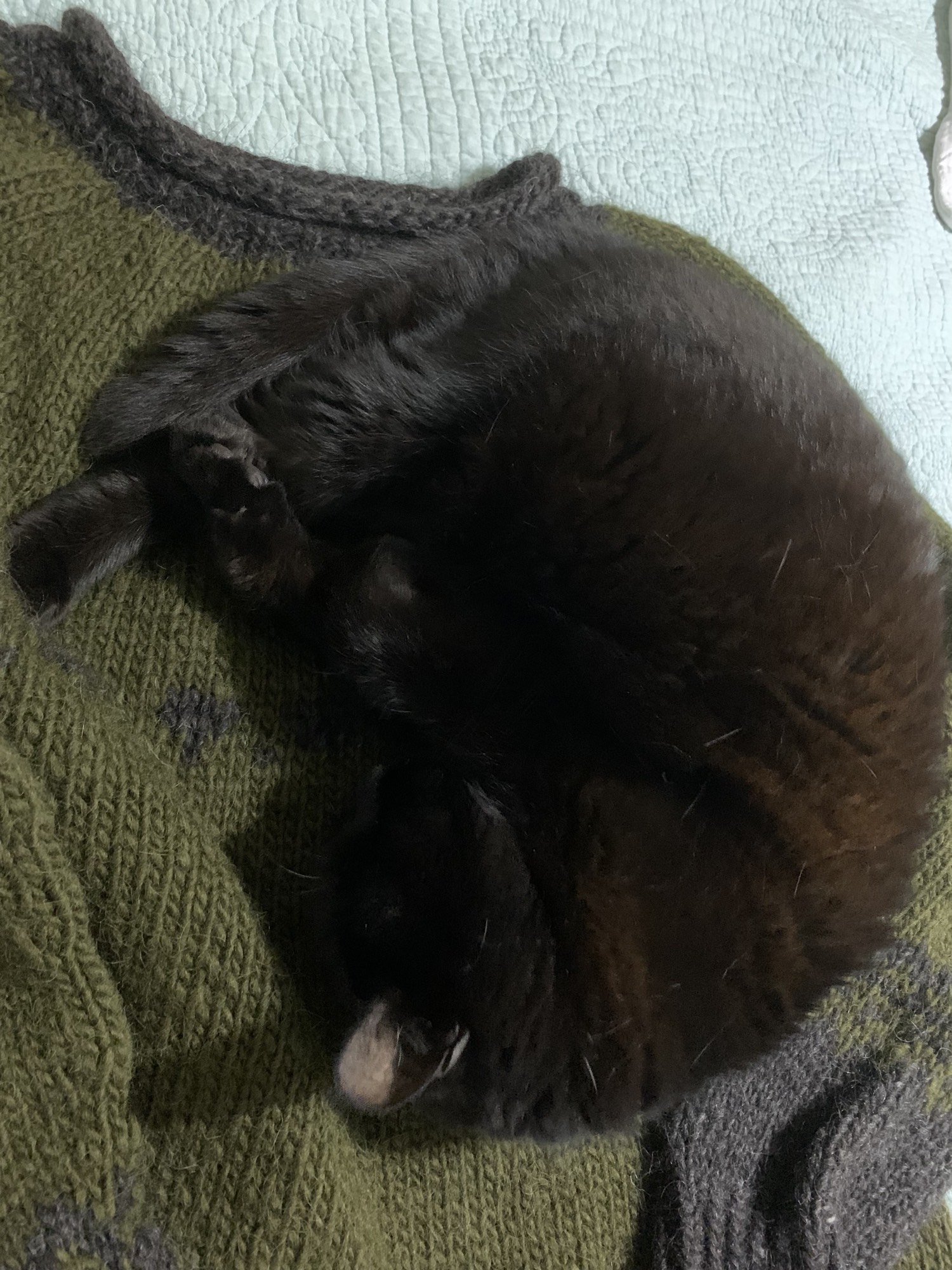
Sweater is finished – March 27, 2023, just in time for my son’s visit. He can take it back home with him! But first, Skittle needed to make sure it was good and comfy.

Please keep reading more knitting stories

Camel Yarn Weekend Hat Project

A simple ribbed hat pattern with enough brim folds to keep ears warm. The Weekend Hat is a pattern by designer PetiteKnit.

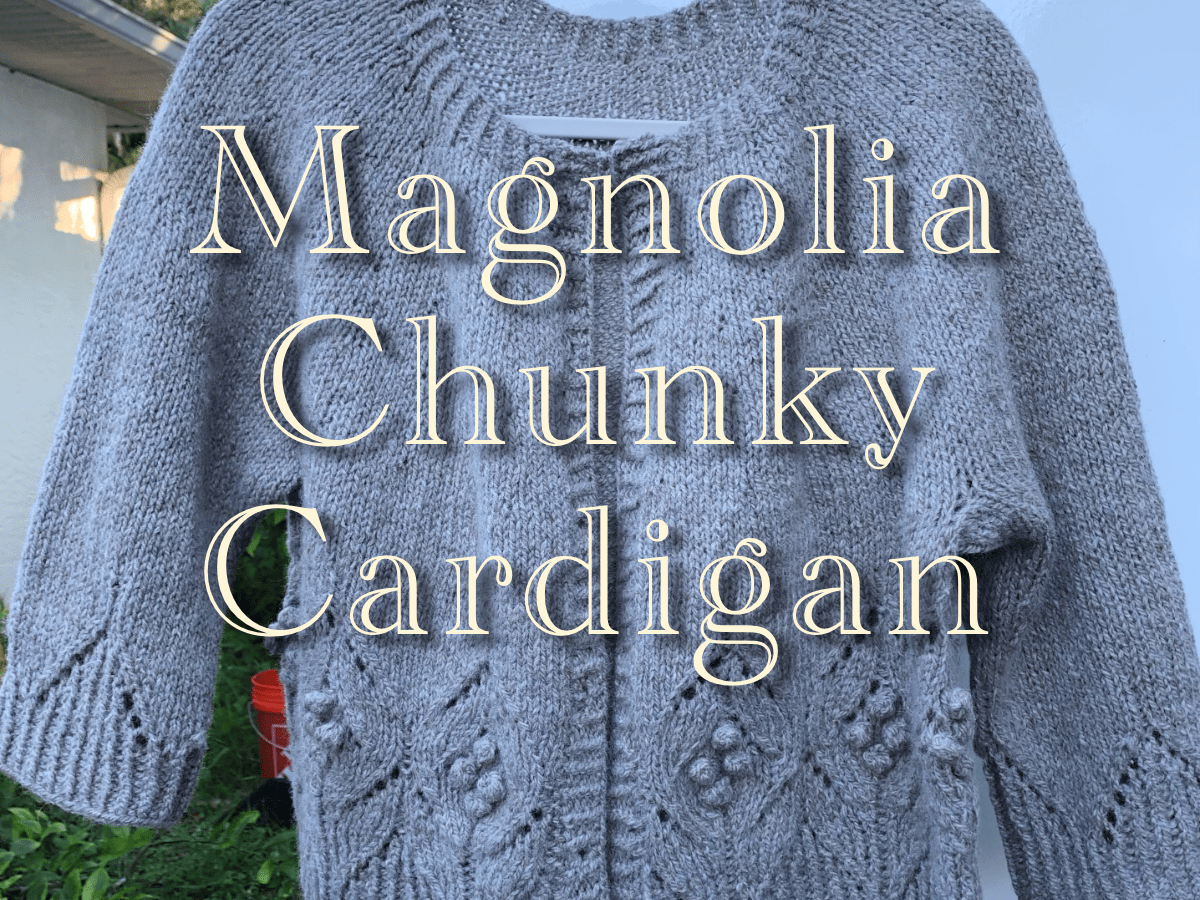
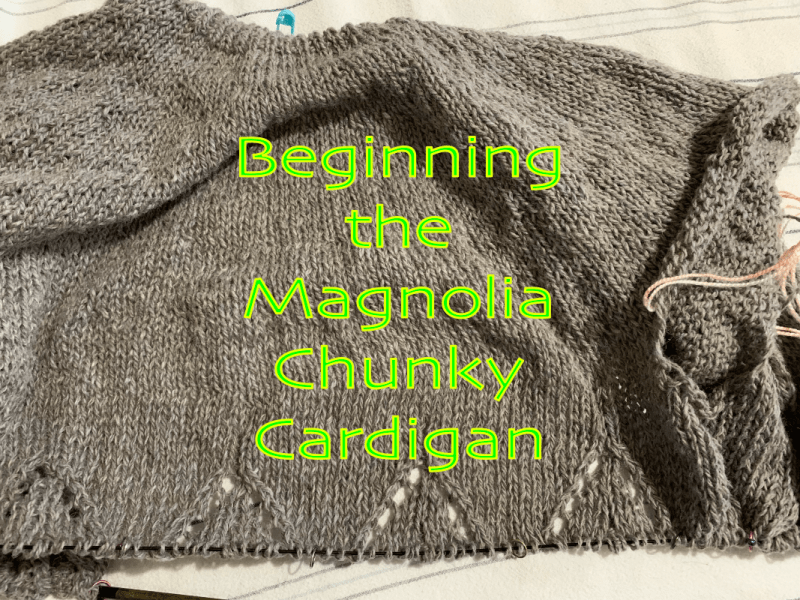
Pattern Review: Beginning the Magnolia Chunky Cardigan

I’m knitting a beautiful cardigan pattern by Camilla Vad. The Magnolia Chunky Cardigan is knit top-down with lace and bobbles on the body and sleeves. On this page I cover some issues I had in the beginning.

First Attempt at Knitting Clotilde

I didn’t get far when I began the Clotilde Cardigan pattern, but it’s a good looking cardigan, and I’ll try knitting the pattern again.

Knitting “Clacks” Mittens Pattern in Lettlopi Wool

When I finished knitting a recent sweater, I had some wonderful Icelandic wool leftover. About that same time I found the Clacks mittens pattern. I thought it might be perfect for using up more of the Lettlopi wool.

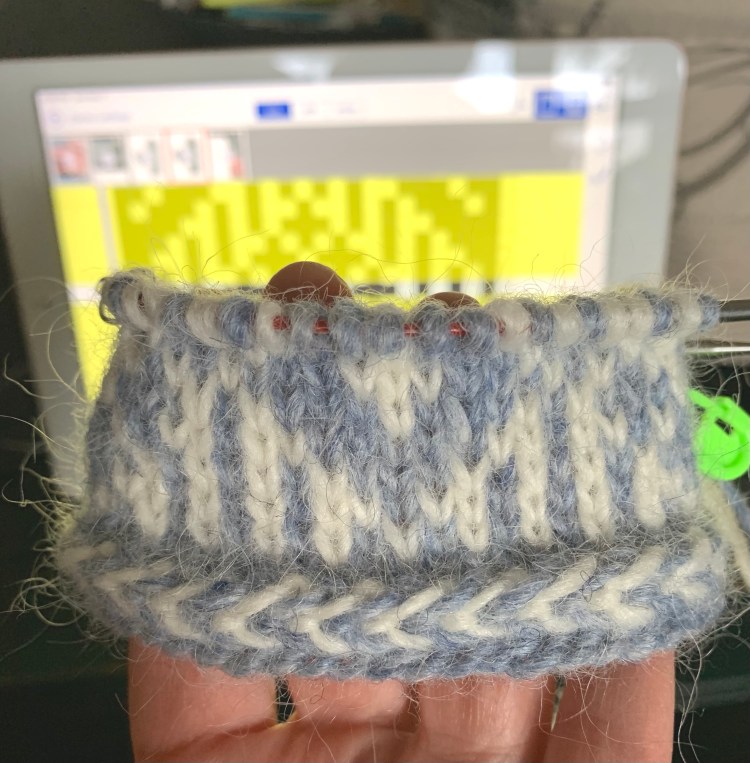
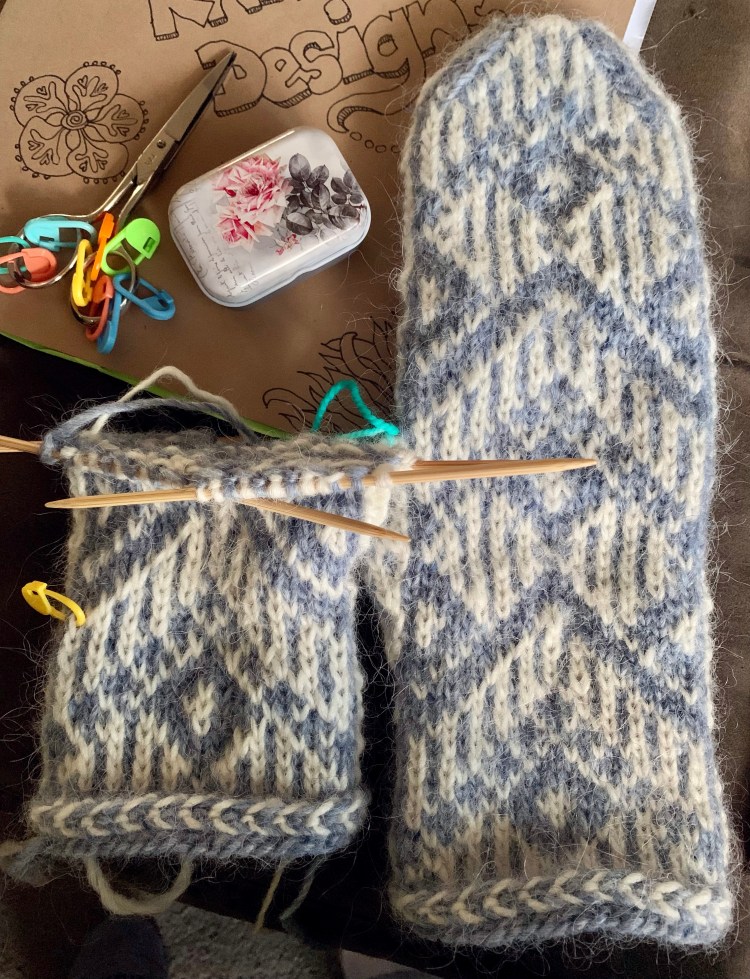
Clacks mittens Lettlopi wool stranded knitting
Lettlopi wool mittens

About a year or so ago I knit a stranded mitten pattern by designer Virginia Settler-Reimer. I hadn’t knit any colorwork mittens at that point and was only just beginning to get the hang of mitten knitting overall. The pattern was Glissade mittens and I used Brooklyn Tweed’s Arbor yarn. Between the beautiful yarn and the well written pattern I thoroughly enjoyed making that pair of mittens.

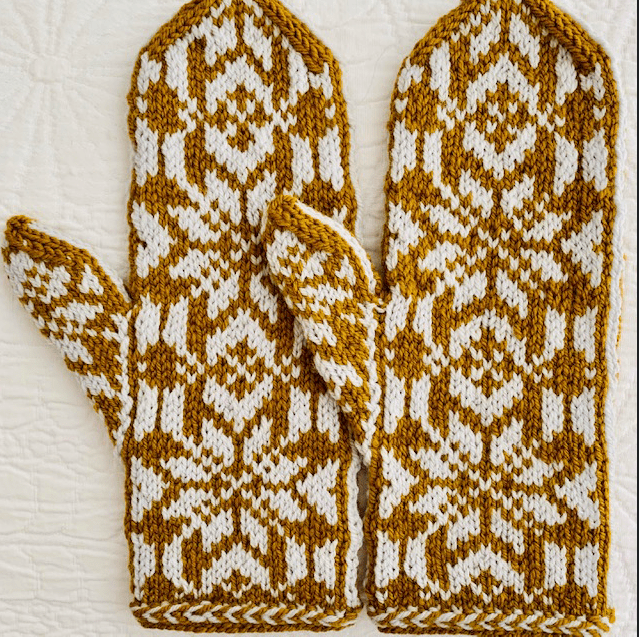
Now, the designer has come out with a new, similar pattern called Clacks Mittens. Just like Glissade, this pattern has the thumb on the side, which means both right and left hands will be knit the same way. In fact, I have never knit mittens, or fingerless mitts, with a different type of thumb!

Why I Like the Glissade and Clacks Mittens Patterns

Both patterns are by designer Virginia Sattler-Reimer and this link goes to her Ravelry page. Anyone already familiar with mitten knitting and doing colorwork would find this pattern fun and easy to follow.

  • Both Glissade and Clacks mittens begin with a Latvian Braid (directions included in pattern). Then, we jump right into knitting the colorwork. There is no boring ribbed cuff to knit first.
  • The mittens are knit on 4 DPNs which separates the front stitches from the back with a line of similar colored stitches. The first two needles hold the first half of the pattern, and the last two hold the remainder. I use a 9-inch circular needle to cast on and do the braid before changing to DPNs. (The second needle will hold the thumb stitches as well.)
  • The “make one” stitch is a backwards loop (Andrea Mowry video) which is super easy.
  • I don’t remember this from knitting Glissade, but for Clacks, the designer has provided two charts – one for a light colored background and one for a dark. Because blue is my chosen MC – I’m following the “dark” chart and using Knit Companion.
  • The Kitchener Stitch (Very Pink Knits slow-motion video) is needed for the top of the mitten and because there are only a few stitches, it is perfect practice for anyone unfamiliar with this finishing stitch.

Yarn and Knit Companion

After I first saw this pattern, I began to hunt through my stash to find yarn to use. The pattern calls for two colors only, and I just happened to have some Lettlopi yarn leftover from a recent sweater. I decided that this wool would be perfect for mittens.

Once the pattern was purchased it was added to Knit Companion and opened on my iPad. From there, it is easy to follow the colorwork pattern line by line.

I had considered changing to a larger size needle at the thumb, to knit the hand a bit wider, but ended up not doing so and the fit is fine. Maybe do this if you have wide hands. Also these mittens are plenty long (for me) already. Measurements are 3.5 – 3.75 inches wide and 11 inches long.

Fair Isle Mittens and Fingerless Mitts I Have Knit.

After knitting for a while, I’ve discovered that I like to knit hats, mittens (and mitts) and sweaters best. I prefer Fair Isle colorwork and think it is especially nice for mittens to add extra bulk and warmth.

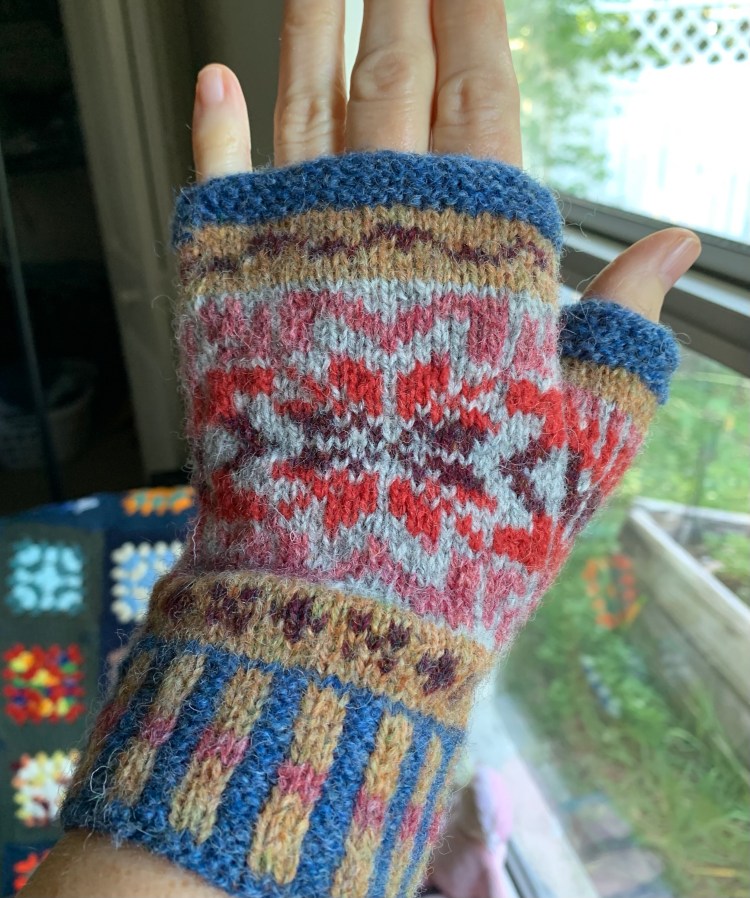
Left to right clockwise from top: Fiddlehead, Glissade, My own pattern, Fair Isle Mitts, Oulu, and Stellar Parallax. All links go to my blog pages where you will find links to each the patterns.


Keep Reading About My Knitting Adventures!

Knitting Farfuglar “Migrating Birds” Icelandic Wool Sweater Pattern

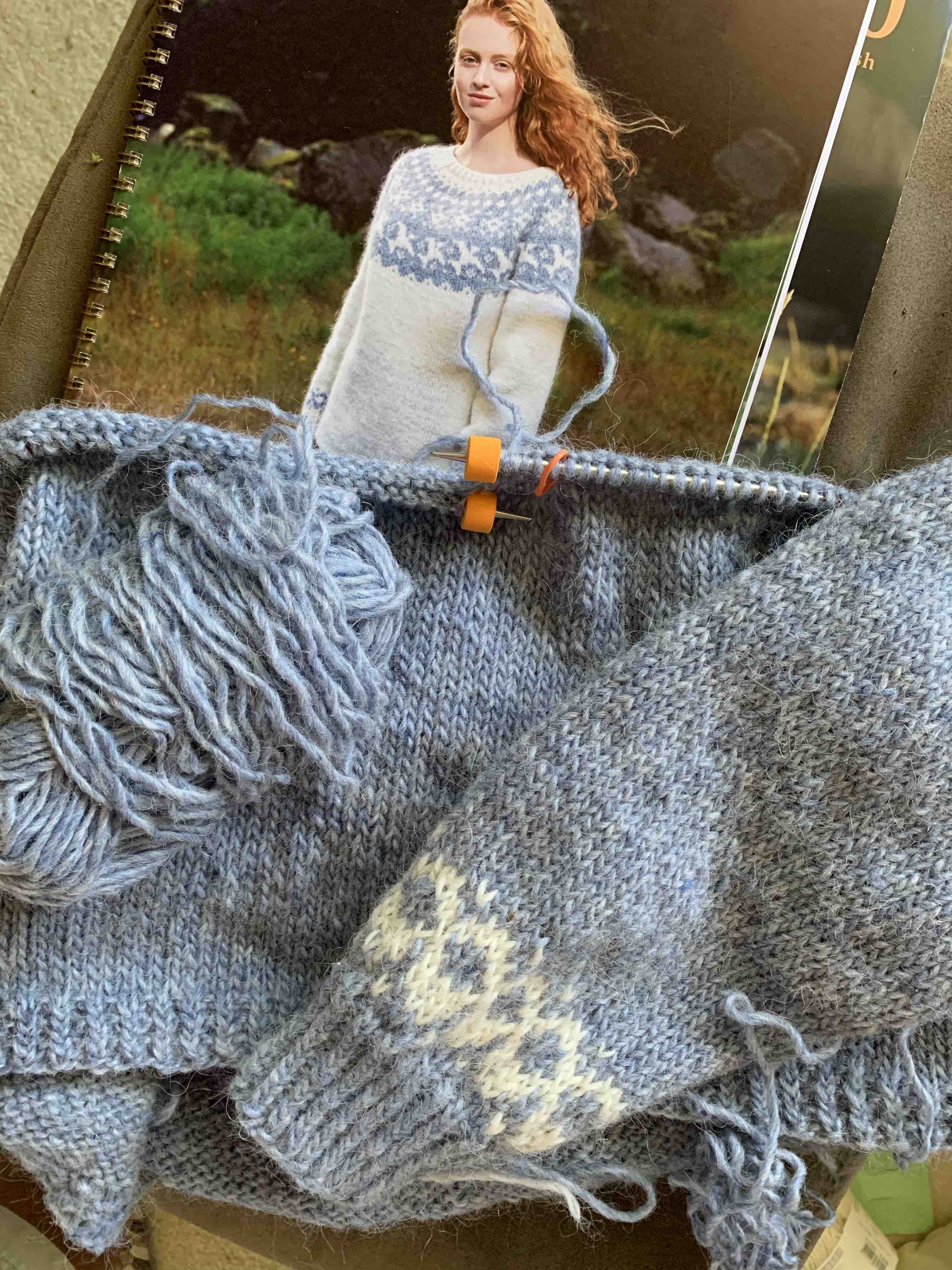
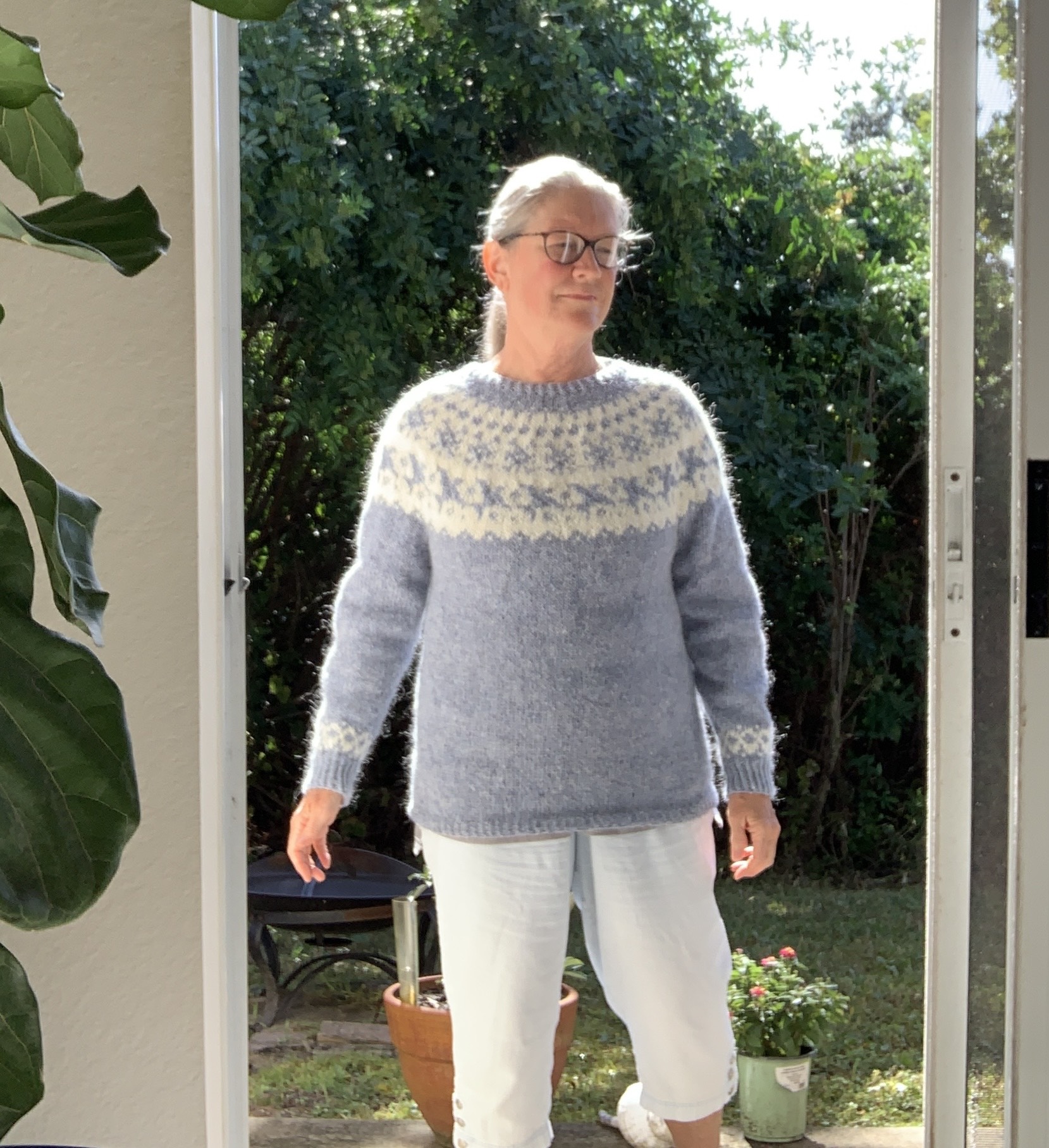
This new sweater pattern is from the Lopi 40 book which I bought along with some Lettlopi yarn recently. I want a light blue sweater with white accents and Farfuglar is the pattern I chose. It means “migrating birds”. The sweater shown in the book uses my same choice of colors (air blue and white) as I chose, but in the opposite way. The yoke can also have more colors in another version.

Lopi 40 is full of Icelandic designs knit with Lopi wool and apparently it is one of the newer books.

This Farfuglar pattern, and other patterns in the book, can also be purchased separately. (This link goes to Ravelry.)

The Farfuglar Learning Curve

I purchased bunches of the Lettlopi yarn variety which is aran weight. The first pattern I chose was one by Jennifer Steingass. After beginning the sleeve twice, and not being happy, I gave up and moved on. That is when I chose this pattern from the Lopi book: Farfuglar, or “Migrating Birds”.

I knit a flat gauge swatch which matches the required gauge for the sweater. I know that garments knit in the round should have swatches knit in the round, but oh well, I didn’t do that.

The pullover is knit bottom up. I have begun knitting one of the sleeves and really like the way this yarn looks and feels. The pattern uses the same two colors I chose, white and “Air blue”, but the sample sweater is mainly white with blue accents whereas mine will be the opposite. The colorwork chart is in five colors because there are two ways to knit this sweater. As I knit the chart I will convert it to two colors in my head.

The patterns in Lopi 40 are Icelandic and measurements are given as centimeters. Needle sizes are also mentioned in mm except at the beginning of the pattern where they give the US size also.

Increases and Decreases

After the sleeve ribbing is finished, we are told to increase around evenly to end up with correct stitches for the colorwork. I had to go from 42 stitches to 50. I don’t know why, but this was hard to figure out. I will have to do something similar at the neckband except it will be decreases! Oh Boy….

Had to decrease at the neckline from 100 to 84 stitches evenly around. This strained my brain, but I did it.

Learning New Things

Two new (to me) types of decreases are also mentioned: KRPR (right leaning) and SKP (left leaning) – both links go to pages at the New Stitch a Day site where videos show the process.

I’m not a super experienced sweater knitter, but I have finished a few. Most have been top-down knits, but this is a bottom up. The underarm stitches need to be grafted together when finishing, which I’ve never done, that I recall. The pattern doesn’t say how to accomplish this, but I found this page at Laura Chau that explains Grafting Underarm Stitches. It uses the Kitchener Stitch, which I have done.

Joining Sleeves to Body – Notes for the Inexperienced (Me)

I’ve only knit one other sweater bottom up which means the sleeves and body must be joined. It’s not difficult, but for me, drawing out a diagram while reading the directions was helpful. I got a better picture for how this would happen. I also placed a pink marker on the front section so I would know front from back.

I’ll keep this for future reference and noted needle sizes and other hints to the paper.

Notes I made: After finishing the second sleeve, leave stitches on the needle (I used a 9-inch circular). When beginning to join, I used the longer (body needle) to knit off the sleeve needle. When I got around to the second sleeve, I put those stitches from the holder yarn onto a smaller (size 4) needle and then knit off of it. Once that happens, the whole sweater is now combined into one piece.

Needle lengths: Begin knitting the whole yoke with a 40 inch (The pattern says 32, but I found the longer needle to be easier). Changed to 32 inch farther up, and ended up with 16 inch for the neck.

Four places are on holder yarn and stitch holders for the underarms. Those will be grafted together using the Kitchener Stitch when I’m done knitting.

Now I have begun the colorwork yoke. Some of the yarn carries are quite long, so knowing how to catch floats is definitely necessary for this design. I was very excited to see the birds emerge!

Yarn Used For Size L

  • Blue Yarn total used: 8 skeins – nearly every bit of 8, so 9 is better just in case
  • White Yarn total used: less than 2 skeins

October 29th and the Sweater is Finished! See My Photo Shoot Below

At this point I was still trying to decide if that high front neckline would be okay. Without any type of short rows, the front and back of this one are exactly the same. This makes the front neckband ride on my neck. I would probably have a shirt on underneath, so I decided I could live with the neck as it is. Also, I didn’t want to risk ruining things since I am not experienced at changing knitwear designs!

The hat photos were taken in “winter” when the temps dropped to the low 40’s here in Florida. I went out to feed the birds bundled up in my woolies! (Triple-patterned watchcap, mittens, Woolfolk cowl) All other photos were taken before I washed the sweater.

I will be writing a separate blog post about how I finished off this sweater.


Learning About Lopi Wool

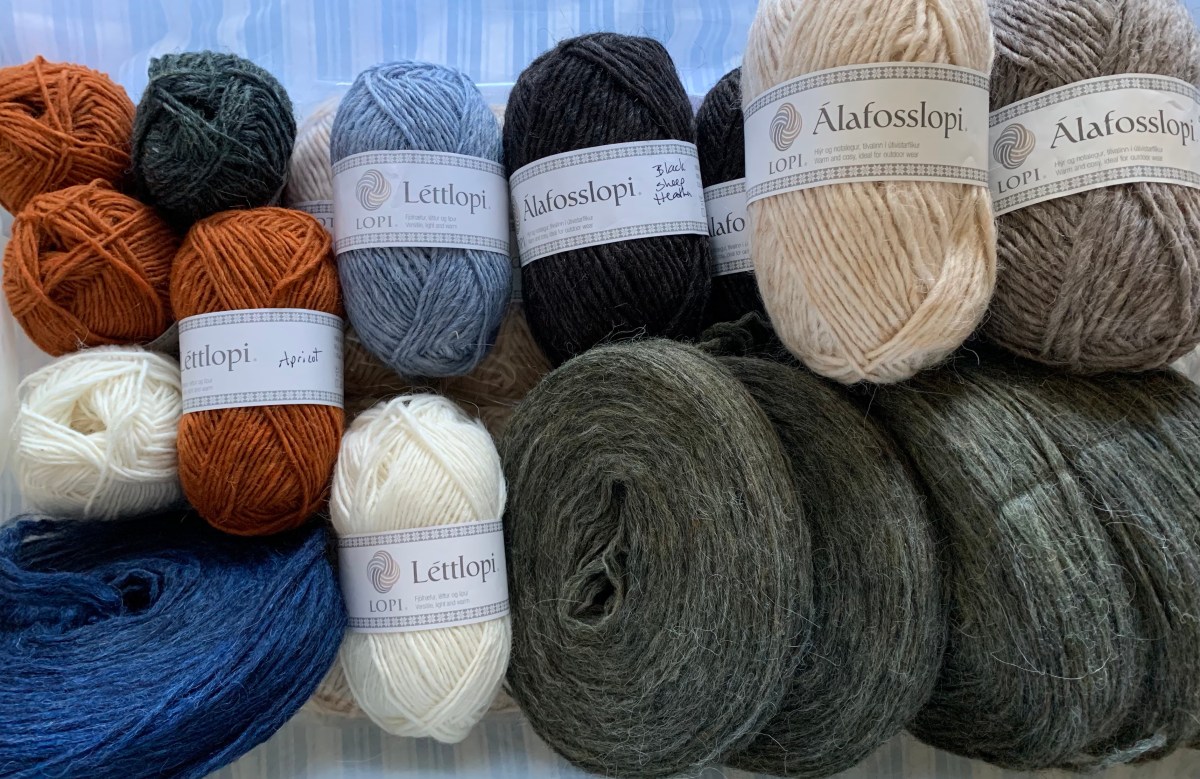
The sheep who provide this wool live in the harsh Iceland landscape. If their wool can keep them safe and warm during winters spent outdoors, certainly the wool in your Icelandic sweater will do the same. The yarn comes in lots of pretty colors (if you can find them in stock!) as well as natural colors such as white, gray, tan, brown and black. It comes as heathered, solids, and tweeds in various weights, including unspun yarn. The yarn is a combination of insulating and water repellant, not to mention very warm indeed! If you are not a knitter, the sweaters can be purchased already knit up.

After knitting with the Lettlopi, I found there were quite a few knots to deal with. More than most yarn I knit with, but maybe that is just the nature of the yarn.

I don’t yet have a sweater or other garment to try on so I can’t comment on the scratchiness of this yarn. Some people think it is exceptionally scratchy, but many people say the wool softens over time and gets better and better.

Finding Lettlopi and Alafosslopi Wool to Buy

As is unfortunately true these days, finding yarn can be challenging, and especially in the popular color ways.

The Lettlopi (aran) and Alafosslopi (bulky) yarn in my stash has come directly to me from Iceland and is from the Istex company. It was ordered from The Icelandic Store where they still have quite a few colors in stock. The low price of the skeins, compared to prices in the US for the same yarn, made it worth paying the high shipping rates.

My order of Alafosslopi arrived in four days..!!… and came with a little candy surprise. I have already knit up a swatch and plan to knit the Carbeth Cardigan by Kate Davies, but that plan could change.

For instance, many places in the US have Alafosslopi for around $10 a skein, or close to that price. When ordering from Iceland, each skein is $5.99, which is a big difference, and especially if you need many skeins to knit a sweater. The Lettlopi costs about $5.75 in the US compared to $2.99 each in Iceland.

Webs yarn offers big discounts if large amounts are bought, and the cost can be less in the end, but many of the colors are out of stock at the time of this writing.

More From the Blog

Discovering The Goodness of Icelandic Lettlopi Wool

The last thing you may expect a Florida gal to do is order wool from Iceland to knit a sweater! But that is just what I did a couple of weeks ago. I have now fallen in love with this wonderful Lopi wool.

Lettlopi wool skeins in white and blue
White and Air Blue Lettlopi yarn from Iceland

While living here in the jungle heat, I dream of being in a normal climate where seasons change and people wear sweaters, hats and mittens. My cold weather wardrobe is being knit with the hope that one day I will live in New Hampshire again.

I’ve come to love beautiful wool and appreciate knowing where my yarn comes from. Unlike many knitters, I never get to sit in front of a winter fireplace, happily knitting something I know I will need to stay warm. My knitting is mostly done in air-conditioned rooms with ceiling fans running. Fall doesn’t mean anything really to Floridians. Days do get cooler, but compared to the heat of summer, that means little really. Winter means some cold, damp mornings – we even get ice in the birdbaths occasionally – but snow never falls and temps usually warm up by mid-day.

It’s a boring place unless we get out on the water.

Florida neighborhood oak trees flat street
Live Oaks make a “tunnel” effect over the road where I walk in the morning.

Instagram For Knitters

I became interested in the Lopi yarns after seeing photos posted by knitters on Instagram. If you knit, you should set up an Instagram account (this link goes to my Insta account) and follow other people who knit. I’ve discovered new knitting patterns and sales on yarn (and patterns) from the site as well. I don’t do much on Instagram myself, except share a photo now and then, but I love to see what designers and yarn sellers have to offer.

Buying My Lettlopi Yarn

This has been my year for knitting sweaters. I have three pullovers on my needles at the present time- Calliope (finished!), Meadow Moon and Farfuglar (finished and knit with Lettlopi!).

Someone shared a photo, on Instagram, of a new sweater design using Lettlopi wool, and it was beautiful. I looked into the yarn further and ended up ordering from the Icelandic Store. I’d chosen a sweater pattern by Jennifer Steingass which used this yarn. The pattern, called Treelight, ended up being a pain in the neck to get started because of gauge. I gave up on it and found one in my new book, which I had ordered along with the yarn. The book, Lopi 40, is full of beautiful patterns and I have begun knitting “Farfuglar” meaning “Migrating birds”. (I finished this sweater in November and love it.)

A lot of Lopi yarn colors are out of stock, but I wanted light blue and white which were both available. I bought ten skeins of Air Blue and five skeins of white. I had to pay shipping, but the yarn itself was so cheap, compared to US stores, that I believe I got a good deal. The shipping process took over a week, but I was in no hurry.

Plotulopi Yarn

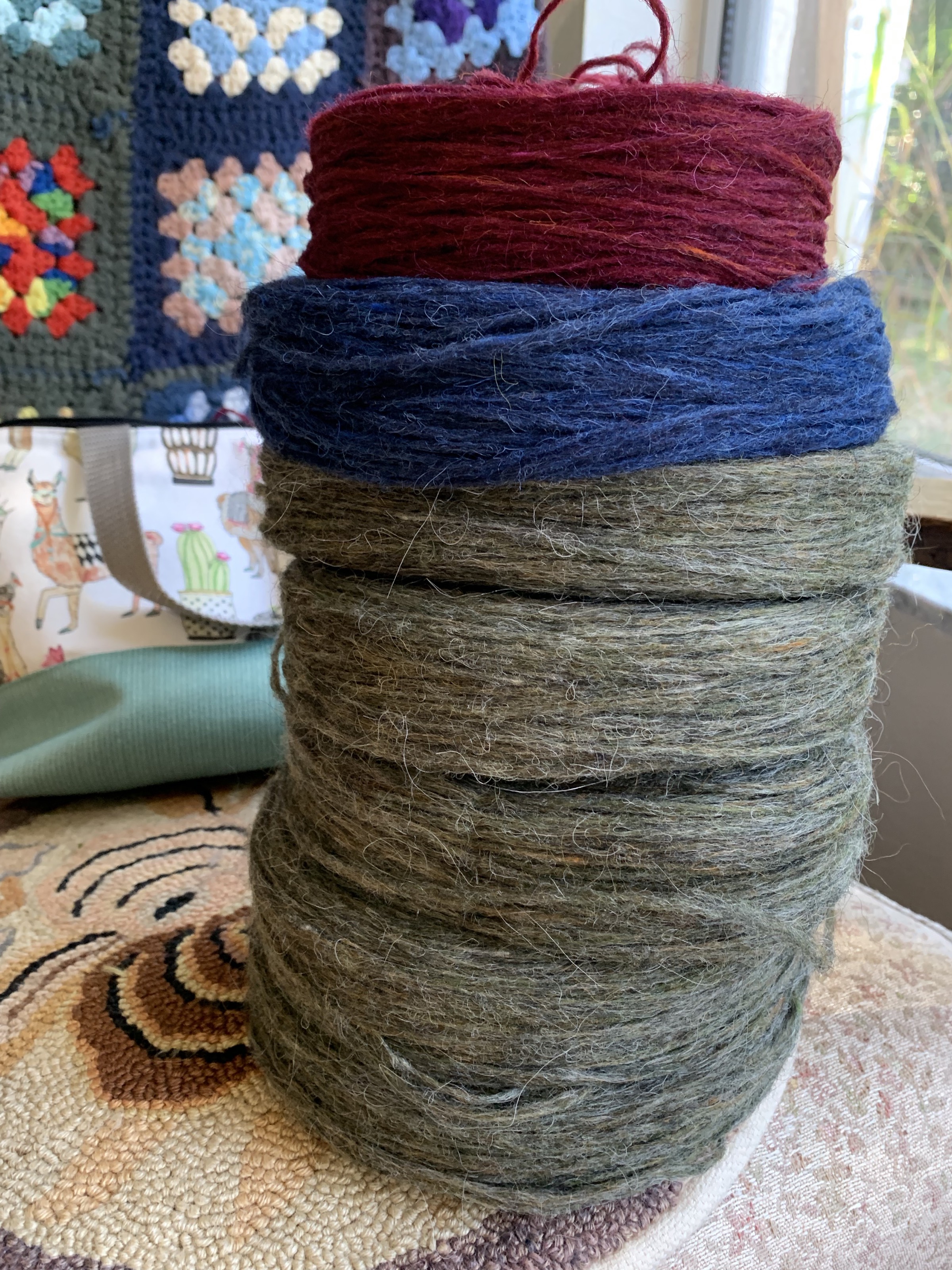
Another wool yarn that gets good reviews is Plotulopi. It is described as “unspun plates of Icelandic wool”. It is equal to a worsted weight and comes in lengths of 328 yards. At the Icelandic store each plate is about $5.. .which is a deal compared to ordering from US stores!

So my yarn plates have arrived, along with more Lettlopi, even though color selection in the Lettlopi was slim. The Icelandic Store is on the ball, and this shipment arrived very fast.

I have begun knitting a pair of mittens using the Wine Red Plotulopi. This yarn is unspun and that means it will pull apart very easily. I wondered how it would work while knitting colorwork! I did okay, except when I had to tug on an end that was hanging, and the red yarn came apart! I used a crochet hook to catch the short end piece and wove it in. It means being careful when knitting with this yarn.

So this yarn is a little weird, but it’s cheap, and I love the colors! They make up for all the missing Lettlopi shades that are out of stock.

Alafosslopi is The Bulky Yarn

By looking through the book, I discovered the heavier weight Alafosslopi yarn. It is a bulky yarn and is used to knit some wonderful sweaters that would be very warm. I have a pattern chosen to use this new bulky yarn, but many of those colors are also out of stock at this time. Since I had limited colors to choose from, I settled for Ecru Heather and ordered a box full of yarn.

This time the yarn was delivered much quicker, but I had to pay more for shipping. There was no choice and this may have to do with the size of the shipment, but I got the order very fast. AND… they kindly included a chocolate candy bar with my order! I have begun knitting the Carbeth Cardigan using this pretty yarn.

Buying Lopi Yarn Online

Some places have the yarn to order in the US but the cost is about $5 more each skein! I’ll need about 13 skeins for the sweater I want to make. Webs yarn offers big discounts for bulk orders but at the present time, colors are scarce. For this reason I ordered directly from Iceland. The skeins are cheaper, much cheaper, but there is shipping to pay. Still, for me, it was worth it.

The Icelandic Store has very quick shipping. I also have ordered from the Nordic Store but haven’t had the best luck. They had a big sale going on and I placed an order only to find out a few days later that many of the yarn colors I ordered were out of stock. I was a little ticked off that nothing that showed as available was really available. So my preference is to order from the Icelandic Store.

I hope that more yarn is being created and we’ll have more color selections soon. Until then, I have plenty of nice yarn to play with.

Something went wrong. Please refresh the page and/or try again.