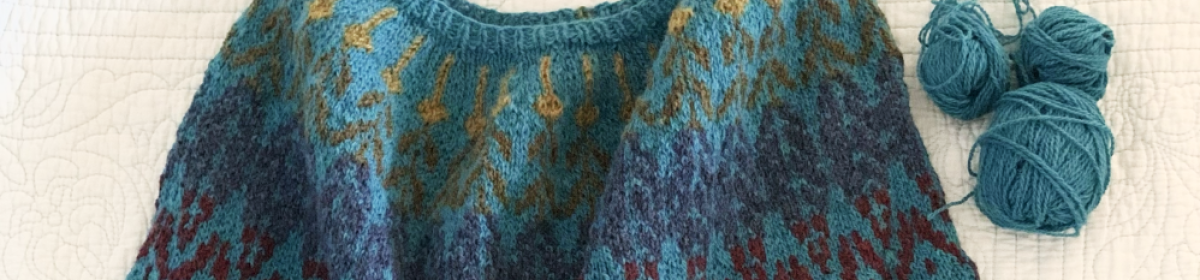
Meadow Moon is My First Jennifer Steingass Pattern

A while ago I decided to make 2021 a year for knitting sweaters. Now we’ve entered 2022 and I am finishing up my projects on the needles.

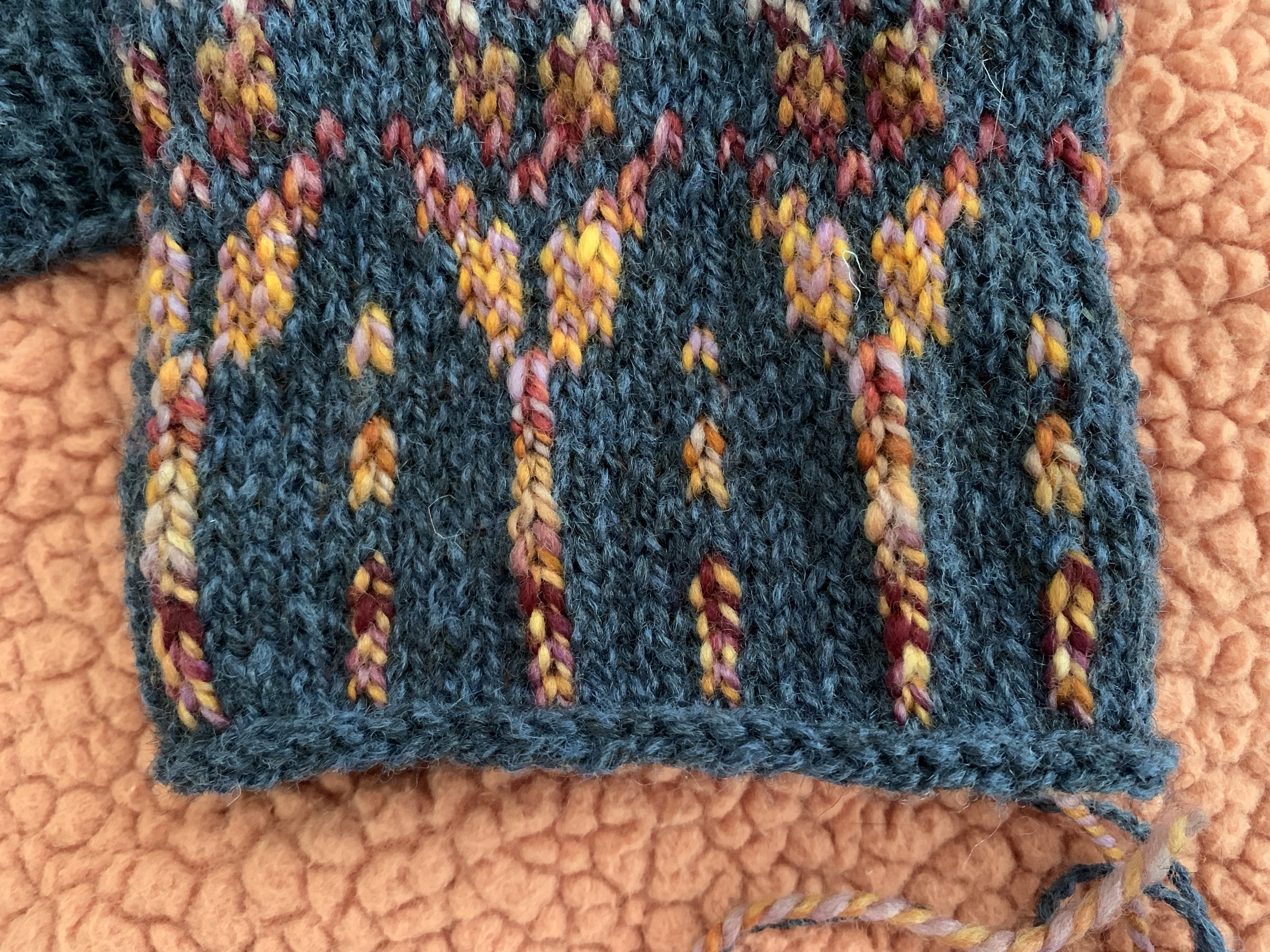
I’ve seen the Jennifer Steingass patterns around and love many of them. Her Ravelry store is Knit.Love.Wool and her sweaters have colorwork yokes, cuffs, and bottom hems. Many of her designs look to be nature inspired with patterns that resemble leaves, stems, and feathers. The pattern I chose looks like stems of wheat coming down from the neckline.

Sweater Knitting is an Investment

Choosing to knit a sweater means an investment of money as well as time. The sweaters I have knit have generally required around 1200 yards of yarn. Depending on the type of yarn purchased, it can be over $100 in material. Choosing a good quality (non-superwash) yarn is worth it. Wool will hold it’s shape and the sweater won’t stretch like crazy when it’s washed.

I purchased seven skeins of Rauma Finull wool in blue and decided on a hand-spun skein I already had as my contrast color. I had no idea how this variegated yarn would look when combined with the dark blue. So far, I think it’s looking quite good. I did not want a completely opposite yarn color for the contrast. With this yarn I have no control over what colors are coming up on the skein. It’s fun to see the colors emerge.

The Meadow Moon pattern is well-written and very easy to follow. This is big. I’m also knitting another sweater and the directions are difficult. Some designers go the extra mile to help knitters and some don’t. I’m learning to avoid some popular designers who have made me unhappy by not going that extra mile.

After the Fun Colorwork…

The body is a slog… it has taken a while for me to complete. Finally I bound off the ribbing and tried it on. Fit seems perfect. On to knitting the sleeves. At least there will be colorwork at the ends.

Although round and round knitting can be tiresome, it is great for car trips, late night television knitting, and knitting outdoors and soaking up the sun. I like the fabric being created, and would probably knit more sweaters like this one.
Meadow moon sweater knit
Body is done!

The first sleeve is finished. The decreasing was easy and looks nice and I followed the directions for length, which seems to be perfect.

One thing I changed was the bind off. I found the i-cord bind off directions in the pattern to be difficult. I began with it, but it didn’t look good. Possibly, I was doing it wrong. So I did it my way.

My i-cord bind-off resembles the one Stephen West shows in his video here. Except, I only cast on 2 – to the left needle, not 3, which follows my sweater pattern more closely. Then, *knit one, k2tog tbl, slip both stitches back to the left needle. Repeat from the star.

This bind-off takes some time to do, but it does leave a nice rounded edge.

With one sleeve to go I can see the light at the end of the tunnel

Finishing Up My Sweater Knit

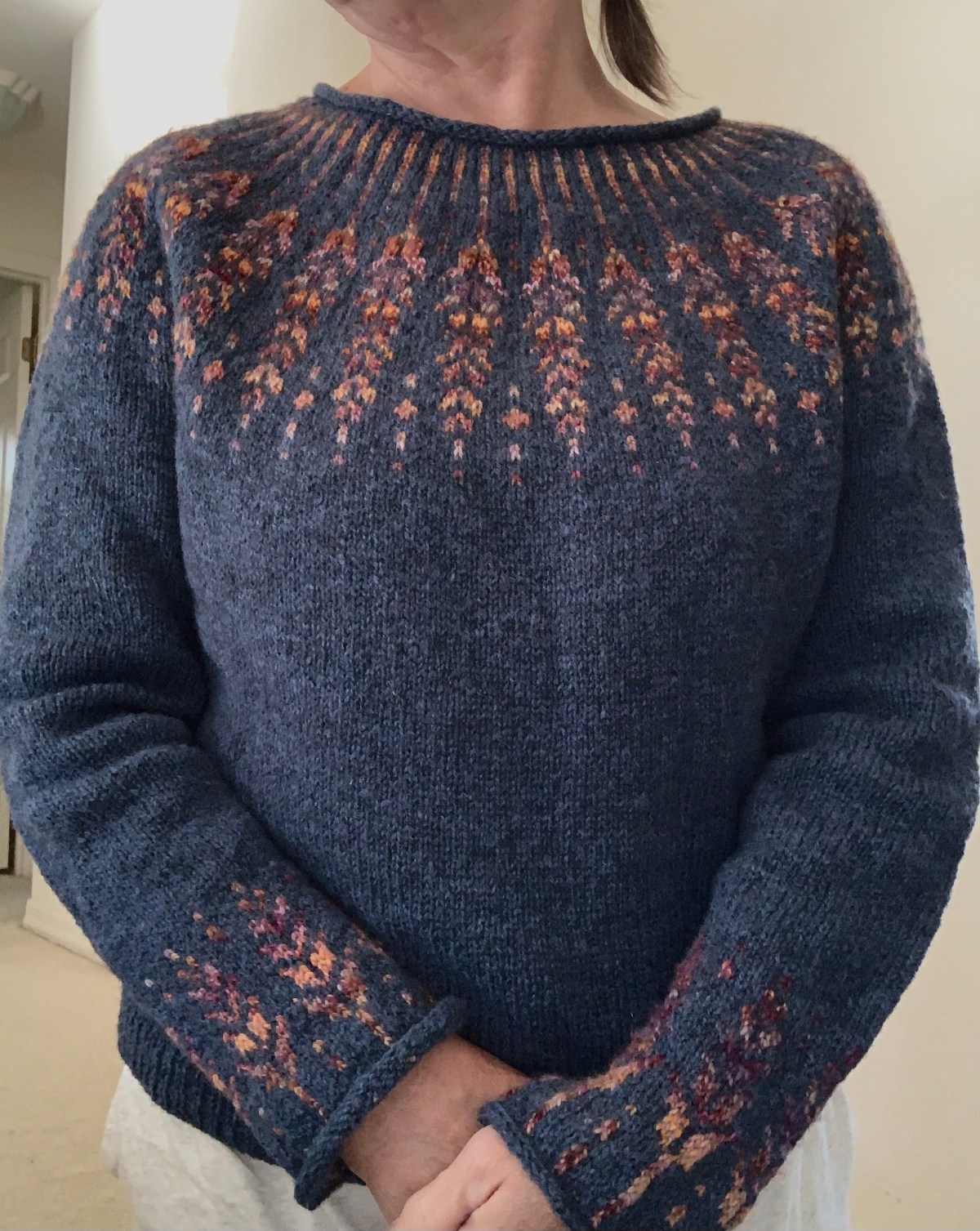
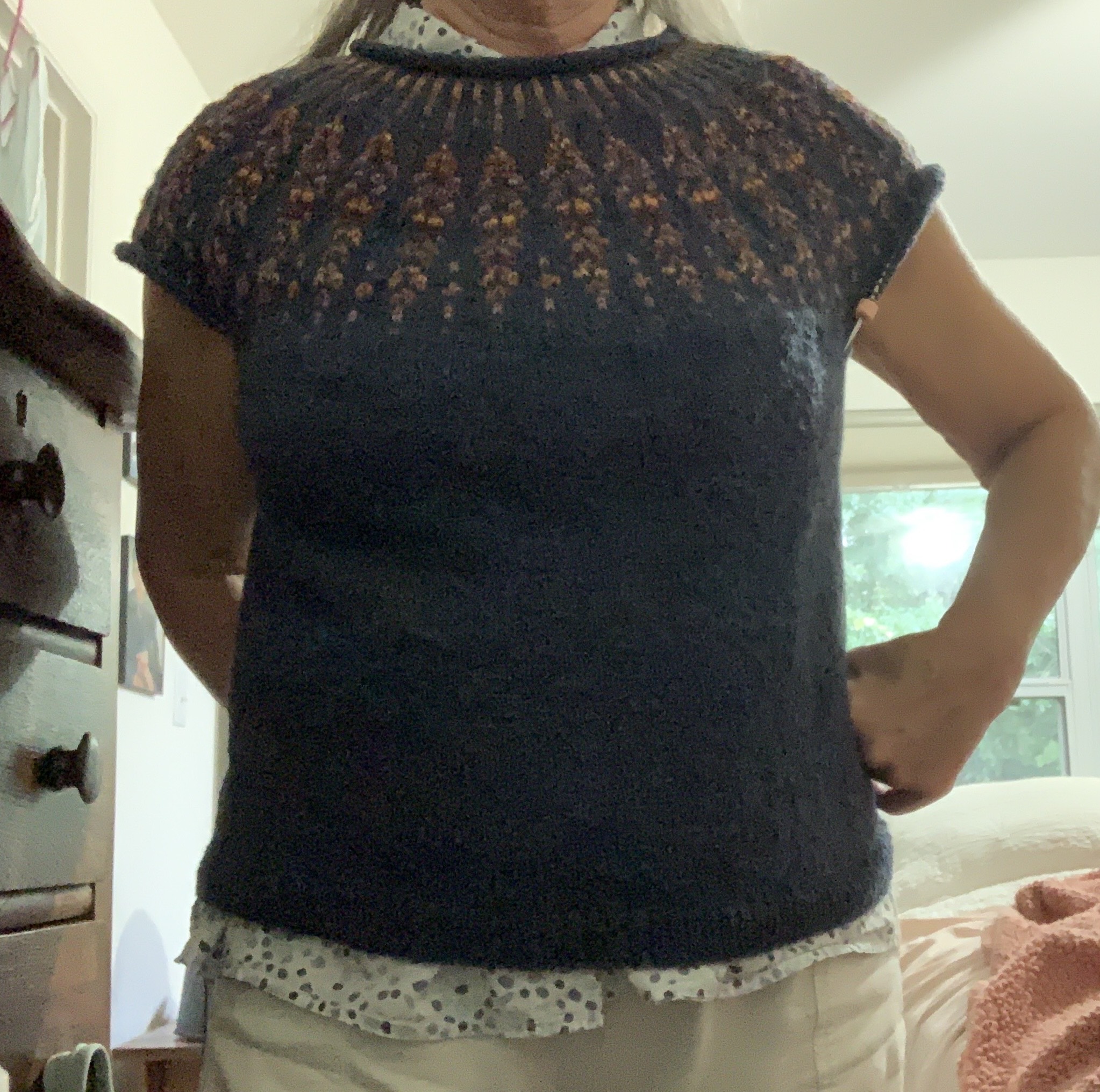
None of these photos are great, but here I am wearing the sweater BEFORE washing and blocking. The middle photo is AFTER the wash, and taken in the sun to show the colors of the contrast colorwork. All the bunching of the colorwork became flat once it was washed. Sleeve length is perfect for me.

The sweater is a perfect fit. I would do more short rows because I have a hard time figuring out which is the front / back!

The yarn has created a lovely, lightweight fabric. I think this is one of my favorite knits so far. *Also, it has become the most worn hand-knit sweater I’ve knit so far. It fits perfectly and is very light weight and comfy.


Read about what else I’ve been up to in my knitting world…

Knitting Boot Cuffs Trial and Error

My daughter asked for a set of boot cuffs and the request seemed easy enough. The actual knitting of the cuff is pretty simple, but the cast-on number and cast-off style took some trial and error.

I began by searching for boot cuff patterns. All I really needed to know was approximate cast-on numbers and then figuring the cables and where to place them.

The First Mistake

For my first attempt I cast on 60 stitches and then did a simple 4 stitch cable every 4 rows with two purl stitches between. This made for a lot of cabling! In the end – I got all the way through a loose bind-off – the cuffs were very big. My daughter’s legs are smaller than mine and I knew they wouldn’t fit her. She wants cuffs for the lower calf area for low boots.

Highland worsted
Highland worsted in color Teak

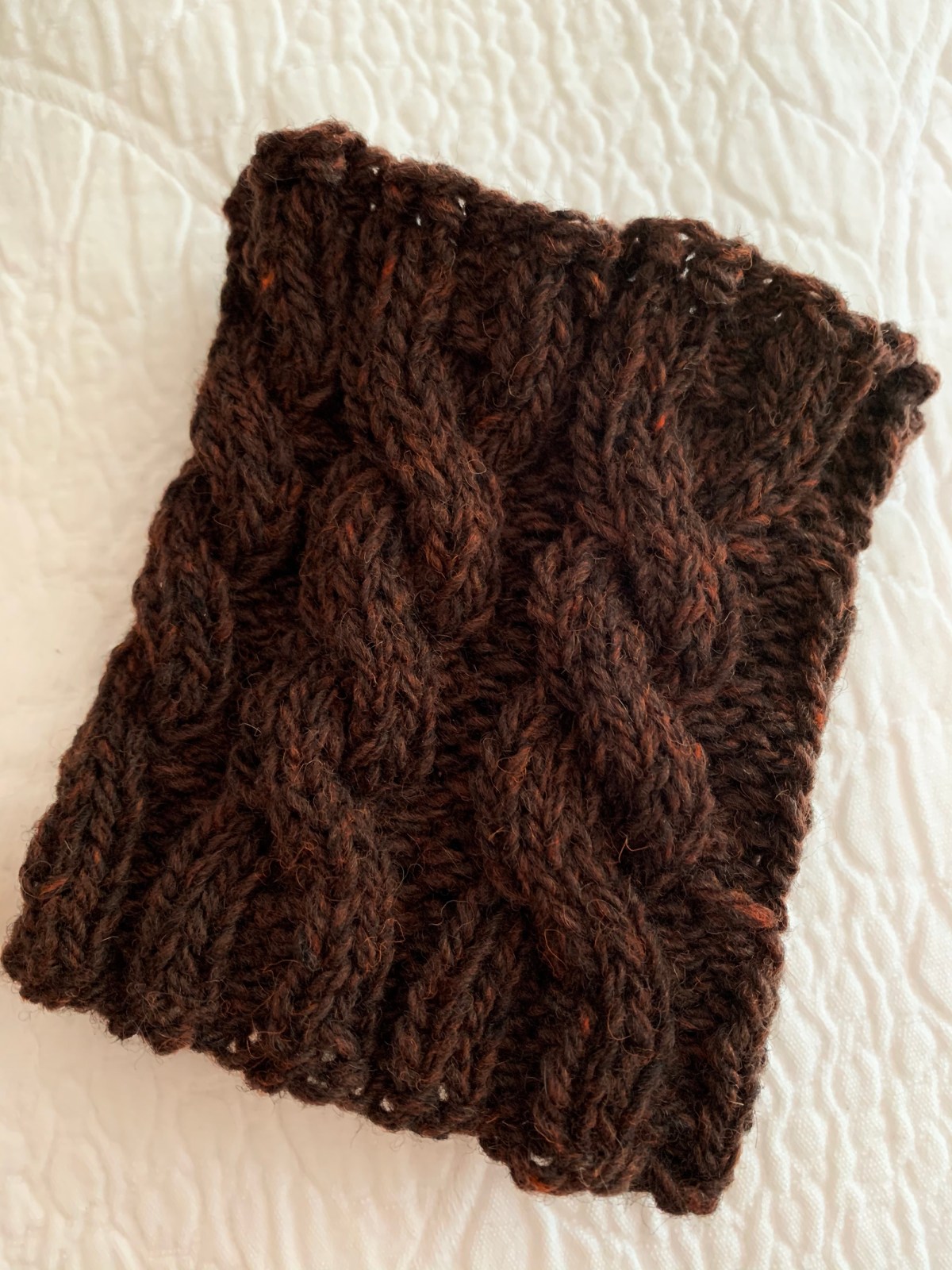
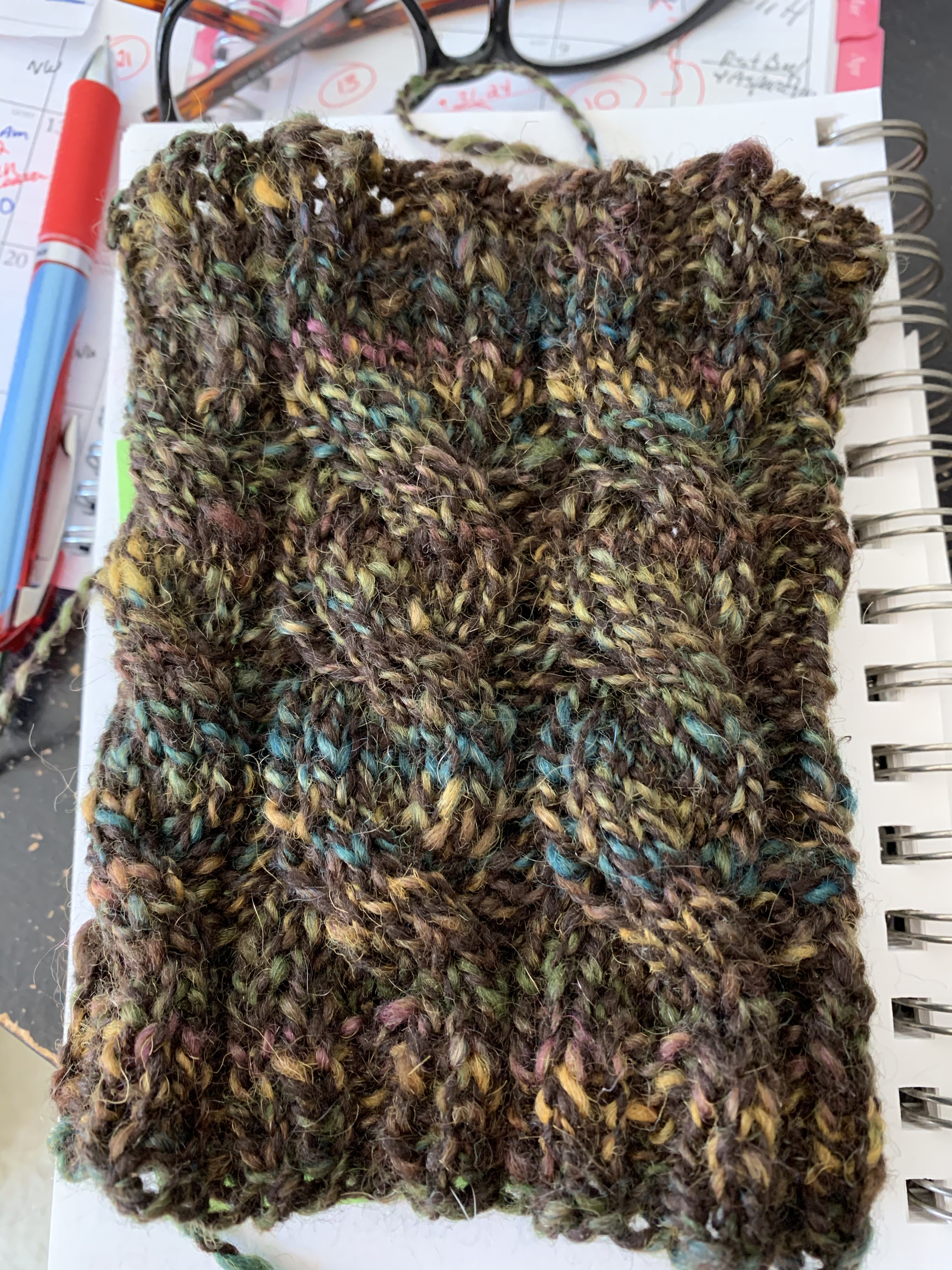
I tore out the Highland yarn cuff and began again with some hand-spun brown yarn.

Cuff # 2 Knit With Handspun

This time I cast on 48 stitches using the German cast-on, which is stretchy enough. I followed (somewhat) a free pattern for the Simple Cable Boot Cuffs. I did only six knit rows between cables to shorten the cuffs a bit. This way of cabling makes for a faster knit because only three rows of cables are done – unless you want a longer cuff. The cables use six stitches and they look nicer that way.

When it came to the stretchy bind off, I tried a twist bind-off to begin with and found that it really didn’t seem very stretchy. I only got a few stitches in and then switched to Jeny’s Surprisingly Stretchy Bind Off as shown on Andrea Mowry’s YouTube video. BUT… I decided to do the yarn overs only on the two knit stitches and then bind off regularly on the two purl stitches – the video only shows knits. I was hoping for less of a flare when finished.

Boot cuff in handspun yarn
Handspun yarn by Clarion Call Fiber Arts

I messed up the top part of the cuff by knitting too many rows and doing the combined bind-offs so this cuff will have to be my experiment cuff. I will knit another to go with it, but I will begin again with the Highland wool for my daughter’s pair.

boot cuffs in Highland Teak
Brown “Teak” boot cuffs are about 5 inches tall

The brown “Teak” wool cuffs seem to be the perfect size for what my daughter needs. I won’t know for sure until I send them off to her for a try-on. For some reason these cuffs came out much shorter than the cuffs made of handspun. I guess it’s a difference in the yarn, and I did a few extra rows on the variegated cuffs.

boot cuffs hand knit in wool
Cuff size differences

My daughter will get both sets of boot cuffs because I don’t wear boots in Florida. Once I finish her orange hat, I will send them all off to her.

Ankle Boot Cuffs, Note to Self

You may not follow my directions, but I’ve written this info down for myself.

  • Size 7 circular needle (9 inch) cast on 48 – German Twisted makes a loose cuff.
  • Knit 2×2 rib for 4 rows
  • Switch to size 8 DPN’s (my 9-inch circular will not work) 16 stitches each needle.
  • Rows 1-5 *Knit 6, Purl 2 around
  • Row 6 Cable – hold 3 stitches front, knit 3, then knit 3 from cable needle (I use a DPN) & purl 2
  • Repeat rows 1-6 twice more.
  • Do 3 rows of *knit 6, purl 2
  • Do 3 rows of ribbing, k2,p2
  • Bind off using the stretchy bind-off for knit stitches only. BO purls normally. (Stretchy bind off: knit one to begin, then yarn comes over needle from the back. Knit one and pass the first two stitches (stitch & yarn over) up and over the third stitch on the needle.) See Jeny’s bind off video link above.

The Bunny Hat Was Knit With Hand Spun Yarn

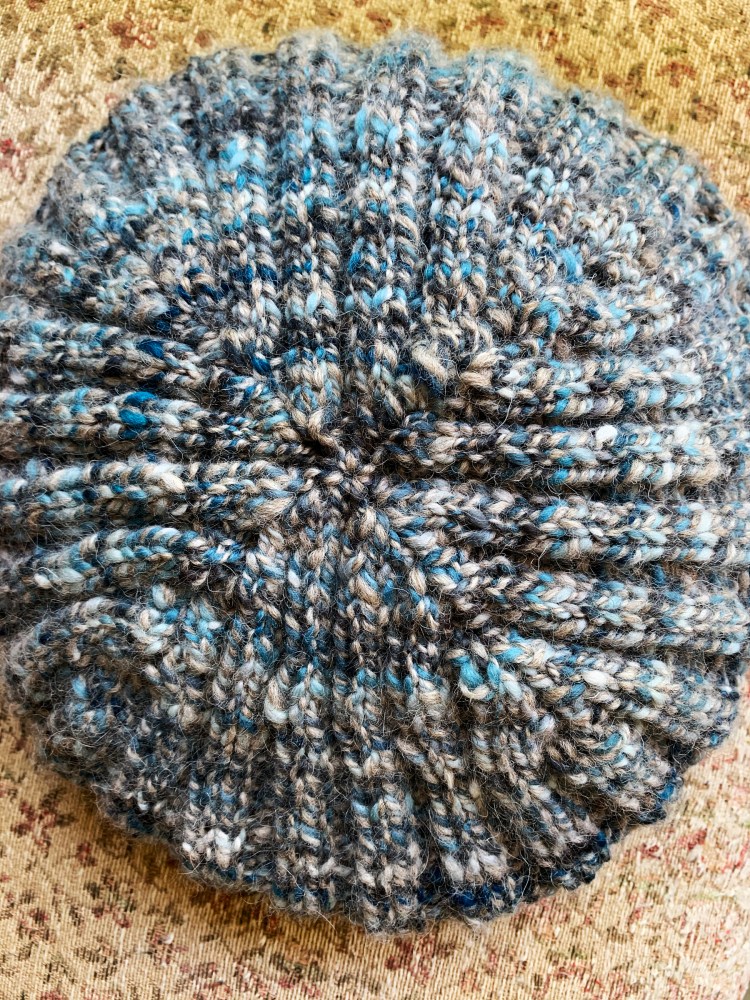
Just about a year ago I purchased two hanks of hand-spun yarn at Clarion Call Fiber Arts at Etsy. One of those hanks contained some bunny fur (angora), which made it feel so wonderful, and I finally decided what to use it for. A variegated yarn such as this is great for knitting a hat. Since I only had one skein, it came down to a cowl, hat or mittens and hats are favorite projects.

Bunny fur hat
Beanie

How I Made This Hat

I did not follow a pattern and simply decided to knit a 2×2 rib. I wanted a wide cuff to roll up so I knit until the hat was about 10 inches tall before I began to decrease.

Knitting a ribbed beanie
I knit this hat to be quite long for a wide brim

I cast on 112 stitches using the Old Norwegian cast on and a size 6 US circular needle (16 in.). Then I began K2, P2 around. (I tend to be a tight knitter.)

I really had no idea how to correctly decrease a 2×2 rib. I decided on a SSK and K2tog side by side four times around – four decrease seams. So, 112 divided by 4 becomes 28. I placed a marker after 28 stitches around, with different marker for BOR. As I knit around, at each marker, including the BOR, I did a ssk, then a k2tog. With only a few stitches left on the needle, cut the yarn and draw through stitches to finish.

The crown ended up looking like this: I’m happy with it.

Decreasing a 2x2 rib hat, knitting
Crown showing decreases
Bunny hat crown showing decreases
Crown was knit with decreases in four places around.
Bunny fur ribbed hat

I’m very happy with the finished hat. A ribbed hat is easy to knit anywhere, at any time. When I lived in New Hampshire this is the type of hat I would grab whenever the wind was blowing and I needed good ear coverage. (I had to snow-blow my own driveway.)

This yarn was hand spun, which means it is truly unique. For me, that is the exciting part of knitting! I love to know where my yarn came from – whether is was sheep grazing in Norway, or a little bunny living in New York.

My other current project is a stranded colorwork pattern from the Hat’s On book. I am also using hand-spun yarn, but from another source. I’ll be blogging about this one later.

Turkish patterned cap

Just Bought New Hand-spun Yarn

As I was browsing Instagram the other day I saw some beautiful handspun yarn photos. Taking a chance, I clicked the website link and there before my eyes were beautiful, colorful skeins to purchase! It wasn’t cheap, at $38 a skein – see the store link below this photo – as would be expected for good quality yarn of this type – but finding handspun yarn in such lovely colors is nearly impossible, so I jumped in and ordered two skeins.

Pink and tan handspun yarn
New handspun! Beautiful..!

Wound Up Fiber Arts

Wound Up Fiber Arts is the name of the shop where I purchased the bright pink “Fire Starter” and lovely “Toasted Coconut”, and I’m so glad I did. Today – the day I am typing this – they are offering only roving or top (not sure that is the correct term), fiber, to be spinned into yarn. There is not one skein of yarn left for sale. Of course that will change, I’m sure, but it’s hit or miss unless you keep up with the postings of such a site. On Instagram they admit to being “sporadic”. And that seems to be the way. This beautiful type of yarn doesn’t come off a machine. It is painstakingly crafted.

I believe that a lot of people who spin their own yarn use it themselves! It’s hard to get buyers to understand the higher price, so I understand.

Sample Swatches of the Handspun

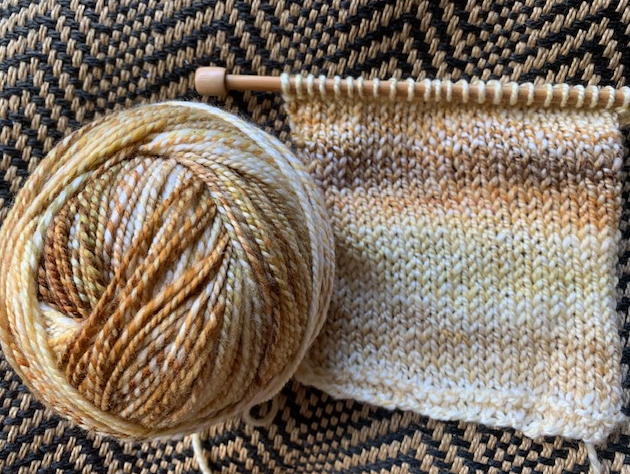
For my swatches here I used a size 7 needle for the pink, and a size 10 for the tan. Each swatch is only around 25 stitches across, but I wanted to see how the colors looked knit up.

When I look at a skein or ball of this yarn I can’t imagine how it will look in a project. When knitting a hat or sweater using this yarn for colorwork, each shade will carry a longer way so the colors will slowly work their way up the garment.

Bright pink handspun yarn
“Fire Starter” handspun

I always wind my hanks of yarn into a ball because I don’t have a winder. This yarn was easy to wind and I found no knots. I just love the colors of this pink. It’s so soft and quite a big skein too. Both are over 300 yards.

Sample swatch handspun pink
Fire Starter yarn color way knit up
Tan "Toasted Coconut" handspun yarn
“Toasted Coconut”
Handspun swatch in tan variegated
“Toasted Coconut” sample swatch knit on size 10 needles.

I think I’ve found a hat I’d like to make where this yarn could be used. Hats are one of my favorite items to knit. The swatch will be ripped back now that I’ve seen the colors.

I ended up using a little of this yarn to create a little baby hat and it came out so cute!

Three little hand-knit baby hats
Baby size hats

Finding More Handspun Yarn to Purchase

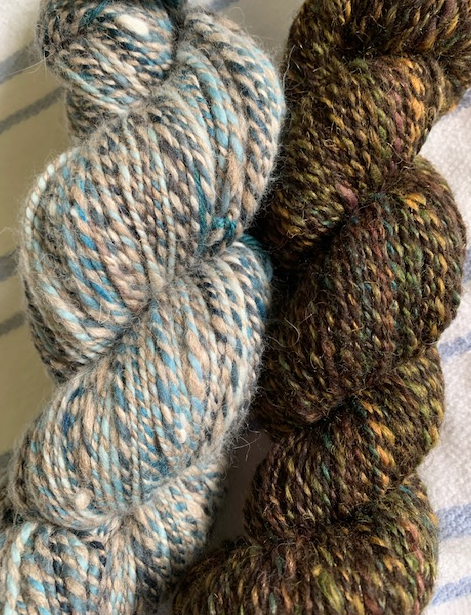
Many types of yarn are hand-dyed, but not all that many are also hand-spun. With any luck you may find a yarn maker who is happy to share how they came by their wool / fiber and explain the process of hand-spinning it into lovely knitting yarn. I purchased a large skein of blue variegated handspun yarn from Clarion Call Fiber Arts on Etsy, where she explained that some of the fiber used in the yarn came from her sister’s bunny! The brown skein below is from her as well, but it is very scratchy.

I’ll admit that after buying Wound Up’s yarn and Spincycle’s yarn, I prefer those over Clarion Call’s, for color and softness. But, Clarion’s yarn is rustic and I decided to knit a hat.

two skeins of hand-spun yarn
Hand spun yarn by Clarion Call shop at Etsy

I ended up knitting this ribbed hat with the blue hand-spun. I love the rustic look with the fuzzy rabbit fur. It will keep my ears warm on these cold Florida winter mornings… LOL.

Bunny fur hat
Beanie made from hand spun yarn

Handspun yarn is time-consuming to create, and that is probably the number one reason it is in short supply. I’ve read articles about how spinners create these lovely collections of color and it’s interesting. It can be done using a drop spindle or a spinning wheel. But there is a lot involved, and I am no expert. YouTube has numerous videos on the subject of hand-spinning.

What to Knit With Handspun Yarn

I now own five skeins of variegated handspun yarn. I need to find a way to show them off in projects!

On Ravelry and Instagram the main knitting project using Wound Up Fiber Arts yarn is socks. Yuck, I dislike making socks. This yarn is too pretty to go on my feet, so I will save it for something like stranded colorwork on a sweater or hat. Although I see why people use this yarn for small, circular knitting. Each section of color will make pretty stripes.

Mill-spun with similar appearance of hand-spun

Andrea Mowry of Drea Renee Knits has a shawl pattern called “Nightshift” that I’ll bet you are familiar with if you knit anything at all. This shawl is all over the internet and has been knit by thousands of people! And she often calls for handspun yarn in her patterns. This is how I came across Spincycle yarn. The problem is that many of Spincycle’s yarns are not in stock, and especially those lovely colors needed for Andrea’s patterns.

Spincycle’s yarn is really lovely, but these skeins contain 200 yards only as compare to the yarn above, and each skein is around $32.

Spincycle yarns
My two skeins from Spincycle Yarns

Here is a pullover sweater named “Shifty” which calls for 4 different colors of Spincycle handspun yarn. If I wanted to knit this sweater I could only buy 1 of the 4 colors named in the sample pattern (at the present time) because the other three are sold out.

Handspun yarn is especially pretty when combined with other colors and used as colorwork. As you knit the contrasting color pattern the variegation of the handspun adds even more uniqueness to the design.