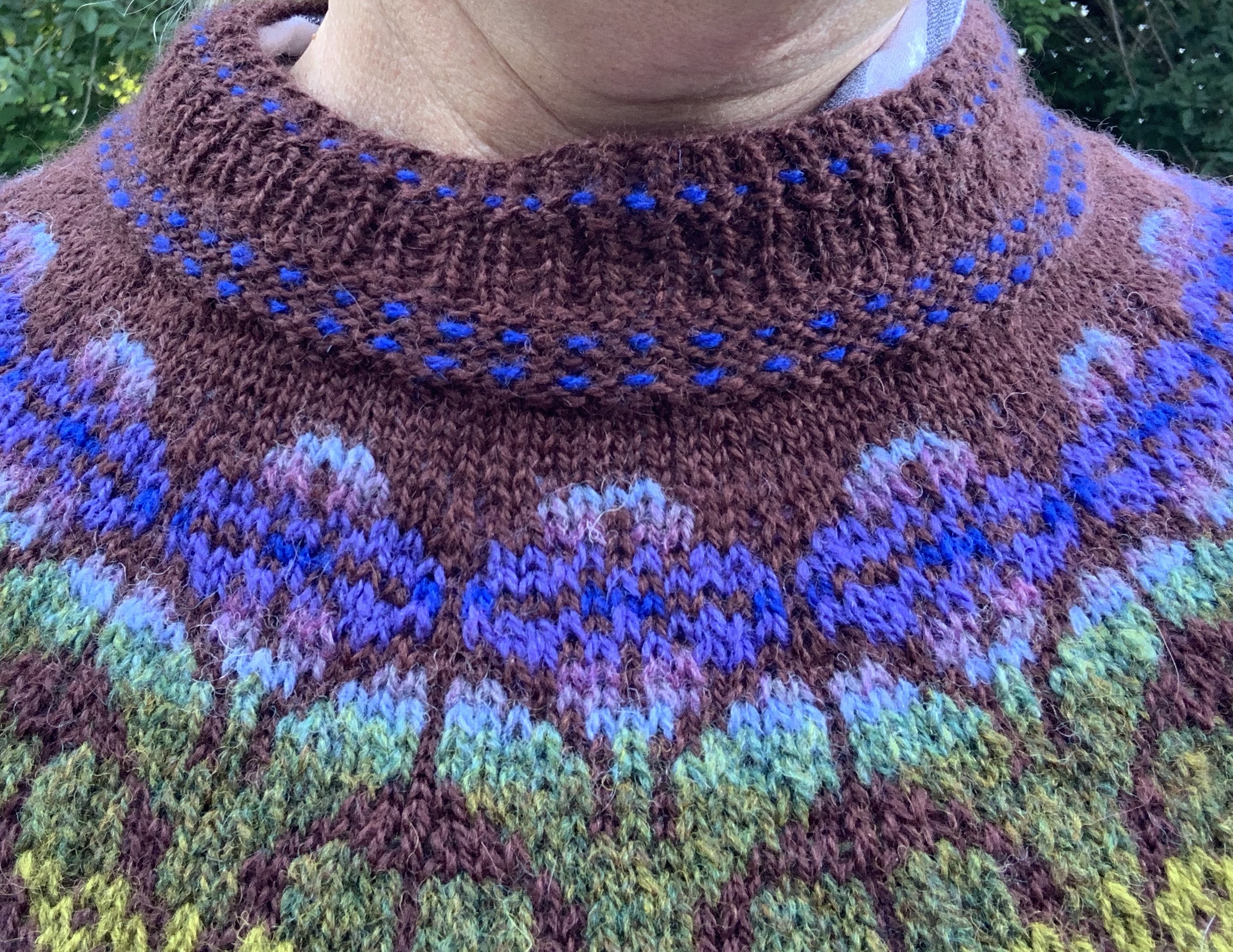
Autumn Alpine Sweater Size and Measurements

As usual, sweaters I knit by this designer end up long and big. After finishing the colorwork yoke of Autumn Alpine, I am looking at some options as I move forward.

The Autumn Alpine sweater pattern is offered by Caitlin Hunter of Boyland Knitworks. It is knit in a fingering weight yarn and has a floral, colorwork yoke.

Initially I purchased the pattern with plans to knit this one for my daughter. I chose the smaller size 2 for that reason. For some reason, although I do make a gauge swatch always, sweater projects from this designer always come out very big in the end.

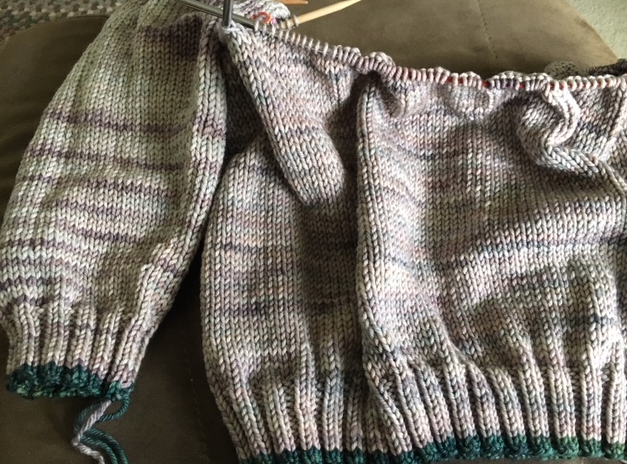
I admit right off that I did not do a colorwork swatch for this pattern, only the stockinette stitch, but I did add a few rows of color. From experience, I go up a needle size for colorwork. As I knit this yoke, I kept thinking that it was getting quite long. Now that I am finished (with the yoke) and can measure it, the length to the split for body and sleeves is nearly 11 inches and not 8 as the chart on the schematic page of the pattern. (No measurement of the yoke is mentioned in the actual pattern pages, but I should have looked at that schematic page.)

Am I going to end up with a droopy, oversize sweater once again? My Easy V sweater, by this same designer also came out long and large.

The Dilemma

Here is my problem. Normal stockinette swatched comes out right on target for size. I know that my stranded colorwork will be a bit tighter and the only option is to knit it with a larger needle or chance having it pucker when transitioning to plain stockinette on the finished garment.

A larger needle will also add length and apparently this is what is happening. Therefore, what can be done? I’m not a super experienced knitter when it comes to making my own gauge changes to a pattern…. so….I must go down a sweater size. Fortunately for me, I had begun knitting a smaller size anyway. Ordinarily I would knit a size 3 or 4 for myself, but I am following directions for a size 2. It is the shortest of the yoke charts and still came out very long. 

Stitch Counts Comparison to Other Patterns For Body Width

Now that the body and sleeves have been split, I want to know if there are enough stitches to go around me comfortably. For this, I dug out two sweater patterns that I’ve already used. They are by designer Jennifer Steingass. I compared the stitch counts on the bodies to the stitch count I have for this knit.

My Autumn Alpine body stitch count is 240 (for the size 2). Goldenfern body stitch count is 252, and that sweater is plenty wide on me. Meadow Moon stitch count is 238 and fits me fine. 

All sweaters are knit using a size 4 needle, but I knit various sizes of each pattern. If you notice, the small size 2 of the Autumn Alpine is close in number to the stitch count for Meadow Moon. It stands to reason that this current pattern will be large enough around for me. BUT, I used a different type of yarn.

The Yarn

I used Rauma Finnul yarn for both Steingass patterns. I love Rauma (and I love Jennifer Steingass patterns too). I’d have to say that Rauma yarn is one of my favorite yarns to date. I have lots of yarn yet to try, but both sweaters knit with Rauma came out soft and comfy and great looking.
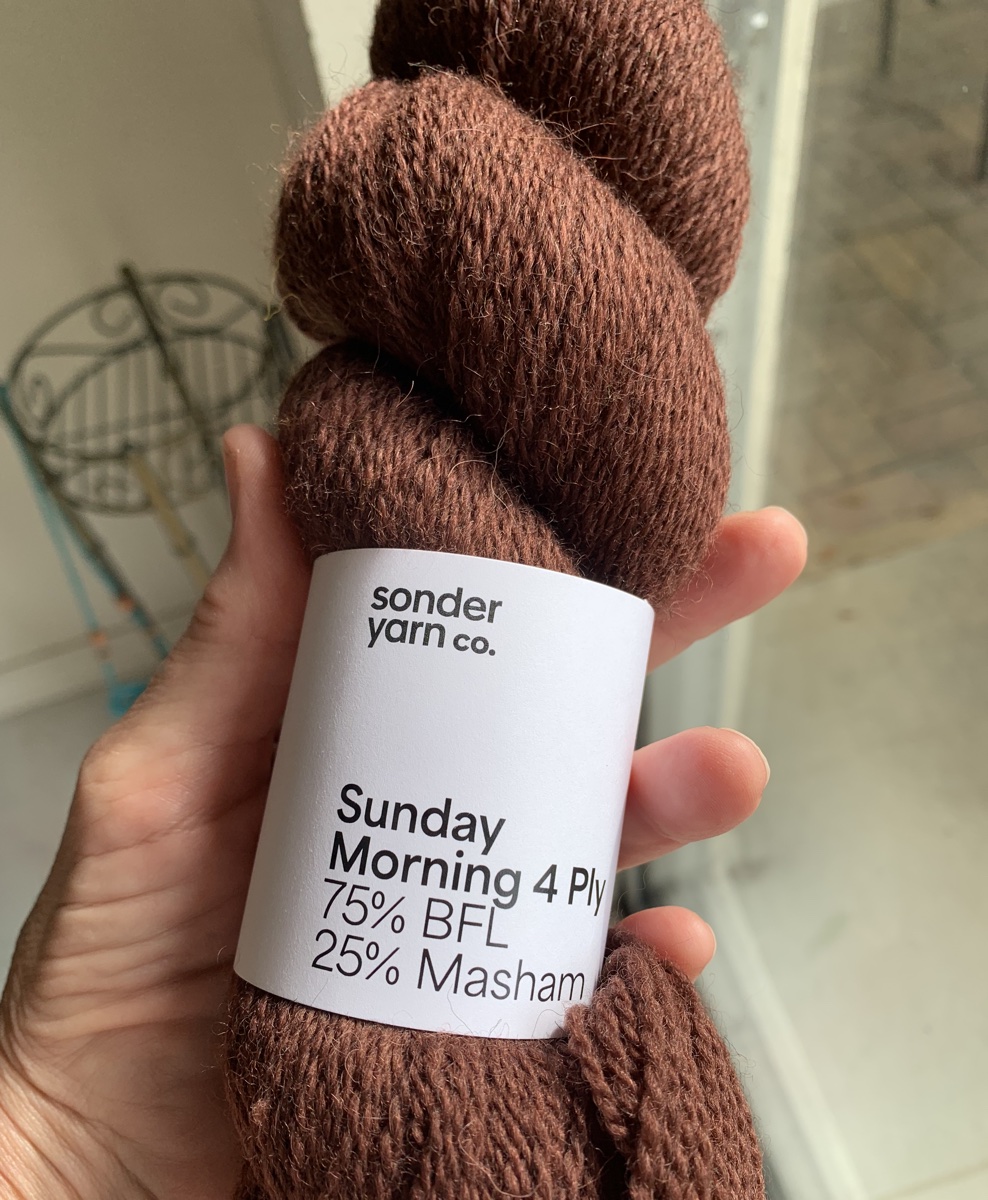
Sonder Yarn Sunday Morning French press color
Color “French Press”

This time I am knitting with Sonder Yarn company’s 4 ply. I bought it during a big sale and wanted to try it due to the gorgeous colors. This chocolate brown I am using (color way French Press) is pretty, but the yarn is alternating thick and thin, at times becoming very thin.  Also, I’ve already had three knots in my first yarn skein. Even so, it is very pretty, and washes to become nice and soft.

knitting colorwork Autumn Alpine pattern
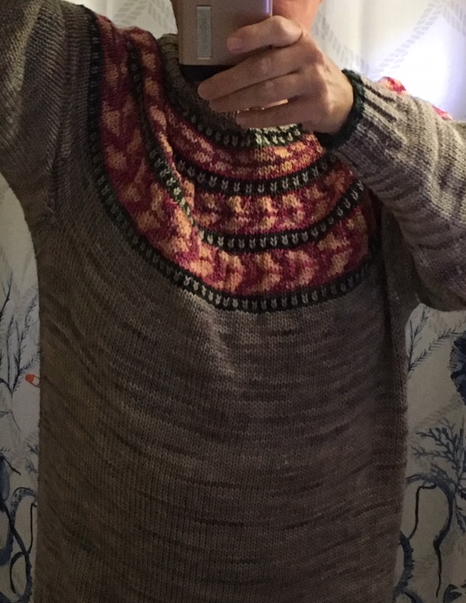
Yoke finished

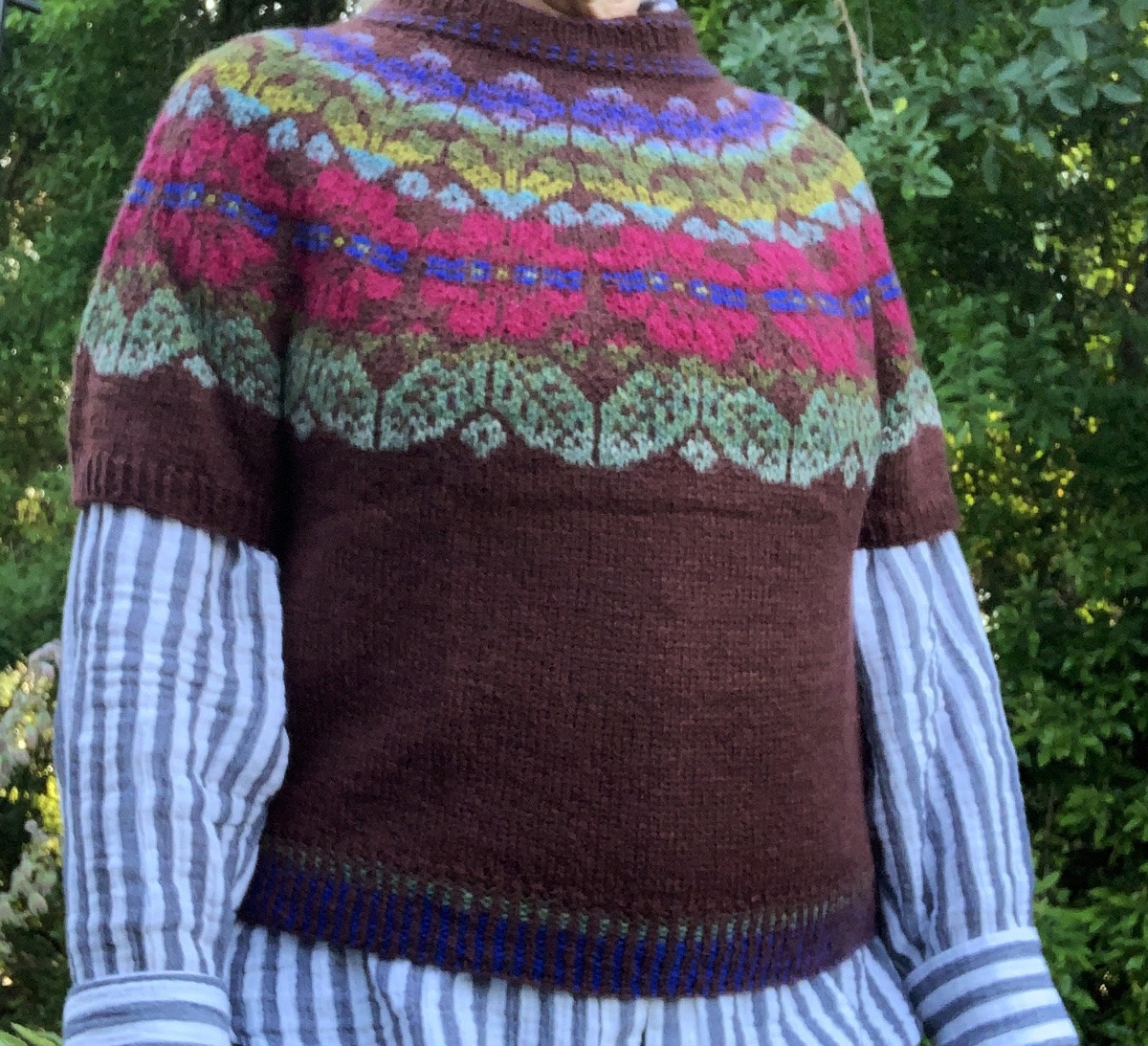
My color choices for the yoke are less than wonderful. It will be fine for me, but I would definitely have changed some things. I won’t rip this out, and consider it to be a bit bohemian and unique. I do love the examples (knit by others) where all one color, or close colors, were used for the colorwork.

Considerations

After browsing through the finished knits on the Alpine Autumn projects pages at Ravelry, I see that many sweaters seem oversize when worn. Helpful: **One knitter posted that she split for the sleeves before finishing the yoke patterning. This is a great idea if you want to figure out matching sleeves to yoke patterning.

Finishing Up The Sweater

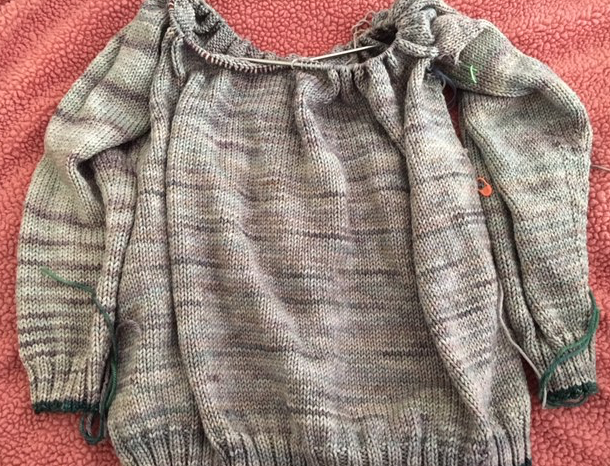
In the end, I chose to do a corrugated rib on the body. Then I knit short sleeves to make this sweater more of a layering piece. I feel relief at getting this project off the needles. Currently it is drying and then I plan to see how it fits.

sweater knitting
Short sleeve version

Fixing the Neck

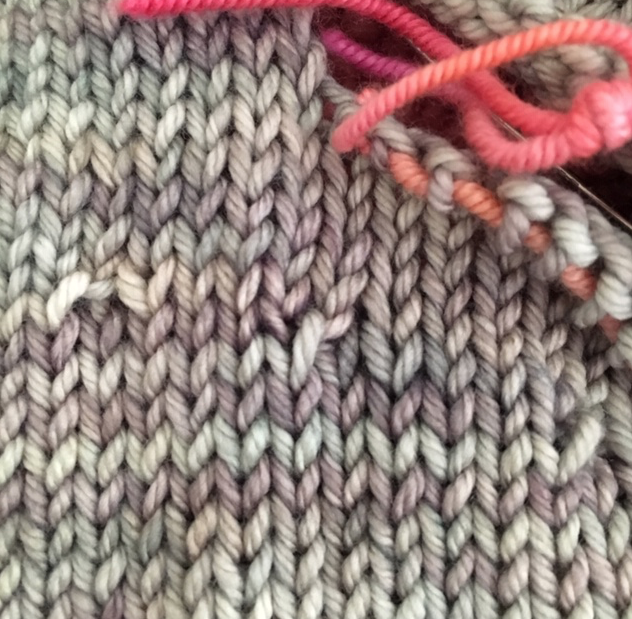
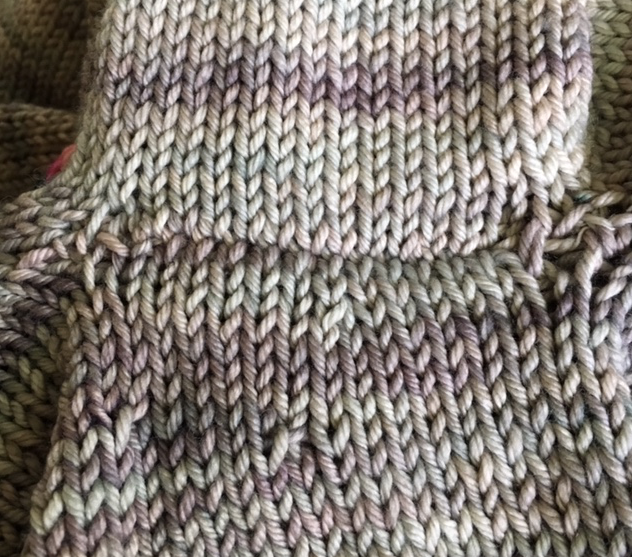
I plant to pick up stitches around the bottom of the neck ribbing and then remove the current stitches. It doesn’t work for me.
small green yarn

More stories About Knitting…

Something went wrong. Please refresh the page and/or try again.

Yarn Selections and Casting On For the “Easy V”

Planning to knit the Easy V pullover pattern by Caitlin Hunter.

Having grown up in the 60’s there is some bohemian / hippy blood in my veins. I love a unique boho pattern and the “Easy V” sweater caught my eye.

The designer is Caitlin Hunter of Boyland Knitworks. I’ve knit a huge shawl of hers, which was a lot of fun (see it at the end of this page). Also my very first sweater knitting project was one of hers called “Umpqua”. It was a fail for me because I used the wrong kind of yarn (superwash) and it grew huge! I didn’t know any better at the time.

The Easy V has a colorwork yoke and colorwork on the sleeves. I believe it is meant to be a loose pullover. The pattern link is down the page if you’d like to see examples of the pattern and buy it.

Time to Cast On – Twice

I hope this is not a bad omen, but I had so much trouble beginning the cast-on. First I used the wrong needle size (I’m blaming that on the wine.) Before I realized my needle size mistake, I had decided to add some green mohair with the Plotulopi to give it strength.

I cut the yarn and didn’t bother to frog it. I began again with the correct size needle (size 4). This time I ran out of yarn in the tail of my Old Norwegian cast on! I finished it with a regular cast on.

Holding the two yarns together will be fiddly, but that Lopi yarn by itself breaks very easily.

I don’t know what is up with the cakes of Plotulopi as they are all attached together in the center. I have plenty of the yarn, so loosing a bit to that weirdness is okay. Getting a good color shot of that wool will be tough it seems!

Two Necklines Begun

After I had worked a bit on the green neckline, it began to look pretty large. I decided to begin again with a size 3 needle using some white Lettlopi yarn. It’s hard to tell a size on this sweater because the neckline is very unqiue. I did not do a gauge swatch mainly because I didn’t want to use up my hand spun yarn on a swatch. BUT… once some knitting had been done I did check my gauge and it’s very close. Of course the item has not been washed and blocked either.

I kept the green collar / neck and will end up making two of these sweaters!

I began the colorwork using the size 6 needle, but ended up going up to a size 7. This yoke gets large around with over 300 stitches on the needle. I’m knitting sweater size 3.

Working with this type of colorful hand-spun yarn can be tricky. I love the colors, but they can end up looking very different once knit into a project.

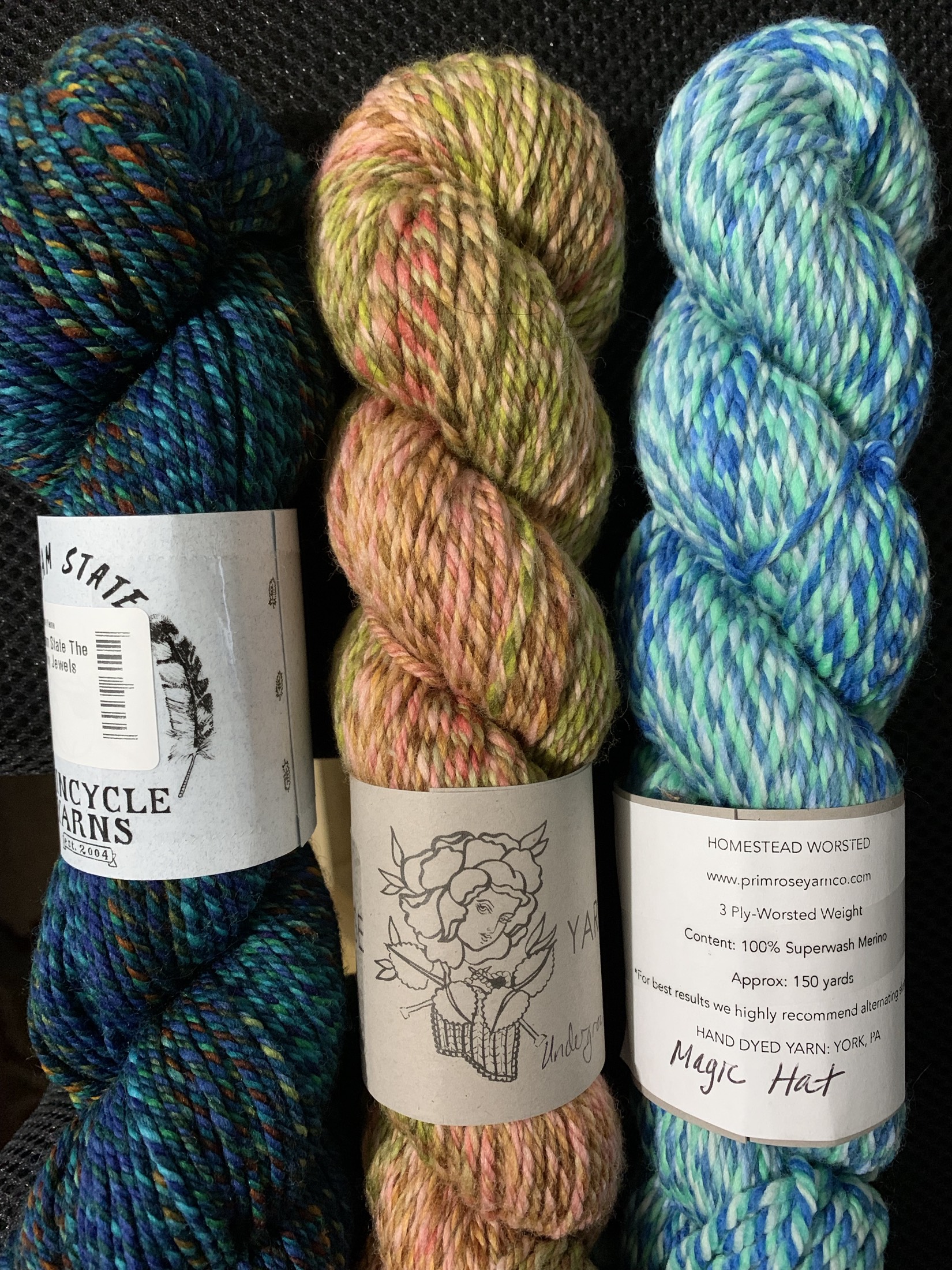
The yarn I chose for this colorwork yoke are: Primrose Yarn Company’s “Undergrowth” shown in the middle of the three skeins below. Also used the blue “Magic Hat” (below in skein and ball) and the speckled “Starling” (ball).

Looking at the skeins, I thought that “Undergrowth” would be more pink, but actually it is more tan / brown. Unfortunately you don’t really know until the item is knit. This yarn is too expensive to waste on a swatch, IMO.

The colors are good together, but not really what I had expected. The white color area used up nearly one skein of my leftover Lettlopi, so the main color for the body and sleeves will be brown Lettlopi.

Easy V in Green

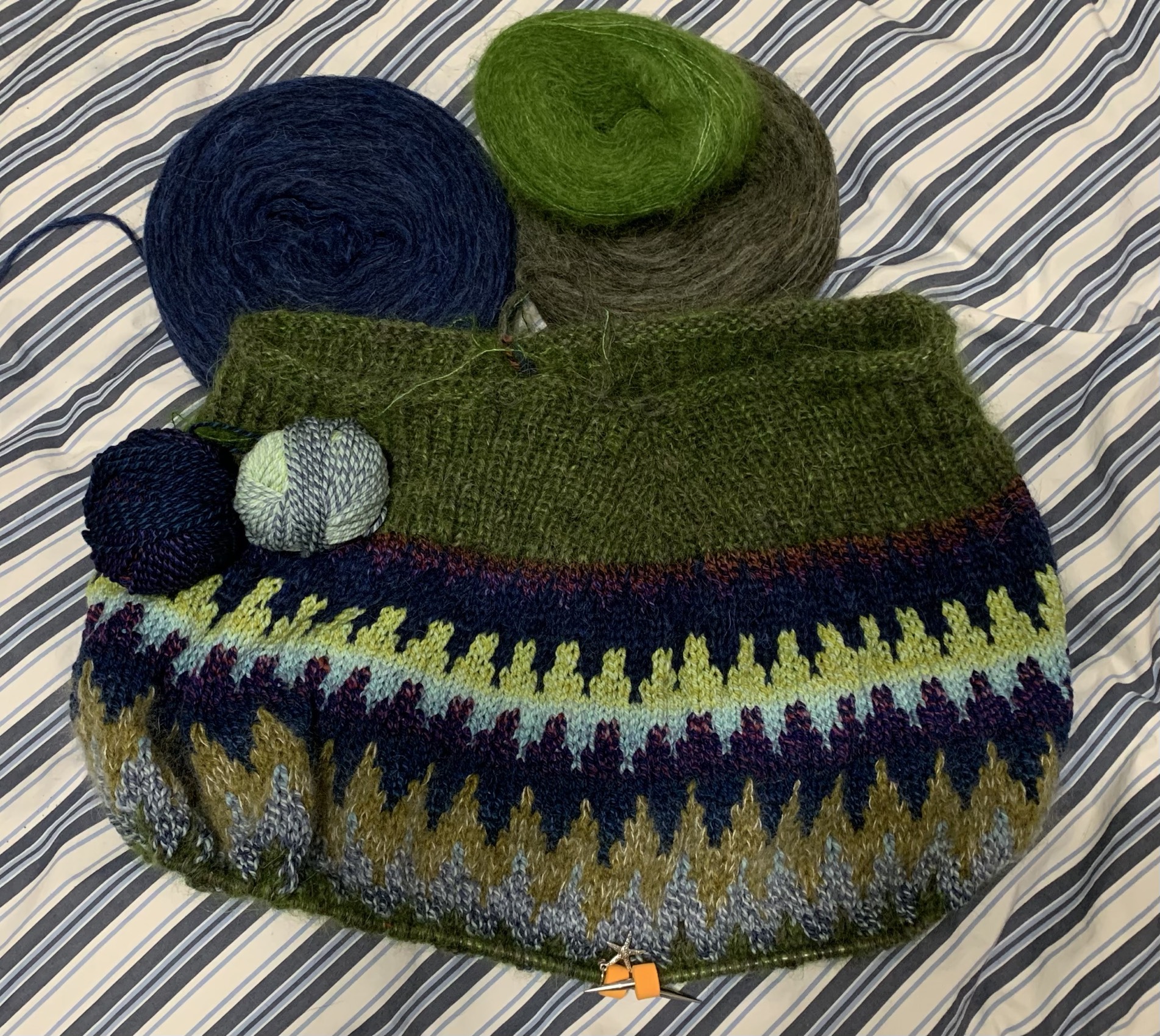
My second Easy V is knit with Plotulopi and mohair held together. The colorwork yoke contains some variegated lime green-blue, dark blue plotulopi and other yarns I am using up.

Buy this pattern: Easy V Pattern Page at Ravelry

I will be writing another page about the completed knit of this pattern, but at least it seems I have finally decided on size and colors.

It turns out that this yoke had a line on the colorwork chart that used three yarn colors at once. I changed it to two for my yoke, but the designer has updated the pattern so they are all two colors.


More by this Designer – Moon Sisters – Shawl by Caitlin Hunter

The Moon Sisters shawl is a great way to use up yarn. It is done in mostly knits and purls with a fun bit of colorwork in the center.

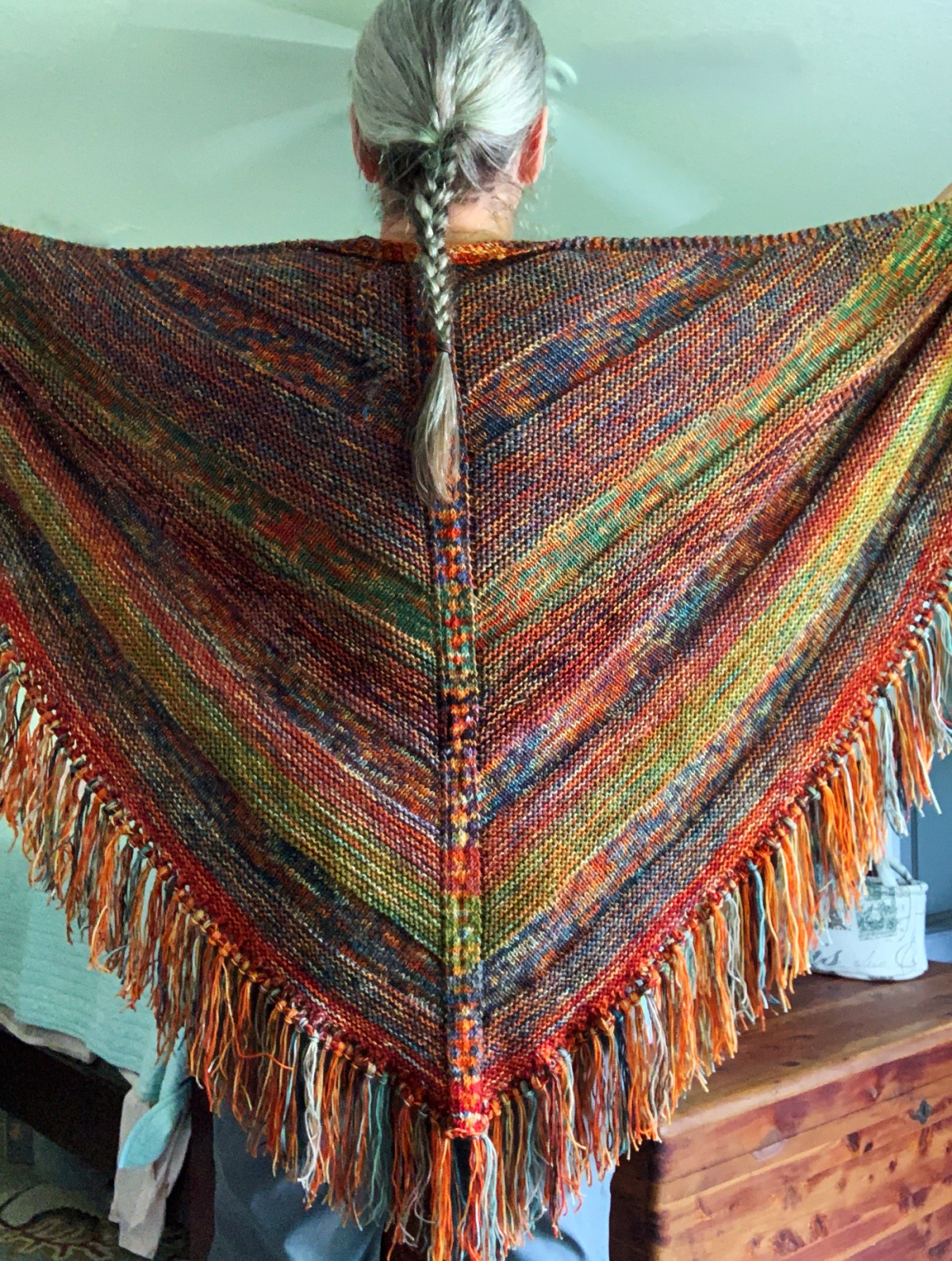
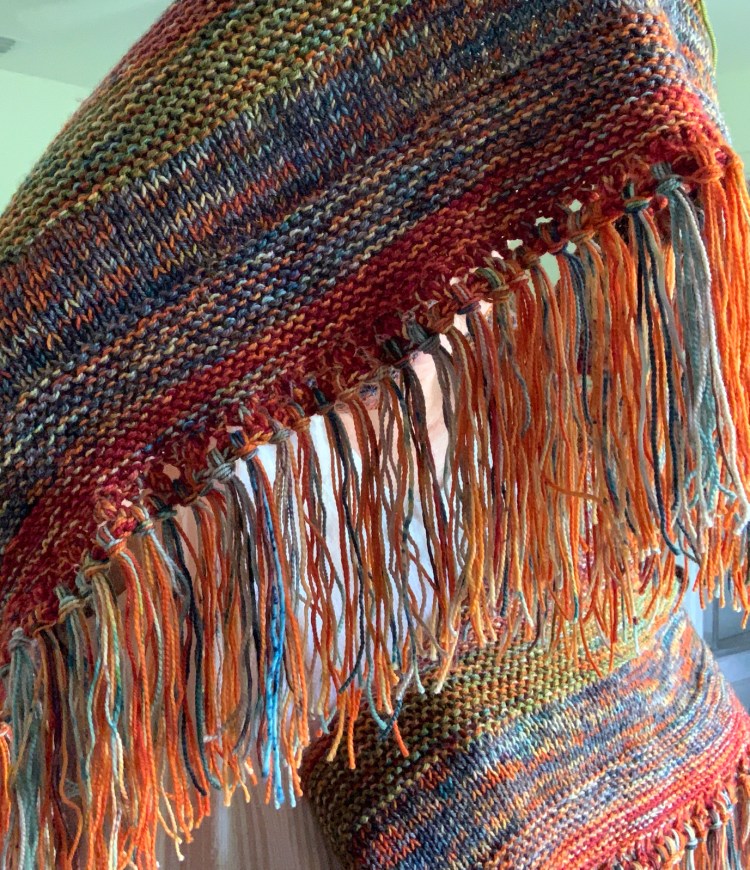
Moon sisters shawl finished knitting with tassels attached.

Here’s what else I’ve been doing

First Attempt at Knitting Clotilde

I didn’t get far when I began the Clotilde Cardigan pattern, but it’s a good looking cardigan, and I’ll try knitting the pattern again.

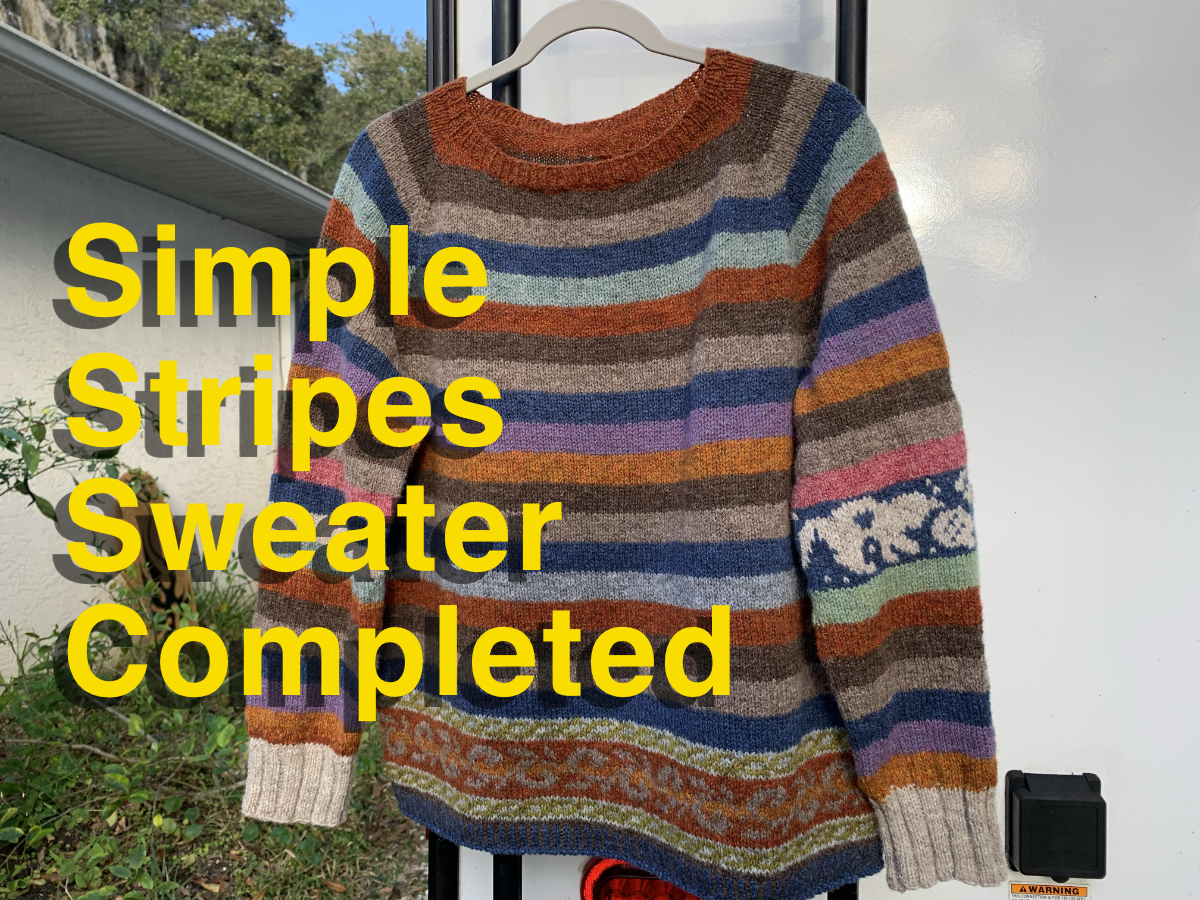
A Simple Sweater With Stripes

My newest knitting project is a simple sweater with stripes. A link to the pattern page on Ravelry is further down the page. This one is advertised…

Knitting The Moon Sisters Shawl Pattern in Orange

I purchased the Moon Sisters shawl pattern in June 2019 (and finished June 2020! – see the end of this post for the update).

This triangle shawl is knit by holding two fingering weight yarns together except for the middle section where the yarns are separated to create a pattern. The cast-on for the shawl begins with a typical shawl cast-on, only much longer than any I’ve ever done. The center pattern is a chart only, which for me was not all that easy to figure out. Fortunately I was able to view what other knitters had done, and that helped. It is a small chart, and once you get the hang of it, it goes along fine.
So besides doing that long cast on and figuring out the chart for the center stitches, you will have to know how to knit / purl through the back loop, and how to “make one” left and right in order to knit this pattern. Most of the shawl will be knitting or purling with that break for the center design.

This pattern can be found on Ravelry – Moon Sisters, by Caitlin Hunter.

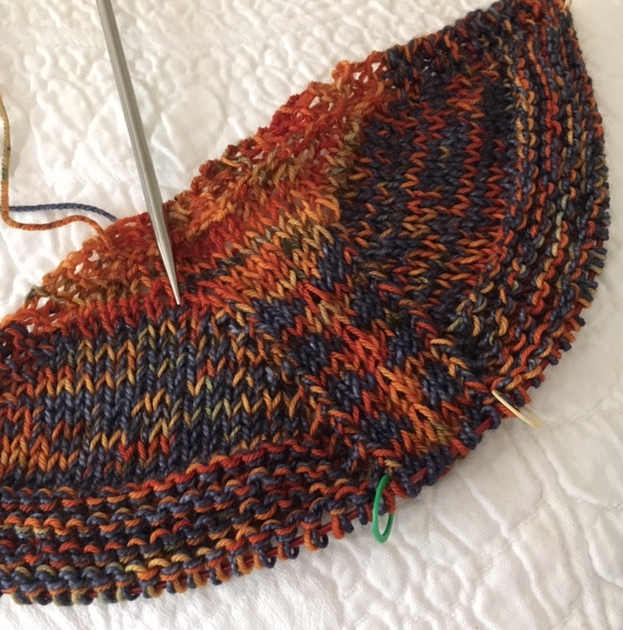
Moon Sisters Shawl beginning the project
Moon Sisters Shawl

The center pattern is a series of triangle shapes which, to me, look like arrows. Because the orange color I am using is variegated and not solid bright orange, occasionally my center stitches are come out lighter. Then, my center pattern does not stand out as much as it should. Still, I love these colors together. My plan is to use up some dark colors in my stash, but the orange will be used throughout.

“10 Questions” Emma’s Yarn, is the orange yarn I’m using.

The Moon Sisters shawl is finished with fringe, and I think that is the charm of it. I’m a bit of an old hippie from the 70’s, so fringe appeals to me – sometimes. In this case, I think it makes the shawl even better.

Orange and blue knitting shawl pattern "Moon Sisters Shawl" by Caitlin Hunter
Main color orange is “10 Questions” shown here with Denim blue

While I am knitting this shawl, I was also working on the Quince Wrap, the Fine Sand sweater, and a baby sweater called Playdate. Those are now finished, and so are my Pink Mitts and Winter Morning headband. So Moon Sisters has become my occaisonal go to knitting project. I’m in no hurry to finish it and it’s straight forward enough to do while I watch TV.

As of November, this is where I am with my progress on this shawl. I just added a dark purple (a Wild Iris colorway by Miss Babs) to knit with the orange because I wasn’t liking the green all that much.

I’m still on my first of three skeins of orange yarn so I should have plenty. I’ll keep some of all the colors I use to apply the fringe at the end.

Moon sisters shawl knitting
Getting on with my knitting and added dark purple.

Moon Sisters Has Fringe!

I have yet to wash and block my shawl, but today I got all the fringe attached – no small feat!

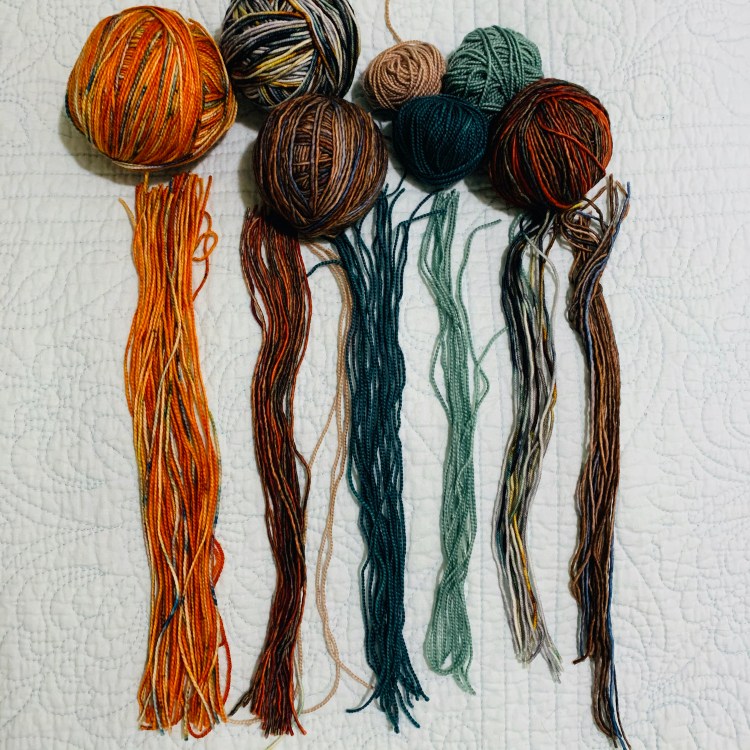
I saved a ball of my main color: Emma’s Yarn, in “10 Questions” orange to mix with other yarn for the fringe. I ended up using all the orange.

Cutting yarn for fringe
Scrap yarn for fringe
Fringe on orange Moon Sisters shawl
Adding all that fringe is a job!
Cutting yarn for fringe as Fontana watches
Fontana loves all that string!
Moon sisters shawl finished

I do recommend this shawl, if you like knitting shawls. This one is a biggie. I used all three skeins of orange yarn, and it was held with lots of other colors. I needed to buy a 60 inch circular needle to finish it up, but you could always cut it shorter.

The somewhat boring knitting and purling is interrupted with that little center pattern, which is nice.

It took me a year to finish this, but I kept putting it aside to work on other things. Tomorrow I will wash it, and it will be ready to wrap up in – just in time for 100+ temps… LOL.

The Umpqua Pattern is My First Sweater Project

This is a big deal for me! I am knitting a sweater…!

For my first hand-knit sweater project I chose the Umpqua Sweater pattern by Caitlin Hunter of Boyland Knitworks. I know so little about knitting sweaters that I have no idea if top-down, or bottom up, are easiest, but here I go. I’m jumping in! This pattern is knit from the bottom up. The fun “arrow” design around the yoke caught my attention and I wanted to knit it.

Gauge is still a bit of a mystery to me. As far as I could tell, while figuring the gauge for this sweater, I needed to go up a needle size. I’m using a size 6 for the cuffs and bottom of body, and a size 8 for all the rest. I’d rather have the sweater fit loosely than tight. The pattern suggests going up a size for the color work (yoke area) if you generally do color work tighter. I have no idea if I should do that, but I don’t have a size 9 circular long needle, so I probably won’t. I’ll worry about that when I get to the color work part of the sweater.

Body and One Sleeve – I’m On My Way!

Here’s a photo of my one sleeve and body. I still have a few inches to knit on both parts, and no, they are not connected. I set them side by side for the photo. I’m happy with the main color (Whole Grain) and I love the Rios yarn. Check out the Malabrigo website and I dare you not to buy their gorgeous yarn. Rios is washable too! I also chose Aguas (dark green) for the trim, and English Rose (dark pink) for the Yoke colors.

One sleeve and body of the Umpqua sweater pattern using Malabrigo Rios yarn in color "whole grain".

Knitters who are savvy sweater people make all sweater knitting sound EASY. I’m scared to death while I knit this. I’m following the pattern exactly and if I am unhappy with some part (like sleeve length), I may knit another one of these sweaters one day and make changes. This one is really a test for me!

Attaching Sleeves and Body of Sweater

Now both sleeves are done and I put the stitches of the sleeves onto “holders” like the pattern said. One little section of stitches is for the armpits – which will be stitched up at the very end – and the rest of the stitches will be knit with the body.

Purl Soho has an excellent tutorial which explains how to do this, so I added it here. It helped me visualize the parts of sweater knitting. Also, after watching the video, I realized that when I finished up my second sleeve, I should have kept the stitches on my 3 DPN’s and not placed them onto yarn. I had to put the stitches back onto the needles to knit – a waste of time.

Knitting the Umpqua sweater and ready to join the sleeves and body
My finished sleeves and body which are ready to be attached.

Doing German Short Rows at Yoke

Because I was not happy with the look of the short rows I did earlier in the pattern (see photo below where you can see 3 “off” stitches where I did a wrap and turn to shape the back), I decided to try German Short Rows when it came to shaping the yoke.

NOT German short rows, but the 3 wrap and turns done for shaping the back.

I had read from some of the Umpqua knitters that they used this type of short row work. The YouTube video below is by Very Pink Knits and it is how I learned to do German Short Rows, which seem simple enough.

However, the sweater pattern itself was confusing when it came to doing short rows. Once I began doing wraps and turns (creating short rows) I had no idea where they were on my needles. Suddenly “Short Row 3” said to “knit to 5 stitches before last wrapped stitch, wrap and turn“. Does that mean the last stitch I wrapped, or the last wrapped stitch I would come to while knitting? I had no answer, so I turned at the first wrapped stitch I came to because the pattern said later on to “work wraps together”. I figured I should not hit a previously wrapped stitch until then. I have no idea if I did this part correctly.

Umpqua sweater knitting, bottom up, nearly at the yoke color work area.
Sleeves attached and almost ready for color work in yoke area.

Now I am nearing the color work area of the yoke, and that is shown in chart form only. Luckily I know how to read a chart for working in the round. I may order more Rios yarn in other colors because I still think I will be cutting it close with my main color (MC). If I substitute a new color in place of the main color for the rows of yoke color, I will conserve the MC yarn for finishing.

Adding Color to The Yoke Area

Below you can see my first rows of the color chart. I did decide to use another color of Rios yarn, which I just happened to have in my stash. I can’t find the tag for it, but it’s a peach color (Peachy?). I’m sticking with “whole grain” which is the MC for between the green rows as the pattern says. The same main color should also be where the yellow / peach color is, but I’m afraid I will run out by the time I need it to finish the neck area.

Colorwork for the yoke of the Umpqua Sweater using Malabrigo Rios yarn in English Rose and Peach color.
Umpqua sweater yoke pattern colors are done
Done with the yoke colors and finishing the neck.

Three-Needle Bind Off For Armpits

The yarn that has been held on stitch holders or extra yarn now needs to be put onto DPN’s once again – Do this on the WRONG SIDE. Holding them side by side a three-needle bind off is done. Watch the video below as it is easier to understand, but it’s very simple to do. Holes will probably remain at each end, but they can be closed up when weaving in the tails.

Binding off on the wrong side of sweater armpit area

I’ve found this tutorial by Purl Soho which shows exactly how to accomplish the three-needle bind off. Don’t sweat it – it’s easy!

Right side of sweater after underarm is bound off
A neat seam after binding off the underarm area of the Umpqua Sweater. I also closed the holes when weaving in the tails.

Finished..!

On April 7th I finished knitting my Umpqua sweater and I am pleased! It fits.. yay! There is lots of room to move and it would keep me very warm in cold weather, I’m sure. The day I finished, by weaving in the tails and closing up the underarms, it was in the 80’s here in Florida. Not exactly sweater-wearing weather. Because it was hot and muggy, I didn’t wash and block it yet. There is no hurry because I won’t ever be able to wear this garment unless I take a trip North to New England in cooler months! But I did get some photos.

Wearing my sweater for a selfie
Selfie time!

You can see the “whole grain” main color and the peachy colored arrows. Those were supposed to be the main color, but I was afraid I would run short so I used some Rios stash yarn. I do like the addition of color. I knitted size “D” but I probably could have gotten away with one size smaller. Or, I should have kept the suggested needle size and not gone up one.

Umpqua Sweater finished and hanging to show off the pretty colorful yoke and Rios yarn colors.
Hanging with the drum set

I think I did my SSK’s incorrectly, but it’s not super noticeable. Live and learn is my motto.

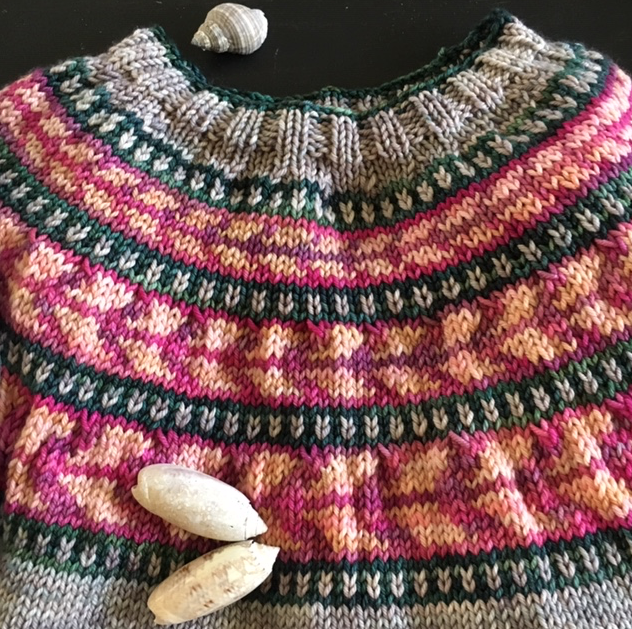
Sweater and seashells – a rock snail and two olive shells.

Collecting and photographing seashells is another hobby of mine. I have a blog about it at Seashells by Millhill.