My Turn to Knit The Musselburgh Hat

The Musselburgh Hat pattern is super popular and I’ve seen the finished hat photos everywhere online. Knitters are raving about this simple, unique, double layered hat that is really two hats in one. It is knit from one crown to a second crown, creating a long section of stockinette in-between.

The Musselburgh pattern is by Ysolda Teague and can be found to purchase at her Ravelry page, or on her website. At the time of this writing, over 17,000 projects have been knit…!!! Wow. Knitters LOVE this hat.

The big draw, I imagine, is not only the simple circular stockinette, but the fact that it’s a perfect hat for using up stash yarn. Suggested weights are heavy lace to DK, and nothing bigger because this hat will be worn doubled. Also, if you knit it long enough for a brim, the brim will contain four layers when folded up.

If you don’t understand this pattern, I have drawn a picture. The hat is knit, in the round, from one end to the other. You make a long, enclosed tube. One end is tucked into the other when worn, to make a double layer. The long style creates a folded brim using the center colors, or make it shorter for a doubled hat with no brim.

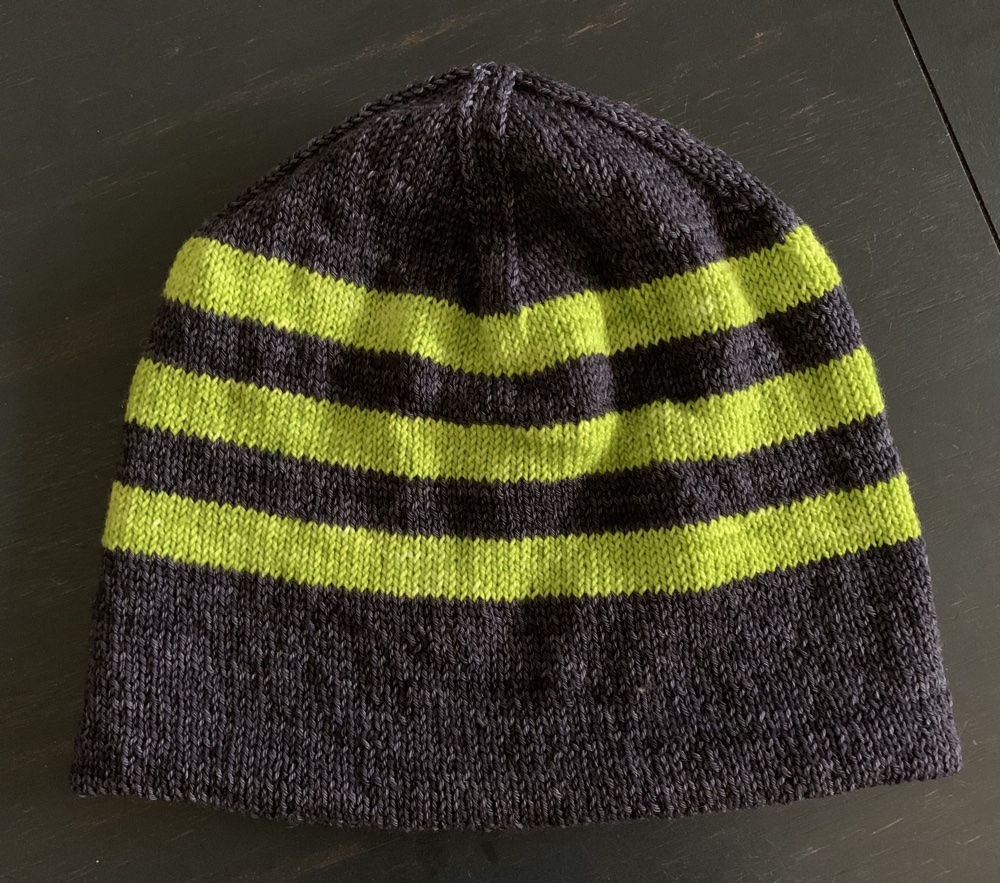
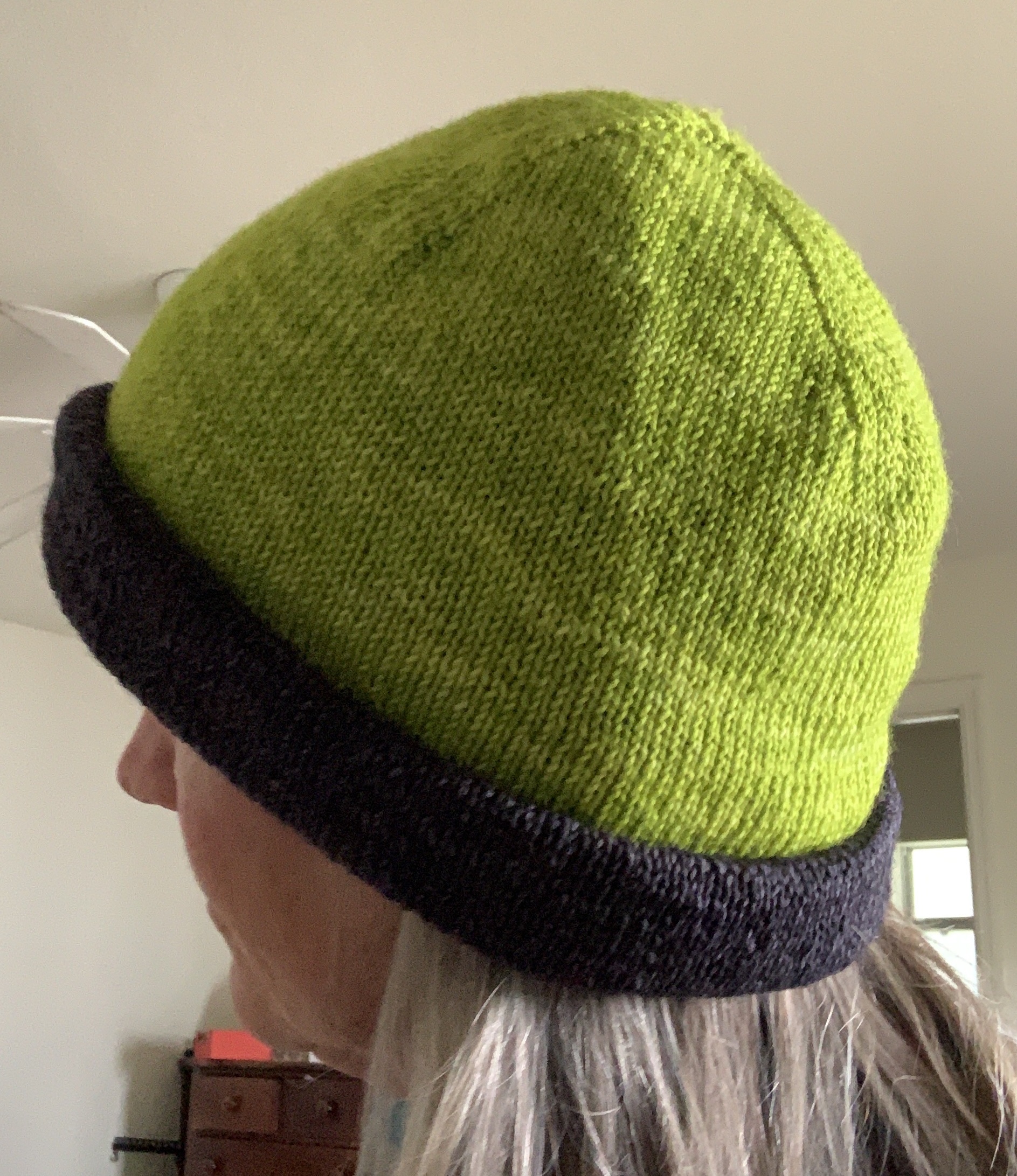
My finished hat will be bright green with a folded black brim, OR a striped (black and green) hat with a folded black brim. Two hats in one. Each hat will be two layers of fabric with four layers at the folded brim.

Musselburgh hat drawing
Musselburgh tube

Musselburgh Finished

I decided to knit a total of 25 inches with 9 inches at each end and 6 inches in the center for the brim (folded measurement 3 inches). That was the plan, but my hat ended up measuring less at 21.5 inches. Too short for my liking. See this video from a knitter who has made 12 of these hats!

How Do I Begin Knitting This Hat?

Although I’ve been knitting quite a lot of items during the past few years, I was stumped when it came to beginning this hat!

To begin the project, the cast-on begins at the crown with a small number of cast-on stitches, which will expand outward with increases made. (You must be able to knit “make ones”.) Directions say to cast on the stitches using your “preferred center-out cast on.” The designer goes on to list a few, but it’s up to the knitter to figure out which one to use and how to knit it.

Pinhole, or Disappearing Loop Cast On

When I searched for “Musselburg cast on” the pinhole, or disappearing loop, cast-0n came up. This video, by Mostly Knitting, is a good tutorial – not for the hat, but for the cast-on. She gets straight to the point and the tutorial is easy to follow. However, be prepared for this fiddly cast on. She makes it look easy – and for me, it was not! I won’t go into detail, but let’s say it took me a few tries to get my stitches made. Hint: It does help to keep the loops of each cast-on stitch loose.

FYI: I am using a size 4, 32″ circular needle, wood Lykke brand, to do the pinhole cast on. My yarn is from stash, and I am guessing it is a fingering weight sock yarn.

Below left: My stitches have been cast on and there is a loop still open. Below Right: I have pulled the strand to close up the loop. Hence the “disappearing loop” cast-on name.
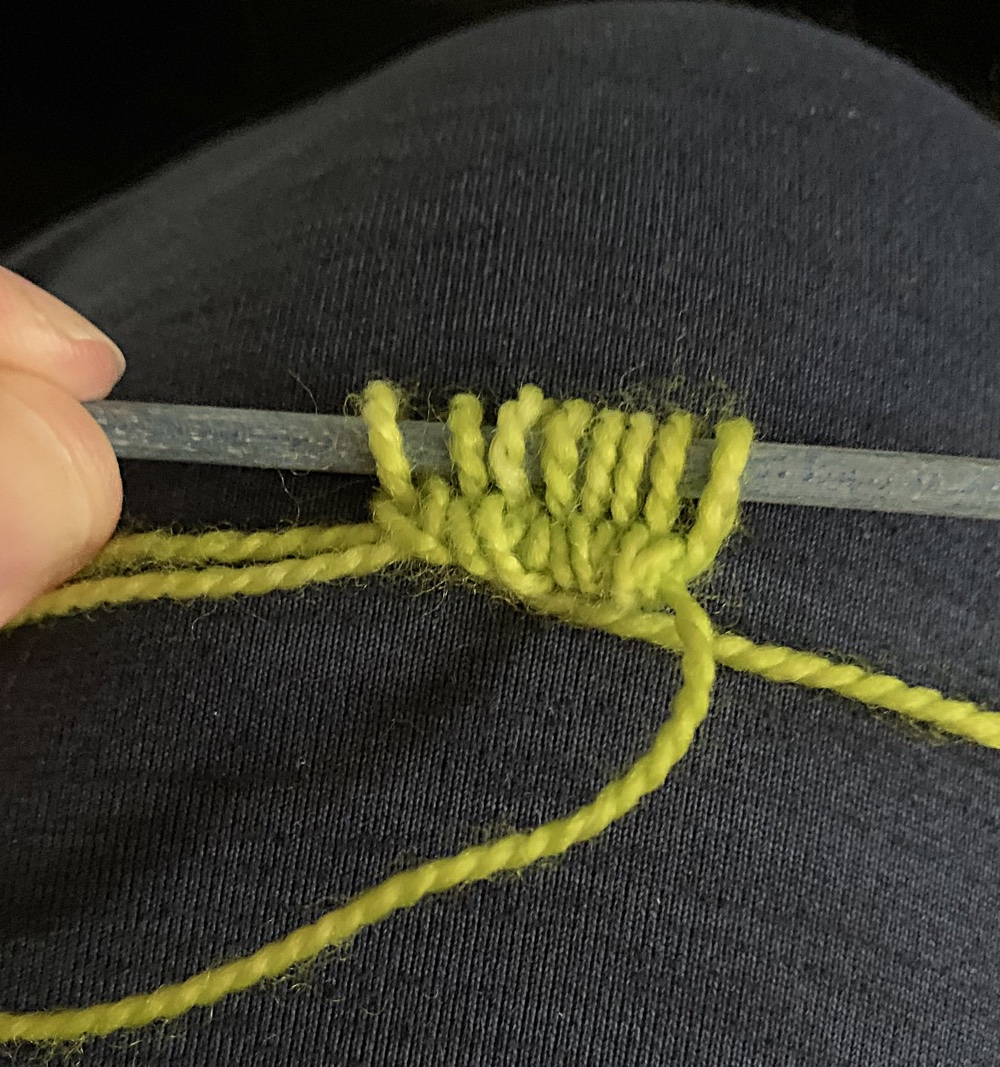
pinhole cast on
Pinhole, or Disappearing Loop cast on. I’m not sure it should look this messy, but oh well!
pinhole cast on loop closed
Loop closed

Now I have my cast on accomplished, but I need to knit in the round with only a few stitches. Apparently most people use the magic loop knitting method to continue knitting from here. Maybe it is time for me to learn Magic Loop.

Magic Loop Knitting Tutorial

The video above gets the cast-on made and ends with four stitches on each end of a long circular needle. Then, the rounds begin and must be knit using the magic loop method. Or, the stitches can be transferred to DPNs, which can’t be easy to manage with so few stitches. I dislike DPNs. So, I figured I would try to do the Magic Loop.

In this video by Myra Wood, the details of the magic loop are covered. She is not casting on the the Musselburgh Hat, but it doesn’t matter. She is showing us how the needles are positioned to knit in the round starting with very few stitches. So, first do the pinhole / disappearing loop cast-on, and then begin knitting in the round using the magic loop method. Simple. It’s always good to learn something new – or in this case, two somethings!

For magic loop knitting remember this:

  • Use good needles, with soft, pliable cable. This is important. The needle I used was wood (Lykke brand) with a rather thick cable for my liking. I should have used my Chiaogoo needles (Amazon paid link). Try a metal needle with a bendable cord. Make sure the join between the needle and cable is smooth because the stitches have to slide easily from the cord to the needle.
  • Whichever needle has the working yarn, pull that needle out of the stitches and use it to knit.
  • Place a marker as a reminder of the beginning of the round..!
After the cast on, divide the stitches evenly on each end of circular needles.
Stitches divided evenly on needles
placing markers
Markers in center of each needle
Knit stitches on DPNs
Transfer of stitches to DPNs

For the Musselburgh Hat pattern, I didn’t worry about the markers until I knit the first round using Magic Loop, and added them on that first round. From there, I followed the hat pattern while doing Magic Loop. The orange marker in my photo is for the beginning of the round – BOR. You need to mark that somehow.

Transfer Stitches, or Continue in Magic Loop

The knitting could continue using magic loop, but I transferred my stitches – on a plain knit round – to four DPNs making each corner (end of needle) a marker. Because I had the needles, I began on shorter DPNs and then transferred to longer DPNs. Once I had my total number of stitches to begin the length of the hat, I used a 16″ circular needle.

Find Your Gauge to Complete the Crown

The pattern has charts for size and gauge. This was confusing at first, but as is usually true, reading the directions carefully is everything!

The designer has created these charts to help us get the right size hat for our knitting tension. Once we begin the crown knitting and take the measurement, we will then know our personal gauge number. This is the opposite of what is generally done to knit a pattern. Usually we (the knitters) have to match the designer’s gauge.

Because each knitter will be using various types of yarn and various needle sizes, the gauge will vary for each individual. The designer has calculated the gauge variations and given us a number to go by for the crown and hat size.

Once the crown size was big enough, I measured for my gauge. I counted six stitches in one inch across, so my gauge is 6. From there, I used the charts to find out how much more knitting I would have to do to complete the crown section. BUT, I decided to add more stitches for a total of 136 around, and this ended up being too large. I think the original count would have been too small, so somewhere in-between.
Don’t forget to weave in the ends at the right time!

Before finishing up by decreasing for the second crown, don’t forget to weave in the ends! Pull the hat inside out and do your weaving before the entire thing gets closed up. Glad I remembered this step.
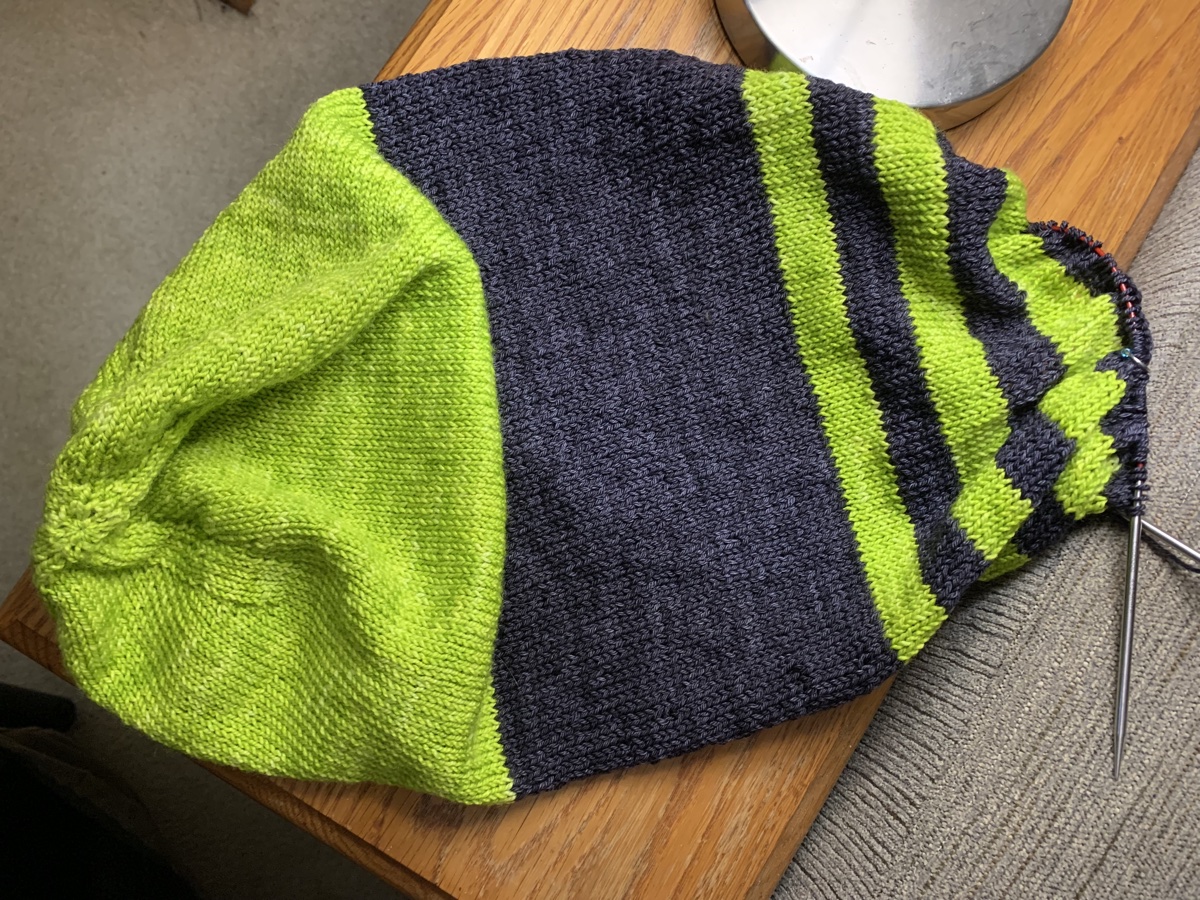
Knitting Musselburgh hat
Reducing for second crown at the opposite end. First – weave in the ends!

Final Thoughts

This pattern is versatile and looks to be quite easy, until you try to get started with the crown. It’s probably going to be a learning curve for many. Once the second crown is knit, the final yarn must be woven so it can’t be seen with the tail tucked inside.

I used sock type yarn, which is not my favorite to work with. I was hoping this hat pattern would help me use up some stash. But, in the end, I am not very impressed with the outcome. Mainly it is my own fault for bad measuring and using too many stitches.

More than that, I simply have knit hats that are much more fun and end up looking and fitting a lot nicer. A ribbed hat for instance hugs the head better.

More knitting stories and reviews:
Something went wrong. Please refresh the page and/or try again.

Quick Hat Knits For Christmas Gifts

The most difficult thing about knitting a simple hat to gift at the holidays may be waiting for the yarn order to arrive! If there is a yarn store near you, consider yourself lucky and head on over to get your supplies.

Use a heavier yarn, such as worsted or bulky weight – I have some suggestions listed down this page – and these hats will finish up in plenty of time to put under the tree.

Included on this page are pattern ideas for adults and kids. Also, I’ve searched for some nice yarn, from online shops, in worsted, bulky and super bulky weights to get you started. Many yarn links go to Wool and Company where I buy a lot of my online yarn. They will wind yarn for free and also offer free shipping to US residents! Or search online and possibly find good sales this time of year.

Why Knit Hats For Gifts?

Hats are quick projects, are easy to take-along and knit, and mail easily. Usually only one skein of yarn is needed – depending on the style of hat and yardage of the skein. Each pattern will list the amount of yarn needed, so check that. If there is a long brim or pom pom, more yarn may be required.

Christmas comes upon us quickly. Many people choose to wear hats in winter, so everyone could use a nice new hat, right? Make it a hand-knit, and it’s extra special for the recipient. It can be created in their favorite color, or made in their favorite style. Choose a washable yarn, and it’s easy to care for.

Hats don’t have to be sized perfectly. Most hat patterns may seem a little small while being knit, but they are meant to stretch a bit to fit the head.

Quick Knits

Hats are also quick projects. A hat without any kind of brim is super fast to finish. Hats are small enough to take along on a car ride, or knit while visiting a friend. Easy hat patterns mean simple knitting without following a chart or directions.

To make a quick knit hat, use a thick yarn – worsted, aran or bulky weight. Be sure you have the correct size needle for the yarn used, and a simple hat will knit up fast. Unless you are knitting for a bald person or a baby, the yarn won’t need to be super soft. The yarn I have listed on this page is “Superwash” or machine washable, in case the recipient will tend to toss the hat in the washer!

Miss Babs K2 Chunky yarn, Rock Sparrow
Miss Babe – chunky yarn
Manos del Uruguay Franca yarn
“Franca” super bulky, washable yarn

Easy Hat Knitting Patterns For Adults

The list of hat patterns on this page are perfect for anyone to knit, using simple knit, or knit and purl stitches. Some easy cable hats are also included.

  • Nina Hat (free pattern) – Super bulky yarn (Franca – link below, or similar), US size 11 needles
  • Harbormaster bulky yarn – perfect for him.
  • Pebbles Hatfree pattern in worsted weight (slouchy style)
  • Easy Tweed Hatfree pattern, super bulky – the pattern uses two strands of yarn held together to create a “tweed”, but a super bulky yarn alone would also work.

For knitting a bottom up hat (starting at the brim) you will normally need these supplies: Yarn – enough for your chosen pattern, a 16 inch circular needle, same size DPNs (double pointed needles) for finishing the top. A tapestry needle for closing up the last stitches and weaving in yarn ends, and scissors for cutting the yarn. (I usually use a DPN needle when doing simple cables.)

Northward cable hat hand-knit
Northward easy cable hat for kids and adults by Tin Can Knits. Link to pattern on Ravelry
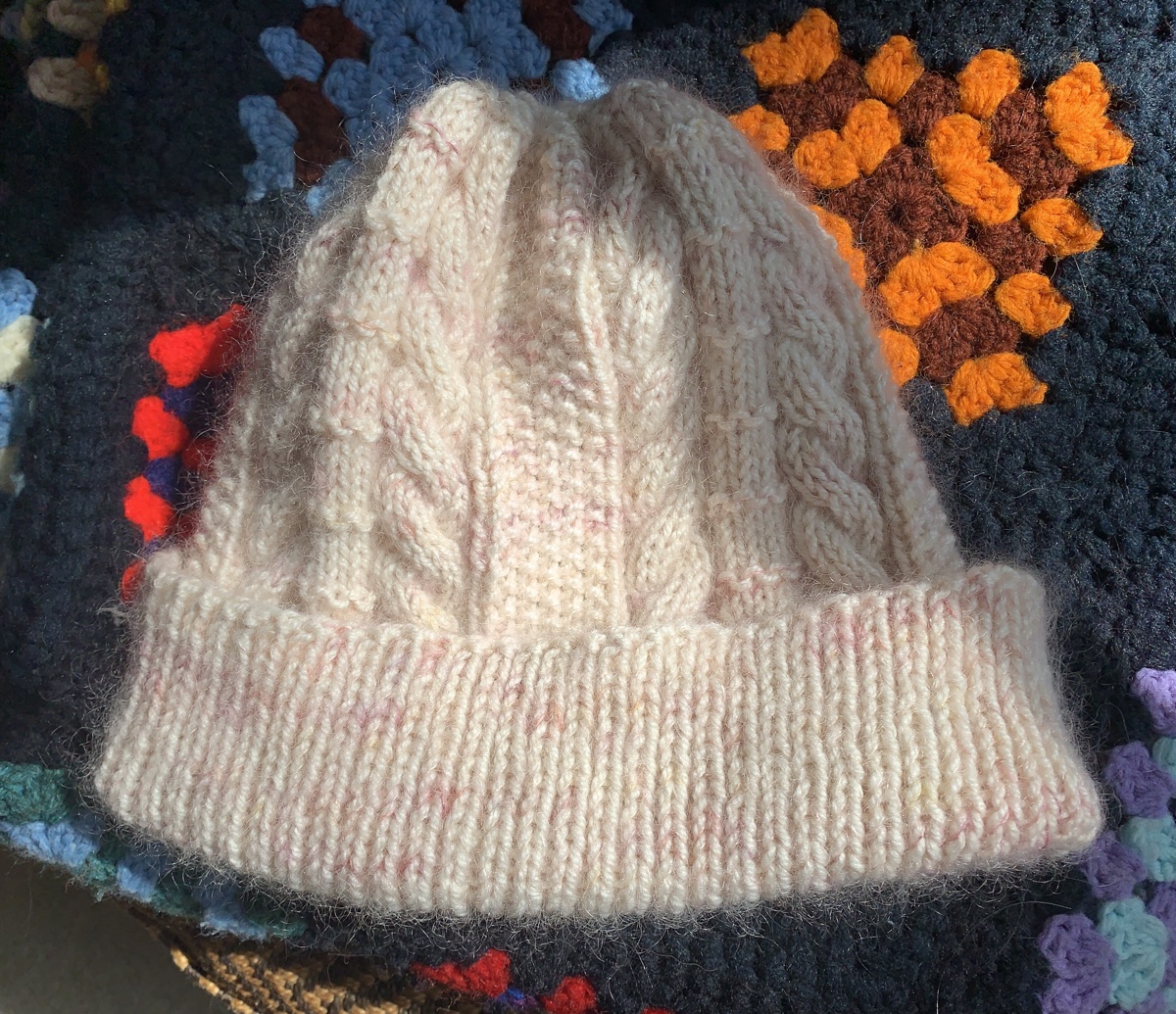
Cable hat in light pink
Aran Watch Cap – pattern is in the Hat’s On book and is a simple cable knit in worsted yarn.

Hat Patterns For Kids

  • Kids’ Banana Beanie – (bulky yarn) free pattern from Balls to the Walls Knits. Comes in a variety of sizes. A 16 inch circular may be too large to knit the smallest of sizes.
  • Kid’s Helmet Hat – (bulky yarn – free pattern)
  • Christmas Elf Stocking Cap – (worsted) – pattern website contains a LOT of ads to wade through. More patterns for kids on this page, if you can deal with the ads!

Machine Washable Worsted Weight Yarn

Any item that is hand knit will last longer if it is hand-washed. But, using a Superwash yarn means it can be washed in the machine. Items should be washed on a delicate cycle. Be sure to tell the recipient how to care for the item, or include a tag they can keep and reference.

I would use a mesh laundry bag (Amazon affiliate paid link), so maybe gift one to the recipient along with the hat. For the most part hand-knits should not go into the dryer!

Here is a short list of worsted weight yarns to get you started, but there are more washable yarns out there. Most worsted weight yarns require a 6 – 9 needle size.

Machine Washable Bulky Yarn

The needle size used for bulky and / or super bulky yarn is usually US size 10 or 11. Don’t forget you will also need DPNs in the same size.

Although hats and other items knit up fast using thicker, bulky yarn, some people find it tough on the hands.

I hope these selections were helpful. Remember, next year get started early, and give everyone a special, hand-knit hat!

(Chipmunk in hat, photo at top, courtesy of Pixabay.)

More knitting stories

Beautiful Wool For Knitting From Sonder Yarn Company.

Here is a look at some new yarn I recently purchased from a new (to me) shop.

Sometimes I cannot resist a yarn sale. I’ve become much better at controlling my urges when it comes to yarn. I have narrowed my choices down to buying beautiful wool.

The Sonder Yarn Co. is located in Canada. I’ve been watching their yarn and knitting projects slip by on Instagram (I’m usually looking in the middle of the night when I can’t sleep), and I’ll tell you.. they have lovely colors!

You must spend a lot to get free shipping, and I just never wanted to spend the money. And then, I saw that there would be a sale on their pretty yarn. A very good sale too, at 20% off!

I had just finished knitting the Blueberry Vodka Lemonade sweater pattern and was seriously thinking of knitting another one. I needed fingering weight yarn for it.

My Wool Order

The Sonder Yarn company said there would be a bit of a delay getting all the sale orders out. I was in no hurry. Finally, I got an e-mail saying that my order had been sent to the wrong place. Instead of waiting for the order to come back to them, they were sending a replacement to me. So, altogether it took about three weeks to arrive.

The yarn did not come in the box you see in my photo – just stuffed into a bag. There was nothing extra, just a “thank you” on the order invoice. I am only mentioning this because some places add extras, like a free stitch marker, tissue wrapping, etc. – this place did not.

On the same day that the yarn arrived, another shipment of something arrived and came in this box, which fit the yarn very nicely. Perfect!

Sonder Yarn delivery with two colors and nine skeins.
Yarn delivery – (did not come in this box)

The Fingering Weight Yarn

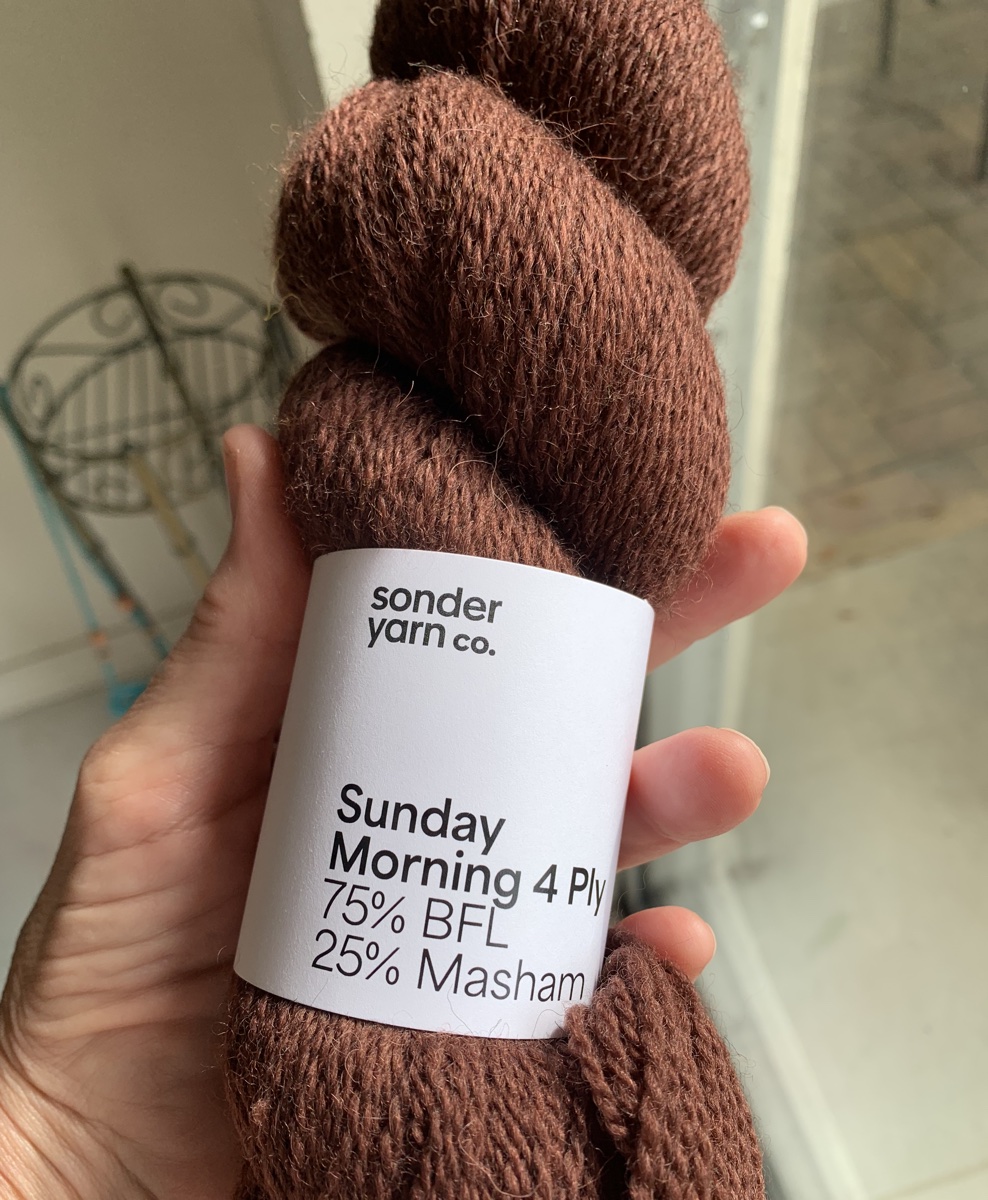
The Sunday Morning 4 Ply yarn is fingering weight. It is made up of two types of wool; 75% BFL, or yarn from the Blue Face Leicester sheep, and 25% Masham wool. I ordered the color “French Press” which is a rich brown. Each skein has 432 yards!

Sonder Yarn Sunday Morning 4 ply in French press brown color
Color “French Press”

The DK Weight Yarn

The other yarn I ordered is Sunday Morning DK. It is made up of the same wool mentioned above for the 4ply. I choose color “Toast & Honey” colorway, and I love it! Each skein has 268 yards.

Already I have cast on and begun knitting a second Calliope pullover in this pretty golden color. My first Calliope came out too big, and the yarn was not right for it. I’ve been wanting to knit another for a while. I think this pretty wool will be just right.

sonder yarn skein in Toast and honey color way.
Pretty Toast and Honey yarn color.

Happiness

All in all, I am very happy with my yarn purchase. It’s tough buying yarn online but the colors shown on the website match very closely to what I got. The brown really caught my eye, but I ended up loving the golden color even more once I had it in hand.

I spent more money than I usually do, but I have gorgeous yarn and plans to use it. Also I got free shipping because of the amount, so that’s a plus. The wonderful color options may keep me going back for more, or at least keeping an eye out for sales at the Sonder Yarn Co..

more knitting stories

How To Sew Buttons on Knitting

Finally I have figured out a good way to sew buttons onto knitting.

One reason I haven’t knit many cardigans is because I have to make a button band and then sew on buttons. I love the knitting process, but the finishing up is not as fun for me.

sewing buttons on a sweater
Eva Cardigan buttons being added on the wide band.

Recently I knit the Eva Cardigan pattern which calls for four buttonholes with, of course, four buttons. I decided it was time to figure out how to correctly add buttons to my hand knits.

This page is being written as a reminder of how I added the buttons, and is as much for me as anyone!

There are a lot of videos, but I only watched one. It was very basic, but someone commented, below the video, that beginning from the FRONT of the sweater would hide the knot left by tying the yarn ends. I like that idea. I went a step further and pulled the little ends under to weave in. Here is how I did it.

buttons to sew onto a cardigan knitting project
Ceramic buttons for the hand-knit Eva Cardigan sweater

How to Begin

If possible, use the same yarn you used to knit the project. The Eva Cardigan was knit with a DK weight wool yarn. I pulled the yarn strand apart – in half – in order for the yarn to fit through my needle eye.

You will need a needle small enough to fit through the button’s holes. Then, you need to get the yarn through that needle eye. Figure that out first.

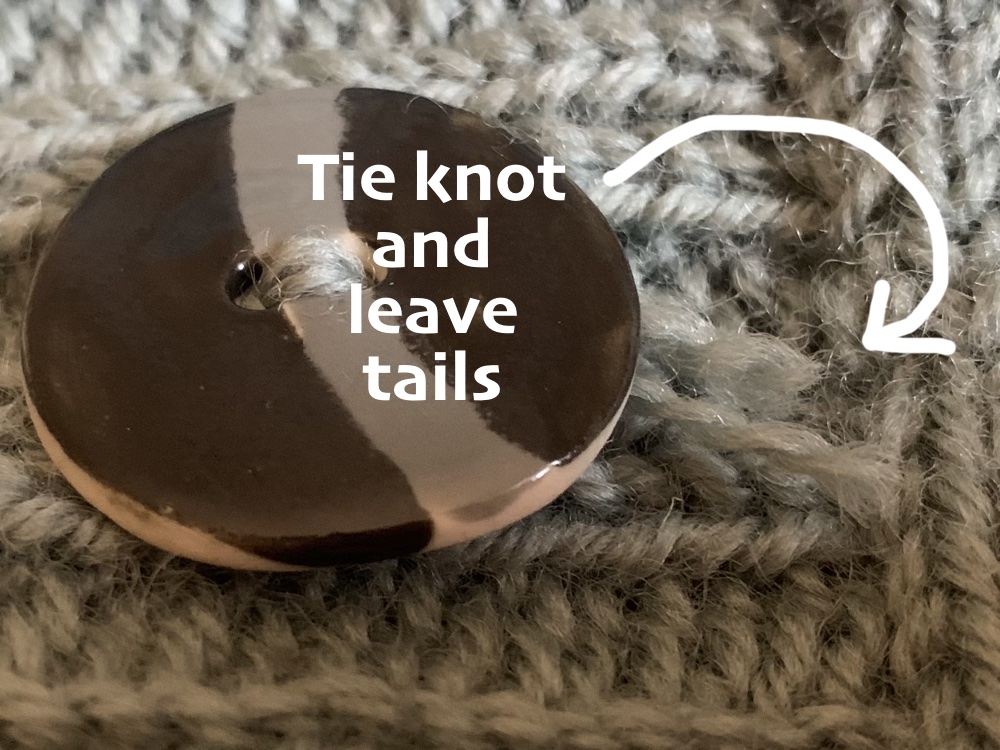
Decide where the button will go on the band – to match up with the buttonhole on the opposite side. With the threaded needle, go into the button-band from the front (no button added yet), and leave a tail – image below. Then, come up and go through the button hole and down through the other hole. My buttons only had two holes. Even if you have four holes, just knit the button on and ignore that tail until the button is secure.

sewing on a button
Begin sewing the button on

I went up and down through the holes until they were full – only a few times. Then, I wrapped the yarn around the base of the button for a bit more security. Then, using the two tails, tied a few knots tightly. They are underneath the button, and can’t be seen. Lastly, cut the ends of the yarn a bit short.

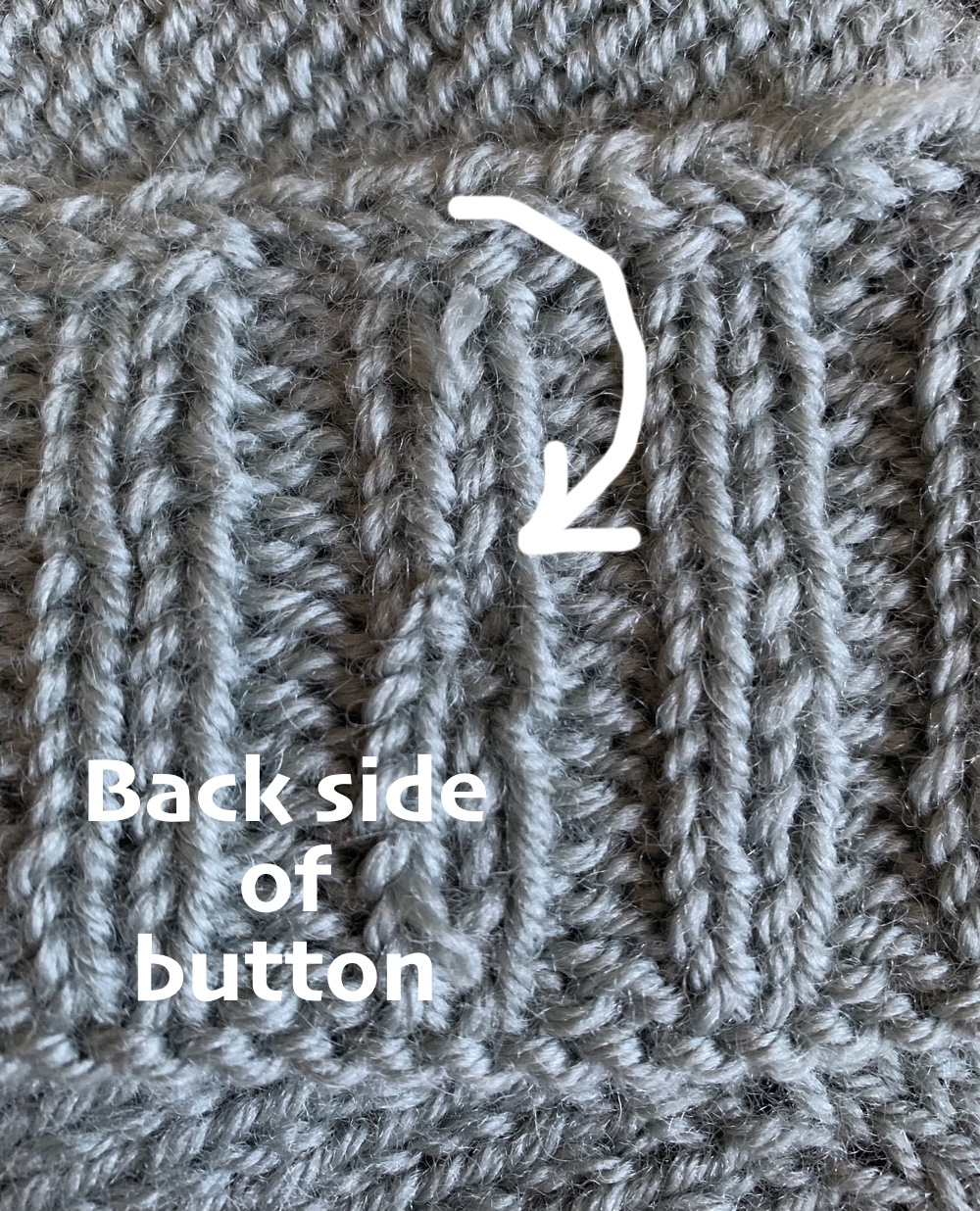
The commenter suggested that this would be enough, but on my first button I could still see the ends. And my buttons are fairly big! So I pulled the ends through to the back, using a small crochet hook, and then wove them in. For the remaining three buttons, I left my ends a little longer and wove them in on the back.

sewing on a button
Leave tails to pull through to the back.

Here is how the back of the button looks. It’s pretty neat looking and the buttons feel secure.

sewing on a button
Finished back side of button

I’m quite happy with this way of sewing a button onto a sweater knitting project. I would love to hear from experienced knitters who have suggestions for sewing buttons onto sweaters. Please feel free to help fellow knitters out by leaving a comment! Thank you.

More stories about yarn projects