Understanding Knitting Pattern Theft and Its Impacts

Pay for your knitting patterns. Never accept a copy, or you are actually breaking the law. Designers work hard to create those awesome patterns for us. It’s only a few dollars, but designers need to earn from their creations to keep their small business afloat.

Ever since I knit a little scarf using Pascuali yarn, I have added this company to one of my favorites. The company uses sustainable practices to create the yarn they sell. I have opted in to receive their newsletter. A recent article entitled, “Sharing Isn’t Always Okay” got my attention. It is about the protection of intellectual property, such as knitting patterns, and how patterns should not be shared. Please click the link and read the page if you are wondering what it’s all about.

I was happy to read the article by Pascuali, and can absolutely sympathize with knitwear designers who’ve lost money due to “sharing” of patterns. Getting the word out will be helpful for those who never knew sharing patterns was not a good thing. Knitting patterns are relatively cheap for all the work that usually goes into them. Give the pattern writers the money they deserve, and send knitter friends to the purchase page. It’s only right.

My Own Experience With Copying

I know all about this because I also do online design work. I do not sell knitting patterns, but I sell my graphic designs. I work for a print-on-demand company called Zazzle that uses my designs to sell on products. I make a small royalty for the designs. I’ve been doing this, and mostly making a pretty good living from it, since 2008.

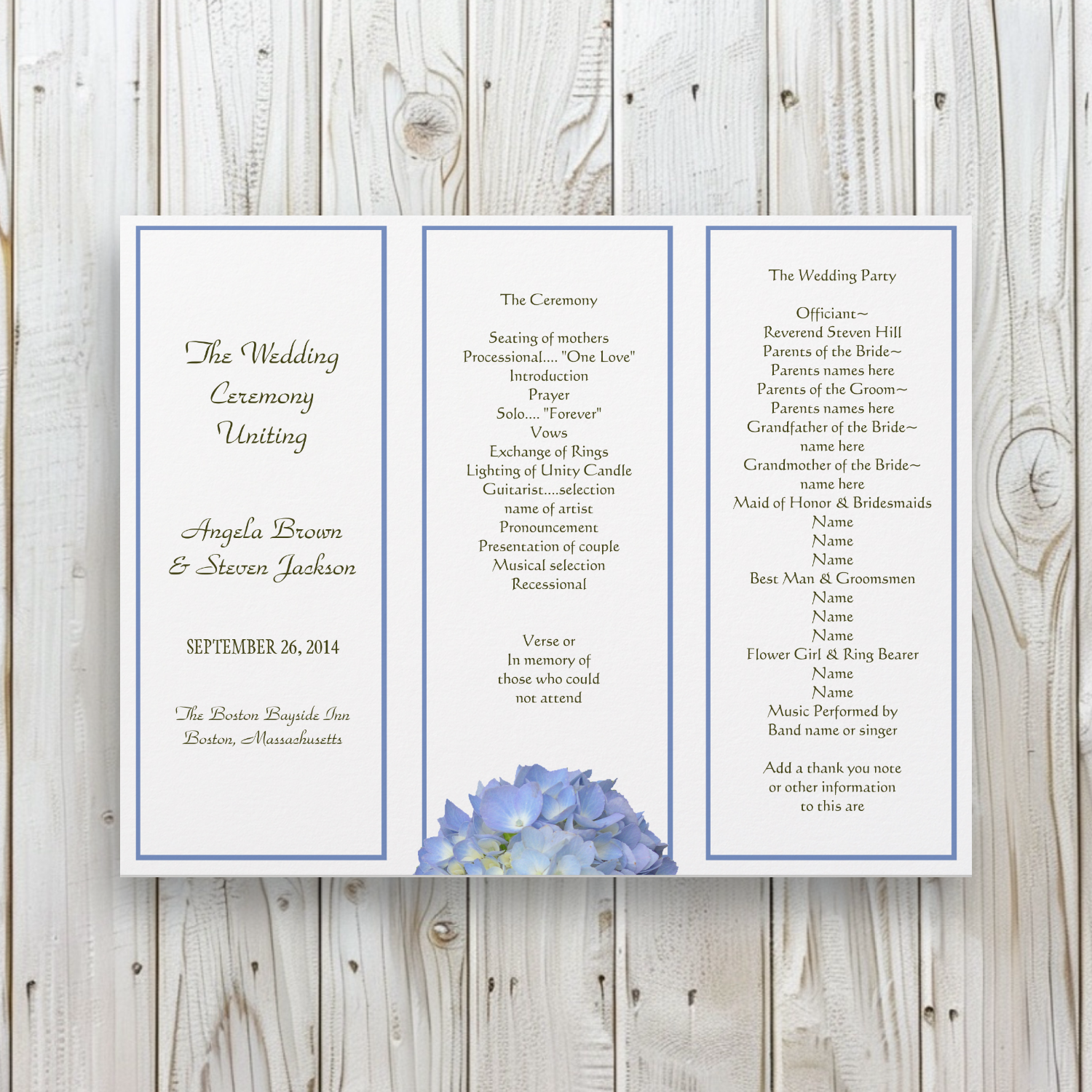
Whenever I see a sale, in my shop, of one invitation, or one wedding program (see below) I know it will be copied. Who buys one of these things? In all fairness, a bride may want to see the invitation in person before ordering more, but I seriously have not seen someone come back and buy hundreds after buying one. The buyer wants a deal. They will copy it and distribute it instead of paying for the required amount.
Zazzle design program thievery
This program was a recent single item sale. Who would fill out all the information and only distribute one program at their wedding? This will surely be copied by the customer.

Even though I can now offer my designs as instant downloads, for one price, to have as many as needed, I still see single invitations being sold. Either people don’t understand that they are doing something illegal, or they don’t care.

It annoys me. Just like I’m sure it annoys knitting pattern writers. We spend lots of time and effort to create something unique and sellable. Whenever that “thing” is shared, copied, and handed out willy nilly, the designer loses money. If you do this, you are stealing. A creation (pattern / design / and much more) is protected as intellectual property.

A while ago I had pillow designs stolen from my Zazzle online store. Someone was taking screenshots and then using the images to sell their own pillows at Amazon. The designs were mine, and they had no right to do that. I used up a lot of valuable time creating take-down notices at Amazon. Sometimes I had to do that over and over before the pillows were gone.

Really, if you work online, and share things for sale, you will become familiar (unfortunately) with thievery.

Sometimes readers of this blog will ask me for a pattern. I always send them to the designer’s page if possible. I’m also skeptical of some “free patterns” and especially those that disappear. Were they actually a rip off of a pattern designer and they got caught? Maybe, and maybe not. I am never going to share a purchased pattern. Buy it for yourself. I write this blog to help knitters decide which patterns they might like to try.

When shopping online we all need to be careful. Making copies takes income away from the designer who is counting on it to keep their small business afloat. Think about this when you pay $6.00 for your next well-written, size-inclusive, and easy to follow, knitting pattern. Someone worked hard to create that for you!

Thank you for reading.

More yarn stories:

Something went wrong. Please refresh the page and/or try again.

Alternatives to the Hidden Gems Shawl Pattern

Hidden Gems was a popular free shawl knitting pattern. Since it is no longer available, I have found some similar patterns for knitters. Check out the list and let me know if you choose one.

Maybe at some point the creator of the Hidden Gems shawl pattern will re-release her pattern. It was listed on her website, but the website is no long up. I’ve had readers ask about this pattern.

I want to be helpful, but I no longer have the pattern printout. All I can do is try to figure out how this thing was knit. Or, I can suggest some similar patterns that may be helpful. That would be easier, and it turns out there are quite a few very similar knits. None of the patterns I found were free.

Triangle Shawl Patterns

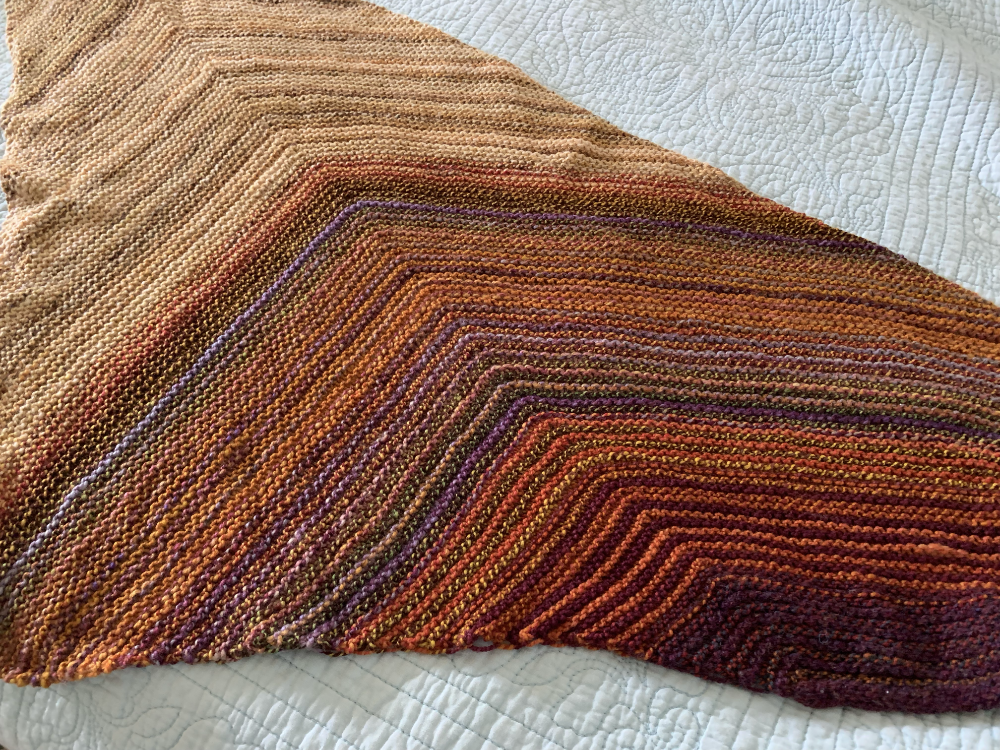
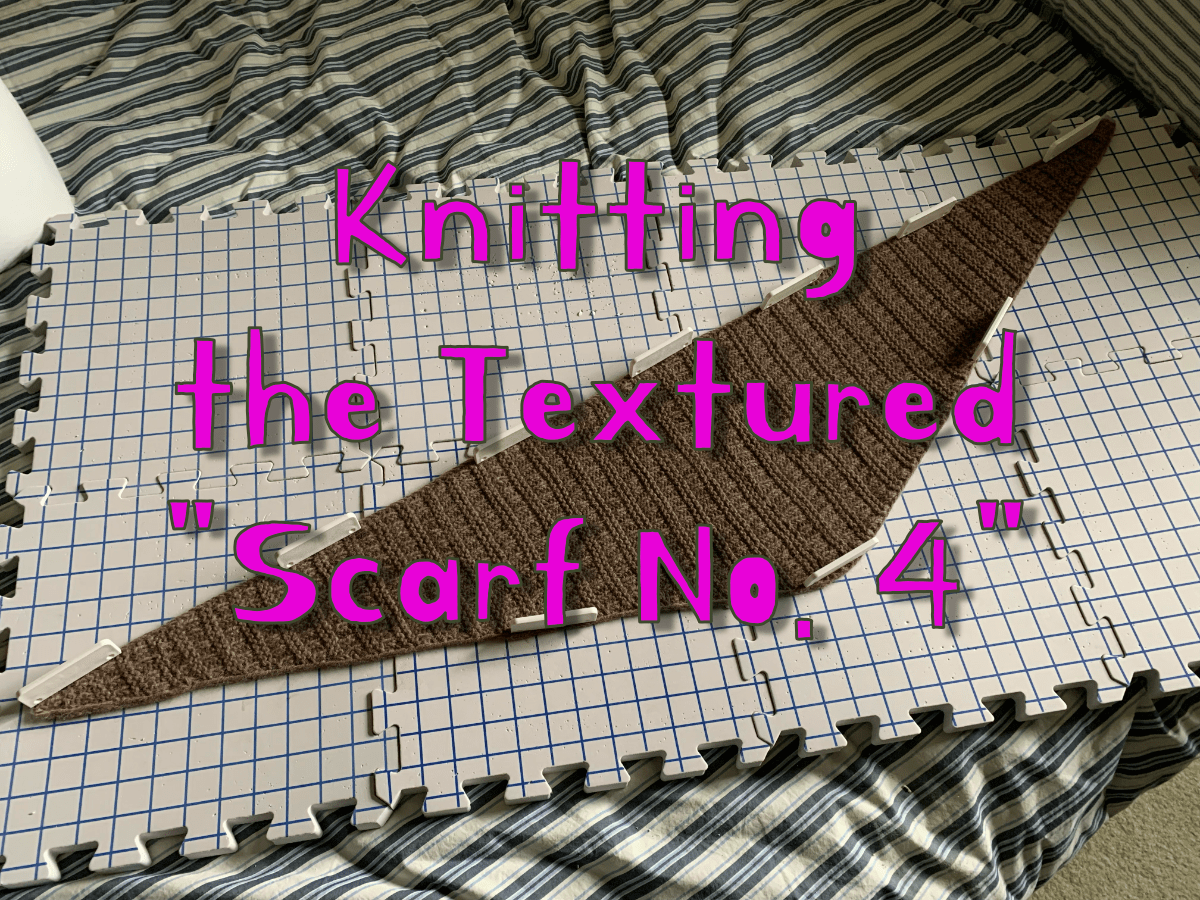
The Hidden Gems is a triangle shawl. It was a free pattern. It has a “ridge” that begins by running down the center of the knitting. Once the shawl is wide enough, decreases are made along one edge, while the other continues with increases. You can read my notes on the page I wrote while knitting the pattern. I honestly don’t think the pattern would be difficult to figure out, but I don’t have time to do that. A savvy knitter could work it out.

Instead, I am going to list some shawl patterns here that may make a good substitute for Hidden Gems. I chose them because they have that center “ridge” for at least part of the shawl. They are not free patterns, and the difficulty (and yarn amounts) will vary. I honestly don’t mind supporting a designer who has gone to the trouble of creating a decent, readable pattern. All links go to the designer’s Ravelry page.

Search For Similar Shawl Patterns

If you’d like to do your own search for shawl patterns, in hopes of finding something that is free, keep these keywords in mind.

The Hidden Gems is listed as a triangle shawl, which it is. It is also asymetrical. If you want a smaller shawl, search for a shawlette. Search on Google, Ravelry, Pinterest, and Etsy to find shawl patterns. Just be careful of free patterns by designers that are not well known.

Thanks for reading. I have more Knitting stories for you.

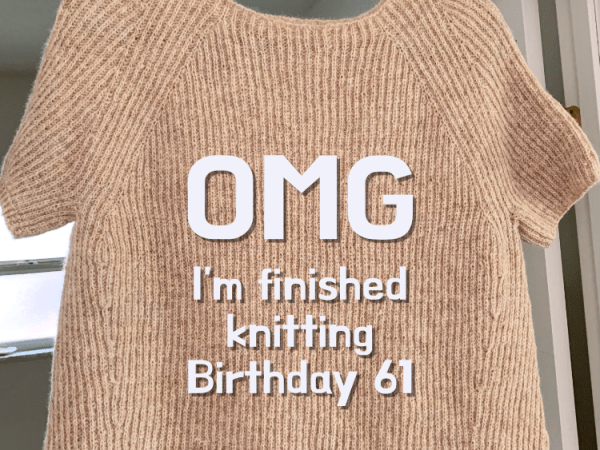
Knitting Progress on the Birthday61 Sweater

Here’s the knitting progress I’ve made on the Birthday61 sweater pattern. It’s slow going, but will be worth it in the end.

Welcome to my blog post update about this never-ending knitting project. I knew that this type of stitch would be slow going, but wow… it is worse than I thought.

I wouldn’t care, because I love the act of knitting, but the queue is filling up with projects that I need (and want) to begin.
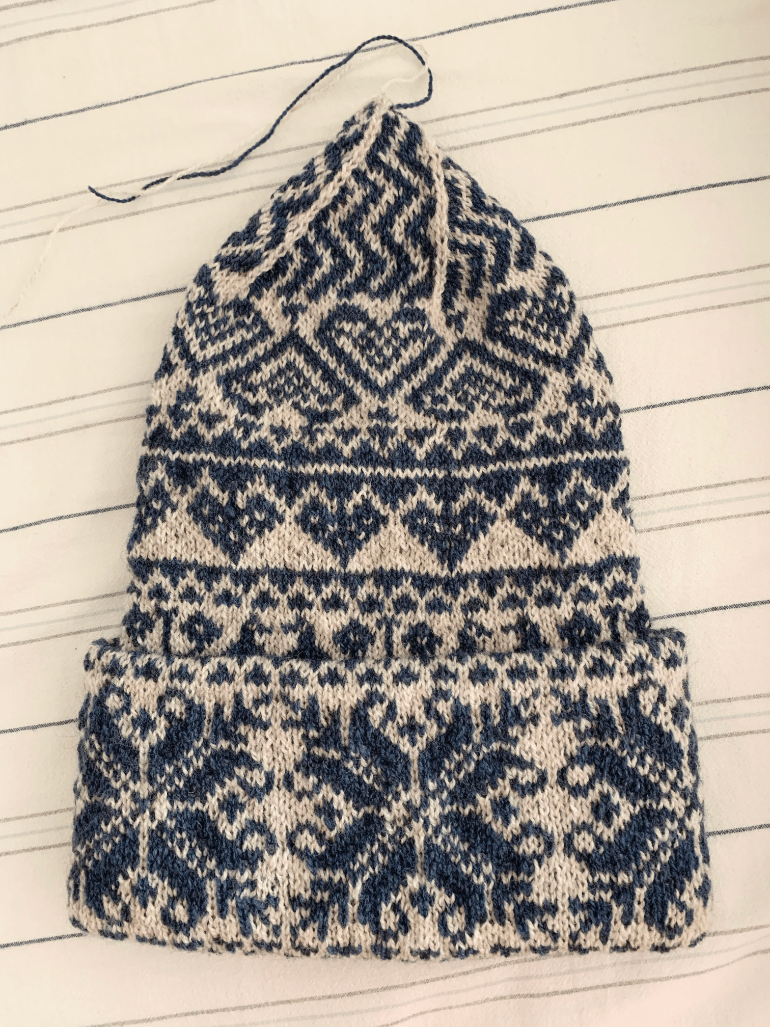
I began knitting this sweater back on November 5th, 2024. I’ve been working on it, with some delays, for nearly six months. Over the past couple of weeks, it’s been my only knitting project because I really want to get it finished.

The Birthday61 pattern is easy to follow and is well written, with tutorials to help. The Biches & Bûches La Petite lambswool yarn is lovely. The fabric is so soft and squishy. This keeps me going.

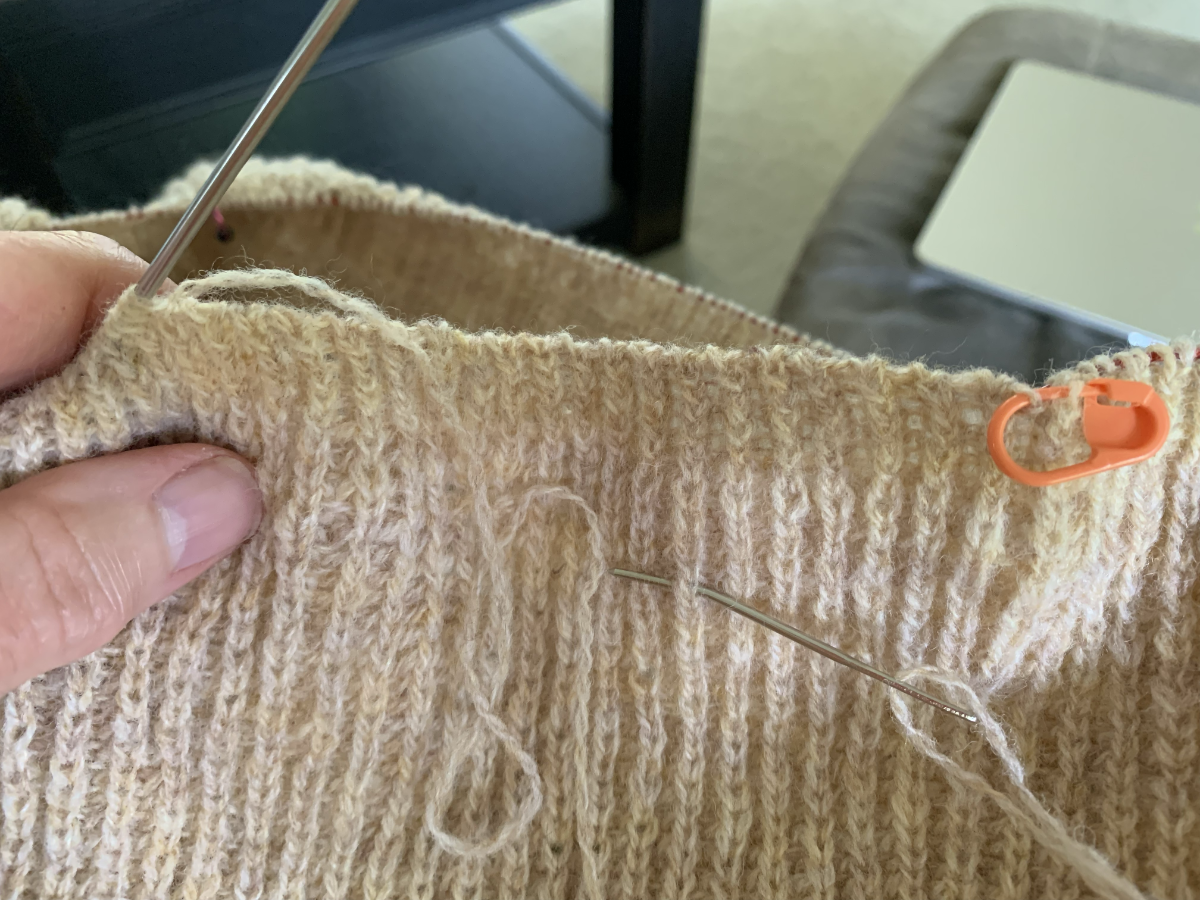
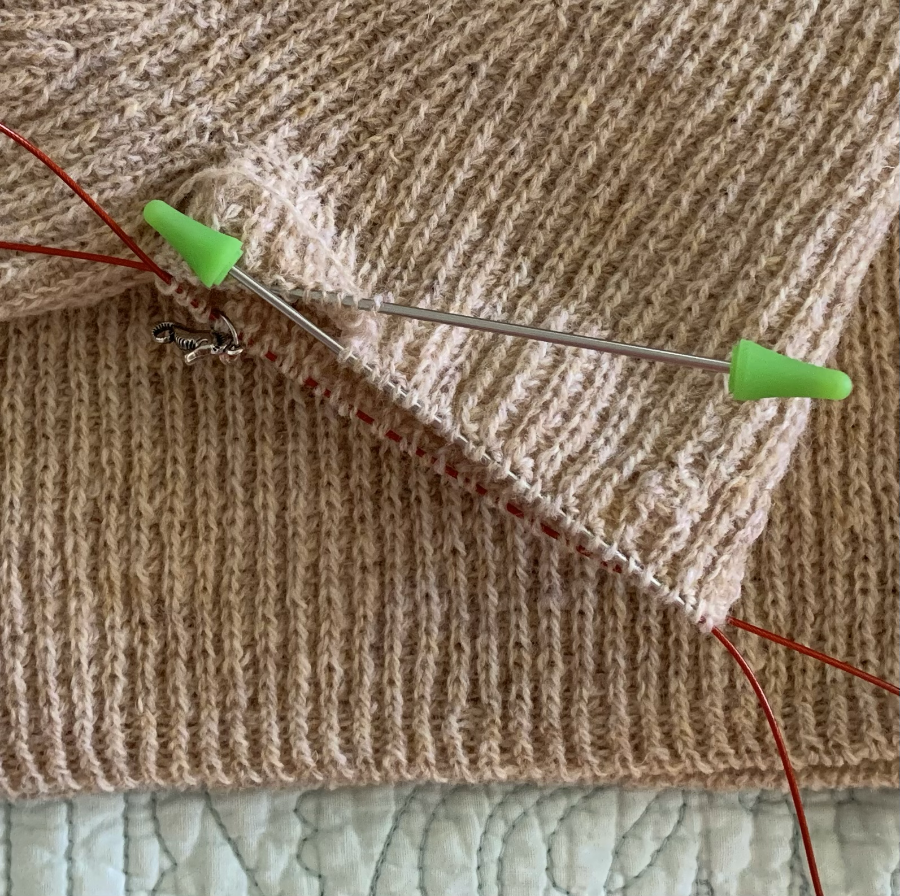
I just finished knitting the body by doing 3/4 of an inch in twisted rib. It flows nicely into the alternating rows I just finished. I also did a tubular bind off as the pattern says.

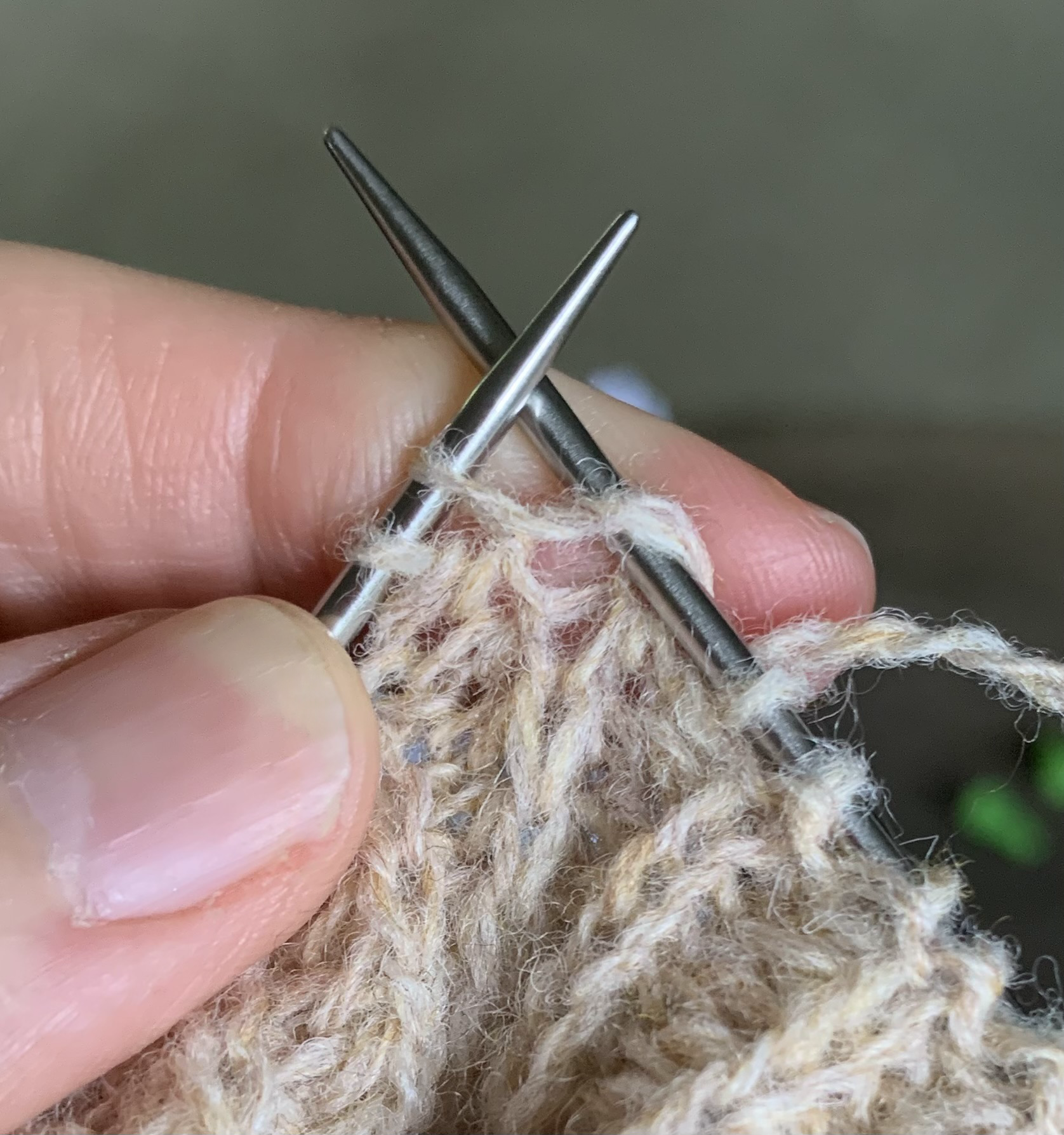
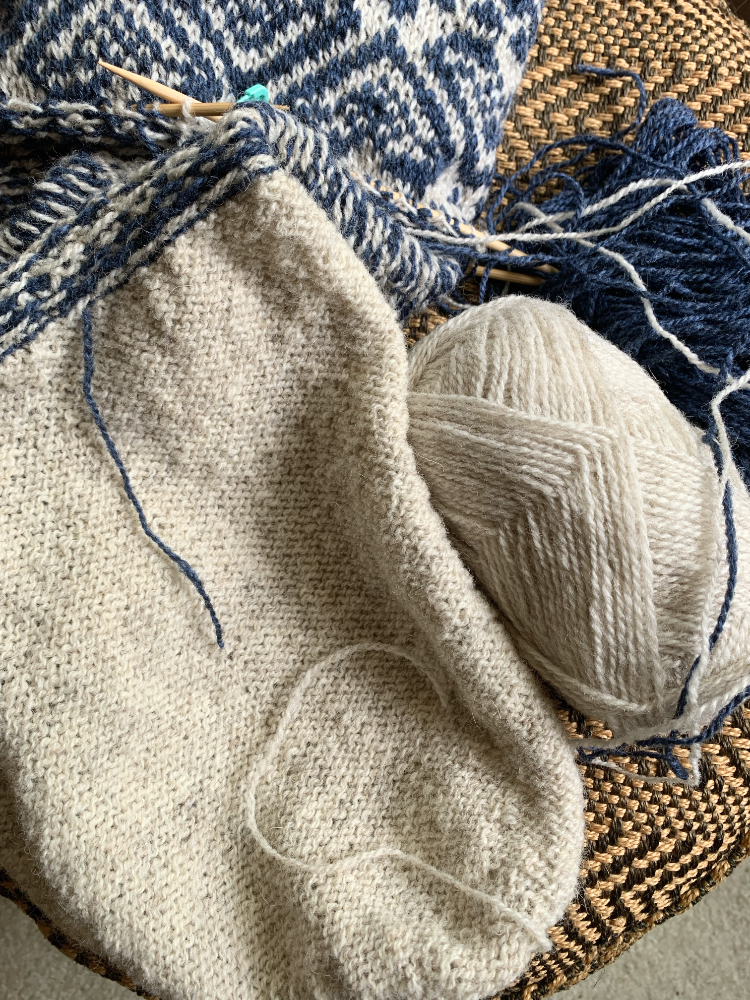
The whole pattern consists of alternating rows. First: one row of knit one below, and purl one. A “knit below” means I have to find the correct spot for the needle (see my photo below). I have to pull the yarn a bit to find the perfect place to make my knit stitch. After this row we do an entire purl row. Twice around completes one row. This makes for very slow going.

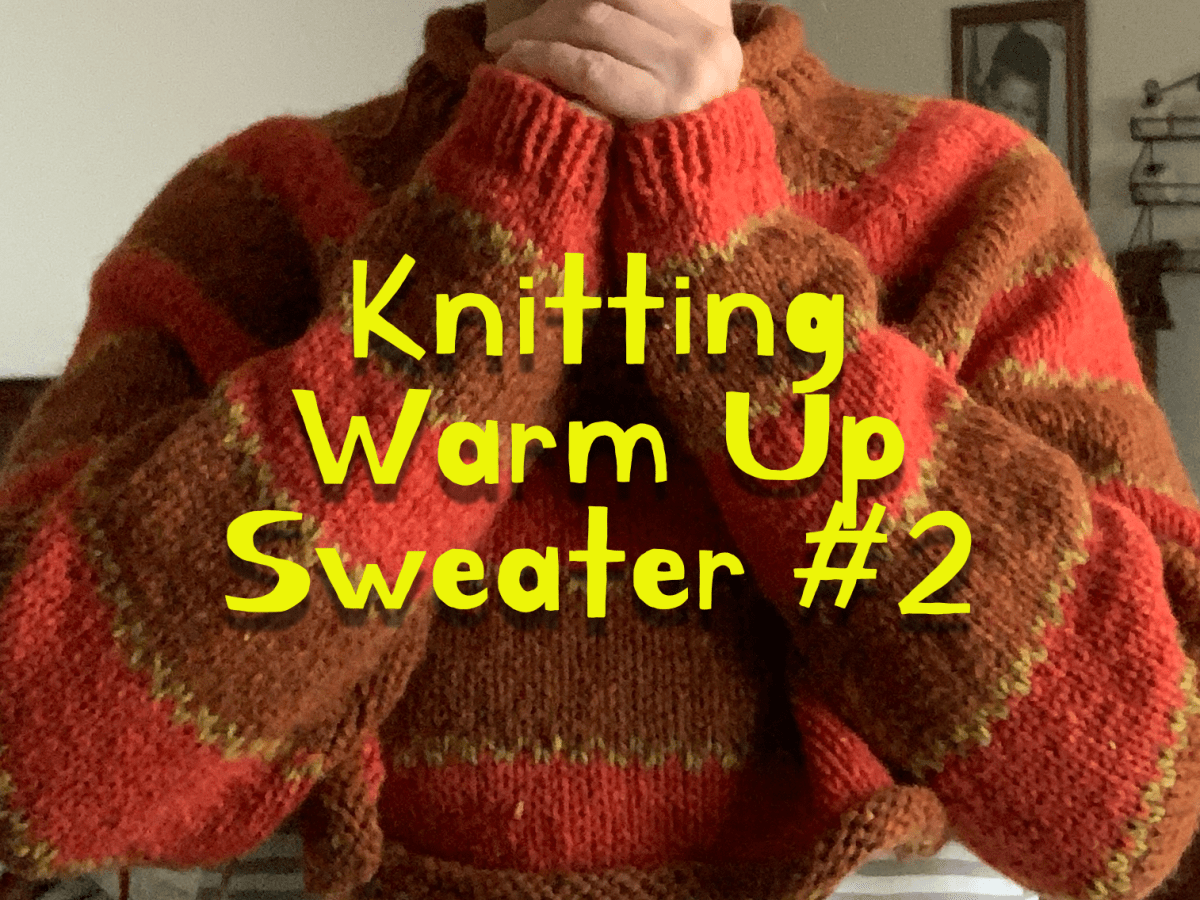
Example: 22 full rows equals 1.5 inches of knitting. Compare this to 22 rows knit on my Warm Up sweater that comes to 4.25 inches.

knit one below stitch
Knit one below – the knit stitch for the Birthday61 sweater.

Tubular Bind Off

As was suggested in the pattern, I did a tubular bind off. It is the first time I ever did a long, body hem this way. Because I am knitting with a nice wool yarn, I could use a shorter tail and then spit-splice a new piece of yarn. This worked out well, and the bind off looks quite good.
Time to Try On Birthday61

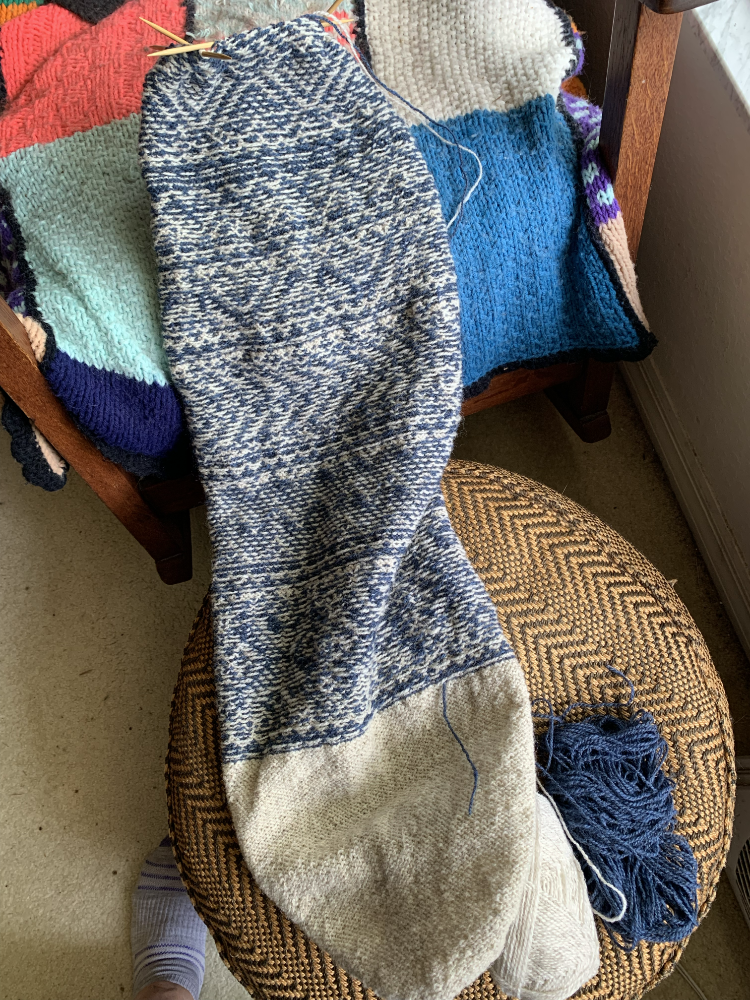
Now that the body is finished, I can try it on. So I did …… and honestly, I’m not keen on the fit. This is depressing, but washing a project can change it dramatically. I thought it would be looser.

Now I have begun the first sleeve. Right off the bat I messed up. The knits and purls have to match up. The pattern says to begin with a full purl row, but that was not true for me. I don’t know if I made a mistake when putting the sleeves on hold. And who can remember when I did that months ago? I’m using Magic loop, which is not a favorite of mine. So, this sweater is getting more and more aggravating.

divider image animals in sweaters

Knitting Life

Modeling Photos of the Doublemassa Hat

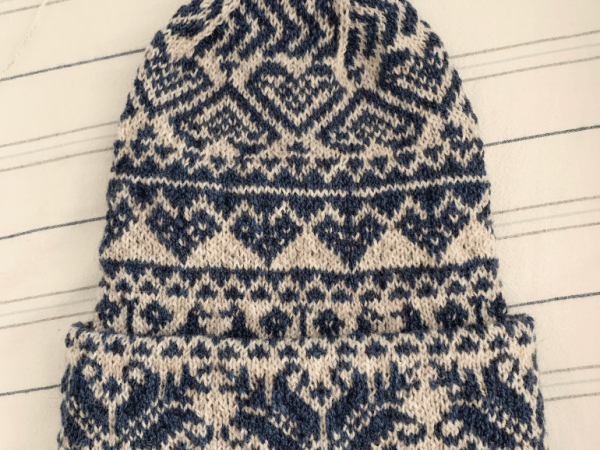
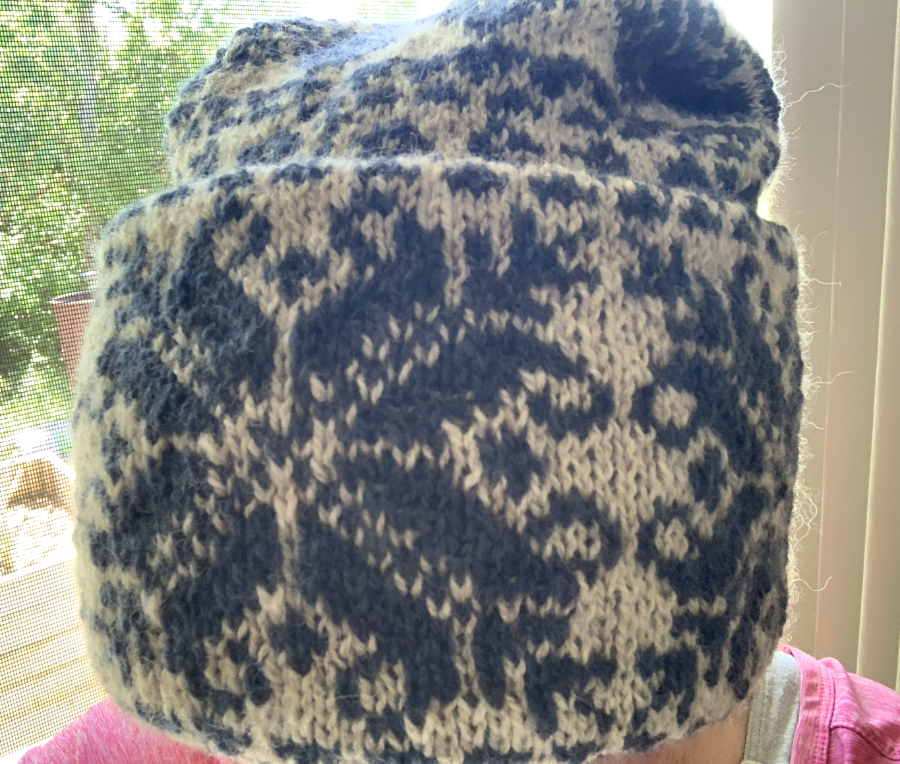
The Doublemassa massive hat knitting project is done. I have to model it for the full effect, so here goes.

Don’t get excited, no gorgeous models here. But the Doublemassa deserves to be photographed while worn. I’m the only one around to do it, so here goes.

I’m a little late posting this because life got busy! But I do need to share the final photos of this knitting project.

Tips For Finishing the Hat

First a note on finishing up this knitting project. One key thing I want to mention is to be sure and weave in your ends BEFORE you make decreases at the crown. I spit spliced my wool, and only had two ends to weave, but I had to pull that section up through the crown opening.

I ended up pulling the whole hat out just to check for ends. Maybe next time weave as I go, or at least keep track of how many ends there are. Wool makes yarn splicing easy, and this means fewer ends hanging.

As I began the crown decreases, the hat was finally long enough to fold the brim and try on. This hat is seriously cool! It fits like a charm too. I’m knitting it for my daughter and she has a small head. I hope she likes the fit. The Rauma wool is quite soft, so no itchy problem there. I highly recommend Rauma.

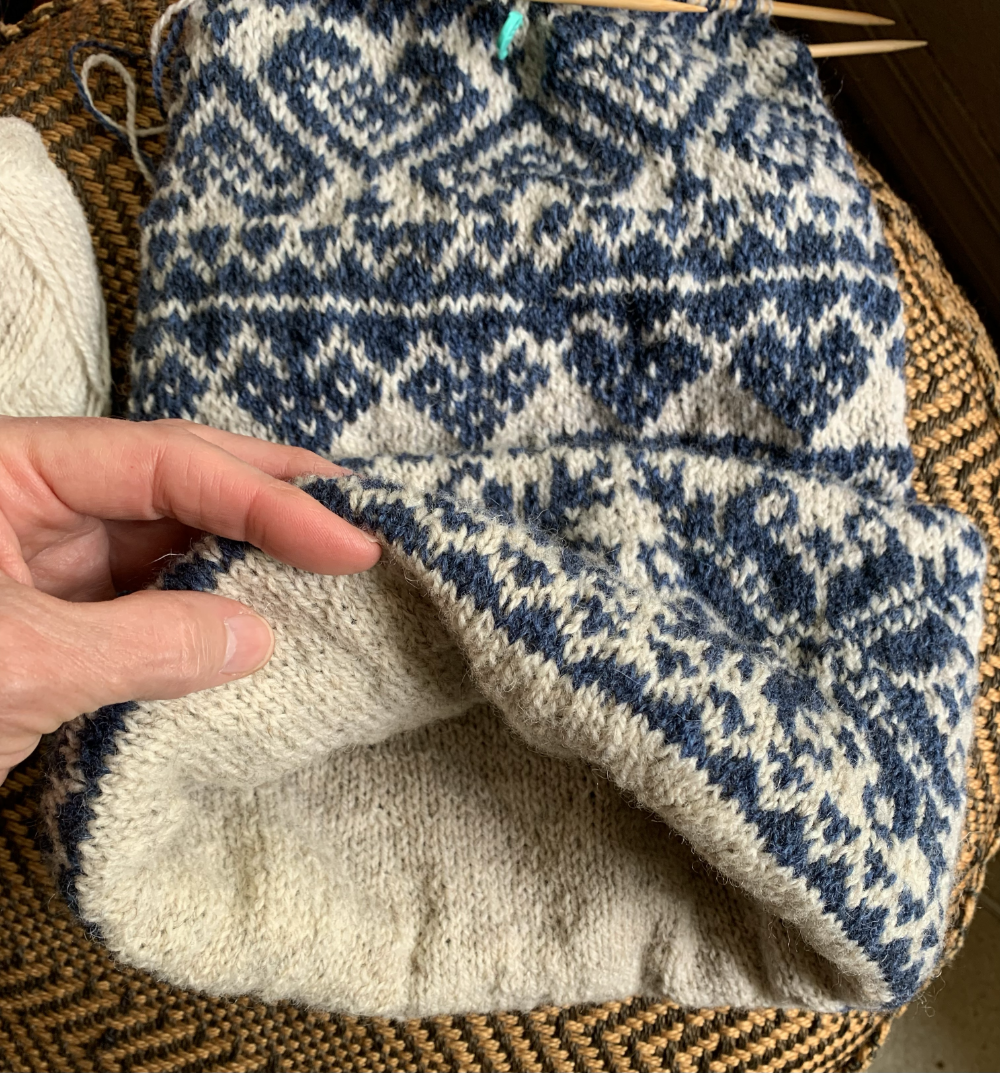
Photo below: At this point all I have left to knit is the crown decreases. I’ve swapped out the 16″ circular for DPNs. Once that is finished I need to make a fun tassel for the top.

Doublemassa hat brim folded up

Making the Tassel

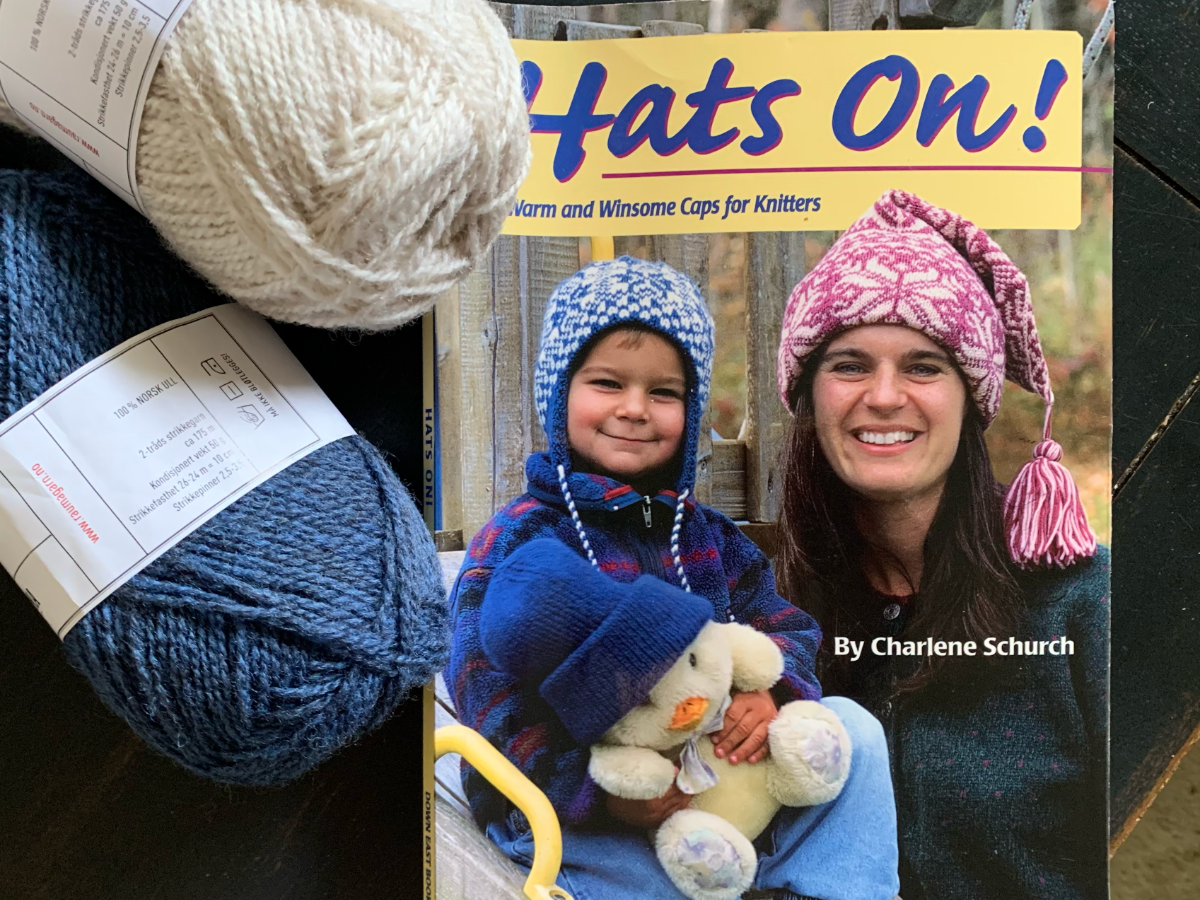
Tassel directions are included in the Hat’s On book. However, the directions are not great. I found a good video to follow, but the tassel must be attached to a hat without an inside access. I wrote a blog post about making and attaching the tassel.

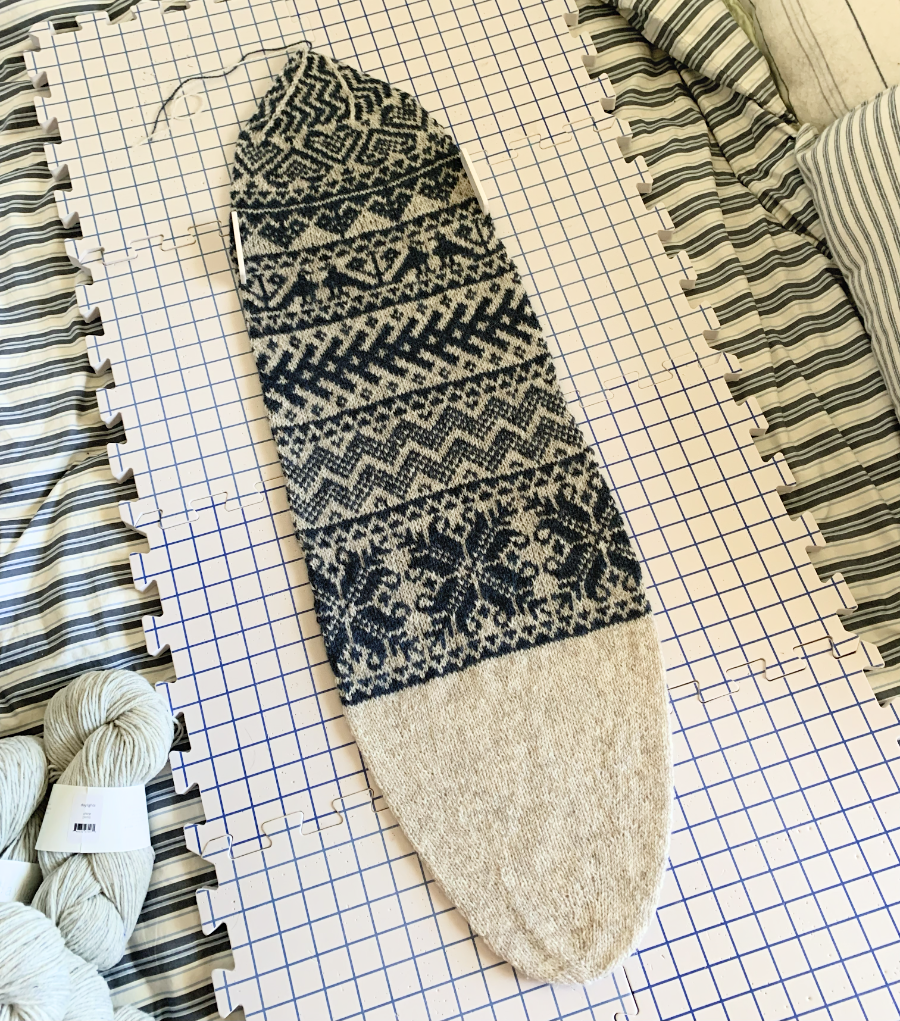
Washed and Blocked

Fontana immediately claimed the hat as her newest cat bed!

Modeling the Hat

I hate to show too much of myself, but in this case the Doublemassa deserves to be shown on a head. My head was it, so here goes.

All my knitting photos are selfies. I prop the camera somewhere and use the 3, or 10 second delay. Usually I go outside, unless it’s too hot. Then I do a lot of cropping and fixing, … oh and deleting too!

These photos would look a lot better with a snowy background and me wearing a puffy winter coat. Instead it was a hot, cloudy morning.

The Doublemassa really is an impressive pattern. I used colors I already had, but this would be pretty in many combinations. The pattern is available in the Hat’s On book (paid link) by Charlene Schurch.

If, as a knitter, you get a request for a hat that is warm over the ears – this is it! I don’t know how you get much warmer than a 4-layer fold.

Knitting Stories continued…