Understanding Knitting Short Rows on a Pullover Sweater

On this page I try to help beginner knitters understand short rows, and the important shaping they do when knitting sweaters.

Short rows are just that, shorter than normal knitting rows. Most often I come across directions to use short rows while knitting sweaters. In order for a sweater to fit properly, the back needs to be raised up a little higher than the front. It makes the neckline lower in front and therefore more comfortable. This is done by knitting back and forth over one section (the back) and ignoring the front stitches, for a few rows. 

Short rows also can be used to shape things, like sock heels, or shawl edges. I’m no expert on short rows, but I feel they are necessary as part of sweater knitting.

Sweaters Knit Without Short Rows

I’ve knit a couple of sweaters that did not include short row shaping. They are not the most comfortable to wear. The Carbeth Cardigan really needed short rows. The pattern was unique and pretty nice except that the back pulls downward, and shouldn’t. I tried to add some short rows myself, which I think helped, but I didn’t really know for sure if I had done them correctly.

Farfuglar was another pattern that omitted short rows. I wish that pullover pattern had included a few short rows as well.

Without short rows, there will be a noticeable difference when wearing a sweater.

Picturing Short Rows

It is always more helpful to me when I can picture how short rows will be knit. The Warm Up Sweater is a pattern from Espace Tricot and it includes short row shaping. I will use this pattern as an example to explain how the rows are knit.

Warm Up is a top-down raglan. Once the neck ribbing is knit, the sleeves, front and back are separated and expanded. Markers are placed to delegate all these sections. The sleeves will have fewer stitches than the front and back, because our arms are smaller parts of our bodies! You should also have a BOR (beginning of round) marker that should be different from the other markers.

We knit from right to left. We cast on and do the neck, and then begin the body. Our sweater is being knit top-down, but while we are knitting we are holding it upside down.

The Warm Up pattern short row directions say that the first marked area is the Right Sleeve, then Front, then Left Sleeve, and Back. In that order. (See my chart below.)

*Helpful hint: Place a removable marker at the “back” middle area. I do this just to keep the front and back straight in my mind – because no knitting should be done across the front (only while making short rows). Short rows will be knit across the back, and in this case, the sleeves.
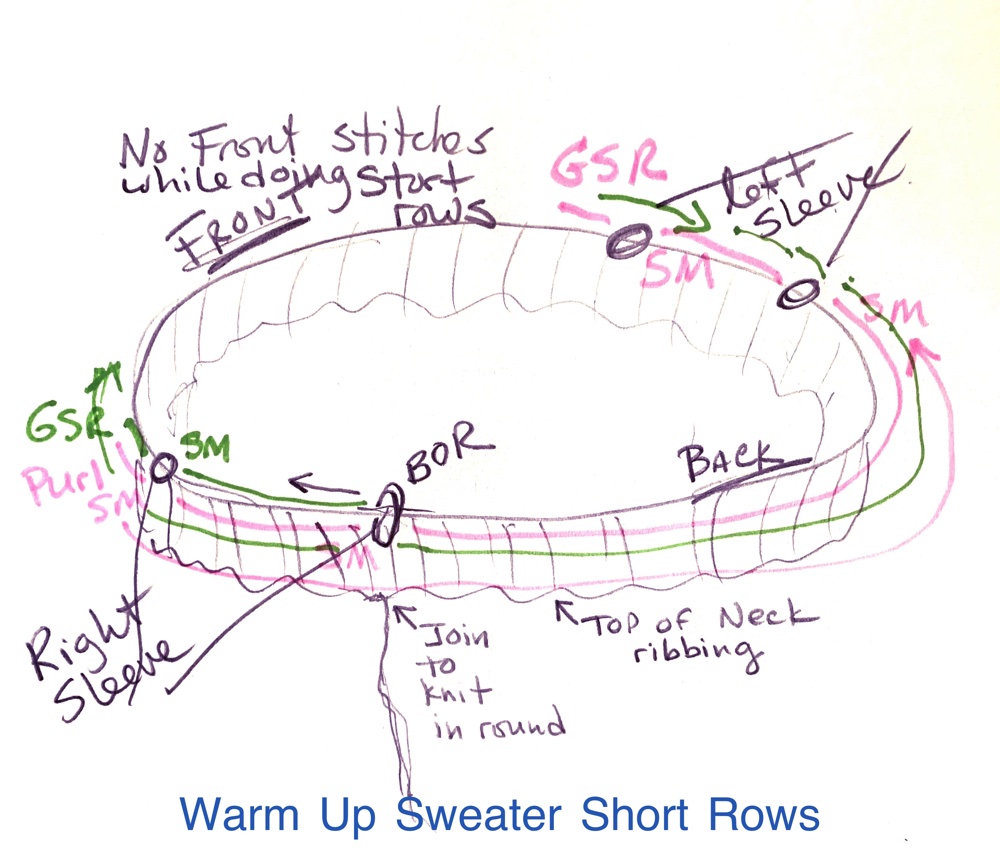
short rows drawing

Short row shaping on the Warm Up sweater begins with Row 1 which says to “knit to marker”. From the BOR the knitting goes across the Right Sleeve. Then, “slip marker and knit X” which ever number for your size. 

This brings you a few stitches into the “front” of the sweater (Green GSR in my image), but now you turn – doing a German Short Row (see how below) – and will purl back (pink line in my image) – across the right sleeve, and the back, and the left sleeve. (This is Row 2, which says: *P to marker, SM and repeat 3 more times. This takes you past the R. sleeve marker, BOR marker, and both L sleeve markers – plus 3 or 4 stitches into the other side of the Front.)

Row 3 of this Short Row section includes increases, in the form of kfb (knit front and back) which are done on either side of the sleeves. You also do a GSR. It is not hard, just do each thing when it says to in the pattern. Some people mark where their short row turns are, but the double stitch made will stand out so there is really no need. 

The German short row turn is done like this: Knit (or purl) to the stitch indicated. Turn the work and with the yarn in front, slip the stitch on the left needle onto the right. Then pull that stitch up and over. It will look odd, like two stitches. You are now ready to either knit – on the RS, or purl, on the WS. Follow the directions for the next short row. 

Watch this excellent Short Rows Video for more help.

small green yarn

More About Short Rows

Making the turn for short rows will become second nature once you practice enough. If the pattern is well-written, the designer will walk you through those rows. Once the short rows are finished, you will continue knitting normally, or as the pattern directs. 

The funny looking short row stitch is always knit together – as one stitch – when it comes time to either knit, or purl that weird stitch.

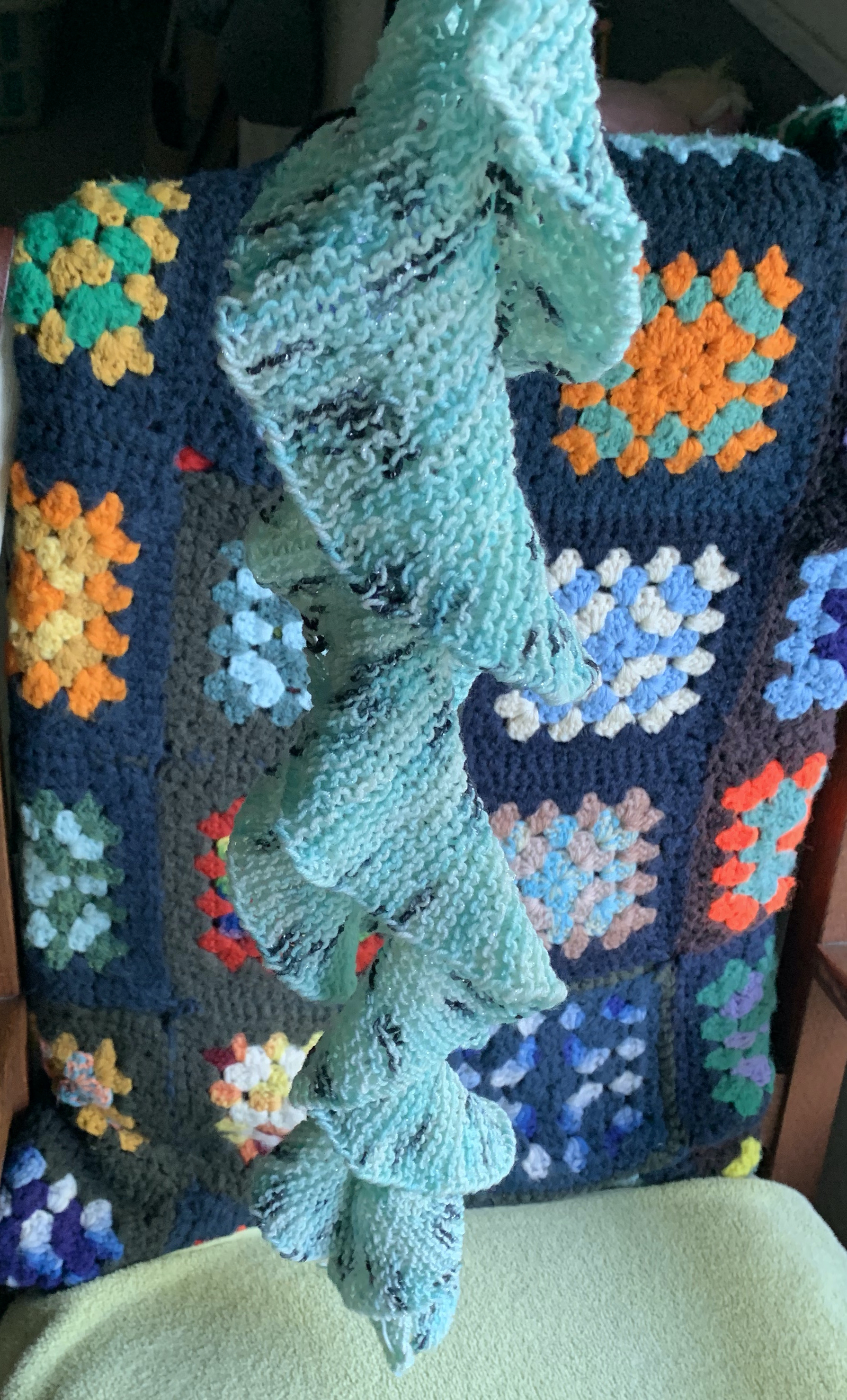
Socks use short row shaping at the heel. And short rows can make a ruffle on a scarf or other project. 

My Knitting Life

Something went wrong. Please refresh the page and/or try again.

Knit the Warm-Up Sweater Pattern

The Warm Up Sweater may be a perfect free pattern for a first time sweater knitter.

For those of us who have not knit a lot of sweaters – or knit them successfully – the raglan top-down style may be the easiest.

I’ve begun knitting the Warm-Up Sweater which is NO LONGER a free pattern, UNLESS you buy yarn from Espace Tricot – for this sweater and mention it when buying.

See the Espace Tricot designer page at Ravelry. I believe this company has changed hands, and now many of their patterns are no longer free.

The Warm-up sweater knitting pattern with collar and yoke complete

Anatomy of a Raglan Sweater

A raglan sweater is known for the increases done along the sleeve and shoulder area that dips down toward the underarm. You can see these stitches, that make a “line” on either side of the front. They are also on the back. The raglan style looks like four sections put together, but it is knit round and round. The knitting expands outward around the yoke and creates room for the sleeves.

This sweater pattern has a simple “knit through the back loop” increase but some sweaters do a pretty little cable or decorative area at these increases which looks very nice (Blueberry Vodka Lemonade Sweater).

A raglan is usually knit from the top down which makes it nice because it can be tried on as it is being knit – or at least pulled over the head. Raglans are usually pullovers but can also be cardigans.

What You Need to Know to Knit This Pattern

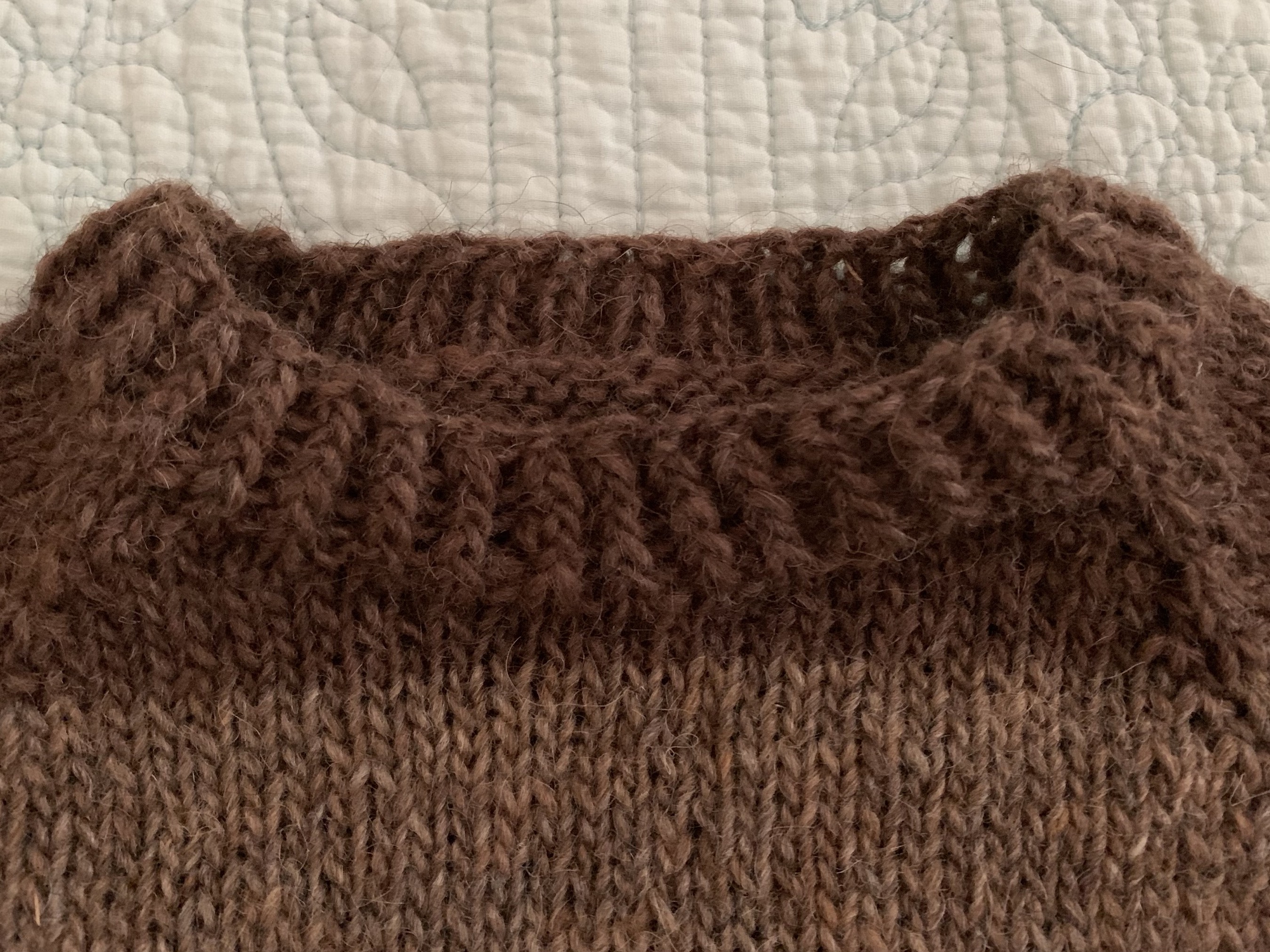
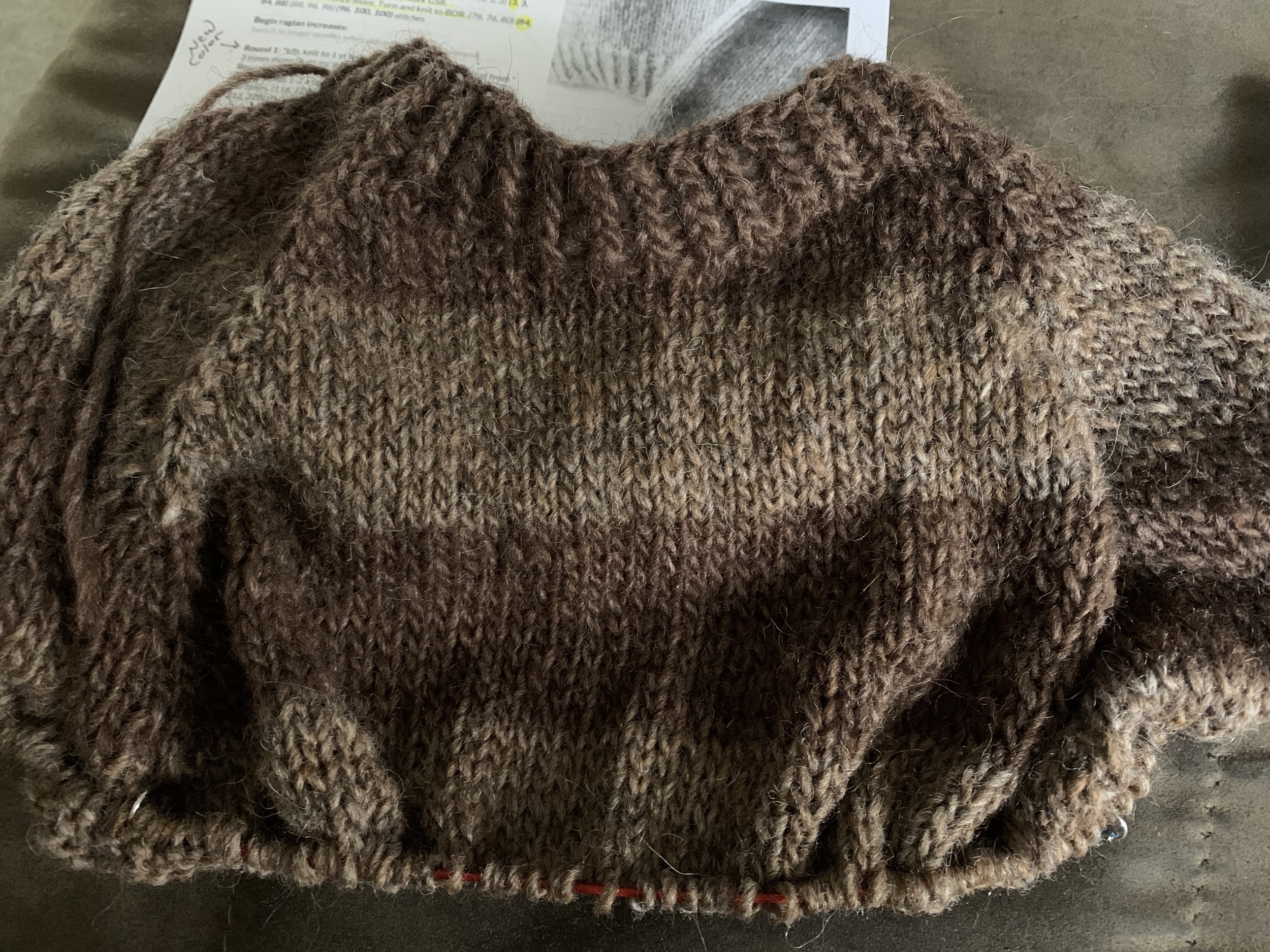
The Warm-up pattern – get it at Ravelry – begins with a cast-on at the neck. A few rows of a twisted rib is done and then some short rows. I love that this free pattern includes short rows. See my photo to see how the short rows raised the back of the neck. Sweaters need this shaping to fit comfortably. It is surprising to me that some designers, who sell sweater patterns, do not include short rows in their sweaters!

If you need more info about knitting the Short Rows for the Warm Up sweater, I have written a whole page about making the short rows.

Short rows raise the back

After that we get into the raglan increases which take place on either side of the sleeve / shoulder areas.

When the correct length and stitch number is reached, the sleeves are put on hold while the body is knit down to the correct length. A bottom ribbing is done and bound off.

Then each sleeve will be knit. Stitches at the sleeve area will be picked up from the waste yarn and the sleeve will be knit down to the correct length. Decreases are spaced to taper the sleeve shape. Do the ribbing and bind-off. Weave in ends, wash and block, and you have a new, hand-made sweater!

Is The Warm-Up Sweater Good For Beginners?

If you are a beginner sweater knitter, you may enjoy knitting this pattern. If you are a total beginner knitter, you should try something easier – a shawl, scarf, or hat – first. In other words, this is not a pattern for an absolute beginner. I say this because there is a lot to learn if all you can do is knit a little. I have mentioned in the section above what this pattern entails.

For those who want to step up their knitting game from the simple stuff, and are thinking about knitting a sweater, this one is perfect. The directions are very clear with stitch counts along the way to make sure you are on track.

Read through all pages and highlight numbers for your size before beginning – or go row by row on a knitting app. Also, if you’ve never done them, learn about doing German Short Rows – marked as “work GSR” in the pattern. Purl Soho has a good video. Follow the directions, row by row, and you will be fine.

You may even learn new and useful techniques along the way!

A Little Sweater Knitting Advice

If you are new to sweater knitting, first be sure to check your gauge. Yes, you must. Keep the little swatch as a reference. It is not a waste of time. The gauge required is listed on the first page of the pattern and also on the Ravelry Warm-Up pattern page. For more on gauge see my post here.

A few knitters had trouble with the cast-on number of stitches being too small, or too tight around the neck. I had no trouble, but would prefer a wider neck. I am knitting size 4 – or finished circumference bust size 49 inches. I used the Old Norwegian, aka German Twisted, cast on method, which is somewhat stretchy and had 68 stitches on my 16 inch circular needle. I suggest using this type of cast-on. See my page about different ways to cast on when knitting if you don’t know it.

My sweater is being knit in Icelandic Lettlopi wool. The Warm-Up is shown in worsted weight yarn, in solid colors with an option to do thin stripes. Of course you can use whatever yarn you want as long as you get gauge. I happened to have a lot of brown yarn and instead of doing a solid brown sweater, I opted to do wide stripes alternating the two browns.

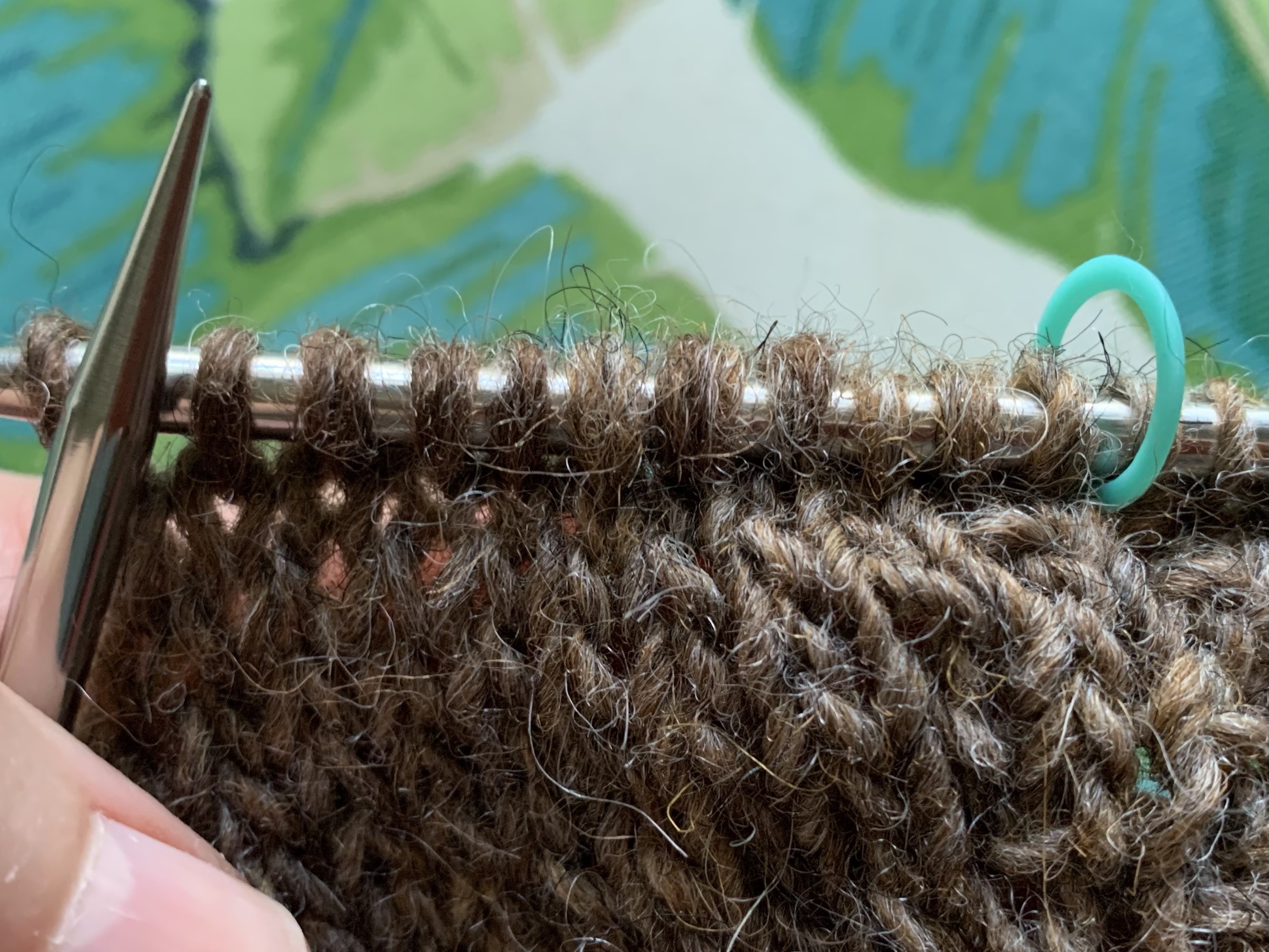
Because my yarn is wool, I am doing a spit-splice every time I change colors or add a new skein of yarn. This is saving me from having to weave in many ends when the garment is finished.

spit splice knitting no ends to weave in
Wrong side – with no tails!

I am having fun knitting this simple sweater. Now that I am beyond the raglan increases, it is mindless round and round knitting that can be done in the car or in front of the television. All I need to remember is to change colors when it’s time (I am knitting 12 rounds of each color), and measure for length.

The needles I have used are size 7 and 8, 16-inch circular. Size 8, 32-inch circular (for the body). Then I switched to a 9-inch circular down the sleeve and for the ribbing at the cuff. DPNs can also be used, but I really don’t like using those.

On the sleeves, I picked up and began knitting with the 16-inch circular and changed to the 9-inch circular toward the end of the sleeve. I knit the ribbing in size 7.

Because I did spit-splicing throughout when changing colors, I only had 6 ends to weave in – one under each arm, at the neck, body rib and sleeve ribs…. pretty awesome!

Future Plans

If this sweater turns out to fit me well, I plan to make more like it with possible modifications. I almost made a rolled collar on this one, so maybe I will do so next time. It definitely needs to be wider for comfort.

For another time, some color-work could be added at the bottom near the cuffs on the body and sleeves. I’d go up a needle size to do that.

Finished Knitting

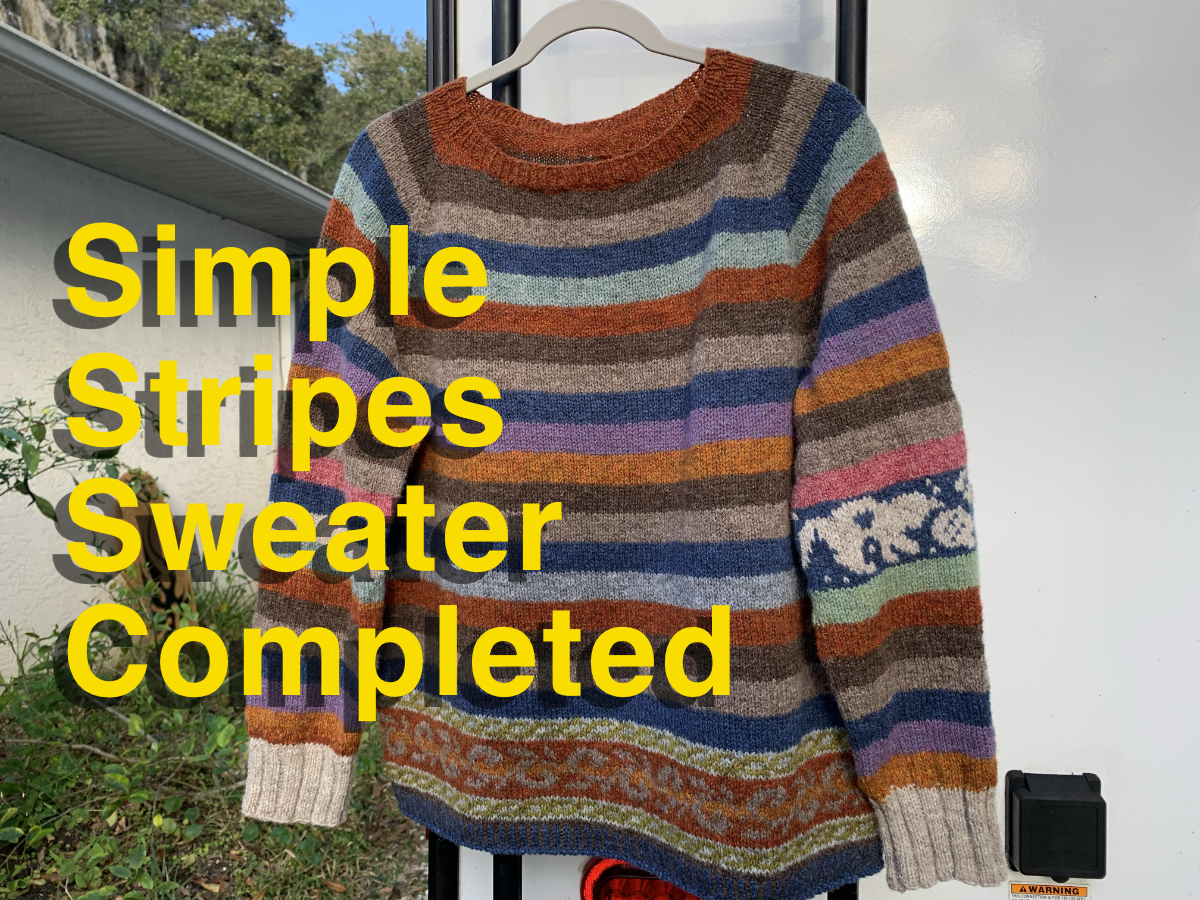
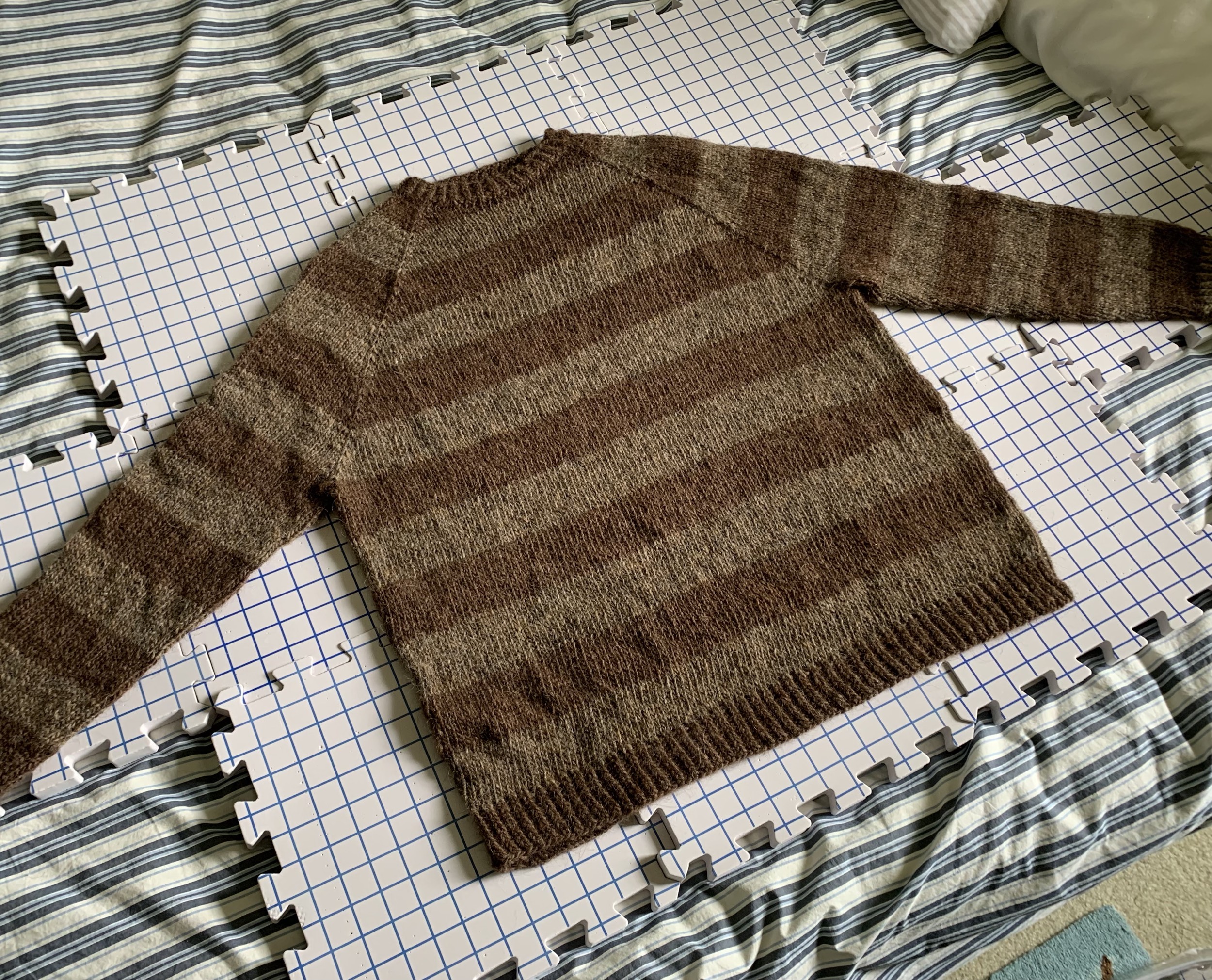
Now my striped sweater is drying. All I had leftover for yarn was two small skeins each of the dark and light brown. In all I used about 9 1/2 skeins, or approximately 1,031 yards.

I’ll try it on and get photos once it’s dry. Total knitting time was about a month and a half. See notes on my Warm-Up Sweater Ravelry page.


December at the Fire

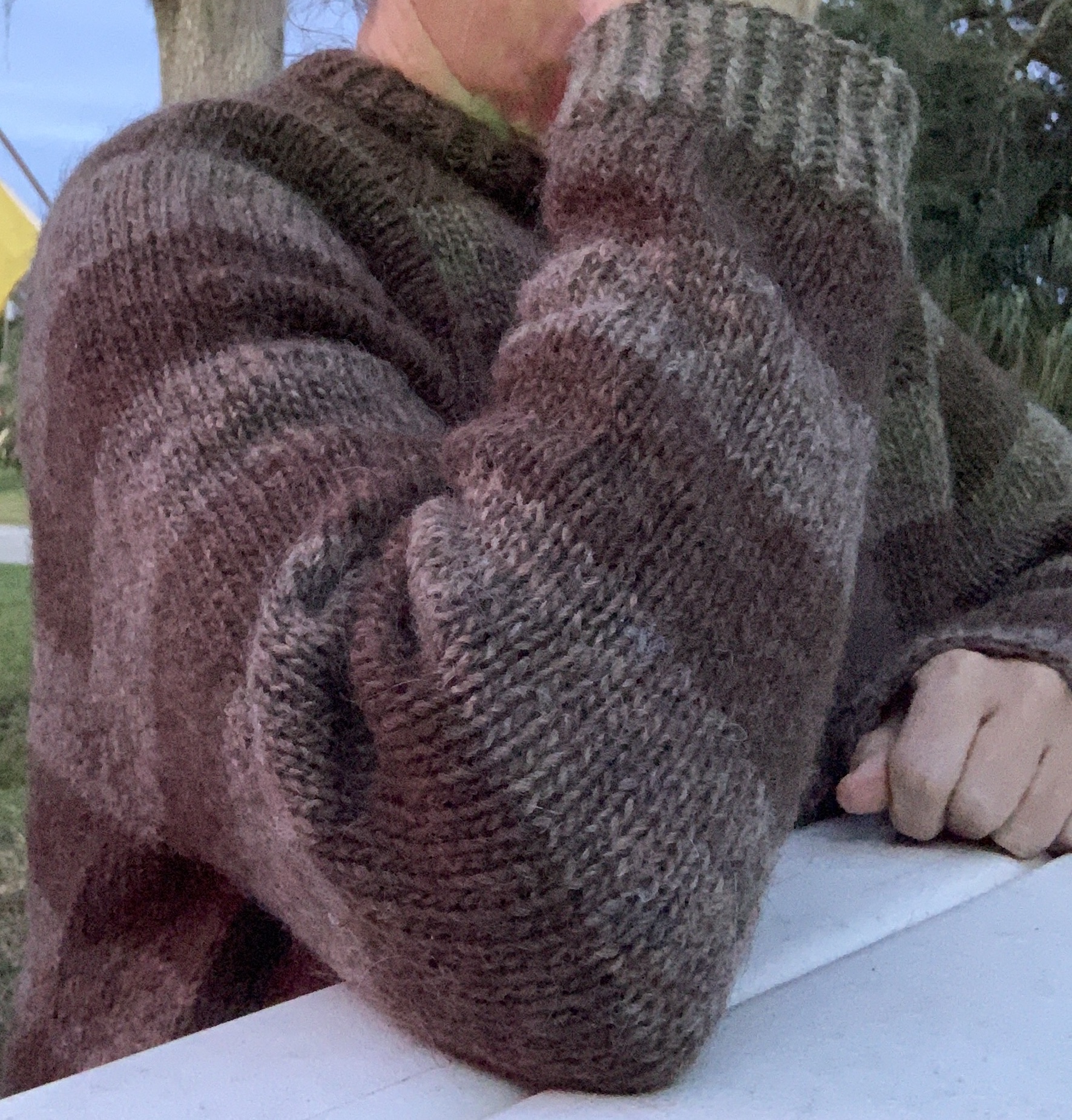
The few cool days we have here in my area of Florida are much appreciated by me! I dig out my wool sweaters and make sure I wear them. It was also an opportunity to get a few selfies.

Warm Up sweater
Warm up sweater
Warm up sweater sleeve
12/2023

Please Keep Reading

How to Spit Splice Yarn and Make Knitting Simpler

When knitting with wool and changing colors or adding a new skein, use the spit splice join to make things simpler and have fewer ends to weave in.

Only recently have I begun to spit splice yarn. When I discovered how easy it is to do, I became hooked.

Wool is a great fiber to use for knitting. In my opinion, sweaters need to be made of wool. A sweater is made to be worn for warmth and wool is the perfect choice.

To the best of my knowledge, spit-splicing only works when knitting with wool. If the yarn is a wool combination, I am not sure. Wool is a sticky fiber and water (spit) will help hold the strands together. Also the brisk rubbing of the wet wool connects the fibers.

Lopi yarn with Lettlopi, Alafosslopi, and Plotulopi

Wool Yarn Only


This is exactly why wool garments need to be hand-washed. The combination of water and friction changes the fiber. It will totally ruin a wool garment if it goes into the washing machine and / or dryer. It is also why felting wool works, which shrinks an item on purpose.

Warm Up sweater knit in Lettlopi
Warm-Up Sweater pattern

I am knitting a pattern called the Warm-Up Sweater by Espace Tricot (see pattern link at bottom of page). It is a simple raglan, top-down knit. I chose it to use up some of my Lettlopi wool. For some reason I have a lot of brown yarn. Then, I decided to combine the browns to make wide stripes for a less boring knit. (Lettlopi colors used are Murky and Acorn Heather.)

Spit-splicing is perfect for this type of patterning of colors.

How to Do the Spit Splice Join – With Photos

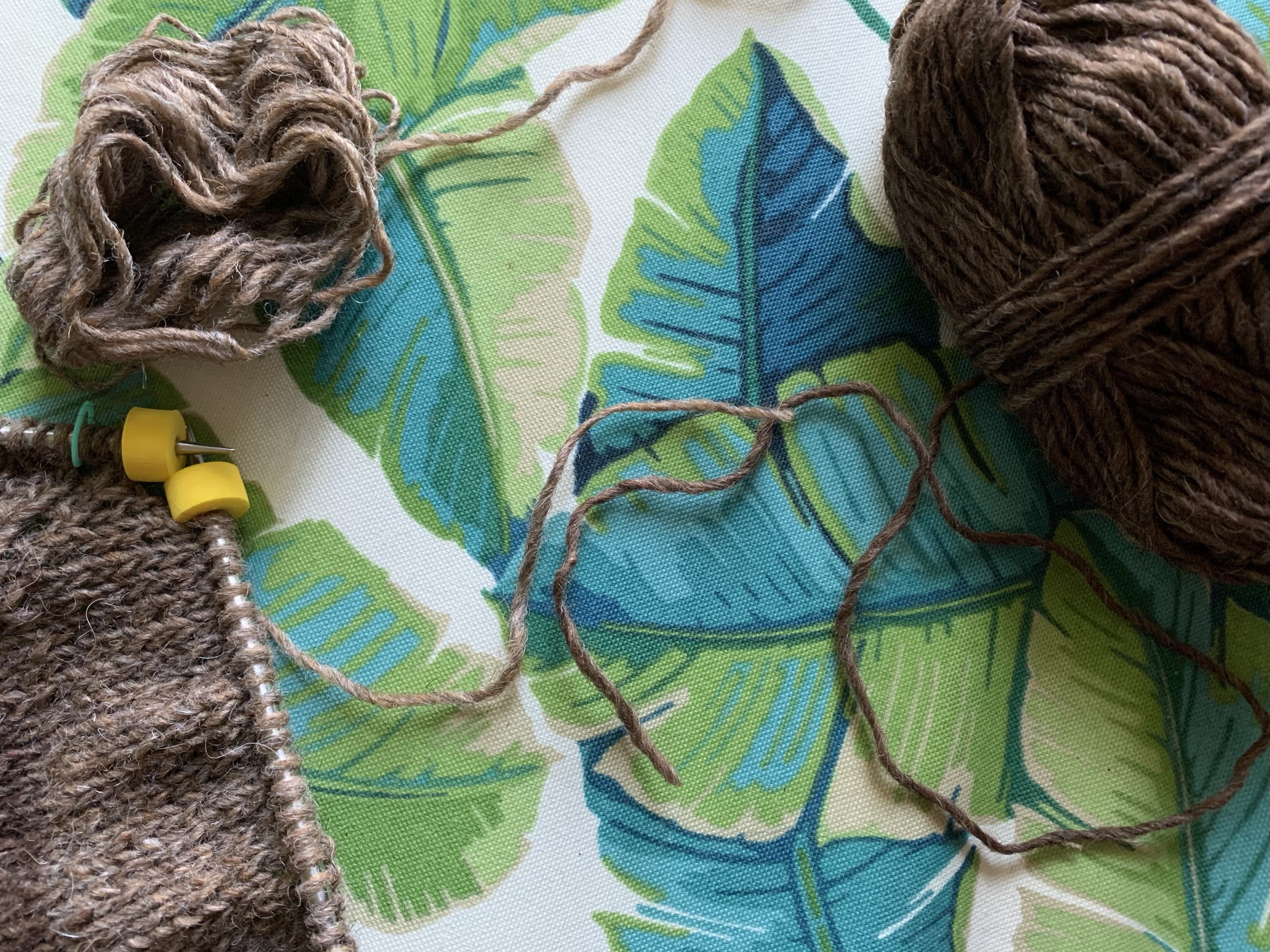
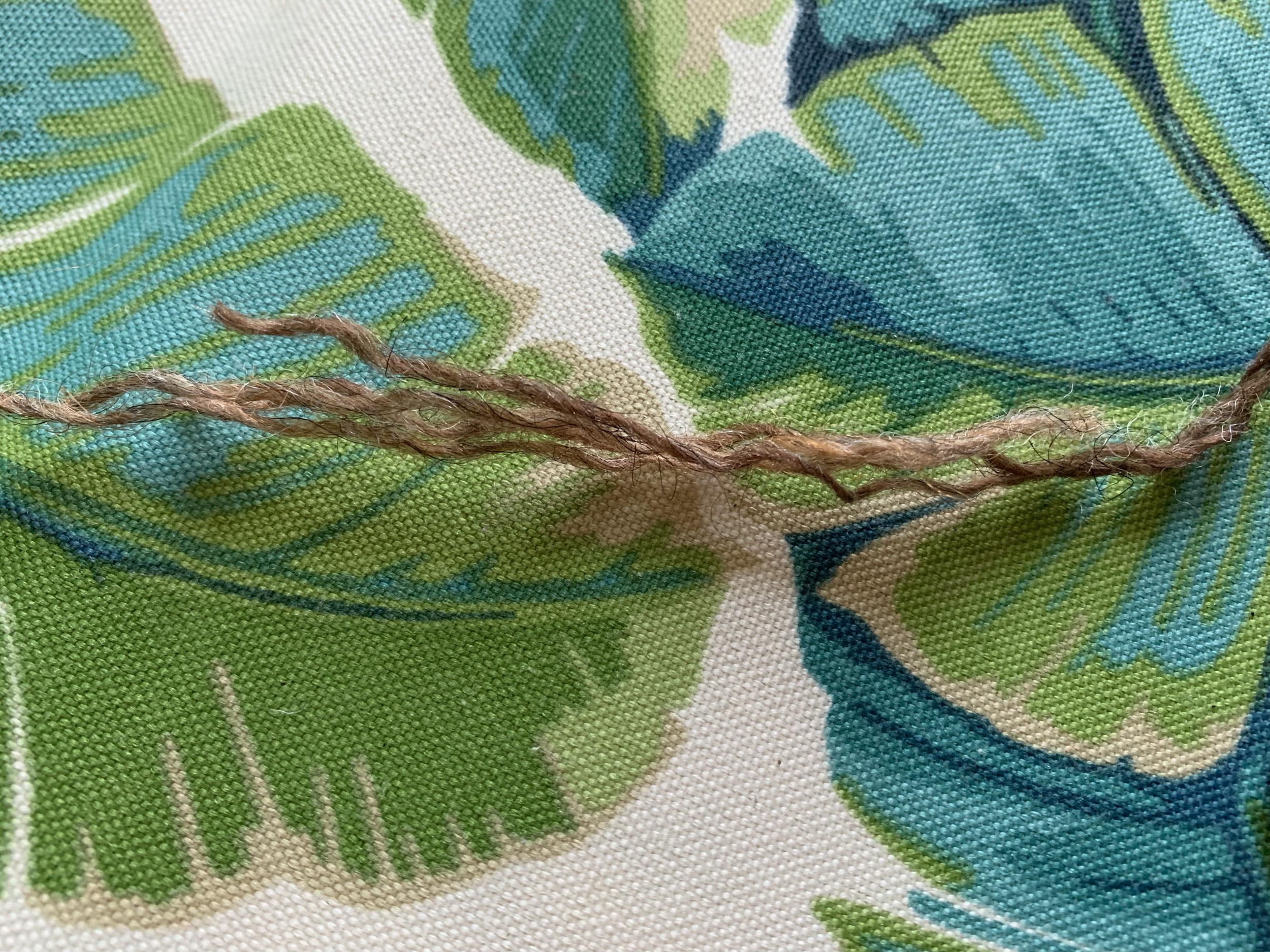
To do the spit splice, I change the colors by cutting the end of the yarn I have been using, as normally would be done. In this case it’s the lighter brown.

Instead of adding that new, darker brown color to my needle, I will combine the two colors of yarn together to form one strand. This will gradually bring in the new color and leave no ends to weave in – which is the best part!

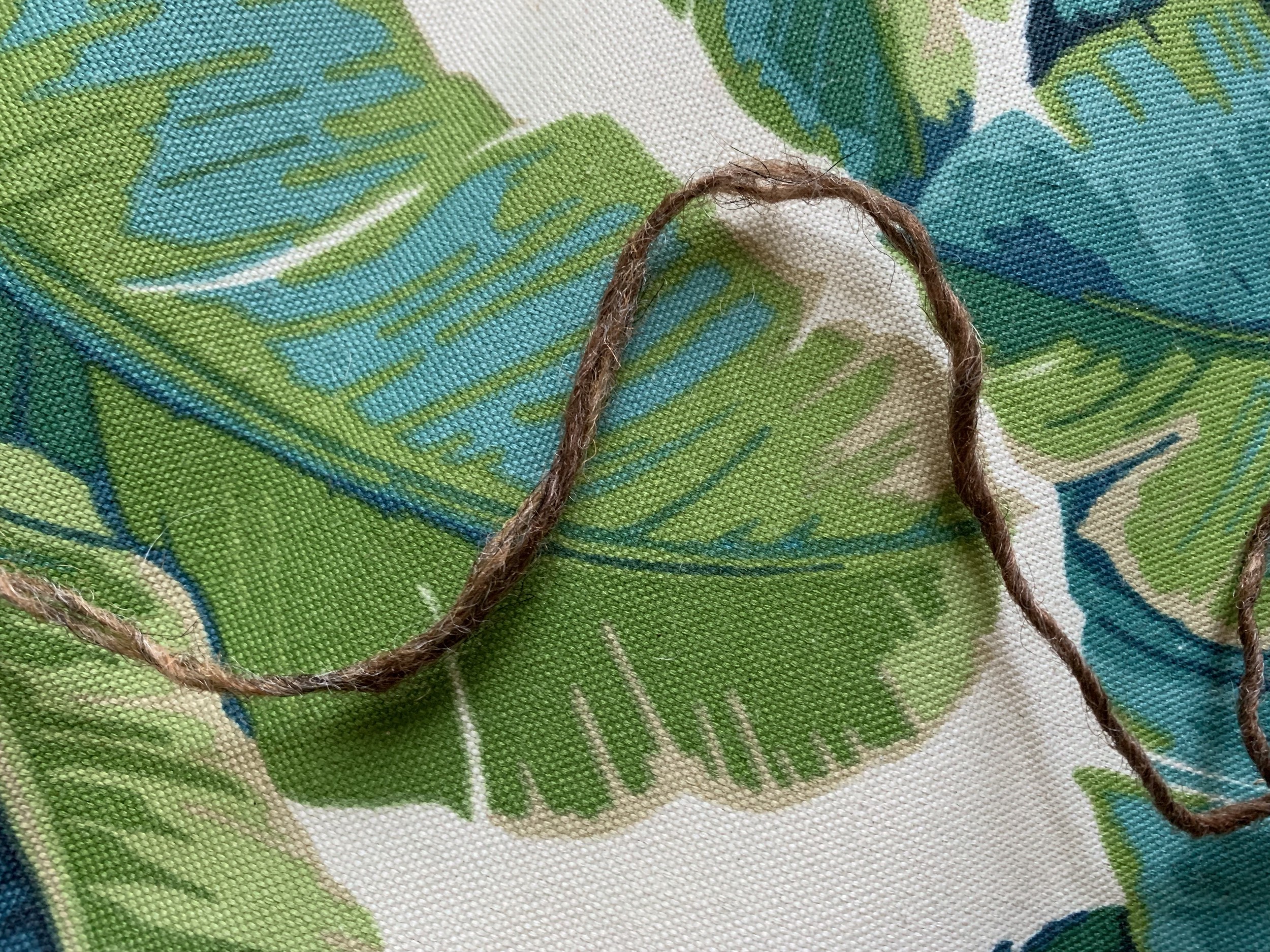
With the Lettlopi yarn, I can easily separate each end into two strands. They pull apart and unravel nicely.

Lay the ends together to overlap a bit and twist together.

Spit on that entire entwined section of wool to make it nice and wet. (Someone somewhere said spit works better than water – and quicker too.)

Once the yarn is wet, rub the section briskly between the palms of your hand. I usually have to rub a few times to fill in any loose holes. Do a little tug to be sure the yarns have stuck and do not pull apart.

Once the two strands are stuck together, I have a section of yarn that is made up of both colors. Part of that section is a bit thick, but the yarn is thick and thin on its own, so this works.

Here is my spliced bit of yarn. As I continue knitting, the yarn goes from light to dark and blends in nicely for my next section of darker brown.

I’m doing the splicing close to the beginning of round marker but it is not exact. It won’t matter. My two yarns are close in color and they just blend nicely. Also, this pattern has the BOR at the back, right shoulder where it wouldn’t been seen anyway.

Why Spit Splicing Makes Knitting Simpler

In the end, the reason for doing the spit splice join is to save myself the hassle of having to weave in ends. In this striped sweater project I would have had two ends hanging at every row of color if I had added yarn the traditional way. That would be a lot of ends when the sweater is complete!

Joining the yarn and not leaving ends means I will only have the cast-on strand, underarm strands, and cast-off strands on body and sleeves to weave when I am done. That is a win in my book!

spit splice knitting no ends to weave in
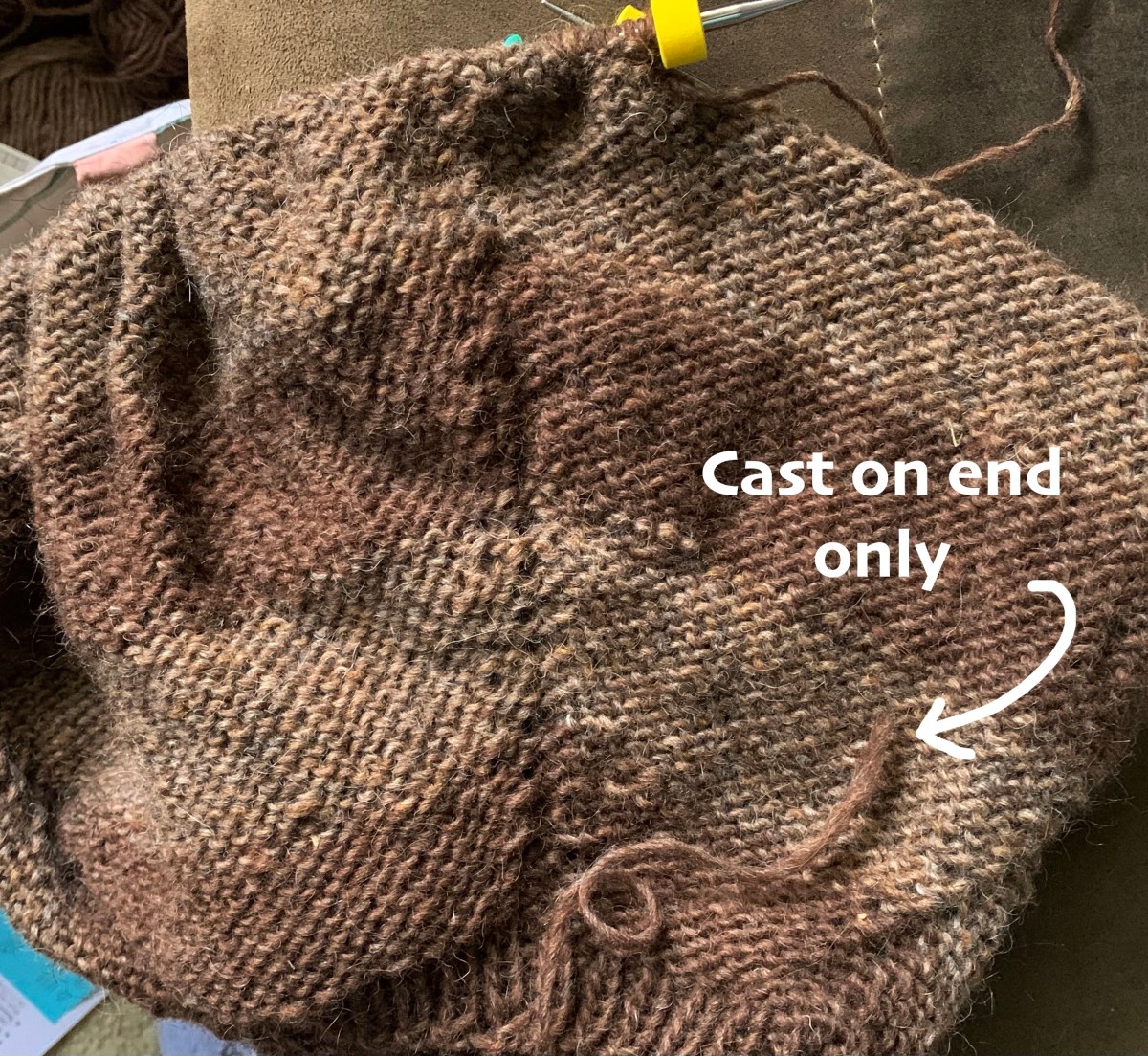
Rows of color with no ends showing except the cast-on

Other Uses For the Spit Splice Joining of Yarn

Also use this joining method when changing to a new skein, or if the yarn breaks, or if you come across a knot, and so on. I recently knit a colorwork sweater with Plotulopi wool which would come apart very easily on the slightest tug. I used the spit splice join a lot on that one!

Get the Warm-Up Sweater pattern at Ravelry

YouTube Video on Spit Splicing

If you’d like to watch this process on a video, here is one by iKnits that is short and to the point: https://youtu.be/h5UwY8NDtP0