
This is my second post about knitting a beginner scarf. Read Lesson #1 here. There is no written pattern for it, we are simply practicing knitting and purling in combinations that create interesting designs.
Anyone knitting the scarf is free to knit whichever stitches, for however many rows, as you’d like.
Along the way I will do some basic stitches that would be good for all knitters to know. If you feel willing to try them out, go for it.
We began by casting on 35 stitches with worsted weight yarn. My scarf measures 9 inches across. See Lesson #1.
Please ignore the fact that my yarn colors are changing. You should knit in one color – one skein. I am trying to use up some leftover yarn. I will help you learn to add a new skein, or color, in the next lesson. For now, as a beginner, just worry about learning the stitches.
What We’ve Done So Far
I knit back and forth for four inches. This is called Garter Stitch. Watch the video on the Lesson #1 page for help casting on and knitting back and forth. You should do as many rows as needed to get comfortable with holding the needles and creating the stitches.
You can knit your entire scarf in garter stitch if you want to!
For those who want to learn more, we will now do purl stitches. I’ll include good videos I’ve found to help with each step.
ALSO… don’t worry about making mistakes. The only way to fix a knitting mistake is to “un-knit” or Tink. This is quite difficult when you are first starting out. When I began knitting I simply left my mistakes to become part of the project! In fact, I sometimes still do that! Unless your mistake is horrendous, and you can’t stand it, leave it until you learn to un-knit. You can remove the yarn from the needles and unravel the whole thing is you want to begin again. That is up to you.
How to Purl
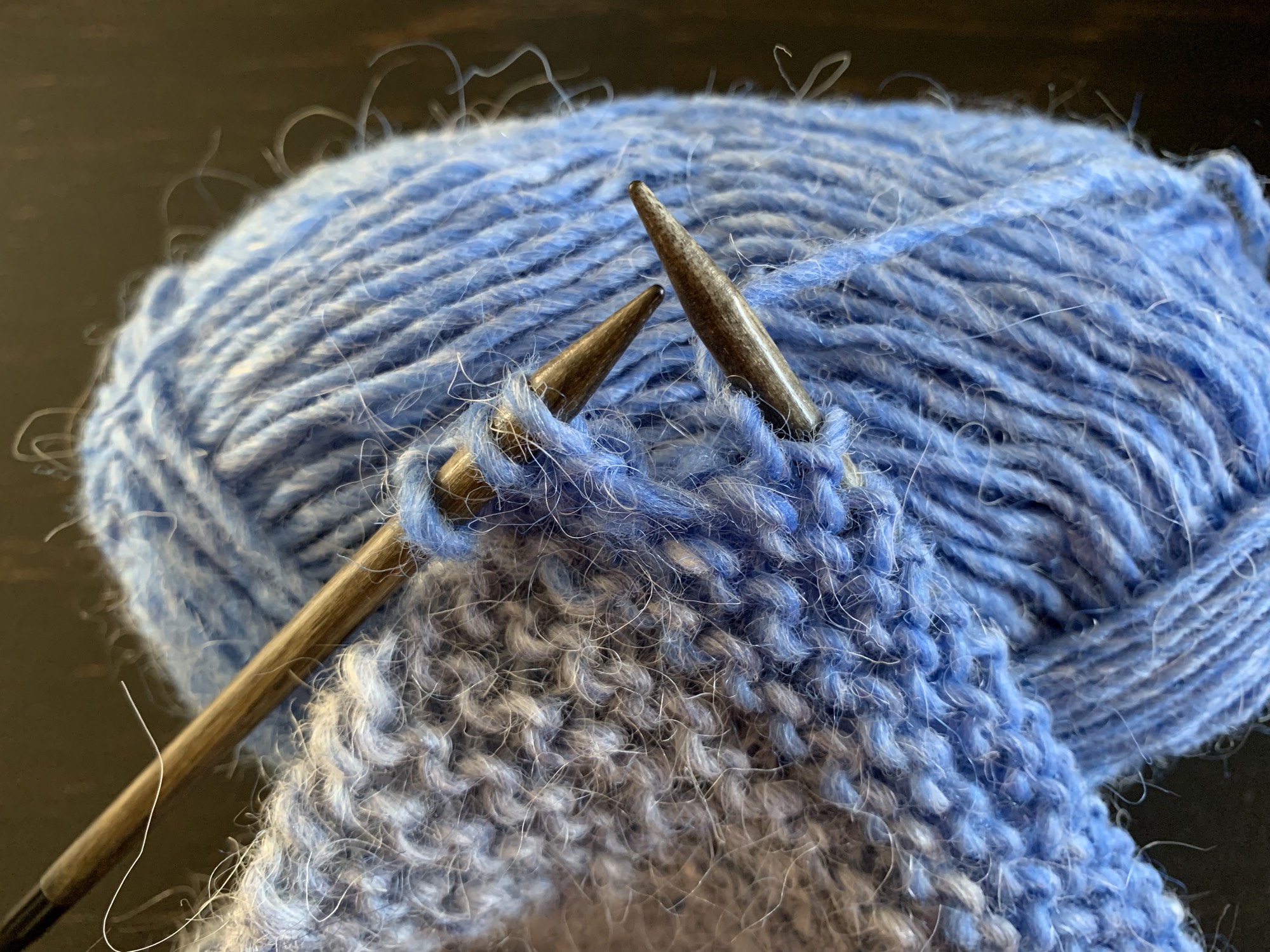
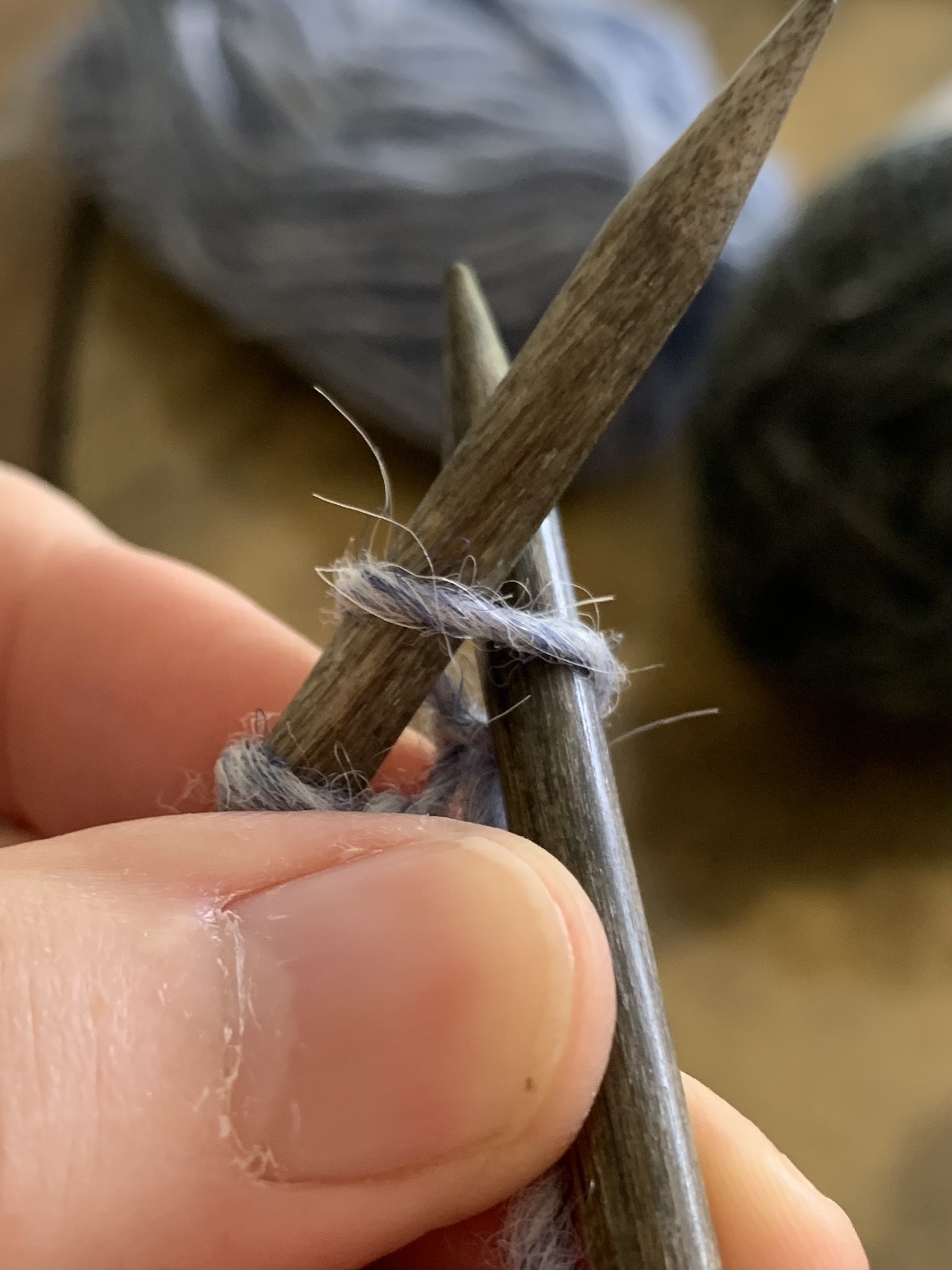
Besides knitting, you will want to know the purl stitch. It is very similar to the knit stitch except the yarn and needle come to the front. Your yarn has been coming around the needle from the back when you did your knitting rows. Now the yarn will be in front and your needle will go into the stitch as you see in my photo below. Forget about that strand, it just needs to be in front of your work before you insert the needle.
Here is an excellent purl stitch video.
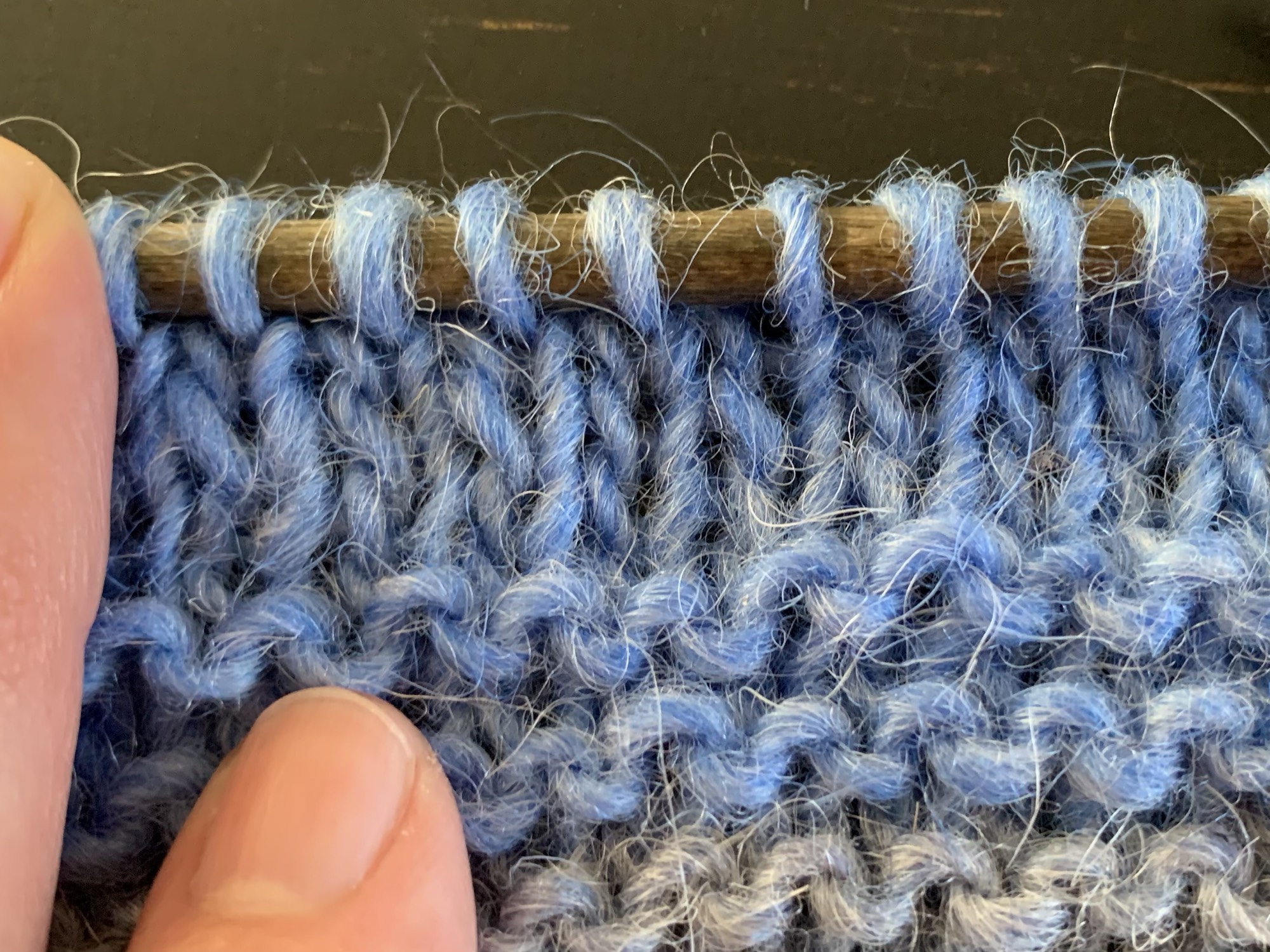
My photos below show the needle placement to purl, and how the purl stitch will look on your needles. These are known as purl bumps. It’s good to know what stitches look like. Once you can do knits and purls, you are well on your way in the knitting world. These stitches can combine in many ways to create all kinds of designs.


A Little About Knitting Stockinette
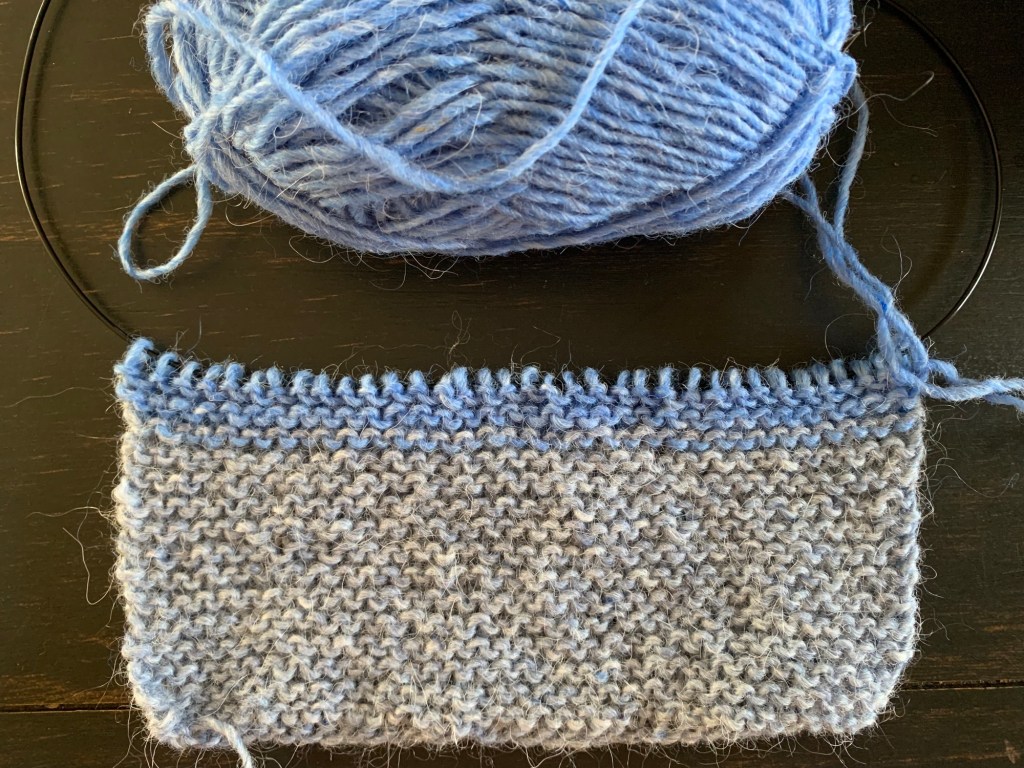
Stockinette creates a smooth looking fabric. You can see how your garter stitch section – the beginning of your scarf – is bumpy on both sides. Knitting one row and purling the next will create a more smooth fabric.
You should be able to see the difference. Stockinette is more flat and smooth. In fact, that is how I remember which is which. Think of stockings being smooth on the leg.
My photos below show the garter section, then my change to stockinette and last, the section in my knitting that is the stockinette. Above that, I did the seed stitch. More on that down the page.


Making Stockinette Rows on Our Scarf
Because stockinette tends to make a flat knitting project curl, I only did a few rows on my scarf. And I added garter stitch borders to our rows. For this reason, I suggest you only do a few rows of stockinette. This is our practice with making the purl stitch.
Our scarf will not have a “front” and “back” so don’t worry when – which end – you begin your stockinette knitting. After you finish knitting a row, turn the work and you are ready to begin the purl row.
The video link below is what we will be doing for the next few rows on our scarf, except that I have given our scarf a border of knitting only.
The Spruce Crafts page has a good video about doing stockinette.
Knitting the Landscape Lessons Scarf Stockinette Section
Row 1 of stockinette: We will knit three stitches, then begin to purl. Purl across to the last 3 stitches and knit the last three.
Remember to switch your yarn to the front for purling, and back again when you knit. Try to remember to knit those edge stitches at the beginning and end of the rows.
Turn the work. Row 2: You will knit this row, just like you have been doing for the first part of your scarf. The edge stitches will always be knit, so you don’t have to do anything differently on this row… simple knitting across.
Row 3: same as Row 1 – Knit the first three stitches and then purl across to the last three. Knit those last 3.
I only made about five rows, and ended after knitting a purl row.
Now you will begin the next section with the knit side showing, like in my photo on the left below.

The Seed Stitch Section
If this all seems to be too much for you, please just knit along however makes you happy. Once you know how to do both the knit and purl stitch, these are just more options for practice. After the stockinette section, you can go back to knitting garter – knit every row. As you progress with your scarf, you may want to give this section a try.
The seed stitch is made by alternating knits and purls. That’s all. If you are interested in trying this, here is how I did my seed stitch section on the scarf.
Seed Stitch Section
Row 1: Knit the first three stitches (this is our border on both sides of the scarf). *Purl 1, knit 1, across the row alternating knits and purls, ending with a purl stitch (if your stitch count is 35 like mine). Knit the last three stitches.
Turn the work and do the same thing as row one. Because we are purling that last stitch on the previous row, it now looks like a knit when we turn the work over. Therefore we begin with the opposite – a purl.
For the seed stitch to work, we knit the stitches that had been purled on the previous row. We also purl the knit stitches. This alternates stitches to create a cool, bumpy look.

You really must become familiar with how knits and purls look. If you lose your place, or set your knitting down, knowing which stitch to do next is important. (Also remember your yarn comes off the right hand needle if you start in the middle of a row.)
In my photo below, can you see the purl “bumps” and knit stitches on my needle? I am knitting with a very woolly yarn and if your yarn is smoother, the stitches may stand out even more. If it’s hard to tell, pull down on the fabric to make those bumps and V’s clearer.
If you lose your place on the seed stitch section, look at what is on your needle. It will tell you which stitch to make next. If you mess up, fix it on the next row.
If you hate it, go back to knitting every row until you feel better. Knitting should be calming and not stressful. If you do a lot of knitting your hand may hurt, so don’t overdo it. Remember that every stitch you make gets you closer to becoming a great knitter!
I hope my tutorial makes sense to a beginner knitter. Once we are familiar with all of this, it’s tough to remember exactly how it was when beginning to knit.
I am by no means an expert. There are many things I still have not accomplished in knitting. It takes practice, and this scarf is a very good way to get the practice you need with basic stitches.
One of my very first scarves was knit all in seed stitch. It was my favorite scarf when I lived in the north.
Landscape Lessons Scarf: Lessons by Number
- Lesson #1 – Yarn, needles, casting on, and knitting back and forth.
- Lesson #2 – this page!
- Cast on page – beginners use the Cable cast on.
- All about needles








 New England's Narrow Road