One reason I refused to learn to knit when I was younger, was the difficulty in fixing mistakes.
When crocheting, we simply remove the hook and pull the yarn back past the goof, and begin again. This can’t be done when knitting.
How to “Tink” or Un-knit
While happily knitting along, suddenly you look back down the row you just knit (and it’s a good idea to get into the habit of doing this) and see something is wrong. Maybe what should have been a purl, is a knit. Maybe a stitch has dropped. Maybe the wrong color was used in a colorwork pattern. Whatever it is, it needs to be fixed. Now the stitches just worked need to be taken out, or un-knit / un-purled – back to the spot of the mistake.
Please note that if your mistake is waaaay back and it would take forever to un-knit to make the fix, read the next section about how to fix that type of booboo by frogging back.
The Chilly Dog has a good video showing (very slowly) how to take out knits and purls.
Sometimes your row will also have other stitches, such as K2tog, SSK, or more involved stitches. Good luck! Look that up on YouTube if you need help. Basically, undo the stitch by remembering how you made it in the first place.
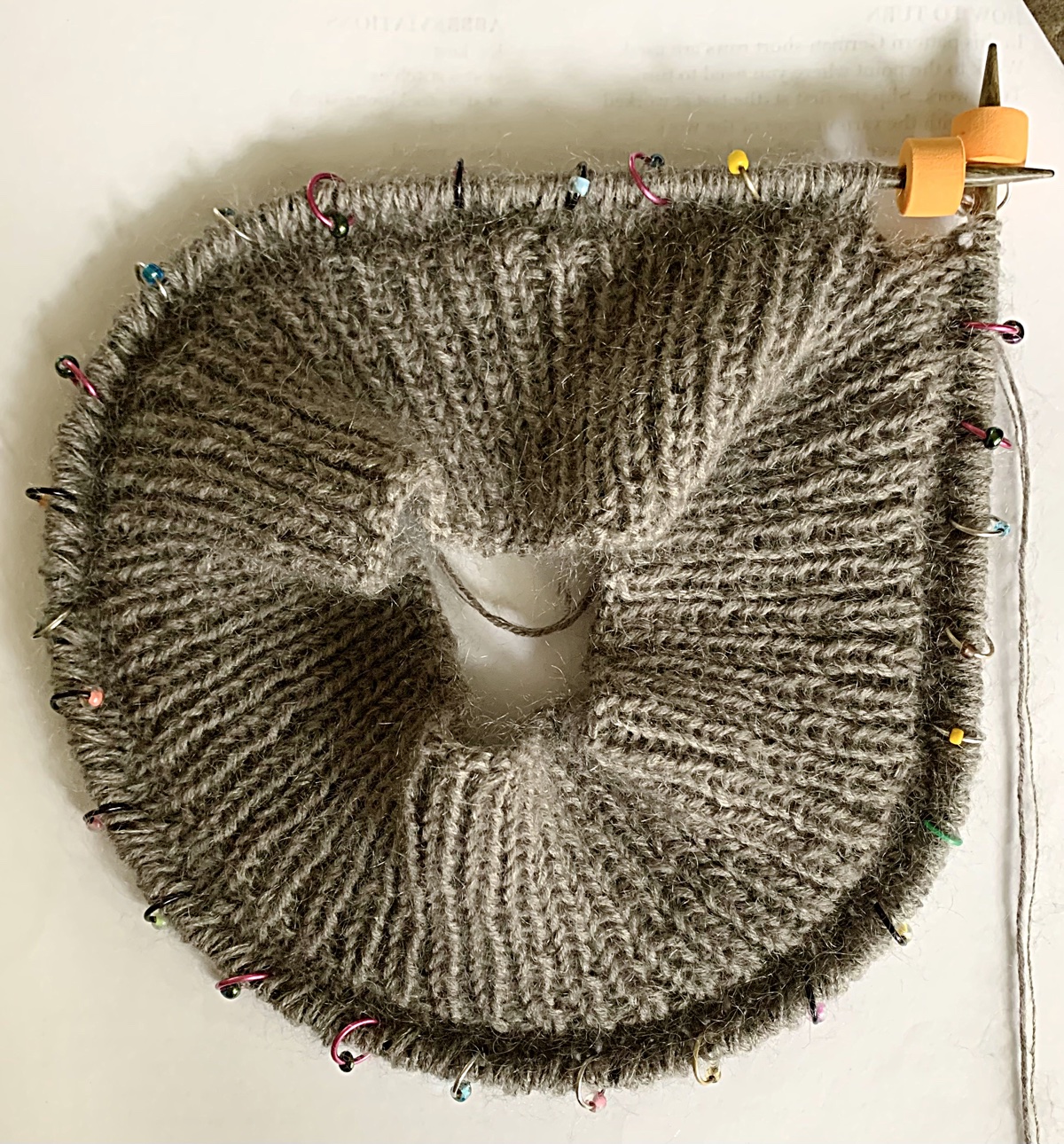
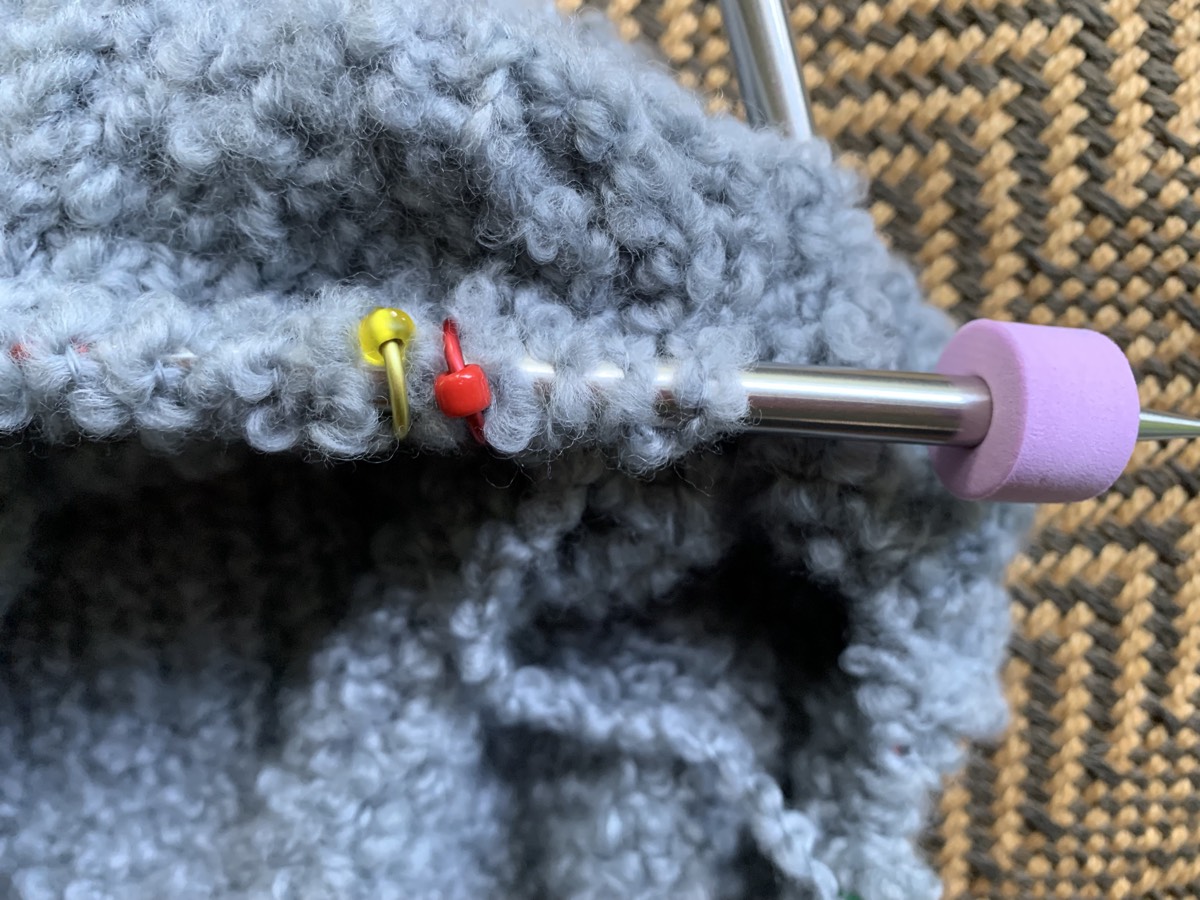
HELPFUL HINT: Use stitch markers to divide a long row into sections. Unless you are simply knitting, or purling, divide each row into the sections used in the pattern. This way, if the count is off within that section, it’s a short way back to the fix.
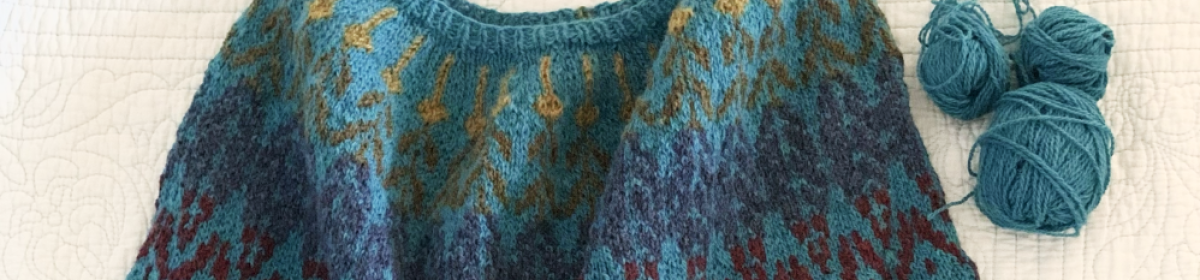
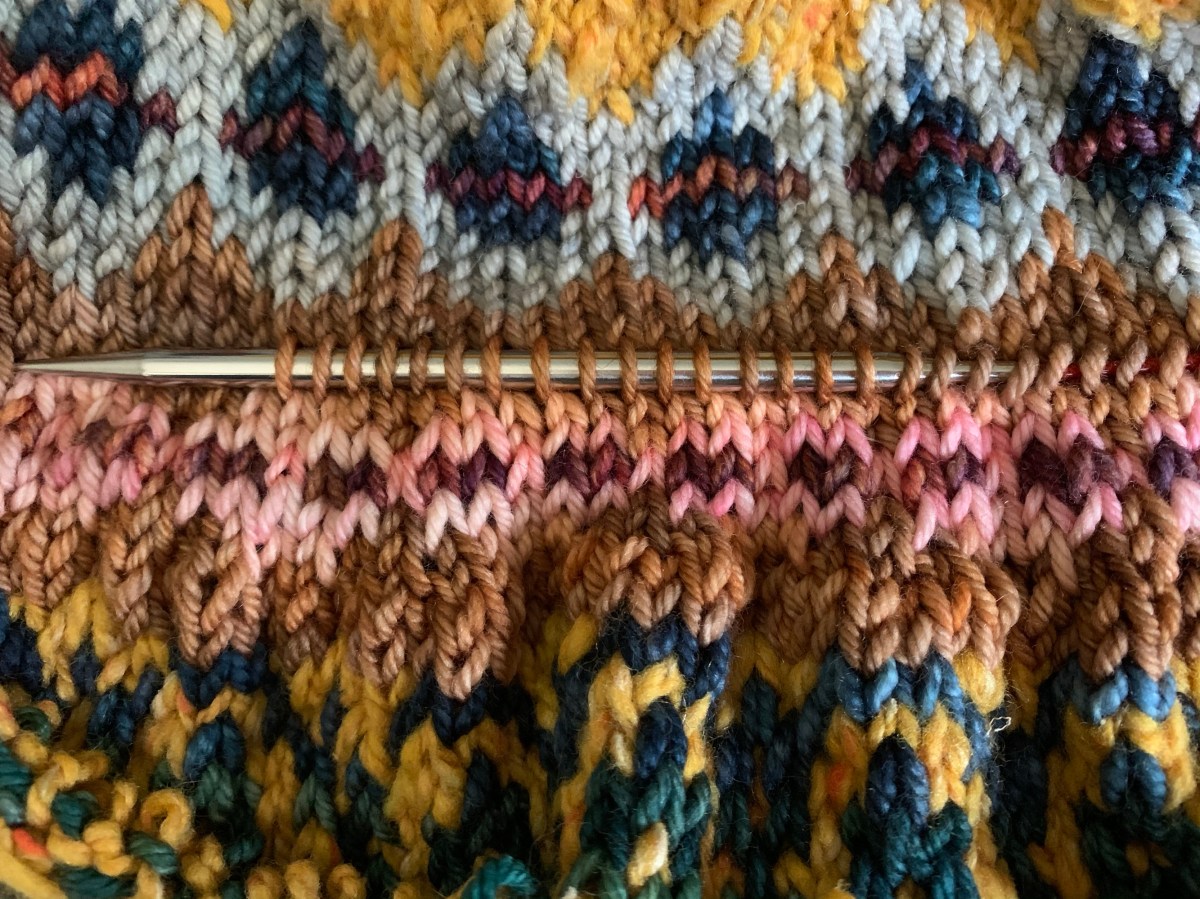
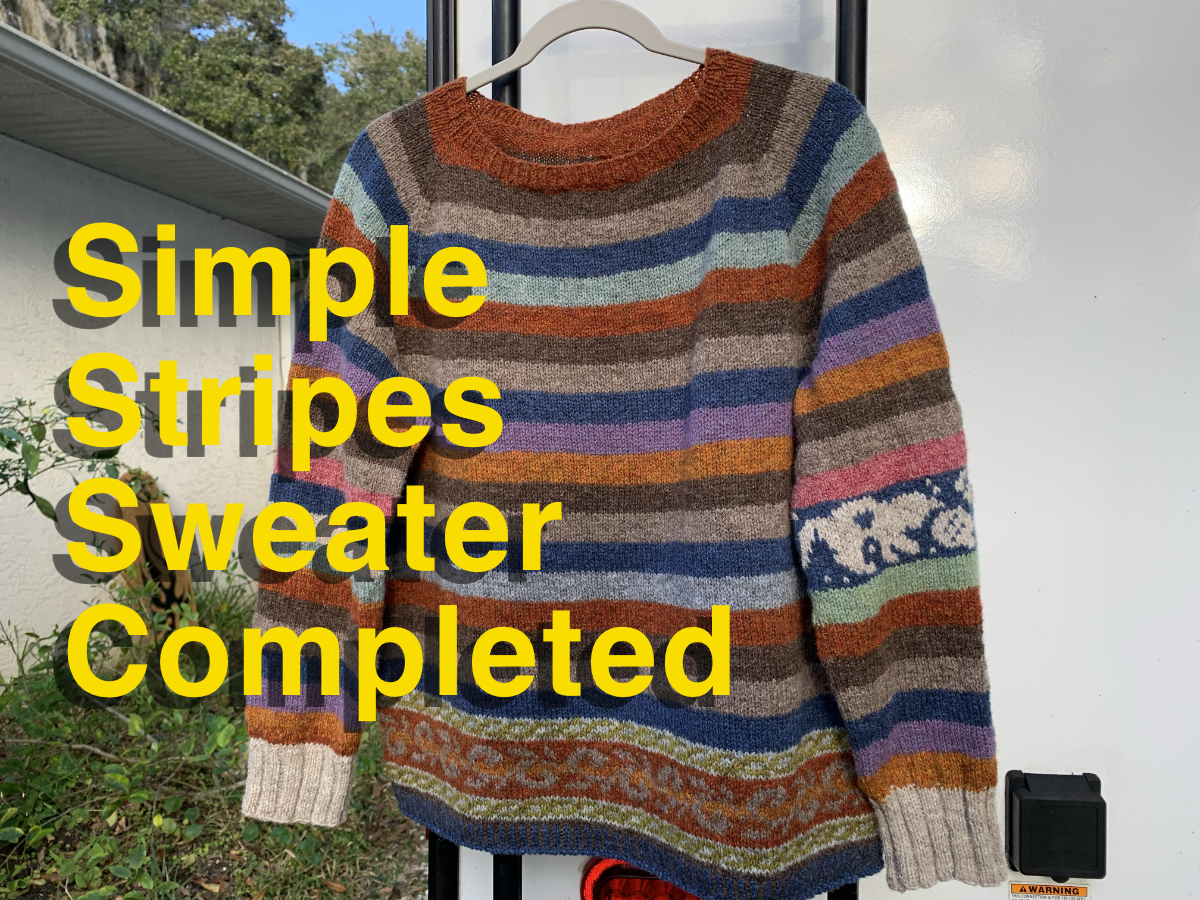
While knitting the Field Sweater (left below) I used lots of stitch markers to divide my knitting into sections. I did the same for the ribbing in the Venlig sweater, mainly because the type of yarn made the stitches difficult to see.
If you knit to the end of the section, and something is off, you haven’t gone too far and the Tinking should be manageable. This is especially helpful for repeating patterns and colorwork.
Ripping Out Many Rows in Knitting, or Frogging Back
When I began knitting I feared making some huge mistake that would mean I’d have to start the whole project over. I actually took out entire hats because I couldn’t get back to the place I needed to be. This is known as Frogging in the knitting world.
Sometimes I’d slip the stitches completely off the needles and then attempt to put them back on at the desired place! Nightmare. I don’t recommend this.
Now I know the correct way to remove rows of knitting and begin fresh from the last correct row. It’s tedious and a bit scary for a big project, but doable. And, it’s a very good thing to know how to do.
I’ll be honest, I can only do this on a knit row. I use a small size circular needle, with a long cord, and pick up the right leg (or left – but do the same for every stitch, and only pick up one for each V) of each row of stitches. Do this all the way around, or across, to get every stitch held.

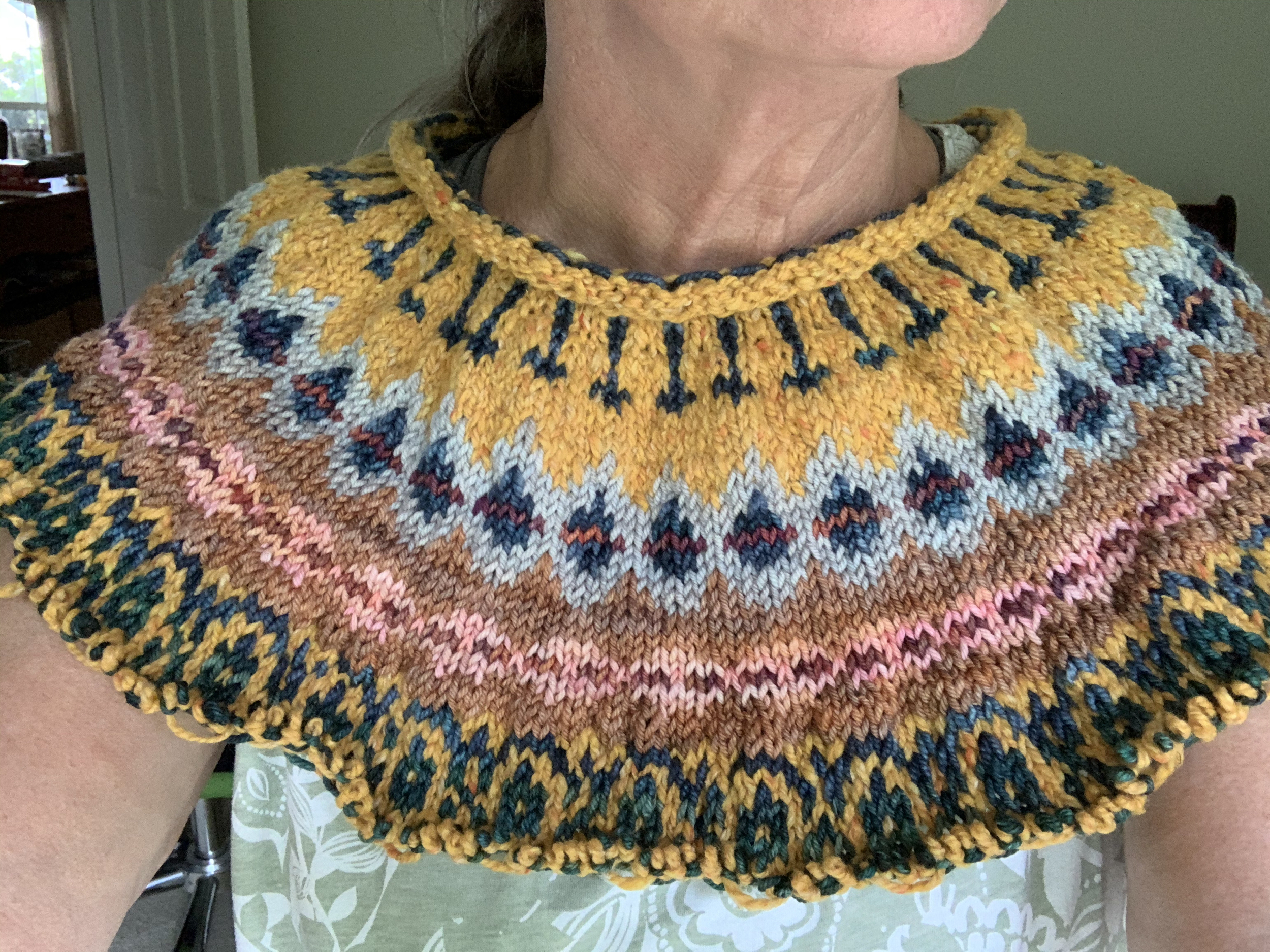
HINT: A sewing needle and waste yarn can be used in place of a knitting needle to hold the stitches. But the stitches held with waste yarn will have to be put back onto a needle, so it’s a bit of an extra step.
While picking up those stitches, be sure to stay on the same row – stitches picked up should be side by side, or in the same knit row. Once the spare needle is full with stitches from all the way around, or across (however your project is being knit – in the round, or flat), remove the project needle from the stitches.
Pull the knitting yarn (unravel) until only the stitches on that spare needle are left. Go slowly, and re-wind the yarn that has already been used. All stitches should now be on that small needle and are ready to be knit. Begin knitting according to the pattern, using the correct size project needle.
I did this for the first time when knitting the Marshland sweater. I’d done too many increases at one point, and had to go back many rows on the yoke to fix it.
Sometimes, depending on how you have picked up those stitches, they will be on the needle the wrong way. If the stitches are twisted, fix each one (quick video) as you knit the new row. HINT: You can also knit through the back loop to un-twist the stitch.
Gather Knitting Knowledge
In knitting, like many things, the more you know, the more you can do.
This frogging back many rows also comes in handy if you are unhappy with a finished, or partially finished, project. For instance, when I knit the Calliope sweater, I re-knit the first sleeve a few times before I was happy. I could never have done this without knowing how to frog many rows of stitches.
I plan to take out the neck ribbing on my recently finished Autumn Alpine and replace it with a better one. I’ll need to pick up stitches before I do that.
In other words, you are now free to correct and fix things you don’t like in a pattern. Even if you’ve finished the entire knit!
We Aren’t Perfect
We aren’t perfect and our hand knits don’t have to be either. I am a firm believer in leaving the little mistakes and moving on. Often it is something that only another knitter, upon close inspection, would notice. I don’t let it bother me.
Sometimes if I am off in my stitch count, I discreetly add, or remove, the extra stitch with a simple “make one” or “knit two together”. I’m becoming more creative in fixing little goof ups.
Knitting, for me, is a calm way to spend my time. If fixing a mistake will be more stressful than it’s worth, I ignore it.
I’ve only covered a couple of basic ways to fix knitting problems. Thank goodness for YouTube because we can usually find generous people who share their info with us.






 New England's Narrow Road