First Attempt at Knitting Clotilde

I didn’t get far when I began the Clotilde Cardigan pattern, but it’s a good looking cardigan, and I’ll try knitting the pattern again.

The Clotilde Cardigan is made up of a “bold, diamond lace pattern” and the first time I saw it I knew I wanted it.  This sweater is unique and gorgeous.

This chunky sweater is knit using a worsted weight yarn along with Mohair. It is knit with large needles – size 10US for the neck and 15US for the main part of the sweater.

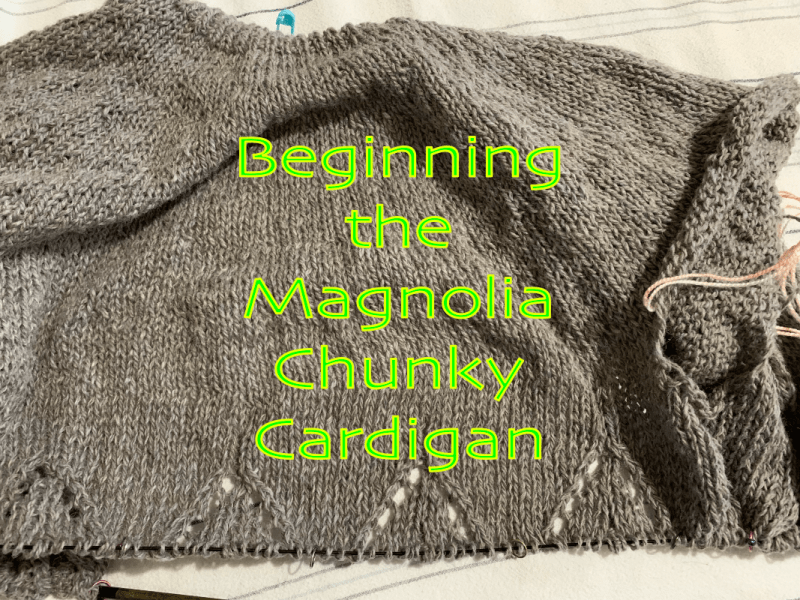
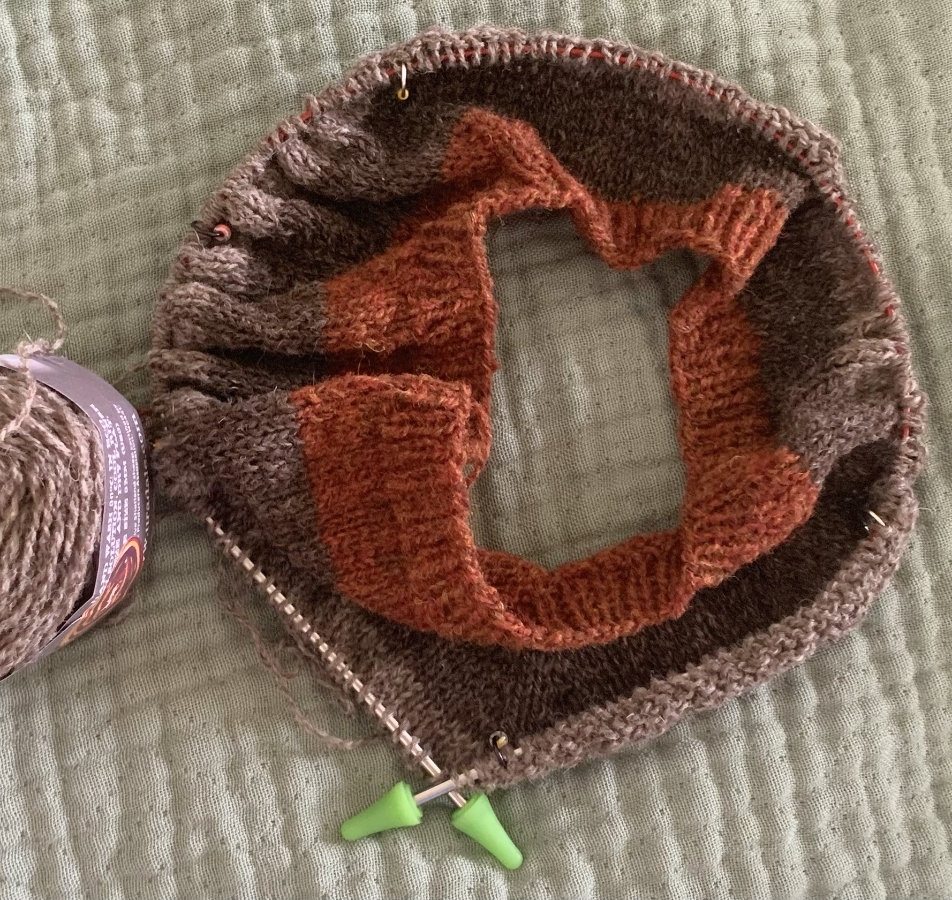
I have only one photo to share because this is as far as I got with my knitting. I was having no fun, so I frogged it.

Yarn used is Alafosslopi and I had hoped to use up most of my Lopi during this project. Alas… I just can’t do it. I’m not done for good, but I’ll do things differently next time.

knitting Clotilde cardigan
Clotilde begun

Biggest reason I disliked this knit

Big reason I stopped was that I don’t like using big needles. The stitches were so tight on that size 15 needle that I struggled with every one. The collar is knit with a smaller size 10 and it went fine.

I decided to try this pattern using a smaller, size 10US needle. This was much easier and I knit a swatch from the “front” in the XL size.

Clotilde pattern
Size 10 needle

Intricate Pattern, and Knitting From Charts (Many Charts)

I read all the comments from previous knitters of the Clotilde and the big complaints were about the charts. All of the lace parts – which means most of this sweater – are in chart form only. Not only that, there are many charts to accommodate each section of the sweater (ex. sleeve, back, fronts, etc.). As you knit along, you must do each ROW of knitting using various charts. 

I don’t knit lace, but I realized I would have to do so for this sweater. Yarn overs are still something I can screw up nicely, and that “left leaning decrease” got me. I don’t think I was doing it correctly. 

That number 3 is explained on the “Key” page. I saw complaints about no explanation for it, but now it is there.

Ds or Double Stitch

And then I was stumped by the Ds – double stitch abbreviation at the beginning of the new row of knitting. It simply means do the German Short Row stitch. (Pernille Larson, the designer, gives links to tutorials but they are all in Danish.) The work is turned from the previous row of knitting and then the stitch is done first thing on that following row. (Yarn forward, slip stitch from left to right needle and pull the stitch up and over. Continue knitting, or purling, as needed.)

Before I knit this again…

I already know I will attempt to knit this pattern again at some point, because I love the look of this sweater! I plan to do a large swatch (at least one) and learn how to correctly combine the yarn overs and the stitches I had trouble with. I can’t successfully knit this sweater if I can’t accomplish the stitches!

Smaller needles are a must for me. Someone asked if they could knit the Clotilde in a larger size but using smaller needles, to get the same effect. I didn’t find an answer, but I wonder that too.

In the End

While knitting this pattern, I didn’t get far. A couple of rows of German Short Rows and I quit. I’m so glad I did not buy yarn specifically for this project. The pattern is an advanced one for me, so I’ll use one single yarn – not two or more held together. I’ll try it with smaller needles. I’ll practice all the stitches on swatches to be sure I know what I’m doing. 

Any advanced knitter, who is comfortable with knitting lace and reading charts, could handle this pattern. This one is not for beginners.

More on the blog

Something went wrong. Please refresh the page and/or try again.

Christmas Gift Knitting; Hats For the Guys

Get an early start on hat knitting for Christmas. This page lists a few hat patterns, for free and to purchase, that work well for guys. Also, I’ve listed some machine washable yarn to get you started.

Believe it or not I have wanted to post this for a couple of years now… haha…! By the time I realize I need to share a post about Christmas knitting, it’s too late to accomplish these patterns.

The perfect gift for any guy who lives in a cold climate is a hat. They will wear something warm all winter, and probably loose a few along the way.

I’m a sucker for a fold up brim on my hats. It adds warmth around the ears, but some people prefer a simple flat ribbing. Often a pattern can be knit either way.

Awesome Hat Patterns for Men and Boys

When it comes to hats, most styles are perfectly suitable for men or women, but here is a list of hat patterns created to please a man.

  • Taconite, by Virginia Sattler-Reimer – Worsted weight yarn – three styles
  • Dustland, by Stephen West – DK
  • Botanic, by Stephen West – Worsted
  • Men’s Basic Hat – FREE pattern, aran yarn- folded brim
  • Bankhead – FREE pattern, worsted
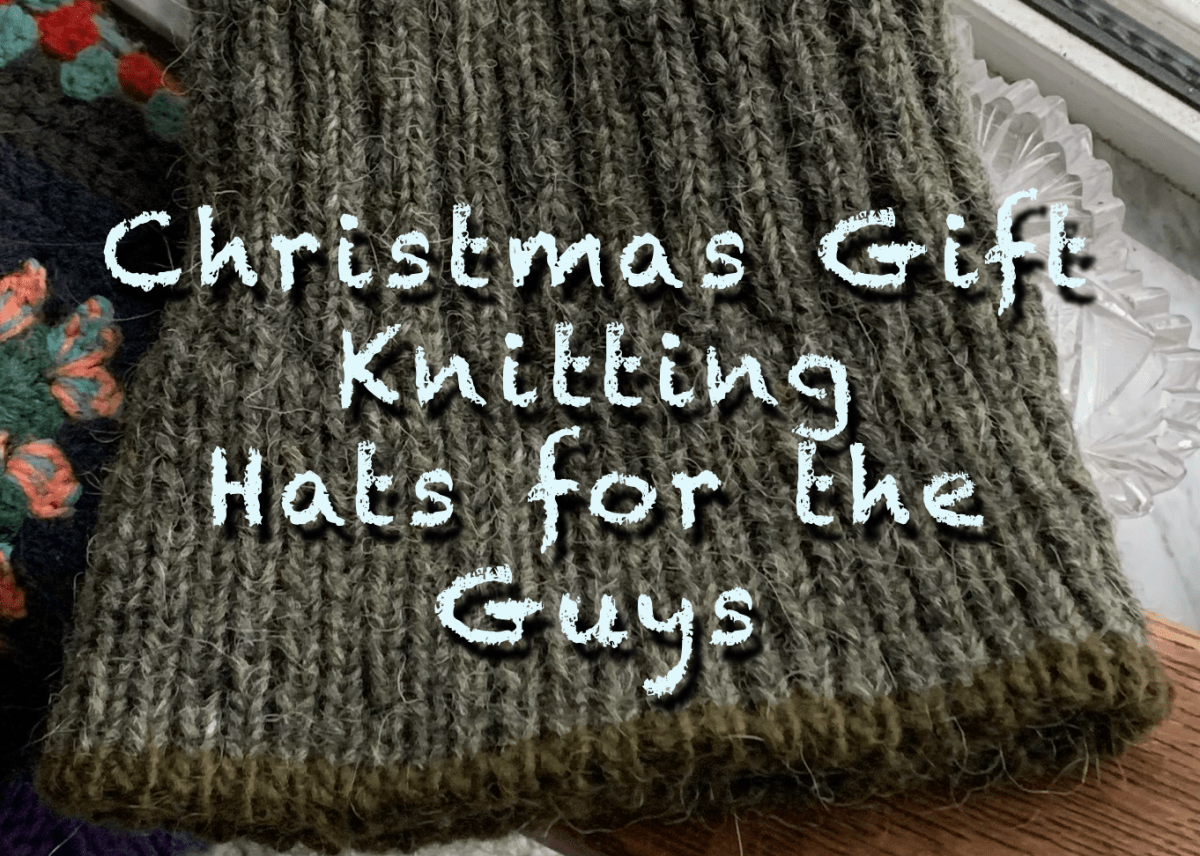
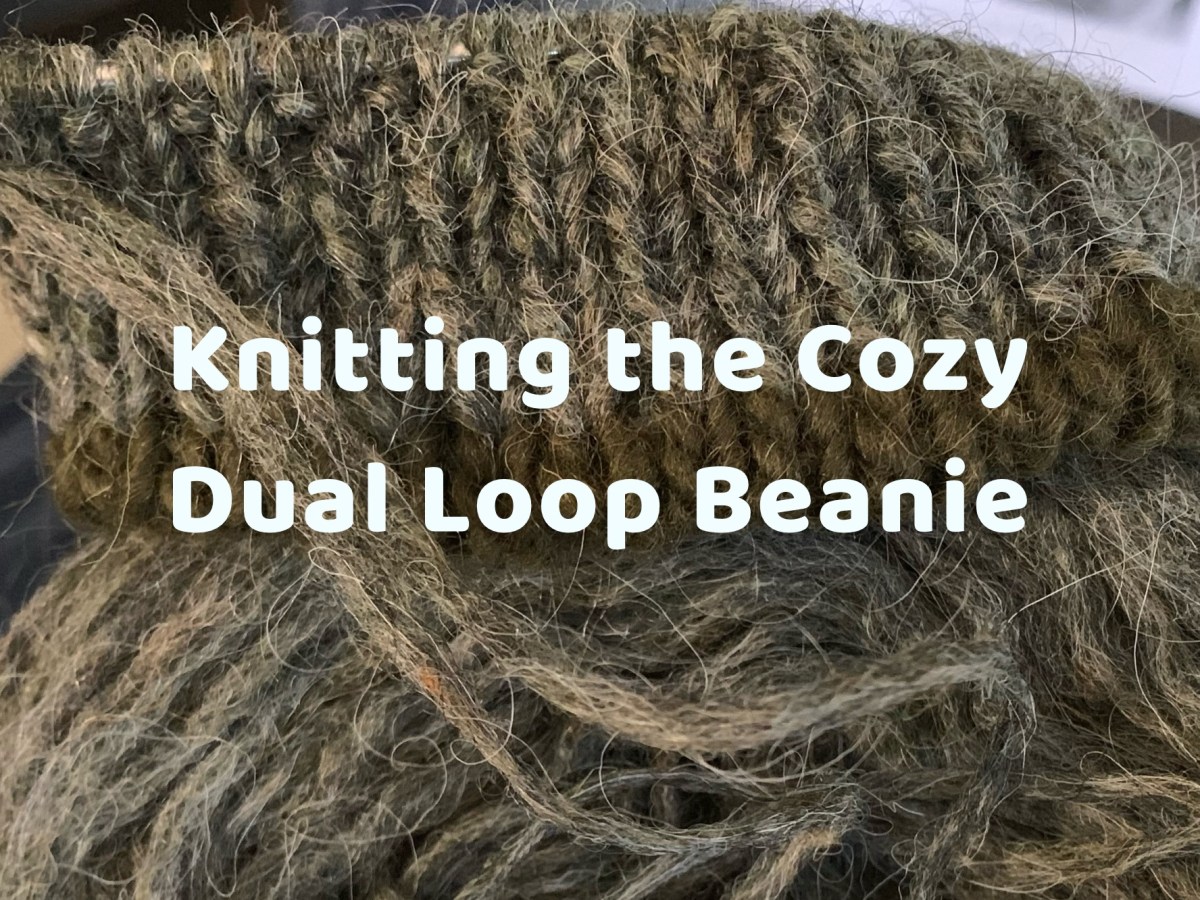
  • Dual Loop Beanie – worsted, ribbed beanie – folded brim (See the one I knit at the bottom of this page.)
Cats wearing wool hats and scarves.
Image by Tyli Jura from Pixabay

Yarn

Most likely the men and boys in our lives would like hats that are soft and comfortable. But they also usually prefer darker colors and easy care. They will toss a dirty hat into the laundry pile and pop it into the dryer. So that is the trouble. Hand-knitting gifts for someone who will not treat is as a hand-knit.

I prefer to knit with nice organic wool, which is warm, but it always requires hand-washing. Superwash merino wool is pretty easy to find, but often it should not go into the dryer. Man-made acrylic yarn is something I never use, but might be the most perfect choice for guys.

dogs wearing winter hats
Image by Tyli Jura from Pixabay

Pairing up Hat Patterns With Easy Care Yarn

I have raised three boys so I know a bit about what they like. For all their lives (and they are all over 21 now) they wore black clothing, or colors as close to black as possible. I have one daughter as well who did bring color into my life! The boys have not changed and if I want to knit something for them, it had better be in drab, dark,”boy colors”.

Sock yarn is easy care, but a heavier weight yarn makes knitting quicker. Here are a few ideas to get you started. Remember that washable wool / super wash will tend to stretch when washed.

Image by Tyli Jura from Pixabay

It’s honestly pretty easy to find washing washable yarn, but most yarns recommend to “lay flat to dry”. Not many hand knits can go into the dryer. How often do hats need washing anyway?

Do you have any suggestions? What are you knitting this season for gift giving?

cat and yarn image

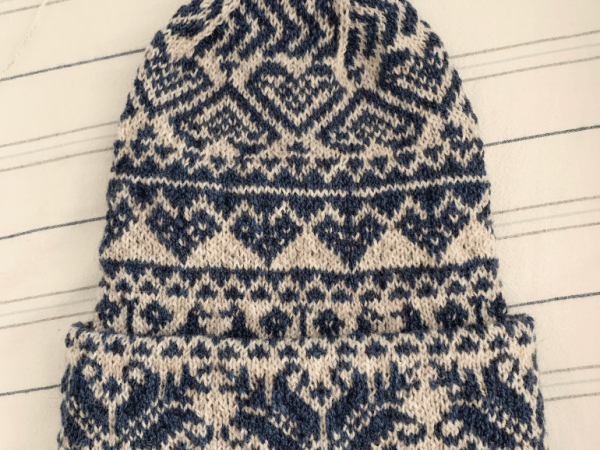
Some hats I’ve knit

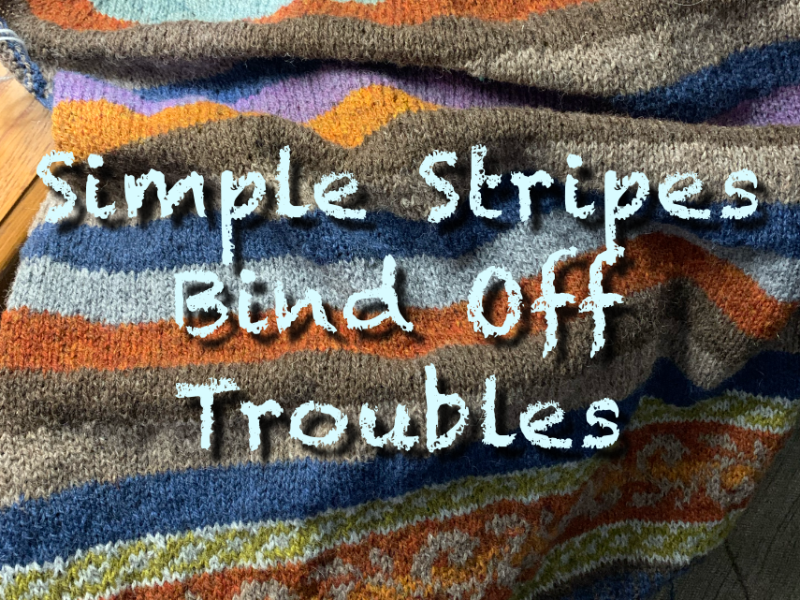
Binding Off Troubles On The Simple Stripes Pullover

I had a little trouble while doing the tubular bind off on my newest sweater project.

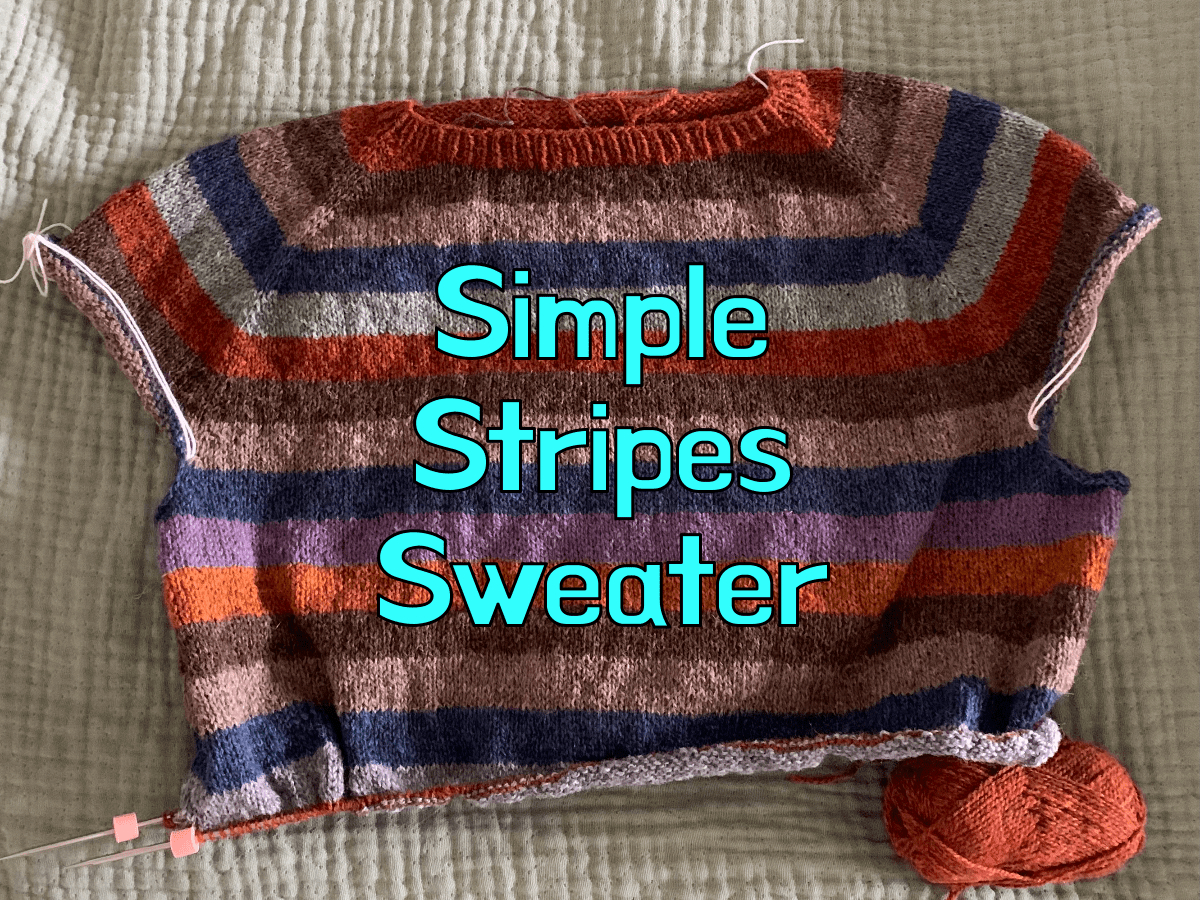
The Simple Stripes sweater pattern is done is rows of color. A pattern like this is fun to knit, and a great way to use up leftover yarn. In my case, I decided to use some wool yarn that I wasn’t thrilled with.

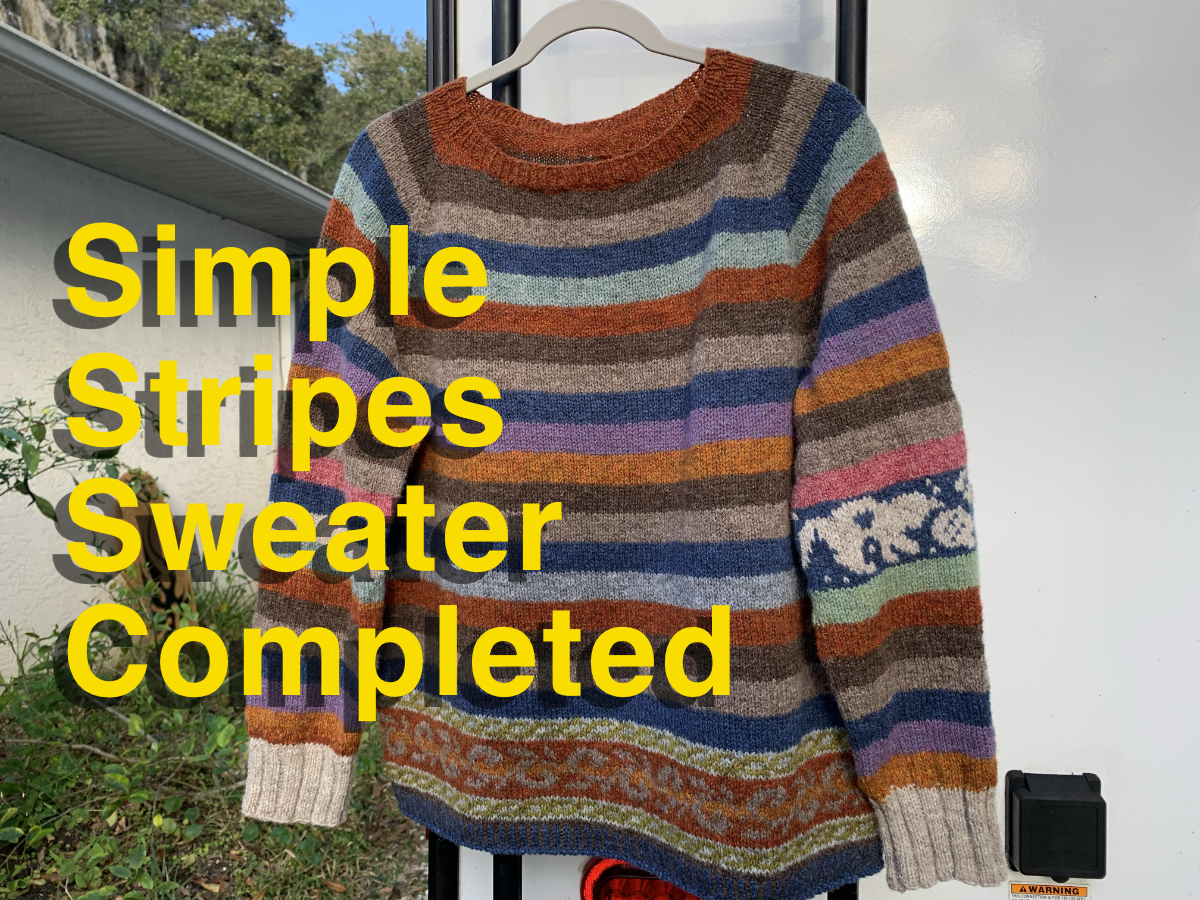
All was going well while knitting this pattern. As I reached the bottom part of the body, I added a strip of colorwork. Then, for the hem I decided to do corrugated ribbing. The pattern calls for a folded hem that is sewn and I didn’t want to do that.

After the corrugated ribbing was finished, using Uradale’s dark blue and dark brown, I was not sure of the best way to bind off. I searched for suggestions and found nothing too helpful. I ended up doing a knit one, purl one row in blue only and then did an Italian style, sewn bind off, using the blue.

When sewing a tubular bind off, a long tail of yarn is needed. With wool, I don’t mind using a shorter piece of yarn because all wool I have worked with spit splices nicely!

As I got close to the end of the yarn, I did a spit splice to attach more blue yarn. It seemed okay, but as I knit along and got to the splice, it pulled right apart. This left me with a short piece of yarn that would not splice to itself.

Broken yarn while trying to bind off using Uradale yarn

I’ll tell you, I was a bit ticked off about this. I tried again to splice the yarn, with no luck. I looked up some other ways to attach yarn together, but most of them needed two longer ends. I only had about an inch. I have never un-done a bind off, so that was not an option.

I was so completely OVER this yarn. I went to my wool stash and found some Rauma in dark blue that nearly matches. I KNOW that Rauma will splice. I took the end apart, separating the plies and wrapped them around the Uradale piece. I did the split splice hoping it would hold. It seemed to stay attached. I marked the area with a stitch marker to keep an eye on it.

From there, I continued my tubular bind off without any further problems.

Sewn hem bind off on Simple Stripes sweater

The body is finished, and I plan to use Magic Loop for the sleeves. I may add some colorwork to them as well. I will definitely not be using Uradale yarn for the cuffs and bind off.

I did try on the sweater once everything was complete, and the fit is very good. As always, everything will look better when it’s washed and blocked.

I played yarn chicken with the green for the colorwork, and just made it! That olive green color was a bit of Tukuwool that was leftover from something long ago.

animals divider fox, mice, hamsters

What are you knitting? I’d love to know.

A Simple Sweater With Stripes

My newest knitting project is a simple sweater with stripes. A link to the pattern page on Ravelry is further down the page. This one is advertised as a good project to use up stash yarn. I can see how that would be true.

I was finishing up knitting the Warm Up sweater (#3), and I had to decide on a new knitting project. In the queue I had planned on a colorwork pullover and I was looking forward to it.

I began the cast on for the Secret Garden Sweater (pattern page at Ravelry). I messed it up when completing the join. It was twisted! I have not done that since back when I was a beginner. While casting on, I really was not happy with the yarn. It was very thin. And I had my doubts about the pattern. Something told me to move on and skip this one for now.

Uradale yarn skeins in brown and blue
Uradale yarn

If I don’t use the Uradale gift yarn for this planned project, what will I use it for? The Simple Stripes sweater was a pattern I had recently saved. It uses the same weight yarn. If I mix the Uradale with some of my stash wool, that could work. I could incorporate some colorwork into it. 🤔

I almost decided to simply use an old pattern I had already purchased. After knitting a few sweaters over the years, I could easily knit almost any pattern and do stripes, as I did with Warm Ups #1 & 2.

The Simple Stripes Sweater Pattern

The Simple Stripes pullover is a pattern by SuviKnits. I’m using needle sizes suggested in the pattern. Main needle is a 4.

Although this is a straight forward raglan sweater, there are two things you should know before getting started. Further down the page, I explain how to do both.

First, the stripes need to be smooth and even. This is simple until a new color is added. You need to make the Jogless Join. Find a method you like, and do it. You will be happy to have smooth stripes in the end!

Second, learn to weave in the yarn ends as you knit. This is not necessary, but will save lots of time later when the project is complete.

Simple Stripes sweater pattern cast on
Cast on and short rows complete

Know How to Do the Jogless Join

This is important. While knitting this sweater in stripes as indicated, you will need to do the jogless join when adding a new color. What this does is leave a smooth transition from one wide stripe to the next. You will want this!

In my photo here, the jogless join was made up the center of the back, until the separation for the sleeves. After that, the BOR (beginning of round) is placed at the side of the sweater. You will still need to do the special join whenever the colors change. It is easy to do, but there are a variety of methods for this.

Simple stripes pullover doing invisible join

If you simply keep knitting around and around without making the join correctly, there will be an obvious “jog”, or uneven rows, at the location where the new yarn is added. There could be a little hole there as well.

YouTube Videos For the Jogless Join

I could not find a video with the method that I used. But this is how I knit my jogless join. When a new color is needed add the new yarn. Before knitting the first stitch, wrap the old color over the new, so it tightens up the stitch. Knit normally around. On round #2, at the BOR first stitch, lift the right side of the stitch below onto the left-hand needle. Then knit that stitch together with the new color.

If you don’t have a preferred method for doing this, these videos may help.

The Chili Dog has a video for doing the join a bit differently, with the same outcome.

How to Knit Jogless Stripes – with good info on wrapping the yarn so there is no hole.

Suzanne Bryan has yet another way to do this. See her video here.

Weave in The Ends As You Go

Each time a new stripe is begun you will have a two new yarn tails to weave in. The old color will be cut (tail #1) and a new color is added (tail #2).

What I do is grab one of the tails and carry it along as I do when knitting colorwork. I hold the extra strand in my left hand. This tucks the yarn into the stitches for about 8-10 stitches. On the next row, I grab the other color that is left hanging, and do the same thing.

If you need another way, watch this video by Stephen West. He explains how to easily twist the yarn (in Continental or English style) so that the ends are held.

If you choose not to weave in the ends as you go, this leaves LOTS of ends to do all at once, when the sweater is finished.

Simple Stripes – The Beginning

My cast on is complete, and I went with the Jamison’s in a rustic orange. Jamieson’s yarn is a consistent size, whereas the Uradale is not. The pattern is very basic with short ribbing at the neck, then raglan increases along with short rows.

The Uradale yarn is fickle. The darker brown Moorit was quite thin compared to the Jamieson & Smith. When I added the Uradale Aess, which is beige, it is thicker. In general the yarn seems to deviate, sometimes becoming very thin.

I like the fact that Uradale yarn comes from a small farm on Shetland, but I can buy similar yarn in the US that costs me much less. This yarn was a gift, and I would not use it again.

I intend to mix the yarns I have to create stripes that vary in colors. I won’t have enough of the Jamison’s in one color to continue the color palette.

Simple stripes sweater knitting

As I knit this pattern, the raglan increases are done differently than most raglan patterns I’ve knit in the past. I’m wondering how this will turn out.

I’ve separated the sleeve, and there are big cast ons for under the sleeves. Now the knitting is round and round for the body.

Simple stripes sweater knitting project

More to come as I knit on this pattern. It’s the end of summer and here in Central Florida it’s a time to get planning the Fall garden. It means I am not doing a lot of knitting.
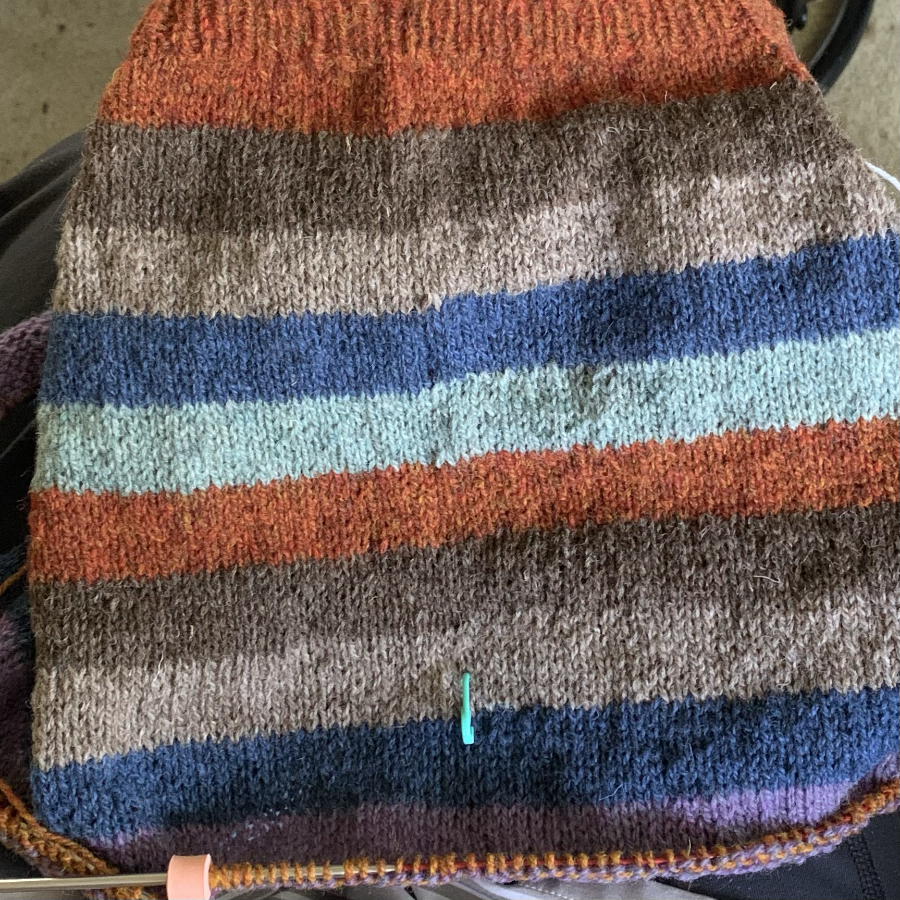
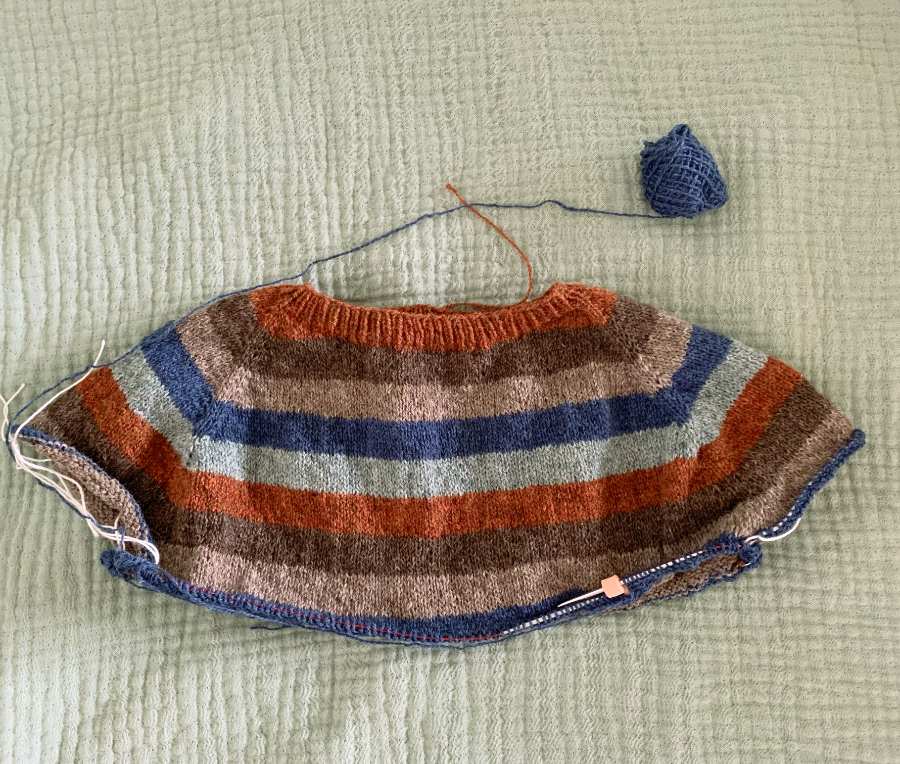
Update: Sleeve #1 is Finished

Hey, it’s September and I have finished knitting sleeve #1 of the Simple Stripes sweater. A little kitty-cat colorwork was added, and the cuff is a 3×2 (3 knits / 2 purls) ribbing on 65 stitches. Sleeve length is approximately 17-18 inches.

Sleeve number two will be all stripes and I will try to match colors. I do love the ribbing I chose, and the Rauma wool in off-white.

The Bind Off is normal and follows the knits and purls.

Sleeve number one is finished with a ribbed cuff

The holidays are coming – believe it or not – and any holiday knits need to be worked on. I have one or two on the needles. How about you?

Reading list