For every pattern I have knit that suggests a tubular cast-on, I skip that part and do my usual German Twisted cast on. One time I did try to do the tubular and it was a disaster. Now, it’s time to try again.
The tubular cast on gives the edge of any 1×1 (or 2×2) ribbing a “rolled” appearance, without an obvious front and back. Often it is used for hat brims, sock tops, collars on top down sweaters, ribs on bottom up sweaters, mitten cuffs or flat knitting the edge of a ribbed project. I have found that it is not an easy thing to accomplish, but worth the trouble.
On this page I have linked a variety of tutorials for doing the tubular cast on in the round and doing it flat.
Tubular Cast Ons Are Done Differently for Flat vs. In the Round!
Three Ways to Do the Tubular Cast On
I’m covering three general ways to begin and knit a tubular cast on. There could be more, but these are the ones I tried – to some extent. Some tutorials are done English style (yarn held in right hand) and some are Continental (yarn held in left hand). Some use waste yarn and some don’t. I had success using Tutorial #3 using a crocheted cast on.
Tutorial #1: Backwards Loop Cast On With Waste Yarn
This tutorial shows flat knitting, or back and forth, not in the round. Half the number of total stitches needed – plus one – are added to a straight, or long, needle using the backward loop method and waste yarn. I used a size 3US straight metal needle for this.
This is all I did. I did not continue with this cast on because I need to knit in the round for my hat. This beginning is similar to the crocheted cast on (see #3 tutorial).

After a couple of set up rows are complete, the stitches would be connected to knit in the round (if that is needed for the project). She mentions having a video for that, which I can’t find!
Here is her flat knitting tubular cast on tutorial, done English style: Knitting Whimsy Tubular Cast on.
Tutorial #2: Italian Tubular Cast on, or Alternating Knit and Purl Cast On
This cast on was tough for me. The Italian Tubular cast on does not use waste yarn. Stitches – all the stitches needed for the project – are added to the needle by doing alternating knits and purls.
It takes practice if you have never done this type of cast on. Also, the stitches twist around the needle and the whole thing can look horrible and confusing (my experience). Getting them all straight for the first set up row might be challenging.
Wool Bird has a very good video showing how to do this in the round. She knits Continental style. As an English style knitter, I found this an easy video to follow.
Jared Flood / Brooklyn Tweed has a video: How to Knit: Italian Tubular Cast On. He uses a thin yarn, which is more difficult to see, but it’s a good tutorial for flat knitting, English style. His pointers: Use a needle 2 sizes smaller than the pattern to begin this cast on, snug up the stitches so they don’t roll, and do a backward loop to hold the stitches in place when finished.
The 1×1 rib cast on can be converted to a 2×2 rib also. See Ysolda’s video below. She shows this at the end.
Ysolda has an excellent, and slow enough to follow, video here. She knits English style and does show how to join and knit in the round. She suggests doing two set up rows before joining. Near the end of the video she explains how to convert the tubular cast on to a knit 2, purl 2, or two by two ribbing, if that is what the project calls for.
Tutorial #3: The Crochet Cast On
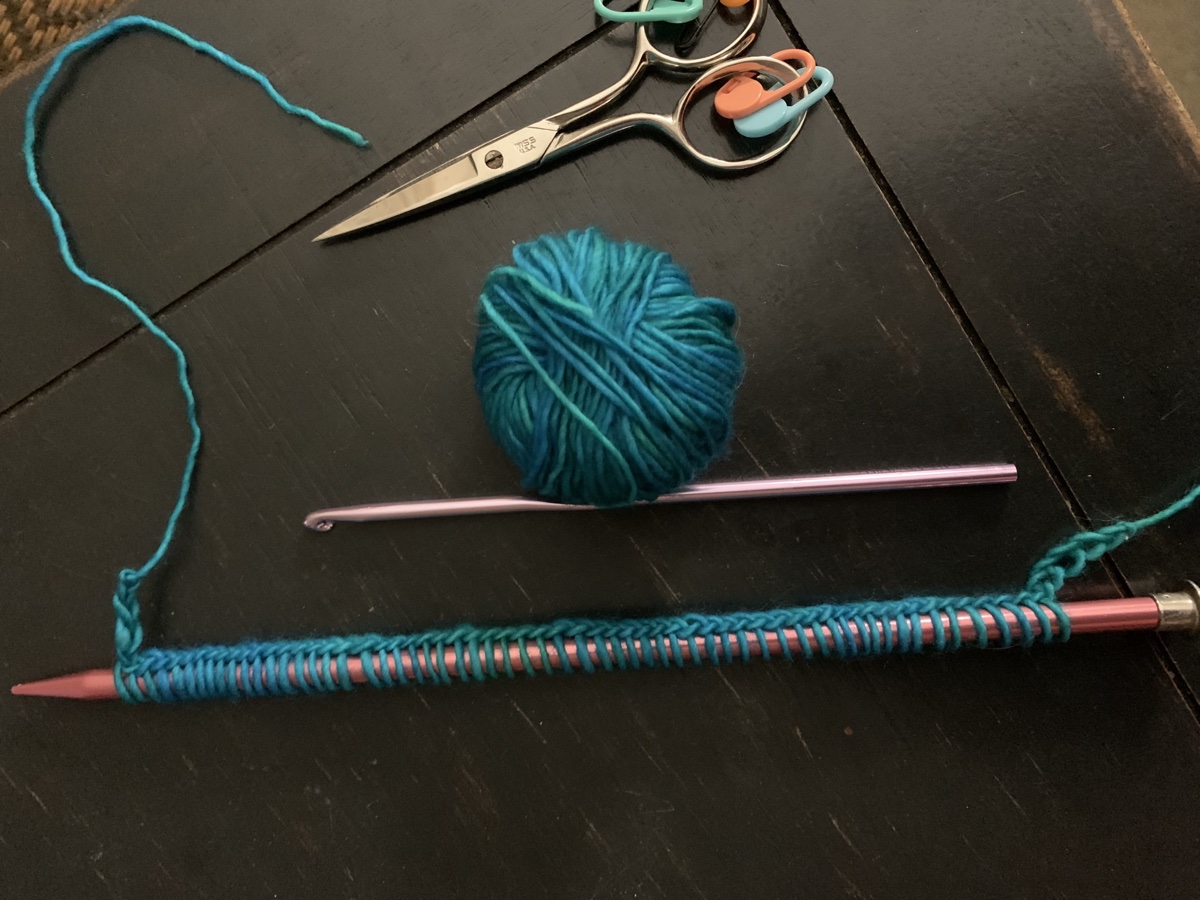
My search for info first brought me to this video: Cushion of Joy. It is the one I was able to get through. She gets right to the point, after talking a bit about why we would want to do all that work for a cast on. Her approach is to use a large straight needle and crochet waste yarn onto it. This cast on needs only half the total number of stitches to begin with.
This video is good but, she knits Continental style and I don’t. Her waste yarn is nearly the same color as her main yarn, which can be confusing. However, she does connect the stitches to do her knitting in the round.
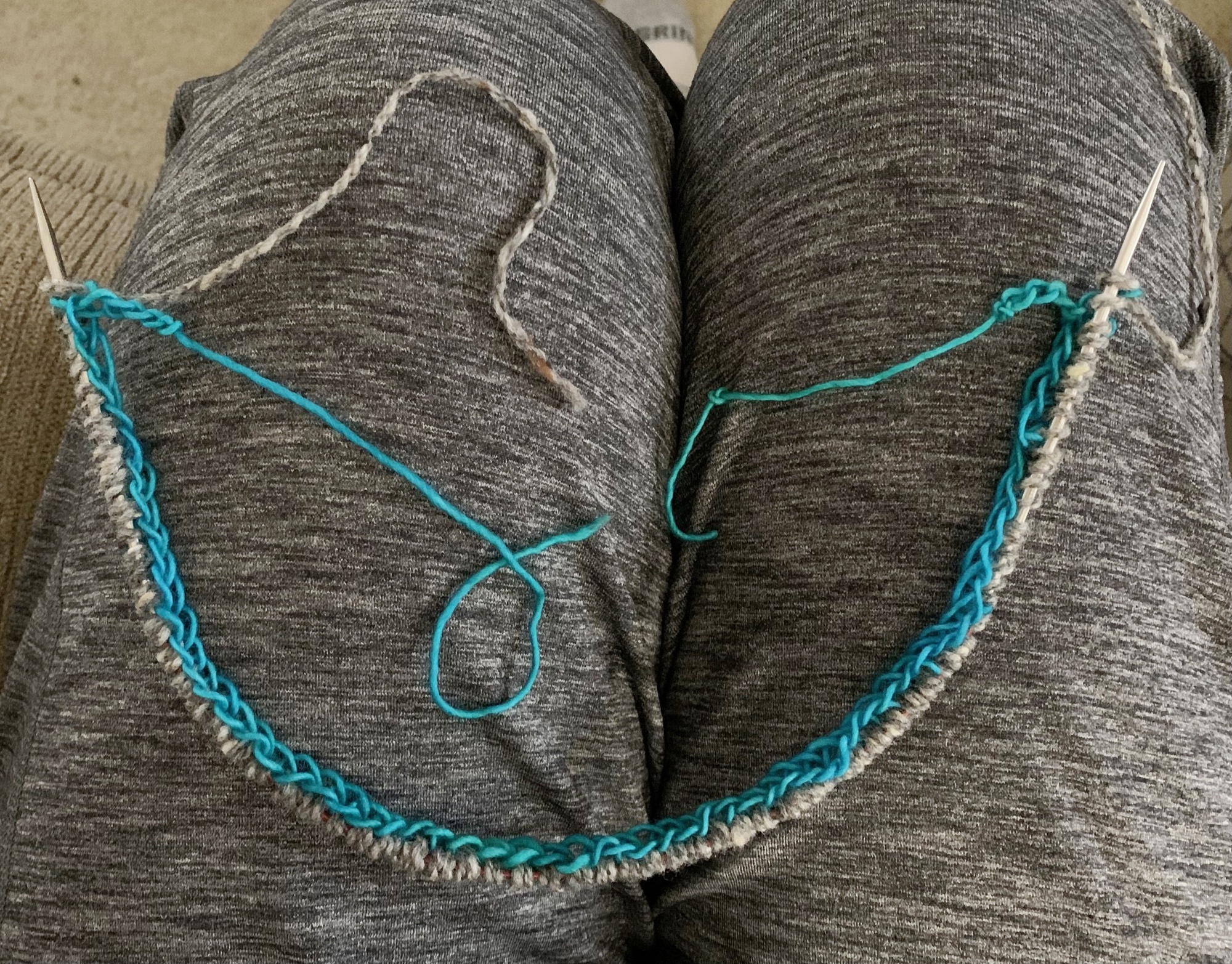

I did have some trouble. Before joining the ends to knit in the round, I made sure all my stitches were straight, as you do normally (middle photo). Once I did my first row, the stitches had become twisted! I fiddled around with it, and just kept going. I was sure the whole thing would be unusable anyway. So watch your stitches on that first row in the round.
My Suggestion: Practice this cast-on for a small circumference (fewer stitches) project, and / or use a heavy type yarn.
This hat pattern (Classic Ribbed Hat – see pattern link below) had 120 stitches for the size I chose. It’s a lot of knitting on something that could end up a complete mess!
As I knit each row, it was difficult to tell if my alternating stitches were in the right place. I really didn’t know what to look for and the tutorial could have been better in this area.
At the end, my crocheted blue waste yarn did not slip right out either. I had to cut it in various places and pick it out.
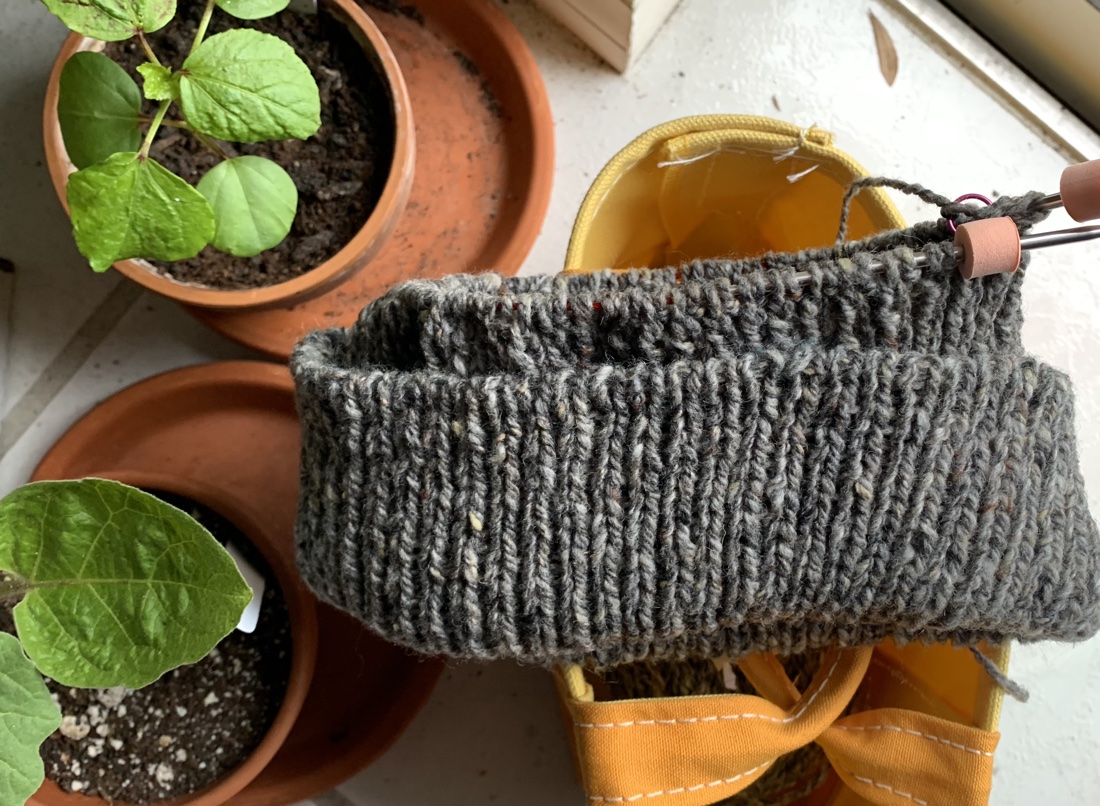
Somehow, and much to my surprise, my first tubular cast on looked pretty nice! It was a miracle…!! I was short one stitch, which I added on my first k1,p1 round. Also, my nubby, tweed yarn is probably hiding some mistakes!


I was happy and amazed that my tubular cast on was usable. When I do it again it should be perfect, right? Now I am continuing to knit on this hat with finished pictures to come.
I managed to get through the video and began my hat, which is the Classic Ribbed Hat free pattern from Purl Soho. I’m using Purl Soho’s Hedgerow yarn in color Woodpile Gray.
Be Positive About Learning Something New
If you have the time, always strive to learn a knitting technique you love. This type of cast on takes time and practice, and I know a lot of people don’t have much free time. I had to rip the whole thing out and start over more than once. Sometimes that is part of knitting and I’m here to say, “You are not alone!”
I recently learned how to do magic loop – finally. And wow, it is really pretty easy. This tubular cast on is not necessarily easy, but is worth learning how to do.
Fiber crafters read on
More knitting stories….




Something went wrong. Please refresh the page and/or try again.
Share this:


 New England's Narrow Road
Thank you for rounding up all these tutorials! I have definitely tried and failed at the tubular cast on in the past, but that last video looks promising. I noticed the knitter slips every other stitch in that video (I’ve never seen that before, but then again I haven’t been knitting all that long) – did you slip your stitches too, or switch to k1p1 for the hat?
LikeLiked by 1 person
Hi Alyssa, I did mine just like hers, with slipped stitches on those set up rows. Then I went into the k1p1. My hat had 120 stitches so I liked putting only half on the needle to begin! Jared Flood suggests using a smaller needle for those set up rows and I think I will try that next time to tighten up that first part. Good luck!
LikeLike
Thank you for the links to other tubular cast on methods. I’ve done the tubular cast on using the crochet cast on a time or two. I really like the look, but would need more practice on a worsted weight or DK before I attempted it on fingering weight for socks.
LikeLiked by 1 person
You’re welcome. I definitely need more practice as well, and especially with lots of cast on stitches needed.
LikeLike