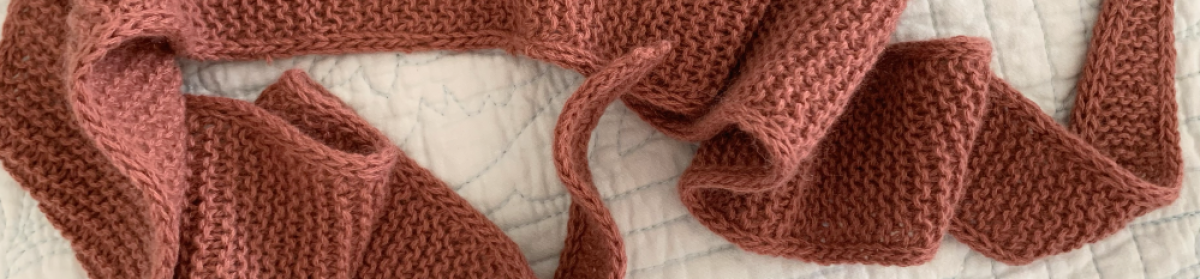

After knitting the Skiff beanie pattern, I decided to knit the same pattern in the Watchcap style. I asked my daughter if she liked the style, since it would be for her, I wanted color input. She then was happy to give me some color ideas which ranged from “speckled white” to “gray blue”. She wouldn’t mind hand washing the hat, so I could go with beautiful and soft wool of some kind.
If you are a knitter, you may well know that many places are simply out of yarn. As we “shelter in place” due to Covid, lots of yarn suppliers are not supplying yarn. Colors can be hard to come by within our favorite brands.
In this case, I was searching for yarn by color, but also by good reviews. I have rarely knit with worsted weight yarn in the past. Quince & Co. had good reviews, and the colors I needed. This is my first experience using this yarn.
Each skein is 134 yards and I used all of the gray and most of the natural to make this hat. I had to finish the very top in the light color (see my last photo). There is not enough yarn leftover to make a nice, two-color pompom, which I think is needed. Also, I am a fairly tight knitter, so you may run out of yarn sooner.
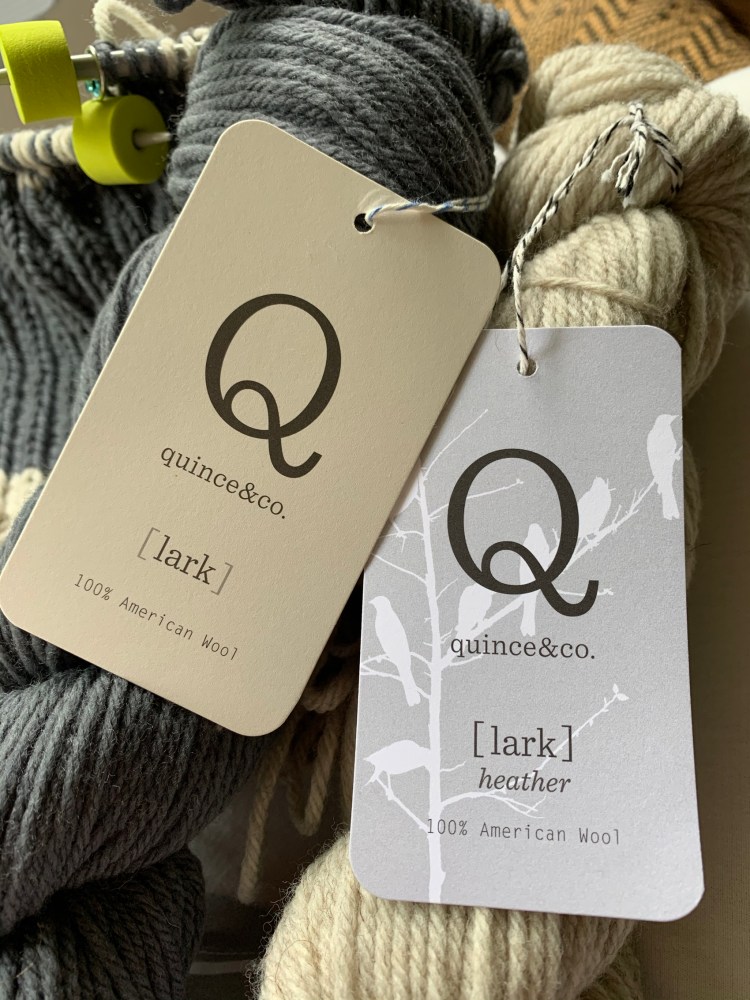
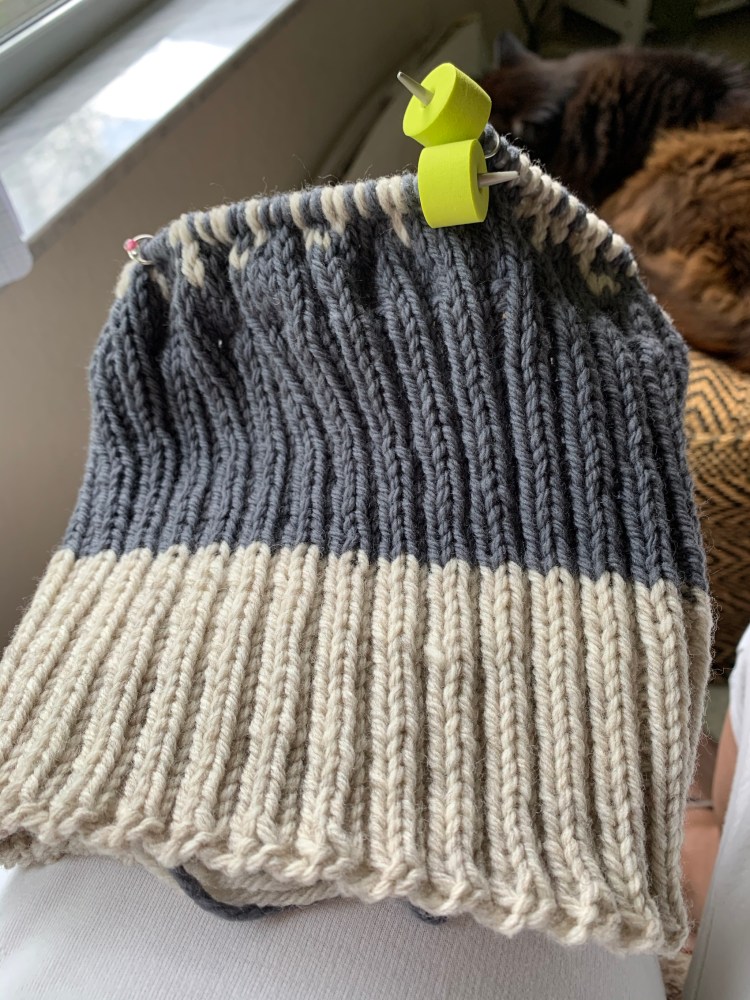
When I began the Skiff Watch Cap pattern, I used a needle that was too small, with the solid gray yarn. That Skiff cable pattern gives you a nice hat, but the pattern directions are difficult to follow. The long brim is the toughest part to figure out because so many size needles are mentioned. I had to tear out the first brim I knit, which was turning out to be too small, and I admit that I wasn’t really crazy about the yarn. In fact, I was thinking of returning the unused skeins. I have never returned yarn before. Neither color is really what I am looking for to knit the cable Skiff hat.
As I began the hat a second time, I used the natural color instead of the gray, which is listed as “heather”. I like the color better than the gray, but I thought it was too “dirty” looking for an entire hat.
These yarn colors just didn’t suit me for a solid color hat. This is when I decided to use up the two skeins – one gray and one natural – to make a different hat altogether. I needed a colorwork pattern that would work for 2 colors for the hat top section.

I’ve had this curly snowflake on my mind for some time and have planned to make a hat using it. Well, now is as good a time as any! I found the star in a section of a hat pattern in my “Hat’s On” book which is part of the Doublemassa Cap. (I am working my way up to knitting that big project.) Anyway, it’s exactly the type of Norwegian “star” I wanted for my hat.
So I copied the star part only into my knitting notebook (by hand, and made a couple mistakes) so it would be easier to read. Also, I could save it for other projects.

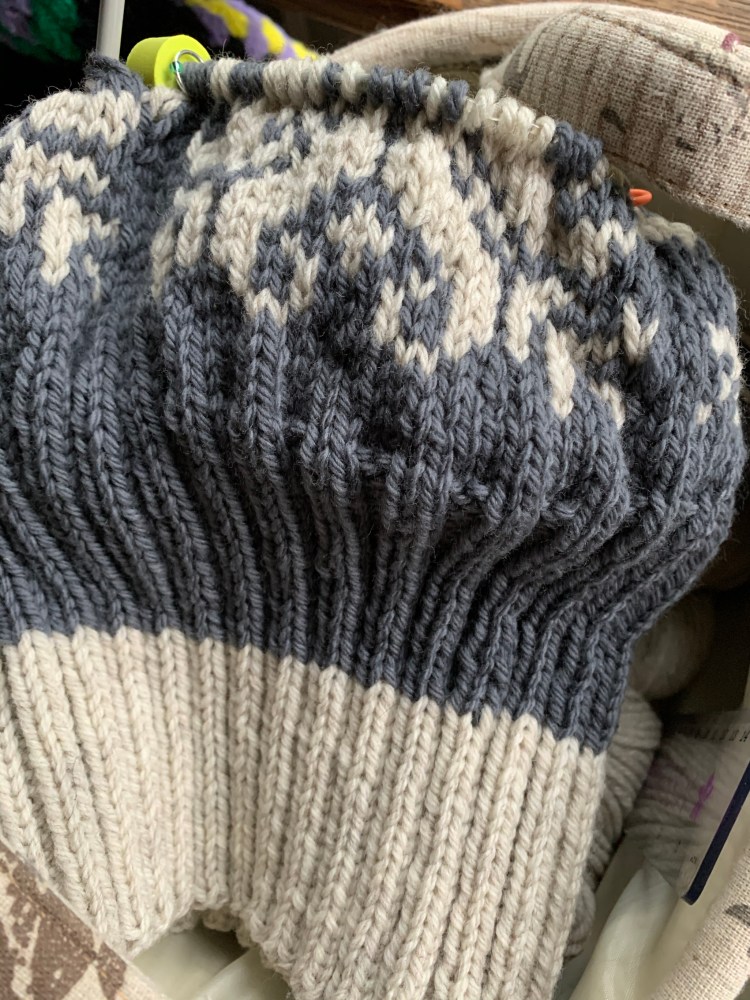
To use up the yarn evenly, I made the second part of the brim gray. For the top, the gray would be the background color with the natural color used for the snowflake.
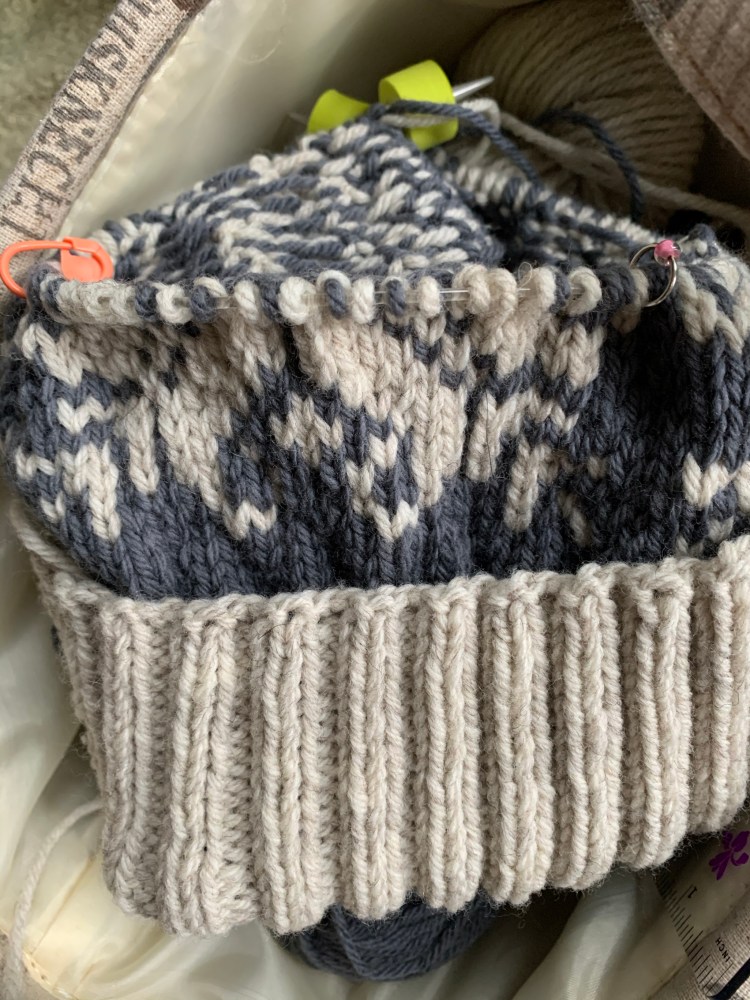
I like the Lark yarn much better when mixed. It seems to be excellent for colorwork knitting. And I do like the two colors together.
How I Made This Hat
- Size 6, 16 inch needle, Cast On 120 stitches (Old Norwegian / German Twisted) and join.
- Knit 2, purl 2 around, in off-white for 2 3/4 inches, then gray for same length. Do more rows of white than gray, and there might be enough gray left to finish the top.
- Change to size 8 needles and knit 3-4 rows around in gray.
- Begin snowflake chart. Many books have snowflake charts of all kinds that are very pretty. Your pattern must fit the number of stitches. I had to add 3 rows of solid color between my snowflakes to make the stitches come out even.
- Knit in gray for 2 rounds and place markers as below
- Decreasing the crown: Divide into 20 sections of 10 stitches – PM at count of 10
- Decrease round 1: K2tog, k6, SSK, SM, around (This is how I did the top, with knit rows between the decrease rows. The last row was a k2tog around leaving 4 stitches on each of 3 DPNs to tie off. Next time I would do the decreases differently for a smoother crown.)
- The “star” is a bit big for this type of cap. In the Doublemassa, the star is used in the brim, and the hat is knit in fingering yarn.
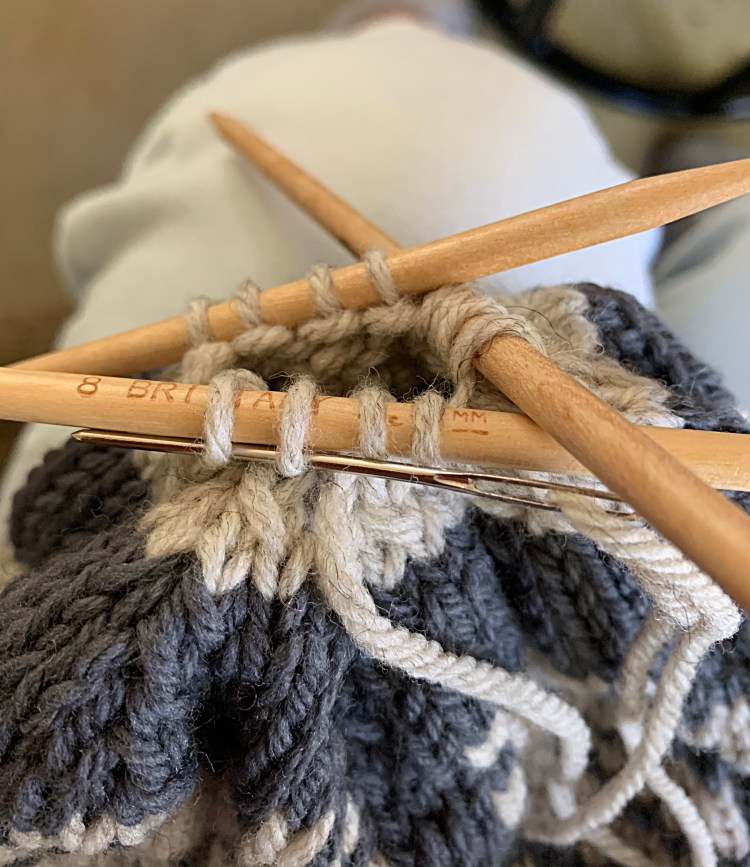
Finishing off the Top
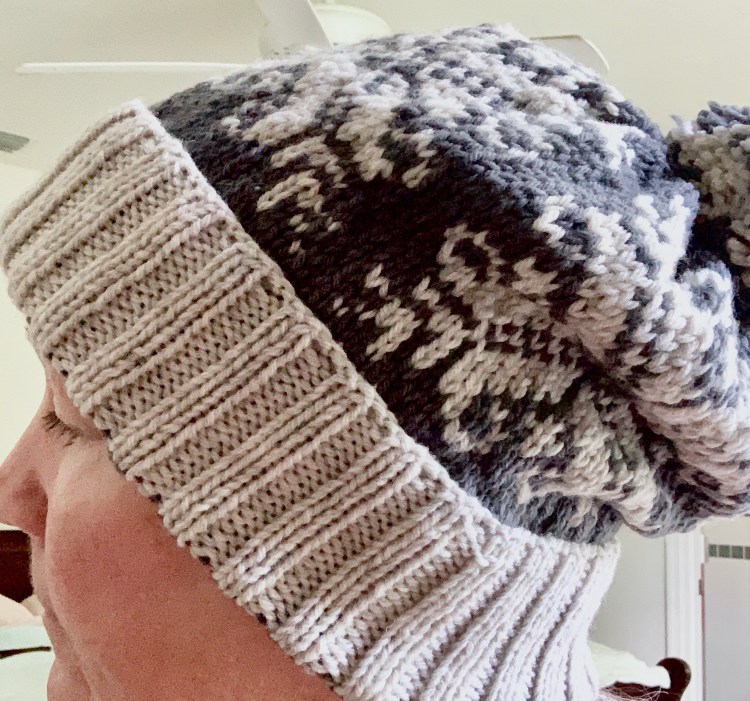
The way I did the decreases left the top of the hat puffy and lumpy looking. This hat needs a big shaggy pompom, but I have used up all the gray yarn, unless I dig into a new skein. There is not much of the natural color left either.
I have to decide if I will keep the rest of this yarn or return it.


This hat really needed a big pompom, so I wound a new skein of gray yarn and created a gray and white pompom. Guess I will keep this yarn. I would like to use it to make another colorwork hat. This type of hat works well in winter winds, with double brim over ears and good thickness on top.



 New England's Narrow Road