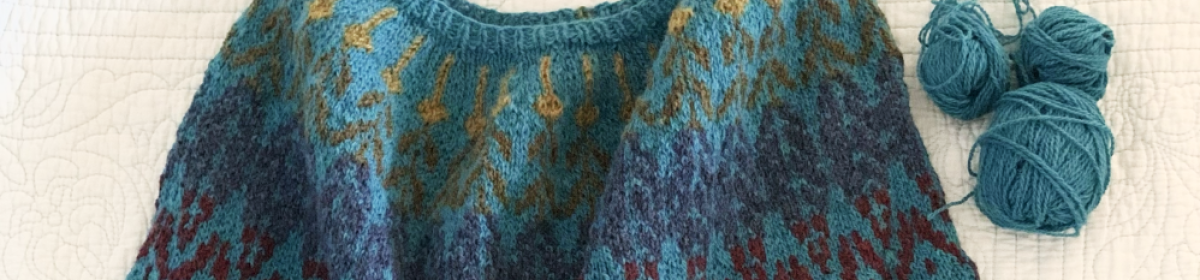

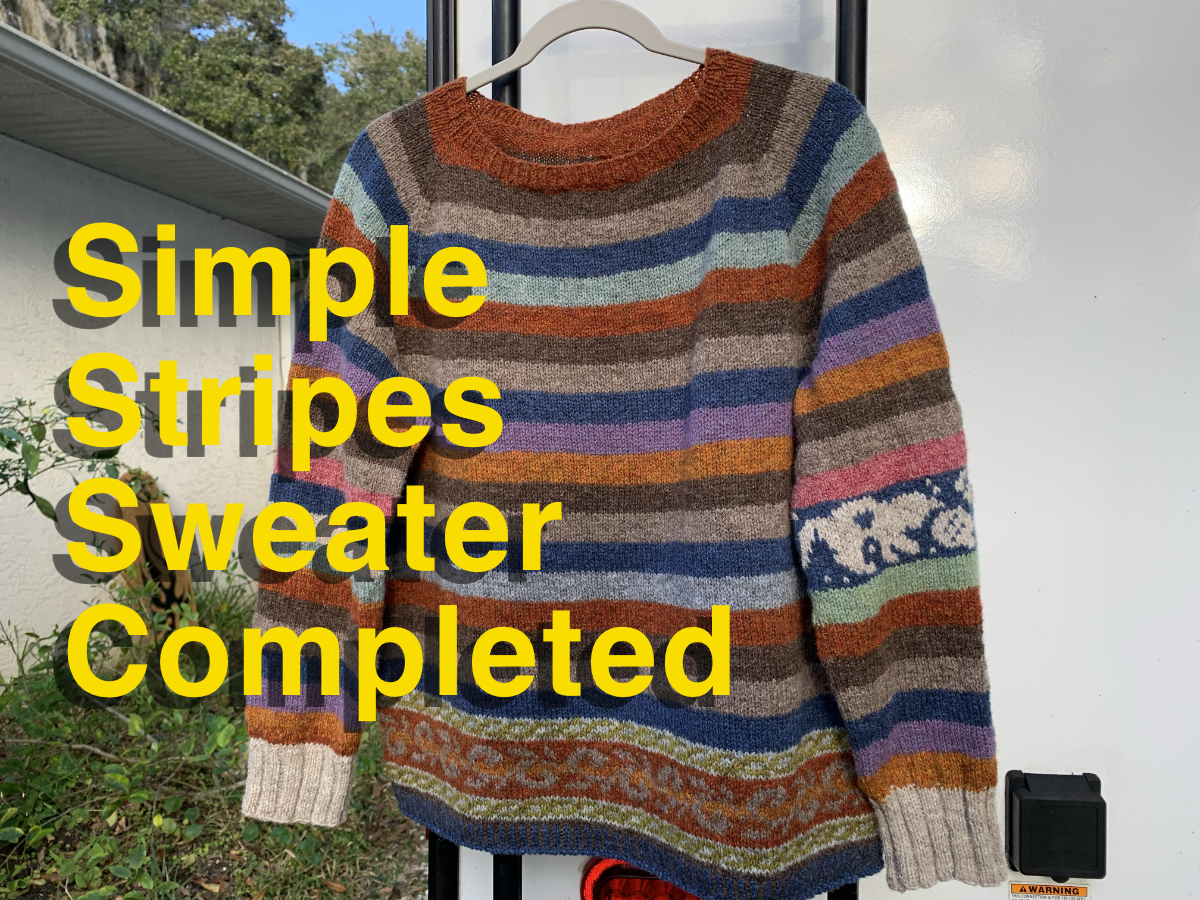
My newest knitting project is a simple sweater with stripes. A link to the pattern page on Ravelry is further down the page. This one is advertised as a good project to use up stash yarn. I can see how that would be true.
I was finishing up knitting the Warm Up sweater (#3), and I had to decide on a new knitting project. In the queue I had planned on a colorwork pullover and I was looking forward to it.
I began the cast on for the Secret Garden Sweater (pattern page at Ravelry). I messed it up when completing the join. It was twisted! I have not done that since back when I was a beginner. While casting on, I really was not happy with the yarn. It was very thin. And I had my doubts about the pattern. Something told me to move on and skip this one for now.

If I don’t use the Uradale gift yarn for this planned project, what will I use it for? The Simple Stripes sweater was a pattern I had recently saved. It uses the same weight yarn. If I mix the Uradale with some of my stash wool, that could work. I could incorporate some colorwork into it. 🤔
I almost decided to simply use an old pattern I had already purchased. After knitting a few sweaters over the years, I could easily knit almost any pattern and do stripes, as I did with Warm Ups #1 & 2.
The Simple Stripes Sweater Pattern
The Simple Stripes pullover is a pattern by SuviKnits. I’m using needle sizes suggested in the pattern. Main needle is a 4.
Although this is a straight forward raglan sweater, there are two things you should know before getting started. Further down the page, I explain how to do both.
First, the stripes need to be smooth and even. This is simple until a new color is added. You need to make the Jogless Join. Find a method you like, and do it. You will be happy to have smooth stripes in the end!
Second, learn to weave in the yarn ends as you knit. This is not necessary, but will save lots of time later when the project is complete.
Know How to Do the Jogless Join
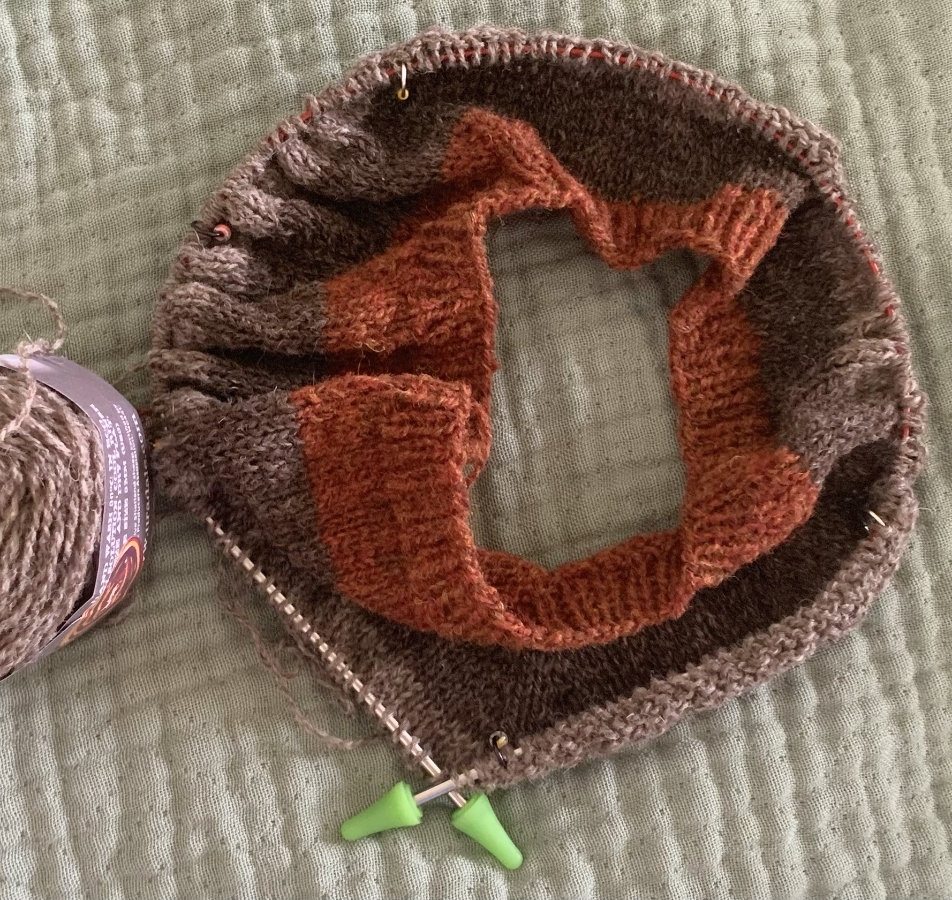
This is important. While knitting this sweater in stripes as indicated, you will need to do the jogless join when adding a new color. What this does is leave a smooth transition from one wide stripe to the next. You will want this!
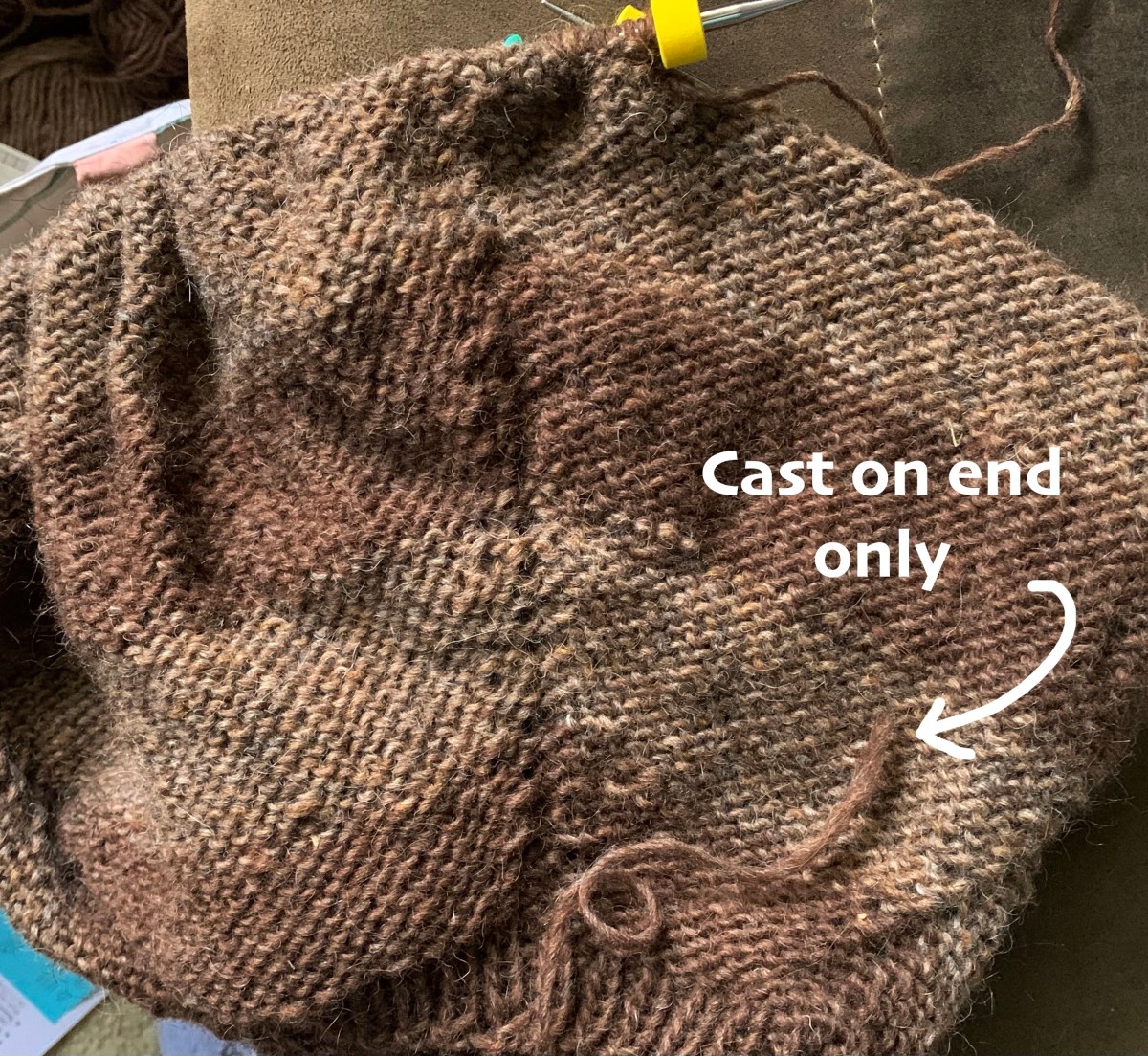
In my photo here, the jogless join was made up the center of the back, until the separation for the sleeves. After that, the BOR (beginning of round) is placed at the side of the sweater. You will still need to do the special join whenever the colors change. It is easy to do, but there are a variety of methods for this.
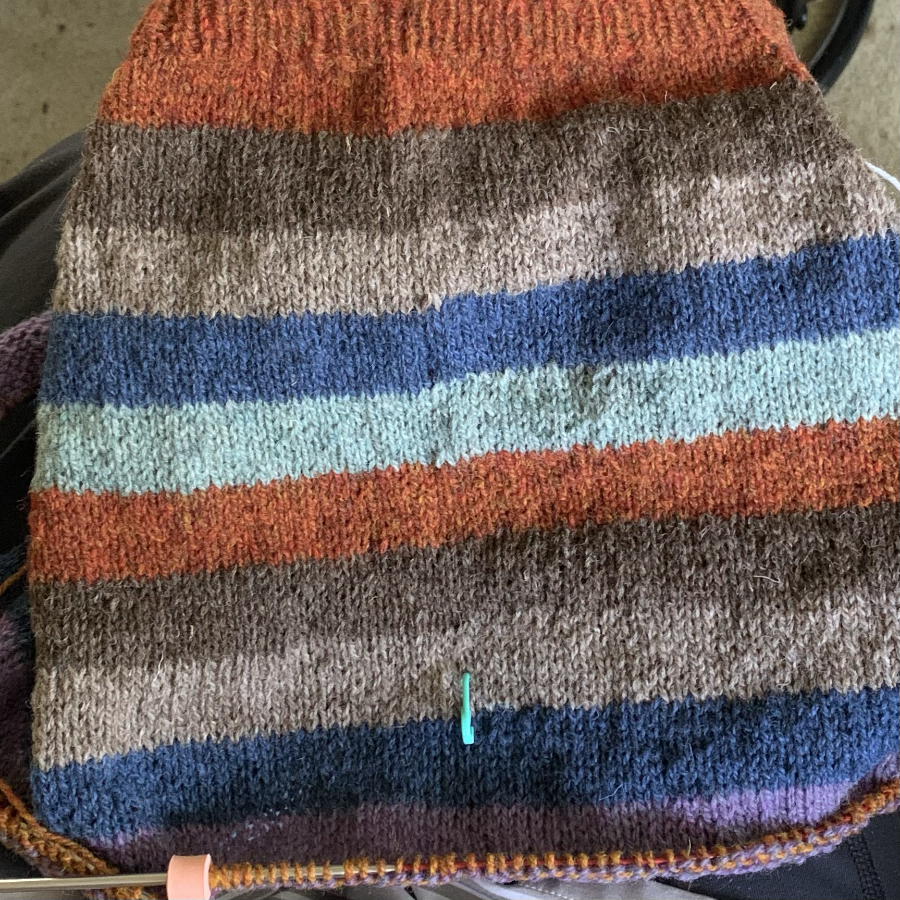
If you simply keep knitting around and around without making the join correctly, there will be an obvious “jog”, or uneven rows, at the location where the new yarn is added. There could be a little hole there as well.
YouTube Videos For the Jogless Join
I could not find a video with the method that I used. But this is how I knit my jogless join. When a new color is needed add the new yarn. Before knitting the first stitch, wrap the old color over the new, so it tightens up the stitch. Knit normally around. On round #2, at the BOR first stitch, lift the right side of the stitch below onto the left-hand needle. Then knit that stitch together with the new color.
If you don’t have a preferred method for doing this, these videos may help.
The Chili Dog has a video for doing the join a bit differently, with the same outcome.
How to Knit Jogless Stripes – with good info on wrapping the yarn so there is no hole.
Suzanne Bryan has yet another way to do this. See her video here.
Weave in The Ends As You Go
Each time a new stripe is begun you will have a two new yarn tails to weave in. The old color will be cut (tail #1) and a new color is added (tail #2).
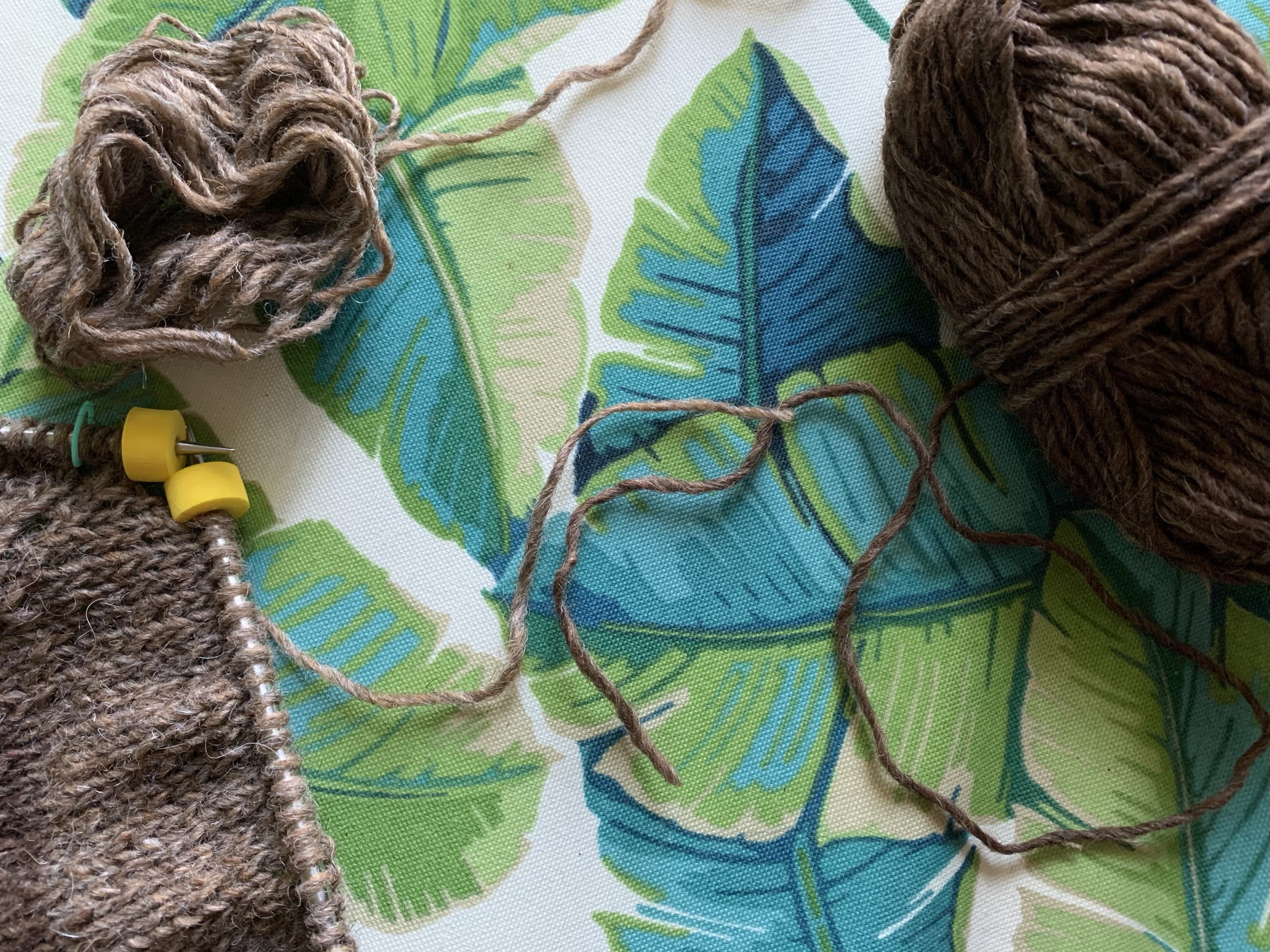
What I do is grab one of the tails and carry it along as I do when knitting colorwork. I hold the extra strand in my left hand. This tucks the yarn into the stitches for about 8-10 stitches. On the next row, I grab the other color that is left hanging, and do the same thing.
If you need another way, watch this video by Stephen West. He explains how to easily twist the yarn (in Continental or English style) so that the ends are held.
If you choose not to weave in the ends as you go, this leaves LOTS of ends to do all at once, when the sweater is finished.
Simple Stripes – The Beginning
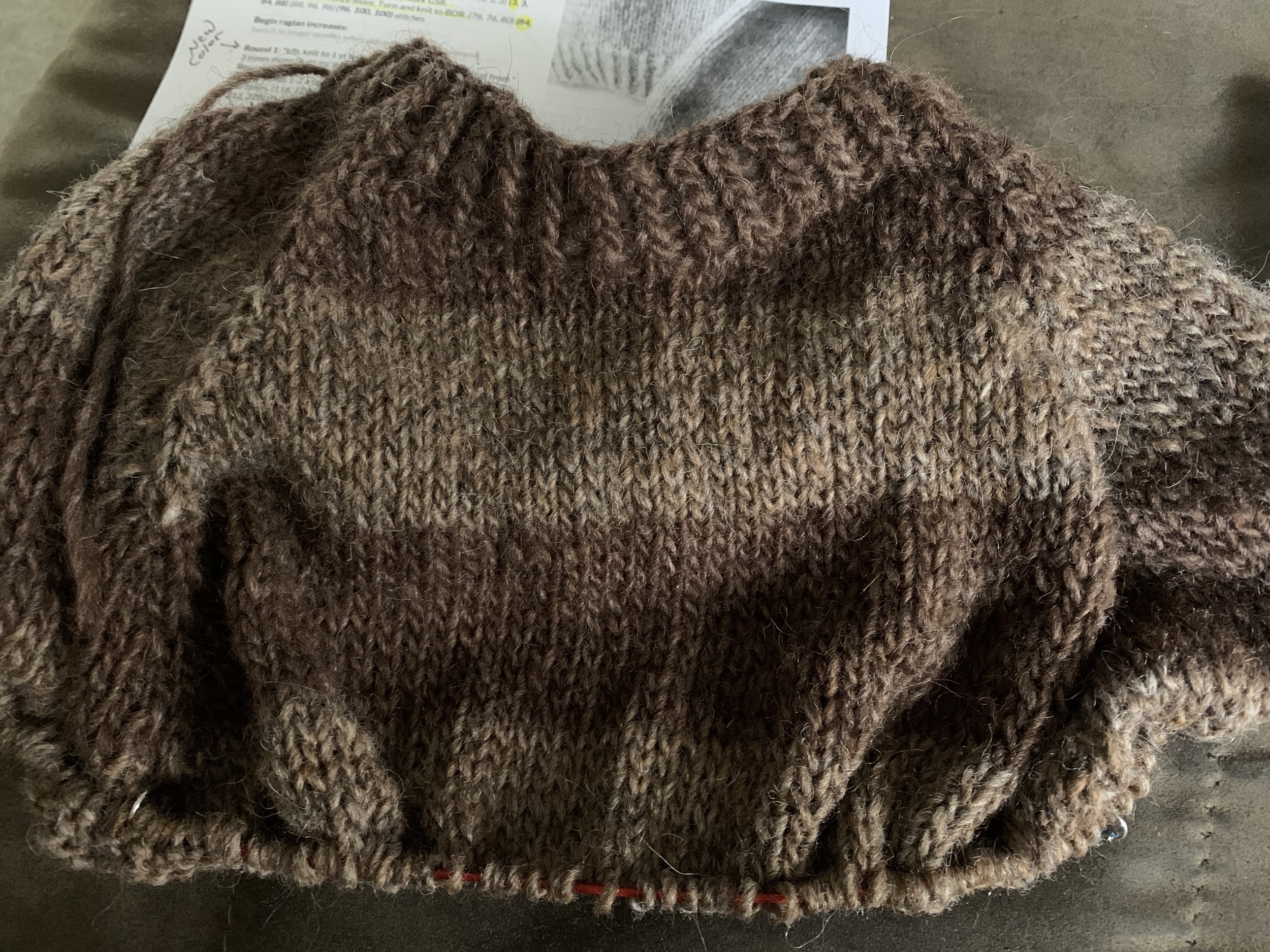
My cast on is complete, and I went with the Jamison’s in a rustic orange. Jamieson’s yarn is a consistent size, whereas the Uradale is not. The pattern is very basic with short ribbing at the neck, then raglan increases along with short rows.
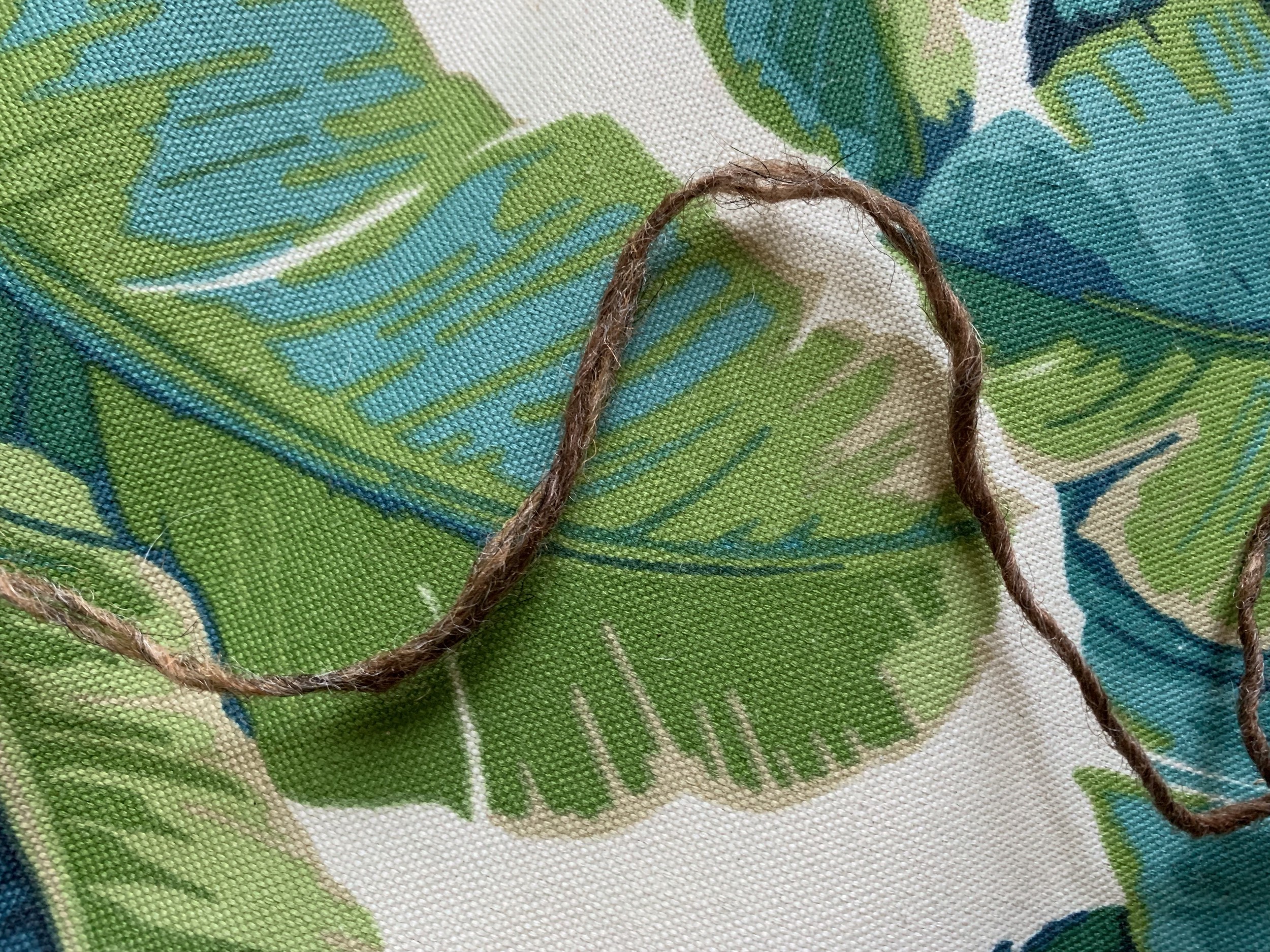
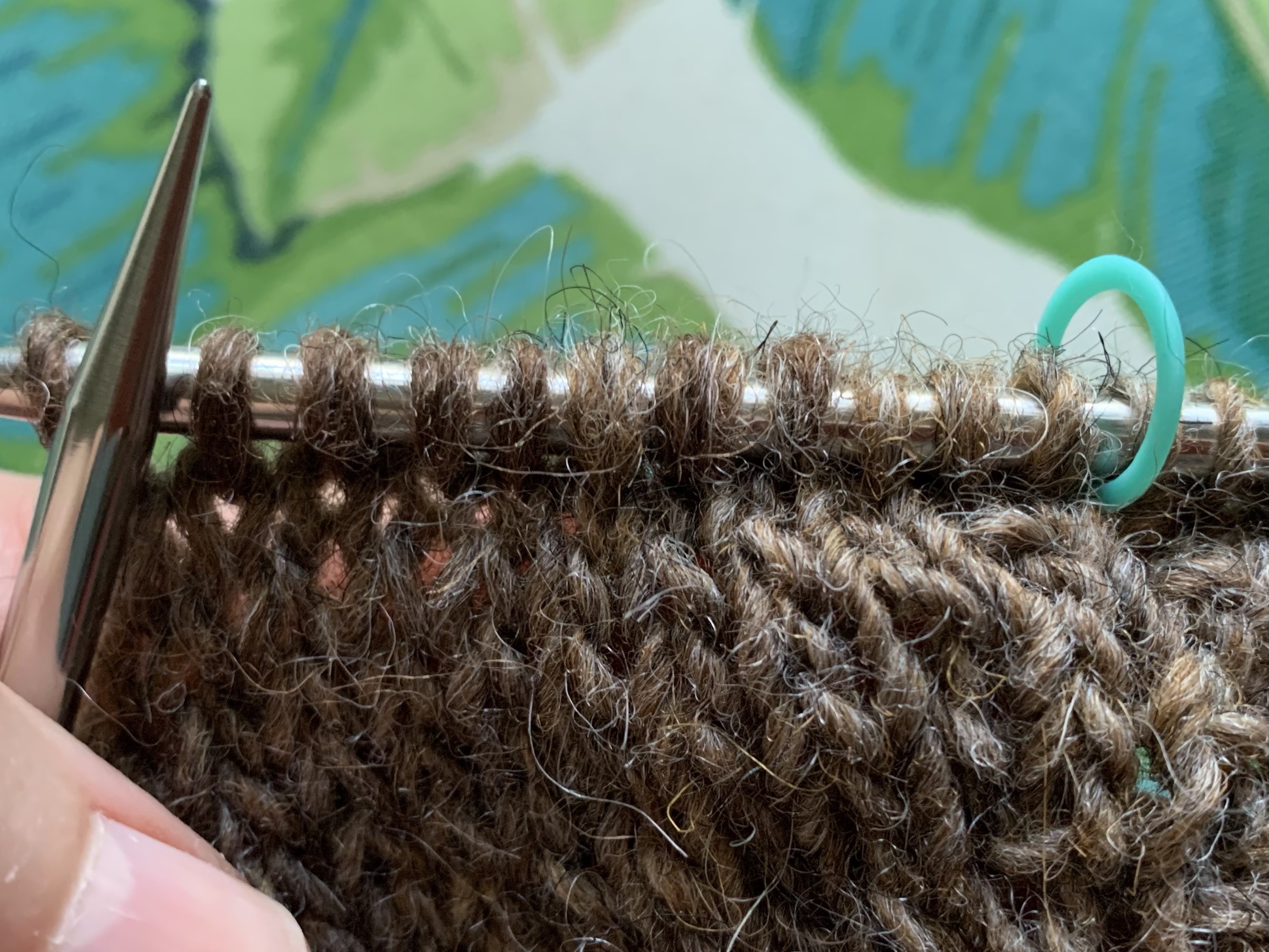
The Uradale yarn is fickle. The darker brown Moorit was quite thin compared to the Jamieson & Smith. When I added the Uradale Aess, which is beige, it is thicker. In general the yarn seems to deviate, sometimes becoming very thin.
I like the fact that Uradale yarn comes from a small farm on Shetland, but I can buy similar yarn in the US that costs me much less. This yarn was a gift, and I would not use it again.
I intend to mix the yarns I have to create stripes that vary in colors. I won’t have enough of the Jamison’s in one color to continue the color palette.
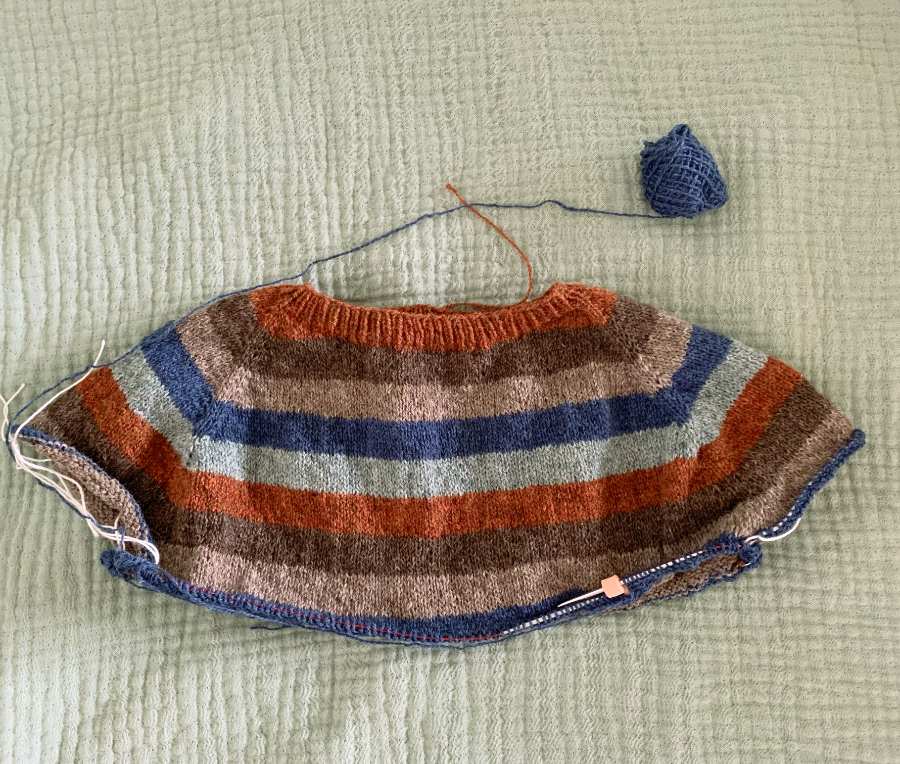
As I knit this pattern, the raglan increases are done differently than most raglan patterns I’ve knit in the past. I’m wondering how this will turn out.
I’ve separated the sleeve, and there are big cast ons for under the sleeves. Now the knitting is round and round for the body.

More to come as I knit on this pattern. It’s the end of summer and here in Central Florida it’s a time to get planning the Fall garden. It means I am not doing a lot of knitting.
Update: Sleeve #1 is Finished
Hey, it’s September and I have finished knitting sleeve #1 of the Simple Stripes sweater. A little kitty-cat colorwork was added, and the cuff is a 3×2 (3 knits / 2 purls) ribbing on 65 stitches. Sleeve length is approximately 17-18 inches.
Sleeve number two will be all stripes and I will try to match colors. I do love the ribbing I chose, and the Rauma wool in off-white.
The Bind Off is normal and follows the knits and purls.

The holidays are coming – believe it or not – and any holiday knits need to be worked on. I have one or two on the needles. How about you?










 New England's Narrow Road