
Petite Knit has a few hat patterns that I’ve saved in my knitting library. While searching for a good pattern to use with Camel yarn, I settled on the Weekend Hat.
This is a fairly simple ribbed hat. I couldn’t decide if I wanted to spend money on such a simple hat pattern. Why couldn’t I figure this out myself? I’ve knit many hats, but this one includes rows of knitting that designate where the hat folds. And this brim folds twice for keeping ears extra warm.
But for less than $6.00 I can follow a pattern and have the hat come out correctly, with no figuring on my part. Also, I enjoy supporting designers for their hard work.
This hat comes in six sizes – but… size 0-1 years measures 18-19 inches in circumference. This seems quite large to me. However, using a thinner yarn with smaller needle size, would keep the hat smaller. This size information can be found on the hat pattern page – you don’t need to buy it first. (Link below)
The hat sizes change as follows: Cast on numbers are the same for 0-3 years. Also the cast on is the same for the ages 3-9, small and medium, but the length (height) of hat changes. The Large size has a larger cast on and is taller.
Buy the Weekend Hat pattern Here
Using Camel Yarn for the First Time!


Choosing a Needle Size
The knitting needle size suggested for this hat is a size 4. I cast on (I used this join to knit in the round) and began knitting using this size. It seemed too small, and after about an inch, I measured the stitches. Sure enough it was smaller than intended.
I wanted to go up one needle size but did not have a 16″ circular needle in size 5. So, I used my size 6. The camel yarn ball lists sizes 6-7 as the size to use with this yarn. Listed as a DK weight, this yarn is quite thick, and seems closer to a worsted weight to me. So, a size 6 needle seemed right.
The Yarn
It is a chainette construction yarn. Instead of plies, the strands are combined into a chain that is light and airy. Read more about the benefits of chainette on this page. Once it is knit, you will not see the “chain” texture. I was successful at spit splicing the yarn, but it took a lot of rubbing. This hat took 3 plus balls (buy 4) of Pascuali Camel DK yarn. I had quite a lot of yarn leftover, so the hat could have been made longer, or larger around. I knit the size Small.

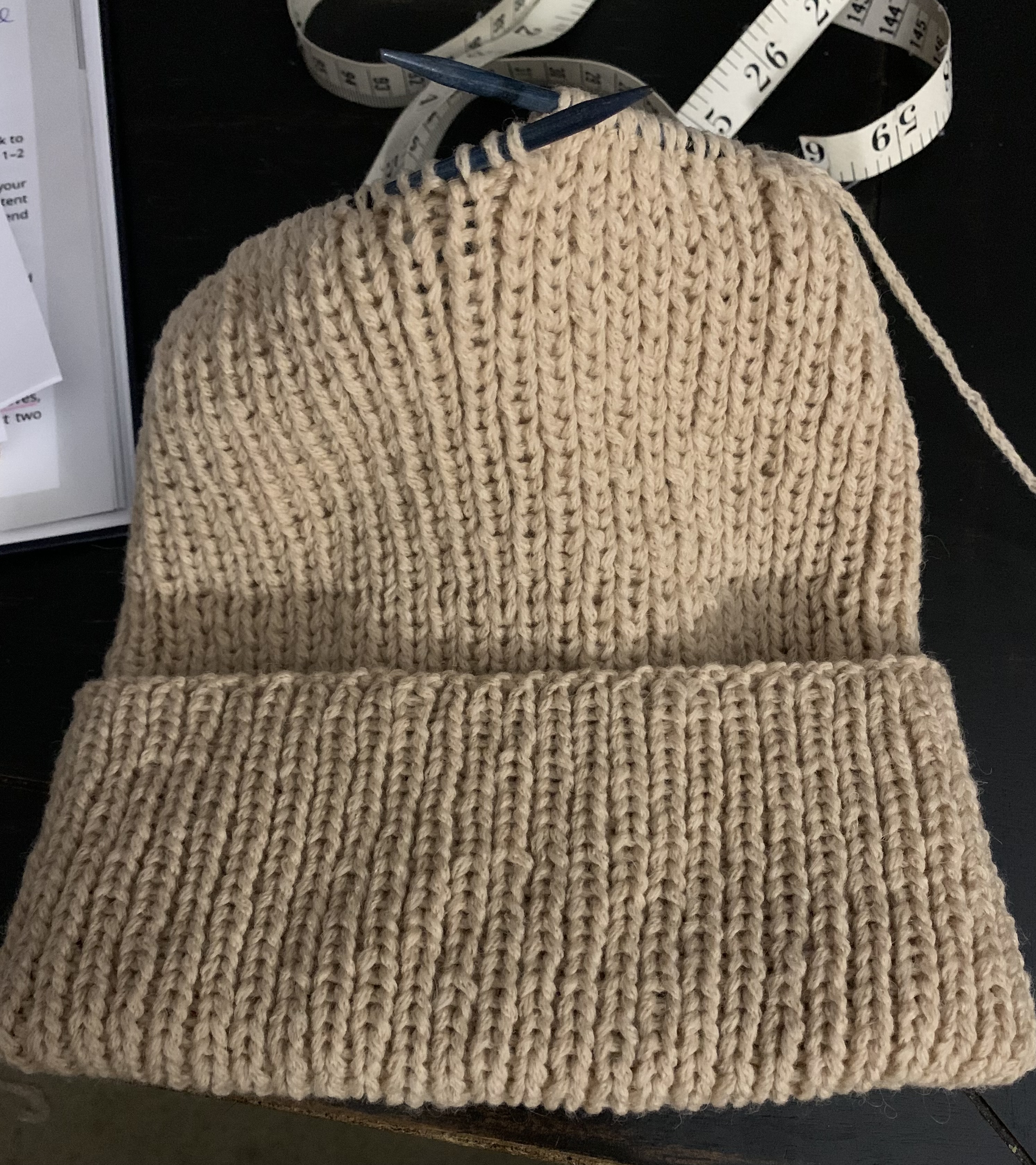
As mentioned above, this hat will have a brim that folds twice. For this reason, the cast on edge will not show. I did a long tail cast on, and even though I began the hat with a small needle, it all worked out fine.
I knit size small and the hat fits me, although it is not for me. I was knitting for someone who has a small head.


I had enough yarn to make the hat longer / taller, but it would not have been necessary. I think it ended up the perfect height.
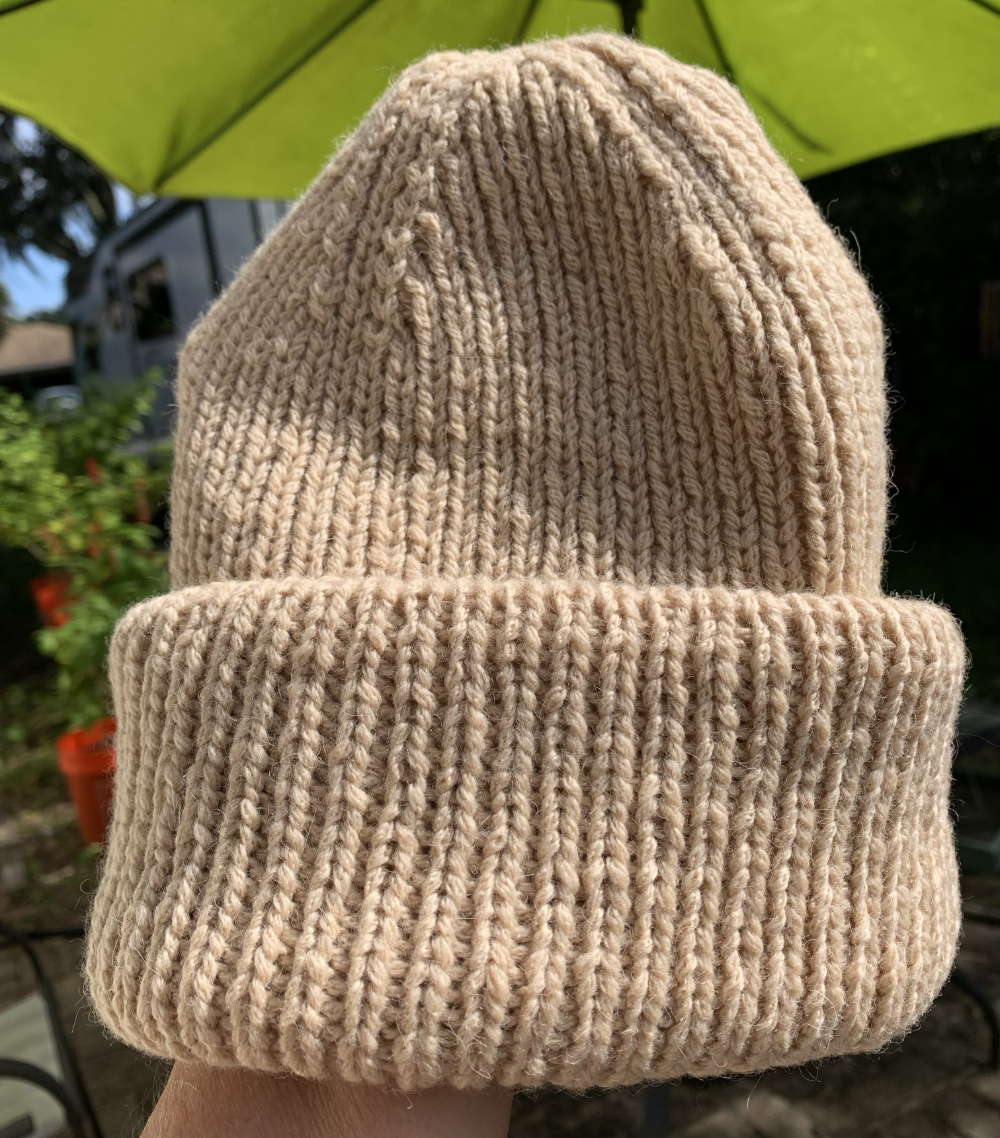
I took this quick (and non-perfect) photo wearing the hat. It shows how there is a little point at the crown.

Final Thoughts
The pattern is easy to follow and is mostly a 1×1 rib except for the few rows that make up the fold lines. If you would rather not include them, it would be easy to leave them out. Also, some Weekend Hat knitters knit the pattern but did only one fold for a more normal brim.
I suggest that you consider using the needle size suggested for the yarn being used. I did not knit a swatch to check gauge. My Camel yarn was closer to being a worsted weight and needed a larger needle.
This was my first project using Camel hair. I loved the feel of the yarn, which was soft and strong. Unlike sheep’s wool, the hat did not change much after washing. It also took three days to dry – but I live in a very humid place.
Now that I have finished knitting this hat, I can recommend the pattern. For the first time ever, I used Magic Loop to finish the top of a hat. I’ve used Magic loop for sleeves, but never for a hat. Small circumference knitting is always my least favorite thing to do.
If you are looking for an easy hat to knit, that covers the ears with many layers of warmth, I do recommend the Weekend Hat. I will be knitting it again using another Camel yarn. Be sure to watch for that yarn review.
More to read…




Something went wrong. Please refresh the page and/or try again.






 New England's Narrow Road