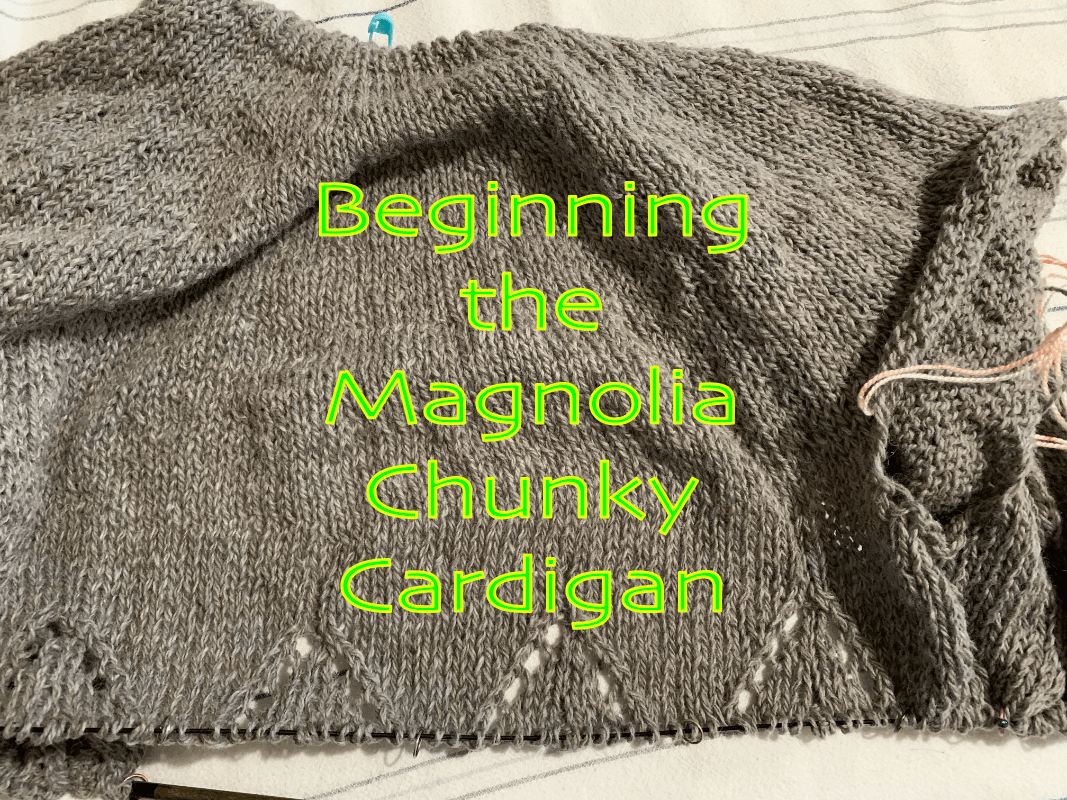
Pattern Review: Beginning the Magnolia Chunky Cardigan

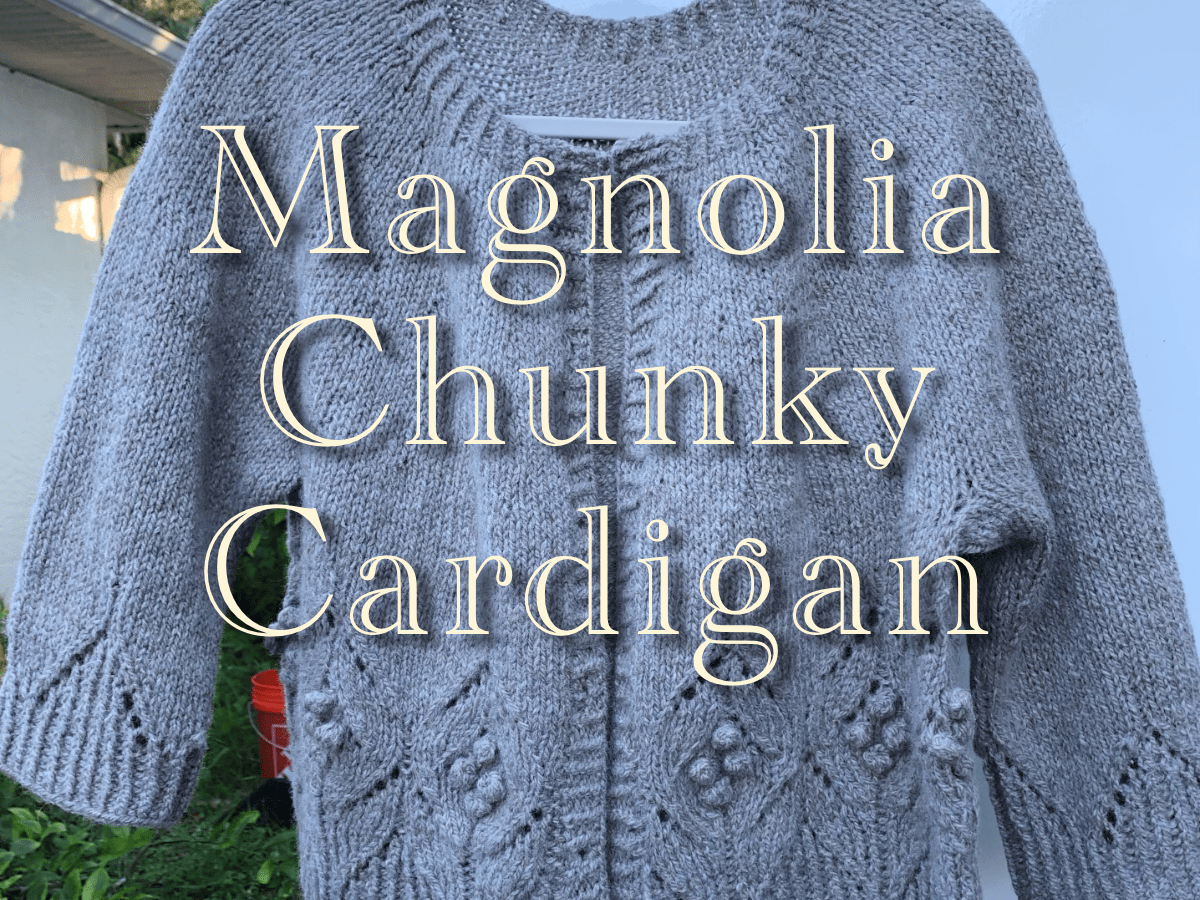
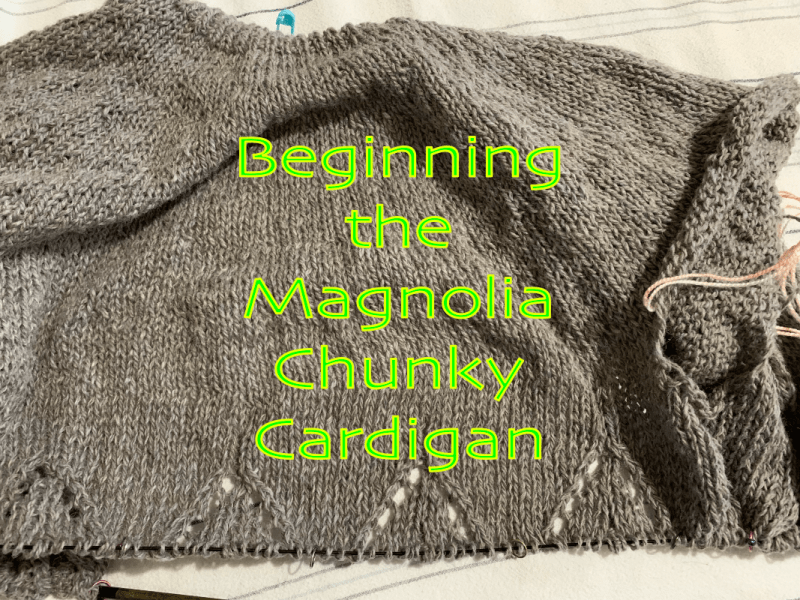
I’m knitting a beautiful cardigan pattern by Camilla Vad. The Magnolia Chunky Cardigan is knit top-down with lace and bobbles on the body and sleeves. On this page I cover some issues I had in the beginning.

This is such a pretty cardigan, with lace at the bottom of the body and sleeves. The Magnolia Chunky Cardigan (Ravelry page) is a design by Camilla Vad. Although “chunky” is in the name, it is knit with a worsted weight yarn, or a combination of yarns held together that equal a worsted weight. The finished sweaters on her Ravelry page (link above) are so beautiful.

This button up sweater is shorter, with a boxy shape and 3/4 sleeves. Many knitters have lengthened it and knit long sleeves as well. Usually, I like a longer sweater, but this one is quite pretty as is. Personally, I like the way it is meant to be, so I will probably follow the pattern as written. Don’t hold me to it….:)

Heads Up

This is not a beginner pattern. It includes lace, which means yarn-overs done correctly. It includes bobbles (new to me), increases, knitting and purling through the back loop. There is a button band, or one with buttonholes. You should have experience with most of these things to complete this pattern.

The Yarn I Chose

Harrisville Designs Highland Wool, on a cone, is the yarn I chose for this cardigan. It is worsted weight, in the color Suede. The light gray yarn has a bit of brown in it, but the color is very neutral. Each cone contains 450 yards, and I have three cones. The yarn came from my stash, but I love the color for this project.

Harrisville Designs yarn cone Highland wool in color Suede.
Highland wool cone – color Suede

This yarn is awesome. I love wool, and it is strong and consistent. There are knots, but they splice nicely.

This one can be a little tricky

Almost as soon as I began the sweater project, I had some trouble.

With this pattern, for whatever reason, some things could have been made much clearer. Thankfully for me, I am late to the party, and over 2,000 cardigans have already been knit from this pattern…. so it is popular! I want to thank the knitters who kindly shared helpful notes on their Ravelry pages.

Edge Stitches

This seems to be the biggest problem knitters have with this pattern: Edge stitches. At times they are included in the line by line directions, but not always. More about that in the “yoke increases” section below. But first…

The First Wonky Thing

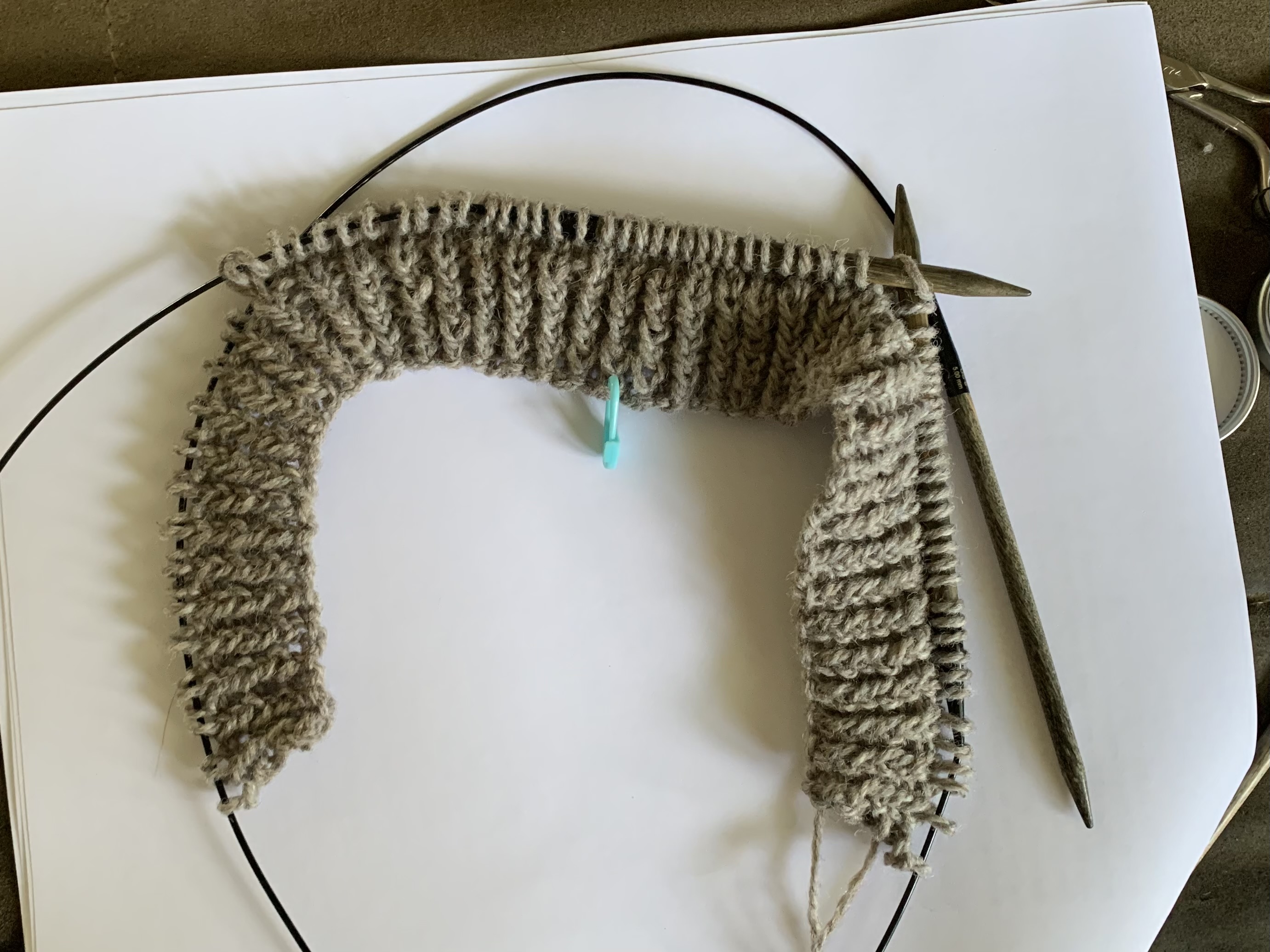
The cast on and twisted rib neckline are done on smaller needles. Once the rib is complete, you simultaneously switch to a bigger needle while also beginning short rows.

If you are familiar with how short rows are done, you will know that a short row is just that – it stops short of the entire row, and then turns to knit back (or purl back) the opposite way. Knitting goes back and forth like this to lengthen the back part of the sweater so it will fit correctly. It is needed. You will be working off two different size needles until all the short rows are complete.

When I got to the “turn” I mistakenly picked up the smaller needle to knit because it was there! I had to rip back and use the larger needle while letting the stitches on the smaller needle just hang there. This was very odd, but worked out fine when I paid attention!

When expanding past each turn, just knit those few stitches off the small needle. And remember to pick up the larger needle as you knit, or purl, back.
Yoke Increases

The designer makes a note at the beginning about making sure we don’t stagger the yoke increases. They should line up over one another. Each knitter must figure out how to space their set of increases. For the size Large sweater, which I am knitting, 11 evenly spaced increases must be figured.

I THINK that the trick here is to not include 2 stitches (the edge stitches) when dividing up the number of stitches for increases. Now that I’ve passed that part of the pattern, I can’t be sure. Next time I would try that.

This threw off my subsequent rows. Things did not match up to the pattern, but I marked the increase locations and kept my increases lined up – even though they were not exactly where it seemed they should be. All my stitch counts were correct.

The Lace and bobble making

If you follow the pattern, the lace section will begin right after the body and sleeve separation. I knit a few extra rows here before beginning the lace. This is a good place to add length to the body, if you want it.

The pattern has some stitches that do not show up in the lace chart, or the lace written directions (the pattern has both). These stitches are mentioned before beginning the lace section. We simply must remember to add them when we knit, or purl, each row. The best way to do that is to use stitch markers.

I’m following the written out lace pattern. I rarely knit lace, and when I do, I usually have trouble. Those darn yarn overs get me every time!
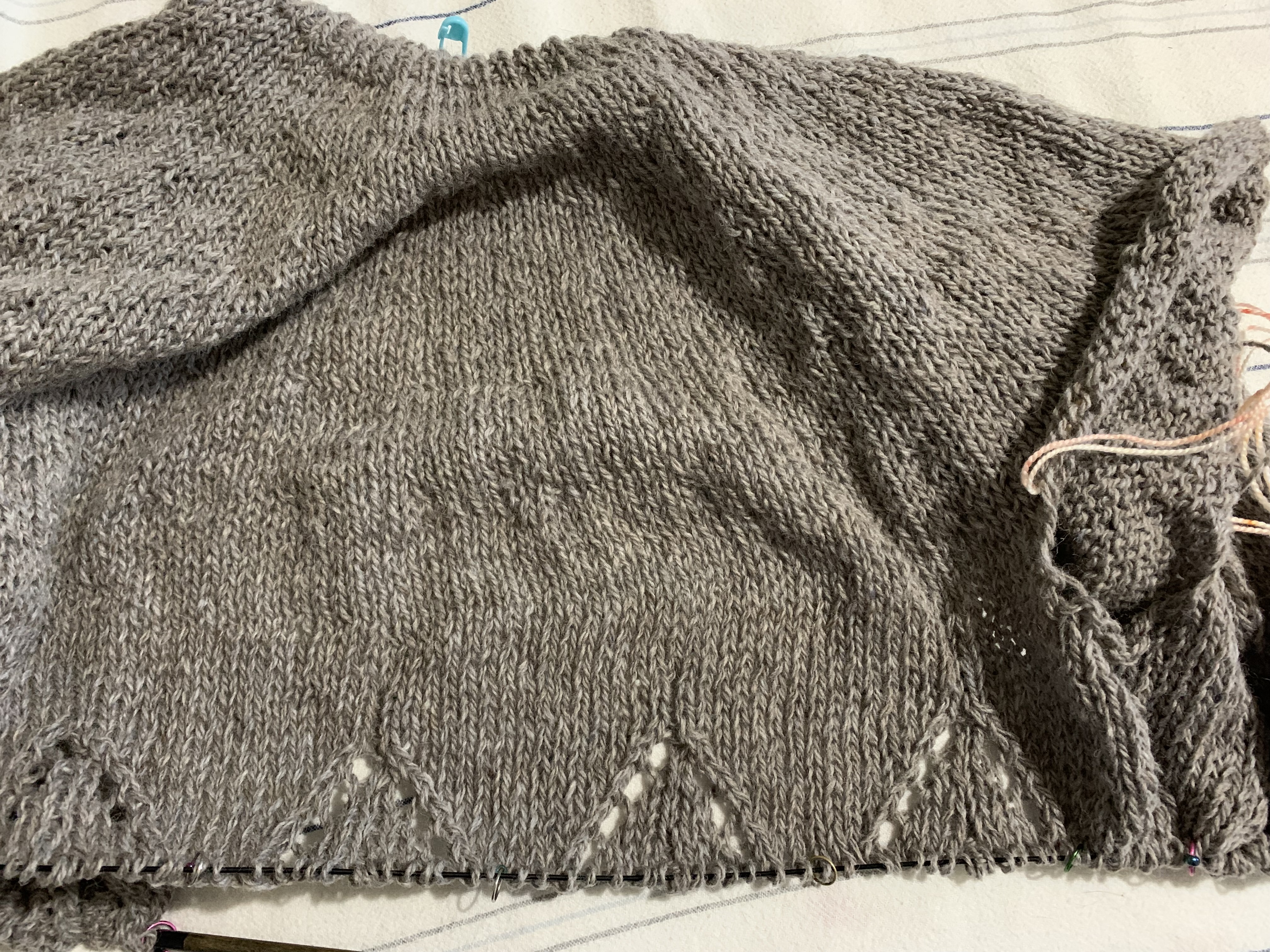
Those end stitches will remain knits – except for the extra one. Refer to the directions for changes to it.

Nupps or Bobbles – Swatching for Practice

I’ve never done a knitted bobble, but this pattern has something called nupps. They look like little knitting bobbles.

Before trying my hand at bobble making on my sweater, I decided to practice on a swatch. I practiced making the bobbles shown in this video. She goes a little fast, but it’s easy to pause and catch up.

To practice my bobbles and nupps, I knit a couple of swatches. I had a hard time at first with the pattern nupps. They are easy to do, but didn’t look very good.

Image below: Nupps tan swatch, and bobbles gray (many mess ups).

knitting nupps and bobbles

A bobble is fairly easy to unravel FYI, just in case it looks really awful.

My question is this, will the bobbles be too large compared to the nupps? Maybe I can find a nupp video. YAY… Mostly Knitting has a good Nupp making video which you can watch here.

To Be Continued

The directions for this sweater are actually pretty good. It’s just that you have to be careful and go back and reference particular rows and stitches. I’m grateful that all the lace rows are also written out! I’m not good at reading charts.

Now, I am going to finish the lace and ribbing and then start the sleeves. If I come across any other tricky directions, I’ll be sure to share. And if anyone who has already knit this sweater wants to chime in, please do so in the comments and help us out.

By the way, Camilla Vad has other beautiful sweater patterns. Her pullover, Magnolia Bloom, contains this same lace pattern, but it’s on the yoke. I have already knit the immensely popular Field Sweater.

divider image animals in sweaters

Something went wrong. Please refresh the page and/or try again.

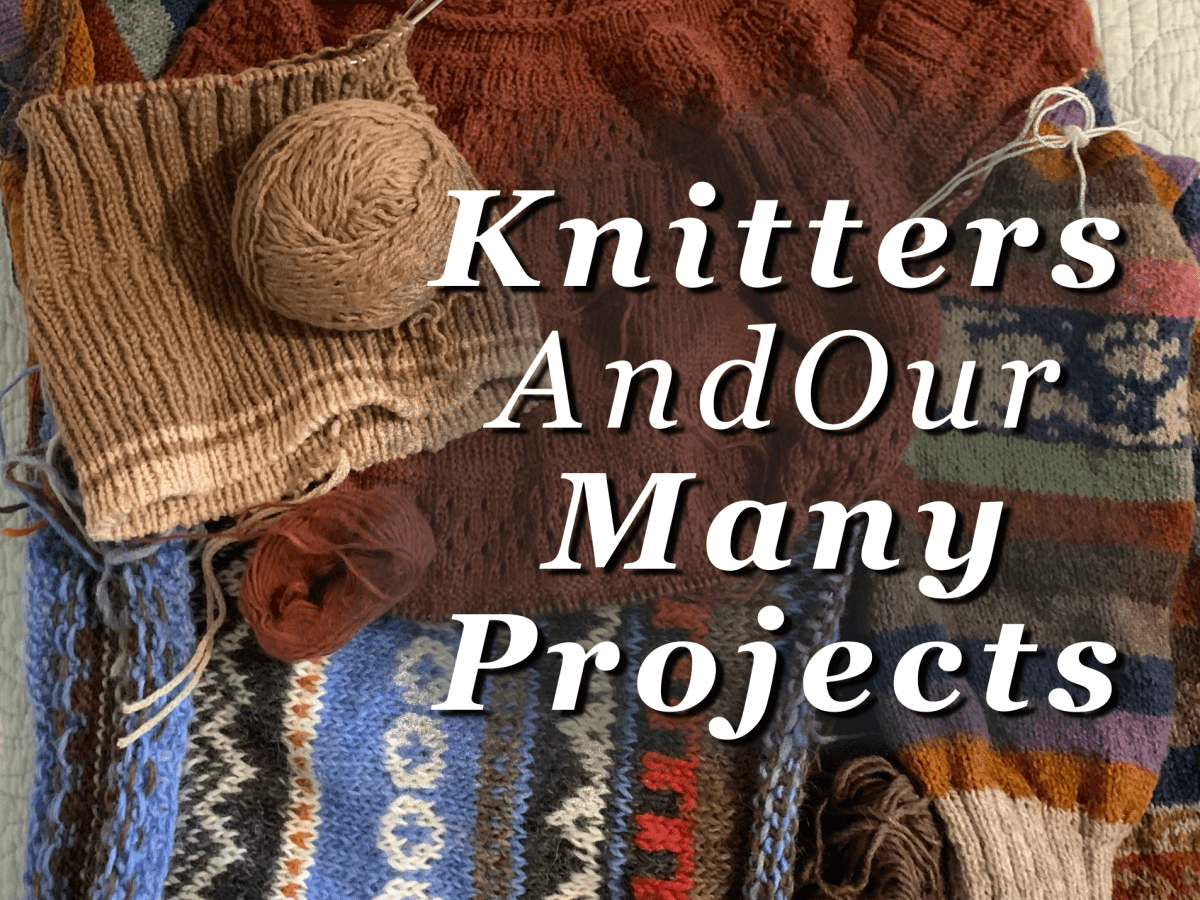
Three Knitting Projects On My Needles in September

Three knitting projects recently begun by me. It is nice to have a variety, but three tops at one time is something I do not usually do.

It began with some new yarn I ended up not liking so much. It has ended with a new project using yarn I love. This is how I have ended up with three major knitting projects (tops / sweaters) on my needles.

Many people have more than one knitting project at a time going. I like to have something simple along with something more challenging. Knitters are creative people and working on something that is too simple can, at times, be boring. But a simple project is great for late night (low light) knitting, or travel knitting.

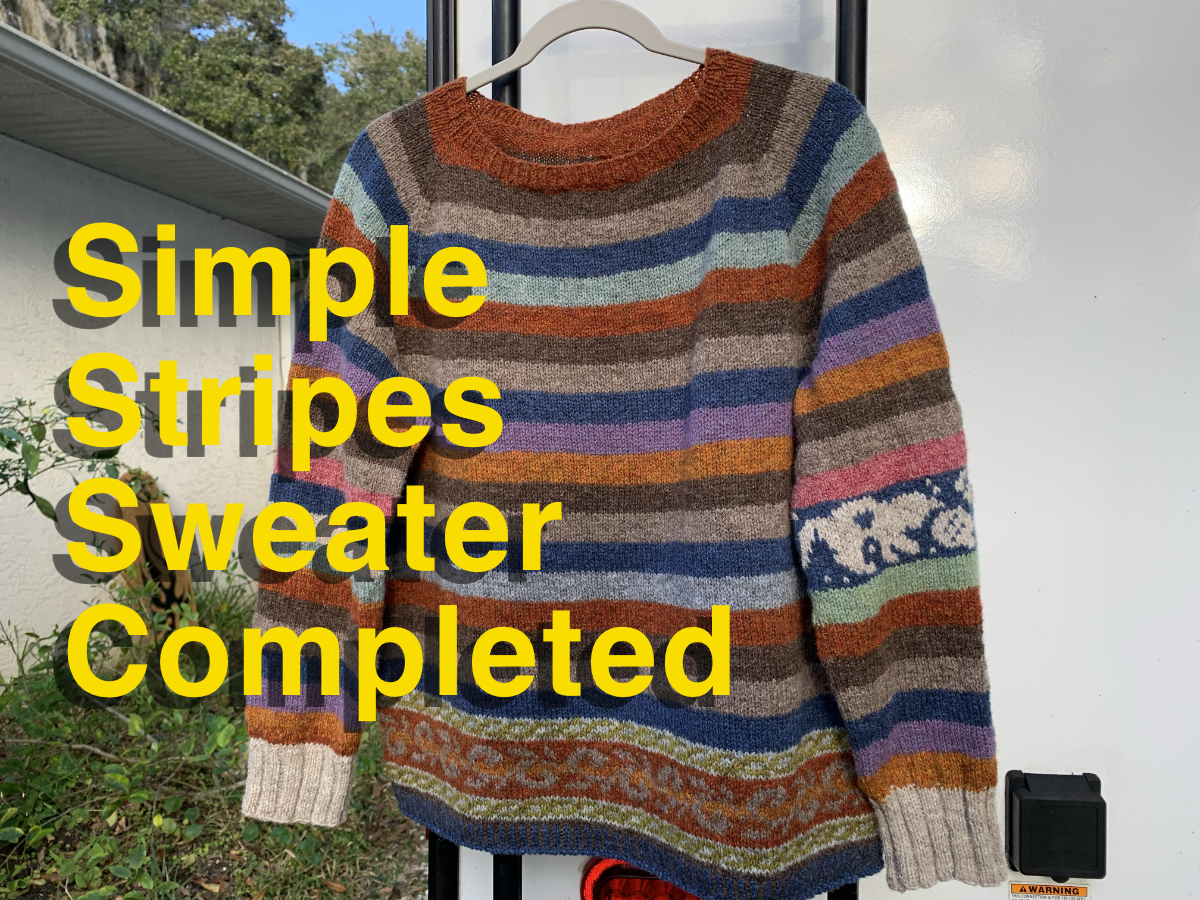
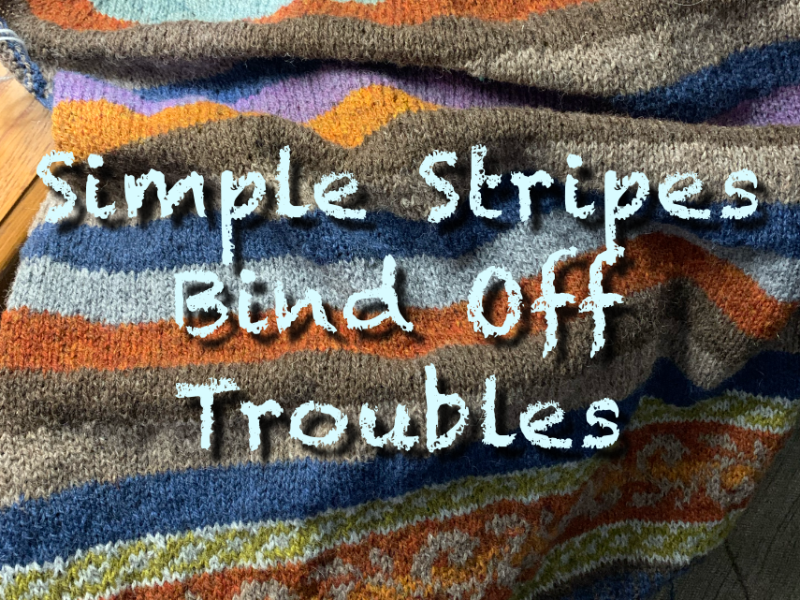
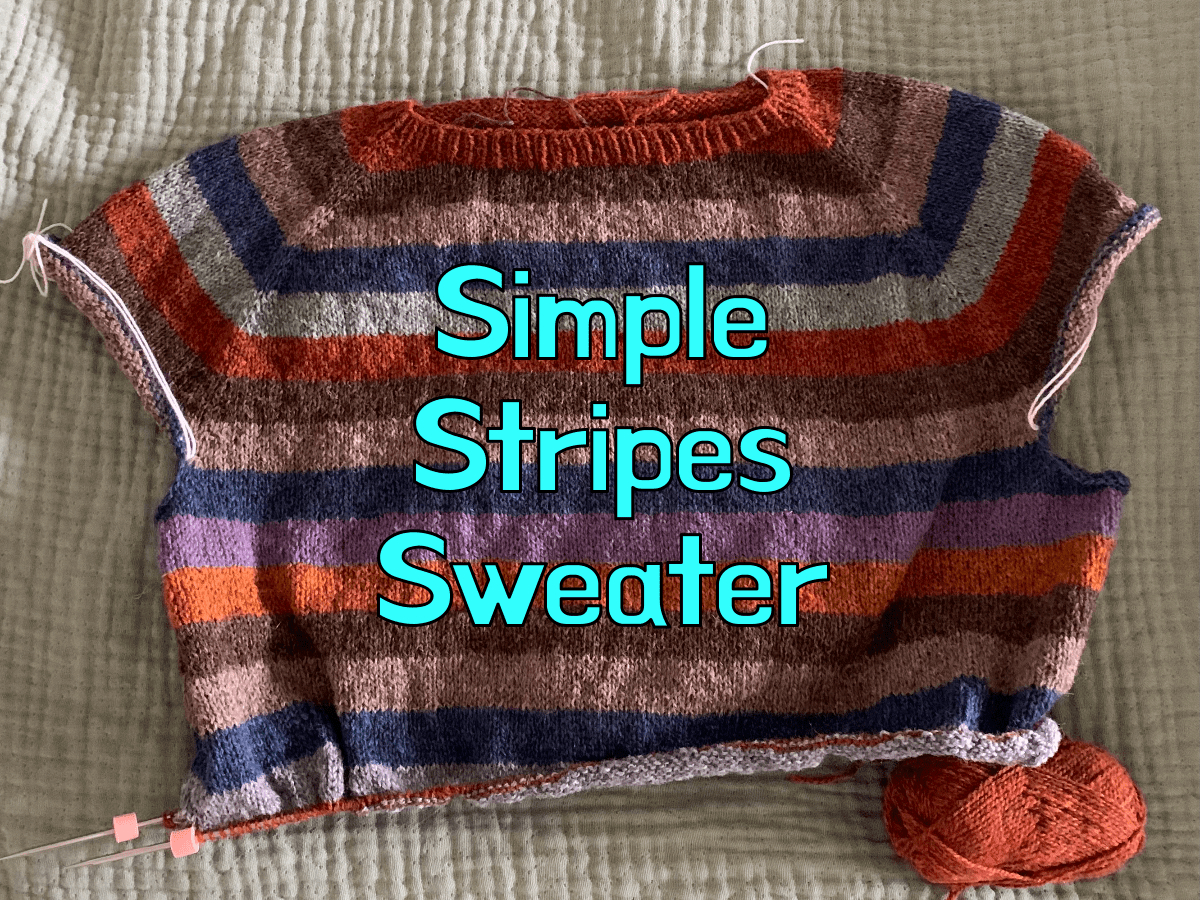
Uradale wool yarn comes in little balls. It has a thick and thin quality which I don’t really enjoy. I had enough yarn to knit a sweater, but decided to use the yarn along with some other wool I like more, and knit a different pattern. This led to the project Simple Stripes. It is a pattern by SuviKnits. I’m making some adjustments to this easy pattern, while using up a lot of the Uradale yarn.

Presently, I’m nearing the end of knitting on the first sleeve. My changes include some colorwork designs and a corrugated rib at the body hem.

simple stripes pullover knitting project

Pascuali Yarn, Cotton Suave

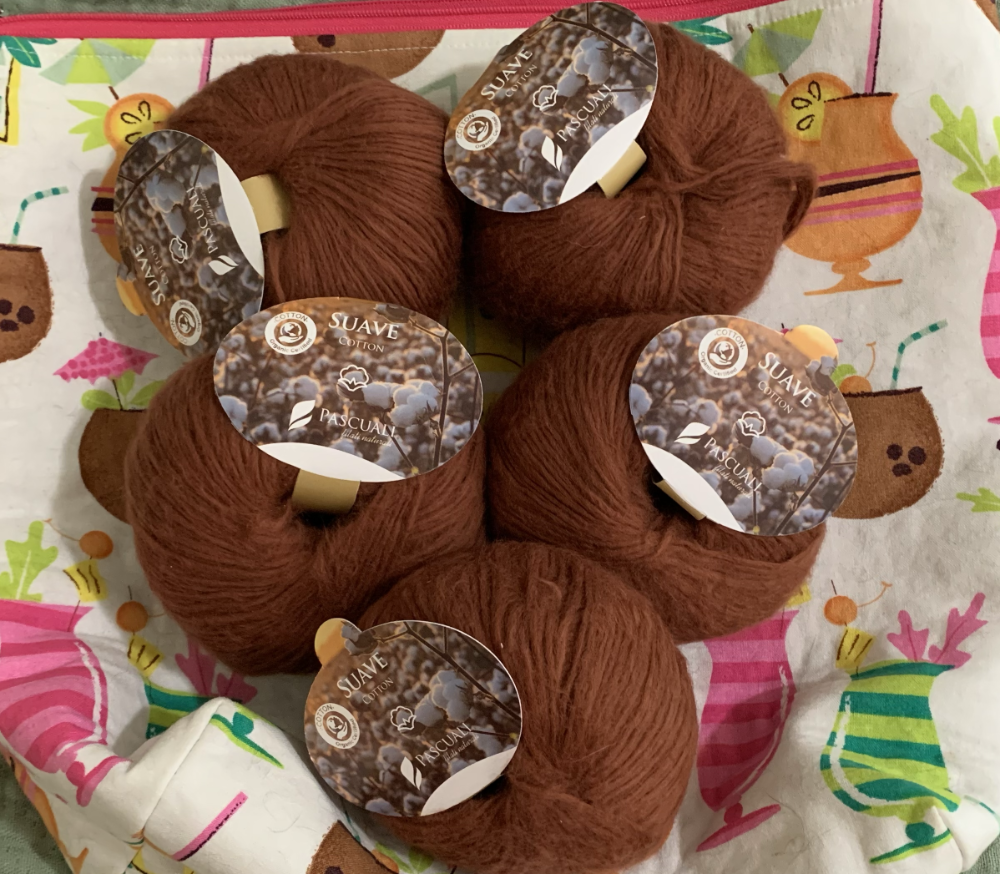
For some reason, I decided to buy some cotton yarn and try knitting a summer top. I say this because I really should know better. I’ve tried and failed to find tops and yarn that work for my climate. Ever since I discovered the Pascuali yarn company, I’ve made a list of their yarns I’d like to use. The Suave cotton was on that list.

A pattern called the Dandelion Whiff Top (link goes to the Ravelry pattern page) came up as a suggested pattern for the Suave cotton. It’s a cute tank. But once I began knitting with the yarn (a swatch), I decided it was too difficult to use for a bottom up, textured top – written by an unfamiliar designer (to me). Bottom up knitting turns me off anyway, and this top also has a textured pattern (I’m still scared of all-over textured patterns thanks to Oxbow). I would love to knit the Dandelion Whiff top in the future, but not using this yarn.

Knitting the Knus Light Top

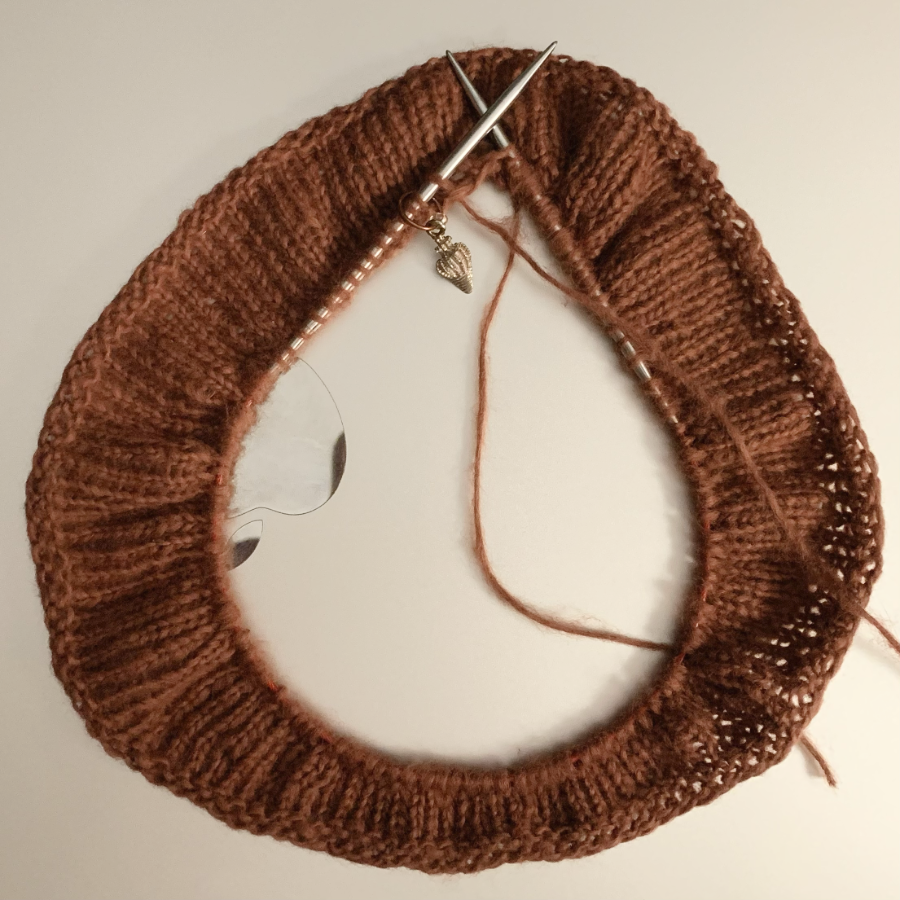
A pattern for a short-sleeve, textured top, called Knus Light, by Elsebeth Judith, is what I chose for the cotton yarn.

The top is full of various sections of simple texture that seem easy enough for me to accomplish. This yarn is very unusual. You would never know it is cotton! The strand is fuzzy, but very strong. My swatch fabric is very soft and light.

However, I tried to unravel my swatch and couldn’t do it! The yarn tangled together and made little knots. For this reason, I want to knit something that seems pretty simple, without the chance for mistakes. Ripping back could be a nightmare. So I chose Knus Light which seems pretty straightforward.

The Magnolia Chunky Cardigan in Wool

I’ve had these cones of Harrisville Designs Highland wool for a while now. I probably bought them with a sweater in mind, and then got sidetracked. Cones of yarn are cheaper than skeins, so I bought three cones of Highland wool in color Suede, which is gray. Each cone has 450 yards, and I should have plenty to knit the Magnolia sweater.

As soon as I began knitting with this yarn, I felt like I was home! I just love knitting with good wool. The Magnolia pattern is tricky, but many previous knitters have left some helpful notes. I plan to write a whole page about it.

So, my fellow knitters, this is what I am up to. I’d love to hear about your projects, so don’t be shy. Leave us some comments!

Previously on New England’s Narrow Road…

Something went wrong. Please refresh the page and/or try again.

First Attempt at Knitting Clotilde

I didn’t get far when I began the Clotilde Cardigan pattern, but it’s a good looking cardigan, and I’ll try knitting the pattern again.

The Clotilde Cardigan is made up of a “bold, diamond lace pattern” and the first time I saw it I knew I wanted it.  This sweater is unique and gorgeous.

This chunky sweater is knit using a worsted weight yarn along with Mohair. It is knit with large needles – size 10US for the neck and 15US for the main part of the sweater.

I have only one photo to share because this is as far as I got with my knitting. I was having no fun, so I frogged it.

Yarn used is Alafosslopi and I had hoped to use up most of my Lopi during this project. Alas… I just can’t do it. I’m not done for good, but I’ll do things differently next time.

knitting Clotilde cardigan
Clotilde begun

Biggest reason I disliked this knit

Big reason I stopped was that I don’t like using big needles. The stitches were so tight on that size 15 needle that I struggled with every one. The collar is knit with a smaller size 10 and it went fine.

I decided to try this pattern using a smaller, size 10US needle. This was much easier and I knit a swatch from the “front” in the XL size.

Clotilde pattern
Size 10 needle

Intricate Pattern, and Knitting From Charts (Many Charts)

I read all the comments from previous knitters of the Clotilde and the big complaints were about the charts. All of the lace parts – which means most of this sweater – are in chart form only. Not only that, there are many charts to accommodate each section of the sweater (ex. sleeve, back, fronts, etc.). As you knit along, you must do each ROW of knitting using various charts. 

I don’t knit lace, but I realized I would have to do so for this sweater. Yarn overs are still something I can screw up nicely, and that “left leaning decrease” got me. I don’t think I was doing it correctly. 

That number 3 is explained on the “Key” page. I saw complaints about no explanation for it, but now it is there.

Ds or Double Stitch

And then I was stumped by the Ds – double stitch abbreviation at the beginning of the new row of knitting. It simply means do the German Short Row stitch. (Pernille Larson, the designer, gives links to tutorials but they are all in Danish.) The work is turned from the previous row of knitting and then the stitch is done first thing on that following row. (Yarn forward, slip stitch from left to right needle and pull the stitch up and over. Continue knitting, or purling, as needed.)

Before I knit this again…

I already know I will attempt to knit this pattern again at some point, because I love the look of this sweater! I plan to do a large swatch (at least one) and learn how to correctly combine the yarn overs and the stitches I had trouble with. I can’t successfully knit this sweater if I can’t accomplish the stitches!

Smaller needles are a must for me. Someone asked if they could knit the Clotilde in a larger size but using smaller needles, to get the same effect. I didn’t find an answer, but I wonder that too.

In the End

While knitting this pattern, I didn’t get far. A couple of rows of German Short Rows and I quit. I’m so glad I did not buy yarn specifically for this project. The pattern is an advanced one for me, so I’ll use one single yarn – not two or more held together. I’ll try it with smaller needles. I’ll practice all the stitches on swatches to be sure I know what I’m doing. 

Any advanced knitter, who is comfortable with knitting lace and reading charts, could handle this pattern. This one is not for beginners.

More on the blog

Knitting Cobblestone Cardigan #2 in Blue

Making changes for my second knit of the Cobblestone Cardigan by Brooklyn Tweed.

My daughter gave me yarn (a gift certificate) a while ago and I purchased six skeins of Soft Donegal yarn in dark blue (worsted weight). I’ve been keeping an eye out for the perfect cardigan to knit using this pretty yarn.

While I added to my list of possible cardigans, and found lots of new patterns I might knit one day, nothing seemed right for this yarn. I nearly chose the Truss pattern (link goes to Ravelry), but ended up wanting a lighter color for that pattern. I did buy the pattern and plan to make it one day.

A Re-knit With Changes

My first Cobblestone is a sweater I wear a lot. In fact I was wearing it the morning I began writing this post. Mainly, I love it because it’s a cardigan, which I prefer. Unfortunately, I’m not a great cardigan knitter because I hate picking up stitches and cardigans generally need a button band. It is picked up after the sweater is knit.

This pattern, by Jared Flood (link to pattern below), knits the button band right along with the sweater knit. There is no need to pick up stitches. I totally screwed up my Carbeth cardigan because of the button band, and that has scared me away from knitting them. Just like knitting the Oxbow pattern has scared me away from textured sweaters. One day I will be brave enough to not let those things stop me, but this time I want an easy cardigan.

knitting Cobblestone in blue
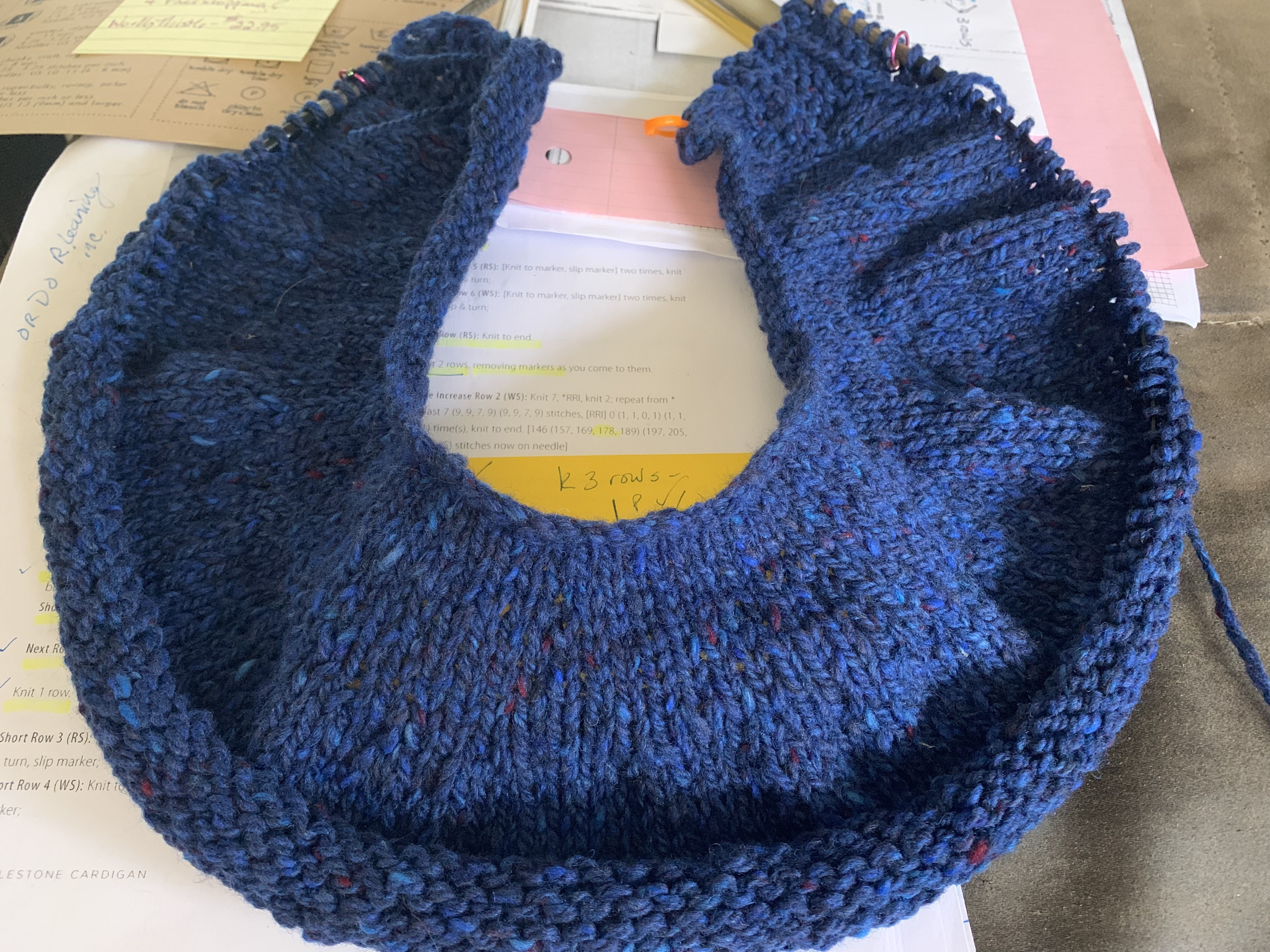
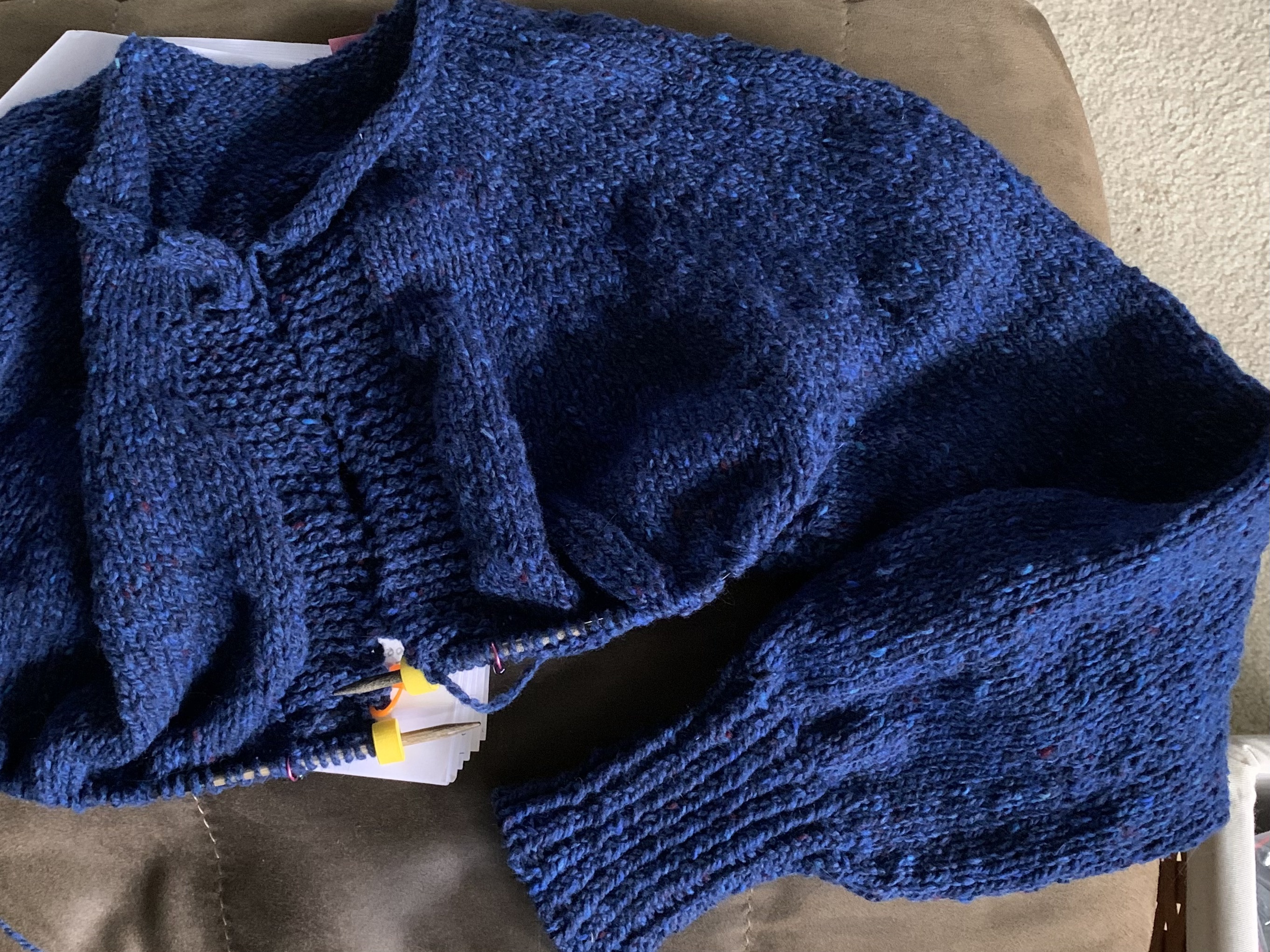
Cobblestone in blue without the garter top section.

Big change number one is that I will not be doing the garter stitch section at the top of Cobblestone. I really don’t like it, so my sweater will be more plain.

I had some trouble and had to add a lifeline and rip back a few rows. The buttonhole in the pattern is a very simple one, and I am doing something a little more substantial, like the one shown in Suzanne Bryan’s video here. Then, I messed it up and couldn’t fix it, so I had to take out entire rows!

The sleeves are being knit before the body is finished. I am afraid of being short on yarn and would rather have long enough sleeves! In fact, it’s a good idea to do this when knitting a sweater IMO. (I ended up having plenty of yarn.)

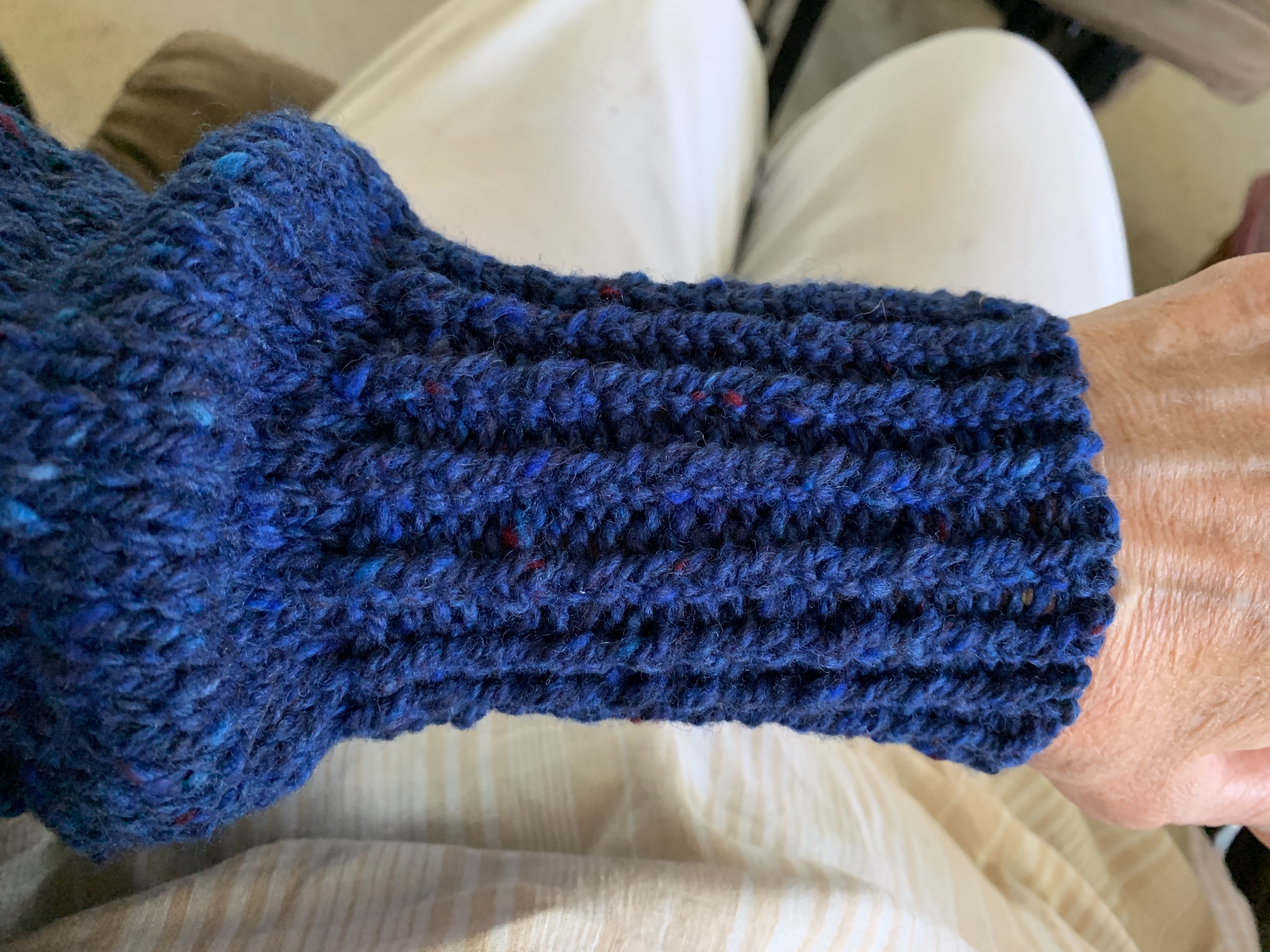
The cuffs were done a bit differently because I wanted something tighter.

Sleeve Bind Off – New!

I followed a video by the Chili Dog when binding off. The Invisible Rib Bind Off. It is done with a tapestry needle. It didn’t seem to make that much difference with this type of yarn, but it’s a nice bind off.

The original cuff from the pattern is just a garter stitch rib. I decreased to do a regular ribbed cuff. It ended up being a little tighter than I would like, but it’s okay. I decreased to 36 stitches and 40 may have been better.

Soft Donegal Yarn

Soft Donegal is a yarn I have used before. My first experience was when I knit Kate’s Poncho for my daughter. For some reason the pattern is no longer available. This tweed yarn has a similar feel as Brooklyn Tweed’s Shelter, but I’m hoping it will hold up better. The Shelter is looking very worn. It is dry and light and mine came directly from the shop in Ireland. It is available at shops in the US also to save on shipping.

Cobblestone two sleeves done
Both sleeves finished and on to the body

At the yoke, just before the sleeves, there is a weird bump that I don’t like. I think the pattern is accommodating for this being made for a man, who would have bulkier upper arms and chest area – the pattern is unisex. I wish I had not done the last increase maybe? I’m not sure if that would have helped, but I think so. This would make stitch counts off, so that would have to be figured.

In this picture I show both of my Cobblestones. They both have the bump that seems to make the upper arm bulge a bit.

Weird bump at the arm top

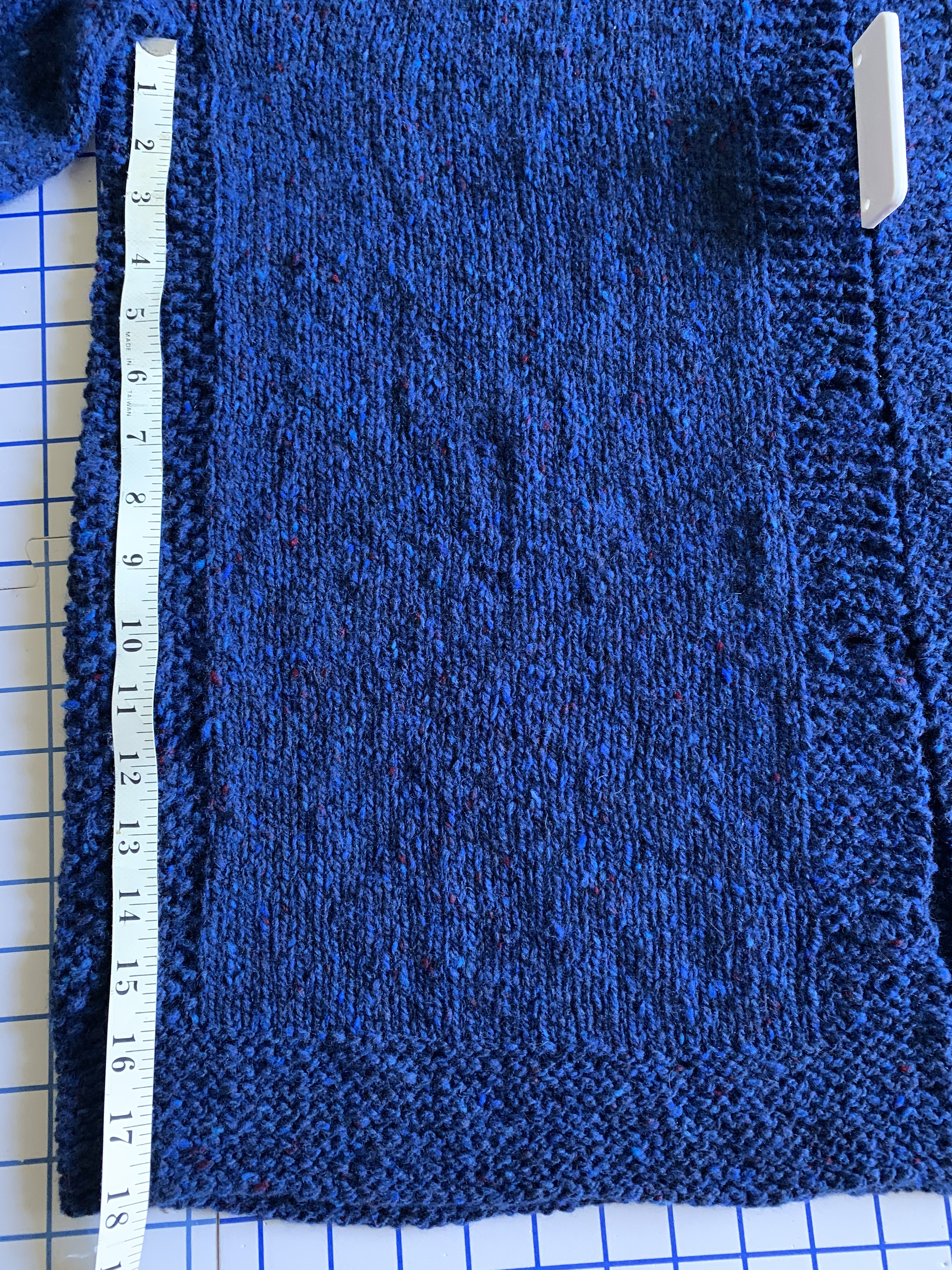
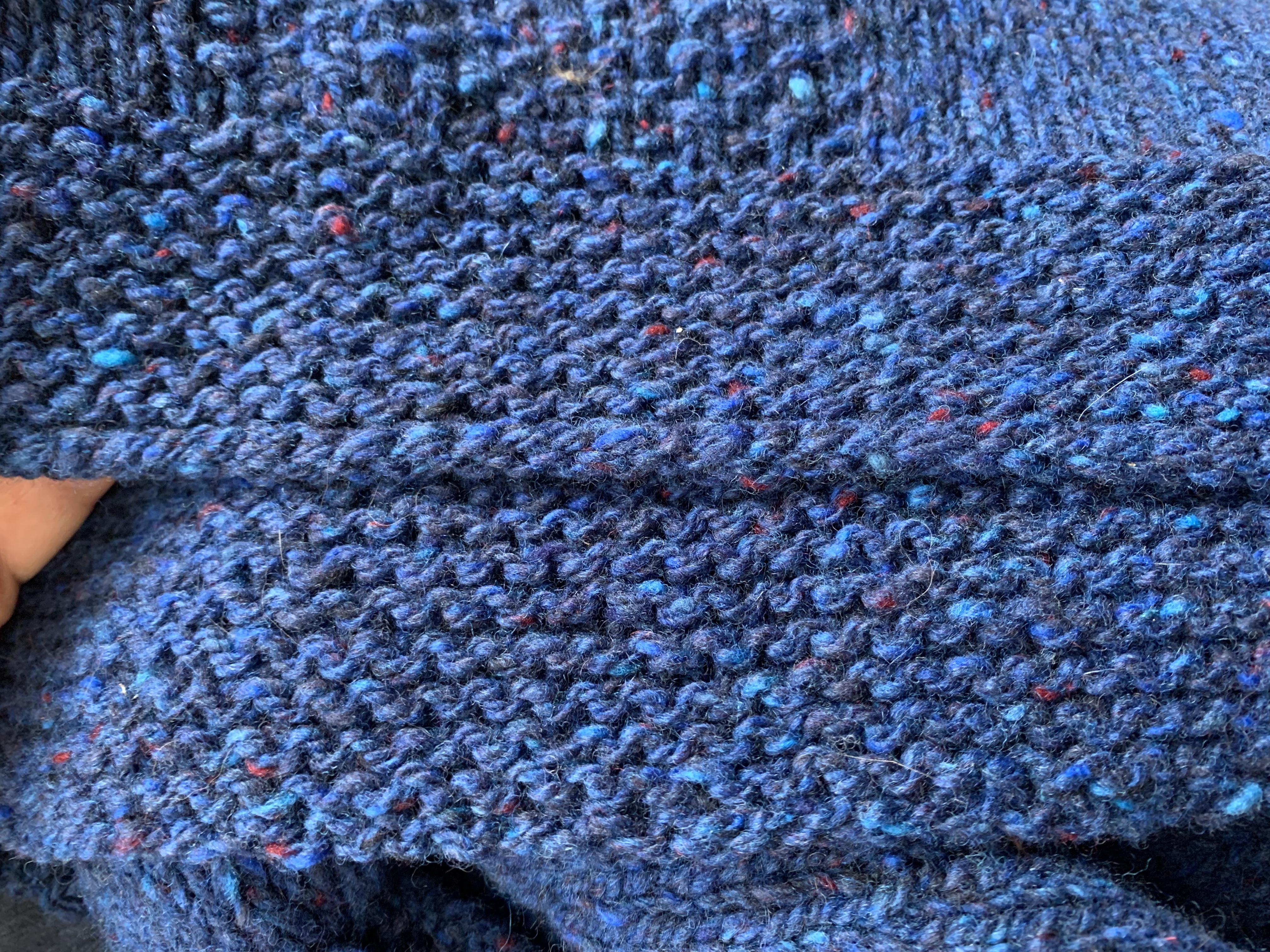
Along the sides of the sweater the pattern calls for garter sections. I decided to do seed stitch instead. The bottom is still done in garter rib, but I tried a new bind-off this time.

Seed stitch on sides

Finishing Up With The Icelandic Bind Off

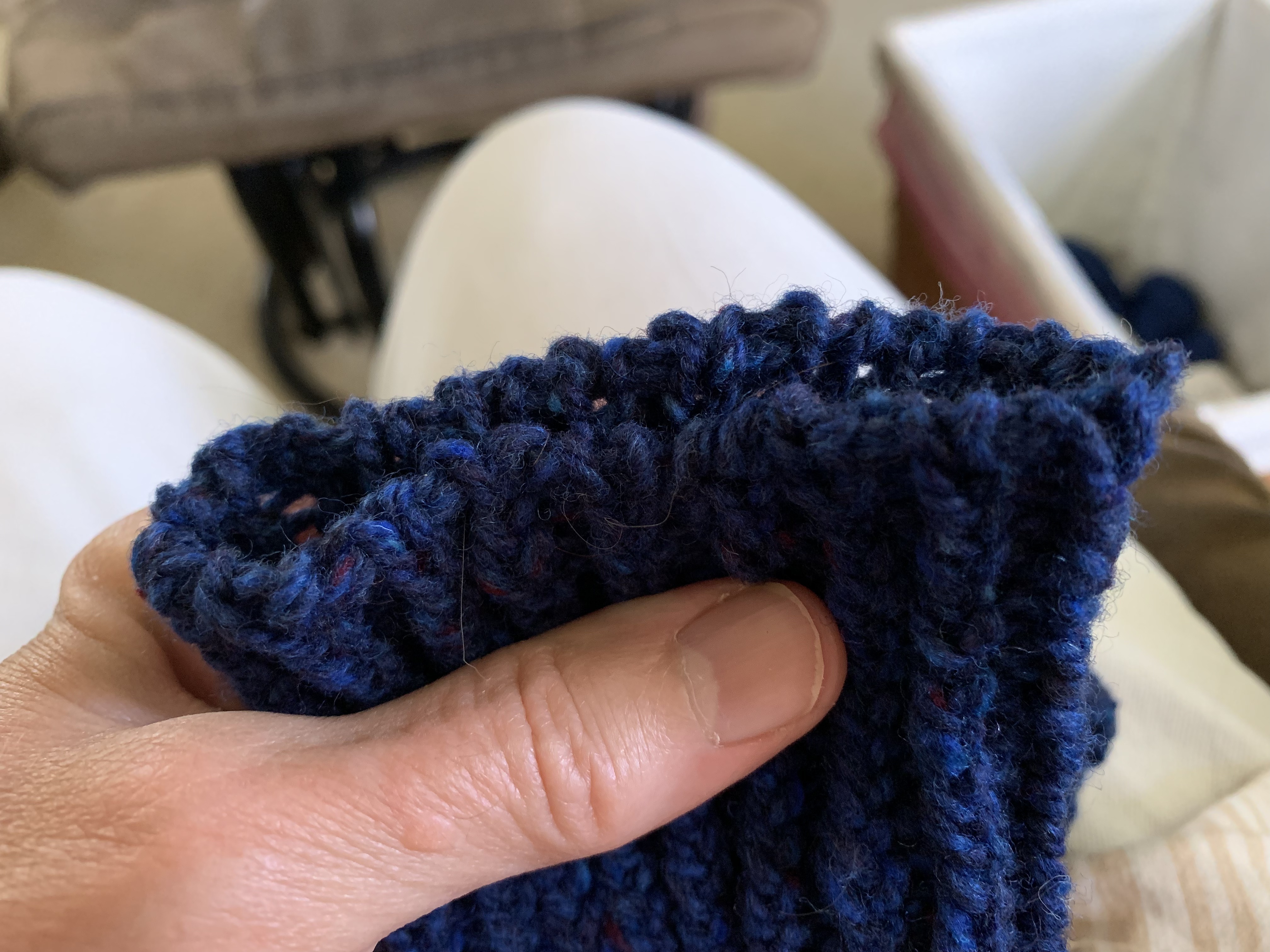
Because I had plenty of yarn, I kept knitting until the body was around 18 inches. The pattern said 10.5 for my size 2, so I made it quite a bit longer. I did the garter rib and then did the Icelandic bind-off following the Brooklyn Tweed video. It’s a fairly simple bind-off and ended up looking great on this sweater because it’s meant for finishing off garter stitch.

Cobblestone cardigan in blue

The Icelandic bind-off is done with the knitting needles, and not a tapestry needle. It is fairly easy to do, but this yarn made it a bit tougher. I do like the outcome and would definitely use this bind off again.

The Icelandic bind off matches garter stitch

A New Sweater

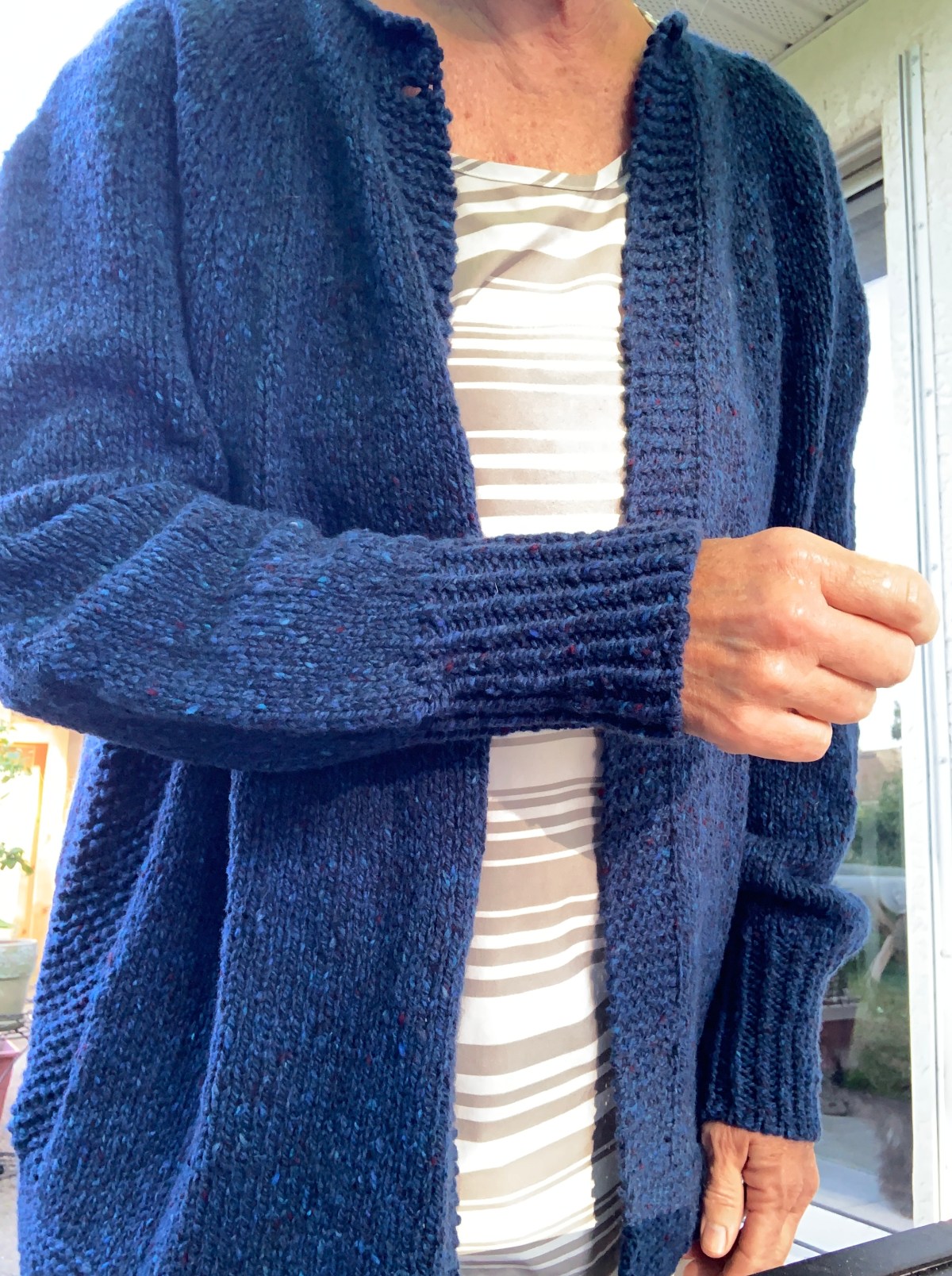
In the end, I’m quite happy with my new blue sweater. I got some quick photos of me wearing it, but it was a very hot and muggy May morning. I knit this one in size 2 and it is still plenty big. Keep this in mind if you knit this pattern – it runs quite large.

Finished cobblestone cardigan
Just need to sew on the buttons

When knitting my second Cobblestone, I learned a new buttonhole technique, and two new bind-offs. Fun! On to finding a new pattern to begin. If you have knit this pattern, I would love to hear what you thought.


Please keep reading

Something went wrong. Please refresh the page and/or try again.