The cold weather is here, and even in Florida temperatures have been freezing in my area. Knitting mittens and better yet, for me, knitting fingerless mitts, has become an obsession. I purchased the Oulu Mitts pattern as it was on sale in December. The pattern is from Caitlin Hunter of Boyland Knitworks.
I could see from photos that the cuff was a corrugated rib, which I am familiar with, and I can do colorwork. I had the right type of worsted yarn called for, so why not?
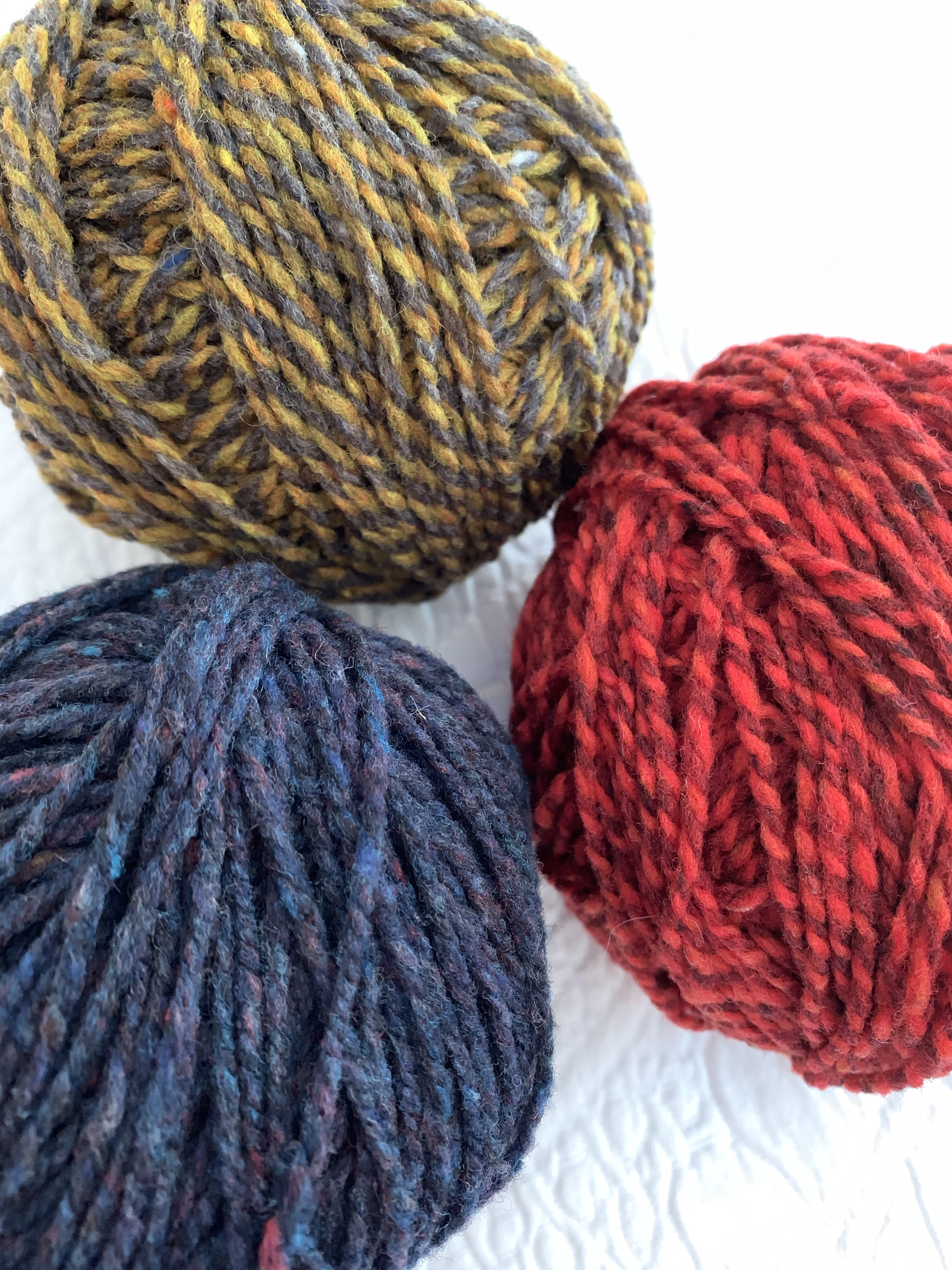
Shelter in Brown: Caraway, Red: Amaranth, Blue: Old World
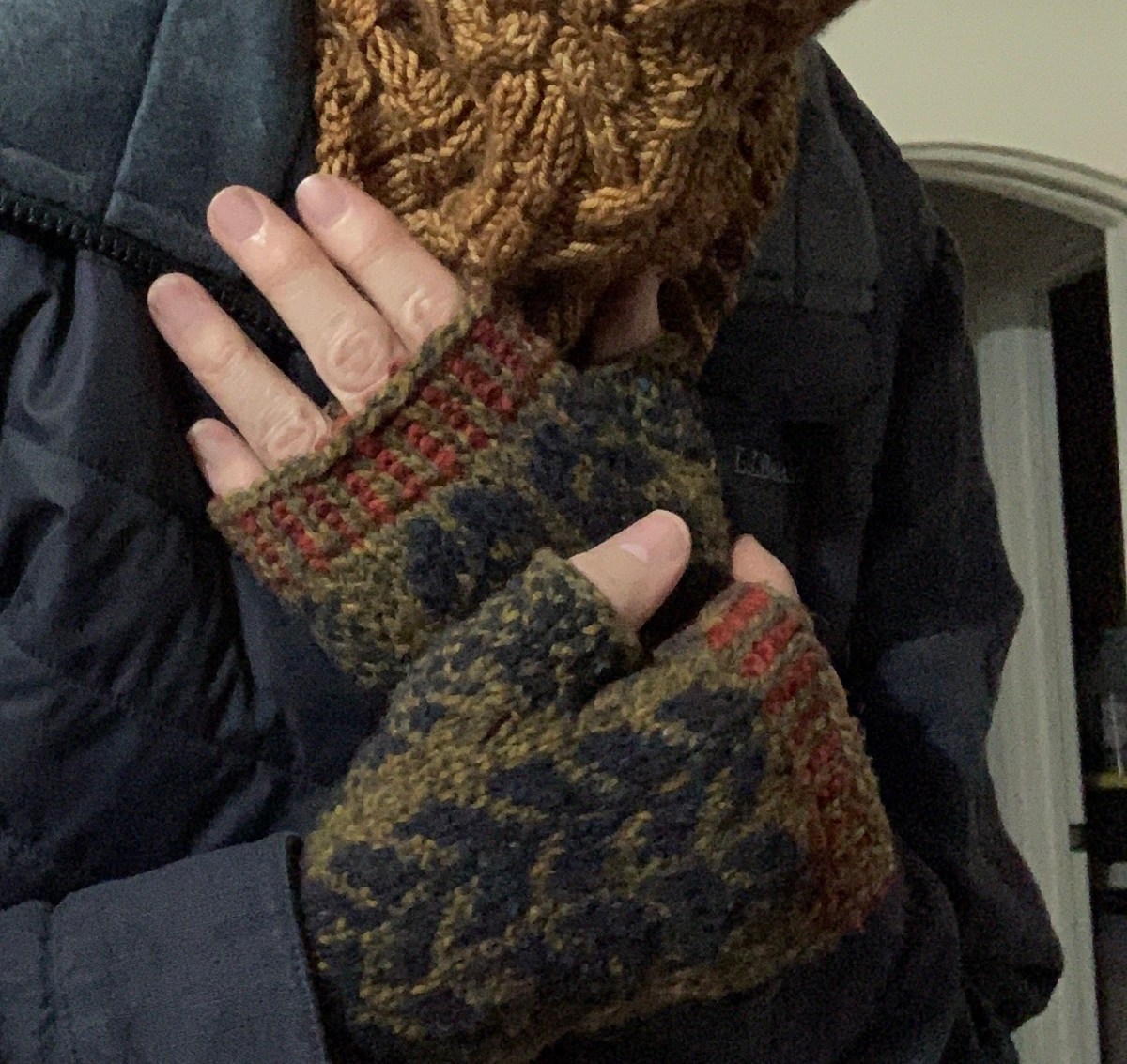
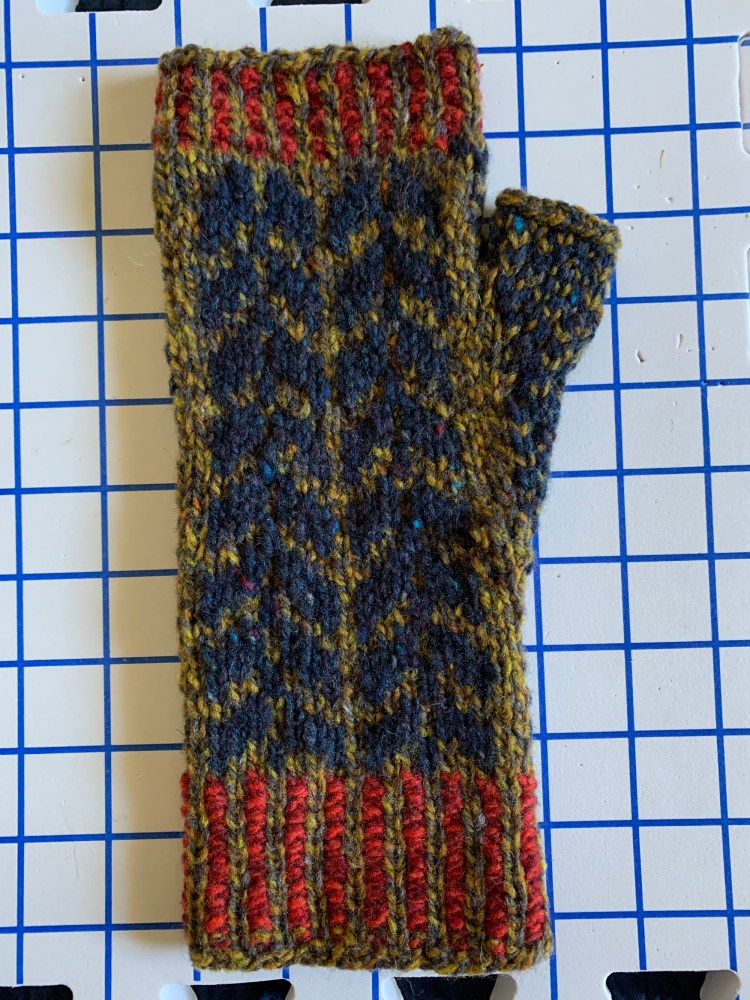
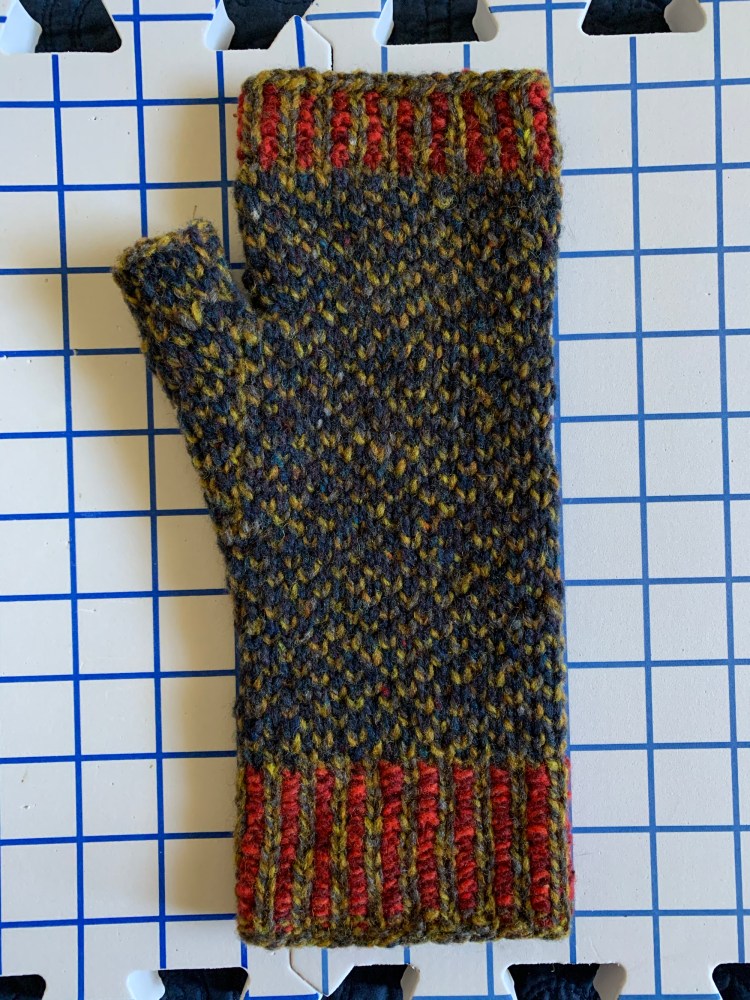
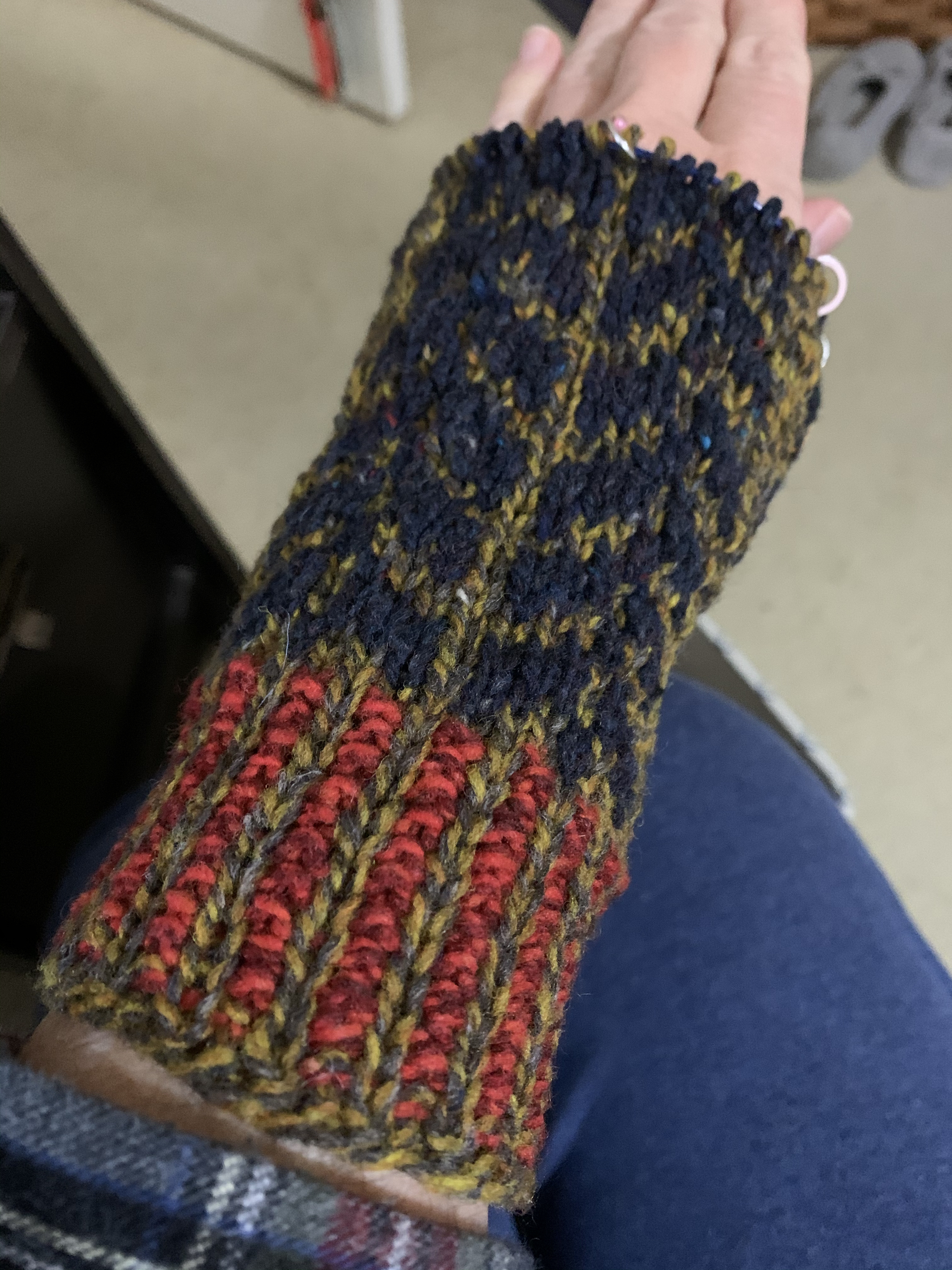
The yarn is Brooklyn Tweed “Shelter” in colors: “Caraway” – the tan for my Main Color, “Amaranth” red for the ribbing, and “Old World” navy blue. I had this yarn on hand so had to find three colors that would work. In the end, I like the look. Here is the left hand mitt drying, in size Medium.
One mitt is finished and drying
Palm side of left hand mitt
Things to Know Before Knitting This Pattern
First thing to know about this pattern is that the directions are in chart form. The chart shows a k1 MC, P1 CC for the ribbing, which is actually a corrugated rib. The designer does not mention this and assumes the knitter will know how to do corrugated ribbing.
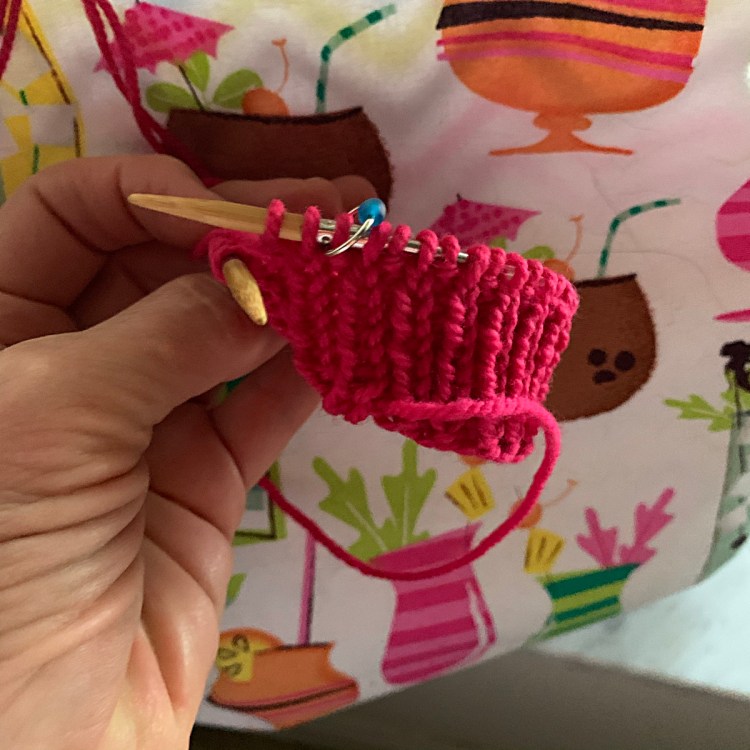
Beginning left hand mitt
The pattern notes say that the instructions are “written for the Magic Loop method of working in the round” – but, that is not really important because the mitts can be knit with small circular needles (which I used) or DPNs. She only references Magic Loop for the cast-on and dividing stitches between needles. I don’t really see the point in mentioning this at all.
Each of the three sizes has a “right” and “left” mitt chart to follow – so 6 separate charts are included. I began with the left, medium size, and ran into trouble with the thumb colors. The color chart is off, and since it was my first mitt, I wondered if I was doing it wrong or if the pattern was supposed to be that way. Eventually, I had to do the alternating colors and ignore the thumb pattern. Because of this, my thumb colors are not all correct, but the yarn covers the mistakes well enough. This problem was not mentioned specifically by test knitters or previous knitters, but a few did mention having trouble in general.
Neither the right nor left hand chart made sense to me when it came to knitting the thumb. It could be me, or a problem with the pattern, I honestly don’t know. In general I can follow patterns, and I have knit mittens without any problem, but the Oulu pattern did not make sense.
Thumb chart is off
Getting Gauge
I did not knit a swatch and used my first, washed and dried mitt to get my gauge. My gauge is way off for rows, which is why I needed to add an extra pattern repeat at the top. I got 24 rows in four inches, and she (the designer) has 31 rows!
While I was knitting the first mitt, I thought the mitt would end up too tight. In fact I added a couple extra stitches near the knuckles to widen it a bit. But the day after I finished knitting, I wore it outside while feeding the birds on a cold 32 degree morning, and the fit was good. Then I washed it and began mitt #2.
Cuff and most of hand finished
Changes I Made to Thumb Knitting
Needle size & Thumb stitches: Although the mitt seemed tight at first, it ended up fitting me very nicely. I knit the size Medium, on size 6 needles for the ribbing at the cuff and top. The rest of the mitt was knit using size 7 needles.
I did not use the smaller, size 6 needles for the thumb, as the pattern calls for. In fact I added stitches, by picking up 4-5 in place of the 1 stitch, and it’s perfect. Doing as the pattern suggested would have created a very tight thumb – for me. If you are also a tight knitter, you may want to do the same on the thumb.
Before washing
Pattern repeats and bind off: I added one more repeat at the top of the hand to get the correct length for me – due to my smaller gauge. For the next pair I would maybe make the cuff shorter. It’s hard to say if I will appreciate the length on the wrist area.
The pattern calls for a “stretchy bind-off” and I did a regular, rather loose bind-off which was fine. Some of the reviewers mentioned that doing a stretchy bind-off made the top flare. I can imagine that would happen. As it turned out the top ribbing could have been more narrow overall. I will plan to decrease a couple of stitches before doing the top ribbing next time.
Finished! I had trouble following the pattern for both the right and left mitt. Don’t know if it was just me, or the pattern. I had to figure too many things out for myself. Maybe a more experienced knitter would not have this trouble.
At first, I was not interested in learning the brioche stitch. Most patterns I saw kind of turned me off. In fact, I considered brioche to be a bit ugly sometimes. Then again, some brioche patterns are stunning! This type of knitting can create hats that are reversible, with a different look on each side.
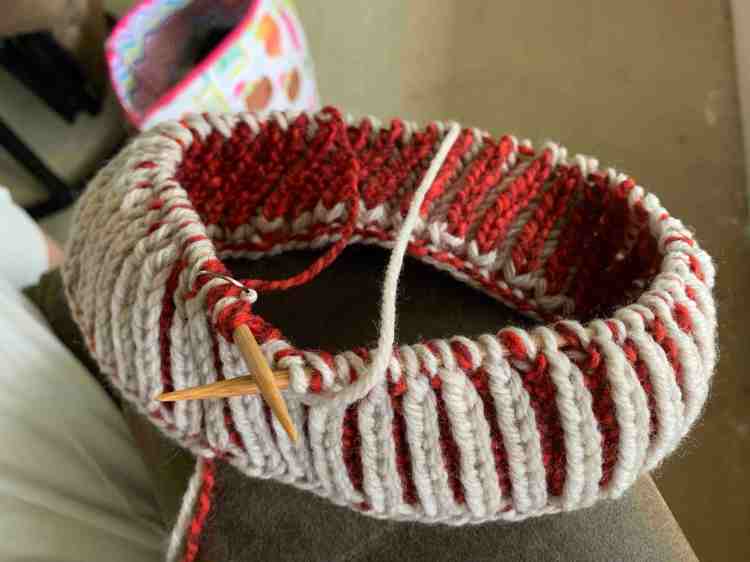
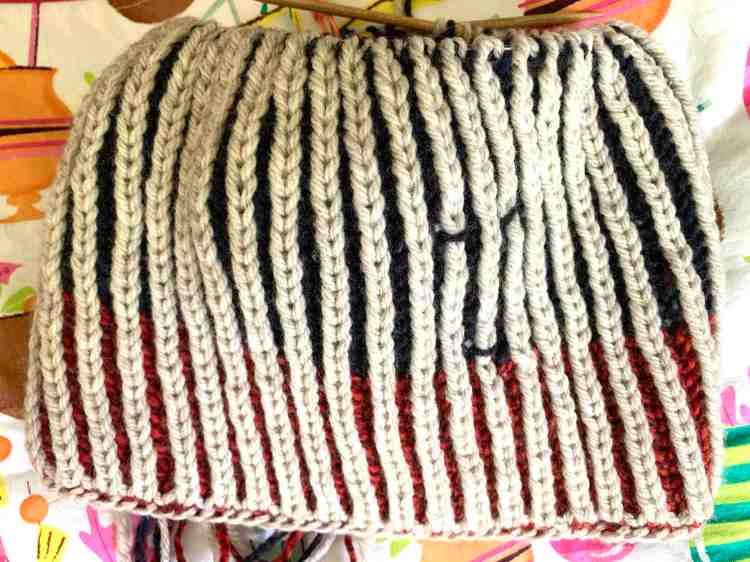
Here is the beginning of a hat with brioche in three colors. First I used red and white, then added some blue. If I had been able to knit this correctly, the hat could be worn with the white (gray) mostly showing, or the color side. It could have ended up being a nice hat – if I hadn’t failed so miserably at knitting it!
My attempt at brioche knitting
Brioche is reversible
Brioche Hat – “Skipp” by Brooklyn Tweed
I love to knit hats and I’ve knit a few BT patterns. Hats are my favorite knitting projects because they are quick and use DPNs for only a short time. After I knit the Habitat hat in bright orange cables for my daughter, I wanted to knit more hats. Why not learn some new things while doing so? And let’s try some brioche.
My son had given me a Brooklyn Tweed gift certificate for Mother’s Day and I needed to use it. I decided to buy some patterns because my yarn stash is already large. One of the hat patterns I purchased is called “Skipp” and it’s done in brioche stitch.
The idea of creating a reversible hat appealed to me, and brioche creates a reversible fabric. Yippee… onward. But first I would have to learn a new kind of cast-on to create a nice hat edging.
Hat’s can’t be knit until a good cast-on is completed. These special cast-on directions will create a tidy edge for a brioche knit hat. As I note on this page, I did a few different cast-ons but then had lots of trouble jumping in and beginning the pattern.
#1. Rib Cabled Cast-on
The cast on for the Skipp beanie is called a Rib Cabled Cast On. It’s not that difficult to accomplish, but I needed to use two yarns held together (notes for this pattern). I can’t go into the list of all the mistakes I made because there were too many, but in general the stitches in my rounds didn’t line up at the join. There are no directions for joining in the round – and this is the problem.
First of many fails….this shows that rib cable cast-on with double yarn
Hint: To learn brioche use two contrasting colors of yarn. Don’t use variegated. Make the stitches easy to tell apart by color. Also, try a pattern that calls for a heavy weight yarn. This will make that difficult cast-on progress faster!
Grrrrrrr…..
So I decided to try again with a single yarn color and I began that looooong cast-on again. I needed two yarns, so I had to cut a length from my skein hoping it would be enough – it wasn’t – only made it to 60 stitches and needed 96.
Hint: This type of cast-on uses lots of yarn. More than a normal cast on.
Ripped out again and cut a longer length – I needed about double (if you try this, double what you’d use for a normal long-tail cast on). Got finished with that cast on, joined and began the purl using both yarns – but I was only supposed to use one… when I went to un-purl that stitch the join fell apart… I don’t even know what happened, but at that point I gave up for the day and ripped it out.
Knitting Skipp Video Reference
I found THIS VIDEO of a woman who is actually knitting the Skipp hat… at about 5:47 minutes she shows how to join the cast-on, which is to simply purl into the first stitch for the set up round. What? Could it really be this easy??
The video is not great, but at least it tells how to join after the cast on. So, I tried it – just began with a purl like she did. And my join was not really a join… I discovered this after a couple more rounds. It looked like crap. This was another waste of time. (However, if I ever get past the cast-on, this video shows the crown shaping for Skipp, which I might need.)
#2. The Italian Tubular Cast-on
In Jared Flood’s tutorial for the Italian Cast On, he says it’s perfect for brioche. He knits a small, flat brioche sample. This is a good video but there are no directions for joining in the round because it’s back and forth knitting...! So, no help there.
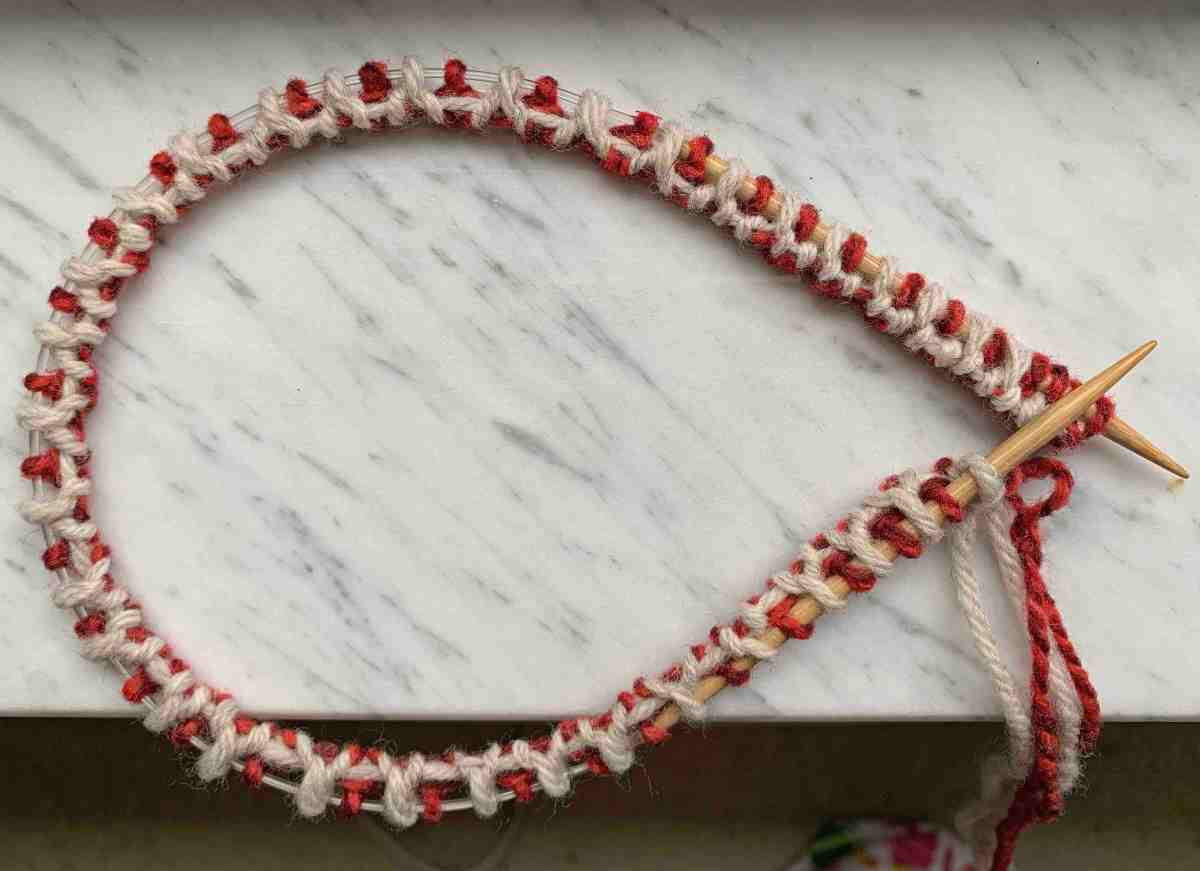
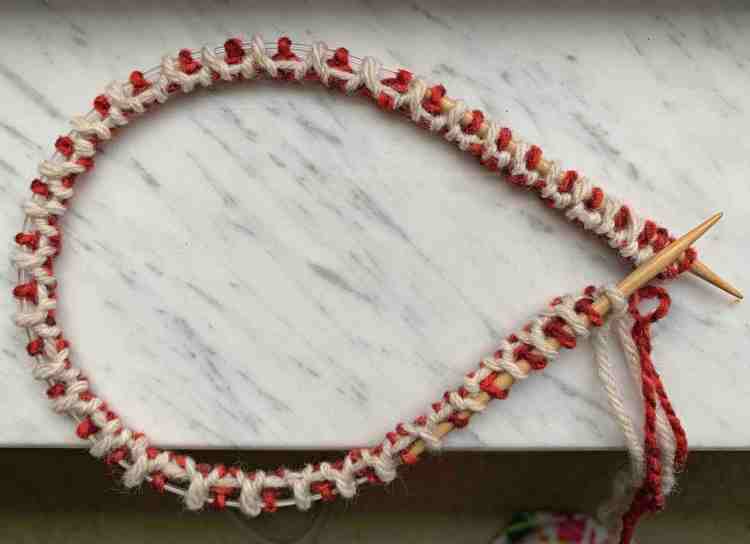
Andrea Mowry has a tutorial for Two Color Tubular cast-on which is pretty good. She slowly (thank-you) shows and explains the cast-on and set up rows. See my examples below from following her video. Notice my circle is not joined because there were no directions for that – OF COURSE…!!! But this video is a good one.
Her video is for her “Harlow” brioche hat pattern. The cast-on and two set up rows are knit before joining in the round. If I could get to this point, join in the round, and begin brioche knitting, I think I would be okay.
The Italian tubular cast-on is not easy, in my opinion. As the stitches are put onto the needle, they are loose and if you stop or take your hand away, the stitches fall off the needle! I suggest using two colors because it’s easier to see where you are in the cast on, and in the video.
I never figured out how to do any new “brioche” cast-ons, but began the Skipp hat using a normal cast-on. Then, I kept messing up my knitting and ripped the whole thing out.I hate brioche.
So What is My Problem?
I’ll tell you where I keep getting stuck – it’s at the BOR (beginning of round). Once the cast-on is finished I can’t join correctly because the knitting of brioche requires different BOR stitches. I guess maybe adding one extra stitch to combine with a regular stitch might work. Usually I transfer the two end stitches on my needles to join in the round, but that won’t work for brioche. Am I just making this more difficult than it needs to be?
#4. Long-tail Cast-on Over Two Needles
Maybe another designer can explain all this better. So I went looking for a new pattern to try.
The free hat pattern called BriocheStarter Hat (link below) is listed as using worsted yarn. But, the cast on number is the same as Skipp’s (fingering weight) at 96 stitches. This is confusing, and must be wrong. I noticed that many knitters using worsted cast-on fewer stitches (80).
And what type of cast on does this free pattern call for? A long-tail cast on over two needles. The tutorial does not show how this cast-on looks once it’s finished. One needle gets pulled out, and I’m not sure I would like the looks of this cast on. It sounds a little odd but what do I know. My Vogue Knitting book also says to do the brioche cast-on in this manner. (Truthfully this is one I did not try myself.)
For a free pattern, this one is very well written with charted and written directions for knitting brioche. The designer does mention knitting the first couple rows flat and then to join… AGAIN…no directions for how to make that join and then begin the pattern.
Please, someone help me get my cast-on joined!
Brioche Knitting Patterns
I have not knit any of these projects, but if I ever decide to try brioche again – and get it right – I will probably try one of these.
Brioche Knots – beautiful hat by Katrin Shubert, done in DK yarn in two colors.
Gina’s Brioche Hat and Cowl – FREE pattern by Purl Soho – This pattern uses a rolled brim cast on which means after a normal cast on, simple rows of knitting are done to create the roll. The second color is added after that.
Failing at Brioche in Photos
Once I began to knit brioche, I loved it – when things were going well – but most of my knitting was a BIG FAT FAIL.
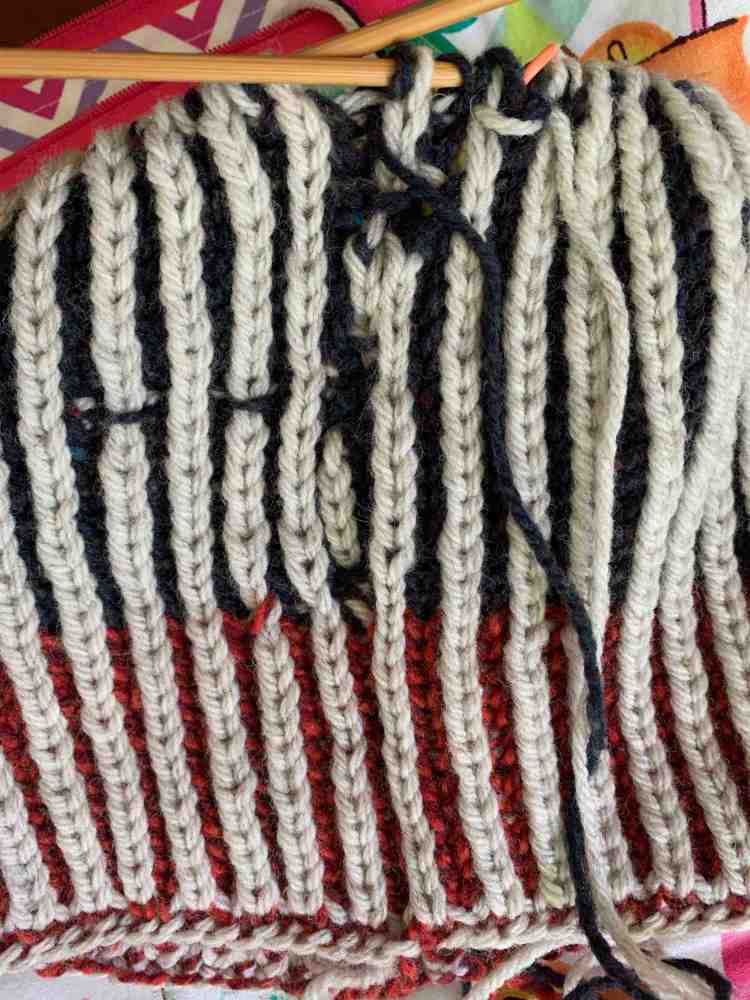
For the “hat” below I did a normal long-tail cast-on, because I gave up on the special brioche cast-ons. Although I had many mistakes – which mainly began at the beginning of each round – I kept knitting for the practice. Finally, I took photos and ripped out the project.
I will NOT be attempting to knit brioche again anytime soon, but will post this page for future reference. If you have any tips for brioche knitting, or have a favorite cast-on, I’d love to hear from you in the comments.
Brioche knitting
Dark blue yarn added
BOR, a slipped purl stitch begins this round so I am knitting this row using gray yarn.
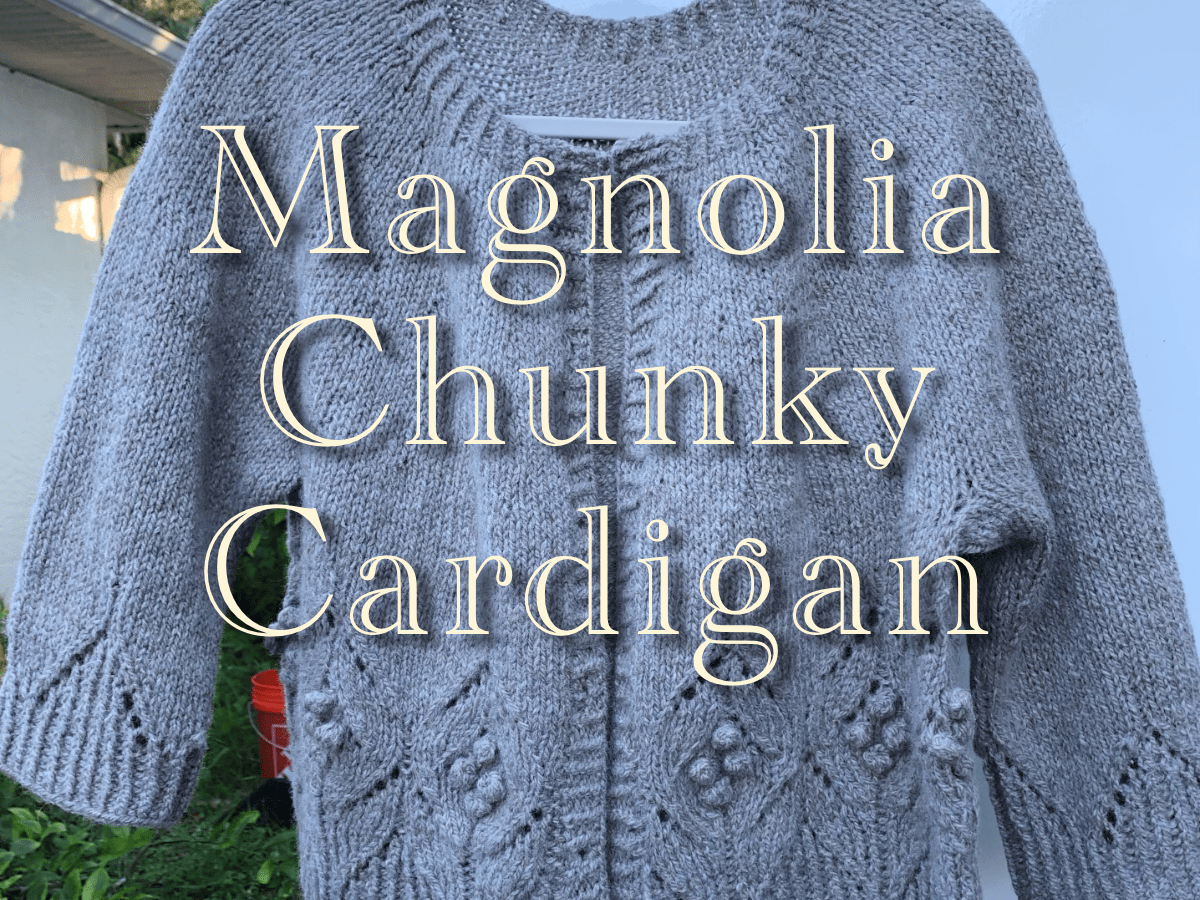
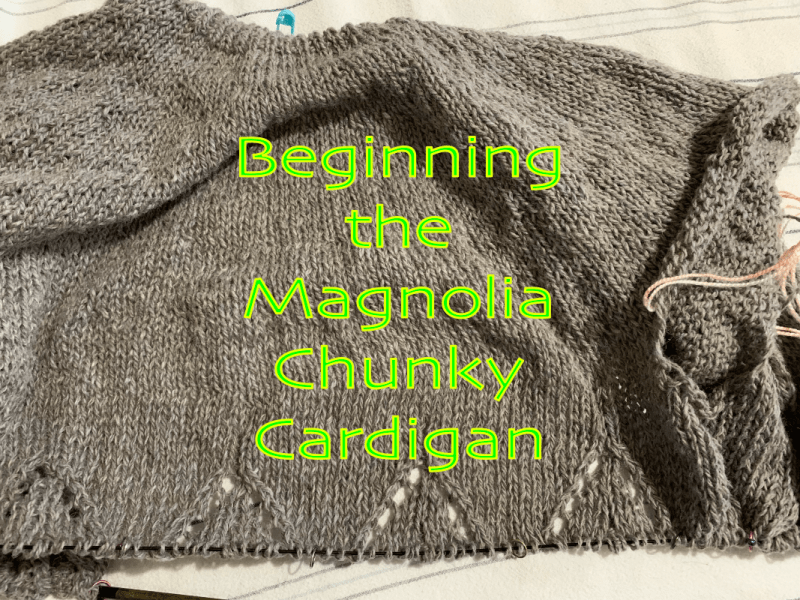
I’m knitting a beautiful cardigan pattern by Camilla Vad. The Magnolia Chunky Cardigan is knit top-down with lace and bobbles on the body and sleeves.…
The Triple-patterned Watchcap pattern comes from the “Hat’s On” book. I love the look of this little colorwork hat, but “little” is the key word here.
I should have known better. I knit tightly and this is colorwork – which tends to be tighter and smaller in the end than regular knitting. I decided to knit the size “small”. It ended up being about 15 inches around, which is a child’s size.
Unfolded, finished hat
Originally I had wanted to make this for my grown daughter, who does have a smallish head, but not that small. I realized, not too far into the knit, that this hat would be too small for an adult head. I kept knitting anyway to see if I liked the pattern after all. And I did.
Reminder: Stranded knitting does not stretch much!
This small size ended up measuring 16 inches around, just as the pattern noted for the Small size. If I use the same type of yarn, same needle size (I used size 6 as the pattern suggested) then each of the other sizes should give me the correct measurements. This is good to know because I do plan to knit this one again.
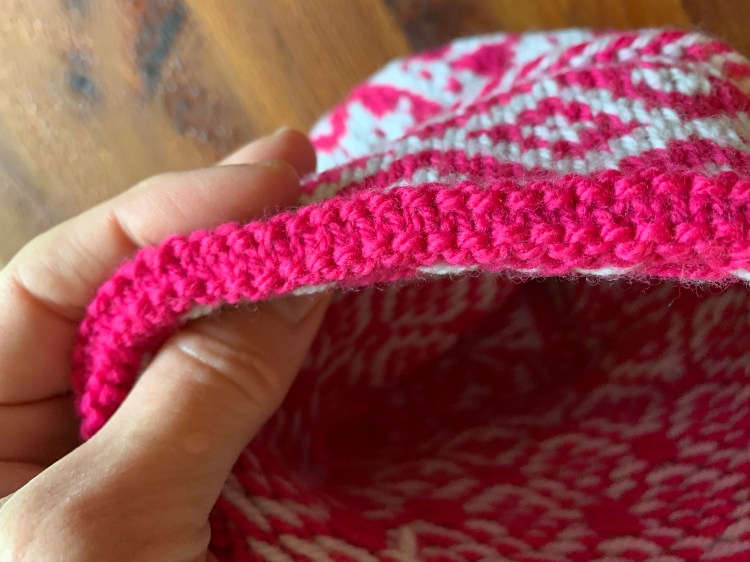
The edging at the fold
Some previous knitters of this pattern had swapped out the turn edging for a braid. I almost did that too, but I’m glad I didn’t. The turn rows for the edge, which end up at the bottom of the brim, work very nicely.
The brim of the hat is very pretty with the braid which ended up at the top and row of turning stitches along the bottom. The pattern is begun with the braid, worked to the end of the brim, then the work is turned (see notes below for turning) to begin the rest of the hat. This way the brim is made to fold up.
Crown
I made the second pattern section a little taller than called for and I honestly don’t know why. I was thinking the hat would be too short since it was turning out small. A short hat is not good, but I overcompensated.
I think another row of smaller snowflakes before the top section would be nice.
Finished!
The yarn I used is Arbor, by Brooklyn Tweed, and it’s become a favorite type of yarn for me (The link goes to Wool & Company). It is very soft, and creates a beautiful, squishy end product. The colors here are Azalea and Thaw.
Doing the “Turn”
The pattern says to work the cuff pattern for so many rounds, then “turn”. There is nothing else about doing the turn, but I have notes from doing a pair of mittens which are made in this manner where the cuff turns to begin knitting the rest of the mitten.
Simply turning the project and knitting in the opposite direction is what’s called for, but if it seems daunting, here are my notes:
Turn work inside out, with needles at top.
Slip the last worked stitch from the Left needle to the Right. This stitch will be the last stitch of the round.
Cut the unused color.
Begin knitting with the main color as pattern calls for.
Three Hats in Three Different Sizes
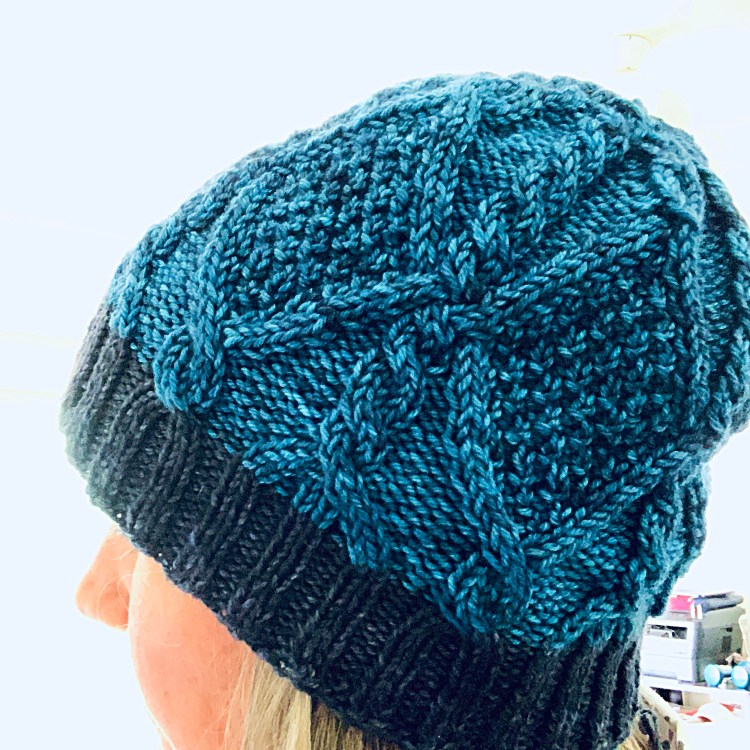
I’ve now knit three of these hats, and the green one is a Large – which will be gifted to my daughter. The XL size fits me perfectly, and was knit in another type of wool.
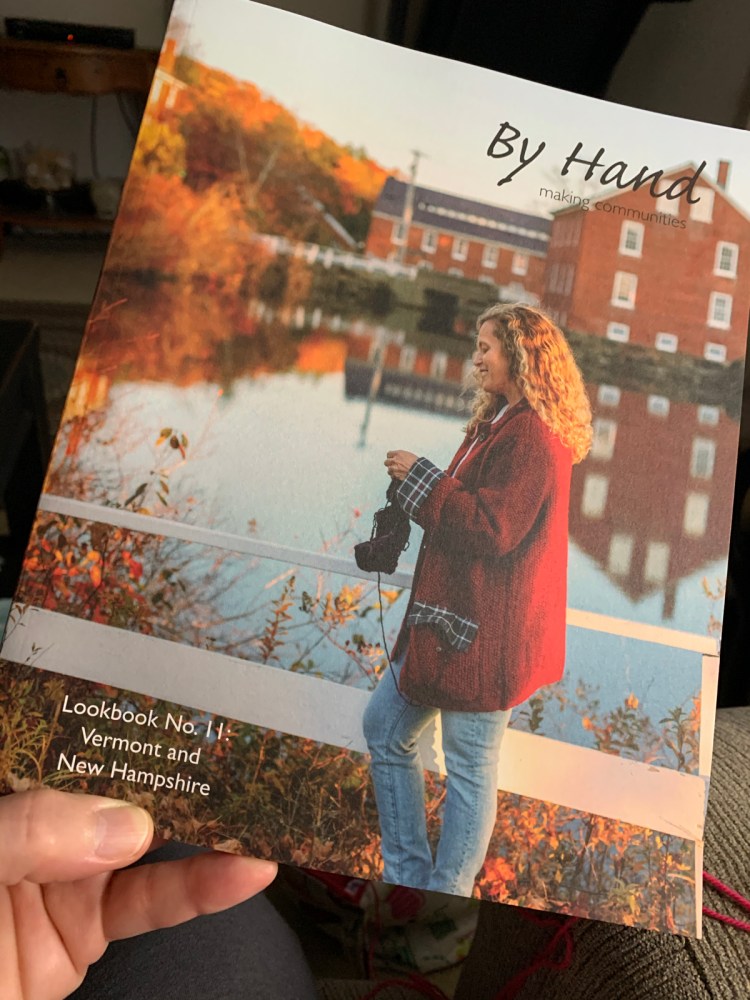
The Golden Afternoon Mittens pattern can be found in the “By Hand” Lookbook No. 11 which features, among others, Harrisville Designs of New Hampshire. I mainly bought this book because of the New England focus. I used to live very close to Harrisville, but never visited. I was not a big time knitter back then, but you can be sure I will make the effort when I visit next time.
I miss my Autumn “golden afternoons” from my time living in New Hampshire. As I browsed through the book, I became very homesick. I decided to try the mitten pattern.
Harrisville, NH featured in “By Hand” Lookbook No. 11
As I looked through the book (I bought mine fromThe Woolly Thistle), I was reminded of the beautiful state where I long to live once again. It’s no wonder this location was chosen for a craft book – some of the craftiest people on the planet live in New Hampshire! The book contains stories from farms (including a pie recipe), a basket maker, and a few knitting patterns. I was interested in knitting the mittens.
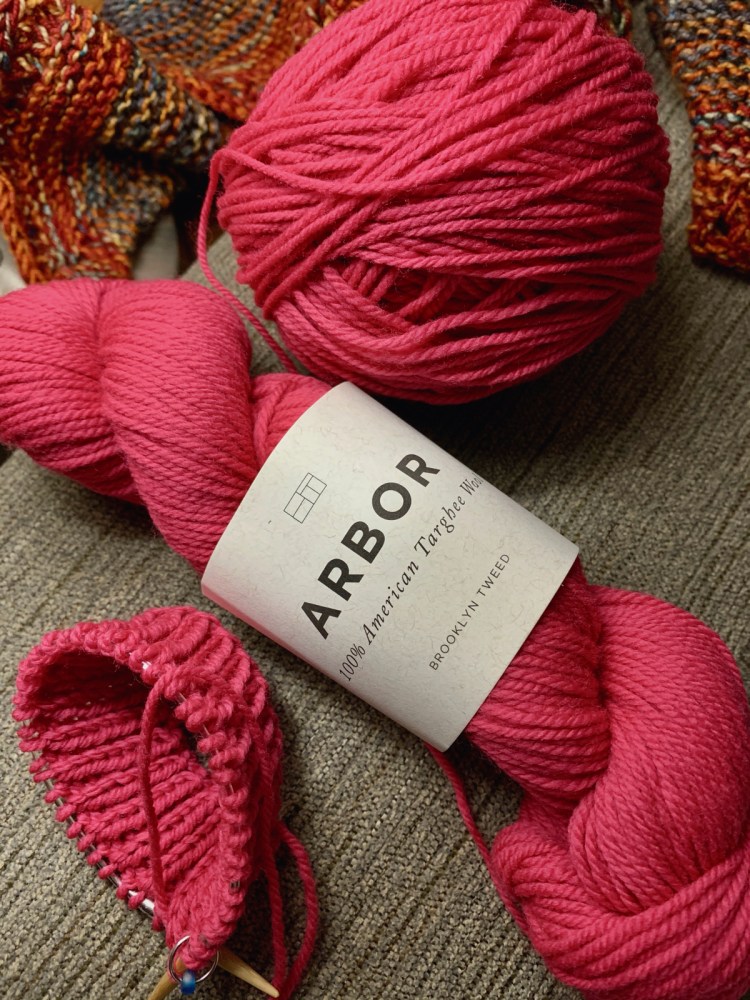
The designer of Golden Afternoon Mittens used Harrisville Highland yarn which I did not have, but would love to try when finances allow. This year I am trying to use stash yarn and not buy more new yarn, so I’m using my Azalea pink, Brooklyn Tweed Arbor yarn for this project. I found it on sale at Purl Soho.
Casting On For My Mittens
The Arbor yarn is a DK weight and the pattern calls for worsted (although I’ve also seen Highland listed as DK). I have two other mittens recently knit with this same Arbor yarn, so I do know my gauge somewhat. Those mittens (see Fiddlehead and Glissade) were stranded colorwork, and this pattern has a cable up the center, but is all one color, which makes it quicker to knit.
I used a size 5 needle in the small, 9-inch circular size, and casting on 44, which is the largest size in the mitten pattern. This turned out to be too large – see notes below.
Beginning “Golden Afternoon Mittens”
My Gauge
The mitten was finished within a couple of days, but I did run into trouble. This mitten will be a good future reference for knitting gauge.
Size 6 needle / DK Arbor yarn / After washing and blocking my gauge was 21.5 stitches and 31 rows. Gauge in pattern is 20 x 30.
Notes to Self on Knitting The Second Mitten
Yukky thumb, but finished one mitten
One mitten is finished. It was easy and quick, but finding the right size was a problem. The cuff could be tighter, and the wrist / beginning of hand is loose. I switched down to the Medium size by knitting a couple of stitches together around the thumb gusset.
After blocking, my gauge increased (note above), so I need to stay with a size 5 to knit the hand using Medium size stitch counts.
Next time: Size 5 Needle, cast-on 40 (size Medium) and continue on with size 5 needle.
The Thumb… Ugh! I’m no pro at knitting thumbs, but I managed to pick up all the stitches and fill in the holes fine. I followed the directions for a size M which put 12 stitches on the DPNs for the thumb – this turned out to be too small! I tinked (un-knitted) back down the thumb and tried to fix it by adding more stitches. You can see that now the thumb looks horrible…!!
I guess experienced knitters would somehow tear it out and re-knit, but I don’t think I will be able to make it look any better at this point.
Use the Large size thumb stitch number – only very skinny-thumbed people could use 12 stitches on a thumb!
Right mitten done
Final Thoughts on Golden Afternoon Mittens
I’ll make the second one and probably give them to my daughter as long as that thumb turns out alright.
Easy pattern, once you know what C4B and C4F mean. But thumb stitch number seems off.
I love Arbor yarn and the mitten is soft, but this is definitely a Fall / Autumn season mitten. A more wooly yarn may actually look better and be more forgiving of mistakes!
The cable is not all that pretty (IMO)
I’m much happier with my colorwork mittens, even though the knitting is slower. The fabric is heavier and the end product was (near) perfection!




















 New England's Narrow Road